Results by title
2729 books match the query 'Education' and 242 start with c
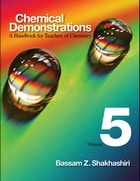
Chemical Demonstrations, Volume 5
A Handbook for Teachers of ChemistryBassam Z. Shakhashiri
University of Wisconsin Press, 2011
Color and light are the focus of this long-awaited fifth volume in the Chemical Demonstrations series, which describes demonstrations that effectively communicate science to both students and general audiences. Using full color illustrations, the book provides meticulous instructions for safely demonstrating colorful phenomena and illustrating scientific principles. A rich introductory section explores the science of color and light, outlines the chemical processes of vision, and explains what happens when visual information enters the human eye and is perceived by the brain. With more than fifty demonstrations and multiple procedures included, this volume offers abundant opportunities to arouse and sustain interest in science for both classroom and public presentations.
Each demonstration includes:
• a brief description of the demonstration
• a materials list
• a step-by-step account of procedures to be used
• an explanation of the potential hazards involved
• information on safely storing and disposing the chemicals used
• a full discussion of the phenomena displayed and principles illustrated
• a list of references.
Created by acclaimed chemists and science educators Bassam Shakhashiri and his collaborators Rodney Schreiner and Jerry Bell, these demonstrations make an impressive addition to the earlier volumes, which have been lauded for guiding teachers and scientists in effectively communicating science. Like all volumes in the series, Volume 5 communicates chemistry using pedagogical knowledge to enhance the effectiveness of demonstrations to all audiences.
Chicanas and Chicanos in School
Racial Profiling, Identity Battles, and EmpowermentBy Marcos Pizarro
University of Texas Press, 2005
By any measure of test scores and graduation rates, public schools are failing to educate a large percentage of Chicana/o youth. But despite years of analysis of this failure, no consensus has been reached as to how to realistically address it. Taking a new approach to these issues, Marcos Pizarro goes directly to Chicana/o students in both urban and rural school districts to ask what their school experiences are really like, how teachers and administrators support or thwart their educational aspirations, and how schools could better serve their Chicana/o students.
In this accessible, from-the-trenches account of the Chicana/o school experience, Marcos Pizarro makes the case that racial identity formation is the crucial variable in Chicana/o students' success or failure in school. He draws on the insights of students in East Los Angeles and rural Washington State, as well as years of research and activism in public education, to demonstrate that Chicana/o students face the daunting challenge of forming a positive sense of racial identity within an educational system that unintentionally yet consistently holds them to low standards because of their race. From his analysis of this systemic problem, he develops a model for understanding the process of racialization and for empowering Chicana/o students to succeed in school that can be used by teachers, school administrators, parents, community members, and students themselves.
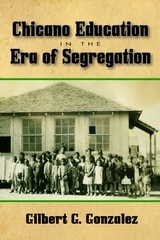
Chicano Education in the Era of Segregation
Gilbert G. Gonzalez
University of North Texas Press, 2013
Child Abuse in the Deep South
Geographical Modifiers of Abuse CharacteristicsLee W. Badger
University of Alabama Press, 1988
A powerful, data-driven investigation into how race, geography, and community shape the reporting and response to child abuse in Alabama.
Child Abuse in the Deep South is a groundbreaking examination of how child maltreatment is reported, confirmed, and understood in Alabama—a state shaped by deep historical, racial, and geographic divides. Drawing on over 7,000 case reports, this study reveals how factors such as race, community size, and regional culture influence the identification and handling of abuse cases. With a focus on both rural and urban settings, the book uncovers patterns of systemic bias, underreporting, and institutional response that have long gone unaddressed.
Through rigorous data analysis and a compassionate lens, this work challenges assumptions about child welfare in the American South and offers critical insights for policymakers, social workers, legal professionals, and scholars. Child Abuse in the Deep South is both a call to action and a vital resource for understanding the intersection of social justice, public policy, and child protection in one of the nation’s most complex regions.
Child Abuse in the Deep South provides a quantitative benchmark that investigators and policy-makers will find invaluable on the path to defining at-risk populations, effective interventions, and treatments.
Child-Sized History
Fictions of the Past in U.S. ClassroomsSara L. Schwebel
Vanderbilt University Press, 2011
Books like Johnny Tremain, The Witch of Blackbird Pond, Island of the Blue Dolphins, and Roll of Thunder, Hear My Cry stimulate children's imagination, transporting them into the American past and projecting them into an American future. As works of historical interpretation, however, many are startlingly out of step with current historiography and social sensibilities, especially with regard to race. Unlike textbooks, which are replaced on regular cycles and subjected to public tugs-of-war between the left and right, historical novels have simply--and quietly--endured. Taken individually, many present troubling interpretations of the American past. But embraced collectively, this classroom canon provides a rare pedagogical opportunity: it captures a range of interpretive voices across time and place, a kind of "people's history" far removed from today's state-sanctioned textbooks.
Teachers who employ historical novels in the classroom can help students recognize and interpret historical narrative as the product of research, analytical perspective, and the politics of the time. In doing so, they sensitize students to the ways in which the past is put to moral and ideological uses in the present.
Featuring separate chapters on American Indians, war, and slavery, Child-Sized History tracks the changes in how young readers are taught to conceptualize history and the American nation.
Childfree across the Disciplines
Academic and Activist Perspectives on Not Choosing ChildrenDavinia Thornley
Rutgers University Press, 2022
Recently, childfree people have been foregrounded in mainstream media. More than seven percent of Western women choose to remain childfree and this figure is increasing. Being childfree challenges the ‘procreation imperative’ residing at the center of our hetero-normative understandings, occupying an uneasy position in relation to—simultaneously—traditional academic ideologies and prevalent social norms. After all, as Adi Avivi recognizes, "if a woman is not a mother, the patriarchal social order is in danger." This collection engages with these (mis)perceptions about childfree people: in media representations, demographics, historical documents, and both psychological and philosophical models. Foundational pieces from established experts on the childfree choice--Rhonny Dam, Laurie Lisle, Christopher Clausen, and Berenice Fisher--appear alongside both activist manifestos and original scholarly work, comprehensively brought together. Academics and activists in various disciplines and movements also riff on the childfree life: its implications, its challenges, its conversations, and its agency—all in relation to its inevitability in the 21st century. Childfree across the Disciplines unequivocally takes a stance supporting the subversive potential of the childfree choice, allowing readers to understand childfreedom as a sense of continuing potential in who—or what—a person can become.
Childhood in the Promised Land
Working-Class Movements and the Colonies de Vacances in France, 1880–1960Laura Lee Downs
Duke University Press, 2002
At the heart of the study lie the municipal colonies de vacances, organized by the working-class cities of the Paris red belt. Located in remote villages or along the more inexpensive stretches of the Atlantic coast, the municipal colonies gathered their young clientele into variously structured "child villages," within which they were to live out particular, ideal visions of the collective life of children throughout the long summer holiday. Focusing on the creation of and participation in these summer camps, Laura Lee Downs presents surprising insights into the location and significance of childhood in French working-class cities and, ultimately, within the development of modern France.
Drawing on a rich array of historical sources, including dossiers and records of municipal colonies discovered in remote town halls of the Paris suburbs, newspaper accounts, and interviews with adults who participated in the colonies as children, Downs reveals how diverse groups—including local Socialist and Communist leaders and Catholic seminarians—seized the opportunity to shape the minds and bodies of working-class youth. Childhood in the Promised Land shows how, in creating the summer camps, these various groups combined pedagogical theories, religious convictions, political ideologies, and theories about the relationship between the countryside and children's physical and cognitive development. At the same time, the book sheds light on classic questions of social control, highlighting the active role of the children in shaping their experiences.
Children Crossing Borders
Immigrant Parent and Teacher Perspectives on Preschool for Children of ImmigrantsJoseph Tobin
Russell Sage Foundation, 2013
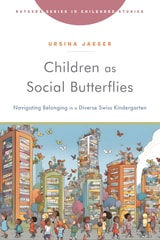
Children as Social Butterflies
Navigating Belonging in a Diverse Swiss KindergartenUrsina Jaeger
Rutgers University Press, 2025
This book is also freely available online as an open-access digital edition, published with the support of the Swiss National Science Foundation.

Children of the Boat People
A Study of Educational SuccessNathan Caplan, Marcella H. Choy, and John K. Whitmore
University of Michigan Press, 1991
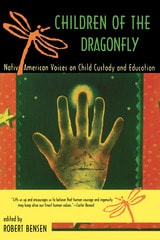
Children of the Dragonfly
Native American Voices on Child Custody and EducationRobert Bensen
University of Arizona Press, 2001
Native American children have long been subject to removal from their homes for placement in residential schools and, more recently, in foster or adoptive homes. The governments of both the United States and Canada, having reduced Native nations to the legal status of dependent children, historically have asserted a surrogate parentalism over Native children themselves.
Children of the Dragonfly is the first anthology to document this struggle for cultural survival on both sides of the U.S.-Canadian border. Through autobiography and interviews, fiction and traditional tales, official transcripts and poetry, these voices— Seneca, Cherokee, Mohawk, Navajo, and many others— weave powerful accounts of struggle and loss into a moving testimony to perseverance and survival. Invoking the dragonfly spirit of Zuni legend who helps children restore a way of life that has been taken from them, the anthology explores the breadth of the conflict about Native childhood.
Included are works of contemporary authors Sherman Alexie, Joy Harjo, Luci Tapahonso, and others; classic writers Zitkala-Sa and E. Pauline Johnson; and contributions from twenty important new writers as well. They take readers from the boarding school movement of the 1870s to the Sixties Scoop in Canada and the Indian Child Welfare Act of 1978 in the United States. They also spotlight the tragic consequences of racist practices such as the suppression of Indian identity in government schools and the campaign against Indian childbearing through involuntary sterilization.
CONTENTS
Part 1. Traditional Stories and Lives
Severt Young Bear (Lakota) and R. D. Theisz, To Say "Child"
Zitkala-Sa (Yankton Sioux), The Toad and the Boy
Delia Oshogay (Chippewa), Oshkikwe's Baby
Michele Dean Stock (Seneca), The Seven Dancers
Mary Ulmer Chiltoskey (Cherokee), Goldilocks Thereafter
Marietta Brady (Navajo), Two Stories
Part 2. Boarding and Residential Schools
Embe (Marianna Burgess), from Stiya: or, a Carlisle Indian Girl at Home
Black Bear (Blackfeet), Who Am I?
E. Pauline Johnson (Mohawk), As It Was in the Beginning
Lee Maracle (Stoh:lo), Black Robes
Gordon D. Henry, Jr. (White Earth Chippewa), The Prisoner of Haiku
Luci Tapahonso (Navajo), The Snakeman
Joy Harjo (Muskogee), The Woman Who Fell from the Sky
Part 3. Child Welfare and Health Services
Problems That American Indian Families Face in Raising Their Children, United States Senate, April 8 and 9, 1974
Mary TallMountain (Athabaskan), Five Poems
Virginia Woolfclan, Missing Sister
Lela Northcross Wakely (Potawatomi/Kickapoo), Indian Health
Sherman Alexie (Spokane/Coeur d'Alene), from Indian Killer
Milton Lee (Cheyenne River Sioux) and Jamie Lee, The Search for Indian
Part 4. Children of the Dragonfly
Peter Cuch (Ute), I Wonder What the Car Looked Like
S. L. Wilde (Anishnaabe), A Letter to My Grandmother
Eric Gansworth (Onondaga), It Goes Something Like This
Kimberly Roppolo (Cherokee/Choctaw/Creek), Breeds and Outlaws
Phil Young (Cherokee) and Robert Bensen, Wetumka
Lawrence Sampson (Delaware/Eastern Band Cherokee), The Long Road Home
Beverley McKiver (Ojibway), When the Heron Speaks
Joyce carlEtta Mandrake (White Earth Chippewa), Memory Lane Is the Next Street Over
Alan Michelson (Mohawk), Lost Tribe
Patricia Aqiimuk Paul (Inupiaq), The Connection
Terry Trevor (Cherokee/Delaware/Seneca), Pushing up the Sky
Annalee Lucia Bensen (Mohegan/Cherokee), Two Dragonfly Dream Songs
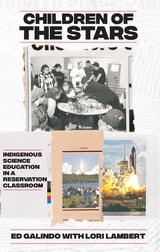
Children of the Stars
Indigenous Science Education in a Reservation ClassroomEd Galindo
Oregon State University Press, 2022
In Children of the Stars, Galindo relates his experience with this first team and with successive student teams, who continued to participate in NASA programs over the course of a decade. He discusses the challenges of teaching American Indian students, from the practical limits of a rural reservation school to the importance of respecting and incorporating Indigenous knowledge systems. In describing how he had to earn the trust of his students to truly be successful as their teacher, Galindo also touches on the complexities of community belonging and understanding; although Indigenous himself, Galindo is not a member of the Shoshone-Bannock tribes and was still an outsider who had as much to learn as the students.
Children of the Stars is the story of students and a teacher, courage and hope. Written in a conversational style, it’s an accessible story about students who were supported and educated in culturally relevant ways and so overcame the limitations of an underfunded reservation school to reach great heights.
Choosing Homes, Choosing Schools
Annette Lareau
Russell Sage Foundation, 2014
Christianity and Education in Modern China
Edited by Man Kong Wong and George Kam Wah Mak
Hong Kong University Press, 2025
In Christianity and Education in Modern China, the contributors demonstrate how Christianity served as a driving force in the development of modern education in China. Each essay offers new insights into Christian influence on education in modern China while examining how Christian missionaries and Chinese Christian educators interacted with China's social, cultural, and political contexts. They also explore how the legacies of Christian higher education affected higher education in mainland China, Taiwan, and Asia at large. On the whole, this volume compares the Western missionary and Chinese Christian perspectives with rich historiographical acumen by offering original case studies to examine Christianity’s impact on education in modern China.

Chronicles Of Faith
The Autobiography of Frederick D. PattersonFrederick D. Patterson, edited by Martia Graham Goodson
University of Alabama Press, 1991
From Tuskegee to the United Negro College Fund, one man's legacy changed American education.
Chronicles of Faith: The Autobiography of Frederick D. Patterson, edited by Martia Graham Goodson, presents the remarkable life story of one of the most influential educators and institutional leaders in twentieth-century America. Based on Patterson's personal recollections, the autobiography traces his journey from a childhood marked by adversity to a distinguished career as a veterinarian, educator, college president, and visionary advocate for higher education.
Best known as president of Tuskegee Institute and founder of the United Negro College Fund, Patterson played a pivotal role in expanding educational opportunities for African Americans during an era of segregation and limited resources. The narrative chronicles his leadership in strengthening historically Black colleges and universities, promoting professional education, and developing innovative fundraising models that transformed the future of Black higher education.
Interwoven with accounts of personal determination, faith, and public service, the book offers valuable insight into the challenges and achievements that shaped American educational history. Patterson's story is both an inspiring autobiography and an important historical document, revealing the vision and perseverance required to create lasting institutional change. Essential for understanding the evolution of higher education in the United States, this volume will be especially valuable to students, scholars, educators, historians, and readers interested in African American leadership, HBCUs, philanthropy, and social progress.
Church and State Education in Revolutionary Mexico City
Patience A. Schell
University of Arizona Press, 2003
Circulating Literacy
Writing Instruction in American Periodicals, 1880-1910Alicia Brazeau
Southern Illinois University Press, 2016
Brazeau establishes how these magazines shared a common strategy in the construction of literacy identities by connecting a specific identity with a particular set of reading and writing practices. She explores how farm journals were preoccupied with the value of literacy as a tool for shaping community; considers how the Journal and the Bazar deployed distinctly different illustrations of literacy values for women; shows how the Journal and editor Edward Bok cast women as consumers and sellers of literacy; and looks at the ways in which Bazar editors urged readers to adopt habits of reading and writing that emphasized communal relationships among women. In Circulating Literacy, Brazeau speaks to, and connects, the important topics of rural studies, gender, professionalization, and literacy sponsorship and identity, arguing for the value of the study of periodicals as literacy education tools.
City Kids
Transforming Racial BaggageKromidas, Maria
Rutgers University Press, 2016
City of Broken Dreams
Myth-Making, Nationalism and the University in an African Motor CityLeslie J. Bank
Michigan State University Press, 2019
Civic Engagement in Global Contexts
International Education, Community Partnerships, and Higher EducationJim Bowman
Utah State University Press, 2021
Civic Engagement in Global Contexts provides examples and evidence of the critical self-reflection and iteration with community partners that make these projects important and valuable. Throughout its thirteen chapters, this collection provides practical pedagogical and administrative approaches for writing studies faculty engaging with global learning projects, as well as nuanced insight into how to navigate contact zones from the planning stages of projects to the hard work of self-reflection and change.
Partnerships and projects across national borders compel the field of rhetoric and composition to think through the ethics of writing studies program design and teaching practices. Doing this difficult work can disrupt presumptive notions of ownership that faculty and administrators hold concerning the fields involved in these projects and can even lead to decentering rhetoric/composition and other assumptions held by US-based institutions of higher education. Civic Engagement in GlobalContexts will be useful to instructors, advisors, and project managers of students in faculty-led project learning in overseas settings, international service learning through foreign study programs, and foreign study itself and to faculty members introducing civic engagement and community-based learning projects with foreign students in overseas institutions.
Contributors: Olga Aksakalova, James Austin, Maria de Lourdes Caudillo Zambrano, Rebecca Charry Roje, Patricia M. Dyer, Tara E. Friedman, Bruce Horner, Kathryn Johnson Gindlesparger, Adela C. Licona, Ian Mauer, Joyce Meier, Susan V. Meyers, Sadia Mir, Stephen T. Russell
Civic Labors
Scholar Activism and Working-Class StudiesEdited by Dennis Deslippe, Eric Fure-Slocum, and John W. McKerley
University of Illinois Press, 2016
Civics in a Digital Republic
A Transformative CurriculumRobert A. Waterson
West Virginia University Press, 2012
This innovative curriculum book provides key materials, resources, and tools to help secondary educators prepare their students to be engaged citizens of their community, state, nation and world. Five complete units of instruction, based on West Virginia Content Standards and Objectives, provide meaningful lessons while being mindful of the transition from tangible text to more digital curricula:
•Rights of the Individual•Freedoms of the Individual
•Responsibilities of the Individual
•Beliefs Concerning Societal Conditions
•Financial Literacy
•4 culminating activities for enrichment opportunities
•A matrix illustrating the West Virginia Content Standards and Objectives covered
•A matrix illustrating compliance with the National Council for the Social Studies Standards
•A curriculum toolbox that provides over 70 engaging web sites to visit and explore.
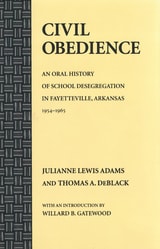
Civil Obedience
An Oral History of School Desegregation in Fayetteville, Arkansas, 1954–1965Julianne Lewis Adams
University of Arkansas Press, 1994
While school desegregation generated much noise and some violence elsewhere in the South, the city of Fayetteville, Arkansas confronted the issue and resolved it with a good deal of dignity and grace, becoming the first Southern city to accommodate the Brown decision.
Through this fascinating collection of interviews with those who were involved in the desegregation process—students, teachers, administrators, civic leaders, and members of local groups—we learn of the determination of citizens to obey the law of the land and to see that freedom and equality took priority over their commitment to a school system that patently discriminated against one group of citizens.
In our continuing efforts to create a society in which all races and cultures can coexist, Civil Obedience is a story worthy of our full attention.
Claiming Home, Shaping Community
Testimonios de los vallesEdited by Gloria H. Cuádraz and Yolanda Flores
University of Arizona Press, 2017
While symbolically their journeys embody the master narrative of the “American Dream,” Claiming Home, Shaping Community does not echo the “rags to riches” trope reified in dominant culture, but rather, it asserts the need to rehumanize the purpose and heart of education. In each chapter, the narrators illustrate myriad supports that allowed them to move forward on their academic and professional journeys: hard work, affirmative action, inclusionary practices, mentors, and their communities’ cultural wealth. Each trajectory is unique, but put together as a collection, the commonalities emerge.
Denoting a sense of political and social urgency that responds to the current accentuated economic disparities between the haves and the have-nots, these essays illuminate the broader societal benefits of federal legislation and resources for state-funded public higher education and policies that broaden access and resources. By telling their stories, the contributors seek to empower others on their journeys to and through higher education.
Contributors:
Daniel “Nane” Alejandrez
Manuel Barajas
Angelica Cárdenas-Chaisson
Gloria H. Cuádraz
Yolanda Flores
Francisco J. Galarte
John J. Halcón
Ester Hernández
Rosa M. Jiménez
Roberto Moreno
José R. Padilla
Enid Pérez
Caroline Sotello Viernes Turner
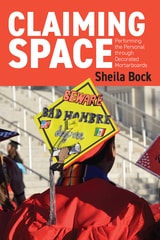
Claiming Space
Performing the Personal through Decorated MortarboardsSheila Bock
Utah State University Press, 2023
Claiming the space of these graduation caps is a popular and widespread way that individuals make their voices heard, or rather seen, in the visual landscape of commencement ceremonies. The forms and meanings of these material displays take shape in relation to broader, ongoing conversations about higher education in the United States, conversations grounded in discourses of belonging, citizenship, and the promises of the American Dream. Integrating observational fieldwork with extensive interviews and surveys, author Sheila Bock highlights the interpretations of individuals participating in this tradition. She also attends to the public framings of this tradition, including how images of mortarboards have grounded online enactments of community through hashtags such as #LatinxGradCaps and #LetTheFeathersFly, as well as what rhetorical framings are employed in news coverage and legal documents in cases where the value of the practice is both called into question and justified.
As university administrators and cultural commentators seek to make sense of the current state of higher education, these forms of material expression offer insight into how students themselves are grappling with higher ed's promises and shortcomings. Claiming Space is a meaningful contribution to folklore, cultural studies, media studies, and education.
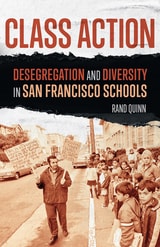
Class Action
Desegregation and Diversity in San Francisco SchoolsRand Quinn
University of Minnesota Press, 2020
A compelling history of school desegregation and activism in San Francisco
The picture of school desegregation in the United States is often painted with broad strokes of generalization and insulated anecdotes. Its true history, however, is remarkably wide ranging. Class Action tells the story of San Francisco’s long struggle over school desegregation in the wake of the 1954 U.S. Supreme Court decision Brown v. Board of Education.
San Francisco’s story provides a critical chapter in the history of American school discrimination and the complicated racial politics that emerged. It was among the first large cities outside the South to face court-ordered desegregation following the Brown rulings, and it experienced the same demographic shifts that transformed other cities throughout the urban West. Rand Quinn argues that the district’s student assignment policies—including busing and other desegregative mechanisms—began as a remedy for state discrimination but transformed into a tool intended to create diversity. Drawing on extensive archival research—from court docket files to school district records—Quinn describes how this transformation was facilitated by the rise of school choice, persistent demand for neighborhood schools, evolving social and legal landscapes, and local community advocacy and activism.
Class Action is the first book to present a comprehensive political history of post-Brown school desegregation in San Francisco. Quinn illuminates the evolving relationship between jurisprudence and community-based activism and brings a deeper understanding to the multiracial politics of urban education reform. He responds to recent calls by scholars to address the connections between ideas and policy change and ultimately provides a fascinating look at race and educational opportunity, school choice, and neighborhood schools in the aftermath of Brown v. Board of Education.
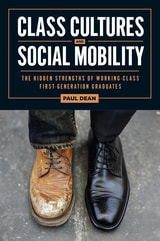
Class Cultures and Social Mobility
The Hidden Strengths of Working-Class First-Generation GraduatesPaul Dean
Rutgers University Press, 2026
When working-class first-generation students enter college or the professional workplace, they often find themselves immersed in entirely new worlds. They must learn the unwritten rules for how to speak, dress, behave, and interact with new peers and colleagues. While striving to fit in and do well, they risk feeling imposter syndrome, a loss of identity, or broken ties with friends and family.
Class Cultures and Social Mobility tells the stories of upwardly mobile first-gen graduates who flipped the script and turned their working-class roots into a strength. This accessible and highly engaging book reveals how first-gen graduates overcame hardship while leveraging unique skills—their working-class cultural capital—in college and their professional careers. It demonstrates there needn’t be a choice between economic success and maintaining authenticity to one’s roots—we can balance the competing demands of the two class worlds together. Whether you're an educator, student, working professional, or advocate, this book provides a powerful way to reimagine the transformations that accompany class mobility.
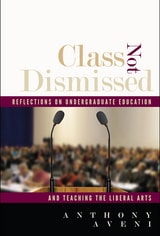
Class Not Dismissed
Reflections on Undergraduate Education and Teaching the Liberal ArtsAnthony Aveni
University Press of Colorado, 2014
Although in recent years the lecture has come under fire as a pedagogical method, Aveni ardently defends lecturing to students. He shares his secrets on crafting an engaging lecture and creating productive dialogue in class discussions. He lays out his rules on classroom discipline and tells how he promotes the lost art of listening. He is a passionate proponent of the liberal arts and core course requirements as well as a believer in sound teaching promoted by active scholarship.
Aveni is known to his students as a consummate storyteller. In Class Not Dismissed he shares real stories about everyday college life that shed light on serious educational issues. The result is a humorous, reflective, inviting, and powerful inquiry into higher education that will be of interest to anyone invested in the current and future state of college and university education.

Class Size in High School English, Methods and Results
Dora V. Smith
University of Minnesota Press, 1931
Class Size in High School English, Methods and Results was first published in 1931. Minnesota Archive Editions uses digital technology to make long-unavailable books once again accessible, and are published unaltered from the original University of Minnesota Press editions.
More than half this book consists of concrete description of methods found useful in teaching classes of fifty or more pupils in ninth grade English. Subjects dealt with include the care of individual differences, assignment and motivation of work, stimulating pupil participation, insuring activity and variety in class work, and arranging for individual and group competition. Dr. Smith shows how different methods may be adapted to classes of different sizes, and also presents new data on relative opportunity and relative achievement of pupils in large and small classes, relative attitudes and character traits revealed by pupils, and comparative strain on the teacher in the different types of classes. The volume includes a complete account of all class size studies that appeared up to the middle of 1930, also analysis of trends in class size in high schools as revealed through published reports and through the hitherto unpublished study made by Dr. Earl Hudelson in 1929. Dr. Smith is specialist in secondary school English under the National Survey of Secondary Education.
"It is rich in suggestion of methods of teaching to be used with large and small classes in English, and, by inference, in other fields of instruction," –Leonard V. Koos, University of Chicago."Very useful and carefully work out techniques for handling large classes," –Allan Abbott, Teachers College, Columbia University.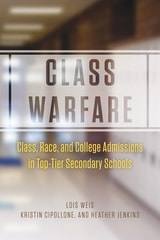
Class Warfare
Class, Race, and College Admissions in Top-Tier Secondary SchoolsLois Weis, Kristin Cipollone, and Heather Jenkins
University of Chicago Press, 2014
Drawing on deep and sustained contact with students, parents, teachers, and administrators at three iconic secondary schools in the United States, the authors unveil a formidable process of class positioning at the heart of the college admissions process. They detail the ways students and parents exploit every opportunity and employ every bit of cultural, social, and economic capital they can in order to gain admission into a “Most Competitive” or “Highly Competitive Plus” university. Moreover, they show how admissions into these schools—with their attendant rankings—are used to lock in or improve class standing for the next generation. It’s a story of class warfare within a given class, the substrata of which—whether economically, racially, or socially determined—are fiercely negotiated through the college admissions process.
In a historic moment marked by deep economic uncertainty, anxieties over socioeconomic standing are at their highest. Class, as this book shows, must be won, and the collateral damage of this aggressive pursuit may just be education itself, flattened into a mere victory banner.
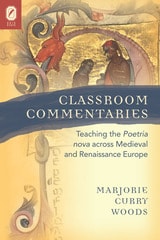
Classroom Commentaries
Teaching the Poetria nova across Medieval and Renaissance EuropeMarjorie Curry Woods
The Ohio State University Press, 2009

Classroom Management
Daniel Duke
University of Chicago Press, 1979
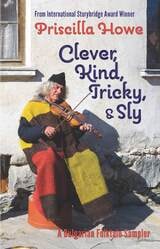
Clever, Kind, Tricky, and Sly
A Bulgarian Folktale SamplerPriscilla Howe
Parkhurst Brothers, Inc., 2020
Each folktale expresses an aspect of Bulgarian folk culture, presents characters who are clever enough to avoid ill-conceived courtship, kind enough to esteem even the poorest of neighbors, tricky enough to evade shysters, or sly enough to remain independent in the face of great power. Each of these traits has helped the Bulgarian people survive and thrive in a relatively poor, mountainous environment for more than fourteen centuries. In celebrating these traits and others, the folktales collected here honor the character of a people.
Climbing a Broken Ladder
Contributors of College Success for Youth in Foster CareNathanael J. Okpych
Rutgers University Press, 2021
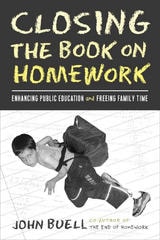
Closing The Book On Homework
Enhancing Public EducationJohn Buell
Temple University Press, 2003

Closing the Education Achievement Gaps for African American Males
Theodore S. Ransaw
Michigan State University Press, 2016
The distinguished and expert contributors whose work comprises this volume include an achievement-gap specialist for males of color, two psychologists, a math teacher, an electrical engineer, a former school principal, a social worker, and a former human rights commissioner. From black male learning styles to STEM, this book shows that issues pertaining to educational outcomes for black males are nuanced and complex but not unsolvable.
With its combination of fresh new approaches to closing achievement gaps and up-to-date views on trends, this volume is an invaluable resource on vital contemporary social and educational issues that aims to improve learning, equity, and access for African American males.
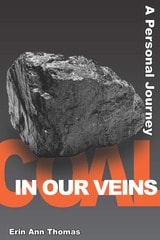
Coal in our Veins
A Personal JourneyErin Ann Thomas
Utah State University Press, 2012
In Coal in Our Veins, Erin Thomas employs historical research, autobiography, and journalism to intertwine the history of coal, her ancestors' lives mining coal, and the societal and environmental impacts of the United States' dependency on coal as an energy source. In the first part of her book, she visits Wales, native ground of British coal mining and of her emigrant ancestors. The Thomases' move to the coal region of Utah—where they witnessed the Winter Quarters and Castle Gate mine explosions, two of the worst mining disasters in American history—and the history of coal development in Utah form the second part.
Then Thomas investigates coal mining and communities in West Virginia, near her East Coast home, looking at the Sago Mine collapse and more widespread impacts of mining, including population displacement, mountain top removal, coal dust dispersal, and stream pollution, flooding, and decimation. The book's final part moves from Washington D.C.—and an examination of coal, CO2, and national energy policy—back to Utah, for a tour of a coal mine, and a consideration of the Crandall Canyon mine cave-in, back to Wales and the closing of the oldest operating deep mine in the world and then to a look at energy alternatives, especially wind power, in West Virginia and Pennsylvania.
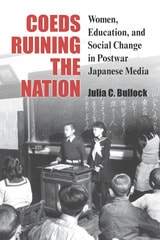
Coeds Ruining the Nation
Women, Education, and Social Change in Postwar Japanese MediaJulia C. Bullock
University of Michigan Press, 2019
This is the first book in English to explore the arguments for and against coeducation as presented in newspaper and magazine articles, cartoons, student-authored school newsletters, and roundtable discussions published in the Japanese press as these reforms were being implemented. It complicates the notion of the postwar years as a moment of rupture, highlighting prewar experiments with coeducation that belied objections that the practice was a foreign imposition and therefore “unnatural” for Japanese culture. It also illustrates a remarkable degree of continuity between prewar and postwar models of femininity, arguing that Occupation-era guarantees of equal educational opportunity were ultimately repurposed toward a gendered division of labor that underwrote the postwar project of economic recovery. Finally, it excavates discourses of gender and sexuality underlying the moral panic surrounding coeducation to demonstrate that claims of rampant sexual deviance and other concerns were employed as disciplinary mechanisms to reinforce an ideology of harmonious gender complementarity and to dissuade women from pursuing conventionally masculine prerogatives.

Cognition, Education, and Deafness
Directions for Research and InstructionDavid S. Martin
Gallaudet University Press, 1985

Cold War Exile
The Unclosed Case of Maurice HalperinDon S. Kirschner
University of Missouri Press, 1995
In 1953 Maurice Halperin was called before the Senate Internal Security Subcommittee to defend himself on charges of espionage. He was accused of having supplied Soviet sources with classified material from the Office of Strategic Services while he was an employee during World War II.
The Cold War was in full force. McCarthyism was at its peak. Caught up in the rapids of history, Maurice Halperin's life spun out of control. Denying the charges but knowing he could never fully clear his name, Halperin fled to Mexico and then, to avoid extradition, to Moscow. Among the friends he made there were British spy Donald MacLean and Cuban revolutionary leader Che Guevara. Disenchanted with socialism in the Soviet Union, he accepted Guevara's invitation to come to Havana in 1962. There he worked for Castro's government for five years before political tension forced him to leave for Vancouver, Canada, where he now resides.
Was Halperin a spy or a scapegoat? Was he a victim of Red- baiting or a onetime Communist espionage agent who eventually lost faith in Communism? Halperin's accuser was Elizabeth Bentley, a confessed Soviet courier who accused more than one hundred Americans of spying. Yet Bentley had no proof, and Halperin continues to maintain his innocence. One of them was lying. As Kirschner unravels the engrossing facts of the case--utilizing FBI files and dozens of interviews, including extensive interviews with Halperin himself--the reader becomes the investigator in a riveting real-life spy mystery. Along the way Kirschner offers new material on the OSS and further disturbing information about J. Edgar Hoover's use of his considerable power.
Maurice Halperin has lived a life like few Americans in our century. A left-wing American exile, he experienced two socialist worlds from the inside. In recounting the unclosed case of Maurice Halperin, Cold War Exile is both a gripping account of that remarkable life and a significant contribution to our understanding of a fascinating and controversial era in American political history.
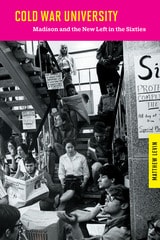
Cold War University
Madison and the New Left in the SixtiesMatthew Levin
University of Wisconsin Press, 2013
Collaborations & Innovations
Supporting Multilingual Writers across Campus UnitsNancy DeJoy and Beatrice Quarshie Smith
University of Michigan Press, 2017
The chapters in this volume demonstrate that teaching effective communication skills to all students in ways that recognize the needs of multiple language users requires a shift in perspective that approaches multilingualism as an opportunity that is enhanced by the internationalization of higher education because it makes transparent the problems of current structures and disciplinary approaches in accessing those opportunities. A goal of this collection is to address the economic, structural, disciplinary, and pedagogical challenges of making this type of shift in bold and compassionate ways.
Chapters are organized into these four parts--Program-Level Challenges and Opportunities, Opportunities for Enhancing Teacher Training, Multilingualism and the Revision of First-Year Writing, and Integrating Writing Center Insights—and reflect the perspectives of a variety of university language settings. The contributions feature collaborative models and illustrate the need to rethink structures, pedagogies, assessment/evaluation processes, and teacher training for graduate and undergraduate students who will teach writing and other forms of communication.
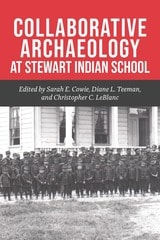
Collaborative Archaeology at Stewart Indian School
Sarah E. Cowie
University of Nevada Press, 2019
This edited volume addresses the theory, methods, and outcomes of collaborative archaeology conducted at the Stewart Indian School site and is a genuine collective effort between archaeologists, former students of the school, and other tribal members. With more than twenty contributing authors from the University of Nevada, Reno, Nevada Indian Commission, Washoe Tribal Historic Preservation Office, and members of Washoe, Paiute, and Shoshone tribes, this rich case study is strongly influenced by previous work in collaborative and Indigenous archaeologies. It elaborates on those efforts by applying concepts of governmentality (legal instruments and practices that constrain and enable decisions, in this case, regarding the management of historical populations and modern heritage resources) as well as social capital (valued relations with others, in this case, between Native and non-Native stakeholders).
As told through the trials, errors, shared experiences, sobering memories, and stunning accomplishments of a group of students, archaeologists, and tribal members, this rare gem humanizes archaeological method and theory and bolsters collaborative archaeological research.
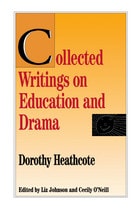
Collected Writings on Education and Drama
Dorothy Heathcote
Northwestern University Press, 1984
In this lively collection of essays and talks from 1967-80, Heathcote shares the findings of her groundbreaking work in the application of theater techniques and play to classroom teaching. She provides a time-tested philosophy on the value of dramatic activity in breaking down barriers and overcoming inertia. Her insistence that teachers must step down from their pedestals and immerse themselves in the possibility of the moment makes for magical and challenging reading.
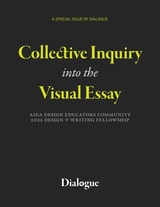
Collective Inquiry into the Visual Essay
AIGA Design Educators Community 2022 Design + Writing FellowshipWritten by AIGA Design Educators Community and Edited by Rebecca Tegtmeyer and Liese Zahabi
Michigan Publishing Services, 2023
The topics and outcomes presented within these pages represent a wide range of ideas and visual language, from examining our negotiations with nature, using design as a tool to address issues of racial justice and civic engagement, exploring the reproductive life-cycle through the lens of a designer, concepts centered on the idea of the visual essay itself, and many others. Each essay takes into account the characteristics of visual language as a powerful mechanism for delivering a message.
As facilitators of this inaugural fellowship, the AIGA Design Educators Community is pleased with the outcomes and see this publication as a reminder and perhaps starting point for further elevating creative and scholarly research in the discipline of graphic design.
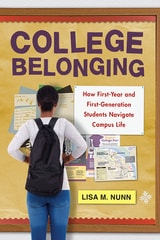
College Belonging
How First-Year and First-Generation Students Navigate Campus LifeLisa M. Nunn
Rutgers University Press, 2021

College Choices
The Economics of Where to Go, When to Go, and How to Pay for ItEdited by Caroline M. Hoxby
University of Chicago Press, 2004
In College Choices, Caroline Hoxby and a distinguished group of economists show how students and their families really make college decisions—how they respond to financial aid options, how peer relationships figure in the decision-making process, and even whether they need mentoring to get through the admissions process. Students of all sorts are considered—from poor students, who may struggle with applications and whether to continue on to college, to high aptitude students who are offered "free rides" at elite schools. College Choices utilizes the best methods and latest data to analyze the college decision-making process, while explaining how changes in aid and admissions practices inform those decisions as well.
College Knowledge for the Community College Student
David Schoem and Lynn Dunlap
University of Michigan Press, 2011
Most students arrive at college not fully aware of just how different the college experience is from other prior experiences. The intellectual and social expectations, as well as the rules and regulations, are different, and not just different from high school.
While all college students must learn to negotiate the transition to college, the challenges for those who enroll in community colleges are unique. Many community college students work, and many work full-time. Many also have family responsibilities—children, partners, and aging parents. A majority of community college students are the first in their family to enroll in college. Some students—both from abroad and from the United States--do not speak English fluently. Some students are retired military personnel. and some are seeking to make a career change. This book strives to speak to this diversity as well as to situations specific to today’s U.S. community college students.
College Knowledge for the Community College Student is a road map and tour guide for a successful community college experience and education. Tips are based on research and the wisdom and advice of other community college students and are designed to help students learn, succeed, graduate, and have a rewarding and fulfilling community college experience.

College Knowledge for the Jewish Student
101 TipsDavid Schoem
University of Michigan Press, 2010
"Students and parents alike will benefit from reading David Schoem's well-written, lively, and documented guide."
---Elie Wiesel
“This is a wonderful sequel to Schoem’s very successful College Knowledge: 101 Tips. As I read through this new volume, I was constantly struck that the advice offered would help all students who approach the college experience with distinctive cultural backgrounds and commitments. Indeed all prospective college students, and their parents, can benefit from this serious yet delightful, well-written and incisive book of advice. I intend to buy one for each of my grandchildren.”
---Harold Shapiro, former president, Princeton University; former president, University of Michigan
For the individual Jewish student who enters college, it is critical that he or she come intellectually, emotionally, and spiritually prepared for the academic and social experience that awaits. College is a qualitatively different experience than high school, and students’ expectations need to be set appropriately. The transition from high school to college is so significant that it can be difficult for most without some preparation.
College Knowledgefor the Jewish Student: 101 Tips is the perfect guide for students heading off to college with high expectations for learning, academic success, personal growth, and independence. Through lively tips and compelling student stories about life at college, it offers thoughtful, practical information for every Jewish student who wants to make a successful transition.
College Knowledge for the Jewish Student includes tips on the academic aspects of college life, like communicating with faculty, learning what is where on campus, where to go for help with coursework, how to manage one’s time for a balanced experience, etc. In addition, it offers advice on dealing with family, finances, health, and safety, as well as the many social and emotional aspects of this important rite of passage.
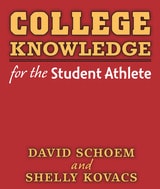
College Knowledge for the Student Athlete
David Schoem and Shelly Kovacs
University of Michigan Press, 2011
This book was written to support the academic success of student athletes—whether at a large or small university or college, whether team or individual sport, whether women or men, whether on scholarship or not.
While all college students must learn to negotiate the complex transition from high school to college, student athletes face unique challenges, including the complicated set of regulations set out by the NCAA and individual conferences that determine eligibility. The current environment in college athletics makes it even more critical that student athletes understand what they need to do academically and how to avoid potential situations that could jeopardize their athletic careers.
College Knowledge for the Student Athlete is a road map and tour guide for a successful career as a student athlete. Tips are based on research and the authors’ experience, as well as the wisdom and advice of hundreds of former student athletes.