Results by title
3388 books match the query 'Fiction' and 125 start with d
DANCE UNTO THE LORD
GEORGE DELL
The Ohio State University Press, 2001
George Dell’s Dance unto the Lord is a compelling fusion of history and fiction. Set in 1848 to 1852, when Ohio was considered to be the West, Dance unto the Lord transports the readers to Union Village, a Shaker community in southwestern Ohio. The novel traces the coming of age of Richard and Ruth, young people who wish to marry but are forbidden to do so by Richard’s parents. In desperation, Richard runs away to Cincinnati. Ruth, too, leaves her family. She settles in Union Village and eventually becomes a teacher at the Shaker school. Torn between her desire for freedom and the security of life with the Shakers, Ruth becomes increasingly more immersed in the Shaker society while dreaming of Richard and a life outside the community. Meanwhile, through his experiences with an ill-fated blacksmith’s shop and its owners, Richard learns that life in the city can be complicated and painful.
As he traces Richard’s and Ruth’s experiences, Dell vividly re-creates the texture of rural and city life in mid-nineteenth-century Ohio, providing a fascinating, well-researched account of a long-gone era. Dance unto the Lord provides wonderfully detailed descriptions of a Shaker community and life style. This book will be compelling reading for anyone interested in the time period, the Shakers, or simply a good story.
DECIPHERING RACE
WHITE ANXIETY, RACIAL CONFLICT, & THE TURN TO FICTION IN MID-VICTORIAN ENGLISH PROSELaura Callanan
The Ohio State University Press, 2005
In this manner these narratives confront the complexity, indeterminacy, and irrationality of both racial difference and the systems put in place to understand that difference. Deciphering Race unpacks this narrative turn to the aesthetic in writings by white English individuals and thus reveals the instability at the heart of cultural understanding of race and racial tropes at mid-century. This series of readings will help to see how figurative structures, while providing a bridge between different cultures and epistemologies, also reinforce a distance that keeps groups separate. Only by disentangling these structures, by addressing and unpacking our assumptions and narratives about those different from ourselves, and by understanding our deep cultural anxiety and investment in these ways of talking about one another, can we begin to create the conditions for productive, local understanding between different cultures, races, and communities.

Daguerreotypes and Other Essays
Isak Dinesen
University of Chicago Press, 1979
"Through these daguerreotypes we begin to understand other periods, the renunciations of World War I, the purpose of houses and mansions, of ritual ceremonials, such as tatooing. We are given a fresh and vivid view of the women's movement . . . which urges that what our 'small society' needs beyond human beings who have demonstrated what they can do, is people who are. 'Indeed, our own time,' she wrote in 1953, 'can be said to need a revision from doing to being.' She demonstrated it in her own work and craft, with courage and with dignity. This collection is as real as a gallery of old daguerreotypes, moving and unfaded. The work, as Hannah Arendt says, of a wise woman."—Robert Kirsch, Los Angeles Times
"These essays . . . have the flavor of good conversation: humorous, easy, personal but not oppressive, the distillation of reading, thought, and experience. Their subjects are of surprisingly current interest. We need make no concessions to the past, need not set our watches back to 'historical.' Isak Dinesen was not a faddish thinker. . . . 'In history it is always the human element that has a chance for eternal life,' Dinesen remarks, and she gives these essays their chance."—Penelope Mesic, Chicago
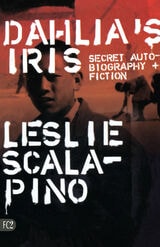
Dahlia's Iris
Secret Autobiography and FictionLeslie Scalapino
University of Alabama Press, 2003

Daisy
PoemsRachel Feder
Northwestern University Press, 2025
A narrative-poetic retelling of The Great Gatsby from the perspective of a 1990s teen poet
Daisy: Poems is a captivating and imaginative take on The Great Gatsby that puts F. Scott Fitzgerald’s 1925 classic in the hands of a messy, ambitious, and possibly devious teen poet. From her privileged yet precarious perch in the roaring 1990s, Daisy navigates the expectations of her parents, boyfriend, and lover, alongside her own artistic ambitions, as she explores whether freedom is what she truly desires—and wonders if it’s even possible. Rachel Feder puts a new spin on beloved characters: Jay, longtime and secret lover; Nick, somewhat mysterious and always meddling cousin; and Jordyn, best friend and companion in doomed relationships. A meditation on juvenilia, constructions of femininity, the purity myth, and canonical literary silences, Daisy is told in sparse, evocative verse that pulsates with youthful passion and offers a new elegy for our lost American dreams.
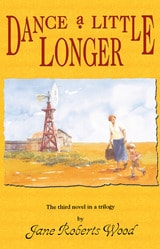
Dance a Little Longer
The Third Novel in a TrilogyJane Roberts Wood
University of North Texas Press, 2000
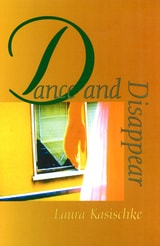
Dance and Disappear
Laura Kasischke
University of Massachusetts Press, 2002
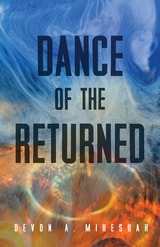
Dance of the Returned
Devon A. Mihesuah
University of Arizona Press, 2022

Dances with Sheep
The Quest for Identity in the Fiction of Murakami HarukiMatthew Carl Strecher
University of Michigan Press, 2002
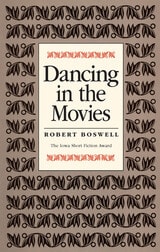
Dancing in the Movies
Robert Boswell
University of Iowa Press, 1986
Encompassing a vast gamut of personalities, situations, and emotions, these stories penetrate our motives for doing what is right. Often there is no right or wrong, and the characters' motives for the choices they make are as diverse as the childhood memories they cherish and abhor. In the end, this book probes individual impulse and responsibility, creating stories so unerringly authentic that they become—irrepressibly—part of everyone who reads them.
"The Darkness of Love" narrates three days in the life of a black policeman, distressed by his inner fears of racism and irresistibly attracted by his wife's sister. In "Dancing in the Movies" a college student returns to his hometown, where he finds his girlfriend—a heroin addict—and tries to convince her to overcome her habit. There are stories of men at war, of lovers trying to begin a relationship, of others trying to sustain their love. Each story revolves around characters with a choice to make, and Robert Boswell renders these characters in all of their fine, vulnerable, and relentless attributes.
With this prize-winning collection, Boswell proves himself a mature craftsperson, weaving stories both poignant and profound. Each story is a vision of life, alternately dark and joyous, gritty and hopeful.

Dancing on Blades
Rare and Exquisite Folktales from the Carpathian MountainsCsenge Virág Zalka
Parkhurst Brothers, Inc., 2018

Dare the Sea
StoriesAli Hosseini
Northwestern University Press, 2023
The stories in Dare the Sea explore Iran’s landscape, culture, and the undercurrent of change affecting its people—both in Iran and the United States. The stories in the first half of the collection are set in Iran in the time before and just after the Iranian Revolution of 1979. Each tale discloses the obstacles rural Iranians lived with on a daily basis and the exigencies of survival: petty theft, corruption, drug trafficking, religion, and love. Stories in the second half take place in exile, where characters are seemingly dropped into American locales like the Midwest or Hawaii, taking in their situation with only the survival skills they’ve learned in their own land and enduring the hardships of being strangers in a new country.
Loosely interconnected by reappearing characters, the stories in Dare the Sea are strongly linked by the country of Iran, its landscape, its history, and its hold on its people.
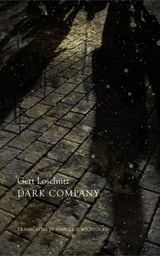
Dark Company
A Novel in Ten Rainy NightsGert Loschütz
Seagull Books, 2012

Dark Side of Love
Rafik Schami and Anthea Bell
Haus Publishing, 2011
Dark Stones
Dias de Melo, Introduction by Maria João Dodman, Translated by Gregory McNab
Tagus Press, 2021
This expanded Tagus Press edition features Gregory McNab’s masterful 1988 translation of Dark Stones and a new introduction from Maria João Dodman. As an insider from the island of Pico, Dias de Melo writes in a realistic style that is passionate and forceful, yet tenacious, without ever losing certainty and control.

Darktown Strutters
A NovelWesley Brown
University of Massachusetts Press, 2000
Data from the Decade of the Sixties
A NovelThanassis Valtinos
Northwestern University Press, 2000
Just as Greece today struggles to adapt to a shifting political landscape, so Greece in the 1960s was convulsed by the collision of tradition and cultural transformation. In Data from the Decade of the Sixties, Valtinos assembles voices, stories, and news clips that capture the transformation of Greece, the monarchy giving way to a republic via dictatorship, the industrialization of its agricultural society, and the replacement of arranged marriages with love matches.
The many voices in this tour de force coalesce in a bricolage of documents: personal letters between friends and family, news reports, advertisements, and other written ephemera. As governments fall, sexologists, fortune-tellers, garage owners, and lonely matrons advertise their specialties and fantasies in want ads, while the young and lonely find escape within the cheap novels, movies, and gossip columns that enliven their barren existence.
Together these testimonies illuminate the tumult of 1960s Greece, where generations and values clash and Greek society struggles to adapt. Valtinos captures the pulse of a decade, portraying the spirit of the century in Greece and throughout the world.
Daughters of Decadence
Women Writers of the Fin de SiecleShowalter, Elaine
Rutgers University Press, 1993
Day of Days
John Smolens
Michigan State University Press, 2020

Daybreak Birdsong Always Wakes Him
The Lives of Billy the KidPamela Ryder
University of Alabama Press, 2026
A haunting reimagining of Billy the Kid—myth, violence, and regret collide in a lyrical coming-of-age story woven with history, legend, and the omnipresence of birds.
Daybreak Birdsong Always Wakes Him: The Lives of Billy the Kid by Pamela Ryder is a coming-of-age saga like no other. It reaches beyond the myth of the reckless and romantic rebel, the murdering gunslinger, and the scrappy outlaw. His story is one of survival, mayhem, and regret. Billy is portrayed as a complex and authentic figure. At times he is ruthless, often sympathetic, always clever and engaging. Yet he remains haunted by loneliness as he rides ever closer to the end of his short and violent life.
The child of Irish immigrants, Billy came of age amid hardship and lawlessness, forced to navigate a world that offered him little mercy. From his grim childhood in the tenements of New York to the unforgiving deserts of New Mexico, his journey is marked by loss, chaos, and fleeting moments of grace. He was a boy who became an outlaw, forever running from his past toward an inevitable fate.
Told through shifting perspectives and enriched by Billy’s keen observations of birds, landscapes, and the lives he has taken, the novel unfolds in lyrical, unflinching prose. His fascination with birds, whose freedom stands in stark contrast to his own doomed flight, threads through the narrative. A meditation on myth, mortality, and the stories we tell about ourselves, Daybreak Birdsong Always Wakes Him is a singular reimagining of the American West. It does not flinch from the blood or the beauty of a life lived on the edge of history.

Daydreamers
A NovelAlvin Lu
University of Alabama Press, 2025
A fragmented manuscript left unfinished, a voice inherited by time, a ghost lingering in the margins—Daydreamers is what remains when fiction forgets its fiction and when the story you’re translating becomes your own.
Upon the discovery of an unfinished manuscript left behind by his late father, a son’s act of literary translation quickly descends into a ghost story of family rumors, art, and the history we inherit, whether we want them or not. As the son translates the mysterious text, what emerges is a narrative haunted by betrayal, artistic rivalry, and a murder in California’s Chinese literary underground—one that was never solved but perhaps was fictionalized.
Cycling between San Francisco, Los Angeles, China, and Taiwan, the novel unfolds across generations of Chinese immigrants and diaspora artists, linked by tenuous friendships, publishing feuds, and the obscure threads of an act of violence. At the center: a spectral woman named Lena Wu, the object of literary fixation, political allegory, and real-life scandal.
Was the manuscript meant as a novel or a confession? Was the story’s central figure—Lena Wu—a real person or an idea and persona passed between generations of writers, each shaping her into their own myth? And what is the narrator’s responsibility when his father’s version of events begins to implicate those still living?
Told through letters, interviews, travelogues, and unclaimed fragments, Daydreamers moves through foggy cities, cluttered studios, desert highways, and vanished publishing circles—where stories are currency and silence is survival. Lu constructs a novel that is both noir and anti-noir, both memoir and anti-memoir—a mystery that resists solving, and a translation that becomes its own original work.
Days of Plenty, Days of Want
Patricia Preciado Martin
University of Arizona Press, 1999
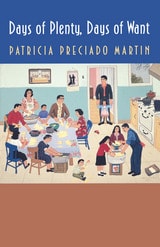
In the pages of this book are people so real you'll swear you've met them, situations so familiar you'll nod in recognition. Two of these stories have won prizes in Chicano literary contests; all will win the hearts of readers. Through them, Patricia Preciado Martin reminds us that freedom and self-expression are important in fulfilling our potential—and, more important, that a large part of this process requires acknowledging our heritage as a priceless gift whose relevance in our lives cannot be ignored.

Days on Earth
The Dance of Doris HumphreyMarcia B. Siegel
Duke University Press, 1993
Dead Man's Rapids
William Durbin
University of Minnesota Press, 2018
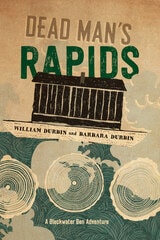
When 13-year-old Ben Ward left school to work with his Pa in a logging camp, a winter of peeling potatoes and setting tables wasn’t the adventure he had in mind. Still, come spring, he signs up for the log drive with his friend Nevers, wishing the head cook on the wanigan (the floating cook shack) could be someone other than his crabby Pa. Fate, with a wink, complies, and Pa quits—only to be replaced by someone far worse: Pete Sardman, aka Old Sard, a cantankerous character complete with a greasy apron, an eye patch, one deaf ear, and plenty to say.
Luckily, there’s also the rest of the crew—a colorful, sometimes outrageous company of men. Together Ben and Nevers endure freezing weather, dangerous rapids, logjams, storms and floods, and a number of gripping tall tales, along the way learning about logging on the river and a whole lot more about life.
Taking up where Blackwater Ben left off, Dead Man’s Rapids returns to the north woods of Minnesota in the late nineteenth century, and with warmth, humor, and attention to historical detail engages readers both young and old.
Dead Neon
Tales of Near-Future Las VegasTodd Pierce
University of Nevada Press, 2010
Las Vegas is considered a modern icon of excess. It offers every imaginable extreme of greed, pleasure, and despair, all supported by technology that enhances fantasy and allows residents and visitors alike to forget reality and responsibility. The authors of the fourteen stories in Dead Neon imagine Sin City in the near future, when excess has led to social, environmental, or economic collapse. Their stories range from futuristic casinos to the seared post-apocalyptic desert, from the struggle to survive in a repressive theocracy to the madness of living in a world where most life forms and all moral codes have vanished. Dead Neon explores the possible future of America by examining the near future of Las Vegas. The authors, all either Vegas-based or intimately familiar with the city, capture its unique rhythms and flavor and probe its potential for evoking the fullest range of the human spirit in settings of magic, horror, and despair.

Deadly Edge
A Parker NovelRichard Stark
University of Chicago Press, 2010
One of the most hard-boiled and violent entries in the classic series starring Parker, the toughest heister out there
Richard Stark's Parker novels are the hardest of hard-boiled, classic crime novels where the heists are huge, the body counts are high, and the bad guys usually win.
The Parker novels have been a huge influence on countless writers and filmmakers, including Quentin Tarantino, Stephen King, George Pelecanos, Colson Whitehead, Lucy Sante, John Banville, and many more. Their stripped-down language and hard-as-nails amorality create an unforgettable world where the next score could be the big one, but your next mistake could also be your last. There's nothing else like them.
Deadly Edge bids a brutal adieu to the 1960s as Parker robs a rock concert, and the heist goes south. Soon Parker finds himself—and his woman, Claire—menaced by a pair of sadistic, strung-out killers who want anything but a Summer of Love. Parker has a score to settle while Claire’s armed with her first rifle—and they’re both ready to usher in the end of the Age of Aquarius.
Deaf American Prose, 1830-1930
Jennifer L. Nelson
Gallaudet University Press, 2013
This new anthology showcases the work of Deaf writers during a critical formative period in their history. From 1830 to 1930, these writers conveyed their impressions in autobiographies, travel narratives, romances, non-fiction short stories, editorials, descriptive pieces, and other forms of prose. The quick, often evocative snapshots and observations featured here, many explicitly addressing deafness and sign language, reflect their urgency to record Deaf American life at this pivotal time. Using sensory details, dialogue, characterization, narrative movement, and creative prose, these writers emphasized the capabilities of Deaf people to counter events that threatened their way of life.
The volume opens with “The Orphan Mute,” a sentimental description of the misfortune of deaf people written by John Robertson Burnet in 1835. Less than 50 years later, James Denison, the only Deaf delegate at the 1880 Convention of Instructors of the Deaf in Milan, published his “impressions” that questioned the majority’s passage of a strict oralism agenda. In 1908, Thomas Flowers wrote “I was a little human plant,” a paean to education without irony despite the concurrent policy banning African Americans from attending Gallaudet College. These and a host of other Deaf writers—Laurent Clerc, Kate Farlow, Edmund Booth, Laura Redden Searing, Freda W. Bauman, Vera Gammon, Isaac H. Benedict, James Nack, John Carlin, Joseph Mount and many more—reveal the vitality and resilience of Deaf writers in an era of wrenching change.
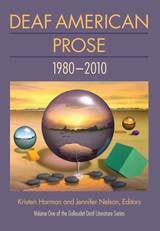
Deaf American Prose, 1980–2010
Kristen C. Harmon
Gallaudet University Press, 2012
In Deaf life, the personal narrative holds sway because most Deaf individuals recall their formative years as solitary struggles to understand and to be understood. Few deaf people in the past related their stories in written form, relying instead on a different kind of “oral” tradition, that of American Sign Language. During the last several decades, however, a burgeoning bilingual deaf experience has ignited an explosion of Deaf writing that has pushed the potential of ASL-influenced English to extraordinary creative heights. Deaf American Prose: 1980–2010 presents a diverse cross-section of stories, essays, memoirs, and novel excerpts by a remarkable cadre of Deaf writers that mines this rich, bilingual environment.
The works in Deaf American Prose frame the Deaf narrative in myriad forms: Tom Willard sends up hearing patronization in his wicked satire “What Exactly Am I Supposed to Overcome?” Terry Galloway injects humor in “Words,” her take on the identity issues of being hard of hearing rather than deaf or hearing. Other contributors relate familiar stories about familiar trials, such as Tonya Stremlau’s account of raising twins, and Joseph Santini’s short story of the impact on Deaf and hearing in-laws of the death of a son. The conflicts are well-known and heartfelt, but with wrinkles directly derived from the Deaf perspective.
Several of the contributors expand the Deaf affect through ASL glosses and visual/spatial elements. Sara Stallard emulates ASL on paper through its syntax and glosses, and by eliminating English elements, a technique used in dialogue by Kristen Ringman and others. Deaf American Prose features the work of other well-known contemporary Deaf writers, including co-editor Kristen Harmon, Christopher Jon Heuer, Raymond Luczak, and Willy Conley. The rising Deaf writers presented here further distinguish the first volume in this new series by thinking in terms of what they can bring to English, not what English can bring to them.

Dear Future Occupants
Keith Stahl
University of Wisconsin Press, 2026
It is 1979 and patriarch Bud relocates his family to his conservative hometown of Greenhill, Connecticut. Despite dubious restaurant experience, he uses his wife’s inheritance to purchase a diner in hopes of proving himself. Things begin to fall apart when police find an all-too-literal skeleton in the family’s basement. A series of misfortunes, accidents, and comedic events follow, including the creation of a vending-machine-sandwich/drug-dealing business and a protest-turned-siege at the local hospital.
Charting one family’s rise to subversive glory in a genteel New England town, this colonial gothic novel is told through found documents and multiple perspectives, including those of Bud; Victor, the middle son; and Herman, the ahead-of-their time, nonbinary, eldest child whose journal entries serve as a kind of Greek chorus throughout. In this breathless, exuberant work, Keith Stahl brilliantly captures the foundational dichotomies at the heart of the American experience: a puritanical distrust of anything fun and a nearly anarchic love of pleasure and freedom. Moving and bitterly humorous, Dear Future Occupants is a paean to the working class and the diversity that holds a family together.
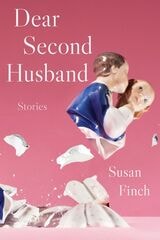
Dear Second Husband
StoriesSusan Finch
Carnegie Mellon University Press, 2026
Set in the rapidly changing city of Nashville, Tennessee, the characters in Dear Second Husband struggle to make their marriages, friendships, and families thrive despite the pressures of modern life. An unapologetic widower, a self-destructive musician, a teacher grieving a miscarriage, and a mother trying to be everything for everyone rely on resilience and persistence to find joy and belonging in the fragile connections between one another.

Death Before Compline
Short Stories by Sharan NewmanSharan Newman
Arizona Center for Medieval and Renaissance Studies, 2012
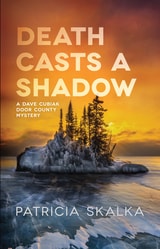
Death Casts a Shadow
Patricia Skalka
University of Wisconsin Press, 2022
The scene bears all the characteristics of an accidental fall, not unheard of for a person of her age, but something is not adding up. Later that week, an explosion in an ice fishing shack on the frozen bay leads to the discovery of another body, burned beyond recognition. Was this the widow’s missing handyman? Could the two deaths be related? With what has become a hallmark for books in the series, past and present collide as Cubiak’s search for answers uncovers the sad legacy of loneliness and the disquieting links between wealth and poverty on the peninsula.

Death Claims
A Dave Branstetter MysteryJoseph Hansen
University of Wisconsin Press, 2004
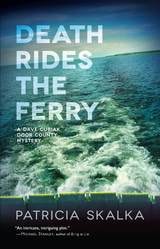
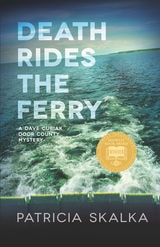
Death Rides the Ferry
Patricia Skalka
University of Wisconsin Press, 2018
The jubilant mood sours when an unidentified passenger is found dead on a ferry. Longtime residents recall with dismay the disastrous festival decades earlier, when another woman died and a valuable sixteenth-century instrument—the fabled yellow viol—vanished, never to be found.
Cubiak follows a trail of murder, kidnapping, and false identity that leads back to the calamitous night of the twin tragedies. With the lives of those he holds most dear in peril, the sheriff pursues a ruthless killer into the stormy northern reaches of Lake Michigan.
Death Rides the Ferry
Patricia Skalka
University of Wisconsin Press, 2020
The jubilant mood sours when an unidentified passenger is found dead on a ferry. Longtime residents recall with dismay the disastrous festival decades earlier, when another woman died and a valuable sixteenth-century instrument—the fabled yellow viol—vanished, never to be found.
Cubiak follows a trail of murder, kidnapping, and false identity that leads back to the calamitous night of the twin tragedies. With the lives of those he holds most dear in peril, the sheriff pursues a ruthless killer into the stormy northern reaches of Lake Michigan.
Death Sentences
Kawamata Chiaki
University of Minnesota Press, 2012
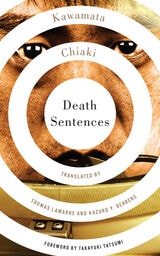
Japan, 1980s: A special police squad is tracking down one of the “afflicted” to recover the “stuff.” Although the operation seems like a drug bust, the “stuff” is actually some kind of text. Death Sentences—a work of science fiction that shares its conceit with the major motion picture The Ring—tells the story of a mysterious surrealist poem, penned in the 1940s, which, through low-tech circulation across time, kills its readers, including Arshile Gorky and Antonin Artaud, before sparking a wave of suicides after its publication in 1980s Japan. Mixing elements of Japanese hard-boiled detective story, horror, and science fiction, the novel ranges across time and space, from the Left Bank of Paris to the planet Mars.
Paris, 1948: André Breton anxiously awaits a young poet, Who May. He recalls their earlier encounter in New York City and the mysterious effects of reading Who May’s poem “Other World.” Upon meeting, Who May gives Breton another poem, “Mirror,” an even more unsettling work. Breton shares it with his fellow surrealists. Before Breton can discuss the poem with him, Who May vanishes. Who May contacts Breton about a third poem, “The Gold of Time,” and then slips into a coma and dies (or enters another dimension). Copies of the poem are mailed to all of Who May’s friends—Breton, Gorky, Paul Éluard, Marcel Duchamp, and other famous surrealists and dadaists. Thus begins the “magic poem plague.”
Death Sentences is the first novel by the popular and critically acclaimed science fiction author Kawamata Chiaki to be published in English. Released in Japan in 1984 as Genshi-gari (Hunting the magic poems), Death Sentences was a best seller and won the Japan Science Fiction Grand Prize. With echoes of such classic sci-fi works as George Orwell’s 1984, Ray Bradbury’s Fahrenheit 451, William Gibson’s Neuromancer, and Philip K. Dick’s Martian Time-Slip, Death Sentences is a fascinating mind-bender with a style all its own.
Death Stalks Door County
Patricia Skalka
University of Wisconsin Press, 2016
Forced to confront the past, the morose Cubiak moves beyond his own heartache and starts investigating, even as a popular festival draws more people into possible danger. In a desperate search for clues, Cubiak uncovers a tangled web of greed, betrayal, bitter rivalries, and lost love beneath the peninsula’s travel-brochure veneer. Befriended by several locals but unsure whom to trust or to suspect of murder, the one-time cop tracks a clever killer.
In a setting of stunning natural beauty and picturesque waterfront villages, Death Stalks Door County introduces a new detective series, “The Dave Cubiak Door County Mysteries.”
Finalist, Traditional Fiction 2014 Book of the Year Award, Chicago Writers Association

Death Stalks Door County
Patricia Skalka, narrated by Adam Prugh
University of Wisconsin Press, 2023
Forced to confront the past, the morose Cubiak moves beyond his own heartache and starts investigating, even as a popular festival draws more people into possible danger. In a desperate search for clues, Cubiak uncovers a tangled web of greed, betrayal, bitter rivalries, and lost love beneath the peninsula’s travel-brochure veneer. Befriended by several locals but unsure whom to trust or to suspect of murder, the one-time cop tracks a clever killer.
In a setting of stunning natural beauty and picturesque waterfront villages, Death Stalks Door County introduces a new detective series, “The Dave Cubiak Door County Mysteries.”
Finalist, Traditional Fiction 2014 Book of the Year Award, Chicago Writers Association
Death Washes Ashore
Patricia Skalka
University of Wisconsin Press, 2023
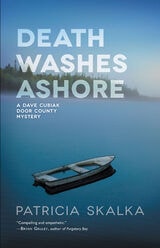
Chasing leads, the sheriff learns the victim directed a troupe of live-action role players living in an ersatz Camelot. In a setting where pretense in the norm, Cubiak must determine if suspects are who they say they are or if their made-up identities conceal a ruthless killer. As tensions escalate among neighbors unhappy about the noise and commotion, the sheriff discovers that more than one person on the peninsula has a motive for murder.

Death and the Dervish
Mesa Selimovic
Northwestern University Press, 1996
Hugely successful when published in the 1960s, Death and the Dervish is an enduring classic made into a feature length film in 1974.
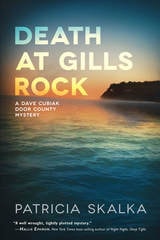
Death at Gills Rock
A Dave Cubiak Door County MysteryPatricia Skalka
University of Wisconsin Press, 2017
Investigating, Cubiak discovers that the men’s veneer of success and respectability hides a trail of lies and betrayal that stems from a single, desperate act of treachery and eventually spreads a web of deceit across the peninsula. In a dark, moody tale that spans more than half a century, Cubiak encounters a host of suspects with motives for murder. Amid broken dreams, corruption, and loss, he sorts out the truth. Death at Gills Rock is the second book in Patricia Skalka’s Dave Cubiak Door County Mystery series.
Death at Gills Rock
A Dave Cubiak Door County MysteryPatricia Skalka
University of Wisconsin Press, 2024
Investigating, Cubiak discovers that the men’s veneer of success and respectability hides a trail of lies and betrayal that stems from a single, desperate act of treachery and eventually spreads a web of deceit across the peninsula. In a dark, moody tale that spans more than half a century, Cubiak encounters a host of suspects with motives for murder. Amid broken dreams, corruption, and loss, he sorts out the truth. Death at Gills Rock is the second book in Patricia Skalka’s Dave Cubiak Door County Mystery series.
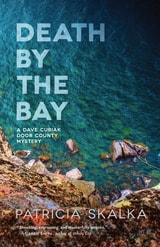
Death by the Bay
Patricia Skalka
University of Wisconsin Press, 2021

Death in Cold Water
Patricia Skalka
University of Wisconsin Press, 2018
As tourists flood the peninsula for the fall colors, Sheriff Dave Cubiak’s search for Sneider is stymied by the FBI. When human bones wash up on the Lake Michigan shore, the sheriff has more than a missing man to worry about. With the media demanding answers and two puzzles to solve, Cubiak must follow his instincts down a trail of half-remembered rumors and local history to discover the shocking truth.

Death of a Confederate Colonel
Civil War Stories and a NovellaPat Carr
University of Arkansas Press, 2007

Death of a Department Chair
A NovelLynn C. Miller
University of Wisconsin Press, 2006
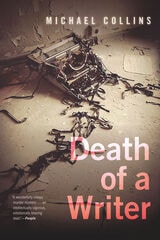
Death of a Writer
Collins, Michael
University of Iowa Press, 2021
The publication of Scream causes a storm of publicity: a whirlwind into which Adi, Horowitz and the still-incapacitated Pendleton are thrust. The novel is treated as an existential masterpiece and looks set to bring its author the success he's always sought – when, ironically, he is no longer in a condition to appreciate it – until questions begin to be asked about its content: in particular about the uncanny resemblance between Pendleton's fictional crime and a real-life, unresolved local murder. Enter Jon Ryder, a world-weary detective who could have walked off the pages of a police thriller, and the hunt for the murderer is on.
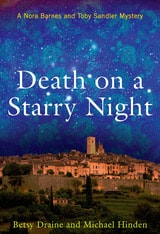
Death on a Starry Night
Betsy Draine and Michael Hinden
University of Wisconsin Press, 2016
During a week of academic squabbling, dining, romance, and suspense, the quirky conference members, one by one, fall under police suspicion and the amused gaze of Nora’s husband, Toby Sandler. But someone wants to stop Nora and Toby’s amateur sleuthing, and what happens next is no joke.

Deception on All Accounts
Sara Sue Hoklotubbe
University of Arizona Press, 2003
Sadie Walela's life is about to be turned upside down.
One morning Sadie unlocks the door at the Mercury Savings Bank and confronts a robber who's been lying in wait for her and her fellow employees. He flees after stealing money and killing her coworker. When a whirlwind of events leaves Sadie herself under suspicion, she sets out to clear her name.
This banker turned sleuth is suddenly plunged into an unfamiliar world in which people are not always as they appear-not her employer, not the homeless man she's befriended, not the police officer who takes an interest in the case, not the man she falls in love with. And, as she's beginning to imagine, not even herself.
Sadie is a blue-eyed Cherokee living in northeastern Oklahoma, a half-blood who finds she sometimes has to adapt to get by in the white man's world, much as her father's ancestors did. In this story of robbery, murder, love, and intrigue, she faces adversity at each bend in the road, but in the tradition of her people she adapts and moves forward—even if it means having to re-think her relationships and expectations.
Set against the backdrop of small-town Oklahoma and its Native culture, Deception on All Accounts draws readers into the real lives of contemporary American Indians as it shines a light on violence, corporate corruption, and prejudice in modern America. As Sadie Walela comes to terms with murder, romance, and her hopes for a career, she finds deception on all accounts.
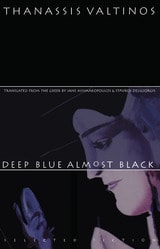
Deep Blue Almost Black
Selected FictionThanassis Valtinos
Northwestern University Press, 2000