Results by title
209 books match the query 'Mystery & Detective' and 27 start with d
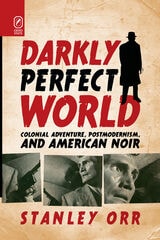
Darkly Perfect World
Colonial Adventure, Postmodernism, and American NoirStanley Orr
The Ohio State University Press, 2010
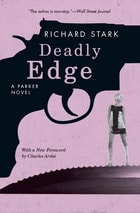
Deadly Edge
A Parker NovelRichard Stark
University of Chicago Press, 2010
One of the most hard-boiled and violent entries in the classic series starring Parker, the toughest heister out there
Richard Stark's Parker novels are the hardest of hard-boiled, classic crime novels where the heists are huge, the body counts are high, and the bad guys usually win.
The Parker novels have been a huge influence on countless writers and filmmakers, including Quentin Tarantino, Stephen King, George Pelecanos, Colson Whitehead, Lucy Sante, John Banville, and many more. Their stripped-down language and hard-as-nails amorality create an unforgettable world where the next score could be the big one, but your next mistake could also be your last. There's nothing else like them.
Deadly Edge bids a brutal adieu to the 1960s as Parker robs a rock concert, and the heist goes south. Soon Parker finds himself—and his woman, Claire—menaced by a pair of sadistic, strung-out killers who want anything but a Summer of Love. Parker has a score to settle while Claire’s armed with her first rifle—and they’re both ready to usher in the end of the Age of Aquarius.

Death Before Compline
Short Stories by Sharan NewmanSharan Newman
Arizona Center for Medieval and Renaissance Studies, 2012
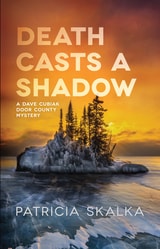
Death Casts a Shadow
Patricia Skalka
University of Wisconsin Press, 2022
The scene bears all the characteristics of an accidental fall, not unheard of for a person of her age, but something is not adding up. Later that week, an explosion in an ice fishing shack on the frozen bay leads to the discovery of another body, burned beyond recognition. Was this the widow’s missing handyman? Could the two deaths be related? With what has become a hallmark for books in the series, past and present collide as Cubiak’s search for answers uncovers the sad legacy of loneliness and the disquieting links between wealth and poverty on the peninsula.

Death Claims
A Dave Branstetter MysteryJoseph Hansen
University of Wisconsin Press, 2004
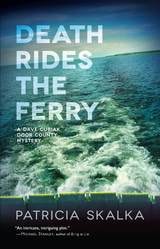
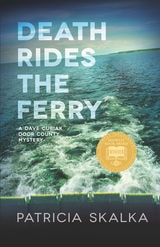
Death Rides the Ferry
Patricia Skalka
University of Wisconsin Press, 2018
The jubilant mood sours when an unidentified passenger is found dead on a ferry. Longtime residents recall with dismay the disastrous festival decades earlier, when another woman died and a valuable sixteenth-century instrument—the fabled yellow viol—vanished, never to be found.
Cubiak follows a trail of murder, kidnapping, and false identity that leads back to the calamitous night of the twin tragedies. With the lives of those he holds most dear in peril, the sheriff pursues a ruthless killer into the stormy northern reaches of Lake Michigan.
Death Rides the Ferry
Patricia Skalka
University of Wisconsin Press, 2020
The jubilant mood sours when an unidentified passenger is found dead on a ferry. Longtime residents recall with dismay the disastrous festival decades earlier, when another woman died and a valuable sixteenth-century instrument—the fabled yellow viol—vanished, never to be found.
Cubiak follows a trail of murder, kidnapping, and false identity that leads back to the calamitous night of the twin tragedies. With the lives of those he holds most dear in peril, the sheriff pursues a ruthless killer into the stormy northern reaches of Lake Michigan.
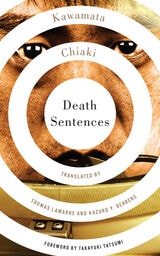
Death Sentences
Kawamata Chiaki
University of Minnesota Press, 2012
Japan, 1980s: A special police squad is tracking down one of the “afflicted” to recover the “stuff.” Although the operation seems like a drug bust, the “stuff” is actually some kind of text. Death Sentences—a work of science fiction that shares its conceit with the major motion picture The Ring—tells the story of a mysterious surrealist poem, penned in the 1940s, which, through low-tech circulation across time, kills its readers, including Arshile Gorky and Antonin Artaud, before sparking a wave of suicides after its publication in 1980s Japan. Mixing elements of Japanese hard-boiled detective story, horror, and science fiction, the novel ranges across time and space, from the Left Bank of Paris to the planet Mars.
Paris, 1948: André Breton anxiously awaits a young poet, Who May. He recalls their earlier encounter in New York City and the mysterious effects of reading Who May’s poem “Other World.” Upon meeting, Who May gives Breton another poem, “Mirror,” an even more unsettling work. Breton shares it with his fellow surrealists. Before Breton can discuss the poem with him, Who May vanishes. Who May contacts Breton about a third poem, “The Gold of Time,” and then slips into a coma and dies (or enters another dimension). Copies of the poem are mailed to all of Who May’s friends—Breton, Gorky, Paul Éluard, Marcel Duchamp, and other famous surrealists and dadaists. Thus begins the “magic poem plague.”
Death Sentences is the first novel by the popular and critically acclaimed science fiction author Kawamata Chiaki to be published in English. Released in Japan in 1984 as Genshi-gari (Hunting the magic poems), Death Sentences was a best seller and won the Japan Science Fiction Grand Prize. With echoes of such classic sci-fi works as George Orwell’s 1984, Ray Bradbury’s Fahrenheit 451, William Gibson’s Neuromancer, and Philip K. Dick’s Martian Time-Slip, Death Sentences is a fascinating mind-bender with a style all its own.
Death Stalks Door County
Patricia Skalka
University of Wisconsin Press, 2016
Forced to confront the past, the morose Cubiak moves beyond his own heartache and starts investigating, even as a popular festival draws more people into possible danger. In a desperate search for clues, Cubiak uncovers a tangled web of greed, betrayal, bitter rivalries, and lost love beneath the peninsula’s travel-brochure veneer. Befriended by several locals but unsure whom to trust or to suspect of murder, the one-time cop tracks a clever killer.
In a setting of stunning natural beauty and picturesque waterfront villages, Death Stalks Door County introduces a new detective series, “The Dave Cubiak Door County Mysteries.”
Finalist, Traditional Fiction 2014 Book of the Year Award, Chicago Writers Association

Death Stalks Door County
Patricia Skalka, narrated by Adam Prugh
University of Wisconsin Press, 2023
Forced to confront the past, the morose Cubiak moves beyond his own heartache and starts investigating, even as a popular festival draws more people into possible danger. In a desperate search for clues, Cubiak uncovers a tangled web of greed, betrayal, bitter rivalries, and lost love beneath the peninsula’s travel-brochure veneer. Befriended by several locals but unsure whom to trust or to suspect of murder, the one-time cop tracks a clever killer.
In a setting of stunning natural beauty and picturesque waterfront villages, Death Stalks Door County introduces a new detective series, “The Dave Cubiak Door County Mysteries.”
Finalist, Traditional Fiction 2014 Book of the Year Award, Chicago Writers Association
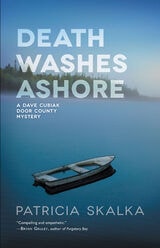
Death Washes Ashore
Patricia Skalka
University of Wisconsin Press, 2023
Chasing leads, the sheriff learns the victim directed a troupe of live-action role players living in an ersatz Camelot. In a setting where pretense in the norm, Cubiak must determine if suspects are who they say they are or if their made-up identities conceal a ruthless killer. As tensions escalate among neighbors unhappy about the noise and commotion, the sheriff discovers that more than one person on the peninsula has a motive for murder.
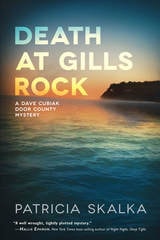
Death at Gills Rock
A Dave Cubiak Door County MysteryPatricia Skalka
University of Wisconsin Press, 2017
Investigating, Cubiak discovers that the men’s veneer of success and respectability hides a trail of lies and betrayal that stems from a single, desperate act of treachery and eventually spreads a web of deceit across the peninsula. In a dark, moody tale that spans more than half a century, Cubiak encounters a host of suspects with motives for murder. Amid broken dreams, corruption, and loss, he sorts out the truth. Death at Gills Rock is the second book in Patricia Skalka’s Dave Cubiak Door County Mystery series.
Death at Gills Rock
A Dave Cubiak Door County MysteryPatricia Skalka
University of Wisconsin Press, 2024
Investigating, Cubiak discovers that the men’s veneer of success and respectability hides a trail of lies and betrayal that stems from a single, desperate act of treachery and eventually spreads a web of deceit across the peninsula. In a dark, moody tale that spans more than half a century, Cubiak encounters a host of suspects with motives for murder. Amid broken dreams, corruption, and loss, he sorts out the truth. Death at Gills Rock is the second book in Patricia Skalka’s Dave Cubiak Door County Mystery series.
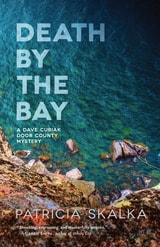
Death by the Bay
Patricia Skalka
University of Wisconsin Press, 2021
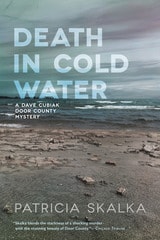
Death in Cold Water
Patricia Skalka
University of Wisconsin Press, 2018
As tourists flood the peninsula for the fall colors, Sheriff Dave Cubiak’s search for Sneider is stymied by the FBI. When human bones wash up on the Lake Michigan shore, the sheriff has more than a missing man to worry about. With the media demanding answers and two puzzles to solve, Cubiak must follow his instincts down a trail of half-remembered rumors and local history to discover the shocking truth.

Death of a Department Chair
A NovelLynn C. Miller
University of Wisconsin Press, 2006
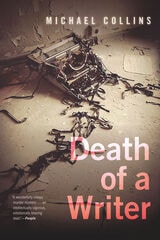
Death of a Writer
Collins, Michael
University of Iowa Press, 2021
The publication of Scream causes a storm of publicity: a whirlwind into which Adi, Horowitz and the still-incapacitated Pendleton are thrust. The novel is treated as an existential masterpiece and looks set to bring its author the success he's always sought – when, ironically, he is no longer in a condition to appreciate it – until questions begin to be asked about its content: in particular about the uncanny resemblance between Pendleton's fictional crime and a real-life, unresolved local murder. Enter Jon Ryder, a world-weary detective who could have walked off the pages of a police thriller, and the hunt for the murderer is on.
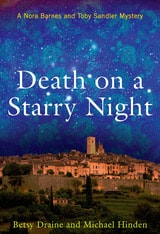
Death on a Starry Night
Betsy Draine and Michael Hinden
University of Wisconsin Press, 2016
During a week of academic squabbling, dining, romance, and suspense, the quirky conference members, one by one, fall under police suspicion and the amused gaze of Nora’s husband, Toby Sandler. But someone wants to stop Nora and Toby’s amateur sleuthing, and what happens next is no joke.
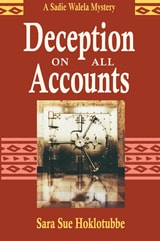
Deception on All Accounts
Sara Sue Hoklotubbe
University of Arizona Press, 2003
Sadie Walela's life is about to be turned upside down.
One morning Sadie unlocks the door at the Mercury Savings Bank and confronts a robber who's been lying in wait for her and her fellow employees. He flees after stealing money and killing her coworker. When a whirlwind of events leaves Sadie herself under suspicion, she sets out to clear her name.
This banker turned sleuth is suddenly plunged into an unfamiliar world in which people are not always as they appear-not her employer, not the homeless man she's befriended, not the police officer who takes an interest in the case, not the man she falls in love with. And, as she's beginning to imagine, not even herself.
Sadie is a blue-eyed Cherokee living in northeastern Oklahoma, a half-blood who finds she sometimes has to adapt to get by in the white man's world, much as her father's ancestors did. In this story of robbery, murder, love, and intrigue, she faces adversity at each bend in the road, but in the tradition of her people she adapts and moves forward—even if it means having to re-think her relationships and expectations.
Set against the backdrop of small-town Oklahoma and its Native culture, Deception on All Accounts draws readers into the real lives of contemporary American Indians as it shines a light on violence, corporate corruption, and prejudice in modern America. As Sadie Walela comes to terms with murder, romance, and her hopes for a career, she finds deception on all accounts.

Detection and Its Designs
Narrative and Power in Nineteenth-Century Detective FictionPeter Thoms
Ohio University Press, 1998
In readings of Godwin's Caleb Williams, Poe's Dupin stories, Dickens's Bleak House, Collins's The Moonstone, and Doyle's The Hound of the Baskervilles, Thoms argues that the detective's figurative writing emerges out of a desire to exert control over others and sometimes over himself.
Detection and Its Designs demonstrates that, far from being a naïve form, early detective fiction grapples with the medium of storytelling itself. To pursue these inward-turning fictions is to uncover the detective's motives of controlling the representation of both himself and others, a discovery that in turn significantly undermines the authority of his solutions.
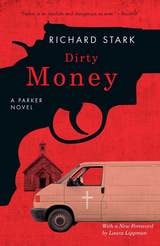
Dirty Money
A Parker NovelRichard Stark
University of Chicago Press, 2017
Richard Stark's Parker novels are the hardest of hard-boiled, classic crime novels where the heists are huge, the body counts are high, and the bad guys usually win.
The Parker novels have been a huge influence on countless writers and filmmakers, including Quentin Tarantino, Stephen King, George Pelecanos, Colson Whitehead, Lucy Sante, John Banville, and many more. Their stripped-down language and hard-as-nails amorality create an unforgettable world where the next score could be the big one, but your next mistake could also be your last. There's nothing else like them.
In this, the final Parker novel, Parker’s got a new fence and a new plan to get the loot back from a botched job in Dirty Money, but a bounty hunter, the FBI, and the local cops are on his tail. Only his brains, his cool, and the help of his lone longtime dame, Claire, can keep him one step ahead of the cars and the guns. One of the best books in the whole series, full of action and surprises, Diry Money closes Parker's career with a bang. (And with a perfect final line.)
Written over the course of almost sixty years, the Parker novels are pure artistry, adrenaline, and logic both brutal and brilliant. Join Parker on his jobs and read them all again or for the first time. But don’t talk to the law.
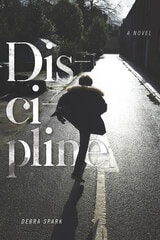
Discipline
Debra Spark
Four Way Books, 2024
How does art mirror and shape our lives? Can it transcend the boundaries of time, wealth, and circumstance? Debra Spark—whose previous work the Washington Post described as "richly imaginative" and "real world magic"—explores these themes in her new novel Discipline. With a trio of important paintings missing, the book weaves together three narratives that span almost a century. From an inhumane boarding school in Maine in the late 1970s to a contemporary Boston art appraiser struggling with raising a teen to the long-lost love letters between a painter and his wife, Discipline is a propulsive literary mystery about family strife and devotion, ambition and authorship, and the abiding and mysterious power of art.
Inspired by the life and family of Walt Kuhn (the painter responsible for the 1913 Armory Show that introduced Americans to modernism) and the scandal-ridden Elan boarding school that was forced to shut down in 2011, this richly drawn, suspenseful novel shows Spark at her most masterful.
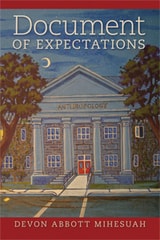
Document of Expectations
Devon Abbott Mihesuah
Michigan State University Press, 2011
When Hopi/White Mountain Apache anthropologist Tony M. Smokerise is found murdered in his office at Central Highlands University, the task of solving the crime falls to jaded Choctaw detective Monique Blue Hawk and her partner Charles T. Clarke. A seemingly tolerant and amicable office of higher education, the university, Monique soon learns, harbors parties determined to destroy the careers of Tony and his best friend, the volatile Oglala anthropologist Roxanne Badger. In the course of her investigation, Monique discovers that the scholars who control Tony’s department are also overseeing the excavation of a centuries-old tribal burial site that was uncovered during the construction of a freeway. Tony’s role in the project, she realizes, might be the key to identifying his murderer. This virtuosic mystery novel explores, in engrossing detail, the complex motives for a killing within the sometimes furtive and hermetic setting of academia.
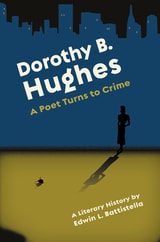
Dorothy B. Hughes
A Poet Turns to CrimeEdwin L. Battistella
University of Missouri Press, 2026
Hailed by critics and fans as “The Queen of Noir” and “a prescient feminist,” Dorothy B. Hughes (1904-1993) challenged the conventions of the crime fiction genre by exploring race, class, and social justice across her fourteen novels. Edwin Battistella’s new work weaves discussion of Hughes’s literary output with the story of her life. Dorothy B. Hughes: A Poet Turns to Crime examines her work as a poet, journalist, novelist, screenwriter, and critic as well as her family and personal relationships.
Beginning with her upbringing in Kansas City, Missouri, Battistella follows the writer’s time studying journalism at the University of Missouri, her subsequent work as a newspaper reporter, the eventual publication of her first book, a volume of poetry, and her prolific output of mystery novels that spanned two decades. Battistella situates her work in the broader context of twentieth-century crime fiction and its connection to various political and social movements, including her life-long concern with racial equality, which culminated in the 1963 publication of her final novel, The Expendable Man, which appeared at the height of the Civil Rights movement and is considered by many to be her best work.
In addition to drawing from Hughes’s own work and its reception by contemporary critics, Battistella examines later critical commentaries, scholarly articles, published interviews, archival material, and interviews with friends and family to tell her life story and literary legacy. More importantly, Battistella provides insights into why Dorothy B. Hughes still matters today, making his new work an important contribution to the history of popular culture and literary history.
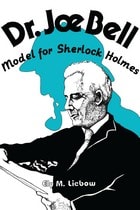
Dr. Joe Bell
Model for Sherlock HolmesEly M. Liebow
University of Wisconsin Press, 1982
A distinguished physician and professor of medicine at Edinburgh University, and a forensic expert for the British Crown, Joseph Bell was well known for his remarkable powers of observation and deduction. In what would become true Sherlockian fashion, he had the ability to deduce facts about his patients from otherwise unremarkable details. In one instance recounted by Arthur Conan Doyle himself—and similar to Sherlock Holmes's own observations in "The Greek Interpreter"—Bell took little time to determine that one of his patients had recently served in the army, a non-commissioned officer discharged from his Highland regiment stationed in Barbados:
“The man was a respectful man, but did not remove his hat. They do not in the army, but he would have learned civilian ways had he been long discharged. He has an air of authority and he is obviously Scottish. As to Barbados, his complaint is elephantitis, which is West Indian and not British.”
Based on extensive research into the life of Bell and including tantalizing accounts of the connections between Bell and Conan Doyle, this biography is required reading for anyone interested in Victorian medicine, in the history of detective fiction, and in Sherlock Holmes and Dr. Watson.
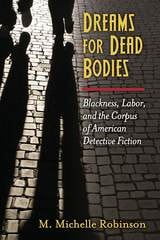
Dreams for Dead Bodies
Blackness, Labor, and the Corpus of American Detective FictionM. Michelle Robinson
University of Michigan Press, 2016
The author constructs an interracial genealogy of detective fiction to create a nuanced picture of the ways that black and white authors appropriated and cultivated literary conventions that coalesced in a recognizable genre at the turn of the twentieth century. These authors tinkered with detective fiction’s puzzle-elements to address a variety of historical contexts, including the exigencies of chattel slavery, the erosion of working-class solidarities by racial and ethnic competition, and accelerated mass production. Dreams for Dead Bodies demonstrates that nineteenth- and early twentieth-century American literature was broadly engaged with detective fiction, and that authors rehearsed and refined its formal elements in literary works typically relegated to the margins of the genre. By looking at these margins, the book argues, we can better understand the origins and cultural functions of American detective fiction.
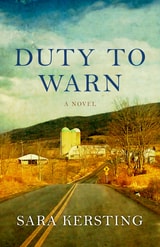
Duty To Warn
A NovelSara Kersting
Acre Books, 2018
To aid him in the chase, Malden calls on his colleague, the awkward, remote, intimidatingly tall Sonja Nielsen. She reluctantly agrees to help, either because of or despite her previous entanglements with Malden.
Told from the perspectives of these three characters, the story swerves and jolts and switches back, much like Percy’s recollections of his upbringing. Kersting presents the interior struggles of her characters in a searingly spare style, all the while drawing the reader through an escalating series of events as Percy hitches rides and takes buses, searching the small towns of central Michigan, alternately helped and hindered by both old and new acquaintances.
While following disparate leads toward Percy’s final, surprising destination, all three conflicted souls are compelled to examine their loyalties, test their convictions, admit their frailties, and confront the ghosts lurking in their pasts, resulting in a revelatory climax.