Results by title
18284 books match the query 'United States' and 684 start with d
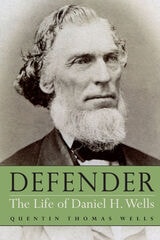
Defender
The Life of Daniel H. WellsQuentin Thomas Wells
Utah State University Press, 2022
Defender is the first and only scholarly biography of Daniel H. Wells, one of the important yet historically neglected leaders among the nineteenth-century Mormons—leaders like Heber C. Kimball, George Q. Cannon, and Jedediah M. Grant. An adult convert to the Mormon faith during the Mormons’ Nauvoo period, Wells developed relationships with men at the highest levels of the church hierarchy, emigrated to Utah with the Mormon pioneers, and served in a series of influential posts in both church and state.
Wells was known especially as a military leader in both Nauvoo and Utah—he led the territorial militia in four Indian conflicts and a confrontation with the US Army (the Utah War). But he was also the territorial attorney general and obtained title to all the land in Salt Lake City from the federal government during his tenure as the mayor of Salt Lake City. He was Second Counselor to Brigham Young in the LDS Church's First Presidency and twice served as president of the Mormon European mission. Among these and other accomplishments, he ran businesses in lumbering, coal mining, manufacturing, and gas production; developed roads, ferries, railroads, and public buildings; and presided over a family of seven wives and thirty-seven children.
Wells witnessed and influenced a wide range of consequential events that shaped the culture, politics, and society of Utah in the latter half of the nineteenth century. Using research from relevant collections, sources in public records, references to Wells in the Joseph Smith papers, other contemporaneous journals and letters, and the writings of Brigham Young, Quentin Thomas Wells has created a serious and significant contribution to Mormon history scholarship.
Defending Diversity
Affirmative Action at the University of MichiganPatricia Gurin, Jeffrey S. Lehman, and Earl Lewis, with Eric L. Dey, Gerald Gurin, and Sylvia Hurtado
University of Michigan Press, 2004
Defending Their Own in the Cold
The Cultural Turns of U.S. Puerto RicansMarc Zimmerman
University of Illinois Press, 2011

Defending the American Way of Life
Sport, Culture, and the Cold WarToby C. Rider
University of Arkansas Press, 2018
The Cold War was fought in every corner of society, including in the sport and entertainment industries. Recognizing the importance of culture in the battle for hearts and minds, the United States, like the Soviet Union, attempted to win the favor of citizens in nonaligned states through the soft power of sport. Athletes became de facto ambassadors of US interests, their wins and losses serving as emblems of broader efforts to shield American culture—both at home and abroad—against communism.
In Defending the American Way of Life, leading sport historians present new perspectives on high-profile issues in this era of sport history alongside research drawn from previously untapped archival sources to highlight the ways that sports influenced and were influenced by Cold War politics. Surveying the significance of sports in Cold War America through lenses of race, gender, diplomacy, cultural infiltration, anti-communist hysteria, doping, state intervention, and more, this collection illustrates how this conflict remains relevant to US sporting institutions, organizations, and ideologies today.
Defending the Homeland
Historical Perspectives on Radicalism, Terrorism, and State ResponsesMELINDA M. HICKS
West Virginia University Press, 2007
Terrorism and national security have been in the foreground of the nation’s political landscape since the uncertain times brought on by the attacks of September 11, 2001. This collection of scholarly essays provides a chance to learn from the past by offering an analytic—and sometimes provocative—look at the inseparability of security and history. This work is divided into separate elements depicting security on the national and international levels. "Part One–The US and National Security," focuses on topics such as “Rank-And-File Rednecks: Radicalism and Union Leadership in the West Virginia Mine Wars,” among others. "Part Two–International Terrorism," looks at violence overseas, such as “Beyond Victims and Perpetrators: Women Terrorists and Their Own Stories.”

Defending the Masses
A Progressive Lawyer's Battles for Free SpeechEric B. Easton
University of Wisconsin Press, 2018
Roe was the principal trial lawyer of the Free Speech League—a precursor of the American Civil Liberties Union. His cases involved such activists as Emma Goldman, Lincoln Steffens, Margaret Sanger, Max Eastman, Upton Sinclair, John Reed, and Eugene Debs, as well as the socialist magazine The Masses and the New York City Teachers Union. A friend of Wisconsin's progressive senator Robert La Follette since their law partnership as young men, Roe defended "Fighting Bob" when the Senate tried to expel him for opposing America's entry into World War I.
In articulating and upholding Americans' fundamental right to free expression against charges of obscenity, libel, espionage, sedition, or conspiracy during turbulent times, Roe was rarely successful in the courts. But his battles illuminate the evolution of free speech doctrine and practice in an era when it was under heavy assault. His greatest victory, including the 1917 decision by Judge Learned Hand in The Masses Publishing Co. v. Patten, is still influential today.

Defending the Master Race
Conservation, Eugenics, and the Legacy of Madison GrantJonathan Spiro
University Press of New England, 2008
Defending the Republic
Constitutional Monarchy in a Time of Crisis: Essays in Honor of George W. CareyBruce Frohnen
Catholic University of America Press, 2022

Defining America
Through Immigration PolicyBill Ong Hing
Temple University Press, 2003
Defining Deviance
Sex, Science, and Delinquent Girls, 1890-1960Michael A. Rembis
University of Illinois Press, 2013
Defining Moments
Historic Decisions by Arkansas Governors from McMath through HuckabeeRobert L. Brown
University of Arkansas Press, 2010
Defining Student Success
The Role of School and CultureLisa M. Nunn
Rutgers University Press, 2014
The key to success, our culture tells us, is a combination of talent and hard work. Why then, do high schools that supposedly subscribe to this view send students to college at such dramatically different rates? Why do students from one school succeed while students from another struggle? To the usual answer—an imbalance in resources—this book adds a far more subtle and complicated explanation. Defining Student Success shows how different schools foster dissimilar and sometimes conflicting ideas about what it takes to succeed—ideas that do more to preserve the status quo than to promote upward mobility.
Lisa Nunn’s study of three public high schools reveals how students’ beliefs about their own success are shaped by their particular school environment and reinforced by curriculum and teaching practices. While American culture broadly defines success as a product of hard work or talent (at school, intelligence is the talent that matters most), Nunn shows that each school refines and adapts this American cultural wisdom in its own distinct way—reflecting the sensibilities and concerns of the people who inhabit each school. While one school fosters the belief that effort is all it takes to succeed, another fosters the belief that hard work will only get you so far because you have to be smart enough to master course concepts. Ultimately, Nunn argues that these school-level adaptations of cultural ideas about success become invisible advantages and disadvantages for students’ college-going futures. Some schools’ definitions of success match seamlessly with elite college admissions’ definition of the ideal college applicant, while others more closely align with the expectations of middle or low-tier institutions of higher education.
With its insights into the transmission of ideas of success from society to school to student, this provocative work should prompt a reevaluation of the culture of secondary education. Only with a thorough understanding of this process will we ever find more consistent means of inculcating success, by any measure.
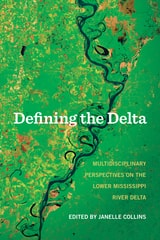
Defining the Delta
Multidisciplinary Perspectives on the Lower Mississippi River DeltaJanelle Collins
University of Arkansas Press, 2015
Here are essays examining the Delta’s physical properties, boundaries, and climate from a geologist, archeologist, and environmental historian. The Delta is also viewed through the lens of the social sciences and humanities—historians, folklorists, and others studying the connection between the land and its people, in particular the importance of agriculture and the culture of the area, especially music, literature, and food.
Every turn of the page reveals another way of seeing the seven-state region that is bisected by and dependent on the Mississippi River, suggesting ultimately that there are myriad ways of looking at, and defining, the Delta.
Defining the National Interest
Conflict and Change in American Foreign PolicyPeter Trubowitz
University of Chicago Press, 1998
Peter Trubowitz offers a new and compelling conception of American foreign policy and the domestic geopolitical forces that shape and animate it. Foreign policy conflict, he argues, is grounded in America's regional diversity. The uneven nature of America's integration into the world economy has made regionalism a potent force shaping fights over the national interest. As Trubowitz shows, politicians from different parts of the country have consistently sought to equate their region's interests with that of the nation. Domestic conflict over how to define the "national interest" is the result. Challenging dominant accounts of American foreign policy-making, Defining the National Interest exemplifies how interdisciplinary scholarship can yield a deeper understanding of the connections between domestic and international change in an era of globalization.
Defining, Locating, and Addressing Bullying in the WPA Workplace
Cristyn L. Elder
Utah State University Press, 2018
Contributors of varying status in different types of programs across many kinds of institutions describe various forms of bullying, including microaggressions, incivility, mobbing, and emotional abuse. They define bullying as institutional racism, “academic systemic incivility,” a crisis of insularity, and faculty fundamentalism. They locate bullying in institutional contexts, including research institutions, small liberal arts colleges, community colleges, and writing programs and writing centers. These locations are used as points of departure to further theorize bullying and to provide clear advice about agentive responses.
A culture of silence discourages discussions of this behavior, making it difficult to address abuse. This silence also normalizes patterns and cultivates the perception that bullying arises naturally. Defining, Locating, and Addressing Bullying in the WPA Workplace helps the field to name these patterns of behaviors as bullying and resist ideologies of normalcy, encouraging and empowering readers to take an active role in defining, locating, and addressing bullying in their own workplaces.
Contributors: Sarah Allen, Andrea Dardello, Harry Denny, Dawn Fels, Bre Garrett, W. Gary Griswold, Amy C. Heckathorn, Aurora Matzke, Staci Perryman-Clark, Sherry Rankins-Robertson, Erec Smith
Deflective Whiteness
Co-Opting Black and Latinx Identity PoliticsHannah Noel
The Ohio State University Press, 2022
White deflection offers a script for how social justice rhetoric and the emotions of victimization are appropriated to conjure a hegemonic White identity. Using derivative language, deflection claims Whiteness as the aggrieved social status. Through case studies of cultural moments and archives including Twitter, country music, the Black Lives Matter movement, and more, Deflective Whiteness exposes the various forms of tacit White supremacy that operate under the alibi of injury and that ultimately serve to deepen racial inequities. By understanding how, where, and why White deflection is used, Noel argues, scholars and social justice advocates can trace, tag, and deconstruct covert White supremacy at its rhetorical foundations.

Defusing the Angry Patron
A How-To-Do-It Manual for LibrariansRhea Joyce Rubin
American Library Association, 2010

Degraded Work
The Struggle at the Bottom of the Labor MarketMarc Doussard
University of Minnesota Press, 2013
Critics on the left and the right typically agree that globalization, the loss of manufacturing jobs, and the expansion of the service sector have led to income inequality and rising numbers of low-paying jobs with poor working conditions.
In Degraded Work, Marc Doussard demonstrates that this decline in wages and working conditions is anything but the unavoidable result of competitive economic forces. Rather, he makes the case that service sector and other local-serving employers have boosted profit with innovative practices to exploit workers, demeaning their jobs in new ways—denying safety equipment, fining workers for taking scheduled breaks, requiring unpaid overtime—that go far beyond wage cuts. Doussard asserts that the degradation of service work is a choice rather than an inevitability, and he outlines concrete steps that can be taken to help establish a fairer postindustrial labor market.
Drawing on fieldwork in Chicago, Degraded Work examines changes in two industries in which inferior job quality is assumed to be intrinsic: residential construction and food retail. In both cases, Doussard shows how employers degraded working conditions as part of a successful and intricate strategy to increase profits. Arguing that a growing service sector does not have to mean growing inequality, Doussard proposes creative policy and organizing opportunities that workers and advocates can use to improve job quality despite the overwhelming barriers to national political action.

Degrees of Allegiance
Harassment and Loyalty in Missouri’s German-American Community during World War IPetra DeWitt
Ohio University Press, 2012
Historians have long argued that the Great War eradicated German culture from American soil. Degrees of Allegiance examines the experiences of German-Americans living in Missouri during the First World War, evaluating the personal relationships at the local level that shaped their lives and the way that they were affected by national war effort guidelines. Spared from widespread hate crimes, German-Americans in Missouri did not have the same bleak experiences as other German-Americans in the Midwest or across America. But they were still subject to regular charges of disloyalty, sometimes because of conflicts within the German-American community itself.
Degrees of Allegiance updates traditional thinking about the German-American experience during the Great War, taking into account not just the war years but also the history of German settlement and the war’s impact on German-American culture.
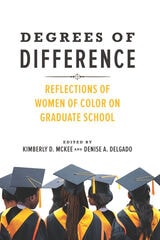
Degrees of Difference
Reflections of Women of Color on Graduate SchoolEdited by Kimberly D. McKee and Denise A. Delgado
University of Illinois Press, 2020
In Degrees of Difference, women of color from diverse backgrounds give frank, unapologetic accounts of their battles—both internal and external—to navigate grad school and fulfill their ambitions. At the same time, the authors offer strategies for surviving the grind via stories of their own hard-won successes with self-care, building supportive communities, finding like-minded mentors, and resisting racism and unsupportive faculty and colleagues.
Contributors: Aeriel A. Ashlee, Denise A. Delgado, Nwadiogo I. Ejiogu, Delia Fernández, Regina Emily Idoate, Karen J. Leong, Kimberly D. McKee, Délice Mugabo, Carrie Sampson, Arianna Taboada, Jenny Heijun Wills, and Soha Youssef

Degrees of Risk
Navigating Insecurity and Inequality in Public Higher EducationBlake R. Silver
University of Chicago Press, 2024
Institutions of higher education are often described as “ivory towers,” places of privilege where students exist in a “campus bubble,” insulated from the trials of the outside world. These metaphors reveal a widespread belief that college provides young people with stability and keeps insecurity at bay. But for many students, that’s simply not the case.
Degrees of Risk reveals how insecurity permeates every facet of college life for students at public universities. Sociologist Blake Silver dissects how these institutions play a direct role in perpetuating uncertainty, instability, individualism, and anxiety about the future. Silver examined interviews with more than one hundred students who described the risks that surrounded every decision: which major to choose, whether to take online classes, and how to find funding. He expertly identified the ways the college experience played out differently for students from different backgrounds. For students from financially secure families with knowledge of how college works, all the choices and flexibility of college felt like an adventure or a wealth of opportunities. But for many others, especially low-income, first-generation students, their personal and family circumstances meant that that flexibility felt like murkiness and precarity. In addition, he discovered that students managed insecurity in very different ways, intensifying inequality at the intersections of socioeconomic status, race, gender, and other sociodemographic dimensions. Drawing from these firsthand accounts, Degrees of Risk presents a model for a better university, one that fosters success and confidence for a diverse range of students.

Degrees of Separation
Identity Formation While Leaving Ultra-Orthodox JudaismSchneur Zalman Newfield
Temple University Press, 2020
Those who exit a religion—particularly one they were born and raised in—often find themselves at sea in their efforts to transition to life beyond their community. In Degrees of Separation, Schneur Zalman Newfield, who went through this process himself, interviews seventy-four Lubavitch and Satmar ultra-Orthodox Hasidic Jews who left their communities.He presents their motivations for leaving as well as how they make sense of their experiences and their processes of exiting, detailing their attitudes and opinions regarding their religious upbringing. Newfield also examines how these exiters forge new ways of being that their upbringing had not prepared them for, while also considering what these particular individuals lose and retain in the exit process.
Degrees of Separation presents a comprehensive portrait of the prolonged state of being “in-between” that characterizes transition out of a totalizing worldview. What Newfield discovers is that exiters experience both a sense of independence and a persistent connection; they are not completely dislocated from their roots once they “arrive” at their new destination. Moreover, Degrees of Separation shows that this process of transitioning identity has implications beyond religion.

Del Otro Lado
Literacy and Migration across the U.S.-Mexico BorderSusan V. Meyers
Southern Illinois University Press, 2014
In Del OtroLado: Literacy and Migration across the U.S.-Mexico Border, author Susan V. Meyers draws on her year-long ethnographic study in Mexico and the United States to analyze the literacy practices of Mexican-origin students on both sides of the border.
Meyers begins by taking readers through the historical development of the rural Mexican town of Villachuato. Through a series of case studies spanning the decades between the Mexican Revolution and the modern-day village, Meyers explores the ever-widening gulf between the priorities of students and the ideals of the public education system. As more and more of Villachuato’s families migrate in an effort to find work in the wake of shifting transnational economic policies like NAFTA, the town’s public school teachers find themselves frustrated by spiraling drop-out rates. Meyers discovers that students often consider the current curriculum irrelevant and reject the established value systems of Mexico’s public schools. Meyers debunks the longstanding myth that literacy is tied to economic development, arguing that a “literacy contract” model, in which students participate in public education in exchange for access to increased earning potential, better illustrates the situation in rural Mexico.
Meyers next explores literacy on the other side of the border, traveling to Marshalltown, Iowa, where many former citizens of Villachuato have come to reside because of the availability of jobs for unskilled workers at the huge Swift meat-packing plant there. Here she discovers that Mexican-origin families in the United States often consider education a desirable end in itself rather than a means to an end. She argues that migration has a catalyzing effect on literacy, particularly as Mexican migrant families tend to view education as a desirable form of prestige.
Meyers reveals the history and policies that have shaped the literacy practices of Mexican-origin students, and she raises important questions about not only the obligation of the United States to educate migrant students, but also those students’ educational struggles and ways in which these difficulties can be overcome. This transnational study is essential reading for scholars, students, educators and lawmakers interested in shaping the future of educational policy.
Deliberative Choices
Debating Public Policy in CongressGary Mucciaroni and Paul J. Quirk
University of Chicago Press, 2006
Mucciaroni and Quirk argue that in fashioning the claims they use in debate, legislators make a strategic trade-off between boosting their rhetorical force and ensuring their ability to withstand scrutiny. Using three case studies—welfare reform, repeal of the estate tax, and telecommunications deregulation—the authors show how legislators’ varying responses to such a trade-off shape the issues they focus on, the claims they make, and the information they provide in support of those claims.
Mucciaroni and Quirk conclude that congressional debate generally is only moderately realistic and informed. It often trades in half-truths, omissions, and sometimes even outright falsehoods. Yet some debates are highly informative. Moreover, the authors believe it’s possible to improve congressional deliberation, and they recommend reforms designed to do so.

Delightfulee
The Life and Music of Lee MorganJeffery S. McMillan
University of Michigan Press, 2008
One of the most individual stylists of his time, trumpeter Lee Morgan began his professional career in Philadelphia at age fifteen. At eighteen, after a short stint with Art Blakey's Jazz Messengers, Morgan joined Dizzy Gillespie's orchestra, where he stayed until the group disbanded in 1958. A return to Blakey brought Morgan new opportunities, including his first successful attempts at composition. But however much his time with Blakey helped to advance his playing and writing, his boss's and his bandmates' destructive drug habits exerted just as strong an influence. Within three years, Morgan would be back home in Philadelphia, strung out on heroin and penniless.
Morgan's return to music in the early to mid-sixties witnessed a tremendous evolution in his playing. Formerly a virtuoso in the model of his idol, Clifford Brown, Morgan brought to his critically acclaimed Blue Note records of the era an emotionally charged, muscular tone, full of poise and control. But it was with the record Sidewinder, recorded in 1963, that Morgan found his greatest fame and commercial success, due to the infectious groove of the title tune. By the time of his death, at thirty-three---murdered in a New York City club by his girlfriend during a gig---Morgan had begun a new phase of his career, experimenting with freer-forms of musical expression.
Jeff McMillan's Delightfulee is the first biography to seriously examine Morgan's vast contributions to jazz, both as a performer and as a composer. Thanks to exclusive access to Lee Morgan's now-deceased brother, McMillan is also able to provide unparalleled insight into Morgan's personal and family life
Jeff McMillan received his master's degree from the Jazz History and Research program at Rutgers-Newark in 2000 and currently works as an archivist for the Metropolitan Opera in New York City.

Deluge
Tropical Storm Irene, Vermont’s Flash Floods, and How One Small State Saved ItselfPeggy Shinn
University Press of New England, 2013

Demanding Child Care
Women's Activism and the Politics of Welfare, 1940-1971Natalie M. Fousekis
University of Illinois Press, 2013
During World War II, as women stepped in to fill jobs vacated by men in the armed services, the federal government established public child care centers in local communities for the first time. When the government announced plans to withdraw funding and terminate its child care services at the end of the war, women in California protested and lobbied to keep their centers open, even as these services rapidly vanished in other states.
Analyzing the informal networks of cross-class and cross-race reformers, policymakers, and educators, Demanding Child Care: Women's Activism and the Politics of Welfare, 1940–1971 traces the rapidly changing alliances among these groups. During the early stages of the childcare movement, feminists, Communists, and labor activists banded together, only to have these alliances dissolve by the 1950s as the movement welcomed new leadership composed of working-class mothers and early childhood educators. In the 1960s, when federal policymakers earmarked child care funds for children of women on welfare and children described as culturally deprived, it expanded child care services available to these groups but eventually eliminated public child care for the working poor.
Deftly exploring the possibilities for partnership as well as the limitations among these key parties, Fousekis helps to explain the barriers to a publically funded comprehensive child care program in the United States.
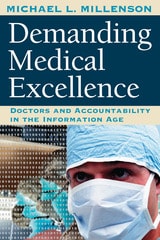
Demanding Medical Excellence
Doctors and Accountability in the Information AgeMichael L. Millenson
University of Chicago Press, 2000
"If you read only one book this year, read Demanding Medical Excellence. It's that good, and the revolution it describes is that important."—Health Affairs
"Millenson has done yeoman's work in amassing and understanding that avalanche of data that lies beneath most of the managed-care headlines. . . . What he finds is both important and well-explained: inconsistency, overlap, and inattention to quality measures in medical treatment cost more and are more dangerous than most cost-cutting measures. . . . [This book] elevates the healthcare debate to a new level and deserves a wide readership."—Library Journal
"An involving, human narrative explaining how we got to where we are today and what lies ahead."—Mark Taylor, Philadelphia Inquirer
"Read this book. It will entertain you, challenge, and strengthen you in your quest for better accountability in health care."—Alex R. Rodriguez, M.D., American Journal of Medical Quality
"Finally, a health-care book that doesn't wring its hands over the decline of medicine at the hands of money-grubbing corporations. . . . This is a readable account of what Millenson calls a 'quiet revolution' in health care, and his optimism makes for a refreshing change."—Publishers Weekly
"With meticulous detail, historical accuracy, and an uncommon understanding of the clinical field, Millenson documents our struggle to reach accountability."—Saty Satya-Murti, M.D., Journal of the American Medical Association
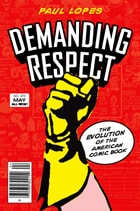
Demanding Respect
The Evolution of the American Comic BookPaul Lopes
Temple University Press, 2009
How is it that comic books—the once-reviled form of lowbrow popular culture—are now the rage for Hollywood blockbusters, the basis for bestselling video games, and the inspiration for literary graphic novels? In Demanding Respect, Paul Lopes immerses himself in the discourse and practices of this art and subculture to provide a social history of the American comic book over the last 75 years.
Lopes analyzes the cultural production, reception, and consumption of American comic books throughout history. He charts the rise of superheroes, the proliferation of serials, and the emergence of graphic novels. Demanding Respect explores how comic books born in the 1930s were perceived as a "menace" in the 1950s, only to later become collectors’ items and eventually "hip" fiction in the 1980s through today.
Using a theoretical framework to examine the construction of comic book culture—the artists, publishers, readers and fans— Lopes explains how and why comic books have captured the public's imagination and gained a fanatic cult following.

Demands of the Dead
Executions, Storytelling, and Activism in the United StatesKaty Ryan
University of Iowa Press, 2012
The first work to combine literary criticism with other forms of death penalty–abolitionist writing, Demands of the Dead demonstrates the active importance of literature and literary criticism to the struggle for greater justice in the United States. Gathering personal essays, scholarly articles, and creative writings on the death penalty in American culture, this striking collection brings human voices and literary perspectives to a subject that is often overburdened by statistics and angry polemics. Contributors include death-row prisoners, playwrights, poets, activists, and literary scholars.
Highlighting collaborations between writers inside and outside prison, all within the context of the history of state killing laws and foundational concepts that perpetuate a culture of violent death, Demands of the Dead opens with a pamphlet dictated by Willie Francis, a teenager who survived a first execution attempt in Louisiana’s electric chair before he was subsequently killed by the state in 1947.
Writers are a conspicuous part of U.S. death-penalty history, composing a vibrant literary record of resistance to state killing. This multigenre collection both recalls and contributes to this tradition through discussions of such writers as Walt Whitman, Herman Melville, Gertrude Atherton, Ernest Gaines, Sonia Sanchez, Kia Corthron, and Sherman Alexie. A major contribution to literary studies and American prison studies, Demands of the Dead asserts the relevance of storytelling to ethical questions and matters of public policy.
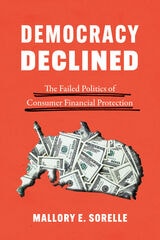
Democracy Declined
The Failed Politics of Consumer Financial ProtectionMallory E. SoRelle
University of Chicago Press, 2020
In Democracy Declined, Mallory E. SoRelle argues that the failure of federal policy makers to curb risky practices can be explained by the evolution of consumer finance policies aimed at encouraging easy credit in part by foregoing more stringent regulation. Furthermore, SoRelle explains how angry borrowers’ experiences with these policies teach them to focus their attention primarily on banks and lenders instead of demanding that lawmakers address predatory behavior. As a result, advocacy groups have been mostly unsuccessful in mobilizing borrowers in support of stronger consumer financial protections. The absence of safeguards on consumer financing is particularly dangerous because the consequences extend well beyond harm to individuals—they threaten the stability of entire economies. SoRelle identifies pathways to mitigate these potentially disastrous consequences through greater public participation.
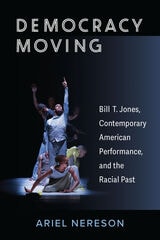
Democracy Moving
Bill T. Jones, Contemporary American Performance, and the Racial PastAriel Nereson
University of Michigan Press, 2022
The project addresses how different communities choose to commemorate historical figures, events, and places through art—whether performance, oratory, song, statuary, or portraiture—and in particular, Black US American counter-memorial practices that address histories of slavery. Advancing the theory of oscillation as Black aesthetic praxis, author Ariel Nereson celebrates Bill T. Jones as a public intellectual whose practice has contributed to the project of understanding America’s relationship to its troubled past. The book features materials from Bill T. Jones/Arnie Zane Company’s largely unexplored archive, interviews with artists, and photos that document this critical stage of Jones’s career as it explores how aesthetics, as ideas in action, can imagine more just and equitable social formations.

Democracy and Deliberation
The Law and Politics of Sex Offender LegislationCary Federman
University of Michigan Press, 2021
Sex offender laws include residency restrictions, registration and notification requirements, and post-conviction civil commitment. These laws and regulations impose serious restrictions on the movements of convicted sex offenders. This is controversial because these laws and regulations occur after the sex offender has completed his time in prison. These laws and regulations are intended to have both a deterrent and therapeutic effect. Residency restrictions seek to prevent sex offenders from re-committing their crimes and civil commitment provides psychological services while incarcerated in a forensic facility. Most works on this subject are deeply critical of these laws.
Cary Federman takes a more sympathetic approach to sex offender legislation. He focuses on the deliberative intentions of legislators, exploring the limits of judicial review and the rights of interested parties to influence lawmaking. Leaders of these interested parties are usually the parents of children who have been sexually violated and murdered. Critics of sex offender legislation tend to focus on the convicted parties, arguing that their rights have been violated. The Law and Politics of Sex Offender Legislation asserts that these laws are expressions of the deliberative intentions of lawmakers concerned about public safety—they are thus constitutional, if not always wise.
Democracy and Dysfunction
Sanford Levinson and Jack M. Balkin
University of Chicago Press, 2019
Democracy and Dysfunction brings together two of the leading constitutional law scholars of our time, Sanford Levinson and Jack M. Balkin, in an urgently needed conversation that seeks to uncover the underlying causes of our current crisis and their meaning for American democracy. In a series of letters exchanged over a period of two years, Levinson and Balkin travel—along with the rest of the country—through the convulsions of the 2016 election and Trump’s first year in office. They disagree about the scope of the crisis and the remedy required. Levinson believes that our Constitution is fundamentally defective and argues for a new constitutional convention, while Balkin, who believes we are suffering from constitutional rot, argues that there are less radical solutions. As it becomes dangerously clear that Americans—and the world—will be living with the consequences of this pivotal period for many years to come, it is imperative that we understand how we got here—and how we might forestall the next demagogue who will seek to beguile the American public.
Democracy and Higher Education
Traditions and Stories of Civic EngagementScott J. Peters
Michigan State University Press, 2010
How are we to understand the nature and value of higher education's public purposes, mission, and work in a democratic society? How do-and how should-academic professionals contribute to and participate in civic life in their practices as scholars, scientists, and educators?
Democracy and Higher Education addresses these questions by combining an examination of several normative traditions of civic engagement in American higher education with the presentation and interpretation of a dozen oral history profiles of contemporary practitioners. In his analysis of these profiles, Scott Peters reveals and interprets a democratic-minded civic professionalism that includes and interweaves expert, social critic, responsive service, and proactive leadership roles.
Democracy and Higher Education contributes to a new line of research on the critically important task of strengthening and defending higher education's positive roles in and for a democratic society.

Democracy and Imperialism
Irving Babbitt and Warlike DemocraciesWilliam S. Smith
University of Michigan Press, 2019
Following costly U.S. engagement in two wars in the Middle East, questions about the appropriateness of American military interventions dominate foreign policy debates. Is an interventionist foreign policy compatible with the American constitutional tradition?
This book examines critic Irving Babbitt’s (1865–1933) unique contribution to understanding the quality of foreign policy leadership in a democracy. Babbitt explored how a democratic nation’s foreign policy is a product of the moral and cultural tendencies of the nation’s leaders, arguing that the substitution of expansive, sentimental Romanticism for the religious and ethical traditions of the West would lead to imperialism.
The United States’ move away from the restraint and order of sound constitutionalism to involve itself in the affairs of other nations will inevitably cause a clash with the “civilizational” regions that have emerged in recent decades. Democracy and Imperialism uses the question of soul types to address issues of foreign policy leadership, and discusses the leadership qualities that are necessary for sound foreign policy.
Democracy and Other Neoliberal Fantasies
Communicative Capitalism and Left PoliticsJodi Dean
Duke University Press, 2009
Dean’s critique ranges from her argument that the term democracy has become a meaningless cipher invoked by the left and right alike to an analysis of the fantasy of free trade underlying neoliberalism, and from an examination of new theories of sovereignty advanced by politicians and left academics to a look at the changing meanings of “evil” in the speeches of U.S. presidents since the mid-twentieth century. She emphasizes the futility of a politics enacted by individuals determined not to offend anyone, and she examines questions of truth, knowledge, and power in relation to 9/11 conspiracy theories. Dean insists that any reestablishment of a vital and purposeful left politics will require shedding the mantle of victimization, confronting the marriage of neoliberalism and democracy, and mobilizing different terms to represent political strategies and goals.

Democracy and Regulation
How the Public Can Govern Essential ServicesGreg Palast, Theo MacGregor, and Jerrold Oppenheim
Pluto Press, 2002

Democracy and Social Ethics
Jane Addams
University of Illinois Press, 2001
In this, Addams's earliest book on ethics--presented here with a substantial introduction by Charlene Haddock Seigfried--she reflects on the factors that hinder the ability of all members of society to determine their own well-being. Observing relationships between charitable workers and their clients, between factory owners and their employers, and between household employers and their servants, she identifies sources of friction and shows how conceiving of democracy as a social obligation can lead to new, mutually beneficial lines of conduct. She also considers the proper education of workers, struggles between parents and their adult daughters over conflicting family and social claims, and the merging of politics with the daily lives of constituents.
"The sphere of morals is the sphere of action," Addams proclaims. It is not enough to believe passively in the innate dignity of all human beings. Rather, one must work daily to root out racial, gender, class, and other prejudices from personal relationships.
Democracy at Risk
How Terrorist Threats Affect the PublicJennifer L. Merolla and Elizabeth J. Zechmeister
University of Chicago Press, 2009
How do threats of terrorism affect the opinions of citizens? Speculation abounds, but until now no one had marshaled hard evidence to explain the complexities of this relationship. Drawing on data from surveys and original experiments they conducted in the United States and Mexico, Jennifer Merolla and Elizabeth Zechmeister demonstrate how our strategies for coping with terrorist threats significantly influence our attitudes toward fellow citizens, political leaders, and foreign nations.
The authors reveal, for example, that some people try to restore a sense of order and control through increased wariness of others—especially of those who exist outside the societal mainstream. Additionally, voters under threat tend to prize “strong leadership” more highly than partisan affiliation, making some politicians seem more charismatic than they otherwise would. The authors show that a wary public will sometimes continue to empower such leaders after they have been elected, giving them greater authority even at the expense of institutional checks and balances. Having demonstrated that a climate of terrorist threat also increases support for restrictive laws at home and engagement against terrorists abroad, Merolla and Zechmeister conclude that our responses to such threats can put democracy at risk.
Democracy for Busy People
Kevin J. Elliott
University of Chicago Press, 2023
How do we make democracy more equal? Although in theory, all citizens in a democracy have the right to participate in politics, time-consuming forms of participation often advantage some groups over others. Where some citizens may have time to wait in long lines to vote, to volunteer for a campaign, to attend community board meetings, or to stay up to date on national, state, and local news, other citizens struggle to do the same. Since not all people have the time or inclination to devote substantial energy to politics, certain forms of participation exacerbate existing inequalities.
Democracy for Busy People takes up the very real challenge of how to build a democracy that empowers people with limited time for politics. While many plans for democratic renewal emphasize demanding forms of political participation and daunting ideals of democratic citizenship, political theorist Kevin J. Elliott proposes a fundamentally different approach. He focuses instead on making democratic citizenship undemanding so that even busy people can be politically included. This approach emphasizes the core institutions of electoral democracy, such as political parties, against deliberative reforms and sortition. Timely and action-focused, Democracy for Busy People is necessary reading.

Democracy in America
Alexis de Tocqueville
University of Chicago Press, 2000
Alexis de Tocqueville (1805-59) came to America in 1831 to see what a great republic was like. What struck him most was the country's equality of conditions, its democracy. The book he wrote on his return to France, Democracy in America, is both the best ever written on democracy and the best ever written on America. It remains the most often quoted book about the United States, not only because it has something to interest and please everyone, but also because it has something to teach everyone.
Democracy in America
Alexis de Tocqueville
University of Chicago Press, 2000
This is an auto-narrated audiobook edition of this book.
Democracy in America?
What Has Gone Wrong and What We Can Do About ItBenjamin I. Page and Martin Gilens
University of Chicago Press, 2017
How did we get here? Through decades of dysfunctional government. In Democracy in America? veteran political observers Benjamin I. Page and Martin Gilens marshal an unprecedented array of evidence to show that while other countries have responded to a rapidly changing economy by helping people who’ve been left behind, the United States has failed to do so. Instead, we have actually exacerbated inequality, enriching corporations and the wealthy while leaving ordinary citizens to fend for themselves.
What’s the solution? More democracy. More opportunity for citizens to shape what their government does. To repair our democracy, Page and Gilens argue, we must change the way we choose candidates and conduct our elections, reform our governing institutions, and curb the power of money in politics. By doing so, we can reduce polarization and gridlock, address pressing challenges, and enact policies that truly reflect the interests of average Americans.
This book presents a damning indictment. But the situation is far from hopeless. With increased democratic participation as their guide, Page and Gilens lay out a set of proposals that would boost citizen participation, curb the power of money, and democratize the House and Senate. The only certainty is that inaction is not an option. Now is the time to act to restore and extend American democracy.
Democracy in America?
What Has Gone Wrong and What We Can Do About ItBenjamin I. Page and Martin Gilens
University of Chicago Press, 2020
What’s the solution? More democracy. More opportunities for citizens to shape what their government does. To repair our democracy, Page and Gilens argue, we must change the way we choose candidates and conduct our elections, reform our governing institutions, and curb the power of money in politics. By doing so, we can reduce polarization and gridlock, address pressing challenges, and enact policies that truly reflect the interests of average Americans.
Updated with new information, this book lays out a set of proposals that would boost citizen participation, curb the power of money, and democratize the House and Senate.

Democracy in Power
A History of Electrification in the United StatesSandeep Vaheesan
University of Chicago Press, 2024
Private money, public good, and the original fight for control of America’s energy industry.
Until the 1930s, financial interests dominated electrical power in the United States. That changed with President Franklin D. Roosevelt’s New Deal, which restructured the industry. The government expanded public ownership, famously through the Tennessee Valley Authority, and promoted a new kind of utility: the rural electric cooperative that brought light and power to millions in the countryside. Since then, public and cooperative utilities have persisted as an alternative to shareholder control. Democracy in Power traces the rise of publicly governed utilities in the twentieth-century electrification of America.
Sandeep Vaheesan shows that the path to accountability in America’s power sector was beset by bureaucratic challenges and fierce private resistance. Through a detailed and critical examination of this evolution, Vaheesan offers a blueprint for a publicly led and managed path to decarbonization. Democracy in Power is at once an essential history, a deeply relevant accounting of successes and failures, and a guide on how to avoid repeating past mistakes.
Democracy in Power
A History of Electrification in the United StatesSandeep Vaheesan
University of Chicago Press, 2024
This is an auto-narrated audiobook version of this book.
Private money, public good, and the original fight for control of America’s energy industry.
Until the 1930s, financial interests dominated electrical power in the United States. That changed with President Franklin D. Roosevelt’s New Deal which restructured the industry. The government expanded public ownership, famously through the Tennessee Valley Authority, and promoted a new kind of utility: the rural electric cooperative that brought light and power to millions in the countryside. Since then, public and cooperative utilities have persisted as an alternative to shareholder control. Democracy in Power traces the rise of publicly governed utilities in the twentieth-century electrification of America.
Sandeep Vaheesan shows that the path to accountability in America’s power sector was beset by bureaucratic challenges and fierce private resistance. Through a detailed and critical examination of this evolution, Vaheesan offers a blueprint for a publicly led and managed path to decarbonization. Democracy in Power is at once an essential history, a deeply relevant accounting of successes and failures, and a guide on how to avoid repeating past mistakes.
Democracy in Print
The Best of The Progressive Magazine, 1909–2009Edited by Matthew Rothschild
University of Wisconsin Press, 2009
Readers will discover the vision of the magazine’s founder, Robert “Fighting Bob” La Follette, and his suffragist wife, Belle Case La Follette. They’ll find historic gems from the likes of Jane Addams, Carl Sandburg, Huey Long, and John Kenneth Galbraith, and profound essays by Theodore Dreiser, Barbara Ehrenreich, Noam Chomsky, Upton Sinclair, Arundhati Roy, James Baldwin, Edwidge Danticat, and Edward Said. The collection is leavened with humor from Kate Clinton, Will Durst, Michael Feldman, and Molly Ivins, and graced by poems from such writers as Mahmoud Darwish, Rita Dove, Martín Espada, Maxine Kumin, Adrienne Rich, and Sandra Cisneros. Fascinating interviews bring readers into conversations with prominent cultural figures, including Chuck D, the Dalai Lama, Allen Ginsberg, Amy Goodman, Harold Pinter, Patti Smith, Susan Sarandon, and Yevgeny Yevtushenko.
Eminently browsable, this book is for anyone concerned with American democracy, the global community, and the perils of the planet. With contributions by actors and Supreme Court justices, comedians and Nobel Prize-winners, Democracy in Print offers all readers nourishing food for thought.
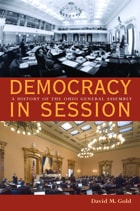
Democracy in Session
A History of the Ohio General AssemblyDavid M. Gold
Ohio University Press, 2009
For more than 200 years no institution has been more important to the development of the American democratic polity than the state legislature, yet no political institution has been so neglected by historians. Although more lawmaking takes place in the state capitals than in Washington D.C., scholars have lavished their attention on Congress, producing only a handful of histories of state legislatures. Most of those histories have focused on discrete legislative acts rather than on legislative process, and all have slighted key aspects of the legislative environment: the parliamentary rules of play, the employees who make the game possible, the physical setting—the arena—in which the people’s representatives engage in conflict and compromise to create public policy.
This book relates in fascinating detail the history of the Ohio General Assembly from its eighteenth-century origins in the Northwest Territory to its twenty-first-century incarnation as a full-time professional legislature. Democracy in Session explains the constitutional context within which the General Assembly functions, examines the evolution of legislative committees, and explores the impact of technology on political contests and legislative procedure. It sheds new light on the operations of the House and Senate clerks’ offices and on such legislative rituals as seat selection, opening prayers, and the Pledge of Allegiance. Partisan issues and public policy receive their due, but so do ethics and decorum, the election of African American and female legislators, the statehouse, and the social life of the members. Democracy in Session is, in short, the most comprehensive history of a state legislature written to date and an important contribution to the story of American democracy.
Democracy in the Time of Coronavirus
Danielle Allen
University of Chicago Press, 2022
The COVID-19 pandemic has demonstrated some of the strengths of our society, including the rapid development of vaccines. But the pandemic has also exposed its glaring weaknesses, such as the failure of our government to develop and quickly implement strategies for tracing and containing outbreaks as well as widespread public distrust of government prompted by often confusing and conflicting choices—to mask, or not to mask. Even worse is that over half a million deaths and the extensive economic devastation could have been avoided if the government had been prepared to undertake comprehensive, contextually-sensitive policies to stop the spread of the disease.
In Democracy in the Time of Coronavirus, leading political thinker Danielle Allen untangles the US government’s COVID-19 victories and failures to offer a plan for creating a more resilient democratic polity—one that can better respond to both the present pandemic and future crises. Looking to history, Allen also identifies the challenges faced by democracies in other times that required strong government action. In an analysis spanning from ancient Greece to the Reconstruction Amendments and the present day, Allen argues for the relative effectiveness of collaborative federalism over authoritarian compulsion and for the unifying power of a common cause. But for democracy to endure, we—as participatory citizens—must commit to that cause: a just and equal social contract and support for good governance.