Results by title
3576 books match the query 'American' and 91 start with e
E Pluribus Unum
Nineteenth-Century American Literature and the Constitutional ParadoxHarris, W. C.
University of Iowa Press, 2005
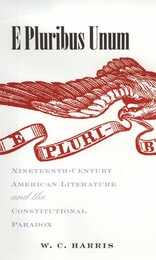
The project of E Pluribus Unum is twofold. Its first and underlying concern is the general philosophic problem of the one and the many as it came to be understood at the time. W. C. Harris supplies a detailed account of the genealogy of the concept, exploring both its applications and its paradoxes as a basis for state and identity formation.
Harris then considers the perilous integration of the one and the many as a motive in the major literary accomplishments of 19th-century U.S. writers. Drawing upon critical as well as historical resources and upon contexts as diverse as cosmology, epistemology, poetics, politics, and Bible translation, he discusses attempts by Poe, Whitman, Melville, and William James to resolve the problems of social construction caused by the paradox of e pluribus unum by writing literary and philosophical texts that supplement the nation’s political founding documents.
Poe (Eureka), Whitman (Leaves of Grass), Melville (Billy Budd), and William James (The Varieties of Religious Experience) provide their own distinct, sometimes contradictory resolutions to the conflicting demands of diversity and unity, equality and hierarchy. Each of these texts understands literary and philosophical writing as having the potential to transform-conceptually or actually-the construction of social order.
This work will be of great interest to literary and constitutional scholars.

E.B. White
The Emergence of an EssayistRobert L., Jr. Root
University of Iowa Press, 1999
Each in a Place Apart
James McMichael
University of Chicago Press, 1994
Early American Poetry
Selections from Bradstreet, Taylor, Dwight, Freneau, and BryantEdited by Jane Donahue Eberwein
University of Wisconsin Press, 1978
Here is the first major-figure anthology of American poetry of the colonial and early national periods, an indispensable volume for both students and scholars of American literature and civilization.
Five major literary figures are spotlighted: Anne Bradstreet (1612-1672), Edward Taylor (1642?"-1729), Timothy Dwight (1752-1817), Philip Freneau (1752-1832), and William Cullen Bryant (1794-1878). An introduction to each chapter summarizes the life of the poet, reviews his or her literary career, describes and evaluates artistic achievement, and places the poet in an intellectual context. The writer's relationship to changing religious, philosophical, political, and cultural patters is established. The contemporary perspective is augmented by the inclusion of an appendix which presents three important poems by other writers: Micheal Wigglesworth's "God's Controversy with New England," Ebenezer Cook's The Sot-Weed Factor, and Joel Barlow's "Hasty Pudding."
Eberwein goes beyond the most popular and familiar works to include those of unrecognized literary merit, presenting a thoroughly unique approach which illuminates the full range of the writers' themes, forms and poetic voices.

Early Stevens
The Nietzschean IntertextB. J. Leggett
Duke University Press, 1992
Concentrating on poems published between 1915 and 1935—but moving occasionally into later poems, as well as letters and essays—B. J. Leggett draws together texts of Stevens and Nietzsche to produce new and surprising readings of the poet's early work. This intertextual critique reveals previously undisclosed ideologies operating at the margins of Stevens's work, enabling Leggett to read aspects of the poetry that have until now been unreadable. Leggett's analysis demonstrates that the Nietzschean presence in Stevens brings with it certain assumptions that need to be made explicit if the form of the poetry is to be understood.
Though many critics have discussed the concept of intertextuality, few have attempted a truly intertextual reading of a particular poet. Early Stevens not only develops an exemplary model of such a reading; it also provides crucial insights into Stevens's notions of femininity, virility, and poetry and elucidates the notions of art, untruth, fiction, and interpretation in both Stevens and Nietzsche.
Earth Diplomacy
Indigenous American Art, Ecological Crisis, and the Cold WarJessica L. Horton
Duke University Press, 2024
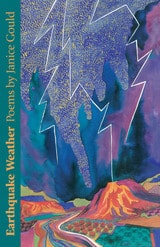
Earthquake Weather
PoemsJanice Gould
University of Arizona Press, 1996
Showing a steady courage in the midst of this alienation, her words are also stark testimony to the struggle of an individual caught in social and emotional contexts defined by others. In Earthquake Weather, as in an evolving friendship, Gould opens herself to the reader in stages. "I did not know how lonely I was / till we began to talk," she writes in an opening section, setting the introspective tone of what’s to come. She begins with a focus on those universal truths that both bind us and isolate us from each other: the pain of loss, the finality of death, our longing to see beneath the surface of things. Next, the poet turns to her growing-up years during the Vietnam War and the civil rights movement. She describes a family in turmoil and an Indian heritage that, oddly, was one of the factors that made her feel most disconnected from other people. And she writes poignantly about her increasing alienation from prescribed sexual roles. "What’s wrong with me? / Where do I belong? Why / am I here? Why can’t I / hold on?" Finally, as in a trusting friendship, Gould offers the reader vivid word portraits of relationships in her life—women she has loved and who have loved her.
Erotic and deeply personal, these poems serve as both a reconciliation and affirmation of her individuality. "Yet would you deny / that between women desire exists / that in our friendship a delicate / and erotic strand of fire unites us?" The poems in this book, says critic Toby Langen, are most powerful for their "courageous drawing on experience and feelings." They will speak to many general readers as well as anyone interested in questions of gender and identity, including students of literature, lesbian/women’s studies, social/cultural studies, or American Indian studies.
Eating Together
Food, Friendship and InequalityAlice P. Julier
University of Illinois Press, 2013

Echoes from the Hills
Critical Essays on Ozarks LiteratureJohn J. Han
University of Arkansas Press, 2027
Echoes from the Hills: Critical Essays on Ozarks Literature offers a sustained critical examination of Ozarks writing through literary, ecological, cultural, and theoretical perspectives. Bringing together sixteen essays, the collection marks a shift in Ozarks studies from archival recovery and author-focused scholarship toward more self-aware literary criticism, showing that Ozarks literature is a dynamic field capable of serious interpretive work.
Organized around themes such as Arcadian myth, ecocriticism, postcolonialism, feminist criticism, and noir, the essays place Ozarks texts in conversation with broader debates in American literary studies and the environmental humanities. Discussions of writers such as Daniel Woodrell and Sue Hubbell, along with attention to film and visual culture including Minari, highlight how regional stories engage issues of land use, environmental strain, economic precarity, and cultural displacement.
The collection also broadens the field by addressing gaps in representation and including a wider range of voices and perspectives. By bringing together scholars from within and beyond the region, the book encourages dialogue across disciplinary and geographic boundaries. Overall, it presents Ozarks literature as an evolving part of American literary scholarship, one that reflects the complex intersections of place, memory, identity, and cultural change.
Echoes of Emerson
Rethinking Realism in Twain, James, Wharton, and CatherDiana Hope Polley
University of Alabama Press, 2017
Probes the ways in which two major periods in nineteenth-century American literature—Romanticism and Realism—have come to be understood and defined.
Echoes of Emerson: Rethinking Realism in Twain, James, Wharton, and Cather traces the complex and unexplored relationship between American realism and the philosophy of Ralph Waldo Emerson. Critics often read American realism as a clear disavowal of earlier American romantic philosophy and as a commitment to recognizing the stark realities of a new postbellum order. Diana Hope Polley’s study complicates these traditional assumptions by reading American realism as an ongoing dialogue with the ideas—often idealisms—of America’s greatest romantic philosopher, Ralph Waldo Emerson.
In this illuminating work, Polley offers detailed readings of Mark Twain’s Adventures of Huckleberry Finn, Henry James’s The Portrait of a Lady, Edith Wharton’s The House of Mirth, and Willa Cather’s My Ántonia—all through the lens of Emersonian philosophy and discourse. This unique contribution to nineteenth- and early twentieth-century literary studies shows how these texts revisit Emerson’s antebellum “republic of the spirit” philosophy, specifically the trope of the Emersonian hero/heroine navigating the harsh contingencies of the modern world.
Romanticism and realism are often seen as opposing binaries, with romanticism celebrating the individual, self-reliance, and nature and realism emphasizing the weight of socio-historical forces. Realism is often characterized as rejecting the transcendent principles of Emersonian thought. Rather than accept those distinct boundaries between romance and realism, Polley argues that American realists struggled between celebrating Emerson’s core philosophies of individual possibility and acknowledging the stark “realities” of American social and historical life. In short, this study recognizes within realism a divided loyalty between two historical trends and explores how these seemingly contradictory notions—Emerson’s romantic philosophy and later nineteenth-century visions of historical reality—exist, simultaneously, within the literature of the period.
Echoes
Poems Left BehindJohn Ciardi
University of Arkansas Press, 1989
Eclipse of Empires
World History in Nineteenth-Century U.S. Literature and CulturePatricia Jane Roylance
University of Alabama Press, 2013
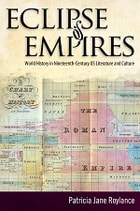
Patricia Jane Roylance’s central claim in Eclipse of Empires is that historical episodes of imperial eclipse, for example Incan Peru yielding to Spain or the Ojibway to the French, heightened the concerns of many American writers about specific intranational social problems plaguing the nation at the time—race, class, gender, religion, economics. Given the eventual dissolution of great civilizations previously plagued by these very same problems, many writers, unlike those who confidently emphasized U.S. exceptionalism, exhibited both an anxiety about the stability of American society and a consistent practice of self-scrutiny in identifying the national defects that they felt could precipitate America’s decline.
Roylance studies, among other texts, James Fenimore Cooper’s The Water-Witch (1830) and The Bravo (1831), which address the eclipse of Venice by New York City as a maritime power in the eighteenth century; William Hickling Prescott’s Conquest of Peru (1847), which responds to widespread anxiety about communist and abolitionist threats to the U.S. system of personal property by depicting Incan culture as a protocommunist society doomed to failure; and Henry Wadsworth Longfellow’s The Song of Hiawatha (1855), which resists the total eclipse of Ojibwa culture by incorporating Ojibway terms and stories into his poem and by depicting the land as permanently marked by their occupation.
Eclipse of the Sun
Boxing PoemsRed Shuttleworth
University of Nevada Press, 2023
In this striking poetry collection, Red Shuttleworth, who holds the record as the oldest active boxer (professional or amateur), offers evocative imagery that unapologetically reveals the life of a boxer. From the inspiring hopes of an early career to agonizing defeats, the poems in Eclipse of the Sun take readers on a journey from moderate successes to the realization that a dream of a promising future has become the reality of the long haul of a journeyman. Along the way, Shuttleworth rubs elbows with greats like Muhammad Ali, Chickie Ferrara, and Ron Lyle, exposing the resolute path and difficult end of a hard-lived life.
This collection is an homage to boxing at its grittiest levels, and to fighters who persevere—with hope, blood, and bone—against sense and loss. Few professional boxers earn a living in the ring, and even fewer arrive in their forties with any money left from their sport. In this collection, boxers attain poverty rather than riches, end up in post-career menial jobs, and have no pension plan to fall back on. Shuttleworth’s poetry is a visceral inside look at the brutality and humanity at the heart of boxing.
Ecological Poetics; or, Wallace Stevens’s Birds
Cary Wolfe
University of Chicago Press, 2020
Stevens, Wolfe argues, is an ecological poet in the sense that his places, worlds, and environments are co-created by the life forms that inhabit them. Wolfe argues for a “nonrepresentational” conception of ecopoetics, showing how Stevens’s poems reward study alongside theories of system, environment, and observation derived from a multitude of sources, from Ralph Waldo Emerson and Niklas Luhmann to Jacques Derrida and Stuart Kauffman. Ecological Poetics is an ambitious interdisciplinary undertaking involving literary criticism, contemporary philosophy, and theoretical biology.
Ecopoetics
The Language of Nature, the Nature of LanguageScott Knickerbocker
University of Massachusetts Press, 2012
Ecopoetics probes the complex relationship between artifice and the natural world in the work of modern American poets—in particular Wallace Stevens, Elizabeth Bishop, Richard Wilbur, and Sylvia Plath. These poets relate to nature as a deep wellspring of meaning, although they all avoid using language the way most nature writers do, merely to reflect or refer directly to the world. Each of these poets, in his or her own distinct way, employs instead what Knickerbocker terms sensuous poesis, the process of rematerializing language through sound effects and other formal devices as a sophisticated response to nonhuman nature.
Rather than attempt to erase the artifice of their own poems, to make them seem more natural and thus supposedly closer to nature, the poets in this book unapologetically embrace artifice—not for its own sake but in order to perform and enact the natural world. Indeed, for them, artifice is natural. In examining their work, Knickerbocker charts a new direction for ecocriticism.
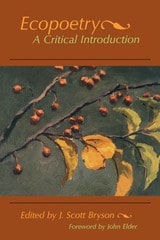
Ecopoetry
Critical IntroductionScott Bryson
University of Utah Press, 2002
The burgeoning field of ecocriticism is beginning to address the work of such ecopoets as Gary Snyder, Mary Oliver, W. S. Merwin, and Wendell Berry, among others, whose poems increasingly deal with ecological and environmental issues. Ecopoetry: A Critical Introduction assembles previously unpublished contributions from many of the most important scholars in the field as they discuss the historical and crosscultural roots of ecopoetry, while expanding the boundaries to include such themes as genocide and extinction, the lesbian body, and post colonialism. This volume gathers these necessary voices in the emerging conversation regarding poetry’s place in the environmental debate.
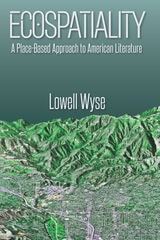
Ecospatiality
A Place-Based Approach to American LiteratureLowell Wyse
University of Iowa Press, 2021
Ecospatiality explores modern and contemporary American prose literature through the lens of place, showing how authors like William Least Heat-Moon, Willa Cather, Richard Wright, and Leslie Marmon Silko represent and reimagine real places in the world and the human-environment relationships therein. Building on the work of scholars in geography, sociology, ecocriticism, and geocriticism, this book articulates the theory of ecospatiality: an understanding of place as simultaneously spatial, ecological, and historical.
In our current historical moment, which is characterized by ongoing ecological collapse and a not-unrelated increase in social disorder, few issues are more urgent than the human relationship with our environments. Whether we characterize this new epoch as the climate change era or the Anthropocene, we can no longer ignore the fact that the places we live are rapidly changing in response to economic and environmental pressures. Rather than thinking of place as a neutral site for social interaction, we should recognize how it underpins and intertwines with human experience.
Fortunately, literature can help us think through how place operates. Lowell Wyse shows that texts can be understood as works of literary cartography. Focusing on works of nonfiction and fiction whose primary settings are on the North American continent, Ecospatiality demonstrates how these narratives rely on realistic literary geography to invoke, and sometimes retell, important aspects of environmental history within particular communities and bioregions.
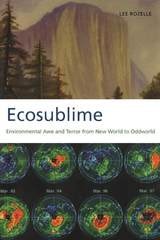
Ecosublime
Environmental Awe and Terror from New World to OddworldLee Rozelle
University of Alabama Press, 2006
Explores 19th-century, modern, postmodern, and millennial texts as they portray the changing ecological face of America
Lee Rozelle probes the metaphor of environmental catastrophe in American literature of the last 150 years. In each instance, Rozelle finds evidence that the ecosublime--nature experienced as an instance of wonder and fear--profoundly reflects spiritual and political responses to the natural world, America’s increasingly anti-ecological trajectory, and the ascendance of a post-natural landscape.
In the 19th century, Rozelle argues, Isabella Bird and Edgar Allan Poe represented the western wilderness as culturally constructed and idealized landscapes. Gardens, forests, and frontiers are conceptual frameworks that either misrepresent or uphold ecological space. Modernists like Nathanael West and William Carlos Williams, on the other hand, portray urban space as either wastelands or mythical urban gardens. A chapter on Charles W. Chesnutt and Rebecca Harding Davis analyzes a new breed of literary eco-advocate, educating and shocking mainstream readers through depictions of ecological disaster. A later chapter probes the writings of Edward Abbey and the Unabomber Manifesto to delve into the sublime dimensions of environmental activism, monkey-wrenching, and eco-terrorism.
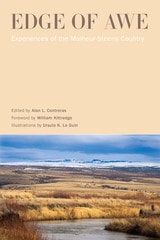
Edge of Awe
Experiences of the Malheur-Steens CountryAlan L. Contreras
Oregon State University Press, 2019
Edge of Awe celebrates the immense variety of human experience in the Malheur-Steens region. This high-desert marsh country has long been a place of human habitation, work, and recreation, but this compendium is weighted toward the writing of visitors over the past one hundred years. It encompasses a wide range of experiences, such as fishing the Blitzen River, attending the Steens Running Camp, leading a mule train on Steens mountain, looking for rare migrant birds, boating on the great marshes, and much more.
Anyone who has visited the awe-inspiring Malheur-Steens country or plans to do so, and anyone with an interest in the region, will find inspiration in this literary companion.
CONTRIBUTORS
Chas Biederman
Charles E. Bendire
Greg Bryant
Sean Burns
Alan L. Contreras
Harry Fuller
Ira N. Gabrielson
Quinton Hallett
Ada Hastings Hedges
David Hedges
Hendrik Herlyn
Meli Hull
William Kittredge
Ursula K. Le Guin
Maitreya
David B. Marshall
John F. Marshall
Tom McAllister
Thomas C. Meinzen
Peter Pearsall
Dallas Lore Sharp
William Stafford
Noah K. Strycker
Peter Walker
Ellen Waterston
C.E.S. Wood
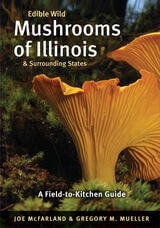
Edible Wild Mushrooms of Illinois and Surrounding States
A Field-to-Kitchen GuideJoe McFarland and Gregory M. Mueller
University of Illinois Press, 2008
Lavishly illustrated with nearly three hundred gorgeous full-color photos, this engaging guidebook carefully describes forty different edible species of wild mushrooms found around Illinois and surrounding states, including Iowa, Wisconsin, Missouri, Indiana, and Kentucky. With conversational and witty prose, the book provides extensive detail on each edible species, including photographs of potential look-alikes to help you safely identify and avoid poisonous species. Mushroom lovers from Chicago to Cairo will find their favorite local varieties, including morels, chanterelles, boletes, puffballs, and many others. Veteran mushroom hunters Joe McFarland and Gregory M. Mueller also impart their wisdom about the best times and places to find these hidden gems.
Edible Wild Mushrooms of Illinois and Surrounding States also offers practical advice on preparing, storing, drying, and cooking with wild mushrooms, presenting more than two dozen tantalizing mushroom recipes from some of the best restaurants and chefs in Illinois, including one of Food & Wine magazine's top 10 new chefs of 2007. Recipes include classics like Beer Battered Morels, Parasol Mushroom Frittatas, and even the highly improbable (yet delectable) Morel Tiramisu for dessert.
As the first new book about Illinois mushrooms in more than eighty years, this is the guide that mushroom hunters and cooks have been craving.
Visit the book's companion website at www.illinoismushrooms.com.
Edith Wharton in Context
Essays on IntertextualityAdeline R. Tintner
University of Alabama Press, 1999
Tintner provides a detailed analysis of the complex interplay between Wharton and James—how they influenced each other and how some of their writings operate as homages or personal jokes. So deeply was James in Wharton’s confidence, Tintner argues, that he provided her with source models for a number of her characters. In addition, Wharton found in his fiction structures for her own, especially for The Age of Innocence.
Tintner also brings her considerable knowledge of art history to bear in her study of art allusions in Wharton’s work. Wharton’s response both to the Italian painters active before Raphael and to the English Pre-Raphaelites of a generation before her own is analyzed here in three essays. These pieces demonstrate Wharton’s sensibility to changes in art tastes and collecting, the inheritance of Rossetti’s revolutionary paintings in the unfinished novel, The Buccaneers, and the importance of home in The Glimpses of the Moon, as demonstrated by Wharton’s use of Tiepolo’s fresco in the church of Scalzi.
Tintner concludes by considering Wharton’s literary legacy and who Wharton has figured in the imaginations of recent writers, including Richard Howard, Louis Auchincloss, and Cathleen Schine. Tintner finds some part of Wharton’s personality or work evoked in a number of contemporary works and argues that this presence signals the beginning of an increasing influence.

Edwardian Stories of Divorce
Janice Hubbard Harris
Rutgers University Press, 1996
Much as abortion in the United States today is a contentious issue used for scripting women's roles and potential into the national agenda, divorce was an issue dividing England in the Edwardian era. According to Janice Harris, anything and everything, from illicit sex and family values to the Garden of Eden, wrath of children, poverty of women, nature of cruelty, scandal of America, threat of Germany, and future of England were part of the debate over divorce. Living under marriage laws far more restrictive than those of their Protestant neighbors, Edwardian women and men campaigned for reform with a barrage of compelling stories. Organizing her analysis around three major sources of narrative on divorce––the Sunday papers, the Report of the Royal Commission on Divorce and Matrimonial causes, and the novel––Harris uncovers a war of words and a competition of tales. In raising questions about the winners, losers, and spoils, Harris expands our understanding of the history of divorce, the wars between the sexes, and the political import of those wars.
In the end, she presents a complex and lively story herself, one that illuminates battles over marriage and divorce taking place in our own era as well. This humane book on a long-neglected subject marks an important contribution to narrative studies and Edwardian history.
Effort at Speech
New and Selected PoemsWilliam Meredith
Northwestern University Press, 1997
A contemporary of Berryman, Bishop, and Lowell, William Meredith shared neither the bohemian excesses of the Beats nor the exhibitionist excesses of the "confessional" poets. Rather, he was known as a poet whose unadorned, formal verse marked him as a singular voice. Effort at Speech, the definitive collection of Meredith's life work, contains poems chosen by the author from throughout his career, as well as several new works and an essay by Michael Collier placing Meredith in his times.
El Dorado
Peter Campion
University of Chicago Press, 2013
Elephant
Soren Stockman
Four Way Books, 2022

Elizabeth Bishop and Her Art
Lloyd Schwartz and Sybil P. Estess, Editors
University of Michigan Press, 1983
Elk in Winter
Robert Pack
University of Chicago Press, 2004
Eloquence and Mere Life
Essays on the Art of PoetryAlan Williamson
University of Michigan Press, 1994
Emancipating Pragmatism
Emerson, Jazz, and Experimental WritingMichael Magee
University of Alabama Press, 2004
A radical rereading of Emerson that posits African- American culture, literature, and jazz as the very continuation and embodiment of pragmatic thought and democratic tradition
Emancipating Pragmatism is a radical rereading of Emerson that posits African- American culture, literature, and jazz as the embodiment of pragmatic thought and democratic tradition. It traces Emerson's philosophical legacy through the 19th and 20th centuries to discover how Emersonian thought continues to inform issues of race, aesthetics, and poetic discourse.
Emerson’s pragmatism derives from his abolitionism, Michael Magee argues, and any pragmatic thought that aspires toward democracy cannot ignore and must reckon with its racial roots. Magee looks at the ties between pragmatism and African-American culture as they manifest themselves in key texts and movements, such as William Carlos Williams’s poetry; Ralph Ellison’s discourse in Invisible Man and Juneteenth and his essays on jazz; the poetic works of Robert Creeley, Amiri Baraka, and Frank O'Hara; as well as the “new jazz” being forged at clubs like The Five Spot in New York.
Ultimately, Magee calls into question traditional maps of pragmatist lineage and ties pragmatism to the avant-garde American tradition.
Embodied Memory
Theatre Of George TabonAnat Feinberg
University of Iowa Press, 1999
Making use of invaluable archival material, Feinberg's biographical account is followed by a study of Tabori's experimental theatre work. As did prominent avant-gardists such as Grotowski or Chaikin, Tabori sought to open up new vistas in an otherwise mainstream theatre system. Feinberg pays special attention to Tabori's theatrical innovations, most movingly found in his Holocaust plays. There Feinberg shows the ways in which Tabori's theatre becomes a locus of remembrance (Gedächtnisort) and of unique, engaging memory-work (Erinnerungsarbeit).
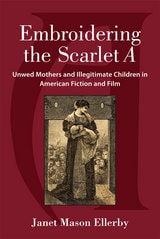
Embroidering the Scarlet A
Unwed Mothers and Illegitimate Children in American Fiction and FilmJanet Mason Ellerby
University of Michigan Press, 2015
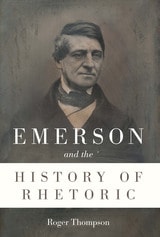
Emerson and the History of Rhetoric
Roger Thompson
Southern Illinois University Press, 2017
Moving beyond dominant literary critical thinking, Thompson argues that for Emerson, rhetoric was both imaginative and nonsystematic. This book covers the influences of rhetoricians from a range of periods on Emerson’s model of rhetoric. Drawing on Emerson’s manuscript notes, journal entries, and some of his rarely discussed essays and lectures as well as his more famous works, the author bridges the divide between literary and rhetorical studies, expanding our understanding of this iconic nineteenth-century man of letters.
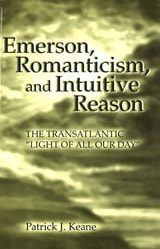
Emerson, Romanticism, and Intuitive Reason
The Transatlantic "Light of All Our Day"Patrick J. Keane
University of Missouri Press, 2005
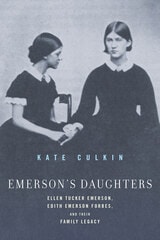
Emerson’s Daughters
Ellen Tucker Emerson, Edith Emerson Forbes, and Their Family LegacyKate Culkin
University of Massachusetts Press, 2025
Longlisted for the 2026 Plutarch Award
Ellen Tucker Emerson and Edith Emerson Forbes, the daughters of Lidian Jackson and Ralph Waldo Emerson, grew up in the heart of Concord, Massachusetts’s famed literary community. In a culture that celebrated self-reliance, Ellen and Edith formed a partnership that only strengthened as their paths diverged, with Ellen remaining in the family home and Edith marrying William Forbes, moving to Milton, Massachusetts, and having eight children. The partnership allowed them to tend to the demands and opportunities created by their father’s career, including serving as his secretaries and editors, and helped them shape his posthumous image. It also enabled them to adapt to historical developments stretching from the Civil War to American imperialism as well as personal ones, including Edith’s growing family and travel and study abroad, and inevitable ones brought on by the aging processes of their parents and themselves.
Emerson’s Daughters is a biography of a sisterhood, the first full-length study of Ellen’s and Edith’s lives. Building on archival research into the extensive correspondence between the sisters, it adds to the growing body of work on women’s contribution to Transcendentalism while opening a window onto the rich, and understudied, family life of the “Sage of Concord.”
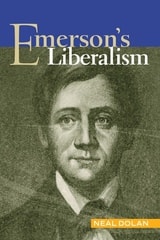
Emerson’s Liberalism
Neal Dolan
University of Wisconsin Press, 2009
Neal Dolan offers the first comprehensive and historically informed exposition of all of Ralph Waldo Emerson’s writings as a contribution to the theory and practice of liberal culture. Rather than projecting twentieth-century viewpoints onto the past, he restores Emerson’s great body of work to the classical liberal contexts that most decisively shaped its general political-cultural outlook—the libertarian-liberalism of John Locke, the Scottish Enlightenment, the American founders, and the American Whigs.
In addition to in-depth consideration of Emerson’s journals and lectures, Dolan provides original commentary on many of Emerson’s most celebrated published works, including Nature, the “Divinity School Address,” “History,” “Compensation,” “Experience,” the political addresses of the early 1840s, “An Address . . . on . . . The Emancipation of the Negroes in the British West Indies,” Representative Men, English Traits, and The Conduct of Life. He considers Emerson’s distinctive elaborations of foundational liberal values—progress, reason, work, property, limited government, rights, civil society, liberty, commerce, and empiricism. And he argues that Emerson’s ideas are a morally bracing and spiritually inspiring resource for the ongoing sustenance of American culture and civilization, reminding us of the depth, breadth, and strength of our common liberal inheritance.
Emily Dickinson's Approving God
Divine Design and the Problem of SufferingPatrick J. Keane
University of Missouri Press, 2008
Emily Dickinson's Music Book and the Musical Life of an American Poet
George Boziwick
University of Massachusetts Press, 2022
After years of studying piano as a young woman in her family home in Amherst, Massachusetts, Emily Dickinson curated her music book, a common practice at the time. Now part of the Dickinson Collection in the Houghton Library of Harvard University, this bound volume of 107 pieces of published sheet music includes the poet’s favorite instrumental piano music and vocal music, ranging from theme and variation sets to vernacular music, which was also enjoyed by the family’s servants.
Offering a fresh historical perspective on a poetic voice that has become canonical in American literature, this original study brings this artifact to life, documenting Dickinson’s early years of musical study through the time her music was bound in the early 1850s, which tellingly coincided with the writing of her first poems. Using Dickinson’s letters and poems alongside newspapers and other archival sources, George Boziwick explores the various composers, music sellers, and publishers behind this music and Dickinson’s attendance at performances, presenting new insights into the multiple layers of meaning that music held for her.
Emily Dickinson's Open Folios
Scenes of Reading, Surfaces of WritingMarta L. Werner
University of Michigan Press, 1996
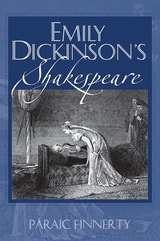
Emily Dickinson's Shakespeare
Paraic Finnerty
University of Massachusetts Press, 2006
Páraic Finnerty clarifies the essential role that Shakespeare had in Dickinson's life by locating her allusions to his writings within a nineteenth-century American context and by treating reading as a practice that is shaped, to a large extent, by culture. In the process, he throws new light on Shakespeare's multifaceted presence in Dickinson's world: in education, theater, newspapers, public lectures, reading clubs, and literary periodicals.
Through analysis of letters, journals, diaries, records, periodicals, newspapers, and marginalia, Finnerty juxtaposes Dickinson's engagement with Shakespeare with the responses of her contemporaries. Her Shakespeare emerges as an immoral dramatist and highly moral poet; a highbrow symbol of class and cultivation and a lowbrow popular entertainer; an impetus behind the emerging American theater criticism and an English author threatening American creativity; a writer culturally approved for women and yet one whose authority women often appropriated to critique their culture. Such a context allows the explication of Dickinson's specific references to Shakespeare and further conjecture about how she most likely read him.
Finnerty also examines those of Dickinson's responses to Shakespeare that deviated from what might have been expected and approved of by her culture. Imaginatively departing from the commonplace, Dickinson chose to admire three of Shakespeare's most powerful and transgressive female characters—Cleopatra, Queen Margaret, and Lady Macbeth—instead of his more worthy and virtuous heroines. More startling, although the poet found resonance for her own life in Hamlet, Romeo and Juliet, and Macbeth, she chose, in the racially charged atmosphere of nineteenth-century America, to identify with Shakespeare's most controversial character, Othello, thereby defying expectations once again.
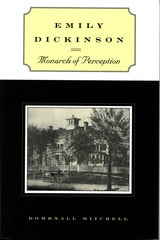
Emily Dickinson
Monarch of PerceptionDomhnall Mitchell
University of Massachusetts Press, 2000
Emily Dickinson has often been pictured as a sensitive but isolated poet—someone who published very little in her lifetime and limited herself to lyrics, considered to be the kind of poems most removed from social and political life. In recent years, scholars have challenged that view, and this book extends the discussion in valuable new directions.
Domhnall Mitchell begins by focusing on three historical phenomena—the railroad, the Dickinson homestead, and horticulture—and argues that poems about trains, home, and flowers engage with their meanings in ways that extend beyond the confines of the aesthetic. He shows how Dickinson's poems and letters reveal the full complexity of her position as a woman situated within a larger social and economic class.
In the second half of the book, Mitchell considers the ideological, textual, and editorial implications of Dickinson's strategic privatization of her art. He relates the particular forms of her manuscripts' appearance, distribution, and collation to aspects of her social as well as her literary consciousness. In a chapter that is certain to provoke debate, he explores what it means to read individual poems and letters in manuscript versions rather than in printed editions. By paying close attention to textual evidence, he makes the case that various features of the manuscripts are actually matters of accident or immediate convenience rather than the visual markers of a new aesthetic principle.
Mitchell closes by using the theories of Mikhail Bakhtin to explore the contradictions of a “private” poetry that engages verbally in multiple areas of nineteenth-century life and discourse. By attending to the contemporaneous particularities of recurrent words and images, he demonstrates that Dickinson could stay at home and still be at home in history, too.
Emotional Reinventions
Realist-Era Representations Beyond SympathyMelanie V. Dawson
University of Michigan Press, 2015
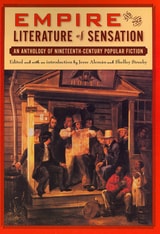
Empire and The Literature of Sensation
An Anthology of Nineteenth-Century Popular FictionAlemán, Jesse
Rutgers University Press, 2007
Most of the accounts, although widely distributed in nineteenth-century newspapers, pamphlets, or dime store novels, have long been out of print. Reprinted here for the first time are novelettes by two superstars of the cheap fiction industry, Ned Buntline and George Lippard. Also included are selections from one of the first dime novels as well as the narratives of Leonora Siddons and Sophia Delaplain, both who claim in their autobiographical pamphlets to have cross-dressed as men and participated in the Texas rebellion and Cuban filibustering.
Originally written for entertainment and enormously popular in their day, these sensational thrillers reveal for today's audiences how the rhetoric of empire was circulated for mass consumption and how imperialism generated domestic and cultural instability during the period of the American literary renaissance.
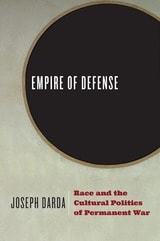
Empire of Defense
Race and the Cultural Politics of Permanent WarJoseph Darda
University of Chicago Press, 2019
From the formation of the DOD to the long wars of the twenty-first century, the United States rebranded war as the defense of Western liberalism from first communism, then crime, authoritarianism, and terrorism. Officials learned to frame state violence against Asians, Black and brown people, Arabs, and Muslims as the safeguarding of human rights from illiberal beliefs and behaviors. Through government documents, news media, and the writing and art of Joseph Heller, June Jordan, Trinh T. Minh-ha, I. F. Stone, and others, Darda shows how defense remade and sustained a weakened color line with new racial categories (the communist, the criminal, the authoritarian, the terrorist) that cast the state’s ideological enemies outside the human of human rights. Amid the rise of anticolonial and antiracist movements the world over, defense secured the future of war and white dominance.
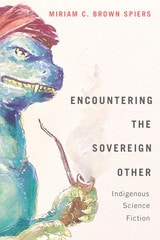
Encountering the Sovereign Other
Indigenous Science FictionMiriam C. Brown Spiers
Michigan State University Press, 2021

Ends of the Earth
PoemsKate Partridge
University of Alaska Press, 2017
While the poems turn an inquisitive, contemporary lens to the subject of Alaska, elements throughout the book are influenced by twentieth-century writers like Elizabeth Bishop and Marianne Moore. The manuscript also combines personal experience with collaged material from the Epic of Gilgamesh, Walt Whitman's notebooks, and other classic sources, to investigate the ideas of love, isolation, and location. Through humor and observation, Partridge takes a new look at what it means to live in urban Alaska and the world at large.
Enemies of All Humankind
Fictions of Legitimate ViolenceSonja Schillings
Dartmouth College Press, 2016
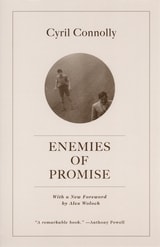
Enemies of Promise
Cyril Connolly
University of Chicago Press, 2008
“Whom the gods wish to destroy,” writes Cyril Connolly, “they first call promising.” First published in 1938 and long out of print, Enemies of Promise, an “inquiry into the problem of how to write a book that lasts ten years,” tests the boundaries of criticism, journalism, and autobiography with the blistering prose that became Connolly’s trademark. Connolly here confronts the evils of domesticity, politics, drink, and advertising as well as novelists such as Joyce, Proust, Hemingway, and Faulkner in essays that remain fresh and penetrating to this day.
“A fine critic, compulsive traveler, and candid autobiographer. . . . [Connolly] lays down the law for all writers who wanted to count. . . . He had imagination and decisive images flashed with the speed of wit in his mind.”—V. S. Pritchett, New York Review of Books
“Anyone who writes, or wants to write, will find something on just about every single page that either endorses a long-held prejudice or outrages, and that makes it a pretty compelling read. . . . You end up muttering back at just about every ornately constructed pensée that Connolly utters, but that’s one of the joys of this book.”—Nick Hornby, The Believer
“A remarkable book.”—Anthony Powell
Enlightened Individualism
Buddhism and Hinduism in American Literature from the Beats to the PresentKyle Garton-Gundling
The Ohio State University Press, 2019
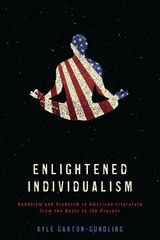
This “enlightened individualism” uses Buddhist and Hindu philosophy to reframe American freedom in terms of spiritual liberation, and it also reinterprets Asian teachings through Western traditions of political activism and countercultural provocation. Garton-Gundling argues that even though works by Kerouac, Walker, Kingston, and others wrestle with issues of exoticism and appropriation, their characters are also meaningfully challenged and changed by Asian faiths. These literary adaptations, then, can help Americans reenvision individualism in a more transcendent and cosmopolitan context.

Enter Dark Stranger
PoemsWilliam Trowbridge
University of Arkansas Press, 1989
The world of William Trowbridge is one preoccupied with loss, with the fall from some possibility of grace that all who are born must bear. In the title poem of Trowbridge’s first full-length collection the poet calls our attention to movies, to Shane in particular. He asks us to identify, not with Shane, the lonely knight on a nameless quest, but with the much more lonely, and real, Jack Palance, the Prince of Darkness.
Trowbridge favors the villain, the outcast, the imperfect, the sinner, the alienated: King Kong, the Frog Prince, Frankenstein’s monster.
Entered Some Aliens
Siew Hii
University of Wisconsin Press, 2026
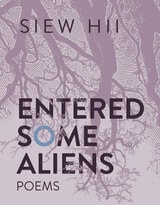
“There is no version of this wherein I am given the time machine and do not destroy it,” writes Siew Hii in this wide-ranging collection that offers a poet’s perspective on what it means to be a queer Asian American in the American South. Exuding wit and profound insight, Hii’s is a voice that can elicit both laughter and sober reflection within the space of a few lines. In an explosion of different styles and formats, she delivers precise, cutting observations about self, family, and strangers.
From taking aim at Hollywood’s representations of identity, to exploring the meaning and dynamics of family, to describing her adopted home of Florida through a set of formally explosive poems, Hii makes sense of an unjust and absurd world, all the while exhibiting genuine curiosity and humor. Entered Some Aliens offers rare and powerful insight into feeling out of place and out of time.