Results by title
458 books match the query 'Literature' and 15 start with e
Elizabeth I
Translations, 1544-1589Elizabeth I
University of Chicago Press, 2008
Presenting original and modernized spellings in a facing-page format, these two volumes will answer the call to make all of Elizabeth’s writings available. They include her renderings of epistles of Cicero and Seneca, religious writings of John Calvin and Marguerite de Navarre, and Horace’s Ars poetica, as well as Elizabeth’s Latin Sententiae drawn from diverse sources, on the responsibilities of sovereign rule and her own perspectives on the monarchy. Editors Janel Mueller and Joshua Scodel offer introduction to each of the translated selections, describing the source text, its cultural significance, and the historical context in which Elizabeth translated it. Their annotations identify obscure meanings, biblical and classical references, and Elizabeth’s actual or apparent deviations from her sources.
The translations collected here trace Elizabeth’s steady progression from youthful evangelical piety to more mature reflections on morality, royal responsibility, public and private forms of grief, and the right way to rule. Elizabeth I: Translations is the queen’s personal legacy, an example of the very best that a humanist education can bring to the conduct of sovereign rule.
Elizabeth I
Translations, 1592-1598Elizabeth I
University of Chicago Press, 2009
Presenting original and modernized spellings in a facing-page format, these two volumes will answer the call to make all of Elizabeth’s writings available. They include her renderings of epistles of Cicero and Seneca, religious writings of John Calvin and Marguerite de Navarre, and Horace’s Ars poetica, as well as Elizabeth’s Latin Sententiae drawn from diverse sources, on the responsibilities of sovereign rule and her own perspectives on the monarchy. Editors Janel Mueller and Joshua Scodel offer introduction to each of the translated selections, describing the source text, its cultural significance, and the historical context in which Elizabeth translated it. Their annotations identify obscure meanings, biblical and classical references, and Elizabeth’s actual or apparent deviations from her sources.
The translations collected here trace Elizabeth’s steady progression from youthful evangelical piety to more mature reflections on morality, royal responsibility, public and private forms of grief, and the right way to rule. Elizabeth I: Translations is the queen’s personal legacy, an example of the very best that a humanist education can bring to the conduct of sovereign rule.
Emerson, Romanticism, and Intuitive Reason
The Transatlantic "Light of All Our Day"Patrick J. Keane
University of Missouri Press, 2005
Emotion in the Tudor Court
Literature, History, and Early Modern FeelingBradley J. Irish
Northwestern University Press, 2018
Spanning the sixteenth century, Emotion in the Tudor Court explores Cardinal Thomas Wolsey and Henrician satire; Henry Howard, Earl of Surrey, and elegy; Sir Philip Sidney and Elizabethan pageantry; and Robert Devereux, Earl of Essex, and factional literature. It demonstrates how the dynamics of disgust,envy, rejection, and dread, as they are understood in the modern affective sciences, can be seen to guide literary production in the early modern court.
By combining Renaissance concepts of emotion with modern research in the social and natural sciences, Emotion in the Tudor Court takes a transdisciplinary approach to yield fascinating and robust ways to illuminate both literary studies and cultural history.
Empire Burlesque
The Fate of Critical Culture in Global AmericaDaniel T. O Hara
Duke University Press, 2003
Empire Burlesque presents several interrelated analyses through readings of a range of writers and cultural figures including Henry James, Freud, Said, De Man, Derrida, and Cordwainer Smith (an academic, spy, and classic 1950s and 1960s science fiction writer). It describes the debilitating effects of globalization on the university in general and the field of literary studies in particular, it critiques literary studies’ embrace of globalization theory in the name of a blind and vacant modernization, and it meditates on the ways critical reading and writing can facilitate an imaginative alternative to institutionalized practices of modernization. Drawing on Lacanian psychoanalytical theory, it diagnoses contemporary American Studies as typically driven by the mindless abjection and transference of professional identities.
A provocative commentary on contemporary cultural criticism, Empire Burlesque will inform debates on the American university across the humanities, particularly among those in literary criticism, cultural studies, and American studies.
Empire and The Literature of Sensation
An Anthology of Nineteenth-Century Popular FictionAlemán, Jesse
Rutgers University Press, 2007
Most of the accounts, although widely distributed in nineteenth-century newspapers, pamphlets, or dime store novels, have long been out of print. Reprinted here for the first time are novelettes by two superstars of the cheap fiction industry, Ned Buntline and George Lippard. Also included are selections from one of the first dime novels as well as the narratives of Leonora Siddons and Sophia Delaplain, both who claim in their autobiographical pamphlets to have cross-dressed as men and participated in the Texas rebellion and Cuban filibustering.
Originally written for entertainment and enormously popular in their day, these sensational thrillers reveal for today's audiences how the rhetoric of empire was circulated for mass consumption and how imperialism generated domestic and cultural instability during the period of the American literary renaissance.
English after the Fall
From Literature to TextualityRobert Scholes
University of Iowa Press, 2011
Engraven Desire
Eros, Image, and Text in the French Eighteenth CenturyPhilip Stewart
Duke University Press, 1992
Focusing on the objectification of women by the “male gaze,” Stewart analyzes the varous ways in which this masculine power is simultaneously represented and veiled: the fascination with women playing “male” roles, such as soldiers; the preponderance of voyeuristic images of the naked female body; the transformation of male power into hostile forces of nature that render women helpless. Further, Stewart shows how “indecent” engravings that purported to test the limits of eighteenth-century morality often merely reinforced prevailing images of women.
Addressing critical concerns about the societal enforcement of gender roles in literature along with essential questions about the function of illustration, Engraven Desire provides surprising insight into the culturally conditioned act of reading. Stewart’s work, itself richly illustrated with hundreds of arresting reproductions, makes a significant contribution to our understanding of the interplay of art, literature, and society.
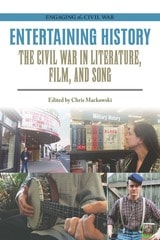
Entertaining History
The Civil War in Literature, Film, and SongEdited by Chris Mackowski
Southern Illinois University Press, 2020
From Ulysses S. Grant’s Memoirs to Abraham Lincoln: Vampire Hunter, from Roots to Ken Burns’s The Civil War, from “Dixie” to “Ashokan Farewell,” and from Civil War photography to the Gettysburg Cyclorama, trendy and well-loved depictions of the Civil War are the subjects of twenty contributors who tell how they and the general public have been influenced by them. Sarah Kay Bierle examines the eternal appeal of Gone with the Wind and asks how it is that a protagonist who so opposed the war has become such a figurehead for it. H. R. Gordon talks with New York Times–bestselling novelist Jeff Shaara to discuss the power of storytelling. Paul Ashdown explores ColdMountain’s value as a portrait of the war as national upheaval, and Kevin Pawlak traces a shift in cinema’s depiction of slavery epitomized by 12 Years a Slave. Tony Horwitz revisits his iconic Confederates in the Attic twenty years later.
The contributors’ fresh analysis articulates a shared passion for history’s representation in the popular media. The variety of voices and topics in this collection coalesces into a fascinating discussion of some of the most popular texts in the genres. In keeping with the innovative nature of this series, web-exclusive material extends the conversation beyond the book.
Entre Guadalupe y Malinche
Tejanas in Literature and ArtEdited by Inés Hernández-Ávila and Norma Elia Cantú
University of Texas Press, 2016
Mexican and Mexican American women have written about Texas and their lives in the state since colonial times. Edited by fellow Tejanas Inés Hernández-Ávila and Norma Elia Cantú, Entre Guadalupe y Malinche gathers, for the first time, a representative body of work about the lives and experiences of women who identify as Tejanas in both the literary and visual arts.
The writings of more than fifty authors and the artwork of eight artists manifest the nuanced complexity of what it means to be Tejana and how this identity offers alternative perspectives to contemporary notions of Chicana identity, community, and culture. Considering Texas-Mexican women and their identity formations, subjectivities, and location on the longest border between Mexico and any of the southwestern states acknowledges the profound influence that land and history have on a people and a community, and how Tejana creative traditions have been shaped by historical, geographical, cultural, linguistic, social, and political forces. This representation of Tejana arts and letters brings together the work of rising stars along with well-known figures such as writers Gloria Anzaldúa, Emma Pérez, Alicia Gaspar de Alba, Carmen Tafolla, and Pat Mora, and artists such as Carmen Lomas Garza, Kathy Vargas, Santa Barraza, and more. The collection attests to the rooted presence of the original indigenous peoples of the land now known as Tejas, as well as a strong Chicana/Mexicana feminism that has its precursors in Tejana history itself.
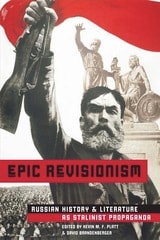
Epic Revisionism
Russian History and Literature as Stalinist PropagandaEdited by Kevin M. F. Platt and David Brandenberger
University of Wisconsin Press, 2006
Focusing on a number of historical and literary personalities who were regarded with disdain in the aftermath of the 1917 revolution—figures such as Peter the Great, Ivan the Terrible, Alexander Pushkin, Leo Tolstoy, and Mikhail Lermontov—Epic Revisionism tells the fascinating story of these individuals’ return to canonical status during the darkest days of the Stalin era.
An inherently interdisciplinary project, Epic Revisionism features pieces on literary and cultural history, film, opera, and theater. This volume pairs scholarly essays with selections drawn from Stalin-era primary sources—newspaper articles, unpublished archival documents, short stories—to provide students and specialists with the richest possible understanding of this understudied phenomenon in modern Russian history.“These scholars shed a great deal of light not only on Stalinist culture but on the politics of cultural production under the Soviet system.”—David L. Hoffmann, Slavic Review
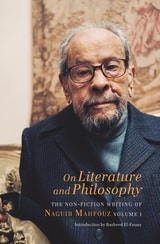
Essays on Literature and Philosophy
The Non-Fiction of Naguib Mahfouz: Volume INaguib Mahfouz
Gingko, 2025
The first Arabic language writer to win the Nobel Prize for Literature, Naguib Mahfouz, helped bring Arabic writing to an international readership. This collection of his early writing, from his time as a philosophy student, reveals the intellectual ferment of the young author, grappling with two millennia of philosophers and writers and establishing his own voice among them.
Available in English for the first time, these essays tackle a vast array of subjects, from Presocratic Philosophy to love and the sexual impulse. The intellectual development demonstrated here forms the foundation of Mahfouz’s literary work, granting insight into the mind behind such famed works as the Cairo Trilogy and Children of The Alley.
Etymologies and Genealogies
A Literary Anthropology of the French Middle AgesR. Howard Bloch
University of Chicago Press, 1983
"Bloch's Study is a genuinely interdisciplinary one, bringing together elements of history, ethnology, philology, philosophy, economics and literature, with the undoubted ambition of generating a new synthesis which will enable us to read the Middle Ages in a different light.
Stated simply, and in terms which do justice neither to the density nor the subtlety of his argument, Bloch's thesis is this: that medieval society perceived itself in terms of a vertical mode of descent from origins. This model is articulated etymologically in medieval theories of grammar and language, and is consequently reflected in historical and theological writings; it is also latent in the genealogical structure of the aristocratic family as it began to be organized in France in the twelfth century, and is made manifest in such systems of signs as heraldry and the adoption of patronymns. . . .
It is an ingenious and compelling synthesis which no medievalist, even on this side of the Atlantic, can afford to ignore." –Nicholas Mann, Times Literary Supplement
Everyone’s Theater
Literature and Daily Life in England, 1860–1914Michael Meeuwis
University of Michigan Press, 2019
Nearly all residents of England and its colonies between 1860 and 1914 were active theatergoers, and many participated in the amateur theatricals that defined late Victorian life. The Victorian theater was not an abstract figuration of the world as a stage, but a media system enmeshed in mass lived experience that fulfilled in actuality the concept of a theatergoing nation. Everyone’s Theater turns to local history, the words of everyday Victorians found in their diaries and production records, to recover this lost chapter of theater history in which amateur drama domesticates the stage. Professional actors and playwrights struggled to make their productions compatible with ideas and techniques that could be safely reproduced in the home—and in amateur performances from Canada to India. This became the first true English national theater: a society whose myriad classes found common ground in theatrical display. Everyone’s Theater provides new ways to extend Victorian literature into the dimension of voice, sound, and embodiment, and to appreciate the pleasures of Victorian theatricality.
Ezra Pound among the Poets
Edited by George Bornstein
University of Chicago Press, 1985