Results by title
5448 books match the query 'History and criticism' and 217 start with f

Fernando
A Song by ABBAKay Dickinson
Duke University Press, 2025
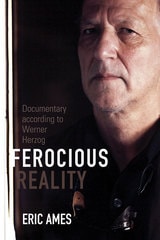
Ferocious Reality
Documentary according to Werner HerzogEric Ames
University of Minnesota Press, 2012
Over the course of his career Werner Herzog, known for such visionary masterpieces as Aguirre: The Wrath of God (1972) and The Enigma of Kaspar Hauser (1974), has directed almost sixty films, roughly half of which are documentaries. And yet, in a statement delivered during a public appearance in 1999, the filmmaker declared: “There are deeper strata of truth in cinema, and there is such a thing as poetic, ecstatic truth. It is mysterious and elusive, and can be reached only through fabrication and imagination and stylization.” Ferocious Reality is the first book to ask how this conviction, so hostile to the traditional tenets of documentary, can inform the work of one of the world’s most provocative documentarians.
Herzog, whose Cave of Forgotten Dreams was perhaps the most celebrated documentary of 2010, may be the most influential filmmaker missing from major studies and histories of documentary. Examining such notable films as Lessons of Darkness (1992) and Grizzly Man (2005), Eric Ames shows how Herzog dismisses documentary as a mode of filmmaking in order to creatively intervene and participate in it. In close, contextualized analysis of more than twenty-five films spanning Herzog’s career, Ames makes a case for exploring documentary films in terms of performance and explains what it means to do so. Thus his book expands the field of cinema studies even as it offers an invaluable new perspective on a little studied but integral part of Werner Herzog’s extraordinary oeuvre.
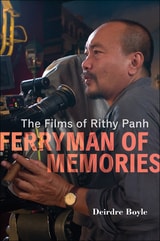
Ferryman of Memories
The Films of Rithy PanhDeirdre Boyle
Rutgers University Press, 2023
Fetching the Old Southwest
Humorous Writing from Longstreet to TwainJames H. Justus
University of Missouri Press, 2004
Fetter'd or Free?
British Women Novelists, 1670-1815Mary Anne Schofield
Ohio University Press, 1986
Fiction And Incarnation
Rhetoric, Theology, and Literature in the Middle AgesAlexandre Leupin
University of Minnesota Press, 2002
A fresh look at the relationship between theology and rhetoric.
Focusing on the Incarnation-the only dogma original to Christianity, in which God becomes man and history-this book offers a wide-ranging and theoretically sophisticated investigation of the relationship between Christian discourse and literature from Roman antiquity to the fourteenth century through a look at texts by Cicero, Quintilian, Martianus Capella, Tertullian, Saint Augustine, Alain of Lille, Guillaume de Machaut, and others.
Alexandre Leupin asks if it is possible to go beyond the dialectics of the Incarnated God and the Devil without harking back to the beautiful but partially obsolete truths of paganism and sophistry. Employing a method inspired by psychoanalysis, Leupin repudiates the sophistry and relativism of postmodern theory while calling into question old commonplaces that have been invalidated by modernity. He does so by attending to the larger and deeper structures hidden within the discourses of theology, rhetoric, literature, and psychoanalysis. The result is an innovative perspective on the Middle Ages, an original and promising view of the problems of Western literature in relation to theology and rhetoric. Alexandre Leupin is Gregorie Professor in French studies at Louisiana State University. He is the author of many books, including, in English translation, Barbarolexis: Medieval Literature and Sexuality (1989).David Laatsch is a Ph.D. candidate in the French department of Louisiana State University.
Fiction Beyond Secularism
Justin Neuman
Northwestern University Press, 2014
Modernist thinkers once presumed a progressive secularity, with the novel replacing religious texts as society’s moral epics. Yet religion—beginning with the Iranian revolution of 1979, through the collapse of communism, and culminating in the singular rupture of September 11, 2001—has not retreated quietly out of sight.
In Fiction Beyond Secularism, Justin Neuman argues that contemporary novelists who are most commonly identified as antireligious—among them Orhan Pamuk, Salman Rushdie, Ian McEwan, Margaret Atwood, Nadine Gordimer, Haruki Murakami, and J. M. Coetzee—have defied assumptions and have instead written some of the most trenchant critiques of secular ideologies, as well as the most exciting and rigorous inquiries into the legacies of the religious imagination. As a result, many readers (or nonreaders) on either side of the religious divide neglect the insights of works like The Satanic Verses, Disgrace, and Snow. Fiction Beyond Secularism serves as a timely corrective.
Fiction Refracts Science
Modernist Writers from Proust to BorgesAllen Thiher
University of Missouri Press, 2005
Fiction Rivals Science
The French Novel from Balzac to ProustAllen Thiher
University of Missouri Press, 2001
In Fiction Rivals Science, Allen Thiher describes the epistemic rivalry that the major nineteenth-century French novelists felt in dealing with science. After brief considerations of Stendhal, Thiher focuses on the four most important "realist" novelists in France: Balzac, Flaubert, Zola, and, going into the twentieth century, Proust. According to Thiher, each of these novelists considered himself to be in competition with science to make the novel an instrument for knowledge.
The first chapter sets forth the understanding of science that dominated the early nineteenth century in order to make it plausible that literary minds, throughout the nineteenth century, thought that they could not only rival science, but even make positive contributions to knowledge. The Newtonian paradigm that had dominated the Enlightenment was slowly being challenged by new developments both in physics and in nonphysical sciences such as biology. Especially in biology the development of a scientific discourse using narrative temporality favored the idea that novelists could also use fiction to construct discourses that advanced knowledge.
Balzac wanted to construct a natural history of society and correct the chemical theory of his time. Flaubert drew upon medicine and physiology for the rhetoric of his realist fiction. Zola used unsuccessful medical paradigms for his doctrine of heredity, and models drawn from thermodynamics to describe the relation of the individual to societal forces. Finally, Proust drew upon thinkers such as Poincar‚ to elaborate an epistemology that put an end to the rivalry novelists might feel with scientists. Proust located certain knowledge within the realm of human subjectivity while granting the power of laws to rule over the contingent realm of physical reality, in which, after Poincar‚, neither mathematics nor Newton was any longer a source of absolute certainty. Proust's novel is thus the last great realist work of the nineteenth century and the first modernist work of consciousness taking itself as the object of knowledge.
By demonstrating that the great French realist novelists dealt with many of the same problems as did the scientists of the nineteenth century, Fiction Rivals Science attempts to show how culture unites literary and scientific inquiry into knowledge. Providing a new interpretation of the development of literary realism, this important new work will be welcomed not only by literary scholars, but by historians of science and culture as well.
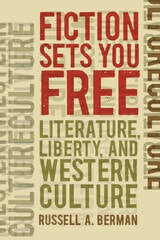
Fiction Sets You Free
Literature, Liberty, and Western CultureRussell A. Berman
University of Iowa Press, 2007
In what can only be called a genuine intellectual adventure, Russell Berman raises fundamental questions long ignored by literary scholars: Why does literature command our attention at all? Why would society want to cultivate a sphere of activity devoted to the careful study of literary ?ction? Written as a tonic to what he calls the debilitating cultural relativism of contemporary literary studies, Fiction Sets You Free advances the innovative argument that literature and capitalism, rather than representing merely commercialization, actually belie a long and positive association: literary autonomy is a central part of modern Western culture, thoroughly intertwined with political democracy and free-market capitalism.
Berman particularly challenges the issue of periodization, in which current scholarship emphasizes historical context over the integrity of a literary work and thus neglects the capacity of literature to remain interesting in other times and contexts. By moving from the origins of human language through the development of written alphabets and sacred texts, eventually probing the role of public literature in the creation of community, Berman elegantly and cogently surveys the intellectual landscape of Western societies. By giving us the license to dream and envision other worlds, literature sets us free.

Fiction, Crime, and Empire
CLUES TO MODERNITY AND POSTMODERNISMJon Thompson
University of Illinois Press, 1993
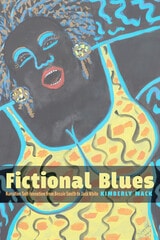
Fictional Blues
Narrative Self-Invention from Bessie Smith to Jack WhiteKimberly Mack
University of Massachusetts Press, 2020
The familiar story of Delta blues musician Robert Johnson, who sold his soul to the devil at a Mississippi crossroads in exchange for guitar virtuosity, and the violent stereotypes evoked by legendary blues “bad men” like Stagger Lee undergird the persistent racial myths surrounding “authentic” blues expression. Fictional Blues unpacks the figure of the American blues performer, moving from early singers such as Ma Rainey and Big Mama Thornton to contemporary musicians such as Amy Winehouse, Rhiannon Giddens, and Jack White to reveal that blues makers have long used their songs, performances, interviews, and writings to invent personas that resist racial, social, economic, and gendered oppression.
Using examples of fictional and real-life blues artists culled from popular music and literary works from writers such as Walter Mosley, Alice Walker, and Sherman Alexie, Kimberly Mack demonstrates that the stories blues musicians construct about their lives (however factually slippery) are inextricably linked to the “primary story” of the narrative blues tradition, in which autobiography fuels musicians' reclamation of power and agency.

Fictional Environments
Mimesis, Deforestation, and Development in Latin AmericaVictoria Saramago
Northwestern University Press, 2021
Winner of the Brazilian Studies Association’s Roberto Reis Book Award for First Monograph • Honorable Mention for the Latin American Studies Association’s Antonio Candido Book Award • Shortlisted for the Association for the Study of Literature and Environment Book Award
Fictional Environments: Mimesis, Deforestation, and Development in Latin America investigates how fictional works have become sites for the production of knowledge, imagination, and intervention in Latin American environments. It investigates the dynamic relationship between fictional images and real places, as the lasting representations of forests, rural areas, and deserts in novels clash with collective perceptions of changes like deforestation and urbanization.
From the backlands of Brazil to a developing Rio de Janeiro, and from the rainforests of Venezuela and Peru to the Mexican countryside, rapid deforestation took place in Latin America in the second half of the twentieth century. How do fictional works and other cultural objects dramatize, resist, and intervene in these ecological transformations? Through analyses of work by João Guimarães Rosa, Alejo Carpentier, Juan Rulfo, Clarice Lispector, and Mario Vargas Llosa, Victoria Saramago shows how novels have inspired conservationist initiatives and offered counterpoints to developmentalist policies, and how environmental concerns have informed the agendas of novelists as essayists, politicians, and public intellectuals. This book seeks to understand the role of literary representation, or mimesis, in shaping, sustaining, and negotiating environmental imaginaries during the deep, ongoing transformations that have taken place from the 1950s to the present.
Fictionality and Literature
Core Concepts RevisitedEdited by Lasse R. Gammelgaard, Stefan Iversen, Louise Brix Jacobsen, James Phelan, Richard Walsh, Henrik Zetterberg-Nielsen, and Simona Zetterberg-Nielsen
The Ohio State University Press, 2022
Contributors:
H. Porter Abbott, Catherine Gallagher, Lasse R. Gammelgaard, Stefan Iversen, Louise Brix Jacobsen, Rikke Andersen Kraglund, Susan S. Lanser, Jakob Lothe, Maria Ma¨kela¨, Greta Olson, Sylvie Patron, James Phelan, Richard Walsh, Wendy Veronica Xin, Henrik Zetterberg-Nielsen, Simona Zetterberg-Nielsen
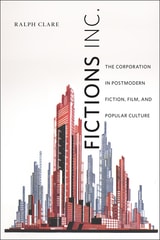
Fictions Inc.
The Corporation in Postmodern Fiction, Film, and Popular CultureClare, Ralph
Rutgers University Press, 2014
Fictions of Affliction
Physical Disability in Victorian CultureMartha Stoddard Holmes
University of Michigan Press, 2010

Fictions of Consciousness
Mill, Newman, and the Reading of Victorian ProseJonathan Loesberg
Rutgers University Press, 1986
Fictions of Evidence
Witnessing, Literature, and Community in the Late Middle AgesJamie K. Taylor
The Ohio State University Press, 2013
Fictions of God
English Renaissance Literature and the Invention of the Biblical NarratorRaphael Magarik
University of Chicago Press, 2025
We often identify secularization's characteristic literary form as the modern novel: out with divine scripture, in with human fictions. In Fictions of God, Raphael Magarik argues that this story overlooks the cultural upheavals of the Protestant Reformation. Early reformers imagined a Bible that was neither infallible nor inerrant but fictional, composed by a divine counterfactual: God crafted the text, they said, as if it had been written by the prophets. Early modern Protestants now found in their Bibles not a source of foundational truths but a model for unreliable narration, even fiction.
Fictions of God traces how this approach to literature passed from biblical commentators to poets like Abraham Cowley, John Milton, and Lucy Hutchinson amid the violent emergence of a new religious and political order—long before the eighteenth-century rise of the English novel. The result is a transformative account of the Reformation’s effect on imaginative literature and the secularization of the Bible itself.
Fictions of Land and Flesh
Blackness, Indigeneity, SpeculationMark Rifkin
Duke University Press, 2019

Fictions of Modesty
Women and Courtship in the English NovelRuth Bernard Yeazell
University of Chicago Press, 1991
Combining evidence from conduct books and ladies' magazines with the arguments of influential theorists like Hume, Rousseau, and Wollstonecraft, this book begins by asking why writers were devoted to the anxious remaking of women's "nature" and to codifying rules for their porper behavior. Fictions of Modesty shows how the culture at once tried to regulate young women's desires and effectively opened up new possibilities of subjectivity and individual choice.
Yeazell goes on to demonstrate that modest delaying actions inform a central tradition of English narrative. On the Continent, the English believed, the jeune fille went from the artificial innocence of the convent to an arranged marriage and adultery; the natural modesty of the Englishwoman, however, enabled her to choose her own mate and to marry both prudently and with affection. Rather than taking its narrative impetus from adultery, then, English fiction concentrated on courtship and the consciousness of the young woman choosing. After paired studies of Richardson's Pamela and Cleland's Memoirs of a Woman of Pleasure (even Fanny Hill, Yeazell argues, is a modest English heroine at heart), Yeazell investigates what women novelists made of the virtues of modesty in works by Burney, Austen, Charlotte Bronte, and Gaskell.
A speculative postscript briefly addresses the discourse of late nineteenth-century science in order to show how Darwin's theory of sexual selection and Havelock Ellis's psychology of sex replicate fictions of female modesty. While those who sought to codify modest behavior in previous centuries often appealed to Nature for support, our modern understanding of the natural, Yeazell suggests, owes something to the work of the novelists.
Sharply reasoned and witty, Fictions of Modesty will appeal to all those interested in women's studies, the English novel, and the continuing history of relations between the sexes.
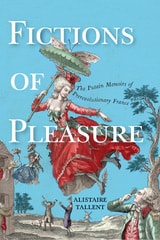
Fictions of Pleasure
The Putain Memoirs of Prerevolutionary FranceAlistaire Tallent
University of Delaware Press, 2024
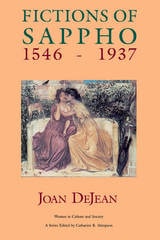
Fictions of Sappho, 1546-1937
Joan DeJean
University of Chicago Press, 1989
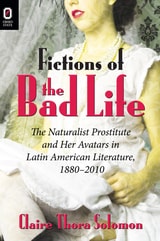
Fictions of the Bad Life
The Naturalist Prostitute and Her Avatars in Latin American Literature, 1880–2010Claire Thora Solomon
The Ohio State University Press, 2014
Fictions of the Bad Life illustrates how at very different moments—the turn of the twentieth century, the 1920s–30s, and finally the turn of the twenty-first century—the past is rewritten to accommodate contemporary desires for historical belonging and national identity, even as these efforts inevitably re-inscribe the repressed colonial history they wish to change.
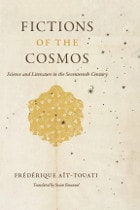
Fictions of the Cosmos
Science and Literature in the Seventeenth CenturyFrédérique Aït-Touati
University of Chicago Press, 2011
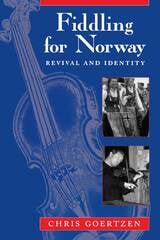
Fiddling for Norway
Revival and IdentityChris Goertzen
University of Chicago Press, 1997
The book begins with an investigation of the people and events important to Norwegian folk fiddling, tracing the history of Norwegian folk music and the growth and diversification of the folk music revival. The narrative takes us to fiddle clubs, concerts and competitions on the local, regional, and national levels, and shows how conflicting emphases—local vs. national identity, tradition vs. aesthetic qualities—continue to transform Norwegian folk music. Goertzen utilizes a large anthology of meticulously transcribed tunes to illustrate personal and regional repertoires, aspects of performance practice, melodic gesture and form, and tune relationships. Ethnomusicologists and readers who fiddle will enjoy both the music and the stories it tells.
Fidel between the Lines
Paranoia and Ambivalence in Late Socialist Cuban CinemaLaura-Zoë Humphreys
Duke University Press, 2019
Fieldworks
From Place to Site in Postwar PoeticsLytle Shaw
University of Alabama Press, 2013
Fieldworks offers a historical account of the social, rhetorical, and material attempts to ground art and poetry in the physicality of a site.
Arguing that place-oriented inquiries allowed poets and artists to develop new, experimental models of historiography and ethnography, Lytle Shaw draws out the shifting terms of this practice from World War II to the present through a series of illuminating case studies. Beginning with the alternate national genealogies unearthed by William Carlos Williams in Paterson and Charles Olson in Gloucester, Shaw demonstrates how subsequent poets sought to ground such inquiries in concrete social formations—to in effect live the poetics of place: Gary Snyder in his back-to-the-land familial compound, Kitkitdizze; Amiri Baraka in a black nationalist community in Newark; Robert Creeley and the poets of Bolinas, California, in the capacious “now” of their poet-run town. Turning to the work of Robert Smithson—who called one of his essays an “appendix to Paterson,” and who in turn has exerted a major influence on poets since the 1970s—Shaw then traces the emergence of site-specific art in relation both to the poetics of place and to the larger linguistic turn in the humanities, considering poets including Clark Coolidge, Bernadette Mayer, and Lisa Robertson.
By putting the poetics of place into dialog with site-specificity in art, Shaw demonstrates how poets and artists became experimental explicators not just of concrete locations and their histories, but of the discourses used to interpret sites more broadly. It is this dual sense of fieldwork that organizes Shaw’s groundbreaking history of site-specific poetry.
Fighting Over There
U.S. War Making and Contemporary Refugee LiteratureAlaina Kaus
University of Massachusetts Press, 2023
U.S. foreign policy has long been built on a dichotomy of an irreplaceable “here” and an expendable “there.” In his 2003 announcement of the military campaign in Iraq, George W. Bush declared that we would fight in the Middle East so we wouldn’t have to fight “on the streets of our cities.” But what do the millions of people who live over “there” have to say about U.S. interventions and the displacement they provoke?
In this pathbreaking study, Alaina Kaus analyzes literature by and about refugees who fled Southeast Asia, Central America, the Caribbean, North Africa, and the Middle East, in the wake of U.S. military occupation and economic intervention. Narratives by authors such as Lan Cao, Viet Thanh Nguyen, Demetria Martínez, Héctor Tobar, Dave Eggers, Mohsin Hamid, and Riverbend reveal contradictions in the human rights pledges that undergird U.S. foreign policy, which promote freedom while authorizing intervention and displacement, and favor market-based solutions over social justice and racial equality.
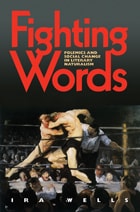
Fighting Words
Polemics and Social Change in Literary NaturalismIra Wells
University of Alabama Press, 2013
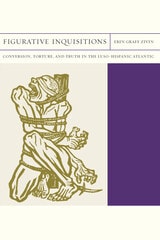
Figurative Inquisitions
Conversion, Torture, and Truth in the Luso-Hispanic AtlanticErin Graff Zivin
Northwestern University Press, 2014
Winner, 2015 LAJSA Best Book in Latin American Jewish Studies
The practices of interrogation, torture, and confession have resurfaced in public debates since the early 2000s following human rights abuses around the globe. Yet discussion of torture has remained restricted to three principal fields: the legal, the pragmatic, and the moral, eclipsing the less immediate but vital question of what torture does.Figurative Inquisitions seeks to correct this lacuna by approaching the question of torture from a literary vantage point.
This book investigates the uncanny presence of the Inquisition and marranismo (crypto-Judaism) in modern literature, theater, and film from Mexico, Brazil, and Portugal. Through a critique of fictional scenes of interrogation, it underscores the vital role of the literary in deconstructing the relation between torture and truth. Figurative Inquisitions traces the contours of a relationship among aesthetics, ethics, and politics in an account of the "Inquisitional logic" that continues to haunt contemporary political forms. In so doing, the book offers a unique humanistic perspective on current torture debates.
Figures of Conversion
“The Jewish Question” and English National IdentityMichael Ragussis
Duke University Press, 1995
—Daniel Defoe, The Farther Adventures of Robinson Crusoe (1719)
When the hero of Defoe’s novel listens skeptically to this anecdote related by a French Roman Catholic priest, he little suspects that in less than a century the conversion of the Jews would become nothing short of a national project—not in France but in England. In this book, Michael Ragussis explores the phenomenon of Jewish conversion—the subject of popular enthusiasm, public scandal, national debate, and dubbed "the English madness" by its critics—in Protestant England from the 1790s through the 1870s.
Moving beyond the familiar catalog of anti-Semitic stereotypes, Ragussis analyzes the rhetoric of conversion as it was reinvented by the English in sermons, stories for the young, histories of the Jews, memoirs by Jewish converts, and popular novels. Alongside these texts and the countertexts produced by English Jews, he situates such writers as Edgeworth, Scott, Disraeli, Arnold, Trollope, and Eliot within the debate over conversion and related issues of race, gender, and nation-formation. His work reveals how a powerful group of emergent cultural projects—including a revisionist tradition of the novel, the new science of ethnology, and the rewriting of European history—redefined English national identity in response to the ideology of conversion, the history of the Jews, and "the Jewish question."
Figures of Conversion offers an entirely new way of regarding Jewish identity in nineteenth-century British culture and will be of importance not only to literary scholars but also to scholars of Judaic and religious studies, history, and cultural studies.
Figures of Resistance
Language, Poetry, and Narrating in The Tale of the Genji and Other Mid-Heian TextsH. Richard Okada
Duke University Press, 1991
Okada develops a highly original and sophisticated reading strategy that demonstrates how readers might understand texts belonging to a different time and place without being complicit in their assimilation to categories derived from Western literary traditions. The author’s reading stratgey is based on the texts’ own resistance to modes of analysis that employ such Western canonical terms as novel, lyric, and third-person narrative. Emphasis is also given to the distinctive cultural circles, as well as socio-political and genealogical circumstances that surrounded the emergence of the texts.
Indispensable readings for specialists in literature, cultural studies, and Japanese literature and history, Figures of Resistance will also appeal to general readers interested in the problems and complexities of studying another culture.
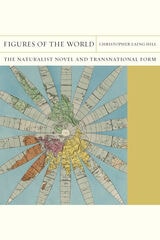
Figures of the World
The Naturalist Novel and Transnational FormChristopher Laing Hill
Northwestern University Press, 2020
The book begins by tracing the history of naturalist fiction from the 1860s into the twentieth century and the reasons it spread around the world. Hill explores the development of three naturalist figures—the degenerate body, the self-liberated woman, and the social milieu—through close readings of fiction from France, Japan, and the United States. Rather than genealogies of European influence or the domination of cultural “peripheries” by the center, novels by Émile Zola, Tayama Katai, Frank Norris, and other writers reveal conspicuous departures from metropolitan models as writers revised naturalist methods to address new social conditions. Hill offers a new approach to studying culture on a large scale for readers interested in literature, the arts, and the history of ideas.
Figuring Jerusalem
Politics and Poetics in the Sacred CenterSidra DeKoven Ezrahi
University of Chicago Press, 2022
For two thousand years, Hebrew writers used their exile from the Holy Land as a license for invention. The question at the heart of Figuring Jerusalem is this: how did these writers bring their imagination “home” in the Zionist century? Sidra DeKoven Ezrahi finds that the same diasporic conventions that Hebrew writers practiced in exile were maintained throughout the first half of the twentieth century. And even after 1948, when the state of Israel was founded but East Jerusalem and its holy sites remained under Arab control, Jerusalem continued to figure in the Hebrew imagination as mediated space. It was only in the aftermath of the Six Day War that the temptations and dilemmas of proximity to the sacred would become acute in every area of Hebrew politics and culture.
Figuring Jerusalem ranges from classical texts, biblical and medieval, to the post-1967 writings of S. Y. Agnon and Yehuda Amichai. Ultimately, DeKoven Ezrahi shows that the wisdom Jews acquired through two thousand years of exile, as inscribed in their literary imagination, must be rediscovered if the diverse inhabitants of Jerusalem are to coexist.
Film Genre Reader IV
Edited by Barry Keith Grant
University of Texas Press, 2012
From reviews of the third edition:
“Film Genre Reader III lives up to the high expectations set by its predecessors, providing an accessible and relatively comprehensive look at genre studies. The anthology’s consideration of the advantages and challenges of genre studies, as well as its inclusion of various film genres and methodological approaches, presents a pedagogically useful overview.” —Scope
Since 1986, Film Genre Reader has been the standard reference and classroom text for the study of genre in film, with more than 25,000 copies sold. Barry Keith Grant has again revised and updated the book to reflect the most recent developments in genre study. This fourth edition adds new essays on genre definition and cycles, action movies, science fiction, and heritage films, along with a comprehensive and updated bibliography. The volume includes more than thirty essays by some of film’s most distinguished critics and scholars of popular cinema, including Charles Ramírez Berg, John G. Cawelti, Celestino Deleyto, David Desser, Thomas Elsaesser, Steve Neale, Thomas Schatz, Paul Schrader, Vivian Sobchack, Janet Staiger, Linda Williams, and Robin Wood.

Film Hieroglyphs
Tom Conley
University of Minnesota Press, 2006
Film Nation
Hollywood Looks at U.S. HistoryRobert Burgoyne
University of Minnesota Press, 1997
Film Nation
Hollywood Looks at U.S. History, Revised EditionRobert Burgoyne
University of Minnesota Press, 2010
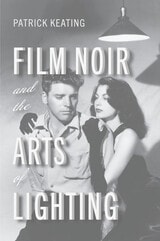
Film Noir and the Arts of Lighting
Patrick Keating
Rutgers University Press, 2024
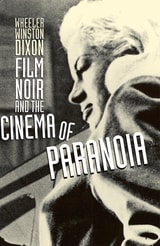
Film Noir and the Cinema of Paranoia
Dixon, Wheeler Winston
Rutgers University Press, 2009
Wheeler Winston Dixon's comprehensive work engages readers in an overview of noir and fatalist film from the mid-twentieth century to the present, ending with a discussion of television, the Internet, and dominant commercial cinema. Beginning with the 1940s classics, Film Noir and the Cinema of Paranoia moves to the "Red Scare" and other ominous expressions of the 1950s that contradicted an American split-level dream of safety and security. The dark cinema of the 1960s hosted films that reflected the tensions of a society facing a new and, to some, menacing era of social expression. From smaller studio work to the vibrating pulse of today's "click and kill" video games, Dixon boldly addresses the noir artistry that keeps audiences in an ever-consumptive stupor.
Film Remakes and Franchises
Herbert, Daniel
Rutgers University Press, 2017
Film Remakes and Franchises examines how remakes and sequels have been central to the film industry from its very inception, yet also considers how the recent trends toward reboots and transmedia franchises depart from those historical precedents. Film scholar Daniel Herbert not only analyzes the film industry’s increasing reliance on recycled product, but also asks why audiences are currently so drawn to such movies. In addition, he explores how contemporary filmmakers have used reboots and franchise movies to inject timely social commentary and diversity into established media properties. A lively and accessible overview that covers everything from You’ve Got Mail to The Force Awakens, Film Remakes and Franchises raises important questions about the intersection of business and creativity in Hollywood today.

Film on The Faultline
Edited by Alan Wright
Intellect Books, 2015
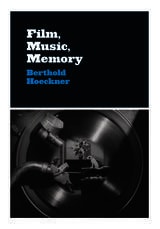
Film, Music, Memory
Berthold Hoeckner
University of Chicago Press, 2019
Hoeckner examines films that reflect directly on memory, whether by featuring an amnesic character, a traumatic event, or a surge of nostalgia. As the history of cinema unfolded, movies even began to recall their own history through quotations, remakes, and stories about how cinema contributed to the soundtrack of people’s lives. Ultimately, Film, Music, Memory demonstrates that music has transformed not only what we remember about the cinematic experience, but also how we relate to memory itself.
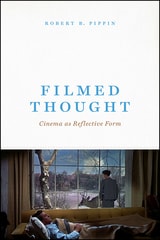
Filmed Thought
Cinema as Reflective FormRobert B. Pippin
University of Chicago Press, 2020
Filmed Thought examines questions of morality in Almodóvar’s Talk to Her, goodness and naïveté in Hitchcock’s Shadow of a Doubt, love and fantasy in Sirk’s All That Heaven Allows, politics and society in Polanski’s Chinatown and Malick’s The Thin Red Line, and self-understanding and understanding others in Nicholas Ray’s In a Lonely Place and in the Dardennes brothers' oeuvre. In each reading, Pippin pays close attention to what makes these films exceptional as technical works of art (paying special attention to the role of cinematic irony) and as intellectual and philosophical achievements. Throughout, he shows how films offer a view of basic problems of human agency from the inside and allow viewers to think with and through them. Captivating and insightful, Filmed Thought shows us what it means to take cinema seriously not just as art, but as thought, and how this medium provides a singular form of reflection on what it is to be human.
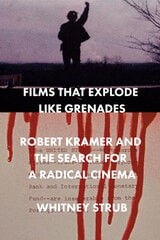
Films That Explode Like Grenades
Robert Kramer and the Search for a Radical CinemaWhitney Strub
University of Chicago Press, 2026
Robert Kramer (1939–99) was the emblematic filmmaker of the late-1960s New Left in the United States. Yet because most of his three dozen films have been out of circulation for decades, he has long been neglected by film historians and the Left. Kramer was the cofounder of the leftist documentary collective Newsreel and the director of underground films such as Ice (1970), Milestones (1975), and Route One/USA (1989). His films provide distinctive insights into how America’s political terrain has changed over time, capturing each era’s revolutionary ethos and its contradictions. Whitney Strub’s Films That Explode Like Grenades tracks the histories of leftist film and global revolutionary movements via Kramer’s life and travels. Moving among New York City, Chicago, North Vietnam, Paris, Portugal, Angola, and other crucial flashpoints, Kramer left a major and influential body of work in his wake that has fundamentally shaped the work of radical filmmakers across the globe.
For Strub, Kramer’s career is a key thread in an intimate history of the 1960s New Left, one that emphasizes the complexities of the movement’s internal tensions and its legacies. Drawing on visual analysis, extensive archival research across the United States and France, and myriad interviews with Kramer contemporaries, including Bernardine Dohrn, Tom Hayden, Jonas Mekas, and Kramer’s relatives, Strub transforms Kramer’s life story into a dynamic and engaging social history of 1960s radicalism and its generational legacies.
With detailed mapping of Robert Kramer’s many social and artistic contexts, Films That Explode Like Grenades restores him to a place of global importance in leftist cinema.
Films That Spill
Beyond the Cinema of TransgressionMarie Sophie Beckmann
Rutgers University Press, 2025
Filth
Dirt, Digust, and Modern LifeWilliam A. Cohen
University of Minnesota Press, 2004
Financial Speculation in Victorian Fiction
Plotting Money and the Novel Genre, 1815–1901Tamara S. Wagner
The Ohio State University Press, 2010
Finding Meaning
Kaona and Contemporary Hawaiian LiteratureBrandy Nalani McDougall
University of Arizona Press, 2016
In this first extensive study of contemporary Hawaiian literature, Brandy Nalani McDougall examines a vibrant selection of fiction, poetry, and drama by emerging and established Hawaiian authors, including Haunani-Kay Trask, John Dominis Holt, Imaikalani Kalahele, and Victoria Nalani Kneubuhl. At the center of the analysis is a hallmark of Hawaiian aesthetics—kaona, the intellectual practice of hiding and finding meaning that encompasses the allegorical, the symbolic, the allusive, and the figurative.
With a poet’s attention to detail, McDougall interprets examples of kaona, guiding readers through olelo no'eau (proverbs), mo‘olelo (literature and histories), and mooku'auhau (genealogies) alongside their contemporary literary descendants, unveiling complex layers of Hawaiian identity, culture, history, politics, and ecology.
Throughout, McDougall asserts that “kaona connectivity” not only carries bright possibilities for connecting the present to the past, but it may also ignite a decolonial future. Ultimately, Finding Meaning affirms the tremendous power of Indigenous stories and genealogies to give activism and decolonization movements lasting meaning.