Results by title
2817 books match the query 'Nature' and 165 start with f
For All Waters
Finding Ourselves in Early Modern WetscapesLowell Duckert
University of Minnesota Press, 2017
Recent years have witnessed a surge in early modern ecostudies, many devoted to Shakespearean drama. Yet in this burgeoning discipline, travel writing appears moored in historicization, inorganic subjects are far less prevalent than organic ones, and freshwater sites are hardly visited. For All Waters explores these uncharted wetscapes.
Lowell Duckert shows that when playwrights and travel writers such as Sir Walter Raleigh physically interacted with rivers, glaciers, monsoons, and swamps, they composed “hydrographies,” or bodily and textual assemblages of human and nonhuman things that dissolved notions of human autonomy and its singular narrativity. With a playful, punning touch woven deftly into its theoretical rigor, For All Waters disputes fantasies of ecological solitude that would keep our selves high and dry and that would try to sustain a political ecology excluding water and the poor. The lives of both humans and waterscapes can be improved simultaneously through direct engagement with wetness.
For All Waters concludes by investigating waterscapes in peril today—West Virginia’s chemical rivers and Iceland’s vanishing glaciers—and outlining what we can learn from early moderns’ eco-ontological lessons. By taking their soggy and storied matters to heart, and arriving at a greater realization of our shared wetness, we can conceive new directions to take within the hydropolitical crises afflicting us today.
For Love of Lakes
Darby Nelson
Michigan State University Press, 2011
America has more than 130,000 lakes of significant size. Ninety percent of all Americans live within fifty miles of a lake, and our 1.8 billion trips to watery places make them our top vacation choice. Yet despite this striking popularity, more than 45 percent of surveyed lakes and 80 percent of urban lakes do not meet water quality standards. For Love of Lakes weaves a delightful tapestry of history, science, emotion, and poetry for all who love lakes or enjoy nature writing. For Love of Lakes is an affectionate account documenting our species’ long relationship with lakes—their glacial origins, Thoreau and his environmental message, and the major perceptual shifts and advances in our understanding of lake ecology. This is a necessary and thoughtful book that addresses the stewardship void while providing improved understanding of our most treasured natural feature.
For Love of the World
Essays on Nature WritersSherman Paul
University of Iowa Press, 1992

For The Birds
An Uncommon GuideLaura Erickson
University of Minnesota Press, 2001
In 365 day-by-day sketches, Laura Erickson brings more than 250 birds right into your living room-from rare hawk owls to elusive sedge wrens to plastic lawn flamingos. Light-hearted, yet authoritative, For the Birds is brimming with fascinating birdlore.
Did you know that you can mail three chickadees with a single stamp? That Black-billed Cuckoos flourish on a diet of army worms? That winter finches are especially attracted to feeders offering grit and eggshells?
Enjoy Laura’s entertaining observations and record your own in For the Birds: An Uncommon Guide.
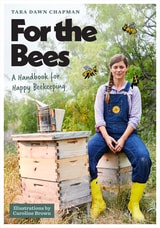
For the Bees
A Handbook for Happy BeekeepingTara Dawn ChapmanIllustrations by Caroline Brown
University of Texas Press, 2024
A handbook for what to expect the first year of beekeeping and beyond.
The path to becoming a successful beekeeper begins with a deep understanding of the bees themselves. Taking an approach that is both holistic and practical, Tara Chapman, founder and operator of Austin’s beloved Two Hives Honey, begins with a primer on honey bee biology and nutrition as well as beehive architecture. (Did you ever wonder why honey combs are composed of tiny hexagons?) A little scientific knowledge goes a long way: a beekeeper who understands how these fascinating creatures work will be better equipped to recognize a particular colony’s needs, make sound decisions when the unexpected happens, and adapt their care regimen to changing conditions. Moving beyond the basics, Chapman shows potential beekeepers how to spot pests and diseases; manage swarms (those bees aren’t angry; they’re just looking for a good home); and, of course, harvest delicious homegrown honey.
Imbued with the joy of the beekeeping journey, For the Bees provides practical visual explanations through appealing illustrations, that, alongside Chapman’s own stories from the bee yard, share the charms of these essential insects.
For the Birds
Protecting Wildlife through the Naturalist GazeElizabeth Cherry
Rutgers University Press, 2019
One in five people in the United States is a birdwatcher, yet the popular understanding of birders reduces them to comical stereotypes, obsessives who only have eyes for their favorite rare species. In real life, however, birders are paying equally close attention to the world around them, observing the devastating effects of climate change and mass extinction, while discovering small pockets of biodiversity in unexpected places.
For the Birds offers readers a glimpse behind the binoculars and reveals birders to be important allies in the larger environmental conservation movement. With a wealth of data from in-depth interviews and over three years of observing birders in the field, environmental sociologist Elizabeth Cherry argues that birders learn to watch wildlife in ways that make an invaluable contribution to contemporary conservation efforts. She investigates how birders develop a “naturalist gaze” that enables them to understand the shared ecosystem that intertwines humans and wild animals, an appreciation that motivates them to participate in citizen science projects and wildlife conservation.
For the Love of Rivers
A Scientist's JourneyKurt D. Fausch
Oregon State University Press, 2015
In For the Love of Rivers, stream ecologist Kurt Fausch draws readers across the reflective surface of streams to view and ponder what is beneath, and how they work. While celebrating their beauty and mystery, he uses his many years of experience as a field biologist to explain the underlying science connecting these aquatic ecosystems to their streamside forests and the organisms found there—including humans.
For the Love of Rivers introduces readers to the life and work of Shigeru Nakano, a pioneering river ecologist who inspired other scientists around the world with his innovative research on stream-forest connections. Fausch takes readers along as he journeys to Japan, where he awakens to an unfamiliar culture, to Nakano, and his research.
Nakano’s life was abruptly ended in a tragic field accident, and his death was deeply mourned. Fausch joins Japanese and American colleagues to continue Nakano’s research legacy, learn everything they can about the effects that humans have on rivers, fish, and their intricate links with riparian zones, and share this knowledge with others.
More than a book about stream ecology, For the Love of Rivers is a celebration of the interconnectedness of life. It is an authoritative and accessible look at the science of rivers and streams, but it also ponders the larger questions of why rivers are important to humans, why it is in our nature to want to be near them, and what we can do now to ensure the future of these essential ecosystems.

For the Prevention of Cruelty
The History and Legacy of Animal Rights Activism in the United StatesDiane L. Beers
Ohio University Press, 2006

Foraging for Survival
Yearling Baboons in AfricaStuart A. Altmann
University of Chicago Press, 1998
Force of Nature
George Fell, Founder of the Natural Areas MovementArthur Melville Pearson
University of Wisconsin Press, 2020
Force of Nature reveals how a failed civil servant, with few assets apart from his tenacity and vision, initiated the natural areas movement. In the boom years following World War II, as undeveloped lands were being mined, drained, or bulldozed, Fell transformed a loose band of ecologists into The Nature Conservancy, drove the passage of the influential Illinois Nature Preserves Act, and helped spark allied local and national conservation organizations in the United States and beyond.
Forced to Abandon Our Fields
The 1914 Clay Southworth Gila River Pima InterviewsDavid H. DeJong
University of Utah Press, 2011
During the nineteenth century, upstream diversions from the Gila River decreased the arable land on the Gila River Indian Reservation to only a few thousand acres. As a result the Pima Indians, primarily an agricultural people, fell into poverty. Many Pima farmers and leaders lamented this suffering and in 1914 the United States Indian Irrigation Service assigned a 33-year-old engineer named Clay “Charles” Southworth to oversee the Gila River adjudication. As part of that process, Southworth interviewed 34 Pima elders, thus putting a face on the depth of hardships facing many Indians in the late nineteenth century.
Forest Park
Exploring Portland's Natural SanctuaryMarcy Cottrell Houle
Oregon State University Press, 2023
Situated in the rugged hills west of downtown Portland, Forest Park is the nation’s premier urban natural sanctuary. It supports essential habitat for hundreds of native plants and animals, including species at risk, and is one of the largest city parks in the world. While extending critical ecosystem services to the region, it offers miles of outstanding hiking trails, all within minutes of the downtown core.
Forest Park: Exploring Portland’s Natural Sanctuary showcases this treasure in new light, offering a compendium of the most up-to-date and comprehensive information available. Twenty-one hikes covering 75 miles bring a full awareness of the park’s outstanding attributes. Hikes are grouped by theme to encourage people to explore Forest Park’s watersheds; geology; lichens and mosses; vegetation; amphibians and reptiles; pollinators; native wildlife; and wildlife corridors. Beautiful photographs and full-color maps accompany each trail description.
Forest Park is a shining example of the Pacific Northwest western hemlock community--an ecosystem unique among all temperate forests of the world. It is also an exciting model for a future Urban Biodiversity Reserve, a concept under development recognizing the park’s scientific, natural, and cultural qualities. Forest Park: Exploring Portland’s Natural Sanctuary will help all visitors discover the beauty and wonders of this extraordinary natural resource.
Forest and Shade Trees of Iowa
Peter J. van der Linden
University of Iowa Press, 2011
@font-face { font-family: "Times";}@font-face { font-family: "Palatino";}p.MsoNormal, li.MsoNormal, div.MsoNormal { margin: 0in 0in 0.0001pt; font-size: 12pt; font-family: "Times New Roman"; }div.Section1 { page: Section1; }
Back in print at last in a third edition, the classic Forest and Shade Trees of Iowa now has a wealth of full-color photographs and updated, reorganized information that will please both new and returning readers.
Part 1 of this guide focuses on identification, with user-friendly keys to both summer and winter trees and illustrated descriptions of more than one hundred common species. The trees are arranged according to similarities in foliage; each entry includes a large scan of a leafy branch along with two or three smaller photos of buds, flowers, fruits, and winter twigs. The text contains a description of the species, its geographical distribution, and notes on how to distinguish it from similar species. Part 2 is divided into conifers and flowering trees and includes all trees native to Iowa, trees that are widely planted, invasive species, some less commonly planted trees, and tall native shrubs that might be mistaken for trees. The authors provide information about the natural history of individual trees, their ecological requirements, pests and diseases that affect them, and their usefulness for such different purposes as windbreaks, landscaping, wildlife plantings, fuel, lumber, and food. Following these two main parts, three shorter sections describe the planting and care of trees, Iowa’s forest communities, and good places to see trees in the state; a glossary and a bibliography are also included.
A complete guide to Iowa’s trees, both native and introduced, full of hundreds of color photos, this new edition of Forest and Shade Trees of Iowa will be immensely useful to arborists, foresters, horticulturists, landscape architects, gardeners, and all Iowans and midwesterners who appreciate the beauty and value of trees and want to learn more about them.
Forests
A Naturalist’s Guide to Woodland TreesBy Laurence C. Walker
University of Texas Press, 1997
First published in 1990, Forests explores the ecological, economic, and human influences on over thirty significant types of woodlands. Laurence Walker focuses especially on the effects of site factors—climate, physiography, biology, and soils—upon the growth of various kinds of trees. Projects for amateur naturalists, reading lists, and a glossary make this the perfect introduction for general readers.
Forests
The Shadow of CivilizationRobert Pogue Harrison
University of Chicago Press, 1992
"Forests is one of the most remarkable essays on the human place in nature I have ever read, and belongs on the small shelf that includes Raymond Williams' masterpiece, The Country and the City. Elegantly conceived, beautifully written, and powerfully argued, [Forests] is a model of scholarship at its passionate best. No one who cares about cultural history, about the human place in nature, or about the future of our earthly home, should miss it.—William Cronon, Yale Review
"Forests is, among other things, a work of scholarship, and one of immense value . . . one that we have needed. It can be read and reread, added to and commented on for some time to come."—John Haines, The New York Times Book Review

Forevering
Carol Mavor
Duke University Press, 2027
Forging a Sustainable Southwest
The Power of Collaborative ConservationStephen E. Strom
University of Arizona Press, 2024
Forging a Sustainable Southwest introduces readers to four conservation efforts that provide insight into how diverse groups of citizens have worked collaboratively to develop visions for land use that harmonized sometimes conflicting ecological, economic, cultural, and community needs. Through the voices of more than seventy individuals involved in these efforts, we learn how they’ve developed plans for protecting, restoring, and stewarding lands sustainably; the management and funding tools they’ve used; and their perceptions of the challenges that remain and how to meet them.
This book details efforts to craft the Sonoran Desert Conservation Plan, establish Las Cienegas National Conservation Area, protect Cienega Ranch, and create the Malpai Borderlands Group. It will appeal to anyone interested in grassroots efforts to protect the vital ecosystems of the western United States.
These inspiring stories of citizens and groups working together demonstrate a path for the future built day-by-day: breaking bread at potlucks, holding informal front-porch discussions, and later finding common purpose in community-wide meetings. Might their efforts reveal a path to rebuilding our democratic systems from the ground up?
Fossil Lake and the Rise of Modern Birds
Snapshots from Early Avian EvolutionLance Grande, Daniel T Ksepka, and Gerald Mayr
University of Chicago Press, 2027
Lavishly produced with color fossil photographs throughout, the first comprehensive summary of findings at one of the world’s best fossil bird localities, offering profound insight into early avian evolution after the end-of-Cretaceous extinction event.
What is today a high mountain desert in southwestern Wyoming was, 52 million years ago, a magnificent subtropical lake system. Part of the famed Green River Formation, the limestone layers of this region’s Fossil Lake provide an unparalleled record of life in the Early Eocene of North America. Evolutionary biologist Lance Grande has spent much of his career collecting and studying the beautiful and diverse assemblage of fossils from this locality. Since his 2013 book, The Lost World of Fossil Lake, researchers have uncovered many new fossil bird specimens—often stunningly preserved skeletons, sometimes even including feathers—and benefited from significant advances in our understanding of avian evolution. Their findings help to illuminate the early days of bird life on Earth.
In this volume, Grande and his collaborators—paleornithologists Daniel T. Ksepka and Gerald Mayr—explore these birds of Fossil Lake, where various researchers have formally named and described thirty avian species. The authors also present an additional twenty possible new species awaiting further study and formal review, birds that may soon be added to that list. Fossil Lake and the Rise of Modern Birds then places these avian ancestors within the global context of other fossil birds. Like Grande’s previous publications, this comprehensive work features stunning imagery, including nearly two hundred detailed fossil photographs—fifty that have never appeared elsewhere.
Whether you are an ornithologist, paleontologist, evolutionary biologist, or amateur fossil enthusiast interested in the early evolutionary diversification of modern birds, this book is a treasure.
Fossil Vertebrates of Alabama
John T. Thurmond and Douglas E. Jones
University of Alabama Press, 1981
The only comprehensive description of the fossil-vertebrate content of this important part of the world.
Fossils in the Making
Vertebrate Taphonomy and PaleoecologyAnna K. Behrensmeyer and Andrew P. Hill
University of Chicago Press, 1988
"Taphonomy is plainly here to stay, and this book makes a first class introduction to its range and appeal."—Anthony Smith, Interdisciplinary Science Reviews
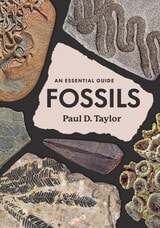
Fossils
An Essential GuidePaul D. Taylor
University of Chicago Press, 2025
Ancient Earth seems like an alien world. But the fossil record can help reveal the mysteries of the organisms that have lived on our planet since its formation some 4,600 million years ago. In this engaging and beautifully illustrated book, world-renowned paleontologist Paul D. Taylor provides a comprehensive guide to all aspects of fossils to tell the story of life on Earth.
Taylor begins with the basics: how fossils form, how they mark geological time, and what they tell us about the origins of life and major evolutionary events like the Cambrian Explosion. He then shows the oldest fossils—single-celled bacteria in amazing, three-billion-year-old microbial rock structures—before introducing the first animals in the fossil record. From fishes to amphibians, reptiles, and mammals, we meet these animal fossils in an appropriate evolutionary parade. Next, we imagine plants long past, charting the evolution of this kingdom and learning how ephemeral botanical remains can become permanent records. While comprehensive in his coverage of fossil groups and ages, Taylor pays particular attention to specimens fossil hunters are most likely to encounter, like crinoids and the iconic ammonites. Throughout, he introduces us to fascinating fossil folklore—like the idea that ammonites are the petrified remains of coiled snakes—and helps us distinguish true fossils from fakes.
With stunning color images of many original specimens from the collections of London’s Natural History Museum, Fossils is an essential introduction, connecting life on Earth today to the ancient past.
Fostering Reasonableness
Supportive Environments for Bringing Out Our BestRachel Kaplan and Avik Basu, editors
Michigan Publishing Services, 2015
Foundations of Animal Behavior
Classic Papers with CommentariesEdited by Lynne D. Houck and Lee C. Drickamer
University of Chicago Press, 1996
The papers are divided into six sections, each introduced by prominent researchers. Sections one and two cover the origins and history of the field and the emergence of basic methods and approaches. They provide a background for sections three through six, which focus on development and learning; neural and hormonal mechanisms of behavior; sensory processes, orientation, and communication; and the evolution of behavior.
This outstanding collection will serve as the basis for undergraduate and graduate seminars and as a reference for researchers in animal behavior, whether they focus on ethology, behavioral ecology, comparative psychology, or anthropology.
Published in association with the Animal Behavior Society

Foundations of Colonial Rule
Rebuilding Lima after the Earthquake of 1687Judith Mansilla
University of Alabama Press, 2026
Foundations of Colonial Rule analyzes diverse primary documents to understand how the viceroyalty, the Catholic clergy, local authorities, and everyday citizens of Lima, Peru, managed and rebuilt after the 1687 earthquake.
Foundations of Conservation Biology
A Guide to the Classic LiteratureEdited by Jeffrey D. Brawn, Erica Fleishman, Curt Meine
University of Chicago Press, 2026
This book summarizes over a century of multidisciplinary scientific literature that contributed to the development of conservation biology. It explores how different scientific, social, and cultural traditions have informed that literature, enabling a deeper comprehension of the natural world and conservation practices. The volume traces conservation biology’s scientific and cultural foundations and its emergence in the mid-1980s in response to the accelerating effects of human activity on biological diversity. As conservation moved beyond its early emphasis on sustaining yields of selected natural resources and responding to environmental degradation, it both reflected and required changes in its scope and foundations. Today, conservation biologists aim to understand the complex ecological and social causes of biodiversity loss and apply that integrated understanding to sustain life and ecological integrity at all levels.
Examining this evolving field’s foundations in philosophy and culture, population genetics, landscape ecology, management techniques, law, the social sciences, and climate change science, the contributors to this volume identify and provide historical and contextual interpretations of the key literature. Foundations of Conservation Biology shows how insights from the past have influenced contemporary studies, and how they may continue to shape future research and actions.

Foundations of Ecology II
Classic Papers with CommentariesEdited by Thomas E. Miller and Joseph Travis
University of Chicago Press, 2022
The period of 1970 to 1995 was a time of tremendous change in all areas of ecology—from an increased rigor for experimental design and analysis to the reevaluation of paradigms, new models for understanding, and theoretical advances. Edited by ecologists Thomas E. Miller and Joseph Travis, Foundations of Ecology II includes facsimiles of forty-six papers from this period alongside expert commentaries that discuss a total of fifty-three key studies, addressing topics of diversity, predation, complexity, competition, coexistence, extinction, productivity, resources, distribution, abundance, and conservation. The result is more than a catalog of historic firsts; this book offers diverse perspectives on the foundational papers that led to today’s ecological work. Like this book’s 1991 predecessor, Foundations of Ecology edited by Leslie A. Real and James H. Brown, Foundations of Ecology II promises to be the essential primer for graduate students and practicing ecologists for decades to come.
Foundations of Stream and River Ecology
A Guide to the Classic LiteratureEdited by Wyatt F. Cross, Jonathan P. Benstead, Amy M. Marcarelli, and Ryan A. Sponseller
University of Chicago Press, 2024
The study of streams and rivers combines ecology, chemistry, hydrology, and geology to reveal the factors that control the biological diversity and functioning of these unique ecosystems. Although stream ecology is a relatively young discipline, foundational papers published over the past half century have shaped our current understanding of these ecosystems and have informed our efforts to manage and protect them. Organized by topics such as the physical template, community structure, food webs, ecosystem energetics, and nutrient dynamics, the chapters of this book offer summaries of the key literature, historical and contextual information, and insightful discussions of how past research has influenced present studies and may shape future work.
Foundations of Tropical Forest Biology
Classic Papers with CommentariesEdited by Robin L. Chazdon and T. C. Whitmore
University of Chicago Press, 2002
Foundations of Tropical Forest Biology makes essential works in the development of tropical biology available in a convenient form to both senior scholars interested in the roots of their discipline and to students encountering the field for the first time, as well as to everyone concerned with tropical conservation.
Fractivism
Corporate Bodies and Chemical BondsSara Ann Wylie
Duke University Press, 2018

Fractured Communities
Risk, Impacts, and Protest Against Hydraulic Fracking in U.S. Shale RegionsLadd, Anthony E.
Rutgers University Press, 2017
Fragile Giants
A Natural History of the Loess HillsCornelia F. Mutel
University of Iowa Press, 1989
Fragile Web
What Next for Nature?Edited by Jonathan Silvertown
University of Chicago Press, 2010
Biodiversity is as close as your breakfast table. Your cereal and coffee are the products of at least a dozen species of plants and animals. And believe it or not, you are related to your morning meal—all life on earth is descended from a common ancestor, giving new meaning to the old saying “You are what you eat.”
Making clear why the future of biodiversity matters, Fragile Web—which takes its name from the delicate mechanism that holds all life together—unites a team of international experts to explore the wonder of the natural world. Drawing on the very latest research, the book explains what biodiversity is and explores its evolution, from 3.5 billion years ago to the present day. It discusses the importance of the world’s ecosystems and how directly or indirectly humans are responsible for the fate of nature. Crucially, it also examines what can be done to protect the natural world and why it matters. Although we cannot undo all that we have done, ignoring the current crisis facing biodiversity could fundamentally change the lives of future generations.
Fully illustrated with color photographs, diagrams, and maps, and edited by celebrated ecologist Jonathan Silvertown, this book is a timely snapshot of the state of life on Earth. From the plant and animal products that make up our breakfast to the ecosystems that help to produce clean water, our very survival depends upon the variety of plant and animal life on our planet. The year 2010 has been declared by the United Nations the International Year of Biodiversity, and The Fragile Web will be an essential guidebook for our time.
Framing the Problem
Causes and Consequences of a Shrinking Great Salt LakeKevin D. Perry
University of Utah Press, 2024

Frankenstein
Penetrating the Secrets of NatureLederer, Susan E
Rutgers University Press, 2002
As science penetrates the secrets of nature, with each discovery generating new questions, Mary Shelley's Frankenstein will sound its note of warning. Many scientific developments have provoked references to Frankenstein, a story that, for nearly two centuries, has gripped our imaginations and haunted our nightmares. How can society balance the benefits of medical discoveries against the ethical or spiritual questions posed?
Frankenstein: Penetrating the Secrets of Nature accompanies a traveling exhibit of the same name. This lavishly illustrated volume begins by highlighting Shelley's novel and the context in which she conceived it. It next focuses on the redefinition of the Frankenstein myth in popular culture. Here, the fate of the monster becomes a moral lesson illustrating the punishment for ambitious scientists who seek to usurp the place of God by creating life. The final section examines the continuing power of the Frankenstein story to articulate present-day concerns raised by new developments in biomedicine such as cloning and xenografting (the use of animal organs in human bodies), and the role scientists and citizens play in determining acceptable limits of scientific and medical advances.
Freedom and Nature
The Voluntary and the InvoluntaryPaul Ricoeur
Northwestern University Press, 1966
Freedom and Nature
The Voluntary and the InvoluntaryPaul Ricoeur
Northwestern University Press, 2007
French Thinking about Animals
Louisa Mackenzie
Michigan State University Press, 2015
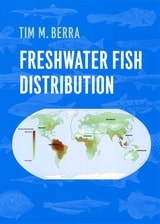
Freshwater Fish Distribution
Tim M. Berra
University of Chicago Press, 2007
Tim Berra’s seminal resource, Freshwater Fish Distribution,maps the 169 fish families that swim in fresh water around the world. Each family account includes the class, subclass, and order; a pronunciation guide to the family name; life cycle information; and interesting natural history facts. Each account is illustrated, many with historical nineteenth-century woodcuts.
Now available in paperback, this heavily cited work in ichthyology and biogeography will serve as a reference for students, a research support for professors, and a helpful guide to tropical fish hobbyists and anglers.
Freshwater Fishes of Manitoba
Kenneth Stewart
University of Manitoba Press, 2004
Freshwater Fishes of Mexico
Robert Rush Miller, W. L. Minckley, and Steven Mark Norris
University of Chicago Press, 2006
No one knew these Mexican freshwaters or the fish that inhabit them better than the late world-renowned ichthyologist Robert Rush Miller. A pioneer of the field, Miller undertook his first field excursion more than fifty years ago and, in the decades following, amassed the information necessary to write the first encyclopedia of Mexican inland ichthyology. Providing keys to more than 500 native species—accompanied by detailed distribution maps and illustrations—Freshwater Fishes of México offers a historical overview of the country's ichthyology, as well as syntheses of the unique biogeography of Mexican fishes and their current conservation status. Organized by family, the species accounts are supplemented with color galleries containing photographs of live fishes in their native environments and natural habitats. Exploring ecological, biological, and taxonomic issues, the book also considers the evolutionary history of the ichthyofauna itself and the human history of the scientists who researched it during the last several centuries.
The life's work of Robert Rush Miller, the long-awaited Freshwater Fishes of México will be welcomed not only by students of Mexican fishes, but by all ichthyologists working in Central and North America. This book will also find an audience among home aquarium hobbyists, fishery managers, conservation biologists, and environmental planners and managers.
Freshwater Marshes
Ecology and Wildlife ManagementMilton W. Weller
University of Minnesota Press, 1994
Freshwater Marshes was first published in 1994. Minnesota Archive Editions uses digital technology to make long-unavailable books once again accessible, and are published unaltered from the original University of Minnesota Press editions.
Prairie potholes, wetland edges of lakes and rivers, and other freshwater marshes play a vital role in maintaining a clean and plentiful water supply for wildlife and human use. These wetland areas provide habitat for spawning fish, feed waterfowl, purify and retain water, and control erosion. In this updated third edition, Milton W. Weller describes the components of the freshwater marsh: its annual and seasonal dynamics as affected by rainfall cycles and the plant and animal population's response to such changes. Weller discusses how such wetland areas are managed for wildlife populations and diversity, and how such processes can be used in wetland conservation and restoration. He considers the impact society has on wetlands and offers conservation goals for freshwater wetland complexes.
Weller broadens the third edition to include an analysis of how prairie wetlands compare in water dynamics with swamps, tidal marshes, and other wetlands. He also expands the discussion of wetland classification, evaluation, mitigation, and restoration, and introduces a new glossary of current wetland terminology.Freshwater Marshes is Volume 1 of Wildlife Habitats.
Milton W. Weller is professor emeritus and former Kleberg Chair in Wildlife Ecology, at Texas A&M University.
Freshwater Mussels of Florida
James D. Williams, Robert S. Butler, Gary L. Warren, and Nathan A. Johnson
University of Alabama Press, 2014
Each entry in this definitive guide provides a detailed description and multiple depictions of the species as well as select characteristics of its soft anatomy and miscellaneous notes of interest. Individual distribution maps pinpoint the historical and present occurrence of each bivalve species and are just one component of the rich set of 307 mussel and habitat photographs, seventy-four maps, and thirteen tables that illustrate the book. Of particular interest are remarkable electron micrographs of glochidia, the specialized larval life history stage parasitic upon fishes.
Freshwater Mussels of Florida will be of lasting value to state and federal conservation agencies as well as other government and nongovernment entities that manage aquatic resources in Florida. The research provides a key baseline for future study of Florida mussels. The survey results in this guide, along with extensive reviews of historical mussel collections in natural history museums, provide a complete picture of the Florida mussel fauna, past and present.
Freshwater Wetlands
A Guide to Common Indicator Plants of the NortheastDennis W. Magee
University of Massachusetts Press, 1981
Following a brief introduction that discusses the functional values of wetlands and describes their various types, the manual is organized into two major components, the first consisting of keys that are based on life form and arrangement of plant parts, the second consisting of a description of each species. Such factors as range, habitat, general characteristics, stem, leaves, inflorescence, fruit, and similar species are covered in the descriptions.

Friendly Fallout 1953
Ann Ronald
University of Nevada Press, 2011
Friendly Fallout 1953 is a hybrid work of literature that combines the actual history of aboveground atomic testing in the Nevada desert in 1953 with fictional vignettes that explore the impact of the tests on the people who participated in them and on civilian "downwinders." The book brings to life a turbulent era when Cold War fears, patriotic enthusiasm, scientific progress, and unacknowledged political agendas often collided with the welfare of ordinary citizens and the environment.

Frigid Embrace
Politics, Economics, and Environment in AlaskaStephen Haycox
Oregon State University Press, 2002
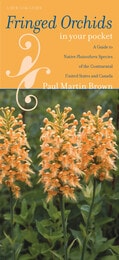
Fringed Orchids in Your Pocket
A Guide to Native Platanthera Species of the Continental United States and CanadaPaul Martin Brown
University of Iowa Press, 2009
Brown provides a description, general distributional information, time of flowering, and habitat requirements for each species as well as a complete list of hybrids and the many different growth and color forms that can make identifying orchids so challenging. For the fringed-lipped orchids, which make up some of the most intriguing and richly colored of all wild orchids, he includes information on fourteen species and thirteen hybrids.
The genus Platanthera is the largest genus of orchids to be found in North America north of Mexico; the fringe-lipped group is found primarily in the eastern U.S. and Canada, extending west to the prairies and Great Plains. The fringed orchids, so-called because of the delicately fringed petals and lips on many of the species, comprise some of the largest and showiest native orchids found in our region. Most of these species are easy to identify based upon their general appearance, range, and time of flowering. Answering three simple questions—when, where, and how does it grow?—and comparing the living plants with the striking photos in the backpack-friendly laminated guide and the information in the simple key should enable both professional and amateur naturalists to achieve the satisfaction of identifying a specific orchid.
Fritz Lang
The Nature of the BeastPatrick McGilligan
University of Minnesota Press, 2013
The name of Fritz Lang—the visionary director of Metropolis, M, Fury, The Big Heat, and thirty other unforgettable films—is hallowed the world over. But what lurks behind his greatest legends and his genius as a filmmaker? Patrick McGilligan, placed among “the front rank of film biographers” by the Washington Post, spent four years in Europe and America interviewing Lang’s dying contemporaries, researching government and film archives, and investigating the intriguing life story of Fritz Lang. This critically acclaimed biography—lauded as one of the year’s best nonfiction books by Publishers Weekly—reconstructs the compelling, flawed human being behind the monster with the monocle.
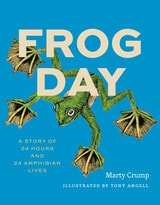
Frog Day
A Story of 24 Hours and 24 Amphibian LivesMarty Crump
University of Chicago Press, 2024
In this short book, celebrated biologist Marty Crump leads readers on a worldwide field trip in search of frogs. Each chapter of Frog Day covers a single frog during a single hour, highlighting how twenty-four different species spend their time. Our day begins at midnight in Indonesia, with the rustle of leaves above. It’s not a bird, but Wallace’s flying frog, using its webbed feet and emerald-green skin flaps to glide through the forest canopy. In the early hours of the morning, we hear a horned marsupial frog “bopping” and a wood frog “quacking” to attract mates. At six o’clock in the morning, beneath a streetlight in Honolulu, we meet a corpulent, invasive cane toad slurping insects—and sometimes snakes, lizards, turtles, birds, and mice. At noon, we watch parenting in action as an African bullfrog bulldozes a path through the mud to free his tadpoles from a drying pond. At dusk, in a Peruvian rain forest, we observe “the ultimate odd couple”—a hairy tarantula and what looks like a tiny amphibian pet taking shelter in the spider’s burrow. Other frogs make a tasty meal for this tarantula, but the dotted humming frog is a friend, eating the ants that might otherwise make a meal of the tarantula’s eggs.
For each hour in our Frog Day, award-winning artist Tony Angell has depicted these scenes with his signature pen and ink illustrations. Working closely together to narrate and illustrate these unique moments in time, Crump and Angell have created an engaging read that is a perfect way to spend an hour or two—and a true gift for readers, amateur scientists, and all frog fans.
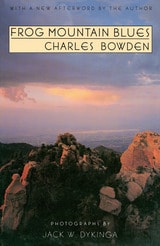
Frog Mountain Blues
Charles Bowden; Photographs by Jack W. Dykinga
University of Arizona Press, 1994
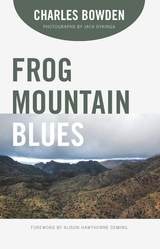
Frog Mountain Blues
Charles Bowden; Photographs by Jack Dykinga; Foreword by Alison Hawthorne Deming
University of Arizona Press, 2018
When it was first published in 1987, Frog Mountain Blues documented the creeping sprawl of new development up the Catalinas’ foothills. Today, that development is fully visible, but Charles Bowden’s prescience of the urgency to preserve and protect a sacred recreational space remains as vivid as ever. Accompanied by Jack W. Dykinga’s photographs from the original work, this book continues to convey the natural beauty of the Catalinas and warns readers that this unique wilderness could easily be lost.
As Alison Hawthorne Deming writes in the new foreword, “Frog Mountain Blues continues to be an important book for learning to read this place through the eyes of experience and history, and Bowden remains a sobering voice for facing our failures in protecting what we love in this time of global destruction, for taking seriously the power of language to set ourselves right again with the enormous task of living with purpose and presence and care on the land.”