Results by title
8812 books match the query 'Political Science' and 329 start with f
Freedom of Expression
Resistance and Repression in the Age of Intellectual PropertyKembrew McLeod
University of Minnesota Press, 2007
Freedom of Expression® covers the ways in which intellectual property laws have been used to privatize all forms of expression—from guitar riffs and Donald Trump’s “you’re fired” gesture to human genes and public space—and in the process stifle creative expression. Kembrew McLeod challenges the blind embrace of privatization as it clashes against our right to free speech and shared resources.
Kembrew McLeod is professor of communication studies at the University of Iowa, author of Owning Culture: Authorship, Ownership, and Intellectual Property Law, and coproducer of the documentary Copyright Criminals: This Is a Sampling Sport.
Lawrence Lessig is professor of law at Stanford Law School.
This book’s documentary companion will be available through Media Education Foundation.
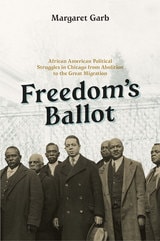
Freedom's Ballot
African American Political Struggles in Chicago from Abolition to the Great MigrationMargaret Garb
University of Chicago Press, 2014
Freedom’s Ballot is the history of three generations of African American activists—the ministers, professionals, labor leaders, clubwomen, and entrepreneurs—who transformed twentieth-century urban politics. This is a complex and important story of how black political power was institutionalized in Chicago in the half-century following the Civil War. Margaret Garb explores the social and political fabric of Chicago, revealing how the physical makeup of the city was shaped by both political corruption and racial empowerment—in ways that can still be seen and felt today.
Freedom's Moment
An Essay on the French Idea of Liberty from Rousseau to FoucaultPaul M. Cohen
University of Chicago Press, 1997
Arranged not according to the lives and times of its protagonists but to the narrative themes and structures they held in common, Cohen’s study discerns a single master narrative of liberty in modern France. He captures these radicals, whose tradition bids them to resist the authority of power structures and public opinion. They denounce bourgeois and utilitarian values, the power of Church and State, and the corrupting influence of everyday politics, and they dream of a revolutionary rupture, a fleeting instant of sometimes violent but always meaningful transgression.
An eloquent and insightful work on French political culture, Freedom's Moment also helps explain how France, even as it has oscillated between political stagnation and crisis, has held onto its faith that liberty, equality, and fraternity remain within its grasp.
Examines the ideas of Rousseau, Robespierre, Stendahl, Michelet, Bergson, Peguy, Sartre, and Foucault.
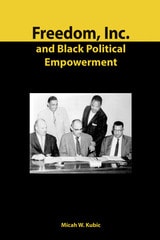
Freedom, Inc. and Black Political Empowerment
Micah W. Kubic
University of Missouri Press, 2016
Much has been written about black urban empowerment and about the candidates—particularly the winning candidates—who are the public face of such shifts in power. Authors invariably mention the important role played by black political organizations in electing black officials or organizing communities, but Micah W. Kubic goes further, making, for the first time, one such organization the focus of a book-length study. Kubic tells the story of black political empowerment in Kansas City through the prism of Freedom, Inc., the nation’s oldest existing black political organization.
Using interviews and observation of participants as well as archival research, Kubic offers historical and political analysis of Freedom, Inc. from its founding in 1962 through its role in municipal elections of 2007. Kubic asserts that strong local organizations are living, dynamic organisms and that they, rather than charismatic candidates or interracial alliances, are the crucial players in both determining political outcomes and advancing black interests in urban areas.
Freedom’s Ring
Literatures of Liberation from Civil Rights to the Second WaveJacqueline Foertsch
Rutgers University Press, 2021
French Gastronomy and the Magic of Americanism
Rick Fantasia
Temple University Press, 2019
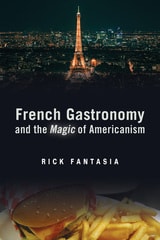
A tectonic shift has occurred in the gastronomic field in France, upsetting the cultural imagination. In a European country captivated by a high-stakes power struggle between chefs and restaurants in the culinary field, the mass marketing of factory-processed industrial cuisine and fast foods has created shock waves in French society, culture, and the economy.
In this insightful book, French Gastronomy and the Magic of Americanism, Rick Fantasia examines how national identity and the dynamics of cultural meaning-making within gastronomy have changed during a crucial period of transformation, from the 1970s through the 1990s. He illuminates the tensions and surprising points of cooperation between the skill, expertise, tradition, artistry, and authenticity of grand chefs and the industrial practices of food production, preparation, and distribution.
Fantasia examines the institutions and beliefs that have reinforced notions of French cultural supremacy—such as the rise and reverence of local cuisine—as well as the factors that subvert those notions, such as when famous French chefs lend their names to processed, frozen, and pre-packaged foods available at the supermarket. Ultimately, French Gastronomy and the Magic of Americanism shows what happens to a cultural field, like French gastronomy, when the logic and power of the economic field imposes itself upon it.

Friendship Fictions
The Rhetoric of Citizenship in the Liberal ImaginaryMichael A. Kaplan
University of Alabama Press, 2010
A criticism often leveled at liberal democratic culture is its emphasis on the individual over community and private life over civic participation. However, liberal democratic culture has a more complicated relationship to notions of citizenship. As Michael Kaplan shows, citizenship comprises a major theme of popular entertainment, especially Hollywood film, and often takes the form of friendship narratives; and this is no accident. Examining the representations of citizenship-as-friendship in four Hollywood films (The Big Chill, Thelma & Louise, Lost in Translation, and Smoke), Kaplan argues that critics have misunderstood some of liberal democracy’s most significant features: its resilience, its capacity for self-revision, and the cultural resonance of its model of citizenship.
Friendship in Islamic Ethics and World Politics
Edited by Mohammad Jafar Amir Mahallati
University of Michigan Press, 2019
Based on a decade of direct diplomatic engagement with the United Nations, a decade of teaching on international relations, and another decade of research and teaching on Islamic and comparative peace studies, this book offers a friendship-related academic framework that examines shared moral concepts, philosophical paradigms, and political experiences that can develop and expand multidisciplinary conversations between the Christian West and the Muslim East. By advancing multicultural and interreligious discourses on friendship, this book helps promote actual friendships among diverse cultures and peoples.
This is not a monologue. It provides a model of conversations among scholars and political actors who come from diverse international and interreligious backgrounds. The word “Islamic” should not mislead the reader to suspect that this edited volume delves only into religious discourses. Rather, it provides a forum for conversations within and between religious and philosophical perspectives. It sparks friendship conversations thematically and through disciplinary and cultural diversity. The result of the work of many prominent international scholars and diplomats over many years, it conveys at least one message clearly: friendship matters for not only our happiness but also for our survival.
Fringe Banking
Check-Cashing Outlets, Pawnshops, and the PoorJohn P. Caskey
Russell Sage Foundation, 1994
From Art to Politics
How Artistic Creations Shape Political ConceptionsMurray Edelman
University of Chicago Press, 1995
In this book, Edelman continues his quest to understand the influence of perception on the political process by turning to the role of art. He argues that political ideas, language, and actions cannot help but be based upon the images and narratives we take from literature, paintings, film, television, and other genres. Edelman believes art provides us with models, scenarios, narratives, and images we draw upon in order to make sense of political events, and he explores the different ways art can shape political perceptions and actions to both promote and inhibit diversity and democracy.
"Elegantly written. . . . He brilliantly contends that art helps create the images from which opinion-molders and citizens construct the social realities of politics."—Choice
"It is perhaps the freshness with which he puts his case that is what makes From Art to Politics, as well as his other works, so challenging and invigorating."—Philip Abbott, Review of Politics
From Ballot to Bench
Judicial Elections and the Quest for AccountabilityBy Philip L. Dubois
University of Texas Press, 1980
Over several decades, many U.S. states abandoned the practice of selecting their judges by direct popular election and adopted the Missouri Plan of judicial selection. In From Ballot to Bench, Philip L. Dubois subjects the various criticisms raised against judicial elections to a more searching scrutiny than previously has been attempted.
Dubois carefully reviews the three central counts on which judicial elections have been faulted: for lowering the quality of the bench, for impairing judicial independence, and for failing to secure judicial accountability. After concluding that the potential for judicial elections to hold judges popularly accountable is what might commend them over alternative selection methods, Dubois concentrates on the analysis of empirical evidence to evaluate judicial elections as mechanisms of accountability.
The study examines all the statewide partisan and nonpartisan elections for state supreme court justices in non-southern states from 1948 to 1974. Included is a detailed examination of voter participation, electoral competition, the behavior of judicial electorates, and the patterns of gubernatorial vacancy appointments. An analysis of decision making on eight state supreme courts also tests the relationship between different selection systems and judicial behavior.
Dubois finds that partisan elections maximize voter participation, meaningfully structure voter choices, minimize accession to the bench by appointment, and allow popular control over gubernatorial appointments. Additional evidence on the extent of partisan voting by judges selected under different methods leads Dubois to conclude that partisan elections are superior to both nonpartisan elections and nonelective selection methods as instruments of accountability.
The importance of the questions addressed, the breadth of the data collected, and the unorthodox conclusions offered make this a significant book for political scientists, judges, lawyers, and public officials.
From Betty Crocker to Feminist Food Studies
Critical Perspectives on Women and FoodArlene Voski Avakian
University of Massachusetts Press, 2005
Applying the insights of feminist scholarship to the study of food, the thirteen essays in this volume are arranged under four headings—the marketplace, histories, representations, and resistances. The editors open the book with a substantial introduction that traces the history of scholarly writing on food and maps the terrain of feminist food studies. In the essays that follow, contributors pay particular attention to the ways in which gender, race, ethnicity, class, colonialism, and capitalism have both shaped and been shaped by the production and consumption of food.
In the first section, four essays analyze the influence of large corporations in determining what came to be accepted as proper meals in the United States, including what mothers were expected to feed their babies. The essays in the second section explore how women have held families together by keeping them nourished, from the routines of an early nineteenth-century New Englander to the plight of women who endured the siege of Leningrad.
The essays in the third section focus on the centrality of gender and race in the formation of identities as enacted through food discourse and practices. These case studies range from the Caribbean to the San Luis Valley of Colorado. The final section documents acts of female resistance within the contexts of national or ethnic oppression. From women in colonial India to Armenian American feminists, these essays show how food has served as a means to assert independence and personal identity.
In addition to the editors, contributors include Amy Bentley, Carole M. Counihan, Darra Goldstein, Nancy Jenkins, Alice P. Julier, Leslie Land, Laura Lindenfield, Beheroze F. Shroff, Sharmila Sen, Laura Shapiro, and Jan Whitaker.
From Blackjacks to Briefcases
A History of Commercialized Strikebreaking and Unionbusting in the United StatesRobert Michael Smith
Ohio University Press, 2003
From the beginning of the Industrial Age and continuing into the twenty-first century, companies faced with militant workers and organizers have often turned to agencies that specialized in ending strikes and breaking unions. Although their secretive nature has made it difficult to fully explore the history of this industry, From Blackjacks to Briefcases does just that.
By digging through subpoenaed documents of strike-bound companies, their mercenaries, and the testimony of executive officers and rank-and-file strikebreakers, Robert Smith examines the inner workings of the antiunion industry. In a clear and lively style, he brings to life the violent armed guards employed on the picket line or in the coal camps; the ruffians who filled the armies marshaled by the “King of the Strikebreakers,” Pearl Bergoff; the labor spies who wrecked countless unions; and, after the Wagner Act, those who manipulated national labor law to serve their clients.
In From Blackjacks to Briefcases, Smith follows the history of this ongoing struggle and tells a compelling story that parallels the history of the United States over the last century and a half.
From Blue to Red
The Rise of the GOP in ArkansasJohn C. Davis
University of Arkansas Press, 2024
John C. Davis’s From Blue to Red: The Rise of the GOP in Arkansas provides a rigorous yet accessible study of this partisan shift, tracking changes in voter preference at the top of the ticket in the 1960s, generational replacement in Arkansas’ political power structure in the 1990s, and the emergence of a more nationalized and polarized electorate in the 2000s, among other developments. From Blue to Red is a fascinating look at how Arkansas went from being one of the country’s most solidly Democratic states to one of its most ardently Republican in just a few years.
From Bureaucracy to Bullets
Extreme Domicide and the Right to HomeBree Akesson
Rutgers University Press, 2022
From Central Planning to the Market
Transformation of the Czech Economy 1989 – 2004Libor Zidek
Central European University Press, 2018

From Chinese Exclusion to Guantánamo Bay
Plenary Power and the Prerogative StateNatsu Taylor Saito
University Press of Colorado, 2007
From Chinese Exclusion to Guantánamo Bay also provides a larger context for understanding problems resulting from the exercise of plenary power. Saito explains how the rights of individuals and groups deemed Other by virtue of race or national origin have been violated under both the Constitution and international law. The differing treatment of José Padilla and John Walker Lindh - both Americans accused of terrorism - provides an example of such disparate approaches. Such executive actions and their sanction by Congress and the judiciary, Saito argues, undermine not just individual rights but the very foundations of our national security - democracy and the rule of law.
From Chinese Exclusion to Guantánamo Bay will interest readers concerned with the historical background of constitutional protection in times of war and peace and will provide fascinating new material for scholars, teachers, and students of law, history, and ethnic studies

From Coexistence to Conquest
International Law and the Origins of the Arab-Israeli Conflict, 1891-1949Victor Kattan
Pluto Press, 2009
From Coexistence to Conquest seeks to explain how the Arab-Israeli conflict developed by looking beyond strict legalism to the men behind the policies adopted by the Great Powers at the dawn of the twentieth century. It controversially argues that Zionism was adopted by the British Government in its 1917 Balfour Declaration primarily as an immigration device and that it can be traced back to the 1903 Royal Commission on Alien Immigration and the Alien’s Act 1905.
The book places the violent reaction of the Palestine Arabs to mass Jewish immigration in the context of Zionism, highlighting the findings of several British commissions of inquiry which recommended that Britain abandon its policy. The book also revisits the controversies over the question of self-determination, and the partition of Palestine.
The Chapter on the 1948 conflict seeks to update international lawyers on the scholarship of Israel’s ‘new’ historians and reproduces some of the horrific accounts of the atrocities that took place. The penultimate chapter argues that Israel was created through an act of conquest or subjugation. The book concludes with a sobering analysis of the conflict arguing that neither Jews nor Arabs were to blame for starting it.
From Collective Bargaining to Collective Begging
How Public Employees Win and Lose the Right to BargainDominic D. Wells
Temple University Press, 2021
How do public employees win and lose their collective bargaining rights? And how can public sector labor unions protect those rights? These are the questions answered in From Collective Bargaining to Collective Begging. Dominic Wells takes a mixed-methods approach and uses more than five decades of state-level data to analyze the expansion and restriction of rights.
Wells identifies the factors that led states to expand collective bargaining rights to public employees, and the conditions under which public employee labor unions can defend against unfavorable state legislation. He presents case studies and coalition strategies from Ohio and Wisconsin to demonstrate how labor unions failed to protect their rights in one state and succeeded in another.
From Collective Bargaining to Collective Begging also provides a comprehensive quantitative analysis of the economic, political, and cultural factors that both led states to adopt policies that reduced the obstacles to unionization and also led other states to adopt policies that increased the difficulty to form and maintain a labor union. In his conclusion, Wells suggests the path forward for public sector labor unions and what policies need to be implemented to improve employee labor relations.
From Communism to European Governance
The European Commission’s Support for Administrative Reforms in Romania, Serbia,and MoldovaClaudia Badulescu
Central European University Press, 2027
From Conflict to Inclusion in Housing
Interaction of Communities, Residents and ActivistsEdited by Graham Cairns, Giorgos Artopoulos, and Kirsten Day
University College London, 2017

From Day to Day
One Man's Diary of Survival in Nazi Concentration CampsOdd Nansen
Vanderbilt University Press, 2016
Nansen, a Norwegian, was arrested in 1942 by the Nazis, and spent the remainder of World War II in concentration camps--Grini in Oslo, Veidal above the Arctic Circle, and Sachsenhausen in Germany. For three and a half years, Nansen kept a secret diary on tissue-paper-thin pages later smuggled out by various means, including inside the prisoners' hollowed-out breadboards.
Unlike writers of retrospective Holocaust memoirs, Nansen recorded the mundane and horrific details of camp life as they happened, "from day to day." With an unsparing eye, Nansen described the casual brutality and random terror that was the fate of a camp prisoner. His entries reveal his constantly frustrated hopes for an early end to the war, his longing for his wife and children, his horror at the especially barbaric treatment reserved for Jews, and his disgust at the anti-Semitism of some of his fellow Norwegians. Nansen often confronted his German jailors with unusual outspokenness and sometimes with a sense of humor and absurdity that was not appreciated by his captors.
After the Putnam's edition received rave reviews in 1949, the book fell into obscurity. In 1956, in response to a poll about the "most undeservedly neglected" book of the preceding quarter-century, Carl Sandburg singled out From Day to Day, calling it "an epic narrative," which took "its place among the great affirmations of the power of the human spirit to rise above terror, torture, and death." Indeed, Nansen witnessed all the horrors of the camps, yet still saw hope for the future. He sought reconciliation with the German people, even donating the proceeds of the German edition of his book to German refugee relief work. Nansen was following in the footsteps of his father, Fridtjof, an Arctic explorer and humanitarian who was awarded the Nobel Peace Prize in 1922 for his work on behalf of World War I refugees. (Fridtjof also created the "Nansen passport" for stateless persons.)
Forty sketches of camp life and death by Nansen, an architect and talented draftsman, provide a sense of immediacy and acute observation matched by the diary entries. The preface is written by Thomas Buergenthal, who was "Tommy," the ten-year-old survivor of the Auschwitz Death March, whom Nansen met at Sachsenhausen and saved using his extra food rations. Buergenthal, author of A Lucky Child, formerly served as a judge on the International Court of Justice at The Hague and is a recipient of the 2015 Elie Wiesel Award from the US Holocaust Memorial Museum.

From East Germans to Germans?
The New Postcommunist ElitesJennifer A. Yoder
Duke University Press, 1999
Although the quick transplant of a ready-made democratic system supported by West German financial backing and expertise provided benefits, problems arose for the development of postcommunist political leadership and for the growth of mass support for the democratic system. Jennifer A. Yoder analyzes the implications of the transition process for democratic legitimation and integration. Based on field research in East Germany that included interviews with parliamentarians, her study addresses issues such as culture, identity, and the lack of continuity between the old and new political elites. Although the availability of West German role models, together with pressure to conform, allowed the process of decommunization to occur much faster than elsewhere in Eastern Europe, the cultural differences between east and west are more extensive and complex than previously assumed. Unification has also been followed by a reinvigoration of regional interests. Yoder shows how some political elites have adopted western German patterns, while others openly criticize many of the practices and policies originating in Bonn and present themselves as democratic alternatives and advocates for East German interests in the new Germany. Indeed, for many East Germans, these new regional elites are regarded as the only representatives of their interests in the western-dominated political system.
Providing insight into elite-building at a time of transition and a valuable alternative to the “institutions versus culture” debate found in traditional analyses of political change, this book will interest political scientists and students and scholars of European politics and German studies.
From Edward Brooke to Barack Obama
African American Political Success, 1966-2008Dennis S. Nordin
University of Missouri Press, 2012
In From Edward Brooke to Barack Obama, Dennis S. Nordin navigates the history of biracial elections by examining the experiences of a variety of African American politicians from across the country, revealing how voters, both black and white, respond to the issue of race in an election.
From Edward Brooke to Barack Obama investigates the implications of race in politics, a highly relevant topic in today’s American society. It offers readers a chronological overview of the progress made over the last several decades as well as shows where there is room for growth in the political arena. By taking a pertinent topic for the era and placing it in the context of history, Nordin successfully chronicles the roles of race and race relations in American politics.
From Fear to Fraternity
A Russian Tale of Crime, Economy and ModernityPatricia Rawlinson
Pluto Press, 2010
The end of communism marked the re-emergence of a huge rise in organised crime across Russia and Eastern Europe. High-profile efforts to combat it have met with little success.
Patricia Rawlinson argues that burgeoning crime rates result not only from the failures of communism but also from the problems of free market economies.
Drawing on interviews with members of the Russian criminal underworld, the business community, journalists and the militia, she argues that organised crime provides us with a barometer of economic well-being, not just for Russia but for any market economy.

From Gluttony to Enlightenment
The World of Taste in Early Modern EuropeViktoria von Hoffmann
University of Illinois Press, 2016
Viktoria von Hoffmann explores four kinds of early modern texts--culinary, medical, religious, and philosophical--to follow taste's ascent from the sinful to the beautiful. Combining food studies and sensory history, she takes readers on an odyssey that redefined a fundamental human experience. Scholars and cooks rediscovered a vast array of ways to prepare and present foods. Far-sailing fleets returned to Europe bursting with new vegetables, exotic fruits, and pungent spices. Hosts refined notions of hospitality in the home while philosophers pondered the body and its perceptions. As von Hoffmann shows, these labors produced a sea change in perception and thought, one that moved taste from the base realm of the tongue to the ethereal heights of aesthetics.

From Guerrillas To Government
The Eritrean People’s Liberation FrontDavid Pool
Ohio University Press, 2001
In 1991 the Eritrean People’s Liberation Front (EPLF) took over Asmara and completed the liberation of Eritrea; formal independence came two years later after a referendum in May 1993. It was the climax of a thirty-year struggle, though the EPLF itself was formed only in the early 1970s.
From the beginning, Eritrean nationalism was divided. Ethiopia’s appeal to a joint Christian imperial past alienated the Muslim pastoral lowland people in the areas where Eritrean nationalism first appeared. It was not until the early 1970s that the Christian elements of the population finally joined the liberation struggle on a substantial scale.

From Here to Free Trade
Essays in Post-Uruguay Round Trade StrategyErnest H. Preeg
University of Chicago Press, 1998
The first essay assesses U.S. interests in economic globalization, the second examines recent steps toward free trade at the multilateral and regional levels, and the next three offer an in-depth critique of U.S. regional free trade objectives in the Americas, across the Pacific, and possibly with Europe. The final essay presents a multilateral/regional synthesis for going from here to free trade over the coming decade.
From Imperial Myth to Democracy
Japan's Two Constitutions, 1889-2002Lawrence W. Beer
University Press of Colorado, 2002
From Inclusion to Influence
Latino Representation in Congress and Latino Political Incorporation in AmericaWalter Clark Wilson
University of Michigan Press, 2017
From Jail to Jail
Tan Malaka
Ohio University Press, 2020
From Jail to Jail is the political autobiography of Sutan Ibrahim gelar Tan Malaka, an enigmatic and colorful political thinker of twentieth-century Asia, who was one of the most influential figures of the Indonesian Revolution. Variously labeled a communist, Trotskyite, and nationalist, Tan Malaka managed to run afoul of nearly every political group and faction involved in the Indonesian struggle for independence. During his decades of political activity, he spent periods of exile and hiding in nearly every country in Southeast Asia. As a Marxist who was expelled from and became a bitter enemy of his country’s Communist Party and as a nationalist who was imprisoned and murdered by his own government’s forces as a danger to its anticolonial struggle, Tan Malaka was and continues to be soaked in contradiction and controversy.
Translated by Helen Javis and with a new introduction from Harry A. Poeze, this edition of From Jail to Jail contextualizes the life and political accomplishments of Tan Malaka in one of the few known autobiographies by a Marxist of this political era and region.

From Kosovo to Darfur
The Regional Biases within Humanitarian Military InterventionismSidita Kushi
University of Michigan Press, 2025
Using in-depth case studies and new data on all post–Cold War internal armed conflicts matched to third-party responses, From Kosovo to Darfur offers the first regionally sensitive analysis of humanitarian military intervention since the end of the Cold War. It shows that international military interventions in the context of acute humanitarian crises are driven by different pathways within the Western versus the non-Western world and fueled by elite perceptions of the crisis, making interventions closer to the geographic and cultural West most probable and most intense. As our international community becomes increasingly interdependent and aware of human suffering across borders, From Kosovo to Darfur points to new pathways of conflict trajectories and reveals vital implications for leaders, scholars, and nongovernmental actors advocating for or against international military intervention as a policy choice.
From Kosovo to Kabul and Beyond
Human Rights and International InterventionDavid Chandler
Pluto Press, 2006
Edward S. Herman
'Chandler deftly unpicks the hypocrisy and double standards behind our "ethical" bombing in the balkans and Asia.'
Independent
'Chandler's book is thorough and relentless in its critique of human rights consensus.'
Spiked
'David Chandler has emerged in recent years as one of Britain's foremost critics of the hypocrisy of human rights.'
The Spectator
This new and updated edition of David Chandler's acclaimed book takes a critical look at the way in which human rights issues have been brought to the fore in international affairs. The UN and Nato's new policy of interventionism--as shown in Iraq, Somalia, Bosnia, Kosovo and East Timor--has been hailed as part of a new 'ethical' approach to foreign policy. David Chandler offers a rigorous critique of this apparently benign shift in international relations to reveal the worrying political implications of a new human rights discourse. He asks why the West can now prioritise the rights of individuals over the traditional rights of state sovereignty, and why this shift has happened so quickly. Charting the development of a human rights-based foreign policy, he considers the theoretical problems of defining human rights and sets this within the changing framework of international law. Meticulous and compelling, From Kosovo to Kabul and Beyond offers a disturbing insight into the political implications of a human rights-led foreign policy, and the covert agenda that it conceals.
David Chandler is Professor of International Relations, Centre for the Study of Democracy, University of Westminster. He has written widely on democracy, human rights and international relations and is also the author of Bosnia: Faking Democracy After Dayton (Pluto Press, 1999/ 2000) and Constructing Global Civil Society: (2004), editor of Rethinking Human Rights: Critical Approaches to International Politics (2002) and Peace without Politics: Ten Years of State-Building in Bosnia (2005), and co-editor of Global Civil Society: Contested Futures (2005).
From Liberal Values to Democratic Transition
Essays in Honor of Janos KisRonald Dworkin
Central European University Press, 2004
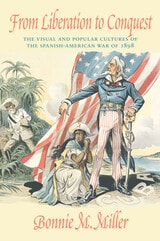
From Liberation to Conquest
The Visual and Popular Cultures of the Spanish-American War of 1898Bonnie M. Miller
University of Massachusetts Press, 2011
Although media campaigns initially advocated for the United States to step in to rescue Cuba from the horrors of colonial oppression, the war ended just months later with the U.S. acquisition of Spain's remaining empire, including Cuba, Puerto Rico, Guam, and the Philippines. President William McKinley heeded the call for war, with the American people behind him, and then proceeded to use the conflict to further his foreign policy agenda of expanding U.S. interests in the Caribbean and Far East.
Miller examines the shifting media portrayals of U.S. actions for the duration of the conflict, from liberation to conquest. She shows how the media capitalized on the public's thirst for drama, action, and spectacle and adapted to emerging imperial possibilities. Growing resistance to American imperialism by the war's end unraveled the consensus in support of U.S policy abroad and produced a rich debate that found expression in American visual and popular culture.
From Liberty to Democracy
The Transformation of American GovernmentRandall G. Holcombe
University of Michigan Press, 2002
The government's activities during two world wars and the Great Depression greatly increased its involvement in people's economic affairs, and by the time of Lyndon Johnson's Great Society, the transformation was complete. By the end of the twentieth century, the fundamental principle underlying American government had been transformed to democracy, and public policy was designed to further the will of the majority. The result has been a government that is larger and broader in scope.
From Liberty to Democracy examines American political history using the framework of public choice theory to show how American government grew more democratic, and how this resulted in an increase in the size and scope of government. It should appeal to historians, political scientists, and economists who are interested in the evolution of American government but does not assume any specialized training and can be read by anyone interested in American political history.
Randall G. Holcombe is DeVoe Moore Professor of Economics, Florida State University
From Multiculturalism to Democratic Discrimination
The Challenge of Islam and the Re-emergence of Europe’s NationalismAlberto Spektorowski and Daphna Elfersy
University of Michigan Press, 2020

From Noose to Needle
Capital Punishment and the Late Liberal StateTimothy V. Kaufman-Osborn
University of Michigan Press, 2002
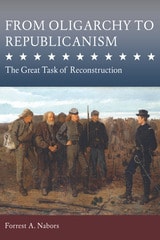
From Oligarchy to Republicanism
The Great Task of ReconstructionForrest A. Nabors
University of Missouri Press, 2026
In From Oligarchy to Republicanism: The Great Task of Reconstruction, Forrest A. Nabors shows that the ultimate goal of the Republican Party, the war, and Reconstruction was the same. This goal was to preserve and advance republicanism as the American founders understood it, against its natural, existential enemy: oligarchy. The principle of natural equality justified American republicanism and required abolition and equal citizenship. Likewise, slavery and discrimination on the basis of color stand on the competing moral foundation of oligarchy, the principle of natural inequality, which requires ranks.
The effect of slavery and the division of the nation into two “opposite systems of civilization” are causally linked. Charles Devens, a lawyer who served as a general in the Union Army, and his contemporaries understood that slavery’s existence transformed the character of political society.
One of those dramatic effects was the increased power of slaveowners over those who did not have slaves. When the slave state constitutions enumerated slaves in apportioning representation using the federal three-fifths ratio or by other formulae, intra-state sections where slaves were concentrated would receive a substantial grant of political power for slave ownership. In contrast, low slave-owning sections of the state would lose political representation and political influence over the state. This contributed to the non-slaveholders’ loss of political liberty in the slave states and provided a direct means by which the slaveholders acquired and maintained their rule over non-slaveholders.
This book presents a shared analysis of the slave South, synthesized from the writings and speeches of the Republicans who served in the Thirty-Eighth, Thirty-Ninth or Fortieth Congress from 1863-1869. The account draws from their writings and speeches dated before, during, and after their service in Congress. Nabors shows how the Republican majority, charged with the responsibility of reconstructing the South, understood the South.
Republicans in Congress were generally united around the fundamental problem and goal of Reconstruction. They regarded their work in the same way as they regarded the work of the American founders. Both they and the founders were engaged in regime change, from monarchy in the one case, and from oligarchy in the other, to republicanism. The insurrectionary states’ governments had to be reconstructed at their foundations, from oligarchic to republican. The sharp differences within Congress pertained to how to achieve that higher goal.
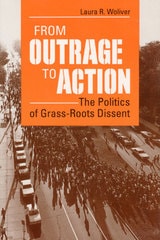
From Outrage to Action
The Politics of Grass-Roots DissentLaura R. Woliver
University of Illinois Press, 1993
Through in-depth interviews with activists, Laura Woliver examines these community actions, studying the groups involved and linking her conclusions to larger questions of political power and the impact of social movements. Her findings will make fascinating reading for those interested in the rise and fall of grass-roots interest groups, the nature of dissent, and the reasons why people volunteer countless hours, sometimes in the face of community opposition and isolation, to dedicate themselves to a cause. The ad hoc interest groups studied are the Committee to Recall Judge Archie Simonson (Madison), the Coalition for Justice for Ernest Lacy (Milwaukee), Concerned Citizens for Children (Grant County, Wisconsin), and Citizens Taking Action (Madison). Woliver relates the community responses in these cases to those in the Jeffrey Dahmer mass murder case and the beating by Los Angeles police of Rodney King.
From Pleasure Machines to Moral Communities
An Evolutionary Economics without Homo economicusGeoffrey M. Hodgson
University of Chicago Press, 2012
Are humans at their core seekers of their own pleasure or cooperative members of society? Paradoxically, they are both. Pleasure-seeking can take place only within the context of what works within a defined community, and central to any community are the evolved codes and principles guiding appropriate behavior, or morality. The complex interaction of morality and self-interest is at the heart of Geoffrey M. Hodgson’s approach to evolutionary economics, which is designed to bring about a better understanding of human behavior.
From Politics to the Pews
How Partisanship and the Political Environment Shape Religious IdentityMichele F. Margolis
University of Chicago Press, 2018
Michele F. Margolis offers a bold challenge to the conventional wisdom, arguing that the relationship between religion and politics is far from a one-way street that starts in the church and ends at the ballot box. Margolis contends that political identity has a profound effect on social identity, including religion. Whether a person chooses to identify as religious and the extent of their involvement in a religious community are, in part, a response to political surroundings. In today’s climate of political polarization, partisan actors also help reinforce the relationship between religion and politics, as Democratic and Republican elites stake out divergent positions on moral issues and use religious faith to varying degrees when reaching out to voters.

From Popular to Insurgent Intellectuals
Peasant Catechists in the Salvadoran RevolutionLeigh Binford
Rutgers University Press, 2023
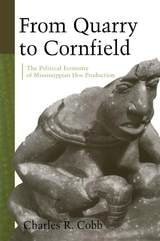
From Quarry to Cornfield
The Political Economy of Mississippian Hoe ProductionCharles Richard Cobb
University of Alabama Press, 2001
An innovative model for examining the technology of hoe production and its contribution to the agriculture of Mississippian communities.
Lithic specialist Charles Cobb examines the political economy in Mississippian communities through a case study of raw material procurement and hoe production and usage at the Mill Creek site on Dillow Ridge in southwest Illinois. Cobb outlines the day-to-day activities in a Mississippian chiefdom village that flourished from about A.D. 1250 to 1500. In so doing, he provides a fascinating window into the specialized tasks of a variety of "day laborers" whose contribution to the community rested on their production of stone hoes necessary in the task of feeding the village. Overlooked in most previous studies, the skills and creativity of the makers of the hoes used in village farming provide a basis for broader analysis of the technology of hoe use in Mississippian times.
Although Cobb's work focuses on Mill Creek, his findings at this site are representative of the agricultural practices of Mississippian communities throughout the eastern United States. The theoretical underpinnings of Cobb's study make a clear case for a reexamination of the accepted definition of chiefdom, the mobilization of surplus labor, and issues of power, history, and agency in Mississippian times. In a well-crafted piece of writing, Cobb distinguishes himself as one of the leaders in the study of lithic technology. From Quarry to Cornfield will find a well-deserved place in the ongoing discussions of power and production in the Mississippian political economy.
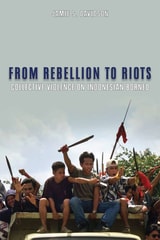
From Rebellion to Riots
Collective Violence on Indonesian BorneoJamie S. Davidson
University of Wisconsin Press, 2008
“A comprehensive case study . . . . Essential reading for students of the West Kalimantan violence.”—Dave McRae, Indonesia
From Revolution to War
State Relations in a World of ChangePatrick J. Conge
University of Michigan Press, 2000
From Socialism to Capitalism
Eight EssaysJanos Kornai
Central European University Press, 2008
Eight essays connected by various common strands. The most important one is the community of the main subject-matter: socialism, capitalism, democracy, change of system. These four expressions cover four phenomena of great and comprehensive importance. Each piece in the book deals with these and the connections between them.
One of the Leitmotifs is the “capitalism/socialism” pair of opposites. Capitalism has a history of several hundred years, while the socialist regime existed only for a few decades. But this pair of opposites was central to the history of the twentieth century. This antagonism put its stamp on political thinking, on the foreign policy and military preparedness of every country, and on some appallingly destructive armed conflicts. All these had great secondary influence on each country’s economic development and the standard of living and disposition of its inhabitants.
None of the studies is confined to one country—not to Hungary or to any other. Each tries to embrace the problems common to greater units. However, the greater unit comprehended is not the same in each study. One may deal with the capitalist or socialist system in general, another will all the post-socialist countries, and a third the Central East European region. But all extend the analysis beyond the borders of one country.
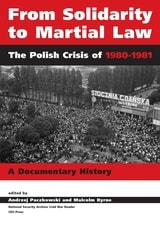
From Solidarity to Martial Law
The Polish Crisis of 1980–1981The National Security Archive Paczkowski
Central European University Press, 2007
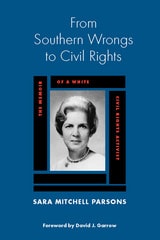
From Southern Wrongs to Civil Rights
The Memoir of a White Civil Rights ActivistSara Mitchell Parsons
University of Alabama Press, 2009
This first-hand account tells the story of turbulent civil rights era Atlanta through the eyes of a white upper-class woman who became an outspoken advocate for integration and racial equality
As a privileged white woman who grew up in segregated Atlanta, Sara Mitchell Parsons was an unlikely candidate to become a civil rights agitator. After all, her only contacts with blacks were with those who helped raise her and those who later helped raise her children. As a young woman, she followed the conventional path expected of her, becoming the dutiful wife of a conservative husband, going to the country club, and playing bridge. But unlike many of her peers, Parsons harbored an increasing uneasiness about racial segregation.In a memoir that includes candid diary excerpts, Parsons chronicles her moral awakening. With little support from her husband, she runs for the Atlanta Board of Education on a quietly integrationist platform and, once elected, becomes increasingly outspoken about inequitable school conditions and the slow pace of integration. Her activities bring her into contact with such civil rights leaders as Martin Luther King, Jr., and his wife, Coretta Scott King. For a time, she leads a dual existence, sometimes traveling the great psychic distance from an NAACP meeting on Auburn Avenue to an all-white party in upscale Buckhead. She eventually drops her ladies' clubs, and her deepening involvement in the civil rights movement costs Parsons many friends as well as her first marriage.
From Stalin to Kim Il Sung
The Formation of North Korea, 1945-1960Lankov, Andrei
Rutgers University Press, 2002
To understand how North Korea has survived as the worlds last Stalinist regime despite international isolationand at enormous human costs to its peopleone must look at how its political system was created. The countrys foundations were laid in the late 1940s and 1950s as a result of interaction between the Soviet Stalinist model, imposed from outside, and local traditions.
Andrei Lankov traces the formation of the North Korean state and the early years of Kim Il Sungs rule, when the future "Great Leader" and his entourage were consolidating their power base. Surveying the situation in North Korea after 1945, Lankov explores the internal composition of the ruling elite, the role of the Soviets, and the uneasy relations between various political groups. He also focuses on how in 1956 Kim Il Sung defeated the only known attempt to oust him and thereby established absolute personal rule beyond either Soviet or Chinese control.
The book is based on previously secret Soviet documents from Russian archives, as well as interviews with Russian and Korean participants.