Results by title
22279 books match the query 'Social Science' and 955 start with f
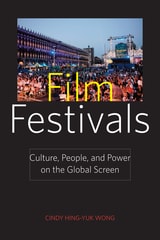
Film Festivals
Culture, People, and Power on the Global ScreenWong, Cindy H
Rutgers University Press, 2011
Movies, stars, auteurs, critics, and the sheer excitement of cinema come together in film festivals as quintessential constellations of art, business, and glamour. Yet, how well do we actually understand the forces and meanings that these events embody?
Film Festivals offers the first comprehensive overview of the history, people, films, and multiple functions of the festival world. From Sundance to Hong Kong, from the glitter of Cannes to edgier festivals that challenge boundaries or foster LGBTQ cultural production, film festivals celebrate art, promote business, bring cinema to diverse audiences, and raise key issues about how we see our world. Cindy Hing-Yuk Wong situates festivals within changing global practices of film, including their important ties to both Hollywood and independent cinema. She explores how these events have become central in the construction of cinema knowledge as well as the behind-the-scene mechanics of finance, distribution, and evaluation. By linking general structures and connections to specific films and auteurs, Wong addresses the components and creation of film festivals that continue to reshape filmmaking as art and business.
Film Remakes and Franchises
Herbert, Daniel
Rutgers University Press, 2017
Film Remakes and Franchises examines how remakes and sequels have been central to the film industry from its very inception, yet also considers how the recent trends toward reboots and transmedia franchises depart from those historical precedents. Film scholar Daniel Herbert not only analyzes the film industry’s increasing reliance on recycled product, but also asks why audiences are currently so drawn to such movies. In addition, he explores how contemporary filmmakers have used reboots and franchise movies to inject timely social commentary and diversity into established media properties. A lively and accessible overview that covers everything from You’ve Got Mail to The Force Awakens, Film Remakes and Franchises raises important questions about the intersection of business and creativity in Hollywood today.

Film and Everyday Resistance
Marguerite La Caze
Northwestern University Press, 2024
A philosophical exploration of how modern global cinema represents everyday means of resisting authoritarianism and totalitarianism
Václav Havel’s concept of “living within the truth” in an authoritarian regime frames Marguerite La Caze’s readings of international cinema, highlighting forms of resistance in which seemingly pre- or nonpolitical aspects of life—such as professional labor, exile, and truth telling—can be recognized as political when seen against a backdrop of general acquiescence. La Caze’s case studies cross genres, historical eras, and national contexts: the apartheid regime in South Africa, in A Dry White Season; post-Suharto Indonesia, in The Look of Silence; 1980s East Germany, in Barbara; the Chilean military dictatorship, in No; contemporary Iran, in A Separation; and current-day Saudi Arabia, in Wadjda. This book explores the films’ use of image, sound, narrative, and character in dialogue with the work of Simone de Beauvoir, Aimé Cesaire, Hannah Arendt, Sara Ahmed, and W. E. B. Du Bois to reveal how cinema depicts ordinary people enacting their own philosophies of defiance.
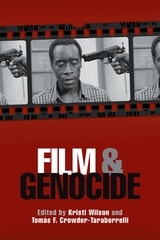
Film and Genocide
Kristi M. Wilson
University of Wisconsin Press, 2011
Film and Genocide brings together scholars of film and of genocide to discuss film representations, both fictional and documentary, of the Holocaust, the Armenian genocide, and genocides in Chile, Australia, Rwanda, and the United States. Since 1955, when Alain Resnais created his experimental documentary Night and Fog about the Nazis’ mass killings of Jews and other ostracized groups, filmmakers have struggled with using this medium to tell such difficult stories, to re-create the sociopolitical contexts of genocide, and to urge awareness and action among viewers. This volume looks at such issues as realism versus fiction, the challenge of depicting atrocities in a manner palatable to spectators and film distributors, the Holocaust film as a model for films about other genocides, and the role of new technologies in disseminating films about genocide.
Film and Genocide also includes interviews with three film directors, who discuss their experiences in working with deeply disturbing images and bringing hidden stories to life: Irek Dobrowolski, director of The Portraitist (2005) a documentary about Wilhelm Brasse, an Auschwitz-Birkenau prisoner ordered to take more than 40,000 photos at the camp; Nick Hughes, director of 100 Days (2005) a dramatic film about the Rwandan mass killings; and Greg Barker, director of Ghosts of Rwanda (2004), a television documentary for Frontline.

Film, Music, Memory
Berthold Hoeckner
University of Chicago Press, 2019
Hoeckner examines films that reflect directly on memory, whether by featuring an amnesic character, a traumatic event, or a surge of nostalgia. As the history of cinema unfolded, movies even began to recall their own history through quotations, remakes, and stories about how cinema contributed to the soundtrack of people’s lives. Ultimately, Film, Music, Memory demonstrates that music has transformed not only what we remember about the cinematic experience, but also how we relate to memory itself.
Films That Spill
Beyond the Cinema of TransgressionMarie Sophie Beckmann
Rutgers University Press, 2025
Final Acts
Death, Dying, and the Choices We MakeBauer-Maglin, Nan
Rutgers University Press, 2010
Contributors include patients, caretakers, physicians, journalists, lawyers, social workers, educators, hospital administrators, academics, psychologists, and a poet, and among them are ethicists, religious believers, and nonbelievers. Some write moving, personal accounts of "good" or 'bad" deaths; others examine the ethical, social, and political implications of slow dying. Essays consider death from natural causes, suicide, and aid-in-dying (assisted suicide).
Writing in a style free of technical jargon, the contributors discuss documents that should be prepared (health proxy, do-not-resuscitate order, living will, power of attorney); decision-making (over medical interventions, life support, hospice and palliative care, aid-in-dying, treatment location, speaking for those who can no longer express their will); and the roles played by religion, custom, family, friends, caretakers, money, the medical establishment, and the government.
For those who yearn for some measure of control over death, the essayists in Final Acts, from very different backgrounds and with different personal and professional experiences around death and dying, offer insight and hope.
Final Negotiations
A Story of Love, Loss, and Chronic IllnessCarolyn Ellis
Temple University Press, 2018
Taking an autoethnographic perspective, Ellis focuses on her feeling and thinking self in relationships, narrating particular lived experiences that offer a gateway into understanding interpersonal and cultural life. In her new epilogue, “From New Endings to New Beginnings,” Ellis describes her changed identity and how Final Negotiations informs her life and her understanding of how she and her current partner grow older together. She hopes her book provides companionship and comfort to readers who also will suffer loss in their lives.
Finance Capitalism Unveiled
Banks and the German Political EconomyRichard Deeg
University of Michigan Press, 1999

Financial Derivatives and the Globalization of Risk
Edward LiPuma and Benjamin Lee
Duke University Press, 2005
LiPuma and Lee explain how derivatives are essentially wagers—often on the fluctuations of national currencies—based on models that aggregate and price risk. They describe how these financial instruments are changing the face of capitalism, undermining the power of nations and perpetrating a new and less visible form of domination on postcolonial societies. As they ask: How does one know about, let alone demonstrate against, an unlisted, virtual, offshore corporation that operates in an unregulated electronic space using a secret proprietary trading strategy to buy and sell arcane financial instruments? LiPuma and Lee provide a necessary look at the obscure but consequential role of financial derivatives in the global economy.
Financialization Of Daily Life
Randy Martin
Temple University Press, 2002
Financing Low Income Communities
Julia Sass Rubin
Russell Sage Foundation, 2007
Finding Augusta
Habits of Mobility and Governance in the Digital EraHeidi Rae Cooley
Dartmouth College Press, 2014
Finding Cholita
Billie Jean Isbell
University of Illinois Press, 2008
Finding Faith
The Spiritual Quest of the Post-Boomer GenerationFlory, Richard
Rutgers University Press, 2008
Just as the formative experiences of Baby Boomers were colored by such things as the war in Vietnam, the 1960s, and a dramatic increase in their opportunities for individual expression, so Post-Boomers have grown up in less structured households with working (often divorced) parents. These childhood experiences leave them craving authentic spiritual experience, rather than entertainment, and also cause them to question institutions. Flory and Miller develop a typology that captures four current approaches to the Christian faith and argue that this generation represents a new religious orientation of "expressive communalism," in which they seek spiritual experience and fulfillment in community and through various expressive forms of spirituality, both private and public.
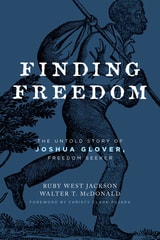
Finding Freedom
The Untold Story of Joshua Glover, Freedom SeekerRuby West Jackson
Wisconsin Historical Society Press, 2022
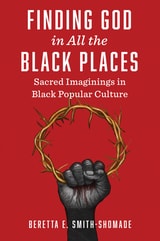
Finding God in All the Black Places
Sacred Imaginings in Black Popular CultureBeretta E. Smith-Shomade
Rutgers University Press, 2025
https://manifold.ecds.emory.edu/projects/finding-god-in-all-the-black-places
(https://dhjhkxawhe8q4.cloudfront.net/rup-wp-v2/wp-content/uploads/2025/01/28132142/9781978839809.pdf)
In Finding God in All the Black Places, Beretta E. Smith-Shomade contends that Black spirituality and Black church religiosity are the critical crux of Black popular culture. She argues that cultural, community, and social support live within the Black church and that spirit, art, and progress are deeply entwined and seal this connection. Including the work of artists such as Mary J. Blige, D’Angelo, Erykah Badu, Prince, Spike Lee, and Oprah Winfrey, the book examines contemporary Black television, film, music and digital culture to demonstrate the role, impact, and dominance of spirituality and religion in Black popular culture. Smith-Shomade believes that acknowledging and comprehending the foundations of Black spirituality and Black church religiosity within Black popular culture provide a way for viewers, listeners, and users not only to endure but also to revitalize.
Finding Jobs
Work and Welfare ReformDavid Card
Russell Sage Foundation, 2000
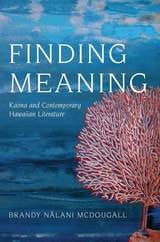
Finding Meaning
Kaona and Contemporary Hawaiian LiteratureBrandy Nalani McDougall
University of Arizona Press, 2016
In this first extensive study of contemporary Hawaiian literature, Brandy Nalani McDougall examines a vibrant selection of fiction, poetry, and drama by emerging and established Hawaiian authors, including Haunani-Kay Trask, John Dominis Holt, Imaikalani Kalahele, and Victoria Nalani Kneubuhl. At the center of the analysis is a hallmark of Hawaiian aesthetics—kaona, the intellectual practice of hiding and finding meaning that encompasses the allegorical, the symbolic, the allusive, and the figurative.
With a poet’s attention to detail, McDougall interprets examples of kaona, guiding readers through olelo no'eau (proverbs), mo‘olelo (literature and histories), and mooku'auhau (genealogies) alongside their contemporary literary descendants, unveiling complex layers of Hawaiian identity, culture, history, politics, and ecology.
Throughout, McDougall asserts that “kaona connectivity” not only carries bright possibilities for connecting the present to the past, but it may also ignite a decolonial future. Ultimately, Finding Meaning affirms the tremendous power of Indigenous stories and genealogies to give activism and decolonization movements lasting meaning.
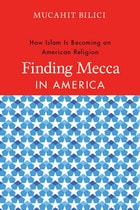
Finding Mecca in America
How Islam Is Becoming an American ReligionMucahit Bilici
University of Chicago Press, 2012

Finding Mr. Perfect
K-Drama, Pop Culture, Romance, and RaceMin Joo Lee
Rutgers University Press, 2026
Finding People in Early Greece
Carol G. Thomas
University of Missouri Press, 2005
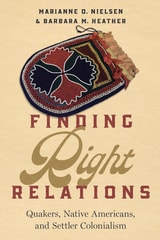
Finding Right Relations
Quakers, Native Americans, and Settler ColonialismMarianne O. Nielsen and Barbara M. Heather
University of Arizona Press, 2022
Centering on the relationship between Quaker colonists and the Lenape people, Finding Right Relations explores the contradictory position of the Quakers as both egalitarian, pacifist people, and as settler colonists. This book explores major challenges to Quaker beliefs and resulting relations with American Indians from the mid-seventeenth century to the late nineteenth century. It shows how the Quakers not only failed to prevent settler colonial violence against American Indians but also perpetuated it. It provides historical examples such as the French and Indian War, the massacre of the Conestoga Indians, and the American Indian boarding schools to explore the power of colonialism to corrupt even those colonists with a belief system rooted in social justice.
While this truth rubs against Quaker identity as pacifists and socially conscious, justice-minded people, the authors address how facing these truths provide ways forward for achieving restitution for the harms of the past. This book offers a path to truth telling that is essential to the healing process.
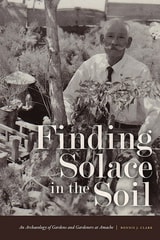
Finding Solace in the Soil
An Archaeology of Gardens and Gardeners at AmacheBonnie J. Clark
University Press of Colorado, 2022
Before incarceration, many at Amache had been farmers, gardeners, or nursery workers. Between 1942 and 1945, they applied their horticultural expertise to the difficult high plains landscape of southeastern Colorado. At Amache they worked to form microclimates, reduce blowing sand, grow better food, and achieve stability and preserve community at a time of dehumanizing dispossession. In this book archaeologist Bonnie J. Clark examines botanical data like seeds, garden-related artifacts, and other material evidence found at Amache, as well as oral histories from survivors and archival data including personal letters and government records, to recount how the prisoners of Amache transformed the harsh military setting of the camp into something resembling a town. She discusses the varieties of gardens found at the site, their place within Japanese and Japanese American horticultural traditions, and innovations brought about by the creative use of limited camp resources.
The gardens were regarded by the incarcerees as a gift to themselves and to each other. And they were also, it turns out, a gift to the future as repositories of generational knowledge where a philosophical stance toward nature was made manifest through innovation and horticultural skill. Framing the gardens and gardeners of Amache within the larger context of the incarceration of Japanese Americans and of recent scholarship on displacement and confinement, Finding Solace in the Soil will be of interest to gardeners, historical archaeologists, landscape archaeologists, cultural anthropologists, and scholars of Japanese American history and horticultural history.
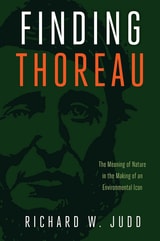
Finding Thoreau
The Meaning of Nature in the Making of an Environmental IconRichard W. Judd
University of Massachusetts Press, 2018
In his 1862 eulogy for Henry David Thoreau, Ralph Waldo Emerson reflected that his friend “dedicated his genius with such entire love to the fields, hills, and waters of his native town, that he made them known and interesting to all reading Americans, and to people over the sea.” Finding Thoreau traces the reception of Thoreau's work from the time of his death to his ascendancy as an environmental icon in the 1970s, revealing insights into American culture's conception of the environment.
Moving decade by decade through this period, Richard W. Judd unveils a cache of commentary from intellectuals, critics, and journalists to demonstrate the dynamism in the idea of nature, as Americans defined and redefined the organic world around them amidst shifting intellectual, creative, and political forces. This book tells the captivating story of one writer's rise from obscurity to fame through a cultural reappraisal of the work he left behind.
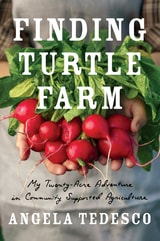
Finding Turtle Farm
My Twenty-Acre Adventure in Community-Supported AgricultureAngela Tedesco
University of Minnesota Press, 2022
The story of starting and running an organic farm—told by the woman who owned one of the first Community-Supported Agriculture operations in the Upper Midwest
On a twenty-acre farm in Iowa in 1995, Angela Tedesco planted the seeds (quite literally) of a quiet revolution. While American agriculture had strayed so far afield, her farm would raise food that served the earth and the community as well as the palate. In Finding Turtle Farm, Tedesco recounts this adventure in all its down-and-dirty work and wonder, from plan and plot to harvest, with nods along the way to the vagaries of weather, pests, and human nature.
Introducing Community-Supported Agriculture to Iowa, Tedesco’s Turtle Farm educated its customers along with providing seasonal boxes of produce—an undertaking that continues here, as Tedesco describes what it takes to establish and run an organic operation, bringing to bear all her experience growing up on a family farm, studying chemistry and horticulture, and shepherding a religious education program. From ordering seeds and tending greenhouses to surviving floods and a personal health crisis, Tedesco tells a story of transforming a piece of land and the life within it. She includes practical information about harvesting and preserving food, the discoveries of research conducted on the farm and bonds established between farmers, and even recipes to make delicious use of the produce in your CSA box.
Looking forward to a healthier, happier future when crops are more than mere commodities and food feeds the soul of a community, Finding Turtle Farm is an enlightening, hard-won, and ultimately hopeful account of what it means to meet the most basic of human needs.
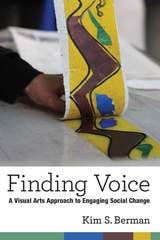
Finding Voice
A Visual Arts Approach to Engaging Social ChangeKim S. Berman
University of Michigan Press, 2017
Finding the Lost Year
What Happened When Little Rock Closed Its Public SchoolsSondra Gordy
University of Arkansas Press, 2009
Much has been written about the Little Rock School Crisis of 1957, but very little has been devoted to the following year—the Lost Year, 1958–59—when Little Rock schools were closed to all students, both black and white. Finding the Lost Year is the first book to look at the unresolved elements of the school desegregation crisis and how it turned into a community crisis, when policymakers thwarted desegregation and challenged the creation of a racially integrated community and when competing groups staked out agendas that set Arkansas’s capital on a path that has played out for the past fifty years.
In Little Rock in 1958, 3,665 students were locked out of a free public education. Teachers’ lives were disrupted, but students’ lives were even more confused. Some were able to attend schools outside the city, some left the state, some joined the military, some took correspondence courses, but fully 50 percent of the black students went without any schooling. Drawing on personal interviews with over sixty former teachers and students, black and white, Gordy details the long-term consequences for students affected by events and circumstances over which they had little control.
“Fifty years ago segregationists trying to keep black students out of Little Rock Central High inadvertently broke up one of the country’s greatest football dynasties. . . . Wait a minute. . . . Who said you can’t have a high school football team just because you don’t have a high school? Canceling football, Faubus decreed, would be ‘a cruel and unnecessary blow to the children.’ O.K. then, everyone agreed. Play ball!”
—“Blinded by History,” Sports Illustrated
Finding the Movement
Sexuality, Contested Space, and Feminist ActivismFinn Enke
Duke University Press, 2007
By considering the development of feminism through an analysis of public space, Enke expands and revises the historiography of second-wave feminism. She suggests that the movement was so widespread because it was built by people who did not identify themselves as feminists as well as by those who did. Her focus on claims to public space helps to explain why sexuality, lesbianism, and gender expression were so central to feminist activism. Her spatial analysis also sheds light on hierarchies within the movement. As women turned commercial, civic, and institutional spaces into sites of activism, they produced, as well as resisted, exclusionary dynamics.

Finding the People who Flaked the Stone at English Camp
Close, Angela E
University of Utah Press, 2006
Finite Media
Environmental Implications of Digital TechnologiesSean Cubitt
Duke University Press, 2017
Finland-Swedes in Michigan
Mika Roinila
Michigan State University Press, 2012
Who are the Finland-Swedes? Defined as citizens of Finland with a Swedish mother tongue, many know these people as “Swede- Finns” or simply “Swedes.” This book, the first ever to focus on this ethnolinguistic minority living in Michigan, examines the origins of the Finland-Swedes and traces their immigration patterns, beginning with the arrival of hundreds in the United States in the 1860s. A growing population until the 1920s, when immigration restrictions were put in place, the Finland-Swedes brought with them unique economic, social, cultural, religious, and political institutions, explored here in groundbreaking detail. Drawing on archival, church, and congregational records, interviews, and correspondence, this book paints a vivid portrait of Finland-Swedish life in photographs and text, and also includes detailed maps that show the movement of this group over time. The latest title in the Discovering the Peoples of Michigan series even includes a sampling of traditional Finland-Swedish recipes.
Finns in the United States
A History of Settlement, Dissent, and IntegrationAuvo Kostiainen
Michigan State University Press, 2014
Fire Dreams
Making Black Feminist Liberation in the SouthLaura McTighe, with Women With A Vision
Duke University Press, 2024
Fire Management in the American West
Forest Politics and the Rise of MegafiresMark Hudson
University Press of Colorado, 2011
Drawing on correspondence both between and within the Forest Service and the major timber industry associations, newspaper articles, articles from industry outlets, and policy documents from the late 1800s through the present, Hudson shows how the US forest industry, under the constraint of profitability, pushed the USFS away from private industry regulation and toward fire exclusion, eventually changing national forest policy into little more than fire policy.
More recently, the USFS has attempted to move beyond the policy of complete fire suppression. Interviews with public land managers in the Pacific Northwest shed light on the sources of the agency's struggles as it attempts to change the way we understand and relate to fire in the West.
Fire Management in the American West will be of great interest to environmentalists, sociologists, fire managers, scientists, and academics and students in environmental history and forestry.
Fire Otherwise
Ethnobiology of Burning for a Changing WorldEdited by Cynthia T. Fowler and James R. Welch
University of Utah Press, 2018
Fire and Desire
Mixed-Race Movies in the Silent EraJane M. Gaines
University of Chicago Press, 2001
Fire and Desire offers a penetrating look at the black independent film movement during the silent period. Gaines traces the profound influence that D. W. Griffith's racist epic The Birth of a Nation exerted on black filmmakers such as Oscar Micheaux, the director of the newly recovered Within Our Gates. Beginning with What Happened in the Tunnel, a movie that played with race and sex taboos by featuring the first interracial kiss in film, Gaines also explores the cinematic constitution of self and other through surprise encounters: James Baldwin sees himself in the face of Bette Davis, family resemblance is read in Richard S. Robert's portrait of an interracial family, and black film pioneer George P. Johnson looks back on Micheaux.
Given the impossibility of purity and the co-implication of white and black, Fire and Desire ultimately questions the category of "race movies" itself.
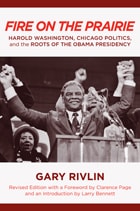
Fire on the Prairie
Harold Washington, Chicago Politics, and the Roots of the Obama PresidencyGary Rivlin
Temple University Press, 2012
Harold Washington’s historic and improbable victory over the vaunted Chicago political machine shook up American politics. The election of the enigmatic yet engaging Washington led to his serving five tumultuous years as the city’s first black mayor. He fashioned an uneasy but potent multiracial coalition that today still stands as a model for political change.
In this revised edition of Fire on the Prairie, acclaimed reporter Gary Rivlin chronicles Washington’s legacy—a tale rich in character and intrigue. He reveals the cronyism of Daley’s government and Washington’s rivalry with Jesse Jackson. Rivlin also shows how Washington’s success inspired a young community organizer named Barack Obama to turn to the electoral arena as a vehicle for change. While the story of a single city, , this political biography is anything but parochial.
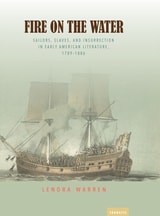
Fire on the Water
Sailors, Slaves, and Insurrection in Early American Literature, 1789-1886Warren, Lenora
Bucknell University Press, 2019
Published by Bucknell University Press. Distributed worldwide by Rutgers University Press.
Fires on the Border
The Passionate Politics of Labor Organizing on the Mexican FronteraRosemary Hennessy
University of Minnesota Press, 2013
The history of the maquiladoras has been punctuated by workers’ organized resistance to abysmal working and living conditions. Over years of involvement in such movements, Rosemary Hennessy was struck by an elusive but significant feature of these struggles: the extent to which organizing is driven by attachments of affection and antagonism, belief, betrayal, and identification.
What precisely is the “affective” dimension of organizing for justice? Are affects and emotions the same? And how can their value be calculated? Fires on the Border takes up these questions of labor and community organizing—its “affect-culture”—on Mexico’s northern border from the early 1970s to the present day. Through these campaigns, Hennessy illuminates the attachments and identifications that motivate people to act on behalf of one another and that bind them to a common cause. The book’s unsettling, even jarring, narratives bring together empirical and ethnographic accounts—of specific campaigns, the untold stories of gay and lesbian organizers, love and utopian longing—in concert with materialist theories of affect and the critical good sense of Mexican organizers.
Teasing out the integration of affect-culture in economic relations and cultural processes, Hennessy provides evidence that sexuality and gender as strong affect attractors are incorporated in the harvesting of surplus labor. At the same time, workers’ testimonies confirm that the capacities for bonding and affective attachment, far from being entirely at the service of capital, are at the very heart of social movements devoted to sustaining life.
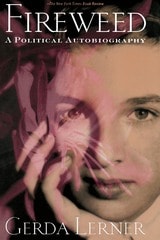
Fireweed
A Political AutobiographyGerda Lerner
Temple University Press, 2003
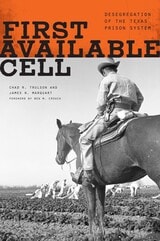
First Available Cell
Desegregation of the Texas Prison SystemBy Chad R. Trulson and James W. Marquart
University of Texas Press, 2009
Decades after the U.S. Supreme Court and certain governmental actions struck down racial segregation in the larger society, American prison administrators still boldly adhered to discriminatory practices. Not until 1975 did legislation prohibit racial segregation and discrimination in Texas prisons. However, vestiges of this practice endured behind prison walls. Charting the transformation from segregation to desegregation in Texas prisons—which resulted in Texas prisons becoming one of the most desegregated places in America—First Available Cell chronicles the pivotal steps in the process, including prison director George J. Beto's 1965 decision to allow inmates of different races to co-exist in the same prison setting, defying Southern norms.
The authors also clarify the significant impetus for change that emerged in 1972, when a Texas inmate filed a lawsuit alleging racial segregation and discrimination in the Texas Department of Corrections. Perhaps surprisingly, a multiracial group of prisoners sided with the TDC, fearing that desegregated housing would unleash racial violence. Members of the security staff also feared and predicted severe racial violence. Nearly two decades after the 1972 lawsuit, one vestige of segregation remained in place: the double cell. Revealing the aftermath of racial desegregation within that 9 x 5 foot space, First Available Cell tells the story of one of the greatest social experiments with racial desegregation in American history.
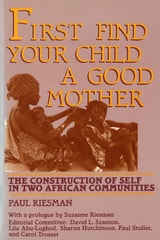
First Find Your Child a Good Mother
The Construction of Self in Two African CommunitiesRiesman, Paul
Rutgers University Press, 1992
Through a systematic comparison of the life circumstances, child-rearing practices, and personalities of the FulBe and their former slaves, the RiimaayBe, this book develops an alternative theory of the way personality is formed in the Fulani society of West Africa. Riesman discusses the different characters, economies, and life plans of adult men and women of both groups, focusing on their ideas about the value of relatives. He further presents detailed observations of child-rearing practices, and concludes that the FulBe and RiimaayBe do not differ in these practices. Contrasting Fulani and Western notions of parenting, he suggests that child-rearing practices are themselves irrelevant to the formation of adult personality, but that a people's ideas about the meaning of life, social relations, and the development of character are very important. Finally, Riesman outlines a sociocultural theory of personality and its formation, and uses this theory to make sense of the differences between FulBe and RiimaayBe.

First Founders
American Puritans and Puritanism in an Atlantic WorldFrancis J. Bremer
University of New Hampshire Press, 2012
This is a truly fascinating look at the Puritans with keenly drawn portraits and the insight that only a lifetime of scholarship can achieve. It should become the standard introduction to the field. Written in the mold of Joseph Ellis’s Founding Brothers and Gordon Wood’s Revolutionary Characters, the book will appeal to general readers, students, and scholars alike.
First Ladies and the Press
The Unfinished Partnership of the Media AgeMaurine H. Beasley
Northwestern University Press, 2005

First Light
Kanaka 'Oiwi Resistance to Settler Science at Mauna a WakeaIokepa Casumbal-Salazar
University of Minnesota Press, 2025
Understanding the Hawai‘i Island summit of Mauna a Wākea as a place of ancestral connection, cultural resurgence, and political resistance for Native Hawaiians
First Light is a site-specific study of Native Hawaiian resistance to the construction of the Thirty Meter Telescope (TMT) on the summit of Mauna a Wākea, the sacred mountain on the island of Hawai‘i. Drawing on personal interviews, oral histories, archival research, participant observation, and popular, legal, scientific, and Indigenous discourses, Iokepa Casumbal-Salazar explores both the campaign to build the observatory and the movement against it. He asks how astronomers have become stewards of Mauna a Wākea while Kānaka ‘Ōiwi (Aboriginal Hawaiians), in protest, are recast as obstructing progress and clinging to ancient superstitions.
Contextualizing contemporary resistance to telescope expansion within the past 132 years of struggle against U.S. empire in Hawai‘i, Casumbal-Salazar argues the Kanaka-led efforts to protect their ancestral lands did not begin with the TMT and only become legible when understood in the broader history of resistance to U.S. settler hegemony as told through the voices and actions of kiaʻi ʻāina (land defenders). First Light explores how settler science, capital, and law have been mobilized in ways that rationalize industrial development projects like the TMT and promote a vision of “coexistence” that enables the dehumanization of Kānaka ‘Ōiwi and their alienation from ʻāina.
Challenging the assumptions and aggressions of neoliberal environmental policy, settler multiculturalism, and U.S. military occupation, First Light reinforces calls for a moratorium on new telescope development and a literacy in Kanaka ‘Ōiwi movements for life, land, and ea (independence, sovereignty).
Retail e-book files for this title are screen-reader friendly with images accompanied by short alt text and/or extended descriptions.
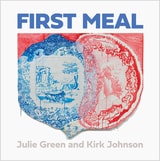
First Meal
Julie Green
Oregon State University Press, 2023
Wrongful convictions haunt the American criminal justice system, as revealed in recent years by DNA and other investigative tools. And every wrongfully convicted person who walks free, exonerated after years or decades, carries part of that story. From those facts, artist Julie Green posed a seemingly simple question: When you have been denied all choice, what do you choose to eat on the first day of freedom?
In the small details of life at such pivotal moments, a vast new landscape of the world can emerge, and that is the core concept of First Meal. Partnering with the Center on Wrongful Convictions at Northwestern University’s Pritzker School of Law, Green and her coauthor, award-winning journalist Kirk Johnson, have created a unique melding of art and narration in the portraits and stories of twenty-five people on the day of their release.
Food and punishment have long been intertwined. The tradition of offering a condemned person a final meal before execution, for example, has been explored by psychologists, filmmakers, and others—including Green herself in an earlier series of criminal-justice themed paintings, The Last Supper. First Meal takes on that issue from the other side: food as a symbol of autonomy in a life restored. Set against the backdrop of a flawed American legal system, First Meal describes beauty, pain, hope and redemption, all anchored around the idea—explored by writers from Marcel Proust to Michael Pollan—that food touches us deeply in memory and emotion.
In Green’s art, state birds and surreal lobsters soar over places where wrongful convictions unfolded, mistaken witnesses shout their errors, glow-in-the-dark skylines evoke homecoming. Johnson’s essays take us inside those moments—from the courtrooms where things went wrong to the pathways of faith and resilience that kept people sane through their years of injustice. First Meal seeks to inform and spread awareness, but also celebrate the humanity that unites us, and the idea that gratitude and euphoria—even as it mixes with grief and the awareness of loss—can emerge in places we least expect.
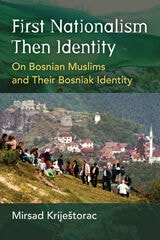
First Nationalism Then Identity
On Bosnian Muslims and Their Bosniak IdentityMirsad Kriještorac
University of Michigan Press, 2022
First Nationalism Then Identity focuses on the case of Bosnian Muslims, a rare historic instance of a new nation emerging. Although for Bosnian Muslims the process of national emergence and the assertion of a new salient identity have been going on for over two decades, Mirsad Kriještorac is the first to explain the significance of the whole process and how the adoption of their new Bosniak identity occurred. He provides a historical overview of Yugoslav and Bosnian Slavic Muslims’ transformation into a full-fledged distinct and independent national group as well as addresses the important question in the field of nationalism studies about the relationship between and workings of nationalism and identity. While this book is noteworthy for ordinary readers interested in the case of Bosnian Muslims, it is an important contribution to the scholarly debate on the role of nationalism in the political life of a group and adds an interdisciplinary perspective to comparative politics scholarship by drawing from anthropology, history, geography, and sociology.
First Nations Gaming in Canada
Yale D. Belanger
University of Manitoba Press, 2011
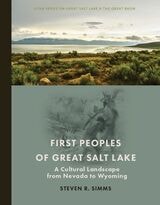
First Peoples of Great Salt Lake
A Cultural Landscape from Nevada to WyomingSteven R. Simms
University of Utah Press, 2023
Great Salt Lake is a celebrated, world-recognized natural landmark. It, and the broader region bound to it, is also a thoroughly cultural landscape; generations of peoples made their lives there. In an eminently readable narrative, Steven Simms, one of the foremost archaeologists of the region, traces the scope of human history dating from the Pleistocene, when First Peoples interacted with the lapping waters of Lake Bonneville, to nearly the present day. Through vivid descriptions of how people lived, migrated, and mingled, with persistence and resilience, Simms honors the long human presence on the landscape.
First Peoples of Great Salt Lake takes a different approach to understanding the ancients than is typical of archaeology. De-emphasizing categories and labels, it traces changing environments, climates, and peoples through the notion of place. It challenges the "Pristine Myth," the cultural bias that Indigenous peoples were timeless, changeless, primitive, and the landscapes they lived in sparsely populated and perpetually pristine. First Peoples and their descendants modified the forests and understory vegetation, shaped wildlife populations, and adapted to long-term climate change. Native Americans of Great Salt Lake were very much part of their world, and the story here is one of long continuity through dramatic cultural change.