Results by title
1566 books match the query 'Christianity' and 48 start with h

Ha!
A Christian Philosophy of HumorPeter Kreeft
St. Augustine's Press, 2022
I started thinking: Western civilization is neither healthy, happy, nor holy. Humor is all three. Humor is not only holy, it's Heavenly. And if you are surprised to be told that humor is Heavenly, you need to read this book because you reveal your misunderstanding of both humor and Heaven. If you ask, 'Is there laughter in Heaven?' my answer is: 'You can't be serious!'"
Habitat For Humanity
Building Private Homes, Building Public ReligionJerome Baggett
Temple University Press, 2001
The author tells the story of Habitat's development and the special fervor it evokes among volunteers and those for whom it builds houses. Through interviews with staff, he also provides a look into the organizational dynamics of Habitat, a non-profit whose religious mission for social change is inevitably affected by the instrumental, bottom-line orientation of the state and the market.
Baggett argues that Habitat is an examine of a particular social form of religion, the paradenominational organization, that is uniquely adapted to the climate of the modern world. It is one of the vital forms that voluntarism takes today.
Habits and Holiness
Ethics, Theology, and BiopsychologyEzra, OP Sullivan
Catholic University of America Press, 2021
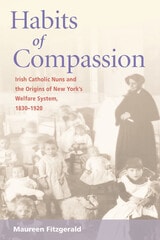
Habits of Compassion
Irish Catholic Nuns and the Origins of New York's Welfare System, 1830-1920Maureen Fitzgerald
University of Illinois Press, 2006
The Irish-Catholic Sisters accomplished tremendously successful work in founding charitable organizations in New York City from the Irish famine through the early twentieth century. Maureen Fitzgerald argues that their championing of the rights of the poor—especially poor women—resulted in an explosion of state-supported services and programs.
Parting from Protestant belief in meager and means-tested aid, Irish Catholic nuns argued for an approach based on compassion for the poor. Fitzgerald positions the nuns' activism as resistance to Protestantism's cultural hegemony. As she shows, Roman Catholic nuns offered strong and unequivocal moral leadership in condemning those who punished the poor for their poverty and unmarried women for sexual transgression. Fitzgerald also delves into the nuns' own communities, from the class-based hierarchies within the convents to the political power they wielded within the city. That power, amplified by an alliance with the local Irish Catholic political machine, allowed the women to expand public charities in the city on an unprecedented scale.
Habitual Offenders
A True Tale of Nuns, Prostitutes, and Murderers in Seventeenth-Century ItalyCraig A. Monson
University of Chicago Press, 2016
Drawing on over four thousand pages of primary sources, the intrepid Craig A. Monson reconstructs this fascinating history of crime and punishment in seventeenth-century Italy. Along the way, he explores Italy’s back streets and back stairs, giving us access to voices we rarely encounter in conventional histories: prostitutes and maidservants, mercenaries and bandits, along with other “dubious” figures negotiating the boundaries of polite society. Painstakingly researched and breathlessly told, Habitual Offenders will delight historians and true-crime fans alike.
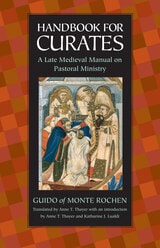
Handbook for Curates
A Late Medieval Manual on Pastoral MinistryCatholic University of America Press, 2011
Handbook of Catholic Social Teaching
A Guide for Christians in the World TodayMartin Schlag
Catholic University of America Press, 2017
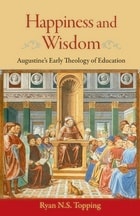
Happiness and Wisdom
Augustine's Early Theology of EducationRyan N. S. Topping
Catholic University of America Press, 2012
Harbingers of Hope
William E. Hull
University of Alabama Press, 2007
The journey to which this book beckons has five stages. At the outset we meet a restless God of surprises who is never satisfied with things as they are. This encounter discloses the necessity of making transforming changes in our lives if we are to keep pace with the divine dynamic. Our reorientation toward an attitude of expectancy is not an end itself but provides the impetus for a lifelong process of growth toward maturity. Because this quest takes place in a world resistant to changes that challenge the status quo, there will be opposition, setbacks, even defeats that God endures with us as the cost of building a new tomorrow. In that struggle our task is not to flee or to fight but to bear a winsome witness in the confidence that God’s purposes will finally prevail over the human predicament.
Just as the crowing cock is a harbinger of dawn and the robin on the lawn is a harbinger of spring, these 27 messages become harbingers of a steadfast hope, as they help us to anticipate the new future that God is seeking to create for his weary world and as they invite us to actualize that future in the here and now.
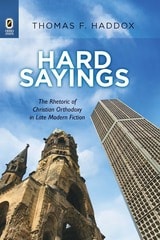
Hard Sayings
The Rhetoric of Christian Orthodoxy in Late Modern FictionThomas F. Haddox
The Ohio State University Press, 2013
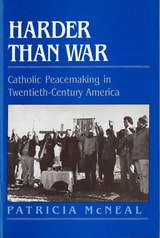
Harder than War
Catholic Peacemaking in Twentieth-Century AmericaMcNeal, Patricia F.
Rutgers University Press, 1992
During the Viet Nam War, Catholic Workers burned their draft cards and turned from nonviolence to resistance by practicing civil disobedience. Daniel and Philip Berrigan escalated that resistance when they destroyed draft files, and symbolically poured blood over and hammered nuclear weapons to awaken the national conscience to the life-ending effects of nuclear warfare.
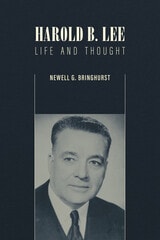
Harold B. Lee
Life and ThoughtNewell G. Bringhurst
Signature Books, 2021
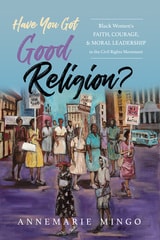
Have You Got Good Religion?
Black Women's Faith, Courage, and Moral Leadership in the Civil Rights MovementAnneMarie Mingo
University of Illinois Press, 2024
A depiction of moral imagination that resonates today, Have You Got Good Religion? reveals how Black Churchwomen’s understanding of God became action and transformed a nation.
Healing Souls
Psychotherapy in the Latter-day Saint CommunityEric G. Swedin
University of Illinois Press, 2003
The psychological professions pervasive in twentieth-century American society were viewed as dangerous by some religious communities. Healing Souls describes the LDS community's mixed feelings about science and modernity: while valuing knowledge, Mormons feared a challenge to faith. Nonetheless, psychology courses were introduced at Brigham Young University, and LDS psychotherapists began to introduce new ideas and practices to the community.
Swedin portrays the rise of professional organizations such as the Association of Mormon Counselors and Psychotherapists, as well as the importance of Allen E. Bergin, first director of the BYU Institute for Studies in Values and Human Behavior. Bergin and others paved the way for the LDS adoption of professional psychotherapy as an essential element of their "cure of souls."
Important chapters take up LDS psychopathology, feminist dissent, LDS philosophies of sexuality, and the LDS rejection of mainstream psychotherapy's selfist psychology on the basis of theological doctrines of family salvation, eternalism, and the natural man.
Healing Souls contributes to a more complete historical picture of the mental health professions in North America and a better understanding of how religious traditions and psychology have influenced each other.
Healing to All Their Flesh
Jewish and Christian Perspectives on Spirituality, Theology, and HealthJeff Levin
Templeton Press, 2012
The editors of this collection, Drs. Jeff Levin and Keith G. Meador, have gathered together the writings of leading Jewish and Christian theological, pastoral, ethical, and religious scholars to answer these important questions. Contributors include Richard Address, William Cutter, Elliot N. Dorff, Dayle A. Friedman, Stanley Hauerwas, Warren Kinghorn, M. Therese Lysaught, Stephen G. Post, John Swinton, and Simkha Y. Weintraub, with a foreword by Samuel E. Karff.
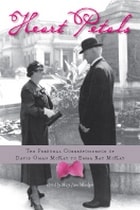
Heart Petals
The Personal Correspondence of David Oman McKay to Emma Ray McKayMary Jane Woodger
University of Utah Press, 2005
Love feeds and grows on love, and while it grows, it increases the capacity of the soul for loving. So our love was perfect when I kissed you at the altar; it is perfect to-day; it will be perfect when the century strikes ‘half-past;’ it will be perfect eternally. - from the book
David O. McKay served as president of the Church of Jesus Christ of Latter-day Saints from 1951 until his death in 1970. A devout and devoted leader, he was no less devoted to his beloved wife, Emma Ray McKay. In this collection of letters from the David Oman McKay Papers at the J. Willard Marriott Library of the University of Utah, McKay’s courtship of Emma Ray Riggs and the early days of the couple’s marriage are revealed in his own words.
The McKays were married in the Salt Lake Latter-day Saints Temple on January 2, 1901, the first “sealing” of the twentieth century. They became known as the church’s happiest couple. One of the things that cultivated that happiness were the poems and expressions of endearment McKay presented his wife, offerings he referred to as 'heart petals'. The letters collected here are replete with touching examples of those gifts of love.
Throughout this correspondence, McKay reveals his innermost feelings, joys, heartaches, and determinations, imparting a wealth of insights into his personal, caring nature and documenting his growth from a young, inexperienced missionary to a mature leader within the LDS Church. But most striking of all in these letters is the blossoming of a true, devoted love that lasted over seventy years.
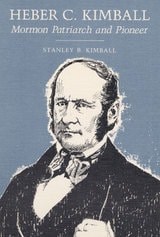
Heber C. Kimball
MORMON PATRIARCH AND PIONEERStanley B. Kimball
University of Illinois Press, 1981
"Superb! This is a superior biography, based almost entirely on manuscript sources, few of which have been used or even examined by other scholars. It is new, it is fresh, it is fast-moving, it has the ring of truth, there is little editorializing, and it is written with economy, clarity, and balance." -- Leonard J. Arrington, author of Brigham Young: American Moses

Hedstroms and the Bethel Ship Saga
Methodist Influence on Swedish Religious LifeHenry C. Whyman. Foreword by Kenneth E. Rowe
Southern Illinois University Press, 1992
The first book-length biographical treatment of Olof Gustaf Hedstrom and his brother Jonas documents their work in spreading Methodism among Swedish immigrants to America. Henry C. Whyman discusses the Bethel Ship Saga, a ministry unique in American immigrant history, and examines the larger picture of the role of religion in nineteenth-century European immigration to the United States.
The Bethel Ship, a floating chapel in New York Harbor, was the vehicle and headquarters for an effective ministry to immigrants arriving in America. Olof Hedstrom, a Methodist minister serving in the Catskill Mountain area, was called to New York to organize and lead this endeavor.
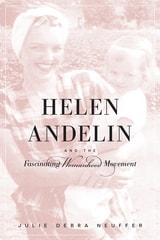
Helen Andelin and the Fascinating Womanhood Movement
Julie Debra Neuffer
University of Utah Press, 2014
Countering second-wave feminists in the 1960s, Andelin preached family values and urged women not to have careers, but to become good wives, mothers, and homemakers instead. A woman’s true happiness, taught Andelin, could only be realized if she admired, cared for, and obeyed her husband. As Andelin’s notoriety grew, so did the backlash from her critics. Undeterred, she became a national celebrity, who was interviewed extensively and appeared in sold-out speaking engagements.
Andelin’s message calling for the return to traditional roles appealed to many in a time of uncertainty and radical social change. This study provides an evenhanded and important look at a crucial, but often overlooked cross section of American women as they navigated their way through the turbulent decades following the post-war calm of the 1950s.
Winner of the Mormon History Association's Best Biography Award.
Hell and the Mercy of God
Adrian J. Reimers
Catholic University of America Press, 2017
Catholic philosopher Adrian Reimers takes on these challenges in Hell and the Mercy of God, drawing on relevant sources from Aristotle to Aquinas, from Dante to Tolkien, from Wagner to John Paul II, along with Billie Holliday, The Godfather, and the music of George Gershwin. He presents a philosophical theology, grounded in Scripture, of the nature of goodness and evil, exploring various types of pain, the seven capital sins, the resurrection of the body, the meaning of mammon, the core meaning of idolatry, the psychology of Satan and those who choose his path, and the moral responsibility of the human person.
These reflections illuminate the intelligibility of orthodox Catholic teachings on the goodness of God and the reality of hell. Hell is not an arbitrary imposition set up for human rule-breakers but a continuation of a freely chosen way of life manifest even in this world. Examples from history, art, and contemporary culture lead the author to conclude that anyone who does not believe in the reality of hell is not paying enough attention. And yet, mercy and hope remain triumphant, because, just as Christ offers entrance into paradise to the “good thief” Dismas on the cross, God continues to offer repentance and salvation to all who live.
Helping Groups Heal
Leading Groups in the Process of TransformationJan Paul Hook
Templeton Press, 2017
Helping Groups Heal presents “The Healing Cycle,” a grace-based model that facilitates healing and growth in groups. It has been tested with a variety of settings, and can be adapted to nearly any small group, from sex addiction therapy to marriage therapy to Bible studies.
The basic components of “The Healing Cycle” are grace, safety, vulnerability, truth, ownership, and confession. Helping Groups Heal guides the reader through these elements, offering case studies and practical advice from the voices of researchers and practitioners. Each chapter shows how “The Healing Cycle” moves its members to share their truth, own it, and make positive change in their lives. Each step of the process allows participants to move past surface issues and find depth in their understanding of their pain.
Whether you have been leading small groups for years or are about to lead your first session, Helping Groups Heal is an accessible, easy-to-follow guide through “The Healing Cycle” that will give each group member what’s needed to grow, relate, and heal.
Heresy in the Heartland
The Controversy at The University of Dayton, 1960-67Mary Jude Brown
Catholic University of America Press, 2022
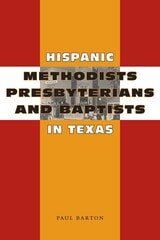
Hispanic Methodists, Presbyterians, and Baptists in Texas
By Paul Barton
University of Texas Press, 2006
The question of how one can be both Hispanic and Protestant has perplexed Mexican Americans in Texas ever since Anglo-American Protestants began converting their Mexican Catholic neighbors early in the nineteenth century. Mexican-American Protestants have faced the double challenge of being a religious minority within the larger Mexican-American community and a cultural minority within their Protestant denominations. As they have negotiated and sought to reconcile these two worlds over nearly two centuries, los Protestantes have melded Anglo-American Protestantism with Mexican-American culture to create a truly indigenous, authentic, and empowering faith tradition in the Mexican-American community.
This book presents the first comparative history of Hispanic Methodists, Presbyterians, and Baptists in Texas. Covering a broad sweep from the 1830s to the 1990s, Paul Barton examines how Mexican-American Protestant identities have formed and evolved as los Protestantes interacted with their two very different communities in the barrio and in the Protestant church. He looks at historical trends and events that affected Mexican-American Protestant identity at different periods and discusses why and how shifts in los Protestantes' sense of identity occurred. His research highlights the fact that while Protestantism has traditionally served to assimilate Mexican Americans into the dominant U.S. society, it has also been transformed into a vehicle for expressing and transmitting Hispanic culture and heritage by its Mexican-American adherents.
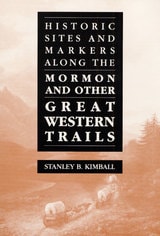
Historic Sites and Markers along the Mormon and Other Great Western Trails
Stanley B. Kimball
University of Illinois Press, 1988
is an indispensable guide for travelers who wish to retrace the various frontier
routes taken by the Mormons and other pioneers in their treks westward. Traversing
fifteen states from New York to California, Stanley Kimball presents some of
America's most famous trails--the Mormon, the Oregon-California, the Santa Fe,
the Overland, and many others--and describes important points of interest, including
forts, trail centers, and museums.
"An important contribution
to the history of the West and perhaps the most comprehensive mile-by-mile guide
to trail markers and historical sites ever prepared."
-- Brigham D. Madsen, author of The Shoshoni Frontier and the Bear
River Massacre
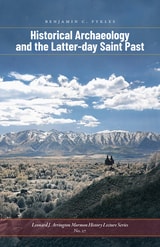
Historical Archaeology and the Latter-day Saint Past
Benjamin C. Pykles
Utah State University Press, 2025
The Arrington Lecture series, established in honor of one of the twentieth-century American West’s most distinguished historians, Leonard Arrington, has become a leading forum for prominent scholars to address topics related to Latter-day Saint history. Utah State University hosts the Leonard J. Arrington Mormon History Lecture Series through the Merrill-Cazier Library’s Special Collections and Archives.
History of Religious Ideas, Volume 2
From Gautama Buddha to the Triumph of ChristianityMircea Eliade
University of Chicago Press, 1982
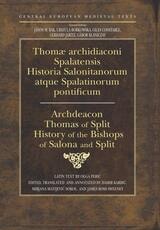
History of the Bishops of Salona and Split
Thomas Spalatensis
Central European University Press, 2006
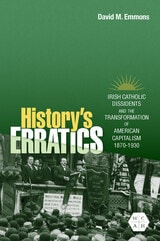
History's Erratics
Irish Catholic Dissidents and the Transformation of American Capitalism, 1870-1930David M. Emmons
University of Illinois Press, 2024
As Ice Age glaciers left behind erratics, so the external forces of history tumbled the Irish into America. Existing both out of time and out of space, a diverse range of these Roman-Catholic immigrants saw their new country in a much different way than did the Protestants who settled and claimed it. These erratics chose backward looking tradition and independence over assimilation and embraced a quintessentially Irish form of subversiveness that arose from their culture, faith, and working-class outlook. David M. Emmons draws on decades of research and thought to plumb the mismatch of values between Protestant Americans hostile to Roman Catholicism and the Catholic Irish strangers among them. Joining ethnicity and faith to social class, Emmons explores the unique form of dissidence that arose when Catholic Irish workers and their sympathizers rejected the beliefs and symbols of American capitalism.
A vibrant and original tour de force, History’s Erratics explores the ancestral roots of Irish nonconformity and defiance in America.
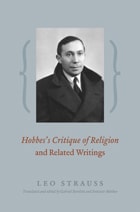
Hobbes's Critique of Religion and Related Writings
Leo Strauss
University of Chicago Press, 2011
Leo Strauss’s The Political Philosophy of Hobbes deservedly ranks among his most widely acclaimed works. In it Strauss argues that the basis for Hobbes’s natural and political science is his interest in “self-knowledge of man as he really is.” The writings collected in this book, each written prior to that classic volume, complement that account. Thus at long last, this book allows us to have a complete picture of Strauss’s interpretation of Hobbes, the thinker pivotal to the fundamental theme of his life’s work: the conflicting demands of philosophy and revelation, or as he termed it, “the theologico-political problem.”
It is no exaggeration to say that Strauss’s work on Hobbes’s critique of religion is essential to his analysis of Hobbes’s political philosophy, and vice versa. This volume will spark new interest in Hobbes’s explication of the Bible and in his understanding of religion by revealing previously neglected dimensions and motives of Hobbes’s “theology.” At the same time, scholars interested in the intellectual development of Leo Strauss will find in these writings the missing link, as it were, between his two early books,Spinoza’s Critique of Religion and The Political Philosophy of Hobbes.
In addition, this volume makes available for the first time in English a letter, a book outline, an extended review, an engagement with legal positivism, and an account of Strauss’s work on Hobbes by Heinrich Meier, all of which shed light on Strauss’s concerns and his approach to Hobbes in particular, as well as to modern political thought and life.
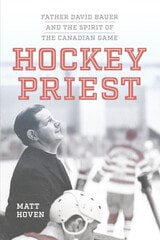
Hockey Priest
Father David Bauer and the Spirit of the Canadian GameMatt Hoven
Catholic University of America Press, 2024
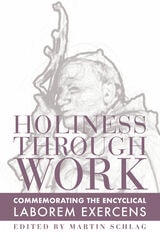
Holiness through Work
Commemorating the Encyclical Laborem ExercensMartin Schlag
St. Augustine's Press, 2022
This book is a timely contribution to the field of scholarship that focuses on Catholic Social Thought and is ideally suited for graduate studies and the reader interested in more serious questions in Christian theology.
Giulio Maspero, "The Bible and the Fathers of the Church on Work"
Patricia Ranft, "Work Theology in the High Middle Ages"
Angela Franks, "John Paul II's Metaphysics of Labor"
Deborah Savage, "Confronting a Technocratic Future: Women's Work and the Church's Social Vision"
Martin Schlag, "Contemplation at Work: A Theological Conversation Between John Paul II and Josemaría Escrivá"
Richard Turnbull, "Laborem Exercens: A Protestant Appreciation"
Michael Naughton, "Good Work: Insights from the Subjective Dimension of Work"
Christopher Michaelson, "Subjects and Objects in Meaningful Work"
Javier Ignacio Pinto Garay and Alvaro Pezoa Bissieres, "The Worker and the Transistor: The Dignity of Work and Business Ethics in Global Corporate Practices"
Gonzalo Flores-Castro Lingán, "The Real Work: Making the Encyclical Laborem Exercens Operational"
Geoffrey C. Friesen, "Laborem Exercens and the Subjective Dimension of Work in Economics and Finance"
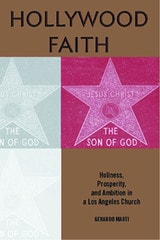
Hollywood Faith
Holiness, Prosperity, and Ambition in a Los Angeles ChurchMarti, Gerardo
Rutgers University Press, 2008
In Hollywood Faith, Gerardo Marti shows how a multiracial evangelical congregation of 2,000 people accommodates itself to the entertainment industry and draws in many striving to succeed in this harsh and irreverent business. Oasis strategically sanctifies ambition and negotiates social change by promoting a new religious identity as "champion of life"-an identity that provides people who face difficult career choices and failed opportunities a sense of empowerment and endurance.
The first book to provide an in-depth look at religion among the "creative class," Hollywood Faith will fascinate those interested in the modern evangelical movement and anyone who wants to understand how religion adapts to social change.
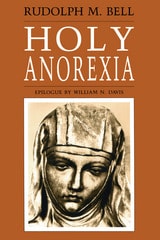
Holy Anorexia
Rudolph M. Bell
University of Chicago Press, 1985
"Everyone interested in anorexia nervosa . . . should skim this book or study it. It will make you realize how dependent upon culture the definition of disease is. I will never look at an anorexic patient in the same way again."—Howard Spiro, M.D., Gastroenterology
"[This] book is a first-class social history and is well-documented both in its historical and scientific portions."—Vern L. Bullough, American Historical Review
"A significant contribution to revisionist history, which re-examines events in light of feminist thought. . . . Bell is particularly skillful in describing behavior within its time and culture, which would be bizarre by today's norms, without reducing it to the pathological."—Mary Lassance Parthun, Toronto Globe and Mail
"Bell is both enlightened and convincing. His book is impressively researched, easy to read, and utterly fascinating."—Sheila MacLeod, New Statesman
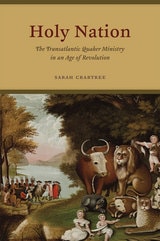
Holy Nation
The Transatlantic Quaker Ministry in an Age of RevolutionSarah Crabtree
University of Chicago Press, 2015
Holy Nation convincingly shows that ideals and actions were inseparable for the Society of Friends, yielding an account of Quakerism that is simultaneously a history of the faith and its adherents and a history of its confrontations with the wider world. Ultimately, Crabtree argues, the conflicts experienced between obligations of church and state that Quakers faced can illuminate similar contemporary struggles.
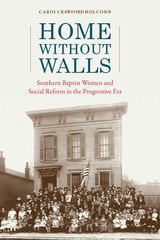
Home without Walls
Southern Baptist Women and Social Reform in the Progressive EraCarol Crawford Holcomb
University of Alabama Press, 2020
The Woman’s Missionary Union (WMU), founded in 1888, carved out a uniquely feminine space within the Southern Baptist Convention during the tumultuous years of the Progressive Era when American theologians were formulating the social gospel. These women represented the Southern Baptist elite and as such had the time to read, write, and discuss ideas with other Southern progressives. They rubbed shoulders with more progressive Methodist and Presbyterian women in clubs and ecumenical missionary meetings. Baptist women studied the missionary publications of these other denominations and adopted ideas for a Southern Baptist audience.
Home without Walls: Southern Baptist Women and Social Reform in the Progressive Era shows how the social attitudes of women were shaped at the time. By studying primary documents—including personal letters, official exchanges and memoranda, magazine publications, newsletters, and editorials—Carol Crawford Holcomb uncovers ample evidence that WMU leaders, aware of the social gospel and sympathetic to social reform, appropriated the tools of social work and social service to carry out their missionary work.
Southern Baptist women united to build a financial empire that would sustain the Southern Baptists through the Great Depression and beyond. Their social attitudes represented a kaleidoscope of contrasting opinions. By no stretch of the imagination could WMU leaders be characterized as liberal social gospel advocates. However, it would also be wrong to depict them as uniformly hostile to progressivism or ignorant of contemporary theological ideas. In the end, they were practical feminists in their determination to provide a platform for women’s views and a space for women to do meaningful work.
Homilies on Psalms, 36-38
Michael Origen
Catholic University of America Press, 2023
Homilies on the Psalms
Codex Monacensis Graecus 314Joseph W. Origen
Catholic University of America Press, 2021

Hommes, encore un effort…
Anthropogenèse, christianisme, sexuationThierry de Duve
Diaphanes, 2023

Hope Draped in Black
Race, Melancholy, and the Agony of ProgressJoseph R. Winters
Duke University Press, 2016
Hope's Promise
Religion and Acculturation in the Southern BackcountryS. Scott Rohrer
University of Alabama Press, 2013
In Hope's Promise, Scott Rohrer dissects the internal workings of the ecumenical Moravian movement at Wachovia—how this disparate group of pilgrims hailing from many countries (Germany, Ireland, Scandinavia, England) and different denominations (Lutheran, Reformed, Methodist, Anglican) yielded their ethnicities as they became, above all, a people of faith. By examining the "open" farm congregations of Hope, Friedberg, and Friedland, Rohrer offers a sensitive portrayal of their evangelical life and the momentous cultural changes it wrought: the organization of tight-knit congregations bound by "heart religion;" the theology of the new birth; the shape of religious discipline; the sacrament of communion; and the role of music. Drawing on courthouse documents and church records, Rohrer carefully demonstrates how various groups began to take on traits of the others. He also illustrates how evangelical values propelled interaction with the outside world—at the meetinghouse and the frontier store, for example—and fostered even more collective and accelerated change.
As the Moravians became ever more "American" and "southern," the polyglot of ethnicities that was Wachovia would, under the unifying banner of evangelicalism, meld into one of the most sophisticated religious communities in early America.
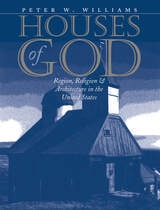
Houses of God
Region, Religion, and Architecture in the United StatesPeter W. Williams
University of Illinois Press, 1997
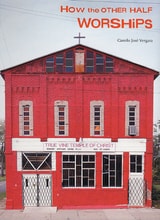
How the Other Half Worships
Camilo José Vergara
Rutgers University Press, 2005
Domestically and abroad, America is known as the richest country in the world. It is hard not to be impressed by the standard of living in the nation’s most affluent suburban and urban neighborhoods. Yet, scattered amid stretches that abound in wealth, the country is home to neighborhoods rife with violence, poverty, segregation, and decay. Within these blighted urban landscapes, however, there is at least one notable example of plenty: churches. They do not always appear as traditional houses of worship, but often emerge from the retrofitted shells of former storefronts, garages, factories, warehouses, domestic dwellings, and public institutions. Regardless of the façade, churches populate America’s poorest neighborhoods.
Bringing together more than 300 richly textured color photographs and a series of candid interviews with pastors, church officials, and congregation members, this extraordinary book explores the conditions, beliefs, and practices that shape the churches and the lives of the nation’s urban poor. Over a period of thirty years, sociologist and photographer Camilo José Vergara repeatedly visited these places of worship and the eclectic mix of buildings that house them. In twenty-one cities located in ten states across the country, photographic sequences coupled with insightful narrative show how ordinary structures assume, modify, and shed a religious character, how traditional churches—if they fail to adapt to new congregations—are demolished, and how new churches are designed and built from the ground up.
Vergara pays special attention to the objects, texts, and imagery that religious leaders make use of to create environments that inspire devotion. Pastors of developing congregations often arrive as crusaders, with missions that cannot be served by traditional religious iconography, and with budgets that force them to use inexpensive materials. In some cases, pastors bring objects of worship from their home towns in places such as Mexico, Puerto Rico, Africa, and the West Indies. Despite the idiosyncratic features and folk decoration that distinguish ghetto churches from one another, however, Vergara shows that, for the most part, they are driven by similar religious agendas. They tend to preach about resilience, avoid involving themselves in national and international events, and consider their truths to be absolute and eternal.
A powerful, poignant, and visually arresting portrait, How the Other Half Worships stands as a stark witness to how churches are being rebuilt in the dilapidated streets of America’s cities and how religion is being reinvented by the nation’s poor.

Hugh Nibley
A Mormon ScholarJoseph M. Spencer
University of Illinois Press, 2027
Joseph M. Spencer examines Nibley’s theology, social criticism, and thought. Nibley’s elite academic training led to a long career at Brigham Young University. There he used ancient texts and comparative history to support his religious claims and confront modern culture and values. Spencer reveals Nibley as a serious thinker whose theology of grace buttressed the whole of his work. As he shows, readers misinterpret Nibley by seeing his scholarship as separate from his theology and social criticism, rather than as a unified project that emerged from the many streams of his wide-ranging thought.
Clear-eyed and accessible, Hugh Nibley provides a much-needed guide to the work of an important yet misunderstood theologian and intellectual.
Human Nature in Its Wholeness
A Roman Catholic PerspectiveDaniel N. Robinson
Catholic University of America Press, 2006
Human Nature
Reflections on the Integration of Psychology and ChristianityMalcolm Jeeves
Templeton Press, 2006
College and university professors have been demanding that this book, out of print for several years, be made available again, as it is unique in its field. This new edition, which includes a new preface and guidance to current literature, offers a balanced study of the implications of scientific developments in psychology and neuroscience for traditional Christian beliefs.
Malcolm Jeeves, former editor-in-chief of Neuropsychologia, a leading international scientific journal in behavioral and cognitive neuroscience, explores the intersection of science and faith in defining what it means to be human. He reports on recent scientific research on consciousness and the link between mind, brain, and behavior. He examines issues such as determinism by indicating the possible relevance of chaos theory to enduring concerns about freedom and responsibility. He looks at similarities and differences between human nature and animal nature. He reexamines traditional dualist views of soul and body in the light of contemporary research on mind and brain and argues for a wholistic model. This leads to addressing questions such as: does spiritual awareness depend on the intactness of our brains or does spirituality stand apart from our biological substrate?
Jeeves' insightful analysis of the ways recent findings in psychology relate to certain Christian beliefs about people expands the global science religion dialogue.
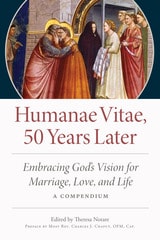
Humanae Vitae, 50 Years Later
Embracing God's Vision for Marriage, Love, and Life; A CompendiumPreface by Most. Rev. Charles J. Chaput, OFM, Cap.
Catholic University of America Press, 2019
Hunted
Predation and Pentecostalism in GuatemalaKevin Lewis O'Neill
University of Chicago Press, 2019
Hunted is based on more than ten years of fieldwork among these centers and the drug users that populate them. Over time, as Kevin Lewis O’Neill engaged both those in treatment and those who surveilled them, he grew increasingly concerned that he, too, had become a hunter, albeit one snatching up information. This thoughtful, intense book will reframe the arc of redemption we so often associate with drug rehabilitation, painting instead a seemingly endless cycle of hunt, capture, and release.
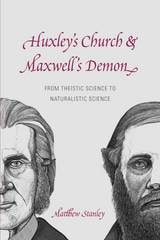
Huxley's Church and Maxwell's Demon
From Theistic Science to Naturalistic ScienceMatthew Stanley
University of Chicago Press, 2014
Matthew Stanley explores the overlap and shift between theistic and naturalistic science through a parallel study of two major scientific figures: James Clerk Maxwell, a devout Christian physicist, and Thomas Henry Huxley, the iconoclast biologist who coined the word agnostic. Both were deeply engaged in the methodological, institutional, and political issues that were crucial to the theistic-naturalistic transformation. What Stanley’s analysis of these figures reveals is that the scientific naturalists executed a number of strategies over a generation to gain control of the institutions of scientific education and to reimagine the history of their discipline. Rather than a sudden revolution, the similarity between theistic and naturalistic science allowed for a relatively smooth transition in practice from the old guard to the new.