Results by title
4917 books match the query 'Philosophy' and 205 start with h

HEAR
Danilo Mandic, Caterina Nirta, Andrea Pavoni and Andreas Philippopoulos-Mihalopoulos
University of Westminster Press, 2023
Hearing is an intricate but delicate modality of sensory perception, continuously enfolded in the surroundings in which it takes place. While passive in its disposition, it is integral to the movement and fluctuations of one’s environment. Always attuned to the present and immersed in the murmur of its background, hearing remains a situated perception but fundamentally overarching and extended into the open. It is an immanent modality of being in and with the world. It is also the ultimate juridical act, a sense-making activity that adjudicates and informs the spatio-temporal acoustics of law and justice.
This collection gathers multidisciplinary contributions on the relationship between law and hearing, the human vocalisations and non-human echolocations, the spatial and temporal conditions in which hearing takes place, as well as the forms of order and control that listening entails. Contributors explore, challenge and expand the structural and sensorial qualities of law, and recognise how hearing directs us to perceiving and understanding the intrinsic acoustic sphere of simultaneous relations, which challenge and break the normative distinctions that law informs and maintains. In exploring the ambiguous, indefinable and unembodied nature of hearing, as well as its objects – sound and silence – this volume approaches it as both an ontological and epistemological device to think with and about law.
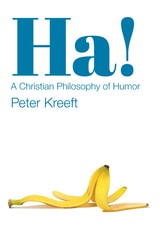
Ha!
A Christian Philosophy of HumorPeter Kreeft
St. Augustine's Press, 2022
I started thinking: Western civilization is neither healthy, happy, nor holy. Humor is all three. Humor is not only holy, it's Heavenly. And if you are surprised to be told that humor is Heavenly, you need to read this book because you reveal your misunderstanding of both humor and Heaven. If you ask, 'Is there laughter in Heaven?' my answer is: 'You can't be serious!'"
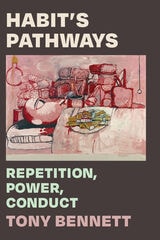
Habit's Pathways
Repetition, Power, ConductTony Bennett
Duke University Press, 2023
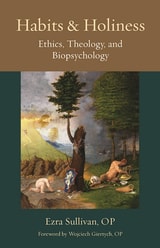
Habits and Holiness
Ethics, Theology, and BiopsychologyEzra, OP Sullivan
Catholic University of America Press, 2021
Habits of Hope
A Pragmatic TheoryPatrick Shade
Vanderbilt University Press, 2001
Hamann and the Tradition
Lisa Marie Anderson
Northwestern University Press, 2012
Recent years have witnessed a resurgence of scholarly interest in the work of Johann Georg Hamann (1730–1788), across disciplines. New translations of work by and about Hamann are appearing, as are a number of books and articles on Hamann’s aesthetics, theories of language and sexuality, and unique place in Enlightenment and counter-Enlightenment thought.
Edited by Lisa Marie Anderson, Hamann and the Tradition gathers established and emerging scholars to examine the full range of Hamann’s impact—be it on German Romanticism or on the very practice of theology. Of particular interest to those not familiar with Hamann will be a chapter devoted to examining—or in some cases, placing—Hamann in dialogue with other important thinkers, such as Socrates, David Hume, Friedrich Nietzsche, Martin Buber, Franz Rosenzweig, and Ludwig Wittgenstein.
Hamletics
Shakespeare, Kafka, BeckettMassimo Cacciari
Seagull Books, 2023
During the dramatic course of the twentieth century, amid the clash of the titans which marked that era, humanity could still think in terms of partisan struggles in which large masses took sides against one another. The new millennium, by contrast, appears to have opened under the guise of generalized insecurity, which pertains not only to the historical and social situation, or to one’s personal psychological predicament, but to our very being. The Earth’s current faltering and the twilight of every convention that might govern it—where roles, images, and languages become confused by a lack of direction and distance—were already powerfully prophesied in Shakespeare’s Hamlet, and later in the works of Kafka and Beckett. In Hamletics, Massimo Cacciari, one of Italy’s foremost philosophers and leftist political figures, establishes a dialogue between these fateful authors, exploring the relationship between European nihilism and the aporias of action in the present.
Hannah Arendt and the Meaning of Politics
Craig Calhoun
University of Minnesota Press, 1997
Eminent contributors consider what Hannah Arendt means in today’s public debates.
Is politics really nothing more than power relations, competing interests and claims for recognition, conflicting assertions of “simple” truths? No thinker has argued more passionately against this narrow view than Hannah Arendt, and no one has more to say to those who bring questions of meaning, identity, value, and transcendence to our impoverished public life. This volume brings leading figures in philosophy, political theory, intellectual history, and literary theory into a dialogue about Arendt’s work and its significance for today’s fractious identity politics, public ethics, and civic life.
For each essay—on the fate of politics in a postmodern, post-Marxist era; on the connection of nonfoundationalist ethics and epistemology to democracy; on the conditions conducive to a vital public sphere; on the recalcitrant problems of violence and evil—the volume includes extended responses, and a concluding essay by Martin Jay responding to all the others. Ranging from feminism to aesthetics to the discourse of democracy, the essays explore how an encounter with Arendt reconfigures, disrupts, and revitalizes what passes for public debate in our day. Together they forcefully demonstrate the power of Arendt’s work as a splendid provocation and a living resource.Contributors: Richard Bernstein, New School; Anthony Cascardi, U of California, Berkeley; Susan Bickford, U of North Carolina; Kim Curtis, Duke U; Lisa Disch, U of Minnesota; Nancy Fraser, New School; Martin Jay; U of California, Berkeley, Steven Leonard, U of North Carolina; Kirstie McClure, Johns Hopkins U; Dana Villa, Amherst College; and Eli Zaretsky, U of Missouri.
Hannah Arendt's Little Theater
Marion Muller-Colard
Diaphanes, 2016
In Hannah Arendt’s Little Theater, the philosopher Hannah Arendt is about to finish her last book, but she is sure something is missing. As she puzzles over her words, she is visited by a friend from the past—none other than her nine-year-old self! Reluctantly, she accepts young Hannah’s helping hand, joining the small blue-cardiganed girl on an adventure through the streets of New York City to a tiny theater where they watch a frightening play about a town terrorized by an evil wolf and his pack of puppets. But, even in the blackest moments, when evil seems sure to prevail, it is always possible to turn things around. Could the same be said of the “theater” of the real world, in which real people come together to create change?
Plato & Co.’s clear approach and charming illustrations make this series the perfect addition to any little library.

Hannah Arendt
A Critical IntroductionFinn Bowring
Pluto Press, 2011
Hannah Arendt is one of the most famous political theorists of the twentieth century, yet in the social sciences her work has rarely been given the attention it deserves. This careful and comprehensive study introduces Arendt to a wider audience.
Finn Bowring shows how Arendt's writings have engaged with and influenced prominent figures in the sociological canon, and how her ideas may shed light on some of the most pressing social and political problems of today. He explores her critique of Marx, her relationship to Weber, the influence of her work on Habermas and the parallels and discrepancies between her and Foucault. This is a clearly written and scholarly text which surveys the leading debates over Arendt’s work, including discussions of totalitarianism, the public sphere and the nature of political responsibility.
This book will bring new perspectives to students and lecturers in sociology and politics.
Hans Jonas
The Integrity of ThinkingDavid J. Levy
University of Missouri Press, 2002
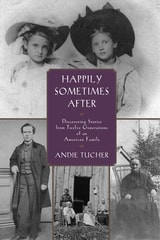
Happily Sometimes After
Discovering Stories from Twelve Generations of an American FamilyAndie Tucher
University of Massachusetts Press, 2014
A 2015 CHOICE Outstanding Academic Title
For more than four hundred years, members of the author's family have been telling stories about their American lives. They have told of impassioned elopements and heart-breaking kidnaps, of hairbreadth escapes and shocking murders, of bigamists, changelings, patriots, Indians, fires, floods, and how the great-grandmother of Chief Justice John Marshall married the pirate Blackbeard by mistake.
In this beautifully written work, Andie Tucher considers family stories as another way to look at history, neither from the top down nor the bottom up but from the inside out. She explores not just what happened—everywhere from Jamestown to Boonesborough, from the bloody field at Chickamauga to the metropolis of the Gilded Age—but also what the storytellers thought or wished or hoped or feared happened. She offers insights into what they valued, what they lost, how they judged their own lives and found meaning in them. The narrative touches on sorrow, recompense, love, pain, and the persistent tension between hope and disappointment in a nation that by making the pursuit of happiness thinkable also made unhappiness regrettable.
Based on extensive research in archives, local history societies, and family-history sources as well as conversations and correspondence, Happily Sometimes After offers an intimate and unusual perspective on how ordinary people used stories to imagine the world they wished for, and what those stories reveal about their relationships with the world they actually had.
Happiness and Contemplation
Josef Pieper
St. Augustine's Press, 1998
“The ultimate of human happiness is to be found in contemplation.” In offering this proposition of Thomas Aquinas to our thought, Josef Pieper uses traditional wisdom in order to throw light on present-day reality and present-day psychological problems. What, in fact, does one pursue in pursuing happiness? What, in the consensus of the wisdom of the early Greeks, of Plato and Aristotle, of the New Testament, of Augustine and Aquinas, is that condition of perfect bliss toward which all life and effort tend by nature? In this profound and illuminating inquiry, Pieper considers the nature of contemplation, and the meaning and goal of life.
Happiness and Utility
Essays Presented to Frederick RosenEdited by Georgios Varouxakis and Mark Philp
University College London, 2019
The chapters are written in celebration of the career of Professor Fredrick Rosen. They follow his work by concentrating on Bentham and the two Mills, and by the subtleties and sophistication of their understanding of one of the most alluring but elusive ideas of modern times. The volume will be of interest not only to admirers of Rosen but to academics and postgraduate students in disciplines such as philosophy, political theory, the history of political thought, legal theory and legal history.
Happiness and Wisdom
Augustine's Early Theology of EducationRyan N. S. Topping
Catholic University of America Press, 2012
Hardship and Happiness
Lucius Annaeus Seneca
University of Chicago Press, 2014
Hardship and Happiness collects a range of essays intended to instruct, from consolations—works that offer comfort to someone who has suffered a personal loss—to pieces on how to achieve happiness or tranquility in the face of a difficult world. Expertly translated, the essays will be read and used by undergraduate philosophy students and experienced scholars alike.
Hare Krishna
(Studies in Contemporary Religion)Federico Squarcini
Signature Books, 2004
When Bhaktivedanta arrived in America, it was a bold step because historically a guru who ventured outside of India was stripped of his Brahman status. However, the effort bore fruit—not the least of which was the type of intercultural understanding promoted by the current authors through their study of ISKCON’s place within the religion and culture of India.
Having Once Paused
Poems of Zen Master Ikkyu (1394-1481)Ikkyu Sojun
University of Michigan Press, 2015
Havings
Steps Towards a New Economic Philosophy of Property and BeyondCarsten Herrmann-Pillath
Campus Verlag, 2025
Rethinking the foundations of ownership, Havings confronts conventional notions of property by introducing a radical new framework. Moving beyond the ideological constraints of capitalism and socialism, Carsten Herrmann-Pillath investigates how “having” can reshape economic and legal thought. Through an analysis of appropriation and assignment alongside possession and ownership, the book redefines the structures that govern our relationships with material and immaterial assets.
Through a blend of economic theory, sociology, and philosophy, Havings presents two compelling cases that demonstrate the real-world implications of this shift in perspective. The final chapter offers a daring vision for a post-capitalist economic system grounded in the multidimensionality of having. A thought-provoking read for those interested in economics, law, and social sciences, this work opens up new pathways for reimagining economic systems and property rights in an era of increasing inequality and global transformation.

Hayek on Mill
The Mill-Taylor Friendship and Related WritingsF. A. Hayek
University of Chicago Press, 2015
This latest addition to the University of Chicago Press’s Collected Works of F. A. Hayek series showcases the fascinating intersections between two of the most prominent thinkers from two successive centuries. Hayek situates Mill within the complex social and intellectual milieu of nineteenth-century Europe—as well as within twentieth-century debates on socialism and planning—and uncovers the influence of Taylor-Mill on Mill’s political economy. The volume features the Mill-Taylor correspondence and brings together for the first time Hayek’s related writings, which were widely credited with beginning a new era of Mill scholarship.
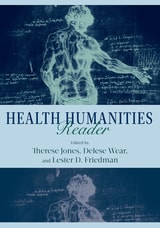
Health Humanities Reader
Jones, Therese
Rutgers University Press, 2014
In Health Humanities Reader, editors Therese Jones, Delese Wear, and Lester D. Friedman have assembled fifty-four leading scholars, educators, artists, and clinicians to survey the rich body of work that has already emerged from the field—and to imagine fresh approaches to the health humanities in these original essays. The collection’s contributors reflect the extraordinary diversity of the field, including scholars from the disciplines of disability studies, history, literature, nursing, religion, narrative medicine, philosophy, bioethics, medicine, and the social sciences.
With warmth and humor, critical acumen and ethical insight, Health Humanities Reader truly humanizes the field of medicine. Its accessible language and broad scope offers something for everyone from the experienced medical professional to a reader interested in health and illness.
Hearing Things
Voice and Method in the Writing of Stanley CavellTimothy Gould
University of Chicago Press, 1998
Gould argues that a tension between voice and method unites Cavell's broad and often perplexing range of interests. From Wittgenstein to Thoreau, from Shakespeare to the movies, and from opera to Freud, Gould reveals the connection between the voice within Cavell's writing and the voices Cavell appeals to through the methods of ordinary language philosophy. Within Cavell's extraordinary productivity lies a new sense of philosophical method based on elements of the act of reading. Hearing Things is both an important study of Cavell's work and a major contribution to the construction of American philosophy.
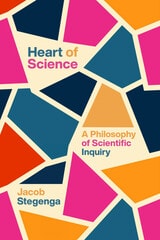
Heart of Science
A Philosophy of Scientific InquiryJacob Stegenga
University of Chicago Press, 2026
In Heart of Science, philosopher Jacob Stegenga breaks with the most dominant epistemologies of science to argue that in judging scientific activity, we should focus on its justification, not the achievement of truth or knowledge. Yet, Stegenga argues, the aim of science goes far beyond justification and is, instead, a special kind of truth—common knowledge, a broadly shared and mutually justified scientific finding.
Drawing on both historical examples and recent events like the COVID-19 pandemic, Stegenga outlines his approach before delving into its implications for scientific evaluation, testimony, values, progress, and credit, as well as the nature of science during times of crisis. Truth, he shows, may not be easily identified in the short term. However, an evaluation of scientific justification, grounded in shared standards, is possible. This framework helps us appraise—and appreciate—historical theories that ultimately weren’t accurate and offers fresh insights about appropriate science communication and public trust in scientific research. Justification and scientific rigor are not just means to an end, Stegenga writes, but the very heart of good science.
Ambitious, authoritative, and accessible, Heart of Science offers a new vision for the philosophy of science.
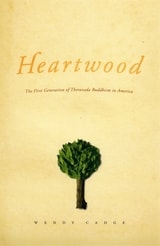
Heartwood
The First Generation of Theravada Buddhism in AmericaWendy Cadge
University of Chicago Press, 2004
Wendy Cadge first provides a historical overview of Theravada Buddhism and considers its specific origins here in the United States. She then brings her findings to bear on issues of personal identity, immigration, cultural assimilation, and the nature of religion in everyday life. Her work is the first systematic comparison of the ways in which immigrant and convert Buddhists understand, practice, and adapt the Buddhist tradition in America. The men and women whom Cadge meets and observes speak directly to us in this work, both in their personal testimonials and as they meditate, pray, and practice Buddhism.
Creative and insightful, Heartwood will be of enormous value to sociologists of religion and anyone wishing to understand the rise of Buddhism in the Western world.
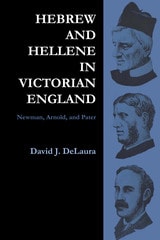
Hebrew and Hellene in Victorian England
Newman, Arnold, and PaterBy David DeLaura
University of Texas Press, 1969
Hebrew and Hellene explores the intellectual and personal relations among John Henry Newman, Matthew Arnold, and Walter Pater, three figures important in the development of nineteenth-century English thought and culture. Fundamentally concerned with the humanistic vision of Arnold and Pater, especially as they adapted the traditional religious culture to the needs of their generation, David DeLaura also recognizes Newman's central role. To a far greater degree than has been realized, Newman assumed a commanding position in the thought of the two younger men.
DeLaura seeks to define the mechanics of the process by which the conservative religious humanism of Newman could be exploited in the fluid, relativistic, and "aesthetic" humanism of Pater. The careers of Arnold and Pater are viewed as a continuing effort to reconcile the opposing forces of one of the central modern myths, the great cultural struggle between religious and secular values—Arnold's Hebraism and Hellenism.
DeLaura traces this important movement in nineteenth-century culture by studying the development of key phrases and ideas in the writings of the three men: the secularization of Newman's ideal of "inwardness" in Arnold's "criticism" and "culture" and in Pater's "impassioned contemplation"; the shared emphasis on an elite culture; the growing tendency to identify culture with the functions of traditional religion.
Newman, as the supreme apologist of both religious orthodoxy and the older Oxonian tradition, offered a rich arsenal to the defenders of a literary culture increasingly threatened by the utilitarian spirit (!nd by a rising scientific naturalism. Moreover, with the appearance of his Apologia in 1864, the "mystery" and the "miracle" of Newman's personality intrigued a new literary generation.
In Hebrew and Hellene DeLaura looks beyond the debates of the Late Victorians, the immediate inheritors of this legacy, to the continuing twentieth-century discussion of the nature of literature, its place in the humanizing process, and its role in a science-dominated civilization. He finds the problems faced by Pater, Arnold, and Newman—and some of their solutions—surprisingly relevant to unfinished contemporary debate.
Hegel Myths and Legends
Jon Stewart
Northwestern University Press, 1996
Hegel and Deleuze
Together Again for the First TimeKaren Houle
Northwestern University Press, 2013
Hegel and Deleuze cannily examines the various resonances and dissonances between these two major philosophers. The collection represents the best in contemporary international scholarship on G. W. F. Hegel and Gilles Deleuze, and the contributing authors inhabit the as-yet uncharted space between the two thinkers, collectively addressing most of the major tensions and resonances between their ideas and laying a solid ground for future scholarship.
The essays are organized thematically into two groups: those that maintain a firm but nuanced disjunction or opposition between Hegel and Deleuze, and those that chart possible connections, syntheses, or both. As is clear from this range of texts, the challenges involved in grasping, appraising, appropriating, and developing the systems of Deleuze and Hegel are varied and immense. While neither Hegel nor Deleuze gets the last word, the contributors ably demonstrate that partisans of either can no longer ignore the voice of the other.
Hegel and Spinoza
Substance and NegativityGregor Moder, with a foreword by Mladen Dolar
Northwestern University Press, 2017
Hegel and Spinoza traces the historical roots of these alternatives and shows how contemporary discussions between Heideggerians and Althusserians, Lacanians and Deleuzians are a variation of the disagreement between Hegel and Spinoza. Throughout, Moder persuasively demonstrates that the best way to read Hegel and Spinoza is not in opposition or contrast but together: as Hegel and Spinoza.
Hegel and the Arts
Stephen Houlgate
Northwestern University Press, 2007
Addressing a range of important topics, the essays examine the conceptual bases of Hegel's organization of his aesthetics, his treatment of various specific arts (architecture, sculpture, painting, music, and tragedy), and several of the most famous issues in the literature--including the "end of art" thesis, the relation between art and religion, and the vexed relationship between Hegel and the romantics. Together they shed light on the profound reflections on art contained in Hegel's philosophy and also suggest ways in which his aesthetics might resonate well beyond the field of philosophical aesthetics, perhaps beyond philosophy itself.
Hegel and the Freedom of Moderns
Domenico Losurdo
Duke University Press, 2004
Hegel and the Freedom of Moderns persuasively argues that the tug of war between “conservative” and “liberal” interpretations of Hegel has obscured and distorted the most important aspects of his political thought. Losurdo unravels this misleading dualism and provides an illuminating discussion of the relation between Hegel’s political philosophy and the thinking of Karl Marx and Friedrich Engels. He also discusses Hegel’s ideas in relation to the pertinent writings of other major figures of modern political philosophy such as Jean-Jacques Rousseau, John Locke, Edmund Burke, John Stuart Mill, Jeremy Bentham, Karl Popper, Norberto Bobbio, and Friedrich Hayek.
Hegel and the Problem of Multiplicity
Andrew Haas
Northwestern University Press, 2000
Hegel on Hamann
G. W. F. Hegel
Northwestern University Press, 2008
In 1828, G. W. F. Hegel published a critical review of Johann George Hamann, a retrospective of the life and works of one of Germany's most enigmatic and challenging thinkers and writers. While Hegel's review had enjoyed a central place in Hamann studies since its appearance, Hegel on Hamann is the first English translation of the important work. Philosophers, theologians, and literary critics welcome Anderson's stunning translation since Hamann is gaining renewed attention, not only as a key figure of German intellectual history, but also as an early forerunner of postmodern thought. Relationships between Enlightenment, Counter Enlightenment, and Idealism come to the fore as Hegel reflects on Hamann's critiques of his contemporaries Immanuel Kant, Moses Mendelssohn, J. G. Herder, and F. H. Jacobi. Hegel on Hamann also includes an introduction to Hegel's review, as well as an essay on the role of friendship in Hamann's life, in Hegel's thought, and in German intellectual culture more broadly. Rounding out the volume are its extensive annotations and bibliography, which facilitate further study of eighteenth- and nineteenth-century philosophy in English and German. This book is essential both for readers of Hegel or Hamann and for those interested in the history of German thought, the philosophy of religion, language and hermeneutics, or friendship as a philosophical category.

Hegel on Political Identity
Patriotism, Nationality, CosmopolitanismLydia L. Moland
Northwestern University Press, 2012

Hegel or Spinoza
Pierre Macherey
University of Minnesota Press, 2011
Hegel or Spinoza is the first English-language translation of the modern classic Hegel ou Spinoza. Published in French in 1979, it has been widely influential, particularly in the work of the philosophers Alain Badiou, Antonio Negri, and Gilles Deleuze.
Hegel or Spinoza is a surgically precise interrogation of the points of misreading of Spinoza by Hegel. Pierre Macherey explains the necessity of Hegel’s misreading in the kernel of thought that is “indigestible” for Hegel, which makes the Spinozist system move in a way that Hegel cannot grasp. In doing so, Macherey exposes the limited and situated truth of Hegel’s perspective—which reveals more about Hegel himself than about his object of analysis. Against Hegel’s characterization of Spinoza’s work as immobile, Macherey offers a lively alternative that upsets the accepted historical progression of philosophical knowledge. He finds in Spinoza an immanent philosophy that is not subordinated to the guarantee of an a priori truth.
Not simply authorizing a particular reading—a “good” Spinoza against a “bad” Hegel—Hegel or Spinoza initiates an encounter that produces a new understanding, a common truth that emerges in the interval that separates the two.
Hegel's Critique of Liberalism
Rights in ContextSteven B. Smith
University of Chicago Press, 1989
Hegel's Energy
A Reading of The Phenomenology of SpiritMichael Marder
Northwestern University Press, 2021
Hegel's Idea of a Phenomenology of Spirit
Michael N. Forster
University of Chicago Press, 1998
The Phenomenology of Spirit emerges as an extraordinarily coherent work with a rich array of important and original ideas. These include a diagnosis of the ills of modernity in terms of its commitment to a series of dualisms, and a project for overcoming them; a sweeping naturalism; a deep rethinking of and response to problems of skepticism; subtle arguments for social theories of meaning and truth; and ideas based on the insight that human thought changes in fundamental ways over the course of history. Forster's unique and compelling reading unlocks the mysteries of Hegel's seminal work.
Hegel's Logic
Between Dialectic and HistoryClark Butler
Northwestern University Press, 2011
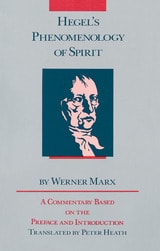
Hegel's Phenomenology of Spirit
A Commentary Based on the Preface and IntroductionWerner Marx
University of Chicago Press, 1988
The primary focus of Marx's book is on the account. Hegel gives of the phenomenological journey from natural consciousness to philosophical wisdom (or absolute knowledge, as Hegel calls it). In showing that Hegel's many statements concerning consciousness 'finding itself' or 'knowing itself' in its world can be understood as discovering the rationality of the conditioning world, Marx offers a solution to several sets of interrelated problems that have troubled students of Hegel. His book contains valuable analyses of the relation between Hegel's thought and that of Descartes and Kant as well as that of Karl Marx, and it also sheds considerable light on the question of the internal unity or coherence of the Phenomenology.
Hegel's Phenomenology, Part 1
Analysis and CommentaryHoward P. Kainz
Ohio University Press, 1976
Kainz provides an accessible entry into the complexities of Hegelian thought by asking a series of questions about such matters as the literary form of the Phenomenology, its "plot," its relation to the "system," its subject matter, the problem of objectivity, dialectical necessity, the concept of "experience," and the Hegelian concept of consciousness. Building of the work of previous commentators, and presenting the work of these commentators in a clear and unbiased manner, Kainz offers an analysis that will be helpful both to experienced Hegelian scholars and to those readers preparing to approach the large and bewildering territory of the Phenomenology for the first time.
Hegel's Realm of Shadows
Logic as Metaphysics in “The Science of Logic”Robert B. Pippin
University of Chicago Press, 2018
Robert B. Pippin offers here a bold, original interpretation of Hegel’s claim that only now, after Kant’s critical breakthrough in philosophy, can we understand how logic can be a metaphysics. Pippin addresses Hegel’s deep, constant reliance on Aristotle’s conception of metaphysics, the difference between Hegel’s project and modern rationalist metaphysics, and the links between the “logic as metaphysics” claim and modern developments in the philosophy of logic. Pippin goes on to explore many other facets of Hegel’s thought, including the significance for a philosophical logic of the self-conscious character of thought, the dynamism of reason in Kant and Hegel, life as a logical category, and what Hegel might mean by the unity of the idea of the true and the idea of the good in the “Absolute Idea.” The culmination of Pippin’s work on Hegel and German idealism, this is a book that no Hegel scholar or historian of philosophy will want to miss.
Hegel's Sole Idea
The Last Great Metaphysical SystemMark Alznauer
University of Chicago Press, 2026
An accessible reconstruction of Hegel’s attempt to derive all reality from a single concept.
In the early decades of the nineteenth century, G. W. F. Hegel came to believe that philosophy was finally in a position to achieve something it had striven for since ancient Greece: becoming an objective, demonstrative science. But to achieve this aim, he thought philosophical knowledge needed to be reconceived in a radically new way—as content contained in a single concept just as the oak tree is hidden in the acorn. In Hegel’s Sole Idea, Mark Alznauer reads Hegel’s mature philosophical system as the unprecedented attempt to comprehend the entire world as the full unfolding of that single concept, which he mysteriously calls “the absolute idea.”
Ever since Hegel set out this program in his Encyclopedia of the Philosophical Sciences in Outline, Hegel’s system has been regarded as the last best hope of philosophy as an autonomous, fully rational science. But while Hegel’s followers regarded the Encyclopedia as the successful realization of the traditional aims of philosophy, his most influential successors thought it instead showed the exhaustion and collapse of that project. Hegel’s Sole Idea offers a comprehensive interpretation of Hegelian philosophy that allows a fair confrontation with its most provocative and ambitious claims.
Hegel's Theory of Intelligibility
Rocío Zambrana
University of Chicago Press, 2015
Zambrana clarifies crucial features of Hegel’s theory of normativity previously thought to be absent from the argument of the Science of Logic—what she calls normative precariousness and normative ambivalence. She shows that Hegel’s theory of determinacy views intelligibility as both precarious, the result of practices and institutions that gain and lose authority throughout history, and ambivalent, accommodating opposite meanings and valences even when enjoying normative authority. In this way, Zambrana shows that the Science of Logic provides the philosophical justification for the necessary historicity of intelligibility. Intervening in several recent developments in the study of Kant, Hegel, and German Idealism more broadly, this book provides a productive new understanding of the value of Hegel’s systematic ambitions.
Hegel, Heidegger, and the Ground of History
Michael Allen Gillespie
University of Chicago Press, 1984
Hegel, Marx, and the Laughing Matter of Spirit
R. A. Aumiller
Northwestern University Press, 2026
What happens when those who have been denied political subjectivity fully play out their negative role in a historical drama that damned them from the beginning? Hegel, Marx, and the Laughing Matter of Spirit locates the eruption of revolutionary laughter in historical cracks across nineteenth- and twentieth-century Europe, where exiled philosophers, partisan fighters, and artists framed their political resistance as a historical comedy. Hegelian comedy fuels the Young Hegelian critique of Prussian censorship, Walter Benjamin’s staging of the anti-fascist resistance, and the Yugoslavian partisan attempt to begin again in fascism’s aftermath. Revolution erupts from a historical stage that can no longer look on its own contradictions with a straight face. Drawing on the defiant spirit of comedy, this Hegelian feminist manifesto defies political despair, overturning the perception that history tragically repeats itself. Invoking the phrase “Nothing changes” as a mantra, R. A. Aumiller turns a concession of defeat into a battle cry for political resistance.
Hegel
The Restlessness Of The NegativeJean-Luc Nancy
University of Minnesota Press, 2002
Hegel’s Anthropology
Life, Psyche, and Second NatureAllegra de Laurentiis
Northwestern University Press, 2021
A groundbreaking contribution to scholarship on Hegel and nineteenth-century philosophy, this book shows that the Anthropology is essential to understanding Hegel’s concept of spirit, not only in its connection with nature but also in its more sophisticated realizations as objective and absolute spirit. Future scholarship on this subject will recount—and build upon—de Laurentiis’s innovative study.

Hegel’s Phenomenology, Part 2
The Evolution of Ethical and Religious Consciousness to the Absolute StandpointHoward P. Kainz
Ohio University Press, 1983
The publication in 1807 of Georg Wilhelm Frederich Hegel’s Phanomenologie des Geistes (translated alternately as “Phenomenology of Mind” or “Phenomenology of Spirit”) marked the beginning of the modern era in philosophy. Hegel’s remarkable insights formed the basis for what eventually became the Existentialist movement. Yet the Phenomenology remains one of the most difficult and forbidding works in the canon of philosophical literature.
Hegel’s Theory of Normativity
The Systematic Foundations of the Philosophical Science of RightKevin Thompson
Northwestern University Press, 2019

Heidegger And The Jews
Jean-Francois Lyotard
University of Minnesota Press, 1990