Results by title
2018 books match the query 'Political aspects' and 51 start with h
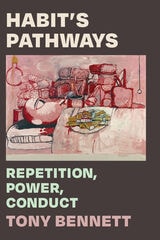
Habit's Pathways
Repetition, Power, ConductTony Bennett
Duke University Press, 2023
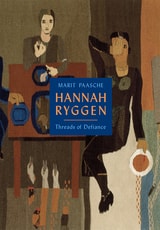
Hannah Ryggen
Threads of DefianceMarit Paasche
University of Chicago Press, 2019
A widely recognized authority on Ryggen, Marit Paasche brings this important Scandinavian artist to the foreground in this biography, the first published on Ryggen in English. Paasche looks at Ryggen within the social, political, and cultural contexts of her time and explores how these issues informed her work, from her anti-fascist tapestry that depicted a spear piercing Mussolini’s head to one protesting the war in Vietnam. Published to correspond with a major retrospective in Frankfurt, of which Paasche is one of the curators, Hannah Ryggen is a foundational book that will provide a crucial introduction of this artist to a broader audience.
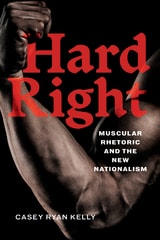
Hard Right
Muscular Rhetoric and the New NationalismCasey Ryan Kelly
The Ohio State University Press, 2026
A groundbreaking examination of far-right rhetoric around fitness and the human body and how such rhetoric serves white nationalist, masculinist aims.
In recent years, far-right, white-nationalist groups in the US have churned out streams of discourse glorifying “muscularity” as the ideal masculine form. This preoccupation with physical fitness—along with expressed fears of declining testosterone levels in men, race-mixing, and transgender women—all reveal the masculine bodily fantasies and anxieties that underwrite the political unconscious of the far right. In Hard Right, Casey Ryan Kelly examines the link between extreme fitness culture and fascist organizations, arguing that the human body operates as a privileged signifier of national belonging in the rhetoric of the far right.
Drawing from psychoanalytic theory, Kelly shows that far-right rhetoric constructs fantasies of recovering the “natural” or primal masculine body. These fantasies are frequently accompanied by anxieties about “soft,” disabled, and ambiguously gendered bodies, all of which are seen as signs of degeneracy that must be transformed, exiled, or eradicated for the sake of national and racial health. Through its examination of “Red Pill” fitness influencers, “bro science” conspiracy theories, far-right podcasts, and more, Hard Right ultimately shows how the cultural logics of men’s health and physical fitness converge with the political logics of white nationalism and late fascism.
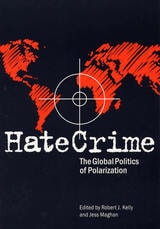
Hate Crime
The Global Politics of PolarizationEdited by Robert J. Kelly and Jess Maghan
Southern Illinois University Press, 1998
These twelve previously unpublished essays explore the international phenomenon of hate crime, examining the socio-psychological dynamics of these crimes and the settings in which they occur, the relationships between offenders and their victims, the emotional states of the participants, and the legal and law enforcement responses to these crimes.
The essays address religious, racial, ethnic, and sexual crimes in the United States, Latin America, Africa, Europe, and the Middle East. The essayists provide historical reviews of the problems and the ways local authorities understand and cope with the dilemmas as well as prognoses about the persistence of hate crime and the measures that can be taken to control and contain it.
Haunted by Empire
Geographies of Intimacy in North American HistoryAnn Laura Stoler, ed.
Duke University Press, 2006
Haunted by Empire includes Ann Laura Stoler’s seminal essay “Tense and Tender Ties” as well as her bold introduction, which carves out the exciting new analytic and methodological ground animated by this comparative venture. The contributors engage in a lively cross-disciplinary conversation, drawing on history, anthropology, literature, philosophy, and public health. They address such topics as the regulation of Hindu marriages and gay sexuality in the early-twentieth-century United States; the framing of multiple-choice intelligence tests; the deeply entangled histories of Asian, African, and native peoples in the Americas; the racial categorizations used in the 1890 U.S. census; and the politics of race and space in French colonial New Orleans. Linda Gordon, Catherine Hall, and Nancy F. Cott each provide a concluding essay reflecting on the innovations and implications of the arguments advanced in Haunted by Empire.
Contributors. Warwick Anderson, Laura Briggs, Kathleen Brown, Nancy F. Cott, Shannon Lee Dawdy, Linda Gordon, Catherine Hall, Martha Hodes, Paul A. Kramer, Lisa Lowe, Tiya Miles, Gwenn A. Miller, Emily S. Rosenberg, Damon Salesa, Nayan Shah, Alexandra Minna Stern, Ann Laura Stoler, Laura Wexler

Heaven, Hell, and Everything in Between
Murals of the Colonial AndesBy Ananda Cohen-Aponte
University of Texas Press, 2016
Examining the vivid, often apocalyptic church murals of Peru from the early colonial period through the nineteenth century, Heaven, Hell, and Everything in Between explores the sociopolitical situation represented by the artists who generated these murals for rural parishes. Arguing that the murals were embedded in complex networks of trade, commerce, and the exchange of ideas between the Andes and Europe, Ananda Cohen-Aponte also considers the ways in which artists and viewers worked through difficult questions of envisioning sacredness.
This study brings to light the fact that, unlike the murals of New Spain, the murals of the Andes possess few direct visual connections to a pre-Columbian painting tradition; the Incas’ preference for abstracted motifs created a problem for visually translating Catholic doctrine to indigenous congregations, as the Spaniards were unable to read Inca visual culture. Nevertheless, as Cohen Suarez demonstrates, colonial murals of the Andes can be seen as a reformulation of a long-standing artistic practice of adorning architectural spaces with images that command power and contemplation. Drawing on extensive secondary and archival sources, including account books from the churches, as well as on colonial Spanish texts, Cohen Suarez urges us to see the murals not merely as decoration or as tools of missionaries but as visual archives of the complex negotiations among empire, communities, and individuals.
Hector P Garcia
Everyday Rhetoric and Mexican American Civil RightsMichelle Hall Kells. Foreword by Rolando Hinojosa-Smith
Southern Illinois University Press, 2006
Examining the Mexican American civil rights movement through the public rhetoric of a veteran activist
Héctor P. García: Everyday Rhetoric and Mexican American Civil Rights examines the transition of Mexican Americans from political and social marginalization to civic inclusion after World War II. Focusing on the public rhetoric of veteran rights activist and physician Dr. Héctor P. García, a Mexican immigrant who achieved unprecedented influence within the U.S. political system, author Michelle Hall Kells provides an important case study in the exercise of influence, the formation of civic identity, and the acquisition of social power among this underrepresented group.
As a major influence in national twentieth-century civil rights reform, García effectively operated between Anglo and Mexican American sociopolitical structures. The volume illustrates how García, a decorated World War II veteran and founder of the American GI Forum in Texas in 1948, successfully engendered a discourse that crossed geographical, political, and cultural borders, forming associations with the working poor as well as with prominent national figures such as John F. Kennedy and Lyndon B. Johnson. Through his rhetoric and action, García publicly revealed the plight of Mexican Americans, crossing class, regional, and racial lines to improve socioeconomic conditions for his people.
Héctor P. García, which is enhanced by sixteen illustrations, contributes to rhetorical, cultural, and historical studies and offers new scholarship establishing García’s role on the national front, effectively tracing Garcia’s legacy of resistance, the process of achieving enfranchisement, and the role of racism in the evolution from social marginalization to national influence.
Hegemonies of Language and Their Discontents
The Southwest North American Region Since 1540Carlos G. Vélez-Ibáñez
University of Arizona Press, 2017
Well-regarded author Carlos G. Vélez-Ibáñez details the linguistic and cultural processes used by penetrating imperial and national states. He argues that these impositions have been not linear but hydra-headed, complex and contradictory, sometimes accommodated and sometimes forcefully imposed. Such impositions have created discontent resulting in physical and linguistic revolts, translanguage versions, and multilayered capacities of use and misuse of imposed languages—even the invention of community-created trilingual dictionaries.
Vélez-Ibáñez gives particular attention to both sides of the border, explaining the consequences of the fragile splitting of the area through geopolitical border formation. He illustrates the many ways those discontents have manifested in linguistic, cultural, educational, political, and legal forms.
From revolt to revitalization, from silent objection to expressive defiance, people in the Southwest North American Region have developed arcs of discontent from the Spanish colonial period to the present. These narratives are supported by multiple sources, including original Spanish colonial documents and new and original ethnographic studies of performance rituals like the matachines of New Mexico. This unique work discusses the most recent neurobiological studies of bilingualism and their implications for cognitive development and language as it spans multiple disciplines. Finally, it provides the most important models for dual language development and their integration to the "Funds of Knowledge" concept as creative contemporary discontents with monolingual approaches.
Hemispheric Imaginings
The Monroe Doctrine and Narratives of U.S. EmpireGretchen Murphy
Duke University Press, 2005
Murphy juxtaposes close readings of novels with analyses of nonfiction texts. From uncovering the literary inspirations for the Monroe Doctrine itself to tracing visions of hemispheric unity and transatlantic separation in novels by Lydia Maria Child, Nathaniel Hawthorne, María Amparo Ruiz de Burton, Lew Wallace, and Richard Harding Davis, she reveals the Doctrine’s forgotten cultural history. In making a vital contribution to the effort to move American Studies beyond its limited focus on the United States, Murphy questions recent proposals to reframe the discipline in hemispheric terms. She warns that to do so risks replicating the Monroe Doctrine’s proprietary claim to isolate the Americas from the rest of the world.
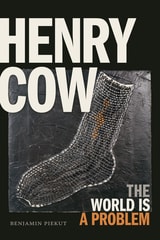
Henry Cow
The World Is a ProblemBenjamin Piekut
Duke University Press, 2019
Heritage Keywords
Rhetoric and Redescription in Cultural HeritageKathryn Lafrenz Samuels
University Press of Colorado, 2015
Situated at the intersection of scholarship and practice, Heritage Keywords positions cultural heritage as a transformative tool for social change. This volume unlocks the persuasive power of cultural heritage—as it shapes experiences of change and crafts present and future possibilities from historic conditions—by offering new ways forward for cultivating positive change and social justice in contemporary social debates and struggles. It draws inspiration from deliberative democratic practice, with its focus on rhetoric and redescription, to complement participatory turns in recent heritage work.
Through attention to the rhetorical edge of cultural heritage, contributors to this volume offer innovative reworkings of critical heritage categories. Each of the fifteen chapters examines a key term from the field of heritage practice—authenticity, civil society, cultural diversity, cultural property, democratization, difficult heritage, discourse, equity, intangible heritage, memory, natural heritage, place, risk, rights, and sustainability—to showcase the creative potential of cultural heritage as it becomes mobilized within a wide array of social, political, economic, and moral contexts.
This highly readable collection will be of interest to students, scholars, and professionals in heritage studies, cultural resource management, public archaeology, historic preservation, and related cultural policy fields.
Contributors include Jeffrey Adams, Sigrid Van der Auwera, Melissa F. Baird, Alexander Bauer, Malcolm A. Cooper, Anna Karlström, Paul J. Lane, Alicia Ebbitt McGill, Gabriel Moshenska, Regis Pecos, Robert Preucel, Trinidad Rico, Cecelia Rodéhn, Joshua Samuels, Kathryn Lafrenz Samuels, and Klaus Zehbe.
Hidden Arguments
Political Ideology and Disease Prevention PolicySylvia Noble Tesh
Rutgers University Press, 1988
Along the way she makes these principal points: She criticizes as politically conservative the idea that diseases result from a multifactorial web of causes. Placing responsibility for disease prevention on "society" is ideological, she argues. In connection with the air traffic controllers she questions whether it is in a union's best interests to claim that workers' jobs are stressful. She shows why there are no entirely neutral answers to questions about the toxicity of environmental pollutants. In a final chapter, Tesh urges scientists to incorporate egalitarian values into their search for the truth, rather than pretending science can be divorced from that political ideology.
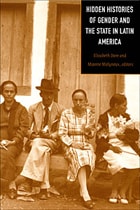
Hidden Histories of Gender and the State in Latin America
Elizabeth Dore and Maxine Molyneux, eds.
Duke University Press, 2000
Along these lines, the book begins with two theoretical chapters by the editors, Elizabeth Dore and Maxine Molyneux. Dore opens by arguing against the prevailing view that the nineteenth century was marked by a gradual emancipation of women, while Molyneux considers how various Latin American state forms—liberal, corporatist, socialist, neoliberal—have more recently sought to incorporate women into their projects of social reform and modernization. These essays are followed by twelve case studies that examine how states have contributed to the normalization of male and female roles and relations. Covering an impressive breadth not only of historical time but also of geographical scope, this volume moves from Brazil to Costa Rica, from Mexico to Chile, traversing many countries in between. Contributors explore such topics as civic ritual in Bolivia, rape in war-torn Colombia, and the legal construction of patriarchy in Argentina. They examine the public regulation of domestic life, feminist lobby groups, class compromise, female slaves, and women in rural households—distinct, salient aspects of the state-gender relationship in specific countries at specific historical junctures.
By providing a richly descriptive and theoretically grounded account of the interaction between state and gender politics in Latin America, this volume contributes to an important conversation between feminists interested in the state and political scientists interested in gender. It will be valuable to such disciplines as history, sociology, international comparative studies, and Latin American studies.
Contributors. María Eugenia Chaves, Elizabeth Dore, Rebecca Earle, Jo Fisher, Laura Gotkowitz, Donna J. Guy, Fiona Macaulay, Maxine Molyneux, Eugenia Rodriguez, Karin Alejandra Rosemblatt, Ann Varley, Mary Kay Vaughan
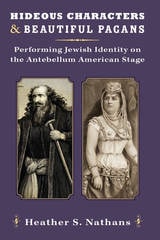
Hideous Characters and Beautiful Pagans
Performing Jewish Identity on the Antebellum American StageHeather S. Nathans
University of Michigan Press, 2017
Using an eclectic range of sources including theatrical reviews, diaries, letters, cartoons, portraiture, tax records, rumors flying around the tavern, and more, Heather S. Nathans has listened for the echoes of vanished audiences who witnessed and responded to these stereotypes onstage, from the earliest appearance of Shylock on an American stage in 1752 to Jewish theater artists on the eve of the Civil War. The book integrates social, political, and cultural histories, with an examination of those texts (both dramatic and literary) that shaped the stage Jew.
Higher Education and Democracy
Essays on Service-Learning and Civic EngagementEdited by John Saltmarsh and Edward Zlotkowski
Temple University Press, 2011
Higher Education and Democracy is a collection of essays written over the last ten years on how civic engagement in higher education works to achieve what authors John Saltmarsh and Edward Zlotkowsi consider to be the academic and civic purposes of higher education. These include creating new modes of teaching and learning, fostering participation in American democracy, the development and respect for community and civic institutions, and encouraging the constant renewal all of these dimensions of American life.
Organized chronologically, the twenty-two essays in this volume provide "signposts" along the road in the journey of fulfilling the civic purposes of higher education. For the authors, service-learning is positioned as centrally important to the primary academic systems and structures of higher education, departments, disciplines, curriculum, and programs that are central to the faculty domain. Progressing from the general and the contextual to specific practices embodied in ever larger academic units, the authors conclude with observations on the future of the civic engagement movement.
Hijacking the Agenda
Economic Power and Political InfluenceChristopher Witko
Russell Sage Foundation, 2021
The authors analyze over 20 years of floor speeches by several hundred members of Congress to examine the influence of campaign contributions on how the national economic agenda is set in Congress. They find that legislators who received more money from business and professional associations were more likely to discuss the deficit and other upper-class priorities, while those who received more money from unions were more likely to discuss issues important to lower- and middle-class constituents, such as economic inequality and wages. This attention imbalance matters because issues discussed in Congress receive more direct legislative action, such as bill introductions and committee hearings. While unions use campaign contributions to push back against wealthy interests, spending by the wealthy dwarfs that of unions.
The authors use case studies analyzing financial regulation and the minimum wage to demonstrate how the financial influence of the wealthy enables them to advance their economic agenda. In each case, the authors examine the balance of structural power, or the power that comes from a person or company’s position in the economy, and kinetic power, the power that comes from the ability to mobilize organizational and financial resources in the policy process. The authors show how big business uses its structural power and resources to effect policy change in Congress, as when the financial industry sought deregulation in the late 1990s, resulting in the passage of a bill eviscerating New Deal financial regulations. Likewise, when business interests want to preserve the policy status quo, it uses its power to keep issues off of the agenda, as when inflation eats into the minimum wage and its declining purchasing power leaves low-wage workers in poverty. Although groups representing lower- and middle-class interests, particularly unions, can use their resources to shape policy responses if conditions are right, they lack structural power and suffer significant resource disadvantages. As a result, wealthy interests have the upper hand in shaping the policy process, simply due to their pivotal position in the economy and the resulting perception that policies beneficial to business are beneficial for everyone.
Hijacking the Agenda is an illuminating account of the way economic power operates through the congressional agenda and policy process to privilege the interests of the wealthy and marks a major step forward in our understanding of the politics of inequality.
Hillary Clinton's Career in Speeches
The Promises and Perils of Women's Rhetorical AdaptivityShawn J. Parry-Giles
Michigan State University Press, 2023
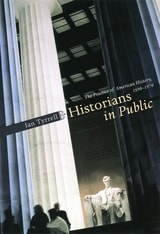
Historians in Public
The Practice of American History, 1890-1970Ian Tyrrell
University of Chicago Press, 2005
Tyrrell's elegant history of the practice of American history traces debates, beginning shortly after the profession's emergence in American academia, about history's role in school curricula. He also examines the use of historians in and by the government and whether historians should utilize mass media such as film and radio to influence the general public. As Historians in Public shows, the utility of history is a distinctive theme throughout the history of the discipline, as is the attempt to be responsive to public issues among pressure groups.
A superb examination of the practice of American history since the turn of the century, Historians in Public uncovers the often tangled ways history-makers make history-both as artisans and as actors.
Historicizing Fear
Ignorance, Vilification, and OtheringTravis D. Boyce
University Press of Colorado, 2019
Contributors ground their work in the theory of Othering—the reductive action of labeling a person as someone who belongs to a subordinate social category defined as the Other—in relation to historical events, demonstrating that fear of the Other is universal, timeless, and interconnected. Chapters address the music of neo-Nazi white power groups, fear perpetuated through the social construct of black masculinity in a racially hegemonic society, the terror and racial cleansing in early twentieth-century Arkansas, the fear of drug-addicted Vietnam War veterans, the creation of fear by the Tang Dynasty, and more.
Timely, provocative, and rigorously researched, Historicizing Fear shows how the Othering of members of different ethnic groups has been used to propagate fear and social tension, justify state violence, and prevent groups or individuals from gaining equality. Broadening the context of how fear of the Other can be used as a propaganda tool, this book will be of interest to scholars and students of history, anthropology, political science, popular culture, critical race issues, social justice, and ethnic studies, as well as the general reader concerned with the fearful framing prevalent in politics.
Contributors:
Quaylan Allen, Melanie Armstrong, Brecht De Smet, Kirsten Dyck, Adam C. Fong, Jeff Johnson, Łukasz Kamieński, Guy Lancaster, Henry Santos Metcalf, Julie M. Powell, Jelle Versieren
History and Hope in the Heart of Dixie
Scholarship, Activism, and Wayne Flynt in the Modern SouthEdited by Gordon E. Harvey, Richard D. Starnes and Glenn Feldman
University of Alabama Press, 2006
Exploring the history, challenges, and promise of a changing South through the legacy of Wayne Flynt.
This collection of essays on the social and political history of the modern South consider the region’s poor, racial mores and race relations, economic opportunity, Protestant activism, political coalitions and interest groups, social justice, and progressive reform. History and Hope in the Heart of Dixie illuminates the dual role of historian and public advocate in modern America. In a time when the nation’s eyes have been focused by Hurricanes Katrina and Rita onto the vulnerability and dire condition of poor people in the South, the applicability of research, teaching, and activism for this voiceless element seems all the more relevant.
Responding to the example of Wayne Flynt, whose fierce devotion to his state of Alabama and its region has not blinded his recognition of the inequities and despair that define southern life for so many, the scholars assembled in this work present contributions to the themes Flynt so passionately explored in his own work.Two seasoned observers of southern history and culture—John Shelton Reed and Dan T. Carter—offer assessments of Flynt’s influence on the history profession as a whole and on the region of the South in particular.
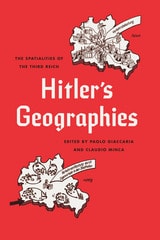
Hitler's Geographies
The Spatialities of the Third ReichEdited by Paolo Giaccaria and Claudio Minca
University of Chicago Press, 2016
With Hitler’s Geographies, editors Paolo Giaccaria and Claudio Minca examine the variety of ways in which spatial theory evolved and was translated into real-world action under the Third Reich. They have gathered an outstanding collection by leading scholars, presenting key concepts and figures as well exploring the undeniable link between biopolitical power and spatial expansion and exclusion.
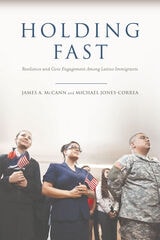
Holding Fast
Resilience and Civic Engagement Among Latino ImmigrantsJames A. McCann
Russell Sage Foundation, 2020
Holding Fast draws largely from a yearlong survey of Latino immigrants, including both citizens and noncitizens, conducted before and after the 2016 election. The survey gauges immigrants’ attitudes about the direction of the country and the emotional underpinnings of their political involvement. While survey respondents expressed pessimism about the direction of the United States following the 2016 election, there was no evidence of their withdrawal from civic life. Instead, immigrants demonstrated remarkable resilience in their political engagement, and their ties to America remained robust.
McCann and Jones-Correa examine Latino immigrants’ trust in government as well as their economic concerns and fears surrounding possible deportations of family members and friends. They find that Latino immigrants who were concerned about the likelihood of deportation were more likely to express a lack of trust in government. Concerns about personal finances were less salient. Disenchantment with the U.S. government did not differ based on citizenship status, length of stay in America, or residence in immigrant-friendly states. Foreign-born Latinos who are naturalized citizens shared similar sentiments to those with fewer political rights, and immigrants in California, for example, express views similar to those in Texas.
Addressing the potential influence immigrant voters may wield in in the coming election, the authors point to signs that the turnout rate for naturalized Latino immigrant may be higher than that for Latinos born in the United States. The authors further underscore the importance of the parties' platforms and policies, noting the still-tenuous nature of Latino immigrants’ affiliations with the Democratic Party.
Holding Fast outlines the complex political situation in which Latino immigrants find themselves today. Despite well-founded feelings of anger, fear, and skepticism, in general they maintain an abiding faith in the promise of American democracy. This book provides a comprehensive account of Latino immigrants’ political opinions and a nuanced, thoughtful outlook on the future of Latino civic participation. It will be an important contribution to scholarly work on civic engagement and immigrant integration.

Holidays in the Danger Zone
Entanglements of War and TourismDebbie Lisle
University of Minnesota Press, 2016
Holidays in the Danger Zone exposes the mundane and everyday interactions between two seemingly opposed worlds: warfare and tourism. Debbie Lisle shows how a tourist sensibility shapes the behavior of soldiers in war—especially the experiences of Western military forces in “exotic” settings. This includes not only R&R but also how battlefields become landscapes of leisure and tourism. She further explores how a military sensibility shapes the development of tourism in the postwar context, from “Dark Tourism” (engaging with displays of conflict and atrocity) to exhibitions of conflict in museums and at memorial sites, as well as advertising, film, journals, guidebooks, blogs, and photography.
Focused on how war and tourism reinforce prevailing modes of domination, Holidays in the Danger Zone critically examines the long historical arc of the war–tourism nexus—from nineteenth-century imperialism to World War I and World War II, from the Cold War to globalization and the War on Terror.
Hollywood Diplomacy
Film Regulation, Foreign Relations, and East Asian RepresentationsHye Seung Chung
Rutgers University Press, 2020
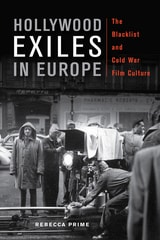
Hollywood Exiles in Europe
The Blacklist and Cold War Film CulturePrime, Rebecca
Rutgers University Press, 2014
Rebecca Prime documents the untold story of the American directors, screenwriters, and actors who exiled themselves to Europe as a result of the Hollywood blacklist. During the 1950s and 1960s, these Hollywood émigrés directed, wrote, or starred in almost one hundred European productions, their contributions ranging from crime film masterpieces like Du rififi chez les hommes (1955, Jules Dassin, director) to international blockbusters like The Bridge on the RiverKwai (1957, Carl Foreman and Michael Wilson, screenwriters) and acclaimed art films like The Servant (1963, Joseph Losey, director).
At once a lively portrait of a lesser-known American “lost generation” and an examination of an important transitional moment in European cinema, the book offers a compelling argument for the significance of the blacklisted émigrés to our understanding of postwar American and European cinema and Cold War relations. Prime provides detailed accounts of the production and reception of their European films that clarify the ambivalence with which Hollywood was regarded within postwar European culture. Drawing upon extensive archival research, including previously classified material, Hollywood Exiles in Europe suggests the need to rethink our understanding of the Hollywood blacklist as a purely domestic phenomenon. By shedding new light on European cinema’s changing relationship with Hollywood, the book illuminates the postwar shift from national to transnational cinema.
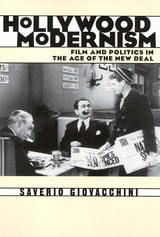
Hollywood Modernism
Film & Politics In Age Of New DealSaverio Giovacchini
Temple University Press, 2001
Seeing Hollywood as a forcefield, Giovacchini examines the social networks, working relationships, and political activities of artists, intellectuals, and film workers who flocked to Hollywood from Europe and the eastern United States before and during the second world war. He creates a complex and nuanced portrait of this milieu, adding breadth and depth to the conventional view of the era's film industry as little more than an empire for Jewish moguls or the major studios. In his rendering Hollywood's newcomers joined with its established elite to develop a modernist aesthetic for film that would bridge popular and avant-garde sensibilities; for them, realism was the most effective vehicle for conveying their message and involving a mass audience in the democratic struggle for process.
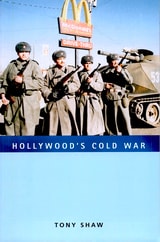
Hollywood's Cold War
Tony Shaw
University of Massachusetts Press, 2007
At a moment when American film reflects a deepening preoccupation with the Bush administration's War on Terror, this authoritative and timely book offers the first comprehensive account of Hollywood's propaganda role during the defining ideological conflict of the twentieth century: the Cold War. In an analysis of films dating from America's first Red Scare in the wake of the 1917 Bolshevik Revolution to the collapse of the Berlin Wall in 1989, Tony Shaw examines the complex relationship between filmmakers, censors, politicians, and government propagandists.
Movies, Shaw demonstrates, were at the center of the Cold War's battle for hearts and minds. Hollywood's comedies, love stories, musicals, thrillers, documentaries, and science fiction shockers played a critical dual role: on the one hand teaching millions of Americans why communism represented the greatest threat their country had ever faced, and on the other selling America's liberal-capitalist ideas around the globe. Drawing on declassified government documents, studio archives, and filmmakers' private papers, Shaw reveals the different ways in which cinematic propaganda was produced, disseminated, and received by audiences during the Cold War. In the process, he addresses subjects as diverse as women's fashions, McCarthyism, drug smuggling, Christianity, and American cultural diplomacy in India. Anyone seeking to understand wartime propaganda today will find striking contemporary resonance in his conclusions about Hollywood's versatility and power.
Hollywood's New Deal
Giuliana Muscio
Temple University Press, 1997
Despite the economic hardship of the thirties, people flocked to the movies in unprecedented numbers. At the same time, the Roosevelt Administration was trying to implement the New Deal and increase the influence and power of the federal government. Weaving together film and political history, Giuliana Muscio traces the connections between Depression Era Hollywood and the popularity of FDR, asserting that politics transformed its public into spectators while the movie industry transformed its spectators into a public. Hollywood's New Deal reveals the ways in which this reciprocal relationship between politics and film evolved into a strategic effort to stabilize a nation in the clutches of economic unrest by creating a unified American consciousness through national cinema.
Muscio analyzes such regulatory practices as the Hays Code, and the government's scrutinizing of monopolistic practices such as block booking and major studio ownership of movie theaters. Hollywood's New Deal, focusing on the management and structure of the film industry, delves deep into the Paramount case, detailing the behind-the-scenes negotiations and the public statements that ended with film industry leaders agreeing to self regulate and to eliminate monopolistic practices.
Hollywood's acquiescence and the government's retreat from antitrust action show that they had found a mutually beneficial way of preserving their own spheres of power and influence. This book is indispensable for understanding the growth of the film industry and the increasing political importance of mass media.
In the series Culture and the Moving Image, edited by Robert Sklar.
Home, Heat, Money, God
Texas and Modern ArchitectureText by Kathryn E. O’Rourke, Photographs by Ben Koush
University of Texas Press, 2024
Thematically focused analysis of modern architecture throughout Texas with gorgeous photographs illustrating works by famous and lesser-known architects.
In the mid-twentieth century, dramatic social and political change coincided with the ascendance and evolution of architectural modernism in Texas. Between the 1930s and 1980s, a state known for cowboys and cotton fields rapidly urbanized and became a hub of global trade and a heavyweight in national politics. Relentless ambition and a strong sense of place combined to make Texans particularly receptive to modern architecture’s implication of newness, forward-looking attitude, and capacity to reinterpret historical forms in novel ways. As money and people poured in, architects and their clients used modern buildings to define themselves and the state.
Illustrated with stunning photographs by architect Ben Koush, Home, Heat, Money, God analyzes buildings in big cities and small towns by world-famous architects, Texas titans, and lesser-known designers. Architectural historian Kathryn O’Rourke describes the forces that influenced architects as they addressed basic needs—such as staying cool in a warming climate and living in up-to-date housing—and responded to a culture driven by potent religiosity, by the countervailing pressures of pluralism and homogenization, and by the myth of Texan exceptionalism.
Homeland Maternity
US Security Culture and the New Reproductive RegimeNatalie Fixmer-Oraiz
University of Illinois Press, 2019

Hope Draped in Black
Race, Melancholy, and the Agony of ProgressJoseph R. Winters
Duke University Press, 2016
Hope and Scorn
Eggheads, Experts, and Elites in American PoliticsMichael J. Brown
University of Chicago Press, 2020
Intellectuals “have been both rallying points and railed against in American politics, vessels of hope and targets of scorn,” writes Michael J. Brown as he invigorates a recurrent debate in American life: Are intellectual public figures essential voices of knowledge and wisdom, or out-of-touch elites? Hope and Scorn investigates the role of high-profile experts and thinkers in American life and their ever-fluctuating relationship with the political and public spheres.
From Eisenhower’s era to Obama’s, the intellectual’s role in modern democracy has been up for debate. What makes an intellectual, and who can claim that privileged title? What are intellectuals’ obligations to society, and how, if at all, are their contributions compatible with democracy? For some, intellectuals were models of civic engagement. For others, the rise of the intellectual signaled the fall of the citizen. Carrying us through six key moments in this debate, Brown expertly untangles the shifting anxieties and aspirations for democracy in America in the second half of the twentieth century and beyond. Hope and Scorn begins with “egghead” politicians like Adlai Stevenson; profiles scholars like Richard Hofstadter and scholars-turned-politicians like H. Stuart Hughes; and ends with the rise of public intellectuals such as bell hooks and Cornel West. In clear and unburdened prose, Brown explicates issues of power, authority, political backlash, and more. Hope and Scorn is an essential guide to American concerns about intellectuals, their myriad shortcomings, and their formidable abilities.
Hot Books in the Cold War
The CIA-Funded Secret Western Book Distribution Program Behind the Iron CurtainAlfred A. Reisch
Central European University Press, 2013
How Climate Change Comes to Matter
The Communal Life of FactsCandis Callison
Duke University Press, 2014
The disparate efforts of these groups illuminate the challenge of maintaining fidelity to scientific facts while transforming them into ethical and moral calls to action. Callison investigates the different vernaculars through which we understand and articulate our worlds, as well as the nuanced and pluralistic understandings of climate change evident in different forms of advocacy. As she demonstrates, climate change offers an opportunity to look deeply at how issues and problems that begin in a scientific context come to matter to wide publics, and to rethink emerging interactions among different kinds of knowledge and experience, evolving media landscapes, and claims to authority and expertise.
How Do We Look?
Resisting Visual BiopoliticsFatimah Tobing Rony
Duke University Press, 2022
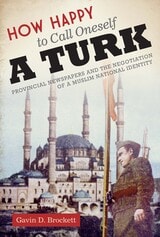
How Happy to Call Oneself a Turk
Provincial Newspapers and the Negotiation of a Muslim National IdentityBy Gavin D. Brockett
University of Texas Press, 2011
The modern nation-state of Turkey was established in 1923, but when and how did its citizens begin to identify themselves as Turks? Mustafa Kemal Atatürk, Turkey's founding president, is almost universally credited with creating a Turkish national identity through his revolutionary program to "secularize" the former heartland of the Ottoman Empire. Yet, despite Turkey's status as the lone secular state in the Muslim Middle East, religion remains a powerful force in Turkish society, and the country today is governed by a democratically elected political party with a distinctly religious (Islamist) orientation.
In this history, Gavin D. Brockett takes a fresh look at the formation of Turkish national identity, focusing on the relationship between Islam and nationalism and the process through which a "religious national identity" emerged. Challenging the orthodoxy that Atatürk and the political elite imposed a sense of national identity from the top down, Brockett examines the social and political debates in provincial newspapers from around the country. He shows that the unprecedented expansion of print media in Turkey between 1945 and 1954, which followed the end of strict, single-party authoritarian government, created a forum in which ordinary people could inject popular religious identities into the new Turkish nationalism. Brockett makes a convincing case that it was this fruitful negotiation between secular nationalism and Islam—rather than the imposition of secularism alone—that created the modern Turkish national identity.
How Immigrants Impact Their Homelands
Susan Eva Eckstein and Adil Najam, eds.
Duke University Press, 2013
Contributors. Victor Agadjanian, Boaventura Cau, José Miguel Cruz, Susan Eva Eckstein, Kyle Eischen, David Scott FitzGerald, Natasha Iskander, Riva Kastoryano, Cecilia Menjívar, Adil Najam, Rhacel Salazar Parreñas, Alejandro Portes, Min Ye
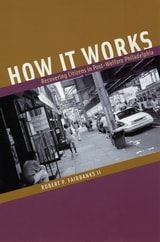
How It Works
Recovering Citizens in Post-Welfare PhiladelphiaRobert P. Fairbanks II
University of Chicago Press, 2009
Of the some sixty thousand vacant properties in Philadelphia, half of them are abandoned row houses. Taken as a whole, these derelict homes symbolize the city’s plight in the wake of industrial decline. But a closer look reveals a remarkable new phenomenon—street-level entrepreneurs repurposing hundreds of these empty houses as facilities for recovering addicts and alcoholics. How It Works is a compelling study of this recovery house movement and its place in the new urban order wrought by welfare reform.
To find out what life is like in these recovery houses, Robert P. Fairbanks II goes inside one particular home in the Kensington neighborhood. Operating without a license and unregulated by any government office, the recovery house provides food, shelter, company, and a bracing self-help philosophy to addicts in an area saturated with drugs and devastated by poverty. From this starkly vivid close-up, Fairbanks widens his lens to reveal the intricate relationships the recovery houses have forged with public welfare, the formal drug treatment sector, criminal justice institutions, and the local government.
How Machines Came to Speak
Media Technologies and Freedom of SpeechJennifer Petersen
Duke University Press, 2022
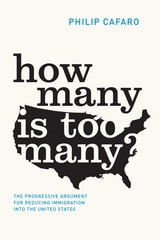
How Many Is Too Many?
The Progressive Argument for Reducing Immigration into the United StatesPhilip Cafaro
University of Chicago Press, 2015
Cafaro roots his argument in human rights, equality, economic security, and environmental sustainability—hallmark progressive values. He shows us the undeniable realities of mass migration to which we have turned a blind eye: how flooded labor markets in sectors such as meatpacking and construction have driven down workers’ wages and driven up inequality; how excessive immigration has fostered unsafe working conditions and political disempowerment; how it has stalled our economic maturity by keeping us ever-focused on increasing consumption and growth; and how it has caused our cities and suburbs to sprawl far and wide, destroying natural habitats, driving other species from the landscape, and cutting us off from nature.
In response to these hard-hitting truths, Cafaro lays out a comprehensive plan for immigration reform that is squarely in line with progressive political goals. He suggests that we shift enforcement efforts away from border control and toward the employers who knowingly hire illegal workers. He proposes aid and foreign policies that will help people create better lives where they are. And indeed he supports amnesty for those who have, at tremendous risk, already built their lives here. Above all, Cafaro attacks our obsession with endless material growth, offering in its place a mature vision of America, not brimming but balanced, where all the different people who constitute this great nation of immigrants can live sustainably and well, sheltered by a prudence currently in short supply in American politics.
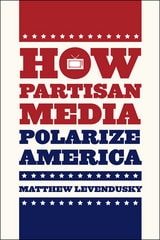
How Partisan Media Polarize America
Matthew Levendusky
University of Chicago Press, 2013
In How Partisan Media Polarize America, Matthew Levendusky confirms—but also qualifies—both of these claims. Drawing on experiments and survey data, he shows that Americans who watch partisan programming do become more certain of their beliefs and less willing to weigh the merits of opposing views or to compromise. And while only a small segment of the American population watches partisan media programs, those who do tend to be more politically engaged, and their effects on national politics are therefore far-reaching.
In a time when politics seem doomed to partisan discord, How Partisan Media Polarize America offers a much-needed clarification of the role partisan media might play.
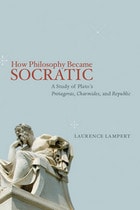
How Philosophy Became Socratic
A Study of Plato's "Protagoras," "Charmides," and "Republic"Laurence Lampert
University of Chicago Press, 2010
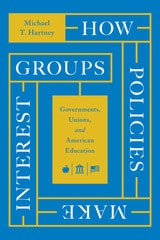
How Policies Make Interest Groups
Governments, Unions, and American EducationMichael T. Hartney
University of Chicago Press, 2022
As most American labor organizations struggle for survival and relevance in the twenty-first century, teachers unions appear to be an exception. Despite being all but nonexistent until the 1960s, these unions are maintaining members, assets—and political influence. As the COVID-19 epidemic has illustrated, today’s teachers unions are something greater than mere labor organizations: they are primary influencers of American education policy. How Policies Make Interest Groups examines the rise of these unions to their current place of influence in American politics.
Michael Hartney details how state and local governments adopted a new system of labor relations that subsidized—and in turn, strengthened—the power of teachers unions as interest groups in American politics. In doing so, governments created a force in American politics: an entrenched, subsidized machine for membership recruitment, political fundraising, and electoral mobilization efforts that have informed elections and policymaking ever since. Backed by original quantitative research from across the American educational landscape, Hartney shows how American education policymaking and labor relations have combined to create some of the very voter blocs to which it currently answers. How Policies Make Interest Groups is trenchant, essential reading for anyone seeking to understand why some voices in American politics mean more than others.
How Reason Almost Lost Its Mind
The Strange Career of Cold War RationalityPaul Erickson, Judy L. Klein, Lorraine Daston, Rebecca Lemov, Thomas Sturm, and Michael D. Gordin
University of Chicago Press, 2013
How a Revolutionary Art Became Official Culture
Murals, Museums, and the Mexican StateMary K. Coffey
Duke University Press, 2012
How to Control Fire on a Burning Continent
Timothy Neale
Duke University Press, 2026
Each year, Australia faces increasingly unprecedented wildfires, marked both by their scale and by the intense public disagreements about their political, cultural, and ecological causes. How to Control Fire on a Burning Continent is a critical and ethnographic exploration of wildfire management in Australia and the technoscientific systems of control that shape its current and future possibilities. Timothy Neale observes how two seemingly opposing forces—an entrenched sense of crisis and widespread normalization—combine to form an apparatus of institutional fire management that increasingly centers technical control and militarization. While sympathetic to the double binds many fire management professionals find themselves in, Neale ties contemporary wildfire problems to ongoing colonization and Indigenous dispossession, exploring Indigenous-led land management and cultural burning as a practical assertion of sovereignty. Through dialogue and collaboration with professional fire managers and Indigenous environmental stewards, Neale calls for a collective movement beyond control thinking by fostering new alliances and modes of coping with, rather than commanding, our flammable world.
Humanity's Last Stand
Confronting Global CatastropheMark Schuller
Rutgers University Press, 2021
Humanity’s Last Stand dares to ask these big questions, exploring the interconnections between climate change, global capitalism, xenophobia, and white supremacy. As it unearths how capitalism was born from plantation slavery and the slaughter of Indigenous people, it also invites us to imagine life after capitalism. The book teaches its readers how to cultivate an anthropological imagination, a mindset that remains attentive to local differences even as it identifies global patterns of inequality and racism.
Surveying the struggles of disenfranchised peoples around the globe from frontline communities affected by climate change, to #BlackLivesMatter activists, to Indigenous water protectors, to migrant communities facing increasing hostility, anthropologist Mark Schuller argues that we must develop radical empathy in order to move beyond simply identifying as “allies” and start acting as “accomplices.” Bringing together the insights of anthropologists and activists from many cultures, this timely study shows us how to stand together and work toward a more inclusive vision of humanity before it’s too late.
More information and instructor resources (https://humanityslaststand.org)
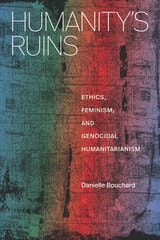
Humanity's Ruins
Ethics, Feminism, and Genocidal HumanitarianismDanielle Bouchard
Duke University Press, 2025
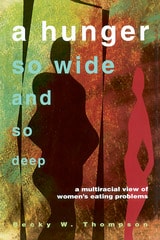
Hunger So Wide And So Deep
A Multiracial View of Women’s Eating ProblemsBecky Thompson
University of Minnesota Press, 1996
A new feminist classic--now in paper!
Based on in-depth life history interviews with African-American, Latina, and white women-both lesbian and heterosexual-this book chronicles the effects of racism, sexism, acculturation, and sexual abuse on women’s bodies and eating patterns.
“A wonderful book: gripping, creative and profoundly humane. In lucid prose Thompson offers an original explanation for women’s eating problems. She argues that many women turn to food-bingeing, dieting, purging, or starving- as a sensible means of coping with physical and psychic ‘atrocities’ deriving from ‘racism, sexism, homophobia, classism, the stress of acculturation, and emotional, physical, and sexual abuse.’” Women’s Review of Books“Surprising and alarming. . . . Thompson urges a second look at our national obsession with weight and proffers theories and practices that could save the lives of women of all colors and sexual orientations.” Lambda Book Report“Thompson breaks new ground and offers hope for the multitudes of women who have swallowed their pain.” Evelyn C. White, Editor, The Black Women's Health Book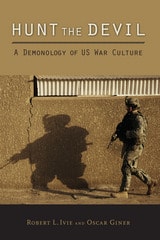
Hunt the Devil
A Demonology of US War CultureRobert L. Ivie and Oscar Giner
University of Alabama Press, 2015
Meticulously researched, documented, and argued, Hunt the Devil opens with contemporary images of the US’s global war on terror in the aftermath of 9/11. In five chapters devoted to the demonization of evildoers, witches, Indians, dictators, and Reds by American writers, in presidential rhetoric, and in popular culture, Ivie and Giner show how the use of demonization in the war on terror is only the most recent manifestation of a process that has recurred throughout American history.
In a sixth chapter, the authors introduce the archetype of the Trickster. Though not opposed to the Devil per se, the Trickster’s democratic impulses have often provided a corrective antidote to the corrosive and distorting effects of demonization. Invoking the framework of Carl Jung’s shadow aspect, Hunt the Devil offers the Trickster as a figure who can break the cycle of demonization and war.
The role of the mythic Devil in the American psyche has profound implications, not just for American diplomacy and the use of American arms in the world, but for the possibility of domestic peace within an increasingly diverse society. Hunt the Devil provides much of interest to readers and scholars in the fields of war, rhetorical studies, American Studies, US political culture, Jungian psychology, and mythography.