Results by title
28167 books match the query 'History' and 906 start with h
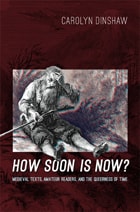
How Soon Is Now?
Medieval Texts, Amateur Readers, and the Queerness of TimeCarolyn Dinshaw
Duke University Press, 2012
Whether discussing Victorian men of letters who parodied the Book of John Mandeville, a fictionalized fourteenth-century travel narrative, or Hope Emily Allen, modern coeditor of the early-fifteenth-century Book of Margery Kempe, Dinshaw argues that these and other medievalists outside the academy inhabit different temporalities than modern professionals operating according to the clock. How Soon Is Now? clears space for amateurs, hobbyists, and dabblers who approach medieval worlds from positions of affect and attachment, from desires to build other kinds of worlds. Unruly, untimely, they urge us toward a disorderly and asynchronous collective.
How States Shaped Postwar America
State Government and Urban PowerNicholas Dagen Bloom
University of Chicago Press, 2019
How States Shaped Postwar America
State Government and Urban PowerNicholas Dagen Bloom
University of Chicago Press, 2019
The history of public policy in postwar America tends to fixate on developments at the national level, overlooking the crucial work done by individual states in the 1960s and ’70s. In this book, Nicholas Dagen Bloom demonstrates the significant and enduring impact of activist states in five areas: urban planning and redevelopment, mass transit and highways, higher education, subsidized housing, and the environment. Bloom centers his story on the example set by New York governor Nelson Rockefeller, whose aggressive initiatives on the pressing issues in that period inspired others and led to the establishment of long-lived state polices in an age of decreasing federal power. Metropolitan areas, for both better and worse, changed and operated differently because of sustained state action—How States Shaped Postwar America uncovers the scope of this largely untold story.
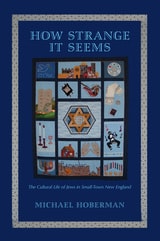
How Strange It Seems
The Cultural Life of Jews in Small-Town New EnglandMichael Hoberman
University of Massachusetts Press, 2008
Jews have lived in small-town New England since the colonial era, but during the last hundred years they have been especially active contributors to the region's cultural life. Part oral history, part ethnography, and part literary portrait, How Strange It Seems tells the story of this often overlooked group, tracing its patterns of settlement, economic activity, civic involvement, and religious life since the late 1800s.
Based on more than fifty interviews with men and women of all ages from Maine, New Hampshire, Vermont, Massachusetts, and Connecticut, it seeks to understand what is distinctive—and not so distinctive—about contemporary Jewish communities outside the larger urban centers of the Northeast. Michael Hoberman weaves the personal stories of these individuals and families into a collective narrative that offers as much folklore as history and is equal parts Jewish and Yankee. He introduces us to Hiram Adelman, a Russian immigrant peddler and potato farmer who settled in northernmost Maine because its climate was comparable to his native Siberia, and to Shmuel Simenowitz, an urban transplant who produces kosher maple syrup in southern Vermont. We also meet Suzie Laskin, who moved to the White Mountains region of New Hampshire in the 1900s and soon established a local havurah, and Bob August of Whately, Massachusetts, who once ran what may have been the world's only Christmas tree farm owned by a Jewish family.
Each section of the book explores how small-town New England Jews have both departed from and mimicked the broader patterns of Jewish American experience, while also illustrating how they have acclimated themselves to local practices without relinquishing a strong sense of Jewish identity. Accompanying the text are photographs by Janice Sorensen that include portraits of many of the interviewees and lively glimpses of the region's present-day Jewish revival.
How They Lived 2
The Everyday Lives of Hungarian Jews, 1867-1940: Family, Religious, and Social Life, Learning, Military Life, Vacationing, Sports, CharityAndrás Koerner
Central European University Press, 2017
How They Lived
The Everyday Lives of Hungarian Jews, 1867–1940András Koerner
Central European University Press, 2015
How Things Fall Apart
What Happened to the Cuban RevolutionElizabeth Dore
Duke University Press, 2023
How We Became Posthuman
Virtual Bodies in Cybernetics, Literature, and InformaticsN. Katherine Hayles
University of Chicago Press, 1999
Hayles relates three interwoven stories: how information lost its body, that is, how it came to be conceptualized as an entity separate from the material forms that carry it; the cultural and technological construction of the cyborg; and the dismantling of the liberal humanist "subject" in cybernetic discourse, along with the emergence of the "posthuman."
Ranging widely across the history of technology, cultural studies, and literary criticism, Hayles shows what had to be erased, forgotten, and elided to conceive of information as a disembodied entity. Thus she moves from the post-World War II Macy Conferences on cybernetics to the 1952 novel Limbo by cybernetics aficionado Bernard Wolfe; from the concept of self-making to Philip K. Dick's literary explorations of hallucination and reality; and from artificial life to postmodern novels exploring the implications of seeing humans as cybernetic systems.
Although becoming posthuman can be nightmarish, Hayles shows how it can also be liberating. From the birth of cybernetics to artificial life, How We Became Posthuman provides an indispensable account of how we arrived in our virtual age, and of where we might go from here.
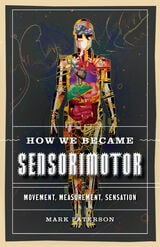
How We Became Sensorimotor
Movement, Measurement, SensationMark Paterson
University of Minnesota Press, 2021
An engrossing history of the century that transformed our knowledge of the body’s inner senses
The years between 1833 and 1945 fundamentally transformed science’s understanding of the body’s inner senses, revolutionizing fields like philosophy, the social sciences, and cognitive science. In How We Became Sensorimotor, Mark Paterson provides a systematic account of this transformative period, while also demonstrating its substantial implications for current explorations into phenomenology, embodied consciousness, the extended mind, and theories of the sensorimotor, the body, and embodiment.
Each chapter of How We Became Sensorimotor takes a particular sense and historicizes its formation by means of recent scientific studies, case studies, or coverage in the media. Ranging among a diverse array of sensations, including balance, fatigue, pain, the “muscle sense,” and what Maurice Merleau-Ponty termed “motricity,” Paterson’s analysis moves outward from the familiar confines of the laboratory to those of the industrial world and even to wild animals and their habitats. He uncovers important stories, such as how forgotten pain-measurement schemes transformed criminology, or how Penfield’s outmoded concepts of the sensory and motor homunculi of the brain still mar psychology textbooks.
Complete with original archival research featuring illustrations and correspondence, How We Became Sensorimotor shows how the shifting and sometimes contested historical background to our understandings of the senses are being extended even today.
How We Fell in Love with Italian Food
Diego Zancani
Bodleian Library Publishing, 2019
In this book, Diego Zancani maps the extraordinary progress of Italian food, from the legacy of the Roman invasion to its current, ever-increasing popularity. Starting with medieval manuscripts, he traces Italian recipes in Britain back to the thirteenth century, and draws on later travel diaries to explore British and American encounters with Italian food abroad. The book also shows how Italian immigrants, from ice-cream sellers and grocers to chefs and restauranteurs, had a transformative influence on the spread of the cuisine, championing Italian food at pivotal moments throughout history.
Lavishly illustrated with material from the archives of the Bodleian Library and elsewhere, this sumptuous book also includes Italian regional recipes that have come down to us through the centuries, and celebrates the enduring international appeal of delicatessens, pizzerias, trattorias, and the Mediterranean diet.
How We Think
Digital Media and Contemporary TechnogenesisN. Katherine Hayles
University of Chicago Press, 2012
“How do we think?” N. Katherine Hayles poses this question at the beginning of this bracing exploration of the idea that we think through, with, and alongside media. As the age of print passes and new technologies appear every day, this proposition has become far more complicated, particularly for the traditionally print-based disciplines in the humanities and qualitative social sciences. With a rift growing between digital scholarship and its print-based counterpart, Hayles argues for contemporary technogenesis—the belief that humans and technics are coevolving—and advocates for what she calls comparative media studies, a new approach to locating digital work within print traditions and vice versa.
How Will the Heart Endure
Elizabeth Bowen and the Landscape of WarHeather Bryant Jordan
University of Michigan Press, 1992
How Women Must Write
Inventing the Russian Woman PoetOlga Peters Hasty
Northwestern University Press, 2019
In How Women Must Write, Olga Peters Hasty takes us from an emphatically male Romantic age to a modernist period preoccupied with women’s creativity but also with its containment. In late nineteenth and early twentieth-century Russia, the woman poet was invented: by women poets themselves, by readers who projected gender biases into their poems, and by male poets who wrote posing as women. Examining Karolina Pavlova and Evdokiia Rostopchina, who inspired those writing after them, as well as two women invented by men, Cherubina de Gabriak and Briusov’s Nelli, and challenges to male authority by Marina Tsvetaeva and Anna Akhmatova, this book shows women as purposeful actors realizing themselves creatively and advancing the woman poet’s cause. It will appeal to the general reader and to specialists in Russian literature, women’s studies, and cultural history.
How Women Saved The City
Daphne Spain
University of Minnesota Press, 2001
Reclaims the lost history of women’s contributions to the development of American cities
In the days between the Civil War and World War I, women rarely worked outside the home, rarely went to college, and, if our histories are to be believed, rarely put their mark on the urban spaces unfolding around them. And yet, as this book clearly demonstrates, women did play a key role in shaping the American urban landscape.
To uncover the contribution of women to urban development during this period, Daphne Spain looks at the places where women participated most actively in public life—voluntary organizations like the Young Women’s Christian Association, the Salvation Army, the College Settlements Association, and the National Association of Colored Women. In the extensive building projects of these associations—boarding houses, vocational schools, settlement houses, public baths, and playgrounds—she finds clear evidence of a built environment created by women. Exploring this environment, Spain reconstructs the story of the "redemptive places" that addressed the real needs of city dwellers—especially single women, African-Americans, immigrants, and the poor—and established an environment in which newcomers could learn to become urban Americans.
How World Politics Is Made
France and the Reunification of GermanyTilo Schabert
University of Missouri Press, 2009
How Writing Came About
By Denise Schmandt-Besserat
University of Texas Press, 1996
Top 100 Books on Science, American Scientist, 2001
In 1992, the University of Texas Press published Before Writing, Volume I: From Counting to Cuneiform and Before Writing, Volume II: A Catalog of Near Eastern Tokens. In these two volumes, Denise Schmandt-Besserat set forth her groundbreaking theory that the cuneiform script invented in the Near East in the late fourth millennium B.C.—the world's oldest known system of writing—derived from an archaic counting device.
How Writing Came About draws material from both volumes to present Schmandt-Besserat's theory for a wide public and classroom audience. Based on the analysis and interpretation of a selection of 8,000 tokens or counters from 116 sites in Iran, Iraq, the Levant, and Turkey, it documents the immediate precursor of the cuneiform script.
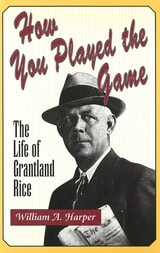
How You Played the Game
The Life of Grantland RiceWilliam Harper
University of Missouri Press, 1999
Centering around the life and times of the revered American sportswriter Grantland Rice (1880-1954), How You Played the Game takes us back to those magical days of sporting tales and mythic heroes. Through Rice's eyes we behold such sports as bicycle racing, boxing, golf, baseball, football, and tennis as they were played before 1950. We witness ups and downs in the careers of such legendary figures as Christy Mathewson, Jack Dempsey, Ty Cobb, Babe Ruth, Jim Thorpe, Red Grange, Bobby Jones, Bill Tilden, Notre Dame's Four Horsemen, Gene Tunney, and Babe Didrikson--all of whom Rice helped become household names.
Grantland Rice was a remarkably gifted and honorable sportswriter. From his early days in Nashville and Atlanta, to his famed years in New York, Rice was acknowledged by all for his uncanny grasp of the ins and outs of a dozen sports, as well as his personal friendship with hundreds of sportsmen and sportswomen. As a pioneer in American sportswriting, Rice helped establish and dignify the profession, sitting shoulder to shoulder in press boxes around the nation with the likes of Ring Lardner, Damon Runyon, Heywood Broun, and Red Smith.
Besides being a first-rate reporter, Rice was also a columnist, poet, magazine and book writer, film producer, family man, war veteran, fund-raiser, and skillful golfer. His personal accomplishments over a half century as an advocate for sports and good sportsmanship are astounding by any standard. What truly set Rice apart from so many of his peers, however, was the idea behind his sports reporting and writing. He believed that good sportsmanship was capable of lifting individuals, societies, and even nations to remarkable heights of moral and social action.
More than just a biography of Grantland Rice, How You Played the Game is about the rise of American sports and the early days of those who created the art and craft of sportswriting. Exploring the life of a man who perfectly blended journalism and sporting culture, this book is sure to appeal to all, sports lovers or not.

How a Century of War Changed the Lives of Women
Lindsey German
Pluto Press, 2013
How a Century of War Changed the Lives of Women looks at the remarkable impact of war on women in Britain. It shows how conflict has changed women’s lives and how those changes have put women at the centre of peace campaigning.
Lindsey German, one of the UK's leading anti-war activists and commentators, shows how women have played a central role in anti-war and peace movements, including the recent wars in Afghanistan and Iraq. The women themselves talk about how they overcame prejudice and difficulty to become active. The book integrates this experience with a historical overview, analysing the two world wars as catalysts of social change for women. It looks at how the changing nature of war, especially the involvement of civilians, increasingly involves significant numbers of women.
As well as providing an inspiring account of women's opposition to war, the book also tackles key contemporary developments, challenging negative assumptions about Muslim women and showing how anti-war movements are feeding into a broader desire to change society.
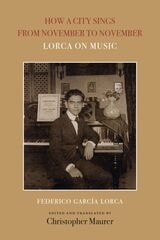
How a City Sings from November to November
Lorca on MusicFederico García Lorca
Swan Isle Press, 2026
“Yo ante todo, soy músico,” Federico García Lorca once remarked: “Before all else, I am a musician.” Whether seated at the piano, collecting folksongs on his travels through Spain, or composing music for his plays, few poets have lived music so deeply. For Lorca, songs were “living creatures.” How a City Sings from November to November: Lorca on Music brings together for the first time in English the poet’s writing on music and musicians. In these pages, through lectures, letters, and interviews, Lorca celebrates the musical seasons of Granada, “a city enclosed by mountains and made for music”; the sources of cante jondo (flamenco deep song); the haunting melodies of Spanish cradle songs; and the dance of La Argentina. He describes learning the guitar, staging Spanish ballads in Buenos Aires, and listening to spirituals in New York. In bed with a fever, he compares it to a “delicate tempo rubato of Chopin.” Based on recent archival research, edited and newly translated by noted Lorca scholar Christopher Maurer, this collection offers an intricate and enjoyable counterpoint to Lorca’s poetry and theater.
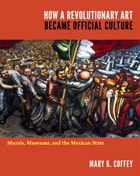
How a Revolutionary Art Became Official Culture
Murals, Museums, and the Mexican StateMary K. Coffey
Duke University Press, 2012
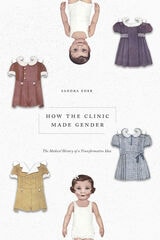
How the Clinic Made Gender
The Medical History of a Transformative IdeaSandra Eder
University of Chicago Press, 2022
Today, a world without “gender” is hard to imagine. Gender is at the center of contentious political and social debates, shapes policy decisions, and informs our everyday lives. Its formulation, however, is lesser known: Gender was first used in clinical practice. This book tells the story of the invention of gender in American medicine, detailing how it was shaped by mid-twentieth-century American notions of culture, personality, and social engineering.
Sandra Eder shows how the concept of gender transformed from a pragmatic tool in the sex assignment of children with intersex traits in the 1950s to an essential category in clinics for transgender individuals in the 1960s. Following gender outside the clinic, she reconstructs the variable ways feminists integrated gender into their theories and practices in the 1970s. The process by which ideas about gender became medicalized, enforced, and popularized was messy, and the route by which gender came to be understood and applied through the treatment of patients with intersex traits was fraught and contested. In historicizing the emergence of the sex/gender binary, Eder reveals the role of medical practice in developing a transformative idea and the interdependence between practice and wider social norms that inform the attitudes of physicians and researchers. She shows that ideas like gender can take on a life of their own and may be used to question the normative perceptions they were based on. Illuminating and deeply researched, the book closes a notable gap in the history of gender and will inspire current debates on the relationship between social norms and medical practice.
How the Clinic Made Gender
The Medical History of a Transformative IdeaSandra Eder
University of Chicago Press, 2022
This is an auto-narrated audiobook edition of this book.
An eye-opening exploration of the medical origins of gender in modern US history.
Today, a world without “gender” is hard to imagine. Gender is at the center of contentious political and social debates, shapes policy decisions, and informs our everyday lives. Its formulation, however, is lesser known: Gender was first used in clinical practice. This book tells the story of the invention of gender in American medicine, detailing how it was shaped by mid-twentieth-century American notions of culture, personality, and social engineering.
Sandra Eder shows how the concept of gender transformed from a pragmatic tool in the sex assignment of children with intersex traits in the 1950s to an essential category in clinics for transgender individuals in the 1960s. Following gender outside the clinic, she reconstructs the variable ways feminists integrated gender into their theories and practices in the 1970s. The process by which ideas about gender became medicalized, enforced, and popularized was messy, and the route by which gender came to be understood and applied through the treatment of patients with intersex traits was fraught and contested. In historicizing the emergence of the sex/gender binary, Eder reveals the role of medical practice in developing a transformative idea and the interdependence between practice and wider social norms that inform the attitudes of physicians and researchers. She shows that ideas like gender can take on a life of their own and may be used to question the normative perceptions they were based on. Illuminating and deeply researched, the book closes a notable gap in the history of gender and will inspire current debates on the relationship between social norms and medical practice.
How the Dismal Science Got Its Name
Classical Economics and the Ur-Text of Racial PoliticsDavid M. Levy
University of Michigan Press, 2002
Economists of the time argued, on the other hand, that people of color were to be protected by the rule of law--hence the moniker "the dismal science."
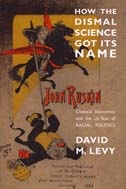
A startling image from 1893, which is reproduced in full color on this book's jacket, shows Ruskin killing someone who appears to be nonwhite. A close look reveals that the victim is reading "The Dismal Science."
Levy discusses this image at length and also includes in his text weblinks to Carlyle's "Occasional Discourse on the Negro Question" and to Mill's response, demonstrating that these are central documents in British classical economics. He explains Adam Smith's egalitarian foundations, contrasting Smith's approach to the hierarchical alternative proposed by Carlyle. Levy also examines various visual representations of this debate and provides an illuminating discussion of Smith's "katallactics," the science of exchange, comparing it with the foundations of modern neoclassical economics.
How the Dismal Science Got Its Name also introduces the notion of "rational choice scholarship" to explain how attacks on market economics from a context in which racial slavery was idealized have been interpreted as attacks on market economics from a humanistic or egalitarian context. Thus it will greatly appeal to economists, political scientists, philosophers, students of Victorian literature, and historians.
David M. Levy is Associate Professor of Economics and Research Associate, Center for Study of Public Choice, George Mason University.
How the Earth Feels
Geological Fantasy in the Nineteenth-Century United StatesDana Luciano
Duke University Press, 2024
How the Earth Turned Green
A Brief 3.8-Billion-Year History of PlantsJoseph E. Armstrong
University of Chicago Press, 2014
Using an evolutionary framework, How the Earth Turned Green addresses questions such as: Should all green organisms be considered plants? Why do these organisms look the way they do? How are they related to one another and to other chlorophyll-free organisms? How do they reproduce? How have they changed and diversified over time? And how has the presence of green organisms changed the Earth’s ecosystems? More engaging than a traditional textbook and displaying an astonishing breadth, How the Earth Turned Green will both delight and enlighten embryonic botanists and any student interested in the evolutionary history of plants.
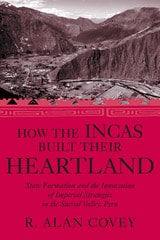
How the Incas Built Their Heartland
State Formation and the Innovation of Imperial Strategies in the Sacred Valley, PeruR. Alan Covey
University of Michigan Press, 2006
In How the Incas Built Their Heartland R. Alan Covey supplements an archaeological approach with the tools of a historian, forming an interdisciplinary study of how the Incas became sufficiently powerful to embark on an unprecedented campaign of territorial expansion and how such developments related to earlier patterns of Andean statecraft. In roughly a hundred years of military campaigns, Inca dominion spread like wildfire across the Andes, a process traditionally thought to have been set in motion by a single charismatic ruler, Pachacuti Inca Yupanqui. Taking nearly a century of archaeological research in the region around the Inca capital as his point of departure, Covey offers an alternative description of Inca society in the centuries leading up to imperial expansion. To do so, Covey proposes a new reading of the Spanish chronicles, one that focuses on processes, rather than singular events, occurring throughout the region surrounding Cusco, the Inca capital. His focus on long-term regional changes, rather than heroic actions of Inca kings, allows the historical and archaeological evidence to be placed on equal interpretive footing. The result is a narrative of Inca political origins linking Inca statecraft to traditions of Andean power structures, long-term ecological changes, and internal social transformations. By reading the Inca histories in a compatible way, Covey shows that it is possible to construct a unified theory of how the Inca heartland was transformed after AD 1000.
R. Alan Covey is Assistant Professor of Anthropology at Southern Methodist University.
How the Military Remembers
Human Rights and Countermemories in Latin AmericaEdited by Cynthia E. Milton and Michael J. Lazzara
University of Wisconsin Press, 2025
With attention to the distinct cultural, political, and historical contexts across Latin America, the essays reveal how military figures and institutions appropriate mechanisms of truth-telling and accountability to reframe the past, blur the lines between perpetrator and victim, and weaponize memory itself.
Contributors: Mariana Achugar, Gabriela Fried Amilivia, Rebecca Atencio, Jo-Marie Burt, Rachel Hatcher, Nicolás Rodríguez Idárraga, Michael J. Lazzara, Cynthia E. Milton, Carla Granados Moya, María Emma Wills Obregón, Leith Passmore, Valentina Salvi, Gladys Vásquez Zevallos
How the New Deal Was Run
Edited by Sarah E. Igo and Ganesh Sitaraman
University of Chicago Press, 2027
Notable historians delve into the brass tacks of launching and sustaining federal agencies.
Critics today complain that the United States government can’t do big things, can’t do them quickly, and certainly can’t do many of them at once. The New Deal offers a striking contrast. During the 1930s, the United States created a wealth of new agencies, departments, offices, and programs—all at once and in very short order—that enabled a stunning expansion of state capacity. The question is: how?
In this illuminating collection, leading American historians explore the nuts and bolts of New Deal implementation to offer answers. From the Civilian Conservation Corps to the Rural Electrification Administration to the Securities and Exchange Commission, they uncover exactly how the New Dealers did so much so quickly. They detail the choices before state builders who, operating under the pressure and immediacy of the era, made decisions that had momentous consequences in the longer term.
At a time when federal agencies are under stress as never before, the contributors suggest what future administrations can learn from the New Deal’s extraordinary achievements—and how they can build state capacity and deliver for Americans once again.
Features contributions by W. Tanner Allread, Mary Bridges, Brent Cebul, Sarah E. Igo, Meg Jacobs, Richard R. John, Neil M. Maher, Sharon Ann Musher, Sarah T. Phillips, Kathryn Olmsted and Eric Rauchway, Alex Platt, Jason Scott Smith, Ganesh Sitaraman, Abby Spinak, Chloe Thurston, and Mason B. Williams.
How the News Feels
The Empathic Power of Literary JournalistsJonathan D. Fitzgerald
University of Massachusetts Press, 2023
Literary journalism’s origins can be traced to the nineteenth century, when it developed alongside the era’s sentimental literature. Combining fact-based reporting with the sentimentality of popular fiction, literary journalism encouraged readers to empathize with subjects by presenting more nuanced and engaging stories than typical news coverage. While women writers were central to the formation and ongoing significance of the genre, literary journalism scholarship has largely ignored their contributions.
How the News Feels re-centers the work of a range of writers who were active from the nineteenth century until today, including Catharine Williams, Margaret Fuller, Nellie Bly, Winifred Black, Zora Neale Hurston, Joan Didion, Adrian Nicole LeBlanc, and Alexis Okeowo. Offering intimate access to their subjects’ thoughts, motivations, and yearnings, these journalists encouraged readers to empathize with society’s outcasts, from asylum inmates and murder suspects to “fallen women” and the working poor. As this carefully researched study shows, these writers succeeded in defining and developing the genre of literary journalism, with stories that inspire action, engender empathy, and narrow the gap between writer, subject, and audience.

How the North Won
A MILITARY HISTORY OF THE CIVIL WARHerman Hattaway and Archer Jones
University of Illinois Press, 1983
“To those unacquainted with military history, [this book] provides an elementary, instructive, and readable military account of the American Civil War. The basic concepts of war, its conduct, management, and support, are thoroughly explained and explicitly applied throughout in order to make clear what many authors often incorrectly take for granted that readers already know. . . .
We have tried to tell the military history of the war from the viewpoint of the higher commanders on both sides. We therefore emphasize strategy and logistics rather than tactics. . . .Strategy, management, and execution weigh more than superior numbers and resources in dictating the outcomes of wars, and the Civil War is no exception. The weaker side can win; the South almost did.”

How the Soviet Union Disappeared
An Essay on the Causes of DissolutionWisla Suraska
Duke University Press, 1998
Using numerous secondary sources, recently published memoir literature, and new archival research, Suraska’s multidimensional study delves into the many factors involved in the dissolution of the Soviet empire—the role of Gorbachev and his contest with Yeltsin, the weakness of the Soviet state, and the poverty of ideas that informed perestroika. She also examines the complex relationship between the Communist Party, the KGB, and the military; the way Gorbachev dealt with the German question; and the rise of post-Marxist thought in the Soviet Union. Whether discussing how insufficient control over coercive forces or the growing strength of provincial barons impacted the collapse, Suraska furthers her argument that the explosion of nationalisms in the Soviet Union was as much activated by the breakdown of central structures as it actually contributed to the final demolition of the regime. In the end, How the Soviet Union Disappeared reveals Gorbachev’s perestroika as having been nothing short of a radical attempt to rebuild power that the Soviet center had lost in the post-Stalinist period.
In its questioning of the assumptions of most previous scholarship and discourse on the Soviet Union, this book will be of interest to Sovietologists, political scientists, and students of communism and nationalism.
How the Tea Party Captured the GOP
Insurgent Factions in American PoliticsRachel M. Blum
University of Chicago Press, 2020
In How the Tea Party Captured the GOP, Rachel Marie Blum approaches the Tea Party from the angle of party politics, explaining the Tea Party’s insurgent strategies as those of a party faction. Blum offers a novel theory of factions as miniature parties within parties, discussing how fringe groups can use factions to increase their political influence in the US two-party system. In this richly researched book, the author uncovers how the electoral losses of 2008 sparked disgruntled Republicans to form the Tea Party faction, and the strategies the Tea Party used to wage a systematic takeover of the Republican Party. This book not only illuminates how the Tea Party achieved its influence, but also provides a framework for identifying other factional insurgencies.
How the West Came to Rule
The Geopolitical Origins of CapitalismAlex Anievas and Kerem Nisancioglu
Pluto Press, 2015
***Winner, British International Studies Association International Political Economy Working Group Book Prize 2016***
Mainstream historical accounts of the development of capitalism describe a profess which is fundamentally European—a system that was born in the mills and factories of English and under the guillotines of the French Revolution. This groundbreaking book tells a very difference story.
How the West Came to Rule offers a unique interdisciplinary and international historical account of the origins of capitalism. It argues that, contrary to dominant wisdom, capitalism’s origins should not be understood as a development confined to the geographically and culturally sealed borders of Europe, but the outcome of a wider array of global processes in which non-European societies played a decisive role.
Here is a provocative, incisive explanation of how capitalism emerged in England and Europe through a dialectical intersocietal and geopolitical process. The authors’ aim to undermine a Eurocentric bias that has been prominent in the debate about capitalisms rise to supremacy, and their case is remarkably convincing. They provide a fundamental rethinking. Anievas and Nisancioglu contend that often cited assumptions are neither theoretically nor empirically tenable and deny the agency of non-Western societies to the emergence of capitalism. Topics covered include:
*The Problem of Eurocentrism
*The Problem of Historical Specificity
*The Brenner Thesis: Explanation and Critique
*The Geopolitical in the Making of Capitalism
*The Political Marxist Conception of Capitalism
*Rethinking the Origins of Capitalism
*And much more!
Through an outline of the uneven histories of Mongolian expansion, New World discoveries, Ottoman-Habsburg rivalry, the development of the colonies, and bourgeois revolutions, Alex Anievas and Kerem Nisancioglu offer an account of capitalism’s origins that convincingly argues against the prevailing Eurocentric narratives. It will change minds and open the eyes of historians, economists, and political thinkers.
How the West Really Lost God
A New Theory of SecularizationMary Eberstadt
Templeton Press, 2014
How the Workers Became Muslims
Immigration, Culture, and Hegemonic Transformation in EuropeFerruh Yilmaz
University of Michigan Press, 2016
Yilmaz’s primary case study is Danish immigration discourse, but his argument contextualizes his study in terms of questions of current concern across Europe, where right-wing groups that were long on the fringes of “legitimate” politics have managed to make significant gains with populations traditionally aligned with the Left. Specifically, Yilmaz argues that sociopolitical space has been transformed in the last three decades such that group classification has been destabilized to emphasize cultural rather than economic attributes.
According to this point-of-view, traditional European social and political splits are jettisoned for new “cultural” alliances pulling the political spectrum to the right, against the “corrosive” presence of Muslim immigrants, whose own social and political variety is flattened into an illusion of alien sameness.
How to Be French
Nationality in the Making since 1789Patrick Weil
Duke University Press, 2008
Throughout How to Be French, Weil compares French laws to those of other countries, including the United States, Great Britain, and Germany, showing how France both borrowed from and influenced other nations’ legislation. Examining moments when a racist approach to nationality policy held sway, Weil brings to light the Vichy regime’s denaturalization of thousands of citizens, primarily Jews and anti-fascist exiles, and late-twentieth-century efforts to deny North African immigrants and their children access to French nationality. He also reveals stark gender inequities in nationality policy, including the fact that until 1927 French women lost their citizenship by marrying foreign men. More than the first complete, systematic study of the evolution of French nationality policy, How to be French is a major contribution to the broader study of nationality.
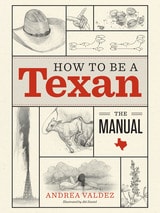
How to Be a Texan
The ManualBy Andrea Valdez
University of Texas Press, 2016
There are certain things every Texan should know how to do and say, whether your Lone Star roots reach all the way back to the 1836 Republic or you were just transplanted here yesterday. Some of these may be second nature to you, but others . . . well, maybe it wouldn’t hurt to have a few handy hints if, say, branding the herd or hosting a tamalada aren’t your usual pastimes. That’s where How to Be a Texan can help.
In a friendly, lighthearted style, Andrea Valdez offers illustrated, easy-to-follow steps for dozens of authentic Texas activities and sayings. In no time, you’ll be talking like a Texan and dressing the part; hunting, fishing, and ranching; cooking your favorite Texas dishes; and dancing cumbia and two-step. You’ll learn how to take a proper bluebonnet photo and build a Día de los Muertos altar, and you’ll have a bucket list of all the places Texans should visit in their lifetime. Not only will you know how to do all these things, you’ll finish the book with a whole new appreciation for what it means to be a Texan and even more pride in saying “I’m from Texas” anywhere you wander in the world.
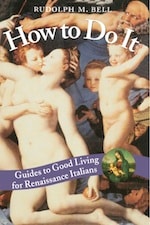
How to Do It
Guides to Good Living for Renaissance ItaliansRudolph M. Bell
University of Chicago Press, 1999
"Lively and curious reading, particularly in its cascade of anecdote, offered in a breezy, cozy, journalistic style." —Lauro Martines, Times Literary Supplement
"[Bell's] fascinating book is a window on a lost world far nearer to our own than we might imagine. . . . How pleasant to read his delightful, informative and often hilarious book." —Kate Saunders, The Independent
"An extraordinary work which blends the learned with the frankly bizarre." —The Economist
"Professor Bell has a sly sense of humor and an enviably strong stomach. . . . He wants to know how people actually behaved, not how the Church or philosophers or earnest humanists thought they should behave. I loved this book." —Christopher Stace, Daily Telegraph
How to Do the History of Homosexuality
David M. Halperin
University of Chicago Press, 2002
Dealing both with male homosexuality and with lesbianism, this study imparts to the history of sexuality a renewed sense of adventure and daring. It recovers the radical design of Michel Foucault's epochal work, salvaging Foucault's insights from common misapprehensions and making them newly available to historians, so that they can once again provide a powerful impetus for innovation in the field. Far from having exhausted Foucault's revolutionary ideas, Halperin maintains that we have yet to come to terms with their startling implications. Exploring the broader significance of historicizing desire, Halperin questions the tendency among scholars to reduce the history of sexuality to a mere history of sexual classifications instead of a history of human subjectivity itself. Finally, in a theoretical tour de force, Halperin offers an altogether new strategy for approaching the history of homosexuality—one that can accommodate both ruptures and continuities, both identity and difference in sexual experiences across time and space.
Impassioned but judicious, controversial but deeply informed, How to Do the History of Homosexuality is a book rich in suggestive propositions as well as eye-opening details. It will prove to be essential reading for anyone interested in the history of sexuality.
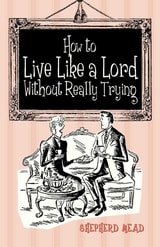
How to Live like a Lord Without Really Trying
Shepherd Mead
Bodleian Library Publishing, 2012
In 1958, ad man and soon-to-be best-selling author Shepherd Mead moved to England with his family to pursue his career. Six years later, his observations on the oddities of British culture were enough to compile a satirical guidebook for fellow Americans planning to visit from across the pond. The blunders that could befall them were many. For instance, explains Mead, “Pants are always underpants and what you wear out in the open are trousers. Mistakes in this area can lead to nasty misunderstandings.”
How to Live/What to Do
H.D.'s Cultural PoeticsAdalaide Morris
University of Illinois Press, 2002
Ever since the publication of her first H.D. essay in 1985 (included here in an expanded version), Morris has eschewed prevailing literary trends in favor of new approaches that both challenge and overpass dominant critical constructs. As she argues in this volume, the writing and, crucially, the reading of poetry is a process in which meaning is produced by the interplay of words on a page and in the ear of the reader. This quality of being not heard but overheard, composed within the body, is crucial to an appreciation of H.D.
Morris shows H.D. to be a playful linguistic innovator whose writings bear on debates in science, technology, and cinema as well as on poetry. Foremost, however, H.D. was a profound reshaper of the boundaries and possibilities of poetry, a generative form that, as this book shows, can indeed serve the cultural work of survival and resistance against the violence of modern culture.
How to Lose the Hounds
Maroon Geographies and a World beyond PolicingCeleste Winston
Duke University Press, 2023
How to Read Donald Duck
Imperialist Ideology in the Disney ComicAriel Dorfman
Pluto Press, 2020
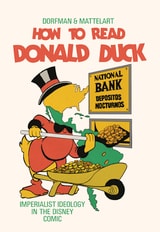
First published in 1971, How to Read Donald Duck shocked readers by revealing how capitalist ideology operates in our most beloved cartoons. Having survived bonfires, impounding and being dumped into the ocean by the Chilean army, this controversial book is once again back on our shelves.
Written and published during the blossoming of Salvador Allende's revolutionary socialism in Chile, the book examines how Disney products reflect capitalist ideology, and are active agents working in this ideology’s favor. Focusing on the hapless mice and ducks of Disney, curiously parentless, marginalized and always short of cash, Ariel Dorfman and Armand Mattelart expose how these characters established hegemonic ideas about capital, race, gender and the relationship between developed countries and the Third World.
A devastating indictment of a media giant, a document of twentieth-century political upheaval, and a reminder of the dark undercurrent of pop culture, How to Read Donald Duck is once again available, together with a new introduction by Ariel Dorfman in which he writes.
"It is that joy in liberation, that alegria, that spirit of resistance, that I wish to share with America, as the book that Pinochet’s soldiers could not liquidate or Disney’s lawyers stop from entering the United States finally finds its way to its new home, deep into the land that invented Donald Duck and Donald Trump. Is the same country that gave me such a warm welcome as a child, and perhaps may now equally greet with open arms this critique of oppression and it certainty that we don’t have to leave the world as it was when we first encountered it."
How to Shoot the Longbow
A Guide from Historical and Applied SourcesHugh D. H. Soar
Westholme Publishing, 2015
“Soar’s book [The Crooked Stick] is indispensible.”—Bernard Cornwell, New York Times bestselling author
Relying on more than fifty years’ experience in archery, historian Hugh D. H. Soar reflects on how the longbow was drawn and shot across the centuries through examining the design of the bow and early literature about the bow, combined with his and his colleagues’ applied knowledge using replica bows. No complete medieval longbow has survived, but those found aboard the Tudor warship Mary Rose provide the best archaeological evidence to the possible construction of the medieval bow. Contemporary treatises written about the proper manner of shooting the bow, together with the resurgence in interest and construction of replica bows beginning in the late sixteenth century that form part of the author’s collection provide the basis for this work. How to Shoot the Longbow: A Guide from Historical and Applied Sources is a fascinating and practical look at the use of a legendary invention.
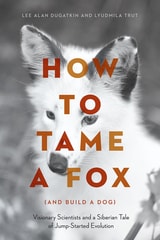
How to Tame a Fox (and Build a Dog)
Visionary Scientists and a Siberian Tale of Jump-Started EvolutionLee Alan Dugatkin and Lyudmila Trut
University of Chicago Press, 2017
Most accounts of the natural evolution of wolves place it over a span of about 15,000 years, but within a decade, Belyaev and Trut’s fox breeding experiments had resulted in puppy-like foxes with floppy ears, piebald spots, and curly tails. Along with these physical changes came genetic and behavioral changes, as well. The foxes were bred using selection criteria for tameness, and with each generation, they became increasingly interested in human companionship. Trut has been there the whole time, and has been the lead scientist on this work since Belyaev’s death in 1985, and with Lee Dugatkin, biologist and science writer, she tells the story of the adventure, science, politics, and love behind it all. In How to Tame a Fox, Dugatkin and Trut take us inside this path-breaking experiment in the midst of the brutal winters of Siberia to reveal how scientific history is made and continues to be made today.
To date, fifty-six generations of foxes have been domesticated, and we continue to learn significant lessons from them about the genetic and behavioral evolution of domesticated animals. How to Tame a Fox offers an incredible tale of scientists at work, while also celebrating the deep attachments that have brought humans and animals together throughout time.
How to be Human*
*Though an EconomistDeirdre N. McCloskey
University of Michigan Press, 2000
Anyone can learn about the field of economics from How to Be Human. She can learn how economics works as a discipline and as a piece of sociology, who the heroes are and the villains, how a career in economics relates to matters of ethics and epistemology. She can learn what it is like to be a new woman in a boys' subject, a subject that avoids at all costs the word "love."
During the 1990s Deirdre McCloskey established herself as the main internal critic of the economic mainstream. Her quarterly columns in the Eastern Economic Journal, many of which are collected here, have become a handbook for reform. Trained in economics herself, she knows the normal science of the field from the inside: she has done it as a distinguished economic historian; and has watched it work from the faculties of Chicago (for twelve years) and Iowa (for nineteen), and now at the University of Illinois at Chicago.
Her criticism from the inside is that the two methods on which economics has depended since the 1940s--existence-theorem mathematics and significance-testing statistics--are nonsense. They have, she claims, nothing to do with economic science, and have massively diverted economists from finding out how the economy works.
McCloskey's book is written for anyone interested in economics, whether trained in it or not--anyone who cares about the economy but is not taken in by the boys' game.
Deirdre McCloskey is University Professor of the Human Sciences, University of Illinois at Chicago.
How to be a Good Lover
Edited by the Bodleian Library
Bodleian Library Publishing, 2012
Across the centuries, few experiences in life rival the excitement and emotional intensity of falling in love. Yet from the moment we set eyes on a special someone, the path to their heart seems strewn with devastating pitfalls. What if the object of our affection hates the way we wear our hair, finds our kisses lacking, or resents our talk of former loves?How does one go about successfully wooing a future husband or wife? Fortunately, there are time-honored strategies to avoid these pitfalls and help us attract and keep the paramour of our dreams.
How to be a Good Parent
Compiled by Jaqueline Mitchell
Bodleian Library Publishing, 2015
The mere provision of the vegetable is not sufficient; it must be actually eaten.
If there is room enough for somersaults, the child can be satisfied.
These are just a few of the words of wisdom on offer in How to be a Good Parent, the latest in a series of delightful advice books from the Bodleian Library that also includes How to be a Good Husband and How to be a Good Wife. As developmental psychology began to show promise, beleaguered parents were drawn to the nascent discipline with the sorts of questions that will be familiar to any parent: How does one tell a toddler “no” without triggering a tantrum? Are there circumstances in which it’s acceptable to extract good behavior with bribery?
How to be a Good Parent brings together bits from the best of advice books of the 1920s and ’30s, taking readers through all the challenges involved in raising a child. Among the topics discussed are good—and bad—behavior, how to dress one’s dear son or darling daughter, mealtime, and the dreaded morning and bedtime routines. A section on taking medicine offers sage advice: “Gargling is a useful accomplishment” (while perhaps not appropriate for the dinner table). In a section on playtime, parents tasked with planning their child’s birthday will warmly welcome the book’s advice to “let the children give their own parties!”
By turns humorously old-fashioned and timeless, How to be a Good Parent is a charmingly illustrated guide to what any parent can tell you is the world's most difficult job.
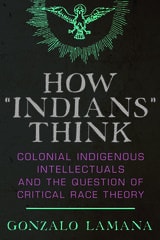
How “Indians” Think
Colonial Indigenous Intellectuals and the Question of Critical Race TheoryGonzalo Lamana
University of Arizona Press, 2019
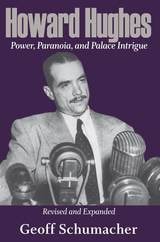
Howard Hughes
Power, Paranoia, and Palace Intrigue, Revised and ExpandedGeoff Schumacher
University of Nevada Press, 2020
Although the public viewed Hughes as a heroic and independent-minded trailblazer, behind closed doors he suffered from germophobia, obsessive-compulsive disorder, and an addiction to painkillers. He became paranoid and reclusive, surrounding himself with a small cadre of loyal caretakers. As executives battled each other over his empire, Hughes’ physical and mental health deteriorated to the point where he lost control of his business affairs.
This second edition includes more insider details on Hughes’ personal interactions with actresses, journalists, and employees. New chapters provide insights into Hughes’s involvement with the mob, his ownership and struggles as the majority shareholder of TWA and the wide-ranging activities of Hughes Aircraft Company, Hughes’s critical role in the Glomar Explorer CIA project (a deep-sea drillship platform built to recover the Soviet submarine K-129), and more. Based on in-depth interviews with individuals who knew and worked with Hughes, this fascinating biography provides a colorful and comprehensive look at Hughes—from his life and career to his final years and lasting influence. This penetrating depiction of the man behind the curtain demonstrates Hughes’s legacy, and enduring impact on popular culture.