Results by title
3388 books match the query 'Fiction' and 95 start with h
Holy Smoke
Fanny Howe
University of Alabama Press, 1979
Howe tells the story of a woman traveling among geographies both real and imagined looking for her daughter. Even within the twenty-first century landscape where hybrid works are common, perhaps all too common, Fanny How's 1979 Holy Smoke offers a still startlingly inventive mixture of prose, poetry, images, found objects and ephemera, journaling and more.
Holy Week
A Novel of the Warsaw Ghetto UprisingJerzy Andrzejewski
Ohio University Press, 2006
At the height of the Nazi extermination campaign in the Warsaw Ghetto, a young Jewish woman, Irena, seeks the protection of her former lover, a young architect, Jan Malecki. By taking her in, he puts his own life and the safety of his family at risk. Over a four-day period, Tuesday through Friday of Holy Week 1943, as Irena becomes increasingly traumatized by her situation, Malecki questions his decision to shelter Irena in the apartment where Malecki, his pregnant wife, and his younger brother reside. Added to his dilemma is the broader context of Poles’ attitudes toward the “Jewish question” and the plight of the Jews locked in the ghetto during the final moments of its existence.
Few fictional works dealing with the war have been written so close in time to the events that inspired them. No other Polish novel treats the range of Polish attitudes toward the Jews with such unflinching honesty.
Jerzy Andrzejewski’s Holy Week (Wielki Tydzien, 1945), one of the significant literary works to be published immediately following the Second World War, now appears in English for the first time.
This translation of Andrzejewski’s Holy Week began as a group project in an advanced Polish language course at the University of Pittsburgh. Class members Daniel M. Pennell, Anna M. Poukish, and Matthew J. Russin contributed to the translation; the instructor, Oscar E. Swan, was responsible for the overall accuracy and stylistic unity of the translation as well as for the biographical and critical notes and essays.

Home Material
Ohio's Nineteenth-Century Regional Women's FictionSandra Parker
University of Wisconsin Press, 1998
Home Movies and Other Necessary Fictions
Michelle Citron
University of Minnesota Press, 1998
Home in the Dark
Selected StoriesJayanta Dey
Seagull Books, 2025
Home in the Dark peels back the polished surface of middle-class life to expose the shadows lurking underneath: violence, betrayal, and the unsettling truths we refuse to see. In these fifteen gripping stories, Jayanta Dey weaves a world where desperation takes strange forms: a woman on the brink of suicide finds an unlikely savior in a rat, a stolen clock carries the weight of communal hatred, and a writer–publisher duo rides the highs of literary success—until their lucrative business in pornography turns against them.
Set in Calcutta and its suburbs, these tales decipher the moral and psychological conflicts simmering beneath genteel facades, where people will do anything to survive. With elements of the macabre and the psychological, Home in the Dark delivers sharp twists that unsettle as much as they illuminate. Translated from Bengali by Sayari Debnath, this collection brings a new and daring voice to readers, offering a rare glimpse into the dark undercurrents of contemporary urban life in India.
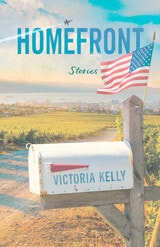
Homefront
StoriesVictoria Kelly
University of Nevada Press, 2024
Foreword INDIES 2024 Silver Winner for War & Military (Adult Fiction)!
Inspired by Victoria Kelly’s experiences as the wife of a fighter pilot during three wartime deployments, this collection follows women whose lives have been impacted by war and military service as they struggle with their fragile ideas of home.
In “Prayers of an American Wife,” a Navy wife grapples with loneliness when she discovers that her neighbor, also a Navy wife, is having an affair while their husbands are deployed on the same aircraft carrier. Tensions rise in “The Strangers of Dubai” as a soldier on leave tries to buy his wife a souvenir from an Afghan vendor. After attending eight funerals with fellow military wives whose husbands died in the Iraq war, the protagonist in “Finding the Good Light” divorces her Navy husband and tries to start a new life as a movie star. These, along with the eleven other stories in this collection, explore the emotional landscape of the resilient women who remain on the homefront.
Kelly’s stories offer readers an intimate, eye-opening look into the sacrifices and steadfastness of military family members.
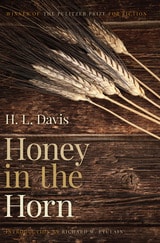
Honey in the Horn
H.L. Davis
Oregon State University Press, 2015
Clay Calvert, an orphan, works as a hand on a sheep ranch until he stumbles into trouble and is forced to flee. Journeying throughout the state, from the lush coastal forests, to the Columbia Gorge, to the golden wheat fields east of the Cascades, he encounters a cast of characters as rich and diverse as the land, including a native Tunne boy and a beautiful girl named Luce.
Originally published in 1935, Honey in the Horn reveals as much about the prevailing attitudes and beliefs of H. L. Davis’ lifetime as it does about the earlier era in which it is set. It transcends the limitations of its time through the sheer power and beauty of Davis’ prose. Full of humor and humanity, Davis’s first novel displays a vast knowledge of Pacific Northwest history, lore, and landscape.
An essential book for all serious readers of Northwest literature, this classic coming-of-age novel has been called the “Huckleberry Finn of the West.” It is the only Oregon book that has ever won a Pulitzer Prize for fiction. With a new introduction by Richard W. Etulain, this important work from one of Oregon’s premier authors is once again available for a new generation to enjoy.
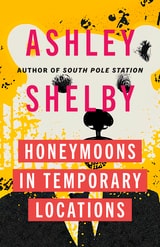
Honeymoons in Temporary Locations
Ashley Shelby
University of Minnesota Press, 2024
Eclectic, experimental, and wildly imaginative climate fictions from a familiar world hauntingly transformed
Climate disaster–induced fugue states, mutinous polar bears, support groups for recently displaced millionaires, men who hear trees, and women who lose their wives on environmental refugee resettlement trips. In these dispatches from a weirding world, the absurd and fantastic are increasingly indistinguishable from reality. Exploring this liminal moment, Ashley Shelby’s collection of climate fictions imagines a near future that is both unnervingly familiar and subversively strange.
Set in the same post-climate-impact era, these stories range from playfully satirical to poignantly humane, bending traditional narrative forms and coming together into a brilliant and unusual contemplation of our changing world. Featuring the Hugo-nominated novelette “Muri,” Honeymoons in Temporary Locations processes the unthinkable through riotous inventions like guided tours of submerged cities, Craigslist ads placed by climate refugees, and cynical pharmaceutical efforts to market a drug to treat solastalgia, the existential distress caused by environmental change.
Shelby reengineers the dystopic bleakness that characterizes so much climate fiction by embracing an eclectic experimentalism leavened with humor, irony, and the inevitable bathos that characterizes the human experience. Unexpected and clever, this innovative collection confirms her status as a visionary writer whose work expands the forms, attitudes, and possibilities of climate fiction.

Honouring the Strength of Indian Women
Plays, Stories, PoetryVera Manuel
University of Manitoba Press, 2019
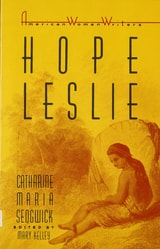
Hope Leslie
Or, Early Times in the MassachusettsSedgwick, Catherine M
Rutgers University Press, 1987
Hope Leslie (1827), set in the seventeenth-century New England, is a novel that forced readers to confront the consequences of the Puritans’ subjugation and displacement of the indigenous Indian population at a time when contemporaries were demanding still more land from the Cherokees, the Chickasaws, and the Choctaws.
"This handsome reprint ... makes available after many decades the New Englander's tale of seventeeth-century Puritans, and their relations with the indigenous Indian population." -- Nineteeth-Century Literature
" A splendidly conceived edition of Sedwick's historical romance. Highly recommended." --Choice
"Develop(s) the connections between patriarchal authority within the Puritan state and its policy of dispossessing and exterminating Indians. The different heritage it envisions explicitly link white women and Indians and elaborates a communal concept of liberty at odds with the individualistic concept which predominated in American culture." -- Legacy
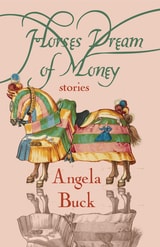
Horses Dream of Money
StoriesAngela Buck
University of Alabama Press, 2021
2021 Big Other Book Award Fiction Finalist
A visceral, stark, and deadpan collection of stories that brilliantly fuse humor with horror
Horses Dream of Money is a daring collection of tales, darkly humorous, that eerily channels the surreal and sinister mood of the times. Preoccupied with the fault lines between life and death, and veering often into horror, Angela Buck brings a raw energy and witty sobriety to these accounts of human life and connection with the intimacy of fireside-storytelling, gimlet-eyed revelry in bloodletting, and a masterful sleight of hand between the fantastical and the quotidian.
“The Solicitor” reinvents the coming-of-age story as a romance-for-hire between a girl and her “solicitor,” a man whose services are demanded by her mother and enforced by a cruel master. “Coffin-Testament” is a fabulous futuristic account of the extinction of human life on earth written 1,667 years later by a group of lady robots channeling Sir Thomas Browne to muse on their own mortality. “The Bears at Bedtime” documents a compound of cuddly kind worker-bears and their ruthless doings. “Bisquit” imagines today’s precariat as a lovable horse who is traded from one master to another until a horse race brings his maddeningly repetitive adventures to a violent conclusion.
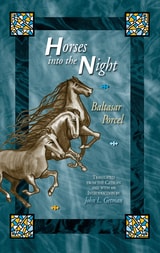
Horses into the Night
Baltasar Porcel
University of Arkansas Press, 1994
Belonging with the work of Gabriel Garcia Márquez, Carlos Fuentes, and Julio Cortázar, this richly drawn story runs the gamut from lyrical to violent to pastoral. Originally published in 1975, Cavalls cap a la fosca was hailed by the public and critics alike as perhaps the most incisive Catalan novel since the Spanish Civil War. It was honored with four prestigious literary prizes, including the 1976 Spanish Literary Critics’ Award
In Horses into the Night, the narrator’s search for his roots—especially for his father—among the myths, stories, lies, and truths of his family and hometown, strikes a universal chord. As the plot becomes increasingly textured with piracy, smuggling, the Inquisition, morbid familial relationships, eroticism, and occult occurrences, it is all but impossible to resist this epic story described by El Pais as a “Mediterranean novel flooded with light and bathed in darkness.”
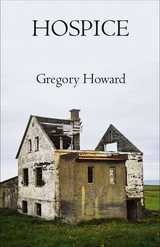
Hospice
Gregory Howard
University of Alabama Press, 2015
Comic, melancholy, haunted, and endlessly inventive, Gregory Howard’s debut novel Hospice follows Lucy later in life as she drifts from job to job caring for dogs, children, and older women—all the while trying to escape the questions of her past only to find herself confronting them again and again.
In the odd and lovely but also frightening life of Lucy, everyday neighborhoods become wonderlands where ordinary houses reveal strange inmates living together in monastic seclusion, wayward children resort to blackmail to get what they want, and hospitals seem to appear and disappear to avoid being found.
Replete with the sense that something strange is about to happen at any moment, Hospice blurs the borders between the mundane and miraculous, evoking the intensity of the secret world of childhood and distressing and absurd search for a place to call home.
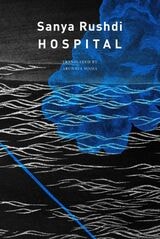
Hospital
Sanya Rushdi
Seagull Books, 2023
In Melbourne, Australia, a woman in her late thirties is diagnosed with her third episode of psychosis, amounting to schizophrenia. What follows is a frenzied journey from home to a community house to a hospital and out again. Sanya, the protagonist, finds herself questioning the diagnosis of her sanity or insanity, as determined and defined by a medical model which seems less than convincing to her. Having studied psychology herself, she wonders whether, even if the diagnosis is correct to some extent, the treatment should be different. Sanya tells her story in a deceptively calm, first-person voice, using conversations as the primary narrative mode, as she ponders if and when the next psychotic episode will materialize.
Based on real-life events and originally written in Bengali, Hospital is a daring first novel that unflinchingly depicts the precarity of a woman living with psychosis and her struggles with the definition of sanity in our society.
Hot Wind, Boiling Rain
Scary Stories for Strong HeartsLynette Ford
Parkhurst Brothers, Inc., 2015

Hotel Malabar
Brendan Galvin
University of Iowa Press, 1998
Hourglass
Danilo Kis
Northwestern University Press, 1997
House Fires
Nancy Reisman
University of Iowa Press, 1999
House Of Incest
Anaïs Nin
Ohio University Press, 1958
With an introduction by Allison Pease, this new edition of House of Incest is a lyrical journey into the subconscious mind of one of the most celebrated feminist writers of the twentieth-century.
Originally published in 1936, House of Incest is Anaïs Nin’s first work of fiction. Based on Nin’s dreams, the novel is a surrealistic look within the narrator’s subconscious as she attempts to distance herself from a series of all-consuming and often taboo desires she cannot bear to let go. The incest Nin depicts is a metaphor—a selfish love wherein a woman can appreciate only qualities in a lover that are similar to her own. Through a descriptive exploration of romances and attractions between women, between a sister and her beloved brother, and with a Christ-like man, Nin’s narrator discovers what she thinks is truth: that a woman’s most perfect love is of herself. At first, this self-love seems ideal because it is attainable without fear and risk of heartbreak. But in time, the narrator’s chosen isolation and self-possessed anguish give way to a visceral nightmare from which she is unable to wake.
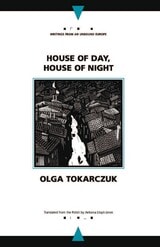
House of Day, House of Night
Olga Tokarczuk
Northwestern University Press, 2003
Winner of the Gunter Grass Prize
Nowa Ruda is a small town in Silesia, an area that has been a part of Poland, Germany, and the former Czechoslovakia in the past. When the narrator moves into the area, she and discovers everyone-and everything-has its own story. With the help of Marta, her enigmatic neighbor, the narrator accumulates these stories, tracing the history of Nowa Ruda from the founding of the town to the lives of its saints, from the caller who wins the radio quiz every day to the tale of the man who causes international tension when he dies on the border, one leg on the Polish side, the other on the Czech side. Each of the stories represents a brick and they interlock to reveal the immense monument that is the town. What emerges is the message that the history of any place--no matter how humble--is limitless, that by describing or digging at the roots of a life, a house, or a neighborhood, one can see all the connections, not only with one's self and one's dreams but also with all of the universe.
Richly imagined, weaving in anecdote with recipes and gossip, Tokarczuk's novel is an epic of a small place. Since its original publication in 1998 it has remained a bestseller in Poland. House of Day, House of Night is the English-language debut of one of Europe's best young writers.
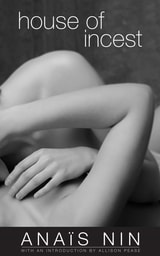
House of Incest
Anaïs Nin
Ohio University Press, 1958
With an introduction by Allison Pease, this new edition of House of Incest is a lyrical journey into the subconscious mind of one of the most celebrated feminist writers of the twentieth-century.
Originally published in 1936, House of Incest is Anaïs Nin’s first work of fiction. Based on Nin’s dreams, the novel is a surrealistic look within the narrator’s subconscious as she attempts to distance herself from a series of all-consuming and often taboo desires she cannot bear to let go. The incest Nin depicts is a metaphor—a selfish love wherein a woman can appreciate only qualities in a lover that are similar to her own. Through a descriptive exploration of romances and attractions between women, between a sister and her beloved brother, and with a Christ-like man, Nin’s narrator discovers what she thinks is truth: that a woman’s most perfect love is of herself. At first, this self-love seems ideal because it is attainable without fear and risk of heartbreak. But in time, the narrator’s chosen isolation and self-possessed anguish give way to a visceral nightmare from which she is unable to wake.
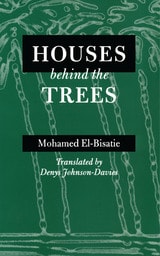
Houses behind the Trees
By Mohamed El-Bisatie
University of Texas Press, 1998
Set in a small village in the Egyptian Delta, El-Bisatie's finely tuned novella illustrates the social and sexual tensions in a community in which nothing is secret and where people's pasts haunt their present.
When Mussad catches the butcher's son Amer with his wife, the whole village knows and waits with bated breath for Mussad to exact his revenge. But something goes wrong. Mussad's ill-planned schemes are choked by an opaque veil of history—his wife's sexual past, the war-torn lives of their families, and the personal allegiances of his friends and enemies. The village women relive private desires and inner fears as the men take sides in the struggle, either to protect Amer from Mussad's wrath or to help Mussad track down and confront his nemesis.
In the words of Denys Johnson-Davies, "El-Bisatie is a writer's writer, which is to say a writer who makes no concession to the lazy reader. El-Bisatie stands back from his canvas and sketches his characters and events with a studied detachment. While there is drama in his stories it is never highlighted. The menace lurks almost unseen between the lines."
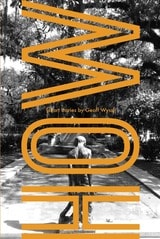
How
Geoff Wyss
The Ohio State University Press, 2012
If every story is born of a question—How did we get here? How do you make your arm do that?—the stories in Geoff Wyss’s How search for answers to the mysteries of an astonishing range of characters. The narrator of “How I Come to Be Here at the GasFast” explains why he hasn’t left a truck stop in the two days since he scratched a winning lottery ticket. In “How to Be a Winner,” a sports consultant browbeats a high school football team with his theory of history and a justification of his failed coaching career. Lost in the mazes they’ve made of themselves, Wyss’s characters search for exits on ground that shifts dizzyingly from humor to pathos, from cynicism to earnestness, from comedy to tragedy, often within the same sentence. Although propelled by a razor-sharp, contemporary voice, Wyss’s stories—many set in a New Orleans unknown to television and tourists—have more in common with Chekhov and O’Connor than with “Treme.”
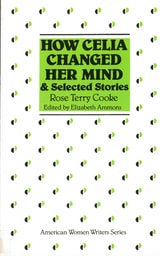
How Celia Changed Her Mind and Selected Stories
Rose Terry CookeAmmons, Elizabeth
Rutgers University Press, 1986
Cooke's stories are rich literarily and historically; her command of dialect, ear for dialogue, dramatic sense, and ability to draw interesting, memorable characters all distinguish her work. This reissue of some of her best work represents an important contribution to the canon of American literature.
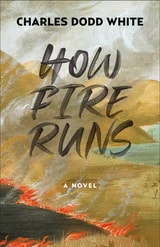
How Fire Runs
A NovelCharles Dodd White
Ohio University Press, 2020
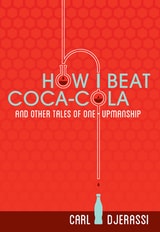
How I Beat Coca-Cola and Other Tales of One-Upmanship
Carl Djerassi
University of Wisconsin Press, 2013
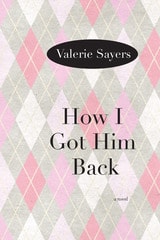
How I Got Him Back
A NovelValerie Sayers
Northwestern University Press, 2013
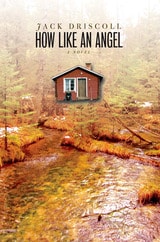
How Like an Angel
A NovelJack Driscoll
University of Michigan Press, 2005
---Rick Bass
"How Like an Angel is a lyrical, lonely ode to fatherhood, an aria in words that looks forward and backward at once. Jack Driscoll is a writer of deep heart, relentless honesty, uncanny gentleness, and irresistible spirit."
---Pam Houston
How Like an Angel is the story of Archibald Angel. With his career going nowhere and a marriage in decline, Angel retreats to a rustic cabin in northern Michigan to make a new life for himself.
In spite of his forward thinking, Angel's move is in many ways a journey into the past. Besides lacking modern comforts, the cabin conjures the ghost of Angel's troubled childhood, when his undertaker father took the cabin in trade as payment from a widow who couldn't otherwise afford the cost of her husband's burial. After Angel's mother subsequently fled, abandoning her family to recover from a mental breakdown, the cabin was an escape for father and son.
While Archibald Angel revisits his knotted and difficult past, his ex-wife and young son contemplate their future. Slowly, with unexpected help from an unpredictable woman, Angel realizes he too must find a way to begin again or risk failing his son as his own father failed him.
With pathos, humor, and unflagging generosity of spirit, How Like an Angel takes us deep into the hinterland of the human heart and discovers there the source of the love that keeps us holding on against all odds.
How We See the Gray
A NovelRachel León
Northwestern University Press, 2026
A riveting story about parenthood, substance abuse, and the strength it takes to come back from our mistakes
Foster care is a disaster in Rockford, Illinois. Meredith, a social worker and single mom, is stretched beyond thin but determined to protect her kids: not only her son, but those on her caseload too. When the stress of the job has her breaking her sobriety, the foundations of her life begin to tremble. After drinking too much, she makes a mistake that puts her preschooler in jeopardy, and Meredith finds herself in a situation that mirrors her clients’ as she loses custody of her son. In her fight to get him back, Meredith experiences the system from the outside—while still working for the kids inside of it. Set over the course of a year, this riveting documentary-esque novel is told from multiple perspectives, including those of case workers, birth parents, foster parents, and foster children. Written with the working-class humor and heart that defines the Midwest, How We See the Gray is a story about mistakes, second chances, and trying to do better in a system that seems doomed to fail.
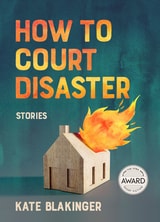
How to Court Disaster
Blakinger, Kate
University of Iowa Press, 2026
How to Court Disaster takes us from wide expanses of open ocean to the enclosed spaces of grimy dive bars, echoing caves, and the holds of a musty ship. A grieving mother explores the secret chambers of a cave system. A stranded sailor joins the crew of a movie being filmed on a remote tropical island. A pregnant teenager finds herself on foot in the middle of a whiteout snowstorm with a stranger’s baby in her arms. A bed-and-breakfast owner struggles to rekindle her bond with the husband who no longer fully remembers their life together. Moving headlong into trouble, the characters in these stories discover they possess the inner resources they need to carry them beyond it: pluck, grit, fierceness, hope, and a growing sense of who they are becoming.
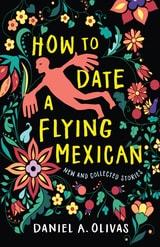
How to Date a Flying Mexican
New and Collected StoriesDaniel A. Olivas
University of Nevada Press, 2022
The collection is made up of Olivas’s favorite previously published stories, along with two new stories—one dystopian and the other magical— that challenge the Trump administration’s anti-immigration rhetoric and policies. How to Date a Flying Mexican draws together some of Olivas’s most unforgettable and strange tales, allowing readers to experience his very distinct, and very Chicano, fiction.
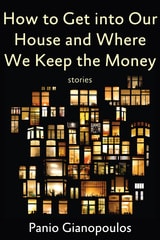
How to Get into Our House and Where We Keep the Money
Panio Gianopoulos
Four Way Books, 2017
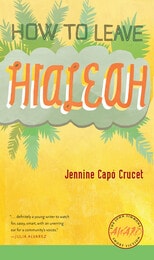
How to Leave Hialeah
Capó Crucet, Jennine
University of Iowa Press, 2009
Crucet’s writing has been shaped by the people and landscapes of South Florida and by the stories of Cuba told by her parents and abuelos. Her own stories are informed by her experiences as a Cuban American woman living within and without her community, ready to leave and ready to return, “ready to mourn everything.”
Coming to us from the predominantly Hispanic working-class neighborhoods of Hialeah, the voices of this steamy section of Miami shout out to us from rowdy all-night funerals and kitchens full of plátanos and croquetas and lechón ribs, from domino tables and cigar factories, glitter-purple Buicks and handed-down Mom Rides, private homes of santeras and fights on front lawns. Calling to us from crowded expressways and canals underneath abandoned overpasses shading a city’s secrets, these voices are the heart of Miami, and in this award-winning collection Jennine Capó Crucet makes them sing.
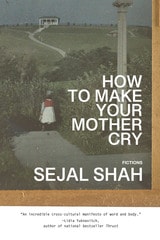
How to Make Your Mother Cry
FictionsSejal Shah
West Virginia University Press, 2024
2024/25 Story Prize Longlist
2024 Foreword Indies Finalist, Multicultural Adult Fiction
In the eleven linked short stories of How to Make Your Mother Cry, Sejal Shah builds a shrine gleaming with memory and myth. Keys, rocks, photographs, fairy tales, fables, and relics all add texture and meaning to an exploration of growing up and living as a diasporic Gujarati woman in a culture that excuses the behavior of men. Throughout, girls and women contend with the expectations, limitations, and challenges of becoming the heroine of one’s own life.
How to Make Your Mother Cry—Shah’s follow-up to her award-winning essay collection This Is One Way to Dance—continues the rich tradition of innovative feminist work by Claudia Rankine, Leslie Marmon Silko, and Maxine Hong Kingston. By braiding stories and images with fictional letters to a beloved English teacher, the collection defies traditional autofiction, epistolary, and short story conventions. These astonishing stories about friendship and love, resilience and survival establish Shah as an exciting new voice in contemporary fiction.
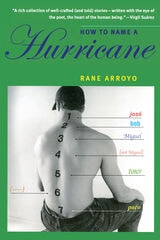
How to Name a Hurricane
Rane Arroyo
University of Arizona Press, 2005
How to Name a Hurricane collects short stories and other fictions depicting Latino drag queens and leather men, religious sinners and happy atheists, working class heroes and cyberspace vaqueros—a parade of characters that invites readers to consider whether one is more authentic a gay Latino than another. Whereas actual hurricanes are given names, the gays given voice in this collection must name themselves—and these narratives in turn reveal something of the "I" of Hurricane Rane. Whether portraying a family gathering as Brideshead Revisited with a mambo soundtrack, recounting the relationship of transvestite Louie/Lois and her bisexual Superman, or bemoaning "feeling as unsexy as an old bean burrito in a 7-11 microwave," Arroyo tracks the heartbeat of his characters through a shimmering palette of styles. Here are monologues, a story in verse, and other experimental forms appropriate to experimental lives—all affirming the basic human rights to dignity, equality, love, and even silliness.
When the AIDS epidemic first hit, many Latino families destroyed any remembrances of their gay and bisexual sons that might betray their pasts to la familia or el pueblo. Arroyo’s writings return the ghosts of those sons to the families, bars, dance clubs, and neighborhoods where they belong. By penetrating to the I’s of narrative hurricanes, these stories honor the survivors of our ongoing cultural storms.

How to Quiet a Vampire
A SotieBorislav Pekic
Northwestern University Press, 2005
Delving far deeper than mere intellect, however, Borislav Pekic was himself a frequent political agitator and occasional prisoner, and he drew on his first hand knowledge of police methods and life under totalitarianism to paint a chilling portrait of a supposedly free-thinking intellectual acting in the service of repression. At the same time he questions whether Rutkowski's ideology puts him outside the philosophical tradition he so admires—or if the line separating European thought from totalitarianism is not as clear as we like to think.
Hum
StoriesMichelle Richmond
University of Alabama Press, 2014
Thirteen years after the publication of her first story collection, The Girl in the Fall-Away Dress, New York Times bestselling author Michelle Richmond returns with Hum, a collection of ten stories that examine love, lust, and loyalty from surprising angles.
In “Hum,” a young couple that is paid to live in a house filled with surveillance equipment becomes “quietly lost to each other,” as the wife’s infatuation with the subject of their surveillance turns to obsession. In “Medicine,” a woman grieving over the death of her sister finds her calling as a manual medical caregiver. In “Boulevard,” a couple who has been trying to have a child for seven years finds themselves in an unnamed country at the height of a revolution, summoned there by the enigmatic H. “Scales,” the story of a woman who falls in love with a man whose body is covered with scales, parses the intersection of pain and pleasure. The narrator of “Lake” must choose whether to walk in the footsteps of her famous grandfather, The Great Amphibian, who disappeared while performing a feat of daring in Lake Michigan. What does it mean to be heroic? How much should one sacrifice in the name of love? These questions and more are explored with tenderness, wit, and unerring precision in Hum.
Human Being Songs
Northern StoriesJean Anderson
University of Alaska Press, 2017
Jean Anderson delicately balances the lyrical and the experimental to tell the stories of hardworking Alaskans—teachers, laborers, dental hygienists, artists—worrying over fairness and equity and meaning, falling in and out of love, and pondering elusive, long-dreamed-of goals. Powered by a rich empathy, Human Being Songs shows us life in Alaska as it’s actually lived today—its successes, failures, and moments of transcendent beauty.
Human Matter
A FictionBy Rodrigo Rey Rosa; translated by Eduardo Aparicio
University of Texas Press, 2019
More than a decade ago, novelist Rodrigo Rey Rosa made his first visit to the Historical Archive of the Guatemala National Police, where millions of previously hidden records were being cataloged, scanned, and eventually published online. Bringing to light detailed evidence of crimes against humanity, the Archive Recovery Project inspired Rey Rosa to craft a meta-novel that weaves the language of arrest records and surveillance reports with the contemporary journal entries of a novelist (named Rodrigo) who is attempting to synthesize the stories of political activists, indigenous people, and other women and men who became ensnared in a deadly web of state-sponsored terrorism.
When Rodrigo's access to the archive is suspended, he proceeds to the General Archives of Central America and the Library of Congress, also collaborating with the son of the Identification Bureau's former head in a relentless pursuit of understanding. Reminiscent of Roberto Bolaño's finely honed masterworks, Human Matter is both a tour de force of fiction and a sobering meditation on the realities of collective memory, raising timely questions about how our history is recorded and retold.
Originally published in Spanish in 2009, its success demanded a subsequent publication in June of 2017.
Humanist Poetics
Thought, Rhetoric, and Fiction in Sixteenth-Century EnglandArthur F. Kinney
University of Massachusetts Press, 1986
By tracing classical resources and the intertextuality of major English works from More's Utopia to Lodge's Rosalynde and Nashe's Unfortunate Traveller, Kinney not only locates basic Elizabethan habits of mind but also shows where the roots of the English novel may ultimately lie.
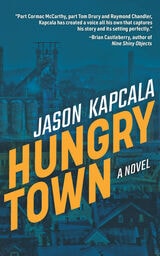
Hungry Town
A NovelJason Kapcala
West Virginia University Press, 2022
One October night in the depressed steel town of Lodi, Ohio, two police officers respond to a call about trespassers in the derelict Lodi Steel machine shop. A chase through the crumbling cathedral of steel columns launches a chain of events that will test the officers’ partnership and leave a boy to fend for himself in a decaying Rust Belt neighborhood choked by joblessness, boredom, and addiction.
On the opposite end of town, a young woman steps out of a rust-bucket Grand Marquis into an all-night diner. Instead of luggage, she carries mementos: an ankh tattoo she inked herself and a wallet-sized photograph of a boy who disappeared. She doesn’t realize her ex-boyfriend has hired two brothers to track her down and bring her back, by any means necessary.
The complex female leads of Hungry Town, with its sharp dialogue and poetic sensibility, turn classic noir and cop drama tropes on their heads. These morally complicated characters weave in and out of each other’s lives, sometimes violently, sometimes with surprising compassion.
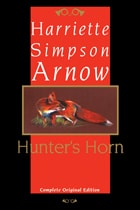
Hunter's Horn
Harriette Simpson Arnow
Michigan State University Press, 1997
Michigan State University Press is proud to announce the re-release of Harriette Simpson Arnow's 1949 novel Hunter's Horn, a work that Joyce Carol Oates called "our most unpretentious American masterpiece."
In Hunter's Horn, Arnow has written the quintessential account of Kentucky hill people—the quintessential novel of Southern Appalachian farmers, foxhunters, foxhounds, women, and children. New York Times reviewer Hirschel Brickell declared that Arnow "writes...as effortlessly as a bird sings, and the warmth, beauty, the sadness and the ache of life itself are not even once absent from her pages."
Arnow writes about Kentucky in the way that William Faulkner writes about Mississippi, that Flannery O'Connor writes about Georgia, or that Willa Cather writes about Nebraska—with studied realism, with landscapes and characters that take on mythic proportions, with humor, and with memorable and remarkable attention to details of the human heart that motivate literature.
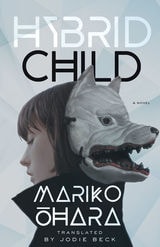
Hybrid Child
A NovelMariko Ohara
University of Minnesota Press, 2018
A classic of Japanese speculative fiction that blurs the line between consumption and creation when a cyborg assumes the form and spirit of a murdered child
Until he escaped, he had been called “Sample B #3,” but he had never liked this name. That would surprise them—that he could feel one way or another about it. He was designed to reshape himself based on whatever life forms he ingested; he was not made to think, and certainly not to assume the shape of a repair technician whose cells he had sampled and then simply walk out of the secure compound.
Artificial Intelligence is all too real in this classic of Japanese science fiction by Mariko Ōhara. Jonah, a child murdered by her mother, has become the spirit of an AI-controlled house where the rogue cyborg once known as Sample B #3 takes refuge and, making a meal of the dead girl buried under the house, takes Jonah’s form. On faraway Planet Caritas, an outpost of human civilization, the female AI system that governs society has become insane. Meanwhile, the threat of the Adiaptron Empire, the machine race that #3 was built to fight, remains.
With the familiar strangeness of a fairy tale, Ōhara’s novel traverses the mysterious distance between body and mind, between the mechanics of life and the ghost in the machine, between the infinitesimal and infinity. The child as mother, the mother as monster, the monster as hero: this shape-shifting story of nourishment, nurture, and parturition is a rare feminist work of speculative fiction and received the prestigious Seiun (Nebula) Award in 1991. Hybrid Child is the first English translation of a major work of science fiction by a female Japanese author.
Hydroplane
FictionsSusan Steinberg
University of Alabama Press, 2006
Each of Steinberg's stories builds as if telegraphed. Each sentence glissades into the next as though in perpetual motion, as characters, crippled by loss, rummage through their recollections looking for buffers to an indistinct future.
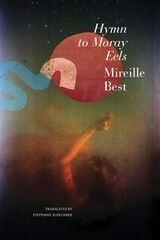
Hymn to Moray Eels
Mireille Best
Seagull Books, 2025
Within the cloistered world of a 1950s French sanatorium, sixteen-year-old Mila is learning more than just how to recover; she’s learning how to want. Stranded among a cast of unruly girls, she navigates longing and the quiet defiance of being a young lesbian in a world that prefers silence. There’s Marie, full of teasing bravado; the two Nicoles, who always weep; and Josette, who fills the air with accordion melodies. Then there’s Paule, a striking staff member whose attention is intoxicating—until it isn’t. Just as Mila begins to believe in the possibility of something real, Paule turns toward another, leaving Mila caught between jealousy and the aching pull of first love.
Originally published in 1985, Hymn to Moray Eels is a rare and brilliant gem of queer literature, balancing wry humor with aching tenderness. Mireille Best’s unsentimental prose captures the bittersweet contradictions of adolescence, creating a coming-of-age novel that is both deeply personal and strikingly universal.