Results by title
18284 books match the query 'United States' and 552 start with h
Hollywood's African American Films
The Transition to SoundRyan Friedman
Rutgers University Press, 2011
Hollywood's Cold War
Tony Shaw
University of Massachusetts Press, 2007
At a moment when American film reflects a deepening preoccupation with the Bush administration's War on Terror, this authoritative and timely book offers the first comprehensive account of Hollywood's propaganda role during the defining ideological conflict of the twentieth century: the Cold War. In an analysis of films dating from America's first Red Scare in the wake of the 1917 Bolshevik Revolution to the collapse of the Berlin Wall in 1989, Tony Shaw examines the complex relationship between filmmakers, censors, politicians, and government propagandists.
Movies, Shaw demonstrates, were at the center of the Cold War's battle for hearts and minds. Hollywood's comedies, love stories, musicals, thrillers, documentaries, and science fiction shockers played a critical dual role: on the one hand teaching millions of Americans why communism represented the greatest threat their country had ever faced, and on the other selling America's liberal-capitalist ideas around the globe. Drawing on declassified government documents, studio archives, and filmmakers' private papers, Shaw reveals the different ways in which cinematic propaganda was produced, disseminated, and received by audiences during the Cold War. In the process, he addresses subjects as diverse as women's fashions, McCarthyism, drug smuggling, Christianity, and American cultural diplomacy in India. Anyone seeking to understand wartime propaganda today will find striking contemporary resonance in his conclusions about Hollywood's versatility and power.
Hollywood's Hawaii
Race, Nation, and WarDelia Malia Caparoso Konzett
Rutgers University Press, 2017
Delia Malia Caparoso Konzett highlights films that mirror the cultural and political climate of the country over more than a century—from the era of U.S. imperialism on through Jim Crow racial segregation, the attack on Pearl Harbor and WWII, the civil rights movement, the contemporary articulation of consumer and leisure culture, as well as the buildup of the modern military industrial complex. Focusing on important cultural questions pertaining to race, nationhood, and war, Konzett offers a unique view of Hollywood film history produced about the national periphery for mainland U.S. audiences. Hollywood’s Hawaii presents a history of cinema that examines Hawaii and the Pacific and its representations in film in the context of colonialism, war, Orientalism, occupation, military buildup, and entertainment.
Hollywood's Italian American Filmmakers
Capra, Scorsese, Savoca, Coppola, and TarantinoJonathan J. Cavallero
University of Illinois Press, 2011
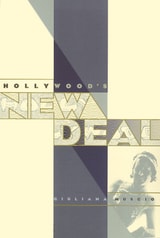
Hollywood's New Deal
Giuliana Muscio
Temple University Press, 1997
Despite the economic hardship of the thirties, people flocked to the movies in unprecedented numbers. At the same time, the Roosevelt Administration was trying to implement the New Deal and increase the influence and power of the federal government. Weaving together film and political history, Giuliana Muscio traces the connections between Depression Era Hollywood and the popularity of FDR, asserting that politics transformed its public into spectators while the movie industry transformed its spectators into a public. Hollywood's New Deal reveals the ways in which this reciprocal relationship between politics and film evolved into a strategic effort to stabilize a nation in the clutches of economic unrest by creating a unified American consciousness through national cinema.
Muscio analyzes such regulatory practices as the Hays Code, and the government's scrutinizing of monopolistic practices such as block booking and major studio ownership of movie theaters. Hollywood's New Deal, focusing on the management and structure of the film industry, delves deep into the Paramount case, detailing the behind-the-scenes negotiations and the public statements that ended with film industry leaders agreeing to self regulate and to eliminate monopolistic practices.
Hollywood's acquiescence and the government's retreat from antitrust action show that they had found a mutually beneficial way of preserving their own spheres of power and influence. This book is indispensable for understanding the growth of the film industry and the increasing political importance of mass media.
In the series Culture and the Moving Image, edited by Robert Sklar.

Hollywood's Unofficial Film Corps
American Jewish Moviemakers and the War EffortMichael Berkowitz
University of Wisconsin Press, 2025
Hollywood’s Unofficial Film Corps shows that Rosten, Schulberg, and others—including Garson Kanin, George Cukor, Stanley Kramer, and Jules Buck—created movies that were both entertaining and politically expeditious for US war aims. At the same time, in an effort to unify the American public, they avoided focusing on the fate of European Jews, even while addressing racism and antisemitism in the United States. Jewish themes were often downplayed, and Jewish directors, writers, and other contributors frequently went uncredited. As Berkowitz writes, “Rosten’s cohort changed feature films forever.” Thanks to his research, we now have a better understanding of how and why.
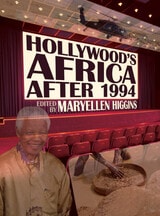
Hollywood’s Africa after 1994
MaryEllen Higgins
Ohio University Press, 2012
Hollywood’s Africa after 1994 investigates Hollywood’s colonial film legacy in the postapartheid era, and contemplates what has changed in the West’s representations of Africa. How do we read twenty-first-century projections of human rights issues—child soldiers, genocide, the exploitation of the poor by multinational corporations, dictatorial rule, truth and reconciliation—within the contexts of celebrity humanitarianism, “new” military humanitarianism, and Western support for regime change in Africa and beyond? A number of films after 1994, such as Black Hawk Down, Hotel Rwanda, Blood Diamond, The Last King of Scotland, The Constant Gardener, Shake Hands with the Devil, Tears of the Sun, and District 9, construct explicit and implicit arguments about the effects of Western intervention in Africa. Do the emphases on human rights in the films offer a poignant expression of our shared humanity? Do they echo the colonial tropes of former “civilizing missions?” Or do human rights violations operate as yet another mine of sensational images for Hollywood’s spectacular storytelling?
The volume provides analyses by academics and activists in the fields of African studies, English, film and media studies, international relations, and sociology across continents. This thoughtful and highly engaging book is a valuable resource for those who seek new and varied approaches to films about Africa.
Contributors
Harry Garuba and Natasha Himmelman
Margaret R. Higonnet, with Ethel R. Higgonet
Joyce B. Ashuntantang
Kenneth W. Harrow
Christopher Odhiambo
Ricardo Guthrie
Clifford T. Manlove
Earl Conteh-Morgan
Bennetta Jules-Rosette, J. R. Osborn, and Lea Marie Ruiz-Ade
Christopher Garland
Kimberly Nichele Brown
Jane Bryce
Iyunolu Osagie
Dayna Oscherwitz
Holocaust
An American UnderstandingLipstadt, Deborah E
Rutgers University Press, 2016
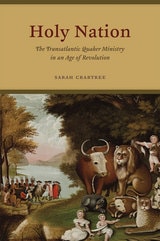
Holy Nation
The Transatlantic Quaker Ministry in an Age of RevolutionSarah Crabtree
University of Chicago Press, 2015
Holy Nation convincingly shows that ideals and actions were inseparable for the Society of Friends, yielding an account of Quakerism that is simultaneously a history of the faith and its adherents and a history of its confrontations with the wider world. Ultimately, Crabtree argues, the conflicts experienced between obligations of church and state that Quakers faced can illuminate similar contemporary struggles.
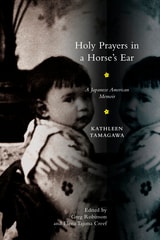
Holy Prayers in a Horse's Ear
A Japanese American MemoirKathleen Tamagawa, Edited by Greg Robinson and Elena Tajima Creef
Rutgers University Press, 2008
Originally published in 1932, Kathleen Tamagawa’s pioneering Asian American memoir is a sensitive and thoughtful look at the personal and social complexities of growing up racially mixed during the early twentieth century. Born in 1893 to an Irish American mother and a Japanese father and raised in Chicago and Japan, Tamagawa reflects on the difficulty she experienced fitting into either parent’s native culture.
She describes how, in America, her every personal quirk and quality was seen as quintessentially Japanese and how she was met unpredictably with admiration or fear—perceived as a “Japanese doll” or “the yellow menace.” When her family later moved to Japan, she was viewed there as a “Yankee,” and remained an outsider in that country as well. As an adult she came back to the United States as an American diplomat’s wife, but had trouble feeling at home in any place.
This edition, which also includes Tamagawa’s recently rediscovered short story, “A Fit in Japan,” and a critical introduction, will challenge readers to reconsider how complex ethnic identities are negotiated and how feelings of alienation limit human identification in any society.
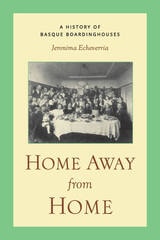
Home Away From Home
A History of Basque BoardinghousesJeronima Echeverria
University of Nevada Press, 1999
In this meticulously researched study of Basque boardinghouses in the United States, Jeronima Echeverria offers a compelling history of the institution that most deeply shaped Basque immigrant life and served as the center of Basque communities throughout the West. She weaves into her narrative the stories of the boarding house owners and operators and the ways they made their establishments a home away from home for their fellow compatriots, as well as the stories of the young Basques who left the security of their beloved homeland to find work in the United States.
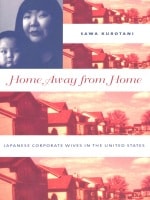
Home Away from Home
Japanese Corporate Wives in the United StatesSawa Kurotani
Duke University Press, 2005
Kurotani interviewed and spent time with more than 120 women in three U.S. locations with sizable expatriate Japanese communities: Centerville, a pseudonymous Midwestern town; the New York metropolitan area; and North Carolina’s Research Triangle area. She highlights the contradictory situations faced by the transient wives. Their husbands’ assignments in the United States typically last from three to five years, and they frequently emphasize the temporariness of their situation, referring to it as a “long vacation.” Yet they are responsible for creating comfortable homes for their families, which necessitates producing a familiar and permanent environment. Kurotani looks at the dynamic friendships that develop among the wives and describes their feelings about returning to Japan. She conveys how their sense of themselves as Japanese women, of home, and of their relationships with family members are altered by their personal experiences of transnational homemaking.
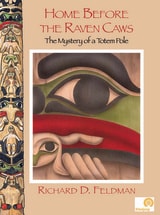
Home Before the Raven Caws
Richard Feldman
Indiana Historical Society Press, 2012
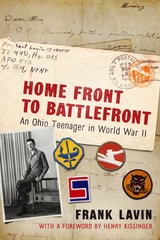
Home Front to Battlefront
An Ohio Teenager in World War IIFrank Lavin
Ohio University Press, 2016
Carl Lavin was a high school senior when Pearl Harbor was attacked. The Canton, Ohio, native was eighteen when he enlisted, a decision that would take him with the US Army from training across the United States and Britain to combat with the 84th Infantry Division in the Battle of the Bulge. Home Front to Battlefront is the tale of a foot soldier who finds himself thrust into a world where he and his unit grapple with the horrors of combat, the idiocies of bureaucracy, and the oddities of life back home—all in the same day. The book is based on Carl’s personal letters, his recollections and those of the people he served beside, official military history, private papers, and more.
Home Front to Battlefront contributes the rich details of one soldier’s experience to the broader literature on World War II. Lavin’s adventures, in turn disarming and sobering, will appeal to general readers, veterans, educators, and students of the war. As a history, the book offers insight into the wartime career of a Jewish Ohioan in the military, from enlistment to training through overseas deployment. As a biography, it reflects the emotions and the role of the individual in a total war effort that is all too often thought of as a machine war in which human soldiers were merely interchangeable cogs.
Home Front
Daily Life in the Civil War NorthPeter John Brownlee, Sarah Burns, Diane Dillon, Daniel Greene, and Scott Manning Stevens
University of Chicago Press, 2013
Home Front: Daily Life in the Civil War North reveals this side of the war as it happened, comprehensively examining the visual culture of the Northern home front. Through contributions from leading scholars from across the humanities, we discover how the war influenced household economies and the cotton economy; how the absence of young men from the home changed daily life; how war relief work linked home fronts and battle fronts; why Indians on the frontier were pushed out of the riven nation’s consciousness during the war years; and how wartime landscape paintings illuminated the nation’s past, present, and future.
A companion volume to a collaborative exhibition organized by the Newberry Library and the Terra Foundation for American Art, Home Front is the first book to expose the visual culture of a world far removed from the horror of war yet intimately bound to it.
Home Fronts
Domesticity and Its Critics in the Antebellum United StatesLora Romero
Duke University Press, 1997
Romero remaps the literary landscape of the last century by looking at the operations of domesticity on the frontier as well as within the middle-class home and by reconsidering such crucial (if sometimes unexpected) sites for the workings of domesticity as social reform movements, African-American activism, and homosocial high culture. In the process, she indicts theories of the nineteenth century based on binarisms and rigidity while challenging models of power and resistance based on the idea that "culture" has the capacity to either free or enslave. Through readings of James Fenimore Cooper, Catherine Beecher, Harriet Beecher Stowe, Maria Stewart, and Nathaniel Hawthorne, Romero shows how the politics of culture reside in local formulations rather than in essential and ineluctable political structures.
Home Girls, 40th Anniversary Edition
A Black Feminist AnthologyBarbara Smith
Rutgers University Press, 2024
Contributors: Tania Abdulahad, Donna Allegra, Barbara A. Banks, Becky Birtha, Cenen, Cheryl Clarke, Michelle Cliff, Michelle T. Clinton, Willi (Willie) M. Coleman, Toi Derricotte, Alexis De Veaux, Jewelle L. Gomez, Akasha (Gloria) Hull, Patricia Spears Jones, June Jordan, Audre Lorde, Raymina Y. Mays, Deidre McCalla, Chirlane McCray, Pat Parker, Linda C. Powell, Bernice Johnson Reagon, Spring Redd, Gwendolyn Rogers, Kate Rushin, Ann Allen Shockley, Barbara Smith, Beverly Smith, Shirley O. Steele, Luisah Teish, Jameelah Waheed, Alice Walker, and Renita J. Weems.
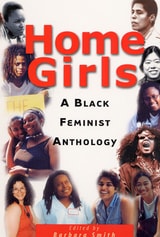
Home Girls
A Black Feminist AnthologySmith, Barbara
Rutgers University Press, 2000
Contributors are Tania Abdulahad, Donna Allegra, Barbara A. Banks, Becky Birtha, Julie Carter, Cenen, Cheryl Clarke, Michelle Cliff, Michelle T. Clinton, Willie M. Coleman, Toi Derricotte, Alexis De Veaux, Jewelle L. Gomez, Akasha (Gloria) Hull, Patricia Jones, June Jordan, Audre Lorde, Raymina Y. Mays, Deidre McCalla, Chirlane McCray, Pat Parker, Linda C. Powell, Bernice Johnson Reagon, Spring Redd, Gwendolyn Rogers, Kate Rushin, Ann Allen Shockley, Barbara Smith, Beverly Smith, Shirley O. Steele, Luisah Teish, Jameelah Waheed, Alice Walker, and Renita Weems.
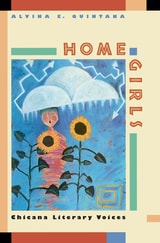
Home Girls
Chicana Literary VoicesAlvina E. Quintana
Temple University Press, 1996
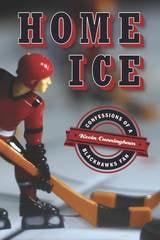
Home Ice
Confessions of a Blackhawks FanKevin Cunningham
University of Iowa Press, 2017
Home Ice combines memoir and history to explore how the mysteries of Blackhawks fandom explain big questions like tribal belonging, masculinity, and why you would ever trade Chris Chelios. In recounting the team’s—and his own—wins and losses (and ties), Cunningham covers everything from Keith Magnuson’s bachelor pad to the grim early aughts to Patrick Kane’s Cup-winner. Throughout, he explores how we come to love the things we love. Funny and touching, Home Ice is one Blackhawk fan’s attempt to understand why sports fandom is utterly ridiculous and entirely necessary.
Home Movies and Other Necessary Fictions
Michelle Citron
University of Minnesota Press, 1998

Home Safe Home
Housing Solutions for Survivors of Intimate Partner ViolenceBotein, Hilary
Rutgers University Press, 2016
Home Work
Gender, Child Labor, and Education for Girls in Urban America, 1870–1930Ruby Oram
University of Chicago Press, 2025
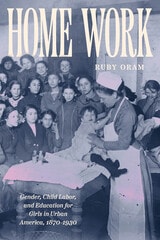
In Home Work, historian Ruby Oram tells the story of how middle-class, white women reformers lobbied the state to implement various public education reforms to shape the lives of girls and women in industrial cities between 1870 and 1930. Women such as Jane Addams and Florence Kelley used education reform to target working-class communities and advocate for their middle-class ideals of girlhood and femininity, which could vary depending on the racial or socio-economic backgrounds of the girls. For example, reformers generally encouraged white girls to care for their future families, while pushing Black girls toward becoming domestic workers in others’ homes. Using Chicago as a case study, Oram also explores how many of the reforms sought by white women were in response to evolving anxieties about immigration, health, and sexual delinquency.
An illuminating addition to the history of urban education in America, Home Work enriches our understanding of educational inequality in twentieth-century schools.

Home and Away
The Rise and Fall of Professional Football on the Banks of the Ohio, 1919–1934Carl M. Becker
Ohio University Press, 1998
Home and Away
The Rise and Fall of Professional Football on the Banks of the Ohio, 1919–1934Carl M. Becker
Ohio University Press, 1998
Home before Morning
The Story of an Army Nurse in VietnamLynda Van Devanter
University of Massachusetts Press, 2001
Lynda Van Devanter was the girl next door, the cheerleader who went to Catholic schools, enjoyed sports, and got along well with her four sisters and parents. After high school she attended nursing school and then did something that would shatter her secure world for the rest of her life: in 1969, she joined the army and was shipped to Vietnam. When she arrived in Vietnam her idealistic view of the war vanished quickly. She worked long and arduous hours in cramped, ill-equipped, understaffed operating rooms. She saw friends die. Witnessing a war close-up, operating on soldiers and civilians whose injuries were catastrophic, she found the very foundations of her thinking changing daily.
After one traumatic year, she came home, a Vietnam veteran. Coming home was nearly as devastating as the time she spent in Asia. Nothing was the same -- including Lynda herself. Viewed by many as a murderer instead of a healer, she felt isolated and angry. The anger turned to depression; like many other Vietnam veterans she suffered from delayed stress syndrome. Working in hospitals brought back chilling scenes of hopelessly wounded soldiers. A marriage ended in divorce. The war that was fought physically halfway around the world had become a personal, internal battle.
Home before Morning is the story of a woman whose courage, stamina, and personal history make this a compelling autobiography. It is also the saga of others who went to war to aid the wounded and came back wounded -- physically and emotionally -- themselves. And, it is the true story of one person's triumphs: her understanding of, and coming to terms with, her destiny.
Home of the Braves
The Battle for Baseball in MilwaukeePatrick W. Steele
University of Wisconsin Press, 2020
It seemed the dawn of a new dynasty. Impassioned fans wore their hearts on their sleeves. Yet in October 1964 team owners made a shocking announcement: the Braves were moving to Atlanta.
In the decades since, many have tried to understand why the Braves left Milwaukee. Fans blamed greedy owners and the lure of Coca Cola cash. Team management claimed they weren't getting enough local support. Patrick Steele delves deeply into all facets of the story, looking at the changing business of baseball in the 1960s, the interactions of the team owners with the government officials who controlled County Stadium, the surging success of the Green Bay Packers, and much more, to understand how the "Milwaukee Miracle" went south.
Home on the Double Bayou
Memories of an East Texas RanchBy Ralph Semmes Jackson
University of Texas Press, 1961
Once again, through a boy’s eyes, Ralph Jackson sees a winter sky darkened with geese and ducks, a kitchen stove glowing with cheerful warmth, Aunt May strolling in her flower garden, moonlight filtering through treetops to cast patches of white light on a sandy woodland road.
Again he catches odors once so familiar: of a mysterious attic, of burning salt grass in late summer, of mountain streams with their fresh green smell, of dark-roast coffee and of slab bacon sizzling in the pan.
He hears again a panther’s scream from the darkness surrounding a campfire, the scampering of mice across the barnloft floor, the sigh of a felled pine tree changing to a crashing roar as it meets the ground, the sounds of a meal in preparation, the hum of a mosquito swarm rising from the marshes.
He remembers the taste of barbecued goat, the sweet sharpness of peppermint candy, the flavor of gumdrops from the country store—where, as showcase neighbors of cigars and chewing tobacco, they acquired a faint tobacco taste.
And he feels again the welcome shock of frigid spring water on a hot perspiring body, the pleasant sensation of sand between his toes, the breathtaking exhilaration of swinging on a sapling top.
The joy of childhood on an East Texas ranch is the subject of this book: exciting events like the arrival of the first norther of the season, swimming with alligators, hogkilling, building tree houses, roundup, hunting and fishing, calf-riding, fording strange streams. Interspersed among these episodes are others of darker mood: a smallpox epidemic, the burning of the ranch house, wolves attacking the cattle.
Jackson’s characters come alive. Scenes are vivid; moods are various and enveloping. The author has told the delightful story of his boyhood from a highly personal yet universal perspective, and in doing so he has presented a picture of a region of the state previously largely neglected in Texas literature.
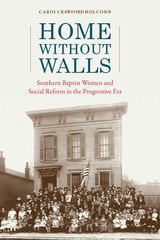
Home without Walls
Southern Baptist Women and Social Reform in the Progressive EraCarol Crawford Holcomb
University of Alabama Press, 2020
The Woman’s Missionary Union (WMU), founded in 1888, carved out a uniquely feminine space within the Southern Baptist Convention during the tumultuous years of the Progressive Era when American theologians were formulating the social gospel. These women represented the Southern Baptist elite and as such had the time to read, write, and discuss ideas with other Southern progressives. They rubbed shoulders with more progressive Methodist and Presbyterian women in clubs and ecumenical missionary meetings. Baptist women studied the missionary publications of these other denominations and adopted ideas for a Southern Baptist audience.
Home without Walls: Southern Baptist Women and Social Reform in the Progressive Era shows how the social attitudes of women were shaped at the time. By studying primary documents—including personal letters, official exchanges and memoranda, magazine publications, newsletters, and editorials—Carol Crawford Holcomb uncovers ample evidence that WMU leaders, aware of the social gospel and sympathetic to social reform, appropriated the tools of social work and social service to carry out their missionary work.
Southern Baptist women united to build a financial empire that would sustain the Southern Baptists through the Great Depression and beyond. Their social attitudes represented a kaleidoscope of contrasting opinions. By no stretch of the imagination could WMU leaders be characterized as liberal social gospel advocates. However, it would also be wrong to depict them as uniformly hostile to progressivism or ignorant of contemporary theological ideas. In the end, they were practical feminists in their determination to provide a platform for women’s views and a space for women to do meaningful work.
Home, Heat, Money, God
Texas and Modern ArchitectureText by Kathryn E. O’Rourke, Photographs by Ben Koush
University of Texas Press, 2024
Thematically focused analysis of modern architecture throughout Texas with gorgeous photographs illustrating works by famous and lesser-known architects.
In the mid-twentieth century, dramatic social and political change coincided with the ascendance and evolution of architectural modernism in Texas. Between the 1930s and 1980s, a state known for cowboys and cotton fields rapidly urbanized and became a hub of global trade and a heavyweight in national politics. Relentless ambition and a strong sense of place combined to make Texans particularly receptive to modern architecture’s implication of newness, forward-looking attitude, and capacity to reinterpret historical forms in novel ways. As money and people poured in, architects and their clients used modern buildings to define themselves and the state.
Illustrated with stunning photographs by architect Ben Koush, Home, Heat, Money, God analyzes buildings in big cities and small towns by world-famous architects, Texas titans, and lesser-known designers. Architectural historian Kathryn O’Rourke describes the forces that influenced architects as they addressed basic needs—such as staying cool in a warming climate and living in up-to-date housing—and responded to a culture driven by potent religiosity, by the countervailing pressures of pluralism and homogenization, and by the myth of Texan exceptionalism.
Homecourt
The True Story of the Best Basketball Team You've Never Heard OfLarry Needle
Temple University Press, 2012
Homefront Arkansas
Arkansans Face Wartime Past and PresentVelma B. Branscum Woody
Butler Center for Arkansas Studies, 2009
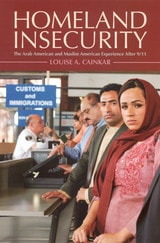
Homeland Insecurity
The Arab American and Muslim American Experience After 9/11Louis A. Cainkar
Russell Sage Foundation, 2009
Homeland Maternity
US Security Culture and the New Reproductive RegimeNatalie Fixmer-Oraiz
University of Illinois Press, 2019
Homelands
Southern Jewish Identity in Durham-Chapel Hill and North CarolinaLeonard Rogoff
University of Alabama Press, 2001
Exploring how Southern Jews forged identity, community, and belonging in the evolving landscape of the New South.
Homelands is a case study of a unique ethnic group in North America—small-town southern Jews. Both Jews and southerners, Leonard Rogoff points out, have long struggled with questions of identity and whether to retain their differences or try to assimilate into the national culture. Rogoff shows how, as immigrant Jews became small-town southerners, they constantly renegotiated their identities and reinvented their histories.
The Durham-Chapel Hill Jewish community was formed during the 1880s and 1890s, when the South was recovering from the Reconstruction era and Jews were experiencing ever-growing immigration as well as challenging the religious traditionalism of the previous 4,000 years. Durham and Chapel Hill Jews, recent arrivals from the traditional societies of eastern Europe, assimilated and secularized as they lessened their differences with other Americans. Some Jews assimilated through intermarriage and conversion, but the trajectory of the community as a whole was toward retaining their religious and ethnic differences while attempting to integrate with their neighbors.
The Durham-Chapel Hill area is uniquely suited to the study of the southern Jewish experience, Rogoff maintains, because the region is exemplary of two major trends: the national population movement southward and the rise of Jews into the professions. The Jewish peddler and storekeeper of the 1880s and the doctor and professor of the 1990s, Rogoff says, are representative figures of both Jewish upward mobility and southern progress.

Homeless and at Home in America
Evidence for the Dignity of the Human Soul in Our Time and PlacePeter Augustine Lawler
St. Augustine's Press, 2007
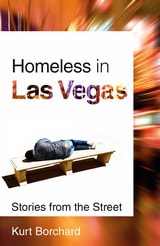
Homeless in Las Vegas
Stories from the StreetKurt Borchard
University of Nevada Press, 2011
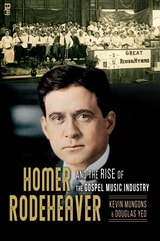
Homer Rodeheaver and the Rise of the Gospel Music Industry
Kevin Mungons and Douglas Yeo
University of Illinois Press, 2021
Homer Rodeheaver merged evangelical hymns and African American spirituals with popular music to create a potent gospel style. Kevin Mungons and Douglas Yeo examine his enormous influence on gospel music against the backdrop of Christian music history and Rodeheaver's impact as a cultural and business figure. Rodeheaver rose to fame as the trombone-playing song leader for evangelist Billy Sunday. As revivalism declined after World War I, Rodeheaver leveraged his place in America's newborn celebrity culture to start the first gospel record label and launch a nationwide radio program. His groundbreaking combination of hymnal publishing and recording technology helped define the early Christian music industry. In his later years, he influenced figures like Billy Graham and witnessed the music's split into southern gospel and black gospel.
Clear-eyed and revealing, Homer Rodeheaver and the Rise of the Gospel Music Industry is an overdue consideration of a pioneering figure in American music.
Homesick
Nicholas Shapiro
Duke University Press, 2025
Homeward
Life in the Year After PrisonBruce Western
Russell Sage Foundation, 2018
Western and his research team conducted comprehensive interviews with men and women released from the Massachusetts state prison system who returned to neighborhoods around Boston. Western finds that for most, leaving prison is associated with acute material hardship. In the first year after prison, most respondents could not afford their own housing and relied on family support and government programs, with half living in deep poverty. Many struggled with chronic pain, mental illnesses, or addiction—the most important predictor of recidivism. Most respondents were also unemployed. Some older white men found union jobs in the construction industry through their social networks, but many others, particularly those who were black or Latino, were unable to obtain full-time work due to few social connections to good jobs, discrimination, and lack of credentials. Violence was common in their lives, and often preceded their incarceration. In contrast to the stereotype of tough criminals preying upon helpless citizens, Western shows that many former prisoners were themselves subject to lifetimes of violence and abuse and encountered more violence after leaving prison, blurring the line between victims and perpetrators.
Western concludes that boosting the social integration of former prisoners is key to both ameliorating deep disadvantage and strengthening public safety. He advocates policies that increase assistance to those in their first year after prison, including guaranteed housing and health care, drug treatment, and transitional employment. By foregrounding the stories of people struggling against the odds to exit the criminal justice system, Homeward shows how overhauling the process of prisoner reentry and rethinking the foundations of justice policy could address the harms of mass incarceration.

Homework Help from the Library
In Person and OnlineCarol American Library Association
American Library Association, 2011
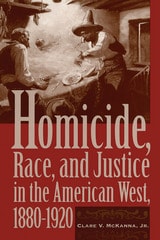
Homicide, Race, and Justice in the American West, 1880-1920
Clare V. McKanna
University of Arizona Press, 1997
This scenario dramatically brings home to the viewer what historians have long debated and hundreds of other films and books suggest: the turn-of-the-century West was a violent time and place. Ranchers, miners, deputy sheriffs, teenagers and old men, occasionally even housewives and mothers found themselves at the business end of a shotgun or a .38 revolver. Yet, since western historians tend to portray violence as essentially episodic--frontier gunfights, range wars, vigilante movements, and the like--solid data has been hard to come by.
As a beginning point for actually measuring lethal violence and assessing the administration of justice, here at last is a detailed and well-documented study of homicide in the American West. Comparing data from representative areas--Douglas County, Nebraska; Las Animas County, Colorado; and Gila County, Arizona--this book reveals a level of violence far greater than many historians have believed, even surpassing eastern cities like New York and Boston.
Clashing cultures and transient populations, a boomtown mentality, easy availability of alcohol and firearms: these and many other factors come under scrutiny as catalysts in the violence that permeated the region. By comparing homicide data, including coroner's inquests, indictments, plea bargains, and sentences across both racial and regional lines, the book also offers persuasive evidence that criminal justice systems of the Old West were weighted heavily in favor of defendants who were white and against those who were African American, Native American, or Mexican.
Packed with information, this is a book for students and scholars of western history, social history, criminology, and justice studies. Western history buffs will be captivated by colorful anecdotes about the real West, where guns could and did blaze over anything from love trysts to vendettas to too much foam on the beer. From whatever perspective, all readers are sure to find here a well-constructed framework for understanding the West as it was and for interpreting the region as it moves into the future.
Homing Instincts
Dionisia Morales
Oregon State University Press, 2018
Although Morales migrated from one North American coast to another, the questions she raises are relevant to migrations of any scale and place, whether across town or around the world. What does it mean to be a newcomer? Who has the right to claim a sense of place? What is gained or lost when we try to fit in? In a world where people are migrating more than ever for social, economic, personal, and political reasons, these questions take on a new urgency.
A wife and mother as well as a professional writer and editor, Morales writes with grace and resolve about a broad range of topics, including pregnancy, people watching, rock climbing, and bee colony collapse. She channels a spirit of adventure and adaptability while acknowledging how certain habits and mindsets are indelibly ingrained and are—like it or not—forever part of where, what, and who we call home.
As issues of migration and social integration play out in national and international politics, Morales provides a personal lens through which readers can appreciate that at one time or another we have all been in the process of arriving. Homing Instincts is a remarkable debut from a gifted prose stylist. It will be warmly received by lovers of the essay form and anyone who has sought, or still seeks, a place to call home.
Homo Americanus
The Rise of Totalitarian Democracy in AmericaZbigniew Janowski
St. Augustine's Press, 2021
“Only someone shortsighted, or someone who values equality more than freedom, would deny that today’s citizens enjoy little or no freedom, particularly freedom of speech, and even less the ability to express openly or publicly the opinions that are not in conformity with what the majority considers acceptable at a given moment. It may sound paradoxical to contemporary ears, but a fight against totalitarianism must also mean a fight against the expansion of democracy.”
Janowski all at once brazen and out of bounds states what he calls the obvious and unthinkable truth: In the United States, we are already living in a totalitarian reality. The American citizen, the Homo Americanus, is an ideological being who is no longer good or bad, reasonable or irrational, proper or improper except when measured against the objectives of the dominating egalitarian mentality that American democracy has successfully incubated. American democracy has done what other despotic regimes have likewise achieved––namely, taken hold of the individual and forced him to renounce (or forget) his greatness, pursuit of virtue and his orientation toward history and Tradition.
Homo Americanus, Janowski argues, has no mind or soul and he cannot tolerate diversity and indeed he now censors himself. Democracy is not benign, and we should fear its principles come by and applied ad hoc. It is deeply troublesome that in the way democracy moves today it gives critics no real insight into any trajectory of reason behind its motion, which is erratic and unmappable. The Homo Americanus is an ideological entity whose thought and even morality are forbidden from universal abstraction.
Janowski mounts the offensive against what the American holds most sacred, and he does so in order to save him. After exposing the danger and the damage done, Janowski makes another startling proposal. It is a “diseased collective mind” that is the source of this ideology, the liberal anti-perspective that presses man into the image of the Homo Americanus, and its grip can only be broken through the recovery of instinct. Homo Americanus cannot be free again until he is himself again. That is, until the shadow that belongs only to him is restored, and he is thereby no longer alienated from others. Despite the condemnation Janowski seems to be levying on the citizen of the United States, he betrays a great hope and confidence that the means to shake ourselves awake from the bad dream are nevertheless in hand.
Janowski’s work is the next title in St. Augustine’s Press Dissident American Thought Today Series. It occupies a controversial overlapping terrain between the philosophical descriptions of liberalism as a tradition, psychology and the fundamentally influential critiques of democracy offered by Thucydides, Jefferson, Franklin, Tocqueville, Mill, Burke and more. More anecdotal than analytical, Janowski offers the contemporary proof that the reader is right to be scandalized by democracy and his or her own likeness of the Homo Americanus. Once upon a time it was the despicable Homo Sovieticus fruit of tyranny, but now we fear democratic society too might fall and all its citizens never be found again.
Homosexual Tradition in American Poetry
Robert K. Martin
University of Iowa Press, 1998
Homosexuality in Cold War America
Resistance and the Crisis of MasculinityRobert J. Corber
Duke University Press, 1997
By exploring the representation of gay men in film noir, Corber suggests that even as this Hollywood genre reinforced homophobic stereotypes, it legitimized the gay male "gaze." He emphasizes how film noir’s introduction of homosexual characters countered the national "project" to render gay men invisible, and marked a deep subversion of the Cold War mentality. Corber then considers the work of gay male writers Tennessee Williams, Gore Vidal, and James Baldwin, demonstrating how these authors declined to represent homosexuality as a discrete subculture and instead promoted a model of political solidarity rooted in the shared experience of oppression. Homosexuality in Cold War America reveals that the ideological critique of the dominant culture made by gay male authors of the 1950s laid the foundation for the gay liberation movement of the following decade.
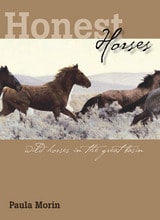
Honest Horses
Wild Horses In The Great BasinPaula Morin
University of Nevada Press, 2006
Horses have been part of the American West since the first Spanish explorers brought their European-bred steeds onto the new continent. Soon thereafter, some of these animals, lost or abandoned by their owners or captured by indigenous peoples, became the foundation of the great herds of mustangs (from the Spanish mesteño, stray) that still roam the West. These feral horses are inextricably intertwined with the culture, economy, and mythology of the West. The current situation of the mustangs as vigorous competitors for the scanty resources of the West’s drought-parched rangelands has put them at the center of passionate controversies about their purpose, place, and future on the open range. Photographer/oral historian Paula Morin has interviewed sixty-two people who know these horses best: ranchers, horse breeders and trainers, Native Americans, veterinarians, wild horse advocates, mustangers, range scientists, cowboy poets, western historians, wildlife experts, animal behaviorists, and agents of the federal Bureau of Land Management. The result is the most comprehensive, impartial examination yet of the history and impact of wild mustangs in the Great Basin. Morin elicits from her interviewees a range of expertise, insight, and candid opinion about the nature of horses, ranching, and the western environment. Honest Horses brings us the voices of authentic westerners, people who live intimately with horses and the land, who share their experiences and love of the mustangs, and who understand how precariously all life exists in Great Basin.
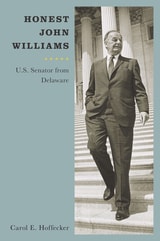
Honest John Williams
U.S. Senator from DelawareCarol E. Hoffecker
University of Delaware Press, 2024
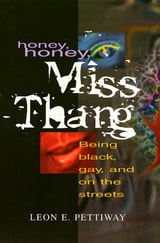
Honey, Honey, Miss Thang
Being Black, Gay, and on the StreetsLeon E. Pettiway
Temple University Press, 1996
Many straight Americans would never embrace homosexuals as neighbors, co-workers, or friends. Still less would they accept as equals those transgendered individuals who work the streets to provide themselves with drug money.
This book seeks to change that perception. It celebrates the lives of Shontae, China, Keisha, Detra, and Monique, five Afro-American gay hustlers who struggle to survive and to maintain a life of dignity and value in the face of their drug use and criminal activity. As individuals they vary in terms of background, the manner in which they entered the transgendered world, and the nature of their initiation into the drug subculture. None of them has escaped the ravages of urban decline, crime, drugs, and poverty that accompany life in an inner city, but by the same token, none of them has capitulated to the stresses with which they live.
It is impossible to read these accounts and not come away emotionally drained. As Monique explains, their lives take place in a world of chances. "You take a chance on living or dying, on being hurt or not being hurt, a chance on finding a friend or finding an enemy." It is from this world that their voices speak so eloquently about their families, hustling, sexuality, sexual abuse, friendship, and intimacy.
By letting these women speak, Leon E. Pettiway evokes questions and encourages discussion and a re-evaluation of those who are labeled as deviant. Pettiway reaches beyond academic convention to offer a view with depth and emotion that mere statistics could never provide. While the poverty and often destructive lifestyle of these women may be gut-wrenching, their experiences reveal joy, pain, and the profound strength of the human spirit with which we can all identify. These lives have much to teach us about ourselves and those we label as "other."
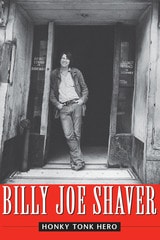
Honky Tonk Hero
By Billy Joe Shaver
University of Texas Press, 2005
Billy Joe Shaver was the real deal. Many agree with him that his songs are pure poetry. Shaver sang about a life that was full of hard times, wild living, and a forty-year-long passion for his late wife Brenda. His songs are raw, honest, and so true that people hear the story of their own lives in his music. No wonder, then, that his songs have also been recorded by artists such as Johnny Cash, Willie Nelson, Waylon Jennings, Kris Kristofferson, George Jones, Bob Dylan, Elvis Presley, Patty Loveless, John Anderson, Tom T. Hall, the Allman Brothers, the Oak Ridge Boys, and Tex Ritter.
In this compelling autobiography written with the assistance of Brad Reagan, Billy Joe Shaver looks back over a life that some might call a miracle of survival. His father abandoned the family before Billy Joe was born. Troubles in school and in the military turned him into a fighter, and a sawmill accident claimed two fingers and part of a third on his right hand. Yet his innate musical talent and the encouragement of an English teacher set him on the road to being a songwriter—and he never looked back. Shaver recounts his long struggle to break into the music business in Nashville and the success that came when Waylon Jennings recorded his songs on the 1973 album Honky Tonk Heroes, which became a landmark of outlaw country music. Shaver movingly describes his own up-and-down career as a singer-songwriter in Nashville and Texas; his bouts with alcohol and drugs; his pleasure in touring with his son, Eddy, and their band, Shaver, during the 1990s; and the pain of losing Eddy, Brenda, and Billy Joe's mother all within the year 1999–2000.
As full of life, heartbreak, and drama as any of Billy Joe Shaver’s songs, Honky Tonk Hero is the story of a man who not only walked on the wild side and lived to tell about it, but also got it all down in songs that many people consider to be some of the finest country music ever written.