Results by title
5159 books match the query 'Biography' and 164 start with j
J. B. Hunt
The Long Haul to SuccessMarvin Schwartz
University of Arkansas Press, 1992
J. Frank Dobie
A Liberated MindBy Steven L. Davis
University of Texas Press, 2009
The first Texas-based writer to gain national attention, J. Frank Dobie proved that authentic writing springs easily from the native soil of Texas and the Southwest. In best-selling books such as Tales of Old-Time Texas, Coronado's Children, and The Longhorns, Dobie captured the Southwest's folk history, which was quickly disappearing as the United States became ever more urbanized and industrial. Renowned as "Mr. Texas," Dobie paradoxically has almost disappeared from view—a casualty of changing tastes in literature and shifts in social and political attitudes since the 1960s.
In this lively biography, Steven L. Davis takes a fresh look at a J. Frank Dobie whose "liberated mind" set him on an intellectual journey that culminated in Dobie becoming a political liberal who fought for labor, free speech, and civil rights well before these causes became acceptable to most Anglo Texans. Tracing the full arc of Dobie's life (1888–1964), Davis shows how Dobie's insistence on "free-range thinking" led him to such radical actions as calling for the complete integration of the University of Texas during the 1940s, as well as taking on governors, senators, and the FBI (which secretly investigated him) as Texas's leading dissenter during the McCarthy era.

JOHN PEALE BISHOP
A BIOGRAPHYELIZABETH C. SPINDLER
West Virginia University Press, 1980
Jack Dempsey
THE MANASSA MAULERRandy Roberts
University of Illinois Press, 1979
In this incisive, fast-paced biography, Randy Roberts charts the life and career of a man widely regarded as one of the toughest ever to enter the ring. He details Dempsey's transition from barroom fights to professional boxing and his emerging reputation for fast, brutal knockouts. Roberts draws on a wealth of newspaper articles and interviews to chronicle Dempsey's rise to the heavyweight championship and his six title defenses. Also included are accounts of the eventual loss of his title to Gene Tunney in 1926, and the rematch in 1927, which Dempsey also lost in the infamous "long count." After continuing to fight in exhibitions, Dempsey retired from boxing in 1940 with an astonishing 64 victories, 49 of them knockouts.
Roberts tells of the building of this record, including accounts of Dempsey's forays into Hollywood, the controversy over his alleged draft-dodging, his long life after retirement, and his enduring legacy as one of the greatest fighters in boxing history.
Jack Goldstein
All Day Night SkyAlexander Dumbadze
University of Chicago Press, 2025
A defining figure of the 1970s–80s New York art world, Jack Goldstein’s wide-ranging body of work, which included immaculate color films and radiant paintings of appropriated images composed by assistants, is both seductive and interpretively elusive. Goldstein’s legacy has been complicated by the mythology of his later years. Consumed by drug addiction, he dropped out of the art world in the 1990s, lived alone in an East Los Angeles trailer park, and resurfaced in a wave of critical fanfare at the turn of the millennium, before taking his own life in 2003.
Employing his signature blend of biography, theoretical reflection, and archival research, Alexander Dumbadze examines Goldstein’s life and career, homing in on the artist’s refusal to distinguish between mental and actual images. Progressing chronologically through key moments in Goldstein’s artistic and intellectual formation, the book offers a deeply complex portrait of this significant artist, along with a nuanced meditation on the nature of images, the meaning of artistic subjectivity, and the consequences of holding unwavering faith in art.
Jack London's Women
Clarice Stasz
University of Massachusetts Press, 2001
Using newly available letters and diaries from private collections, Stasz brings this diverse constellation of women to life. London was the son of freethinking Flora Wellman, yet found more maternal comfort from freed slave Jennie Prentiss and his stepsister Eliza. His early loves included a British-born consumptive, a Jewish socialist, and an African American. His first wife, Bess Maddern, was a teacher and devoted mother to daughters Bess and Joan, while his second wife, Charmian Kittredge, shared his passion for adventure and served as a model for many characters in his writings. Following his death, the various women who survived him both promoted his legacy and suffered the consequences of being constantly identified with a famous man.
In recasting London's life through the eyes of three generations of women, Stasz manages to untangle his seemingly contradictory attitudes and actions. She also reveals the struggle that ensued, after his death, among family members and scholars over how he should be remembered. What emerges from this well-researched book is a new understanding of London and a compelling portrayal of the women who knew him best.
Jackie Ormes
The First African American Woman CartoonistNancy Goldstein
University of Michigan Press, 2008
At a time of few opportunities for women in general and even fewer for African American women, Jackie Ormes (1911–85) blazed a trail as a popular cartoonist with the major black newspapers of the day. Her cartoon characters (including Torchy Brown, Candy, Patty-Jo, and Ginger) delighted readers and spawned other products, including an elegant doll with a stylish wardrobe and “Torchy Togs” paper dolls. Ormes was a member of Chicago’s black elite, with a social circle that included the leading political figures and entertainers of the day. Her cartoons and comic strips provide an invaluable glimpse into American culture and history, with topics that include racial segregation, U.S. foreign policy, educational equality, the atom bomb, and environmental pollution, among other pressing issues of the times—and of today’s world as well. This celebrated biography features a large sampling of Ormes’s cartoons and comic strips, and a new preface.
Jacob H. Schiff
A Study in American Jewish LeadershipNaomi W. Cohen
Brandeis University Press, 1999
Jacques Copeau
Biography of a TheaterMaurice Kurtz
Southern Illinois University Press, 1999
The French writer, editor, and drama critic Jacques Copeau (1879–1949) opened his Théâtre du Vieux-Colombier in Paris in 1913. Copeau was well on his way to exerting a major influence in the theater in the year that saw the end of the career of the dominant innovator of an earlier generation, André Antoine, whose Théâtre Libre (Free Stage) had featured an uncompromising realism.
In marked contrast to Antoine, Copeau returned the poetry and freshness to Shakespeare and Moliére. By May 1914, Paris and Europe had recognized his genius and his special gift to the theater. Yet like Antoine, Copeau wanted to sweep "staginess" from the stage, to banish overacting, overdressing, and flashy house trappings. To cleanse the stage of its artificiality, he created a fixed, architectural acting space where dramatic literature and theater technique could live in harmony and thrive in freedom of thought and movement. A major part of his program was teaching actors and actresses their craft.
Maurice Kurtz points out that the Théâtre du Vieux-Colombier incarnates the "ideal of Copeau's stubborn struggle to remain strong in the face of indifference, independent in the face of success, proud in the face of defeat. It is the story of group spirit in its purest, most eloquent form, the spirit of personal sacrifice of all for the dignity of their art."
Kurtz here re-creates the vitality Copeau imbued in theater artists throughout the world. He conveys Copeau's enthusiasm, the crusading spirit that enabled Copeau and his Théâtre du Vieux-Colombier to transform experimentation into tradition, into the heritage of civilization. He has written a biography of a theater that was tremendously influential in Europe and America.
Jacques Lacan and the Philosophy of Psychoanalysis
Ellie Ragland-Sullivan
University of Illinois Press, 1986
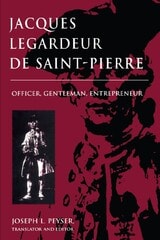
Jacques Legardeur De Saint-Pierre
Officer, Gentleman, EntrepeneurJoseph L. Peyser
Michigan State University Press, 1996
The documentary biography of Jacques Legardeur de Saint-Pierre, an officer in the Troupes de la Marine, who served throughout New France, sheds new light on the business activity of French colonial officers stationed in the West. Many of the eighty previously untranslated documents in Jacques Legardeur de Saint-Pierre demonstrate the extent and profitability of Saint-Pierre's pursuit of business activities while performing official duties in eighteenth-century French North America. The quest for profit permeated Saint- Pierre's career, particularly his command of the Western Sea Post after he succeeded the fabled Pierre Gaultier de Varennes et de la Vérendrye. Saint-Pierre and his secret partner General Jacques-Pierre de Taffanel de La Jonquière, Intendant François Bigot, and Meret, secretary to La Jonquière, used their positions to engage in extensive trade, especially brandy, with the Cree and Assiniboine northwest of Lake Superior. Saint-Pierre's activities provide fresh insights into the North American fur trade.
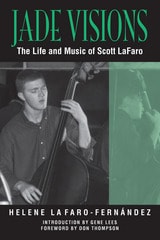
Jade Visions
The Life and Music of Scott LaFaroHelene LaFaro-Fernandez
University of North Texas Press, 2009
Jail Speak
Ben Langston
Ohio University Press, 2020
“Call me what you want—corrections officer, C.O., guard, jailcop, turnkey—I helped keep people there against their will. For this, the jail rewarded me with food.”
When Ben Langston took a job at the State Correctional Institute at Rockview, it was because there were few other options. At his previous job—putting labels on water bottles—he did not have cups of human waste thrown in his face. He did not have to finger sweaty armpits in search of weapons. There were no threats against his life. But the jail paid better.
Jail Speak is a memoir written from a guard’s perspective. It’s about the grind, about dehumanization, drama, punishment, and the cycles of harm perpetrated by the prison industry. It’s about masculinity and conformity and emotional detachment. It’s a look at the inside that you didn’t want to know about, and it’s for mature audiences only. Know your limits.
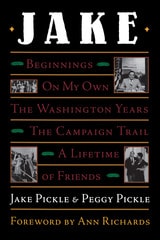
Jake
By Jake Pickle and Peggy Pickle
University of Texas Press, 1997
"My life has been given special purpose," Jake Pickle says. "Some men live to make money, drink, chase women, collect art, excel at a sport, or pursue other things that give them pleasure. The thing I got hooked on was helping people. And I've had the privilege of helping people by the thousands. Serving in Congress was the greatest honor of my life."
In this book, Jake Pickle tells the story of a lifetime in public service, including thirty-one years as Representative for Texas' Tenth Congressional District. Jake tells his story by telling stories—most of them humorous, some poignant—that add up to a warmly personal account of his life and career.
At the heart of the book are Jake's stories of political life in Washington, Austin, and on the campaign trail. These range from hilarious accounts of all that can and does happen at small-town Texas parades and rallies to clear, no-baloney explanations of some of the major legislation that Jake helped to pass. His stories about Social Security reform, tax-exempt organizations, and pension fund reform legislation make these complex topics easy to understand.
This book was written as a collaboration between Jake and his daughter, Peggy Pickle. It offers the fun of listening to a born raconteur spin his tales, while it reveals the ethics and integrity of a man who never forgot that the people elected him to serve them.

James Baldwin's Turkish Decade
Erotics of ExileMagdalena J. Zaborowska
Duke University Press, 2008
Following Baldwin’s footsteps through Istanbul, Ankara, and Bodrum, Zaborowska presents many never published photographs, new information from Turkish archives, and original interviews with Turkish artists and intellectuals who knew Baldwin and collaborated with him on a play that he directed in 1969. She analyzes the effect of his experiences on his novel Another Country (1962) and on two volumes of his essays, The Fire Next Time (1963) and No Name in the Street (1972), and she explains how Baldwin’s time in Turkey informed his ambivalent relationship to New York, his responses to the American South, and his decision to settle in southern France. James Baldwin’s Turkish Decade expands the knowledge of Baldwin’s role as a transnational African American intellectual, casts new light on his later works, and suggests ways of reassessing his earlier writing in relation to ideas of exile and migration.
James Barbour, a Jeffersonian Repulican
Charles D. Lowery
University of Alabama Press, 1984
Barbour, a Virginia contemporary of Thomas Jefferson and James Madison, during a long public career spanning the years 1798-1842, exerted a constructive influence on the nation’s history. Active in state and national politics during the formative decades of the republic, Barbour was a political nationalist who grafted to the dominant political philosophy of the day those elements of the Hamiltonian Federalist creed necessary for governing a dynamic, changing nation.

James Jesus Angleton, the CIA, and the Craft of Counterintelligence
Michael Holzman
University of Massachusetts Press, 2008
As chief of counterintelligence for the Central Intelligence Agency from the early 1950s to the early 1970s, James Jesus Angleton built a formidable reputation. Although perhaps best known for leading the agency's notorious “Molehunt”—the search for a Soviet spy believed to have infiltrated the upper levels of the American government—Angleton also played a key role in the U.S. intervention in the Italian election of 1948, in Israel's development of nuclear weapons, and in the management of the CIA's investigation of the assassination of John F. Kennedy. He later led CIA efforts to contain the Vietnam-era antiwar movement, including the campaign to destroy the liberal Catholic magazine Ramparts.
In this deeply researched biography, Michael Holzman uses Angleton's story to illuminate the history of the CIA from its founding in the late 1940s to the mid-1970s. Like many of his colleagues in the CIA, James Angleton learned the craft of espionage during World War II as an officer in the Office of Strategic Services (OSS), where he became a friend and protégé of the British double agent Kim Philby. Yet Angleton's approach to counterintelligence was also influenced by his unusual Mexican American family background and his years at Yale as a student of the New Critics and publisher of modernist poets. His marriage to Cicely d'Autremont and the couple's friendship with E. E. and Marion Cummings became part of a network of cultural connections that linked the U.S. secret intelligence services and American writers and artists during the postwar period.
Drawing on a broad range of sources, including previously unexamined archival documents, personal letters, and interviews, Holzman looks beneath the surface of Angleton's career to reveal the sensibility that governed not only his personal aims and ambitions but those of the organization he served and helped shape.
James M. Cain and the American Authors' Authority
By Richard Fine
University of Texas Press, 1992
The 1940s offered ever-increasing outlets for writers in book publishing, magazines, radio, film, and the nascent television industry, but the standard rights arrangements often prevented writers from collecting a fair share of the profits made from their work. To remedy this situation, novelist and screenwriter James M. Cain (The Postman Always Rings Twice,Double Indemnity, Mildred Pierce) proposed that all professional writers, including novelists, playwrights, poets, and screenwriters, should organize into a single cartel that would secure a fairer return on their work from publishers and producers. This organization, conceived and rejected within one turbulent year (1946), was the American Authors' Authority (AAA).
In this groundbreaking work, Richard Fine traces the history of the AAA within the cultural context of the 1940s. After discussing the profession of authorship as it had developed in England and the United States, Fine describes how the AAA, which was to be a central copyright repository, was designed to improve the bargaining position of writers in the literary marketplace, keep track of all rights and royalty arrangements, protect writers' interests in the courts, and lobby for more favorable copyright and tax legislation.
Although simple enough in its design, the AAA proposal ignited a firestorm of controversy, and a major part of Fine's study explores its impact in literary and political circles. Among writers, the AAA exacerbated a split between East and West Coast writers, who disagreed over whether writing should be treated as a money-making business or as an artistic (and poorly paid) calling. Among politicians, a move to unite all writers into a single organization smacked of communism and sowed seeds of distrust that later flowered in the Hollywood blacklists of the McCarthy era.
Drawing insights from the fields of American studies, literature, and Cold War history, Fine's book offers a comprehensive picture of the development of the modern American literary marketplace from the professional writer's perspective. It uncovers the effect of national politics on the affairs of writers, thus illuminating the cultural context in which literature is produced and the institutional forces that affect its production.
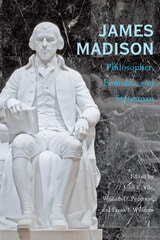
James Madison
Philosopher, Founder, and StatesmanJohn R. Vile
Ohio University Press, 2008
James Madison: Philosopher, Founder, and Statesman presents fresh scholarship on the nation’s fourth president, who is often called both the father of the U.S. Constitution and the father of the Bill of Rights. These essays by historians and political scientists from the United States and abroad focus on six distinct aspects of Madison’s life and work: his personality and development as a statesman; his work at the Constitutional Convention of 1787 and contributions to larger constitutional design; his advocacy for the adoption of the Bill of Rights; his controversial role as a party leader; his presidency; and his life after leaving office.
James Madison continues to be regarded as one of America’s great political theorists, a man who devoted his life to, and who found fulfillment in, public service. His philosophical contributions remain vital to any understanding of the modern American polity. This book will be of great interest to political scientists and theorists, as well as to historians of early American history and politics.
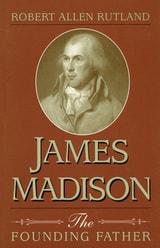
James Madison
The Founding FatherRobert Allen Rutland
University of Missouri Press, 1997
Available for the first time in paperback, James Madison: The Founding Father is a lively portrait of the man who essentially fathered our constitutional guarantees of civil and religious liberty. Focusing on the role Madison played at the Continental Congress and in each stage of the formation of the American Republic, Robert Allen Rutland also covers Madison's relationship with his beloved wife, Dolley, his fifty-year friendship with Thomas Jefferson, and his years as a respected elder statesman after serving as secretary of state and fourth president of the United States.
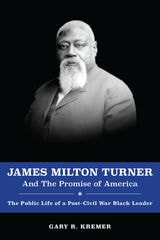
James Milton Turner and the Promise of America
The Public Life of a Post-Civil War Black LeaderGary R. Kremer
University of Missouri Press, 2020
Born a slave, Turner gained freedom when he was a child and received his education in clandestine St. Louis schools, later briefly attending Oberlin College. A self-taught lawyer, Turner earned a statewide reputation and wielded power far out of proportion to Missouri's relatively small black population.
After working nearly a decade in Liberia, Turner never regained the prominence he had enjoyed during Reconstruction.
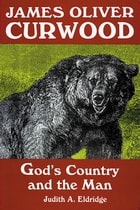
James Oliver Curwood
God's Country and the ManJudith A. Eldridge
University of Wisconsin Press, 1993
When the wounded bear he faced on a mountain ledge that day turned aside, James Curwood felt that he had been spared. From this encounter he became an avid conservationist. He wrote relentlessly—magazine stories and books and then for the new medium of motion pictures. Like many authors of his time, he was actively involved in movie-making until the plight of the forests and wildlife in his home state of Michigan turned his energies toward conservation.
A man ahead of his time, and quickly forgotten after his death in 1927, his gift of himself to his readers and to nature has finally come to be appreciated again two generations later.
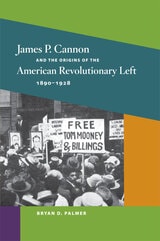
James P. Cannon and the Origins of the American Revolutionary Left, 1890-1928
Bryan D. Palmer
University of Illinois Press, 2010
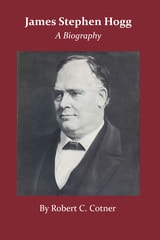
James Stephen Hogg
A BiographyBy Robert C. Cotner
University of Texas Press, 1959
No other governor has become so completely identified with Texas and its citizens as Jim Hogg, the first native Texan to hold the state's highest office. His fame was not, however, easily earned. Orphaned at twelve, he worked as farmhand, typesetter, and country editor to finance his study of law, an endeavor that eventually led him into public life.
Even before his admission to the bar in 1875 he served as justice of the peace in Wood County. Later, in two terms as district attorney (1881–1885), he proved himself a fearless prosecutor. His growing reputation, with his magnetic personality, brought him the attorney generalship in 1887, and in that office he fulfilled his campaign promises to enforce all laws. During Hogg's tenure, suits brought by his department resulted in the restoration of more than a million acres of state lands held by the railroads.
In 1890 Hogg was elected governor. Early the next year he began urging his reform program, the keystone of which was establishment of the Railroad Commission. He also brought about the passage of laws preventing the watering of railroad securities, the indiscriminate issuance of municipal securities, and the establishment of landholding companies. Land ownership by aliens was likewise restricted.
Throughout Hogg's public life, from iustice of the peace to governor, he was motivated by his concern for the welfare of the people. Invariably his criterion for evaluation of an issue was the effect of a decision upon the common welfare. In this democratic progressivism he was the Texas version of Thomas Jefferson or Theodore Roosevelt. Molded by his varied experiences, Jim Hogg was a man of many professions—printer, lawyer, politician, statesman, oil magnate. In these relationships he was still a warmly human person, a loving son, brother, husband, father, friend. His ambition to provide abundantly for his family was expansive enough to include all Texans; so his love for "the people" was reiterated in his public benefactions, through which Texans are even today still sharing his wealth.
Jim Hogg's varied public life and his heart-warming personal life are dramatically presented in this absorbing biography. In it, the far-sweeping panorama of Texas development in the late nineteenth and early twentieth centuries is shown in relation to his dreams and achievements.
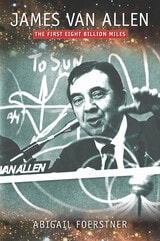
James Van Allen
The First Eight Billion MilesAbigail Foerstner
University of Iowa Press, 2009
Astrophysicist and space pioneer James Van Allen (1914–2006), for whom the Van Allen radiation belts were named, was among the principal scientific investigators for twenty-four space missions, including Explorer I in 1958, the first successful U.S. satellite; Mariner 2’s 1962 flyby of Venus, the first successful mission to another planet; and the 1970s Pioneer 10 and Pioneer 11 missions that surveyed Jupiter and Saturn. Although he retired as a University of Iowa professor of physics and astronomy in 1985, he remained an active researcher, using his campus office to monitor data from Pioneer 10—on course to reach the edge of the solar system when its signal was lost in 2003—until a short time before his death at the age of ninety-one. Now Abigail Foerstner blends space science drama, military agendas, cold war politics, and the events of Van Allen’s lengthy career to create the first biography of this highly influential physicist.
Drawing on Van Allen’s correspondence and publications, years of interviews with him as well as with more than a hundred other people, and declassified documents from such archives as the Jet Propulsion Laboratory, the Kennedy Space Center, and the Applied Physics Laboratory, Foerstner describes Van Allen’s life from his Iowa childhood to his ?rst experiments at White Sands to the years of Explorer I until his death in 2006.
Often called the father of space science, James Van Allen led the way to mapping a new solar system based on the solar wind, massive solar storms, and cosmic rays. Pioneer 10 alone sent him more than thirty years of readings that helped push our recognition of the boundary of the solar system billions of miles past Pluto. Abigail Foerstner’s compelling biography charts the eventful life and time of this trailblazing physicist.
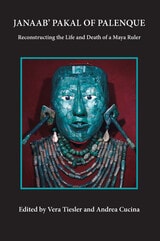
Janaab' Pakal of Palenque
Reconstructing the Life and Death of a Maya RulerEdited by Vera Tiesler and Andrea Cucina
University of Arizona Press, 2006
This volume communicates the broad scope of applied interdisciplinary research conducted on the Pakal remains to provide answers to old disputes over the accuracy of both skeletal and epigraphic studies, along with new questions in the field of Maya dynastic research. Contributions by scholars in epigraphy, anthropology, and bioarchaeology bring to light new evidence regarding the ruler’s age, clarify his medical history and the identification of the remains found with him, reevaluate his role in life, and offer modern insights into ritual and sacrificial practices associated with Pakal.
The book leads readers through the history of Pakal’s discovery, skeletal analysis, and interpretation of Maya biographies, and also devotes considerable attention to the tomb of the “Red Queen” discovered at the site. Findings from the new Transition Analysis aging method, histomorphometric analysis, and taphonomic imagery are presented to shed new light on the perplexing question of Pakal’s age at death. Royal Maya life and death histories from the written record are also analyzed from a regional perspective to provide a broad panorama of the twisted power politics of rulers’ families and the entangled genealogies of the Maya Classic period.
A benchmark in biological anthropology, this volume reconsiders assumptions concerning the practices and lives of Maya rulers, posing the prospect that researchers too often find what they expect to find. In presenting an updated study of a well-known personage, it also offers innovative approaches to the biocultural and interdisciplinary re-creation of Maya dynastic history.
Contributors
Jesper K. Boldseh
Jane E. Buikstra
James H. Burton
Andrea Cucina
Nikolai Grube
Patricia Hernández
Lourdes Márquez
Simon Martin
George R. Milner
T. Douglas Price
Arturo Romano
Carlos Serrano
Sam D. Stout
Margaret Streeter
Vera Tiesler
John W. Verano
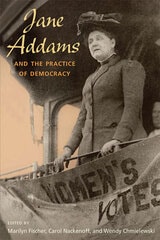
Jane Addams and the Practice of Democracy
Edited by Marilyn Fischer, Carol Nackenoff, and Wendy Chmielewski
University of Illinois Press, 2008
Using a rich array of newly available sources and contemporary methodologies from many disciplines, the ten original essays in this volume give a fresh appraisal of Addams as a theorist and practitioner of democracy. In an increasingly interdependent world, Addams's life work offers resources for activists, scholars, policy makers, and theorists alike. This volume demonstrates how scholars continue to interpret Addams as a model for transcending disciplinary boundaries, generating theory out of concrete experience, and keeping theory and practice in close and fruitful dialogue.
Contributors are Harriet Hyman Alonso, Victoria Bissell Brown, Wendy Chmielewski, Marilyn Fischer, Shannon Jackson, Louise W. Knight, Carol Nackenoff, Karen Pastorello, Wendy Sarvasay, Charlene Haddock Seigfried, and Camilla Stivers.
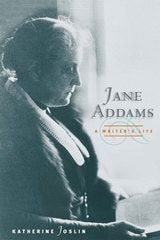
Jane Addams, a Writer's Life
Katherine Joslin
University of Illinois Press, 2003
Jane Addams, a Writer's Life is an expansive, revealing, and refreshing reexamination of the renowned reformer as an imaginative writer. Jane Addams is best known for her groundbreaking social work at Hull-House, the force of her efforts toward Progressive political and social reform, and the bravery of her commitment to pacifism, for which she received the Nobel Peace Prize. Katherine Joslin moves beyond this history to present Addams as a literary figure, one whose writing employed a synthesis of fictional and analytical prose that appealed to a wide audience.
Joslin traces Addams's style from her early works, Philanthropy and Social Progress and her contributions to Hull House Maps and Papers, influenced by Florence Kelley, to her modernist and experimental last books, The Second Twenty Years at Hull-House and My Friend, Julia Lathrop, placing Addams in the context of other Chicago writers including Theodore Dreiser, Upton Sinclair, Harriet Monroe, Frank Norris and James T. Farrell. Joslin's close readings showcase Addams's distinguishing literary devices, such as using stories about people rather than sociological argument to make moral points. As Joslin pursues the argument that Addams's power as a public figure stemmed from the success of her books and essays, Addams herself emerges as a literary woman.

Jane Addams
A BIOGRAPHYJames Weber LinnIntroduction by Anne Firor Scott
University of Illinois Press, 1935
James Weber Linn's life of this forceful public figure offers a rare glimpse of the private Addams, from her childhood and schooling through her first efforts in public service and her rise to a position of national influence. Linn's biography is based on Addams's personal papers, which she turned over to him before she died: files of her manuscripts, published and unpublished, along with all of her letters and papers, from her first valentine to her last speech. Out of this treasure trove, in combination with Addams's substantial published works, he has written a unique life of his aunt, beautifully illuminating her private reflections and inner strength as well as her formidable public persona.

Jane Addams
The Most Dangerous Woman in AmericaMarlene Targ Brill
Ohio University Press, 2024
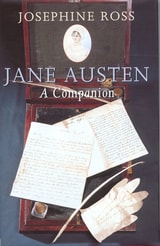
Jane Austen
A CompanionRoss, Josephine
Rutgers University Press, 2003
This illuminating, entertaining, up-to-date companion is the only general guide to Jane Austen, her work, and her world. Josephine Ross explores the literary scene during the time Austen's works first appeared: the books considered classics then, the "horrid novels" and romances, and the grasping publishers. She looks at the architecture and décor of Austen's era that made up "the profusion and elegance of modern taste." Regency houses for instance, Chippendale furniture, and "picturesque scenery." On a smaller scale she answers questions that may baffle modern readers. What, for example, was "hartshorn"? How did Lizzy Bennet "let down" her gown to hide her muddy petticoat? Ross shows us the fashions, and the subtle ways Jane Austen used clothes to express character. Courtship, marriage, adultery, class and "rank," mundane tasks of ordinary life, all appear, as does the wider political and military world.
This book will add depth to all readers' enjoyment of Jane Austen, whether confirmed addicts or newcomers wanting to learn about one of the world's most popular and enduring writers.
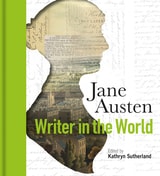
Jane Austen
Writer in the WorldEdited by Kathryn Sutherland
Bodleian Library Publishing, 2017
Brilliantly edited by Kathryn Sutherland, Jane Austen: Writer in the World offers a life story told through the author's personal possessions. In her teenage notebooks, literary jokes give a glimpse of her family’s shared love of reading and satire, which can be seen in the subtler humor of Austen’s published work. Pieces from Austen’s hand-copied collection of sheet music reveal how music was used to create networks far more intricate than the simple pleasures of home recital. A beautiful brown silk pelisse-coat, together with lively letters between Austen and Cassandra, give insight into her views on fashion. All feature in this lavishly illustrated collection, along with homemade booklets in which she composed her novels, portraits made of Austen during her lifetime, and much more. Also included are objects associated with the era in which Austen lived: newspaper articles, naval logbooks, and contemporary political cartoons, shedding light on Austen’s wider social and political worlds.
This collection makes a delightful modern-day keepsake from one of the world’s best-loved writers on the two-hundredth anniversary of her death.

Jane Fonda
There's a Great Deal to SayMarilyn S. Greenwald
Rutgers University Press, 0
Since the late 1960s, Jane Fonda has identified as an activist first and an actor second, using her celebrity as a vehicle to convey her views and her advocacy. Few stars of her stature have been as simultaneously acclaimed and vilified as Fonda. Even as she won two Academy Awards and was a major box office draw of the 1970s and 1980s, she received reams of hate mail for her political activism and antiwar stances. This book explores Fonda’s devotion to movement politics—sometimes at the expense of her career and her personal safety.
Digging deep into rare material from cinema archives and Fonda’s own personal papers, journalist Marilyn Greenwald tells the story of how Fonda came to view acting as a “side gig” that gives her a worldwide platform to convey her personal and political views. Charting the evolution of her activism and the merging of her acting and producing with her advocacy, Greenwald focuses on the years from 1968—when she was jarred out of complacency by the Vietnam War—to 1980, after the release of The China Syndrome and the advent of the Three Mile Island nuclear crisis, which brought to light the possible dangers of nuclear energy. Greenwald details how three of her films—Klute (1971), Coming Home (1978), and The China Syndrome (1979)—were designed to further her personal beliefs. She also considers how Fonda has weathered changes in the entertainment industry and public tastes to produce and star in decades' worth of socially conscious projects. Charting Fonda’s personal and professional growth while offering a candid account of her struggles, this book shows how Fonda viewed movies as an influential storytelling tool that can influence public opinion, change minds, and trigger social change.
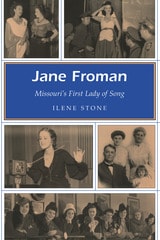
Jane Froman
Missouri's First Lady of SongIlene Stone
University of Missouri Press, 2003
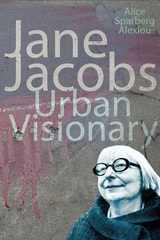
Jane Jacobs
Urban VisionaryAlice Sparberg Alexiou
Rutgers University Press, 2006
Today, we take for granted the wisdom of renovating old factory buildings into malls or condos, of making once decaying waterfronts into vibrant public spaces, of protecting historic buildings under landmark laws, and of building public housing on a human scale rather than as high-rises. In contemporary cities, it is now common for community groups to plant gardens in empty lots and to buy abandoned apartment buildings from the city for a dollar and fix them up.
But these and other urban planning policies and practices have not always been accepted. Before they became widespread, they were the visionary ideas of the writer and urban commentator Jane Jacobs. Best known in the United States for her path-breaking efforts to preserve the character of Greenwich Village, Jacobs is the author of the classic 1961 book, The Death and Life of Great American Cities, one of the most influential works ever published in urban studies. The architectural critic Herbert Muschamp wrote in the New York Times that its publication “was one of twentieth-century architecture’s most traumatic events. Its impact is still felt in cities across the land.”
In this analysis of Jane Jacobs’s ideas and work, Alice Sparberg Alexiou tells the remarkable story of a woman who without any formal training in planning became a prominent spokesperson for sensible urban change. Besides writing the seminal book about contemporary cities, Jacobs organized successful community battles in New York against powerful interests. She resisted urban renewal in the West Village in the 1960s, helped defeat the Lower Manhattan Expressway, advocated the pleasures of street life that she called “sidewalk ballet,” and opposed the original Twin Towers plans. She was also active in the anti–Vietnam War movement, which eventually led her to move to Canada. There she continued her grass-roots activism, including helping to prevent the construction of an expressway that would have cut through several neighborhoods in Toronto.
Based on a rich array of interviews and primary source material, this book brings long-overdue attention to Jacobs’s far-reaching influence as an original thinker and effective activist.
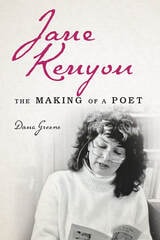
Jane Kenyon
The Making of a PoetDana Greene
University of Illinois Press, 2023
Pleasure-loving, sarcastic, stubborn, determined, erotic, deeply sad--Jane Kenyon’s complexity and contradictions found expression in luminous poems that continue to attract a passionate following. Dana Greene draws on a wealth of personal correspondence and other newly available materials to delve into the origins, achievement, and legacy of Kenyon’s poetry and separate the artist’s life story from that of her husband, the award-winning poet Donald Hall.
Impacted by relatives’ depression during her isolated childhood, Kenyon found poetry at college, where writers like Robert Bly encouraged her development. Her graduate school marriage to the middle-aged Hall and subsequent move to New Hampshire had an enormous impact on her life, moods, and creativity. Immersed in poetry, Kenyon wrote about women’s lives, nature, death, mystical experiences, and melancholy--becoming, in her own words, an “advocate of the inner life.” Her breakthrough in the 1980s brought acclaim as “a born poet” and appearances in the New Yorker and elsewhere. Yet her ongoing success and artistic growth exacerbated strains in her marriage and failed to stave off depressive episodes that sometimes left her non-functional. Refusing to live out the stereotype of the mad woman poet, Kenyon sought treatment and confronted her illness in her work and in public while redoubling her personal dedication to finding pleasure in every fleeting moment. Prestigious fellowships, high-profile events, residencies, and media interviews had propelled her career to new heights when leukemia cut her life short and left her husband the loving but flawed curator of her memory and legacy.
Revelatory and insightful, Jane Kenyon offers the first full-length biography of the elusive poet and the unquiet life that shaped her art.
Javanese Lives
Women and Men in Modern Indonesian SocietyWilliams, Walter L.
Rutgers University Press, 1991
Java is the most populous island of Indonesia, the fifth largest nation in the world. Yet despite its importance, outsiders know little about the country or its people. With the help of Indonesian students and scholars, Walter L. Williams has collected and translated the life histories of twenty-seven Javanese women and men. The people interviewed tell how they have coped with rapid social and economic change, and the transformation of their traditions. Williams has carefully selected the individuals he includes to represent a wide diversity of Java's people. We hear from fascinating men and women of various religions, from the rich and the poor, and from different ethnic backgrounds. Diversity is a constant theme, as evidenced by a poor pedicab driver who can barely scrape along, by a rich businesswoman who explains how she balances her professional and domestic roles, by an educated and respected homosexual school principal, and by an illiterate mother of fourteen children. All of them present in their lives a unique Javanese approach to living.
These oral histories were derived from elderly people, who have a larger perspective on the changes they have seen in their lifetimes. The focus of the first section of the book is the way people have adapted in their daily lives to massive social and economic changes. In the middle section, we hear from the Javanese who represent traditional values in the midst of change. Finally, we hear from educators and parents who tell us of their concerns for Indonesian youth and the future of Indonesia.
Jazz from the Beginning
Garvin Bushell
University of Michigan Press, 1990
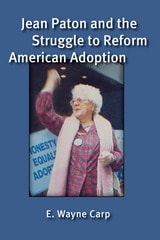
Jean Paton and the Struggle to Reform American Adoption
E. Wayne Carp
University of Michigan Press, 2013
Jean Paton (1908–2002) fought tirelessly to reform American adoption and to overcome prejudice against adult adoptees and women who give birth out of wedlock. Paton wrote widely and passionately about the adoption experience, corresponded with policymakers as well as individual adoptees, promoted the psychological well-being of adoptees, and facilitated reunions between adoptees and their birth parents. E. Wayne Carp's masterful biography brings to light the accomplishments of this neglected civil-rights pioneer, who paved the way for the explosive emergence of the adoption reform movement in the 1970s. Her unflagging efforts over five decades helped reverse harmful policies, practices, and laws concerning adoption and closed records, struggles that continue to this day.

Jean Paul Marat
Tribune of the French RevolutionClifford D. Conner
Pluto Press, 2012
Jean-Paul Marat’s role in the French Revolution has long been a matter of controversy among historians. Often he has been portrayed as a violent, sociopathic demagogue. This biography challenges that interpretation and argues that without Marat’s contributions as an agitator, tactician, and strategist, the pivotal social transformation that the Revolution accomplished might well not have occurred.
Clifford D. Conner argues that what was unique about Marat - which set him apart from all other major figures of the Revolution, including Danton and Robespierre - was his total identification with the struggle of the propertyless classes for social equality.
This is an essential book for anyone interested in the history of the revolutionary period and the personalities that led it.
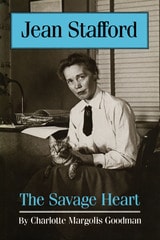
Jean Stafford
The Savage HeartBy Charlotte Margolis Goodman
University of Texas Press, 1990
One of America's best short story writers and author of three fine novels, Boston Adventure (1944), The Mountain Lion (1947), and The Catherine Wheel (1952), Jean Stafford has been rediscovered by another generation of readers and scholars. Although her novels and her Pulitzer Prize–winning short stories were widely read in the 1940s and 1950s, her fiction has received less critical attention than that of other distinguished contemporary American women writers such as Carson McCullers, Flannery O'Connor, and Eudora Welty. In this literary biography, Charlotte M. Goodman traces the life of the brilliant yet troubled Jean Stafford and reassesses her importance.
Drawing on a wealth of original material, Goodman describes the vital connections between Stafford's life and her fiction. She discusses Stafford's difficult family relationships, her tempestuous first marriage to the poet Robert Lowell, her unresolved conflicts about gender roles, her alcoholism and bouts with depression—and her amazing ability to transform the chaotic details of her life into elegant works of fiction. These wonderfully crafted works offer insightful portraits of alienated and isolated characters, most of whom exemplify not only human estrangement in the modern world, but also the special difficulties of girls and women who refuse to play traditional roles.
Goodman locates Jean Stafford within the literary world of the 1940s and 1950s. In her own right, and through her marriages to Robert Lowell, Life magazine editor Oliver Jensen, and journalist A. J. Liebling, Stafford associated with many of the major literary figures of her day, including the Southern Fugitives, the New York intellectual coterie, and writers for the New Yorker, to which she regularly contributed short stories. Goodman also describes Stafford's sustaining friendships with other women writers, such as Evelyn Scott and Caroline Gordon, and with her New Yorker editor, Katharine S. White.
This highly readable biography will appeal to a wide audience interested in twentieth-century literature and the writing of women's lives.
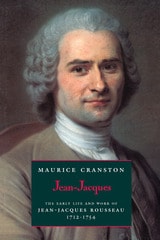
Jean-Jacques
The Early Life and Work of Jean-Jacques Rousseau, 1712-1754Maurice Cranston
University of Chicago Press, 1991
"[An] admirable biography which is as meticulous, calm, reasonable, and judicious as its subject is passionate and tumultuous."—Keith Michael Baker, Washington Post Book World
"The definitive biography, as scholarly as it is entertaining."—The Economist
"Exceptionally fresh . . . . [Cranston] seems to know exactly what his readers need to know, and thoughtfully enriches the background—both physical and intellectual—of Rousseau's youthful peregrinations . . . . He makes the first part of Rousseau's life as absorbing as a picaresque novel. His fidelity to Rousseau's ideas and to his life as it was lived is a triumph of poise."—Naomi Bliven, The New Yorker
"The most outstanding achievement of Professor Cranston's own distinguished career."—Robert Wokler, Times Literary Supplement
Maurice Cranston (1920-1993), a distinguished scholar and recipient of the James Tait Black Memorial Prize for his biography of John Locke, was professor of political science at the London School of Economics. His numerous books include The Romantic Movement and Philosophers and Pamphleteers, and translations of Rousseau's The Social Contract and Discourse on the Origins of Inequality.
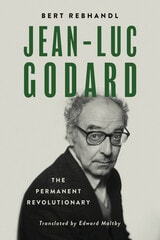
Jean-Luc Godard
The Permanent RevolutionaryBert Rebhandl, translated by Edward Maltby
University of Wisconsin Press, 2023
Rebhandl skillfully weaves together biographical details; information about the cultural, intellectual, and cinematic milieu over the decades; and descriptions of Godard’s most significant films to support his assertion that the director was a permanent revolutionary—always seeking new ways to create, understand, and comment on film within a larger context. He views Godard as an artist consistently true to himself while never ceasing to change and evolve, often in unexpected, radical, and controversial ways.
Rebhandl is known as a journalist with deep insights and lucid prose. Despite the wealth of material to analyze, he neither gets lost in the details nor offers a superficial gloss, even while directly tackling such topics as the long-standing charges of antisemitism against Godard and his oeuvre. This volume will be welcome to both casual fans and dedicated devotees.
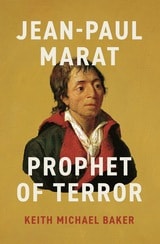
Jean-Paul Marat
Prophet of TerrorKeith Michael Baker
University of Chicago Press, 2025
Who better to pen an authoritative biography of Jean-Paul Marat (1743–93) than preeminent historian of France Keith Michael Baker? Decades in the making, this monumental work takes readers on a journey through the intriguing, sometimes shocking life of this writer and thinker.
Starting with Marat’s Swiss family and upbringing, Baker then sheds light on his early years in England, his career as an aspiring scientist in Paris, his gradual transformation from impassioned pamphleteer to revolutionary newspaperman, and, finally, his murder and martyrdom. Throughout, Baker offers readers the unique opportunity to reconsider the outbreak and development of the French Revolution through Marat’s eyes and in his own words. To help make sense of Marat’s trajectory, he shows how his violent and incendiary public calls to render unseen forces visible, to inject immediacy into an increasingly abstract modern world, would transform classical republicanism into the language of Terror.
Far beyond a standard rendering of Marat’s life and its milestones, this biography offers readers an opportunity to see the French Revolution as never before, through the perspective of one of its major figures. Baker’s book reveals how someone like Marat could go from translating Newton and engaging with Franklin to calling for an ever-growing number of heads to roll—a transformation as chilling as ever.

Jean-Paul Sartre
Hated Conscience of His Century, Volume 1: Protestant or Protester?John Gerassi
University of Chicago Press, 1989
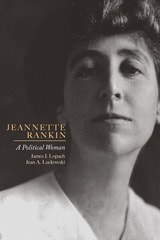
Jeannette Rankin
A Political WomanJames J. Lopach
University Press of Colorado, 2015
—Jeannette Rankin (1880-1973)
Jeannette Rankin, the first woman elected to Congress, stands tall among American icons. The representative from Montana won her seat at a time when women didn't have the right to vote in most states. Her firm stances inspired both admiration and fury across party lines, and she gained nearly canonical status among feminists and pacifists. In Jeannette Rankin: A Political Woman, James Lopach and Jean Luckowski demythologize Rankin, showing her to be a talented, driven, and deeply divided woman.
Until now, no biography has explored Rankin's inconsistencies. The authors extensively consulted the correspondence of her family members and contemporaries, uncovering ties between her politics and her familial and personal relationships. They reveal how she succeeded through her wealthy brother's influence as well as her own extraordinary efforts; how she drew inspiration not from her rural roots but from the radical hotbed of Greenwich Village; and how she championed an independent, woman-centered life while deferring to family.
Revealing her complexities along with her accomplishments, Jeannette Rankin: A Political Woman will be the definitive biography of this path-breaking politician for years to come.

Jefferson Davis, Unconquerable Heart
Felicity Allen
University of Missouri Press, 2000
Preeminent Civil War historian Frank Vandiver always longed to see an interpretive biography of Jefferson Davis. Finally, more than twenty years after Vandiver expressed that wish, publication of Jefferson Davis, Unconquerable Heart makes such an interpretive biography available.
Felicity Allen begins this monumental work with Davis's political imprisonment at the end of the Civil War and masterfully flashes back to his earlier life, interweaving Davis's private life as a schoolboy, a Mississippi planter, a husband, a father, and a political leader. She follows him from West Point through army service on the frontier, his election to the U.S. House of Representatives, his regimental command in the Mexican War, his service as U.S. secretary of war and senator, and his term as president of the Confederate States of America.
Although Davis's family is the nexus of this biography, friends and enemies also play major roles. Among his friends intimately met in this book are such stellar figures as Andrew Jackson, John C. Calhoun, Zachary Taylor, Franklin Pierce, Albert Sidney Johnston, and Robert E. Lee.
With the use of contemporary accounts and Davis's own correspondence, Jefferson Davis, Unconquerable Heart casts new light upon this remarkable man, thawing the icy image of Davis in many previous accounts. Felicity Allen shows a strong, yet gentle man; a stern soldier who loved horses, guns, poetry, and children; a master of the English language, with a dry wit; a man of powerful feelings who held them in such tight control that he was considered cold; and a home-loving Mississippian who was drawn into a vortex of national events and eventual catastrophe. At all times, "duty, honor, country" ruled his mind. Davis's Christian view of life runs like a thread throughout the book, binding together his devotion to God, his family, and the land.
Jefferson Davis, Unconquerable Heart brings Davis to life in a way that has never been done before. The variety of his experience, the breadth of his learning, and the consistency of his beliefs make this historical figure eminently worth knowing.
Jelliffe
American Psychoanalyst and Physician and His Correspondence with Sigmund Freud and C. G. JungJohn C. Burnham
University of Chicago Press, 1983
Jelliffe's colorful and versatile career led him from botany and neurology (he was coauthor of a neurology text that remained standard for some forty years) to psychiatry, psychoanalysis (of which he was a founding father in the United States), and psychosomatic medicine (in which he also pioneered). Jelliffe also made outstanding contributions to medical journalism. With William Alanson White he founded the Psychoanalytic Review, and his work as editor of the Journal of Nervous and Mental Disease from 1902 to 1944 may have set a record for editorial longevity. Jelliffe was a charismatic speaker and teacher who in all his roles induced physicians and other thinkers to explore new ideas and ways of thinking.
Jelliffe's correspondence with Jung and Freud illuminates the personal and professional lives of the three men. The letters help to clarify concepts in both the Jungian and Freudian schools. The shifting emphasis of Jelliffe's relationships with the two masters of psychoanalysis—first when the two were colleagues, then for the greater span of time when they were rivals and adversaries—is revealing of Jenlliffe's own flexible views.
Jelliffe, furthermore, provides insights into the history of medicine and medical institutions and customs through Jelliffe's frank accounts of the developing medical profession in America. Jelliffe describes, for example, what it was like for a young M.D. to set up an economically viable practice in the 1890s. In addition, Burnham explores the problem of measuring the influence of a man like Jelliffe upon the history of ideas and institutions.
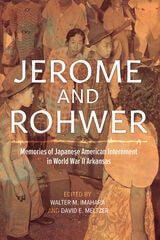
Jerome and Rohwer
Memories of Japanese American Internment in World War II ArkansasWalter M. Imahara
University of Arkansas Press, 2022
This book is a collection of brief memoirs written by former internees of Jerome and Rohwer and their close family members. Here dozens of individuals, almost all of whom are now in their eighties or nineties, share their personal accounts as well as photographs and other illustrations related to their life-changing experiences. The collection, likely to be one of the last of its kind, is the only work composed solely of autobiographical remembrances of life in Jerome and Rohwer, and one of the very few that gathers in a single volume the experiences of internees in their own words.
What emerges is a vivid portrait of lives lived behind barbed wire, where inalienable rights were flouted and American values suspended to bring a misguided sense of security to a race-obsessed nation at war. However, in the barracks and the fields, the mess halls and the makeshift gathering places, values of perseverance, tolerance, and dignity—the gaman the internees shared—gave significance to a transformative experience that changed forever what it means to call oneself an American.
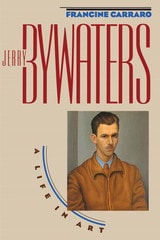
Jerry Bywaters
A Life in ArtBy Francine Carraro
University of Texas Press, 1994
As an artist, art critic, museum director, and art educator, Jerry Bywaters reshaped the Texas art world and attracted national recognition for Texas artists. This first full-scale biography explores his life and work in the context of twentieth-century American art, revealing Bywaters' important role in the development of regionalist painting.
Francine Carraro delves into all aspects of Bywaters' career. As an artist, Bywaters became a central figure and spokesman for a group of young, energetic painters known as the Dallas Nine (Alexandre Hogue, Everett Spruce, Otis Dozier, William Lester, and others) who broke out of the limitations of provincialism and attained national recognition beginning in the 1930s.
As director of the Dallas Museum of Fine Arts, art critic for the Dallas Morning News, and professor of art and art history at Southern Methodist University, Bywaters became a champion of the arts in Texas. Carraro traces his strong supporting role in professionalizing art institutions in Texas and defendlng the right to display art considered "subversive" in the McCarthy era.
From these discussions emerges a finely drawn portrait of an artist who used a vocabulary of regional images to explore universal themes. It will be of interest to all students of American studies, national and regional art history, and twentieth-century biography.