Results by title
1917 books match the query 'Law' and 38 start with j
JLE vol 61 num 4
The University of Chicago Press
University of Chicago Press Journals, 2018

JUSTIFIABLE HOMICIDE
BATTERED WOMEN, SELF-DEFENSE AND THE LAWCynthia K. Gillespie
The Ohio State University Press, 1990
Japanese Law
An Economic ApproachJ. Mark Ramseyer and Minoru Nakazato
University of Chicago Press, 1998
"A compelling economic analysis. . . . This book remains one of the few concerning Japanese law that successfully brings to life the legal culture of Japan." —Bonnie L. Dixon, New York Law Journal
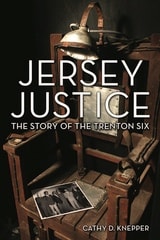
Jersey Justice
The Story of the Trenton SixCathy D. Knepper
Rutgers University Press, 2011
The case of the Trenton Six attracted international attention in its time (1948–1952) and was once known as the “northern Scottsboro Boys case.” Yet, there is no memory of it. The shame of racism evident in the case has been nearly erased from the public record. Now, historian Cathy D. Knepper takes us back to the courtroom to make us aware of this shocking chapter in American history.
Jersey Justice: The Story of the Trenton Six begins in 1948 when William Horner, an elderly junk dealer, was murdered in his downtown Trenton shop. Over a two-week period, six local African American men were arrested and charged with collectively killing Horner. Violating every rule in the book, the Trenton police held the six men in incommunicado detention, without warrants, and threatened them until they confessed. At the end of the trial the all-white jury sentenced the six men to die in the electric chair.
That might have been the end of the story were it not for the tireless efforts of Bessie Mitchell, the sister of one of the accused men. Undaunted by the refusal of the NAACP and the ACLU to help appeal the conviction of the Trenton Six, Mitchell enlisted the aid of the Civil Rights Congress, ultimately taking the case as far as the New Jersey Supreme Court. Along the way, the Trenton Six garnered the attention and involvement of many prominent activists, politicians, and artists, including Paul Robeson, Thurgood Marshall, Eleanor Roosevelt, Pete Seeger, Arthur Miller, and Albert Einstein. Jersey Justice brings to light a shameful moment in our nation’s history, but it also tells the story of a personal battle for social justice that changed America.
Jewish Legal Theories
Writings on State, Religion, and MoralityEdited by Leora Batnitzky and Yonatan Brafman
Brandeis University Press, 2018
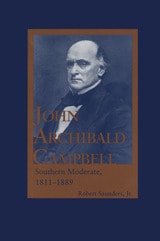
John Archibald Campbell
Southern Moderate, 1811–1889Robert Saunders Jr.
University of Alabama Press, 1997
The first full biography of the southern U.S. Supreme Court justice who championed both the U.S. Constitution and states’ rights.
The life of John Archibald Campbell reflects nearly every major development of 19th-century American history. He participated either directly or indirectly in events ranging from the Indian removal process of the 1830s, to sectionalism and the Civil War, to Reconstruction and redemption. Although not a defender of slavery, he feared that abrupt abolition would produce severe economic and social dislocation. He urged southerners to reform their labor system and to prepare for the eventual abolition of slavery. In the early 1850s he proposed a series of reforms to strengthen slave families and to educate the slaves to prepare them for assimilation into society as productive citizens. These views distinguished him from many southerners who steadfastly maintained the sanctity of the peculiar institution.
Born and schooled in Georgia, Campbell moved to Montgomery, Alabama, in the early 1830s, where he joined a successful law practice. He served in the Alabama legislature for a brief period and then moved with his family to Mobile to establish a law practice. In 1853 Campbell was appointed an associate justice of the U.S. Supreme Court. His concurring opinion in the Dred Scott case in 1857 derived not from the standpoint of protecting slavery but from an attempt to return political power to the states. As the sectional crisis gathered heat, Campbell counseled moderation. He became widely detested in the North because of his defense of states’ rights, and he was distrusted in the South because of his moderate views on slavery and secession. In May 1861 Campbell resigned from the Court and later became the Confederacy's assistant secretary of war. After the war, Campbell moved his law practice to New Orleans. Upon his death in 1889, memorial speakers in Washington, D.C., and New Orleans recognized him as one of the nation's most gifted lawyers and praised his vast learning and mastery of both the common law and the civil law.
In this first full biography of Campbell, Robert Saunders, Jr., reveals the prevalence of anti-secession views prior to the Civil War and covers both the judicial aspects and the political history of this crucial period in southern history.
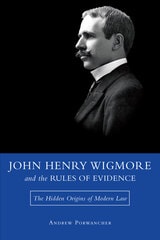
John Henry Wigmore and the Rules of Evidence
The Hidden Origins of Modern LawAndrew Porwancher
University of Missouri Press, 2024
Honorable Mention, 2017 Scribes Book Award, The American Society of Legal Writers
At the dawn of the twentieth century, the United States was reeling from the effects of rapid urbanization and industrialization. Time-honored verities proved obsolete, and intellectuals in all fields sought ways to make sense of an increasingly unfamiliar reality. The legal system in particular began to buckle under the weight of its anachronism. In the midst of this crisis, John Henry Wigmore, dean of the Northwestern University School of Law, single-handedly modernized the jury trial with his 1904-5 Treatise onevidence, an encyclopedic work that dominated the conduct of trials. In so doing, he inspired generations of progressive jurists—among them Oliver Wendell Holmes, Jr., Benjamin Cardozo, and Felix Frankfurter—to reshape American law to meet the demands of a new era. Yet Wigmore’s role as a prophet of modernity has slipped into obscurity. This book provides a radical reappraisal of his place in the birth of modern legal thought.
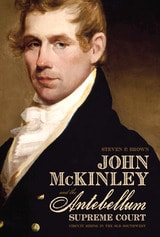
John McKinley and the Antebellum Supreme Court
Circuit Riding in the Old SouthwestSteven P. Brown
University of Alabama Press, 2012
A Southern voice on a national bench—McKinley’s legacy in antebellum law.
John McKinley and the Antebellum Supreme Court offers the first comprehensive biography of Justice John McKinley (1780–1852), a largely forgotten figure in American legal history who played a pivotal role during a formative period of the U.S. Supreme Court. Steven P. Brown rescues McKinley from historical obscurity, presenting a compelling portrait of a man deeply embedded in the political, legal, and financial life of the early 19th-century South.
Born in Kentucky and later settling in northern Alabama, McKinley served in both the U.S. Senate and House of Representatives before being appointed to the Supreme Court by President Martin Van Buren in 1837. His tenure on the bench coincided with the creation of the Ninth Circuit, a vast and challenging judicial territory encompassing Alabama, Arkansas, Louisiana, and Mississippi. Brown details McKinley’s arduous circuit-riding duties, which required extensive travel and exposed him to the legal complexities of a rapidly expanding frontier.
More than a biography, the book provides a penetrating analysis of antebellum legal culture, Alabama state politics, and the internal workings of the Supreme Court during a time of national transformation. Brown challenges the prevailing view of McKinley as a mediocre jurist, arguing instead that his contributions—particularly his dissents defending states’ rights—deserve renewed scholarly attention. With rich historical context and meticulous research, John McKinley and the Antebellum Supreme Court sheds light on the burdens of justice in a divided nation and the legacy of a justice whose career mirrored the tensions of his time.
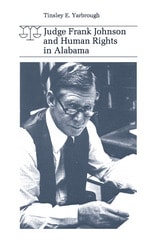
Judge Frank Johnson and Human Rights in Alabama
Tinsley E. Yarbrough
University of Alabama Press, 1981
Where courage meets the gavel: One judge’s relentless fight for justice and human rights in Alabama.
Judge Frank M. Johnson, Jr., Chief Judge of the United States District Court for the Middle District of Alabama until his elevation to the Court of Appeals for the Fifth Circuit in 1979, was perhaps President Dwight D. Eisenhower’s most significant appointment to a lower court. His selection to the bench in 1955 followed by only a few months the Supreme Court’s historic decision in Brown vs. Board of Education.
During Judge Johnson’s tenure, his court invalidated segregation and other forms of racial discrimination in Alabama’s transportation facilities, voter registration processes, school and colleges, administrative agencies, system of jury selection, prisons, mental institutions, political parties, and government grant programs. In fact, most of the state’s major racial crises were resolved in his courtroom. However, his impact on human rights policy in Alabama was not confined to a racial context. Among other significant developments, the Middle District Court ordered reapportionment of the state’s governing bodies and invalidated its grossly inequitable property tax systems.
Judge Johnson’s decisions made him one of the most widely respected and controversial trial judges in the country. Until recently, however, his name was anathema to many white Alabamians, and he and his family were subject to ostracism, threats, violence, and verbal abuse.
Yarbrough examines Judge Johnson’s life through the end of the Wallace era and the Judge’s appointment to the Fifth Circuit Court. More broadly, the book is a history of modern human rights reform in Alabama, cast in the biographical idiom. For, in a real sense, the history of the reform and of Judge Johnson’s judicial career have been synonymous.
Judges and Unjust Laws
Common Law Constitutionalism and the Foundations of Judicial ReviewDouglas E. Edlin
University of Michigan Press, 2010
"With keen insight into the common law mind, Edlin argues that there are rich resources within the law for judges to ground their opposition to morally outrageous laws, and a legal obligation on them to overturn it, consequent on the general common law obligation to develop the law. Thus, seriously unjust laws pose for common law judges a dilemma within the law, not just a moral challenge to the law, a conflict of obligations, not just a crisis of conscience. While rooted firmly in the history of common law jurisprudence, Edlin offers an entirely fresh perspective on an age-old jurisprudential conundrum. Edlin's case for his thesis is compelling."
---Gerald J. Postema, Cary C. Boshamer Professor of Philosophy and Professor of Law, University of North Carolina at Chapel Hill, and author of Bentham and the Common Law Tradition
"Douglas Edlin builds a powerful historical, conceptual, and moral case for the proposition that judges on common law grounds should refuse to enforce unjust legislation. This is sure to be controversial in an age in which critics already excoriate judges for excessive activism when conducting constitutional judicial review. Edlin's challenge to conventional views is bold and compelling."
---Brian Z. Tamanaha, Chief Judge Benjamin N. Cardozo Professor of Law, St. John's University, and author of Law as a Means to an End: Threat to the Rule of Law
"Professor Edlin's fascinating and well-researched distinction between constitutional review and common law review should influence substantially both scholarship on the history of judicial power in the United States and contemporary jurisprudential debates on the appropriate use of that power."
---Mark Graber, Professor of Law and Government, University of Maryland, and author of Dred Scott and the Problem of Constitutional Evil
Is a judge legally obligated to enforce an unjust law?
In Judges and Unjust Laws, Douglas E. Edlin uses case law analysis, legal theory, constitutional history, and political philosophy to examine the power of judicial review in the common law tradition. He finds that common law tradition gives judges a dual mandate: to apply the law and to develop it. There is no conflict between their official duty and their moral responsibility. Consequently, judges have the authority---perhaps even the obligation---to refuse to enforce laws that they determine unjust. As Edlin demonstrates, exploring the problems posed by unjust laws helps to illuminate the institutional role and responsibilities of common law judges.
Douglas E. Edlin is Associate Professor of Political Science at Dickinson College.
Judging Children As Children
A Proposal for a Juvenile Justice SystemMichael A. Corriero
Temple University Press, 2007

Judging Credentials
Nonlawyer Judges and the Politics of ProfessionalismDoris Marie Provine
University of Chicago Press, 1986
Provine presents a persuasive argument that the case against nonlawyer judges has been weighted in favor of the professional interests of lawyers, not public concerns. Her examination reveals as much about the presuppositions of legal professionals as it does about the competency of nonlawyer judges to old judicial office. To substantiate her claims, Provine has conducted the most comprehensive survey of nonlawyer and lawyer judges yet undertaken, augmenting this material with court observations and extensive interviews of judges. She integrates the results of this survey into the historical context of the lay versus lawyer judge debate, showing how the legally trained judge came to predominate in the American judicial system and analyzing in detail the campaign both in and out of the courts to make legal training a prerequisite for being a judge. Ultimately, Provine suggests, Americans are too committed to the significance of credentials and to the legal profession's vision of the judicial process to respond very favorably to nonlawyer judges, however well they might perform.
Judging Credentials will force lawyers, judges, scholars, and the public to reconsider the role nonlawyer judges play in the American judicial system. Provine's provocative views and exhaustive research adds new dimensions to our understanding of the ethics of professionalism and its consequences.
Judging Justice
How Victim Witnesses Evaluate International CourtsJames David Meernik and Kimi Lynn King
University of Michigan Press, 2019
In order to understand the meaning of justice, James David Meernik and Kimi Lynn King studied the perspective of witnesses who have testified before the International Criminal Tribunal for the Former Yugoslavia (ICTY). Using a unique survey, Meernik and King look at the identity of the victims and their perception of the fairness of ICTY. Because of the need to justify the practical and emotional difficulties involved in testifying before an international tribunal, witnesses look not just to the institution to judge its effectiveness, but also to their own contribution, by testifying effectively. The central elements of the theory Meernik and King develop—identity, fairness, and experience—transcend specific conflicts and specific countries and are of importance to people everywhere.
Judicial Decisions in the Ancient Near East
Sophie Démare-Lafont
SBL Press, 2023
This volume presents the first broadly inclusive collection, with accessible text and English translation, of documents related to judicial decisions in the ancient Near East, the oldest setting for such writing in the world. The texts in this volume belong to various genres, especially legal records and letters, and span almost two thousand years. With such varied material, the work depends on the expertise of specialists in each setting, from the Sumerian of early Ur to the late Akkadian of Babylonia under the Persians. The collection brings together not only 183 transliterated texts and new translations but also introductions and commentary that place these legal documents in their historical and social contexts. A glossary of legal terms, a concordance of texts included, and an index of legal terms makes this an invaluable tool for students and scholars across disciplines. The contributors are Dominique Charpin, Sophie Démare-Lafont, Daniel E. Fleming, Francis Joannès, Bertrand Lafont, Brigitte Lion, Ignacio Márquez Rowe, Cécile Michel, and Pierre Villard.
Judicial Merit Selection
Institutional Design and Performance for State CourtsGreg Goelzhauser
Temple University Press, 2019
The judicial selection debate continues. Merit selection is used by a majority of states but remains the least well understood method for choosing judges. Proponents claim that it emphasizes qualifications and diversity over politics, but there is little empirical evidence regarding its performance.
In Judicial Merit Selection, Greg Goelzhauser amasses a wealth of data to examine merit selection’s institutional performance from an internal perspective. While his previous book, Choosing State Supreme Court Justices, compares outcomes across selection mechanisms, here he delves into what makes merit selection unique—its use of nominating commissions to winnow applicants prior to gubernatorial appointment.
Goelzhauser’s analyses include a rich case study from inside a nominating commission’s proceedings as it works to choose nominees; the use of public records to examine which applicants commissions choose and which nominees governors choose; evaluation of which attorneys apply for consideration and which judges apply for promotion; and examination of whether design differences across systems impact performance in the seating of qualified and diverse judges.
The results have critical public policy implications.
Judicial Politics in Polarized Times
Thomas M. Keck
University of Chicago Press, 2014
Drawing on a sweeping survey of litigation on abortion, affirmative action, gay rights, and gun rights across the Clinton, Bush, and Obama eras, Thomas M. Keck argues that, while each of these stories captures part of the significance of judicial politics in polarized times, each is also misleading. Despite judges’ claims, actual legal decisions are not the politically neutral products of disembodied legal texts. But neither are judges “tyrants in robes,” undermining democratic values by imposing their own preferences. Just as often, judges and the public seem to be pushing in the same direction. As for the argument that the courts are powerless institutions, Keck shows that their decisions have profound political effects. And, while advocates on both the left and right engage constantly in litigation to achieve their ends, neither side has consistently won. Ultimately, Keck argues, judges respond not simply as umpires, activists, or political actors, but in light of distinctive judicial values and practices.
Judicial Power and Reconstruction Politics
Stanley I. Kutler
University of Chicago Press, 1968
This book investigates the political and public standing of the Supreme Court following the Dred Scott decision. Arguing against interpretations by previous historians, Kutler asserts instead that the "Chase Court" was neither enfeebled by the decision itself, nor by congressional Republicans during reconstruction. Instead, Kutler suggests that during reconstruction, the Court was characterized by forcefulness and judicious restraint rather than timidity and cowardice, holding a creative and determining role rather than abdicating its rightful powers. This volume assembles a series of essays by Kutler arguing for this characterization. Provocative and persuasive at turns, this collection of essays provides a bold and innovative reinterpretation of the Supreme Court after the Civil War.
Judicial Reputation
A Comparative TheoryNuno Garoupa and Tom Ginsburg
University of Chicago Press, 2015
In Judicial Reputation, Nuno Garoupa and Tom Ginsburg explain how reputation is not only an essential quality of the judiciary as a whole, but also of individual judges. Perceptions of judicial systems around the world range from widespread admiration to utter contempt, and as judges participate within these institutions some earn respect, while others are scorned. Judicial Reputation explores how judges respond to the reputational incentives provided by the different audiences they interact with—lawyers, politicians, the media, and the public itself—and how institutional structures mediate these interactions. The judicial structure is best understood not through the lens of legal culture or tradition, but through the economics of information and reputation. Transcending those conventional lenses, Garoupa and Ginsburg employ their long-standing research on the latter to examine the fascinating effects that governmental interactions, multicourt systems, extrajudicial work, and the international rule-of-law movement have had on the reputations of judges in this era.
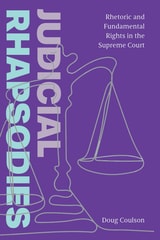
Judicial Rhapsodies
Rhetoric and Fundamental Rights in the Supreme CourtDoug Coulson
Amherst College Press, 2023
First examining the classical origins of divisions between law and rhetoric, Coulson tracks what he calls an epideictic register—highly affective forms of expression that utilize hyperbole, amplification, and vocabularies of praise—through a surprising number of landmark Supreme Court opinions. Judicial Rhapsodies recovers and revalues these instances as significant to establishing and maintaining shared perspectives that form the basis for common experience and cooperation.
“Judicial Rhapsodies is both compelling and important. Coulson brings his well-developed knowledge of rhetoric to bear on one of the most central (and most democratically fraught) means of governance in the United States: the Supreme Court opinion. He demonstrates that the epideictic, far from being a dispensable or detestable element of judicial rhetoric, is an essential feature of how the Court operates and seeks to persuade.” —Keith Bybee, Syracuse University
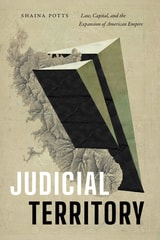
Judicial Territory
Law, Capital, and the Expansion of American EmpireShaina Potts
Duke University Press, 2024

Jurors' Stories of Death
How America's Death Penalty Invests in InequalityBenjamin Fleury-Steiner
University of Michigan Press, 2004
-David Cole, from the Foreword
"Perhaps the most powerful, routinely enacted civic ritual in American public life is that of capital punishment. This state-sanctioned extirpation of human life in the collective pursuit of justice is a searing act of civic pedagogy, made legitimate only by the deliberative endorsement of a small group of ordinary citizens-the jury. In Jurors' Stories of Death, Benjamin Fleury-Steiner has taken a cold, hard look at how these ordinary citizens come to terms with their extraordinary role, and how they rationalize their irreversible decisions. The result is a chilling portrait of how we---that is, all of us Americans---constitute ourselves as a political community."
-Glenn Loury, Director, Institute on Race and Social Division
"This illuminating and insightful examination of jury deliberations makes a terrific contribution to the study of capital punishment. Fleury-Steiner's synthesis of sociological, legal and theoretical concepts with vivid juror narratives and statistical data, thoughtfully animates and details how race and class consciousness continue to shape America's death penalty."
---Bryan Stevenson, Professor of Clinical Law, NYU School of Law, Executive Director, Equal Justice Initiative of Alabama
Jurors' Stories of Death is more than just another book on the death penalty; it is the first systematic survey of how death penalty decisions are made.
Benjamin Fleury-Steiner draws on real-life accounts of white and black jurors in capital punishment trials to discuss the effect of race on the sentencing process. He finds that race is invariably a factor in sentencing, with jurors relying on accounts that deny the often marginalized defendants their individuality and complexity, while reinforcing the jurors' own identities as superior, moral, and law-abiding citizens-a system that punishes in the name of dominance. This biased story of "us versus them" continues to infuse political rhetoric on crime and punishment in the United States even today.
Jurors' Stories of Death concludes with an original argument for abolition of the death penalty: If America values multiculturalism and cultural diversity, it must do away with institutions such as state-sanctioned capital punishment in order to begin to free itself from the racism and classicism that so insidiously plague social relations today.
Just Who Loses?
Discrimination in the United States, Volume 2Samuel Lucas
Temple University Press, 2013
In Just Who Loses? Samuel Roundfield Lucas continues his penetrating and comprehensive assessment of sex and race discrimination in the United States that he began in Theorizing Discrimination in an Era of Contested Prejudice.
This new volume demonstrates that the idea of discrimination being a zero-sum game is a fallacy. If discrimination costs women, men do not necessarily reap the gains. Likewise, if discrimination costs blacks, non-blacks do not reap the gains. Lucas examines the legal adjudication of discrimination, as well as wider public debates about policy on the issue, to prove how discrimination actually operates.
He uses analytic methods to show that across the socioeconomic lifecycle—including special education placement, unemployment, occupational attainment, earnings, poverty, and even mortality—both targets and non-targets of discrimination “lose.”
In Just Who Loses? Lucas proposes the construction of a broad-based coalition to combat the pervasive discrimination that affects social relations and law in the United States.
Just Words, Second Edition
Law, Language, and PowerJohn M. Conley and William M. O'Barr
University of Chicago Press, 2005
Conley and O'Barr show how the microdynamics of the legal process and the largest questions of justice can be fruitfully explored through the field of linguistics. Each chapter covers a language-based approach to a different area of the law, from the cross-examinations of victims and witnesses to the inequities of divorce mediation. Combining analysis of common legal events with a broad range of scholarship on language and law, Just Words seeks the reality of power in the everyday practice and application of the law. As the only study of its type, the book is the definitive treatment of the topic that will be welcomed by students and specialists alike.
Just Words
Law, Language, and PowerJohn M. Conley and William M. O'Barr
University of Chicago Press, 1998
Conley and O'Barr show how the microdynamics of the legal process and the largest questions of justice can be fruitfully explored through the field of linguistics. Each chapter covers a language-based approach to a different area of the law, from the cross-examinations of victims and witnesses to the inequities of divorce mediation. Combining analysis of common legal events with a broad range of scholarship on language and law, Just Words seeks the reality of power in the everyday practice and application of the law. As the only study of its type, the book is the definitive treatment of the topic that will be welcomed by students and specialists alike.
Just Words
Law, Language, and Power, Third EditionJohn M. Conley, William M. O'Barr, and Robin Conley Riner
University of Chicago Press, 2019
John M. Conley, William M. O'Barr, and Robin Conley Riner show how the microdynamics of the legal process and the largest questions of justice can be fruitfully explored through the field of linguistics. Each chapter covers a language-based approach to a different area of the law, from the cross-examinations of victims and witnesses to the inequities of divorce mediation. Combining analysis of common legal events with a broad range of scholarship on language and law, Just Words seeks the reality of power in the everyday practice and application of the law. As the only study of its type, the book is the definitive treatment of the topic and will be welcomed by students and specialists alike. This third edition brings this essential text up to date with new chapters on nonverbal, or “multimodal,” communication in legal settings and law, language, and race.
Justice Hugo Black and Modern America
Tony Freyer
University of Alabama Press, 1990
Reexamining the Justice Who Helped Shape Modern Constitutional America.
The struggle to accommodate both individual freedom and community welfare shaped modern America. American have disagreed about whether federal protection of national welfare could be reconciled with defense of individual rights; however, no public figure worked longer or more consistently to meet this challenge than Alabama’s Hugo L. Black
This collection of essays, reprints of the spring 1985 and winter 1987 issues of the Alabama Law Review with a new introduction and minor revisions, suggests that Black’s constitutional principles and personal values provided a means to achieve a balance between majority will and individual freedom. Black’s life and career are reexamined here by leading scholars and jurors in the first major study in twenty years, tracing his relationship to the South, to the development of American liberalism, and to the constitutional revolution in individual rights.
Justice Outsourced
The Therapeutic Jurisprudence Implications of Judicial Decision-Making by Nonjudicial OfficersEdited by Michael L. Perlin and Kelly Frailing
Temple University Press, 2022
Nonjudicial officers (NJOs) permeate the criminal justice and the forensic mental health systems in hidden ways. But what are the impact and consequences of non-lawyers and non- “real judges” hearing cases? Across the nation, numerous cases are outsourced to administrative and other NJOs to decide issues ranging from family court cases involving custody disputes and foster care, to alcohol, substance abuse, as well as mental health and institutionalization issues. Moreover, NJOs may also deal with probation sentencing, conditions of confinement, release restrictions, and even capital punishment.
The editors and contributors to the indispensable Justice Outsourced examine the hidden role of these non-judicial officers in the courtroom and administrative settings, as well as the ethical and practical considerations of using NJOs. Written from the perspective of therapeutic jurisprudence by judges, criminologists, lawyers, law professors, psychologists, and sociologists, this volume provides a much-needed wake-up call that emphasizes why the removal of a judge weakens a defendant’s rights and dignity and corrupts the administration of justice. However, Justice Outsourced also suggests effective employments of NJOs, revealing the potential of therapeutic principles and procedures to enhance the practical knowledge supplied by nonjudicial decision-makers.
Justice Scalia
Rhetoric and the Rule of LawEdited by Brian G. Slocum and Francis J. Mootz III
University of Chicago Press, 2019
In this edited collection, leading scholars from law, political science, philosophy, rhetoric, and linguistics look at the ways Scalia framed and stated his arguments. Focusing on rhetorical strategies rather than the logic or validity of Scalia’s legal arguments, the contributors collectively reveal that Scalia enacted his rigidly conservative vision of the law through his rhetorical framing.
Justice and Injustice in Law and Legal Theory
Austin Sarat and Thomas R. Kearns, Editors
University of Michigan Press, 1998
Justice and Legal Change on the Shores of Lake Erie
A History of the United States District Court for the Northern District of OhioPaul Finkelman
Ohio University Press, 2012
Justice and Legal Change on the Shores of Lake Erie explores the many ways that the United States District Court for the Northern District of Ohio has affected the region, the nation, the development of American law, and American politics.
The essays in this book, written by eminent law professors, historians, political scientists, and practicing attorneys, illustrate the range of cases and issues that have come before the court. Since the court’s inception in 1855, judges have influenced economic developments and social issues, beginning with the court’s most famous early case, involving the rescue of the fugitive slave John Price by residents of Northern Ohio. Chapters focusing on labor strikes, free speech, women’s rights, the environment, the death penalty, and immigration illustrate the impact this court and its judges have had in the development of society and the nation’s law. Some of the cases here deal with local issues with huge national implications xad—like political corruption, school desegregation, or pollution on the Cuyahoga River. But others are about major national issues that grew out of incidents, such as the prosecution of Eugene V. Debs for opposing World War I, the litigation resulting from the Kent State shootings and opposition to the Vietnam War, and the immigration status of the alleged Nazi war criminal John Demyanjuk.
This timely history confirms the significant role played by district courts in the history of the United States.
Justice and Public Administration
Charles F. Abel and Arthur J. Sementelli
University of Alabama Press, 2007
Justice and Reform
The Formative Years of the OEO Legal Services ProgramEarl Johnson
Russell Sage Foundation, 1974
Justice and Science
Trials and Triumphs of DNA EvidenceGeorge "Woody" Clarke
Rutgers University Press, 2007
Databases of both convicted offenders and no-suspect cases demonstrate the power of DNA testing to solve the unsolvable. George “Woody” Clarke is a leading authority in legal circles and among the news media because of his expertise in DNA evidence. In this memoir, Clarke chronicles his experiences in some of the most disturbing and notorious sexual assault and murder court cases in California. He charts the beginnings of DNA testing in police investigations and the fight for its acceptance by courts and juries. He illustrates the power of science in cases he personally prosecuted or in which he assisted, including his work with the prosecution team in the trial of O. J. Simpson.
Clarke also covers cases where DNA evidence was used to exonerate. He directed a special project in San Diego County, proactively examining over six hundred cases of defendants convicted and sentenced to prison before 1993, with the goal of finding instances in which DNA typing might add new evidence and then offered testing to those inmates.
As Clarke tells the story of how he came to understand and use this new form of evidence, readers will develop a new appreciation for the role of science in the legal system.
Justice as Translation
An Essay in Cultural and Legal CriticismJames Boyd White
University of Chicago Press, 1990
"White has given us not just a novel answer to the traditional jurisprudential questions, but also a new way of reading and evaluating judicial opinions, and thus a new appreciation of the liberty which they continue to protect."—Robin West, Times Literary Supplement
"James Boyd White should be nominated for a seat on the Supreme Court, solely on the strength of this book. . . . Justice as Translation is an important work of philosophy, yet it is written in a lucid, friendly style that requires no background in philosophy. It will transform the way you think about law."—Henry Cohen, Federal Bar News & Journal
"White calls us to rise above the often deadening and dreary language in which we are taught to write professionally. . . . It is hard to imagine equaling the clarity of eloquence of White's challenge. The apparently effortless grace of his prose conveys complex thoughts with deceptive simplicity."—Elizabeth Mertz, Yale Journal of Law and the Humanities
"Justice as Translation, like White's earlier work, provides a refreshing reminder that the humanities, despite the pummelling they have recently endured, can be humane."—Kenneth L. Karst, Michigan Law Review
Justice for Girls?
Stability and Change in the Youth Justice Systems of the United States and CanadaJane B. Sprott and Anthony N. Doob
University of Chicago Press, 2009
For over a century, as women have fought for and won greater freedoms, concern over an epidemic of female criminality, especially among young women, has followed. Fear of this crime wave—despite a persistent lack of evidence of its existence—has played a decisive role in the development of the youth justice systems in the United States and Canada. Justice for Girls? is a comprehensive comparative study of the way these countries have responded to the hysteria over “girl crime” and how it has affected the treatment of both girls and boys.
Tackling a century of historical evidence and crime statistics, Jane B. Sprott and Anthony N. Doob carefully trace the evolution of approaches to the treatment of young offenders. Seeking to keep youths out of adult courts, both countries have built their systems around rehabilitation. But, as Sprott and Doob reveal, the myth of the “girl crime wave” led to a punitive system where young people are dragged into court for minor offenses and girls are punished far more severely than boys. Thorough, timely, and persuasive, Justice for Girls? will be vital to anyone working with troubled youths.
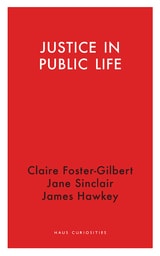
Justice in Public Life
Claire Foster-Gilbert, Jane Sinclair, and James Hawkey
Haus Publishing, 2021
The three essays in Justice in Public Life, written by Claire Foster-Gilbert, Jane Sinclair, and James Hawkey, examine the meaning of justice in the twenty-first century, asking how justice can be expressed by our public service institutions and in society more widely. They consider whether justice is tied to truth and whether our idea of justice is skewed when we conflate it with fairness. They also explore how justice as a virtue can help us navigate the complexities of life in economics, in wider society, and in righting wrongs. In addition, their essays consider the threats to a just society, including human nature itself, the inheritance of unjust structures, the wide range of views about what constitutes justice, and the difficulty of establishing it globally and between nation-states. Justice in Public Life brings an often abstract concept to life, calling on public servants to nurture justice as a virtue pursued both individually and communally.
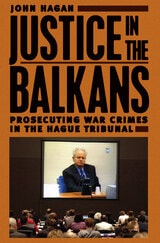
Justice in the Balkans
Prosecuting War Crimes in the Hague TribunalJohn Hagan
University of Chicago Press, 2003
Creating an institution that transcends national borders is a challenge fraught with political and organizational difficulties, yet, as Hagan describes here, the Hague tribunal has increasingly met these difficulties head-on and overcome them. The chief reason for its success, he argues, is the people who have shaped it, particularly its charismatic chief prosecutor, Louise Arbour. With drama and immediacy, Justice in the Balkans re-creates how Arbour worked with others to turn the tribunal's fortunes around, reversing its initial failure to arrest and convict significant figures and advancing the tribunal's agenda to the point at which Arbour and her colleagues, including her successor, Carla Del Ponte (nicknamed the Bulldog), were able to indict Milosevic himself. Leading readers through the investigations and criminal proceedings of the tribunal, Hagan offers the most original account of the foundation and maturity of the institution.
Justice in the Balkans brilliantly shows how an international social movement for human rights in the Balkans was transformed into a pathbreaking legal institution and a new transnational legal field. The Hague tribunal becomes, in Hagan's work, a stellar example of how individuals working with collective purpose can make a profound difference.
"The Hague tribunal reaches into only one house of horrors among many; but, within the wisely precise remit given to it, it has beamed the light of justice into the darkness of man's inhumanity, to woman as well as to man."—The Times (London)
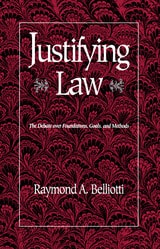
Justifying Law
The Debate over Foundations, Goals, and MethodsRaymond Belliotti
Temple University Press, 1994