Results by title
4917 books match the query 'Philosophy' and 70 start with j
Jacques Derrida
Geoffrey Bennington and Jacques Derrida
University of Chicago Press, 1993
"Bennington is a shrewd and well-informed commentator whose book should do something to convince the skeptics . . . that Jacques Derrida's work merits serious attention."—Christopher Norris, New Statesman & Society
"Geoffrey Bennington and Jacques Derrida have presented a fascinating example of what might be called post-structuralist autobiography."—Laurie Volpe, French Review
"Bennington's account of what Derrida is up to is better in almost all respects—more intelligent, more plausible, more readable, and less pretentious—than any other I have read."—Richard Rorty, Contemporary Literature
Jacques Lacan
Jonathan Scott Lee
University of Massachusetts Press, 1991
Originally published as part of Twayne's World Authors Series, Jacques Lacan offers a comprehensive and rigorous introduction to the life and work of the French psychoanalyst Jacques Lacan, one of the most influential and challenging thinkers of the twentieth century. Written by a philosopher with a deep engagement in both continental philosophy and psychoanalytic theory, Jonathan Scott Lee traces the development of Lacan's theoretical project from his early psychiatric writings through the landmark Écrits and the renowned seminars that Lacan delivered over more than two decades.
Lee's approach is distinctive in its philosophical clarity, making complex Lacanian ideas available to readers in the humanities and social sciences. His careful analysis of the mirror stage, the role of the Other, and Lacan's three fundamental registers—the Imaginary, the Symbolic, and the Real— provides new insight into the ways they structure human subjectivity, language, and desire. This book situates Lacan within the broader intellectual currents of twentieth-century French thought, drawing connections to structuralism, post-structuralism, and the philosophical traditions that shaped and were shaped by Lacan's radical "return to Freud."
Widely cited in scholarly literature across disciplines, including literary criticism, philosophy, theology, film studies, and cultural theory, Jacques Lacan remains a valued introduction for students, scholars, and general readers seeking a careful and comprehensive guide to one of the most formidable intellectual figures of the modern era.
Jacques Lacan and the Other Side of Psychoanalysis
Reflections on Seminar XVII, sic viJustin Clemens and Russell Grigg, eds.
Duke University Press, 2006
The contributors examine Lacan’s theory of the four discourses, his critique of the Oedipus complex and the superego, the role of primal affects in political life, and his prophetic grasp of twenty-first-century developments. They take up these issues in detail, illuminating the Lacanian concepts with in-depth discussions of shame and guilt, literature and intimacy, femininity, perversion, authority and revolt, and the discourse of marketing and political rhetoric. Topics of more specific psychoanalytic interest include the role of objet a, philosophy and psychoanalysis, the status of knowledge, and the relation between psychoanalytic practices and the modern university.
Contributors. Geoff Boucher, Marie-Hélène Brousse, Justin Clemens, Mladen Dolar, Oliver Feltham, Russell Grigg, Pierre-Gilles Guéguen, Dominique Hecq, Dominiek Hoens, Éric Laurent, Juliet Flower MacCannell, Jacques-Alain Miller, Ellie Ragland, Matthew Sharpe, Paul Verhaeghe, Slavoj Žižek, Alenka Zupancic
Jacques Lacan and the Philosophy of Psychoanalysis
Ellie Ragland-Sullivan
University of Illinois Press, 1986
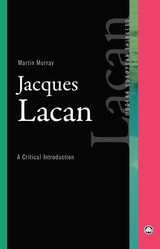
Jacques Lacan
A Critical IntroductionMartin Murray
Pluto Press, 2016
French psychoanalyst Jacques Lacan has been a major influence on a wide range of twentieth-century thought, even as the breadth, complexity, and obscurity of his work has intimidated students and deterred casual readers. That situation hasn’t been helped by uneven translations into English that have led to a popular conception of his intellectual enterprise that can at times be profoundly mistaken.
In this brief, clearly written introduction to Lacan and his work, Martin Murray presents an up-to-date survey of his key concepts, their development, and their influence on fields such as anthropology, linguistics, and philosophy. Arguing strongly that we should move beyond the traditional focus on Lacan’s early work, which favored a linguistic approach, Murray offers instead a more comprehensive overview of the whole arc of Lacan’s thought. The result is a rigorous, yet accessible, account of one of the key intellectual figures of the twentieth century.
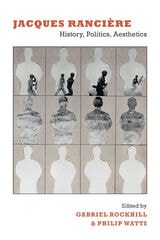
Jacques Rancière
History, Politics, AestheticsGabriel Rockhill and Philip Watts, eds.
Duke University Press, 2009
The contributors to this collection do not simply elucidate Rancière’s project; they also critically respond to it from their own perspectives. They consider the theorist’s engagement with the writing of history, with institutional and narrative constructions of time, and with the ways that individuals and communities can disturb or reconfigure what he has called the “distribution of the sensible.” They examine his unique conception of politics as the disruption of the established distribution of bodies and roles in the social order, and they elucidate his novel account of the relationship between aesthetics and politics by exploring his astute analyses of literature and the visual arts. In the collection’s final essay, Rancière addresses some of the questions raised by the other contributors and returns to his early work to provide a retrospective account of the fundamental stakes of his project.
Contributors. Alain Badiou, Étienne Balibar, Bruno Bosteels, Yves Citton, Tom Conley, Solange Guénoun, Peter Hallward, Todd May, Eric Méchoulan, Giuseppina Mecchia, Jean-Luc Nancy, Andrew Parker, Jacques Rancière, Gabriel Rockhill, Kristin Ross, James Swenson, Rajeshwari Vallury, Philip Watts
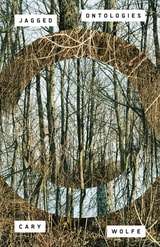
Jagged Ontologies
Cary Wolfe
University of Minnesota Press, 2026
Rethinking life, justice, and the biosphere through the sharp edges of jagged ontology
In this groundbreaking book, Cary Wolfe dismantles some of the most entrenched assumptions in contemporary interdisciplinary thought, foremost among them the idea that “flat” ontologies are adequate to the challenge of a robust, posthumanist pluralism. Against the fantasy of nature as an interconnected, egalitarian web, Wolfe proposes a “jagged ontology” in which species and systems intersect not through seamless cooperation but through friction, contestation, and uneven exchange. Wolfe pushes back equally, however, against the reductive tendencies of neo-Darwinian competitive individualism, insisting that what separates us from the world is also what binds us to it—a paradox at the core of all living systems, where autopoietic closure unexpectedly creates environmental openness.
Through a combination of systems theory, deconstruction, theoretical biology, and biopolitical philosophy, Wolfe develops a radically posthumanist framework for addressing the ethical, social, and political stakes of life in the biosphere. Extending his approach across disciplines and practices—from ecological theory and continental philosophy to law, public policy, and contemporary art—he lays bare the contradictions embedded in even the most progressive attempts to account for the imbrication of the human and the more-than-human. Through a detailed and long-overdue examination of the popular notion of sympoiesis and a skeptical reading of the anthropomorphism of the “new forestry,” Wolfe reveals how well-intentioned theories can undermine the very posthumanist pluralism that they claim to champion.
More than a critique, Jagged Ontologies opens onto new philosophical terrain for understanding multispecies justice, environmental responsibility, and the structural dynamics of individuation and creativity in the biosphere. Here, Wolfe offers a crucial rethinking of what it means to live and think ethically in a shared yet jagged world.
Retail e-book files for this title are screen-reader friendly with images accompanied by short alt text and/or extended descriptions.
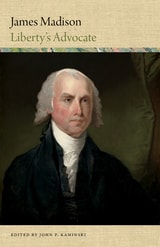
James Madison
Liberty's AdvocateJohn P. Kaminski
Wisconsin Historical Society Press, 2018
America has had few political thinkers who have rivalled James Madison. The son of a wealthy planter, Madison was an unhealthy child and was beset by physical infirmities throughout his long life, and grew into a cerebral man. Madison left Virginia to attend the College of New Jersey, but returned to his native state after completing his studies. Though he aspired to be a college professor, Madison instead went into public service and became one of the most influential, guiding voices of the Founding Era. Madison’s Virginia Plan would be used as a blueprint for the Constitutional Convention, where the Articles of Confederation would be replaced with a new Constitution that bore traces of Madison’s influence throughout.
Editor John Kaminski has gathered a remarkable collection of quotations by and about James Madison for the third installment of his Word Portraits of America’s Founders series. Through these words by and about Madison, we learn more about one of the country’s most influential Founding Fathers, who held a lifelong commitment to liberty and opposed oppression.
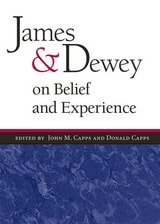
James and Dewey on Belief and Experience
Edited by John M. Capps and Donald Capps
University of Illinois Press, 2010
In these essays, you'll find William James deeply embroiled in debates between religion and science. Combining philosophical charity with logical clarity, he defended the validity of religious experience against crass forms of scientism. Dewey identified the myriad ways in which supernatural concerns distract religious adherents from pressing social concerns, and sought to reconcile the tensions inherent in science's dual embrace of common sense and the aesthetic.
James and Dewey on Belief and Experience is divided into two sections: the former showcases James, the latter is devoted to Dewey. Two transitional passages in which each reflects on the work of the other bridge these two main segments. Together, the sections offer a unique perspective on the philosophers' complex relationship of influence and interdependence. An editors' introduction provides biographical information about both men, an overview of their respective philosophical orientations, a discussion of the editorial process, and a brief commentary on each of the selections.
Comparing what these foremost pragmatists wrote on both themes illumines their common convictions regarding the nature of philosophical inquiry and simultaneously reveals what made each a distinctive thinker.
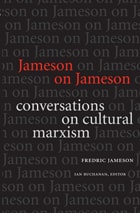
Jameson on Jameson
Conversations on Cultural MarxismFredric Jameson
Duke University Press, 2007
Jameson on Jameson displays Jameson’s extraordinary grasp of contemporary culture—architecture, art, cinema, literature, philosophy, politics, psychoanalysis, and urban geography—as well as the challenge that the geographic reach of his thinking poses to the Eurocentricity of the West. Conducted by accomplished scholars from United States, Egypt, Korea, China, Sweden, and England, the interviews elicit Jameson’s reflections on the broad international significance of his ideas and their applicability and implications in different cultural and political contexts, including the present phase of globalization.
The volume includes an introduction by Jameson and a comprehensive bibliography of his publications in all languages.
Interviewers: Mona Abousenna, Abbas Al-Tonsi, Srinivas Aravamudan, Jonathan Culler, Sara Danius, Leonard Green, Sabry Hafez, Stuart Hall, Stefan Jonsson, Ranjana Khanna, Richard Klein, Horacio Machin, Paik Nak-chung, Michael Speaks, Anders Stephanson, Xudong Zhang
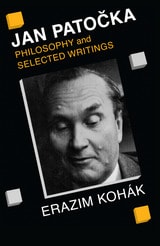
Jan Patocka
Philosophy and Selected WritingsErazim Kohák
University of Chicago Press, 1989
As a student and personal friend of Husserl, Patocka was keenly aware of the focal role of reason in the constitution of experienced reality. Simultaneously, as a student of Heidegger, he was no less aware of the irreducible autonomy of that reality. This double recognition led Patocka on a lifelong philosophical quest for a synthesis that would bridge modernity's split between the freedom of humans and the givenness of the world and, more broadly, between the Enlightenment and romanticism. For the philosophical reader, Patocka's perceptive writings provide the most helpful key to understanding the basic modern dialogue acted out by Husserl and Heidegger. Yet Patocka, widely respected for his writings on culture and the arts as well as for his studies of J. A. Comenius and the history of science, offers much more: a comprehensive attempt to come to terms with our intellectual heritage and our divided present.
Kohák, as well as translating the writings, provides a comprehensive introduction, covering the full scope of Patocka's thought, and a complete bibliography of his writings. The result is an intellectually rich volume equally well suited as an introduction to Patocka, an advanced study in phenomenology, and a historical insight into philosophy behind the Iron Curtain since 1938.
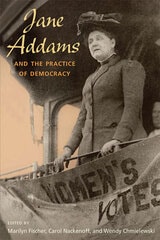
Jane Addams and the Practice of Democracy
Edited by Marilyn Fischer, Carol Nackenoff, and Wendy Chmielewski
University of Illinois Press, 2008
Using a rich array of newly available sources and contemporary methodologies from many disciplines, the ten original essays in this volume give a fresh appraisal of Addams as a theorist and practitioner of democracy. In an increasingly interdependent world, Addams's life work offers resources for activists, scholars, policy makers, and theorists alike. This volume demonstrates how scholars continue to interpret Addams as a model for transcending disciplinary boundaries, generating theory out of concrete experience, and keeping theory and practice in close and fruitful dialogue.
Contributors are Harriet Hyman Alonso, Victoria Bissell Brown, Wendy Chmielewski, Marilyn Fischer, Shannon Jackson, Louise W. Knight, Carol Nackenoff, Karen Pastorello, Wendy Sarvasay, Charlene Haddock Seigfried, and Camilla Stivers.
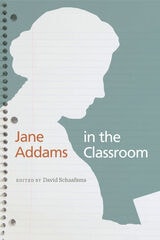
Jane Addams in the Classroom
Edited by David Schaafsma
University of Illinois Press, 2014
Balancing theoretical and practical considerations, the collection examines Addams's emphasis on listening to and learning from those around her and encourages contemporary educators to connect with students through innovative projects and teaching methods. In the first essays, Addams scholars lay out how her narratives drew on experience, history, and story to explicate theories she intended as guides to practice. Six teacher-scholars then establish Addams's ongoing relevance by connecting her principles to exciting events in their own classrooms. An examination of the Jane Addams Children's Book Award and a fictional essay on Addams's work and ideas round out the volume.
Accessible and wide-ranging, Jane Addams in the Classroom offers inspiration for educators while adding to the ongoing reconsideration of Addams's contributions to American thought.
Contributors include Todd DeStigter, Lanette Grate, Susan Griffith, Lisa Junkin, Jennifer Krikava, Lisa Lee, Petra Munro, Bridget O'Rourke, David Schaafsma, Beth Steffen, Darren Tuggle, Erin Vail, and Ruth Vinz.
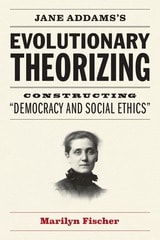
Jane Addams's Evolutionary Theorizing
Constructing “Democracy and Social Ethics”Marilyn Fischer
University of Chicago Press, 2019
Examining essays Addams wrote in the 1890s and showing how they were revised for Democracy and Social Ethics, Fischer draws from philosophy, history, literature, rhetoric, and more to uncover the array of social evolutionary thought Addams engaged with in her texts—from British socialist writings on the evolution of democracy to British and German anthropological accounts of the evolution of morality. By excavating Addams’s evolutionary reasoning and rhetorical strategies, Fischer reveals the depth, subtlety, and richness of Addams’s thought.
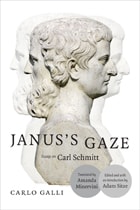
Janus's Gaze
Essays on Carl SchmittCarlo Galli
Duke University Press, 2015
Jargon of Authenticity
Theodor W. Adorno
Northwestern University Press, 1973
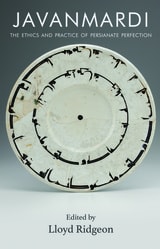
Javanmardi
The Ethics and Practice of Persianate PerfectionEdited by Lloyd Ridgeon
Gingko, 2018
The present collection is the product of a three-year project financed by the British Institute of Persian Studies on the theme of "Javanmardi in the Persianate world." The articles in this volume represent the sheer range, influence, and importance that the concept has had in creating and contributing to Persianate identities over the past one hundred and fifty years. The contributions are intentionally broad in scope. Rather than focus, for example, on medieval Sufi manifestations of javanmardi, both medieval and modern studies were encouraged, as were literary, artistic, archaeological, and sociological studies among others. The opening essays examine the concept’s origin in medieval history and legends throughout a geographical background that spans from modern Iran to Turkey, Armenia, and Bosnia, among both Muslim and Christian communities. Subsequent articles explore modern implications of javanmardi within such contexts as sportsmanship, political heroism, gender fluidity, cinematic representations, and the advent of digitalization.

Jean Baudrillard
In Radical UncertaintyMike Gane
Pluto Press, 2000
Jean Baudrillard
The Rhetoric of Symbolic ExchangeBrian Gogan
Southern Illinois University Press, 2018
Gogan examines both the theorist and his rhetoric, combining these two lines of inquiry in ways that allow for provocative insights. Part one of the book explains Baudrillard’s theory as compatible with the histories and traditions of rhetoric, outlining his novel understanding of rhetorical invention as involving thought, discourse, and perception. Part two evaluates Baudrillard’s work in terms of a perception of him—as an aphorist, an illusionist, an ignoramus, and an ironist. A biographical sketch and a critical review of the literature on Baudrillard and rhetoric round out the study.
This book makes the French theorist’s complex concepts understandable and relates them to the work of important thinkers, providing a thorough and accessible introduction to Baudrillard’s ideas.
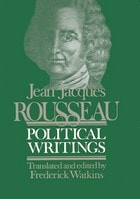
Jean Jacques Rousseau
Political WritingsFrederick Watkins
University of Wisconsin Press, 1986
Frederick Watkins’ 1953 edition of Rousseau’s Political Writings has long been noted for being fully accurate while representing much of Rousseau’s eloquence and elegance. It contains what is widely regarded as the finest English translation of The Social Contract, Rousseau’s greatest political treatise. In addition, this edition offers the best available translation of the late and important Government of Poland and the only published English translation of the fragment Constitutional Project for Corsica, which, says Watkins, provides the clearest possible demonstration of the practical implications of Rousseau’s political thought.
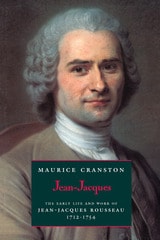
Jean-Jacques
The Early Life and Work of Jean-Jacques Rousseau, 1712-1754Maurice Cranston
University of Chicago Press, 1991
"[An] admirable biography which is as meticulous, calm, reasonable, and judicious as its subject is passionate and tumultuous."—Keith Michael Baker, Washington Post Book World
"The definitive biography, as scholarly as it is entertaining."—The Economist
"Exceptionally fresh . . . . [Cranston] seems to know exactly what his readers need to know, and thoughtfully enriches the background—both physical and intellectual—of Rousseau's youthful peregrinations . . . . He makes the first part of Rousseau's life as absorbing as a picaresque novel. His fidelity to Rousseau's ideas and to his life as it was lived is a triumph of poise."—Naomi Bliven, The New Yorker
"The most outstanding achievement of Professor Cranston's own distinguished career."—Robert Wokler, Times Literary Supplement
Maurice Cranston (1920-1993), a distinguished scholar and recipient of the James Tait Black Memorial Prize for his biography of John Locke, was professor of political science at the London School of Economics. His numerous books include The Romantic Movement and Philosophers and Pamphleteers, and translations of Rousseau's The Social Contract and Discourse on the Origins of Inequality.
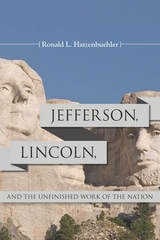
Jefferson, Lincoln, and the Unfinished Work of the Nation
Ronald L. Hatzenbuehler
Southern Illinois University Press, 2016
In this groundbreaking new study—the first extended examination of the ideas of Lincoln and Jefferson—Hatzenbuehler provides readers with a succinct guide to their opinions, comparing and contrasting their reasoned judgments on America’s republican form of government. Each chapter is devoted to one key area of common interest: race and slavery, the pros and cons of political parties, state rights versus federal authority, religion and the presidency, presidential powers under the Constitution, or the proper political economy for a republic. Relying on the pair’s own words in their letters, writings, and speeches, Hatzenbuehler explores similarities and differences between the two men on contentious issues. Both, for instance, wrote that they were antislavery, but Jefferson never acted on this belief, while Lincoln moved toward a constitutional amendment banning slavery. The book’s title, taken from the Gettysburg Address, builds on both presidents’ expectations that Americans should dedicate themselves to the unfinished work of returning the nation to its founding principles.
Jefferson and Lincoln wrestled with many of the same issues and ideas that intrigue and divide Americans today. In his thought-provoking work, Hatzenbuehler details how the two presidents addressed these issues and ideas, which are essential to understanding not only America’s history but also the continuing influence of the past on the present.
Jeremy Bentham on Police
The Unknown Story and What It Means for CriminologyEdited by Scott Jacques and Philip Schofield
University College London, 2021
Jeremy Bentham theorized the panopticon as modern policing emerged across the British Empire, yet while his theoretical writing became canonical in criminology, his perspective on the police remains obscure. Jeremy Bentham on Police recovers the reformer’s writings on policing alongside a series of essays that demonstrate their significance to the past, present, and future of criminology.
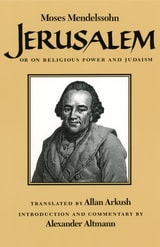
Jerusalem
Or on Religious Power and JudaismMoses Mendelssohn
Brandeis University Press, 1983
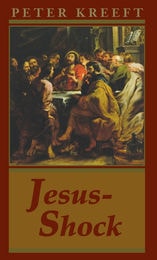
Jesus-Shock
Peter Kreeft
St. Augustine's Press, 2008
Jesus Shock is the second in a series of short works on seminal concerns of the impact that Jesus Christ made in the world. The first work, The Philosophy of Jesus (St. Augustine’s Press, 2007), explored philosophy in light of Jesus, rather than the other way around. The present work investigates the reception Jesus received both in His lifetime and continuously to the present time, not only from His enemies, but from His friends, a reception of shock, astonishment, even disgust.
Perhaps a few remarks from the book best explains it:
The point of the book:
The point of the title: Imagine a storm has downed a telephone wire so that everyone who touches it is shocked in every cell of his body. Well, the storm of God’s crazy love has “downed” (incarnated) Jesus, and everyone who touches this “live wire” is shocked in every cell of his soul.
The question of the book: Why is “Jesus” the most non-neutral, the most controversial, the most embarrassing name in the world? Why is talking about Jesus like talking about sex?
This whole book is really about a single movie line, the greatest line in the greatest movie in history. Bet you know what it is.
Jesus-Shock is about the Real Presence of Christ in the Gospels and in the Eucharist. It
is not about the theology of the Real Presence, but about the experience of Him there, and about the experience of everyone in the Gospels who met Him.
What was the bitterest controversy of the Protestant Reformation, both between Protestants and Catholics and between different Protestant denominations, the one that had both sides calling the other not just heretics but devils?
Answer: It was not Justification by Faith, the hallmark of the Reformation, even though that question is about nothing less momentous than how to be saved, how to get to Heaven. It was not the relation between religion and politics, even though that was a matter of life or death (literally, on battlefields and at guillotines and hangings) and not just a matter of truth or falsity, or of good or evil. It was not about the sufficiency of the Bible, or the corruption in the Church, or the relation between the Bible and the Church. It was not about the Pope, and the governance of the Church. It was not about Mary or saints or angels or Purgatory. It was not about the Incarnation or the Trinity or the Atonement.
It was about the Real Presence of Christ in the Eucharist.
Jesus-Shock, in addressing this controversy forcefully and faithfully, shows the reasons why to this day the name of “Jesus” stirs up controversy, even revulsion, in polite society. In the true spirit of ecumenism, it also points the way toward a true rapprochement among His modern-day disciples.
Jewish Philosophical Politics in Germany, 1789–1848
Sven-Erik Rose
Brandeis University Press, 2014
Jewish Self-Determination beyond Zionism
Lessons from Hannah Arendt and Other PariahsJonathan Graubart
Temple University Press, 2023
Jewish Self-Determination beyond Zionism also engages a Humanist Zionist vision to confront the Zionist movement’s foundational sins and demands a full reckoning with the Palestinians. Graubart focuses on two of Humanist Zionism’s most insightful thinkers, Martin Buber and Hannah Arendt, putting them “in conversation” with each other, and synthesizing their collective insights and critical Jewish perspectives alongside the ideas of Noam Chomsky, Judith Butler, Ella Shohat, Edward Said, and other philosophers and academics. Jewish Self-Determination beyond Zionism concludes that an updated, binational program is the best path forward.
Jewish Universalisms
Mendelssohn, Cohen, and Humanity’s Highest GoodJeremy Fogel
Brandeis University Press, 2023
Any version of universalism relevant to a more attentive, pluralistic, and postcolonial outlook would balance the urgent current need for a universalistic perspective with the desire to maintain the richness of human diversity. The modern Jewish philosophers who sought to partake in the Enlightenment’s universalistic vision while maintaining their distinct identities as members of a religious minority within Europe offer insightful answers.
Jewish Universalisms analyzes how two major figures, Moses Mendelssohn and Hermann Cohen, dealt with the perceived tension between the universal values characteristic of the Enlightenment and aspects of Judaism often depicted as particularistic and parochial. Jeremy Fogel joins this lively debate in modern Jewish philosophy, offering a comparative examination of these thinkers and analyzing their worldviews from an innovative axiological perspective. Fogel writes that to gain a precise understanding of how Mendelssohn and Cohen argued for the concordance of Judaism and universalism, one must first seek out what they delineated as ultimately valuable. Then one can work out how that highest good, and the method of valuation it sustains, are universal.
Jewish and Islamic Philosophy
Crosspollinations in the Classic AgeLenn E. Goodman
Rutgers University Press, 1999

Jews and Gender
Responses to Otto WeiningerNancy Harrowitz
Temple University Press, 1994
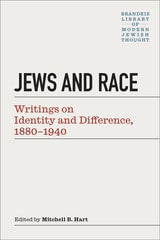
Jews and Race
Writings on Identity and Difference, 1880–1940Edited by Mitchell B. Hart
Brandeis University Press, 2011
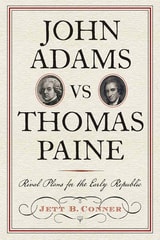
John Adams vs Thomas Paine
Rival Plans for the Early RepublicJett B. Conner
Westholme Publishing, 2018
Initially admiring Thomas Paine’s efforts for independence, John Adams nevertheless was rattled by the political philosophy of Common Sense and responded to it by publishing his Thoughts on Government to counteract Paine’s proposals, which Adams said were far too “democratical.” Although John Adams is given credit for his substantive contributions to American constitutionalism, especially his notions of separation of powers, checks and balances, and representation, in John Adams vs Thomas Paine: Rival Plans for the Early Republic, historian Jett B. Conner makes the case that Thomas Paine was more than just a revolutionary figure who spurred Americans toward declaring independence. Common Sense made important contributions to American constitutional thought, too, particularly its call for more equal representation, popular sovereignty, a constitutional convention, and a federal system of governance with a strong central government. The book explores how the two rivals helped shape America’s first constitutions—the Articles of Confederation and those of several states— and how they continued contributing to American political thought as it developed during the so-called “critical period” between the adoption of the Articles of Confederation and the start of the Constitutional Convention of 1787. It also focuses on the creation of our democratic republic and compares Paine’s and Adams’s approaches to structuring constitutions to ensure free government while guarding against abuses of power and the excesses of democratic majorities. An abridged version of Common Sense and the short but complete Thoughts on Government are included in an appendix for easy reader reference.
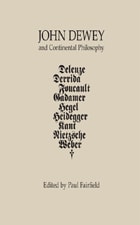
John Dewey and Continental Philosophy
Edited by Paul Fairfield
Southern Illinois University Press, 2010
“These essays build a valuable, if virtual, bridge between the thought of John Dewey and that of a host of modern European philosophers. They invite us to entertain a set of imagined conversations among the mighty dead that no doubt would have intrigued Dewey and each of the interlocutors gathered here.”—Robert Westbrook, author of John Dewey and American Democracy and/or Democratic Hope: Pragmatism and the Politics of Truth.
John Dewey and Continental Philosophy provides a rich sampling of exchanges that could have taken place long ago between the traditions of American pragmatism and continental philosophy had the lines of communication been more open between Dewey and his European contemporaries. Since they were not, Paul Fairfield and thirteen of his colleagues seek to remedy the situation by bringing the philosophy of Dewey into conversation with several currents in continental philosophical thought, from post-Kantian idealism and the work of Friedrich Nietzsche to twentieth-century phenomenology, hermeneutics, and poststructuralism.
John Dewey and Continental Philosophy demonstrates some of the many connections and opportunities for cross-traditional thinking that have long existed between Dewey and continental thought, but have been under-explored. The intersection presented here between Dewey’s pragmatism and the European traditions makes a significant contribution to continental and American philosophy and will spur new and important developments in the American philosophical debate.
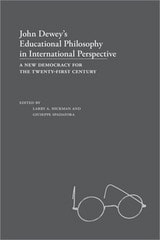
John Dewey's Educational Philosophy in International Perspective
A New Democracy for the Twenty-First CenturyEdited by Larry A. Hickman and Giuseppe Spadafora
Southern Illinois University Press, 2009
John Dewey’s Educational Philosophy in International Perspective brings together eleven experts from around the globe to examine the international legacy of the famous philosopher. Placing special emphasis on Dewey’s theories of education, Larry A. Hickman and Giuseppe Spadafora have gathered some of the world’s most noted scholars of educational philosophy to present a thorough exploration of Dewey’s enduring relevance and potential as a tool for change in twenty-first-century political and social institutions.
This collection offers close examinations of the global impact of Dewey’s philosophies, both in his time and our own. Included are discussions of his reception as a much-respected yet criticized philosopher among European Catholics both before and after World War I; the utilization of his pragmatic theories in Italian education and the continuing quest to reinterpret them; his emergence as a source of inspiration to new democracies in Central and Eastern Europe; and his recently renewed popularity in the Hispanic world, particularly in South America and Spain. In addition, authors delve into Dewey’s notion of democracy as a personal way of life and his views on the important ties between education and the democratic state.
Also discussed are Dewey’s philosophies regarding school and society, including the understanding of educational trends as reflections of their social context; the contrast between his methods of applying intelligence to ethical problems and the theory of orthodox utilitarianism; responses to criticisms of Dewey’s controversial belief that the sciences can be applied directly to educational practices; and incisive queries into how he would have responded to the crucial role the Internet now plays in primary and secondary education.
This well-rounded volume provides international insight into Dewey’s philosophies and contains a wealth of information never before published in English, resulting in an indispensable resource for anyone interested in John Dewey and his lasting role in education around the world.
Contributors
Viviana Burza
Franco Cambi
Giorgio Chiosso
Jim Garrison
Jaime Nubiola
Hilary Putnam
Ruth Anna Putnam
Giuseppe Spadafora
Emil Višnovský
Leonard J. Waks
Krystyna Wilkoszewska
John Dewey's Essays in Experimental Logic
John Dewey. Edited by D. Micah Hester, and Robert B. Talisse. Introduction by Tom Burke
Southern Illinois University Press, 2007
Offering a new edition of Dewey’s 1916 collection of essays
This critical edition of John Dewey’s 1916 collection of writings on logic, Essays in Experimental Logic—in which Dewey presents his concept of logic as the theory of inquiry and his unique and innovative development of the relationship of inquiry to experience—is the first scholarly reprint of the work in one volume since 1954. Essays in Experimental Logic, edited by D. Micah Hester and Robert B. Talisse, uses the authoritative texts from the Collected Works of John Dewey, 1882–1953 (published by Southern Illinois University Press) and includes as well articles from leading journals representing various contemporary schools of philosophy that criticized Dewey’s experimentalism.
Culling materials from six volumes of the chronologically arranged Collected Works, this single-volume edition of Essays marks a crucial point in Dewey’s intellectual development: one in which Dewey critically engages idealistic and intuitionist theorists and lays the groundwork for his mature theory of inquiry. The text includes a new introduction by renowned Dewey scholar Tom Burke that places Essays in philosophical and historical context. In addition to the original essays, Essays in Experimental Logic also features five critical essays by Dewey’s contemporaries, including Bertrand Russell, Wendell T. Bush, R. F. Alfred Hoernlé, H. T. Costello, and C. S. Peirce.
John Dewey's Liberalism
Individual, Community, and Self-DevelopmentDaniel Savage
Southern Illinois University Press, 2001
John Dewey's classical pragmatism, Daniel M. Savage asserts, can be used to provide a self-development-based justification of liberal democracy that shows the current debate between liberal individualism and republican communitarianism to be based largely on a set of pseudoproblems.
From Dewey's classical pragmatism, Savage derives a conception of individual autonomy that, while meeting all of the criteria for a conception of autonomy, does not, as the dominant Kantian variant does, require transcendence from any particular language community. The Deweyan conception of autonomy that Savage derived from classical pragmatism, in fact, requires that the individual be situated within a context of cultural beliefs. Savage argues that this particular conception of autonomy is necessary if one wants to conceive of life, as communitarians do, as a quest for the good life within a social context.
Thus, Savage constructs a conception of autonomy that consists of a set of intellectual virtues, each of which can be understood, like Aristotle's moral virtues, as a mean between two extremes (or vices). The virtue of critical reflection is the mean between the vices of dogmatism on the one hand and philosophical skepticism on the other. The virtue of creative individuality is the mean between the opposing vices of conformity and eccentricity. Finally, the virtue of sociability is the mean between the extremes of docility and rebelliousness.
The three virtues together provide a natural method of adapting to change. The method is natural because it is in accord with a continuous cycle of activity—tension/movement/harmony—that is generic to all living things, Dewey's method of adapting to change requires, in both the individual and in the community, the synthesis of integrating and differentiating forces.
John Donne, Body and Soul
Ramie Targoff
University of Chicago Press, 2008
For centuries readers have struggled to fuse the seemingly scattered pieces of Donne’s works into a complete image of the poet and priest. In John Donne, Body and Soul, Ramie Targoff offers a way to read Donne as a writer who returned again and again to a single great subject, one that connected to his deepest intellectual and emotional concerns.
Reappraising Donne’s oeuvre in pursuit of the struggles and commitments that connect his most disparate works, Targoff convincingly shows that Donne believed throughout his life in the mutual necessity of body and soul. In chapters that range from his earliest letters to his final sermon, Targoff reveals that Donne’s obsessive imagining of both the natural union and the inevitable division between body and soul is the most continuous and abiding subject of his writing.
“Ramie Targoff achieves the rare feat of taking early modern theology seriously, and of explaining why it matters. Her book transforms how we think about Donne.”—Helen Cooper, University of Cambridge
John Duns Scotus 1265-1965
John K. Ryan
Catholic University of America Press, 2018
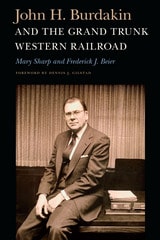
John H. Burdakin and the Grand Trunk Western Railroad
Mary Sharp
Michigan State University Press, 2016
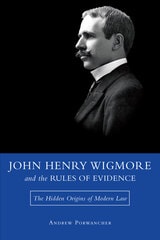
John Henry Wigmore and the Rules of Evidence
The Hidden Origins of Modern LawAndrew Porwancher
University of Missouri Press, 2024
Honorable Mention, 2017 Scribes Book Award, The American Society of Legal Writers
At the dawn of the twentieth century, the United States was reeling from the effects of rapid urbanization and industrialization. Time-honored verities proved obsolete, and intellectuals in all fields sought ways to make sense of an increasingly unfamiliar reality. The legal system in particular began to buckle under the weight of its anachronism. In the midst of this crisis, John Henry Wigmore, dean of the Northwestern University School of Law, single-handedly modernized the jury trial with his 1904-5 Treatise onevidence, an encyclopedic work that dominated the conduct of trials. In so doing, he inspired generations of progressive jurists—among them Oliver Wendell Holmes, Jr., Benjamin Cardozo, and Felix Frankfurter—to reshape American law to meet the demands of a new era. Yet Wigmore’s role as a prophet of modernity has slipped into obscurity. This book provides a radical reappraisal of his place in the birth of modern legal thought.
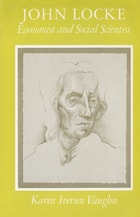
John Locke
Economist and Social ScientistKaren Iversen Vaughn
University of Chicago Press, 1980
John Stuart Mill and the Religion of Humanity
Linda C. Raeder
University of Missouri Press, 2002
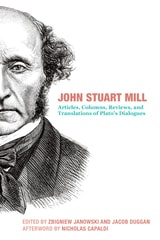
John Stuart Mill
Articles, Columns, Reviews and Translations of Plato's DialoguesJohn Stuart Mill
St. Augustine's Press, 2021
The contribution of Mill’s most authoritative biographer, Nicholas Capaldi, is a singular and unmatched highlight. The tenor of St. Augustine’s Press volumed on Mill is distinct in its intention to place his work in the framework of political philosophy and the conversation of the viability of liberalism as a tradition of thought.
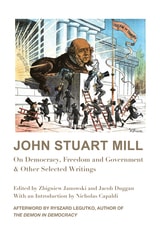
John Stuart Mill
On Democracy, Freedom and Government & Other Selected WritingsJohn Stuart Mill
St. Augustine's Press, 2019
If one can use a somewhat exaggerated language, Mill’s writings are to liberal-democracy what Marx and Engels’ writings were to Communism. Both systems gave expression to 19th century man’s longing for equality and justice, both promised to liberate him from the shackles of oppression, authority and tradition. Instead of liberating man, Communism created the most brutal system in human history, and its spectacular fall in 1989 is one of history’s greatest events. Western world today shows that liberal-democracy is no longer a benign doctrine, which advocates free market, minimum state and individual liberties, but, like Communism, is an all-encompassing ideology which forces an individual to abdicate his freedom and soul in favor of a Communist-like collective.
As many critics of real Socialism could see the seeds of totalitarianism in the writings of Marx and Engels, so one can see the seeds of liberal totalitarianism in Mill’s writings. This new edition is intended to help readers to understand why democratic-liberalism came so close to its 19th century ideological rival.
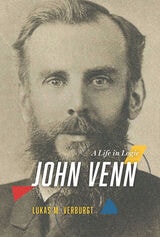
John Venn
A Life in LogicLukas M. Verburgt
University of Chicago Press, 2022
John Venn (1834–1923) is remembered today as the inventor of the famous Venn diagram. The postmortem fame of the diagram has until now eclipsed Venn’s own status as one of the most accomplished logicians of his day. Praised by John Stuart Mill as a “highly successful thinker” with much “power of original thought,” Venn had a profound influence on nineteenth-century scientists and philosophers, ranging from Mill and Francis Galton to Lewis Carroll and Charles Sanders Peirce. Venn was heir to a clerical Evangelical dynasty, but religious doubts led him to resign Holy Orders and instead focus on an academic career. He wrote influential textbooks on probability theory and logic, became a fellow of the Royal Society, and advocated alongside Henry Sidgwick for educational reform, including that of women’s higher education. Moreover, through his students, a direct line can be traced from Venn to the early analytic philosophy of G. E. Moore and Bertrand Russell, and family ties connect him to the famous Bloomsbury group.
This essential book takes readers on Venn’s journey from Evangelical son to Cambridge don to explore his life and work in context. Drawing on Venn’s key writings and correspondence, published and unpublished, Lukas M. Verburgt unearths the legacy of the logician’s wide-ranging thinking while offering perspective on broader themes in religion, science, and the university in Victorian Britain. The rich picture that emerges of Venn, the person, is of a man with many sympathies—sometimes mutually reinforcing and at other times outwardly and inwardly contradictory.
John of St. Thomas [Poinsot] on Sacred Science
Cursus Theologicus I, Question 1, Disputation 2John Of St. Thomas
St. Augustine's Press, 2012
This volume offers an English translation of John of St. Thomas’s Cursus theologicus I, question I, disputation 2. In this particular text, the Dominican master raises questions concerning the scientific status and nature of theology. At issue, here, are a number of factors: namely, Christianity’s continual coming to terms with the “Third Entry” of Aristotelian thought into Western Christian intellectual culture – specifically the Aristotelian notion of ‘science’ and sacra doctrina’s satisfaction of those requirements – the Thomistic-commentary tradition, and the larger backdrop of the Iberian Peninsula’s flourishing “Second Scholasticism.”
In this latter context, John of St. Thomas applies the theological principles of Thomas Aquinas to the Scholastic disputes preoccupying Thomist, Franciscan, and Jesuit theologians, such as Cajetan, Bañez, Luis de Molina, Vazquez, Suárez – to name only a few – in a tour de force of theological thinking throughout the entire period of Scholasticism. In the process – and not insignificantly – the status quaestionis of theology’s scientific character is clearly framed and answered according to John’s satisfaction.
Key to John of St. Thomas’s resolution of the question is his understanding of the continuity of the power of human reason with the super-intelligibility of divine revelation spelled out in terms of what he calls “virtual revelation.” This text presented in this volume is a quintessential example of the deep and abiding harmony that flourished between faith and reason as well as grace and nature within the golden era of Baroque Scholasticism.
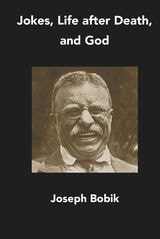
Jokes, Life after Death, and God
Joseph Bobik
St. Augustine's Press, 2020
This book devises a general and comprehensive, but brief, theory of jokes. The author begins with critiques of other writers’ views on the subject. 1) Ted Cohen thinks that such a theory is impossible. 2) Ronald Berk, on the other hand, provides just such a theory. And 3) John Morreall provides a general theory of laughter, which may include some things which can be used in a general theory of jokes. 4) Neil Schaeffer, too, provides a general theory of laughter, which makes a big point out of what he calls the “ludicrous context”; but he does include a chapter on jokes. 5) Christopher Wilson offers a general theory of jokes in which he focuses on form and content. And 6) Thomas Werge, in reflecting on the comic, suggests a general theory of jokes which identifies their matter, form, agents, purposes, and beyond these, the underlying shared relational context, which makes it possible for jokes to arise. 7) Bill Fuller’s message is that there is more funniness coming out of two or more heads than out of one, just as Socrates’ message was that there is more clarity coming out of two or more heads than out of one. 8) Umberto Eco feels that monks should laugh, just as ordinary people do; for laughter not only refreshes our seeking spirits, it also illuminates the truth we seek. 9) Simon Critchley, in his reflections on humor, notes that jokes bring on a kind of everyday anamnesis, that they are anti-story stories, that they are like prayers, that they are like philosophy; and that they require a certain underlying context, which is implicitly recognized by both teller and listener, and which renders possible the tension needed to make the punch line work. 10) Martha Wolfenstein, pursuing a psychological analysis of children’s humor, proposes that the underlying motive for telling jokes remains the same from childhood to adulthood, i.e., to transform painful and frustrating experiences so as to extract pleasure from them; and that the agent or productive cause of jokes is the repressing unconscious, as suggested by Freud.
As John Morreall has argued, neither the Superiority Theory (as in Plato, Aristotle and Hobbes), nor the Relief Theory (as in Spencer and Freud), nor the Incongruity Theory (as in Kant, Schopenhauer and Kierkegaard) appears to work as a general and comprehensive theory. Moreover, these writers talk more about humor and laughter than about jokes. To be sure, a joke is a type of humor. Thus, to say something about humor is to say something, though of a generic sort, about jokes. Similarly, to say something about the laughter caused by humor is to say something, though generic, about the laughter caused by jokes. Most of the authors considered in chapter one are concerned with jokes, and not only with humor as such. Section 11 of chapter one puts together, out of the combined contributions of these authors, what can be considered the beginnings of, some thoughts toward, a general and comprehensive theory of jokes. This task the author illustrates in a concrete way, by looking at individual jokes of different sorts; not, however, without inviting the reader to enjoy these jokes. The author looks particularly at Jewish jokes, Christian jokes, and Islamic jokes (jokes in three major religious traditions), jokes about philosophy and philosophers (philosophers ought to be able to laugh at themselves and at what they do), yo mama jokes (out of a healthy curiosity), Italian jokes and Slovak jokes, all of which makes for a clearer understanding of exactly what a joke is.
The analysis of general theory is then followed by some views on the morality of jokes and joke-telling, and an analysis of the connection between jokes and life after death, on the one hand, and God, on the other. Throughout the book Bobik offers innumerable examples to heighten our understanding and entertain us.
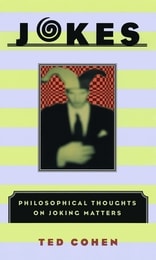
Jokes
Philosophical Thoughts on Joking MattersTed Cohen
University of Chicago Press, 1999
Sol sits on the sidewalk bench and waits patiently for nearly half an hour. Finally, Abe reappears.
"Well," asks Sol, "what are they up to? Who are they trying to convert? Why do they care? Did you get the $1,000?"
Indignantly Abe replies, "Money. That's all you people care about."
Ted Cohen thinks that's not a bad joke. But he also doesn't think it's an easy joke. For a listener or reader to laugh at Abe's conversion, a complicated set of conditions must be met. First, a listener has to recognize that Abe and Sol are Jewish names. Second, that listener has to be familiar with the widespread idea that Jews are more interested in money than anything else. And finally, the listener needs to know this information in advance of the joke, and without anyone telling him or her. Jokes, in short, are complicated transactions in which communities are forged, intimacy is offered, and otherwise offensive stereotypes and cliches lose their sting—at least sometimes.
Jokes is a book of jokes and a book about them. Cohen loves a good laugh, but as a philosopher, he is also interested in how jokes work, why they work, and when they don't. The delight at the end of a joke is the result of a complex set of conditions and processes, and Cohen takes us through these conditions in a philosophical exploration of humor. He considers questions of audience, selection of joke topics, the ethnic character of jokes, and their morality, all with plenty of examples that will make you either chuckle or wince. Jokes: more humorous than other philosophy books, more philosophical than other humor books.
"Befitting its subject, this study of jokes is . . . light, funny, and thought-provoking. . . . [T]he method fits the material, allowing the author to pepper the book with a diversity of jokes without flattening their humor as a steamroller theory might. Such a book is only as good as its jokes, and most of his are good. . . . [E]ntertainment and ideas in one gossamer package."—Kirkus Reviews
"One of the many triumphs of Ted Cohen's Jokes-apart from the not incidental fact that the jokes are so good that he doesn't bother to compete with them-is that it never tries to sound more profound than the jokes it tells. . . . [H]e makes you feel he is doing an unusual kind of philosophy. As though he has managed to turn J. L. Austin into one of the Marx Brothers. . . . Reading Jokes makes you feel that being genial is the most profound thing we ever do-which is something jokes also make us feel-and that doing philosophy is as natural as being amused."—Adam Phillips, London Review of Books
"[A] lucid and jargon-free study of the remarkable fact that we divert each other with stories meant to make us laugh. . . . An illuminating study, replete with killer jokes."—Kevin McCardle, The Herald (Glasgow)
"Cohen is an ardent joke-maker, keen to offer us a glimpse of how jokes are crafted and to have us dwell rather longer on their effects."—Barry C. Smith, Times Literary Supplement
"Because Ted Cohen loves jokes, we come to appreciate them more, and perhaps think further about the quality of good humor and the appropriateness of laughter in our lives."—Steve Carlson, Christian Science Monitor
José Vasconcelos
The Prophet of RaceStavans, Ilan
Rutgers University Press, 2011

Journal of Practical Ethics, Vol. 10, No. 1
Liz Sanders
Michigan Publishing Services, 2022
Can We Talk?: Communication Moral Concern in an Era of Polarized Politics - Elizabeth S. Anderson
Illusions of Control - Adam Hosein
Defective Normative Powers: The Case of Consent - Massimo Renzo