Results by title
2916 books match the query 'Politics and government' and 35 start with j
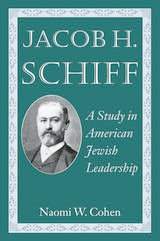
Jacob H. Schiff
A Study in American Jewish LeadershipNaomi W. Cohen
Brandeis University Press, 1999
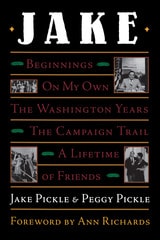
Jake
By Jake Pickle and Peggy Pickle
University of Texas Press, 1997
"My life has been given special purpose," Jake Pickle says. "Some men live to make money, drink, chase women, collect art, excel at a sport, or pursue other things that give them pleasure. The thing I got hooked on was helping people. And I've had the privilege of helping people by the thousands. Serving in Congress was the greatest honor of my life."
In this book, Jake Pickle tells the story of a lifetime in public service, including thirty-one years as Representative for Texas' Tenth Congressional District. Jake tells his story by telling stories—most of them humorous, some poignant—that add up to a warmly personal account of his life and career.
At the heart of the book are Jake's stories of political life in Washington, Austin, and on the campaign trail. These range from hilarious accounts of all that can and does happen at small-town Texas parades and rallies to clear, no-baloney explanations of some of the major legislation that Jake helped to pass. His stories about Social Security reform, tax-exempt organizations, and pension fund reform legislation make these complex topics easy to understand.
This book was written as a collaboration between Jake and his daughter, Peggy Pickle. It offers the fun of listening to a born raconteur spin his tales, while it reveals the ethics and integrity of a man who never forgot that the people elected him to serve them.
James Barbour, a Jeffersonian Repulican
Charles D. Lowery
University of Alabama Press, 1984
Barbour, a Virginia contemporary of Thomas Jefferson and James Madison, during a long public career spanning the years 1798-1842, exerted a constructive influence on the nation’s history. Active in state and national politics during the formative decades of the republic, Barbour was a political nationalist who grafted to the dominant political philosophy of the day those elements of the Hamiltonian Federalist creed necessary for governing a dynamic, changing nation.
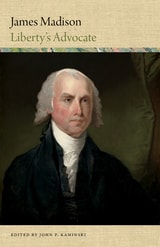
James Madison
Liberty's AdvocateJohn P. Kaminski
Wisconsin Historical Society Press, 2018
America has had few political thinkers who have rivalled James Madison. The son of a wealthy planter, Madison was an unhealthy child and was beset by physical infirmities throughout his long life, and grew into a cerebral man. Madison left Virginia to attend the College of New Jersey, but returned to his native state after completing his studies. Though he aspired to be a college professor, Madison instead went into public service and became one of the most influential, guiding voices of the Founding Era. Madison’s Virginia Plan would be used as a blueprint for the Constitutional Convention, where the Articles of Confederation would be replaced with a new Constitution that bore traces of Madison’s influence throughout.
Editor John Kaminski has gathered a remarkable collection of quotations by and about James Madison for the third installment of his Word Portraits of America’s Founders series. Through these words by and about Madison, we learn more about one of the country’s most influential Founding Fathers, who held a lifelong commitment to liberty and opposed oppression.
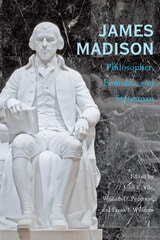
James Madison
Philosopher, Founder, and StatesmanJohn R. Vile
Ohio University Press, 2008
James Madison: Philosopher, Founder, and Statesman presents fresh scholarship on the nation’s fourth president, who is often called both the father of the U.S. Constitution and the father of the Bill of Rights. These essays by historians and political scientists from the United States and abroad focus on six distinct aspects of Madison’s life and work: his personality and development as a statesman; his work at the Constitutional Convention of 1787 and contributions to larger constitutional design; his advocacy for the adoption of the Bill of Rights; his controversial role as a party leader; his presidency; and his life after leaving office.
James Madison continues to be regarded as one of America’s great political theorists, a man who devoted his life to, and who found fulfillment in, public service. His philosophical contributions remain vital to any understanding of the modern American polity. This book will be of great interest to political scientists and theorists, as well as to historians of early American history and politics.
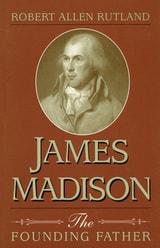
James Madison
The Founding FatherRobert Allen Rutland
University of Missouri Press, 1997
Available for the first time in paperback, James Madison: The Founding Father is a lively portrait of the man who essentially fathered our constitutional guarantees of civil and religious liberty. Focusing on the role Madison played at the Continental Congress and in each stage of the formation of the American Republic, Robert Allen Rutland also covers Madison's relationship with his beloved wife, Dolley, his fifty-year friendship with Thomas Jefferson, and his years as a respected elder statesman after serving as secretary of state and fourth president of the United States.
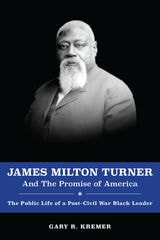
James Milton Turner and the Promise of America
The Public Life of a Post-Civil War Black LeaderGary R. Kremer
University of Missouri Press, 2020
Born a slave, Turner gained freedom when he was a child and received his education in clandestine St. Louis schools, later briefly attending Oberlin College. A self-taught lawyer, Turner earned a statewide reputation and wielded power far out of proportion to Missouri's relatively small black population.
After working nearly a decade in Liberia, Turner never regained the prominence he had enjoyed during Reconstruction.
Japan
The Intellectual Foundations of Modern Japanese PoliticsTetsuo Najita
University of Chicago Press, 1980
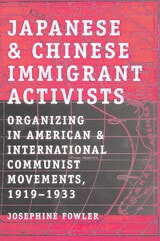
Japanese and Chinese Immigrant Activists
Organizing in American and International Communist Movements, 1919–1933Fowler, Josephine
Rutgers University Press, 2007
Japanese and Chinese immigrants in the United States have traditionally been characterized as hard workers who are hesitant to involve themselves in labor disputes or radical activism. How then does one explain the labor and Communist organizations in the Asian immigrant communities that existed from coast to coast between 1919 and 1933? Their organizers and members have been, until now, largely absent from the history of the American Communist movement. In Japanese and Chinese Immigrant Activists, Josephine Fowler brings us the first in-depth account of Japanese and Chinese immigrant radicalism inside the United States and across the Pacific.
Drawing on multilingual correspondence between left-wing and party members and other primary sources, such as records from branches of the Japanese Workers Association and the Chinese Nationalist Party, Fowler shows how pressures from the Comintern for various sub-groups of the party to unite as an “American” working class were met with resistance. The book also challenges longstanding stereotypes about the relationships among the Communist Party in the United States, the Comintern, and the Soviet Party.
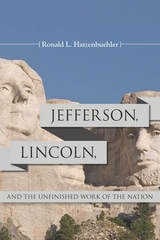
Jefferson, Lincoln, and the Unfinished Work of the Nation
Ronald L. Hatzenbuehler
Southern Illinois University Press, 2016
In this groundbreaking new study—the first extended examination of the ideas of Lincoln and Jefferson—Hatzenbuehler provides readers with a succinct guide to their opinions, comparing and contrasting their reasoned judgments on America’s republican form of government. Each chapter is devoted to one key area of common interest: race and slavery, the pros and cons of political parties, state rights versus federal authority, religion and the presidency, presidential powers under the Constitution, or the proper political economy for a republic. Relying on the pair’s own words in their letters, writings, and speeches, Hatzenbuehler explores similarities and differences between the two men on contentious issues. Both, for instance, wrote that they were antislavery, but Jefferson never acted on this belief, while Lincoln moved toward a constitutional amendment banning slavery. The book’s title, taken from the Gettysburg Address, builds on both presidents’ expectations that Americans should dedicate themselves to the unfinished work of returning the nation to its founding principles.
Jefferson and Lincoln wrestled with many of the same issues and ideas that intrigue and divide Americans today. In his thought-provoking work, Hatzenbuehler details how the two presidents addressed these issues and ideas, which are essential to understanding not only America’s history but also the continuing influence of the past on the present.
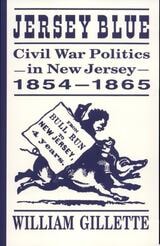
Jersey Blue
Civil War Politics in New Jersey, 1854–1865Gillette, William
Rutgers University Press, 1994
Gillette takes a broader view of the politics of the Civil War as he touches on the economy, geography, demography, immigration, nativism, conscription, and law. The result is a pioneering history of New Jersey that deepens our understanding of the Civil War.
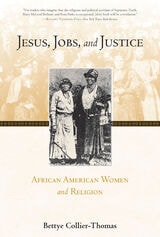
Jesus, Jobs, and Justice
African American Women and ReligionBettye Collier-Thomas
Temple University Press, 2013

Jewish History, Jewish Religion
The Weight of Three Thousand YearsIsrael Shahak
Pluto Press, 2008
Israel Shahak was a remarkable man. Born in the Warsaw ghetto and a survivor of Belsen, Shahak arrived in Israel in 1945. Brought up under Jewish Orthodoxy and Hebrew culture, he consistently opposed the expansion of the borders of Israel from 1967.
In this extraordinary and highly acclaimed book, Shahak embarks on a provocative study of the extent to which the secular state of Israel has been shaped by religious orthodoxies of an invidious and potentially lethal nature. Drawing on the Talmud and rabbinical laws, Shahak argues that the roots of Jewish chauvinism and religious fanaticism must be understood before it is too late.
Written from a humanitarian viewpoint by a Jewish scholar, this is a rare and highly controversial criticism of Israel that will both excite and disturb readers worldwide.
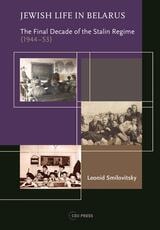
Jewish Life in Belarus
The Final Decade of the Stalin Regime, 1944-1953Leonid Smilovitsky
Central European University Press, 2014

Jewish Marriage and Divorce in Imperial Russia
ChaeRan Y. Freeze
Brandeis University Press, 2001
Jewish Peoplehood
An American InnovationPianko, Noam
Rutgers University Press, 2015
Although fewer American Jews today describe themselves as religious, they overwhelmingly report a strong sense of belonging to the Jewish people. Indeed, Jewish peoplehood has eclipsed religion—as well as ethnicity and nationality—as the essence of what binds Jews around the globe to one another. In Jewish Peoplehood, Noam Pianko highlights the current significance and future relevance of “peoplehood” by tracing the rise, transformation, and return of this novel term.
Jews Against Zionism
The American Council for Judaism, 1942-1948Thomas A. Kolsky
Temple University Press, 1992
This is the first full-scale history of the only organized American Jewish opposition to Zionism during the 1940s. Despite extensive literature on the Zionist movement, the Jewish opposition to Zionism has received only marginal and usually negative attention. In this impartial study, Thomas A. Kolsky examines the neglected phenomenon of Jewish anti-Zionism, its roots, and its results.
In 1942, a number of dissident Reform rabbis founded the American Council for Judaism, the first and only Jewish organization created to fight against Zionism and the establishment of a Jewish state. Emphasizing the purely religious nature of Judaism and unequivocally rejecting Jewish nationalism, the Council supported free Jewish immigration and equal rights for Jews throughout the world. For Palestine, specifically, it advocated establishment of a democratic state wherein all citizens, regardless of their religion, would enjoy equal political rights.
Summarizing both the history of Zionism and the history of American Jews, Kolsky traces the effects of the Holocaust on the Zionist movement and the personalities that shaped the leadership of the Council. Its position toward Zionism has particular contemporary relevance in understanding the historical relationship between Israel and the Palestinians.
Jews and the Italian Left
Socialism, Zionism, and Antisemitism from 1892 to 1992Alessandra Tarquini, Translated by Max Matukhin
University of Wisconsin Press, 2026
Tarquini’s research fills an important lacuna by analyzing the antisemitism of twentieth-century socialist movements. Crucially, however, Tarquini makes important distinctions between antisemitism on the Italian left and right, and identifies the relationship between leftism and antisemitism as a distinct formation.
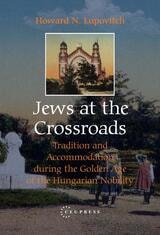
Jews at the Crossroads
Tradition and Accomodation during the Golden Age of the Hungarian NobilityHoward N. Lupovitch
Central European University Press, 2007
Jews, Christian Society, and Royal Power in Medieval Barcelona
Elka Klein
University of Michigan Press, 2006
Jews, Christian Society, and Royal Power in Medieval Barcelona traces the development of the Jewish community of Barcelona from 1050 to 1300. Elka Klein challenges the common perception that medieval Jews lived in relative isolation from the surrounding society, argues for the existence of significant cultural common ground between Jews and Christians, and proposes a new model for understanding Jewish communal autonomy and the relationship between Jews and their rulers.
Klein traces the development of the Jewish community of Barcelona in two contexts: the parallel development of the city of Barcelona and the changing relationship of the king to urban communities, Jewish and Christian. Until the later twelfth century, the Jewish community, like the Christian city of Barcelona, was left mostly to its own devices by the counts of Barcelona, who had neither the interest nor the power to interfere in internal affairs. Klein draws on both Hebrew and Latin sources to offer a picture of a communal elite whose power, mostly informal, derived from their influence within the community. This system changed in the later twelfth century as a result of the expansion of comitial-royal administration. Four Jewish families used their positions as bailiffs, accountants, and secretaries to consolidate power within their community. The rule of this courtier elite was short lived; two episodes of communal conflict in the early thirteenth century and increased royal activism led to the institution of a new regime of elected officials in 1241. The book concludes with an examination of the new elite and the implications of increased royal interference in internal affairs.
A central argument of Jews, Christian Society, and Royal Power in Medieval Barcelona is that it is necessary to distinguish between autonomy by default, resulting from the indifference of the ruler, who leaves a community to govern itself; and autonomy by design, guaranteed by selective royal interference. Against the view that royal interference undercut Jewish autonomy, Klein argues that autonomy by default left the community with insufficient power to enforce its decisions; because Catalan kings generally interfered in support of existing structures, autonomy by design in fact strengthened the community.
This book contributes to ongoing debates about the relationship between the cultures of the three religions in the Iberian peninsula. It joins a body of recent scholarship arguing that medieval European Jews and Christians shared considerable cultural common ground.
Jihadism, Sectarianism and Politics in a Changing Middle East
Adib Abdulmajid
Eburon Academic Publishers, 2021
The emergence and growth of sectarian Islamist militant organizations, whether Sunni or Shia, is deemed to be the fruit of the emerging radical interpretations of the concept of jihad, and the evolution of Islamism in general. The main objective of this book is to help the reader understand the complex religio-political scene in today’s Middle East and the ideological principles and agendas of influential movements, whose beliefs and actions constitute a serious threat to cultural diversity in the region. It addresses the doctrinal tenets associated with the emergence of influential Islamist organizations and the challenges encountered by the culturally diverse populations that surround them. This book also delves into the historical events that have shaped the Middle East as we know it today. It further examines the key factors behind the rise of the most influential sectarian-guided, jihadi-based extremist groups in the recent years
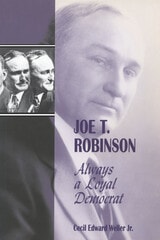
Joe T. Robinson
Always a Loyal DemocratCecil Weller
University of Arkansas Press, 1998
Senate majority leader Joseph Taylor Robinson was undoubtedly one of the most powerful U.S. senators of the early twentieth century. An important political figure in Arkansas from the time he was elected to the state legislature in 1895, Joe T., as he was popularly called became nationally prominent when he ascended to the Democratic leadership of the U.S. Senate in 1923.
Robinson’s career spanned momentous legislative debates in the chambers of the Senate, such as the League of Nations charter, the Teapot Dome Scandal, and FDR’s plan to “pack” the Supreme Court. His run for the vice-presidency in 1928, the first Southerner on a major ticket after the Civil War, and his three terms as chairman of the Democratic National Convention, in 1920, 1928, and 1936, are all covered in this perceptive study.
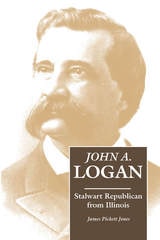
John A. Logan
Stalwart Republican from IllinoisJames Pickett Jones
Southern Illinois University Press, 2001
Not available.
John Adams vs Thomas Paine
Rival Plans for the Early RepublicJett B. Conner
Westholme Publishing, 2018
Initially admiring Thomas Paine’s efforts for independence, John Adams nevertheless was rattled by the political philosophy of Common Sense and responded to it by publishing his Thoughts on Government to counteract Paine’s proposals, which Adams said were far too “democratical.” Although John Adams is given credit for his substantive contributions to American constitutionalism, especially his notions of separation of powers, checks and balances, and representation, in John Adams vs Thomas Paine: Rival Plans for the Early Republic, historian Jett B. Conner makes the case that Thomas Paine was more than just a revolutionary figure who spurred Americans toward declaring independence. Common Sense made important contributions to American constitutional thought, too, particularly its call for more equal representation, popular sovereignty, a constitutional convention, and a federal system of governance with a strong central government. The book explores how the two rivals helped shape America’s first constitutions—the Articles of Confederation and those of several states— and how they continued contributing to American political thought as it developed during the so-called “critical period” between the adoption of the Articles of Confederation and the start of the Constitutional Convention of 1787. It also focuses on the creation of our democratic republic and compares Paine’s and Adams’s approaches to structuring constitutions to ensure free government while guarding against abuses of power and the excesses of democratic majorities. An abridged version of Common Sense and the short but complete Thoughts on Government are included in an appendix for easy reader reference.
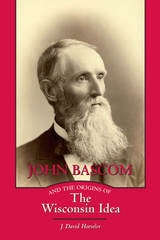
John Bascom and the Origins of the Wisconsin Idea
J. David Hoeveler Jr.
University of Wisconsin Press, 2017
During his term as governor (1901–1906), Robert La Follette routinely consulted with University of Wisconsin researchers to devise groundbreaking programs and legislation. Although the Wisconsin Idea is often attributed to a 1904 speech by Charles Van Hise, then president of the University of Wisconsin, David Hoeveler argues that it originated decades earlier, in the creative and fertile mind of John Bascom.
A philosopher, theologian, and sociologist, Bascom (1827–1922) deeply influenced a generation of students at the University of Wisconsin, including La Follette and Van Hise. Hoeveler documents how Bascom drew concepts from German idealism, liberal Protestantism, and evolutionary theory, transforming them into advocacy for social and political reform. He was a champion of temperance, women's rights, and labor, all of which brought him controversy as president of the university from 1874 to 1887. In a way unmatched by any of his peers at other institutions, Bascom outlined a social gospel that called for an expanded role for state governments and universities as agencies of moral improvement.
Hoeveler traces the intellectual history of the Wisconsin Idea from the nineteenth century to such influential Progressive Era thinkers as Richard T. Ely and John R. Commons, who believed university researchers should be a vital source of expertise for government and citizens.
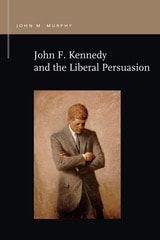
John F. Kennedy and the Liberal Persuasion
John M. Murphy
Michigan State University Press, 2019
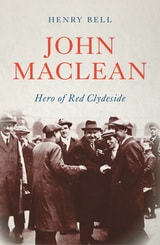
John Maclean
Hero of Red ClydesideHenry Bell
Pluto Press, 2018
Feared by the government, adored by workers, celebrated by Lenin and Trotsky. The head of British Military Intelligence called John Maclean (1879–1923) “the most dangerous man in Britain.”
This new biography explores the events that shaped the life of a momentous man—from the Great War and the Great Unrest to the Rent Strike and the Russian Revolution. It examines his work as an organizer and educator, his imprisonment and hunger strike, and his rise to the position of Britain’s most famous revolutionary. At a moment when radical politics is drawing renewed attention and support, Maclean’s example of activism and commitment is as timely as ever.
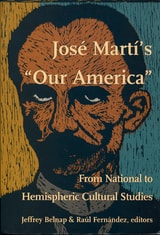
José Martí's Our America
From National to Hemispheric Cultural StudiesJeffrey Belnap and Raúl Fernández, eds.
Duke University Press, 1998
A Cuban exile from 1881 to 1895, Martí was a correspondent writing in New York for various Latin American newspapers. Grasping the significance of rising U.S. imperial power, he came to understand the Americas as a complex system of kindred—but not equal—national formations whose cultural and political integrity was threatened by the overbearing aggressiveness of the United States. This collection explores how in his journalistic work Martí critiques U.S. racism, imperialism, and capitalism; warns Latin America of impending U.S. geographical, cultural, and economic annexation; and calls for recognition of the diversity of America’s cultural voices. Reinforcing Martí’s hemispheric vision with essays by a wide range of scholars who investigate his analysis of the United States, his significance as a Latino outsider, and his analyses of Latin American cultural politics, this volume explores the affinities between Martí’s thought and current reexaminations of what it means to study America.
José Martí’s Our America offers a new understanding of Martí’s ambiguous and problematic relation with the United States and will engage scholars and students in American, Latin American, and Latino studies as well as those interested in cultural, postcolonial, gender, and ethnic studies.
Contributors. Jeffrey Belnap, Raúl Fernández, Ada Ferrer, Susan Gillman, George Lipsitz, Oscar Martí, David Noble, Donald E. Pease, Beatrice Pita, Brenda Gayle Plummer, Susana Rotker, José David Saldívar, Rosaura Sánchez, Enrico Mario Santí, Doris Sommer, Brook Thomas
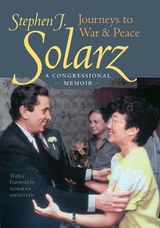
Journeys to War and Peace
A Congressional MemoirStephen J. Solarz
Brandeis University Press, 2011
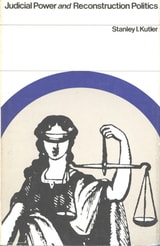
Judicial Power and Reconstruction Politics
Stanley I. Kutler
University of Chicago Press, 1968
This book investigates the political and public standing of the Supreme Court following the Dred Scott decision. Arguing against interpretations by previous historians, Kutler asserts instead that the "Chase Court" was neither enfeebled by the decision itself, nor by congressional Republicans during reconstruction. Instead, Kutler suggests that during reconstruction, the Court was characterized by forcefulness and judicious restraint rather than timidity and cowardice, holding a creative and determining role rather than abdicating its rightful powers. This volume assembles a series of essays by Kutler arguing for this characterization. Provocative and persuasive at turns, this collection of essays provides a bold and innovative reinterpretation of the Supreme Court after the Civil War.
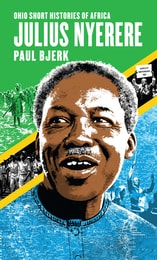
Julius Nyerere
Paul Bjerk
Ohio University Press, 2017
With vision, hard-nosed judgment, and biting humor, Julius Nyerere confronted the challenges of nation building in modern Africa. Constructing Tanzania out of a controversial Cold War union between Tanganyika and Zanzibar, Nyerere emerged as one of independent Africa’s most influential leaders. He pursued his own brand of African socialism, called Ujamaa, with unquestioned integrity, and saw it profoundly influence movements to end white minority rule in Southern Africa. Yet his efforts to build a peaceful nation created a police state, economic crisis, and a war with Idi Amin’s Uganda. Eventually—unlike most of his contemporaries—Nyerere retired voluntarily from power, paving the way for peaceful electoral transitions in Tanzania that continue today.
Based on multinational archival research, extensive reading, and interviews with Nyerere’s family and colleagues, as well as some who suffered under his rule, Paul Bjerk provides an incisive and accessible biography of this African leader of global importance. Recognizing Nyerere’s commitment to participatory government and social equality while also confronting his authoritarian turns and policy failures, Bjerk offers a portrait of principled leadership under the difficult circumstances of postcolonial Africa.

Jump for Joy
Jazz, Basketball, and Black Culture in 1930s AmericaGena Caponi-Tabery
University of Massachusetts Press, 2008
If the 1930s was the Swing Era, then the years from 1937 on might well be called the Jump Era. That summer Count Basie recorded “Jumping at the Woodside,” and suddenly jump tunes seemed to be everywhere. Along with the bouncy beat came a new dance step—the high-flying aerials of the jitterbuggers—and the basketball games that took place in the dance halls of African America became faster, higher, and flashier. Duke Ellington and a cast of hundreds put the buoyant spirit of the era on stage with their 1941 musical revue, Jump for Joy, a title that captured the momentum and direction of the new culture of exuberance.
Several high-profile public victories accompanied this increasing optimism: the spectacular successes of African American athletes at the 1936 Olympics, the 1937 union victory of the Brotherhood of Sleeping Car Porters, and Joe Louis's 1937 and 1938 heavyweight championship fights. For the first time in history, Black Americans emerged as cultural heroes and ambassadors, and many felt a new pride in citizenship.
In this book, Gena Caponi-Tabery chronicles these triumphs and shows how they shaped American music, sports, and dance of the 1930s and beyond. But she also shows how they emboldened ordinary African Americans to push for greater recognition and civil liberties—how cultural change preceded and catalyzed political action.
Tracing the path of one symbolic gesture—the jump—across cultural and disciplinary boundaries, Caponi-Tabery provides a unique political, intellectual, and artistic analysis of the years immediately preceding World War II.
Junius And Joseph
Presidential Politics and the Assassination of the First Mormon ProphetRobert S. Wicks & Fred R. Foister
Utah State University Press, 2005

Just Assassins
The Culture of Terrorism in RussiaEdited and with an introduction by Anthony Anemone
Northwestern University Press, 2010
Just Assassins examines terrorism as it’s manifested in Russian culture past and present, with essays devoted to Russian literature, film, and theater; historical narrative; and even amateur memoir, songs, and poetry posted on the Internet. Along with editor Anthony Anemone’s introduction, these essays chart the evolution of modern political terrorism in Russia, from the Decembrist uprising to the horrific school siege in Beslan in 2004, showing how Russia’s cultural engagement with its legacy of terrorism speaks to the wider world.
Justice for All
Selected Writings of Lloyd A. BarbeeLloyd A Barbee
Wisconsin Historical Society Press, 2017
Civil rights leader and legislator Lloyd A. Barbee frequently signed his correspondence with "Justice for All," a phrase that embodied his life’s work of fighting for equality and fairness. An attorney most remembered for the landmark case that desegregated Milwaukee Public Schools in 1972, Barbee stood up for justice throughout his career, from defending University of Wisconsin students who were expelled after pushing the school to offer black history courses, to representing a famous comedian who was arrested after stepping out of a line at a protest march. As the only African American in the Wisconsin legislature from 1965 to 1977, Barbee advocated for fair housing, criminal justice reform, equal employment opportunities, women’s rights, and access to quality education for all, as well as being an early advocate for gay rights and abortion access.
This collection features Barbee’s writings from the front lines of the civil rights movement, along with his reflections from later in life on the challenges of legislating as a minority, the logistics of coalition building, and the value of moving the needle on issues that would outlast him. Edited by his daughter, civil rights lawyer Daphne E. Barbee-Wooten, these documents are both a record of a significant period of conflict and progress, as well as a resource on issues that continue to be relevant to activists, lawmakers, and educators.