Results by title
1049 books match the query 'English, Irish, Scottish, Welsh' and 32 start with l
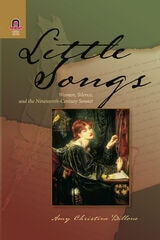
LITTLE SONGS
WOMEN, SILENCE, AND THE NINETEENTH-CENTURY SONNETAMY CHRISTINE BILLONE
The Ohio State University Press, 2002
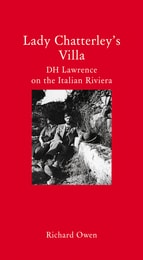
Lady Chatterley's Villa
D. H. Lawrence on the Italian RivieraRichard Owen
Haus Publishing, 2014
But before long Frieda found herself irresistibly attracted to their landlord, a dashing Italian army officer, and the resulting affair served as the background for Lawrence’s writing: while in the villa, he turned out two stories, “Sun” and “The Virgin and the Gypsy,” both prefiguring Lady Chatterley’s Lover in their depiction of women fatally drawn to earthy, muscular men.
Built on the unpublished, and previously unexplored, letters and diaries of Rina Secker, the Anglo-Italian wife of Lawrence’s publisher, and featuring never-before-published letters from Lawrence, Lady Chatterley’s Villa reconstructs the drama of the tempestuous marriage, and the ways it fired Lawrence’s creativity. Along the way, Richard Owen offers a new accounting of Lawrence’s passion for Italy, tracing his travels along the coasts and islands and his deep engagement with Italian culture. This exploration of a little-studied, but crucial period of the writer’s life will be a must for Lawrence’s many fans.
Lake Methodism
Jasper Cragwall
The Ohio State University Press, 2013
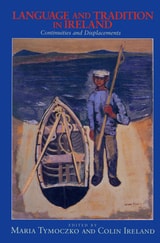
Language and Tradition in Ireland
Continuities and DisplacementsMaria Tymoczko
University of Massachusetts Press, 2003
If language and culture are intimately connected, then cultures involving people who speak more than one language must have special characteristics, as well as particular social issues to negotiate. What are the challenges faced by a people with two or more languages as their heritage? How does that multiple heritage affect cultural forms, including literature and the arts? How does linguistic difference influence the conceptualization and writing of history? And if the meeting of languages within a people has involved contestation and power, how are those conflicts negotiated?
This volume uses the tools of critical theory to explore such questions with respect to the complex, multilingual history of Ireland. Avoiding the simplistic polarized oppositions popular with cultural nationalists, the contributors examine the nexus of language, tradition, and authority in Ireland that has created such a rich, multivalent culture.
Although the linguistic interface of Irish and English has dominated cultural negotiations in Ireland over the last five hundred years, the island has an even longer history of linguistic and cultural exchange. Arguing that tradition is never static, the essays in this volume challenge the concept of a monolithic cultural origin, while insisting on the importance of inherited discourses in the continuity of culture through time and across linguistic difference. The chapters cover a broad range of topics from early Irish narratives and Latin hagiography to literary works by such writers as Yeats, Joyce, Friel, Montague, and McGahern, as well as other cultural forms, including traditional Irish music. Several chapters address issues of politics and power, from the role of interpreters in the relations between linguistic communities in Ireland to the politicization of language in Northern Ireland since the 1980s. Taken together, the essays illuminate scholarly domains as varied as postcolonial theory, the relationship between language and nation, the nature of tradition, and Irish literature of all periods.
In addition to the editors, contributors include Michael Cronin, Joanne Findon, Helen Fulton, Declan Kiberd, Jeremy Lowe, Gordon McCoy and Camille O'Reilly, Catherine McKenna, Cóilín Owens, Thomas Dillon Redshaw, and Sally K. Sommers Smith.

Language, Sign and Gender in Beowulf
Gillian R. Overing
Southern Illinois University Press, 1990
Not a book about what Beowulf means but how it means, and how the reader participates in the process of meaning construction.
Overing’s primary aim is to address the poem on its own terms, to trace and develop an interpretive strategy consonant with the extent of its difference. Beowulf’s arcane structure describes cyclical repetitions and patterned intersections of themes which baffle a linear perspective, and suggest instead the irresolution and dynamism of the deconstructionist free play of textual elements.
Chapter 1 posits the self/reader as a function of the text/language, examining the ways in which the text "speaks" the reader. Chapter 2 develops an interactive semiotic strategy in an attempt to describe an isomorphic relation between poem and reader, between text and self. Chapter 3 addresses the notions of text and self as more complex functions or formulations of desire, and thus complicates and expands the arguments of the two preceding chapters. The final chapter examines the issue of desire in the poem, and, to a lesser extent, desire in the reader (insofar as these may legitimately be viewed as distinct from each other).
Laurence Sterne’s A Sentimental Journey
A Legacy to the WorldW. B. Gerard
Bucknell University Press, 2021
Lectures and Essays in Criticism
The Complete Prose Works of Matthew ArnoldMatthew Arnold; Edited by R. H. Super
University of Michigan Press, 1962

Lightwork
Texts on and from Collaborative Multimedia TheatreEdited by Alex Mermikides and Andy Lavender
Intellect Books, 2021
The artist-led theater company Lightwork specializes in collaborative multimedia performance. The company experimented with several performance forms that emerged at the turn of the twenty-first century including devised and improvisation-led approaches. This volume brings together performance texts from nine productions by Lightwork and one play-text from Lightwork’s precursor company Academy Productions. The twelve-year span covered by the work reflects a period in British performance practice when the interrelation of page and stage, process and production, and text and “non-text” were being radically rethought.

Literal Figures
Puritan Allegory and the Reformation Crisis in RepresentationThomas H. Luxon
University of Chicago Press, 1995
Why did Puritan Christianity repeatedly turn to allegorical forms of representation in spite of its own intolerance of "Allegorical fancies?" Luxon demonstrates that Protestant doctrine itself was a kind of allegory in hiding, one that enabled Puritans to forge a figural view of reality while championing the "literal" and the "historical". He argues that for Puritanism to survive its own literalistic, anti-symbolic, and millenarian challenges, a "fall" back into allegory was inevitable. Representative of this "fall," The Pilgrim's Progress marks the culminating moment at which the Reformation's war against allegory turns upon itself. An essential work for understanding both the history and theory of representation and the work of John Bunyan, Literal Figures skillfully blends historical and critical methods to describe the most important features of early modern Protestant and Puritan culture.
Literary Celebrity, Gender, and Victorian Authorship, 1850-1914
Alexis Easley
University of Delaware Press, 2011
This study examines literary celebrity in Britain from 1850 to 1914. Through lively analysis of rare cultural materials, Easley demonstrates the crucial role of the celebrity author in the formation of British national identity. As Victorians toured the homes and haunts of famous writers, they developed a sense of shared national heritage. At the same time, by reading sensational accounts of writers’ lives, they were able to reconsider conventional gender roles and domestic arrangements. As women were featured in interviews and profiles, they were increasingly associated with the ephemerality of the popular press and were often excluded from emerging narratives of British literary history, which defined great literature as having a timeless appeal. Nevertheless, women writers were able to capitalize on celebrity media as a way of furthering their own careers and retelling history on their own terms. Press attention had a more positive effect on men’s literary careers since they were expected to assume public identities; however, in some cases, media exposure had the effect of sensationalizing their lives, bodies, and careers. With the development of proto-feminist criticism and historiography, the life stories of male writers were increasingly used to expose unhealthy domestic relationships and imagine ideal forms of British masculinity.
The first section of Literary Celebrity explores the practice of literary tourism in Victorian Britain, focusing specifically on the homes and haunts of Charles Dickens, Christina Rossetti, George Eliot, Elizabeth Barrett Browning, and Harriet Martineau. This investigation incorporates analysis of fascinating cultural texts, including maps, periodicals, and tourist guidebooks. Easley links the practice of literary tourism to a variety of cultural developments, including nationalism, urbanization, spiritualism, the women’s movement, and the expansion of popular print culture. The second section provides fresh insight into the ways that celebrity culture informed the development of Victorian historiography. Easley demonstrates how women were able to re-tell history from a proto-feminist perspective by writing contemporary history, participating in architectural reform movements, and becoming active in literary societies. In this chapter she returns to the work of Harriet Martineau and introduces a variety of lesser-known contributors to the field, including Mary Gillies and Mary Ward. Literary Celebrity concludes with a third section focused on the expansion of celebrity media at the fin de siècle. These chapters and a brief coda link the popularization of celebrity news to the de-canonization of women writers, the professionalization of medicine, the development of the open space movement, and the institutionalization of English studies. These investigations elucidate the role of celebrity media in the careers of Charlotte Robinson, Marie Corelli, Mary Braddon, Harriet Martineau, Thomas Carlyle, Ernest Hart, and Octavia Hill.
Published by University of Delaware Press. Distributed worldwide by Rutgers University Press.
Literary Circles and Cultural Communities in Renaissance England
Edited by Claude J. Summers & Ted-Larry Pebworth
University of Missouri Press, 2001
Although the literary circle is widely recognized as a significant feature of Renaissance literary culture, it has received remarkably little examination. In this collection of essays, the authors attempt to explain literary circles and cultural communities in Renaissance England by exploring both actual and imaginary ways in which they were conceived and the various needs they fulfilled. The book also pays considerable attention to larger theoretical issues relating to literary circles.
The essayists raise important questions about the extent to which literary circles were actual constructs or fictional creations. Whether illuminating or limiting, the circle metaphor itself can be extended or reformulated. Some of the authors discuss how particular circles actually operated, and some question the very concept of the literary circle. Literary Circles and Cultural Communities in Renaissance England will be an important addition to seventeenth-century studies.
Literature Incorporated
The Cultural Unconscious of the Business Corporation, 1650-1850John O'Brien
University of Chicago Press, 2015
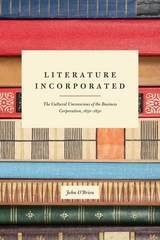
Examining British and American essays, poems, novels, and stories from the seventeenth through the nineteenth centuries, O’Brien pursues the idea of incorporation as a trope discernible in a wide range of texts. Key authors include John Locke, Eliza Haywood, Harriet Martineau, and Edgar Allan Poe, and each chapter is oriented around a type of corporation reflected in their works, such as insurance companies or banks. In exploring issues such as whether sentimental interest is the same as economic interest, these works bear witness to capitalism’s effect on history and human labor, desire, and memory. This period’s imaginative writing, O’Brien argues, is where the unconscious of that process left its mark. By revealing the intricate ties between literary models and economic concepts, Literature Incorporated shows us how the business corporation has shaped our understanding of our social world and ourselves.
Living Cargo
How Black Britain Performs Its PastSteven Blevins
University of Minnesota Press, 2016
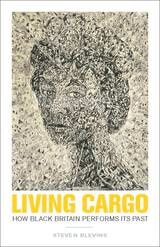
Offering a wide-ranging study of contemporary literature, film, visual art, and performance by writers and artists who live and work in the United Kingdom but also maintain strong ties to postcolonial Africa and the Caribbean, Living Cargo explores how contemporary black British culture makers have engaged with the institutional archives of colonialism and the Atlantic slave trade in order to reimagine blackness in British history and to make claims for social and political redress.
Steven Blevins calls this reimagining “unhousing history”—an aesthetic and political practice that animates and improvises on the institutional archive, repurposing it toward different ends and new possibilities. He discusses the work of novelists, including Caryl Phillips, Fred D’Aguiar, David Dabydeen, and Bernardine Evaristo; filmmakers Isaac Julien and Inge Blackman; performance poet Dorothea Smartt; fashion designer Ozwald Boateng; artists Hew Locke and Yinka Shonibare; and the urban redevelopment of Bristol, England, which unfolded alongside the public demand to remember the city’s slave-trading past.
Living Cargo argues that the colonial archive is neither static nor residual but emergent. By reassembling historical fragments and traces consolidated in the archive, these artists not only perform a kind of counter-historiography, they also imagine future worlds that might offer amends for the atrocities of the past.
Living Liberalism
Practical Citizenship in Mid-Victorian BritainElaine Hadley
University of Chicago Press, 2010
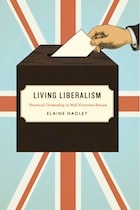
In the mid-Victorian era, liberalism was a practical politics: it had a party, it informed legislation, and it had adherents who identified with and expressed it as opinion. It was also the first British political movement to depend more on people than property, and on opinion rather than interest. But how would these subjects of liberal politics actually live liberalism?
To answer this question, Elaine Hadley focuses on the key concept of individuation—how it is embodied in politics and daily life and how it is expressed through opinion, discussion and sincerity. These are concerns that have been absent from commentary on the liberal subject. Living Liberalism argues that the properties of liberalism—citizenship, the vote, the candidate, and reform, among others—were developed in response to a chaotic and antagonistic world. In exploring how political liberalism imagined its impact on Victorian society, Hadley reveals an entirely new and unexpected prehistory of our modern liberal politics. A major revisionist account that alters our sense of the trajectory of liberalism, Living Liberalism revises our understanding of the presumption of the liberal subject.
Locating the Audience
How People Found Value in National Theatre WalesKirsty Sedgman
Intellect Books, 2016
London in Quotations
Compiled by Jaqueline Mitchell
Bodleian Library Publishing, 2014
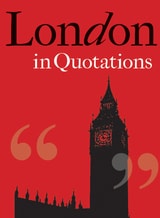
“When a man is tired of London, he is tired of life; for there is in London all that life can afford.” Samuel Johnson spoke highly of London in Boswell’s famous biography, but not all have shared his enthusiasm. Since, the capital has been characterized as a “riddle,” a “cesspool,” and a “modern Babylon”—the last by none other than Prime Minister Benjamin Disraeli. No tribute to the city would be complete without reference to the notoriously inclement weather, which caused Jane Austen to complain that, “in London it is always a sickly season.”
For fans, foes, and those planning a trip to the city in the hopes of forming an opinion, this collection will be welcomed.
London, Radical Culture, and the Making of the Dickensian Aesthetic
Sambudha Sen
The Ohio State University Press, 2012
Long Shadows
The Second World War in British Fiction and FilmEdited by Petra Rau
Northwestern University Press, 2016
Lord Byron's Cain
Twelve essays and a text with variants and annotationsEdited by Truman Guy Steffan
University of Texas Press, 1968
Cain has been ranked as one of the two best dramatic poems written in England in the nineteenth century. Because of its religious heterodoxy, which veiled a political iconoclasm, and also because of Byron’s notoriety, Cain stirred up a storm among Tories and clergymen “from Kentish town to Pisa.” From 1821 to 1830 more was printed about its eighteen hundred alarming lines than about the twenty thousand of Don Juan. One solemn Frenchman even translated the work in order to supply his countrymen with a text that he could then rewrite and confute.
After the initial controversy, readers began to regard Cain not merely as revolutionary propaganda but as a fictional portrait of common youthful experience: a sequence of aspiration, discontent, uncertainty, confusion, misunderstood isolation, fear, frustration, anger, and finally a rash, inevitable, but futile revolt that led to a future of hopeless regret.
Truman Guy Steffan here presents a text, arrived at by collation of the first and several later editions with the original manuscript (presently in the Stark Collection of the Miriam Lutcher Stark Library at the Harry Ransom Center, the University of Texas at Austin).
The first eight essays, which comprise Part I, cover a number of literary topics: Byron’s defense of his purposes in Cain and the relevance of his dramatic theory to the poem; the characterization that is an ideological confrontation, a revelation of personal conflict, as well as a rendering of individuals who have an existence independent of the author; the principles that controlled Byron’s absorption and expansion of biblical materials; the integration of the imagery with the dramatic substance; the incongruities of the language; the metrical heterodoxy; and a description of the manuscript and of Byron’s insertions.
Part II contains the text of Cain, accompanied by notes on the variants, the manuscript cancellations and additions, certain linguistic details, and the scansion of some unusual verses. Then follow annotations on allusions, sources, and analogues, and on a few passages of the play that have elicited unusual conflict over interpretation.
Part III provides a history of Cain criticism, from the opinions of Byron’s social and literary circle and of the major periodicals and pamphlets to the more complicated contribution of the twentieth century.
This important work stands not only as a valuable addition to Byron scholarship but also as an illuminating record of the changing critical and cultural attitudes from the early nineteenth century to the 1960s. Steffan has done a remarkable job in bringing together and synthesizing an enormous body of material.
Lost Property
The Woman Writer and English Literary History, 1380-1589Jennifer Summit
University of Chicago Press, 2000
Lost Property traces the representation of women writers from Margery Kempe and Christine de Pizan to Elizabeth I and Mary Queen of Scots, exploring how the woman writer became a focal point for emerging theories of literature and authorship in English precisely because of her perceived alienation from tradition. Through original archival research and readings of key literary texts, Summit writes a new history of the woman writer that reflects the impact of such developments as the introduction of printing, the Reformation, and the rise of the English court as a literary center.
A major rethinking of the place of women writers in the histories of books, authorship, and canon-formation, Lost Property demonstrates that, rather than being an unimaginable anomaly, the idea of the woman writer played a key role in the invention of English literature.
Lothario's Corpse
Libertine Drama and the Long-Running Restoration, 1700-1832Daniel Gustafson
Bucknell University Press, 2020
Published by Bucknell University Press. Distributed worldwide by Rutgers University Press.
Love Known
Theology and Experience in George Herbert's PoetryRichard Strier
University of Chicago Press, 1983
Love and Good Reasons
Postliberal Approaches to Christian Ethics and LiteratureFritz Oehlschlaeger
Duke University Press, 2003
Love and Good Reasons combines postliberal narrative theology—especially Stanley Hauerwas’s Christian ethics and Alasdair MacIntyre’s idea of traditional inquiry—with recent scholarship in literature and ethics including the work of Martha Nussbaum, J. Hillis Miller, Wayne Booth, Jeffrey Stout, and Richard Rorty. Oehlschlaeger offers detailed readings of literature by five major authors—Herman Melville, Jane Austen, Anthony Trollope, Henry James, and Stephen Crane. He examines their works in light of biblical scripture and the grand narratives of Israel, Jesus, and the Church. Discussing the role of religion in contemporary higher education, Oehlschlaeger shares his own experiences of teaching literature from a religious perspective at a state university.
Love and Logic
The Evolution of Blake's ThoughtStephen Cox
University of Michigan Press, 1992
Love's Labour's Lost
William Shakespeare
Arizona Center for Medieval and Renaissance Studies, 2024
Love’s Labour’s Lost is a wacky comedy of disguise and mischief, following the King of Navarre and his companions as they attempt to swear off the company of women. Focusing on bringing new life into the musicality of Shakespeare’s language, Josh Wilder’s translation of Love’s Labour’s Lost brings out the play’s romp and sass for a contemporary audience.
This translation of Love’s Labour’s Lost was written as part of the Oregon Shakespeare Festival’s Play On! project, which commissioned new translations of thirty-nine Shakespeare plays. These translations present the work of “The Bard” in language accessible to modern audiences while never losing the beauty of Shakespeare’s verse. Enlisting the talents of a diverse group of contemporary playwrights, screenwriters, and dramaturges from diverse backgrounds, this project reenvisions Shakespeare for the twenty-first century. These volumes make these works available for the first time in print—a new First Folio for a new era.
Love's Quarrels
Reading Charity in Early Modern EnglandEvan Gurney
University of Massachusetts Press, 2018
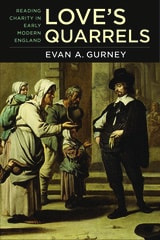
Early modern English writers often complained that “charity had grown cold,” lamenting the dissolution of society's communal bonds. But far from diminishing in scope or influence, charity generated heated debates, animated by social, political, and religious changes that prompted urgent questions about the virtue's powers and functions. Charity was as much a problem as it was a solution, a sure sign of trouble even when invoked on behalf of peace and community.
Love's Quarrels charts charity's complex history from the 1520s to the 1640s and details the ways in which it can be best understood in biblical translations of the early sixteenth century, in Elizabethan polemic and satire, and in the political and religious controversies arriving at the outset of civil war. As key works from Edmund Spenser, Ben Jonson, and John Milton reveal, “reading charity” was fraught with difficulty as early modern England reconsidered its deepest held convictions in the face of mounting social disruption and spiritual pressure.
Lovefuries
The Contracting Sea; The Hanging Judge; Bite or SuckDavid Ian Rabey
Intellect Books, 2008
Loving Dr. Johnson
Helen Deutsch
University of Chicago Press, 2005
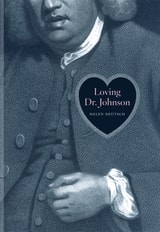
Loving Dr. Johnson uses the enormous popularity of Johnson to understand a singular case of author love and to reflect upon what the love of authors has to do with the love of literature. Helen Deutsch's work is driven by several impulses, among them her affection for both Johnson's work and Boswell's biography of him, and her own distance from the largely male tradition of Johnsonian criticism—a tradition to which she remains indebted and to which Loving Dr. Johnson is ultimately an homage. Limning sharply Johnson's capacious oeuvre, Deutsch's study is also the first of its kind to examine the practices and rituals of Johnsonian societies around the world, wherein Johnson's literary work is now dwarfed by the figure of the writer himself.
An absorbing look at one iconic author and his afterlives, Loving Dr. Johnson will be of enormous value to students of English literature and literary scholars keenly interested in canon formation.
Loving Faster than Light
Romance and Readers in Einstein's UniverseKaty Price
University of Chicago Press, 2012
Loving Literature
A Cultural HistoryDeidre Shauna Lynch
University of Chicago Press, 2014
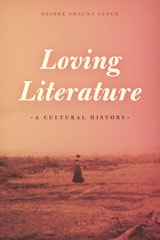
That question led Deidre Shauna Lynch into the historical and cultural investigation of Loving Literature. How did it come to be that professional literary scholars are expected not just to study, but to love literature, and to inculcate that love in generations of students? What Lynch discovers is that books, and the attachments we form to them, have played a vital role in the formation of private life—that the love of literature, in other words, is deeply embedded in the history of literature. Yet at the same time, our love is neither self-evident nor ahistorical: our views of books as objects of affection have clear roots in eighteenth- and nineteenth-century publishing, reading habits, and domestic history.
While never denying the very real feelings that warm our relationship to books, Loving Literature nonetheless serves as a riposte to those who use the phrase “the love of literature” as if its meaning were transparent. Lynch writes, “It is as if those on the side of love of literature had forgotten what literary texts themselves say about love’s edginess and complexities.” With this masterly volume, Lynch restores those edges and allows us to revel in those complexities.
Lucian and the Latins
Humor and Humanism in the Early RenaissanceDavid Marsh
University of Michigan Press, 1998
Until now, no study has attempted to connect the Latin translators and imitators of Lucian with his wider European influence. In Lucian and the Latins, David Marsh describes how Renaissance authors rediscovered the comic writings of Lucian. He traces how Lucianic themes and structures made an essential contribution to European literature beginning with a survey of Latin translations and imitations, which gave new direction to European letters in the fifteenth and sixteenth centuries. The Lucianic dialogues of the dead and dialogues of the gods were immensely popular, despite the religious backlash of the sixteenth century. The paradoxical encomium, represented by Lucian's "The Fly" and "The Parasite," inspired so-called serious humanists like Leonardo Bruni and Guarino of Verona. Lucian's "True Story" initiated the genre of the fantastic journey, which enjoyed considerable popularity during the Renaissance age of discovery. Humanist descendants of this work include Thomas More's Utopia and much of Rabelais' Pantagruel.
Lucian and the Latins will attract readers interested in a wide variety of subjects: the classical tradition, the early Italian Renaissance, the origins of modern European literature, and the uses of humor and satire as instruments of cultural critique.
David Marsh is Professor of Italian, Rutgers University.
Lyrical Strategies
The Poetics of the Twentieth-Century American NovelKatie Owens-Murphy
Northwestern University Press, 2018
Owens-Murphy surveys a broad array of writers: poets from the lyrical transatlantic tradition, as well as American novelists including Gertrude Stein, Jean Toomer, William Faulkner, Toni Morrison, Louise Erdrich, and Cormac McCarthy. Through a masterful reexamination of canonical works of twentieth-century American fiction through the lens of lyric poetry, she reveals how many elements in these novels can be better understood as poetic and rhetorical figures (metaphysical conceit, polysyndeton, dramatic monologue, apostrophe, and so on) than as narrative ones.
Making fresh contributions to literary theory and American fiction, Lyrical Strategies will fascinate readers and scholars of the American novel, fiction, poetry, and poetics alike.