Results by title
8812 books match the query 'Political Science' and 280 start with l
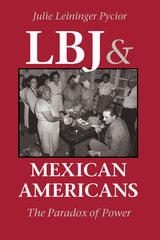
LBJ and Mexican Americans
The Paradox of PowerBy Julie Leininger Pycior
University of Texas Press, 1997
T. R. Fehrenbach Award, 1997
As he worked to build his Great Society, Lyndon Johnson often harkened back to his teaching days in the segregated "Mexican" school at Cotulla, Texas. Recalling the poverty and prejudice that blighted his students' lives, Johnson declared, "It never occurred to me in my fondest dreams that I might have the chance to help the sons and daughters of those students and to help people like them all over this country. But now I do have that chance—and I'll let you in on a secret—I mean to use it."
This book explores the complex and sometimes contradictory relations between LBJ and Mexican Americans. Julie Pycior shows that Johnson's genuine desire to help Mexican Americans—and reap the political dividends—did not prevent him from allying himself with individuals and groups intent on thwarting Mexican Americans' organizing efforts. Not surprisingly, these actions elicited a wide range of response, from grateful loyalty to, in some cases, outright opposition. Mexican Americans' complicated relationship with LBJ influenced both their political development and his career with consequences that reverberated in society at large.
LBJ and the Presidential Management of Foreign Relations
By Paul Y. Hammond
University of Texas Press, 1993
In this insightful study, Paul Y. Hammond, an experienced analyst of bureaucratic politics, adapts and extends that approach to explain and evaluate the Johnson administration’s performance in foreign relations in terms that have implications for the post–Cold War era.
The book is structured around three case studies of Johnson’s foreign policy decision making. The first study examines economic and political development. It explores the way Johnson handled the provision of economic and food assistance to India during a crisis in India’s food policies. This analysis provides lessons not only for dealing with African famine in later years but also for assisting Eastern Europe and the former Soviet Union.
The second case study focuses on U.S. relations with Western Europe at a time that seemed to require a major change in the NATO alliance. Here, Hammond illuminates the process of policy innovation, particularly the costs of changing well-established policies that embody an elaborate network of established interests. The third case study treats the Vietnam War, with special emphasis on how Johnson decided what to do about Vietnam. Hammond critiques the rich scholarship available on Johnson’s advisory process, based on his own reading of the original sources.
These case studies are set in a larger context of applied theory that deals more generally with presidential management of foreign relations, examining a president’s potential for influence on the one hand and the constraints on his or her capacity to control and persuade on the other. It will be important reading for all scholars and policymakers interested in the limits and possibilities of presidential power in the post–Cold War era.

LGBT Youth in America's Schools
Jason Cianciotto and Sean Cahill
University of Michigan Press, 2012
Jason Cianciotto and Sean Cahill, experts on lesbian, gay, bisexual, and transgender public policy advocacy, combine an accessible review of social science research with analyses of school practices and local, state, and federal laws that affect LGBT students. In addition, portraits of LGBT youth and their experiences with discrimination at school bring human faces to the issues the authors discuss.
This is an essential guide for teachers, school administrators, guidance counselors, and social workers interacting with students on a daily basis; school board members and officials determining school policy; nonprofit advocates and providers of social services to youth; and academic scholars, graduate students, and researchers training the next generation of school administrators and informing future policy and practice.

LGBT Youth in America's Schools
Jason Cianciotto and Sean Cahill
University of Michigan Press, 2012
Jason Cianciotto and Sean Cahill, experts on lesbian, gay, bisexual, and transgender public policy advocacy, combine an accessible review of social science research with analyses of school practices and local, state, and federal laws that affect LGBT students. In addition, portraits of LGBT youth and their experiences with discrimination at school bring human faces to the issues the authors discuss.
This is an essential guide for teachers, school administrators, guidance counselors, and social workers interacting with students on a daily basis; school board members and officials determining school policy; nonprofit advocates and providers of social services to youth; and academic scholars, graduate students, and researchers training the next generation of school administrators and informing future policy and practice.
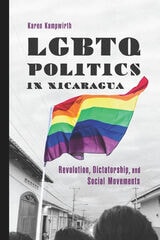
LGBTQ Politics in Nicaragua
Revolution, Dictatorship, and Social MovementsKaren Kampwirth
University of Arizona Press, 2022
Karen Kampwirth is a renowned scholar of the Nicaraguan Revolution, who has been writing at the intersection of gender and politics for decades. In this chronological telling of the last fifty years of political history in Nicaragua, Kampwirth deploys a critical new lens: understanding politics from the perspective of the country’s LGBTQ community. Kampwirth details the gay and lesbian guerrillas in the 1960s and 1970s, Nicaragua’s first openly gay television wizard in the 1980s, and the attempts by LGBTQ revolutionaries to create a civil rights movement and the subsequent squashing of that movement by the ruling Sandinista party. She analyzes the shifting political alliances, the rise of strong feminist and LGBTQ movements in Nicaragua, and the attempts by the administration of Daniel Ortega to co-opt and control these movements.
Ultimately, this is a story of struggle and defeat, progress and joy. This timely book provides a well-documented review of LGBTQ politics in modern Nicaragua, helping us to see the Sandinista Revolution and its ongoing aftermath in a new light.
LITIGATION AS LOBBYING
REPRODUCTIVE HAZARDS & INTEREST AGGREGATIONJULIANNA S. GONEN
The Ohio State University Press, 2003

LOGIC OF PREELECTORAL COALITION FORMATION
SONA NADENICHEK GOLDER
The Ohio State University Press, 2006
The Logic of Pre-Electoral Coalition Formation by Sona Nadenichek Golder includes a combination of methodological approaches (game theoretic, statistical, and historical) to explain why pre-electoral coalitions form in some instances but not in others. The results indicate that pre-electoral coalitions are more likely to form between ideologically compatible parties. They are also more likely to form when the expected coalition size is large (but not too large) and when the potential coalition partners are similar in size. Ideologically polarized party systems and disproportional electoral rules in combination also increase the likelihood of electoral coalition formation.
Golder links the analysis of pre-electoral coalition formation to the larger government coalition literature by showing that pre-electoral agreements increase (a) the likelihood that a party will enter government, (b) the ideological compatibility of governments, and (c) the speed with which governments take office. In addition, pre-electoral coalitions provide an opportunity for combining the best elements of the majoritarian vision of democracy with the best elements of the proportional vision of democracy.
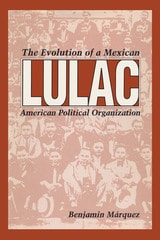
LULAC
The Evolution of a Mexican American Political OrganizationBy Benjamin Márquez
University of Texas Press, 1993
The League of United Latin American Citizens (LULAC) is one of the best-known and active national organizations that represent Mexican Americans and their political interests. Since its founding in Corpus Christi, Texas, in 1929, it has served as a vehicle through which Mexican Americans can strive for equal rights and economic assimilation into Anglo American society.
This study is the first comprehensive political history of LULAC from its founding through the 1980s. Márquez explores the group’s evolution from an activist, grassroots organization in the pre– and post–World War II periods to its current status as an institutionalized bureaucracy that relies heavily on outside funding to further its politically conservative goals. His information is based in part on many primary source materials from the LULAC archives at the University of Texas at Austin, the Houston Public Library, and the University LULAC publications, as well as interviews with present and past LULAC activists.
Márquez places this history within the larger theoretical framework of incentive theory to show how changing, and sometimes declining, membership rewards have influenced people’s participation in LULAC and other interest groups over time. Ironically, as of 1988, LULAC could claim fewer than 5,000 dues-paying members, yet a dedicated and skillful leadership secured sufficient government and corporate monies to make LULAC one of the most visible and active groups in Mexican American politics.
Given the increasing number of interest groups and political action committees involved in national politics in the United States, this case study of a political organization’s evolution will be of interest to a wide audience in the political and social sciences, as well as to students of Mexican American and ethnic studies.

La Follette’s Autobiography
A Personal Narrative of Political ExperiencesRobert M. La Follette; Foreword by Matthew Rothschild
University of Wisconsin Press, 2013
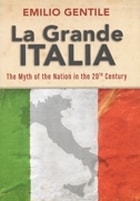
La Grande Italia
The Rise and Fall of the Myth of the Nation in the Twentieth CenturyEmilio Gentile
University of Wisconsin Press, 2008
Gentile’s definition of “Italians” encompasses the whole range of political, cultural, and social actors: Liberals and Catholics, Monarchists and Republicans, Fascists and Socialists. La Grande Italia presents a sweeping study of the development of Italian national identity in all its incarnations throughout the twentieth century. This important contribution to the study of modern Italian nationalism and the ambition to achieve a “great Italy” between the unification of Italy and the advent of the Italian Republic will appeal to anyone interested in modern European history, Fascism, and nationalism.
Best Books for Special Interests, selected by the American Association of School Librarians, and Best Books for Regional General Interests, selected by the Public Library Association
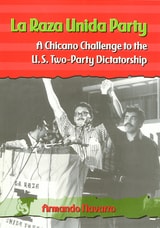
La Raza Unida Party
Armando Navarro
Temple University Press, 2000
La Raza Unida Party traces the party from its beginnings in 1970 to its demise in 1981 -- the events, leaders, ideology, structure, strategy and tactics, successes and problems, and electoral campaigns that marked its trajectory. The book covers political organizing in California, Texas, Colorado, New Mexico, Arizona, and the Midwest, as well as RUP's national and international politics and its party profile. In addition, its suggests options for future political arena. Based on 161 interviews, access to numerous documents, letters, minutes, diaries, and position papers, as well as such published sources as contemporary newspaper and magazine accounts and campaign literature, the study is enriched by Professor Navarro's accounts of his own experiences as one of the organizers of the RUP in California.
La Raza Unida Party represents the culmination of the story of Chicano militancy that Professor Navarro has related in his earlier books. It goes beyond mere history-telling to discuss the strengths and weaknesses of ethnic-identity political parties and the perils of challenging the two-party dictatorship that characterizes U.S. electoral politics.
Labor Histories
Class, Politics, and the Working-Class ExperienceEdited by Eric Arnesen, Julie Greene, and Bruce Laurie
University of Illinois Press, 1998

Labor Journalism, Labor Feminism
Women at the Federated PressVictoria M. Grieve
University of Illinois Press, 2026
These journalists wrote women into labor news by shedding light on essential issues like the need for equal pay and an end to discrimination. Their work increased women’s visibility in unions and the workforce while revealing that not only class but gender and race shaped their on-the-job experiences. Grieve also examines labor feminism within the larger stories of links between the Old Left and New Left and the FP’s pioneering role in articulating early iterations of intersectional feminism.
A compelling portrait of four women and a movement, Labor Journalism, Labor Feminism looks at an essential labor press organization and profiles politically active, leftist women who created relationships, established networks, and worked for social change.
Labor Justice across the Americas
Leon Fink, Juan Palacio
University of Illinois Press, 2018
Labor Relations in the Aviation and Aerospace Industries
Robert W. Kaps, J. Scott Hamilton, Timm J. Bliss
Southern Illinois University Press, 2012
In this textbook designed for courses on aviation labor relations, the authors-experts with many years of experience in these sectors-examine and evaluate the labor process for all aspects of the aviation and aerospace industries, including aerospace manufacturing, airlines, general aviation, federal and state administrative agencies, and public airports.
Divided into three parts-Public Policy and Labor Law; Principles, Practices and Procedures in Collective Bargaining and Dispute Resolution; and the Changing Labor Relations Environment-the book provides an overview of the industries and the development of US labor law and policy, then explores the statutory, regulatory, and case laws applicable to each industry segment before concluding with an examination of current and developing issues and trends. The authors present the evolution of aviation and aerospace labor laws, going as far back as the early nineteenth century to lay the historical foundation, and cover the development and main features of the principal statutes governing labor relations in the United States today, the Railway Labor Act, the National Labor Relations Act, and the Civil Service Reform Act. They also investigate the growth of the industries and their impact on labor relations, as well as the current issues and challenges facing management and labor in each segment of this dynamic, sometimes volatile, business and their implications for collective bargaining. Twenty case studies not only illuminate practical applications of such fundamental concepts as unfair labor practices and unions' duty of fair representation but also enliven the subject, preparing the reader to use the concepts in real-world decision making.
A study guide with review questions, online assignments, supplemental readings, and exercises is available for students. For those teachers using the textbook in their courses, there is an instructor's manual with additional resources for developing courses in the classroom, online, or by blended learning, as well as a variety of assignments and materials to enhance and vary the mock negotiation exercise.
A revision and expansion of Robert W. Kaps's Air Transport Labor Relations, this outstanding new volume provides students and teachers with valuable information and perspectives on industries that are highly dependent on technologically skilled labor. Labor Relations in the Aviation and Aerospace Industries offers a sweeping and thorough treatment of labor relations, public policy, law, and practice and is the definitive work on the labor process in the aviation and aerospace sectors.
Labor Relations in the Aviation and Aerospace Industries
Study GuideRobert W. Kaps, J. Scott Hamilton, Timm J. Bliss
Southern Illinois University Press, 2012
This Study Guide is designed to be used with the textbook Labor Relations in the Aviation and Aerospace Industries. It is intended to assist students in comprehending basic terminology and principles of labor relations and the law, to relate those principles to unique features of the aviation and aerospace industry, and to prepare for the kinds of labor relations–related decisions students will soon be making as aviation professionals, whether in private or public sector employment. It includes review questions, online assignments, supplemental readings, and exercises.
Labor and Community
Mexican Citrus Worker Villages in a Southern California County, 1900-1950Gilbert G. González
University of Illinois Press, 1994

Labor and Democracy in Namibia, 1971–1996
Gretchen Bauer
Ohio University Press, 1998
In this compelling study of labor and nationalism during and after Namibia's struggle for liberation, Gretchen Bauer addresses the very difficult task of consolidating democracy in an independent Namibia. Labor and Democracy in Namibia, 1971-1996 argues that a vibrant and autonomous civil society is crucial to the consolidation of new democracies, and it identifies trade unions, in particular, as especially important organizations of civil society. In Namibia, however, trade unions have emerged from the liberation struggle and the first years of independence in a weakened state. Dr. Bauer gives a lucid explanation for this phenomenon by tracing the origins and evolution of the trade unions in Namibia and discusses the implications thereof for the future of democracy in Namibia.
Based on material not widely available before independence in 1990, this study takes a critical look at the nationalist movement in Namibia. Through the use of dozens of interviews with political leaders, trade unionists, community activists, and others, Bauer offers the controversial suggestion that there are many within the nationalist movement (now the ruling party in government) who would rather not see a strong trade union movement (or any other potential rival) emerge in independent Namibia.
Labor and the Chinese Revolution
Class Strategies and Contradictions of Chinese Communism, 1928–1948S. Bernard Thomas
University of Michigan Press, 1983
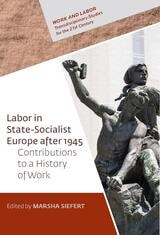
Labor in State-Socialist Europe, 1945–1989
Contributions to a History of WorkMarsha Siefert
Central European University Press, 2020
Labor regimes under communism in East-Central Europe were complex, shifting, and ambiguous. This collection of sixteen essays offers new conceptual and empirical ways to understand their history from the end of World War II to 1989, and to think about how their experiences relate to debates about labor history, both European and global.
The authors reconsider the history of state socialism by re-examining the policies and problems of communist regimes and recovering the voices of the workers who built them. The contributors look at work and workers in Albania, Bulgaria, Czechoslovakia, the German Democratic Republic, Hungary, Poland, Romania, and Yugoslavia. They explore the often contentious relationship between politics and labor policy, dealing with diverse topics including workers’ safety and risks; labor rights and protests; working women’s politics and professions; migrant workers and social welfare; attempts to control workers’ behavior and stem unemployment; and cases of incomplete, compromised, or even abandoned processes of proletarianization. Workers are presented as active agents in resisting and supporting changes in labor policies, in choosing allegiances, and in defining the very nature of work.
Labor of Fire
The Ontology of Labor between Economy and CultureBruno Gullì
Temple University Press, 2005
Gullì lays the groundwork for his book by offering a critique of productive labor, and then maps out his productive/living labor distinction in detail, reviewing the work of Marx and others.
Labor'S War At Home
The Cio In World War IiNelson Lichtenstein
Temple University Press, 2003
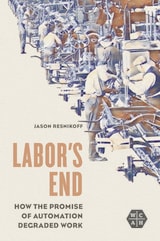
Labor's End
How the Promise of Automation Degraded WorkJason Resnikoff
University of Illinois Press, 2022
A forceful intellectual history, Labor's End challenges entrenched assumptions about automation's transformation of the American workplace.
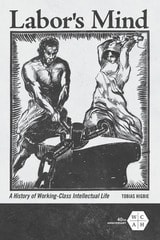
Labor's Mind
A History of Working-Class Intellectual LifeTobias Higbie
University of Illinois Press, 2019
Labor's Outcasts
Migrant Farmworkers and Unions in North America, 1934-1966Andrew J. Hazelton
University of Illinois Press, 2022
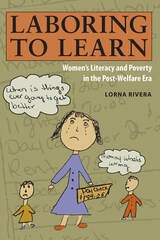
Laboring to Learn
Women's Literacy and Poverty in the Post-Welfare EraLorna Rivera
University of Illinois Press, 2007
The American adult education system has become an alternative for school dropouts, with some state welfare policies requiring teen mothers and women without high school diplomas to participate in adult education programs to receive aid. Currently, low-income women of color are more likely to be enrolled in the lowest levels of adult basic education. Very little has been published about women's experiences in these mandatory programs and whether the programs reproduce the conditions that forced women to drop out in the first place.
Lorna Rivera bridges the gap with this important study, the product of ten years' active ethnographic research with formerly homeless women who participated in adult literacy education classes before and after welfare reform. She draws on rich interviews with organizers and participants in the Adult Learners Program at Project Hope, a women's shelter and community development organization in Boston's Dudley neighborhood, one of the poorest in the city.
Analyzing the web of ideological contradictions regarding "work first" welfare reform policies, Rivera argues that poverty is produced and reproduced when women with low literacy skills are pushed into welfare-to-work programs and denied education. She examines how various discourses about individual choice and self-sufficiency shape the purposes of literacy, how low-income women express a sense of personal responsibility for being poor, and how neoliberal ideologies and practices compromise the goals of critical literacy programs. Throughout this study, the voices and experiences of formerly homeless women challenge cultural stereotypes about poor women, showing in personal and structural terms how social and economic forces shape and restrict opportunities for low-income women of color.
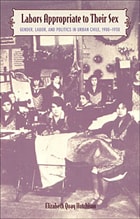
Labors Appropriate to Their Sex
Gender, Labor, and Politics in Urban Chile, 1900–1930Elizabeth Quay Hutchison
Duke University Press, 2001
In addition to population and industrial censuses, Hutchison culls published and archival sources to illuminate such misconceptions and to reveal how women’s paid labor became a locus of anxiety for a society confronting social problems—both real and imagined—that were linked to industrialization and modernization. The limited options of working women were viewed by politicians, elite women, industrialists, and labor organizers as indicative of a society in crisis, she claims, yet their struggles were also viewed as the potential springboard for reform. Labors Appropriate to Their Sex thus demonstrates how changing norms concerning gender and work were central factors in conditioning the behavior of both male and female workers, relations between capital and labor, and political change and reform in Chile.
Labour's Civil Wars
How Infighting has Kept the Left from Power (and What Can Be Done About It)Patrick Diamond and Giles Radice
Haus Publishing, 2023
The biblical adage that “if a house be divided against itself, that house cannot stand” remains sound theological advice. It is also essential counsel for any political party that aspires to win elections. When a party is riven with division, the public does not know what it stands for. Though both major UK parties have been subject to internal conflict over the years, the Labour Party has been more prone to damaging splits. The divide exposed by the Corbyn insurgency is only the most recent example in almost a century of destructive infighting. Indeed, it has often seemed as though Labour has been more adept at fighting itself than in defeating the Tory party. This book examines the history of Labour’s civil wars and the underlying causes of the party’s schisms, from the first split of 1931, engineered by Ramsay MacDonald, to the ongoing battle for the future between the incumbent, Keir Starmer, and those who fundamentally altered the party’s course under his predecessor, Jeremy Corbyn.
Labour, Nature and Capitalism
Exploring Labour-Environmental Conflicts in Kerala, IndiaSilpa Satheesh
University College London, 2025
Set against the industrial belt of Eloor-Edayar, Labour, Nature and Capitalism investigates the uneasy tensions between trade unions and environmental movements in Kerala, complicating the celebrated “Kerala Model” of development. Through ethnographic research and document analysis, Silpa Satheesh studies how capitalist interests shape and divide movements that appear to share common ground. The book challenges the simplistic “environment versus development” binary, depicting how industrial labor and grassroots environmental activism frequently find themselves at odds, despite both being embedded in struggles for justice.
By foregrounding the lived experiences of movement actors and examining the ideological fractures that emerge in postcolonial capitalism, Satheesh provides a much-needed intervention into debates on labor and ecology in the Global South. This interdisciplinary work is particularly valuable for scholars and activists working at the intersection of environmental justice and working-class mobilization, shedding light on the possibilities and limits of solidarity in the fight for just transitions.
Land for the People
The State and Agrarian Conflict in IndonesiaAnton Lucas
Ohio University Press, 2013
Half of Indonesia’s massive population still lives on farms, and for these tens of millions of people the revolutionary promise of land reform remains largely unfulfilled. The Basic Agrarian Law, enacted in the wake of the Indonesian revolution, was supposed to provide access to land and equitable returns for peasant farmers. But fifty years later, the law’s objectives of social justice have not been achieved.
Land for the People provides a comprehensive look at land conflict and agrarian reform throughout Indonesia’s recent history, from the roots of land conflicts in the prerevolutionary period and the Sukarno and Suharto regimes, to the present day, in which democratization is creating new contexts for people’s claims to the land. Drawing on studies from across Indonesia’s diverse landscape, the contributors examine some of the most significant issues and events affecting land rights, including shifts in policy from the early postrevolutionary period to the New Order; the Land Administration Project that formed the core of land policy during the late New Order period; a long-running and representative dispute over a golf course in West Java that pitted numerous local farmers against the government and local elites; Suharto’s notorious “million hectare” project that resulted in loss of access to land and resources for numerous indigenous farmers in Kalimantan; and the struggle by Bandung’s urban poor to be treated equitably in the context of commercial land development. Together, these essays provide a critical resource for understanding one of Indonesia’s most pressing and most influential issues.
Contributors: Afrizal, Dianto Bachriadi, Anton Lucas, John McCarthy, John Mansford Prior, Gustaaf Reerink, Carol Warren, and Gunawan Wiradi.

Land of Shame and Glory
Britain 2021–22Peter Hennessy
Haus Publishing, 2023
2021 and 2022 were two of the most turbulent and disruptive years experienced by Britain in peacetime. Land of Shame and Glory: Britain 2021–22 addresses a series of unprecedented challenges that laid bare the fragility of Britain and the Union during this time. Beginning with the chaotic Fall of Kabul, which exposed Britain's military dependence on the United States, through the prolonged, unsatisfying removal of a prime minister—and the economically catastrophic, short-lived tenure of his successor—that further exposed the vulnerabilities of an unwritten constitution; to the country sweltering in record-breaking temperatures amid dire warnings of climate catastrophe; and finally, to the death of a much-loved monarch, who was a point of consistency during decades of tremendous social and technological change. Peter Hennessy considers the continuities and upheavals of the last seventy years, asking whether there can be said to have been a second Elizabethan Age and lamenting that the post-war period came to its close amid such upheaval and loss.
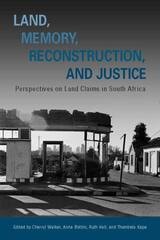
Land, Memory, Reconstruction, and Justice
Perspectives on Land Claims in South AfricaCherryl Walker
Ohio University Press, 2010
Land is a significant and controversial topic in South Africa. Addressing the land claims of those dispossessed in the past has proved to be a demanding, multidimensional process. In many respects the land restitution program that was launched as part of the county’s transition to democracy in 1994 has failed to meet expectations, with ordinary citizens, policymakers, and analysts questioning not only its progress but also its outcomes and parameters.
Land, Memory, Reconstruction, and Justice brings together a wealth of topical material and case studies by leading experts in the field who present a rich mix of perspectives from politics, sociology, geography, social anthropology, law, history, and agricultural economics. The collection addresses both the material and the symbolic dimensions of land claims, in rural and urban contexts, and explores the complex intersection of issues confronting the restitution program, from the promotion of livelihoods to questions of rights, identity, and transitional justice.
A valuable contribution to the field of land and agrarian studies, both in South Africa and internationally, it is undoubtedly the most comprehensive treatment to date of South Africa’s postapartheid land claims process and will be essential reading for scholars and students of land reform for years to come.

Landlocked
Water, Energy, and Planetary Politics in AlbertaJeremy J. Schmidt
University of Chicago Press, 2026
A study of oil-rich Alberta reveals the entwined relationships among geoscience, governance, and power.
The Canadian province of Alberta holds the world’s fourth-largest reserve of fossil fuels, with oil sands famous for bitumen, a viscous form of petroleum. A critical testing ground for international environmental ideas and energy policies, Alberta pioneered state-led efforts to understand, extract, and sell bitumen. Without natural access to ocean ports, Alberta must negotiate pipeline routes with neighboring provinces and nations to reach global markets. But Alberta is also landlocked in another sense: it is caught in an extractive relationship with oil-rich earth.
In Landlocked, Jeremy J. Schmidt focuses on Alberta’s energy industry, particularly its use of water and oil, to argue for a new way of understanding how political authority is forged and maintained through the environment. Schmidt details how water and oil were enrolled in early state-making projects, such as irrigation, and examines the consequences of Alberta’s efforts to extract value from land, including a series of events in 2013 that released 4.2 million barrels of bitumen into underground environments. By uncovering the ways that geosciences supported activities—from land settlement to the dispossession of Indigenous peoples—that produced environmental policies and approaches to management and governance, he shows that they aren’t merely instruments of state power but central to Alberta’s political identity and legitimacy.
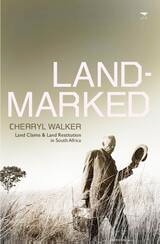
Landmarked
Land Claims and Land Restitution in South AfricaCherryl Walker
Ohio University Press, 2008
The year 2008 is the deadline set by President Mbeki for the finalization of all land claims by people who were dispossessed under the apartheid and previous white governments. Although most experts agree this is an impossible deadline, it does provide a significant political moment for reflection on the ANC government’s program of land restitution since the end of apartheid.
Land reform (and land restitution within that) remains a highly charged issue in South Africa, one that deserves more in–depth analysis. Drawing on her experience as Rural Land Claims Commissioner in KwaZulu–Natal from 1995 to 2000, Professor Cherryl Walker provides a multilayered account of land reform in South Africa, one that covers general critical commentary, detailed case material, and personal narrative. She explores the master narrative of loss and restoration, which has been fundamental in shaping the restitution program; offers a critical overview of the achievements of the program as a whole; and discusses what she calls the “non–programmatic limits to land reform,” including urbanization, environmental constraints and the impact of HIV/AIDS.

Landscape of Modernity
Essays on New York City, 1900-1940David Ward
Russell Sage Foundation, 1992
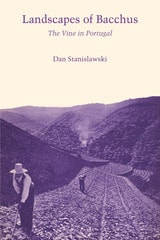
Landscapes Of Bacchus
The Vine in PortugalBy Dan Stanislawski
University of Texas Press, 1970
In a country of disparate parts and of long, unbroken historical experience, there may be one dominant feature, a clue to the character of its regions. In Portugal the vine serves as this clue.
The vine has been an important aspect of the Iberian landscape since prehistoric times, and farmers still use Roman methods of cultivation that have been adapted to regional physical conditions and to socioeconomic structure. Southern Portugal today is almost vineless, but in the north three areas can be distinguished by their vine forms and their products. Dan Stanislawski examines these areas in detail.
High tree-vines surround plots of grain in the Minho Province. The grains and the slightly acid Green Wines provide subsistence and cash for the densely settled area of owner-operated small farms.
In the hanging garden terrace of the Douro, vines grown on tawny, baked schist slopes yield world-famous Port Wine, a product that must conform to strict quantity and quality controls supervised by the central government.
Mature table wines are produced in the Dão, an isolated cul-de-sac where cordons of vines are planted on small, individually owned plots. Control of wine-making is exercised by a central governing group and by producers’ cooperatives.
Various wines originate in central Portugal. The lesser demarcated zones of Setubal, Colares, Carcavelos, and Bucelas yield fine wines. In other parts of the central region several wine types are produced in bulk. Some are used for blending and some for aging into quality table wines, but none is distinguished as a wine whose character is derived from its geographical location.
Dan Stanislawski demonstrates that vine form differences—and differences in the resulting product, wine—mirror the Portuguese historical experience and indicate regional distinctions in Portuguese life styles.
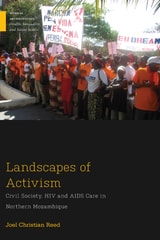
Landscapes of Activism
Civil Society, HIV and AIDS Care in Northern MozambiqueReed, Joel Christian
Rutgers University Press, 2018

Language Wars
The Role of Media and Culture in Global Terror and Political ViolenceJeff Lewis
Pluto Press, 2005
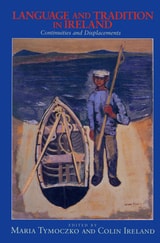
Language and Tradition in Ireland
Continuities and DisplacementsMaria Tymoczko
University of Massachusetts Press, 2003
If language and culture are intimately connected, then cultures involving people who speak more than one language must have special characteristics, as well as particular social issues to negotiate. What are the challenges faced by a people with two or more languages as their heritage? How does that multiple heritage affect cultural forms, including literature and the arts? How does linguistic difference influence the conceptualization and writing of history? And if the meeting of languages within a people has involved contestation and power, how are those conflicts negotiated?
This volume uses the tools of critical theory to explore such questions with respect to the complex, multilingual history of Ireland. Avoiding the simplistic polarized oppositions popular with cultural nationalists, the contributors examine the nexus of language, tradition, and authority in Ireland that has created such a rich, multivalent culture.
Although the linguistic interface of Irish and English has dominated cultural negotiations in Ireland over the last five hundred years, the island has an even longer history of linguistic and cultural exchange. Arguing that tradition is never static, the essays in this volume challenge the concept of a monolithic cultural origin, while insisting on the importance of inherited discourses in the continuity of culture through time and across linguistic difference. The chapters cover a broad range of topics from early Irish narratives and Latin hagiography to literary works by such writers as Yeats, Joyce, Friel, Montague, and McGahern, as well as other cultural forms, including traditional Irish music. Several chapters address issues of politics and power, from the role of interpreters in the relations between linguistic communities in Ireland to the politicization of language in Northern Ireland since the 1980s. Taken together, the essays illuminate scholarly domains as varied as postcolonial theory, the relationship between language and nation, the nature of tradition, and Irish literature of all periods.
In addition to the editors, contributors include Michael Cronin, Joanne Findon, Helen Fulton, Declan Kiberd, Jeremy Lowe, Gordon McCoy and Camille O'Reilly, Catherine McKenna, Cóilín Owens, Thomas Dillon Redshaw, and Sally K. Sommers Smith.
Language, Resistance and Revival
Republican Prisoners and the Irish Language in the North of IrelandFeargal Mac Ionnrachtaigh
Pluto Press, 2013
Language, Resistance and Revival tells the untold story of the truly groundbreaking linguistic and educational developments that took place among Republican prisoners in Long Kesh prison from 1972-2000.
During a period of bitter struggle between Republican prisoners and the British state, the Irish language was taught and spoken as a form of resistance during incarceration. The book unearths this story for the first time and analyses the rejuvenating impact it had on the cultural revival in the nationalist community beyond the prison walls.
Based on unprecedented interviews, Feargal Mac Ionnrachtaigh explores a key period in Irish history through the original and 'insider' accounts of key protagonists in the contemporary Irish language revival.
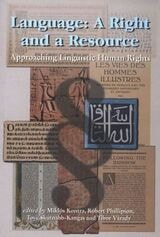
Language
A Right and a Resource: Approaches to Linguistic Human RightsTibor Várady
Central European University Press, 2000
Linguistic Human Rights (LHR) is a fast growing new area of study combining the principles of national and international law with the study of language as a central dimension of ethnicity. Implementation of these principles is aimed at ensuring that no state or society violates these basic rights.
This path breaking study broadens our knowledge of the important role of language in minority rights and in social and political struggles for LHRs. Exploring the interactions of linguistic diversity, biodiversity, the free market and human rights, the contributors present case studies to highlight such issues as Kurdish satellite TV attempting to create a virtual state on the air through trying to achieve basic LHR’s for Kurds in Turkey; the implementation of LHRs in the Baltic states; language rights activism in Canada; the spread of English as an international language; and the obstacles met in education by Roma and the Deaf in Hungary because of lack of appropriate LHRs.
Language: A Right and a Resource is a valuable multi-disciplinary text which can be used in a variety of different areas of study in the legal profession, linguistics, cultural and political studies.
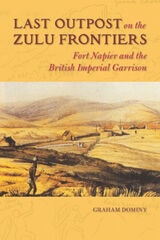
Last Outpost on the Zulu Frontiers
Fort Napier and the British Imperial GarrisonGraham Dominy
University of Illinois Press, 2016

Last Train to Auschwitz
The French National Railways and the Journey to AccountabilitySarah Federman
University of Wisconsin Press, 2021
In the immediate decades after World War II, the French National Railways (SNCF) was celebrated for its acts of wartime heroism. However, recent debates and litigation have revealed the ways the SNCF worked as an accomplice to the Third Reich and was actively complicit in the deportation of 75,000 Jews and other civilians to death camps. Sarah Federman delves into the interconnected roles—perpetrator, victim, and hero—the company took on during the harrowing years of the Holocaust.
Grounded in history and case law, Last Train to Auschwitz traces the SNCF’s journey toward accountability in France and the United States, culminating in a multimillion-dollar settlement paid by the French government on behalf of the railways.The poignant and informative testimonies of survivors illuminate the long-term effects of the railroad’s impact on individuals, leading the company to make overdue amends. In a time when corporations are increasingly granted the same rights as people, Federman’s detailed account demonstrates the obligations businesses have to atone for aiding and abetting governments in committing atrocities. This volume highlights the necessity of corporate integrity and will be essential reading for those called to engage in the difficult work of responding to past harms.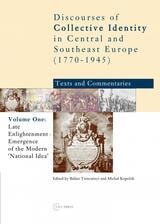
Late Enlightenment
Emergence of the Modern 'National Idea'Marius Turda
Central European University Press, 2006

Latent Memory
Human Rights and Jewish Identity in ChileMaxine Lowy
University of Wisconsin Press, 2022
Maxine Lowy draws upon hundreds of first-person testimonials and archival resources to explore Chilean Jewish identity in the wake of Pinochet's coup, exposing the complex and sometimes contradictory development of collective traumatic memory and political sensibilities in an oppressive new context. Latent Memory points to processes of community gestures of moral reparation and signals the pathways to justice and healing associated with Shoah and the Jewish experience. Lowy asks how individuals and institutions may overcome fear, indifference, and convenience to take a stand even under intense political duress, posing questions applicable to any nation emerging from state repression.

Latin America and the Transports of Opera
Fragments of a Transatlantic DiscourseRoberto Ignacio Díaz
Vanderbilt University Press, 2023
Latin America and the Transports of Opera studies a series of episodes in the historical and textual convergence of a hallowed art form and a part of the world often regarded as peripheral. Perhaps unexpectedly, the archives of opera generate new arguments about several issues at the heart of the established discussion about Latin America: the allure of European cultural models; the ambivalence of exoticism; the claims of nationalism and cosmopolitanism; and, ultimately, the place of the region in the global circulation of the arts. Opera’s transports concern literal and imagined journeys as well as the emotions that its stories and sounds trigger as they travel back and forth between Europe—the United States, too—and Latin America.
Focusing mostly on librettos and other literary forms, this book analyzes Calderón de la Barca’s baroque play on the myth of Venus and Adonis, set to music by a Spanish composer at Lima’s viceregal court; Alejo Carpentier’s neobaroque novella on Vivaldi’s opera about Moctezuma; the entanglements of opera with class, gender, and ethnicity throughout Cuban history; music dramas about enslaved persons by Carlos Gomes and Hans Werner Henze, staged in Rio de Janeiro and Copenhagen; the uses of Latin American poetry and magical realism in works by John Adams and Daniel Catán; and a novel by Manuel Mujica Lainez set in Buenos Aires’s Teatro Colón, plus a chamber opera about Victoria Ocampo with a libretto by Beatriz Sarlo. Close readings of these texts underscore the import and meanings of opera in Latin American cultural history.
This book is the recipient of the 2024 Norman L. and Roselea J. Goldberg Prize from Vanderbilt University Press for the best book in the area of art or medicine.

Latin America in Caricature
By John J. Johnson
University of Texas Press, 1993
“Not many readers will thank the author as he deserves, for he has told us more about ourselves than we perhaps wish to know,” predicted Latin America in Books of Latin America in Caricature—an exploration of more than one hundred years of hemispheric relations through political cartoons collected from leading U.S. periodicals from the 1860s through 1980.
The cartoons are grouped according to recurring themes in diplomacy and complementing visual imagery. Each one is accompanied by a lengthy explanation of the incident portrayed, relating the drawing to public opinion of the day. Johnson’s thoughtful introduction and the comments that precede the individual chapters provide essential background for understanding U.S. attitudes and policies toward Latin America.
Latin America in Debate
Indigeneity, Development, Dependency, PopulismMaristella Svampa
Duke University Press, 2025
Latin American Elections
Choice and ChangeRichard Nadeau, Éric Bélanger, Michael S. Lewis-Beck, Mathieu Turgeon, and François Gélineau
University of Michigan Press, 2017

Latin American Migrations to the U.S. Heartland
Changing Social Landscapes in Middle AmericaEdited by Linda Allegro and Andrew Grant Wood
University of Illinois Press, 2019
Filled with varied and eye-opening perspectives, Latin American Migrations to the U.S. Heartland reveals how identities, economies, and geographies are changing as Latin Americans adjust to their new homes, jobs, and communities.
Contributors: Linda Allegro, Tisa M. Anders, Scott Carter, Caitlin Didier, Miranda Cady Hallett, Edmund Hamann, Albert Iaroi, Errol D. Jones, Jane Juffer, László J. Kulcsár, Janelle Reeves, Jennifer F. Reynolds, Sandi Smith-Nonini, and Andrew Grant Wood.