Results by title
28164 books match the query 'History' and 932 start with l
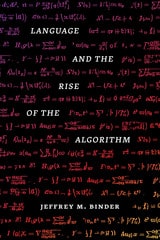
Language and the Rise of the Algorithm
Jeffrey M. Binder
University of Chicago Press, 2022
A wide-ranging history of the algorithm.
Bringing together the histories of mathematics, computer science, and linguistic thought, Language and the Rise of the Algorithm reveals how recent developments in artificial intelligence are reopening an issue that troubled mathematicians well before the computer age: How do you draw the line between computational rules and the complexities of making systems comprehensible to people? By attending to this question, we come to see that the modern idea of the algorithm is implicated in a long history of attempts to maintain a disciplinary boundary separating technical knowledge from the languages people speak day to day.
Here, Jeffrey M. Binder offers a compelling tour of four visions of universal computation that addressed this issue in very different ways: G. W. Leibniz’s calculus ratiocinator; a universal algebra scheme Nicolas de Condorcet designed during the French Revolution; George Boole’s nineteenth-century logic system; and the early programming language ALGOL, short for algorithmic language. These episodes show that symbolic computation has repeatedly become entangled in debates about the nature of communication. Machine learning, in its increasing dependence on words, erodes the line between technical and everyday language, revealing the urgent stakes underlying this boundary.
The idea of the algorithm is a levee holding back the social complexity of language, and it is about to break. This book is about the flood that inspired its construction.
Language in Hand
Why Sign Came Before SpeechWilliam C. Stokoe
Gallaudet University Press, 2001
In Language in Hand: Why Sign Came Before Speech, William C. Stokoe begins his exploration of the origin of human language with a 2400-year-old quote by Democritus: “Everything existing in the universe is the fruit of chance and necessity.” Stokoe capitalizes upon this simple credo in this far-ranging examination of the scholarly topography to support his formula for the development of language in humans: gesture-to-language-to-speech. Intrinsic to this is the proposition that speech is sufficient for language, but not necessary. Chance brought human ancestors down from the trees to the ground, freeing their hands for gesture, and then sign language, a progression that came from the necessity to communicate.
Stokoe recounts in Language in Hand how inspiration grew out of his original discovery in the 1950s and ’60s that deaf people who signed were using a true language with constructions that did not derive from spoken English. This erudite, highly engaging investigation calls upon decades of personal experience and published research to refute the recently entrenched principles that humans have a special, innate learning faculty for language and that speech equates with language. Integrating current findings in linguistics, semiotics, and anthropology, Stokoe fashions a closely-reasoned argument that suggests how our human ancestors’ powers of observation and natural hand movements could have evolved into signed morphemes.
Stokoe also proposes how the primarily gestural expression of language with vocal support shifted to primarily vocal language with gestural accompaniment. When describing this transition, however, he never loses sight of the significance of humans in the natural world and the role of environmental stimuli in the development of language. Stokoe illustrates this contention with fascinating observations of small, contemporary ethnic groups such as the Assiniboin Nakotas, a Native American group from Montana that intermingle their spoken and signed languages depending upon cultural imperatives.
Language in Hand also presents innovative thoughts on classifiers in American Sign Language and their similarity to certain spoken languages, convincing evidence that speech originally copied sign language forms before developing unrelated conventions through usage. Stokoe concludes with a hypothesis on how the acceptance of sign language as the first language of humans could revolutionize the education of infants, both deaf and hearing, who, like early humans, have the full capacity for language without speech.
Language, History, and Identity
Ethnolinguistic Studies of the Arizona TewaPaul V. Kroskrity
University of Arizona Press, 1993

Language, Power, and Ideology in Brunei Darussalam
Mis Sea#99Geoffrey C. Gunn
Ohio University Press, 1996

Language, Resistance and Revival
Republican Prisoners and the Irish Language in the North of IrelandFeargal Mac Ionnrachtaigh
Pluto Press, 2013
Language, Resistance and Revival tells the untold story of the truly groundbreaking linguistic and educational developments that took place among Republican prisoners in Long Kesh prison from 1972-2000.
During a period of bitter struggle between Republican prisoners and the British state, the Irish language was taught and spoken as a form of resistance during incarceration. The book unearths this story for the first time and analyses the rejuvenating impact it had on the cultural revival in the nationalist community beyond the prison walls.
Based on unprecedented interviews, Feargal Mac Ionnrachtaigh explores a key period in Irish history through the original and 'insider' accounts of key protagonists in the contemporary Irish language revival.
Language, Sign and Gender in Beowulf
Gillian R. Overing
Southern Illinois University Press, 1990
Not a book about what Beowulf means but how it means, and how the reader participates in the process of meaning construction.
Overing’s primary aim is to address the poem on its own terms, to trace and develop an interpretive strategy consonant with the extent of its difference. Beowulf’s arcane structure describes cyclical repetitions and patterned intersections of themes which baffle a linear perspective, and suggest instead the irresolution and dynamism of the deconstructionist free play of textual elements.
Chapter 1 posits the self/reader as a function of the text/language, examining the ways in which the text "speaks" the reader. Chapter 2 develops an interactive semiotic strategy in an attempt to describe an isomorphic relation between poem and reader, between text and self. Chapter 3 addresses the notions of text and self as more complex functions or formulations of desire, and thus complicates and expands the arguments of the two preceding chapters. The final chapter examines the issue of desire in the poem, and, to a lesser extent, desire in the reader (insofar as these may legitimately be viewed as distinct from each other).
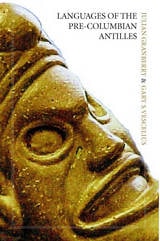
Languages of the Pre-Columbian Antilles
Julian Granberry and Gary Vescelius
University of Alabama Press, 2004
A linguistic analysis supporting a new model of the colonization of the Antilles before 1492
This work formulates a testable hypothesis of the origins and migration patterns of the aboriginal peoples of the Greater Antilles (Cuba, Jamaica, Hispaniola, and Puerto Rico), the Lucayan Islands (the Commonwealth of the Bahamas and the Crown Colony of the Turks and Caicos), the Virgin Islands, and the northernmost of the Leeward Islands, prior to European contact. Using archaeological data as corroboration, the authors synthesize evidence that has been available in scattered locales for more than 500 years but which has never before been correlated and critically examined.
Within any well-defined geographical area (such as these islands), the linguistic expectation and norm is that people speaking the same or closely related language will intermarry, and, by participating in a common gene pool, will show similar socioeconomic and cultural traits, as well as common artifact preferences. From an archaeological perspective, the converse is deducible: artifact inventories of a well-defined sociogeographical area are likely to have been created by speakers of the same or closely related language or languages.
Languages of the Pre-Columbian Antilles presents information based on these assumptions. The data is scant—scattered words and phrases in Spanish explorers' journals, local place names written on maps or in missionary records—but the collaboration of the authors, one a linguist and the other an archaeologist, has tied the linguistics to the ground wherever possible and allowed the construction of a framework with which to understand the relationships, movements, and settlement patterns of Caribbean peoples before Columbus arrived.
Las Hermanas
Chicana/Latina Religious-Political Activism in the U. S. Catholic ChurchLara Medina
Temple University Press, 2005
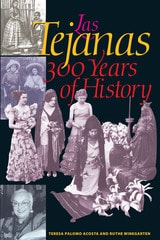
Las Tejanas
300 Years of HistoryBy Teresa Palomo Acosta and Ruthe Winegarten
University of Texas Press, 2003
Winner, Texas Reference Source Award, Reference Round Table, Texas Library Association, 2003
T.R. Fehrenbach Award, Texas Historical Commission, 2004
Since the early 1700s, women of Spanish/Mexican origin or descent have played a central, if often unacknowledged, role in Texas history. Tejanas have been community builders, political and religious leaders, founders of organizations, committed trade unionists, innovative educators, astute businesswomen, experienced professionals, and highly original artists. Giving their achievements the recognition they have long deserved, this groundbreaking book is at once a general history and a celebration of Tejanas' contributions to Texas over three centuries.
The authors have gathered and distilled a wide range of information to create this important resource. They offer one of the first detailed accounts of Tejanas' lives in the colonial period and from the Republic of Texas up to 1900. Drawing on the fuller documentation that exists for the twentieth century, they also examine many aspects of the modern Tejana experience, including Tejanas' contributions to education, business and the professions, faith and community, politics, and the arts. A large selection of photographs, a historical timeline, and profiles of fifty notable Tejanas complete the volume and assure its usefulness for a broad general audience, as well as for educators and historians.
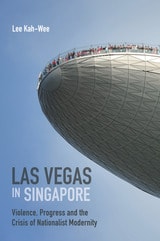
Las Vegas in Singapore
Violence, Progress and the Crisis of Nationalist ModernityLee Kah-Wee
National University of Singapore Press, 2018
The first history begins in colonial Singapore in the 1880s, when British administrators revised gambling laws in response to the political threat posed by Chinese-run gambling syndicates. Following the tracks of these punitive laws and practices, the book moves into the 1960s when the newly independent city-state created a national lottery while criminalizing both organized and petty gambling in the name of nation-building. The second history shifts the focus to corporate Las Vegas in the 1950s when digital technology and corporate management practices found each other on the casino floor. Tracing the emergence of the specialist casino designer, the book reveals how casino development evolved into a highly rationalized spatial template designed to maximize profits. Today an iconic landmark of Singapore, Marina Bay Sands is also an artifact of these two histories, an attempt by Singapore to normalize what was once criminalized in its nationalist history.
Lee Kah-Wee argues that the historical project of the control of vice is also about the control of space and capital. The result is an uneven landscape where the legal and moral status of gambling is contingent on where it is located. As the current wave of casino expansion spreads across Asia, he warns that these developments should not be seen as liberalization but instead as a continuation of the project of concentrating power by modern states and corporations.
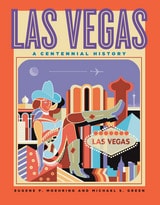
Las Vegas
A Centennial HistoryEugene P. Moehring
University of Nevada Press, 2005
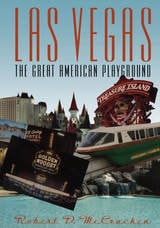
Las Vegas
The Great American PlaygroundRobert D. Mccracken
University of Nevada Press, 1996
Las Vegas: The Great American Playground, illustrated with many fine historical photographs, traces the city’s history from its first Native American occupants more than 10,000 years ago to its present status as a premier tourist destination. It is the story of a group of colorful, enterprising individuals who made the desert bloom with undreamed-of possibilities.
Las yerbas de la gente
A Study of Hispano-American Medicinal PlantsKaren Cowan Ford
University of Michigan Press, 1975
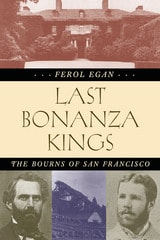
Last Bonanza Kings
The Bourns of San FranciscoFerol Egan
University of Nevada Press, 2009
Much of the wealth from the great mining bonanzas of the nineteenth century American West flowed into San Francisco and made possible the growth of the city and some fabulous personal fortunes. Among the wealthiest and most powerful of the Bonanza Kings were William Bowers Bourn I and his son and successor, William Bowers Bourn II. Their wealth came from rich mines in Nevada’s Comstock Lode and Treasure Hill and California’s Sierra foothills, as well as astute business ventures in the booming port city of San Francisco. Last Bonanza Kings tells their story with all the colorful detail and sweeping sense of epic drama that the characters and their times demand, setting them into the turbulent context of an age of rampant financial and civic growth, major technological advances in mining, lavish philanthropy, and opulent personal lifestyles.
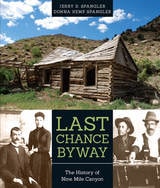
Last Chance Byway
The History of Nine Mile CanyonJerry D Spangler and Donna Kemp Spangler
University of Utah Press, 2015
The history of Nine Mile Canyon is not so much a story of those who lived and died there as it is of those whose came with dreams and left broke and disillusioned, although there were exceptions. Sam Gilson, the irascible U.S. marshal and famed polygamist hunter, became wealthy speculating in a hydrocarbon substance bearing his name, Gilsonite, a form of asphalt. The famed African American Buffalo Soldiers constructed a freight road through the canyon that for a time turned the Nine Mile Road into one of the busiest highways in Utah. Others who left their mark include famed outlaw hunter Joe Bush, infamous bounty hunter Jack Watson, the larger-than-life cattle baron Preston Nutter, and Robert Leroy Parker (known to most as Butch Cassidy).
Winner of the Charles Redd Center Clarence Dixon Taylor Historical Research Award.
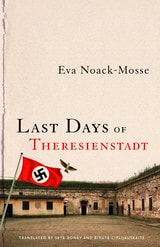
Last Days of Theresienstadt
Eva Noack-Mosse; Translated by Skye Doney and Biruté Ciplijauskaité
University of Wisconsin Press, 2018
Noack-Mosse's aim in documenting the horrors of daily life within Theresienstadt was to ensure that such a catastrophe could never be repeated. She also gathered from surviving inmates information about earlier events within the walled fortress, witnessed the defeat and departure of the Nazis, saw the arrival of the International Red Cross and the Soviet Army takeover of the camp and town, assisted in administration of the camp's closure, and aided displaced persons in discovering the fates of their family and friends. After the war ended, and she returned home, Noack-Mosse cross-referenced her data with that of others to provide evidence of Nazi crimes. At least 35,000 people died at Theresienstadt and another 90,000 were sent on to death camps.
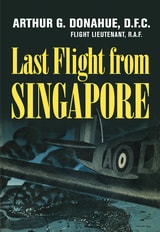
Last Flight from Singapore
Arthur G. Donahue
Westholme Publishing, 2014
In Last Flight from Singapore, Donahue tells his dramatic story, accompanied by photographs he took himself, of the intense and futile battle against the Japanese for control of the gateway to the Malay Peninsula. He continues his story through his convalescence to his return to England, where he once again began patrols over Europe. The manuscript for Last Flight from Singapore was found among his effects after he did not return from a patrol in 1942 and was presumed lost.

Last Gangster in Austin
Frank Smith, Ronnie Earle, and the End of a Junkyard MafiaJesse Sublett
University of Texas Press, 2021
Ronnie Earle was a Texas legend. During his three decades as the district attorney responsible for Austin and surrounding Travis County, he prosecuted corrupt corporate executives and state officials, including the notorious US congressman Tom DeLay. But Earle maintained that the biggest case of his career was the one involving Frank Hughey Smith, the ex-convict millionaire, alleged criminal mastermind, and Dixie Mafia figure.
With the help of corrupt local authorities, Smith spent the 1970s building a criminal empire in auto salvage and bail bonds. But there was one problem: a rival in the salvage business threatened his dominance. Smith hired arsonists to destroy the rival; when they botched the job, he sent three gunmen, but the robbery they planned was a bloody fiasco. Investigators were convinced that Smith was guilty, but many were skeptical that the newly elected and inexperienced Earle could get a conviction. Amid the courtroom drama and underworld plots the book describes, Willie Nelson makes a cameo. So do the private eyes, hired guns, and madams who kept Austin not only weird but also riddled with vice. An extraordinary true story, Last Gangster in Austin paints an unusual picture of the Texas capital as a place that was wild, wonderful, and as crooked as the dirt road to paradise.

Last Great Wilderness
The Campaign to Establish the Arctic National Wildlife RefugeRoger Kaye
University of Alaska Press, 2006
Last Great Wilderness chronicles their fight and that of their compatriots, tracing the transformation of this little-known expanse of mountains, forest, and tundra into a symbolic landscape embodying the ideals and aspirations that led to passage of the Wilderness Act in 1964.
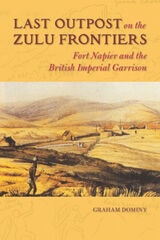
Last Outpost on the Zulu Frontiers
Fort Napier and the British Imperial GarrisonGraham Dominy
University of Illinois Press, 2016
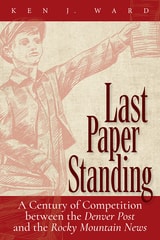
Last Paper Standing
A Century of Competition between the Denver Post and the Rocky Mountain NewsKen J. Ward
University Press of Colorado, 2023
This frequently sensational, sometimes outlandish, and occasionally bloody battle spanned numerous eras of journalism, embodying the rise and fall of the newspaper industry during the twentieth century in the lead up to the fall of American newspapering. Drawing on manuscript collections scattered across the United States as well as oral histories with executives, managers, and journalists from the papers, Ken J. Ward investigates the strategies employed in their competition with one another and against other challenges, such as widespread economic uncertainty and the deterioration of the newspaper industry. He follows this competition through the death of the Rocky Mountain News in 2009, which ended the country’s last great newspaper war and marked the close of the golden age of Denver journalism.
Fake news runs rampant in the absence of high-quality news sources like the News and the Post of the past. Neither canonizing nor vilifying key characters, Last Paper Standing offers insight into the historical context that led these papers’ managers to their changing strategies over time. It is of interest to media and business historians, as well as anyone interested in the general history of journalism, Denver, and Colorado.
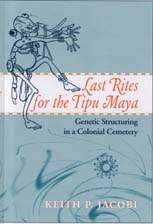
Last Rites for the Tipu Maya
Genetic Structuring in a Colonial CemeteryKeith Jacobi
University of Alabama Press, 2000
Jacobi's groundbreaking osteology study uncovers the history of the Tipu Maya of Belize and their subsequent contact with the Spanish conquistadores and missionaries.
Two cultures collided at Tipu, Belize, in the 1600s: that of the native Maya and that of the Spanish missionaries, who arrived with an agenda of religious subjugation and, ultimately, political control. Combining historical documentation with the results of an archaeological exploration of a Tipu cemetery, Keith Jacobi provides an account of the meshing of these two cultures and the assimilation of Catholic practices by the Tipu.
In particular, Jacobi focuses on the dental remains recovered at this site. A tooth may be the last tangible evidence of a living creature, so teeth can reveal information about an individual's health, diet, cosmetic alteration, trauma, and genetic structure. From the genetic structure the researcher can learn information about an individual's relationship to others in a particular population and between populations.
Jacobi's research reveals how these European and Spanish Catholic practices were assimilated by the Tipu Maya and enables the first description of the prevalent attitudes toward death and burial customs. Through this study of Tipu Maya dentition changes through time, Jacobi sheds light on Spanish intermarriage, Maya familial relationships, and the Tipu genetic affinity with other prehistoric, historic, and modern Maya.
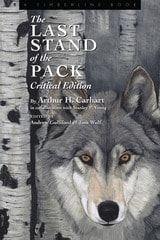
Last Stand of the Pack
Critical EditionAndrew Gulliford
University Press of Colorado, 2017
This critical edition explores the past and future of wolves in Colorado. Originally published in 1929, The Last Stand of the Pack is a historical account of the extermination of what were then believed to be the last wolves in Colorado. Arthur H. Carhart and Stanley P. Young describe the wolves’ extermination and extoll the bravery of the federal trappers hunting them down while simultaneously characterizing the wolves as cunning individuals and noble adversaries to the growth of the livestock industry and the settlement of the West. This is nature writing at its best, even if the worldview expressed is at times jarring to the twenty-first-century reader.
Now, almost 100 years later, much has been learned about ecology and the role of top-tier predators within ecosystems. In this new edition, Carhart and Young’s original text is accompanied by an extensive introduction with biographical details on Arthur Carhart and an overview of the history of wolf eradication in the west; chapters by prominent wildlife biologists, environmentalists, wolf reintroduction activists, and ranchers Tom Compton, Bonnie Brown, Mike Phillips, Norman A. Bishop, and Cheney Gardner; and an epilogue considering current issues surrounding the reintroduction of wolves in Colorado. Presenting a balanced perspective, these additional chapters address views both in support of and opposed to wolf reintroduction.
Coloradans are deeply interested in wilderness and the debate surrounding wolf reintroduction, but for wolves to have a future in Colorado we must first understand the past. The Last Stand of the Pack: Critical Edition presents both important historical scholarship and contemporary ecological ideas, offering a complete picture of the impact of wolves in Colorado.
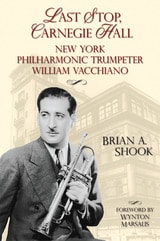
Last Stop, Carnegie Hall
New York Philharmonic Trumpeter William VacchianoBrian A. Shook
University of North Texas Press, 2011
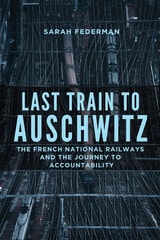
Last Train to Auschwitz
The French National Railways and the Journey to AccountabilitySarah Federman
University of Wisconsin Press, 2021
In the immediate decades after World War II, the French National Railways (SNCF) was celebrated for its acts of wartime heroism. However, recent debates and litigation have revealed the ways the SNCF worked as an accomplice to the Third Reich and was actively complicit in the deportation of 75,000 Jews and other civilians to death camps. Sarah Federman delves into the interconnected roles—perpetrator, victim, and hero—the company took on during the harrowing years of the Holocaust.
Grounded in history and case law, Last Train to Auschwitz traces the SNCF’s journey toward accountability in France and the United States, culminating in a multimillion-dollar settlement paid by the French government on behalf of the railways.The poignant and informative testimonies of survivors illuminate the long-term effects of the railroad’s impact on individuals, leading the company to make overdue amends. In a time when corporations are increasingly granted the same rights as people, Federman’s detailed account demonstrates the obligations businesses have to atone for aiding and abetting governments in committing atrocities. This volume highlights the necessity of corporate integrity and will be essential reading for those called to engage in the difficult work of responding to past harms.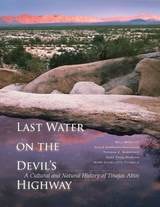
Last Water on the Devil's Highway
A Cultural and Natural History of Tinajas AltasBill Broyles, Gayle Harrison Hartmann, Thomas E. Sheridan, Gary Paul Nabhan, and Mary Charlotte Thurtle
University of Arizona Press, 2013
Now an expert cast of authors describes, narrates, and explains the human and natural history of this special place in a thorough and readable account. Addressing the latest archaeological and historical findings, they reveal why Tinajas Altas was so important and how it related to other waterholes in the arid borderlands. Readers can feel like pioneers, following in the footsteps of early Native Americans, Spanish priests and soldiers, gold seekers and borderland explorers, tourists, and scholars.
Combining authoritative writing with a rich array of more than 180 illustrations and maps as well as detailed appendixes providing up-to-date information on the wildlife and plants that live in the area, Last Water on the Devil’s Highway allows readers to uncover the secrets of this fascinating place, revealing why it still attracts intrepid tourists and campers today.
Last Words of the Executed
Robert K. Elder
University of Chicago Press, 2010
Some beg for forgiveness. Others claim innocence. At least three cheer for their favorite football teams.
Death waits for us all, but only those sentenced to death know the day and the hour—and only they can be sure that their last words will be recorded for posterity. Last Words of the Executed presents an oral history of American capital punishment, as heard from the gallows, the chair, and the gurney.
The product of seven years of extensive research by journalist Robert K. Elder, the book explores the cultural value of these final statements and asks what we can learn from them. We hear from both the famous—such as Nathan Hale, Joe Hill, Ted Bundy, and John Brown—and the forgotten, and their words give us unprecedented glimpses into their lives, their crimes, and the world they inhabited. Organized by era and method of execution, these final statements range from heartfelt to horrific. Some are calls for peace or cries against injustice; others are accepting, confessional, or consoling; still others are venomous, rage-fueled diatribes. Even the chills evoked by some of these last words are brought on in part by the shared humanity we can’t ignore, their reminder that we all come to the same end, regardless of how we arrive there.
Last Words of the Executed is not a political book. Rather, Elder simply asks readers to listen closely to these voices that echo history. The result is a riveting, moving testament from the darkest corners of society.
Last Works
Moses Mendelssohn. Translated by Bruce Rosenstock
University of Illinois Press, 2012
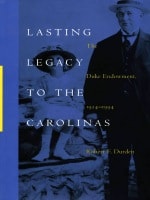
Lasting Legacy to the Carolinas
The Duke Endowment, 1924–1994Robert F. Durden
Duke University Press, 1998
In this volume, Robert F. Durden explores how the propriety of linking together a tax-free foundation and an investor-owned, profit-seeking business like the Duke Power Company has significantly changed over the course of the century. Explaining the implications of the Tax Reform Act of 1969 for J. B. Duke’s dream, Durden shows how the philanthropist’s plan to have the Duke Endowment virtually own and ultimately control Duke Power (which, in turn, would supply most of the Endowment’s income) dissolved after the death of daughter Doris Duke in 1993, when the trustees of the Endowment finally had the unanimous votes needed to sever that tie. Although the Endowment’s philanthropic projects—higher education (including Duke University), hospitals and health care, orphan and child care in both North and South Carolina, and the rural Methodist church in North Carolina—continue to be served, this study explains the impact of a century of political and social change on one man’s innovative charitable intentions. It is also a testimony to the many staff members and trustees who have invested their own time and creative energies into further benefiting these causes, despite decades of inevitable challenges to the Endowment.
This third volume of Durden’s trilogy relating to the Dukes of Durham will inform not only those interested in the continuing legacy of this remarkable family but also those involved with philanthropic boards, charitable endowments, medical care, child-care institutions, the rural church, and higher education.
Late Enlightenment
Emergence of the Modern 'National Idea'Marius Turda
Central European University Press, 2006
Late Holocene Research on Foragers and Farmers in the Desert West
Barbara J. Roth and Maxine E. McBrinn
University of Utah Press, 2015
Three main themes link these papers: the role of the environment in shaping prehistoric behavior, flexibility in foraging and farming adaptations, and diversity in settlement strategies. Contributors cover a range of topics including the varied ways hunter-gatherers adapted to arid environments, the transition from hunting and gathering to farming and the reasons for it, the variation in early farmers across the Southwest and Great Basin, and the differing paths followed as they developed settled villages.
Late Intermediate Occupation at Cerro Azul, Perú, A Preliminary Report
Joyce Marcus
University of Michigan Press, 1987
Late Pleistocene Geochronology and the Paleo-Indian Penetration into the Lower Michigan Peninsula
Ronald J. Mason
University of Michigan Press, 1958
Late Prehistoric Bison Procurement in Southeastern New Mexico
The 1977 Season at the Garnsey SiteJohn D. Speth and William J. Parry
University of Michigan Press, 1978
Late Prehistoric Bison Procurement in Southeastern New Mexico
The 1978 Season at the Garnsey Site (LA-18399)John D. Speth and William J. Parry
University of Michigan Press, 1980
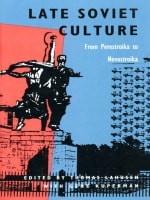
Late Soviet Culture from Perestroika to Novostroika
Thomas Lahusen, with Gene Kuperman, ed.
Duke University Press, 1993
Leading scholars from the former Soviet Union and the West gather here to consider the fate of the people and institutions that constituted Soviet culture. Whether the speculative glance goes back (to czarist Russia or Soviet Freudianism, to the history of aesthetics or the sociology of cinema in the 1930s) or forward (to the "market Stalinism" one writer predicts or the "open text of history" another advocates), a sense of immediacy, or history-in-the-making animates this volume. Will social and cultural institutions now develop organically, the authors ask, or is the society faced with the prospect of even more radical reforms? Does the present rupture mark the real moment of Russia's encounter with modernity? The options explored by literary historians, film scholars, novelists, and political scientists make this book a heady tour of cultural possibilities. An expanded version of a special issue of South Atlantic Quarterly (Spring 1991), with seven new essays, Late Soviet Culture will stimulate scholar and general reader alike.
Contributors. Katerina Clark, Paul Debreczeny, Evgeny Dobrenko, Mikhail Epstein, Renata Galtseva, Helena Goscilo, Michael Holquist, Boris Kagarlitsky, Mikhail Kuraev, Thomas Lahusen, Valery Leibin, Sidney Monas, Valery Podoroga, Donald Raleigh, Irina Rodnyanskaya, Maya Turovskaya
Late Woodland Cultures of Southeastern Michigan
James E. Fitting
University of Michigan Press, 1965
Latent Destinies
Cultural Paranoia and Contemporary U.S. NarrativePatrick O Donnell
Duke University Press, 2000
O’Donnell argues that paranoia on the broadly cultural level is essentially a narrative process in which history and postmodern identity are negotiated simultaneously. The result is an erasure of historical temporality—the past and future become the all-consuming, self-aware present. To explain and exemplify this, O’Donnell looks at such books and films as Libra, JFK, The Crying of Lot 49, The Truman Show, Reservoir Dogs, Empire of the Senseless, Oswald’s Tale, The Executioner’s Song, Underworld, The Killer Inside Me, and Groundhog Day. Organized around the topics of nationalism, gender, criminality, and construction of history, Latent Destinies establishes cultural paranoia as consonant with our contradictory need for multiplicity and certainty, for openness and secrecy, and for mobility and historical stability.
Demonstrating how imaginative works of novels and films can be used to understand the postmodern historical condition, this book will interest students and scholars of American literature and cultural studies, postmodern theory, and film studies.
Latent Memory
Human Rights and Jewish Identity in ChileMaxine Lowy
University of Wisconsin Press, 2022
Maxine Lowy draws upon hundreds of first-person testimonials and archival resources to explore Chilean Jewish identity in the wake of Pinochet's coup, exposing the complex and sometimes contradictory development of collective traumatic memory and political sensibilities in an oppressive new context. Latent Memory points to processes of community gestures of moral reparation and signals the pathways to justice and healing associated with Shoah and the Jewish experience. Lowy asks how individuals and institutions may overcome fear, indifference, and convenience to take a stand even under intense political duress, posing questions applicable to any nation emerging from state repression.
Latin America and the Transports of Opera
Fragments of a Transatlantic DiscourseRoberto Ignacio Díaz
Vanderbilt University Press, 2023
Latin America and the Transports of Opera studies a series of episodes in the historical and textual convergence of a hallowed art form and a part of the world often regarded as peripheral. Perhaps unexpectedly, the archives of opera generate new arguments about several issues at the heart of the established discussion about Latin America: the allure of European cultural models; the ambivalence of exoticism; the claims of nationalism and cosmopolitanism; and, ultimately, the place of the region in the global circulation of the arts. Opera’s transports concern literal and imagined journeys as well as the emotions that its stories and sounds trigger as they travel back and forth between Europe—the United States, too—and Latin America.
Focusing mostly on librettos and other literary forms, this book analyzes Calderón de la Barca’s baroque play on the myth of Venus and Adonis, set to music by a Spanish composer at Lima’s viceregal court; Alejo Carpentier’s neobaroque novella on Vivaldi’s opera about Moctezuma; the entanglements of opera with class, gender, and ethnicity throughout Cuban history; music dramas about enslaved persons by Carlos Gomes and Hans Werner Henze, staged in Rio de Janeiro and Copenhagen; the uses of Latin American poetry and magical realism in works by John Adams and Daniel Catán; and a novel by Manuel Mujica Lainez set in Buenos Aires’s Teatro Colón, plus a chamber opera about Victoria Ocampo with a libretto by Beatriz Sarlo. Close readings of these texts underscore the import and meanings of opera in Latin American cultural history.
This book is the recipient of the 2024 Norman L. and Roselea J. Goldberg Prize from Vanderbilt University Press for the best book in the area of art or medicine.
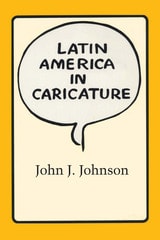
Latin America in Caricature
By John J. Johnson
University of Texas Press, 1993
“Not many readers will thank the author as he deserves, for he has told us more about ourselves than we perhaps wish to know,” predicted Latin America in Books of Latin America in Caricature—an exploration of more than one hundred years of hemispheric relations through political cartoons collected from leading U.S. periodicals from the 1860s through 1980.
The cartoons are grouped according to recurring themes in diplomacy and complementing visual imagery. Each one is accompanied by a lengthy explanation of the incident portrayed, relating the drawing to public opinion of the day. Johnson’s thoughtful introduction and the comments that precede the individual chapters provide essential background for understanding U.S. attitudes and policies toward Latin America.
Latin America in the 21st Century
Challenges and SolutionsEdited by Gregory Knapp
University of Texas Press, 2002
This book showcases the achievements of geographers in helping understand and solve major problems facing Latin America. Chapters cover a variety of topics from conservation to transportation to gender. Each chapter is written by an expert in the geography of Latin America. The chapters include case studies of recent problems or issues in Latin America and provide examples of geographic research that has helped illuminate or solve these problems.
Latin America
The Allure and Power of an IdeaMauricio Tenorio-Trillo
University of Chicago Press, 2017
Tenorio-Trillo builds the book on three interlocking steps: first, an intellectual history of the concept of Latin America in its natural historical habitat—mid-nineteenth-century redefinitions of empire and the cultural, political, and economic intellectualism; second, a serious and uncompromising critique of the current “Latin Americanism”—which circulates in United States–based humanities and social sciences; and, third, accepting that we might actually be stuck with “Latin America,” Tenorio-Trillo charts a path forward for the writing and teaching of Latin American history. Accessible and forceful, rich in historical research and specificity, the book offers a distinctive, conceptual history of Latin America and its many connections and intersections of political and intellectual significance. Tenorio-Trillo’s book is a masterpiece of interdisciplinary scholarship.
Latin American History
A Teaching AtlasCathryn L. Lombardi
University of Wisconsin Press, 1983
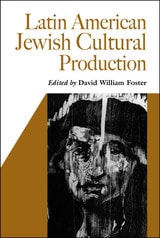
Latin American Jewish Cultural Production
David William Foster
Vanderbilt University Press, 2008
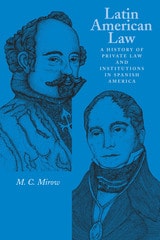
Latin American Law
A History of Private Law and Institutions in Spanish AmericaBy M. C. Mirow
University of Texas Press, 2004
Private law touches every aspect of people's daily lives—landholding, inheritance, private property, marriage and family relations, contracts, employment, and business dealings—and the court records and legal documents produced under private law are a rich source of information for anyone researching social, political, economic, or environmental history. But to utilize these records fully, researchers need a fundamental understanding of how private law and legal institutions functioned in the place and time period under study.
This book offers the first comprehensive introduction in either English or Spanish to private law in Spanish Latin America from the colonial period to the present. M. C. Mirow organizes the book into three substantial sections that describe private law and legal institutions in the colonial period, the independence era and nineteenth century, and the twentieth century. Each section begins with an introduction to the nature and function of private law during the period and discusses such topics as legal education and lawyers, legal sources, courts, land, inheritance, commercial law, family law, and personal status. Each section also presents themes of special interest during its respective time period, including slavery, Indian status, codification, land reform, and development and globalization.
Latin American Literature at the Millennium
Local Lives, Global SpacesCecily Raynor
Bucknell University Press, 2021
Latin American Neostructuralism
The Contradictions of Post-Neoliberal DevelopmentFernando Ignacio Leiva
University of Minnesota Press, 2008
Interrogates this ascending political and economic paradigm
This landmark work is the first sustained critique of Latin American neostructuralism, the prevailing narrative that has sought to replace “market fundamentalism” and humanize the “savage capitalism” imposed by neoliberal dogmatism. Fernando Leiva analyzes neostructuralism and questions its credibility as the answer to the region’s economic, political, and social woes.
Recent electoral victories by progressive governments in Latin America promising economic growth, social equity, and political democracy raise a number of urgent questions, including: What are the key strengths and weaknesses of the emerging paradigm? What kinds of transformations can this movement enact? Leiva addresses these issues and argues that the power relations embedded in local institutions, culture, and populations must be recognized when building alternatives to the present order. Considering the governments in countries such as Chile, Argentina, and Brazil, Leiva examines neostructuralism’s impact on global politics and challenges whether this paradigm constitutes a genuine alternative to neoliberalism or is, rather, a more sophisticated form of consolidating existing systems.
Latin American Textualities
History, Materiality, and Digital MediaEdited by Heather J. Allen and Andrew R. Reynolds
University of Arizona Press, 2018
Latin American Textualities is a wide-ranging, interdisciplinary look at textual history, textual artifacts, and digital textualities across Latin America from the colonial era to the present. Editors Heather J. Allen and Andrew R. Reynolds gather a wide range of scholars to investigate the region’s textual scholarship. Contributors offer engaging examples of not just artifacts but also the contexts in which the texts are used. Topics include Guamán Poma’s library, the effect of sound recordings on writing in Argentina, Sudamericana Publishing House’s contribution to the Latin American literary boom, and Argentine science fiction. Latin American Textualities provides new paths to reading Latin American history, culture, and literatures.
Contributors:
Heather J. Allen
Catalina Andrango-Walker
Sam Carter
Sara Castro-Klarén
Edward King
Rebecca Kosick
Silvia Kurlat Ares
Walther Maradiegue
Clayton McCarl
José Enrique Navarro
Andrew R. Reynolds
George Antony Thomas
Zac Zimmer
Latin American Women and the Search for Social Justice
Francesca Miller
University Press of New England, 1991