Results by title
1038 books match the query 'Economic conditions' and 68 start with m
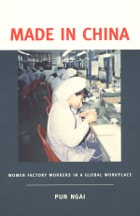
Made in China
Women Factory Workers in a Global WorkplacePun Ngai
Duke University Press, 2005
Pun Ngai conducted ethnographic work at an electronics factory in southern China’s Guangdong province, in the Shenzhen special economic zone where foreign-owned factories are proliferating. For eight months she slept in the employee dormitories and worked on the shop floor alongside the women whose lives she chronicles. Pun illuminates the workers’ perspectives and experiences, describing the lure of consumer desire and especially the minutiae of factory life. She looks at acts of resistance and transgression in the workplace, positing that the chronic pains—such as backaches and headaches—that many of the women experience are as indicative of resistance to oppressive working conditions as they are of defeat. Pun suggests that a silent social revolution is underway in China and that these young migrant workers are its agents.
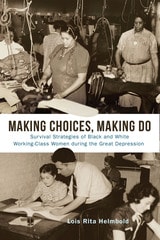
Making Choices, Making Do
Survival Strategies of Black and White Working-Class Women during the Great DepressionLois Rita Helmbold
Rutgers University Press, 2023
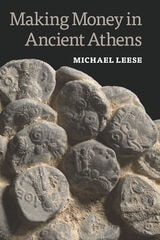
Making Money in Ancient Athens
Michael Leese
University of Michigan Press, 2021
Given their cultural, intellectual, and scientific achievements, surely the Greeks were able to approach their economic affairs in a rational manner like modern individuals? Since the nineteenth century, many scholars have argued that premodern people did not behave like modern businesspeople, and that the “stagnation” that characterized the economy prior to the Industrial Revolution can be explained by a prevailing noneconomic mentality throughout premodern (and nonwestern) societies. This view, which simultaneously extols the “sophistication” of the modern West, relegates all other civilizations to the status of economic backwardness.
But the evidence from ancient Athens, which is one of the best-documented societies in the premodern world, tells a very different story: one of progress, innovation, and rational economic strategies. Making Money in Ancient Athens examines in the most comprehensive manner possible the voluminous source material that has survived from Athens in inscriptions, private lawsuit speeches, and the works of philosophers like Aristotle and Plato. Inheritance cases that detail estate composition and investment choices, and maritime trade deals gone wrong, provide unparalleled glimpses into the specific factors that influenced Athenians at the level of the economic decision-making process itself, and the motivations that guided the specific economic transactions attested in the source material. Armed with some of the most thoroughly documented case studies and the richest variety of source material from the ancient Greek world, Michael Leese argues that the evidence overwhelmingly demonstrates that ancient Athenians achieved the type of long-term profit and wealth maximization and continuous reinvestment of profits into additional productive enterprise that have been argued as unique to (and therefore responsible for) the modern industrial-capitalist system.
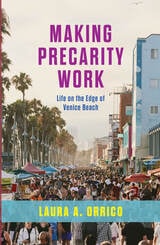
Making Precarity Work
Life on the Edge of Venice BeachLaura A. Orrico
University of Chicago Press, 2025
In Making Precarity Work, sociologist Laura A. Orrico shows how Los Angeles’s Venice Beach boardwalk, which is a magnet for tourists, is also a workplace, one that wouldn’t exist without the motley crew of people selling art, drinking, performing, using drugs, and working odd jobs who gather daily to engage in varied activities, from selling crafts to minding each other’s wares and asking for spare change.
Throughout the book, Orrico lifts up this workplace as a collective accomplishment, demonstrating how it can be a safety net to manage insecurity and inequality for those opting into its flexible and precarious structure, as well as how the LA government’s efforts to stabilize this work often disrupt the success of this collaborative and creative ecosystem. She also presents the ways this work can exacerbate those very inequalities. Sharing the personal stories of boardwalk workers, Orrico considers these juxtaposed realities and asks her audience to question how we can and should respond to a society whose best option for the disadvantaged is precarity.

Making Their Own Way
Southern Blacks' Migration to Pittsburgh, 1916-30Peter Gottlieb
University of Illinois Press, 1987
on that momentous movement historians know as the Great Migration. Peter
Gottlieb shatters the received portrait of southern migrants as bewildered,
premodern folk, 'utterly unprepared' for the complexities of urban life.
African Americans in his account emerge as complex, creative agents, exploiting
old solidarities and building new ones, transforming the urban landscape
even as it transformed them." -- James Campbell, Northwestern University
"Engagingly written and well organized. . . . A major addition to
the fields of Afro-American, urban, and working-class history." --
Howard N. Rabinowitz, Georgia Historical Quarterly
"Gottlieb uses oral histories, corporate records, and primary and
secondary scholarship to present a useful picture of an important part
of the Great Migration that followed World War I." -- George Lipsitz,
Choice
"Sensitive and yet also incisive. . . . clear and often compelling.
An outstanding study." -- James R. Barrett, Journal of American
Ethnic History
Publication of this work was supported in part by a grant from the
Andrew W. Mellon Foundation.

Making Up the Difference
Women, Beauty, and Direct Selling in EcuadorBy Erynn Masi de Casanova
University of Texas Press, 2011
Globalization and economic restructuring have decimated formal jobs in developing countries, pushing many women into informal employment such as direct selling of cosmetics, perfume, and other personal care products as a way to "make up the difference" between household income and expenses. In Ecuador, with its persistent economic crisis and few opportunities for financially and personally rewarding work, women increasingly choose direct selling as a way to earn income by activating their social networks. While few women earn the cars and trips that are iconic prizes in the direct selling organization, many use direct selling as part of a set of household survival strategies.
In this first in-depth study of a cosmetics direct selling organization in Latin America, Erynn Masi de Casanova explores women's identities as workers, including their juggling of paid work and domestic responsibilities, their ideas about professional appearance, and their strategies for collecting money from customers. Focusing on women who work for the country's leading direct selling organization, she offers fascinating portraits of the everyday lives of women selling personal care products in Ecuador's largest city, Guayaquil. Addressing gender relations (including a look at men's direct and indirect involvement), the importance of image, and the social and economic context of direct selling, Casanova challenges assumptions that this kind of flexible employment resolves women's work/home conflicts and offers an important new perspective on women's work in developing countries.
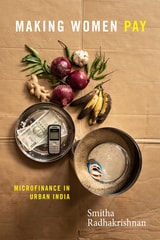
Making Women Pay
Microfinance in Urban IndiaSmitha Radhakrishnan
Duke University Press, 2022
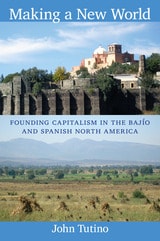
Making a New World
Founding Capitalism in the Bajío and Spanish North AmericaJohn Tutino
Duke University Press, 2011
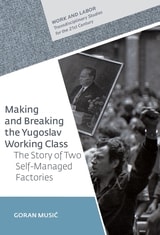
Making and Breaking the Yugoslav Working Class
The Story of Two Self-Managed FactoriesGoran Music
Central European University Press, 2021
Workers' self-management was one of the unique features of communist Yugoslavia. Goran Musić has investigated the changing ways in which blue-collar workers perceived the recurring crises of the regime. Two self-managed metal enterprises, one in Serbia another in Slovenia, provide the frame of the analysis in the time span between 1945 and 1989. These two factories became famous for strikes in 1988 that evoked echoes in popular discourses in former Yugoslavia. Drawing on interviews, factory publications and other media, local archives, and secondary literature, Musić analyzes the two cases, going beyond the clichés of political manipulation from the top and workers' intrinsic attraction to nationalism.
The author explains how, in the later phase of communist Yugoslavia, growing social inequalities among the workers and undemocratic practices inside the self-managed enterprises facilitated the spread of a nationalist and pro-market ideology on the shop floors. Yet rather than being a mass taken advantage of by populist leaders, the working class Musić presents is one with agency and voice, a force that played an important role in shaping the fate of the country. The book thus seeks to open a debate on the social processes leading up to the dissolution of Yugoslavia.
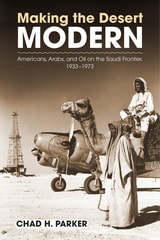
Making the Desert Modern
Americans, Arabs, and Oil on the Saudi Frontier, 1933–1973Chad Parker
University of Massachusetts Press, 2015
In 1933 American oilmen representing what later became the Arabian American Oil Company (Aramco) signed a concession agreement with the Saudi Arabian king granting the company sole proprietorship over the oil reserves in the country's largest province. As drilling commenced and wells proliferated, Aramco soon became a major presence in the region. In this book Chad H. Parker tells Aramco's story, showing how an American company seeking resources and profits not only contributed to Saudi “nation building” but helped define U.S. foreign policy during the early Cold War.
In the years following World War II, as Aramco expanded its role in Saudi Arabia, the idea of “modernization” emerged as a central component of American foreign policy toward newly independent states. Although the company engaged in practices supportive of U.S. goals, its own modernizing efforts tended to be pragmatic rather than policy-driven, more consistent with furthering its business interests than with validating abstract theories. Aramco built the infrastructure necessary to extract oil and also carved an American suburb out of the Arabian desert, with all the air-conditioned comforts of Western modern life. At the same time, executives cultivated powerful relationships with Saudi government officials and, to the annoyance of U.S. officials, even served the monarchy in diplomatic disputes. Before long the company became the principal American diplomatic, political, and cultural agent in the country, a role it would continue to play until 1973, when the Saudi government took over its operation.
Managing "Modernity"
Work, Community, and Authority in Late-Industrializing Japan and RussiaRudra Sil
University of Michigan Press, 2002
Managing "Modernity" engages a variety of intellectual perspectives in the social sciences. The theoretical approach represents a conscious effort to overcome the contentious debates in political science and sociology among proponents of historical institutionalism, cultural analysis, and rational-choice theory. The substantive argument draws on, and partially integrates, concepts and findings from comparative politics, economic sociology, industrial relations, organization theory, business management, and the political economy of Japan and Russia.
In light of ongoing debates over the significance and impact of "globalization," the eclectic and integrative approach in Managing "Modernity" offers a fresh and provocative contribution that will interest scholars and graduate students across a variety of disciplines and subfields. It offers compelling insights to anyone generally concerned with the social forces that facilitate or hinder the diffusion of ideas and institutions across national boundaries.
Rudra Sil is Janice and Julian Bers Assistant Professor in the Social Sciences, Department of Political Science, University of Pennsylvania.
Mapping Abundance for a Planetary Future
Kanaka Maoli and Critical Settler Cartographies in Hawai'iCandace Fujikane
Duke University Press, 2021
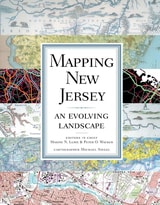
Mapping New Jersey
An Evolving LandscapeMaxine N. Lurie (Editor in Chief), and Peter O. Wacker (Editor in Chief), Michael Siegel (Cartographer)
Rutgers University Press, 2009
Tracing the changes in environment, land use patterns, demography, transportation, economy, and politics over the course of many centuries, Mapping New Jerseyilluminates the state's transformation from a simple agricultural society to a post-industrial and culturally diverse place inhabited by more people per acre than anywhere else in the country.
An innovator in transportation, from railroads to traffic circles to aviation, New Jersey from its beginnings was a "corridor" state, with a dense Native American trail system once crisscrossed on foot, country roads traveled by armies of the American Revolution, and, lately, the rolling wheels of many sedans, SUVs, hybrids, public and commercial vehicles, and freight. Early to industrialize, it also served as the headquarters for Thomas Edison and the development of the modern American economy. Small in territory and crowded with people, the state works to recycle garbage and, at the same time, best utilize and preserve its land.
New Jersey has been depicted in useful and quite stunning historical maps, many of the best included in Mapping New Jerseyùcrude maps drawn by sixteenth-century navigators; complex and beautifully decorated pieces created by early Dutch cartographers; land maps plotted by seventeenth-century English settlement surveyors; examples of the nineteenth century's scientific revolution in map making that helped locate topography and important mineral resources; detailed insurance maps that correct London map maker William Faden's 1777-78 classic rendering of the state; and aerial photos, remote sensing, and global positioning system maps generated through twenty-first-century technology breakthroughs in cartography.
Integrating new maps, graphs, and diagrams unavailable through ordinary research or Internet searches, Mapping New Jersey is divided into six topical chapters, each accompanied by an introduction and overview telling the story of the state's past and detailing its diversity. Mapping New Jersey, dramatically bold and in full color, travels where New Jersey has gone and the rest of the nation is likely to follow.
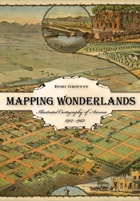
Mapping Wonderlands
Illustrated Cartography of Arizona, 1912–1962Dori Griffin
University of Arizona Press, 2013
Mapping Wonderlands fills part of this gap in existing regional studies by looking at early popular pictorial maps of Arizona. These cartographic representations of the state utilize formal mapmaking conventions to create a place-based state history. They introduce illustrations, unique naming conventions, and written narratives to create carefully visualized landscapes that emphasize the touristic aspects of Arizona.
Analyzing the visual culture of tourism in illuminating detail, this book documents how Arizona came to be identified as an appealing tourism destination. Providing a historically situated analysis, Dori Griffin draws on samples from a comprehensive collection of materials generated to promote tourism during Arizona’s first half-century of statehood. She investigates the relationship between natural and constructed landscapes, visual culture, and narratives of place. Featuring sixty-six examples of these aesthetically appealing maps, the book details how such maps offered tourists and other users a cohesive and storied image of the state. Using historical documentation and rhetorical analysis, this book combines visual design and historical narrative to reveal how early-twentieth-century mapmakers and map users collaborated to imagine Arizona as a tourist’s paradise.
Marginal Gains
Monetary Transactions in Atlantic AfricaJane I. Guyer
University of Chicago Press, 2004
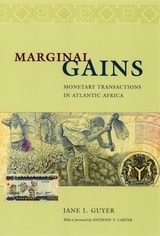
The answer is a rich diversity of economic practices responsive to both local and global circumstances. In Marginal Gains, Jane I. Guyer explores and explains these often bewildering practices, including trade with coastal capitalism and across indigenous currency zones, and within the modern popular economy. Drawing on a wide range of evidence, Guyer demonstrates that the region shares a coherent, if loosely knit, commercial culture. She shows how that culture actually works in daily practice, addressing both its differing scales of value and the many settings in which it operates, from crisis conditions to ordinary household budgets. The result is a landmark study that reveals not just how popular economic systems work in Africa, but possibly elsewhere in the Third World.

Market Day in Provence
Michèle de La Pradelle
University of Chicago Press, 2006
The renewal and celebration of the outdoor market culture in recent years, argues de La Pradelle, artfully masks a fierce commitment to modern-day free-market economics. Responding to consumer desire for an experience that recalls a time before impersonal supermarket chains and mass-produced products, buyers and sellers alike create an atmosphere built on various fictions. Vendors at the market at Carpentras, for example, oblige patrons by acting like lifelong acquaintances of those whom they’ve only just met as they dispense free samples and lively, witty banter. Likewise, going to the market to look for “freshness” becomes a way for the consumer to signify the product’s relation to nature—a denial of the workaday reality of growing melons under plastic sheets, then machine-sorting, crating, and transporting them.
Offering captivating descriptions of goods and the friendly and occasionally piquant exchanges between buyers and sellers, Market Day in Provence will be devoured by any reader with an interest in areas as diverse as food, ethnography, globalization, modernity, and French culture.
Market Dreams
Gender, Class, and Capitalism in the Czech RepublicElaine Weiner
University of Michigan Press, 2010
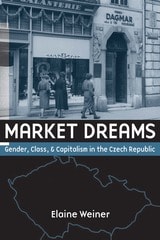
Drawing on a rich trove of focus group data, interviews, and textual sources, Elaine Weiner's Market Dreams powerfully captures the varied responses of female managers and factory workers in the Czech Republic to their country's transition from socialism to capitalism. Her work, rooted in sociology and comparative feminism, is an important advance for the literature on women in Eastern Europe.
"Market Dreams is a conceptually-sophisticated and empirically-rich account of how the discourses and practices of the free market penetrated the hearts and minds of everyday Czech citizens. Weiner's provocative analysis takes readers inside the worlds of female factory workers to expose the discontinuities between their radiant market dreams and their everyday realities--and juxtaposes them to the continuities experienced by female managers. In the process, it challenges many of our ideas about post/socialism, marketization, and gender and reveals the enduring power of stories in shaping social identities and actions."
---Lynne Haney, Associate Professor of Sociology, New York University
"Through interviews and a careful analysis of newspaper articles written in the first decade after the collapse of state socialism, Weiner explores the complicated interconnections between personal stories and the emerging neoliberal metanarrative of the free market in the Czech Republic after 1989. Her book transcends many of the dichotomies with which researchers of post-state socialism have been struggling: 'East' vs. 'West,' losers and winners, emancipation vs. oppression, etc., and thus makes a truly novel contribution to our understanding of women's lives after state socialism."
---Éva Fodor, Assistant Professor of Gender Studies, Central European University
"Weiner's rich and innovative study of female Czech managers and workers exemplifies the importance of narrative analysis for understanding why gender and class have not (yet) reconfigured the sense of postcommunism's alternatives. This is critical reading for feminists, class analysts, and students of postcommunist social change."
---Michael Kennedy, Director, Center for European Studies, University of Michigan
Elaine Weiner is Assistant Professor of Sociology at McGill University. Visit the author's website at: www.mcgill.ca/sociology/faculty/weiner/.
Cover Credit: Frank Scherschel/Time & Life Pictures/Getty Images

Markets and Cultural Voices
Liberty vs. Power in the Lives of Mexican Amate PaintersTyler Cowen
University of Michigan Press, 2005
Cowen examines this cultural interaction between Mexico and the United States to see how globalization shapes the lives and the work of the artists and their families. The story of these three artists reveals that this exchange simultaneously creates economic opportunities for the artists, but has detrimental effects on the village.
A view of the daily village life of three artists connected to the larger art world, this book should be of particular interest to those in the fields of cultural economics, Latino studies, economic anthropology and globalization.
Markets in Oaxaca
Edited by Scott Cook and Martin Diskin; foreword by Sidney W. Mintz
University of Texas Press, 1976
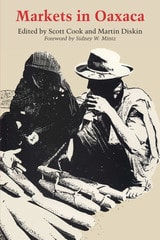
Markets in Oaxaca is a study of the regional peasant marketing system in the Valley of Oaxaca, Mexico. It relates the marketing system to other aspects of the regional economy, to neighboring regions, and to the Mexican national economy. Combining ethnographic, theoretical, and regional analyses, it suggests new directions in the fields of peasant and development studies.
Contributors to the volume describe the operation and nature of several marketplaces in the region, analyze village-based artisan production and various specialized economic roles (particularly the role of traders), and describe the operation of several total regional marketing systems. The editors then consider their findings against the background of political, economic, and social structures from the pre-Conquest period to the present. In their conclusion, the editors find the regional peasant economy to be responsive both to the influence of the urban metropolitan sector, on the one hand, and to its own indigenous structural integrity and internal dynamism, on the other.
In addition to the editors, the contributors to Markets in Oaxaca are Ralph L. Beals, Richard L. Berg Jr., Beverly Chiñas, Herbert M. Eder, Charlotte Stolmaker, Carole Turkenik, John C. Warner, Ronald Waterbury, and Cecil R. Welte. Their essays combine analyses of the elements of the system within a comprehensive theoretical framework. Together, they present a complete and integrated view of a peasant economy.
Markets of Civilization
Islam and Racial Capitalism in AlgeriaMuriam Haleh Davis
Duke University Press, 2022
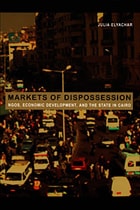
Markets of Dispossession
NGOs, Economic Development, and the State in CairoJulia Elyachar
Duke University Press, 2005
Julia Elyachar studied the efforts of bankers, social scientists, ngo members, development workers, and state officials to turn the craftsmen and unemployed youth of Cairo into the vanguard of a new market society based on microenterprise. She considers these efforts in relation to the alternative notions of economic success held by craftsmen in Cairo, in which short-term financial profit is not always highly valued. Through her careful ethnography of workshop life, Elyachar explains how the traditional market practices of craftsmen are among the most vibrant modes of market life in Egypt. Long condemned as backward, these existing market practices have been seized on by social scientists and development institutions as the raw materials for experiments in “free market” expansion. Elyachar argues that the new economic value accorded to the cultural resources and social networks of the poor has fueled a broader process leading to their economic, social, and cultural dispossession.
Marx Went Away--But Karl Stayed Behind
Caroline Humphrey
University of Michigan Press, 1999
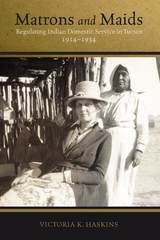
Matrons and Maids
Regulating Indian Domestic Service in Tucson, 1914–1934Victoria K. Haskins
University of Arizona Press, 2012
From 1914 to 1934 the US government sent Native American girls to work as domestic servants in the homes of white families. Matrons and Maids tells this forgotten history through the eyes of the women who facilitated their placements. During those two decades, “outing matrons” oversaw and managed the employment of young Indian women. In Tucson, Arizona, the matrons acted as intermediaries between the Indian and white communities and between the local Tucson community and the national administration, the Office of Indian Affairs.
Based on federal archival records, Matrons and Maids offers an original and detailed account of government practices and efforts to regulate American Indian women. Haskins demonstrates that the outing system was clearly about regulating cross-cultural interactions, and she highlights the roles played by white women in this history. As she compellingly argues, we cannot fully engage with cross-cultural histories without examining the complex involvement of white women as active, if ambivalent, agents of colonization.
Including stories of the entwined experiences of Indigenous and non-Indigenous women that range from the heart-warming to the heart-breaking, Matrons and Maids presents a unique perspective on the history of Indian policy and the significance of “women’s work.”
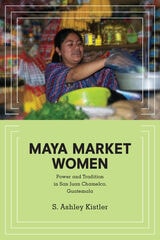
Maya Market Women
Power and Tradition in San Juan Chamelco, GuatemalaS. Ashley Kistler
University of Illinois Press, 2014
As cultural mediators, Chamelco's market women offer a model of contemporary Q'eqchi' identity grounded in the strength of the Maya historical legacy. Guatemala's Maya communities have faced nearly five hundred years of constant challenges to their culture, from colonial oppression to the instability of violent military dictatorships and the advent of new global technologies. In spite of this history, the people of San Juan Chamelco, Guatemala, have effectively resisted significant changes to their cultural identities. Chamelco residents embrace new technologies, ideas, and resources to strengthen their indigenous identities and maintain Maya practice in the 21st century, a resilience that sets Chamelco apart from other Maya towns.
Unlike the region's other indigenous women, Chamelco's Q'eqchi' market women achieve both prominence and visibility as vendors, dominating social domains from religion to local politics. These women honor their families' legacies through continuation of the inherited, high-status marketing trade. In Maya Market Women, S. Ashley Kistler describes how market women gain social standing as mediators of sometimes conflicting realities, harnessing the forces of global capitalism to revitalize Chamelco's indigenous identity. Working at the intersections of globalization, kinship, gender, and memory, Kistler presents a firsthand look at Maya markets as a domain in which the values of capitalism and indigenous communities meet.

Maya Saints and Souls in a Changing World
By John M. Watanabe
University of Texas Press, 1992
The Maya of Santiago Chimaltenango have experienced increasingly rapid, even violent, integration into Guatemalan society in the last fifty years, yet they still distinguish themselves ethnically from Spanish-speaking Guatemalans and other Maya. Why this sense of ethnic identity persists—and also changes—over time is the focus of Maya Saints and Souls in a Changing World, a beautifully written ethnography of a Mam-speaking Maya town in the western highlands of Guatemala.
John Watanabe uniquely explores how Chimaltecos themselves define their local distinctiveness. This approach uncovers significant continuities in lifeways and world view that might otherwise remain imperceptible to an outsider.
Another important feature of the study is that it updates Charles Wagley's pioneering research in the community during the 1930s. Watanabe identifies both the external, historical factors that have prompted change in the community since Wagley's time and the people's responses to these changes.
Mayas in the Marketplace
Tourism, Globalization, and Cultural IdentityBy Walter E. Little
University of Texas Press, 2004
2005 — Best Book Award – New England Council of Latin American Studies
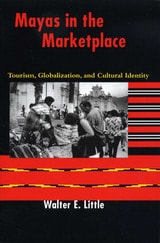
Selling handicrafts to tourists has brought the Maya peoples of Guatemala into the world market. Vendors from rural communities now offer their wares to more than 500,000 international tourists annually in the marketplaces of larger cities such as Antigua, Guatemala City, Panajachel, and Chichicastenango. Like businesspeople anywhere, Maya artisans analyze the desires and needs of their customers and shape their products to meet the demands of the market. But how has adapting to the global marketplace reciprocally shaped the identity and cultural practices of the Maya peoples?
Drawing on over a decade of fieldwork, Walter Little presents the first ethnographic study of Maya handicraft vendors in the international marketplace. Focusing on Kaqchikel Mayas who commute to Antigua to sell their goods, he explores three significant issues:
- how the tourist marketplace conflates global and local distinctions.
- how the marketplace becomes a border zone where national and international, developed and underdeveloped, and indigenous and non-indigenous come together.
- how marketing to tourists changes social roles, gender relationships, and ethnic identity in the vendors' home communities.
Little's wide-ranging research challenges our current understanding of tourism's negative impact on indigenous communities. He demonstrates that the Maya are maintaining a specific, community-based sense of Maya identity, even as they commodify their culture for tourist consumption in the world market.

Measuring America
How Economic Growth Came to Define American Greatness in the Late Twentieth CenturyAndrew L. Yarrow
University of Massachusetts Press, 2010
The United States has always fancied itself a nation apart—"exceptional" in its values, traditions, and way of life. For most of the country's history, ideas about what made America distinctive generally were framed in terms of a liberal idealism rooted in the thought of John Locke and articulated by Jefferson, Madison, and other Founders. While some commentators also observed that the United States was a land of plenty, it wasn't until the mid-twentieth century that material abundance emerged as the principal standard of American “greatness,” as measured by a host of new economic indicators.
Beginning in earnest in the wake of World War II, opinion-shapers in politics, business, academia, the media, the schools, and public diplomacy gloried in the nation's booming economy. Where “plenty” had once been a largely abstract concept, it was now quantifiable, thanks to new national income accounting and other economic data collection and analysis techniques. One could tally up production and consumption of an ever-expanding cornucopia of goods and services that made up the gross national product (GNP), the king of postwar statistics. American preeminence and American identity were increasingly linked with this measurable prosperity, presented in the language of a newly influential economics profession.
In Measuring America, Andrew L. Yarrow explores this history, telling two parallel, interlocking stories—of how economic ideas came to have vastly greater influence on American culture after World War II, and how those ideas dovetailed with a growing belief that the meaning and value of the United States resided in its material output. How and why this new way of “measuring America” developed, how it was expressed, and what it has meant and means for Americans today are the subject of this well-researched and insightful book.
Measuring Wealth and Financial Intermediation and Their Links to the Real Economy
Edited by Charles R. Hulten and Marshall B. Reinsdorf
University of Chicago Press, 2015
Measuring Wealth and Financial Intermediation and Their Links to the Real Economy identifies measurement problems associated with the financial crisis and improvements in measurement that may prevent future crises, taking account of the dynamism of the financial marketplace in which measures that once worked well become misleading. In addition to advances in measuring financial activity, the contributors also investigate the effects of the crisis on households and nonfinancial businesses. They show that households’ experiences varied greatly and some even experienced gains in wealth, while nonfinancial businesses’ lack of access to credit in the recession may have been a more important factor than the effects of policies stimulating demand.

Media and Dependency in South Africa
A Case Study of the Press and the Ciskei “Homeland”Les Switzer
Ohio University Press, 1985

Medieval Merchants and Money
Essays in Honour of James L. BoltonEdited by Matthew Davies
University of London Press, 2016
Mekong Delta
Ecology, Economy, and Revolution, 1860-1960Pierre Brocheux
University of Wisconsin Press, 1995

Meltdown Expected
Crisis, Disorder, and Upheaval at the end of the 1970sAaron J. Leonard
Rutgers University Press, 2024
Meltdown Expected tells the story of the power shifts from late 1978 through 1979 whose repercussions are still being felt. Iran’s revolution led to a hostage crisis while neighbouring Afghanistan became the site of a proxy war between the USSR and the US, who supplied aid to Islamic mujahideen fighters that would later form the Taliban. Meanwhile, as tragedies like the Jonestown mass suicide and the assassination of Harvey Milk captured the nation’s attention, the government quietly reasserted and expanded the FBI’s intelligence powers. Drawing from recently declassified government documents and covering everything from Three Mile Island to the rise of punk rock, Aaron J. Leonard paints a vivid portrait of a tumultuous yet pivotal time in American history.

Memories Of Underdevelopment
Chanan, Michael
Rutgers University Press, 1990
This double volume includes the complete continuity script of Memories, as well as the complete novel, Inconsolable Memories, upon which the film is based. An interview with Alea is reproduced here, as well as documentation of the political controversy that surrounded the film in this country. Michael Chanan's introduction places the film in the context of Cuban political and cultural history. The volume also includes a biographical sketch of Alea, a chronology of the Cuban Revolution, reviews, commentary, a filmography, and a bibliography.Michael Chanan lives in England, where he teaches and writes on film. He is the author of The Cuban Image: Cinema and Cultural Politics in Cuba.

Memories of Earth and Sea
An Ethnographic History of the Islands of ChiloéAnton Daughters
University of Arizona Press, 2019
Staring in the 1980s, Chiloé was thrust into the global economy when major companies moved into the region to extract wild stocks of fish and to grow salmon and shellfish for export. The archipelago’s economy shifted abruptly from one of subsistence farming and fishing to wage labor in export industries. Local knowledge, traditions, memories, and identities similarly shifted, with young islanders expressing a more critical view of the rural past than their elders.
This book highlights the region’s unique past, emphasizing the generational tensions, disconnects, and continuities of the last half century. Drawing on interviews, field observations, and historical documents, Anton Daughters brings to life one of South America’s most culturally distinct regions.
Men Without Work
America's Invisible CrisisNicholas Eberstadt
Templeton Press, 2016
By one reading, things look pretty good for Americans today: the country is richer than ever before and the unemployment rate is down by half since the Great Recession—lower today, in fact, than for most of the postwar era.
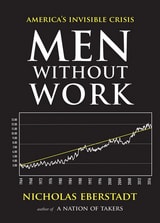
But a closer look shows that something is going seriously wrong. This is the collapse of work—most especially among America’s men. Nicholas Eberstadt, a political economist who holds the Henry Wendt Chair in Political Economy at the American Enterprise Institute, shows that while “unemployment” has gone down, America’s work rate is also lower today than a generation ago—and that the work rate for US men has been spiraling downward for half a century. Astonishingly, the work rate for American males aged twenty-five to fifty-four—or “men of prime working age”—was actually slightly lower in 2015 than it had been in 1940: before the War, and at the tail end of the Great Depression.
Today, nearly one in six prime working age men has no paid work at all—and nearly one in eight is out of the labor force entirely, neither working nor even looking for work. This new normal of “men without work,” argues Eberstadt, is “America’s invisible crisis.”
So who are these men? How did they get there? What are they doing with their time? And what are the implications of this exit from work for American society?
Nicholas Eberstadt lays out the issue and Jared Bernstein from the left and Henry Olsen from the right offer their responses to this national crisis.
For more information, please visit http://menwithoutwork.com.
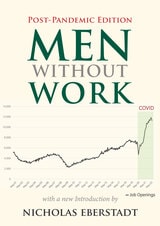
Men without Work
Post-Pandemic Edition (2022)Eberstadt, Nicholas
Templeton Press, 2022
The grim truth: over six million prime-age men were neither working nor looking for work. Conventional unemployment measures ignored these labor force dropouts, but their ranks had been rising relentlessly for half a century. Eberstadt’s unflinching analysis was, in the words of The New York Times, “an unsettling portrait not just of male unemployment, but also of lives deeply alienated from civil society.”
The famed American work ethic was once near universal: men of sound mind and body took pride in contributing to their communities and families. No longer, warned Eberstadt. And now—six years and one catastrophic pandemic later—the problem has not only worsened: it has seemingly been spreading among prime-age women and workers over fifty-five.
In a brand new introduction, Eberstadt explains how the government’s response to Covid-19 inadvertently exacerbated the flight from work in America. From indiscriminate pandemic shutdowns to almost unconditional “unemployment” benefits, Americans were essentially paid not to work.
Thus today, despite the vaccine rollouts, inexplicable numbers of working age men and women are sitting on the sidelines while over 11 million jobs go unfilled. Current low rates of unemployment, touted by pundits and politicians, are grievously misleading. The truth is that fewer prime-age American men are looking for readily available work than at any previous juncture in our history. And others may be catching the “Men Without Work” virus too.
Given the devastating economic impact of the Covid calamity and the unforeseen aftershocks yet to come, this reissue of Eberstadt’s groundbreaking work is timelier than ever.
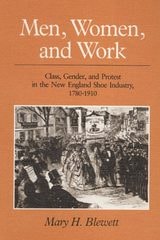
Men, Women, and Work
Class, Gender, and Protest in the New England Shoe Industry, 1780-1910Mary H. Blewett
University of Illinois Press, 1988
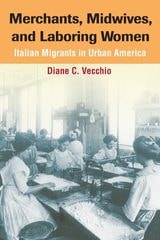
Merchants, Midwives, and Laboring Women
ITALIAN MIGRANTS IN URBAN AMERICADiane C. Vecchio
University of Illinois Press, 2006
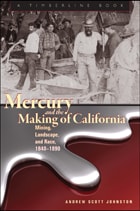
Mercury and the Making of California
Mining, Landscape, and Race, 1840–1890Andrew Scott Johnston
University Press of Colorado, 2015
Gold and silver could not be refined without mercury; therefore, its production and use were vital to securing power and wealth in the West. The first industrialized mining in California, mercury mining had its own particular organization, structure, and built environments. These were formed within the Spanish Empire, subsequently transformed by British imperial ambitions, and eventually manipulated by American bankers and investors. In California, mercury mining also depended on a workforce differentiated by race and ethnicity. The landscapes of work and camp and the relations among the many groups involved in the industry—Mexicans, Chileans, Spanish, English, Irish, Cornish, American, and Chinese—form a crucial chapter in the complex history of race and ethnicity in the American West.
This pioneering study explicates the mutual structuring of the built environments of the mercury-mining industry and the emergence of California’s ethnic communities. Combining rich documentary sources with a close examination of the existing physical landscape, Johnston explores both the detail of everyday work and life in the mines and the larger economic and social structures in which mercury mining was enmeshed, revealing the significance of mercury mining for Western history.

Mexican Americans and the U.S. Economy
Quest for Buenos DíasArturo González
University of Arizona Press, 2002

Mexican Immigration to the United States
Edited by George J. Borjas
University of Chicago Press, 2007
From debates on Capitol Hill to the popular media, Mexican immigrants are the subject of widespread controversy. By 2003, their growing numbers accounted for 28.3 percent of all foreign-born inhabitants of the United States. Mexican Immigration to the United States analyzes the astonishing economic impact of this historically unprecedented exodus. Why do Mexican immigrants gain citizenship and employment at a slower rate than non-Mexicans? Does their migration to the U.S. adversely affect the working conditions of lower-skilled workers already residing there? And how rapid is the intergenerational mobility among Mexican immigrant families?
This authoritative volume provides a historical context for Mexican immigration to the U.S. and reports new findings on an immigrant influx whose size and character will force us to rethink economic policy for decades to come. Mexican Immigration to the United States will be necessary reading for anyone concerned about social conditions and economic opportunities in both countries.

Mexican Women in American Factories
Free Trade and Exploitation on the BorderBy Carolyn Tuttle
University of Texas Press, 2012
Prior to the millennium, economists and policy makers argued that free trade between the United States and Mexico would benefit both Americans and Mexicans. They believed that NAFTA would be a “win-win” proposition that would offer U.S. companies new markets for their products and Mexicans the hope of living in a more developed country with the modern conveniences of wealthier nations. Blending rigorous economic and statistical analysis with concern for the people affected, Mexican Women in American Factories offers the first assessment of whether NAFTA has fulfilled these expectations by examining its socioeconomic impact on workers in a Mexican border town.
Carolyn Tuttle led a group that interviewed 620 women maquila workers in Nogales, Sonora, Mexico. The responses from this representative sample refute many of the hopeful predictions made by scholars before NAFTA and reveal instead that little has improved for maquila workers. The women’s stories make it plain that free trade has created more low-paying jobs in sweatshops where workers are exploited. Families of maquila workers live in one- or two-room houses with no running water, no drainage, and no heat. The multinational companies who operate the maquilas consistently break Mexican labor laws by requiring women to work more than nine hours a day, six days a week, without medical benefits, while the minimum wage they pay workers is insufficient to feed their families. These findings will make a crucial contribution to debates over free trade, CAFTA-DR, and the impact of globalization.
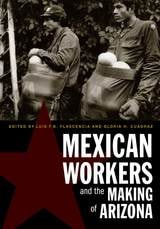
Mexican Workers and the Making of Arizona
Edited by Luis F. B. Plascencia and Gloria H. Cuádraz
University of Arizona Press, 2018
Mexican Workers and the Making of Arizona centers on the production of an elastic supply of labor, revealing how this long-standing approach to the building of Arizona has obscured important power relations, including the state’s favorable treatment of corporations vis-à-vis workers. Building on recent scholarship about Chicanas/os and others, the volume insightfully describes how U.S. industries such as railroads, mining, and agriculture have fostered the recruitment of Mexican labor, thus ensuring the presence of a surplus labor pool that expands and contracts to accommodate production and profit goals.
The volume’s contributors delve into examples of migration and settlement in the Salt River Valley; the mobilization and immobilization of cotton workers in the 1920s; miners and their challenge to a dual-wage system in Miami, Arizona; Mexican American women workers in midcentury Phoenix; the 1980s Morenci copper miners’ strike and Chicana mobilization; Arizona’s industrial and agribusiness demands for Mexican contract labor; and the labor rights violations of construction workers today.
Mexican Workers and the Making of Arizona fills an important gap in our understanding of Mexicans and Mexican Americans in the Southwest by turning the scholarly gaze to Arizona, which has had a long-standing impact on national policy and politics.

Mexico's Merchant Elite, 1590-1660
Silver, State, and SocietyLouisa Schell Hoberman
Duke University Press, 1991
Through extensive archival research, Hoberman brings to light new data that illuminate the formation, behavior, and power of the merchant class in New Spain. She documents sources and uses of merchant wealth, tracing the relative importance of mining, agriculture, trade, and public office. By delving into biographical information on prominent families, Hoberman also reveals much about the longevity of the first generation’s social and economic achievements.
The author’s broad analysis situates her study in the overall environment in which the merchants thrived. Among the topics discussed are the mining and operation of the mint, Mexico’s political position vis-a-vis Spain, and the question of an economic depression in the seventeenth century.
Mexico, Interrupted
Labor, Idleness, and the Economic Imaginary of IndependenceSergio Gutiérrez Negrón
Vanderbilt University Press, 2023
Mexican independence was, in a sense, an economic event. Through economic concerns, elites created a common ground with non-elites in their demands against foreign domination, and independence was imagined by the lettered men of Mexico as a feat that would nationalize a rich and productive economic apparatus.
Mexico, Interrupted investigates these economic hopes during the difficult decades between 1821, the year of the country’s definite separation from Spain, and 1852, a period of political polarization after the US-Mexico War that led the country to the brink of another armed conflict. Drawing on political and popular media, this book studies the Mexican intelligentsia’s obsession with labor and idleness in their attempts to create a wealthy, independent nation.
Focusing on figures of work and its opposites, Mexico, Interrupted reconstructs these decades’ “economic imaginaries of independence”: the political and cultural discourses that structured understandings, beliefs, and fantasies of the relationship between “the economy” and the life of an independent polity. By bringing together intellectual history, critical theory, and cultural studies, Gutiérrez Negrón offers a new account of the Mexican nineteenth century and complicates the history of the “spirit of capitalism” in the Americas.
Michigan at the Millennium
A Benchmark and Analysis of Its Fiscal and Economic StructureCharles L. Ballard
Michigan State University Press, 2003
Michigan at the Millennium provides objective background and analysis on a wide variety of key economic and fiscal issues. The chapters are written by economists and policy analysts at leading universities and other institutions in Michigan. Written in clear, non-technical language, the articles are aimed at an audience that includes members of the legislative and executive branches of state government, members of the judicial system, local government officials, policy analysts, and informed citizens.
This volume follows in the tradition of the landmark 1982 study, Michigan’s Fiscal and Economic Structure, edited by Harvey E. Brazer. The first section of the volume focuses on broad aspects of the economy, people, and land of Michigan, including chapters on demographics, the labor force, land use, the manufacturing sector, high-technology industries, and health care. Section two focuses on public expenditures and public services, and includes chapters on economic-development efforts, K–12 education, the transportation system, the welfare system, policies for low-wage workers and displaced workers, and pensions. The third section is concerned with taxes and other government revenues. It includes chapters on the Headlee Amendment, income taxes, sales and use taxes, property taxes, the Single Business Tax, intergovernmental fiscal relations, and other sources of revenue.
Michigan's Economic Future
A New LookCharles Ballard
Michigan State University Press, 2010
This accessible, engaging text examines the impact of the trends that have shaped Michigan’s economy, and offers innovative solutions to the current economic crisis. Charles Ballard’s illuminating book explores the structure of Michigan’s economy, including its roots in agriculture, the rise and fall of the automotive industry, and the long-term decline of manufacturing. Ballard proposes that investing in education to create a highly skilled workforce can help Michigan’s people to compete in the rapidly evolving global economy. Discussing the state’s transportation infrastructure, environment, public expenditures, and tax system, Ballard describes how changes in attitudes, policies, and political institutions will help to promote economic recovery and growth.

Michigan's economic future
challenges and opportunitiesCharles L. Ballard
Michigan State University Press, 2006

Microfinance and Its Discontents
Women in Debt in BangladeshLamia Karim
University of Minnesota Press, 2010
In 2006 the Grameen Bank of Bangladesh won the Nobel Peace Prize for its innovative microfinancing operations. This path-breaking study of gender, grassroots globalization, and neoliberalism in Bangladesh looks critically at the Grameen Bank and three of the leading NGOs in the country. Amid euphoria over the benefits of microfinance, Lamia Karim offers a timely and sobering perspective on the practical, and possibly detrimental, realities for poor women inducted into microfinance operations.
In a series of ethnographic cases, Karim shows how NGOs use social codes of honor and shame to shape the conduct of women and to further an agenda of capitalist expansion. These unwritten policies subordinate poor women to multiple levels of debt that often lead to increased violence at the household and community levels, thereby weakening women’s ability to resist the onslaught of market forces.
A compelling critique of the relationship between powerful NGOs and the financially strapped women beholden to them for capital, this book cautions us to be vigilant about the social realities within which women and loans circulate—realities that often have adverse effects on the lives of the very women these operations are meant to help.
Middle Class Union
Organizing the ‘Consuming Public’ in Post-World War I AmericaMark W. Robbins
University of Michigan Press, 2017
Combining social history with interdisciplinary approaches to the study of consumption and symbolic space, Middle Class Union illustrates how acts of consumption, representations of the middle class in literary, journalistic, and artistic discourses, and ground-level organizing combined to enable white-collar activists to establish themselves as both the middle class and the backbone of the nation. This book contributes to labor history by examining the nexus of class and consumption to show how many white-collar workers drew on their consumer identity to express an anti-labor politics, later facilitating the struggles of unions throughout the post–World War I years. It also contributes to political history by emphasizing how these middle-class activists laid important groundwork for both 1920s business conservatism and New Deal liberalism. They exerted their political influence well before the post–World War II period, when a self-interested and powerful middle-class consumer identity is more widely acknowledged to have taken hold.