Results by title
1201 books match the query 'Race relations' and 59 start with m
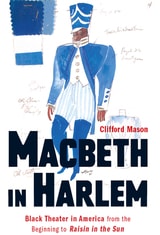
Macbeth in Harlem
Black Theater in America from the Beginning to Raisin in the SunClifford Mason
Rutgers University Press, 2020
2021 PROSE Awards Finalist, Music & the Performing Arts
In 1936 Orson Welles directed a celebrated all-black production of Macbeth that was hailed as a breakthrough for African Americans in the theater. For over a century, black performers had fought for the right to perform on the American stage, going all the way back to an 1820s Shakespearean troupe that performed Richard III, Othello, and Macbeth, without relying on white patronage.
"Macbeth" in Harlem tells the story of these actors and their fellow black theatrical artists, from the early nineteenth century to the dawn of the civil rights era. For the first time we see how African American performers fought to carve out a space for authentic black voices onstage, at a time when blockbuster plays like Uncle Tom’s Cabin and The Octoroon trafficked in cheap stereotypes. Though the Harlem Renaissance brought an influx of talented black writers and directors to the forefront of the American stage, they still struggled to gain recognition from an indifferent critical press.
Above all, "Macbeth" in Harlem is a testament to black artistry thriving in the face of adversity. It chronicles how even as the endemic racism in American society and its theatrical establishment forced black performers to abase themselves for white audiences’ amusement, African Americans overcame those obstacles to enrich the nation’s theater in countless ways.
Making Gaybies
Queer Reproduction and Multiracial FeelingJaya Keaney
Duke University Press, 2023
Making Minnesota Liberal
Civil Rights And The Transformation Of The Democratic PartyJennifer A. Delton
University of Minnesota Press, 2002
Making Of Asian America
Through Political ParticipationPei-te Lien
Temple University Press, 2001
Professor Lien looks at political participation by Asian Americans prior to 1965 and then examines, at both organizational and mass politics levels, how race, ethnicity, and transnationalism help to construct a complex American electorate. She looks not only at rates of participation among Asian Americans as compared with blacks, Latinos, American Indians, and non-Hispanic whites, but also among specific groups of Asian Americans—Chinese, Japanese, Filipinos, Koreans, Asian Indians, and Vietnamese. She also discusses how gender, socioeconomic class, and place of birth affect political participation.
With documentation ranging from historical narrative to opinion survey data, Professor Lien creates a picture of a diverse group of politically active people who are intent on carving out a place for themselves in American political life.
Making the Human
Race, Allegory, and Asian AmericansCorinne Mitsuye Sugino
Rutgers University Press, 2025
Winner of the 2026 Cultural Studies Association First Book Prize
From the debate over affirmative action to the increasingly visible racism amidst the COVID-19 pandemic, Asian Americans have emerged as key figures in a number of contemporary social controversies. In Making the Human: Race, Allegory, and Asian Americans, Corinne Mitsuye Sugino offers the lens of racial allegory to consider how media, institutional, and cultural narratives mobilize difference to normalize a white, Western conception of the human. Rather than focusing on a singular arena of society, Sugino considers contemporary sources across media, law, and popular culture to understand how they interact as dynamic sites of meaning-making. Drawing on scholarship in Asian American studies, Black studies, cultural studies, communication, and gender and sexuality studies, Sugino argues that Asian American racialization and gendering plays a key role in shoring up abstract concepts such as “meritocracy,” “family,” “justice,” “diversity,” and “nation” in ways that naturalize hierarchy. In doing so, Making the Human grapples with anti-Asian racism’s entanglements with colonialism, antiblackness, capitalism, and gendered violence.
Making the MexiRican City
Migration, Placemaking, and Activism in Grand Rapids, MichiganDelia Fernández-Jones
University of Illinois Press, 2023
A Choice Outstanding Academic Title for 2023
Large numbers of Latino migrants began to arrive in Grand Rapids, Michigan, in the 1950s. They joined a small but established Spanish-speaking community of people from Texas, Mexico, and Puerto Rico. Delia Fernández-Jones merges storytelling with historical analysis to recapture the placemaking practices that these Mexicans, Tejanos, and Puerto Ricans used to create a new home for themselves. Faced with entrenched white racism and hostility, Latinos of different backgrounds formed powerful relationships to better secure material needs like houses and jobs and to recreate community cultural practices. Their pan-Latino solidarity crossed ethnic and racial boundaries and shaped activist efforts that emphasized working within the system to advocate for social change. In time, this interethnic Latino alliance exploited cracks in both overt and structural racism and attracted white and Black partners to fight for equality in social welfare programs, policing, and education.
Groundbreaking and revelatory, Making the MexiRican City details how disparate Latino communities came together to respond to social, racial, and economic challenges.
Making the Second Ghetto
Race and Housing in Chicago 1940-1960Arnold R. Hirsch
University of Chicago Press, 1998
"In this excellent, intricate, and meticulously researched study, Hirsch exposes the social engineering of the post-war ghetto."—Roma Barnes, Journal of American Studies
"According to Arnold Hirsch, Chicago's postwar housing projects were a colossal exercise in moral deception. . . . [An] excellent study of public policy gone astray."—Ron Grossman, Chicago Tribune
"An informative and provocative account of critical aspects of the process in [Chicago]. . . . A good and useful book."—Zane Miller, Reviews in American History
"A valuable and important book."—Allan Spear, Journal of American History
Making the Second Ghetto
Race and Housing in Chicago, 1940-1960Arnold R. Hirsch
University of Chicago Press, 2021
Hirsch’s classic and groundbreaking work of urban history is a revelatory look at Chicago in the decades after the Great Depression, a period when the city dealt with its rapidly growing Black population not by working to abolish its stark segregation but by expanding and solidifying it. Even as the civil rights movement rose to prominence, Chicago exploited a variety of methods of segregation—including riots, redevelopment, and a host of new legal frameworks—that provided a national playbook for the emergence of a new kind of entrenched inequality. Hirsch’s chronicle of the strategies employed by ethnic, political, and business interests in reaction to the Great Migration of Southern Blacks in the mid-twentieth century makes startingly clear how the violent reactions of an emergent white population found common ground with policy makers to segregate first a city and then the nation.
This enlarged edition of Making the Second Ghetto features a visionary afterword by historian N. D. B. Connolly, explaining why Hirsch’s book still crackles with “blistering relevance” for contemporary readers.
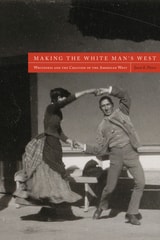
Making the White Man's West
Whiteness and the Creation of the American WestJason E. Pierce
University Press of Colorado, 2016
The West, especially the Intermountain states, ranks among the whitest places in America, but this fact obscures the more complicated history of racial diversity in the region. In Making the White Man’s West, author Jason E. Pierce argues that since the time of the Louisiana Purchase, the American West has been a racially contested space. Using a nuanced theory of historical “whiteness,” he examines why and how Anglo-Americans dominated the region for a 120-year period.
In the early nineteenth century, critics like Zebulon Pike and Washington Irving viewed the West as a “dumping ground” for free blacks and Native Americans, a place where they could be segregated from the white communities east of the Mississippi River. But as immigrant populations and industrialization took hold in the East, white Americans began to view the West as a “refuge for real whites.” The West had the most diverse population in the nation with substantial numbers of American Indians, Hispanics, and Asians, but Anglo-Americans could control these mostly disenfranchised peoples and enjoy the privileges of power while celebrating their presence as providing a unique regional character. From this came the belief in a White Man’s West, a place ideally suited for “real” Americans in the face of changing world.
The first comprehensive study to examine the construction of white racial identity in the West, Making the White Man’s West shows how these two visions of the West—as a racially diverse holding cell and a white refuge—shaped the history of the region and influenced a variety of contemporary social issues in the West today.
Mama Africa
Reinventing Blackness in BahiaPatricia de Santana Pinho
Duke University Press, 2010
Pinho explores how Bahian cultural production influences and is influenced by black diasporic cultures and the idealization of Africa—to the extent that Bahia draws African American tourists wanting to learn about their heritage. Analyzing the conceptions of blackness produced by the blocos afro, she describes how Africa is re-inscribed on the body through clothes, hairstyles, and jewelry; once demeaned, blackness is reclaimed as a source of beauty and pride. Turning to the body’s interior, Pinho explains that the myth of Mama Africa implies that black appearances have corresponding black essences. Musical and dance abilities are seen as naturally belonging to black people, and these traits are often believed to be transmitted by blood. Pinho argues that such essentialized ideas of blackness render black culture increasingly vulnerable to exploitation by the state and commercial interests. She contends that the myth of Mama Africa, while informing oppositional black identities, overlaps with a constraining notion of Bahianness promoted by the government and the tourist industry.
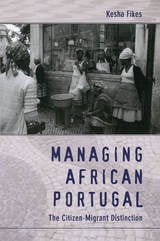
Managing African Portugal
The Citizen-Migrant DistinctionKesha Fikes
Duke University Press, 2009
The ethnographic focus is a former undocumented fish market that at one time employed both Portuguese and Cape Verdean women. Both groups eventually sought work in low-wage professions as maids, nannies, and restaurant-kitchen help. The visibility of poor Portuguese women as domestics was thought to undermine the appearance of Portuguese modernity; by contrast, the association of poor African women with domestic work confirmed it. Fikes argues that we can better understand how Portugal interpreted its economic absorption into the EU by attending to the different directions in which working-poor Portuguese and Cape Verdean women were routed in the mid-1990s and by observing the character of the new work relationships that developed among them. In Managing African Portugal, Fikes pushes for a study of migrant phenomena that considers not only how the enactment of citizenship by the citizen manages the migrant, but also how citizens are simultaneously governed through their uptake and assumption of new EU citizen roles.
Manifesting Violence
White Terrorism, Digital Culture, and the Rhetoric of ReplacementCasey Ryan Kelly and William Joseph Sipe
University of Alabama Press, 2025
When communication becomes the engine of white supremacist violence.
Manifesting Violence: White Terrorism, Digital Culture, and the Rhetoric of Replacement by Casey Ryan Kelly and William Joseph Sipe is a compelling exploration of how the digital world has become a fertile ground for white supremacist ideology. Through an in-depth analysis of white supremacist manifestos, online rhetoric, and the myth of “white genocide,” Kelly and Sipe uncover the disturbing ways in which digital culture facilitates the spread of racist ideology and the radicalization of individuals. By examining the language of white nationalism—calls to defend the white race, family, and children—Kelly and Sipe reveal how these messages, often disguised as entertainment or humor, gradually transform passive consumers into active participants in a dangerous ideology.
Manifesting Violence sheds light on the alarming shift from organized white supremacist groups to a decentralized digital arena where hate speech is disguised as humor and online conversations foster a culture of violence. Kelly and Sipe’s thorough investigation of this growing digital ecosystem offers a chilling glimpse into the dark underbelly of online extremism. A must-read for anyone seeking to understand the growing threat of hate-motivated violence and the urgent need to address its roots in digital culture, Kelly and Sipe offer rich insights to readers, researchers, academics, and policymakers concerned about extremism, online radicalization, and white supremacy.
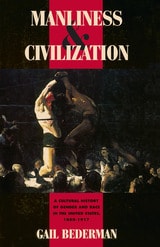
Manliness and Civilization
A Cultural History of Gender and Race in the United States, 1880-1917Gail Bederman
University of Chicago Press, 1995
In turn-of-the-century America, cultural ideals of manhood changed profoundly, as Victorian notions of self-restrained, moral manliness were challenged by ideals of an aggressive, overtly sexualized masculinity. Bederman traces this shift in values and shows how it brought together two seemingly contradictory ideals: the unfettered virility of racially "primitive" men and the refined superiority of "civilized" white men. Focusing on the lives and works of four very different Americans—Theodore Roosevelt, educator G. Stanley Hall, Ida B. Wells, and Charlotte Perkins Gilman—she illuminates the ideological, cultural, and social interests these ideals came to serve.
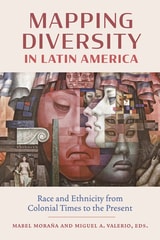
Mapping Diversity in Latin America
Race and Ethnicity from Colonial Times to the PresentEdited by Mabel Moraña and Miguel A. Valerio
Vanderbilt University Press, 2025
Taking an interdisciplinary approach to understanding issues of collective identity, otherness, alterity, and the like, Mapping Diversity in Latin America sheds light on histories that have been traditionally overlooked in texts on race in Latin America, such as the rich history of diasporic Asian, Syrian Lebanese, and Jewish communities, and the more recent emergence of Latinx populations in the United States. The book includes a critical examination of fundamental concepts such as mestizaje, mulataje, creolization, negritud, and blanquitud, as well as critical and theoretical approaches to the study of these issues in postcolonial societies.
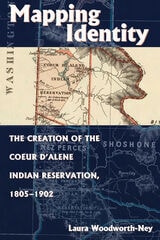
Mapping Identity
The Creation of the Coeur d'Alene Indian Reservation, 1805-1902Laura Woodworth-Ney
University Press of Colorado, 2004
Mapping Identity builds on the growing body of literature that presents a more complex picture of federal policy, native identity, and the creation of Indian reservations in the western United States. It will be important to readers interested in western U.S. history, legal and administrative history, Native American history, and interior Northwest history.
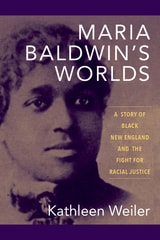
Maria Baldwin's Worlds
A Story of Black New England and the Fight for Racial JusticeKathleen Weiler
University of Massachusetts Press, 2019
Maria Baldwin (1856–1922) held a special place in the racially divided society of her time, as a highly respected educator at a largely white New England school and an activist who carried on the radical spirit of the Boston area's internationally renowned abolitionists from a generation earlier.
African American sociologist Adelaide Cromwell called Baldwin “the lone symbol of Negro progress in education in the greater Boston area” during her lifetime. Baldwin used her respectable position to fight alongside more radical activists like William Monroe Trotter for full citizenship for fellow members of the black community. And, in her professional and personal life, she negotiated and challenged dominant white ideas about black womanhood. In Maria Baldwin's Worlds, Kathleen Weiler reveals both Baldwin's victories and what fellow activist W. E. B. Du Bois called her “quiet courage” in everyday life, in the context of the wider black freedom struggle in New England.
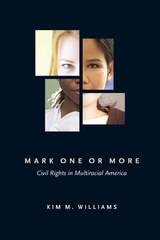
Mark One or More
Civil Rights in Multiracial AmericaKim M. Williams
University of Michigan Press, 2010
The movement to add a multiracial category to the 2000 U.S. Census provoked unprecedented debates about race. The effort made for strange bedfellows. Republicans like House Speaker Newt Gingrich and affirmative action opponent Ward Connerly took up the multiracial cause. Civil rights leaders opposed the movement on the premise that it had the potential to dilute the census count of traditional minority groups. The activists themselves—a loose confederation of organizations, many led by the white mothers of interracial children—wanted recognition. What they got was the transformation of racial politics in America.
Mark One or More is the compelling account of how this small movement sparked a big change, and a moving call to reassess the meaning of racial identity in American life.
Kim M. Williams is Associate Professor of Public Policy in Harvard's Kennedy School of Government, and an expert in racial and ethnic politics and political movements.
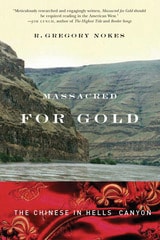
Massacred for Gold
The Chinese in Hells CanyonR. Gregory Nokes
Oregon State University Press, 2009
In 1887, more than 30 Chinese gold miners were massacred on the Oregon side of Hells Canyon, the deepest canyon in North America. Massacred for Gold, the first authoritative account of the unsolved crime—one of the worst of the many crimes committed by whites against Chinese laborers in the American West—unearths the evidence that points to an improbable gang of rustlers and schoolboys, one only 15, as the killers.
The crime was discovered weeks after it happened, but no charges were brought for nearly a year, when gang member Frank Vaughan, son of a well-known settler family, confessed and turned state’s evidence. Six men and boys, all from northeastern Oregon’s remote Wallowa country, were charged—but three fled, and the others were found innocent by a jury that a witness admitted had little interest in convicting anyone. A cover-up followed, and the crime was all but forgotten for the next 100 years, until a county clerk found hidden records in an unused safe.
In bringing this story out of the shadows, Nokes examines the once-substantial presence of Chinese laborers in the interior Pacific Northwest, describing why they came, how their efforts contributed to the region’s development, and how too often mistreatment and abuse were their only reward.
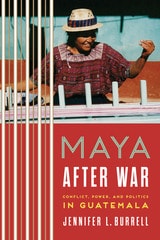
Maya after War
Conflict, Power, and Politics in GuatemalaBy Jennifer L. Burrell
University of Texas Press, 2013
Guatemala’s thirty-six-year civil war culminated in peace accords in 1996, but the postwar transition has been marked by continued violence, including lynchings and the rise of gangs, as well as massive wage-labor exodus to the United States. For the Mam Maya municipality of Todos Santos Cuchumatán, inhabited by a predominantly indigenous peasant population, the aftermath of war and genocide resonates with a long-standing tension between state techniques of governance and ancient community-level power structures that incorporated concepts of kinship, gender, and generation. Showing the ways in which these complex histories are interlinked with wartime and enduring family/class conflicts, Maya after War provides a nuanced account of a unique transitional postwar situation, including the complex influence of neoliberal intervention.
Drawing on ethnographic field research over a twenty-year period, Jennifer L. Burrell explores the after-war period in a locale where community struggles span culture, identity, and history. Investigating a range of tensions from the local to the international, Burrell employs unique methodologies, including mapmaking, history workshops, and an informal translation of a historic ethnography, to analyze the role of conflict in animating what matters to Todosanteros in their everyday lives and how the residents negotiate power. Examining the community-based divisions alongside national postwar contexts, Maya after War considers the aura of hope that surrounded the signing of the peace accords, and the subsequent doubt and waiting that have fueled unrest, encompassing generational conflicts. This study is a rich analysis of the multifaceted forces at work in the quest for peace, in Guatemala and beyond.
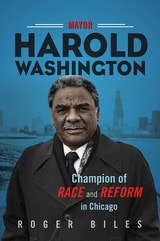
Mayor Harold Washington
Champion of Race and Reform in ChicagoRoger Biles
University of Illinois Press, 2020
Medgar Evers
Mississippi MartyrMichael Vinson Williams
University of Arkansas Press, 2011
Mediating America
Black and Irish Press and the Struggle for Citizenship, 1870-1914Brian Shott
Temple University Press, 2019
Until recently, print media was the dominant force in American culture. The power of the paper was especially true in minority communities. African Americans and European immigrants vigorously embraced the print newsweekly as a forum to move public opinion, cohere group identity, and establish American belonging.
Mediating America explores the life and work of T. Thomas Fortune and J. Samuel Stemons as well as Rev. Peter C. Yorke and Patrick Ford—respectively two African American and two Irish American editor/activists in the late nineteenth and early twentieth centuries. Historian Brian Shott shows how each of these “race men” (the parlance of the time) understood and advocated for his group’s interests through their newspapers. Yet the author also explains how the newspaper medium itself—through illustrations, cartoons, and photographs; advertisements and page layout; and more—could constrain editors’ efforts to guide debates over race, religion, and citizenship during a tumultuous time of social unrest and imperial expansion.
Black and Irish journalists used newspapers to recover and reinvigorate racial identities. As Shott proves, minority print culture was a powerful force in defining American nationhood.
Meet Joe Copper
Masculinity and Race on Montana's World War II Home FrontMatthew L. Basso
University of Chicago Press, 2013
Meet Me Halfway
Milwaukee StoriesJennifer Morales
University of Wisconsin Press, 2015
Morales gives life to multifaceted characters—white schoolteachers and senior citizens, Latino landlords, black and Puerto Rican teens, political activists, and Vietnam vets. As their lives unfold in these stories, we learn about Johnquell’s family—his grandparents’ involvement in the local Black Panther Party, his sister’s on-again, off-again friendship with a white classmate, and his aunt’s identity crisis as she finds herself falling in love with a woman. We also meet Johnquell’s mother, Gloria, and his school friend Taquan, who is struggling to chart his own future.
As an activist mother in the thick of Milwaukee politics, Morales developed a keen ear and a tender heart for the kids who have inherited the city’s troubled racial legacy. With a critical eye on promises unfulfilled, Meet Me Halfway raises questions about the notion of a “postracial” society and, with humor and compassion, lifts up the day-to-day work needed to get there.
Runner-up, Short Story/Anthology, Midwest Book Awards
Best books for public & secondary school libraries from university presses, American Library Association
Wisconsin representative for “Great Lakes Reads,” Library of Congress Center for the Book and its affiliated Midwest centers
Outstanding Achievement Award, Wisconsin Library Association (one of ten 2015 books chosen)
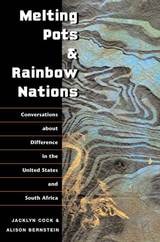
Melting Pots and Rainbow Nations
Conversations about Difference in the United States and South AfricaJacklyn Cock and Alison Bernstein
University of Illinois Press, 2002
This passionate, intelligent commentary is an invigorating look at the implications of difference and diversity in two contrasting but similar societies: the United States and South Africa. Melting Pots and Rainbow Nations addresses how differences--of gender, race, culture, biology, and sexual orientation--are variously understood and acted on in both countries.
The authors argue that the concepts of difference and diversity, although valuable, are hollow if disconnected from specific social and historical contexts in which power relations create and perpetuate disadvantage. Their thoughtful exploration includes accounts of their own experiences of difference and their perspectives on such pioneering women as Elizabeth Bishop, Frene Ginwala, Audre Lorde, Ruth First, Jane Goodall, and Mamphela Ramphele.
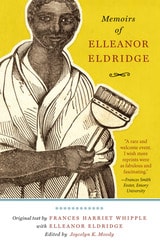
Memoirs of Elleanor Eldridge
Frances H. Whipple
West Virginia University Press, 2013
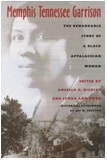
Memphis Tennessee Garrison
The Remarkable Story of a Black Appalachian WomanAncella R. Bickley
Ohio University Press, 2001
As a black Appalachian woman, Memphis Tennessee Garrison belonged to a demographic category triply ignored by historians.
The daughter of former slaves, she moved to McDowell County, West Virginia, at an early age and died at ninety-eight in Huntington. The coalfields of McDowell County were among the richest seams in the nation. As Garrison makes clear, the backbone of the early mining work force—those who laid the railroad tracks, manned the coke ovens, and dug the coal—were black miners. These miners and their families created communities that became the centers of the struggle for unions, better education, and expanded civil rights. Memphis Tennessee Garrison, an innovative teacher, administrative worker at U.S. Steel, and vice president of the National Board of the NAACP at the height of the civil rights struggle (1963-66), was involved with all of these struggles.
In many ways, this oral history, based on interview transcripts, is the untold and multidimensional story of African American life in West Virginia, as seen through the eyes of a remarkable woman. She portrays a courageous people who organize to improve their working conditions, send their children to school and then to college, own land, and support a wide range of cultural and political activities.
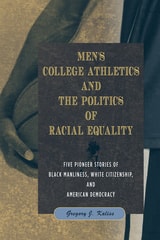
Men's College Athletics and the Politics of Racial Equality
Five Pioneer Stories of Black Manliness, White Citizenship, and American DemocracyGregory J Kaliss
Temple University Press, 2014
College sports have provided a compelling means to discuss issues regarding racial equality and fairness in American life. As previously-white institutions of higher learning gradually (and grudgingly) opened their playing fields to African-American athletes in men's basketball and football, black and white spectators interpreted mixed-race team sports in often contradictory ways. In Men's College Athletics and the Politics of Racial Equality, Gregory Kaliss offers stunning insights into Americans' contested visions of equality, fairness, black manhood, citizenship, and an equal opportunity society.
Kaliss looks at Paul Robeson, Jackie Robinson, Wilt Chamberlain, Charlie Scott, John Mitchell, Wilbur Marshall, and Bear Bryant to show how Americans responded to racial integration over time. Men's College Athletics and the Politics of Racial Equality reveals that as fans, media members, university students, faculty, and administration—black and white—discussed the achievements and struggles of these athletes, they inevitably talked about much more than what occurred on the field.
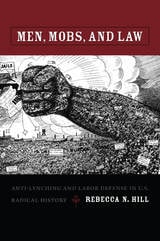
Men, Mobs, and Law
Anti-Lynching and Labor Defense in U.S. Radical HistoryRebecca N. Hill
Duke University Press, 2008
As Hill explains, labor defense activists first drew on populist logic, opposing the masses to the state in their campaigns, while anti-lynching activists went in the opposite direction, castigating “the mob” and appealing to the law. Showing that this difference stems from the different positions of whites and Blacks in the American legal system, Hill’s comparison of anti-lynching organizing and radical labor defenses reveals the conflicts and intersections between antiracist struggle and socialism in the United States.
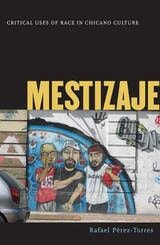
Mestizaje
Critical Uses of Race in Chicano CultureRafael Perez-Torres
University of Minnesota Press, 2005
Informed by a broad-ranging theoretical investigation of identity politics and race and incorporating feminist and queer critiques, Pérez-Torres skillfully analyzes Chicano cultural production. Contextualizing the history of mestizaje, he shows how the concept of mixed race has been used to engage issues of hybridity and voice and examines the dynamics that make mestizo and mestiza identities resistant to, as well as affirmative of, dominant forms of power. He also addresses the role that mestizaje has played in expressive culture, including the hip-hop music of Cypress Hill and the vibrancy of Chicano poster art. Turning to issues of mestizaje in literary creation, Pérez-Torres offers critical readings of the works of Emma Pérez, Gil Cuadros, and Sandra Cisneros, among others. This book concludes with a consideration of the role that the mestizo body plays as a site of elusive or displaced knowledge.
Moving beyond the oppositions—nationalism versus assimilation, men versus women, Texans versus Californians—that have characterized much of Chicano studies, Mestizaje synthesizes and assesses twenty-five years of pathbreaking thinking to make a case for the core components, sensibilities, and concerns of the discipline.
Rafael Pérez-Torres is professor of English at the University of California, Los Angeles. He is author of Movements in Chicano Poetry: Against Myths, Against Margins, coauthor of To Alcatraz, Death Row, and Back: Memories of an East LA Outlaw, and coeditor of The Chicano Studies Reader: An Anthology of Aztlán, 1970–2000.
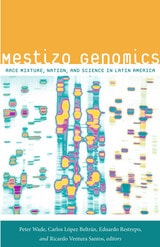
Mestizo Genomics
Race Mixture, Nation, and Science in Latin AmericaPeter Wade, Carlos López Beltrán, Eduardo Restrepo and Ricardo Ventura Santos, eds.
Duke University Press, 2014
Drawing on ethnographic research in Brazil, Colombia, and Mexico, the contributors to Mestizo Genomics explore how the concepts of race, ethnicity, nation, and gender enter into and are affected by genomic research. In Latin America, national identities are often based on ideas about mestizaje (race mixture), rather than racial division. Since mestizaje is said to involve relations between European men and indigenous or African women, gender is a key factor in Latin American genomics and in the analyses in this book. Also important are links between contemporary genomics and recent moves toward official multiculturalism in Brazil, Colombia, and Mexico. One of the first studies of its kind, Mestizo Genomics sheds new light on the interrelations between "race," identity, and genomics in Latin America.
Contributors. Adriana Díaz del Castillo H., Roosbelinda Cárdenas, Vivette García Deister, Verlan Valle Gaspar Neto, Michael Kent, Carlos López Beltrán, María Fernanda Olarte Sierra, Eduardo Restrepo, Mariana Rios Sandoval, Ernesto Schwartz-Marín, Ricardo Ventura Santos, Peter Wade
Mestizo State
Reading Race in Modern MexicoJoshua Lund
University of Minnesota Press, 2012
The Mestizo State examines how the ideas, images, and public discourse around race, nation, and citizen formation have been transformed in Mexico from the mid-nineteenth century to the present. Starting with the Porfiriato, Joshua Lund investigates the rise of a racialized “mestizo state,” its reinvention after the Mexican Revolution, and its mobilization as a critical lever that would act both on behalf of and against mainstream Mexican political culture during the long hegemony of the Partido Revolucionario Institucional.
Lund takes race as his object of critical reflection in the context of modern Mexico. An analysis that does not confuse race with mestizaje, indigeneity, African identity, or whiteness, the book sheds light on the history of the materialism of race as it unfolds within the cultural production of modern Mexico, grounded on close readings of four writers whose work explicitly challenged the politics of race in Mexico: Luis Alva, Ignacio Manuel Altamirano, Rosario Castellanos, and Elena Garro.
In seeking to address race as a cultural-political problematic, Lund considers race as integral to the production of the materiality of Mexican national history: constitutive of the nation form, a mediator of capitalist accumulation, and a central actor in the rise of modernity.
Methodists and the Crucible of Race, 1930-1975
Peter C. Murray
University of Missouri Press, 2004
During the Civil Rights movement, American churches confronted issues of racism that they had previously ignored. No church experienced this confrontation more sharply than the Methodist Church. When Methodists reunited their northern and southern halves in 1939, their new church constitution created a segregated church structure that posed significant issues for Methodists during the Civil Rights movement.
Of the six jurisdictional conferences that made up the Methodist Church, only one was not based on a geographic region: the Central Jurisdiction, a separate conference for “all Negro annual conferences.” This Jim Crow arrangement humiliated African American Methodists and embarrassed their liberal white allies within the church. The Supreme Court’s Brown v. Board of Education decision awakened many white Methodists from their complacent belief that the church could conform to the norms of the South without consequences among its national membership.
Murray places the struggle of the Methodist Church within the broader context of the history of race relations in the United States. He shows how the effort to destroy the barriers in the church were mirrored in the work being done by society to end segregation. Immensely readable and free of jargon, Methodists and the Crucible of Race, 1930–1975, will be of interest to a broad audience, including those interested in the Civil Rights movement and American church history.
Mexican American Civil Rights in Texas
Robert Brischetto
Michigan State University Press, 2022
Mexican Americans and World War II
Edited by Maggie Rivas-Rodriguez
University of Texas Press, 2005
Up to 750,000 Mexican American men served in World War II, earning more Medals of Honor and other decorations in proportion to their numbers than any other ethnic group. Mexican American women entered the workforce on the home front, supporting the war effort and earning good wages for themselves and their families. But the contributions of these men and women have been largely overlooked as American society celebrates the sacrifices and achievements of the "Greatest Generation." To bring their stories out of the shadows, this book gathers eleven essays that explore the Mexican American experience in World War II from a variety of personal and scholarly perspectives.
The book opens with accounts of the war's impact on individuals and families. It goes on to look at how the war affected school experiences; how Mexican American patriotism helped to soften racist attitudes; how Mexican Americans in the Midwest, unlike their counterparts in other regions of the country, did not experience greater opportunities as a result of the war; how the media exposed racist practices in Texas; and how Mexican nationals played a role in the war effort through the Bracero program and through the Mexican government's championing of Mexican Americans' rights. As a whole, the collection reveals that World War II was the turning point that gave most Mexican Americans their first experience of being truly included in American society, and it confirms that Mexican Americans of the "Greatest Generation" took full advantage of their new opportunities as the walls of segregation fell.
Mexican Americans and the Question of Race
By Julie A. Dowling
University of Texas Press, 2014
Honorable Mention, Oliver Cromwell Cox Book Award, presented by the Racial and Ethnic Minorities Section of the American Sociological Association, 2015
With Mexican Americans constituting a large and growing segment of U.S. society, their assimilation trajectory has become a constant source of debate. Some believe Mexican Americans are following the path of European immigrants toward full assimilation into whiteness, while others argue that they remain racialized as nonwhite. Drawing on extensive interviews with Mexican Americans and Mexican immigrants in Texas, Dowling’s research challenges common assumptions about what informs racial labeling for this population. Her interviews demonstrate that for Mexican Americans, racial ideology is key to how they assert their identities as either in or outside the bounds of whiteness. Emphasizing the link between racial ideology and racial identification, Dowling offers an insightful narrative that highlights the complex and highly contingent nature of racial identity.
Mexican Chicago
Race, identity and Nation, 1916-39Gabriela F. Arredondo
University of Illinois Press, 2007
Mexican Chicago builds on previous studies of Mexicans in the United States while challenging static definitions of “American” and underlying assumptions of assimilation. Gabriela F. Arredondo contends that because of the revolutionary context from which they came, Mexicans in Chicago between 1916 and 1939 were not just another ethnic group working to be assimilated into a city that has a long history of incorporating newcomers. Suggesting a new understanding of identity formation, she argues that Mexicans wielded tools of identification forged in revolutionary Mexico to collectively battle the prejudices of ethnic groups that included Poles, Italians, and the Irish, as well as African Americans. By turning inward, however, Mexicans also highlighted tremendous differences among themselves, such as gender and class. In discussing this distinctive process of becoming “Mexican” in Chicago during the early twentieth century, Arredondo not only explores how that identity was constructed but also provides telling insight into the repercussions of that identity formation process.
Mexicanos in Oregon
Their Stories, Their LivesErlinda Gonzales-Berry
Oregon State University Press, 2010
Militarism, Imperialism, and Racial Accommodation
An Analysis and Interpretation of the Early Writings of Robert E. ParkStanford Lyman
University of Arkansas Press, 1992
1993 Mid-South Sociological Association Book Award
Robert E. Park has long been recognized as one of the most influential thinkers in early American sociology, yet virtually all of his works appearing before 1913 were published in popular magazines and were dismissed as nonsociological muckraking. In Militarism, Imperialism, and Racial Accommodation: An Analysis and Interpretation of the Early Writings of Robert E. Park, Stanford M. Lyman examines and reprints many of these little-known works, including Park’s essays on German military organization, his exposés of the atrocities committed by Belgium’s Leopold II in the Congo State, his studies of the black community in Winston-Salem, North Carolina, and of Booker T. Washington’s agricultural education program at Tuskegee, Alabama.
Lyman shows clearly that Park’s essays, written outside the academy, formulated a far more complex perspective on modern modes of evil than any proposed by his contemporaries, thereby influencing sociological debates for decades to come. By writing his essays on topical subjects and by publishing them for a public audience, Park dramatized his profound belief that the struggle to achieve racial accommodation and to establish a true and lasting democracy is a concern for all.
Millennial Ecuador
Critical Essays Cultural TransformationsNorman E Whitten
University of Iowa Press, 2003
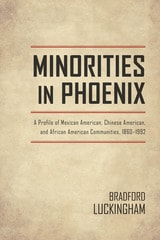
Minorities in Phoenix
A Profile of Mexican American, Chinese American, and African American Communities, 1860-1992Bradford Luckingham
University of Arizona Press, 1994
Settled in the mid-nineteenth century by Anglo and Mexican pioneers, Phoenix emerged as an Anglo-dominated society that presented formidable obstacles to minorities seeking access to jobs, education, housing, and public services. It was not until World War II and the subsequent economic boom and civil rights era that opportunities began to open up. Drawing on a variety of sources, from newspaper files to statistical data to oral accounts, Luckingham profiles the general history of each community, revealing the problems it has faced and the progress it has made. His overview of the public life of these three ethnic groups shows not only how they survived, but how they contributed to the evolution of one of America's fastest-growing cities.
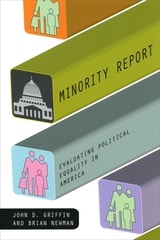
Minority Report
Evaluating Political Equality in AmericaJohn D. Griffin and Brian Newman
University of Chicago Press, 2008
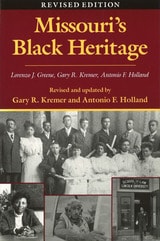
Missouri's Black Heritage, Revised Edition
Gary R. Kremer & Antonio F. Holland & With a Personal Reminiscence by Lorenzo J. Greene
University of Missouri Press, 1993
Originally written in 1980 by the late Lorenzo J. Greene, Gary R. Kremer, and Antonio F. Holland, Missouri's Black Heritage remains the only book-length account of the rich and inspiring history of the state's African American population. It has now been revised and updated by Kremer and Holland, incorporating the latest scholarship into its pages. This edition describes in detail the struggles faced by many courageous African Americans in their efforts to achieve full civil and political rights against the greatest of odds.
Documenting the African American experience from the horrors of slavery through present-day victories, the book touches on the lives of people such as John Berry Meachum, a St. Louis slave who purchased his own freedom and then helped countless other slaves gain emancipation; Hiram Young, a Jackson County free black whose manufacturing of wagons for Sante Fe Trail travelers made him a legendary figure; James Milton Turner, who, after rising from slavery to become one of the best-educated blacks in Missouri, worked with the Freedmen's Bureau and the State Department of Education to establish schools for blacks all over the state after the Civil War; and Annie Turnbo Malone, a St. Louis entrepreneur whose business skills made her one of the state's wealthiest African Americans in the early twentieth century.
A personal reminiscence by the late Lorenzo J. Greene, a distinguished African American historian whom many regard as one of the fathers of black history, offers a unique view of Missouri's racial history and heritage.

Mistresses and Slaves
Plantation Women in South Carolina, 1830-80Marli F. Weiner
University of Illinois Press, 1998
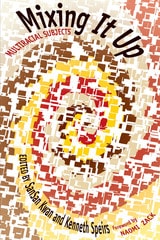
Mixing It Up
Multiracial SubjectsEdited by SanSan Kwan and Kenneth Speirs
University of Texas Press, 2004
The United States Census 2000 presents a twenty-first century America in which mixed-race marriages, cross-race adoption, and multiracial families in general are challenging the ethnic definitions by which the nation has historically categorized its population. Addressing a wide spectrum of questions raised by this rich new cultural landscape, Mixing It Up brings together the observations of ten noted voices who have experienced multiracialism first-hand.
From Naomi Zack's "American Mixed Race: The United States 2000 Census and Related Issues" to Cathy Irwin and Sean Metzger's "Keeping Up Appearances: Ethnic Alien-Nation in Female Solo Performance," this diverse collection spans the realities of multiculturalism in compelling new analysis. Arguing that society's discomfort with multiracialism has been institutionalized throughout history, whether through the "one drop" rule or media depictions, SanSan Kwan and Kenneth Speirs reflect on the means by which the monoracial lens is slowly being replaced.
Itself a hybrid of memoir, history, and sociological theory, Mixing It Up makes it clear why the identity politics of previous decades have little relevance to the fluid new face of contemporary humanity.
Mobilizing Public Opinion
Black Insurgency and Racial Attitudes in the Civil Rights EraTaeku Lee
University of Chicago Press, 2002
Ultimately, Mobilizing Public Opinion is a timely, cautionary tale about how we view public opinion and a compelling testament to the potential power of ordinary citizens.
Mobilizing the South
The Thirty-First Infantry Division, Race, and World War IIChristopher M. Rein
University of Alabama Press, 2022
A richly researched account of the social, racial, and political history of a major Deep South infantry division at home and in the Pacific
Chris Rein’s study of the Thirty-First Infantry Division, known officially as the “Dixie Division,” illuminates the complexities in mobilizing American reserve units to meet the global emergency during World War II. Citizen soldiers from Alabama, Florida, Louisiana, and Mississippi formed the core of one of the ninety infantry divisions the Army successfully activated, trained, equipped, and deployed to defeat fascism in Europe and race-based imperialism in the Pacific. But the Army mobilized ideas along with manpower, and soldiers from across the Jim Crow South brought their racial ideas and views with them into the ranks and then exported these across the South Pacific. If the American victory in World War II represents a “double victory” over racism abroad and at home, the division’s service is a cogent reminder that the same powerful force could pull in opposite directions.
While focused on the division’s operational service during the war years, Mobilizing the South: The Thirty-First Infantry Division, Race, and World War II spans the division’s entire service from 1917 to 1967, from an interwar period highlighted by responses to natural disasters and facing down lynch mobs through a postwar service that included protecting activists in the most important struggles of the civil rights era. But the division’s extended service as a training establishment highlights lingering resentments and tensions within the American military system between the active and reserve components. Despite this, the division performed well in General Douglas MacArthur’s island-hopping campaign across the South Pacific. Using official records as well as details drawn from correspondence and oral histories, Rein captures how individual soldiers framed their exposure to a larger world, and how service alongside African American, New Guinean, and Filipino units both reinforced and modified views on race and postwar American society.
Modern Jungles
A Hmong Refugee’s Childhood Story of SurvivalPao Lor
Wisconsin Historical Society Press, 2021
Born in a small farming village, Pao was destined to be a Hmong clan leader, wedding negotiator, or shaman. But the course of his life changed dramatically in the 1970s, when the Hmong faced persecution for their role in helping US forces fighting communism in the region. After more than two years in Thai refugee camps, Pao and his surviving family members boarded the belly of an “iron eagle” bound for the United States, where he pictured a new life of comfort and happiness. Instead, Pao found himself navigating a frightening and unfamiliar world, adjusting to a string of new schools and living situations while struggling to fulfill the hopes his parents had once held for his future. Now in Modern Jungles, Pao Lor shares his inspiring coming-of-age tale about perseverance, grit, and hope.
Included are discussion questions for use by book clubs, in classrooms, or around the dinner table.
Monsters and Revolutionaries
Colonial Family Romance and MetissageFrançoise Vergès
Duke University Press, 1999
Originally settled by sugar plantation owners and their Indian and African slaves following a seventeenth-century French colonial decree, Réunion abolished slavery in 1848. Because plantation owners continued to import workers from India, Africa, Asia, and Madagascar, the island was defined as a place based on mixed heritages, or métissage. Vergès reads the relationship between France and the residents of Réunion as a family romance: France is the seemingly protective mother, La Mère-Patrie, while the people of Réunion are seen and see themselves as France’s children. Arguing that the central dynamic in the colonial family romance is that of debt and dependence, Verges explains how the republican ideals of the French Revolution and the Enlightenment are seen as gifts to Réunion that can never be repaid. This dynamic is complicated by the presence of métissage, a source of anxiety to the colonizer in its refutation of the “purity” of racial bloodlines. For Vergès, the island’s history of slavery is the key to understanding métissage, the politics of assimilation, constructions of masculinity, and emancipatory discourses on Réunion.
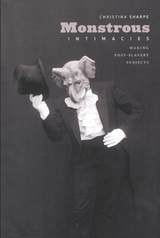
Monstrous Intimacies
Making Post-Slavery SubjectsChristina Sharpe
Duke University Press, 2010