Results by title
1726 books match the query 'Film' and 107 start with m
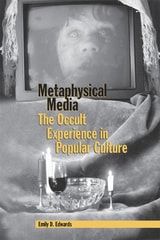
Metaphysical Media
The Occult Experience in Popular CultureEmily D. Edwards
Southern Illinois University Press, 2005
Metaphysical Media focuses on the blurred definitions of topics associated with the occult as they are presented in popular culture to show moving-image media as devices that help structure an understanding of the supernatural world. Edwards examines what media treatment of supernatural subjects and the very characteristics of the media themselves reveal about the persistence of the occult. She maintains that popular art has always had a close association with the paranormal or supernatural— sometimes in illustration of an ideology, sometimes in ridicule of it, and sometimes as invocation itself.
Beginning with an overview of the role of the media in contemporary society and in its use of the occult, Metaphysical Media looks at the properties of media technology that extend human senses beyond biological boundaries. Edwards then discusses specific media treatment of topics related to the occult, including witchcraft, atavism, reincarnation, out-of-body experiences, and lycanthropy. She outlines the interplay of media and folklore regarding taboos about the handling of the dead and investigates media stories about creatures that cross the boundaries between human, beast, and god.
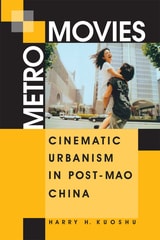
Metro Movies
Cinematic Urbanism in Post-Mao ChinaHarry H. Kuoshu
Southern Illinois University Press, 2010
Metro Movies: Cinematic Urbanism in Post-Mao China takes readers on a comprehensive tour of the urbanization of Chinese cinema. Focusing primarily on movies from the end of the twentieth century, it is the first single-authored work to explore the relationship between the changes in Chinese society—caused in part by the advent of postsocialism, the growth of cities, and globalization—and the transformation of Chinese cinema. Author Harry H. Kuoshu examines such themes as displacement, cinematic representation, youth subculture, the private emotional lives of emerging urbanites, raw urban realism, and the allegorical contrast of the city and the countryside to illustrate the artistic richness and cultural diversity of this cinematic genre.
Kuoshu discusses the work of director Huang Jianxin, whose films follow and critique China’s changing urban political culture. He dedicates a chapter to filmmakers who followed Huang and attempted to redefine the concept of art films to regain the local audience. These directors address Chinese moviegoers’ disappointment with the international adoption of Chinese art films, their lack of interest in conventional Chinese films, and their fascination with emerging audio-video media. A considerable amount of attention is given to films of the 1990s, which focus on the social changes surfacing in China, from the trend of hooliganism and the Beijing rock scene to the arrival of an urban pop culture lifestyle driven by expansionist commerce and materialism. Kuoshu also explores recent films that confront the seedier aspects of city life, as well as films that demonstrate how urbanization has touched every fiber of Chinese living.
Metro Movies illustrates how cinematic urbanism is no longer a genre indicator but is instead an era indicator, revealing the dominance of metropolitan living on modern Chinese culture. It gives new insight into contemporary Chinese politics and culture and provides readers with a better understanding of China’s urban cinema. This book will be an excellent addition to college film courses and will fascinate any reader with an interest in film studies or Chinese culture.
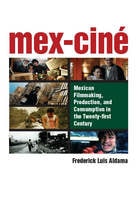
Mex-Ciné
Mexican Filmmaking, Production, and Consumption in the Twenty-first CenturyFrederick Luis Aldama
University of Michigan Press, 2013

Mexican Cinema in the Digital Age
Marvin D'Lugo
University of Texas Press, 0
Tracing the integration of digital technologies in film production and distribution that empowered a generation of filmmakers and expanded the global market for Mexican films.
Digital filmmaking and distribution have transformed the movies from what gets made and how to who gets to experience it. But while this has been a global evolution, local cultural forces have also played a decisive role. Mexico is a case in point. In Mexican Cinema in the Digital Age, Marvin D’Lugo traces the dramatic impact of technological innovation on one country’s film industry and aesthetics, revealing profound interactions between art and nation in an era when cultural products know no borders.
Through close analysis of more than twenty movies made this century, D’Lugo shows how technological advances fed the creative energies of Mexican filmmakers. In particular, the agility of the mobile digital camera contributed to a new audiovisual style in Mexico, which achieved global commercial success in the pre-streaming age. Since then, the rise of streaming has encouraged filmmakers to create works that are understood as distinctively Mexican yet marketable to global audiences. As a result, ordinary Mexicans increasingly see their own society through the eyes of outsiders. D’Lugo argues that the consequence has been a novel political subjectivity, as today’s cinema promotes a sense of Mexican cultural affiliation shorn of old nationalist tropes.
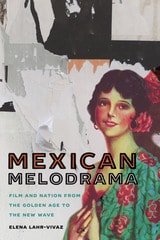
Mexican Melodrama
Film and Nation from the Golden Age to the New WaveElena Lahr-Vivaz
University of Arizona Press, 2016
Mexico’s Golden Age of film—the period from the 1930s to the 1950s—is considered “golden” due to both the prestige of the era’s stars and the critical and popular success of the films released. Golden Age directors often turned to the tropes of melodrama and allegory to offer spectators an image of an idealized Mexico and to spur the formation of a spectatorship united through shared tears and laughter. In contrast, Lahr-Vivaz demonstrates that new-wave directors of the 1990s and 2000s use the melodramatic mode to present a vision of fragmentation and to open a space for critical resistance. In so doing, new-wave directors highlight the limitations rather than the possibilities of a unified spectatorship, and point to the need for spectators to assume a critical stance in the face of the exigencies of the present.
Written in an accessible style, Mexican Melodrama offers a timely comparative analysis of critically acclaimed films that will serve as key referents in discussions of Mexican cinema for years to come.
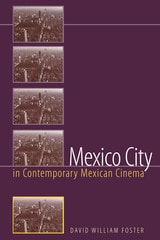
Mexico City in Contemporary Mexican Cinema
By David William Foster
University of Texas Press, 2002
Just as Mexican national life has come to center on the sprawling, dynamic, almost indefinable metropolis of Mexico City, so recent Mexican cinema has focused on the city not merely as a setting for films but almost as a protagonist in its own right, whose conditions both create meaning for and receive meaning from the human lives lived in its midst. Through close readings of fourteen recent critically acclaimed films, this book watches Mexican cinema in this process of producing cultural meaning through its creation, enaction, and interpretation of the idea of Mexico City.
David William Foster analyzes how Mexican filmmakers have used Mexico City as a vehicle for exploring such issues as crime, living space, street life, youth culture, political and police corruption, safety hazards, gender roles, and ethnic and social identities. The book is divided into three sections. "Politics of the City" examines the films Rojo amanecer,Novia que te vea,Frida, naturaleza viva, and Sexo, pudor y lágrimas. "Human Geographies" looks at El Callejón de los Milagros,Mecánica nacional,El castillo de la pureza,Todo el poder, and Lolo. "Mapping Gender" discusses Danzón,De noche vienes,Esmeralda,La tarea,Lola, and Entre Pancho Villa y una mujer desnuda.
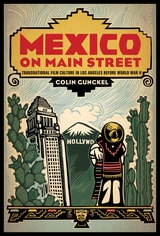
Mexico on Main Street
Transnational Film Culture in Los Angeles before World War IIGunckel, Colin
Rutgers University Press, 2015
Michael Bay
Lutz Koepnick
University of Illinois Press, 2018
Michael Haneke
Peter Brunette
University of Illinois Press, 2010
Michael Haneke
The Intermedial VoidChristopher Rowe
Northwestern University Press, 2017
Michael Moore and the Rhetoric of Documentary
Edited by Thomas W. Benson and Brian J. Snee
Southern Illinois University Press, 2015
Not afraid to tackle provocative topics in American culture, from gun violence and labor policies to terrorism and health care, Michael Moore has earned both applause and invective in his career as a documentarian. In such polarizing films as Bowling for Columbine, Fahrenheit 9/11, and Sicko, Moore has established a unique voice of radical nostalgia for progressivism, and in doing so has become one of the most recognized documentary filmmakers of all time.
In the first in-depth study of Moore’s feature-length documentary films, editors Thomas W. Benson and Brian J. Snee have gathered leading rhetoric scholars to examine the production, rhetorical appeals, and audience reception of these films. Contributors critique the films primarily as modes of public argument and political art. Each essay is devoted to one of Moore’s films and traces in detail how each film invites specific audience responses.
Michael Moore and the Rhetoric of Documentary reveals not only the art, the argument, and the emotional appeals of Moore’s documentaries but also how these films have revolutionized the genre of documentary filmmaking.
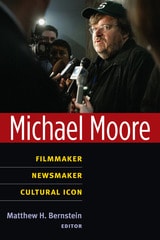
Michael Moore
Filmmaker, Newsmaker, Cultural IconMatthew Bernstein, Editor
University of Michigan Press, 2010
For more than twenty years, Michael Moore has transformed himself from a marginal filmmaker into a cultural icon, unofficial spokesperson for liberals and the Left. American conservatives constantly use him for target practice and target. Book author, film director, television personality, and Web presence, Moore is now a one-man cultural phenomenon. Although Michael Moore is a constant presence on the media landscape, this is the first volume to focus on the Moore phenomenom. It explores Moore's work in film and elsewhere, bringing diverse perspectives on his activities and status as voice of liberal America and the disenfranchised working class. Topics examined include the disjunction between Moore's celebrity status and everyman, middle-western persona, his self-mocking ironic sensibility, his tendency to diagnose American social and political problems in terms of class rather than gender, his reception abroad, and his uneasy relationship with the conventions of documentary filmmaking. The contributors are leading scholars and film critics, including Paul Arthur, Cary Elza, Jeffrey P. Jones, Douglas Kellner, Richard Kilborn, William Luhr, Charles Musser, Richard R. Ness, Miles Orvell, Richard Porton, Sergio Rizzo, Christopher Sharrett, Gaylyn Studlar, and David Teztlaff. The volume features both assessments of Moore's work in general and close analyses of his most successful films. The result is a definitive assessment of Moore's career to date.
Matthew Bernstein is Professor and Chair of Film Studies at Emory University. He is author of Walter Wanger: Hollywood Independent.
Midday with Buñuel
Memories and Sketches, 1973-1983Claudio Isaac
Swan Isle Press, 2007
The text includes sketches, vignettes, and anecdotes from Isaac’s notebooks, revealing his perspective first as a precocious boy and then as a young man. Isaac reflects on Buñuel’s presence among a community of exiles, artists, actors, writers, and intellectuals in Mexico City. These are at once touching, perceptive, and critical glimpses into Buñuel’s roles as husband and father, friend and colleague, surrealist, philosopher, and iconoclast during his last years. Throughout, Isaac’s words reveal his deep admiration and affection for an older friend full of contradictions. Intimate photographs from the Isaac family archive complement the writing, and Bryan Thomas Scoular’s careful translation makes this text available for the first time in English.
Part biography, part memoir, Midday with Buñuel brings to life the creative milieu of Mexico City and gives readers a privileged view of the relationship between these two filmmakers.
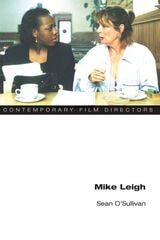
Mike Leigh
Sean O'Sullivan
University of Illinois Press, 2011
O'Sullivan challenges the prevailing characterizations of Leigh's cinema by detailing the complicated constructions of his realism, positing his films not as transparent records of life but as aesthetic transformations of it. Concentrating on the most recent two decades of Leigh's career, the study examines how Naked, Secrets and Lies, Topsy-Turvy, Vera Drake, and other films engage narrative convergence and narrative diffusion, the tension between character and plot, the interplay of coincidence and design, cinema's relationship to other systems of representation, and the filmic rendering of the human figure. The book also spotlights such earlier, less-discussed works as Four Days in July and The Short and Curlies, illustrating the recurring visual and storytelling concerns of Leigh's cinema. With a detailed filmography, this volume also includes key selections from O'Sullivan's several interviews with Leigh.
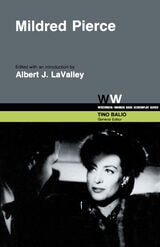
Mildred Pierce
Edited by Albert J. La Valley; Tino T. Balio, Series Editor
University of Wisconsin Press, 1980
Joan Crawford forged a new and successful screen image in this powerful women's noir film; winning her an Academy Award for best actress.
Albert J. LaValley's through and insightful guide to Mildred Pierce at once tells us much about the making of this complex film, the problems and process of transferring the story to the screen, the specific and important roles of the producer, director, and set designer, and how the film relates to broad trends within the industry. It is without a doubt the most thorough treatment of this important American motion picture.
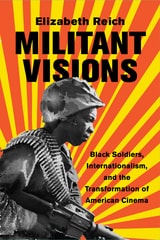
Militant Visions
Black Soldiers, Internationalism, and the Transformation of American CinemaReich, Elizabeth
Rutgers University Press, 2016
Offering a nuanced reading of a figure that was simultaneously conservative and radical, Reich considers how the cinematic black soldier lent a human face to ongoing debates about racial integration, black internationalism, and American militarism. Militant Visions thus not only presents a new history of how American cinema represented race, but also demonstrates how film images helped to make history, shaping the progress of the civil rights movement itself.
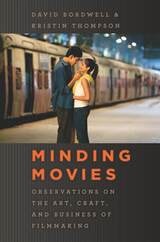
Minding Movies
Observations on the Art, Craft, and Business of FilmmakingDavid Bordwell and Kristin Thompson
University of Chicago Press, 2011
David Bordwell and Kristin Thompson are two of America’s preeminent film scholars. You would be hard pressed to find a serious student of the cinema who hasn’t spent at least a few hours huddled with their seminal introduction to the field—Film Art, now in its ninth edition—or a cable television junkie unaware that the Independent Film Channel sagely christened them the “Critics of the Naughts.” Since launching their blog Observations on Film Art in 2006, the two have added web virtuosos to their growing list of accolades, pitching unconventional long-form pieces engaged with film artistry that have helped to redefine cinematic storytelling for a new age and audience.
Minding Movies presents a selection from over three hundred essays on genre movies, art films, animation, and the business of Hollywood that have graced Bordwell and Thompson’s blog. Informal pieces, conversational in tone but grounded in three decades of authoritative research, the essays gathered here range from in-depth analyses of individual films such as Slumdog Millionaire and Inglourious Basterds to adjustments of Hollywood media claims and forays into cinematic humor. For Bordwell and Thompson, the most fruitful place to begin is how movies are made, how they work, and how they work on us. Written for film lovers, these essays—on topics ranging from Borat to blockbusters and back again—will delight current fans and gain new enthusiasts.
Serious but not solemn, vibrantly informative without condescension, and above all illuminating reading, Minding Movies offers ideas sure to set film lovers thinking—and keep them returning to the silver screen.
Mission Unaccomplished
American War Films in the Twenty-First CenturyAlan Nadel
University of Texas Press, 2025
An analysis of how post-9/11 war movies changed from following soldiers on specific missions to chronicling war as a day-to-day occupation.
In 2003, the United States began a war in Iraq without a mission. Instead of fighting to restore peace—the traditional objective of warfare—servicemembers faced the grim reality that there was no goal. Lacking even certainty as to who was the enemy, soldiers discovered that their task was simply to survive.
Mission Unaccomplished explores how Hollywood grasped the experience of Iraq from the perspective of US soldiers, reinventing the war film in the process. Historically, films such as Saving Private Ryan valorized the goals of war by chronicling missions that unambiguously contribute to the defeat of the enemy and the restoration of peace. But in The Hurt Locker, American Sniper, Green Zone, and other recent dramas, soldiers just try to outlast the chaos. Dramatizing the aimlessness of the war, events occur in random order, and soldiers have no sense of how their actions contribute to victory or peace. Looking to recent WWII movies such as Dunkirk and Hacksaw Ridge, which use this same cinematic vocabulary to position soldiering as merely a deadly job to be endured, Alan Nadel argues that the disillusionment of Iraq has influenced cinema broadly, inspiring a newly critical war film genre.
Mission to Moscow
Edited by David Culbert; Tino T. Balio, Series Editor
University of Wisconsin Press, 1980
Mission to Moscow is a notorious classic among propaganda films produced in the United States. Never has another feature film been made with such explicit direction from the federal government, although the result failed to persuade every viewer.
Mob Culture
Hidden Histories of the American Gangster FilmGrieveson, Lee
Rutgers University Press, 2005
Sinister, swaggering, yet often sympathetic, the figure of the gangster has stolen and murdered its way into the hearts of American cinema audiences. Despite the enduring popularity of the gangster film, however, traditional criticism has focused almost entirely on a few canonical movies such as Little Caesar, Public Enemy, and The Godfather trilogy, resulting in a limited and distorted understanding of this diverse and changing genre.
Mob Culture offers a long-awaited, fresh look at the American gangster film, exposing its hidden histories from the Black Hand gangs of the early twentieth century to The Sopranos. Departing from traditional approaches that have typically focused on the "nature" of the gangster, the editors have collected essays that engage the larger question of how the meaning of criminality has changed over time. Grouped into three thematic sections, the essays examine gangster films through the lens of social, gender, and racial/ethnic issues.
Destined to become a classroom favorite, Mob Culture is an indispensable reference for future work in the genre.
Modern Nature
Derek Jarman
University of Minnesota Press, 2009

Molecular Capture
The Animation of BiologyAdam Nocek
University of Minnesota Press, 2021
How computer animation technologies became vital visualization tools in the life sciences
Who would have thought that computer animation technologies developed in the second half of the twentieth century would become essential visualization tools in today’s biosciences? This book is the first to examine this phenomenon. Molecular Capture reveals how popular media consumption and biological knowledge production have converged in molecular animations—computer simulations of molecular and cellular processes that immerse viewers in the temporal unfolding of molecular worlds—to produce new regimes of seeing and knowing.
Situating the development of this technology within an evolving field of historical, epistemological, and political negotiations, Adam Nocek argues that molecular animations not only represent a key transformation in the visual knowledge practices of life scientists but also bring into sharp focus fundamental mutations in power within neoliberal capitalism. In particular, he reveals how the convergence of the visual economies of science and entertainment in molecular animations extends neoliberal modes of governance to the perceptual practices of scientific subjects. Drawing on Alfred North Whitehead’s speculative metaphysics and Michel Foucault’s genealogy of governmentality, Nocek builds a media philosophy well equipped to examine the unique coordination of media cultures in this undertheorized form of scientific media. More specifically, he demonstrates how governmentality operates across visual practices in the biosciences and the popular mediasphere to shape a molecular animation apparatus that unites scientific knowledge and entertainment culture.
Ultimately, Molecular Capture proposes that molecular animation is an achievement of governmental design. It weaves together speculative media philosophy, science and technology studies, and design theory to investigate how scientific knowledge practices are designed through media apparatuses.
Moment of Action
Riddles of Cinematic PerformancePomerance, Murray
Rutgers University Press, 2016
Monitoring the Movies
The Fight over Film Censorship in Early Twentieth-Century Urban AmericaBy Jennifer Fronc
University of Texas Press, 2017
As movies took the country by storm in the early twentieth century, Americans argued fiercely about whether municipal or state authorities should step in to control what people could watch when they went to movie theaters, which seemed to be springing up on every corner. Many who opposed the governmental regulation of film conceded that some entity—boards populated by trusted civic leaders, for example—needed to safeguard the public good. The National Board of Review of Motion Pictures (NB), a civic group founded in New York City in 1909, emerged as a national cultural chaperon well suited to protect this emerging form of expression from state incursions.
Using the National Board’s extensive files, Monitoring the Movies offers the first full-length study of the NB and its campaign against motion-picture censorship. Jennifer Fronc traces the NB’s Progressive-era founding in New York; its evolving set of “standards” for directors, producers, municipal officers, and citizens; its “city plan,” which called on citizens to report screenings of condemned movies to local officials; and the spread of the NB’s influence into the urban South. Ultimately, Monitoring the Movies shows how Americans grappled with the issues that arose alongside the powerful new medium of film: the extent of the right to produce and consume images and the proper scope of government control over what citizens can see and show.
Monster Cinema
Grant, Barry Keith
Rutgers University Press, 2018
Armed with an encyclopedic knowledge of film history, Grant presents us with an eclectic array of monster movies, from Nosferatu to Get Out. As he discovers, although monster movies might claim to be about Them!, they are really about the capacity for horror that lurks within each of us.
Monster Theory Returns
Jeffrey Jerome Cohen
University of Minnesota Press, 2027
Exploring monsters as critical guides to understanding what it means to be human in a perilous world
Thirty years after the publication of Jeffrey Jerome Cohen’s groundbreaking Monster Theory, the field it helped create has grown into a dynamic and influential area of interdisciplinary scholarship. Monster Theory Returns gathers twenty-six original essays exploring an extraordinary range of monstrous figures, from demons and vampires to microbes and emerging posthuman forms, illuminating urgent questions of belonging, political violence, environmental change, and the boundaries of the human itself.
Combining historical depth with a global perspective, these lively essays show that monsters are far more than figures of fear. They are powerful cultural tools for thinking through crises in a perilous and rapidly changing world.
Contributors: U. Melissa Anyiwo, U of Scranton; Benjamin Ash, Arizona State U; Stephen T. Asma, Columbia College, Chicago; Michael M. Chemers, U of California, Santa Cruz; Eli Cumings, Columbia U; Rebecca Duncan, Linnaeus U; Michael Dylan Foster, U of California, Davis; Renée Fox, U of California, Santa Cruz; Kaja Franck, U of Hertfordshire; Rosemarie Garland-Thomson, Emory U; Brandon R. Grafius, Ecumenical Theological Seminary; Anya Heise-von der Lippe, U of Tübingen; Mary Kate Hurley, Ohio U; Anson Koch-Rein, U of North Carolina; Agnieszka Kotwasińska, U of Warsaw; Riva Lehrer; Sherry C.M. Lindquist, Western Illinois U; Iyad Malouf, Tel Aviv U; Asa Simon Mittman, California State U, Chico; Kirsten Møllegaard, U of Hawai‘i at Hilo; Alan S. Montroso, U of Maryland; David Robinson; Margrit Shildrick, Stockholm U; Jeffrey Andrew Weinstock, Central Michigan U; Emily Zarka, Arizona State U
Retail e-book files for this title are screen-reader friendly with images accompanied by short alt text and/or extended descriptions.
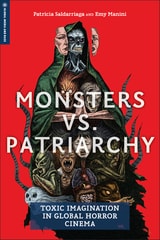
Monsters vs. Patriarchy
Toxic Imagination in Global Horror CinemaPatricia Saldarriaga
Rutgers University Press, 2025
Monsters vs. Patriarchy examines female monstrosity as it appears in horror films from around the world and considers specific political, scientific, and historical contexts to better understand how we construct and reconstruct monstrosity, using an intersectional approach to examine the imposition of gender and racial hierarchies that support national power structures. The authors contend that monstrous female cinematic subjects, including ghosts, witches, cannibals, and posthuman beings, are becoming empowered, using the tools of their monstrification to smash the colonial, white supremacist, and misogynist structures that created them.
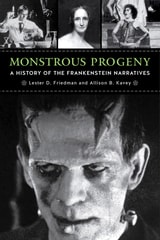
Monstrous Progeny
A History of the Frankenstein NarrativesFriedman, Lester D
Rutgers University Press, 2016
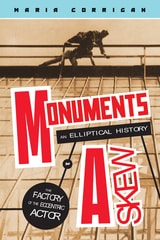
Monuments Askew
An Elliptical History of the Factory of the Eccentric ActorMaria Corrigan
Rutgers University Press, 2025
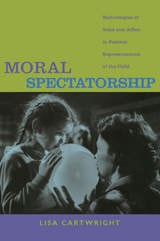
Moral Spectatorship
Technologies of Voice and Affect in Postwar Representations of the ChildLisa Cartwright
Duke University Press, 2008
For more than two decades, film theory has been dominated by a model of identification tacitly based on the idea of feeling what the other feels or of imagining oneself to be the other. Building on the theories of affect and identification developed by André Green, Melanie Klein, Donald W. Winnicott, and Silvan Tomkins, Cartwright develops a model of spectatorship that takes into account and provides a way of critically analyzing the dynamics of a different kind of identification, one that is empathetic and highly intersubjective.
Mourning the Nation
Indian Cinema in the Wake of PartitionBhaskar Sarkar
Duke University Press, 2009
Sarkar tracks the initial reticence to engage with the trauma of 1947 and the subsequent emergence of a strong Partition discourse, revealing both the silence and the eventual “return of the repressed” as strands of one complex process. Connecting the relative silence of the early decades after Partition to a project of postcolonial nation-building and to trauma’s disjunctive temporal structure, Sarkar develops an allegorical reading of the silence as a form of mourning. He relates the proliferation of explicit Partition narratives in films made since the mid-1980s to disillusionment with post-independence achievements, and he discusses how current cinematic memorializations of 1947 are influenced by economic liberalization and the rise of a Hindu-chauvinist nationalism. Traversing Hindi and Bengali commercial cinema, art cinema, and television, Sarkar provides a history of Indian cinema that interrogates the national (a central category organizing cinema studies) and participates in a wider process of mourning the modernist promises of the nation form.
Mouse Morality
The Rhetoric of Disney Animated FilmBy Annalee R. Ward
University of Texas Press, 2002
2004 – Clifford G. Christians Ethics Research Award — The Carl Couch Center for Social and Internet Research
Kids around the world love Disney animated films, and many of their parents trust the Disney corporation to provide wholesome, moral entertainment for their children. Yet frequent protests and even boycotts of Disney products and practices reveal a widespread unease with the sometimes mixed and inconsistent moral values espoused in Disney films as the company attempts to appeal to the largest possible audience.
In this book, Annalee R. Ward uses a variety of analytical tools based in rhetorical criticism to examine the moral messages taught in five recent Disney animated films—The Lion King, Pocahontas, The Hunchback of Notre Dame, Hercules, and Mulan. Taking the films on their own terms, she uncovers the many mixed messages they purvey: for example, females can be leaders—but male leadership ought to be the norm; stereotyping is wrong—but black means evil; historical truth is valued—but only tell what one can sell, etc. Adding these messages together, Ward raises important questions about the moral ambiguity of Disney's overall worldview and demonstrates the need for parents to be discerning in letting their children learn moral values and life lessons from Disney films.
Movement, Action, Image, Montage
Sergei Eisenstein and the Cinema in CrisisLuka Arsenjuk
University of Minnesota Press, 2018
A major new study of Sergei Eisenstein delivers fresh, in-depth analyses of the iconic filmmaker’s body of work
What can we still learn from Sergei Eisenstein? Long valorized as the essential filmmaker of the Russian Revolution and celebrated for his indispensable contributions to cinematic technique, Eisenstein’s relevance to contemporary culture is far from exhausted. In Movement, Action, Image, Montage, Luka Arsenjuk considers the auteur as a filmmaker and a theorist, drawing on philosophers such as Georg Wilhelm Friedrich Hegel and Gilles Deleuze—as well as Eisenstein’s own untranslated texts—to reframe the way we think about the great director and his legacy.
Focusing on Eisenstein’s unique treatment of the foundational concepts of cinema—movement, action, image, and montage—Arsenjuk invests each aspect of the auteur’s art with new significance for the twenty-first century. Eisenstein’s work and thought, he argues, belong as much to the future as the past, and both can offer novel contributions to long-standing cinematic questions and debates.
Movement, Action, Image, Montage brings new elements of Eisenstein’s output into academic consideration, by means ranging from sustained and comprehensive theorization of Eisenstein’s practice as a graphic artist to purposeful engagement with his recently published, unfinished book Method, still unavailable in English translation. This tour de force offers new and significant insights on Eisenstein’s oeuvre—the films, the art, and the theory—and is a landmark work on an essential filmmaker.

Movie Censorship and American Culture
Francis G. Couvares
University of Massachusetts Press, 2006
From the earliest days of public outrage over “indecent” nickelodeon shows, Americans have worried about the power of the movies. The eleven essays in this book examine nearly a century of struggle over cinematic representations of sex, crime, violence, religion, race, and ethnicity, revealing that the effort to regulate the screen has reflected deep social and cultural schisms.
In addition to the editor, contributors include Daniel Czitrom, Marybeth Hamilton, Garth Jowett, Charles Lyons, Richard Maltby, Charles Musser, Alison M. Parker, Charlene Regester, Ruth Vasey, and Stephen Vaughn. Together they make it clear that censoring the movies is more than just a reflex against "indecency," however defined. Whether censorship protects the vulnerable or suppresses the creative, it is part of a broader culture war that breaks out recurrently as Americans try to come to terms with the market, the state, and the plural society in which they live.
Movie Comics
Page to Screen/Screen to PageDavis, Blair
Rutgers University Press, 2017
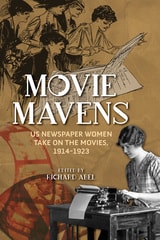
Movie Mavens
US Newspaper Women Take On the Movies, 1914-1923Edited by Richard Abel
University of Illinois Press, 2021
An invaluable collection of rare archival sources, Movie Mavens reveals women's essential contribution to the creation of American film culture.
Movie Migrations
Transnational Genre Flows and South Korean CinemaHye Seung Chung and David Scott Diffrient
Rutgers University Press, 2015
Movie Minorities
Transnational Rights Advocacy and South Korean CinemaHye Seung Chung and David Scott Diffrient
Rutgers University Press, 2021
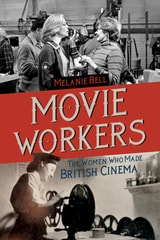
Movie Workers
The Women Who Made British CinemaMelanie Bell
University of Illinois Press, 2021
After the advent of sound, women in the British film industry formed an essential corps of below-the-line workers, laboring in positions from animation artist to negative cutter to costume designer. Melanie Bell maps the work of these women decade-by-decade, examining their far-ranging economic and creative contributions against the backdrop of the discrimination that constrained their careers. Her use of oral histories and trade union records presents a vivid counter-narrative to film history, one that focuses not only on women in a male-dominated business, but on the innumerable types of physical and emotional labor required to make a motion picture. Bell's feminist analysis looks at women's jobs in film at important historical junctures while situating the work in the context of changing expectations around women and gender roles.
Illuminating and astute, Movie Workers is a first-of-its-kind examination of the unsung women whose invisible work brought British filmmaking to the screen.
Movie-Made Jews
An American TraditionHelene Meyers
Rutgers University Press, 2021
With incisive analysis, Movie-Made Jews challenges the assumption that American Jewish cinema is a cinema of impoverishment and assimilation. While it’s a truism that Jews make movies, this book brings into focus the diverse ways movies make Jews.
Movies & Mass Culture
Belton, John
Rutgers University Press, 1995

Movies Grow Up 1940-1980
Charles Champlin
Ohio University Press, 1980
Movies That Mattered
More Reviews from a Transformative DecadeDave Kehr
University of Chicago Press, 2017
With When Movies Mattered, readers welcomed the first collection of Kehr’s criticism, written during his time at the Chicago Reader. Movies That Mattered is its sequel, with fifty more reviews and essays drawn from the archives of both the Chicago Reader and Chicago magazine from 1974 to 1986. As with When Movies Mattered, the majority of the reviews offer in-depth analyses of individual films that are among Kehr’s favorites, from a thoughtful discussion of the sobering Holocaust documentary Shoah to an irresistible celebration of the raucous comedy Used Cars. But fans of Kehr’s work will be just as taken by his dissections of critically acclaimed films he found disappointing, including The Shining, Apocalypse Now, and Raiders of the Lost Ark.
Whether you’re a long-time reader or just discovering Dave Kehr, the insights in Movies That Mattered will enhance your appreciation of the movies you already love—and may even make you think twice about one or two you hated.
Movies under the Influence
Jocelyn Szczepaniak-Gillece
University of Minnesota Press, 2024
A cultural history of the enduring relationship between film spectatorship and intoxicating substances
Movies under the Influence charts the entangled histories of moviegoing and mind-altering substances from early cinema through the psychedelic 1970s. Jocelyn Szczepaniak-Gillece examines how the parallel trajectories of these two enduring aspects of American culture, linked by their ability to influence individual and collective consciousness, resulted in them being treated and regulated in similar ways. Rather than looking at representations of drug use within film, she regards cinema and intoxicants as kindred experiences of immersion that have been subject to corresponding forces of ideology and power.
Exploring the effects of intoxicants such as caffeine, nicotine, alcohol, marijuana, and psychedelics on film spectatorship, Szczepaniak-Gillece demonstrates how American movie theaters sought to cultivate a dual identity, presenting themselves as both a place of wholesome entertainment and a shadowy zone of illicit behavior. Movies under the Influence highlights the various legislative, legal, and corporate powers that held sway over the darkened anonymity of theaters, locating the convergence of moviegoing and drug use as a site of mediation and social control in America.
As much as substances and cinema are points where power intervenes, they are also settings of potential transcendence, and Movies under the Influence maintains this paradox as a necessary component of American film history. Recontextualizing a wide range of films, from Hollywood to the avant-garde, this book examines the implicit relationship intoxicants suggest between mass media, spectatorship, and governmental regulation and provides a new angle from which to understand cinema’s lasting role in evolving American culture.
Moving Color
Early Film, Mass Culture, ModernismYumibe, Joshua
Rutgers University Press, 2012
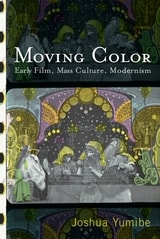
Color was used in film well before The Wizard of Oz. Thomas Edison, for example, projected two-colored films at his first public screening in New York City on April 23, 1896. These first colors of early cinema were not photographic; they were applied manually through a variety of laborious processes—most commonly by the hand-coloring and stenciling of prints frame by frame, and the tinting and toning of films in vats of chemical dyes. The results were remarkably beautiful.
Moving Color is the first book-length study of the beginnings of color cinema. Looking backward, Joshua Yumibe traces the legacy of color history from the beginning of the nineteenth century to the cinema of the early twentieth century. Looking forward, he explores the implications of this genealogy on experimental and contemporary digital cinemas in which many colors have become, once again, vividly unhinged from photographic reality. Throughout this history, Moving Color revolves around questions pertaining to the sensuousness of color: how color moves us in the cinema—visually, emotionally, and physically.
Moving Image Theory
Ecological ConsiderationsEdited by Joseph D. Anderson and Barbara Fisher Anderson. Foreword by David Bordwell
Southern Illinois University Press, 2007
Multi-Mediated Dostoevsky
Transposing Novels into Opera, Film, and DramaAlexander Burry
Northwestern University Press, 2011
Multiculturalism and the Mouse
Race and Sex in Disney EntertainmentBy Douglas Brode
University of Texas Press, 2006
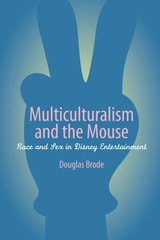
In his latest iconoclastic work, Douglas Brode—the only academic author/scholar who dares to defend Disney entertainment—argues that "Uncle Walt's" output of films, television shows, theme parks, and spin-off items promoted diversity decades before such a concept gained popular currency in the 1990s. Fully understood, It's a Small World—one of the most popular attractions at the Disney theme parks—encapsulates Disney's prophetic vision of an appealingly varied world, each race respecting the uniqueness of all the others while simultaneously celebrating a common human core. In this pioneering volume, Brode makes a compelling case that Disney's consistently positive presentation of "difference"—whether it be race, gender, sexual orientation, ideology, or spirituality—provided the key paradigm for an eventual emergence of multiculturalism in our society.
Using examples from dozens of films and TV programs, Brode demonstrates that Disney entertainment has consistently portrayed Native Americans, African Americans, women, gays, individual acceptance of one's sexual orientation, and alternatives to Judeo-Christian religious values in a highly positive light. Assuming a contrarian stance, Brode refutes the overwhelming body of "serious" criticism that dismisses Disney entertainment as racist and sexist. Instead, he reveals through close textual analysis how Disney introduced audiences to such politically correct principles as mainstream feminism. In so doing, Brode challenges the popular perception of Disney fare as a bland diet of programming that people around the world either uncritically deem acceptable for their children or angrily revile as reactionary pabulum for the masses.
Providing a long overdue and thoroughly detailed alternative, Brode makes a highly convincing argument that with an unwavering commitment to racial diversity and sexual difference, coupled with a vast global popularity, Disney entertainment enabled those successive generations of impressionable youth who experienced it to create today's aura of multiculturalism and our politically correct value system.
Multiple Voices in Feminist Film Criticism
Diane Carson
University of Minnesota Press, 1993
Murder in Hollywood
Solving a Silent Screen MysteryCharles Higham
University of Wisconsin Press, 2004
When it was discovered that a famous star of the day had probably killed Taylor, a massive cover-up began—from the removal of crucial evidence to the naming of innocent people as killers—which has continued until now to protect the truth. Murder in Hollywood goes beyond the killing to unearth unknown details about the life of Taylor before his arrival in Hollywood, as well as the stories and histories buried by the crooked authorities and criminals involved the case. The author’s exclusive interviews with the culpable star, his unique possession of long-vanished police records, and the support of the present-day Los Angeles county coroner—who examined the evidence as if the murder had taken place now—have ensured a hair-raising thriller.
Charles Higham successfully presents the most plausible and convincing solution yet to the mystery. In the process he paints a vivid portrait of Hollywood in the 1920s—from its major stars to its bisexual subculture. The result is a compelling answer to a long-standing mystery and a fascinating study of a place, and an industry that, as today, let people reinvent themselves. Murder in Hollywood is more extraordinary than any crime of fiction and more exciting than any action adventure movie.