Results by title
534 books match the query 'Making' and 97 start with m
Making the Modern Middle East
Second EditionT.G. Fraser, Andrew Mango, and Robert McNamara
Gingko, 2015
This fully revised and updated second edition of The Makers of the Modern Middle East traces those changes and the ensuing history of the region through the rest of the twentieth century and on to the present. Focusing in particular on three leaders—Emir Feisal, Mustafa Kemal, and Chaim Weizmann—the book offers a clear, authoritative account of the region seen from a transnational perspective, one that enables readers to understand its complex history and the way it affects present-day events.
Making the Modern
Industry, Art, and Design in AmericaTerry Smith
University of Chicago Press, 1993
Making the Most of Mess
Reliability and Policy in Today's Management ChallengesEmery Roe
Duke University Press, 2013
Throughout, Roe focuses on the global financial mess of 2008 and its ongoing aftermath, showing how mismanagement has allowed it to morph into other national and international messes. More effective management is still possible for this and many other policy messes but that requires better recognition of patterns and formulation of scenarios, as well as the ability to translate pattern and scenario into reliability. Developing networks of professionals who respond to messes is particularly important. Roe describes how these networks enable the avoidance of bad or worse messes, take advantage of opportunities resulting from messes, and address societal and professional challenges. In addition to finance, he draws from a wide range of case material in other policy arenas. Roe demonstrates that knowing how to manage policy messes is the best approach to preventing crises.
Making the Most of Tomorrow
A Laboratory of Socialist Modernity in CzechoslovakiaMatej Spurný
Karolinum Press, 2019
In this book, Matěj Spurný explores the historical city of Most from the nineteenth century into the years following World War II, investigating the decision to destroy it as well as the negotiations concerning the spirit of the proposed new city. Situating postwar Most in the context of cultural and social shifts in Czechoslovakia and Europe as a whole, Spurný traces the path a medieval city took to become a showcase of brutalist architecture and the regime’s technicist inhumanity.
But the book, like the city of Most itself, does not end in tragedy. Fusing architectural and political history with urban and environmental studies, Spurný’s tale shows the progress that can be made when Czechs confront the crimes of the past—including the expulsion of local Germans and the treatment of the Romani minority—and engage with rational, contemporary European concepts of urban renewal.

Making the Most of Your Library Career
Lois Stickell
American Library Association, 2014
Making the News Popular
Mobilizing U.S. News AudiencesAnthony Nadler
University of Illinois Press, 2016
Anthony Nadler charts a paradigm shift, from market research's reach into the editorial suite in the 1970s through contemporary experiments in collaborative filtering and social news sites like Reddit and Digg. As Nadler shows, the transition was and is a rocky one. It also goes back much further than many experts suppose. Idealized visions of demand-driven news face obstacles with each iteration. Furthermore, the post-professional philosophy fails to recognize how organizations mobilize interest in news and public life. Nadler argues that this civic function of news organizations has been neglected in debates on the future of journalism. Only with a critical grasp of news outlets' role in stirring broad interest in democratic life, he says, might journalism's digital crisis push us toward building a more robust and democratic news media.
Wide-ranging and original, Making the News Popular offers a critical examination of an important, and still evolving, media phenomenon.
Making the News
Modernity and the Mass Press in Nineteenth-Century FranceDean de la Motte
University of Massachusetts Press, 1999
Much recent writing on print culture has focused on the social and political implications of the transition from “elite” to “mass” culture in the 1800s. The essays in this volume add significantly to our understanding of the role of the nineteenth-century French press in producing the commodities, consumers, and ideological frameworks that are the hallmarks of this shift. The book also offers an opportunity for useful comparisons with recent scholarship on the rise on the popular press in the United States, Great Britain, and Germany.
The essays address a wide range of topics, from the emergence of commercial daily newspapers during the July Monarchy to the photographic representation of women in the Paris Commune. Together they demonstrate that the French mass press was far more heterogeneous than previously supposed, tapping into an expanding readership composed of a variety of publics—from affluent bourgeois to disaffected workers to disenfranchised women. It was also relentlessly innovative, using caricature, argot, advertisements, and other attention-grabbing techniques that blurred the lines separating art, politics, and the news.
Making the News
Politics, the Media, and Agenda SettingAmber E. Boydstun
University of Chicago Press, 2013
With Making the News, Amber Boydstun offers an eye-opening look at the explosive patterns of media attention that determine which issues are brought before the public. At the heart of her argument is the observation that the media have two modes: an “alarm mode” for breaking stories and a “patrol mode” for covering them in greater depth. While institutional incentives often initiate alarm mode around a story, they also propel news outlets into the watchdog-like patrol mode around its policy implications until the next big news item breaks. What results from this pattern of fixation followed by rapid change is skewed coverage of policy issues, with a few receiving the majority of media attention while others receive none at all. Boydstun documents this systemic explosiveness and skew through analysis of media coverage across policy issues, including in-depth looks at the waxing and waning of coverage around two issues: capital punishment and the “war on terror.”
Making the News shows how the seemingly unpredictable day-to-day decisions of the newsroom produce distinct patterns of operation with implications—good and bad—for national politics.
Making the Past Present
David Jones, the Middle Ages and ModernismPaul Robichaud
Catholic University of America Press, 2007
Making the Radical University
Identity and Politics on the American College Campus, 1966–1991Elizabeth M. Kalbfleisch
University of Massachusetts Press, 2024
In the 1960s, professors, students, and activists on the political Left viewed college curricula as useful sites for political transformation. They coordinated efforts to alter general education requirements at the college level to foster change in American thought, with greater openness toward people who had previously been excluded, including women, people of color, the poor and working classes, people with disabilities, and members of the LGBTQ community. Their work reshaped American culture and politics, while prompting a significant backlash from conservatives attempting to, in their view, protect classical education from modern encroachment.
Elizabeth M. Kalbfleisch details how American universities became a battleground for identity politics from the 1960s through the 1980s. Focusing on two case studies at Stanford University and the University of Texas at Austin, Making the Radical University examines how curricular changes led to polarizing discussions nationwide around academic standards and identity politics, including the so-called canon wars. Today, these debates have only become more politically charged, complex, and barbed.
Making the Right Choice
Narratives of Marriage in Sri LankaAsha L. Abeyasekera
Rutgers University Press, 2021
Making the Right Choice unravels the entangled relationship between marriage, morality, and the desire for modernity as it plays out in the context of middle-class status concerns and aspirations for upward social mobility within the Sinhala-Buddhist community in urban Sri Lanka. By focusing on individual life-histories spanning three generations, the book illuminates how narratives about a gendered self and narratives about modernity are mutually constituted and intrinsically tied to notions of agency. The book uncovers how "becoming modern" in urban Sri Lanka, rather than causing inter-generational conflict, is a collective aspiration realized through the efforts of bringing up educated and independent women capable of making "right" choices. The consequence of this collective investment is a feminist conundrum: agency does not denote the right to choose, but the duty to make the "right" choice; hence agency is experienced not as a sense of "freedom," but rather as a burden of responsibility.
Making the Scene in the Garden State
Popular Music in New Jersey from Edison to Springsteen and BeyondDewar MacLeod
Rutgers University Press, 2020
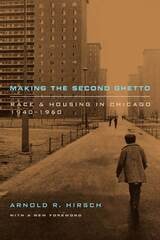
Making the Second Ghetto
Race and Housing in Chicago 1940-1960Arnold R. Hirsch
University of Chicago Press, 1998
"In this excellent, intricate, and meticulously researched study, Hirsch exposes the social engineering of the post-war ghetto."—Roma Barnes, Journal of American Studies
"According to Arnold Hirsch, Chicago's postwar housing projects were a colossal exercise in moral deception. . . . [An] excellent study of public policy gone astray."—Ron Grossman, Chicago Tribune
"An informative and provocative account of critical aspects of the process in [Chicago]. . . . A good and useful book."—Zane Miller, Reviews in American History
"A valuable and important book."—Allan Spear, Journal of American History
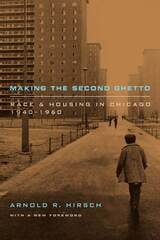
Making the Second Ghetto
Race and Housing in Chicago, 1940-1960Arnold R. Hirsch
University of Chicago Press, 2021
Hirsch’s classic and groundbreaking work of urban history is a revelatory look at Chicago in the decades after the Great Depression, a period when the city dealt with its rapidly growing Black population not by working to abolish its stark segregation but by expanding and solidifying it. Even as the civil rights movement rose to prominence, Chicago exploited a variety of methods of segregation—including riots, redevelopment, and a host of new legal frameworks—that provided a national playbook for the emergence of a new kind of entrenched inequality. Hirsch’s chronicle of the strategies employed by ethnic, political, and business interests in reaction to the Great Migration of Southern Blacks in the mid-twentieth century makes startingly clear how the violent reactions of an emergent white population found common ground with policy makers to segregate first a city and then the nation.
This enlarged edition of Making the Second Ghetto features a visionary afterword by historian N. D. B. Connolly, explaining why Hirsch’s book still crackles with “blistering relevance” for contemporary readers.
Making the Transition to Classroom Success
Culturally Responsive Teaching for Struggling Language LearnersHelaine W. Marshall and Andrea DeCapua
University of Michigan Press, 2013
Features a chapter on flipped classrooms!
Learners with no, minimal, or limited exposure to formal education generally do not share the expectations and assumptions of their new setting; as a result, they are likely to find themselves confounded by the ways in which the language and content are presented, practiced, and assessed in Western-style educational settings. Institutions and teachers must tailor therefore their instruction to this population. Making the Transition to Classroom Success: Culturally Responsive Teaching for Struggling Language Learners examines how understanding secondary and adult L2 learners’ educational paradigm, rooted deeply in their past experiences and cultural orientations, provides a key to the solution to a lack of progress.
Making the Transition to Classroom Success builds on and expands on two earlier books, Meeting the Needs of Students with Limited or Interrupted Formal Schooling and Breaking New Ground: Teaching Students with Limited or Interrupted Formal Education in U.S. Secondary Schools. These previous books focused specifically on a subset of struggling L2 learners--those with limited or interrupted formal education (SLIFE) in U.S. secondary schools—and detailed the instructional model (MALP). Making the Transition broadens the applications of the MALP model to include academic thinking tasks, flipped classrooms, project design, and rubrics.
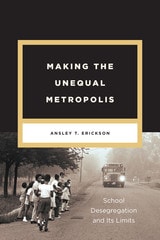
Making the Unequal Metropolis
School Desegregation and Its LimitsAnsley T. Erickson
University of Chicago Press, 2016
Taking Nashville as her focus, Erickson uncovers the hidden policy choices that have until now been missing from popular and legal narratives of inequality. In her account, inequality emerges not only from individual racism and white communities’ resistance to desegregation, but as the result of long-standing linkages between schooling, property markets, labor markets, and the pursuit of economic growth. By making visible the full scope of the forces invested in and reinforcing inequality, Erickson reveals the complex history of, and broad culpability for, ongoing struggles in our schools.
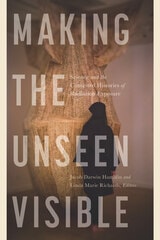
Making the Unseen Visible
Science and the Contested Histories of Radiation ExposureJacob Darwin Hamblin
Oregon State University Press, 2023
From 2017 to 2020, Jacob Hamblin and Linda Richards ran the Oregon State University Downwinders Project, sponsored by the National Science Foundation, to support research and scholarship on the Hanford downwinders cases. Additionally, each summer the project team sponsored a workshop that brought a variety of stakeholders together to explore the science, history, and lived experiences of nuclear exposure. These workshops took a broad view of nuclear exposure, beyond Hanford, beyond the United States, and beyond academia. Community members and activists presented their testimonies and creative work alongside scholars studying exposure worldwide.
Making the Unseen Visible collects the best work arising from the project and its workshops. Scholarly research chapters and reflective essays cover topics and experiences ranging from colonial nuclear testing in North Africa, to Hiroshima survivor stories, to uranium mining in the Navajo Nation, to battles over public memory around Hanford. Scholarship on nuclear topics has largely happened on a case study basis, focusing on individual disasters or locations. Making the Unseen Visible brings a variety of current community and scholarly work together to create a clearer, larger web uniting nuclear humanities research across time and geography.
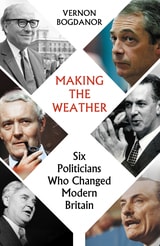
Making the Weather
Six Politicians Who Changed Modern BritainVernon Bogdanor
Haus Publishing, 2025
Making the Weather is the story of six postwar politicians, all of whom exerted an outsized influence on the political life of the United Kingdom—an influence greater than that of most prime ministers. Vernon Bogdanor’s cast includes three from the political Left—Aneurin “Nye” Bevan, Roy Jenkins, and Tony Benn—and three from the Right—Enoch Powell, Keith Joseph, and Nigel Farage. Each study is a fascinating analysis examining how these men achieved such prominence and influence and how, though very different figures in many ways, they came to dominate the political landscape, often for years.
Each of the six made fundamental contributions to the debate about Britain’s future and to the vibrancy of British democracy. From immigration to Europe, from the National Health Service to devolution, the issues and causes that brought these men to prominence are still relevant.
Making the White Man's West
Whiteness and the Creation of the American WestJason E. Pierce
University Press of Colorado, 2016
The West, especially the Intermountain states, ranks among the whitest places in America, but this fact obscures the more complicated history of racial diversity in the region. In Making the White Man’s West, author Jason E. Pierce argues that since the time of the Louisiana Purchase, the American West has been a racially contested space. Using a nuanced theory of historical “whiteness,” he examines why and how Anglo-Americans dominated the region for a 120-year period.
In the early nineteenth century, critics like Zebulon Pike and Washington Irving viewed the West as a “dumping ground” for free blacks and Native Americans, a place where they could be segregated from the white communities east of the Mississippi River. But as immigrant populations and industrialization took hold in the East, white Americans began to view the West as a “refuge for real whites.” The West had the most diverse population in the nation with substantial numbers of American Indians, Hispanics, and Asians, but Anglo-Americans could control these mostly disenfranchised peoples and enjoy the privileges of power while celebrating their presence as providing a unique regional character. From this came the belief in a White Man’s West, a place ideally suited for “real” Americans in the face of changing world.
The first comprehensive study to examine the construction of white racial identity in the West, Making the White Man’s West shows how these two visions of the West—as a racially diverse holding cell and a white refuge—shaped the history of the region and influenced a variety of contemporary social issues in the West today.
Making the Work-Based Safety Net Work Better
Forward-Looking Policies to Help Low-Income FamiliesCarolyn J. Heinrich
Russell Sage Foundation, 2009
Making the World Global
U.S. Universities and the Production of the Global ImaginaryIsaac A. Kamola
Duke University Press, 2019

Making the World Safe for Capitalism
How Iraq Threatened the US Economic Empire and had to be DestroyedChristopher Doran
Pluto Press, 2012
The Iraq war defined the first decade of the twenty-first century – leading to mass protests and raising profound questions about domestic politics and the use of military force. Yet most explanations of the war have a narrow focus either on political personalities or oil.
Christopher Doran provides a unique perspective, arguing that the drive to war came from the threat Iraq might pose to American economic hegemony if the UN sanctions regime was ended. Doran argues that this hegemony is rooted in third world debt and corporate market access. It was protection of these arrangements that motivated US action, not Iraq’s alleged weapons of mass destruction or a simplistic desire to seize its oil.
This book will provide new insights on the war which still casts a shadow over global politics, and will have wide appeal to all those concerned about the Middle East, world peace and global development.
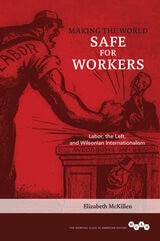
Making the World Safe for Workers
Labor, the Left, and Wilsonian InternationalismElizabeth McKillen
University of Illinois Press, 2018
Making, Keeping, and Losing Friends
How Campuses Shape College Students' NetworksJanice M. McCabe
University of Chicago Press, 2025
We’re all familiar with the sentiment that “college is the best time of your life.” Along with a newfound sense of freedom, students have a unique opportunity to forge lifelong friendships at a point in life when friendship is particularly important. Why is it, then, that so many college students are falling victim to what the US Surgeon General termed an “epidemic of loneliness and isolation”? How do different aspects of college life help or hinder students’ ability to form deep connections?
In Making, Keeping, and Losing Friends: How Campuses Shape College Students’ Networks, sociologist Janice M. McCabe shows that the way a college is structured—whether students live in dorms or commute, study abroad or stay close to campus, have plentiful common areas for clubs to meet or not—can either encourage or hinder the making of meaningful friendships. Based on interviews with 95 students on three distinct campuses—a small private college (Dartmouth College), a large public university (University of New Hampshire), and a non-residential community college (Manchester Community College)—McCabe captures a wide range of experiences and discovers how features of the campuses make it easier or harder for students to make and keep friends. She shows how and why, across all three institutions, some students thrive in deep and lasting friendships with their peers.
As McCabe’s research reveals, we need to look at the structures of students’ networks, the institutions they attend, and the importance of their identities in these places if we are to truly uncover and address the loneliness epidemic facing today’s young adults.
Manifold Greatness
The Making of the King James BibleEdited by Helen Moore and Julian Reid
Bodleian Library Publishing, 2011
Published to commemorate the four hundredth anniversary of the publication of the King James Bible, Manifold Greatness tells the story of the creation and immediate afterlife of the King James translation of the Bible, first published in 1611. Revolutionary at its time, the King James translation quickly became the dominant authorized translation of the Christian Bible in English. There are more than one billion copies in print, making it the best-selling book of all time, and its effect on the English language is incalculable, both in common speech and in literature.
This accessible and richly illustrated visual history contains eighty color illustrations, including images of rare manuscripts, artifacts, and archival material such as the annotated Bodleian Bishops’ Bible of 1602, pages from the Wycliffite and Tyndale Bibles, and an edition of the Bishop’s Bible owned by Elizabeth I. Eight chapters contributed by leading academics in the field discuss the history of biblical translation, the political background of the project, the Oxford Translators—including Henry Savile, John Rainolds, and John Harmar—and their working milieu, the cultural politics, and the reception and influence of the King James Bible up until the 1769 publication of the Oxford Standard Edition, which was the first revision of the original 1611 translation. Also included is a look at the later reception of the King James Bible in America, including a chapter specifically on the King James Bible and the Folger Shakespeare Library.
Manifold Greatness brings together key research and documentation to provide a lively and comprehensive visual account to celebrate one of the most important occasions in publishing and modern religious history.
Mapping Yorùbá Networks
Power and Agency in the Making of Transnational CommunitiesKamari Maxine Clarke
Duke University Press, 2004
Examining how the development of a deterritorialized network of black cultural nationalists became aligned with a lucrative late-twentieth-century roots heritage market, Clarke explores the dynamics of Òyótúnjí Village’s religious and tourist economy. She discusses how the community generates income through the sale of prophetic divinatory consultations, African market souvenirs—such as cloth, books, candles, and carvings—and fees for community-based tours and dining services. Clarke accompanied Òyótúnjí villagers to Nigeria, and she describes how these heritage travelers often returned home feeling that despite the separation of their ancestors from Africa as a result of transatlantic slavery, they—more than the Nigerian Yorùbá—are the true claimants to the ancestral history of the Great Òyó Empire of the Yorùbá people. Mapping Yorùbá Networks is a unique look at the political economy of homeland identification and the transnational construction and legitimization of ideas such as authenticity, ancestry, blackness, and tradition.
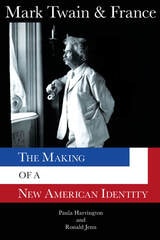
Mark Twain & France
The Making of a New American IdentityPaula Harrington and Ronald Jenn
University of Missouri Press, 2017
While critics have generally dismissed Mark Twain’s relationship with France as hostile, Harrington and Jenn see Twain’s use of the French as a foil to help construct his identity as “the representative American.” Examining new materials that detail his Montmatre study, the carte de visite album, and a chronology of his visits to France, the book offers close readings of writings that have been largely ignored, such as The Innocents Adrift manuscript and the unpublished chapters of A Tramp Abroad, combining literary analysis, socio-historical context and biographical research.
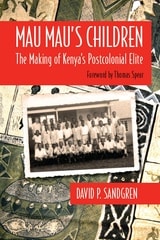
Mau Mau’s Children
The Making of Kenya’s Postcolonial EliteDavid P. Sandgren; Foreword by Thomas Spear
University of Wisconsin Press, 2012
In 1963 David P. Sandgren went to Kenya to teach in a small, rural school for boys, where he remained for the next four years. These were heady times for Kenyans, as the nation gained its independence, approved a new constitution, and held its first elections. In the school where Sandgren taught, the sons of Gikuyu farmers rose to the challenges of this post colonial era and, in time, entered Kenyan society as adults, joining Kenya’s first generation of post colonial elites.
In Mau Mau’s Children, Sandgren has reconnects with these former students. Drawing on more than one hundred interviews, he provides readers with a collective biography of the lives of Kenya’s first postcolonial elite, stretching from their 1940s childhood to the peak of their careers in the 1990s. Through these interviews, Mau Mau’s Children shows the trauma of growing up during the Mau Mau Rebellion, the nature of nationalism in Kenya, the new generational conflicts arising, and the significance of education and Gikuyu ethnicity on his students' path to success.
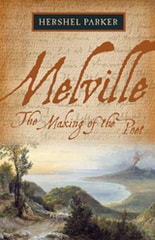
Melville
The Making of the PoetHershel Parker
Northwestern University Press, 2007
“Who would have looked for philosophy in whales, or for poetry in blubber?” the London John Bull remarked in October of 1851. And yet, the reviewer went on, “few books which professedly deal in metaphysics, or claim the parentage of the muses, contain as much true philosophy and as much genuine poetry as the tale of the Pequod's whaling expedition.” A decade and a half before surprising the world with a book of Civil war poetry, Melville was already confident of what was “poetic” in his prose. As Hershel Parker demonstrates in this book, Melville was steeped in poetry long before he called himself a poet.
Here Parker, the dean of Melville studies, gives a compelling, in-depth account of how one of America’s greatest writers grew into the vocation of a poet. His work corrects two of the most pernicious misconceptions about Melville perpetuated by earlier critics: that he repudiated fiction writing after Pierre, and that he hadn’t begun writing poetry (let alone had a book of poems ready for publication) as early as 1860. In clearing up these misapprehensions, Parker gives a thorough and thoroughly involving account of Melville’s development as a poet. Parker demonstrates for the first time just how crucial poetry was to Melville from childhood to old age, especially its re-emergence in his life after 1849. Drawing on Melville's shrewd annotations of great British poets and on his probing, skeptical engagement with commentaries on poetry (particularly by the great Scots reviewers), Parker paints a richly textured portrait of a hitherto unseen side of Herman Melville.
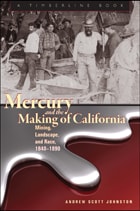
Mercury and the Making of California
Mining, Landscape, and Race, 1840–1890Andrew Scott Johnston
University Press of Colorado, 2015
Gold and silver could not be refined without mercury; therefore, its production and use were vital to securing power and wealth in the West. The first industrialized mining in California, mercury mining had its own particular organization, structure, and built environments. These were formed within the Spanish Empire, subsequently transformed by British imperial ambitions, and eventually manipulated by American bankers and investors. In California, mercury mining also depended on a workforce differentiated by race and ethnicity. The landscapes of work and camp and the relations among the many groups involved in the industry—Mexicans, Chileans, Spanish, English, Irish, Cornish, American, and Chinese—form a crucial chapter in the complex history of race and ethnicity in the American West.
This pioneering study explicates the mutual structuring of the built environments of the mercury-mining industry and the emergence of California’s ethnic communities. Combining rich documentary sources with a close examination of the existing physical landscape, Johnston explores both the detail of everyday work and life in the mines and the larger economic and social structures in which mercury mining was enmeshed, revealing the significance of mercury mining for Western history.
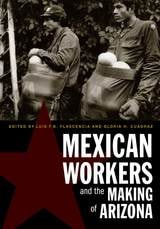
Mexican Workers and the Making of Arizona
Edited by Luis F. B. Plascencia and Gloria H. Cuádraz
University of Arizona Press, 2018
Mexican Workers and the Making of Arizona centers on the production of an elastic supply of labor, revealing how this long-standing approach to the building of Arizona has obscured important power relations, including the state’s favorable treatment of corporations vis-à-vis workers. Building on recent scholarship about Chicanas/os and others, the volume insightfully describes how U.S. industries such as railroads, mining, and agriculture have fostered the recruitment of Mexican labor, thus ensuring the presence of a surplus labor pool that expands and contracts to accommodate production and profit goals.
The volume’s contributors delve into examples of migration and settlement in the Salt River Valley; the mobilization and immobilization of cotton workers in the 1920s; miners and their challenge to a dual-wage system in Miami, Arizona; Mexican American women workers in midcentury Phoenix; the 1980s Morenci copper miners’ strike and Chicana mobilization; Arizona’s industrial and agribusiness demands for Mexican contract labor; and the labor rights violations of construction workers today.
Mexican Workers and the Making of Arizona fills an important gap in our understanding of Mexicans and Mexican Americans in the Southwest by turning the scholarly gaze to Arizona, which has had a long-standing impact on national policy and politics.
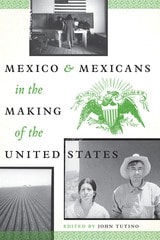
Mexico and Mexicans in the Making of the United States
Edited by John Tutino
University of Texas Press, 2012
Mexico and Mexicans have been involved in every aspect of making the United States from colonial times until the present. Yet our shared history is a largely untold story, eclipsed by headlines about illegal immigration and the drug war. Placing Mexicans and Mexico in the center of American history, this volume elucidates how economic, social, and cultural legacies grounded in colonial New Spain shaped both Mexico and the United States, as well as how Mexican Americans have constructively participated in North American ways of production, politics, social relations, and cultural understandings.
Combining historical, sociological, and cultural perspectives, the contributors to this volume explore the following topics: the Hispanic foundations of North American capitalism; indigenous peoples’ actions and adaptations to living between Mexico and the United States; U.S. literary constructions of a Mexican “other” during the U.S.-Mexican War and the Civil War; the Mexican cotton trade, which helped sustain the Confederacy during the Civil War; the transformation of the Arizona borderlands from a multiethnic Mexican frontier into an industrializing place of “whites” and “Mexicans”; the early-twentieth-century roles of indigenous Mexicans in organizing to demand rights for all workers; the rise of Mexican Americans to claim middle-class lives during and after World War II; and the persistence of a Mexican tradition of racial/ethnic mixing—mestizaje—as an alternative to the racial polarities so long at the center of American life.
Migration and the Making of Industrial São Paulo
Paulo Fontes
Duke University Press, 2016
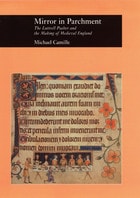
Mirror in Parchment
The Luttrell Psalter and the Making of Medieval EnglandMichael Camille
University of Chicago Press, 1998
The richly illuminated Luttrell Psalter was created for the English nobleman Sir Geoffrey Luttrell (1276-1345). Inexpensive mechanical illustration has since disseminated the book's images to a much wider audience; hence the Psalter's representations of manorial life have come to profoundly shape our modern idea of what medieval English people, high and low, looked like at work and at play. Alongside such supposedly truthful representations, the Psalter presents myriad images of fantastic monsters and beasts. These patently false images have largely been disparaged or ignored by modern historians and art historians alike, for they challenge the credibility of those pictures in the Luttrell Psalter that we wish to see as real.
In the conviction that medieval images were not generally intended to reflect daily life but rather to shape a new reality, Michael Camille analyzes the Psalter's famous pictures as representations of the world, imagined and real, of its original patron. Addressed are late medieval chivalric ideals, physical sites of power, and the boundaries of Sir Geoffrey's imagined community, wherein agricultural laborers and fabulous monsters play a similar ideological role. The Luttrell Psalter thus emerges as a complex social document of the world as its patron hoped and feared it might be.
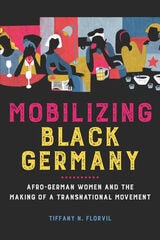
Mobilizing Black Germany
Afro-German Women and the Making of a Transnational MovementTiffany N. Florvil
University of Illinois Press, 2020
Tiffany N. Florvil examines the role of queer and straight women in shaping the contours of the modern Black German movement as part of the Black internationalist opposition to racial and gender oppression. Florvil shows the multifaceted contributions of women to movement making, including Audre Lorde’s role in influencing their activism; the activists who inspired Afro-German women to curate their own identities and histories; and the evolution of the activist groups Initiative of Black Germans and Afro-German Women. These practices and strategies became a rallying point for isolated and marginalized women (and men) and shaped the roots of contemporary Black German activism.
Richly researched and multidimensional in scope, Mobilizing Black Germany offers a rare in-depth look at the emergence of the modern Black German movement and Black feminists’ politics, intellectualism, and internationalism.
Modelwork
The Material Culture of Making and KnowingMartin Brückner
University of Minnesota Press, 2021
How making models allows us to recall what was and to discover what still might be
Whether looking inward to the intricacies of human anatomy or outward to the furthest recesses of the universe, expanding the boundaries of human inquiry depends to a surprisingly large degree on the making of models. In this wide-ranging volume, scholars from diverse fields examine the interrelationships between a model’s material foundations and the otherwise invisible things it gestures toward, underscoring the pivotal role of models in understanding and shaping the world around us. Whether in the form of reproductions, interpretive processes, or constitutive tools, models may bridge the gap between the tangible and the abstract.
By focusing on the material aspects of models, including the digital ones that would seem to displace their analogue forebears, these insightful essays ground modeling as a tactile and emphatically humanistic endeavor. With contributions from scholars in the history of science and technology, visual studies, musicology, literary studies, and material culture, this book demonstrates that models serve as invaluable tools across every field of cultural development, both historically and in the present day.
Modelwork is unique in calling attention to modeling’s duality, a dynamic exchange between imagination and matter. This singular publication shows us how models shape our ability to ascertain the surrounding world and to find new ways to transform it.
Contributors: Hilary Bryon, Virginia Tech; Johanna Drucker, UCLA; Seher Erdoğan Ford, Temple U; Peter Galison, Harvard U; Lisa Gitelman, New York U; Reed Gochberg, Harvard U; Catherine Newman Howe, Williams College; Christopher J. Lukasik, Purdue U; Martin Scherzinger, New York U; Juliet S. Sperling, U of Washington; Annabel Jane Wharton, Duke U.
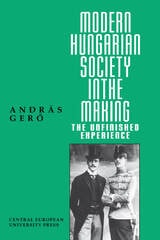
Modern Hungarian Society in the Making
András Gero
Central European University Press, 1995
Money in the Air
Art Dealers and the Making of a Transatlantic Market, 1880–1930Gail Feigenbaum
J. Paul Getty Trust, The, 2024
“There was money in the air, ever so much money,” wrote Henry James in 1907, reflecting on the American appetite for art acquisitions. Indeed, collectors such as Henry Clay Frick and Andrew W. Mellon are credited with bringing noteworthy European art to the United States, with their collections forming the backbone of major American museums today. But what of the dealers, who possessed the expertise in art and recognized the potential of developing a new market model on both sides of the Atlantic?
Money in the Air investigates the often-overlooked role of these dealers in creating an international art world. Contributors examine the histories of well-known international firms like Duveen Brothers, M. Knoedler & Co., and Goupil & Cie and their relationships with American clients, as well as accounts of other remarkable dealers active in the transatlantic art market. Drawing on dealer archives, scholars reveal compelling findings, including previously unknown partnerships and systems of cooperation. This volume offers new perspectives on the development of art collections that formed the core of American art museums, such as the National Gallery of Art, the Metropolitan Museum of Art, and the Frick Collection.
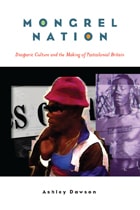
Mongrel Nation
Diasporic Culture and the Making of Postcolonial BritainAshley Dawson
University of Michigan Press, 2007
Mongrel Nation surveys the history of the United Kingdom’s African, Asian, and Caribbean populations from 1948 to the present, working at the juncture of cultural studies, literary criticism, and postcolonial theory. Ashley Dawson argues that during the past fifty years Asian and black intellectuals from Sam Selvon to Zadie Smith have continually challenged the United Kingdom’s exclusionary definitions of citizenship, using innovative forms of cultural expression to reconfigure definitions of belonging in the postcolonial age. By examining popular culture and exploring topics such as the nexus of race and gender, the growth of transnational politics, and the clash between first- and second-generation immigrants, Dawson broadens and enlivens the field of postcolonial studies.
Mongrel Nation gives readers a broad landscape from which to view the shifting currents of politics, literature, and culture in postcolonial Britain. At a time when the contradictions of expansionist braggadocio again dominate the world stage, Mongrel Nation usefully illuminates the legacy of imperialism and suggests that creative voices of resistance can never be silenced.Dawson
“Elegant, eloquent, and full of imaginative insight, Mongrel Nation is a refreshing, engaged, and informative addition to post-colonial and diasporic literary scholarship.”
—Hazel V. Carby, Yale University
“Eloquent and strong, insightful and historically precise, lively and engaging, Mongrel Nation is an expansive history of twentieth-century internationalist encounters that provides a broader landscape from which to understand currents, shifts, and historical junctures that shaped the international postcolonial imagination.”
—May Joseph, Pratt Institute
Ashley Dawson is Associate Professor of English at the City University of New York’s Graduate Center and the College of Staten Island. He is coeditor of the forthcoming Exceptional State: Contemporary U.S. Culture and the New Imperialism.
Mormonism and the Making of a British Zion
Matthew L. Rasmussen
University of Utah Press, 2016
After many British believers left for America, church membership in England fell so sharply that the movement in Britain seemed to be on the brink of collapse. Yet British Mormonism gradually resurged and continues today. How did this religious minority flourish when so many nineteenth-century revivalist movements did not? Rasmussen explains Mormonism’s inception, perpetuation, and maturation in Britain in a compelling case study of a “new religious movement” with staying power. From its establishment in 1837 to its maturation in 1998, the Mormon perspective of Britain shifted dramatically. This book chronicles that shift, and illustrates how doctrinal adaptation has enabled Mormonism in Britain to persist.
Mother Figured
Marian Apparitions and the Making of a Filipino UniversalDeirdre de la Cruz
University of Chicago Press, 2015
In Mother Figured, historical anthropologist Deirdre de la Cruz offers a detailed examination of several appearances and miracles of the Virgin Mary in the Philippines from materials and sites ranging from the mid-nineteenth century to the present. By analyzing the effects of the mass media on the perception and proliferation of apparition phenomena, de la Cruz charts the intriguing emergence of new voices in the Philippines that are broadcasting Marian discourse globally. Based on two years of ethnographic fieldwork and hitherto unexplored archives in the Philippines, the United States, and Spain, Mother Figured documents the conditions of Marian devotion’s modern development and tracks how it has transformed Filipinos’ social and political role within the greater Catholic world.
Mr. Democrat
Jim Farley, the New Deal and the Making of Modern American PoliticsDaniel Scroop
University of Michigan Press, 2006
Mr. Democrat tells the story of Jim Farley, Franklin D. Roosevelt's campaign manager. As party boss, Farley experienced unprecedented success in the New Deal years. And like his modern counterpart Karl Rove, Farley enjoyed unparalleled access and power. Unlike Rove, however, Farley was instrumental in the creation of an overwhelming new majority in American politics, as the emergence of the New Deal transformed the political landscape of its time.
Mr. Democrat is timely and indispensable not just because Farley was a fascinating and unduly neglected figure, but also because an understanding of his career advances our knowledge of how and why he revolutionized the Democratic Party and American politics in the age of the New Deal.
Daniel Scroop is Lecturer in American History, University of Liverpool School of History.
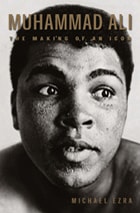
Muhammad Ali
The Making of an IconMichael Ezra
Temple University Press, 2009
Muhammad Ali (born Cassius Clay) has always engendered an emotional reaction from the public. From his appearance as an Olympic champion to his iconic status as a national hero, his carefully constructed image and controversial persona has always been intensely scrutinized. In Muhammad Ali, Michael Ezra considers the boxer who calls himself “The Greatest” from a new perspective. He writes about Ali’s pre-championship bouts, the management of his career and his current legacy, exploring the promotional aspects of Ali and how they were wrapped up in political, economic, and cultural “ownership.”
Ezra’s incisive study examines the relationships between Ali’s cultural appeal and its commercial manifestations. Citing examples of the boxer’s relationship to the Vietnam War and the Nation of Islam—which serve as barometers of his “public moral authority”—Muhammad Ali analyzes the difficulties of creating and maintaining these cultural images, as well as the impact these themes have on Ali’s meaning to the public.
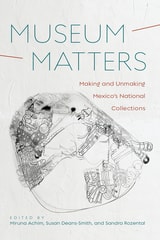
Museum Matters
Making and Unmaking Mexico’s National CollectionsEdited by Miruna Achim, Susan Deans-Smith, Sandra Rozental
University of Arizona Press, 2021
Museum Matters traces the emergence, consolidation, and dispersal of this national museum complex by telling the stories of its objects. Objects that have been separated over time are brought back together in this book in order to shed light on the interactions and processes that have forged things into symbols of science, aesthetics, and politics. The contributors to this volume illuminate how collections came into being or ceased to exist over time, or how objects moved in and out of collections and museum spaces. They explore what it means to move things physically and spatially, as well as conceptually and symbolically.
Museum Matters unravels the concept of the national museum. By unmaking the spaces, frameworks, and structures that form the complicated landscape of national museums, this volume brings a new way to understand the storage, displays, and claims about the Mexican nation’s collections today.
Contributors
Miruna Achim, Christina Bueno, Laura Cházaro, Susan Deans-Smith, Frida Gorbach, Haydeé López Hernández, Carlos Mondragón, Bertina Olmedo Vera, Sandra Rozental, Mario Rufer
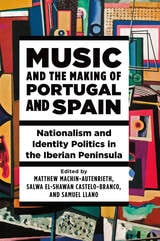
Music and the Making of Portugal and Spain
Nationalism and Identity Politics in the Iberian PeninsulaEdited by Matthew Machin-Autenrieth, Salwa el-Shawan Castelo-Branco, and Samuel Llano
University of Illinois Press, 2023
What does music in Portugal and Spain reveal about the relationship between national and regional identity building? How do various actors use music to advance nationalism? How have state and international heritage regimes contributed to nationalist and regionalist projects? In this collection, contributors explore these and other essential questions from a range of interdisciplinary vantage points. The essays pay particular attention to the role played by the state in deciding what music represents Portuguese or Spanish identity. Case studies examine many aspects of the issue, including local recording networks, so-called national style in popular music, and music’s role in both political protest and heritage regimes. Topics include the ways the Salazar and Franco regimes adapted music to align with their ideological agendas; the twenty-first-century impact of UNESCO’s Intangible Cultural Heritage program on some of Portugal and Spain's expressive practices; and the tensions that arise between institutions and community in creating and recreating meanings and identity around music.
Contributors: Ricardo Andrade, Vera Marques Alves, Salwa El-Shawan Castelo-Branco, Cristina Sánchez-Carretero, José Hugo Pires Castro, Paulo Ferreira de Castro, Fernán del Val, Héctor Fouce, Diego García-Peinazo, Leonor Losa, Josep Martí, Eva Moreda Rodríguez, Pedro Russo Moreira, Cristina Cruces Roldán, and Igor Contreras Zubillaga
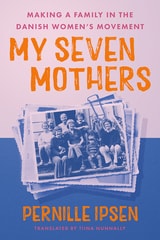
My Seven Mothers
Making a Family in the Danish Women's MovementPernille Ipsen
University of Minnesota Press, 2025
Seven women raise a child together while redefining their place in society at the beginning of the Women’s Movement in Denmark in the 1970s
On New Year’s Eve in Copenhagen in 1972, seven women had a child together: one gave birth and six others attended. They had met a year earlier at a feminist women’s camp on a small island and now, with about twenty other women’s liberationists, they occupied three dilapidated apartment buildings in the center of Copenhagen. One became the country’s first Women’s House, the nerve center of the Women’s Movement in Denmark, and the other two were women-only communal living spaces that were Pernille Ipsen’s first home. In this intimate portrait of life during the exhilarating early days of women’s liberation in Scandinavia and dramatic social change around the globe, she tells the stories of these seven women, her seven mothers.
Recounting her mothers’ history—from the passions and beliefs they shared to the political divisions over sexual identity that ultimately split them apart—Ipsen captures the individuality of each of her mothers as well as the common experiences that drew them together. As she deftly reflects the practical and emotional realities of her mothers’ women-centered life, Ipsen presents an engrossing picture of intersecting lives that, half a century ago, raised questions we still grapple with today: What is a family? Who is a woman? And who gets to decide?
A chronicle of gender, sexuality, and feminism as it was constructed, contested, and lived, My Seven Mothers is an eye-opening account of the challenges and possibilities connected with liberation and radical social change during the 1970s. In this time of fierce struggles over family, sexuality, and child-rearing, it reminds us that new worlds are always possible.
Mythistory
The Making of a Modern HistoriographyJoseph Mali
University of Chicago Press, 2003
In Mythistory, Joseph Mali revives this oldest controversy in historiography. Contesting the conventional opposition between myth and history, Mali advocates instead for a historiography that reconciles the two and recognizes the crucial role that myth plays in the construction of personal and communal identities. The task of historiography, he argues, is to illuminate, not eliminate, these fictions by showing how they have passed into and shaped historical reality. Drawing on the works of modern theorists and artists of myth such as Nietzsche and Wittgenstein, Joyce and Eliot, Mali redefines modern historiography and relates it to the older notion and tradition of "mythistory."
Tracing the origins and transformations of this historiographical tradition from the ancient world to the modern, Mali shows how Livy and Machiavelli sought to recover true history from uncertain myth-and how Vico and Michelet then reversed this pattern of inquiry, seeking instead to recover a deeper and truer myth from uncertain history. In the heart of Mythistory, Mali turns his attention to four thinkers who rediscovered myth in and for modern cultural history: Jacob Burckhardt, Aby Warburg, Ernst Kantorowicz, and Walter Benjamin. His elaboration of the different biographical and historiographical routes by which all four sought to account for the persistence and significance of myth in Western civilization opens up new perspectives for an alternative intellectual history of modernity-one that may better explain the proliferation of mythic imageries of redemption in our secular, all too secular, times.