Results by title
28167 books match the query 'History' and 1583 start with m
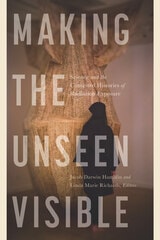
Making the Unseen Visible
Science and the Contested Histories of Radiation ExposureJacob Darwin Hamblin
Oregon State University Press, 2023
From 2017 to 2020, Jacob Hamblin and Linda Richards ran the Oregon State University Downwinders Project, sponsored by the National Science Foundation, to support research and scholarship on the Hanford downwinders cases. Additionally, each summer the project team sponsored a workshop that brought a variety of stakeholders together to explore the science, history, and lived experiences of nuclear exposure. These workshops took a broad view of nuclear exposure, beyond Hanford, beyond the United States, and beyond academia. Community members and activists presented their testimonies and creative work alongside scholars studying exposure worldwide.
Making the Unseen Visible collects the best work arising from the project and its workshops. Scholarly research chapters and reflective essays cover topics and experiences ranging from colonial nuclear testing in North Africa, to Hiroshima survivor stories, to uranium mining in the Navajo Nation, to battles over public memory around Hanford. Scholarship on nuclear topics has largely happened on a case study basis, focusing on individual disasters or locations. Making the Unseen Visible brings a variety of current community and scholarly work together to create a clearer, larger web uniting nuclear humanities research across time and geography.
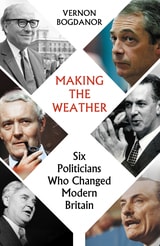
Making the Weather
Six Politicians Who Changed Modern BritainVernon Bogdanor
Haus Publishing, 2025
Making the Weather is the story of six postwar politicians, all of whom exerted an outsized influence on the political life of the United Kingdom—an influence greater than that of most prime ministers. Vernon Bogdanor’s cast includes three from the political Left—Aneurin “Nye” Bevan, Roy Jenkins, and Tony Benn—and three from the Right—Enoch Powell, Keith Joseph, and Nigel Farage. Each study is a fascinating analysis examining how these men achieved such prominence and influence and how, though very different figures in many ways, they came to dominate the political landscape, often for years.
Each of the six made fundamental contributions to the debate about Britain’s future and to the vibrancy of British democracy. From immigration to Europe, from the National Health Service to devolution, the issues and causes that brought these men to prominence are still relevant.
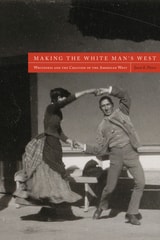
Making the White Man's West
Whiteness and the Creation of the American WestJason E. Pierce
University Press of Colorado, 2016
The West, especially the Intermountain states, ranks among the whitest places in America, but this fact obscures the more complicated history of racial diversity in the region. In Making the White Man’s West, author Jason E. Pierce argues that since the time of the Louisiana Purchase, the American West has been a racially contested space. Using a nuanced theory of historical “whiteness,” he examines why and how Anglo-Americans dominated the region for a 120-year period.
In the early nineteenth century, critics like Zebulon Pike and Washington Irving viewed the West as a “dumping ground” for free blacks and Native Americans, a place where they could be segregated from the white communities east of the Mississippi River. But as immigrant populations and industrialization took hold in the East, white Americans began to view the West as a “refuge for real whites.” The West had the most diverse population in the nation with substantial numbers of American Indians, Hispanics, and Asians, but Anglo-Americans could control these mostly disenfranchised peoples and enjoy the privileges of power while celebrating their presence as providing a unique regional character. From this came the belief in a White Man’s West, a place ideally suited for “real” Americans in the face of changing world.
The first comprehensive study to examine the construction of white racial identity in the West, Making the White Man’s West shows how these two visions of the West—as a racially diverse holding cell and a white refuge—shaped the history of the region and influenced a variety of contemporary social issues in the West today.

Making the World Safe for Capitalism
How Iraq Threatened the US Economic Empire and had to be DestroyedChristopher Doran
Pluto Press, 2012
The Iraq war defined the first decade of the twenty-first century – leading to mass protests and raising profound questions about domestic politics and the use of military force. Yet most explanations of the war have a narrow focus either on political personalities or oil.
Christopher Doran provides a unique perspective, arguing that the drive to war came from the threat Iraq might pose to American economic hegemony if the UN sanctions regime was ended. Doran argues that this hegemony is rooted in third world debt and corporate market access. It was protection of these arrangements that motivated US action, not Iraq’s alleged weapons of mass destruction or a simplistic desire to seize its oil.
This book will provide new insights on the war which still casts a shadow over global politics, and will have wide appeal to all those concerned about the Middle East, world peace and global development.
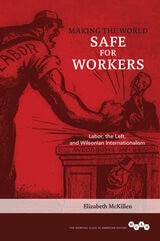
Making the World Safe for Workers
Labor, the Left, and Wilsonian InternationalismElizabeth McKillen
University of Illinois Press, 2018

Maladies of Modernity
Scientism and the Deformation of Political OrderDavid N. Whitney
St. Augustine's Press, 2014
“Chief among the spiritually blighting tendencies of the age is materialist reductionism parading as scientific orthodoxy. David Whitney powerfully explores this movement and habit of mind as it takes its rise in the form of scientism, especially from Sir Francis Bacon’s NEW ATLANTIS in the 17th century and finds full fruition in the positivist teachings of August Comte in the 19th century—a preamble to the behavioralist dogmas of our own time. The openness to the facts of experience characteristic of all science as a search for the truth of reality in all its dimensions and diversity is thereby effectively abandoned in favor of an unrelenting insistence on a restrictive methodology ostensibly grounded in phenomenal reality that is perversely made the touchstone of all valid inquiry. The consequences are philosophically as well as politically disastrous, as Whitney brilliantly demonstrates in this path-breaking study.”
– Ellis Sandoz, Founder of the Eric Voegelin Institute for American Renaissance Studies
"David Whitney’s excellent critique of what he calls scientism, a dogmatic application of the methods of natural science to social science, provides a high-brow diagnosis of the modern maladies that result from the “rhetorical power of science.”
–– Scott Robinson, voegelinview
Malady of Monoculture
Pellagra, Public Health, and the Pathologies of Cotton's CapitalismDana Landress
University of Chicago Press, 2027
How the cotton industry restricted sharecroppers’ access to nutritious food, a public health crisis that spurred a wave of influential and inspiring activism.
Pellagra, a nutritional deficiency disease, was once widespread in the southern United States, where it was concentrated in areas of high-yield cotton production. This wasn’t a coincidence. In the early twentieth century, pellagra was ubiquitous in regions where monocultural cotton production foreclosed cotton workers’ access to nutritious foods. Planters paid sharecroppers and millworkers in their own currency—tokens, coins, and other substitutes for money—and sold them unhealthy and overpriced food in company-owned stores. Employers kept workers poor through wage theft, predatory credit systems, and labor coercion, all of which maintained a system of food scarcity.
In Malady of Monoculture, Dana Landress reveals how the unrelenting demands of the cotton economy during the Jim Crow South created a public health crisis in the form of pellagra. She carefully details a “closed food system” that restricted workers’ diets through employer-generated currency; the use of food as an instrument of labor compulsion; manufactured debt structures; alliances between government and private industry; and restrictions on foraging, gardening, and land use. Though official public health programs framed pellagra in personal and behavioral terms, those afflicted with the illness actively challenged the closed food system through union organizing, community health care, freedom farms, and collective action lawsuits. Excavating the landmark contributions of Black nutritionists to the field of public health, Landress spotlights the many constituencies that worked tirelessly to combat hunger and foregrounds their creativity, resilience, and determination.

Malambo
Lucía Charún-Illescas
Swan Isle Press, 2004
“In Malambo . . . the Rimac proudly rubs elbows with the freedmen, the cimarrons, and smuggled slaves. . . It runs united to the other subterranean springs underneath Blanket Street, Weavers Lane, and under Jewish Street . . . and Swordmaker’s Lanes.”
The Rimac shapes the narrative of this compelling historical novel that probes the brutal clash of ethnicity, religion, and class in sixteenth- and seventeenth-century Peru. Set against the backdrop of Spanish colonialism and the Spanish Inquisition in the “New World,” Malambo peels back the layers of Peru’s society to focus on the subtle connections among indigenous peoples— Africans, Jews, Christians, and others—whose cultural fusion pervades Latin American history and culture.
At the heart of the novel is Tomason, an African artist living along the Rimac who paints religious murals for the church and his colonial masters. The intermingling of his Yoruba heritage with his life in a Spanish colony transforms him into a griot figure who unearths the deeper truths of his painful and complex experience by sharing it. Other memorable characters’ stories intertwine with Tomason’s tale, developing a narrative that powerfully reflects on the themes of dislocation and enslavement.
Malambo is an unforgettable work that explores the origins of the Afro-Hispanic experience and offers a profound meditation on the forces of history.

Malaria on the Move
Rural Communities and Public Health in Zimbabwe, 1890-2015Kundai Manamere
Ohio University Press, 2025

Malaya
Lennox A. Mills
University of Minnesota Press, 1958
Malaya was first published in 1958. Minnesota Archive Editions uses digital technology to make long-unavailable books once again accessible, and are published unaltered from the original University of Minnesota Press editions.
As Dr. mills points out, postwar Malaya has, in general, been typical of Southeast Asia politically and economically. This fact makes his account of Malayan developments over the last decade of special significance to anyone concerned about the future of freedom in that part of the world. He traces the changes from the prewar period, when Malaya was under British colonial rule and the bulk of the population was satisfied with its government, to the present, with its political agitation, financial difficulties, and social discontent. He presents a detailed picture of the rubber and tin industries, which are Malaya's basic source of revenue, and assesses their probable status in the future.
Malaysiakini and the Power of Independent Media in Malaysia
Janet Steele
National University of Singapore Press, 2023
Founded in 1999 by Steven Gan and Premesh Chandran, Malaysiakini was one of many online portals that sprung up in the wake of Reformasi, a period of public protests sparked by Prime Minister Mahathir Mohammad’s 1998 firing of his deputy Anwar Ibrahim. At first, there was no reason to think that Malaysiakini would be anything momentous. However, Malaysiakini wanted to do something much more important than just reporting on Reformasi—its founders intended to bring independent journalism to Malaysia in hopes of changing the country for the better.
Based on more than fifteen years of observation of Malaysiakini's newsroom practices, Malaysiakini and the Power of Independent Media in Malaysia is an intimate portrait of the people and issues behind Malaysia’s only truly independent media outlet. The author illustrates Malaysiakini’s unique mix of idealism in action, studying how sensitive issues such as race, religion, politics, and citizenship are discussed in the newsroom. This attention to the inner workings of one of the most important media institutions in the region yields not only a deep newsroom ethnography but a nuanced, rich history of modern Malaysia.

Malcolm Before X
Patrick Parr
University of Massachusetts Press, 2024
A Kirkus Reviews Best Nonfiction Book of 2024
A Spectator Best Book of the Year
Finalist for the 2025 ASALH Book Prize
Drawing upon interviews, correspondence, and nearly 2000 pages of never-before-used prison records, Malcolm Before X is the definitive examination of the prison years of civil rights icon Malcolm X.
In February 1946, when 20-year-old Malcolm Little was sentenced to eight to ten years in a maximum-security prison, he was a petty criminal and street hustler in Boston. By the time he was paroled in August 1952, he had transformed into a voracious reader, joined the Black Muslims, and was poised to become Malcolm X, one of the most prominent and important intellectuals of the civil rights era. While scholars and commentators have exhaustively detailed, analyzed, and debated Malcolm X’s post-prison life, they have not explored these six and a half transformative years in any depth.
Paying particular attention to his time in prison, Patrick Parr’s Malcolm Before X provides a comprehensive and groundbreaking examination of the first twenty-seven years of Malcolm X’s life (1925–1965). Parr traces Malcolm’s African lineage, explores his complicated childhood in the Midwest, and follows him as he moves east to live with his sister Ella in Boston’s Roxbury neighborhood, where he is convicted of burglary and sentenced.
Parr utilizes a trove of previously overlooked documents that include prison files and prison newspapers to immerse the reader into the unique cultures—at times brutal and at times instructional—of Charlestown State Prison, the Concord Reformatory, and the Norfolk Prison Colony. It was at these institutions that Malcolm devoured books, composed poetry, boxed, debated, and joined the Nation of Islam, changing the course of his life and setting the stage for a decade of antiracist activism that would fundamentally reshape American culture.
In this meticulously researched and beautifully written biography, the inspiring story of how Malcolm Little became Malcolm X is finally told.

Malcolm X's Michigan Worldview
An Exemplar for Contemporary Black StudiesRita Kiki Edozie
Michigan State University Press, 2024
Male Delivery
Reproduction, Effeminacy, and Pregnant Men in Early Modern SpainSherry Velasco
Vanderbilt University Press, 2006
Men were increasingly taking over medical duties--especially surrounding childbirth--usually left to women and, as their medical knowledge increased, they became aware of bodies and behaviors--both male and female--that transgressed gender norms. The anxieties about men who acted in ways seen as increasingly womanly (from acting effeminately to participating in homosexual activity) played out in the character of pregnant Juan Rana.
Then, Velasco turns to Hollywood and asks if we might not use the lessons of Juan Rana to help explain why contemporary America is also fascinated by the idea of male pregnancy--think Arnold Schwarzenegger in Junior--and our increasing anxiety over the changing face of masculinity in our own culture.
Male Fantasies
Volume 1: Women Floods Bodies HistoryKlaus Theweleit
University of Minnesota Press, 1987
This first volume of Male Fantasies centers on the fantasies that preoccupied a group of men who played a crucial role in the rise of Nazism. These men were officers in the Freikorps--private, volunteer armies that roamed Germany, serving the cause of domestic repression in the aftermath of World War I. Klaus Theweleit draws upon the novels, letters, and autobiographies of these proto-fascists and their contemporaries, as well as cartoons, advertisements, engravings, and posters. He explores these sources, not to discover what their creators thought about fighting or the fatherland, but to seek out and reconstruct their images of women. He shows that the Freikorps male identity was shaped by the dread and revulsion that characterized their relations with women (real or imagined) and that this dread was, in turn, linked to the aggressive racism and anticommunism at the heart of most fascist movements.
Theweleit’s second volume, Male Bodies: Psychoanalyzing the White Terror, carries Male Fantasies from the female image to the self-image of manhood and its ritualized forms of mass behavior, culminating in warfare. It also is available from the University of Minnesota Press.
Male Fantasies
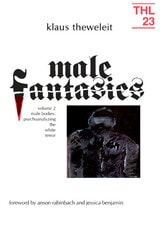
Volume 2: Male Bodies: Psychoanalyzing the White TerrorKlaus Theweleit
University of Minnesota Press, 1989
Theweleit’s project in Male Fantasies is to discover the emotional core of fascism as it was revealed in the novels and memoirs of the Freikorps, mercenary bands that fought Germany’s border disputes and put down worker revolts in the aftermath of World War I. His excavation of Freikorps literary remains (and the writings of some of their protofascist contemporaries) enabled Theweleit to reconstruct the mythical content of the fascist imagination. An integral part of Male Fantasies is Theweleit’s choice of illustrations--cartoons, advertisements, engravings, posters--that serve as an ironic commentary on the text and extend its meaning in time and space.
In this second volume of the two-volume work Theweleit discovers how the repudiation of one’s own body--and of femininity--became a psychic compulsion associating masculinity with hardness, self-denial, and destruction. We are shown how the body becomes a mechanism for eluding the dreaded liquid--the “Red Flood,” lava, mud--and the “feminine” emotions associated with it. Armored, organized by mental and physical procedures like the military drill, the male body is transformed into a “man of steel.” As Theweleit shows, only in war does this body find redemption from constraint.
The first volume of Male Fantasies, also available from the University of Minnesota Press, deals primarily with the image of women in the collective unconscious of the fascist warrior that threatens to engulf the male ego.
Malibu Diary
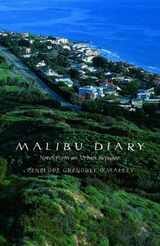
Notes From An Urban RefugeePenelope O'Malley
University of Nevada Press, 2004
Malicious Intent
Murder and the Perpetuation of Jim Crow Health CareDavid Barton Smith
Vanderbilt University Press, 2023
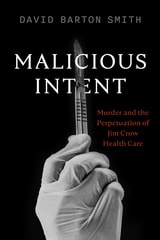
Race-related disparities in American death rates, exacerbated once again by the COVID-19 pandemic, have persisted since the birth of the modern US medical system a century ago. A unique but perpetually unequal history has prevented the United States from providing the kind of health care assurances that are taken for granted in other industrialized nations. The underlying story is one of political, medical, and bureaucratic machinations, all motivated by a deliberate Jim Crow systemic design. In Malicious Intent, David Barton Smith traces the Jean Cowsert story and the cold case of her death as a through line to explain the construction and fulfillment of an unequal health care system that would rather sacrifice many than provide for Black Americans.
Cowsert’s suspicious death came at a key moment in the struggle for universal health care in the wealthiest country on earth. Malicious Intent is a history of those failed efforts and a story of selective amnesia about one doctor’s death and the movement she fought for.
Malignant Growth
Creating the Modern Cancer Research Establishment, 1875–1915Alan I Marcus
University of Alabama Press, 2018
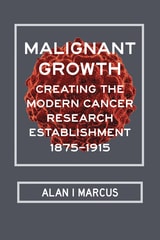
In Malignant Growth: Creating the Modern Cancer Research Establishment, 1875–1915, Alan I Marcus explores a relatively understudied period in the history of cancer by providing a careful investigation of the first public crusade to determine the cause of cancer. The search for cancer’s cause during the heady era of bacteriology was colored by the Germ Theory of Disease. Researchers had demonstrated in malady after malady that each disease was the result of a singular and specific pathogenic agent. That model led investigators to optimistically conclude that they would soon find the cause of what was termed the “emperor of all maladies,” cases of which were apparently increasing at a prodigious rate worldwide.
In this accessible history of science and medicine, Marcus exposes the complex story of the efforts made from 1875 through 1915 to first conquer and, failing that, to control cancer—a dual approach that remains in force to this day. He reveals the messiness of real-time scientific research, tracing the repeated lurches of promise, discoveries of hope, and the inevitable despair that always followed. Other barriers existed to the research, such as inconsistency in test standards and inter-laboratory competition and mistrust. Researchers approached cancer from such disparate specialties as clinical medicine, zoology, botany, chemistry, nutrition, bacteriology, pathology, and microbiology. Although they came from diverse fields, each steadfastly maintained that cancer operated in an analogous fashion to other bacteriological diseases.
Virtually every country and a slew of various clinicians and investigators waged this first war on cancer, operating in remarkably diverse scientific venues. Cancer laboratories and hospitals, as well as organizations like the American Cancer Society, were born out of this first offensive on cancer. Even as cancer continues to proliferate today, these institutions that initially formed to defeat cancer more than a hundred years ago persist and continue to expand.

Malinowski's Kiriwina
Fieldwork Photography 1915-1918Michael W. Young
University of Chicago Press, 1998
Malinowski's Kiriwina presents nearly two hundred of Malinowski's previously unpublished photographs, taken between 1915 and 1918, of the Trobriand Islanders. The images are more than embellishments of his ethnography; they are a recreation in striking detail of a distant world. Michael Young, an anthropologist and Malinowski's authorized biographer, has selected the photographs based on one of Malinowski's unpublished studies of the region, and the plan of that abandoned project has helped structure this book.
Divided into fourteen sections, Malinowski's Kiriwina is a series of linked photo-essays based on Trobriand institutions and cultural themes as described by Malinowski. The introductory essay by Young appraises the founding anthropologist's photographic oeuvre, explains the historical circumstances and technical aspects of the images, and puts them in their colonial context. Young illuminates the photographs with quotations from Malinowski's diaries, letters, and field notes, thereby giving a biographical dimension to the collection. Commentaries on the images by contemporary Trobrianders add a further layer of interpretation. The result is a stunning record not only of a fascinating place, but of the mutual relationship between ethnography and the visual.
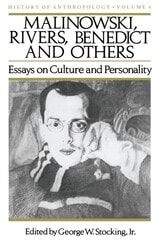
Malinowski, Rivers, Benedict and Others
Essays on Culture and PersonalityEdited by George W. Stocking, Jr.
University of Wisconsin Press, 1988
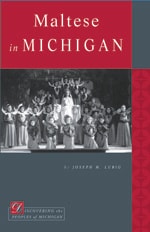
Maltese in Michigan
Joseph M. Lubig
Michigan State University Press, 2011
Maltese in Michigan is an enlivening volume depicting the struggles and accomplishments of a singular culture, an immigrant narrative at once recognizable and enigmatic. Without realizing it, most Americans are probably familiar with the Maltese people through the cross displayed by firefighters, which bears a strong similarity in design and meaning to the one used by the Knights of Malta. The noble qualities embodied by the Maltese Cross are reflected in the pride and accomplishments of Maltese immigrants in Michigan, a small but vibrant ethnic group. Rooted in the post–World War II experiences of the 20th century, the Maltese established themselves in the city of Detroit, and thrived due to a strong work ethic and Catholic faith, while maintaining a strong central identity. This volume is a tribute to the Maltese of Michigan and all who have begun anew in an unfamiliar land and culture.
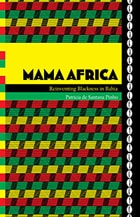
Mama Africa
Reinventing Blackness in BahiaPatricia de Santana Pinho
Duke University Press, 2010
Pinho explores how Bahian cultural production influences and is influenced by black diasporic cultures and the idealization of Africa—to the extent that Bahia draws African American tourists wanting to learn about their heritage. Analyzing the conceptions of blackness produced by the blocos afro, she describes how Africa is re-inscribed on the body through clothes, hairstyles, and jewelry; once demeaned, blackness is reclaimed as a source of beauty and pride. Turning to the body’s interior, Pinho explains that the myth of Mama Africa implies that black appearances have corresponding black essences. Musical and dance abilities are seen as naturally belonging to black people, and these traits are often believed to be transmitted by blood. Pinho argues that such essentialized ideas of blackness render black culture increasingly vulnerable to exploitation by the state and commercial interests. She contends that the myth of Mama Africa, while informing oppositional black identities, overlaps with a constraining notion of Bahianness promoted by the government and the tourist industry.
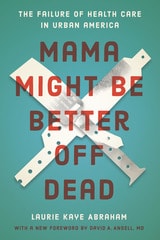
Mama Might Be Better Off Dead
The Failure of Health Care in Urban AmericaLaurie Kaye Abraham
University of Chicago Press, 1994
Mama Might Be Better Off Dead immerses readers in the lives of four generations of a poor, African-American family in the neighborhood, who are beset with the devastating illnesses that are all too common in America’s inner-cities. Headed by Jackie Banes, who oversees the care of a diabetic grandmother, a husband on kidney dialysis, an ailing father, and three children, the Banes family contends with countless medical crises. From visits to emergency rooms and dialysis units, to trials with home care, to struggles for Medicaid eligibility, Laurie Kaye Abraham chronicles their access—or more often, lack thereof—to medical care. Told sympathetically but without sentimentality, their story reveals an inadequate health care system that is further undermined by the direct and indirect effects of poverty.
Both disturbing and illuminating, Mama Might Be Better Off Dead is an unsettling, profound look at the human face of health care in America. Published to great acclaim in 1993, the book in this new edition includes an incisive foreword by David Ansell, a physician who worked at Mt. Sinai Hospital, where much of the Banes family’s narrative unfolds.
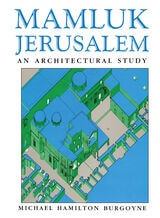
Mamluk Jerusalem
An Architectural StudyMichael Hamilton Burgoyne
Council for British Research in the Levant, 1987
Mammals Of Nevada
E. Raymond Hall
University of Nevada Press, 1995
First published in 1946, Mammals of Nevada is a monumental work. Hall and a team of more than sixty scientists, graduate students, and staff members of the Museum of Vertebrate Zoology in Kansas spent innumerable hours trapping, preparing, studying, and documenting thousands of specimens found within the state. This long out-of-print reference contains extensive examinations of the topography, climate, life zones, and floral and faunal areas. Hundreds of illustrations enhance the work. This updated edition features a new foreword and updated taxonomy by Timothy Lawlor.

Mammy
A Century of Race, Gender, and Southern MemoryKimberly Wallace-Sanders
University of Michigan Press, 2008
---Choice
"In this insightful analysis of representations of mammy, Wallace-Sanders skillfully illustrates how this core icon of Black womanhood has figured prominently in upholding hierarchies of race, gender, and class in the United States. Far from being a timeless, natural, benign image of domesticity, the idealized mammy figure was repeatedly reworked to accommodate varying configurations of racial rule. No one reading this book will be able to see Gone with the Wind in the same way ever again."
---Patricia Hill Collins, University of Maryland
"Kimberly Wallace-Sanders' interdisciplinary approach is first-rate. This expansive and engaging book should appeal to students and scholars in American studies, African American studies, and women's studies."
---Thadious Davis, The University of Pennsylvania
Her cheerful smile and bright eyes gaze out from the covers of old cookbooks, song sheets, syrup bottles, salt and pepper shakers, and cookie jars, and she has long been a prominent figure in fiction, film, television, and folk art. She is Mammy, a figure whose provocative hold on the American psyche has persisted since before the Civil War.
But who is Mammy, and where did she come from? Her large, dark body and her round smiling face tower over our imaginations to such an extent that more accurate representations of African American women wither in her shadow. Mammy's stereotypical attributes---a sonorous and soothing voice, raucous laugh, infinite patience, self-deprecating wit, and implicit acceptance of her own inferiority and her devotion to white children---all point to a long-lasting and troubled confluence of racism, sexism, and southern nostalgia.
This groundbreaking book traces the mammy figure and what it has symbolized at various historical moments that are linked to phases in America's racial consciousness. The author shows how representations of Mammy have loomed over the American literary and cultural imagination, an influence so pervasive that only a comprehensive and integrated approach of this kind can do it justice.
The book's many illustrations trace representations of the mammy figure from the nineteenth century to the present, as she has been depicted in advertising, book illustrations, kitchen figurines, and dolls. The author also surveys the rich and previously unmined history of the responses of African American artists to the black mammy stereotype, including contemporary reframings by artists Betye Saar, Michael Ray Charles, and Joyce Scott.
Kimberly Wallace-Sanders is Associate Professor of the Graduate Institute of Liberal Arts and Women's Studies at Emory University. She is editor of Skin Deep, Spirit Strong: The Black Female Body in American Culture.

Man Who Thought He Owned Water
On the Brink with American Farms, Cities, and FoodTershia d'Elgin
University Press of Colorado, 2016
When her father bought his farm—Big Bend Station—he also bought the ample water rights associated with the land and the South Platte River, confident that he had secured the necessary resources for a successful endeavor. Yet water immediately proved fickle, hard to defend, and sometimes dangerous. Eventually those rights were curtailed without compensation. Through her family’s story, d’Elgin dramatically frames the personal-scale implications of water competition, revealing how water deals, infrastructure, transport, and management create economic growth but also sever human connections to Earth’s most vital resource. She shows how water flows to cities at the expense of American-grown food, as rural land turns to desert, wildlife starves, the environment degrades, and climate change intensifies.
Depicting deep love, obsession, and breathtaking landscape, The Man Who Thought He Owned Water is an impassioned call to rebalance our relationship with water. It will be of great interest to anyone seeking to understand the complex forces affecting water resources, food supply, food security, and biodiversity in America.
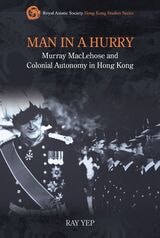
Man in a Hurry
Murray MacLehose and Colonial Autonomy in Hong KongRay Yep
Hong Kong University Press, 2024
Man in a Hurry explores the latest available archival materials and re-examines MacLehose’s pivotal governorship in Hong Kong (1971–1982). MacLehose arrived in the challenging 1970s, when there were expectations for social reforms, uneasiness in the relationship between Hong Kong and London, and the 1997 factor looming large. The governor successfully carried out various social reforms and he also handled various major issues, including the anti-corruption campaign, the Vietnamese refugee crisis, and the granting of land lease of the New Territories beyond 1997. Yep unveils the tension and bargaining between the British government and explains how interest of the colony could be asserted, defended, and negotiated. This book is an important study of Hong Kong’s "golden years" when the city’s economy took off. It is a significant contribution to our understanding of how local autonomy was defined.

Man of Vision
Arkansas Education and the Legacy of Arch FordCindy Burnett Beckman
Butler Center for Arkansas Studies, 2016
As commissioner of the Arkansas Department of Education from 1953 to 1978, Arch Ford served under five governors. His vision was to expand educational opportunities because he believed education was the foundation for improving people’s lives. Throughout his career, he campaigned for increased educational funding, better-qualified teachers, and higher teachers’ salaries. Ford helped lead the state in peacefully integrating its schools and established twenty-three vocational-technical schools across the state. During Ford’s tenure, the Arkansas Children’s Colony was established to provide educational services to the developmentally disabled, and the Arkansas Educational Television Network was set up to provide instructional programming across the state.
The state also expanded educational opportunities to include kindergarten, special education, community colleges, and adult education. His leadership left Arkansas with a strong educational system that continued to advance. This was his legacy.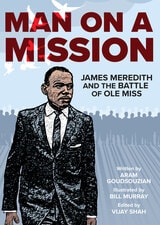
Man on a Mission
James Meredith and the Battle of Ole MissAram Goudsouzian
University of Arkansas Press, 2022
In 1962, James Meredith famously desegregated the University of Mississippi (a.k.a. Ole Miss). As the first Black American admitted to the school, he demonstrated great courage amidst the subsequent political clashes and tragic violence. After President Kennedy summoned federal troops to help maintain order, the South—and America at large—would never be the same.
Man on a Mission depicts Meredith’s relentless pursuit of justice, beginning with his childhood in rural Mississippi and culminating with the confrontation at Ole Miss. A blend of historical research and creative inspiration, this graphic history tells Meredith’s dramatic story in his own singular voice.
From the dawn of the modern civil rights movement, Meredith has offered a unique perspective on democracy, racial equality, and the meaning of America. Man on a Mission presents his captivating saga for a new generation in the era of Black Lives Matter.
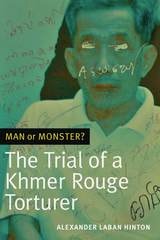
Man or Monster?
The Trial of a Khmer Rouge TorturerAlexander Laban Hinton
Duke University Press, 2016
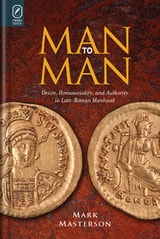
Man to Man
Desire, Homosociality, and Authority in Late-Roman ManhoodMark Masterson
The Ohio State University Press, 2014
At the same time, however, there was a marked ambivalence about same-sex desire and sexual behavior between men, and indeed same-sex sexual behavior was criminalized as it had never been before. While rejection and condemnation may seem to indicate a decisive distancing between authority and this desire and behavior, authority gained power from maintaining a relation to them. Demonstrating knowledge of the actual mechanics of sex between men suggested to a witness that there was nothing unknown to the authority making the demonstration: authority that knew of scandalous masculine sexual pleasure could project its power pretty much anywhere.
This startling dissonance between positive uses of same-sex desire between men and its criminalization in one and the same moment—a dissonance which recent discussions have been unable to address—requires further investigation, and this book supplies it.
Man-Making Words
Selected Poems of Nicolas GuillenNicolas Guillen
University of Massachusetts Press, 2003
The Cuban poet Nicolás Guillén, who was born in the eastern province of Camagüey in 1902, died in 1989. This new edition of his selected poems, reissued thirty years after its original publication, includes an extensive, new introductory essay by Roberto Márquez, one of the original translators and a leading authority on Caribbean and Latin American literature and culture.
Managed Migrations
Growers, Farmworkers, and Border Enforcement in the Twentieth CenturyBy Cristina Salinas
University of Texas Press, 2018
2020 National Association for Chicana and Chicano Studies (NACCS) Book Award Winner
Honorable Mention, Ramirez Family Award for Most Significant Scholarly Book, Texas Institute of Letters, 2019
Managed Migrations examines the concurrent development of a border agricultural industry and changing methods of border enforcement in the Rio Grande Valley of Texas during the past century.
Needed at one moment, scorned at others, Mexican agricultural workers have moved back and forth across the US–Mexico border for the past century. In South Texas, Anglo growers’ dreams of creating a modern agricultural empire depended on continuous access to Mexican workers. While this access was officially regulated by immigration laws and policy promulgated in Washington, DC, in practice the migration of Mexican labor involved daily, on-the-ground negotiations among growers, workers, and the US Border Patrol. In a very real sense, these groups set the parameters of border enforcement policy.
Managed Migrations examines the relationship between immigration laws and policy and the agricultural labor relations of growers and workers in South Texas and El Paso during the 1940s and 1950s. Cristina Salinas argues that immigration law was mainly enacted not in embassies or the halls of Congress but on the ground, as a result of daily decisions by the Border Patrol that growers and workers negotiated and contested. She describes how the INS devised techniques to facilitate high-volume yearly deportations and shows how the agency used these enforcement practices to manage the seasonal agricultural labor migration across the border. Her pioneering research reveals the great extent to which immigration policy was made at the local level, as well as the agency of Mexican farmworkers who managed to maintain their mobility and kinship networks despite the constraints of grower paternalism and enforcement actions by the Border Patrol.
Management of Smallpox Eradication in India
Lawrence B. Brilliant
University of Michigan Press, 2025
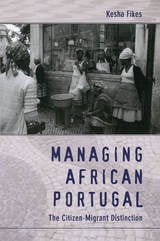
Managing African Portugal
The Citizen-Migrant DistinctionKesha Fikes
Duke University Press, 2009
The ethnographic focus is a former undocumented fish market that at one time employed both Portuguese and Cape Verdean women. Both groups eventually sought work in low-wage professions as maids, nannies, and restaurant-kitchen help. The visibility of poor Portuguese women as domestics was thought to undermine the appearance of Portuguese modernity; by contrast, the association of poor African women with domestic work confirmed it. Fikes argues that we can better understand how Portugal interpreted its economic absorption into the EU by attending to the different directions in which working-poor Portuguese and Cape Verdean women were routed in the mid-1990s and by observing the character of the new work relationships that developed among them. In Managing African Portugal, Fikes pushes for a study of migrant phenomena that considers not only how the enactment of citizenship by the citizen manages the migrant, but also how citizens are simultaneously governed through their uptake and assumption of new EU citizen roles.

Managing Energy Use in Modern Buildings
Case Studies in Conservation PracticeBernard Flaman
J. Paul Getty Trust, The, 2021
This collection of ten case studies addresses the issues surrounding the improvement of energy consumption and thermal comfort in modern buildings built between 1928 and 1969 and offers valuable lessons for other structures facing similar issues. These buildings, international in scope and diverse in type, style, and size, range from the Shulman House, a small residence in Los Angeles, to the TD Bank Tower, a skyscraper complex in Toronto, and from the Calouste Gulbenkian Foundation, a cultural venue in Lisbon, to the Van Nelle Factory in Rotterdam, now an office building. Showing ingenuity and sensitivity, the case studies consider improvements to such systems as heating, cooling, lighting, ventilation, and controls. They provide examples that demonstrate best practices in conservation and show ways to reduce carbon footprints, minimize impacts to historic materials and features, and introduce renewable energy sources, in compliance with energy codes and green-building rating systems.
The Conserving Modern Heritage series, launched in 2019, is written by architects, engineers, conservators, scholars, and allied professionals. The books in this series provide well-vetted case studies that address the challenges of conserving twentieth-century heritage.

Managing Legal Uncertainty
Elite Lawyers in the New DealRonen Shamir
Duke University Press, 1995
Applying the insights of Weber and Bourdieu to the sociology of the legal profession, Shamir shows that elite members of the bar had a keen self-interest in blocking the expansion of administrative law. He dismisses as oversimplified the view that elite lawyers were "hired guns" who argued that New Deal legislation was unconstitutional solely because of their duty to represent their capitalist clients. Instead, Shamir suggests, their alignment with the capitalist class was an incidental result of their attempt to articulate their vision of the law as scientific, apolitical, and judicially oriented—and thereby to defend their own position within the law profession. The academic legal realists on the other side of the constitutional debates criticized the rigidity of the traditional judicial process and insisted that flexibility of interpretation and the uncertainty of legal outcomes was at the heart of the legal system. The author argues that many legal realists, encouraged by the experimental nature of the New Deal, seized an opportunity to improve on their marginal status within the legal profession by moving their discussions from academic circles to the national policy agenda.
Managing Macroeconomic Policy
The Johnson PresidencyBy James E. Anderson and Jared E. Hazleton
University of Texas Press, 1986
Macroeconomic policy involves government action intended to influence the overall operation of the economy and to deal with such important public problems as economic growth, inflation, unemployment, and recession. In this first comprehensive treatment of presidential management of such policy for any presidency, authors James E. Anderson and Jared E. Hazleton focus on four tasks: developing and maintaining an information and decision-making system; coordination of policies in different macroeconomic areas; building support or consent for presidential policies; and administrative leadership. Drawing extensively upon presidential documents and interviews with Johnson administration officials, the authors pay particular attention to fiscal, monetary, wage-price, and international economic (especially balance of payments) policies during Johnson’s terms.
The authors use the concept of the subpresidency, as defined by Redford and Blisset in Organizing the Executive Branch: The Johnson Presidency (University of Chicago Press, 1981), to show how Johnson managed the macro-economic institutions of the council of Economic Advisors, the Bureau of the Budget (now the Office of Management and Budget), the Department of the Treasury, and the Federal Reserve Board in pursuit of his economic goals. What emerges is a vivid portrait of an activist president.
In evaluating management of macroeconomic policy in the Johnson administration, the authors focus on how presidential policies are developed and adopted rather than on the substance of the policies themselves. They conclude that the Johnson administration competently managed policy development during its presidential years.
This book is a volume in the Administrative History of the Johnson Presidency Series sponsored by the LBJ School of Public Affairs at the University of Texas at Austin, the first two volumes of which were published by the University of Chicago Press. Managing Macroeconomic Policy: The Johnson Presidency was funded in part by the National Endowment for the Humanities.

Managing Madness
Weyburn Mental Hospital and the Transformation of Psychiatric Care in CanadaErika Dyck
University of Manitoba Press, 2017
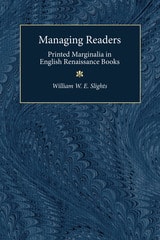
Managing Readers
Printed Marginalia in English Renaissance BooksWilliam W. E. Slights
University of Michigan Press, 2001
The recent revolution in the protocols of reading brought on by computer technology has forced questions about the nature of book-based knowledge in our global culture. Managing Readers traces changes in the protocols of annotation and directed reading--from medieval religious manuscripts and Renaissance handbooks for explorers, rhetoricians, and politicians to the elegant clear-text editions of the Enlightenment and the hypertexts of our own time. Developing such concepts as textual authority, generic difference, and reader-response, Slights demonstrates that printed marginalia were used to confirm the authority of the text and to undermine it, to supplement "dark" passages, and to colonize strategic hermeneutic spaces. The book contains twenty-two illustrations of pages from rare-book archives that make immediately clear how distinctive the management of the reading experience was during the first century-and-a-half of printing in England.
William W. E. Slights is Professor of English, University of Saskatchewan. He is also author of Ben Jonson and the Art of Secrecy.
Managing Their Own Affairs
The Australian Deaf Community in the 1920s and 1930sBreda Carty
Gallaudet University Press, 2017
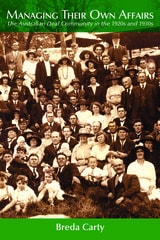
During this time, deaf Australians aspired to manage their own affairs. They enjoyed some success by establishing “breakaways” from the Deaf Societies, and they also established an independent national organization, which was contested and ultimately suppressed by the Deaf Societies. These developments were influenced by wider social movements in Australian society, such as the mobilization of minority groups in their push for autonomy and equal rights. Although most of the breakaway Deaf organizations did not survive beyond the 1930s, they significantly affected the power structures and relationships between deaf and hearing people in Australia. The Australian Deaf community’s attempts to organize independently during these years have been largely erased from collective memory, making Carty’s examination a particularly important and necessary addition to the historical literature.
Managing the Counterrevolution
The United States and Guatemala, 1954–1961Stephen M. Streeter
Ohio University Press, 2001
The Eisenhower administration’s intervention in Guatemala is one of the most closely studied covert operations in the history of the Cold War. Yet we know far more about the 1954 coup itself than its aftermath. This book uses the concept of “counterrevolution” to trace the Eisenhower administration’s efforts to restore U.S. hegemony in a nation whose reform governments had antagonized U.S. economic interests and the local elite.
Comparing the Guatemalan case to U.S.-sponsored counterrevolutions in Iran, the Dominican Republic, Brazil, and Chile reveals that Washington’s efforts to roll back “communism” in Latin America and elsewhere during the Cold War represented in reality a short-term strategy to protect core American interests from the rising tide of Third World nationalism.
Managing the River Commons
Fishing and New England's Rural EconomyErik Reardon
University of Massachusetts Press, 2021
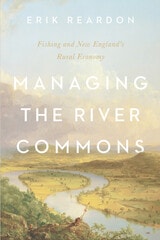
Historian Erik Reardon argues that to protect these fish, New England's farmer-fishermen pushed for conservation measures to limit commercial fishing and industrial uses of the river. Beginning in the colonial period and continuing to the mid-nineteenth century, they advocated for fishing regulations to promote sustainable returns, compelled local millers to open their dams during seasonal fish runs, and defeated corporate proposals to erect large-scale dams. As environmentalists work to restore rivers in New England and beyond in the present day, Managing the River Commons offers important lessons about historical conservation efforts that can help guide current campaigns to remove dams and allow anadromous fish to reclaim these waters.
Manassas
A Novel of the WarUpton Sinclair
University of Alabama Press, 2000
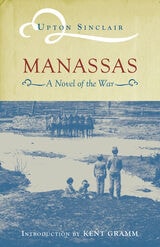
Centers on the moral dimension of the conflict as it traces a young Mississippi boy’s conversion from pro-slavery Southerner to abolitionist Union soldier
Allan Montague, born on a Mississippi plantation about twenty years before the Civil War, has grown up with slavery and considers it natural. When his father moves to Boston for business and takes the boy with him, young Allan carries a knife given to him by his cousin to use in killing abolitionists.
The first abolitionist young Allan meets in Boston is Levi Coffin, the reputed founder of the Underground Railroad. In this first of many meetings with historical figures, Allan forms a friendship with Coffin, who eventually takes him to hear a speech by former slave Frederick Douglass. Douglass's powerful words cement Allan's transformation into an abolitionist—a transformation that will lead him back to his Deep South home with the hope of freeing slaves and eventually back to the North and the fateful Battle of Manassas.
Kent Gramm, author of the introduction for this new edition of Manassas, calls the novel “a modern version of the morality play,” with the United States as the central character. “The real story, he writes, is the moral phenomenon of the Civil War.” It is a powerful book that deserves to be revived, read, and studied.
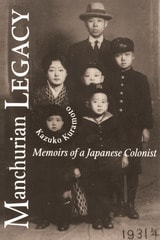
Manchurian Legacy
Memoirs of a Japanese ColonistKazuko Kuramoto
Michigan State University Press, 1999
Kazuko Kuramoto was born and raised in Dairen, Manchuria, in 1927, at the peak of Japanese expansionism in Asia. Dairen and the neighboring Port Arthur were important colonial outposts on the Liaotung Peninsula; the train lines established by Russia and taken over by the Japanese, ended there. When Kuramoto's grandfather arrived in Dairen as a member of the Japanese police force shortly after the end of the Russo-Japanese War in 1905, the family's belief in Japanese supremacy and its "divine" mission to "save" Asia from Western imperialists was firmly in place. As a third-generation colonist, the seventeen-year-old Kuramoto readily joined the Red Cross Nurse Corps in 1944 to aid in the war effort and in her country's sacred cause. A year later, her family listened to the emperor's radio broadcast ". . . we shall have to endure the unendurable, to suffer the insufferable." Japan surrendered unconditionally.
Manchurian Legacy is the story of the family's life in Dairen, their survival as a forgotten people during the battle to reclaim Manchuria waged by Russia, Nationalist China, and Communist China, and their subsequent repatriation to a devastated Japan. Kuramoto describes a culture based on the unthinking oppression of the colonized by the colonizer. And, because Manchuria was, in essence, a Japanese frontier, her family lived a freer and more luxurious life than they would have in Japan—one relatively unscathed by the war until after the surrender.
As a commentator Kuramoto explores her culture both from the inside, subjectively, and from the outside, objectively. Her memoirs describe her coming of age in a colonial society, her family's experiences in war-torn Manchuria, and her "homecoming" to Japan—where she had never been—just as Japan is engaged in its own cultural upheaval.

Manet's Modernism
or, The Face of Painting in the 1860sMichael Fried
University of Chicago Press, 1996
"Beautifully produced. . . . [Fried's] thought is always stimulating, if not provocative. This is an important book, which all students of modernism, in the broadest sense, will find rewarding."—Virginia Quarterly Review
"An astonishing piece of scholarship that will cause readers to rethink their understanding of Manet's influence, ambition, and achievement."—Gary Michael, Bloomsbury Review
"An audaciously brilliant book, long awaited and as essential reading for philosophers as for art historians."—Wayne Andersen, Common Knowledge
"Art history of the highest originality and distinction."—Arthur C. Danto, New York Times Book Review
Manhood in Hollywood from Bush to Bush
By David Greven
University of Texas Press, 2009
A struggle between narcissistic and masochistic modes of manhood defined Hollywood masculinity in the period between the presidencies of George H. W. Bush and George W. Bush. David Greven's contention is that a profound shift in representation occurred during the early 1990s when Hollywood was transformed by an explosion of films that foregrounded non-normative gendered identity and sexualities. In the years that have followed, popular cinema has either emulated or evaded the representational strategies of this era, especially in terms of gender and sexuality.
One major focus of this study is that, in a great deal of the criticism in both the fields of film theory and queer theory, masochism has been positively cast as a form of male sexuality that resists the structures of normative power, while narcissism has been negatively cast as either a regressive sexuality or the bastion of white male privilege. Greven argues that narcissism is a potentially radical mode of male sexuality that can defy normative codes and categories of gender, whereas masochism, far from being radical, has emerged as the default mode of a traditional normative masculinity. This study combines approaches from a variety of disciplines—psychoanalysis, queer theory, American studies, men's studies, and film theory—as it offers fresh readings of several important films of the past twenty years, including Casualties of War, The Silence of the Lambs, Fight Club, The Passion of the Christ, Auto Focus, and Brokeback Mountain.
Manhood on the Line
Working-Class Masculinities in the American HeartlandStephen Meyer
University of Illinois Press, 2016