Results by title
1272 books match the query 'Asia' and 30 start with n
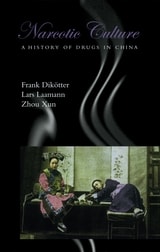
Narcotic Culture
A History of Drugs in ChinaFrank Dikötter, Lars Laamann, and Zhou Xun
University of Chicago Press, 2004
In a stunning historical reversal, Frank Dikötter, Lars Laamann, and Zhou Xun tell this different story of the relationship between opium and the Chinese. They reveal that opium actually had few harmful effects on either health or longevity; in fact, it was prepared and appreciated in highly complex rituals with inbuilt constraints preventing excessive use. Opium was even used as a medicinal panacea in China before the availability of aspirin and penicillin. But as a result of the British effort to eradicate opium, the Chinese turned from the relatively benign use of that drug to heroin, morphine, cocaine, and countless other psychoactive substances. Narcotic Culture provides abundant evidence that the transition from a tolerated opium culture to a system of prohibition produced a "cure" that was far worse than the disease.
Delving into a history of drugs and their abuses, Narcotic Culture is part revisionist history of imperial and twentieth-century Britain and part sobering portrait of the dangers of prohibition.
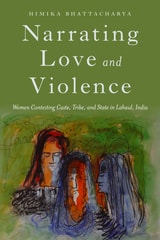
Narrating Love and Violence
Women Contesting Caste, Tribe, and State in Lahaul, IndiaBhattacharya, Himika
Rutgers University Press, 2017
The women in this book tell their stories through love, articulated as rejection, redefinition and reproduction of notions of violence and solidarity. Himika Bhattacharya centers the women’s narratives as a site of knowledge—beyond love and beyond violence. This book shows how women on the margins of tribe and caste know both, love and violence, as agents wishing to re-shape discourses of caste, tribe and community.
Nation Work
Asian Elites and National IdentitiesTimothy Brook and Andre Schmid, Editors
University of Michigan Press, 2000
National History and the World of Nations
Capital, State, and the Rhetoric of History in Japan, France, and the United StatesChristopher L. Hill
Duke University Press, 2008
Delving into narrative histories, prose fiction, and social philosophy, Hill analyzes the rhetoric, narrative form, and intellectual genealogy of late-nineteenth-century texts that contributed to the creation of national history in each of the three countries. He discusses the global political economy of the era, the positions of the three countries in it, and the reasons that arguments about history loomed large in debates on political, economic, and social problems. Examining how the writing of national histories in the three countries addressed political transformations and the place of the nation in the world, Hill illuminates the ideological labor national history performed. Its production not only naturalized the division of the world by systems of states and markets, but also asserted the inevitability of the nationalization of human community; displaced dissent to pre-modern, pre-national pasts; and presented the subject’s acceptance of a national identity as an unavoidable part of the passage from youth to adulthood.
National Past-Times
Narrative, Representation, and Power in Modern ChinaAnn Anagnost
Duke University Press, 1997
Using interviews and participant observation as well as close readings of official documents, propaganda materials, and popular media, Anagnost notes the discontinuities in the nation’s narrative—moments where this narrative has been radically reorganized at critical junctures in China’s modern history. Covering a broad range of issues relating to representation and power—issues that have presented themselves with particular clarity in the years since the violent crackdown on the student movement of 1989—National Past-Times critiques the ambiguous possibilities produced by the market, as well as new opportunities for "unfreedom" in the discipline of labor and the commodification of women. Anagnost begins with a retrospective reflection on the practice of "speaking bitterness" in socialist revolutionary practice. Subsequent essays discuss the culture debates of the 1980s, the discourse of social disorder, the issue of population control, the film The Story of Qiu Ju, and anomalies at the theme park "Splendid China."
Nationalism in India
Past and PresentIrfan Habib
Seagull Books, 2023
What makes a people living in a mere “geographical expression” a nation? From the French Revolution onwards, the word “nation” came to denote a people who wish to be collectively free. But free from what—colonial rule and inequality? Or religious and cultural diversity?
In this timely and succinct essay, Irfan Habib charts India’s struggle to consolidate a nationalist identity, to identify what it sought to be free from. Even as the colonial regime denied the very possibility of nationalism in the subcontinent, opposition to British rule fomented just such a sentiment. But resistance against colonial exploitation alone could not unify the Indian people. Internal inequalities—caste, poverty, religious bigotry—remained (and still remain) to be tackled.
Natural Resources and the New Frontier
Constructing Modern China's BorderlandsJudd C. Kinzley
University of Chicago Press, 2018
China’s westernmost province of Xinjiang has experienced escalating cycles of violence, interethnic strife, and state repression since the 1990s. In their search for the roots of these growing tensions, scholars have tended to focus on ethnic clashes and political disputes. In Natural Resources and the New Frontier, historian Judd C. Kinzley takes a different approach—one that works from the ground up to explore the infrastructural and material foundation of state power in the region.
As Kinzley argues, Xinjiang’s role in producing various natural resources for regional powers has been an important but largely overlooked factor in fueling unrest. He carefully traces the buildup to this unstable situation over the course of the twentieth century by focusing on the shifting priorities of Chinese, Soviet, and provincial officials regarding the production of various resources, including gold, furs, and oil among others. Through his archival work, Kinzley offers a new way of viewing Xinjiang that will shape the conversation about this important region and offer a model for understanding the development of other frontier zones in China as well as across the global south.
Nature Contained
Environmental Histories of SingaporeTimothy P. Barnard
National University of Singapore Press, 2014
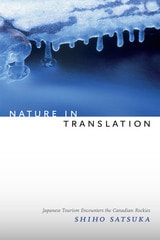
Nature in Translation
Japanese Tourism Encounters the Canadian RockiesShiho Satsuka
Duke University Press, 2015
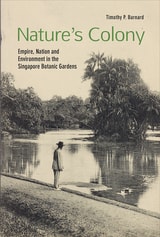
Nature's Colony
Empire, Nation and Environment in the Singapore Botanic GardensTimothy P. Barnard
National University of Singapore Press, 2017
Initially conceived to exploit nature for the benefit of empire, the Gardens were part of a symbolic struggle by administrators, scientists, and gardeners to assert dominance within Southeast Asia’s tropical landscape, reflecting shifting understandings of power, science, and nature among local administrators and distant mentors in Britain. Consequently, as an outpost of imperial science, the Gardens were instrumental in the development of plantation crops, such as rubber and oil palm, which went on to shape landscapes across the globe. Since the independence of Singapore, the Gardens have played a role in the “greening” of the country and have been named as Singapore’s first World Heritage Site. Setting the Gardens alongside the Royal Botanic Gardens, Kew, and botanic gardens in India, Ceylon, Mauritius, and the West Indies, Nature’s Colony provide the first in-depth look at the history of this influential institution.
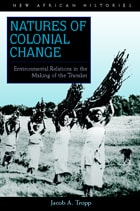
Natures of Colonial Change
Environmental Relations in the Making of the TranskeiJacob A. Tropp
Ohio University Press, 2006
In this groundbreaking study, Jacob A. Tropp explores the interconnections between negotiations over the environment and an emerging colonial relationship in a particular South African context—the Transkei—subsequently the largest of the notorious “homelands” under apartheid.
In the late nineteenth century, South Africa’s Cape Colony completed its incorporation of the area beyond the Kei River, known as the Transkei, and began transforming the region into a labor reserve. It simultaneously restructured popular access to local forests, reserving those resources for the benefit of the white settler economy. This placed new constraints on local Africans in accessing resources for agriculture, livestock management, hunting, building materials, fuel, medicine, and ritual practices.
Drawing from a diverse array of oral and written sources, Tropp reveals how bargaining over resources—between and among colonial officials, chiefs and headmen, and local African men and women—was interwoven with major changes in local political authority, gendered economic relations, and cultural practices as well as with intense struggles over the very meaning and scope of colonial rule itself.
Natures of Colonial Change sheds new light on the colonial era in the Transkei by looking at significant yet neglected dimensions of this history: how both “colonizing” and “colonized” groups negotiated environmental access and how such negotiations helped shape the broader making and meaning of life in the new colonial order.

Negative Exposures
Knowing What Not to Know in Contemporary ChinaMargaret Hillenbrand
Duke University Press, 2020
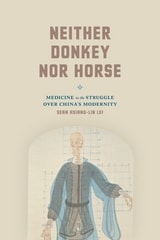
Neither Donkey nor Horse
Medicine in the Struggle over China's ModernitySean Hsiang-lin Lei
University of Chicago Press, 2014
Far from being a remnant of China’s premodern past, Chinese medicine in the twentieth century coevolved with Western medicine and the Nationalist state, undergoing a profound transformation—institutionally, epistemologically, and materially—that resulted in the creation of a modern Chinese medicine. This new medicine was derided as “neither donkey nor horse” because it necessarily betrayed both of the parental traditions and therefore was doomed to fail. Yet this hybrid medicine survived, through self-innovation and negotiation, thus challenging the conception of modernity that rejected the possibility of productive crossbreeding between the modern and the traditional.
By exploring the production of modern Chinese medicine and China’s modernity in tandem, Lei offers both a political history of medicine and a medical history of the Chinese state.

Neoliberalism in Vietnam, Volume 20
Ann M. Leshkowich and Christina Schwenkel
Duke University Press, 0
Contributors draw their conclusions from ethnographic fieldwork in contemporary urban spaces. They link neoliberalism in Vietnam to a set of globally diverse technical practices, institutions, modes of power, and governing strategies; for example, in its shifting currency regimes and its anticorruption campaigns. Contributors also explore the growing emphasis on self-improvement and modernization through studies of architecture, changing beauty standards, and the impact of in vitro fertilization. Biopolitical logics and the self-regulation of moral personhood are also addressed in essays on HIV/AIDS and transnational adoption. The issue highlights the ways in which the socialist past is integral to the present in Vietnam, even as it is remade and newly configured.
Contributors: Erik Harms, Nina Hien, Ann Marie Leshkowich, Li Zhang, Ken MacLean, Alfred John Montoya, Melissa J. Pashigian, Christina Schwenkel, Allison Truitt
Guest editors: Christina Schwenkel (Associate Professor, Department of Anthropology, University of California at Riverside) and Ann Marie Leshkowich (Associate Professor and Chair, Department of Sociology and Anthropology, College of the Holy Cross).
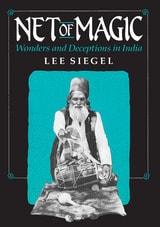
Net of Magic
Wonders and Deceptions in IndiaLee Siegel
University of Chicago Press, 1991
Siegel's journeys take him from ancient Sanskrit texts to the slums of New Delhi to find remnants of a remarkable magical tradition. In the squalid settlement of Shadipur, he is initiated into a band of Muslim street conjurers and performs as their shill while they tutor him in their con and craft. Siegel also becomes acquainted with Hindu theatrical magicians, who claim descent from court illusionists and now dress as maharajahs to perform a repertoire of tricks full of poignant kitsch and glitz.
Masterfully using a panoply of narrative sleights to recreate the magical world of India, Net of Magic intersperses travelogue, history, ethnography, and fiction. Siegel's vivid, often comic tale is crowded with shills and stooges, tourists and pickpockets, snake charmers and fakirs. Among the cast of characters are Naseeb, a poor Muslim street magician who guides Siegel into the closed circle of itinerant performers; the Industrial Magician, paid by a bank, who convinces his audience to buy traveler's checks by making twenty-rupee notes disappear; the Government Magician, who does a trick with condoms to encourage family planning; P. C. Sorcar, Jr., the most celebrated Indian stage magician; and the fictive Professor M. T. Bannerji, the world's greatest magician, who assumes various guises over a millennium of Indian history and finally arrives in the conjuring capital of the world—Las Vegas.
Like Indra's net—the web of illusion in which Indian performers ensnare their audience—Net of Magic captures the reader in a seductive portrayal of a world where deception is celebrated and lies are transformed into compelling and universal truths.
Networked
Business and Politics in Decentralizing Indonesia, 1998-2004Wahyu Prasetyawan
National University of Singapore Press, 2018
Networked Business and Politics in Decentralizing Indonesia evaluates three cases of deep-seated political conflict and intrigue including central government, local governments, and multinational companies. It looks at how the structure of the national political economy has changed as the result of local politicians becoming involved in disputes with the national government over control of natural resources. It also analyzes how these changes will affect the distribution of wealth in the country as well as Indonesia’s evolving democratic politics and modes of governance.
Networking China
The Digital Transformation of the Chinese EconomyYu Hong
University of Illinois Press, 2017
Neutral Accent
How Language, Labor, and Life Become GlobalA. Aneesh
Duke University Press, 2015
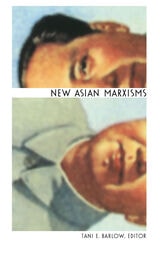
New Asian Marxisms
Tani E. Barlow, ed.
Duke University Press, 2002
While some of these essays take up key thinkers in Marxist history or draw attention to outstanding problematics, others focus on national literature and discourse in North and South Korea, the "Mao Zedong Fever" of the 1990s, the implications of Li Dazhao's poetry, and the Indian Naxalite movement. Illustrating the importance of central analytical categories like exploitation, alienation, and violence to studies on the politics of knowledge, contributors confront prevailing global consumerist fantasies
with accounts of political struggle, cultural displacement, and theoretical strategies.
Contributors. Tani E. Barlow, Dai Jinhua, Michael Dutton, D. R. Howland, Marshall Johnson, Liu Kang, You-me Park, William Pietz, Claudia Pozzana, Alessandro Russo, Sanjay Seth, Gi-Wook Shin, Sugiyama Mitsunobu, Jing Wang
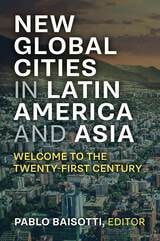
New Global Cities in Latin America and Asia
Welcome to the Twenty-First CenturyPablo Baisotti, Editor
University of Michigan Press, 2022
New Global Cities in Latin America and Asia: Welcome to the Twenty-First Century proposes new visions of global cities and regions historically considered “secondary” in the international context. The arguments are not only based on material progress made by these metropolises, but also on the growing social difficulties experienced (e.g., organized crime, drug trafficking, slums, economic inequalities). The book illustrates the growth of cities according to these problems arising from the modernity of the new century, comparing Latin American and Asian cities.
This book analyzes the complex relationships within cities through an interdisciplinary approach, complementing other research and challenging orthodox views on global cities. At the same time, the book provides new theoretical and methodological tools to understand the progress of “Third World” cities and the way of understanding “globality” in the 21st century by confronting the traditional views with which global cities were appreciated since the 1980s. Pablo Baisotti brings together researchers from various fields who provide new interpretative keys to certain cities in Latin America and Asia.
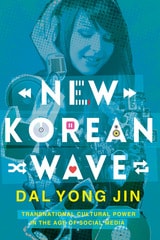
New Korean Wave
Transnational Cultural Power in the Age of Social MediaDal Yong Jin
University of Illinois Press, 2016
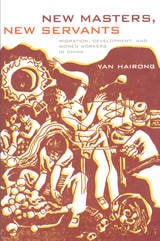
New Masters, New Servants
Migration, Development, and Women Workers in ChinaYan Hairong
Duke University Press, 2008
Yan analyzes how the migrant women workers are subjected to, make sense of, and reflect on a range of state and neoliberal discourses about development, modernity, consumption, self-worth, quality, and individual and collective longing and struggle. She offers keen insight into the workers’ desire and efforts to achieve suzhi (quality) through self-improvement, the way workers are treated by their employers, and representations of migrant domestic workers on television and the Internet and in newspapers and magazines. In so doing, Yan demonstrates that contestations over the meanings of migrant workers raise broad questions about the nature of wage labor, market economy, sociality, and postsocialism in contemporary China.
New Terrains in Southeast Asian History
Abu Talib Ahmad
Ohio University Press, 2003
At a watershed moment in the scholarly approach to the history of this important region, New Terrains in Southeast Asian History captures the richness and diversity of historical discourse among Southeast Asian scholars. Through the perspectives of scholars who live and work within the region, the book offers readers a rare opportunity to enter into the world of Southeast Asian historiography. Individual chapters subject the dominance of national narratives to critical reflection and deconstruction, while others highlight the need to go beyond essentially political narratives to seek out deeper cultural, economic, and social structures by utilizing new sources, methodologies, and concepts. Taken as a whole, the book contends that new terrains in Southeast Asian history may be found “at the interstices and on the margins” where nations, societies, or cultures engage the unending processes of historical change.
The contributors are Abdul Rahman Haji Ismail, Abu Talib Ahmad, Andrew Hardy, Badriyah Haji Salleh, Brenda S. A. Yeoh, C. J. W.-L. Wee, Ni Ni Myint, Dhiravat na Pombejra, Hong Lysa, Huang Jianli, Kobkua Suwannathat-Pian, M. R. Fernando, P. Lim Pui Huen, Paul H. Kratoska, Tan Liok Ee, Thongchai Winichakul, and Yong Mun Cheong.
New World Orderings
China and the Global SouthLisa Rofel and Carlos Rojas, editors
Duke University Press, 2022
Contributors. Andrea Bachner, Luciano Damián Bolinaga, Nellie Chu, Rachel Cypher, Mingwei Huang, T. Tu Huynh, Yu-lin Lee, Ng Kim Chew, Lisa Rofel, Carlos Rojas, Shuang Shen, Derek Sheridan, Nicolai Volland
Newborn Socialist Things
Materiality in Maoist ChinaLaurence Coderre
Duke University Press, 2021
Nightmarch
Among India’s Revolutionary GuerrillasAlpa Shah
University of Chicago Press, 2019
Winner of the 2020 Association for Political and Legal Anthropology Book Prize
Shortlisted for the Orwell Prize
Shortlisted for the New India Foundation Book Prize
Anthropologist Alpa Shah found herself in an active platoon of Naxalites—one of the longest-running guerrilla insurgencies in the world. The only woman, and the only person without a weapon, she walked alongside the militants for seven nights across 150 miles of dense, hilly forests in eastern India. Nightmarch is the riveting story of Shah's journey, grounded in her years of living with India’s tribal people, an eye-opening exploration of the movement’s history and future and a powerful contemplation of how disadvantaged people fight back against unjust systems in today’s world.
The Naxalites have fought for a communist society for the past fifty years, caught in a conflict that has so far claimed at least forty thousand lives. Yet surprisingly little is known about these fighters in the West. Framed by the Indian state as a deadly terrorist group, the movement is actually made up of Marxist ideologues and lower-caste and tribal combatants, all of whom seek to overthrow a system that has abused them for decades. In Nightmarch, Shah shares some of their gritty untold stories: here we meet a high-caste leader who spent almost thirty years underground, a young Adivasi foot soldier, and an Adivasi youth who defected. Speaking with them and living for years with villagers in guerrilla strongholds, Shah has sought to understand why some of India’s poor have shunned the world’s largest democracy and taken up arms to fight for a fairer society—and asks whether they might be undermining their own aims.
By shining a light on this largely ignored corner of the world, Shah raises important questions about the uncaring advance of capitalism and offers a compelling reflection on dispossession and conflict at the heart of contemporary India.
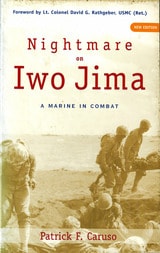
Nightmare on Iwo Jima
A Marine in CombatPatrick F. Caruso, with a foreword by David G. Rathgeber
University of Alabama Press, 2007
No Hand Held Mine
Stories — "Granny Wild Goose" and "The Root's Tale"Kim Soom
Rutgers University Press, 2026
An elderly Korean woman talking about being forced into sexual slavery during World War II. A modern Korean woman extricating herself from a failing relationship with an artist. Award-winning South Korean writer Kim Soom presents us with portraits of two women who couldn’t be more different but who both show resilience and compassion. No Hand Held Mine: Stories, containing one non-fiction piece and one short story, demonstrates the power and breadth of Kim’s writing. “Granny Wild Goose” uses former Comfort Woman Gil Won-Ok’s own words, recorded during conversations with Kim, to tell her life story of brutality, betrayal, and survival. In “The Root’s Tale,” the female protagonist comes to understand the strength of solitary women. Both devastating and reaffirming, No Hand Held Mine shows why Kim Soom has received every major literary award in Korea. Joon-Li Kim and Doo-Sun Ryu’s sensitive translation maintains Kim’s lyricism and exquisite imagery.
This book is published with the support of The Daesan Foundation.
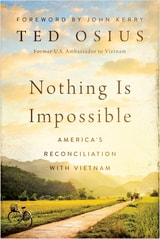
Nothing Is Impossible
America's Reconciliation with VietnamTed Osius
Rutgers University Press, 2022
Ted Osius, former ambassador during the Obama administration, offers a vivid account, starting in the 1990s, of the various forms of diplomacy that made this reconciliation possible. He considers the leaders who put aside past traumas to work on creating a brighter future, including senators John McCain and John Kerry, two Vietnam veterans and ideological opponents who set aside their differences for a greater cause, and Pete Peterson—the former POW who became the first U.S. ambassador to a new Vietnam. Osius also draws upon his own experiences working first-hand with various Vietnamese leaders and traveling the country on bicycle to spotlight the ordinary Vietnamese people who have helped bring about their nation’s extraordinary renaissance.
With a foreword by former Secretary of State John Kerry, Nothing Is Impossible tells an inspiring story of how international diplomacy can create a better world.
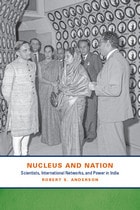
Nucleus and Nation
Scientists, International Networks, and Power in IndiaRobert S. Anderson
University of Chicago Press, 2010
In 1974 India joined the elite roster of nuclear world powers when it exploded its first nuclear bomb. But the technological progress that facilitated that feat was set in motion many decades before, as India sought both independence from the British and respect from the larger world. Over the course of the twentieth century, India metamorphosed from a marginal place to a serious hub of technological and scientific innovation. It is this tale of transformation that Robert S. Anderson recounts in Nucleus and Nation.
Tracing the long institutional and individual preparations for India’s first nuclear test and its consequences, Anderson begins with the careers of India’s renowned scientists—Meghnad Saha, Shanti Bhatnagar, Homi Bhabha, and their patron Jawaharlal Nehru—in the first half of the twentieth century before focusing on the evolution of the large and complex scientific community—especially Vikram Sarabhi—in the later part of the era. By contextualizing Indian debates over nuclear power within the larger conversation about modernization and industrialization, Anderson hones in on the thorny issue of the integration of science into the framework and self-reliant ideals of Indian nationalism. In this way, Nucleus and Nation is more than a history of nuclear science and engineering and the Indian Atomic Energy Commission; it is a unique perspective on the history of Indian nationhood and the politics of its scientific community.