Results by title
944 books match the query 'Indians of North America' and 46 start with n

National Monuments
Heid E. Erdrich
Michigan State University Press, 2008
Many of the poems in National Monuments explore bodies, particularly the bodies of indigenous women worldwide, as monuments—in life, in photos, in graves, in traveling exhibitions, and in plastic representations at the airport. Erdrich sometimes imagines what ancient bones would say if they could speak. Her poems remind us that we make monuments out of what remains—monuments are actually our own imaginings of the meaning or significance of things that are, in themselves, silent.
As Erdrich moves from the expectedly "poetic" to the voice of a newspaper headline or popular culture, we are jarred into wondering how we make our own meanings when the present is so immediately confronted by the past (or vice versa). The language of the scientists that Erdrich sometimes quotes in epigraphs seems reductive in comparison to the richness of tone and meaning that these poems—filled with puns, allusions, and wordplay—provide.
Erdrich's poetry is literary in the best sense of the word, infused with an awareness of the poetic canon. Her revisions of and replies to poems by William Carlos Williams, Robert Frost, and others offer an indigenous perspective quite different from the monuments of American literature they address.
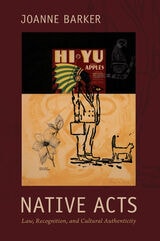
Native Acts
Law, Recognition, and Cultural AuthenticityJoanne Barker
Duke University Press, 2011
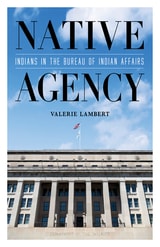
Native Agency
Indians in the Bureau of Indian AffairsValerie Lambert
University of Minnesota Press, 2022
What happens when American Indians take over an institution designed to eliminate them?
The Bureau of Indian Affairs was hatched in the U.S. Department of War to subjugate and eliminate American Indians. Yet beginning in the 1970s, American Indians and Alaska Natives took over and now run the agency. Choctaw anthropologist Valerie Lambert argues that, instead of fulfilling settler-colonial goals, the Indians in the BIA have been leveraging federal power to fight settler colonialism, battle white supremacy, and serve the interests of their people.
Although the missteps and occasional blunders of the Indians in the BIA have at times damaged the federal–Indian relationship and fueled the ire of their people, and although the BIA is massively underfunded, Indians began crafting the BIA into a Native agency by reformulating the meanings of concepts that lay at its heart—concepts such as tribal sovereignty, treaties, the trust responsibility, and Indian land. At the same time, they pursued actions to strengthen and bolster tribes, to foster healing, to fight the many injustices Indians face, and to restore the Indian land base.
This work provides an essential national-level look at an intriguing and impactful form of Indigenous resistance. It describes, in great detail, the continuing assaults made on Native peoples and tribal sovereignty in the United States during the twenty-first century, and it sketches the visions of the future that Indians at the BIA and in Indian Country have been crafting for themselves.
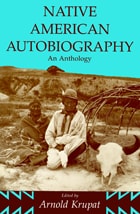
Native American Autobiography
An AnthologyArnold Krupat
University of Wisconsin Press, 1994
Native American Autobiography is the first collection to bring together the major autobiographical narratives by Native American people from the earliest documents that exist to the present. The thirty narratives included here cover a range of tribes and cultural areas, over a span of more than 200 years.
From the earliest known written memoir—a 1768 narrative by the Reverend Samson Occom, a Mohegan, reproduced as a chapter here—to recent reminiscences by such prominent writers as N. Scott Momaday and Gerald Vizenor, the book covers a broad range of Native American experience. The sections include “Traditional Lives;” “The Christian Indians, from the Eighteenth Century to Indian Removal, 1830;” “The Resisting Indians, from Indian Removal to Wounded Knee, 1830-90;” “The Closed Frontier, 1890-;” “The Anthropologists' Indians, 1900-;” “‘Native American Renaissance,’ 1968-;” and “Traditional Lives Today.” Editor Arnold Krupat provides a general introduction, a historical introduction to each of the seven sections, extensive headnotes for each selection, and suggestions for further reading, making this an ideal resource for courses in American literature, history, anthropology, and Native American studies. General readers, too, will find a wealth of fascinating material in the life stories of these Native American men and women.
"This is the first comprehensive anthology of American Indian autobiography ever published. It will be of interest to virtually anyone teaching or studying the literatures of the native peoples of North America, as well as to a general audience, because of the informative, literate introductions and the absorbing narratives themselves."—William L. Andrews, series editor
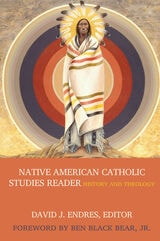
Native American Catholic Studies Reader
History and TheologyDavid J. Endres
Catholic University of America Press, 2022
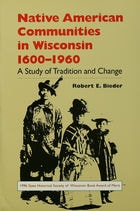
Native American Communities in Wisconsin, 1600–1960
A Study of Tradition and ChangeRobert E. Bieder
University of Wisconsin Press, 1995
The first comprehensive history of Native American tribes in Wisconsin, this thorough and thoroughly readable account follows Wisconsin’s Indian communities—Ojibwa, Potawatomie, Menominee, Winnebago, Oneida, Stockbridge-Munsee, and Ottawa—from the 1600s through 1960. Written for students and general readers, it covers in detail the ways that native communities have striven to shape and maintain their traditions in the face of enormous external pressures.
The author, Robert E. Bieder, begins by describing the Wisconsin region in the 1600s—both the natural environment, with its profound significance for Native American peoples, and the territories of the many tribal cultures throughout the region—and then surveys experiences with French, British, and, finally, American contact. Using native legends and historical and ethnological sources, Bieder describes how the Wisconsin communities adapted first to the influx of Indian groups fleeing the expanding Iroquois Confederacy in eastern America and then to the arrival of fur traders, lumber men, and farmers. Economic shifts and general social forces, he shows, brought about massive adjustments in diet, settlement patterns, politics, and religion, leading to a redefinition of native tradition.
Historical photographs and maps illustrate the text, and an extensive bibliography has many suggestions for further reading.

Native American DNA
Tribal Belonging and the False Promise of Genetic ScienceKim TallBear
University of Minnesota Press, 2013
Who is a Native American? And who gets to decide? From genealogists searching online for their ancestors to fortune hunters hoping for a slice of casino profits from wealthy tribes, the answers to these seemingly straightforward questions have profound ramifications. The rise of DNA testing has further complicated the issues and raised the stakes.
In Native American DNA, Kim TallBear shows how DNA testing is a powerful—and problematic—scientific process that is useful in determining close biological relatives. But tribal membership is a legal category that has developed in dependence on certain social understandings and historical contexts, a set of concepts that entangles genetic information in a web of family relations, reservation histories, tribal rules, and government regulations. At a larger level, TallBear asserts, the “markers” that are identified and applied to specific groups such as Native American tribes bear the imprints of the cultural, racial, ethnic, national, and even tribal misinterpretations of the humans who study them.
TallBear notes that ideas about racial science, which informed white definitions of tribes in the nineteenth century, are unfortunately being revived in twenty-first-century laboratories. Because today’s science seems so compelling, increasing numbers of Native Americans have begun to believe their own metaphors: “in our blood” is giving way to “in our DNA.” This rhetorical drift, she argues, has significant consequences, and ultimately she shows how Native American claims to land, resources, and sovereignty that have taken generations to ratify may be seriously—and permanently—undermined.

Native American Folklore in Nineteenth-Century Periodicals
William M. Clements
Ohio University Press, 1986
Though study of American Indian cultures had been fostered for several centuries by missionaries and explorers, it was not until he nineteenth century that a disciplined and systematic approach to the study of New World cultures began to emerge. With Schoolcraft, Powell, Boas, and others, an adventurers’ avocation first became a profession, and it is to these early scholars that we owe the major theoretical perspectives and insights which provided a grounding for American anthropology and folklore studies.
In these twenty-one essays, many of which originally appeared in such now obscure periodicals as Southern Literary Messenger, American Whig Review, and DeLestry’s Western Magazine, Clements presents representative works by most of the major early figures in the field. The collection includes early statements and applications of most of the theoretical approaches to folklore employed in the nineteenth century, and it encompasses each of the major folklore genres studied by nineteenth-century researchers.
Extensive headnotes to each essay provide information about the author, discussion of the theoretical context of each essay, and direction to more contemporary treatments of the theories and materials involved, and the problems addressed. These together with a brief introduction tracing the genesis of American folklore studies, and chronological arrangement of the articles themselves, make Native American Folklore a convenient introduction to and survey of the major ideas and figures of American folklore studies in its formative period.
Native American Legends of the Southeast
Tales from the Natchez, Caddo, Biloxi, Chickasaw, and Other NationsGeorge E. Lankford
University of Alabama Press, 2011
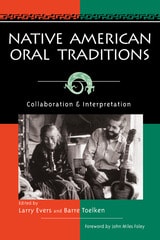
Native American Oral Traditions
Collaboration and InterpretationLarry Evers
Utah State University Press, 2001
This collection provides a benchmark that helps secure the position of collaboration between Native American and non-Native American scholars in the forefront of study of Native oral traditions. Seven sets of intercultural authors present Native American oral texts with commentary, exploring dimensions of perspective, discovery, and meaning that emerge through collaborative translation and interpretation. The texts studied all come from the American West but include a rich variety of material, since their tribal sources range from the Yupik in the Arctic to the Yaqui in the Sonoran Desert.
This presentation of jointly authored work is timely: it addresses increasing interest in, calls for, and movement toward reflexivity in the relationships between scholars and the Native communities they study, and it responds to the renewed commitment in those communities to asserting more control over representations of their traditions. Although Native and academic communities have long tried to work together in the study of culture and literature, the relationship has been awkward and imbalanced toward the academics. In many cases, the contributions of Native assistants, informants, translators, and field workers to the work of professional ethnographers has been inadequately credited, ignored, or only recently uncovered. Native Americans usually have not participated in planning and writing such projects. Native American Oral Traditions provides models for overcoming such obstacles to interpreting and understanding Native oral literature in relation to the communities and cultures from which it comes.
Native American Performance and Representation
Edited by S. E. Wilmer
University of Arizona Press, 2009
This volume examines Native performance using a variety of lenses, such as feminism, literary and film theory, and postcolonial discourse. Through the many unique voices of the contributors, major themes are explored, such as indigenous self-representations in performance, representations by nonindigenous people, cultural authenticity in performance and representation, and cross-fertilization between cultures. Authors introduce important, though sometimes controversial, issues as they consider the effects of miscegenation on traditional customs, racial discrimination, Native women’s position in a multicultural society, and the relationship between authenticity and hybridity in Native performance.
An important addition to the new and growing field of Native performance, Wilmer’s book cuts across disciplines and areas of study in a way no other book in the field does. It will appeal not only to those interested in Native American studies but also to those concerned with women’s and gender studies, literary and film studies, and cultural studies.
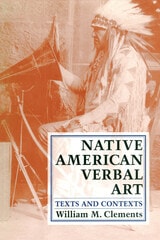
Native American Verbal Art
Texts and ContextsWilliam M. Clements
University of Arizona Press, 1996
He examines in depth Henry Timberlake’s 1765 translation of a Cherokee war song that was probably the first printed English rendering of a Native American "poem." He discusses early-nineteenth-century textualizers and translators who saw in Native American verbal art a literature manqué that they could transform into a fully realized literature, with particular attention to the work of Henry Rowe Schoolcraft, an Indian agent and pioneer field collector who developed this approach to its fullest. He discusses the "scientific" textualizers of the late nineteenth century who viewed Native American discourse as a data source for historical, ethnographic, and linguistic information, and he examines the work of Natalie Curtis, whose field research among the Hopis helped to launch a wave of interest in Native Americans and their verbal art that continues to the present.
In addition, Clements addresses theoretical issues in the textualization, translation, and anthologizing of American Indian oral expression. In many cases the past records of Native American expression represent all we have left of an entire verbal heritage; in most cases they are all that we have of a particular heritage at a particular point in history. Covering a broad range of materials and their historical contexts, Native American Verbal Art identifies the agendas that have informed these records and helps the reader to determine what remains useful in them. It will be a welcome addition to the fields of Native American studies and folklore.
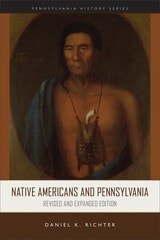
Native Americans and Pennsylvania
Daniel K. Richter
Temple University Press, 2026
Engagingly written, deeply researched, and thoroughly revised to reflect the most recent interdisciplinary scholarship, this new edition of Native Americans and Pennsylvania focuses on Indigenous actors, voices, and landscapes, while tracing interconnections among local, continental, and global trends.
The story begins thousands of years before there was such a thing as “Pennsylvania.” William Penn did not paint his colony on a blank canvas. Colonists adapted ancient patterns of trade and cultural interaction created by the ancestors of Lenape, Conestoga, and Haudenosaunee peoples and convinced themselves they had made them their own. In the process, Pennsylvanians developed moral justifications for the expropriation of Indigenous land, pernicious doctrines about racial superiority, and brutal mechanisms of vigilante violence that profoundly influenced later United States government policies.
Those policies kept Pennsylvania in the foreground of national Native American issues long after the Commonwealth expelled the majority of its Indigenous population to far-flung diasporic homes: forced cultural assimilation at off-reservation boarding schools in the nineteenth century, cultural revitalization and political activism in the twentieth, and struggles with cultural institutions over the repatriation of human remains and controversies over who has the right to claim Indigenous identity in the twenty-first.
In the series Pennsylvania History
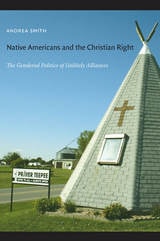
Native Americans and the Christian Right
The Gendered Politics of Unlikely AlliancesAndrea Smith
Duke University Press, 2008
Smith draws on archival research, interviews, and her own participation in Native struggles and Christian Right conferences and events. She considers American Indian activism within the Promise Keepers and new Charismatic movements. She also explores specific opportunities for building unlikely alliances. For instance, while evangelicals’ understanding of the relationship between the Bible and the state may lead to reactionary positions on issues including homosexuality, civil rights, and abortion, it also supports a relatively progressive position on prison reform. In terms of evangelical and Native American feminisms, she reveals antiviolence organizing to be a galvanizing force within both communities, discusses theories of coalition politics among both evangelical and indigenous women, and considers Native women’s visions of sovereignty and nationhood. Smith concludes with a reflection on the implications of her research for the field of Native American studies.
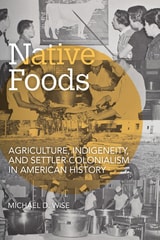
Native Foods
Agriculture, Indigeneity, and Settler Colonialism in American HistoryMichael D. Wise
University of Arkansas Press, 2023
Combining original historical research with interdisciplinary perspectives and informed by the work of Indigenous food sovereignty advocates and activists, this study sheds new light on the historical roles of Native American cuisine in American history and the significance of ongoing colonial processes in present-day discussions about the place of Native foods and Native history in our evolving worlds of taste, justice, and politics.
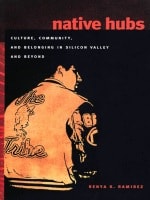
Native Hubs
Culture, Community, and Belonging in Silicon Valley and BeyondRenya K. Ramirez
Duke University Press, 2007
Ramirez’s ethnography revolves around the Paiute American activist Laverne Roberts’s notion of the “hub,” a space that allows for the creation of a sense of belonging away from a geographic center. Ramirez describes “hub-making” activities in Silicon Valley, including sweat lodge ceremonies, powwows, and American Indian Alliance meetings, gatherings at which urban Indians reinforce bonds of social belonging and forge intertribal alliances. She examines the struggle of the Muwekma Ohlone, a tribe aboriginal to the San Francisco Bay area, to maintain a sense of community without a land base and to be recognized as a tribe by the federal government. She considers the crucial role of Native women within urban indigenous communities; a 2004 meeting in which Native Americans from Mexico and the United States discussed cross-border indigenous rights activism; and the ways that young Native Americans in Silicon Valley experience race and ethnicity, especially in relation to the area’s large Chicano community. A unique and important exploration of diaspora, transnationalism, identity, belonging, and community, Native Hubs is intended for scholars and activists alike.
Native Land Talk
Indigenous and Arrivant Rights TheoriesYael Ben-zvi
Dartmouth College Press, 2018
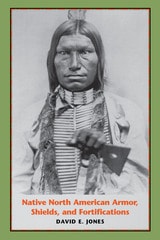
Native North American Armor, Shields, and Fortifications
By David E. Jones
University of Texas Press, 2004
From the Chickasaw fighting the Choctaw in the Southeast to the Sioux battling the Cheyenne on the Great Plains, warfare was endemic among the North American Indians when Europeans first arrived on this continent. An impressive array of offensive weaponry and battle tactics gave rise to an equally impressive range of defensive technology. Native Americans constructed very effective armor and shields using wood, bone, and leather. Their fortifications ranged from simple refuges to walled and moated stockades to multiple stockades linked in strategic defensive networks.
In this book, David E. Jones offers the first systematic comparative study of the defensive armor and fortifications of aboriginal Native Americans. Drawing data from ethnohistorical accounts and archaeological evidence, he surveys the use of armor, shields, and fortifications both before European contact and during the historic period by American Indians from the Southeast to the Northwest Coast, from the Northeast Woodlands to the desert Southwest, and from the Sub-Arctic to the Great Plains. Jones also demonstrates the sociocultural factors that affected warfare and shaped the development of different types of armor and fortifications. Extensive eyewitness descriptions of warfare, armor, and fortifications, as well as photos and sketches of Indian armor from museum collections, add a visual dimension to the text.
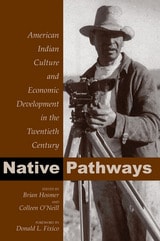
Native Pathways
American Indian Culture and Economic Development in the Twentieth CenturyBrian Hosmer
University Press of Colorado, 2004
Native People of Wisconsin
Patty Loew
Wisconsin Historical Society Press, 2003
The revised edition ofPatty Loew'sNative People of Wisconsin is now available, ISBN 9780870207488.Native People of Wisconsin, the fifth text in the New Badger History series for upper elementary and middle school students, focuses on the Indian Nations in the state: the Menominee, Ho-Chunk, Ojibwe, Oneida, Mohican Nation, Stockbridge-Munsee Band, and the Brothertown Indians. Patty Loew has followed the same structure she used in Indian Nations of Wisconsin, her book for general audiences, in which she provided chapters on Early History and European Arrivals, then devoted the remaining chapters to each of the Indian Nations in Wisconsin today.
Native People of Wisconsin, Revised Edition
Patty Loew
Wisconsin Historical Society Press, 2015
"So many of the children in this classroom are Ho-Chunk, and it brings history alive to them and makes it clear to the rest of us too that this isn't just...Natives riding on horseback. There are still Natives in our society today, and we're working together and living side by side. So we need to learn about their ways as well." --Amy Laundrie, former Lake Delton Elementary School fourth grade teacher
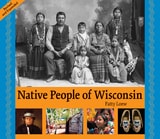
An essential title for the upper elementary classroom, "Native People of Wisconsin" fills the need for accurate and authentic teaching materials about Wisconsin's Indian Nations. Based on her research for her award-winning title for adults, "Indian Nations of Wisconsin: Histories of Endurance and Survival," author Patty Loew has tailored this book specifically for young readers.
"Native People of Wisconsin" tells the stories of the twelve Native Nations in Wisconsin, including the Native people's incredible resilience despite rapid change and the impact of European arrivals on Native culture. Young readers will become familiar with the unique cultural traditions, tribal history, and life today for each nation.
Complete with maps, illustrations, and a detailed glossary of terms, this highly anticipated new edition includes two new chapters on the Brothertown Indian Nation and urban Indians, as well as updates on each tribe's current history and new profiles of outstanding young people from every nation.
Native People of Wisconsin, TG
Bobbie Malone and Kori Oberle
Wisconsin Historical Society Press, 2003
The revised and updated Teacher's Guide for Native People of Wisconsin is available Winter 2015, ISBN 9780870207495.This teacher's guide helps students grasp fully the rich content of Native People of Wisconsin. The guide offers more structured activities that reengage students in the text itself in a manner that diverges from teacher's guides to our earlier publications. Activities for each chapter focus on interdisciplinary standards-related reading strategies, journaling, and other multidimensional skills that both reinforce and complement the content of the text. Included with the teacher's guide is an accompanying CD-ROM, produced specifically for Native People of Wisconsin of segments from several of the video series on Wisconsin Studies produced by the Wisconsin Educational Communications Board. Such interactive learning integrates reasoning and reading skills (and state standards) beyond the social studies and promise to make Native People of Wisconsin an essential part of the classroom curriculum.
Native Plants Of Southern Nevada
David Rhode
University of Utah Press, 2002
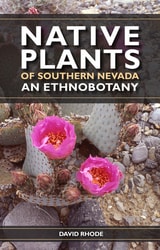
The southern Great Basin/northern Mojave desert region is home to several different Paiute and Shoshone peoples, all of whom speak languages in the Numic language family. These societies shared a way of life based mainly on harvesting wild plants, following an annual cycle of moving and gathering the seasonally abundant resources. Because of this, they were familiar with and used the full range of plant communities, from the warm-desert Mojave to the cold-desert Great Basin, becoming practiced botanists. They learned which plants and plant parts were useful for curing certain ailments, which produced colorful dyes, which would keep spirits away, and “which crops ripened when” in a particular locality.
Native Plants of Southern Nevada arranges that plant knowledge in a traditional field-guide fashion: trees, large shrubs and vines, small shrubs and subshrubs, yuccas and agaves, cacti, herbaceous plants, grasses and grasslike plants, and bulbs. It also lists the native names given by the Owens Valley Paiute, Southern Paiute, Timbisha Shoshone, and Western Shoshone peoples, includes plant description and habitat specifics, and discusses the native uses of each plant. It gathers and compiles the wealth of information buried and scattered in ethnographic notes and monographs, and combines that with good color photographs of the plants, making them easily identifiable in the field.
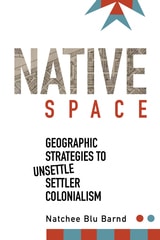
Native Space
Geographic Strategies to Unsettle Settler ColonialismNatchee Blu Barnd
Oregon State University Press, 2017
What are the limits and potentials of indigenous acts of spatial production? Native Space argues that control over the notion of “Indianness” still sits at the center of how space is produced in a neocolonial nation, and shows how non-indigenous communities uniquely deploy Native identities in the direct construction of colonial geographies. In short, “the Indian” serves to create White space in concrete ways. Yet, Native geographies effectively reclaim indigenous identities, assert ongoing relations to the land, and refuse the claims of settler colonialism.
Barnd creatively and persuasively uses original cartographic research and demographic data, a series of interrelated stories set in the Midwestern Plains states of Kansas and Oklahoma, an examination of visual art by contemporary indigenous artists, and discussions of several forms of indigenous activism to support his argument. With its highly original, interdisciplinary approach, Native Space makes a significant contribution to the literature in cultural and critical geography, comparative ethnic studies, indigenous studies, cultural studies, American Studies, and related fields.
Native Studies Keywords
Edited by Stephanie Nohelani Teves, Andrea Smith, and Michelle Raheja
University of Arizona Press, 2015
Take sovereignty, for example. The word has served as the battle cry for social justice in Indian Country. But what is the meaning of sovereignty? Native peoples with diverse political beliefs all might say they support sovereignty—without understanding fully the meaning and implications packed in the word.
The field of Native studies is filled with many such words whose meanings are presumed, rather than articulated or debated. Consequently, the foundational terms within Native studies always have multiple and conflicting meanings. These terms carry the colonial baggage that has accrued from centuries of contested words.
Native Studies Keywords is a genealogical project that looks at the history of words that claim to have no history. It is the first book to examine the foundational concepts of Native American studies, offering multiple perspectives and opening a critical new conversation.

Native Voices
Indigenous American Poetry, Craft, and ConversationsEdited by CMarie Fuhrman and Dean Rader
Tupelo Press, 2019
In this groundbreaking anthology of Indigenous poetry and prose, Native poems, stories, and essays are informed with a knowledge of both what has been lost and what is being restored. It offers a diverse collection of stories told by Indigenous writers about themselves, their histories, and their present. It is a celebration of culture and the possibilities of language.
Featuring forty-four poets, including Ishmael Hope, Bojan Louis, Ruby Murray, Simon Ortiz, Leslie Marmon Silko, Luci Tapahonso, Joy Harjo, dg okpik, Sherwin Bitsui, Heid E. Erdrich, Layli Long Soldier, and Orlando White.
Original influence essays by Diane Glancy on Lorca, Chrystos on Audre Lorde, Louise Erdrich on Elizabeth Bishop, LeAnne Howe on W. D. Snodgrass, Allison Hedge Coke on Delmore Schwartz, Suzanne Rancourt on Ai, and M. L. Smoker on Richard Hugo, among others.
And, a selection of resonant work chosen from previous generations of Native artists.
“There really is no better anthology out there that collects indigenous poets publishing from 1960 to the present.” — Dean Rader, co-editor
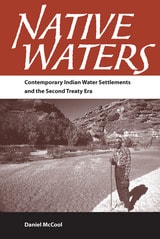
Native Waters
Contemporary Indian Water Settlements and the Second Treaty EraDaniel McCool
University of Arizona Press, 2002
Native and Spanish New Worlds
Sixteenth-Century Entradas in the American Southwest and SoutheastEdited by Clay Mathers, Jeffrey M. Mitchem, and Charles M. Haecker
University of Arizona Press, 2013
No other volume assembles such a wide variety of archaeological, ethnohistorical, environmental, and biological information to elucidate the experience of Natives and Europeans in the early colonial world of Northern New Spain, and the global implications of entradas during this formative period in borderlands history.
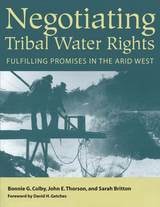
Negotiating Tribal Water Rights
Fulfilling Promises in the Arid WestBonnie G. Colby, John E. Thorson, and Sarah Britton; Foreword by David H. Getches
University of Arizona Press, 2005
Much has been written about Indian water rights; for the many tribal and non-Indian stakeholders who rely upon western water, this book now offers practical guidance on how to negotiate them. By providing a comprehensive synthesis of western water issues, tribal water disputes, and alternative approaches to dispute resolution, it offers a valuable sourcebook for all—tribal councils, legislators, water professionals, attorneys—who need a basic understanding of the complexities of the situation.
The book reviews the history, current status, and case law related to western water while revealing strategies for addressing water conflicts among tribes, cities, farms, environmentalists, and public agencies. Drawing insights from the process, structure, and implementation of water rights settlements currently under negotiation or already agreed to, it presents a detailed analysis of how these cases evolve over time. It also provides a wide range of contextual materials, from the nuts and bolts of a Freedom of Information Act request to the hydrology of irrigation. It also includes contributed essays by expert authors on special topics, as well as interviews with key individuals active in water management and tribal water cases.
As stakeholders continue to battle over rights to water, this book clearly addresses the place of Native rights in the conflict. Negotiating Tribal Water Rights offers an unsurpassed introduction to the ongoing challenges these claims present to western water management while demonstrating the innovative approaches that states, tribes, and the federal government have taken to fulfill them while mitigating harm to both non-Indians and the environment.
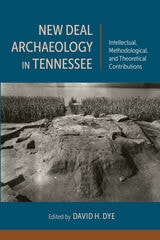
New Deal Archaeology in Tennessee
Intellectual, Methodological, and Theoretical ContributionsEdited by David H. Dye
University of Alabama Press, 2016
Exploring how New Deal innovation transformed archaeology in the American South.
New Deal Archaeology in Tennessee tells the engrossing story of Southeastern archaeology in the 1930s. The Tennessee Valley Authority Act of May 1933 initiated an ambitious program of flood control and power generation by way of a chain of hydroelectric dams on the Tennessee River. The construction of these dams flooded hundreds of thousands of square miles of river bottoms, campsites, villages, and towns that had been homes to Native Americans for centuries. This triggered an urgent need to undertake extensive archaeological fieldwork throughout the region. Those studies continue to influence contemporary archaeology.
The state of Tennessee and the Tennessee Valley were especially well suited research targets thanks to their mild climate and long field seasons. A third benefit in the 1930s was the abundance of labor supplied by Tennesseans unemployed during the Great Depression. Within months of the passage of the Tennessee Valley Authority Act, teams of archaeologists fanned out across the state and region under the farsighted direction of Smithsonian Institution curators Neil M. Judd, Frank H. H. Roberts, and Frank M. Setzler. The early months of 1934 would become the busiest period of archaeological fieldwork in US history.
The twelve insightful essays in New Deal Archaeology in Tennessee document and explore this unique peak in archaeological study. Chapters highlight then-new techniques such as mound “peeling” and stratigraphic excavation adapted from the University of Chicago; the four specific New Deal sites of Watts Bar Reservoir, Mound Bottom, Pack, and Chickamauga Basin; bioarchaeology in the New Deal; and the enduring impact of the New Deal on contemporary fieldwork.
The challenges of the 1930s in recruiting skilled labor, training unskilled ancillary labor, developing and improvising new field methods, and many aspects of archaeological policies, procedures, and best-practices laid much of the foundation of contemporary archaeological practice. New Deal Archaeology in Tennessee offers an invaluable record of that pivotal time for professional, student, and amateur archaeologists.
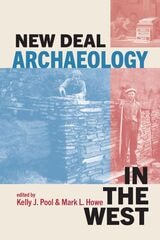
New Deal Archaeology in the West
Edited by Kelly J. Pool and Mark L. Howe
University of Utah Press, 2023
Descriptions of New Deal projects and their contributions to our understanding of the past, as well as the stories of those involved—archaeologists, avocationalists, and others—are woven together across the chapters. Also documented are lost or scattered artifacts, records, and ancestors’ remains; incomplete analyses; unpublished reports; inconsistent application of scientific methodology; and the loss of Native sacred sites and traditional lands and lifeways. Authors highlight characteristics that distinguished the American West from the East during the Depression and affected the nature of New Deal projects, including the extent of federal land available in the West, the reliance of sparsely populated areas upon tourism, the presence of large resident Native populations with deep histories, and the wide-ranging degree of existing archaeology infrastructure in each state. This volume demonstrates that despite regional differences, New Deal-funded archaeological and cultural heritage projects created a legacy of knowledge and practice across the nation.
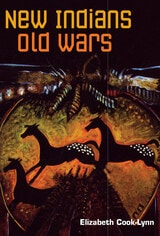
New Indians, Old Wars
Elizabeth Cook-Lynn
University of Illinois Press, 2006
Addressing Native American Studies' past, present, and future, the essays in New Indians, Old Wars tackle the discipline head-on, presenting a radical revision of the popular view of the American West in the process. Instead of luxuriating in its past glories or accepting the widespread historians' view of the West as a shared place, Elizabeth Cook-Lynn argues that it should be fundamentally understood as stolen.
Firmly grounded in the reality of a painful past, Cook-Lynn understands the story of the American West as teaching the political language of land theft and tyranny. She argues that to remedy this situation, Native American studies must be considered and pursued as its own discipline, rather than as a subset of history or anthropology. She makes an impassioned claim that such a shift, not merely an institutional or theoretical change, could allow Native American studies to play an important role in defending the sovereignty of indigenous nations today.
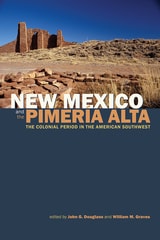
New Mexico and the Pimería Alta
The Colonial Period in the American SouthwestJohn G. Douglass
University Press of Colorado, 2017
Focusing on the two major areas of the Southwest that witnessed the most intensive and sustained colonial encounters, New Mexico and the Pimería Alta compares how different forms of colonialism and indigenous political economies resulted in diverse outcomes for colonists and Native peoples. Taking a holistic approach and studying both colonist and indigenous perspectives through archaeological, ethnohistoric, historic, and landscape data, contributors examine how the processes of colonialism played out in the American Southwest.
Although these broad areas—New Mexico and southern Arizona/northern Sonora—share a similar early colonial history, the particular combination of players, sociohistorical trajectories, and social relations within each area led to, and were transformed by, markedly diverse colonial encounters. Understanding these different mixes of players, history, and social relations provides the foundation for conceptualizing the enormous changes wrought by colonialism throughout the region. The presentations of different cultural trajectories also offer important avenues for future thought and discussion on the strategies for missionization and colonialism.
The case studies tackle how cultures evolved in the light of radical transformations in cultural traits or traditions and how different groups reconciled to this change. A much needed up-to-date examination of the colonial era in the Southwest, New Mexico and the Pimería Alta demonstrates the intertwined relationships between cultural continuity and transformation during a time of immense change and highlights contemporary thought on the colonial experience.
Contributors: Joseph Aguilar, Jimmy Arterberry, Heather Atherton, Dale Brenneman, J. Andrew Darling, John G. Douglass, B. Sunday Eiselt, Severin Fowles, William M. Graves, Lauren Jelinek, Kelly L. Jenks, Stewart B. Koyiyumptewa, Phillip O. Leckman, Matthew Liebmann, Kent G. Lightfoot, Lindsay Montgomery, Barnet Pavao-Zuckerman, Robert Preucel, Matthew Schmader, Thomas E. Sheridan, Colleen Strawhacker, J. Homer Thiel, David Hurst Thomas, Laurie D. Webster
New Perspectives on the Origins of Americanist Archaeology
Edited by David L. Browman and Stephen Williams
University of Alabama Press, 2002
In this landmark book, experienced scholars take a retrospective look at the developing routes that have brought American archaeologists into the 21st century.
In 1996, the Society for American Archaeology's Committee on the History of Archaeology established a biennial symposium
named after Gordon R. Willey, one of the fathers of American archaeology, to focus on the history of the discipline. This volume grew out of the
second symposium, presented at the 1998 meeting of the Society for American Archaeology.
Interest in the intellectual history of the field is certainly nothing new—the first such volume appeared in 1856—but previously, focus has been on individuals and their theories and methods, or on various government agencies that supported, developed, or mandated
excavations in North America. This volume, however, focuses on the roots of Americanist archaeology, including its pre-1915 European connections, and on some of the earliest work by women archaeologists, which has been largely overlooked.
Full of valuable insights for archaeologists and anthropologists—both professional and amateur—into the history and
development of Americanist archaeology, New Perspectives will also inspire and serve as a model for future research.
David Browman is Professor of Anthropology and Chair of the Interdisciplinary Program in Archaeology at Washington University. Stephen Williams is Professor Emeritus of Anthropology at Harvard University.
Newberry Crater
Anthropological Papers Number 121Thomas Connolly
University of Utah Press, 1999
The research in this volume derives from investigations conducted in connection with proposed widening and realignment of the Paulina-East Lake Highway, located within the caldera of Newberry Volcano. Formal evaluation of 13 localities and data recovers at four sites produced a wealth of information regarding human uses of the caldera and vicinity throughout the Holocene.
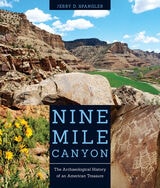
Nine Mile Canyon
The Archaeological History of an American TreasureJerry D. Spangler
University of Utah Press, 2013
The early visitors in the 1890s were determined to recover collections for museums but never much cared to understand the people who left the artifacts. Then came a cadre of young scientists—the first to be trained specifically in archaeology—who found Nine Mile Canyon to be an intriguing laboratory that yielded more questions than answers. Scholars such as Noel Morss, Donald Scott, Julian Steward, John Gillin, and John Otis Brew all left their boot prints there.
Today, archaeological research is experiencing another renaissance—a new generation of university-trained archaeologists is determined to unravel the mystery of Nine Mile Canyon using scientific tools and techniques that were unavailable to past generations. Through the words and thoughts of the archaeologists, as well as the more than 150 photos, readers will come to see Nine Mile Canyon as an American treasure unlike any other. As the first book that is devoted exclusively to the archaeology of this unique place, Nine Mile Canyon will evoke fascination among scholars and the general public alike.
Winner of a Choice Outstanding Academic Title award.
North American Indigenous Warfare and Ritual Violence
Edited by Richard J. Chacon and Rubén G. Mendoza
University of Arizona Press, 2007
The editors argue that a failure to acknowledge the roles of warfare and violence in the lives of indigenous North Americans is itself a vestige of colonial repression—depriving native warriors of their history of armed resistance. These essays document specific acts of Native American violence across the North American continent. Including contributions from anthropologists, archaeologists, historians, and ethnographers, they argue not only that violence existed but also that it was an important and frequently celebrated component of Amerindian life.
CONTENTS
Acknowledgments
Introduction
Richard J. Chacon and Rubén G. Mendoza
1. Traditional Native Warfare in Western Alaska
Ernest S. Burch Jr.
2. Barbarism and Ardour of War from the Tenderest Years”: Cree-Inuit Warfare in the Hudson Bay Region
Charles A. Bishop and Victor P. Lytwyn
3. Aboriginal Warfare on the Northwest Coast: Did the Potlatch Replace Warfare?
Joan A. Lovisek
4. Ethnohistoric Descriptions of Chumash Warfare
John R. Johnson
5. Documenting Conflict in the Prehistoric Pueblo Southwest
Polly Schaafsma
6. Cahokia and the Evidence for Late Pre-Columbian War in the North American Midcontinent
Thomas E. Emerson
7. Iroquois-Huron Warfare
Dean R. Snow
8. Desecrating the Sacred Ancestor Temples: Chiefly Conflict and Violence in the American Southeast
David H. Dye and Adam King
9. Warfare, Population, and Food Production in Prehistoric Eastern North America
George R. Milner
10. The Osteological Evidence for Indigenous Warfare in North America
Patricia M. Lambert
11. Ethical Considerations and Conclusions Regarding Indigenous Warfare and Violence in North America
Richard J. Chacon and Rubén G. Mendoza
References
About the Contributors
Index
North Country Captives
Selected Narratives of Indian Captivity from Vermont and New HampshireEdited by Colin G. Calloway
University Press of New England, 1992
Northeastern Indian Lives, 1632-1816
Robert S. Grumet
University of Massachusetts Press, 1996
Few works have directed attention toward such lesser-known figures as Shickellamy, an Oneida diplomat; the Mohawk sachem Theyanoguin; Awashunkes, a Saconett sunksquaw; or Molly Ockett, a Pigwacket doctor. These individuals operated at the often dangerous and always uncertain interstices separating their world from that of the European settlers, as they worked for the security and survival of their peoples during the first centuries of contact. Their efforts helped shape events that determined the course of history in the colonial Northeast.
Northern Iroquoian Texts
Marianne Mithun and Hanni Woodbury
University of Chicago Press Journals, 1980
Northern Paiute–Bannock Dictionary
Compiled by Sven Liljeblad, Catherine S. Fowler, and Glenda Powell
University of Utah Press, 2011
Northwest Coast
Archaeology as Deep HistoryMadonna L. Moss
University Press of Colorado, 2011
Northwest Voices
Language and Culture in the Pacific NorthwestKristin Denham
Oregon State University Press, 2019
Although not often considered a bastion of diversity, linguistic or otherwise, in fact the Pacific Northwest has had a surprising number of influences on the English language, and a great number of other languages have left their mark on the region in a variety of ways. Individual essays examine the region's linguistic diversity, explore the origins and use of place names, and detail efforts to revive indigenous languages.
Written for both general readers and language scholars, Northwest Voices brings together research and perspectives from linguistics, history, and cultural studies to help readers understand how and why the language of our region is of utmost importance to our pasts, presents, and futures.
CONTRIBUTORS
Edwin Battistella
Kara Becker
Kathy Cole
Kristin Denham
Betsy Evans
Russell Hugo
Danica Sterud Miller
David Pippin
Allan Richardson
Jordan B. Sandoval
Alicia Beckford Wassink
Henry Zenk
Not without Our Consent
Lakota Resistance to Termination, 1950-59Edward Charles Valandra
University of Illinois Press, 2006
Edward Valandra's Not Without Our Consent documents the tenacious and formidable Lakota resistance to attempts at applying this law. In unprecedented depth, it follows their struggle through the 1950s when, against all odds, their resistance succeeded in the amendment of PL 83-280 to include Native consent as a prerequisite to state jurisdiction. The various House and Senate bills discussed in the manuscript are reproduced in five appendices.
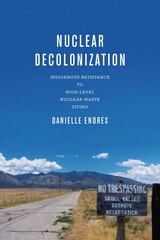
Nuclear Decolonization
Indigenous Resistance to High-Level Nuclear Waste SitingDanielle Endres
The Ohio State University Press, 2023
Honorable Mention, 2024 NCA Public Address Division’s Marie Hochmuth Nichols Award
Honorable Mention, 2025 Association for the Rhetoric of Science, Technology, and Medicine Book Award
While research demonstrates how Indigenous populations have been disproportionately affected by the global nuclear production complex, less attention has been given to tactics that have successfully resisted such projects. Danielle Endres’s Nuclear Decolonization shifts the conversation around nuclear colonialism in important ways, offering an account of how the Western Shoshone, Southern Paiute, and Skull Valley Goshute peoples and nations prevented two high-level nuclear waste sites from being built on their lands.
Using a decolonial approach, Endres highlights two sets of rhetorical tactics—Indigenous Lands rhetorics and national interest rhetorics—used to fight nuclear colonialism. The book reframes nuclear decolonization as fundamentally a struggle for the return of Indigenous lands while also revealing how Native activists selectively move between Indigenous nationhood and US citizenship in order to resist settler decision-making. Working at the intersection of Indigenous antinuclear advocacy, Indigenized environmental justice, and decolonization, Nuclear Decolonization centers Native activism and voices while amplifying the power and resilience of Indigenous peoples and nations.
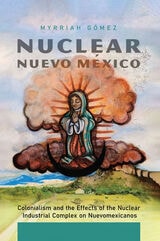
Nuclear Nuevo México
Colonialism and the Effects of the Nuclear Industrial Complex on NuevomexicanosMyrriah Gómez
University of Arizona Press, 2022
Contrary to previous works that suppress Nuevomexicana/o presence throughout U.S. nuclear history, Nuclear Nuevo México focuses on recovering the voices and stories that have been lost or ignored in the telling of this history. By recuperating these narratives, Myrriah Gómez tells a new story of New Mexico, one in which the nuclear history is not separate from the collective colonial history of Nuevo México but instead demonstrates how earlier eras of settler colonialism laid the foundation for nuclear colonialism in New Mexico.
Gómez examines the experiences of Nuevomexicanas/os who have been impacted by the nuclear industrial complex, both the weapons industry and the commercial industry. Gómez argues that Los Alamos was created as a racist project that targeted poor and working-class Nuevomexicana/o farming families, along with their Pueblo neighbors, to create a nuclear empire. The resulting imperialism has left a legacy of disease and distress throughout New Mexico that continues today.