4741 books match the query 'Religion' and 90 start with o
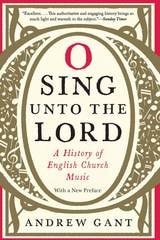
cover of O Sing unto the Lord: A History of English Church Music

O Sing unto the Lord

A History of English Church Music

Andrew Gant

University of Chicago Press, 2017

For as long as people have worshipped together, music has played a key role in church life. With O Sing unto the Lord, Andrew Gant offers a fascinating history of English church music, from the Latin chant of late antiquity to the great proliferation of styles seen in contemporary repertoires.

The ornate complexity of pre-Reformation Catholic liturgies revealed the exclusive nature of this form of worship. By contrast, simple English psalms, set to well-known folk songs, summed up the aims of the Reformation with its music for everyone. The Enlightenment brought hymns, the Methodists and Victorians a new delight in the beauty and emotion of worship. Today, church music mirrors our multifaceted worldview, embracing the sounds of pop and jazz along with the more traditional music of choir and organ. And reflecting its truly global reach, the influence of English church music can be found in everything from masses sung in Korean to American Sacred Harp singing.

From medieval chorales to “Amazing Grace,” West Gallery music to Christmas carols, English church music has broken through the boundaries of time, place, and denomination to remain familiar and cherished everywhere. Expansive and sure to appeal to all music lovers, O Sing unto the Lord is the biography of a tradition, a book about people, and a celebration of one of the most important sides to our cultural heritage.
[more]
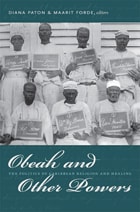
cover of Obeah and Other Powers: The Politics of Caribbean Religion and Healing

Obeah and Other Powers

The Politics of Caribbean Religion and Healing

Diana Paton and Maarit Forde, eds.

Duke University Press, 2012

In Obeah and Other Powers, historians and anthropologists consider how marginalized spiritual traditions—such as obeah, Vodou, and Santería—have been understood and represented across the Caribbean since the seventeenth century. In essays focused on Cuba, Haiti, Jamaica, Martinique, Puerto Rico, Trinidad and Tobago, and the wider Anglophone Caribbean, the contributors explore the fields of power within which Caribbean religions have been produced, modified, appropriated, and policed. The "other powers" of the book's title have helped to shape, or attempted to curtail, Caribbean religions and healing practices. These powers include those of capital and colonialism; of states that criminalize some practices and legitimize others; of occupying armies that rewrite constitutions and reorient economies; of writers, filmmakers, and scholars who represent Caribbean practices both to those with little knowledge of the region and to those who live there; and, not least, of the millions of people in the Caribbean whose relationships with one another, as well as with capital and the state, have long been mediated and experienced through religious formations and discourses.

Contributors
. Kenneth Bilby, Erna Brodber, Alejandra Bronfman, Elizabeth Cooper, Maarit Forde, Stephan Palmié, Diana Paton, Alasdair Pettinger, Lara Putnam, Karen Richman, Raquel Romberg, John Savage, Katherine Smith
[more]
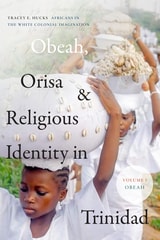
cover of Obeah, Orisa, and Religious Identity in Trinidad, Volume I, Obeah: Africans in the White Colonial Imagination, Volume 1

Obeah, Orisa, and Religious Identity in Trinidad, Volume I, Obeah

Africans in the White Colonial Imagination, Volume 1

Tracey E. Hucks

Duke University Press, 2022
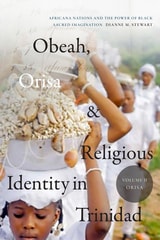
Obeah, Orisa, and Religious Identity in Trinidad is an expansive two-volume examination of social imaginaries concerning Obeah and Yoruba-Orisa from colonialism to the present. Analyzing their entangled histories and systems of devotion, Tracey E. Hucks and Dianne M. Stewart articulate how these religions were criminalized during slavery and colonialism yet still demonstrated autonomous modes of expression and self-defense. In Volume I, Obeah, Hucks traces the history of African religious repression in colonial Trinidad through the late nineteenth century. Drawing on sources ranging from colonial records, laws, and legal transcripts to travel diaries, literary fiction, and written correspondence, she documents the persecution and violent penalization of African religious practices encoded under the legal classification of “obeah.” A cult of antiblack fixation emerged as white settlers defined themselves in opposition to Obeah, which they imagined as terrifying African witchcraft. These preoccupations revealed the fears that bound whites to one another. At the same time, persons accused of obeah sought legal vindication and marshaled their own spiritual and medicinal technologies to fortify the cultural heritages, religious identities, and life systems of African-diasporic communities in Trinidad.
[more]
cover of Obeah, Orisa, and Religious Identity in Trinidad, Volume II, Orisa: Africana Nations and the Power of Black Sacred Imagination, Volume 2

Obeah, Orisa, and Religious Identity in Trinidad, Volume II, Orisa

Africana Nations and the Power of Black Sacred Imagination, Volume 2

Dianne M. Stewart

Duke University Press, 2022
Obeah, Orisa, and Religious Identity in Trinidad is an expansive two-volume examination of social imaginaries concerning Obeah and Yoruba-Orisa from colonialism to the present. Analyzing their entangled histories and systems of devotion, Tracey E. Hucks and Dianne M. Stewart articulate how these religions were criminalized during slavery and colonialism yet still demonstrated autonomous modes of expression and self-defense. In Volume II, Orisa, Stewart scrutinizes the West African heritage and religious imagination of Yoruba-Orisa devotees in Trinidad from the mid-nineteenth century to the present and explores their meaning-making traditions in the wake of slavery and colonialism. She investigates the pivotal periods of nineteenth-century liberated African resettlement, the twentieth-century Black Power movement, and subsequent campaigns for the civil right to religious freedom in Trinidad. Disrupting syncretism frameworks, Stewart probes the salience of Africa as a religious symbol and the prominence of Africana nations and religious nationalisms in projects of black belonging and identity formation, including those of Orisa mothers. Contributing to global womanist thought and activism, Yoruba-Orisa spiritual mothers disclose the fullness of the black religious imagination’s affective, hermeneutic, and political capacities.
[more]
cover of Occultism, Witchcraft, and Cultural Fashions: Essays in Comparative Religion

Occultism, Witchcraft, and Cultural Fashions

Essays in Comparative Religion

Mircea Eliade

University of Chicago Press, 1978

In the period domoninated by the triumphs of scientific rationalism, how do we account for the extraordinary success of such occult movements as astrology or the revival of witchcraft? From his perspective as a historian of religions, the eminent scholar Mircea Eliade shows that such popular trends develop from archaic roots and periodically resurface in certain myths, symbols, and rituals. In six lucid essays collected for this volume, Eliade reveals the profound religious significance that lies at the heart of many contemporary cultural vogues.

Since all of the essays except the last were originally delivered as lectures, their introductory character and lively oral style make them particularly accessible to the intelligent nonspecialist. Rather than a popularization, Occultism, Witchcraft, and Cultural Fashions is the fulfillment of Eliade's conviction that the history of religions should be read by the widest possible audience.
[more]
cover of Ocean, as Much as Rain: Stories, Lyrical Prose, and Poems from Tibet

Ocean, as Much as Rain

Stories, Lyrical Prose, and Poems from Tibet

Tsering Woeser. Edited and Translated by Fiona Sze-Lorrain with Dechen Pemba.

Duke University Press, 2026
Ocean, as Much as Rain presents for the first time in the English-language world a collection of masterfully translated literary writings by prominent Tibetan writer Tsering Woeser. In these stories, lyrical essays, and poetry, Woeser interweaves texts, photographs, silences, and documentary details. Featuring a distinctively imaginative use of satire and digressive rhetoric, Woeser’s stories bring to life Tibetan characters whose lives are entwined with politics, history, and religion. Woeser illuminates the ruins and places that she has come across during her various sojourns in Chinese-ruled Tibet, reviving sites from the past of her parents and their generation. These writings range from ingenious retellings of cultural encounters and confrontation to insightful commentaries on ecological issues and tourism in Tibet that never shun contradictions, dilemmas, or questions about the future. With an introduction by Fiona Sze-Lorrain and an author interview by editors-translators Sze-Lorrain and Dechen Pemba, Ocean, as Much as Rain is a landmark publication that celebrates the work of a steadfast dissident and a leading Tibetan literary figure of our times.
[more]
cover of Oduduwa's Chain: Locations of Culture in the Yoruba-Atlantic

Oduduwa's Chain

Locations of Culture in the Yoruba-Atlantic

Andrew Apter

University of Chicago Press, 2017

Yoruba culture has been a part of the Americas for centuries, brought from Africa during the transatlantic slave trade and maintained in various forms ever since. In Oduduwa’s Chain, Andrew Apter explores a wide range of fascinating historical and ethnographic examples and offers a provocative rethinking of African heritage in Black Atlantic Studies.
 
Focusing on Yoruba history and culture in Nigeria, Apter applies a generative model of cultural revision that allows him to identify formative Yoruba influences without resorting to the idea that culture and tradition are fixed. For example, Apter shows how the association of African gods with Catholic saints can be seen as a strategy of empowerment, explores historical locations of Yoruba gender ideologies and their variations in the Atlantic world, and much more. He concludes with a rousing call for a return to Africa in studies of the Black Atlantic, resurrecting a critical notion of culture that allows us to transcend Western inventions of African while taking them into account.
[more]
cover of Oedipus and the Sphinx: The Threshold Myth from Sophocles through Freud to Cocteau

Oedipus and the Sphinx

The Threshold Myth from Sophocles through Freud to Cocteau

Almut-Barbara Renger

University of Chicago Press, 2013
When Oedipus met the Sphinx on the road to Thebes, he did more than answer a riddle—he spawned a myth that, told and retold, would become one of Western culture’s central narratives about self-understanding. Identifying the story as a threshold myth—in which the hero crosses over into an unknown and dangerous realm where rules and limits are not known—Oedipus and the Sphinx offers a fresh account of this mythic encounter and how it deals with the concepts of liminality and otherness.
 
Almut-Barbara Renger assesses the story’s meanings and functions in classical antiquity—from its presence in ancient vase painting to its absence in Sophocles’s tragedy—before arriving at two of its major reworkings in European modernity: the psychoanalytic theory of Sigmund Freud and the poetics of Jean Cocteau. Through her readings, she highlights the ambiguous status of the Sphinx and reveals Oedipus himself to be a liminal creature, providing key insights into Sophocles’s portrayal and establishing a theoretical framework that organizes evaluations of the myth’s reception in the twentieth century. Revealing the narrative of Oedipus and the Sphinx to be the very paradigm of a key transition experienced by all of humankind, Renger situates myth between the competing claims of science and art in an engagement that has important implications for current debates in literary studies, psychoanalytic theory, cultural history, and aesthetics.
[more]
cover of Of Beggars and Buddhas: The Politics of Humor in the Vessantara Jataka in Thailand

Of Beggars and Buddhas

The Politics of Humor in the Vessantara Jataka in Thailand

Katherine A. Bowie

University of Wisconsin Press, 2020

The 547 Buddhist jatakas, or verse parables, recount the Buddha’s lives in previous incarnations. In his penultimate and most famous incarnation, he appears as the Prince Vessantara, perfecting the virtue of generosity by giving away all his possessions, his wife, and his children to the beggar Jujaka. Taking an anthropological approach to this two-thousand-year-old morality tale, Katherine A. Bowie highlights significant local variations in its interpretations and public performances across three regions of Thailand over 150 years.
            The Vessantara Jataka has served both monastic and royal interests, encouraging parents to give their sons to religious orders and intimating that kings are future Buddhas. But, as Bowie shows, characterizations of the beggar Jujaka in various regions and eras have also brought ribald humor and sly antiroyalist themes to the story. Historically, these subversive performances appealed to popular audiences even as they worried the conservative Bangkok court. The monarchy sporadically sought to suppress the comedic recitations. As Thailand has changed from a feudal to a capitalist society, this famous story about giving away possessions is paradoxically being employed to promote tourism and wealth.
[more]
cover of Of God and Gods: Egypt, Israel, and the Rise of Monotheism

Of God and Gods

Egypt, Israel, and the Rise of Monotheism

Jan Assmann

University of Wisconsin Press, 2008

For thousands of years, our world has been shaped by biblical monotheism. But its hallmark—a distinction between one true God and many false gods—was once a new and radical idea. Of God and Gods explores the revolutionary newness of biblical theology against a background of the polytheism that was once so commonplace.
    Jan Assmann, one of the most distinguished scholars of ancient Egypt working today, traces the concept of a true religion back to its earliest beginnings in Egypt and describes how this new idea took shape in the context of the older polytheistic world that it rejected. He offers readers a deepened understanding of Egyptian polytheism and elaborates on his concept of the “Mosaic distinction,” which conceives an exclusive and emphatic Truth that sets religion apart from beliefs shunned as superstition, paganism, or heresy.
    Without a theory of polytheism, Assmann contends, any adequate understanding of monotheism is impossible.

Best Books for General Audiences, selected by the American Association of School Librarians, and Best Books for Special Interests, selected by the Public Library Association
[more]
cover of Of Humans, Pigs, and Souls: An Essay on the Yagwoia "Womba" Complex

Of Humans, Pigs, and Souls

An Essay on the Yagwoia "Womba" Complex

Jadran Mimica

HAU, 2020

For the Yagwoia-Angan people of Papua New Guinea, womba is a malignant power with the potential to afflict any soul with cravings for pig meat and human flesh. Drawing on long-term research among the Yagwoia, and in an analysis informed by phenomenology and psychoanalysis, Jadran Mimica explores the womba complex in its local cultural-existential determinations and regional permutations. He attends to the lived experience of this complex in relation to the wider context of mortuary practices, feasting, historical cannibalism, and sorcery. His account of womba illuminates the moral meanings of Yagwoia selfhood and associated senses of subjectivity and agency. Mimica concludes by reflecting on the recent escalation of concerns with witchcraft and sorcery in Papua New Guinea, specifically in relation to a new wave of Christian evangelism occurring in partnership with the state. 
[more]
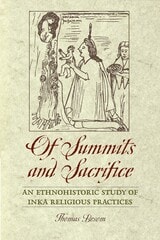
cover of Of Summits and Sacrifice: An Ethnohistoric Study of Inka Religious Practices

Of Summits and Sacrifice

An Ethnohistoric Study of Inka Religious Practices

By Thomas Besom

University of Texas Press, 2009

In perhaps as few as one hundred years, the Inka Empire became the largest state ever formed by a native people anywhere in the Americas, dominating the western coast of South America by the early sixteenth century. Because the Inkas had no system of writing, it was left to Spanish and semi-indigenous authors to record the details of the religious rituals that the Inkas believed were vital for consolidating their conquests. Synthesizing these arresting accounts that span three centuries, Thomas Besom presents a wealth of descriptive data on the Inka practices of human sacrifice and mountain worship, supplemented by archaeological evidence.

Of Summits and Sacrifice offers insight into the symbolic connections between landscape and life that underlay Inka religious beliefs. In vivid prose, Besom links significant details, ranging from the reasons for cyclical sacrificial rites to the varieties of mountain deities, producing a uniquely powerful cultural history.
[more]
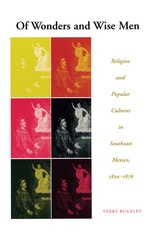
cover of Of Wonders and Wise Men: Religion and Popular Cultures in Southeast Mexico, 1800-1876

Of Wonders and Wise Men

Religion and Popular Cultures in Southeast Mexico, 1800-1876

By Terry Rugeley

University of Texas Press, 2001

2004 – Harvey L. Johnson Award – Southwest Council of Latin American Studies

In the tumultuous decades following Mexico's independence from Spain, religion provided a unifying force among the Mexican people, who otherwise varied greatly in ethnicity and socioeconomic status. Accordingly, religion and the popular cultures surrounding it form the lens through which Terry Rugeley focuses this cultural history of southeast Mexico from independence (1821) to the rise of the dictator Porfirio Díaz in 1876.

Drawing on a wealth of previously unused archival material, Rugeley vividly reconstructs the folklore, beliefs, attitudes, and cultural practices of the Maya and Hispanic peoples of the Yucatán. In engagingly written chapters, he explores folklore and folk wisdom, urban piety, iconography, and anticlericalism. Interspersed among the chapters are detailed portraits of individual people, places, and institutions, that, with the archival evidence, offer a full and fascinating history of the outlooks, entertainments, and daily lives of the inhabitants of southeast Mexico in the nineteenth century. Rugeley also links this rich local history with larger events to show how macro changes in Mexico affected ordinary people.
[more]
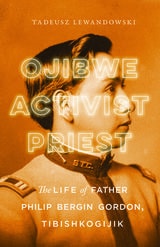
cover of Ojibwe, Activist, Priest: The Life of Father Philip Bergin Gordon, Tibishkogijik

Ojibwe, Activist, Priest

The Life of Father Philip Bergin Gordon, Tibishkogijik

Tadeusz Lewandowski

University of Wisconsin Press, 2019

Born in Wisconsin, Philip Bergin Gordon—whose Ojibwe name Tibishkogijik is said to mean Looking into the Sky—became one of the first Native Americans to be ordained as a Catholic priest in the United States. Gordon's devotion to Catholicism was matched only by his dedication to the protection of his people. A notable Native rights activist, his bold efforts to expose poverty and corruption on reservations and his reputation for agitation earned him the nickname "Wisconsin's Fighting Priest."
Drawing on previously unexplored materials, Tadeusz Lewandowski paints a portrait of a contentious life. Ojibwe, Activist, Priest examines Gordon's efforts to abolish the Bureau of Indian Affairs, his membership in the Society of American Indians, and his dismissal from his Ojibwe parish and exile to a tiny community where he'd be less likely to stir up controversy. Lewandowski illuminates a significant chapter in the struggle for Native American rights through the views and experiences of a key Native progressive.
[more]
cover of Old Testament Manuscripts in the Freer Collection

Old Testament Manuscripts in the Freer Collection

Henry A. Sanders

University of Michigan Press, 1917
A publication of the Washington Manuscripts of Deuteronomy, Joshua, and the Psalms, The Old Testament Manuscripts in the Freer Collection offers copies of the relevant texts, an analysis of the materials used to create the manuscripts, the hands, and textual problems. Extensive plates of the manuscripts are included.
[more]
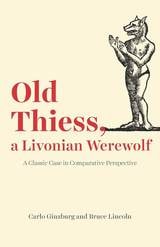
cover of Old Thiess, a Livonian Werewolf: A Classic Case in Comparative Perspective

Old Thiess, a Livonian Werewolf

A Classic Case in Comparative Perspective

Carlo Ginzburg and Bruce Lincoln

University of Chicago Press, 2020

In 1691, a Livonian peasant known as Old Thiess boldly announced before a district court that he was a werewolf. Yet far from being a diabolical monster, he insisted, he was one of the “hounds of God,” fierce guardians who battled sorcerers, witches, and even Satan to protect the fields, flocks, and humanity—a baffling claim that attracted the notice of the judges then and still commands attention from historians today.

In this book, eminent scholars Carlo Ginzburg and Bruce Lincoln offer a uniquely comparative look at the trial and startling testimony of Old Thiess. They present the first English translation of the trial transcript, in which the man’s own voice can be heard, before turning to subsequent analyses of the event, which range from efforts to connect Old Thiess to shamanistic practices to the argument that he was reacting against cruel stereotypes of the “Livonian werewolf” a Germanic elite used to justify their rule over the Baltic peasantry. As Ginzburg and Lincoln debate their own and others’ perspectives, they also reflect on broader issues of historical theory, method, and politics. Part source text of the trial, part discussion of historians’ thoughts on the case, and part dialogue over the merits and perils of their different methodological approaches, Old Thiess, a Livonian Werewolf opens up fresh insight into a remarkable historical occurrence and, through it, the very discipline of history itself.
[more]
cover of Omer: A Counting

Omer

A Counting

Rabbi Karyn D. Kedar

Central Conference of American Rabbis, 2014
The counting of the Omer begins with the escape from enslavement to the wandering path of freedom, leading to a mystical encounter with God, Sinai, and Torah. This volume, beginning with its informative contextual introduction, provides a spiritual guide for a personal journey through the Omer toward meaningful and purposeful living. Beautiful and evocative readings for each day matched with the daily Omer blessing, offer a transformative path from Passover to Shavuot.
[more]
cover of On "A Being" and "An Essence" (<i>De ente et essentia</i>)

On "A Being" and "An Essence" (<i>De ente et essentia</i>)

Thomas Aquinas

Catholic University of America Press, 2026
The In De Ente et Essentia is a polemical work of a brilliant young Dominican professor, Thomas de Vio Cajetan (1469-1534), eager to defend the philosophical legacy of Thomas Aquinas. Drawing from the full range of St. Thomas's writings, the work offers a coherent Thomistic metaphysical theory set against the rival Scotist and Averroist positions defended at Italian Universities in the 1490s. This new English translation is an invitation to philosophers and historians to re-engage with Cajetan, with his 15th Century rivals, and, of course, with Thomas Aquinas himself. It is also a challenge and inspiration to do metaphysics through dialectical engagement with the greatest rival theories of our own time and place.
[more]
cover of On Difficulties in Sacred Scripture: The Responses to Thalassios

On Difficulties in Sacred Scripture

The Responses to Thalassios

Maximos St. Maximos the Confessor

Catholic University of America Press, 2018
Maximos the Confessor (ca. 580-662) is now widely recognized as one of the greatest theological thinkers, not simply in the entire canon of Greek patristic literature, but in the Christian tradition as a whole. A peripatetic monk and prolific writer, his penetrating theological vision found expression in an unparalleled synthesis of biblical exegesis, ascetic spirituality, patristic theology, and Greek philosophy, which is as remarkable for its conceptual sophistication as for its labyrinthine style of composition. On Difficulties in Sacred Scripture, presented here for the first time in a complete English translation (including the 465 scholia), contains Maximos’s virtuosic theological interpretations of sixty-five difficult passages from the Old and New Testaments. Because of its great length, along with its linguistic and conceptual difficulty, the work as a whole has been largely neglected. Yet alongside the Ambigua to John, On Difficulties in Sacred Scripture: The Responses to Thalassios deserves to be ranked as the Confessor’s greatest work and one of the most important patristic treatises on the interpretation of Scripture, combining the interconnected traditions of monastic devotion to the Bible, the biblical exegesis of Origen, the sophisticated symbolic theology of Dionysius the Areopagite, and the rich spiritual anthropology of Greek Christian asceticism inspired by the Cappadocian Fathers.
[more]
cover of On Earth as it is in Heaven: Cultivating a Contemporary Theology of Creation

On Earth as it is in Heaven

Cultivating a Contemporary Theology of Creation

David Meconi

Saint Paul Seminary Press, 2021
With the 2015 publication of Pope Francis’s encyclical Laudato Si’, many people of faith have found themselves challenged to seek new ways of addressing serious ecological questions — issues essential to the flourishing of all creatures and not just human beings. This volume brings together fifteen select scholars to consider pressing contemporary environmental concerns through the lens of Catholic theology. Drawing from the early church fathers and other authoritative voices in the Christian tradition, the contributors to On Earth as It Is in Heaven show how ancient, creedal Christianity offers significant insights into our current ecological dilemmas and speaks powerfully about what it means for us today to care well for God’s good creation.
[more]
cover of On Faith

On Faith

Nathan Rotenstreich

University of Chicago Press, 1998

The concept of faith has remained inscrutable to thinkers for centuries. The late Nathan Rotenstreich believed that faith was such a difficult topic for so many because of its inextricable links to theology and religion. On Faith, Rotenstreich's last work which was edited and prepared for publication by Paul Mendes-Flohr, attempts to detach the concept from its religious underpinnings and consider it in its own right, as a human phenomenon and cognitive attitude. Faith, Rotenstreich contends, should not be confused with its historical manifestations. By making faith a philosophical rather than a theological matter, he explores its essence as an awareness of how we relate within mundane reality to all that is beyond the human world. Arguing for the intentionality of faith, Rotenstreich shows how it structures a variety of relations that range from the experience of the holy to the nature of cults, traditional religion, and the idea of servitude to God.

Rotenstreich's phenomenological study will be of great importance for religious scholars as well as for philosophers.

Nathan Rotenstreich (1913-93) was professor of philosophy at the Hebrew University of Jerusalem. He was elected to the Israel Academy of Sciences and Humanities, and his works include Jews and German Philosophy and Reason and Its Manifestations: A Study of Kant and Hegel.
[more]
cover of On Genesis: Two Books on Genesis against the Manichees and On the Literal Interpretation of Genesis: An Unfinished Book

On Genesis

Two Books on Genesis against the Manichees and On the Literal Interpretation of Genesis: An Unfinished Book

Saint Augustine

Catholic University of America Press, 1991
No description available
[more]
cover of On Illustrious Men

On Illustrious Men

Saint Jerome

Catholic University of America Press, 1999
Often cited as a source of biographical information on ancient Christian authors, On Illustrious Men provides St. Jerome's personal evaluations of his forebears and contemporaries, as well as catalogs of patristic writings known to him
[more]
cover of On Jewish Learning

On Jewish Learning

Franz Rosenzweig; Edited by N. N. Glatzer

University of Wisconsin Press, 2002

Franz Rosenzweig is one of the greatest contributors to Jewish philosophy in the twentieth century and is, with Martin Buber and Abraham Heschel, one of the Jewish thinkers most widely read by Christians. On Jewish Learning collects essays, speeches, and letters that express Rosenzweig’s desire to reconnect the profound truths of Judaism with the lives of ordinary people. An assimilated Jew and scholar of German philosophy, Rosenzweig was on the point of conversion to Christianity when the experience of a Yom Kippur service in 1913 brought him back to Judaism, and he began to study with philosopher Hermann Cohen. Seeking how to be an observant Jew in the modern world, Rosenzweig refused to characterize the traditions of Jewish law as mere rituals, customs, and folkways. His aim for himself and for others was to find Judaism by living it, and to live it by knowing it more deeply.
The Wisconsin edition is not for sale in the British Commonwealth, the Republic of Ireland, or South Africa.
[more]
cover of On Job

On Job

Blind Didymus the Blind

Catholic University of America Press, 0
This volume provides the first full length English translation of the commentary on the Book of Job by Didymus the Blind. One of the earliest line-by-line commentaries on Job to survive from late antiquity, it covers the entirety of the first sixteen chapters of the LXX text of Job with a few unfortunate lacunae. It represents the third commentary of Didymus published in the Fathers of the Church series (preceded by Didymus’ On Genesis and On Zechariah translated by Robert C. Hill) and the last of the commentaries discovered at Tura in 1941 that was edited for circulation in late antiquity, since Didymus’ comments on Ecclesiastes and Psalms are unedited transcripts of his public lectures, replete with student questions. The Book of Job has garnered perpetual attention because of its intriguing dialogues between God and the Devil, Job and his wife, Job and his three friends and inevitably between Job and God. In recent years, it has become the focus of attention among scholars seeking to make sense of the horrors of the Holocaust and other 20th century atrocities where unlimited human cruelty and injustice strained any notions of Providence and the salvific nature of suffering by the righteous. Written at a pivotal time when Christianity and Rabbinic Judaism were emerging as distinct interpretive traditions, Didymus’ commentary on the book of Job offers important insights into the interpretation of Job based on the LXX translation which was a foundational text for early Christian doctrine, spirituality and liturgy. His presentation of Job as the icon of a student-loving teacher stands in contrast to the portrait of a blasphemous Job more familiar to modern audiences that value a bold iconoclastic character who puts God on trial for allowing human injustice. Didymus’ comments on Job hint at the blind teacher’s own mature consideration of his experience as a Christian teacher, concerned to train other potential leaders in the burgeoning post-Constantinian Church, whether as an ecclesiastical minister, monastic abba, governor, or teacher. As such, this early Christian commentary on the Book of Job merits further study because it illustrates an early exegetical trajectory that was already embedded in the Christian tradition prior Jerome’s advocacy of the Hebraica Veritas.
[more]
cover of On Job, Volume 1

On Job, Volume 1

Franklin T. St. Albert The Great

Catholic University of America Press, 2019
Even prior to his death on 15 November 1280, the Dominican master Albert of Lauingen was legendary on account of his erudition. He was widely recognized for the depth and breadth of his learning in the philosophical disciplines as well as in the study of God, earning him the titles Doctor universalis and Doctor expertus. Moreover, his authoritative teaching merited him the moniker Magnus, an appellation bestowed on no other man of the High Middle Ages. This volume contains the first half of Albert the Great’s commentary On Job (on chs. 1-21), translated into English for the first time; a translation of the second half of the work will appear in a subsequent volume of the Fathers of the Church, Mediaeval Continuation series. Albert completed Super Iob in 1272 or 1274, when he was over seventy years old, at the Dominican Kloster of Heilige Kreuz in Cologne, where, as lector emeritus of the Order, he likely lectured on this profound biblical book. Significantly, Albert may have been inspired to produce On Job by his most famous student, Thomas Aquinas, who had written his own Joban commentary, the Expositio super Iob ad litteram, while serving as conventual lector at San Domenico in Orvieto from 1261 to 1264. Yet Albert occupies a unique position in the history of the interpretation of Job: he is the first and only exegete in history who explicitly reads the whole book as a debate in the mode of an academic or scholastic disputation among Job and his friends about divine providence concerning human affairs. The Introduction to this volume situates Albert’s On Job—its general approach and key exegetical features—in the broad context of Dominican theological education and pastoral formation in the thirteenth century.
[more]
cover of On Job, Volume 2

On Job, Volume 2

Franklin T. St. Albert the Great

Catholic University of America Press, 2025

Even prior to his death on 15 November 1280, the Dominican master Albert of Lauingen was legendary for his erudition. He was widely recognized for the depth and breadth of his learning in the philosophical disciplines as well as in the study of God, earning him the titles Doctor universalis and Doctor expertus. Moreover, his authoritative teaching merited him the moniker Magnus, an appellation bestowed on no other man of the High Middle Ages. This volume contains the second half of Albert the Great’s commentary On Job (on chs. 22-42), translated into English for the first time; a translation of the first half of the work appeared in an earlier volume of the Fathers of the Church, Mediaeval Continuation series (vol. 19, 2019). Albert completed Super Iob in 1272 or 1274, when he was over seventy years old, at the Dominican Kloster of Heilige Kreuz in Cologne, where, as lector emeritus of the Order, he likely lectured on this profound biblical book. Significantly, Albert may have been inspired to produce On Job by his most famous student, Thomas Aquinas, who had written his own Joban commentary, the Expositio super Iob ad litteram, while serving as conventual lector at San Domenico in Orvieto from 1261 to 1264. Yet Albert occupies a unique position in the history of the interpretation of Job: he is the first and only exegete in history who explicitly reads the whole book as a debate in the mode of an academic or scholastic disputation among Job and his friends about divine providence concerning human affairs. Albert understands God, in the final chapters of Job, to determine the disputed question in favor of Job and against his friends, namely declaring that He (i.e., God) rules human life with no consideration of human works, but rather that divine governance is dissimilar to every mode of human rule.
[more]
cover of On Laws

On Laws

Seán William of Auvergne

Catholic University of America Press, 2027
William of Auvergne was a long-reigning bishop of Paris (1228-1249) with notable political influence, wide intellectual interests, and an appetite for ideological contest. William’s On Laws (De legibus) is a major treatise on the Law of Moses, its nature and purpose in ancient Judaism and contemporary Christianity. William’s fundamental objective in the work is to show the abiding power of the Law, including its ritual and other seemingly non-moral commands, as a counterforce to perennially recurring idolatries. In this, he shows his debt to, but also his distance from, Maimonides, whose Guide of the Perplexed had, in William’s time, only recently appeared (c. 1223) in a partial Latin translation. Along the way, On Laws includes lengthy sections on non-literal biblical interpretation and its abuses; on the life of Muhammad and the law of Islam; and on contemporary superstition, sorcery, and paganism. On Laws is a work of broad significance for the cultural history of thirteenth-century Europe, including the histories of medieval Jewish-Christian relations, Christian-Muslim relations, heresy, paganism, and witchcraft, as well as the histories, more broadly, of biblical interpretation, philosophy, natural science, and magic. A product of the academic world of early thirteenth-century Paris, On Laws is not a lovely or literary work, but neither is it technical, formulaic, or derivative. The book, like its author, cuts its own paths through the cultural thickets of the day. And by its relative intellectual informality, On Laws gives frequent, inadvertent insight into the intellectual, religious, and social experiences of thirteenth-century people. On Laws has never before been translated from Latin into any other language.
[more]
cover of On Liturgical Asceticism

On Liturgical Asceticism

David W. Fagerberg

Catholic University of America Press, 2013
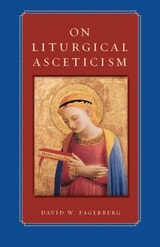
Drawing on the Eastern Orthodox tradition of asceticism and integrating it with recent Western thought on liturgy, David W. Fagerberg examines the interaction between the two and presents a powerful argument that asceticism is necessary for understanding liturgy as the foundation of theology
[more]
cover of On Love and Charity: Readings from the Commentary on the Sentences of Peter Lombard (Thomas Aquinas in Translation)

On Love and Charity

Readings from the Commentary on the Sentences of Peter Lombard (Thomas Aquinas in Translation)

Saint Thomas Aquinas

Catholic University of America Press, 2008
No description available
[more]
cover of On Niebuhr: A Theological Study

On Niebuhr

A Theological Study

Langdon Gilkey

University of Chicago Press, 2001
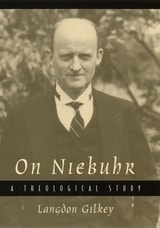
Langdon Gilkey's insightful, engaging book offers a detailed—and not uncritical—examination of one of the most influential American theologians of the twentieth century.
[more]
cover of On Repentance and Almsgiving

On Repentance and Almsgiving

Saint John Chrysostom

Catholic University of America Press, 1998
No description available
[more]
cover of On Resurrection

On Resurrection

Irven M. St. Albert the Great

Catholic University of America Press, 2020
According to 1 Cor 15.44 and 1 Cor 15.52, the human body “is sown an animal body, [but] it will rise a spiritual body” and “the dead will rise again incorruptible, and we will be changed.” These passages prompted many questions: What is a spiritual body? How can a body become incorruptible? Where will the resurrected body be located? And, what will be the nature of its experience? Medieval theologians sought to answer such questions but encountered troubling paradoxes stemming from the conviction that the resurrected body will be an “impassible body” or constituted from “incorruptible matter.” By the thirteenth century the resurrection demanded increased attention from Church authorities, not only in response to certain popular heresies but also to calm heated debates at the University of Paris. William of Auvergne, Bishop of Paris, officially condemned ten errors in 1241 and in 1244, including the proposition that the blessed in the resurrected body will not see the divine essence. In 1270 Parisian Bishop Étienne Tempier condemned the view that God cannot grant incorruption to a corruptible body, and in 1277 he rejected propositions that a resurrected body does not return as numerically one and the same, and that God cannot grant perpetual existence to a mutable, corruptible body. The Dominican scholar Albert the Great was drawn into the university debates in Paris in the 1240s and responded in the text translated here for the first time. In it, Albert considers the properties of resurrected bodies in relation to Aristotelian physics, treats the condition of souls and bodies in heaven, discusses the location and punishments of hell, purgatory, and limbo, and proposes a “limbo of infants” for unbaptized children. Albert’s On Resurrection not only shaped the understanding of Thomas Aquinas but also that of many other major thinkers.
[more]
cover of On Slavery and the Slave Trade: <i>De Iustitia et lure</i>, Book 1, Treatise 2, Disputations 32-40

On Slavery and the Slave Trade

<i>De Iustitia et lure</i>, Book 1, Treatise 2, Disputations 32-40

Luis De Molina

Catholic University of America Press, 2023
In his monumental On Justice and Rights, the Jesuit Luis de Molina (1535-1600) discussed the legal and ethical aspects of the Portuguese trade in African and Asian enslaved persons. Molina surveys, develops, and problematizes the criteria necessary for the legitimate possession, sale, and purchase of human freedom. He insists that, even under legally valid slavery, persons who have sold or lost their freedom have inalienable rights as human beings, such as the freedom to make contracts, to marry, and even, under certain circumstances, to sue their owners in court. Molina also devotes attention to the ways in which slavery could be ended and whether and under what circumstances slaves had the right to escape from their owners. Well informed about the political structures and customs of many peoples in Africa, as well as Japan, China, and India, Molina paints a vivid and detailed picture of Portuguese trade. He gives specific accounts of the origins and development of the slave trade, region by region, and of the nature of the relationship between local rulers and the Portuguese kingdom. In doing so, he carefully describes the deception, coercion, and general indifference that pervades this trade regarding the rights to freedom of these people. It also attempts to identify the political, ecclesiastical, and market agents involved in this great injustice and their varying degrees of culpability. While Molina does not condemn slavery as a legal institution, the deeply flawed and even immoral behavior of sellers, buyers, regulators, and political rulers both in Portugal and in the slave-supplying regions that Molina denounces casts a heavy shadow on the morality of the trade.
[more]
cover of On the Banks of the Ganga: When Wastewater Meets a Sacred River

On the Banks of the Ganga

When Wastewater Meets a Sacred River

Kelly D. Alley

University of Michigan Press, 2002

In this rich ethnographic study, Kelly D. Alley sheds light on debates about water uses, wastewater management, and the meanings of waste and sacred power. On the Banks of the Ganga analyzes the human predicaments that result from the accumulation and disposal of waste by tracing how citizens of India interpret the impact of wastewater flows on a sacred river and on their own cultural practices.
Alley investigates ethno-semantic, discursive, and institutional data to flesh out the interplay between religious, scientific, and official discourses about the river Ganga. Using a new outward layering methodology, she points out that anthropological analysis must separate the historical and discursive strands of the debates concerning waste and sacred purity in order to reveal the cultural complexities that surround the Ganga. Ultimately, she addresses a deeply rooted cultural paradox: if the Ganga river is considered sacred by Hindus across India, then why do the people allow it to become polluted?
Examining areas of contemporary concern such as water usage and urban waste management in the most populated river basin in the world, this book will appeal to anthropologists and readers in religious, environmental, and Asian studies, as well as geography and law.
Kelly D. Alley is Associate Professor and Director of Anthropology at Auburn University. In addition to being a prolific writer, she has conducted research on public culture and environmental issues in northern India for over a decade. Alley is currently overseeing a project to ameliorate river pollution problems in India.
[more]
cover of On the Body and Blood of the Lord; On the Truth of the Body and Blood of Christ in the Eucharist

On the Body and Blood of the Lord; On the Truth of the Body and Blood of Christ in the Eucharist

Catholic University of America Press, 2009
In this first English translation of Lanfranc's De corpore et sanguine Domini adversus Berengarium, the reader learns firsthand both the history of the crisis and the doctrinal issues in question
[more]
cover of On the Body of the Lord

On the Body of the Lord

Albert Albert the Great

Catholic University of America Press, 2017

Albert the Great wrote On the Body of the Lord in the 1270s, making it his final work of sacramental theology. A companion volume to his commentary on the Mass, On the Body of the Lord is a comprehensive discussion of Eucharistic theology. The treatise is structured around six names for the Eucharist taken from the Mass: grace, gift, food, communion, sacrifice, and sacrament. It emerges from the liturgy and is intended to draw the reader back to worship.

The overall movement of the treatise follows the order of God’s wisdom. Albert begins by discussing the Eucharist as a gift flowing from the goodness of the Trinity. He touches on its relation to redemption and the Church, including a rigorous Aristotelian analysis of Eucharistic change and presence before ending with a discussion of Mass rubrics. The most significant theological emphasis is on the Eucharist as food given to feed the people of God.

The style varies to suit the content: certain sections are terse; others are devotional, allowing the reader to enter the saint’s own prayer. Perhaps most characteristically Albertine is an extended meditation that compares the process of digestion to the incorporation of the Christian into the Body of Christ. The mixed style allows this work to integrate rigorous aspects of scholastic thought with a fervent love for God, making On the Body of the Lord one of Albert’s most human as well as one of his most beautiful works.

On the Body of the Lord was well received, particularly in areas that came to be influenced by the devotio moderna. By 1484, three separate Latin editions had been printed, two of which were the inaugural works on new presses. In the following century the Protestant Reformation brought an end to its popularity. On the Body of the Lord is here translated into English for the first time.
[more]
cover of On the Cessation of the Laws

On the Cessation of the Laws

Robert Grosseteste

Catholic University of America Press, 2012
In On the Cessation of the Laws, Grosseteste draws out the theological, christological, and soteriological issues implicit in the question of the relationship between the Old and New Covenants.
[more]
cover of On the Dignity of Society: Catholic Social Teaching and Natural Law

On the Dignity of Society

Catholic Social Teaching and Natural Law

F. Russell Hittinger

Catholic University of America Press, 2024

In this collection of essays, Francis Russell Hittinger shows that Catholic social teaching is not only an articulate defense of the dignity of the human person, but perhaps more fundamentally an elucidation of the dignity of society. Indeed, Hittinger enables us to see that one cannot properly defend the dignity of the person without also showing the dignity of societies in which human persons – as naturally familial, political, and ecclesial animals – seek their own perfection in communion with others. Hittinger has been a renowned scholar of Catholic social doctrine for some time now, and the essays presented here are the fruit of his mature thinking on the topic over the course of many years. As each chapter shows, Hittinger’s historically important body of work on Catholic moral and social philosophy and theology is rooted in natural law theory and Thomistic philosophy, but also animated by St. Augustine’s thought and thus consistently sensitive to historical contexts and arenas for moral and theological disputation. These magisterial essays therefore integrate historical studies of the development of Catholic social teaching with systematic exposition of the theological coherence of that tradition, while also articulating the essential role of philosophy and natural law within both. The volume is divided into three parts. The first part is comprised of six essays on Catholic social teaching, the second part is made up of six essays on natural law and its role in social doctrine, and the third part includes two essays discussing the first principles of the Church’s teaching on social issues. This collection will no doubt become a standard in the field of scholarship on Catholic social teaching.
[more]
cover of On the Doorposts of Your House, Revised Edition: Al Mezuzot Beitecha: Prayers and Ceremonies for the Jewish Home

On the Doorposts of Your House, Revised Edition

Al Mezuzot Beitecha: Prayers and Ceremonies for the Jewish Home

Rabbi Chaim Stern

Central Conference of American Rabbis, 2010
This revised edition of this beloved volume includes a wealth of innovation and traditional readings for personal meditations and family home-based rituals. Doorposts provides material for the whole Jewish year and life cycle, from consecrating a new house, to celebrating a birthday or baby-naming, to welcoming holy days and festivals. Contemporary, gender-inclusive language throughout. Now includes updated translation and transliteration based on the Mishkan T'filah: A Reform Siddur and new design. This hardcover makes a perfect gift for confirmations, teachers, weddings, and housewarmings.
[more]
cover of On the Edge of the Abyss: The Jewish Unconscious before Freud

On the Edge of the Abyss

The Jewish Unconscious before Freud

Clémence Boulouque

University of Chicago Press, 2025

A history of the unconscious in public discourse before Freud and its significance for Jewish emancipation.
 
When Sigmund Freud published his theory of the unconscious, in 1899, he popularized an idea that had fascinated generations of Jewish philosophers before him. In this book, Clémence Boulouque charts the development of the pre-Freudian unconscious from subcultural inquiry to dominant discourse during the long nineteenth century. Although Freud’s scientific notion differed from Schelling’s mythical description of the abyss from which creation springs, its resonance with older ideas was celebrated as an opportunity to express specifically Jewish contributions to modernity. Indeed, Boulouque shows that the pre-Freudian unconscious emerged from conversations in Jewish mysticism about otherness and coexistence. In the hopeful years before World War I, Boulouque argues, such reflections offered the possibility of emancipation not only to Jews but to all.
[more]
cover of On the Formation of the Clergy

On the Formation of the Clergy

Bleeded Hrabanus Maurus

Catholic University of America Press, 2023
Among the intellectuals of the Carolingian Renaissance of the ninth century, few are as prolific and influential as Hrabanus Maurus (c.780-856), a monk and abbot of the monastery of Fulda and then archbishop of Mainz. Most famous among modern authors as the putative author of the hymn “Come, Holy Ghost,” Hrabanus was highly esteemed by generations of medieval intellectuals, including Dante, who located the archbishop among St. Bonaventure’s cohort in the sphere of the Sun. This volume presents for the first time in English translation Hrabanus’s pedagogical masterpiece On the Formation of Clergy (De institutione clericorum). Unveiled on the Feast of All Saints in 819, at the dedication of the great Salvator basilica, Hrabanus’ work addresses the most important focuses of the Carolingian Renaissance: education and ecclesiastical reform. The treatise promotes a careful balance between classical training and Christian ethics and features the robust pedagogy of the early medieval monastic curriculum. At points it even offers glimpses into the energetic environment of Fulda’s classrooms. On the Formation of Clergy also supplies a program for ecclesiastical reform. It provides readers with a primer on ecclesiastical hierarchy and liturgy, providing glosses on church offices and explanations of important church activities. Hrabanus divided his opus into three books. Book One explains Holy Orders. It lays out the distinctions between clergy and laity, enumerates the ranks of the priesthood, describes clerical vesture, and explores the sacraments. Book Two examines priestly life. It considers ascetic disciplines appropriate for priests at different grades, describes expected prayer routines, and identifies important doctrinal teachings and principal liturgical feasts. Book Three treats biblical studies and preaching. It lays out a curriculum for the liberal arts, connects the liberal arts to catechetics and homiletics, and integrates academic study with moral instruction. On the Formation of Clergy was widely read throughout the Middle Ages. Beyond its impact on the Carolingian Renaissance, the treatise guided legal analysis in Gratian’s Decretum, supplied examples for Peter Lombard’s Sentences, and is cited by theological titans from Rupert of Deutz to Thomas Aquinas to Gabriel Biel.
[more]
cover of On the Incomprehensible Nature of God

On the Incomprehensible Nature of God

Saint John Chrysostom

Catholic University of America Press, 1984
No description available
[more]
cover of On the Moderation of Reason in Religious Matters

On the Moderation of Reason in Religious Matters

Ludovico Antonio Muratori

Catholic University of America Press, 2024
Lodovico Antonio Muratori (1672 –1750) was an Italian Catholic priest, notable as historian and a leading scholar of his age, and for his discovery of the Muratorian fragment, the earliest known list of New Testament books. No other book inspired Catholics of the 18th century more than Muratori's On the Moderation of Reason in Religious Matters. Ever since its publication in 1714, it had virtually a magisterial status by those who sought to revitalize the intellectual verve of Catholic theology. In essay form, Muratori addressed the fundamental challenges of doubt, authority, blind faith, the Copernican worldview, and the limitations of human reason. This work is a must-read for anyone looking to deepen their understanding of the intersection between religion and reason.
[more]
cover of On the Modern Cult of the Factish Gods

On the Modern Cult of the Factish Gods

Bruno Latour

Duke University Press, 2010
On the Modern Cult of the Factish Gods continues the project that the influential anthropologist, philosopher, and science studies theorist Bruno Latour advanced in his book We Have Never Been Modern. There he redescribed the Enlightenment idea of universal scientific truth, arguing that there are no facts separable from their fabrication. In this concise work, Latour delves into the “belief in naive belief,” the suggestion that fetishes—objects invested with mythical powers—are fabricated and that facts are not. Mobilizing his work in the anthropology of science, he uses the notion of “factishes” to explore a way of respecting the objectivity of facts and the power of fetishes without forgetting that both are fabricated. While the fetish-worshipper knows perfectly well that fetishes are man-made, the Modern icon-breaker inevitably erects new icons. Yet Moderns sense no contradiction at the core of their work. Latour pursues his critique of critique, or the possibility of mediating between subject and object, or the fabricated and the real, through the notion of “iconoclash,” making productive comparisons between scientific practice and the worship of visual images and religious icons.
[more]
cover of On the Motive of the Incarnation

On the Motive of the Incarnation

Dylan The Salmanticenses

Catholic University of America Press, 2019
The Catholic University of America Press is pleased to announce a new series, Early Modern Catholic Sources, edited by Ulrich L. Lehner and Trent Pomplun. This series – the only one of its kind – will provide translations of early modern Catholic texts of theological interest written between 1450 and 1800. The first volume in this series is On the Motive of the Incarnation, the first English translation of the seventeenth-century Discalced Carmelites at the University of Salmanca treatise on the motive of the Incarnation. Originally intended for students of their order, it became a major contribution to broader theological discourse. In this treatise, they defend the assertion that God intended Christ’s Incarnation essentially as a remedy for sin, such that if Adam had not sinned Christ would not have become incarnate, and that, at the same time, God intended all other works of nature and grace for the sake of Christ at their end. The Salmanticenses’ position thus combines elements of the Franciscan and Dominican traditions, stemming from the thought of Blessed John Duns Scotus and Saint Thomas Aquinas. This treatise is an exhaustive effort to show how the Scotistic emphasis on the primacy of Christ as the first willed and intended by God can be articulated within a Thomistic framework that acknowledges the contingency of the Incarnation on the need for redemption. In addition to the translation, the volume will include a brief introduction and extensive notes for theologians, historians, and students.
[more]
cover of On the Psychotheology of Everyday Life: Reflections on Freud and Rosenzweig

On the Psychotheology of Everyday Life

Reflections on Freud and Rosenzweig

Eric L. Santner

University of Chicago Press, 2001

In On the Psychotheology of Everyday Life, Eric Santner puts Sigmund Freud in dialogue with his contemporary Franz Rosenzweig in the service of reimagining ethical and political life. By exploring the theological dimensions of Freud's writings and revealing unexpected psychoanalytic implications in the religious philosophy of Rosenzweig's masterwork, The Star of Redemption, Santner makes an original argument for understanding religions of revelation in therapeutic terms, and offers a penetrating look at how this understanding suggests fruitful ways of reconceiving political community.

Santner's crucial innovation in this new study is to bring the theological notion of revelation into a broadly psychoanalytic field, where it can be understood as a force that opens the self to everyday life and encourages accountability within the larger world. Revelation itself becomes redefined as an openness toward what is singular, enigmatic, even uncanny about the Other, whether neighbor or stranger, thereby linking a theory of drives and desire to a critical account of sociality. Santner illuminates what it means to be genuinely open to another human being or culture and to share and take responsibility for one's implication in the dilemmas of difference.

By bringing Freud and Rosenzweig together, Santner not only clarifies in new and surprising ways the profound connections between psychoanalysis and the Judeo-Christian tradition, he makes the resources of both available to contemporary efforts to rethink concepts of community and cross-cultural communication.
[more]
cover of On the Road to Emmaus: The Catholic Dialogue with America and Modernity

On the Road to Emmaus

The Catholic Dialogue with America and Modernity

Glenn W. Olsen

Catholic University of America Press, 2012

In distinctive voice and tone, cultural commentator Glenn W. Olsen presents his latest work on the place of Catholicism in American history. Here he clarifies the meaning of American modernity for Catholics and shows the conflicts and tensions confronting the religious person today.
[more]
cover of On the Sacraments

On the Sacraments

Albert Marie St. Albert the Great

Catholic University of America Press, 2027
Albert the Great’s On the Sacraments is a scholastic treatise loosely based on Peter Lombard’s Sentences. Albert treats the full range of theological issues that will be found in his later Commentary on the Sentences, although in a much leaner manner. In this work, Albert finds himself less bound to the commentary style and sometimes more free to put forward his own conclusions. For example, Albert offers his own definition of a sacrament rather than only critiquing those of others. In most cases, Albert offers the same teaching which he will later present in his more mature Commentary on the Sentences, although there are a few points on which his teaching varies. These have often been noted in the introduction and footnotes. Albert’s sacramental theology centers intensely around the idea of inner healing. Albert’s paradigm for understanding the seven sacraments is Christ the Divine Physician who applies distinct medicines to seven different wounds. Albert roots a strong theology of sacramental signification and (dispositive) causality in the life and power of Christ. He writes, “there are two things in the Son of God, namely power and wisdom, from whom every sacrament draws power, there must be two things in a sacrament corresponding to these, namely, a cause and a sign.” It is partially his consistent application of the rubric of signification and causality to each sacrament that allows Albert to offer a breakthrough teaching on the sacrament of marriage as able to cause grace.
[more]
cover of On the Six Days of Creation

On the Six Days of Creation

Robin St. Gregory of Nyssa

Catholic University of America Press, 2021

The first volume of our new series, Fathers of the Church: Shorter Works, will be available in the summer of 2021. This series, to be printed only in paperback format, will offer English translations of treatises, homilies, poems, and letters of the Church Fathers in slim, easily affordable volumes. In this way a multitude of important writings will become accessible to scholars and students as well as the reading public. This is the first complete English translation of St. Gregory of Nyssa’s treatise On the Six Days of Creation (In Hexaemeron). It was probably written in 380-381, and is designed as both a defense and a critique of his recently deceased brother St. Basil’s better known homilies on the creation story as set out in the first chapter of Genesis. At the same time it incorporates Gregory’s own observations on the Genesis text, which reflect his desire to show the consistency between Scripture and the philosophy and natural science of his day A notable feature is Gregory’s presentation of God’s creation of the world as what has been called a “substantification” of God’s own will, creatio ex Deo rather than creatio ex nihilo. Other ideas of his seem interestingly to foreshadow those of modern science, notably his challenge to the idea that matter is a primary ontological category and his theory that the world as we know it developed through a process of “sequence” (akolouthia) from an originally simultaneous creation of everything. Gregory differs from Basil in maintaining that the “waters above the firmament” in Genesis 1 are spiritual rather than physical in nature. He uses a modified form of Aristotle’s theory of elements, together with some interesting observations on geography and meteorology, to construct a detailed and ingenious account of the “water cycle.” This description enables him to refute Basil’s notion that there needs to be an extra supply of physical water above the firmament so that the water lost from earthly seas and rivers through evaporation can be “topped up.”
[more]