Results by title
664 books match the query 'Ancient & Classical' and 69 start with p
PLOTINUS Ennead I.1
What is the Living Thing? What is Man?: Translation with an Introduction and CommentaryGerard O'Daly
Parmenides Publishing, 2017
Ennead I.1 is a succinct and concentrated analysis of key themes in Plotinus' psychology and ethics. It focuses on the soul-body relation, discussing various Platonic, Aristotelian, and Stoic views before arguing that there is only a soul-trace in the body (forming with the body a “compound”), while the reasoning soul itself is impassive and flawless. The soul-trace hypothesis is used to account for human emotions, beliefs, and perceptions, and human fallibility in general. Its problematic relation to our rational powers, as well as the question of moral responsibility, are explored. Plotinus develops his original and characteristic concept of the self or “we,” which is so called because it is investigated as something common to all humans (rather than a private individual self), and because it is multiple, referring to the reasoning soul or to the “living thing” composed of soul-trace and body. Plotinus explores the relation between the “we” and consciousness, and also its relation to the higher metaphysical entities, the Good, and Intellect.
PLOTINUS Ennead II.9
Against the Gnostics: Translation, with an Introduction and CommentarySebastian Gertz
Parmenides Publishing, 2017
How was the universe created, and what is our place within it? These are the questions at the heart of Plotinus’ Against the Gnostics. For the Gnostics, the universe came into being as a result of the soul’s fall from intelligible reality—it is the evil outcome of a botched creation. Plotinus challenges this, and insists that the soul’s creation of the world is the necessary consequence of its contemplation of the ideal forms. While the Gnostics claim to despise the visible universe, Plotinus argues that such contempt displays their ignorance of the higher realities of which the cosmos is a beautiful image.
Against the Gnostics is a polemical text. It aims to show the superiority of Plotinus’ philosophy over that of his Gnostic rivals, and poses unique challenges: Plotinus nowhere identifies his opponents by name, he does not set out their doctrines in any great detail, and his arguments are frequently elliptical. The detailed commentary provides a guide through these difficulties, making Plotinus’ meandering train of thought in this important treatise accessible to the reader.
PLOTINUS Ennead IV.4.30-45 & IV.5
Problems Concerning the Soul: Translation, with an Introduction and CommentaryGary M. Gurtler, SJ
Parmenides Publishing, 2015
PLOTINUS Ennead IV.9
On Whether All Souls are One: Translation | Introduction | CommentaryEyjólfur K. Emilsson
Parmenides Publishing, 2026
This short, early treatise undertakes to explain the controversial thesis that all souls—this includes individual human souls and the world-soul—are in some sense just one soul. Plotinus considers a number of objections that can be raised against the thesis. For instance, if the thesis is true, it may seem to follow that that everything that holds for one soul also holds for every other soul. Plotinus seeks to explain that such objections are off the mark, which also shows that the thesis about the unity of soul is not a claim about strict identity of all souls. He then (chapter 5) considers and rejects two materialistic hypotheses about the relationship between individual souls and the world-soul. In the final chapter he presents his own solution: the individual souls and the world-soul are all the soul hypostasis. He likens the relationship between the hypostatic soul and the individual souls with that between a science and the theorems of the science: each theorem potentially contains the whole science and can in a sense be said to be it.
PLOTINUS Ennead IVI.3-4.29
Problems Concerning the Soul: Translation, with an Introduction and CommentaryJohn M. Dillon
Parmenides Publishing, 2015
The treatise is an excellent example of Plotinus’ distinctive method of enquiry: not dogmatic (though he is no sceptic), but worrying away at questions until he has uncovered their complexities to the best of his ability. Such a work requires detailed commentary, such as is provided here, to tease out fully the fascinating convolutions of his thought.
PLOTINUS Ennead V.1
On the Three Primary Levels of Reality: Translation, with an Introduction and CommentaryEric D. Perl
Parmenides Publishing, 2015
PLOTINUS Ennead VI.4 and VI.5
On the Presence of Being, One and the Same, Everywhere as a Whole: Translation with an Introduction and CommentaryEyjólfur K. Emilsson
Parmenides Publishing, 2015
PLOTINUS Ennead VI.8
On the Voluntary and on the Free Will of the One: Translation, with an Introduction, and CommentaryKevin Corrigan
Parmenides Publishing, 2017
Plotinus’ On the Voluntary and on the Free Will of the One is a groundbreaking work that provides a new understanding of the importance and nature of free human agency. It articulates a creative idea of agency and radical freedom by showing how such terms as desire, will, self-dependence, and freedom in the human ethical sphere can be genuinely applied to Intellect and the One while preserving the radical inability of all metaphysical language to express anything about God or gods.
PLOTINUS
Ennead I.6: On Beauty: Translation, with an Introduction and CommentaryAndrew Smith
Parmenides Publishing, 2016
PLOTINUS
Ennead II.5: On What Is Potentially and What Actually: Translation with an Introduction and CommentaryCinzia Arruzza
Parmenides Publishing, 2015
Palmyra
An Irreplaceable TreasurePaul Veyne
University of Chicago Press, 2017
In this concise and elegiac book, Paul Veyne, one of Palmyra’s most important experts, offers a beautiful and moving look at the history of this significant lost city and why it was—and still is—important. Today, we can appreciate the majesty of Palmyra only through its pictures and stories, and this book offers a beautifully illustrated memorial that also serves as a lasting guide to a cultural treasure.
Pandora's Senses
The Feminine Character of the Ancient TextVered Lev Kenaan
University of Wisconsin Press, 2010
In this compelling study, Vered Lev Kenaan offers a radical revision of the Greek myth of the first woman. She argues that Pandora leaves a decisive mark on ancient poetics and shows that we can unravel the profound impact of Pandora’s image once we recognize that Pandora embodies the very idea of the ancient literary text. Locating the myth of the first woman right at the heart of feminist interrogation of gender and textuality, Pandora’s Senses moves beyond a feminist critique of masculine hegemony by challenging the reading of Pandora as a one-dimensional embodiment of the misogynist vision of the feminine. Uncovering Pandora as a textual principle operating outside of the feminine, Lev Kenaan shows the centrality of this iconic figure among the poetics of such central genres as the cosmological and didactic epic, the Platonic dialogue, the love elegy, and the ancient novel. Pandora’s Senses innovates our understanding of gender as a critical lens through which to view ancient literature.
Parmenides, Venerable and Awesome. Plato, Theaetetus 183e
Proceedings of the International SymposiumCordero, Néstor-Luis
Parmenides Publishing, 2012
In October of 2007, the Universidad Nacional de San Martín (Argentina) hosted an International Symposium on the philosophy of Parmenides to celebrate the creation of the University’s new Center for the Study of Ancient Philosophy. The event—co-organized by the HYELE Institute for Comparative Studies (Switzerland) and Parmenides Publishing—brought together scholars from around the world to present their latest work and participate in discussion. These Proceedings present the collected papers that were given—all fully translated into English—and edited by Néstor-Luis Cordero.
During the two years leading up to the International Symposium, no fewer than seven books on Parmenides were published. This revival and resurgence of interest in Parmenides and the critical reviews of traditional interpretations of his poem made this the perfect time for a global conference dedicated to the renowned figure known as the true father of philosophy.
The Symposium on Parmenides united the world's foremost Parmenidean scholars, with many participants having written one, if not several books on Parmenides. The proceedings volume therefore represents the most cutting-edge and in-depth scholarship on Parmenides available today, and will be a great and timely enrichment to the field of Presocratic Philosophy.
Penelope’s Bones
A New History of Homer's World through the Women Written Out of ItEmily Hauser
University of Chicago Press, 2025
Weaving together literary and archaeological evidence, Emily Hauser illuminates the rich, intriguing lives of the real women behind Homer’s Iliad and Odyssey.
Achilles. Agamemnon. Odysseus. Hector. The lives of these and many other men in the greatest epics of ancient Greece have been pored over endlessly in the past three millennia. But these are not just tales about heroic men. There are scores of women as well—complex, fascinating women whose stories have gone unexplored for far too long.
In Penelope’s Bones, award-winning classicist and historian Emily Hauser pieces together compelling evidence from archaeological excavations and scientific discoveries to unearth the richly textured lives of women in Bronze Age Greece—the era of Homer’s heroes. Here, for the first time, we come to understand the everyday lives and experiences of the real women who stand behind the legends of Helen, Briseis, Cassandra, Aphrodite, Circe, Athena, Hera, Calypso, Penelope, and more. In this captivating journey through Homer’s world, Hauser explains era-defining discoveries, such as the excavation of Troy and the decipherment of Linear B tablets that reveal thousands of captive women and their children; more recent finds like the tomb of the Griffin Warrior at Pylos, whose tomb contents challenge traditional gender attributes; DNA evidence showing that groups of warriors buried near the Black Sea with their weapons and steeds were, in fact, Amazon-like female fighters; a prehistoric dye workshop on Crete that casts fresh light on “women’s work” of dyeing, spinning, and weaving textiles; and a superbly preserved shipwreck off the coast of Turkey whose contents tell of the economic and diplomatic networks crisscrossing the Bronze Age Mediterranean.
Essential reading for fans of Madeline Miller or Natalie Haynes, this riveting new history brings to life the women of the Bronze Age Aegean as never before, offering a groundbreaking reassessment of the ancient world.
Penelope’s Bones
A New History of Homer’s World through the Women Written Out of ItEmily Hauser
University of Chicago Press, 2025
Achilles. Agamemnon. Odysseus. Hector. The lives of these and many other men in the greatest epics of ancient Greece have been pored over endlessly in the past three millennia. But these are not just tales about heroic men. There are scores of women as well—complex, fascinating women whose stories have gone unexplored for far too long.
In Penelope’s Bones, award-winning classicist and historian Emily Hauser pieces together compelling evidence from archaeological excavations and scientific discoveries to unearth the richly textured lives of women in Bronze Age Greece—the era of Homer’s heroes. Here, for the first time, we come to understand the everyday lives and experiences of the real women who stand behind the legends of Helen, Briseis, Cassandra, Aphrodite, Circe, Athena, Hera, Calypso, Penelope, and more. In this captivating journey through Homer’s world, Hauser explains era-defining discoveries, such as the excavation of Troy and the decipherment of Linear B tablets that reveal thousands of captive women and their children; more recent finds like the tomb of the Griffin Warrior at Pylos, whose tomb contents challenge traditional gender attributes; DNA evidence showing that groups of warriors buried near the Black Sea with their weapons and steeds were, in fact, Amazon-like female fighters; a prehistoric dye workshop on Crete that casts fresh light on “women’s work” of dyeing, spinning, and weaving textiles; and a superbly preserved shipwreck off the coast of Turkey whose contents tell of the economic and diplomatic networks crisscrossing the Bronze Age Mediterranean.
Essential reading for fans of Madeline Miller or Natalie Haynes, this riveting new history brings to life the women of the Bronze Age Aegean as never before, offering a groundbreaking reassessment of the ancient world.
Perception in Aristotle’s Ethics
Eve Rabinoff
Northwestern University Press, 2018
Rabinoff's project is philosophically motivated both by the details of Aristotle’s thought and more generally by an increasing philosophical awareness that the ethical agent is an embodied, situated individual, rather than primarily a disembodied, abstract rational will.
Perfidy and Passion
Reintroducing the IliadMark Buchan
University of Wisconsin Press, 2012
Homer’s Iliad is often considered a poem of blunt truthfulness, his characters’ motivation pleasingly simple. A closer look, however, reveals a complex interplay of characters who engage in an awful lot of lies. Beginning with Achilles, who hatches a secret plot to destroy his own people, Mark Buchan traces motifs of deception and betrayal throughout the poem. Homer’s heroes offer bluster, their passion linked to and explained by their lack of authenticity. Buchan reads Homer’s characters between the lies, showing how the plot is structured individual denial and what cannot be said.
Pericles on Stage
Political Comedy in Aristophanes' Early PlaysBy Michael Vickers
University of Texas Press, 1996
Since the eighteenth century, classical scholars have generally agreed that the Greek playwright Aristophanes did not as a matter of course write "political" plays. Yet, according to an anonymous Life of Aristophanes, when Dionysius the tyrant of Syracuse wanted to know about the government of Athens, Plato sent him a copy of Aristophanes' Clouds.
In this boldly revisionist work, Michael Vickers convincingly argues that in his earlier plays, Aristophanes in fact commented on the day-to-day political concerns of Athenians. Vickers reads the first six of Aristophanes' eleven extant plays in a way that reveals the principal characters to be based in large part on Pericles and his ward Alcibiades.
According to Vickers, the plays of Aristophanes—far from being nonpolitical—actually allow us to gauge the reaction of the Athenian public to the events that followed Pericles' death in 429 B.C., to the struggle for the political succession, and to the problems presented by Alcibiades' emergence as one of the most powerful figures in the state. This view of Aristophanes reaffirms the central role of allegory in his work and challenges all students of ancient Greece to rethink long-held assumptions about this important playwright.
Persian Cultures of Power and the Entanglement of the Afro-Eurasian World
Matthew P. Canepa
J. Paul Getty Trust, The, 2024
With the rise of the Achaemenid Empire (550–330 BCE), Persian institutions of kingship became the model for legitimacy, authority, and prestige across three continents. Despite enormous upheavals, Iranian visual and political cultures connected an ever-wider swath of Afro-Eurasia over the next two millennia, exerting influence at key historical junctures. This book provides the first critical exploration of the role Persian cultures played in articulating the myriad ways power was expressed across Afro-Eurasia between the sixth century BCE and the nineteenth century CE.
Exploring topics such as royal cosmologies, fashion, banqueting, manuscript cultures, sacred landscapes, and inscriptions, the volume’s essays analyze the intellectual and political exchanges of art, architecture, ritual, and luxury material within and beyond the Persian world. They show how Perso-Iranian cultures offered neighbors and competitors raw material with which to formulate their own imperial aspirations. Unique among studies of Persia and Iran, this volume explores issues of change, renovation, and interconnectivity in these cultures over the longue durée.
Persius
A Study in Food, Philosophy, and the FiguralShadi Bartsch
University of Chicago Press, 2015
In Persius, Shadi Bartsch explores this Stoic framework and argues that Persius sets his own bizarre metaphors of food, digestion, and sexuality against more appealing imagery to show that the latter—and the poetry containing it—harms rather than helps its audience. Ultimately, he encourages us to abandon metaphor altogether in favor of the non-emotive abstract truths of Stoic philosophy, to live in a world where neither alluring poetry, nor rich food, nor sexual charm play a role in philosophical teaching.
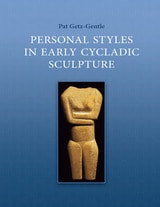
Personal Styles in Early Cycladic Sculpture
Pat Getz-Gentle; With a Chapter by Jack de Vries
University of Wisconsin Press, 2001
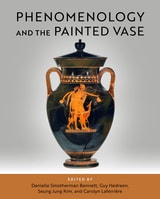
Phenomenology and the Painted Vase
Edited by Danielle Smotherman Bennett, Guy Hedreen, SeungJung Kim, and Carolyn Laferrière
University of Wisconsin Press, 2026
Most people today encounter ancient Greek vases as static, untouchable artifacts safely out of reach behind glass, in the quiet of a museum gallery. Once, however, these vessels were also useful objects, made to be held, filled, and generally used in a variety of settings, from the ritual to the quotidian. This volume considers these ancient vases together with the theoretical frameworks developed by pioneers of phenomenology such as Maurice Merleau-Ponty and Edmund Husserl, helping us encounter Greek vases as they once were. The principles of phenomenology require that we understand objects as active participants in shaping the manner in which humans experience the world. A phenomenological perspective allows us to see how the function and use of Greek vases shaped both their visual appearance and the perceptual experience of them—as well as our continued understanding of them today—while taking into account multisensory perspectives. With this alternative approach to the study of classical pottery, the authors offer new and illuminating insights not just into the objects in question but also into ancient Greek culture and life more broadly.
Philodemus, On Anger
David Armstrong
SBL Press, 2020
The first English translation of On Anger
This latest volume in the Writings from the Greco-Roman World series provides a translation of a newly edited Greek text of Philodemus’s On Anger, now supplemented with the help of multispectral imaging. As our sole evidence for the Epicurean view of what constitutes natural and praiseworthy anger as distinguished from unnatural pleasure in vengeance and cruelty for their own sake, this text is crucial to the study of ancient thought about the emotions. Its critique of contemporary Stoic and Peripatetic theories of anger offers crucial new information for the history of philosophy in the last two centuries BCE. The introduction and commentary also make use of newly revised texts and readings from several other ancient treatises on anger.
Features
- An apparatus representing work on the text since the papyrus was opened in 1805
- A full explication of the Epicurean theory of natural anger as an emotion without pleasure
- One of the Herculaneum papyri that survived the eruption of Vesuvius in 79 CE
Philology and Its Histories
Sean Gurd
The Ohio State University Press, 2010
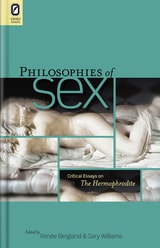
Philosophies of Sex
Critical Essays on The HermaphroditeEdited and with an introduction by Renée Bergland and Gary Williams
The Ohio State University Press, 2012
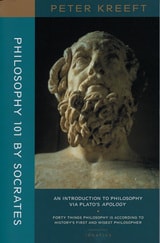
Philosophy 101 by Socrates
An Introduction to Philosophy via Plato's ApologyPeter Kreeft
St. Augustine's Press, 2002
“If only every introductory course were as engaging as Philosophy 101 by Peter Kreeft! Kreeft offers a marvelous way of using Plato’s Apology both to introduce the whole scope of philosopher and to evoke a personal response. Even the diffident freshman, prone to keeping a new subject like philosopher as arm’s length, will feel the enchantment of love-for-wisdom that philosophy is supposed to be.” – Joseph W. Koterski, S.J., chair, Department of Philosophy, Fordham University
“A terrific introduction to philosophy through this not uncontroversial commentary on Plato’s Apology. Not everyone will agree that Socrates provided the best possible defense for himself nor that he intended to. But Kreeft’s is an eminently defensible reading of the Apology and will awaken many a student to the delights of Plato and Philosophy. The comparisons of Socrates with Christ are fascinating. This book will go a long way to consoling those who are not privileged to have Socrates or Kreeft as teachers in the flesh.” – Janet Smith, Sacred Heart Major Seminary, Detroit
Philosophy as Agôn
A Study of Plato’s Gorgias and Related TextsRobert Metcalf
Northwestern University Press, 2018
In Philosophy as Agôn: A Study of Plato's Gorgias and Related Texts, Robert Metcalf offers a fresh interpretation of Plato's dialogues as dramatic texts whose philosophy is not so much a matter of doctrine as it is a dynamic, nondogmatic, and open-ended practice of engaging others in agonistic dialogue.
Metcalf challenges prevailing interpretations according to which the agôn (contest or struggle) between the interlocutors in the dialogues is inessential to Plato's philosophical purpose, or simply a reflection of the cultural background of ancient Greek life. Instead, he argues that Plato understands philosophy as essentially agonistic—involving the adversarial engagement of others in dialogue such that one's integrity is put to the test through this engagement, and where the agôn is structured so as to draw adversaries together in agreement about the matters at issue, though that agreement is always open to future contest.
Based on a careful reading of the Gorgias and related Socratic dialogues, such as Apology and Theaetetus, Metcalf contends that agôn is indispensable to the critique of prevailing opinions, to the transformation of the interlocutor through shame-inducing refutation, and to philosophy as a lifelong training (askêsis) of oneself in relation to others.
Philosophy in Dialogue
Plato's Many DevicesGary Alan Scott
Northwestern University Press, 2007
The essays gathered here each examine vital aspects of Plato’s many methods, considering his dialogues in relation to Thucydides and Homer, narrative strategies and medical practice, images and metaphors. They offer surprising new research into such much-studied works as The Republic as well as revealing views of lesser-known dialogues like the Cratylus and Philebus. With reference to thinkers such as Heidegger, Gadamer, and Sartre, the authors place the Platonic dialogues in an illuminating historical context. Together, their essays should reinvigorate the scholarly examination of the way Plato’s dialogues “work”—and should prompt a reconsideration of how the form of Plato’s philosophical writing bears on the Platonic conception of philosophy.
Phoenician Aniconism in Its Mediterranean and Ancient Near Eastern Contexts
Brian R. Doak
SBL Press, 2015
The Hebrew Bible contains a prohibition against divine images (Exod 20:2-5a). Explanations for this command are legion, usually focusing on the unique status of Israel's deity within the context of the broader Near Eastern and Mediterranean worlds. Doak explores whether or not Israel was truly alone in its severe stance against idols. This book focuses on one particular aspect of this iconographic context in Israel's Iron Age world: that of the Phoenicians. The question of whether Phoenicians employed aniconic (as opposed to iconic) representational techniques has significance not only for the many poorly understood aspects of Phoenician religion generally, but also for the question of whether aniconism can be considered a broader trend among the Semitic populations of the ancient Near East.
Features:
- More than fifty images and illustrations
- Examination of textual and archaeological evidence
- Application of art historical methods
Physics Or Natural Hearing
Glen Aristotle
St. Augustine's Press, 2005
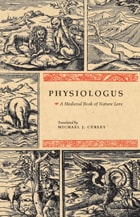
Physiologus
A Medieval Book of Nature LoreTranslated by Michael J. Curley
University of Chicago Press, 2009
One of the most popular and widely read books of the Middle Ages, Physiologus contains allegories of beasts, stones, and trees both real and imaginary, infused by their anonymous author with the spirit of Christian moral and mystical teaching. Accompanied by an introduction that explains the origins, history, and literary value of this curious text, this volume also reproduces twenty woodcuts from the 1587 version. Originally composed in the fourth century in Greek, and translated into dozens of versions through the centuries, Physiologus will delight readers with its ancient tales of ant-lions, centaurs, and hedgehogs—and their allegorical significance.
“An elegant little book . . . still diverting to look at today. . . . The woodcuts reproduced from the 1587 Rome edition are alone worth the price of the book.”—Raymond A. Sokolov, New York Times Book Review
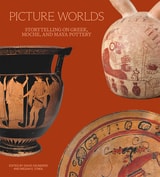
Picture Worlds
Storytelling on Greek, Moche, and Maya PotteryDavid Saunders
J. Paul Getty Trust, The, 2024
Satyrs and sphinxes, violent legumes, and a dancing maize deity figure in the stories painted on the pottery produced by the ancient Greek, Moche, and Maya cultures, respectively. Picture Worlds is the first book to examine the elaborately decorated terracotta vessels of these three distinct civilizations. Although the cultures were separated by space and time, they all employed pottery as a way to tell stories, explain the world, and illustrate core myths and beliefs. Each of these painted pots is a picture world. But why did these communities reach for pottery as a primary method of visual communication? How were the vessels produced and used? In this book, experts offer introductions to the civilizations, exploring these foundational questions and examining the painted imagery. Readers will be rewarded with a better understanding of each of these ancient societies, fascinating insights into their cultural commonalities and differences, and fresh perspectives on image making and storytelling, practices that remain vibrant to this day.
This volume is published to accompany an exhibition on view at the J. Paul Getty Museum at the Getty Villa from April 10 to July 29, 2024, and at the Michael C. Carlos Museum at Emory University from September 14 to December 15, 2024.
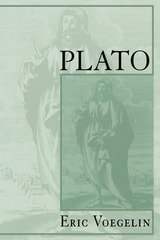
Plato
Eric Voegelin
University of Missouri Press, 2000
Once again available in paperback, Plato is the first half of Eric Voegelin's Plato and Aristotle, the third volume of his five-volume Order and History, which has been hailed throughout the Western world as a monumental accomplishment of modern scholarship.
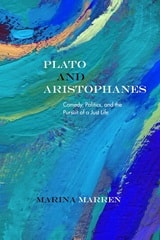
Plato and Aristophanes
Comedy, Politics, and the Pursuit of a Just LifeMarina Marren
Northwestern University Press, 2022
Marren makes this case by delving into Plato’s Republic, a foundational work of political philosophy. While the Republic straightforwardly condemns the decadence and greed of a tyrant, Plato’s attack on political idealism is both solemn and comedic. In fact, Plato draws on the same comedic stock and tropes as do Aristophanes’s plays. Marren’s book strikes up an innovative conversation between three works by Aristophanes—Assembly Women, Knights, and Birds—and Plato’s philosophy, prompting important questions about individual convictions and one’s personal search for justice. These dialogic works offer critiques of tyranny that are by turns brilliant, scathing, and exuberant, making light of faults and ideals alike. Philosophical comedy exposes despotism in individuals as well as systems of government claiming to be just and good. This critique holds as much bite against contemporary injustices as it did at the time of Aristophanes and Plato.
An ingenious new work by an emerging scholar, Plato and Aristophanes shows that comedy—in tandem with philosophy and politics—is essential to self-examination. And without such examination, there is no hope for a just life.
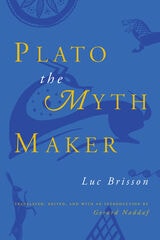
Plato the Myth Maker
Luc Brisson
University of Chicago Press, 1999
Gerard Naddaf's substantial introduction shows the originality and importance both of Brisson's method and of Plato's analysis and places it in the context of contemporary debates over the origin and evolution of the oral tradition.
"[Brisson] contrasts muthos with the logos found at the heart of the philosophical reading. [He] does an excellent job of analyzing Plato's use of the two speech forms, and the translator's introduction does considerable service in setting the tone."—Library Journal
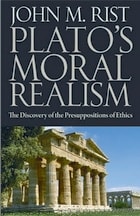
Plato's Moral Realism
The Discovery of the Presuppositions of EthicsJohn M. Rist
Catholic University of America Press, 2012
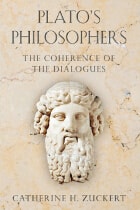
Plato's Philosophers
The Coherence of the DialoguesCatherine H. Zuckert
University of Chicago Press, 2009
Faced with the difficult task of discerning Plato’s true ideas from the contradictory voices he used to express them, scholars have never fully made sense of the many incompatibilities within and between the dialogues. In the magisterial Plato’s Philosophers, Catherine Zuckert explains for the first time how these prose dramas cohere to reveal a comprehensive Platonic understanding of philosophy.
To expose this coherence, Zuckert examines the dialogues not in their supposed order of composition but according to the dramatic order in which Plato indicates they took place. This unconventional arrangement lays bare a narrative of the rise, development, and limitations of Socratic philosophy. In the drama’s earliest dialogues, for example, non-Socratic philosophers introduce the political and philosophical problems to which Socrates tries to respond. A second dramatic group shows how Socrates develops his distinctive philosophical style. And, finally, the later dialogues feature interlocutors who reveal his philosophy’s limitations. Despite these limitations, Zuckert concludes, Plato made Socrates the dialogues’ central figure because Socrates raises the fundamental human question: what is the best way to live?
Plato’s dramatization of Socratic imperfections suggests, moreover, that he recognized the apparently unbridgeable gap between our understandings of human life and the nonhuman world. At a time when this gap continues to raise questions—about the division between sciences and the humanities and the potentially dehumanizing effects of scientific progress—Zuckert’s brilliant interpretation of the entire Platonic corpus offers genuinely new insights into worlds past and present.
Plato's Sophist
Part II of The Being of the BeautifulPlato
University of Chicago Press, 1986
"Seth Benardete is one of the very few contemporary classicists who combine the highest philological competence with a subtlety and taste that approximate that of the ancients. At the same time, he as set himself the entirely modern hermeneutical task of uncovering what the ancients preferred to keep veiled, of making explicit what they indicated, and hence...of showing the naked ugliness of artificial beauty."—Stanley Rose, Graduate Faculty Philosophy Journal
Seth Benardete (1930-2001) was professor of classics at New York University. He was the author or translator of many books, most recently The Argument of the Action, Plato's "Laws," and Plato's "Symposium," all published by the University of Chicago Press.
Plato's Statesman
Part III of The Being of the BeautifulPlato
University of Chicago Press, 1986
Theaetetus is the first of a trilogy of Platonic dialogues that show Socrates formulating his conception of philosophy as he prepares the defense for his trial. This translation is particularly faithful to the original Greek, and it is accompanied by an introduction, extensive notes, and comprehensive commentary that puts the dialogue in context with Plato's thought and its influence over the centuries.
Seth Benardete (1930-2001) was professor of classics at New York University.
Plato's Symposium
Stanley Rosen
St. Augustine's Press, 1999
This is the first full-length study of the Symposium to be published in English, and one of the first English works on Plato to take its bearings by the dramatic form of the Platonic dialogue, a thesis that was regarded as heterodox at the time but which today is widely accepted by scholars of the most diverse standpoint. Rosen was also one of the first to study in detail the philosophical significance of the phenomenon of concrete human sexuality, as it is presented by Plato in the diverse characters of the main speakers in the dialogue. His analysis of the theoretical significance of pederasty in the dialogue was highly controversial at the time, but is today accepted as central to Plato's dramatic phenomenology of human existence.
Rosen discusses a variety of topics that had previously been neglected in the secondary literature, including the problem of the hybristic nature of the philosopher, the poetical dimension of Plato's conception of philosophy, and the theoretical implication of the difference between Platonic writing and Socratic conversation.
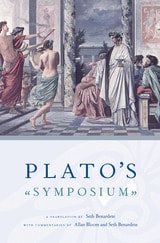
Plato's Symposium
A Translation by Seth Benardete with Commentaries by Allan Bloom and Seth BenardetePlato
University of Chicago Press, 2001
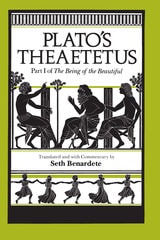
Plato's Theaetetus
Part I of The Being of the BeautifulPlato
University of Chicago Press, 1986
"Seth Benardete is one of the very few contemporary classicists who combine the highest philological competence with a subtlety and taste that approximate that of the ancients. At the same time, he as set himself the entirely modern hermeneutical task of uncovering what the ancients preferred to keep veiled, of making explicit what they indicated, and hence...of showing the naked ugliness of artificial beauty."—Stanley Rose, Graduate Faculty Philosophy Journal
Seth Benardete (1930-2001) was professor of classics at New York University. He was the author or translator of many books, most recently The Argument of the Action, Plato's "Laws," and Plato's "Symposium," all published by the University of Chicago Press.
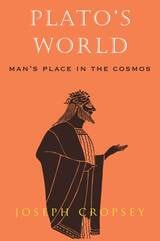
Plato's World
Man's Place in the CosmosJoseph Cropsey
University of Chicago Press, 1995
Cropsey interprets seven of Plato's dialogues—Theaetetus, Euthyphro, Sophist, Statesman, Apology, Crito, and Phaedo—in light of their dramatic consecutiveness and thus as a conceptual and dramatic whole. The cosmos depicted by Plato in these dialogues, Cropsey argues, is often unreasonable, and populated by human beings unaided by gods and dealt with equivocally by nature. Masterfully leading the reader through the seven scenes of the drama, Cropsey shows how they are, to an astonishing degree, concerned with the resources available to help us survive in such a world.
This is a world—and a Plato—quite at odds with most other portraits. Much more than a summary of Plato's thinking, this book is an eloquent, sometimes amusing, often moving guide to the paradoxes and insights of Plato's philosophy.
Platonic Investigations
Dominic J. O'Meara
Catholic University of America Press, 2018
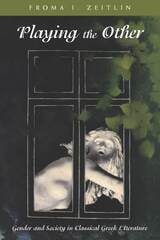
Playing the Other
Gender and Society in Classical Greek LiteratureFroma I. Zeitlin
University of Chicago Press, 1995
Zeitlin demonstrates the indispensable workings of gender as a major factor in Greek social, religious, and cultural practices and in more abstract ideas about nature and culture, public and private, citizen and outsider, self and other, and mortal and immortal. Focusing on the prominence of female figures in these male authored texts, she enlarges our perspective on critical components of political order and civic identity by including issues of sexuality, the body, modes of male and female maturation, and speculations about parentage, kinship, and reproductive strategies. Along with considerations of genre, poetics, and theatrical mimesis, she points to the powerful mythmaking capacities of Greek culture for creating memorable paradigms and dramatic scenarios that far exceed simple notions of male and female opposition and predictable enforcement of social norms. Consisting of both new and revised essays, Playing the Other is a wide-ranging account of a central category of Greek literature by a scholar who pioneered an approach to classics through the perspective of gender.
Plotinus ENNEAD IV.8
On the Descent of the Soul into Bodies: Translation, with an Introduction, and CommentaryBarrie Fleet
Parmenides Publishing, 2012
Plotinus Ennead I.5
On Whether Well-Being Increases with Time: Translation with an Introduction and CommentaryDanielle A. Layne
Parmenides Publishing, 2023
Plotinus Ennead I.8
On the Nature and Source of Evil: Translation with an Introduction and CommentaryAnne Sheppard
Parmenides Publishing, 2025
Plotinus Ennead II.4
On Matter: Translation with an Introduction and CommentaryA.A. Long
Parmenides Publishing, 2022
Plotinus Ennead III.4
On Our Allotted Guardian Spirit: Translation with an Introduction and CommentaryWiebke-Marie Stock
Parmenides Publishing, 2020
The introduction offers an overview of ancient demonologies, starting with Homer and the Presocratics, and is followed by an in-depth examination of Plato, the Stoics, Plotinus, and later Neoplatonic developments. As such the book presents Plotinus’ specific rationalizing response to the idea of a guardian spirit in the context of ancient philosophical demonologies.