Results by title
1031 books match the query 'Intellectual life' and 50 start with p
Paging New Jersey
A Literary Guide to the Garden StateBroderick, James F
Rutgers University Press, 2003
For 300 years, New Jersey writers, books, and historical events have helped shape the cultural landscape of the nation, and yet the state is rarely credited for its numerous contributions to American letters and folklore. Paging New Jersey is just the book for those interested in uncovering a treasure trove of information about the Garden State’s key role in the creation of U.S. literary and popular culture. New Jersey writers from Stephen Crane to Toni Morrison are included as well as longtime Camden resident Walt Whitman and Newark native Philip Roth.
James F. Broderick’s unique look at the state’s literary and cultural history answers intriguing Jersey-related questions such as: how author Peter Benchley got the idea for Jaws; where Aaron Burr shot Alexander Hamilton; why the Hindenberg exploded over Lakehurst in 1937; and where to find help in locating Captain Kidd’s buried treasure along the Jersey Shore. Most people know that television’s fictional Tony Soprano lives in New Jersey, but what about the state’s other mobsters— The real “goombahs?” Who are they and what have these particular Jersey devils written?
Full of commentary, biographical information, and history—along with suggested reading lists— Paging New Jersey is a crash course in Jerseyana. For those who live in the state, expatriots, and yes, even those who think all New Jersey has to offer is the Turnpike, Broderick’s engaging yet learned book provides an entertaining look at the Garden State’s rich cultural heritage.
Pan-Asianism and the Legacy of the Chinese Revolution
Viren Murthy
University of Chicago Press, 2023
Recent proposals to revive the ancient Silk Road for the contemporary era and ongoing Western interest in China’s growth and development have led to increased attention to the concept of pan-Asianism. Most of that discussion, however, lacks any historical grounding in the thought of influential twentieth-century pan-Asianists. In this book, Viren Murthy offers an intellectual history of the writings of theorists, intellectuals, and activists—spanning leftist, conservative, and right-wing thinkers—who proposed new ways of thinking about Asia in their own historical and political contexts. Tracing pan-Asianist discourse across the twentieth century, Murthy reveals a stronger tradition of resistance and alternative visions than the contemporary discourse on pan-Asianism would suggest. At the heart of pan-Asianist thinking, Murthy shows, were the notions of a unity of Asian nations, of weak nations becoming powerful, and of the Third World confronting the “advanced world” on equal terms—an idea that grew to include non-Asian countries into the global community of Asian nations. But pan-Asianists also had larger aims, imagining a future beyond both imperialism and capitalism. The fact that the resurgence of pan-Asianist discourse has emerged alongside the dominance of capitalism, Murthy argues, signals a profound misunderstanding of its roots, history, and potential.
Paper, Ink, and Achievement
Gabriel Hornstein and the Revival of Eighteenth-Century ScholarshipKevin L. Cope
Bucknell University Press, 2021
Published by Bucknell University Press. Distributed worldwide by Rutgers University Press.
Parables of Coercion
Conversion and Knowledge at the End of Islamic SpainSeth Kimmel
University of Chicago Press, 2015
In its careful examination of how Spanish authors transformed the history of scholarship through debate about forced religious conversion, Parables of Coercion makes us rethink what we mean by tolerance and intolerance, and shows that debates about forced conversion and assimilation were also disputes over the methods and practices that demarcated one scholarly discipline from another.
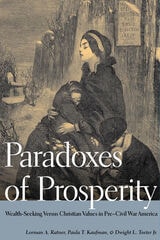
Paradoxes of Prosperity
Wealth Seeking in Pre-Civil War AmericaLorman A. Ratner, Paula T. Kaufman and Dwight L. Teeter Jr.
University of Illinois Press, 2008
At the same time, the United States felt the influence of the rise of popular mass-circulation newspapers and magazines and the surge in American book publishing. Concern over living correctly as well as prosperously was commonly discussed by leading authors and journalists, who were now writing for ever-expanding regional and national audiences. Women became more important as authors and editors, giving advice and building huge markets for women readers, with the magazine Godey's Lady's Book and novels by Susan Warner, Maria Cummins, and Harriet Beecher Stowe expressing women's views about the troubled state of society. Best-selling male writers--including novelist George Lippard, historian George Bancroft, and travel writer Bayard Taylor--were among those adding their voices to concerns about prosperity and morality and about America's place in the world. Writers and publishers discovered that a high moral tone could be exceedingly good for business.
The authors of this book examine how popular writers and widely read newspapers, magazines, and books expressed social tensions between prosperity and morality. This study draws on that nationwide conversation through leading mass media, including circulation-leading newspapers, the New York Herald and the New York Tribune, plus prominent newspapers from the South and West, the Richmond Enquirer and the Cincinnati Enquirer. Best-selling magazines aimed at middle-class tastes, Harper's Magazine and the Southern Literary Messenger, added their voices, as did two leading business magazines.
Paraliterary
The Making of Bad Readers in Postwar AmericaMerve Emre
University of Chicago Press, 2017
We should, Emre argues, think of such readers not as non-literary but as paraliterary—thriving outside the institutions we take as central to the literary world. She traces this phenomenon to the postwar period, when literature played a key role in the rise of American power. At the same time as American universities were producing good readers by the hundreds, many more thousands of bad readers were learning elsewhere to be disciplined public communicators, whether in diplomatic and ambassadorial missions, private and public cultural exchange programs, multinational corporations, or global activist groups. As we grapple with literature’s diminished role in the public sphere, Paraliterary suggests a new way to think about literature, its audience, and its potential, one that looks at the civic institutions that have long engaged readers ignored by the academy.
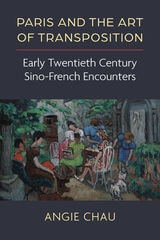
Paris and the Art of Transposition
Early Twentieth Century Sino-French EncountersAngie Chau
University of Michigan Press, 2023
While previous studies of Chinese modernism have focused on how Western modernist aesthetics were adapted or translated to the Chinese context, Angie Chau does the opposite by turning to Paris in the Chinese imaginary and discussing the literary and visual artwork of five artists who moved between France and China: the painter Chang Yu, the poet Li Jinfa, the art critic Fu Lei, the painter Pan Yuliang, and the writer Xu Xu. Chau draws the idea of transposition from music theory where it refers to shifting music from one key or clef to another, or to adapting a song originally composed for one instrument to be played by another. Transposing transposition to the study of art and literature, Chau uses the term to describe a fluid and strategic art practice that depends on the tension between foreign and familiar, new and old, celebrating both novelty and recognition—a process that occurs when a text gets placed into a fresh context.
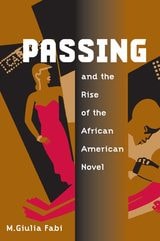
Passing and the Rise of the African American Novel
M. Giulia Fabi
University of Illinois Press, 2001
Focusing on the trope of passing--black characters lightskinned enough to pass for white--M. Giulia Fabi shows how early African American authors such as William Wells Brown, Frank J. Webb, Charles W. Chesnutt, Sutton E. Griggs, Frances E. W. Harper, Edward A. Johnson, and James Weldon Johnson transformed traditional representations of blackness and moved beyond the tragic mulatto motif. Challenging the myths of racial purity and the color line, these authors used passing to celebrate a distinctive, African American history, culture, and worldview.
Fabi examines how early black writers adapted existing literary forms, including the sentimental romance, the domestic novel, and the utopian novel, to express their convictions and concerns about slavery, segregation, and racism. Chesnutt used passing as both a structural and a thematic element, while James Weldon Johnson innovated by parodying the earlier novels of passing and presenting the decision to pass as the result, rather than the cause, of cultural alienation. Fabi also gives a historical overview of the canon-making enterprises of African American critics from the 1850s to the 1990s and considers how their concerns about promoting the canonization of African American literature affected their perceptions of nineteenth-century black fiction.
Paul Bowles
A LifeVirginia Spencer Carr
Northwestern University Press, 2008
Peasant Intellectuals
Anthropology and History in TanzaniaSteven Feierman
University of Wisconsin Press, 1990
Scholars who study peasant society now realize that peasants are not passive, but quite capable of acting in their own interests. But, do coherent political ideas emerge within peasant society or do peasants act in a world where elites define political issues? Peasant Intellectuals is based on ethnographic research begun in 1966 and includes interviews with hundreds of people from all levels of Tanzanian society. Steven Feierman provides the history of the struggles to define the most basic issues of public political discourse in the Shambaa-speaking region of Tanzania. Feierman also shows that peasant society contains a rich body of alternative sources of political language from which future debates will be shaped.
Performing Asian America
Race and Ethnicity on the Contemporary StageJosephine Lee
Temple University Press, 1998
For instance, some Asian American playwrights critique the separation of issues of race and ethnicity from those of economics and class, or they see ethnic identity as a voluntary choice of lifestyle rather than an impetus for concerted political action. Others deal with the problem of cultural stereotypes and how to reappropriate their power. Lee is attuned to the complexities and contradictions of such performances, and her trenchant thinking about the criticisms lobbed at Asian American playwrights -- for their choices in form, perpetuation of stereotype, or apparent sexism or homophobia -- leads her to question how the presentation of Asian American identity in the theater parallels problems and possibilities of identity offstage as well.
Discussed are better-known plays such as Frank Chin's The Chickencoop Chinaman, David Henry Hwang's M. Butterfly, and Velina Hasu Houston's Tea, and new works like Jeannie Barroga's Walls and Wakako Yamauchi's 12-1-a.
Performing The Word
African American Poetry As Vernacular CultureBrown, Fahamisha Patricia
Rutgers University Press, 1999
Fahamista Patricia Brown examines elements of African American expressive culture- its language practices, both fold and popular. Her book is an excellent introduction to a diverse group of poets and the common basis of their work in language practices and performativity, in the expressive culture of a people. Performing the Word is an important contribution to the understanding of African American culture and American poetry as a whole.
Permanent Crisis
The Humanities in a Disenchanted AgePaul Reitter and Chad Wellmon
University of Chicago Press, 2021
Leads scholars and anyone who cares about the humanities into more effectively analyzing the fate of the humanities and digging into the very idea of the humanities as a way to find meaning and coherence in the world.
The humanities, considered by many as irrelevant for modern careers and hopelessly devoid of funding, seem to be in a perpetual state of crisis, at the mercy of modernizing and technological forces that are driving universities towards academic pursuits that pull in grant money and direct students to lucrative careers. But as Paul Reitter and Chad Wellmon show, this crisis isn’t new—in fact, it’s as old as the humanities themselves.
Today’s humanities scholars experience and react to basic pressures in ways that are strikingly similar to their nineteenth-century German counterparts. The humanities came into their own as scholars framed their work as a unique resource for resolving crises of meaning and value that threatened other cultural or social goods. The self-understanding of the modern humanities didn’t merely take shape in response to a perceived crisis; it also made crisis a core part of its project. Through this critical, historical perspective, Permanent Crisis can take scholars and anyone who cares about the humanities beyond the usual scolding, exhorting, and hand-wringing into clearer, more effective thinking about the fate of the humanities. Building on ideas from Max Weber and Friedrich Nietzsche to Helen Small and Danielle Allen, Reitter and Wellmon dig into the very idea of the humanities as a way to find meaning and coherence in the world.

Perspectives of Black Popular Culture
Harry B. Shaw
University of Wisconsin Press, 1990
Petersburg
The Physiology of a CityThomas Gaiton Marullo
Northwestern University Press, 2009
Phenomenal Blackness
Black Power, Philosophy, and TheoryMark Christian Thompson
University of Chicago Press, 2022
Phenomenal Blackness examines the changing interdisciplinary investments of key mid-century Black writers and thinkers, including the growing interest in German philosophy and critical theory. Mark Christian Thompson analyzes this shift in intellectual focus across the post-war decades, placing Black Power thought in a philosophical context.
Prior to the 1960s, sociologically oriented thinkers such as W. E. B. Du Bois had understood Blackness as a singular set of socio-historical characteristics. In contrast, writers such as Amiri Baraka, James Baldwin, Angela Y. Davis, Eldridge Cleaver, and Malcolm X were drawn to notions of an African essence, an ontology of Black being. With these perspectives, literary language came to be seen as the primary social expression of Blackness. For this new way of thinking, the works of philosophers such as Adorno, Habermas, and Marcuse were a vital resource, allowing for continued cultural-materialist analysis while accommodating the hermeneutical aspects of Black religious thought. Thompson argues that these efforts to reimagine Black singularity led to a phenomenological understanding of Blackness—a “Black aesthetic dimension” wherein aspirational models for Black liberation might emerge.
Philadelphia Freedoms
Black American Trauma, Memory, and Culture after KingMichael Awkward
Temple University Press, 2013
Philadelphia and the Development of Americanist Archaeology
Edited by Don Fowler and David R. Wilcox
University of Alabama Press, 2003
For two and a half centuries, Philadelphians have been actively involved in archaeological research. In particular, three vital and venerable cultural institutions—the American Philosophical Society (founded 1743), the Academy of Natural Sciences (founded 1812), and the University Museum of the University of Pennsylvania (founded 1893)—have nurtured the "systematic study of antiquities."
The ten essays in this volume focus on Philadelphians who were concerned with Americanist archaeology, or the "archaeology of the New World." As Europeans, and later, Euroamericans, spread across North, Central, and South America in the 16th through the 19th centuries, they encountered a bewildering variety of native peoples, customs, and languages, as well as tens of thousands of ancient ruins attesting to a long endemic culture history of obvious complexity.
The essays examine most of the key players in the development of the methods to study these phenomena. Enlightenment scholars such as Benjamin Smith Barton, Peter S. Duponceau, Thomas Jefferson, Daniel Garrison Brinton, John Wesley Powell, and Benjamin Rush all contributed to the surge of scientific study of America's prehistoric cultures. So did two pioneering women who have received scant attention to date—Sara Yorke Stevenson and Lucy W. Wilson—but whose work is well treated in this study. Other essays detail the varied contributions of C. C. Abbott, Frank Hamilton Cushing, Clarence B. Moore, Edgar Lee Hewett, and John L. Cotter. This volume should stimulate continued interest in the origins and history of archaeology and the relationship of Philadelphia patrons and institutions to scientific inquiry.
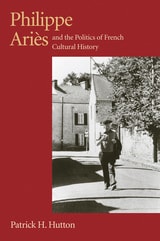
Philippe Aries and the Politics of French Cultural History
Patrick H. Hutton
University of Massachusetts Press, 2004
The author of Centuries of Childhood and other landmark historical works, Philippe Ariès (1914–1984) was a singular figure in French intellectual life. He was both a political reactionary and a path-breaking scholar, a sectarian royalist who supported the Vichy regime and a founder of the new cultural history—popularly known as l'histoire des mentalités—that developed in the decades following World War II. In this book, Patrick H. Hutton explores the relationship between Ariès's life and thought and evaluates his contribution to modern historiography, in France and abroad.
According to Hutton, the originality of Ariès's work and the power of his appeal derived from the way he drew together the two strands of his own intellectual life: his enduring ties to the old cultural order valued by the right-wing Action Française, and a newfound appreciation for the methodology of the leftist Annales school of historians. A demographer by training, he pioneered a new route into the history of private life that eventually won him a wide readership and in late life an appointment to the faculty of the prestigious École des Hautes Études en Sciences Sociales. At the same time, he fashioned himself as a man of letters in the intellectual tradition of the Action Française and became a perspicacious journalist as well as a stimulating writer of autobiographical memoirs. In Hutton's view, this helps explain why, more than any other historian, Philippe Ariès left his personal signature on his scholarship.
Pierio Valeriano on the Ill Fortune of Learned Men
A Renaissance Humanist and His WorldJulia Haig Gaisser
University of Michigan Press, 1999

Pillars of Salt, Monuments of Grace
New England Crime Literature and the Origins of American Popular Culture, 1674-1860Daniel A. Cohen
University of Massachusetts Press, 2006
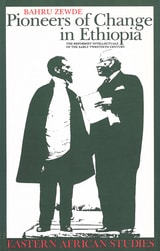
Pioneers Of Change In Ethiopia
The Reformist Intellectuals of the Early Twentieth CenturyBahru Zewde
Ohio University Press, 2002
In this exciting new study, Bahru Zewde, one of the foremost historians of modern Ethiopia, has constructed a collective biography of a remarkable group of men and women in a formative period of their country’s history. Ethiopia’s political independence at the end of the nineteenth century put this new African state in a position to determine its own levels of engagement with the West. Ethiopians went to study in universities around the world. They returned with the skills of their education acquired in Europe and America, and at home began to lay the foundations of a new literature and political philosophy. Pioneers of Change in Ethiopia describes the role of these men and women of ideas in the social and political transformation of the young nation and later in the administration of Haile Selassie.
Pioneers in Popular Culture Studies
Ray B. Browne
University of Wisconsin Press, 1999

Played Out
The Race Man in Twenty-First-Century SatireBrandon J. Manning
Rutgers University Press, 2022

Playhouse to Powerhouse
Locating Black Power Women and their Movement in the Black TheatreKerry Goldmann
University of Arkansas Press, 2025
In Playhouse to Powerhouse, Kerry L. Goldmann explores the Black theatre movement through the lens of three significant women-led theatres that are still in operation today: Nora Vaughn’s Black Repertory Group in Berkeley, Barbara Ann Teer’s National Black Theatre in Harlem, and George Hawkins and Eileen Morris’s Ensemble Theatre in Houston. Goldmann concludes with a discussion of the current moment, examining contemporary obstacles such as gentrification, the co-opting of Black theatres, and the impact of COVID-19.
This remarkable work sheds light on the foundational role that Vaughn, Teer, and Morris played in the Black cultural revolution of the mid- to late twentieth century, securing theatre houses that thrived in multiple capacities as sites for revolution organizing, revenue generation for communal uplift, and unapologetic Black cultural representation.

Playing in the Shadows
Fictions of Race and Blackness in Postwar Japanese LiteratureWilliam Bridges
University of Michigan Press, 2020
Poetry as a Way of Life
Aesthetics and Askesis in the German Eighteenth CenturyGabriel Trop
Northwestern University Press, 2014
What would it mean to make a work of art the focal point of one’s life practice? Poetry as a Way of Life goes back to the origins of aesthetics as a philosophical discipline in the early eighteenth century in order to uncover an understanding of the work of art as an exercise of the self. Engaging in close readings of works by both canonical and less well-known eighteenth-century German poets such as Friedrich Holderlin, Novalis, Friedrich von Hagedorn, and Johann Wilhelm Ludwig Gleim, Gabriel Trop illustrates the ways in which these authors tap into the potential of poetic form to redefine the limits of human perception and generate alternative ways of being in the world.
Poetry of Mourning
The Modern Elegy from Hardy to HeaneyJahan Ramazani
University of Chicago Press, 1994
Through subtle readings of elegies, self-elegies, war poems, and the blues, Ramazani greatly enriches our critical understanding of a wide range of poets, including Thomas Hardy, Wilfred Owen, Wallace Stevens, Langston Hughes, W. H. Auden, Sylvia Plath, and Seamus Heaney. He also interprets the signal contributions to the American family elegy of Robert Lowell, Allen Ginsberg, Anne Sexton, John Berryman, Adrienne Rich, Michael Harper, and Amy Clampitt. Finally, he suggests analogies between the elegy and other kinds of contemporary mourning art—in particular, the AIDS Memorial Quilt and the Vietnam Veterans Memorial.
Grounded in genre theory and in the psychoanalysis of mourning, Ramazani's readings also draw on various historical, formal, and feminist critical approaches. This book will be of interest to anyone concerned with the psychology of mourning or the history of modern poetry.
"Consists of full, intelligent and lucid exposition and close reading. . . . Poetry of Mourning is itself a welcome contribution to modern poetry's search for a 'resonant yet credible vocabulary of grief in our time."—Times Literary Supplement
Polish Jewish Culture Beyond the Capital
Centering the PeripheryHalina Goldberg
Rutgers University Press, 2023
PIASA's 2024 Anna M. Cienciala Award for Best-Edited Multi-Authored Scholarly Volume
Polish Jewish Culture beyond the Capital: Centering the Periphery is a path-breaking exploration of the diversity and vitality of urban Jewish identity and culture in Polish lands from the second half of the nineteenth century to the outbreak of the Second World War (1899–1939). In this multidisciplinary essay collection, a cohort of international scholars provides an integrated history of the arts and humanities in Poland by illuminating the complex roles Jews in urban centers other than Warsaw played in the creation of Polish and Polish Jewish culture.
Each essay presents readers with the extraordinary production and consumption of culture by Polish Jews in literature, film, cabaret, theater, the visual arts, architecture, and music. They show how this process was defined by a reciprocal cultural exchange that flourished between cities at the periphery—from Lwów and Wilno to Kraków and Łódź—and international centers like Warsaw, thereby illuminating the place of Polish Jews within urban European cultures.
Companion website (https://polishjewishmusic.iu.edu)
Popular Fronts
Chicago and African-American Cultural Politics, 1935-46Bill V. Mullen
University of Illinois Press, 2015
With a new preface Bill V. Mullen updates his dynamic reappraisal of a critical moment in American cultural history. Mullen's study includes reassessments of the politics of Richard Wright's critical reputation and a provocative reading of class struggle in Gwendolyn Brooks' A Street in Bronzeville. He also takes an in-depth look at the institutions that comprised Chicago's black popular front: the Chicago Defender, the period's leading black newspaper; Negro Story, the first magazine devoted to publishing short stories by and about African Americans; and the WPA-sponsored South Side Community Art Center.

Popular History and the Literary Marketplace, 1840–1920
Gregory M. Pfitzer
University of Massachusetts Press, 2008
Prior to the mid-nineteenth century, most Americans “heard” rather than “read” national history. They absorbed lessons from the past more readily by attending Patriots' Day orations and anniversary commemorations than by reading expensive, multivolume works of patrician historians. By the 1840s, however, innovations in publishing led to the marketing of inexpensive, mass-produced “popular” histories that had a profound influence on historical literacy and learning in the United States. In this book, Gregory M. Pfitzer charts the rise and fall of this genre, demonstrating how and why it was born, flourished, and then became unpopular over time.
Pfitzer begins by exploring how the emergence of a new literary marketplace in the mid-nineteenth century affected the study of history in America. Publishers of popular works hoped to benefit from economies of scale by selling large numbers of inexpensive books at small profit. They hired authors with substantial literary reputations to make the past accessible to middle-class readers. The ability to write effectively for wide audiences was the only qualification for those who dominated this field. Privileging narration and effusive literary style over dispassionate prose, these artists adapted their favorite fictional and poetic conventions with an ease that suggests the degree to which history was viewed as literary art in the nineteenth century.
Beginning as a small cottage industry, popular histories sold in the hundreds of thousands by the 1890s. In an effort to illuminate the cultural conditions for this boom, Pfitzer focuses on the business of book making and book promotion. He analyzes the subscription sales techniques of book agents as well as the aggressive prepublication advertising campaigns of the publishers, including the pictorial embellishments they employed as marketing devices.
He also examines the reactions of professional historians who rejected the fictionalizing and poetic tendencies of popular history, which they equated with loose and undisciplined scholarship. Pfitzer explains how and why these professionals succeeded in challenging the authority of popular histories, and what the subsequent “unpopularity of popular history” meant for book culture and the study of history in the twentieth century.
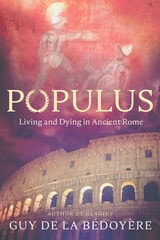
Populus
Living and Dying in Ancient RomeGuy de la Bédoyère
University of Chicago Press, 2024
Frenzied crowds, talking ravens, the stench of the Tiber River: life in ancient Rome was stimulating, dynamic, and often downright dangerous. The Romans relaxed and gossiped in baths, stole precious water from aqueducts, and partied and dined to excess. Everyone from senators to the enslaved crowded into theaters and circuses to watch their favorite singers, pantomime, and comedies and scream their approval at charioteers. The lucky celebrated their accomplishments with elaborate tombs. Amid pervasive inequality and brutality, beauty also flourished through architecture, poetry, and art.
From the smells of fragrant cookshops and religious sacrifices to the cries of public executions and murderous electoral mobs, Guy de la Bédoyère’s Populus draws on a host of historical and literary sources to transport us into the intensity of daily life at the height of ancient Rome.
Portraits
A Gallery of IntellectualsEdward Shils
University of Chicago Press, 1997
Highlights include an affectionate treatment of Leo Szilard, the physicist whose involvement with the development of the atomic bomb led him to work ceaselessly to address its social consequences; a discussion of the educational philosophy of Robert Maynard Hutchins, the University of Chicago's fifth and most controversial president; an appreciative account of the Polish emigré Leopold Labedz's well-informed and outspoken resistance to Communism; and an essay about the extraordinary Indian writer Nirad Chaudhuri.
Many of these essays have appeared in The American Scholar, edited by Joseph Epstein, who introduces this volume with his own portrait of Edward Shils.
"Though professionally a sociologist, Edward Shils was a man of wide cosmopolitan culture and experience, greatly concerned with the public problems of his time: in particular with those created by the rise of new and dangerous ideologies, the frightening possibilities of science, and the apparent abrogation of public responsibility by many Western intellectuals."—Hugh Trevor-Roper
The late Edward Shils was a member of the University of Chicago's Committee on Social Thought for forty-five years and a fellow of Peterhouse, Cambridge University. His many books include The Calling of Sociology and The Intellectuals and the Powers, both published by the University of Chicago Press.
Posterity
Inventing Tradition from Petrarch to GramsciRocco Rubini
University of Chicago Press, 2022
Rocco Rubini studies the motives and literary forms in the making of a “tradition,” not understood narrowly, as the conservative, stubborn preservation of received conventions, values, and institutions, but instead as the deliberate effort on the part of writers to transmit a reformulated past across generations. Leveraging Italian thinkers from Petrarch to Gramsci, with stops at prominent humanists in between—including Giambattista Vico, Carlo Goldoni, Francesco De Sanctis, and Benedetto Croce—Rubini gives us an innovative lens through which to view an Italian intellectual tradition that is at once premodern and modern, a legacy that does not depend on a date or a single masterpiece, but instead requires the reader to parse an expanse of writings to uncover deeper transhistorical continuities that span six hundred years. Whether reading work from the fourteenth century, or from the 1930s, Rubini elucidates the interplay of creation and the reception underlying the enactment of tradition, the practice of retrieving and conserving, and the revivification of shared themes and intentions that connect thinkers across time. Building on his award-winning book, The Other Renaissance, this will prove a valuable contribution for intellectual historians, literary scholars, and those invested in the continuing humanist legacy.
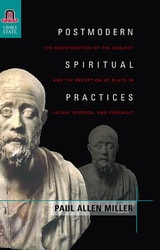
Postmodern Spiritual Practices
The Construction of the Subject and the Reception of Plato in Lacan, Derrida, and FoucaultPaul Allen Miller
The Ohio State University Press, 2007
On the other hand, blindness to the merits of postmodern thought is also due to Anglo-American philology’s own parochial instincts. Ensconced within a nineteenth-century model of Alterumswissenschaft, only a minority of classicists have made forays into philosophical, psychoanalytic, and other speculative modes of inquiry. The result has been that postmodern French thought has largely been the province of scholars of modern languages.
A situation thus emerges in which most classicists do not know theory, and so cannot appreciate the scope of these thinkers’ contribution to our understanding of the genealogy of Western thought, while most theorists do not know the Platonic texts and their contexts that ground them. This book bridges this gap, offering detailed and theoretically informed readings of French postmodernism’s chief thinkers’ debts to Plato and the ancient world.
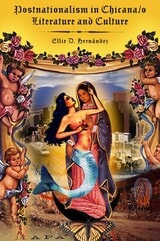
Postnationalism in Chicana/o Literature and Culture
By Ellie D. Hernández
University of Texas Press, 2009
In recent decades, Chicana/o literary and cultural productions have dramatically shifted from a nationalist movement that emphasized unity to one that openly celebrates diverse experiences. Charting this transformation, Postnationalism in Chicana/o Literature and Culture looks to the late 1970s, during a resurgence of global culture, as a crucial turning point whose reverberations in twenty-first-century late capitalism have been profound.
Arguing for a postnationalism that documents the radical politics and aesthetic processes of the past while embracing contemporary cultural and sociopolitical expressions among Chicana/o peoples, Hernández links the multiple forces at play in these interactions. Reconfiguring text-based analysis, she looks at the comparative development of movements within women's rights and LGBTQI activist circles. Incorporating economic influences, this unique trajectory leads to a new conception of border studies as well, rethinking the effects of a restructured masculinity as a symbol of national cultural transformation. Ultimately positing that globalization has enhanced the emergence of new Chicana/o identities, Hernández cultivates important new understandings of borderlands identities and postnationalism itself.

Power and Possibility
Essays, Reviews, and InterviewsElizabeth Alexander
University of Michigan Press, 2007
A volume in the Poets on Poetry series, which collects critical works by contemporary poets, gathering together the articles, interviews, and book reviews by which they have articulated the poetics of a new generation.
Elizabeth Alexander is considered one of the country's most gifted contemporary poets, and the publication of her essays in The Black Interior in 2004 established her as an astute critic and cultural commentator as well. Arnold Rampersad has called Alexander "one of the brightest stars in our literary sky . . . a superb, invaluable commentator on the American scene." In this new collection of her essays, reviews, and interviews, Alexander again focuses on African American artistic production, particularly poetry, and the cultural contexts in which it is created and experienced.
The book's first section, "Black Arts 101," takes up the poetry of Paul Laurence Dunbar, Sterling Brown, Lucille Clifton, Gwendolyn Brooks, and Rita Dove (among others); artist Romare Bearden; dancer Bill T. Jones; and dramatist August Wilson. A second section, "Black Feminist Thinking," provides engaging meditations ranging from "My Grandmother's Hair" and "A Very Short History of Black Women and Food" to essays on the legacies of Toni Cade, Audre Lorde, and June Jordan. The collection's final section, "Talking," includes interviews, a commencement address---"Black Graduation"---and the essay "Africa and the World."
Elizabeth Alexander received a B.A. from Yale University, an M.A. from Boston University, and a Ph.D. in English from the University of Pennsylvania. She has published four books of poems: The Venus Hottentot (1990); Body of Life (1996); Antebellum Dream Book (2001); and, most recently, American Sublime (2005), which was one of three finalists for the Pulitzer Prize. Her play, Diva Studies, was produced at the Yale School of Drama. She is presently Professor of American and African American Studies at Yale University.
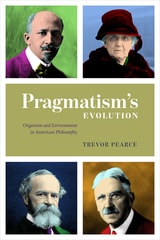
Pragmatism's Evolution
Organism and Environment in American PhilosophyTrevor Pearce
University of Chicago Press, 2020
Although the various thinkers associated with pragmatism—from Charles Sanders Peirce to Jane Addams and beyond—were towering figures in American intellectual life, few realize the full extent of their engagement with the life sciences. In his analysis, Pearce focuses on a series of debates in biology from 1860 to 1910—from the instincts of honeybees to the inheritance of acquired characteristics—in which the pragmatists were active participants. If we want to understand the pragmatists and their influence, Pearce argues, we need to understand the relationship between pragmatism and biology.
Predecessors, Et Cetera
EssaysAmy Clampitt
University of Michigan Press, 1991
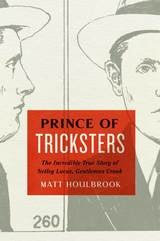
Prince of Tricksters
The Incredible True Story of Netley Lucas, Gentleman CrookMatt Houlbrook
University of Chicago Press, 2016
The lives of Netley Lucas are as flamboyant as they are unlikely. In Prince of Tricksters, Matt Houlbrook picks up the threads of Lucas’s colorful lies and lives. Interweaving crime writing and court records, letters and life-writing, Houlbrook tells Lucas’s fascinating story and, in the process, provides a panoramic view of the 1920s and ’30s. In the restless times after the Great War, the gentlemanly trickster was an exemplary figure, whose tall tales and bogus biographies exposed the everyday difficulties of knowing who and what to trust. Tracing how Lucas both evoked and unsettled the world through which he moved, Houlbrook shows how he prompted a pervasive crisis of confidence that encompassed British society, culture, and politics.
Taking readers on a romp through Britain, North America, and eventually into Africa, Houlbrook confronts readers with the limits of our knowledge of the past and challenges us to think anew about what history is and how it might be made differently.
Prior to Meaning
The Protosemantic and PoeticsSteve McCaffery
Northwestern University Press, 2000
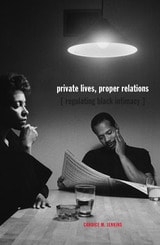
Private Lives, Proper Relations
Regulating Black IntimacyCandice M. Jenkins
University of Minnesota Press, 2007
Private Lives, Proper Relations begins with the question of why contemporary African American literature—particularly that produced by black women—is continually concerned with issues of respectability and propriety. Candice M. Jenkins argues that this preoccupation has its origins in recurrent ideologies about African American sexuality, and that it expresses a fundamental aspect of the racial self—an often unarticulated link between the intimate and the political in black culture.
In a counterpoint to her paradigmatic reading of Nella Larsen’s Passing, Jenkins’s analysis of black women’s narratives—including Ann Petry’s The Street, Toni Morrison’s Sula and Paradise, Alice Walker’s The Color Purple, and Gayl Jones’s Eva’s Man—offers a theory of black subjectivity. Here Jenkins describes middle-class attempts to rescue the black community from accusations of sexual and domestic deviance by embracing bourgeois respectability, and asserts that behind those efforts there is the “doubled vulnerability” of the black intimate subject. Rather than reflecting a DuBoisian tension between race and nation, to Jenkins this vulnerability signifies for the African American an opposition between two poles of potential exposure: racial scrutiny and the proximity of human intimacy.
Scholars of African American culture acknowledge that intimacy and sexuality are taboo subjects among African Americans precisely because black intimate character has been pathologized. Private Lives, Proper Relations is a powerful contribution to the crucial effort to end the distortion still surrounding black intimacy in the United States.
Candice M. Jenkins is associate professor of English at Hunter College, City University o
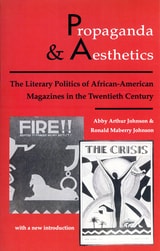
Propaganda and Aesthetics
The Literary Politics of Afro-American Magazines in the Twentieth CenturyAbby Arthur Johnson
University of Massachusetts Press, 1979
Little work has been done on individual Afro-American periodicals and nothing, up to this point, has been published on twentieth-century black journals as a group. Studies of magazines in general are relatively rare, with only The Little Magazine, by Frederick Hoffman, Charles Allen, and Carolyn P. Ulrich, attempting a survey of small journals in this century. This book fills a considerable gap in literary history by detailing the development of Afro-American magazines in this century.
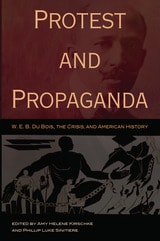
Protest and Propaganda
W. E. B. Du Bois, the CRISIS, and American HistoryEdited by Amy Helene Kirschke and Phillip Luke Sinitiere
University of Missouri Press, 2013
In looking back on his editorship of Crisis magazine, W. E. B. Du Bois said, “We condensed more news about Negroes and their problems in a month than most colored papers before this had published in a year.” Since its founding by Du Bois in 1910, Crisis has been the primary published voice of the NAACP. Born in an age of Jim Crow racism, often strapped for funds, the magazine struggled and endured, all the while providing a forum for people of color to document their inherent dignity and proclaim their definitive worth as human beings.
As the magazine’s editor from 1910 until 1934, Du Bois guided the content and the aim of Crisis with a decisive hand. He ensured that each issue argued for civil rights, economic justice, and social equality, always framing America’s intractable color line in an international perspective. Du Bois benefited from a deep pool of black literary and artistic genius, whether by commissioning the visual creativity of Harlem Renaissance artists for Crisis covers or by publishing poems and short stories from New Negro writers. From North to South, from East to West, and even reaching across the globe, Crisis circulated its ideas and marshaled its impact far and wide.
Building on the solid foundation Du Bois laid, subsequent editors and contributors covered issues vital to communities of color, such as access to resources during the New Deal era, educational opportunities related to the historic Brown decision, the realization of basic civil rights at midcentury, American aid to Africa and Caribbean nations, and the persistent economic inequalities of today’s global era.
Despite its importance, little has been written about the historical and cultural significance of this seminal magazine. By exploring how Crisis responded to critical issues, the essays in Protest and Propaganda provide the first well-rounded, in-depth look at the magazine's role and influence. The authors show how the essays, columns, and visuals published in Crisis changed conversations, perceptions, and even laws in the United States, thereby calling a fractured nation to more fully live up to its democratic creed. They explain how the magazine survived tremendous odds, document how the voices of justice rose above the clamor of injustice, and demonstrate how relevant such literary, journalistic, and artistic postures remain in a twenty-first-century world still in crisis.
Public Negotiations
Gender and Journalism in Contemporary US Latina/o LiteratureAriana E. Vigil
The Ohio State University Press, 2019
Vigil also reveals how these conversations inevitably engage with gender concerns, showing how the role of gender in this relationship is neither static nor consistent over time. Examining how these works represent such things as gendered Latina/o counter publics, how Central American–American communities are gendered in relation to other US Latina/o communities, how and why gendered expressions of Latinidad are produced and marketed, and how print media provides an important space for dissemination of diverse ideas, Public Negotiations considers the way in which gender functions in terms of both the construction and reception of a Latina/o public in a transnational space. Through thorough examination and with deep insight, Vigil shows how literature can invaluably reflect current and historical issues surrounding media and the public sphere and help us imagine new, hopefully better, possibilities.
Public Properties
Museums in Imperial JapanNoriko Aso
Duke University Press, 2013
Publishing Blackness
Textual Constructions of Race Since 1850George Hutchinson and John K. Young, Editors
University of Michigan Press, 2013
From the white editorial authentication of slave narratives, to the cultural hybridity of the Harlem Renaissance, to the overtly independent publications of the Black Arts Movement, to the commercial power of Oprah's Book Club, African American textuality has been uniquely shaped by the contests for cultural power inherent in literary production and distribution. Always haunted by the commodification of blackness, African American literary production interfaces with the processes of publication and distribution in particularly charged ways. An energetic exploration of the struggles and complexities of African American print culture, this collection ranges across the history of African American literature, and the authors have much to contribute on such issues as editorial and archival preservation, canonization, and the "packaging" and repackaging of black-authored texts. Publishing Blackness aims to project African Americanist scholarship into the discourse of textual scholarship, provoking further work in a vital area of literary study.
Publishing Latinidad
Latinx Literary and Intellectual Production, 1880–1960Jose O. Fernandez
University of Arizona Press, 2025
Publishing Latinidad brings to light the overlooked contributions of early Latinx writers and intellectuals, offering a fresh perspective on their roles in shaping American literary and cultural landscapes.
Jose O. Fernandez meticulously examines the works of notable figures like José Martí, Arturo Schomburg, Jesús Colón, José de la Luz Sáenz, Adela Sloss-Vento, and Américo Paredes, illuminating their innovative approaches to circumventing exclusionary practices in the publishing world. He demonstrates how these writers and intellectuals entered literary, cultural, and intellectual discourses through alternative modes of literary production: crónicas, translations, paratexts, bibliographies, archival practices, sketches, diaries, biographies, unpublished fiction, and scholarly monographs. Through these examples, Fernandez situates Latinx literary production in this time period within the broader context of racial and ethnic solidarity movements in the United States.
Publishing Latinidad is essential reading for anyone interested in the social and cultural underpinnings of Latinx literature and intellectual thought. It challenges traditional narratives and enriches our appreciation of the diverse voices that have long been instrumental in the fight for justice.
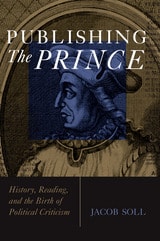
Publishing The Prince
History, Reading, and the Birth of Political CriticismJacob Soll
University of Michigan Press, 2010
As new ideas arose during the Enlightenment, many political thinkers published their own versions of popular early modern "absolutist" texts and transformed them into manuals of political resistance. As a result, these works never achieved a fixed and stable edition. Publishing The Prince illustrates how Abraham-Nicolas Amelot de La Houssaye created the most popular late seventeenth- and eighteenth-century version of Machiavelli's masterpiece. In the process of translating, Amelot also transformed the work, altering its form and meaning, and his ideas spread through later editions.
Revising the orthodox schema of the public sphere in which political authority shifted away from the crown with the rise of bourgeois civil society in the eighteenth century, Soll uses the example of Amelot to show for the first time how the public sphere in fact grew out of the learned and even royal libraries of erudite scholars and the bookshops of subversive, not-so-polite publicists of the republic of letters.
Jacob Soll is Associate Professor of History at Rutgers University.
Cover art courtesy of Annenberg Rare Book Room and Manuscript Library, University of Pennsylvania
Jacket Design: Stephanie Milanowski
"Jacob Soll traces the origins of Enlightenment criticism to the practices of learned humanists and hard-pressed literary entrepreneurs. This learned and lively book is also a tour de force of historical research and interpretation."
---Anthony Grafton, author of Cardano's Cosmos and Bring Out Your Dead
"Brilliant. How the printed page changed political philosophy into investigative reporting, and reason of state into the unmasking of power."
---J. G. A. Pocock, author of The Machiavellian Moment
"Soll's path-breaking study is a 'must read' for all those interested in the history of political thought and early modern intellectual history."
---Barbara Shapiro, University of California Berkeley
"Soll has done [Amelot] and his context justice, writing as he does with a clear, singular, and welcome voice."
---Margaret C. Jacobs, American Historical Review
Publishing Women
Salons, the Presses, and the Counter-Reformation in Sixteenth-Century ItalyDiana Robin
University of Chicago Press, 2007
Even the most comprehensive Renaissance histories have neglected the vibrant groups of women writers that emerged in cities across Italy during the mid-1500s—and the thriving network of printers, publishers, and agents that specialized in producing and selling their books. In Publishing Women, Diana Robin finally brings to life this story of women’s cultural and intellectual leadership in early modern Italy, illuminating the factors behind—and the significance of—their sudden dominance.
Focusing on the collective publication process, Robin portrays communities in Naples, Venice, Rome, Siena, and Florence, where women engaged in activities that ranged from establishing literary salons to promoting religious reform. Her innovative cultural history considers the significant roles these women played in tandem with men, rather than separated from them. In doing so, it collapses the borders between women’s history, Renaissance and Reformation studies, and book history to evoke a historical moment that catapulted women’s writings and women-sponsored books into the public sphere for the first time anywhere in Europe.