Results by title
3388 books match the query 'Fiction' and 77 start with r

Rachel's Blue
Zakes Mda
Seagull Books, 2016
In this novel, however, he turns his lens elsewhere: to a college town in Ohio. Here he finds human relations and the battle between the community and the individual no less compelling, or ridiculous. In Athens, Ohio, old high school friends Rachel Boucher and Jason de Klerk reconnect and rekindle a relationship that quickly becomes passionate. Initially, all seems well. Not only the couple, but their friends and family, are happy at this unexpected conjunction. But then Rachel meets someone else. Jason’s anger boils over into violence—violence that turns the community on its head, pitting friends and neighbors against one another. And all this happens before Rachel realizes she’s pregnant.
A powerful, piercing satire of contemporary life, love, and society, Rachel’s Blue is a wonderful example of the social novel, surprising us with undeniable revelations about everyday life.
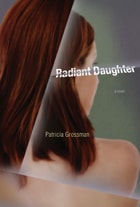
Radiant Daughter
A NovelPatricia Grossman
Northwestern University Press, 2010
In Radiant Daughter, award-winning novelist Patricia Grossman follows a Czech-American family for twenty-seven years, beginning in suburban Chicago in 1969 and ending in Brooklyn, in seaside “Little Odessa,” in 1996. Though the novel begins as a traditional assimilation story—immigrant parents, “native” children, and the conflicts one might expect—it evolves into a highly particular and harrowing tale surrounding the descent of Elise Blazek, the family’s brightest star. Radiant Daughter is also a story of translation—between generations, from the Czech of Irena and Stepan, to the “American” of the children, and finally to the Russian that is Elise’s academic specialty.
Radiant Daughter explores all that is human, from the most self-destructive behavior to the highest forms of commitment and self-sacrifice. Even at her lowest moments, Irena never loses her fierce love for the daughter who has traveled so utterly beyond her reach. For Elise, the future will always be complicated: a precarious balance between periods of insight, bursts of accomplishment, and the abyss of her illness.
Reminiscent, on the one hand, of the meticulously constructed mother-daughter dynamic in Carol Shields’s Unless and, on the other, of the anarchic real-life experience of Big and Little Edie Beale in Grey Gardens, Grossman’s moving narrative breaks new ground in exploring a dangerous turn in the complex bond between a mother and her adult child.
Radical Empathy
Robin Romm
Four Way Books, 2024
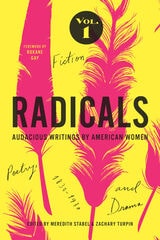
Radicals, Volume 1
Fiction, Poetry, and Drama: Audacious Writings by American Women, 1830-1930Meredith Stabel and Zachary Turpin
University of Iowa Press, 2021
In Volume 1: Fiction, Poetry, and Drama, selections span from early works like Sarah Louise Forten’s anti-slavery poem “The Grave of the Slave” (1831) and Fanny Fern’s Ruth Hall (1855), a novel about her struggle to break into the male-dominated field of journalism, to Charlotte Perkins Gilman’s revenge fantasy, “When I Was a Witch” (1910) and Georgia Douglas Johnson’s poem on the fraught nature of African American motherhood, “Maternity” (1922). In between, readers will discover many vibrant and challenging lesser-known texts that are rarely collected today. Some, indeed, have been out of print for more than a century.
Unique among anthologies of American literature, Radicals undoes such silences by collecting the underrepresented, the uncategorizable, the unbowed—powerful writings by American women of genius and audacity who looked toward, and wrote toward, what Charlotte Perkins Gilman called “a lifted world.”

Radio Works
1946-48Antonin Artaud
Diaphanes, 2020
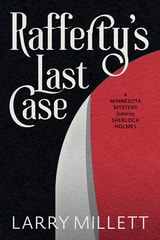
Rafferty's Last Case
A Minnesota Mystery featuring Sherlock HolmesLarry Millett
University of Minnesota Press, 2023
The ninth and final Minnesota mystery, in which Shadwell Rafferty, with the inimitable Sherlock Holmes, may have solved his own murder
Like many mysteries, this one begins with a murder. But in this case the victim happens to be the detective, on the verge of revealing the culprit in an earlier crime. Had Shadwell Rafferty identified his own murderer? When news of Rafferty’s death reaches Sherlock Holmes, in Chicago on the last leg of an American speaking tour, the world’s most famous detective and his redoubtable companion Watson rush to Minnesota to hunt for their friend’s killer.
Set amid the glittering society and sordid underworld of 1928 St. Paul, Larry Millett’s ninth and final Shadwell Rafferty mystery takes readers through the serpentine twists of Rafferty’s fatal investigation, even as Holmes, following in Rafferty’s tracks, may be closing in on the answer to both cases. This ingenious double mystery takes us to every corner of St. Paul, from the city’s most notorious speakeasy to a home for unwed mothers to the mansions of Summit Avenue, and at every turn we find another suspect: an ambitious mayor and his devoted fixer-in-chief, a heartless blackmailer and a police detective mired in city hall connections, a poet-turned-mystery writer with a suspicious coterie, and a priest hiding a terrible secret.
A mysterious woman in Minneapolis who makes certain illicit arrangements and a young man in possession of incriminating documents provide Holmes with vital clues that lead to a final confrontation with an exceptionally devious murderer worthy of the exceptionally devious plot that brings the Minnesota mystery series to a fitting and powerful conclusion.
Rain in the Valley
A NovelHelen Papanikolas
Utah State University Press, 2005
Three generations of the Demas family face the ups and downs of the twentieth century after their fathers leave the coal mines that drew them from Greece to America, become wool growers and small businessmen, and Americanize their Demopoulos name. As the years pass, the family accumulates untidy lives and tragedies. Parents seek to keep their children tightly bound by old-country customs, to arrange marriages, and to foist their views of women’s inferiority on their daughters. Lia Papastamos in particular, child of a forced marriage between her Greek father and Amerikanidha mother, pulls away from the stifling burden of family tradition and interference, but she and her husband must contend with the decline that time, synthetics, and changing tastes bring to a once-thriving sheep business.
Rakes of the Old Court
A NovelMateiu Caragiale, Translated from the Romanian by Sean Cotter
Northwestern University Press, 2020
Originally published in 1929, Rakes of the Old Court is considered a jewel of Romanian modernism. Devoted “Mateists” have long read, memorized, and reenacted the novel, and after the Romanian Revolution, it became part of the high school curriculum. Now canonical, Mateiu’s work has been celebrated for its opulent literary style and enigmatic tone.
Rambling On
An Apprentice's Guide to the Gift of the GabBohumil Hrabal
Karolinum Press, 2016
Rambling On
An Apprentice’s Guide to the Gift of the GabBohumil Hrabal
Karolinum Press, 2014
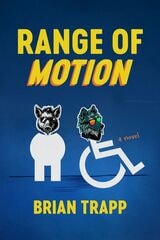
Range of Motion
A NovelBrian Trapp
Acre Books, 2025
Twin A and Twin B. That’s what Michael and Sal’s neuroscientist father irreverently calls them. The boys are born moments apart, but baby Sal’s brain scan shows a bleed. He has severe cerebral palsy and intellectual disabilities.
Told through multiple perspectives—Gabe, the boys’ father; Hannah, their mother; and Michael—this debut novel follows the Mitchell family from the boys’ infancy to the cusp of adulthood as they all try to interpret what Sal, who speaks only eight words, is thinking and feeling. The twins’ upbringing in suburban Ohio is familiar and unfamiliar, ordinary and extraordinary, as this middle-class family navigates the challenges and rewards of nurturing a special-needs human with a killer dimple who is utterly and winningly himself: sweet, stubborn, mischievous, impenetrable, and above all, very funny.
Michael feels that he alone understands Sal and devotes himself to giving his brother a voice in the “normal” world until he grows up and can’t “hear” his twin anymore—his worst fear. Their mother, a teacher who has given up her career for caregiving, and their father, who is determined to succeed in his research, also struggle with the balance of sacrifice and duty and love, especially as Sal’s health deteriorates. Before Michael leaves for college, the twins spend a final week together at a summer camp for people with disabilities, and Sal does something that changes their lives forever.
Transforming perceptions of disability and interdependence through tender attention to detail, Range of Motion is wrenching, beautiful, and sharply comic.

Rare and Commonplace Flowers
The Story of Elizabeth Bishop and Lota de Macedo SoaresOliveira, Carmen
Rutgers University Press, 2003
Rare and Commonplace Flowers—a Brazilian bestseller—tells the story of two women. Elizabeth Bishop, the Pulitzer Prize–winning American poet, sought artistic inspiration in Brazil. There she met and fell in love with Lota de Macedo Soares, a self-trained Brazilian architect. This dual biography—brilliantly researched, and written in a lively, novelistic style—follows their relationship from 1951 to 1967, the time when the two lived together in Brazil. The fact that these two women had an intimate relationship caused an uproar when it first came to public notice.
The relationship started out happily, yet ended tragically. In 1961, Soares became increasingly obsessed with building and administering Flamengo Park, Rio de Janeiro’s equivalent to New York City’s Central Park. Though she had been the driving force behind the park’s inception, the ultimate credit that was due her was stripped away because of petty politics and chicanery. As Soares’s career declined and Bishop’s flourished, their relationship crumbled.
Rare and Commonplace Flowers is a tale of two artists and two cultures, offering unique perspectives on both women and their work. Carmen L. Oliveira provides an unparalleled level of detail and insight, due to both her familiarity with Brazil as well as her access to the country’s artistic elite, many of whom had a direct connection with Bishop and Soares. Rare pictures of the two artists and their home bring this unique story to life.
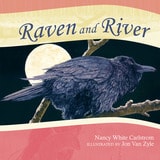
Raven and River
Nancy White Carlstrom
University of Alaska Press, 2011
Raven and River leads young readers on a fantastical journey with a raven across the icy Alaska landscape on the verge of spring. Along the way, the raven’s sonorous cry wakes a cast of sleeping woodland creatures, including a bear, a beaver, a hare, and a squirrel—all of whom join him in imploring the still-frozen river to melt and thereby initiate the change of seasons. Packed with information and featuring vibrant full-color illustrations by Jon Van Zyle, Raven and River brings to life these two important harbingers of Alaska’s spring.
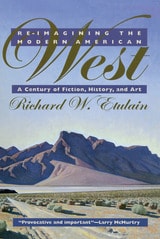
Re-imagining the Modern American West
A Century of Fiction, History, and ArtRichard W. Etulain
University of Arizona Press, 1996
He discusses novelists from Jack London to John Steinbeck and on to Joan Didion. He covers historians from Frederick Jackson Turner to Earl Pomeroy and Patricia Nelson Limerick, and artists from Frederic Remington and Charles Russell to Georgia O’Keeffe and R. C. Gorman. The author places emphasis on women painters and authors such as Mary Hallock Foote, Mary Austin, Willa Cather, and Judith Baca. He also stresses important works of ethnic writers including Leslie Marmon Silko, Rudolfo Anaya, and Amy Tan. An intriguing survey of tendencies and trends and a well-defined profile of influences and outgrowths, this book will be valuable to students and scholars of western culture and history, American studies, and related disciplines. General readers will appreciate the book’s balanced structure and spirited writing style. All readers, whatever their level of interest, will discover the major cultural inventions of the American West over the past one hundred years.
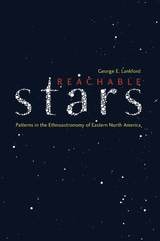
Reachable Stars
Patterns in the Ethnoastronomy of Eastern North AmericaGeorge E. Lankford
University of Alabama Press, 2007
Reading Greek with Jonah
A Mini-Course in Ancient GreekJames McDonough
Catholic University of America Press, 2026
Reading Novels
George Hughes
Vanderbilt University Press, 2002
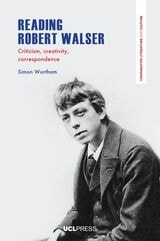
Reading Robert Walser
Criticism, Creativity, CorrespondenceSimon Wortham
University College London, 2025
Robert Walser’s letters to Frieda Mermet, the laundry manager at a Swiss psychiatric hospital, offer an intimate and enigmatic glimpse into the mind of a writer whose literary fortunes waned even as his influence grew in the decades following his death. Covering nearly thirty years, from 1913 to 1942, these letters chart Walser’s transition from a celebrated modernist to a man institutionalized, yet still deeply engaged with language and identity.
In Reading Robert Walser, Simon Wortham studies Walser’s letters within the broader context of modernist literature and deconstruction, and also imaginatively reconstructs Mermet’s possible lost responses, blurring the lines between criticism and creativity. The result is an innovative exploration of authorship and the act of reading itself—one that deepens our understanding of Walser’s life and work while questioning the very nature of literary correspondence.
Reading as Therapy
What Contemporary Fiction Does for Middle-Class AmericansTimothy Aubry
University of Iowa Press, 2011
@font-face { font-family: "Myriad Pro";}p.MsoNormal, li.MsoNormal, div.MsoNormal { margin: 0in 0in 0.0001pt; font-size: 12pt; font-family: "Times New Roman"; }div.Section1 { page: Section1; }Why do Americans read contemporary fiction? This question seems simple, but is it? Do Americans read for the purpose of aesthetic appreciation? To satisfy their own insatiable intellectual curiosities? While other forms of media have come to monopolize consumers’ leisure time, in the past two decades book clubs have proliferated, Amazon has sponsored thriving online discussions, Oprah Winfrey has inspired millions of viewers to read both contemporary works and classics, and novels have retained their devoted following within middlebrow communities.
In Reading as Therapy, Timothy Aubry argues that contemporary fiction serves primarily as a therapeutic tool for lonely, dissatisfied middle-class American readers, one that validates their own private dysfunctions while supporting elusive communities of strangers unified by shared feelings. Aubry persuasively makes the case that contemporary literature’s persistent appeal depends upon its capacity to perform a therapeutic function.
Reading as Therapy traces the growth and proliferation of psychological concepts focused on the subjective interior within mainstream, middle-class society and the impact this has had on contemporary fiction. The prevailing tendency among academic critics has been to decry the personal emphasis of contemporary fiction as complicit with the rise of a narcissistic culture, the ascendency of liberal individualism, and the breakdown of public life. Reading as Therapy, by contrast, underscores the varied ideological effects that therapeutic culture can foster.
To uncover the many unpredictable ways in which contemporary literature answers the psychological needs of its readers, Aubry considers several different venues of reader-response—including Oprah’s Book Club and Amazon customer reviews—the promotional strategies of publishing houses, and a variety of contemporary texts, ranging from Khaled Hosseini’s The Kite Runner to Anita Shreve’s The Pilot’s Wife to David Foster Wallace’s Infinite Jest. He concludes that, in the face of an atomistic social landscape, contemporary fiction gives readers a therapeutic vocabulary that both reinforces the private sphere and creates surprising forms of sympathy and solidarity among strangers.
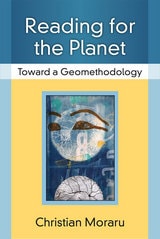
Reading for the Planet
Toward a GeomethodologyChristian Moraru
University of Michigan Press, 2015
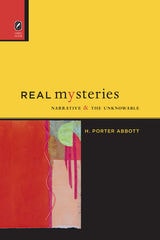
Real Mysteries
Narrative and the UnknowableH. Porter Abbott
The Ohio State University Press, 2013

Real to Reel
Lidia Yuknavitch
University of Alabama Press, 2003
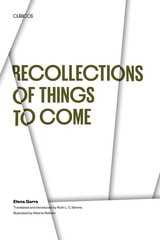
Recollections of Things to Come
By Elena Garro
University of Texas Press, 1969
This remarkable first novel depicts life in the small Mexican town of Ixtepec during the grim days of the Revolution. The town tells its own story against a variegated background of political change, religious persecution, and social unrest. Elena Garro, who has also won a high reputation as a playwright, is a masterly storyteller. Although her plot is dramatically intense and suspenseful, the novel does not depend for its effectiveness on narrative continuity. It is a book of episodes, one that leaves the reader with a series of vivid impressions. The colors are bright, the smells pungent, the many characters clearly drawn in a few bold strokes. Octavio Paz, the distinguished poet and critic, has written that it "is truly an extraordinnary work, one of the most perfect creations in contemporary Latin American literature."
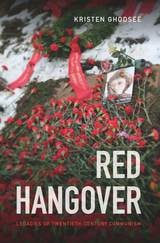
Red Hangover
Legacies of Twentieth-Century CommunismKristen Ghodsee
Duke University Press, 2017

Red Planets
Marxism and Science FictionEdited by Mark Bould and China Mielville
Pluto Press, 2009
Covering a rich variety of examples from Weimar cinema to mainstream Hollywood films, and novelists from Jules Verne and H.G. Wells to Kim Stanley Robinson, Ken MacLeod and Charles Stross, this is an indespensible insight into how Marxism and science fiction go hand-in-hand.

Red Roofs and Other Stories
Tanizaki Jun'ichiro; Translated by Anthony H. Chambers and Paul McCarthy
University of Michigan Press, 2016
Red Weather
Janet McAdams
University of Arizona Press, 2012

Red and Black
A Chronicle of 1830Raymond N. Stendhal
University of Minnesota Press, 2022
A masterpiece of nineteenth-century literature in a fresh translation that fully captures the language, psychology, and social reach of Stendhal’s original
Fueled with a combustible mix of ambition, naivete, and Napoleonic ideals, Julien Sorel sets his sights on the heights of French society. But for the son of a provincial carpenter in post-Napoleonic France, the prospects for advancement are vanishingly narrow, the chances for glory rarer yet. After securing a toehold as a tutor to a wealthy family, Julien proceeds through a series of misadventures, illicit affairs, and lucky reversals to breach the ranks of French aristocracy—only to be undone by treasonous schemes, cynical romantic calculations, and an unexpectedly genuine and ultimately disastrous passion.
Shocking at the time of its original publication, startling in its relevance today, Stendhal’s masterpiece is a scorching social satire, a remarkably detailed portrait of a fraught moment in history and, as perhaps the first psychological novel, a brilliant precursor to modern literature at once comical and tragic, cerebral and passionate. This new translation faithfully reproduces the nimble wit, emotional depth, and social acuity of Stendhal’s text. Distinguished translator Raymond N. MacKenzie includes an extensive introduction to Stendhal’s world and time, as well as copious annotations that explain allusions and terms for the modern reader.
Redburn
Works of Herman Melville Volume FourHerman Melville
Northwestern University Press, 1969
Melville so disliked the novel that he submitted it to his publisher without polishing it. This scholarly edition corrects a number of errors that have persisted in subsequent editions. Based on collations of the editions published during his lifetime, it incorporates corrections made in the English edition and emendations made by the present editors.
As with all the books in the Northwestern-Newberry series, this edition of Redburn is an Approved Text of the Center for Editions of American Authors (Modern Language Association of America).
Reeling
A NovelSarah Stonich
University of Minnesota Press, 2021
RayAnne’s next adventure takes our intrepid heroine, haunted by her beloved grandmother’s death, to New Zealand to film a new season of her all-women fishing talk show
What stage of grief is it when your grandmother’s ghost keeps popping up on your electronic devices? Denial? For RayAnne that seems to be the stage for launching the second season of Fishing!—in New Zealand. Ready or not, she is taking public television’s first all-women fishing talk show on the road, putting the cold Minnesota winter in the rearview mirror—which, it turns out, Gran is haunting, too.
After a challenging first season, and RayAnne’s serendipitous ascension to host, there’s a lot at stake. With camera-wielding twins Rongo and Rangi along as crew and tour guides, RayAnne and her indefatigable producer Cassi set out across New Zealand in search of noteworthy women who fish: a skipjack boat captain navigating sexist harbors; a writer of historical suffragette fiction, which is, apparently, a thing; a reclusive Māori octogenarian who ties fishing flies for dignitaries. Their stories, and a good dose of the country’s history, are almost enough to take the edge off RayAnne’s homesickness and grief, to say nothing of jetlag—and it doesn’t hurt to discover a bird dog who fishes, an anti-fashionista, a pair of sisters fishing their way through recovery, and . . . a Hobbit? Meanwhile, the romantic and family entanglements she left behind at home haven’t exactly come untangled in her absence.
Those who met RayAnne in Fishing!, Sarah Stonich’s first outing with the intrepid, accidental talk-show host, will encounter familiar and unexpected pleasures in her latest antics—and a story whose lighthearted surface and surprising depths will charm readers who now find her for the first time.
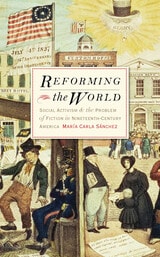
Reforming the World
Social Activism and the Problem of Fiction in Nineteenth-Century AmericaMaria Carla Sanchez
University of Iowa Press, 2009
In her informed and innovative work, Sánchez considers those authors both familiar (Lydia Maria Child, Harriet Jacobs, and Harriet Beecher Stowe) and those all but lost to history (Timothy Shay Arthur). Along the way, she refers to some of the most notable American writers in the period (Emerson, Thoreau, and Poe). Illuminating the intersection of reform and fiction, Reforming the World visits important questions about the very purpose of literature, telling the story of “a revolution that never quite took place," one that had no grandiose or even catchy name. But it did have numerous settings and participants: from the slums of New York, where prostitutes and the intemperate made their homes, to the offices of lawyers who charted the downward paths of broken men, to the tents for revival meetings, where land and souls alike were “burned over” by the grace of God.
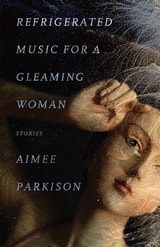
Refrigerated Music for a Gleaming Woman
StoriesAimee Parkison, Foreword by Stephen Graham Jones
University of Alabama Press, 2017
A darkly comical horror lurks beneath the surface of everyday events in Refrigerated Music for a Gleaming Woman, a seductively poetic story collection of unusual brilliance and rare humor.
In Aimee Parkison’s Refrigerated Music for a Gleaming Woman, lovers find unexpected romance in cramped spaces, fast food addicts struggle through cheeseburger addiction, and the splendor of nature competes with the violence of television. All the while, a complicated and precarious present dawns onto a new world where wealthy women wear children’s eyes as jewelry and those in need of money hawk their faces only to forever mourn what parts of themselves they have sold to survive.
Open the refrigerator door. Inside are antique jars. Open them to hear the music: Beethoven playing piano; slaves singing for freedom in plantation fields; mothers humming lullabies through the night to smallpox babies, knowing this song is the last sound their children will ever hear.
As Stephen Graham Jones notes in his foreword to this prize-winning collection, “The best books . . . fold you into a darkness sparkling with life. They lock you in the refrigerator but they also pipe in some music that never repeats, and when the door starts to open, you cling tight to it, so you can have just a few minutes more. This book, it’ll be over far too fast for you, yes. But even were it five times as thick as it is now, it would still be too short. Remember, though, the best books, they’re loops. They never stop. This one still hasn’t, for me.”
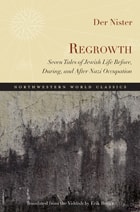
Regrowth
Seven Tales of Jewish Life Before, During, and After Nazi OccupationDer Nister
Northwestern University Press, 2011
Der Nister paints a sympathetic portrait of the father, a member of the Jewish Council, even though he collaborates with the Nazis in a misguided attempt to help his people. To repair the father’s mistake, his daughter joins the resistance, seduces a traitor, and delivers him to his death. Accounts are settled within the Jewish community. The Nazi enemy is largely passed over in the silence his infamy deserves. Der Nister’s characters are crafty, and they do not hesitate to use force when necessary. After the defeat of the Nazis and Soviet takeover, Der Nister suggests, the maneuvering will continue. The morally complex characters and richly layered stories of Regrowth ultimately reclaim a more nuanced view of crimes still not fully reckoned.
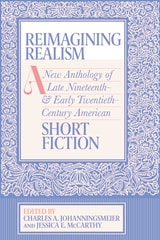
Reimagining Realism
A New Anthology of Late Nineteenth- and Early Twentieth-Century American Short FictionCharles A. Johanningsmeier
Ohio University Press, 2022
This innovative collection reinvents the standard American short fiction anthology and offers readers an invigorated, inclusive, and nuanced understanding of American literary history and culture from the Civil War to the end of World War I.
Beginning with one of Louisa May Alcott’s Hospital Sketches, originally published in 1863, this anthology offers a refreshing perspective on American literature from the latter half of the nineteenth century through the first decades of the twentieth. Based on Alcott’s brief stint as a Civil War nurse, Hospital Sketches stands in contrast to the sentimentality of her better-known Little Women and illustrates a blending of romanticism and realism. Furthermore, its thematic focus on the tension between idealized notions of noble, patriotic duty and the horrific reality of war exemplifies a dominant American cultural mindset at the time.
Following this model of complicating accepted ideas about realism and of particular authors, Reimagining Realism brings together dozens of texts that engage with the immense changes and upheavals that characterized American culture over the next six decades: war, abolition, voting rights, westward expansion, immigration, racism and ethnocentrism, industrial production, labor reforms, transportation, urban growth, journalism, mass media, education, and economic disparity.
Reimagining Realism presents a collection of works much more diverse than what is typically found in other anthologies of short fiction from this era. Some selections are lesser-known works by familiar authors that enable readers to see dimensions of these authors that are rarely considered but deserve further study. The book also features authors from many previously underrepresented groups and includes some outstanding works by authors whose names are almost completely unknown to today’s readers—but which deserve greater attention.
The volume’s editors, in their intent to spur readers to further reimagine realism, to represent the spectrum of viewpoints prevalent during this era, and to spark critical thinking and productive discussion, have been careful not to apply any type of political litmus test to the included works. They have also refrained from categorizing works according to convention, so as not to predispose readers to restrictive interpretations, and have provided only brief, highly readable headnotes and annotations that will help readers better understand the texts.
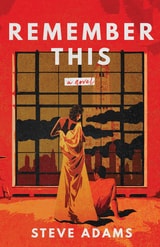
Remember This
Steve Adams
University of Wisconsin Press, 2022
John’s journey to understand the roots of his compulsion to “save” those around him is both aided and thwarted by his relationship with his colleague Jeremy Crawford. Alena’s closest confidant, Jeremy shares an intimacy with her that fuels John's jealousy. Meanwhile, Jeremy finds himself drawn to John and, as his confidant too, participates in the drama of John and Alena’s relationship. As John slowly begins to understand the flawed and wounded experience of love that has followed him through life, he learns how to open himself to true friendship—and to true loss. Set in the midst of cultural upheaval, this powerful novel reverberates across the decades.

Remembering Elizabeth Bishop
An Oral BiographyGary Fountain
University of Massachusetts Press, 1994
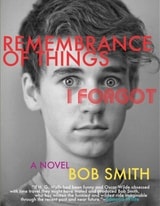
Remembrance of Things I Forgot
A NovelBob Smith
University of Wisconsin Press, 2011
“It’s safe to say your relationship is in trouble if the only way you can imagine solving your problems is by borrowing a time machine.”
In this wickedly comic, cross-country, time-bending journey, John confronts his own—and the nation’s—blunders, learning that a second chance at changing things for the better also brings new opportunities to screw them up. Through edgy humor, time travel, and droll one-liners, Bob Smith examines family dysfunction, suicide, New York City, and recent American history while effortlessly blending domestic comedy with science fiction. Part acidic political satire, part wild comedy, and part poignant social scrutiny, Remembrance of Things I Forgot is an uproarious adventure filled with sharp observations about our recent past.
InSight Out Book Club, featured selection
Bob Smith named one of Instinct magazine’s Leading Men 2011
Winner, Barbara Gittings Literature Award/Stonewall Book Awards, American Library Association
Finalist, Over the Rainbow Selection, American Library Association
Finalist, Green Carnation Prize, international prize for LGBT Literature
Amazon Top Ten Gay & Lesbian Books of 2011
Best Books for General Audiences, selected by the American Association of School Librarians
Best Books for General Audiences, selected by the Public Library Reviewers

Reruns
Jonathan Baumbach
University of Alabama Press, 1974

Rescue Me
An Andy Hayes MysteryAndrew Welsh-Huggins
Ohio University Press, 2026
Private eye Andy Hayes confronts his personal prejudices and assumptions when an unorthodox case comes his way. Tim Watkins is a young drag artist performing under the name Tiara Treatwell and facing online abuse and in-person stalking from anti-LGBTQIA crusaders. While Andy suspects the attacks are connected to a protest outside a drag story hour Tim attended weeks earlier in suburban Columbus, he has no direct evidence of a link. Tim’s concerns unfold against a groundswell of right-wing activism in the Ohio Statehouse, led by a failed state senate candidate who insists his opponent, a Somali American woman, stole the election.
Bail bondsman Otto Mulligan—Tim’s cousin and Andy’s closest friend—persuades Tim it’s in his best interest to accept Andy as bodyguard and escort until they can figure out who is behind the threats. Tim, who is Black and queer, is reluctant to work with Andy, dismissing him as an insensitive and macho ex–football star. Andy doesn’t do himself any favors by acknowledging he’s never attended a drag performance or even bothered to learn anything about the culture.
As Tim and Andy’s relationship is tested, Tim comes under attack by a pair of masked assailants, and only with the help of a concerned passerby does Andy manage to save both their lives. As Andy and the police search for clues to the assault, Andy follows a lead to an Ohio white supremacist group called the Promise Lords, which orchestrated the protest at the drag story hour. Andy enlists an old ally, Ronald J. McQuillen, a freelance analyst who helps law enforcement track and prosecute hate groups. Meanwhile, Andy’s investigation leads to conflict with Henrietta Millner, a nightside Columbus police detective who’s not happy to have Andy on her turf. Caught in the middle of this skirmish is Andy’s grown daughter, Alex Rutledge, who’s training to be a Columbus police officer. Andy and Henrietta’s uneasy partnership deteriorates when Andy, spurred by a cryptic comment from Alex, questions why a veteran investigator like Millner is stuck on the night shift.
As Andy’s search for the identity of Tim’s stalkers ramps up, increasingly bizarre clues emerge that may have connections to a broader plot. With time running out, Andy must put the pieces together to save Tim, and many others, from a violent and potentially deadly confrontation.
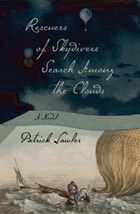
Rescuers of Skydivers Search Among the Clouds
A NovelPatrick Lawler
University of Alabama Press, 2012
When you step inside Patrick Lawler’s Rescuers of Skydivers Search Among the Clouds, you will find yourself hovering in the clouds, among a family and a town, and in the world of one of fiction’s most inventive writers.
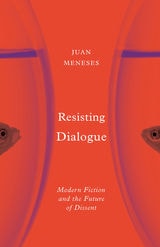
Resisting Dialogue
Modern Fiction and the Future of DissentJuan Meneses
University of Minnesota Press, 2019
A bold new critique of dialogue as a method of eliminating dissent
Is dialogue always the productive political and communicative tool it is widely conceived to be? Resisting Dialogue reassesses our assumptions about dialogue and, in so doing, about what a politically healthy society should look like. Juan Meneses argues that, far from an unalloyed good, dialogue often serves as a subtle tool of domination, perpetuating the underlying inequalities it is intended to address.
Meneses investigates how “illusory dialogue” (a particular dialogic encounter designed to secure consensus) is employed as an instrument that forestalls—instead of fostering—articulations of dissent that lead to political change. He does so through close readings of novels from the English-speaking world written in the past hundred years—from E. M. Forster’s A Passage to India and Jeanette Winterson’s The Passion to Indra Sinha’s Animal’s People and more. Resisting Dialogue demonstrates how these novels are rhetorical exercises with real political clout capable of restoring the radical potential of dialogue in today’s globalized world. Expanding the boundaries of postpolitical theory, Meneses reveals how these works offer ways to practice disagreement against this regulatory use of dialogue and expose the pitfalls of certain other dialogic interventions in relation to some of the most prominent questions of modern history: cosmopolitanism at the end of empire, the dangers of rewriting the historical record, the affective dimension of neoliberalism, the racial and nationalist underpinnings of the “war on terror,” and the visibility of environmental violence in the Anthropocene.
Ultimately, Resisting Dialogue is a complex, provocative critique that, melding political and literary theory, reveals how fiction can help confront the deployment of dialogue to preempt the emergence of dissent and, thus, revitalize the practice of emancipatory politics.
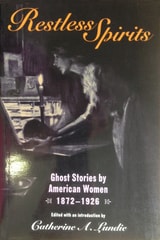
Restless Spirits
Ghost Stories by American Women, 1872-1926Catherine A. Lundie
University of Massachusetts Press, 1996
Originally published in popular magazines, the twenty-two stories in this collection are set in all corners of the United States and were written by a range of authors known and unknown, including Edith Wharton, Kate Chopin, and Zora Neale Hurston. Whether depicting a servant who helps save the reputation of her master's dead first wife, a ghostly mother who haunts a stranger until he agrees to adopt her orphaned daughter, or a ghost who revisits her beloved husband only to discover his long-standing preference for her sister, these tales possess great psychological richness and offer first-rate entertainment even as they explore the social and psychological realities of women's lives. Each story is preceded by a biographical headnote.
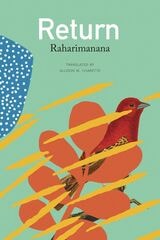
Return
Raharimanana
Seagull Books, 2025
A powerful testament to writing as an act of beauty and rebellion that speaks truth and condemns violent legacies and a feverish ode that weaves together personal and national history to finally find healing.
This evocative novel from a great figure of Malagasy literature tells the story of Hira, a writer born on the seventh anniversary of Madagascar’s independence. He wanders through different cities on a book tour, but the experience is amnesiac and confusing. There is a past he is trying to reckon with, filled with violence against both his family and country. He runs from his wife and represses his memories until it all explodes in fever dreams and a vomit of words. But to write the rebirth that he yearns for, Hira must write of his father’s torture, his tortured island, and how both were juxtaposed to his own happy childhood. In combing through these various pasts, he might make the same mistake his father did: trying to change the world but leaving his own family broken.
Drawing from the lived experience of both the author and his parents, the violence of both life and language, and the stories of both myth and history, Return is a search for an individual’s place within larger collective trauma. Infused with Raharimanana’s signature poeticism and intensity, this is a masterwork by an as-yet-overlooked but essential voice in the postcolonial tradition.
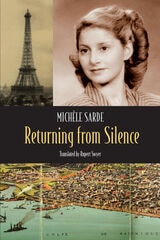
Returning from Silence
Jenny’s StoryMichèle Sarde
Swan Isle Press, 2022
Born in Brittany on the threshold of World War II, novelist Michèle Sarde had long been silent about her origins. After her mother, Jenny, finally shared their family history, Sarde decided to reconstruct Jenny’s journey, including her exile from Salonica, move to Paris in 1921, and assimilation in France. The Nazi occupation then forced her and her family to hide and conceal their Jewish identity, and in this retelling, Sarde shows how Jenny fights with everything she has to survive the Holocaust and protect her daughter.
Returning from Silence is a powerful saga that reaches deep into Jewish history, opening with the Expulsion of the Jews from Spain in 1492 and their settlement in a more tolerant Ottoman Empire. Sephardi culture and language flourished in Salonica for four centuries, but with the fall of the Ottoman Empire in the 1920s, and the sense of troubling times to come, Jenny’s family felt impelled to leave their much-loved city and rebuild their lives in France. Their years in France led to change that none could have fully expected, and then, the Holocaust. The trauma lasts well into the post-war period, silencing both mother and daughter in unanticipated ways.
Through this family history, Sarde sensitively raises questions about identity, migration, and assimilation while weaving fiction together with history, research, and testimony to bring the characters’ stories to life.
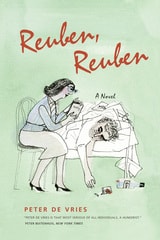
Reuben, Reuben
A NovelPeter De Vries
University of Chicago Press, 1964

Revelation Countdown
Cris Mazza
University of Alabama Press, 1993
A collection of stories by award-winning California writer Cris Mazza that reveal the open road to be not romanticized freedom but an unsettling loss of control.
While in many ways reaffirming the mythic dimension of being on the road romanticized in American pop and fold culture, Revelation Countdown also subtly undermines that view. These stories project onto the open road not the nirvana of personal freedom, but rather a type of freedom more closely resembling loss of control. Being in constant motion and passing through new environments destabilizes life, casts it out of phase, heightens perception, and skews reactions. Every little problem is magnified to overwhelming dimension. Events segue from slow motion to fast forward. Background noises intrude, causing perpetual wee hour insomnia. Imagination flourishes, often as an enemy. People suddenly discover that they never really understood their travel companions. The formerly stable line of their lives veers off course. In such an atmosphere, the title Revelation Countdown, borrowed from a roadside sign in Tennessee, proves prophetic. It may not arrive at 7:30, but revelation will inevitably find the traveler.
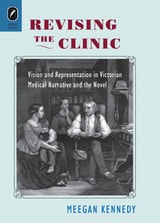
Revising the Clinic
Vision and Representation in Victorian Medical Narrative and the NovelMeegan Kennedy
The Ohio State University Press, 2010
Critics have examined how novelists borrow from other genres—newspapers, legal cases, autobiographies. Medical writing likewise enriches the novel’s uniquely flexible and wide-ranging presentation of Victorian culture. In turn, the novel shapes medical narrative even as clinical science idealizes methodological rigor. Revising the Clinic shows how the wealth of scientific material in mainstream Victorian periodicals creates a productive literary “commons” where novelists and physicians can encounter each others’ strategies for seeing and stating. Novelists adapt physicians’ techniques to nonmedical scenes, and physicians echo the sentimental or sensational novel to gain sympathy or rhetorical force when medical knowledge falters.
Kennedy traces the development of the Victorian novel and the case history from eighteenth-century curious observation and curious sights through nineteenth-century clinical observation, mechanical observation, and speculation, to Freud’s labyrinthine mapping and speculative insight. These make new sense, read within the literary tradition of the case history. The lens of Kennedy’s argument clarifies and illuminates the preoccupation with genre and visuality that is common to Victorian medicine and the novel.
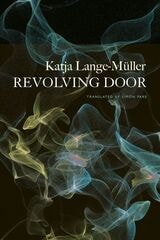
Revolving Door
Katja Lange-Müller
Seagull Books, 2022
“What now?” wonders Asta, a nurse who has returned to Germany after a final assignment in Nicaragua. After over twenty years working for international aid organizations, her services are no longer needed. No one is waiting for her. She has nowhere to go. Even the language has lost its familiarity. She stands next to a revolving door at Munich airport, observing the other travelers as she smokes one duty-free cigarette after another. Some of these strangers resemble figures from her past, bringing memories of an adventurous life flooding back. Her catalog of tragicomic attempts at assistance in Germany, Nicaragua, India, Mongolia, and Tunisia raises questions about what it takes to help and whom we are really helping. Katja Lange-Müller’s works have been critically acclaimed for their dark humor and affectionate, nuanced portrayals of characters wrestling with knotty situations and relationships. Revolving Door marks a fitting English debut of this most idiosyncratic of narrative voices.

Reynard the Fox
Retold by Anne Louise Avery
Bodleian Library Publishing, 2020
Reynard—a subversive, dashing, anarchic, aristocratic, witty fox from the watery lowlands of medieval East Flanders—is in trouble. He has been summoned to the court of King Noble the Lion, charged with all manner of crimes and misdemeanors. How will he pit his wits against his accusers—greedy Bruin the Bear, pretentious Courtoys the Hound, and dark and dangerous Isengrim the Wolf—to escape the gallows?
Reynard was once the most popular and beloved character in European folklore, as familiar as Robin Hood, King Arthur, or Cinderella. His character spoke eloquently for the voiceless and disenfranchised, but also amused and delighted the elite, capturing hearts and minds across borders and societal classes for centuries. Based on William Caxton’s bestselling 1481 English translation of the Middle Dutch, this edition is an imaginative retelling of the Reynard story, expanded with new interpretations and innovative language and characterizations. With its themes of protest, resistance, and duplicity led by a personable, anti-heroic Fox, this gripping tale is as relevant and controversial today as it was in the fifteenth century.

Richard Hurdis
A Tale of AlabamaSimms, William Gilmore
University of Arkansas Press, 1995