Results by title
18284 books match the query 'United States' and 833 start with r
Restaging the Sixties
Radical Theaters and Their LegaciesEdited by James M. Harding and Cindy Rosenthal
University of Michigan Press, 2006
The volume explores how creations such as the Living Theatre's Paradise Now and the Performance Group’s Dionysus in 69 overlapped with political interests that, in the late 1960s, highlighted the notion of social collectives as a radical alternative to mainstream society. Situating theatrical practice within this socio-political context, the book considers how radical theaters sought to redefine the relationship between theater and political activism, and how, as a result, they challenged the foundations of theater itself.
James M. Harding is Associate Professor of English at Mary Washington University. His other books include Not the Other Avant-Garde: The Transnational Foundations of Avant-Garde Performance.
Cindy Rosenthal is Associate Professor of Theatre Studies, Hofstra University.
“A useful introduction to an eclectic period of experimental theater, providing portraits of the major political theaters and engaging with new vigor many of the era’s familiar aesthetic and ideological concerns. The writers offer a provocative history of theater’s attraction to (and occasional anxiety over) activism.”
--Marc Robinson, Yale University
Restaurant Republic
The Rise of Public Dining in BostonKelly Erby
University of Minnesota Press, 2016
Before the 1820s, the vast majority of Americans ate only at home. As the nation began to urbanize and industrialize, home and work became increasingly divided, resulting in new forms of commercial dining.
In this fascinating book, Kelly Erby explores the evolution of such eating alternatives in Boston during the nineteenth century. Why Boston? Its more modest assortment of restaurants, its less impressive—but still significant—expansion in commerce and population, and its growing diversity made it more typical of the nation’s other urban centers than New York. Restaurants, clearly segmented along class, gender, race, ethnic, and other lines, helped Bostonians become more comfortable with deepening social stratification in their city and young republic even as the experience of eating out contributed to an emerging public consumer culture.
Restaurant Republic sheds light on how commercial dining both reflected and helped shape growing fragmentation along lines of race, class, and gender—from the elite Tremont House, which served fashionable French cuisine, to such plebeian and ethnic venues as oyster saloons and Chinese chop suey houses. The epilogue takes us to the opening, in 1929 near Boston, of the nation’s first Howard Johnson’s and that restaurant’s establishment as a franchise in the next decade. The result is a compelling story that continues to shape America.
Restitution
Civil Liability for Unjust EnrichmentWard Farnsworth
University of Chicago Press, 2014
In Restitution, Ward Farnsworth presents a guide to this body of law that is compact, lively, and insightful—the first treatment of its kind that the American law of restitution has received. The book explains restitution doctrines, remedies, and defenses with unprecedented clarity and illustrates them with vivid examples. Farnsworth demonstrates that the law of restitution is guided by a manageable and coherent set of principles that have remarkable versatility and power. Restitution makes a complex and important area of law accessible, understandable, and interesting to any reader.
Restless Nation
Starting Over in AmericaJames M. Jasper
University of Chicago Press, 2000
Restless Pilgrim
Andrew Jenson's Quest for Latter-day Saint HistoryReid L. Neilson and Scott D. Marianno
University of Illinois Press, 2022
Engaging and informed, Restless Pilgrim is a groundbreaking study of an important figure in Latter-day Saint intellectual life during a transformative era in Church history.
Restoring America's Neighborhoods
How Local People Make a DifferenceMichael R Greenberg
Rutgers University Press, 1999
What does it take to mobilize a grass-roots force dedicated to bringing new life into a decaying neighborhood? Can any one person or group successfully halt physical deterioration, drug-related crime, or the encroachment of clusters of factories, highways, and other noxious land uses? Michael Greenberg demonstrates in this book that it can and has been done against all odds.
Restoring America's Neighborhoods profiles twenty-four such cases from across the United States. It tells the story of people determined to make the blighted, crime-ridden urban enclaves in which they live and work a better place for everybody. These are people from many different walks of life: ministers working to bring jobs to their communities; city planners and federal employees trying to relocated residents of potential disaster areas; and locals taking matters into their own hands to create a healthier, more pleasing living environment for their children. Greenberg's is a heartening account of courage and unwavering resolve as well as of hope that individuals can make a difference, that violent criminals and uncaring bureaucrats need not carry the day. He calls them "streetfighters," a fitting tribute to their efforts to take back their neighborhoods, block by block and street by street.
Restoring America
Historic Preservation and the New DealStephanie Gray
University of Massachusetts Press, 2025
Honorable Mention, New Deal Book Award
Exploring how the New Deal shaped history through politically driven commemoration
During the Great Depression, Americans employed historic preservation as a tool to address the political, economic, and social upheavals of the era. Inspired by the Roosevelt administration’s unprecedented support of federal arts projects, US politicians, architects, laborers, artisans, and local boosters skillfully used New Deal funds to restore, mythologize, and politicize the “historic shrines” in their communities. Restoring America illustrates how and why Americans turned to historic preservation as a strategy for managing both political realities and ambitions.
Stephanie Gray presents four thoroughly researched and diverse case studies: a colonial theater in the Deep South, a Puritan minister’s home in New England, aviator Charles Lindbergh's modest farmhouse and parklands of the Upper Midwest, and a multi-layered Spanish-German-Mexican arts village in the Central South. Collectively, these examples show how the restoration of old places emerged as a popular form of cultural production, an instrument of economic reconstruction, and a striking expression of political theater during the Depression. Moreover, these New Deal preservation projects make evident that any exercise in physically preserving the past is both conservative and progressive, reactive and proactive.
Restoring America contends that the federally funded and locally driven preservation initiatives of the 1930s and 1940s can help inform contemporary public history debates over the politics of commemoration and imagine possibilities for future preservation practice.
Restoring Justice
The Speeches of Attorney General Edward H. LeviEdward H. Levi
University of Chicago Press, 2013
Serving at an almost unprecedentedly difficult time, Levi was among the most admired attorney generals of the modern era. Published here for the first time, the speeches in Restoring Justice offer a superb sense of the man and his work.

Restoring the Faith
The Assemblies of God, Pentecostalism, and American CultureEdith L. Blumhofer
University of Illinois Press, 1993
Edith Blumhofer uses the Assemblies of God, the largest classical Pentecostal denomination in the world, as a lens through which to view the changing nature of Anglo Pentecostalism in the United States. She illustrates how the original mission to proclaim the end resulted in the development of Bible schools, the rise of the charismatic movement, and the popularity of such figures as Aimee Semple McPherson, Charles Fox Parham, and David Du Plessis. Blumhofer also examines the sect's use of radio and television and the creation of a parallel Christian culture
Restricted Data
The History of Nuclear Secrecy in the United StatesAlex Wellerstein
University of Chicago Press, 2021
The American atomic bomb was born in secrecy. From the moment scientists first conceived of its possibility to the bombings of Hiroshima and Nagasaki and beyond, there were efforts to control the spread of nuclear information and the newly discovered scientific facts that made such powerful weapons possible. The totalizing scientific secrecy that the atomic bomb appeared to demand was new, unusual, and very nearly unprecedented. It was foreign to American science and American democracy—and potentially incompatible with both. From the beginning, this secrecy was controversial, and it was always contested. The atomic bomb was not merely the application of science to war, but the result of decades of investment in scientific education, infrastructure, and global collaboration. If secrecy became the norm, how would science survive?
Drawing on troves of declassified files, including records released by the government for the first time through the author’s efforts, Restricted Data traces the complex evolution of the US nuclear secrecy regime from the first whisper of the atomic bomb through the mounting tensions of the Cold War and into the early twenty-first century. A compelling history of powerful ideas at war, it tells a story that feels distinctly American: rich, sprawling, and built on the conflict between high-minded idealism and ugly, fearful power.
Resurrecting the First Great American Play
Imperial Politics and Colonial Ambitions in Frontier DetroitSämi Ludwig
University of Wisconsin Press, 2020
Sämi Ludwig contends that Ponteach's literary and artistic merits are worthy of further exploration. He investigates questions of authorship and analyzes the play's content, embracing its many contradictions as enriching windows into the era. In this way, he suggests using Ponteach as a tool to better understand British imperialism in North America and the emerging theatrical forms of the Young Republic.
Retention and Resistance
Writing Instruction and Students Who LeavePegeen Reichert Powell
Utah State University Press, 2014
Retention is a vital issue for institutions, but as these students’ stories show, leaving college is often the result of complex and idiosyncratic individual situations that make institutional efforts difficult and ultimately ineffective. An adjustment of institutional and pedagogical objectives is needed to refocus on educating as many students as possible, including those who might leave before graduation.
Much of the pedagogy, curricula, and methodologies of composition studies assume students are preparing for further academic study. Retention and Resistance argues for a new kairotic pedagogy that moves toward an emphasis on the present classroom experience and takes students’ varied experiences into account. Infusing the discourse of retention with three individual student voices, Powell explores the obligation of faculty to participate in designing an institution that educates all students, no matter where they are in their educational journey or how far that journey will go.
Rethinking America's Highways
A 21st-Century Vision for Better InfrastructureRobert W. Poole Jr.
University of Chicago Press, 2018
In Rethinking America’s Highways, Poole examines how our current model of state-owned highways came about and why it is failing to satisfy its customers. He argues for a new model that treats highways themselves as public utilities—like electricity, telephones, and water supply. If highways were provided commercially, Poole argues, people would pay for highways based on how much they used, and the companies would issue revenue bonds to invest in facilities people were willing to pay for. Arguing for highway investments to be motivated by economic rather than political factors, this book makes a carefully-reasoned and well-documented case for a new approach to highways that is sure to inform future decisions and policies for U.S. infrastructure.
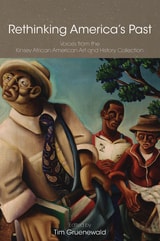
Rethinking America's Past
Voices from the Kinsey African American Art and History CollectionEdited by Tim Gruenewald
University of Minnesota Press, 2019
Among the first scholarly books dedicated to a private African American collection, Rethinking America’s Past: Voices from the Kinsey African American Art and History Collection both chronicles the reach of this important cultural collection and contributes to its project by sharing selected objects and stories with a broader audience. Essays range in subject from iconic African American artists, such as Loïs Mailou Jones and Beauford Delaney, to important historical figures such as Frederick Douglas and Martin Luther King, to individuals whose experiences might be lost to history but for the found objects that preserve their stories. Rethinking America’s Past demonstrates how the African American story, from slavery through the present, is represented and can be actively remembered through the act of collecting.
Rethinking America’s Past will appeal to audiences interested in African American history as well as art history, but its real power is in linking the two, showing how important collections are in constructing and repairing historical narratives, and how in the words of editor Tim Gruenewald, “Collecting overlooked aspects of our past and sharing such collections enables a deeper understanding of the present moment, and facilitates a more inclusive and just future.”
Rethinking American Music
Edited by Tara Browner and Thomas L. Riis
University of Illinois Press, 2019
Rethinking Evidence
Exploratory EssaysWilliam Twining
Northwestern University Press, 1994
Rethinking Racism
Emotion, Persuasion, and Literacy Education in an All-White High SchoolJennifer Seibel Trainor
Southern Illinois University Press, 2008
In Rethinking Racism: Emotion, Persuasion, and Literacy Education in an All-White High School, Jennifer Seibel Trainor proposes a new understanding of the roots of racism, one that is based on attention to the role of emotion and the dynamics of persuasion. This one-year ethnographic study argues against previous assumptions about racism, demonstrating instead how rhetoric and emotion, as well as the processes and culture of schools, are involved in the formation of racist beliefs.
Telling the story of a year spent in an all-white high school, Trainor suggests that contrary to prevailing opinion, racism often does not stem from ignorance, a lack of exposure to other cultures, or the desire to protect white privilege. Rather, the causes of racism are frequently found in the realms of emotion and language, as opposed to rational calculations of privilege or political ideologies. Trainor maintains that racist assertions often originate not from prejudiced attitudes or beliefs but from metaphorical connections between racist ideas and nonracist values. These values are reinforced, even promoted by schooling via "emotioned rules" in place in classrooms: in tacit, unexamined lessons, rituals, and practices that exert a powerful—though largely unacknowledged—persuasive force on student feelings and beliefs about race.
Through in-depth analysis of established anti-racist pedagogies, student behavior, and racial discourses, Trainor illustrates the manner in which racist ideas are subtly upheld through social and literacy education in the classroom—and are thus embedded in the infrastructures of schools themselves. It is the emotional and rhetorical framework of the classroom that lends racism its compelling power in the minds of students, even as teachers endeavor to address the issue of cultural discrimination. This effort is continually hindered by an incomplete understanding of the function of emotions in relation to antiracist persuasion and cannot be remedied until the root of the problem is addressed.
Rethinking Racism calls for a fresh approach to understanding racism and its causes, offering crucial insight into the formative role of schooling in the perpetuation of discriminatory beliefs. In addition, this highly readable narrative draws from white students' own stories about the meanings of race in their learning and their lives. It thus provides new ways of thinking about how researchers and teachers rep- resent whiteness. Blending narrative with more traditional forms of ethnographic analysis, Rethinking Racism uncovers the ways in which constructions of racism originate in literacy research and in our classrooms—and how these constructions themselves can limit the rhetorical positions students enact.
Rethinking Rental Housing
John Gilderbloom
Temple University Press, 1987
In recent years, almost daily media attention has been focused on the plight of the homeless in cities across the United States. Drawing upon experiences in the U.S. and Europe, John Gilderbloom and Richard Appelbaum challenge conventional assumptions concerning the operation of housing markets and provide policy alternatives directed at the needs of low- and moderate-income families. Rethinking Rental Housing is a ground-breaking analysis that shows the value of applying a broad sociological approach to urban problems, one that takes into account the basic economic, social, and political dimensions of the urban housing crisis.
Gilderbloom and Appelbaum predict that this crisis will worsen in the 1990s and argue that a "supply and demand" approach will not work in this case because housing markets are not competitive. They propose that the most effective approach to affordable housing is to provide non-market alternatives fashioned after European housing programs, particularly the Swedish model.
An important feature of this book is the discussion of tenant movements that have tried to implement community values in opposition to values of development and landlord capital. One of the very few publications on rental housing, it is unique in applying a sociological framework to the study of this topic.
Rethinking Therapeutic Culture
Edited by Timothy Aubry and Trysh Travis
University of Chicago Press, 2015
Rethinking Urban Parks
Public Space and Cultural DiversityBy Setha Low, Dana Taplin, and Suzanne Scheld
University of Texas Press, 2005
Urban parks such as New York City's Central Park provide vital public spaces where city dwellers of all races and classes can mingle safely while enjoying a variety of recreations. By coming together in these relaxed settings, different groups become comfortable with each other, thereby strengthening their communities and the democratic fabric of society. But just the opposite happens when, by design or in ignorance, parks are made inhospitable to certain groups of people.
This pathfinding book argues that cultural diversity should be a key goal in designing and maintaining urban parks. Using case studies of New York City's Prospect Park, Orchard Beach in Pelham Bay Park, and Jacob Riis Park in the Gateway National Recreation Area, as well as New York's Ellis Island Bridge Proposal and Philadelphia's Independence National Historical Park, the authors identify specific ways to promote, maintain, and manage cultural diversity in urban parks. They also uncover the factors that can limit park use, including historical interpretive materials that ignore the contributions of different ethnic groups, high entrance or access fees, park usage rules that restrict ethnic activities, and park "restorations" that focus only on historical or aesthetic values. With the wealth of data in this book, urban planners, park professionals, and all concerned citizens will have the tools to create and maintain public parks that serve the needs and interests of all the public.
Retracing the Dragoon Trail in Iowa
Environmental Transformation along the Des Moines RiverKevin T. Mason
Michigan State University Press, 2026
In Retracing the Dragoon Trail in Iowa, historian Kevin T. Mason presents a vivid and deeply researched account of Iowa’s evolving landscape, beginning with the 1835 expedition of the First U.S. Dragoons. Drawing from archival records, maps, government surveys, Indigenous histories, and ecological data, Mason explores how Iowa’s prairies and wetlands gave way to farms, towns, and transportation networks. He situates these environmental shifts within the broader forces of Manifest Destiny, military expansion, and settler colonialism, while amplifying the voices of the Sauk, Meskwaki, Dakota, and other Indigenous nations whose histories are often marginalized.
But Mason doesn’t just write about history—he walks it. His 371-mile journey retracing the original dragoon route across Iowa blends scholarship with storytelling, captured through video essays, photography, and writing. This modern-day trek, featured on Iowa PBS’s Iowa Life and Iowa Public Radio’s Talk of Iowa, brings the past into the present, offering a compelling look at how landscapes remember. The result is a powerful contribution to environmental history, regional studies, and Indigenous scholarship—one that reveals the layered interactions between land use, policy, and historical change.
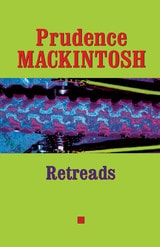
Retreads
By Prudence Mackintosh
University of Texas Press, 2002
Retreads tells the middle of the story begun in Thundering Sneakers and concluded in Sneaking Out. In this collection of essays, Prudence Mackintosh follows her sons through the "tween" years between little boyhood and adolescence. Vividly portraying the chaos that descends on a house full of active children, she also records the many first times and last times that give poignancy to the middle years of motherhood.
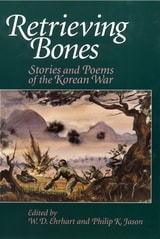
Retrieving Bones
Stories and Poems of the Korean WarEhrhart, W. D.
Rutgers University Press, 1999
The Korean War was a major event in American history. It marked an abrupt end to the euphoria Americans felt in the wake of victory in World War II and turned out to be the harbinger of disaster in Vietnam a decade later.
Though three years of brutal fighting resulted in millions of casualties, the final truce line of 1953 corresponded almost exactly to the positions the opponents held when the fighting began. Back home, the returning veterans met with little interest in or appreciation of what they had endured. Consequently, literary responses to the Korean War did not find an eager readership. Few people, it seemed, wanted to read about what they perceived as a backwater war that possessed neither grand scale nor apparent nobility, a war that ended not with a bang, but a whimper.
Yet an important literature has come out of the Korean War. As we mark the fiftieth anniversary of the war, these writings are well worth our attention. Many of the twelve stories and fifty poems assembled in Retrieving Bones have long been out of print and are almost impossible to find in any other source. The editors have enhanced this collection by providing maps, a chronology of the Korean War, and annotated lists of novels, works of nonfiction, and films. In a detailed introduction, Ehrhart and Jason discuss the milestones of the Korean War and place each fiction writer and poet represented into historical and literary contexts.
Among the writers and poets are
· James Lee Burke
· Eugene Burdick
· William Chamberlain
· Rolando Hinojosa
· Reg Saner
· Vern Sneider
· Stanford Whitmore
· Keith Wilson
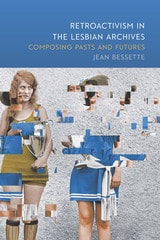
Retroactivism in the Lesbian Archives
Composing Pasts and FuturesJean Bessette
Southern Illinois University Press, 2018
Grassroots historiography has been essential in shaping American sexual identities in the twentieth century. Retroactivism in the Lesbian Archives examines how lesbian collectives have employed “retroactivist” rhetorics to propel change in present identification and politics. By appropriating and composing versions of the past, these collectives question, challenge, deconstruct, and reinvent historical discourse itself to negotiate and contest lesbian identity.
Bessette considers a diverse array of primary sources, including grassroots newsletters, place-based archives, experimental documentary films, and digital video collections, to investigate how retroactivists have revised and replaced dominant accounts of lesbian deviance. Her analysis reveals inventive rhetorical strategies leveraged by these rhetors to belie the alienating, dispersing effects of discourses that painted women with same-sex desire as diseased and criminal. Focusing on the Daughters of Bilitis, the Lesbian Herstory Archives, and the June L. Mazer Archives, and on historiographic filmmakers such as Barbara Hammer and Cheryl Dunye, Bessette argues that these retroactivists composed versions of a queer past that challenged then-present oppressions, joined together provisional communities, and disrupted static definitions and associations of lesbian identity.
Retroactivism in the Lesbian Archives issues a challenge to feminist and queer scholars to acknowledge how historiographic rhetoric functions in defining and contesting identities and the historical forces that shape them.

Return from Berlin
The Eye of a NavigatorRobert Grilley
University of Wisconsin Press, 2003
Wakened with flashlights on their faces in the predawn hours, he and his crew repeatedly face the Luftwaffe in battles five miles high, flying through flak "so thick you could get out and walk on it." Stretching their stamina to the limits, they succeed time after time in their missions to bomb munitions works, railyards, the Leüna synthetic oil plant at Merseburg in eastern Germany, the V2 rocket research center at Peenemünde on the distant Baltic Coast, and even to strike Hitler’s capital city, Berlin.
But Grilley finds interludes of unexpected grace and restoration on his days off, making serious drawings from nature at the neighboring Yokehill Farm. There he slowly cultivates a friendship with a curious eight-year-old, the lively child Elizabeth, who becomes for the combat flyer a symbol of survival.
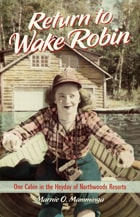
Return to Wake Robin
One Cabin in the Heyday of Northwoods ResortsMarnie O. Mamminga
Wisconsin Historical Society Press, 2012
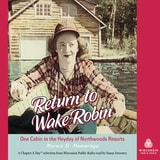
Five generations of Marnie O. Mamminga’s family have been rejuvenated by times together in Wisconsin’s Northwoods. In a series of evocative remembrances accompanied by a treasure trove of vintage family photos, Mamminga takes us to Wake Robin, the cabin her grandparents built in 1929 on Big Spider Lake near Hayward, on land adjacent to Moody’s Camp. Along the way she preserves the spirit and cultural heritage of a vanishing era, conveying the heart of a place and the community that gathered there.
Bookended by the close of the logging era and the 1970s shift to modern lake homes, condos, and Jet Skis, the 1920s to 1960s period covered in these essays represents the golden age of Northwoods camps and cabins—a time when retreats such as Wake Robin were the essence of simplicity. In Return to Wake Robin, Mamminga describes the familiar cadre of fishing guides casting their charm, the camaraderie and friendships among resort workers and vacationers, the call of the weekly square dance, the splash announcing a perfectly executed cannonball, the lodge as gathering place. By tracing the history of one resort and cabin, she recalls a time and experience that will resonate with anyone who spent their summers Up North—or wishes they had.
Return to Wake Robin
One Cabin in the Heyday of Northwoods ResortsMarnie O. Mamminga
Wisconsin Historical Society Press, 2013
Five generations of Marnie O. Mamminga’s family have been rejuvenated by times together in Wisconsin’s Northwoods. In a series of evocative remembrances accompanied by a treasure trove of vintage family photos, Mamminga takes us to Wake Robin, the cabin her grandparents built in 1929 on Big Spider Lake near Hayward, on land adjacent to Moody’s Camp. Along the way she preserves the spirit and cultural heritage of a vanishing era, conveying the heart of a place and the community that gathered there.
Bookended by the close of the logging era and the 1970s shift to modern lake homes, condos, and Jet Skis, the 1920s to 1960s period covered in these essays represents the golden age of Northwoods camps and cabins—a time when retreats such as Wake Robin were the essence of simplicity. In Return to Wake Robin, Mamminga describes the familiar cadre of fishing guides casting their charm, the camaraderie and friendships among resort workers and vacationers, the call of the weekly square dance, the splash announcing a perfectly executed cannonball, the lodge as gathering place. By tracing the history of one resort and cabin, she recalls a time and experience that will resonate with anyone who spent their summers Up North—or wishes they had.
Return to the City of Joseph
Modern Mormonism's Contest for the Soul of NauvooScott C. Esplin
University of Illinois Press, 2018
Revel with a Cause
Liberal Satire in Postwar AmericaStephen E. Kercher
University of Chicago Press, 2006
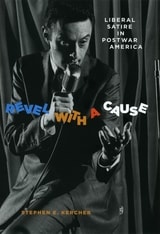
Revel with a Cause is their story. Stephen Kercher here provides the first comprehensive look at the satiric humor that flourished in the United States during the 1950s and early 1960s. Focusing on an impressive range of comedy—not just standup comedians of the day but also satirical publications like MAD magazine, improvisational theater groups such asSecond City, the motion picture Dr. Strangelove, and TV shows like That Was the Week That Was—Kercher reminds us that the postwar era saw varieties of comic expression that were more challenging and nonconformist than we commonly remember. His history of these comedic luminaries shows that for a sizeable audience of educated, middle-class Americans who shared such liberal views, the period’s satire was a crucial mode of cultural dissent. For such individuals, satire was a vehicle through which concerns over the suppression of civil liberties, Cold War foreign policies, blind social conformity, and our heated racial crisis could be productively addressed.
A vibrant and probing look at some of the most influential comedy of mid-twentieth-century America, Revel with a Cause belongs on the short list of essential books for anyone interested in the relationship between American politics and popular culture.
Revelation, Resistance, and Mormon Polygamy
The Introduction and Implementation of the Principle, 1830–1853Merina Smith
Utah State University Press, 2013
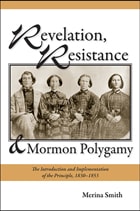
When Joseph Smith began to reveal and teach the doctrine of plural marriage in 1841, even stalwart members like Brigham Young were shocked and confused. In this thoughtful study, Smith argues that the secret introduction of plural marriage among the leadership coincided with an evolving public theology that provided a contextualizing religious narrative that persuaded believers to accept the principle.
This fresh interpretation draws from diaries, letters, newspapers, and other primary sources and is especially effective in its use of family narratives. It will be of great interest not only to scholars and the general public interested in Mormon history but in American history, religion, gender and sexuality, and the history of marriage and families.

Revenant Ecologies
Defying the Violence of Extinction and ConservationAudra Mitchell
University of Minnesota Press, 2024
Engaging a broad spectrum of ecological thought to articulate the ethical scale of global extinction
As global rates of plant and animal extinctions mount, anxieties about the future of the earth’s ecosystems are fueling ever more ambitious efforts at conservation, which draw on Western scientific principles to manage species and biodiversity. In Revenant Ecologies, Audra Mitchell argues that these responses not only ignore but also magnify powerful forms of structural violence like colonialism, racism, genocide, extractivism, ableism, and heteronormativity, ultimately contributing to the destruction of unique life forms and ecosystems.
Critiquing the Western discourse of global extinction and biodiversity through the lens of diverse Indigenous philosophies and other marginalized knowledge systems, Revenant Ecologies promotes new ways of articulating the ethical enormity of global extinction. Mitchell offers an ambitious framework—(bio)plurality—that focuses on nurturing unique, irreplaceable worlds, relations, and ecosystems, aiming to transform global ecological–political relations, including through processes of land return and critically confronting discourses on “human extinction.”
Highlighting the deep violence that underpins ideas of “extinction,” “conservation,” and “biodiversity,” Revenant Ecologies fuses political ecology, global ethics, and violence studies to offer concrete, practical alternatives. It also foregrounds the ways that multi-life-form worlds are actively defying the forms of violence that drive extinction—and that shape global efforts to manage it.
Retail e-book files for this title are screen-reader friendly with images accompanied by short alt text and/or extended descriptions.
Reverberations of Racial Violence
Critical Reflections on the History of the BorderEdited by Sonia Hernández and John Morán González
University of Texas Press, 2021
Between 1910 and 1920, thousands of Mexican Americans and Mexican nationals were killed along the Texas border. The killers included strangers and neighbors, vigilantes and law enforcement officers—in particular, Texas Rangers. Despite a 1919 investigation of the state-sanctioned violence, no one in authority was ever held responsible.
Reverberations of Racial Violence gathers fourteen essays on this dark chapter in American history. Contributors explore the impact of civil rights advocates, such as José Tomás Canales, the sole Mexican-American representative in the Texas State Legislature between 1905 and 1921. The investigation he spearheaded emerges as a historical touchstone, one in which witnesses testified in detail to the extrajudicial killings carried out by state agents. Other chapters situate anti-Mexican racism in the context of the era's rampant and more fully documented violence against African Americans. Contributors also address the roles of women in responding to the violence, as well as the many ways in which the killings have continued to weigh on communities of color in Texas. Taken together, the essays provide an opportunity to move beyond the more standard Black-white paradigm in reflecting on the broad history of American nation-making, the nation’s rampant racial violence, and civil rights activism.
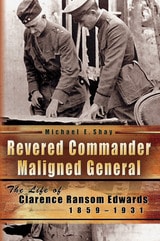
Revered Commander, Maligned General
The Life of Clarence Ransom Edwards, 1859-1931Michael E. Shay
University of Missouri Press, 2011
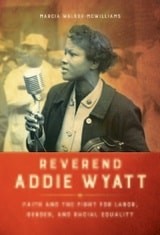
Reverend Addie Wyatt
Faith and the Fight for Labor, Gender, and Racial EqualityMarcia Walker-McWilliams
University of Illinois Press, 2016
Reversed Gaze
An African Ethnography of American AnthropologyMwenda Ntarangwi
University of Illinois Press, 2010
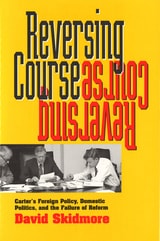
Reversing Course
Carter's Foreign Policy, Domestic Politics, and the Failure of ReformDavid Skidmore
Vanderbilt University Press, 1996
In Reversing Course, David Skidmore argues that President Carter's initial foreign policy agenda required a scaling back of U.S. commitments abroad, reflecting a decline in resources, as well as influence, in a world developing in ways necessarily reducing U.S. hegemony. By probing beneath the obvious and carefully sifting the abundant but poorly understood evidence, Skidmore finds at the root of Carter's failed effort an irresistible pressure to reverse a liberal foreign-policy agenda in order to address the effect at home of well-organized conservative criticism. For Skidmore, Carter's course "reversed" toward a traditional containment strategy vis-a-vis the Soviet Union not because of Soviet intransigence or faulty idealism but because Cold War politics sold better in the polls.
While offering significant theoretical arguments, Skidmore carefully anchors his thesis in the day-to-day political give and take among those personalities and events that provoked headlines and commentaries long before they were the stuff of history. Among the telling factors and events analyzed in this book are the Vance/Brzezinski conflict, the support and opposition of Howard Baker, the SALT II Treaty, the Panama Canal Treaties, and the Soviet occupation of Afghanistan, to mention only a few.
Although Skidmore draws conclusions that apply to the Reagan, Bush, and Clinton administrations as well, his focus is not on personality but on theory and underlying structures. He provides a demonstration that this structural approach can "be helpful not only in unraveling the mysteries of policy change under Carter but also in specifying the underlying sources of policy vacillation over much of the past two decades." .
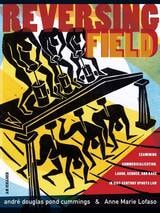
Reversing Field
Examining Commercialization, Labor, Gender, and Race in 21st Century Sports Lawedited by andré douglas pond cummings and Anne Marie Lofaso
West Virginia University Press, 2010
Reversing Field invites students, professionals, and enthusiasts of sport—whether law, management and marketing, or the game itself—to explore the legal issues and regulations surrounding collegiate and professional athletics in the United States. This theoretical and methodological interrogation of sports law openly addresses race, labor, gender, and the commercialization of sports, while offering solutions to the disruptions that threaten its very foundation during an era of increased media scrutiny and consumerism. In over thirty chapters, academics, practitioners, and critics vigorously confront and debate matters such as the Arms Race, gender bias, racism, the Rooney Rule, and steroid use, offering new thought and resolution to the vexing legal issues that confront sports in the 21st century.

Reviewing The Academic Library
A Guide To Self-Study And ExEleanor Mitchell
Assoc of College & Research Libraries, 2015
Reviewing the Academic Library
A Guide to Self-Study and External ReviewEleanor Mitchell
Assoc of College & Research Libraries, 2015

Revised Standards and Guidelines of Service for the Library of Congress Network of Libraries for the Blind and Physically Handicapped
American Library Association, 2017
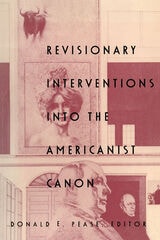
Revisionary Interventions into the Americanist Canon
Donald E. Pease
Duke University Press, 1994
Originally published as a special issue of boundary 2, the essays gathered here discuss writers as diverse as Kate Chopin, Frederick Douglass, Emerson, Melville, W. D. Howells, Henry James, W. E. B. DuBois, and Mark Twain, plus the historical figure John Brown. Two major sections devoted to the theory of romance and to cultural-historical analyses emphasize the political perspective of "New Americanist" literary and cultural study.
Contributors. William E. Cain, Wai-chee Dimock, Howard Horwitz, Gregory S. Jay, Steven Mailloux, John McWilliams, Susan Mizruchi, Donald E. Pease, Ivy Schweitzer, Priscilla Wald, Michael Warner, Robert Weimann
Revisiting Racialized Voice
African American Ethos in Language and LiteratureDavid G. Holmes
Southern Illinois University Press, 2004
Revisiting Racialized Voice:African American Ethos in Language and Literature argues that past misconceptions about black identity and voice, codified from the 1870s through the 1920s, inform contemporary assumptions about African American authorship and ethos. Tracing elements of racial consciousness in the works of Frederick Douglass, Charles Chesnutt, W. E. B. DuBois, Zora Neale Hurston, and others, David G. Holmes urges a revisiting of narratives from this period to strengthen and advance notions about racialized writing and to shape contemporary composition pedagogies.
Pointing to the intersection of African American identity, literature, and rhetoric, Revisiting Racialized Voice begins to construct rhetorically workable yet ideologically flexible definitions of black voice. Holmes maintains that political pressure to embrace“color blindness” endangers scholars’ ability to uncover links between racialized discourses of the past and those of the present, and he calls instead for a reassessment of the material realities and theoretical assumptions race represents and with which it has been associated.
Revisiting U.S. Trade Policy
Decisions in PerspectiveAlfred E. Eckes Jr.
Ohio University Press, 2000
In trade policy, as in many other areas of public policy, decision makers often confront present and future problems with little understanding of how similar disputes were resolved in the past. Too often, busy public officials had no time to write or record negotiating histories. Revisiting U.S. Trade Policy, which is certain to become a classic in the literature of trade negotiations, is just such a record.
Built on the oral histories of thirty-five former U.S. trade policymakers—including Michael Blumenthal, Alonzo McDonald, William Roth, and Robert S. Strauss—this unique record, prepared for publication by Alfred E. Eckes, revisits some of the most important moments of America’s trade liberalization program in the years after World War II.
From GATT to the World Trade Organization, these major players look back in candid hindsight at their decisions concerning trade policy and the effects that those decisions had on shaping the new international economic order.
Revitalizing Federal Education Research and Development
Improving the R&D Centers, Regional Educational Laboratories, and the "New" OERIMaris A. Vinovskis
University of Michigan Press, 2001
Maris A. Vinovskis uses the research he has done over the past decade, along with the findings of other policymakers, to argue that the American public school system needs to gain functional reform if research institutions are to conduct more effective studies for policymakers. He examines here both recent reform policies as well as the history behind educational reform.
Vinovskis's vigorous investigation of the process of educational research and development in the United States will be of particular interest to individuals whose careers depend on continued federal funding. This book will also appeal to educators, policymakers, and public policy analysts and will be of unequaled value in understanding the formulation of new educational policies in the twenty-first century.
Maris A. Vinovskis is active on Capitol Hill and lectures throughout the country at such prestigious institutions as the American Academy of Arts and Sciences, the Brookings Institution, and the John F. Kennedy School of Government at Harvard. He is Professor of History, University of Michigan.
Revival and Awakening
American Evangelical Missionaries in Iran and the Origins of Assyrian NationalismAdam H. Becker
University of Chicago Press, 2015
American evangelicals arrived in Iran in the 1830s. Becker examines how these missionaries, working with the “Nestorian” Church of the East—an Aramaic-speaking Christian community in the borderlands between Qajar Iran and the Ottoman Empire—catalyzed, over the span of sixty years, a new national identity. Instructed at missionary schools in both Protestant piety and Western science, this indigenous group eventually used its newfound scriptural and archaeological knowledge to link itself to the history of the ancient Assyrians, which in time led to demands for national autonomy. Exploring the unintended results of this American attempt to reform the Orient, Becker paints a larger picture of religion, nationalism, and ethnic identity in the modern era.
Revivalism and Cultural Change
Christianity, Nation Building, and the Market in the Nineteenth-Century United StatesGeorge M. Thomas
University of Chicago Press, 1989
"Subtle and complex. . . . Fascinating."—Randolph Roth, Pennsylvania History
"[Revivalism and Cultural Change] should be read with interest by those interested in religious movements as well as the connections among religion, economics, and politics."—Charles L. Harper, Contemporary Sociology
"Readers old and new stand to gain much from Thomas's sophisticated study of the macrosociology of religion in the United States during the nineteenth century. . . . He has given the sociology of religion its best quantitative study of revivalism since the close of the 1970s."—Journal for the Scientific Study of Religion
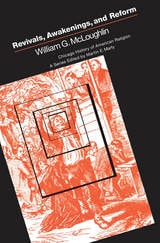
Revivals, Awakening and Reform
William G. McLoughlin
University of Chicago Press, 1980
"This book is sensitive, thought-provoking and stimulating. It is 'must' reading for those interested in awakenings, and even though some may not revise their views as a result of McLoughlin's suggestive outline, none can remain unmoved by the insights he has provided on the subject."—Christian Century
"This is one of the best books I have read all year. Professor McLoughlin has again given us a profound analysis of our culture in the midst of revivalistic trends."—Review and Expositor
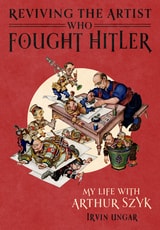
Reviving the Artist Who Fought Hitler
My Life with Arthur SzykIrvin Ungar
University of Texas Press, 2026
The intertwining story of a noted anti-Nazi artist and the former rabbi who revived his reputation.
During World War II, the Polish-Jewish immigrant Arthur Szyk became America’s leading anti-Nazi artist. His art was so effective that Adolf Hitler reportedly put a bounty on his head while the US military declared him a “citizen-soldier” of the free world. Szyk steadfastly fought for the rescue of European Jewry during the Holocaust, creating artworks like De Profundis, which imagines Jesus sharing the suffering of countless lifeless Jews. His civil rights art challenged segregation and his illuminated Declaration of Independence resides in the Library of Congress. Szyk’s masterwork, an illustrated Passover Haggadah, is considered by many to be one of the most beautiful books ever produced by human hands.
Once world-famous, Arthur Szyk was all but forgotten after his death in 1951. Reviving the Artist Who Fought Hitler recounts Irvin Ungar's decades-long journey to restore Szyk to public consciousness, and become the principal collector, dealer, scholar, and promoter of Szyk’s art in the United States, Europe, and Israel. Richly illustrated and full of forgotten history, this memoir is an inspiring story of artistic passion and an invitation to commune with a heroic advocate for all humanity.
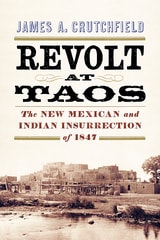
Revolt at Taos
The New Mexican and Indian Insurrection of 1847James A. Crutchfield
Westholme Publishing, 2025
On the morning of January 19, 1847, Charles Bent, the newly appointed governor of the American-claimed territory of New Mexico, was savagely killed at his home in Don Fernando de Taos, a small, remote town located north of Santa Fe. Those responsible for Bent’s murder were New Mexican settlers and Indians from nearby Taos Pueblo who refused to recognize the United States occupation. With emotions rubbed raw, the natives continued their bloodbath until five more leading citizens were massacred in Taos. During the ensuing months, American civilians and soldiers, along with scores of New Mexicans and Taos Indians, were killed and wounded throughout the region. Less than a month following Bent’s murder, in a two-day battle, volunteer and regular elements of an American army under the command of Colonel Sterling Price emerged victorious after bombarding the insurrectionists at their refuge in the church at Taos Pueblo. Surviving participants in the earlier Taos murders were arrested, tried in American-dominated courts, and, within weeks, hanged for their actions. The murder of Bent and the others at Taos and the subsequent trials and executions brought with them misunderstanding, controversy, mistrust, and recrimination on both sides of the issue. The events also subjected President James K. Polk’s administration to censure over what some critics believed was an overextension of presidential authority in claiming New Mexico as a territory.
In Revolt at Taos: The New Mexican and Indian Insurrection of 1847, writer and historian James A. Crutchfield explores the fast-moving events surrounding the bloody revolt which left native inhabitants of New Mexico wondering how their neighbors and kinsmen could be legally tried, found guilty, and executed for acts they considered to have been honorable ones committed in defense of their country. These concerns have never been adequately addressed and their struggle has been all but scrubbed from the history of American expansion.
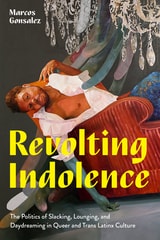
Revolting Indolence
The Politics of Slacking, Lounging, and Daydreaming in Queer and Trans Latinx CultureMarcos Gonsalez
University of Texas Press, 2024
2026 Bronze Medal for the Best LGBTQ+ Themed Book, Conference on Latin American History (CLAH)
2025 Honorable Mention, John Leo & Dana Heller Award for Best Single Work, Anthology, Multi-Authored, or Edited Book in LGBTQ Studies, Popular Culture Association (PCA)
2025 Honorable Mention, Alan Bray Memorial Book Prize, GL/Q Caucus of the Modern Language Association and the Q/T Caucus of the American Studies Association
How indolent practices in Latinx LGBTQ culture challenge capitalist imperatives to be productive.
Revolting Indolence makes a case for laziness as an aesthetic-political strategy for countering the oppressive logics of cisheteronormative racial capitalism. Focusing on ways in which queer and trans Latinx people demonstrate the unwillingness of their participation in “productivist” ethics and allied respectability politics, Marcos Gonsalez argues that slacking off, lounging, daydreaming, and partying are liberatory practices—revolts that in turn are treated as revolting.
Gonsalez explores how queer and trans Latinx artists refute discourses in which work is a moral good. In Paris Is Burning, RuPaul's Drag Race, documentary photography of queer and trans Latinx life in Los Angeles, and other sources, Gonsalez identifies two lazy styles: first, flagrant refusals of work that critique capitalist reason; and second, the invention of alternative aesthetic worlds beyond racial capitalism and violence targeting queer and trans people, whose rejection of the cisgender nuclear family paradigm is rightly seen as threatening the stability of a functioning capitalist system. Reclaiming laziness as a resource for radical imagining, Revolting Indolence asks us to do that which we want most and which capitalist exploitation can least tolerate: to slow down.