Results by title
5448 books match the query 'History and criticism' and 403 start with s

SCOTLAND BRITAIN EMPIRE
WRITING THE HIGHLANDS, 1760-1860KENNETH MCNEIL
The Ohio State University Press, 2007
Kenneth McNeil invokes recent work in postcolonial studies to show how British writers of the Romantic period were actually shaping a more complex national and imperial consciousness. He discusses canonical works—the works of James Macpherson and Sir Walter Scott—and noncanonical and nonliterary works—particularly in the fields of historiography, anthropology, and sociology. This book calls for a rethinking of the “romanticization” of the Highlands and shows that Scottish writing on the Highlands reflects the unique circumstances of a culture simultaneously feeling the weight of imperial “anglobalization” while playing a vital role in its inception.

SINGING FOR SURVIVAL
"SONGS OF THE LODZ GHETTO, 1940-45"Gila Flam
University of Illinois Press, 1992
"An extremely accurate and valuable work. There is nothing like it in either the extensive holocaust literature or the ethnomusicology literature."
-- Mark Slobin, author of Chosen Voices: The Story of the American Cantorate
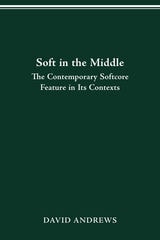
SOFT IN THE MIDDLE
CONTEMPORARY SOFTCORE FEATURE IN ITS CONTEXTSDAVID ANDREWS
The Ohio State University Press, 2006
In meticulous detail, Soft in the Middle demonstrates that softcore’s under-the-radar success and pervasive cultural devaluation may be understood in terms of the “postfeminist” strategies employed by successive generations of producers and distributors, each intent on overcoming obstacles to the mainstream distribution of pornographic material. Softcore and its American precursors became more “feminized” and “female friendly” as their distribution widened, a process hastened in the 1980s by the industry’s transition to private, non-theatrical modes of distribution and exhibition (e.g., home-video outlets and premium-cable networks like Cinemax). One of the byproducts of this development is that contemporary softcore has frequently resorted to what are arguably anti-male or “misandristic” attitudes and depictions. Clearly, the genre challenges traditional assumptions about pornography, including those held by feminists on both sides of “the porn debates.”
Drawing on original industrial research, extensive sampling, and wide-ranging scholarship, Soft in the Middle offers a nuanced look at a discreetly indecent genre whose central commodity has always been female nudity. The book examines the genre’s history, describes its deflationary trajectory, and differentiates the reading patterns of its disparate audiences, including “cult” critics and feminist critics. Naturally, the book also considers the genre’s formal and ideological conventions, surveying its most exemplary subgenres, styles, and motifs—and lavishing particular attention on its most influential studios, directors, and texts.

Sacramental Shopping
Louisa May Alcott, Edith Wharton, and the Spirit of Modern ConsumerismSarah Way Sherman
University of New Hampshire Press, 2013
Written a generation apart and rarely treated together by scholars, Little Women (1868) and The House of Mirth (1905) share a deep concern with materialism, moral development, and self-construction. The heroines in both grapple with conspicuous consumption, an aspect of modernity that challenges older beliefs about ethical behavior and core identity.
Placing both novels at the historical intersection of modern consumer culture and older religious discourse on materialism and identity, Sarah Way Sherman analyzes how Alcott and Wharton rework traditional Protestant discourse to interpret their heroines' struggle with modern consumerism. Her conclusion reveals how Little Women's optimism, still buoyed by otherworldly justice, providential interventions, and the notion of essential identity, ultimately gives way to the much darker vision of modern materialistic culture in The House of Mirth.
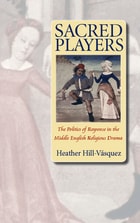
Sacred Players
The Politics of Response in the Middle English Religious DramaHeather Hill-Vásquez
Catholic University of America Press, 2007
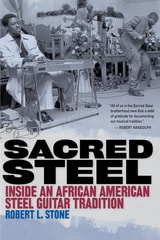
Sacred Steel
Inside an African American Steel Guitar TraditionRobert Stone
University of Illinois Press, 2010
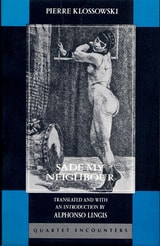
Sade My Neighbor
Pierre Klossowski
Northwestern University Press, 1991
Klossowski was one of the first philosophers in postwar Europe to ask whether Sade's reason, although aberrant and perverted to evil passions, could be taken seriously. Klossowski's seminal work inspired virtually all subsequent study of Sadean thought, including that of de Beauvoir, Deleuze, Derrida, Bataille, Blanchot, Paulhan, and Lacan.
Sade
The Invention Of The Libertine BodyMarcel Henaff
University of Minnesota Press, 1999
A new model for examining Sade and his creations.
A new model for examining Sade and his creations.
Decried as a misogynist and pornographer, imprisoned for debauchery and for his writings, there is scarcely a cultural figure as flamboyant and controversial as the Marquis de Sade, the father of the new libertine body. But this is not, Hénaff maintains, the only way to see Sade. In this long-awaited English translation, Hénaff says that Sade should be discussed less for the sensual heat of his writing and more for the larger poetic and economic model his work represents.With unabashed candor, Sade describes bodies in terms not of flesh but of production, use, exchange, and waste. In his writing, this libertine self is unleashed from its constraints, no longer bound by old conceptions of desire and traditions of courtship. Hénaff’s argument that Sade is a sign of his times-exposing the courtly facade of a society unable to preserve itself-reveals dark, disquieting secrets about the direction of civilization. The libertine body, he says, is a child of this new order.ISBN 0-8166-2536-0 Cloth £34.50 $49.95xxISBN 0-8166-2537-9 Paper £14.00 $19.95x296 Pages 5 7/8 x 9 OctoberTranslation inquiries: University of Minnesota Press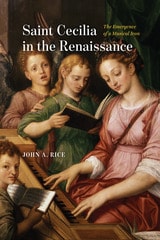
Saint Cecilia in the Renaissance
The Emergence of a Musical IconJohn A. Rice
University of Chicago Press, 2022
Until the fifteenth century, Saint Cecilia was not connected with music. She was perceived as one of many virgin martyrs, with no obvious musical skills or interests. During the next two centuries, however, she inspired many musical works written in her honor and a vast number of paintings that depicted her singing or playing an instrument.
In this book, John A. Rice argues that Cecilia’s association with music came about in several stages, involving Christian liturgy, visual arts, and music. It was fostered by interactions between artists, musicians, and their patrons and the transfer of visual and musical traditions from northern Europe to Italy. Saint Cecilia in the Renaissance explores the cult of the saint in Medieval times and through the sixteenth century when musicians’ guilds in the Low Countries and France first chose Cecilia as their patron. The book then turns to music and the explosion of polyphonic vocal works written in Cecilia’s honor by some of the most celebrated composers in Europe. Finally, the book examines the wealth of visual representations of Cecilia especially during the Italian Renaissance, among which Raphael’s 1515 painting, The Ecstasy of Saint Cecilia, is but the most famous example. Thoroughly researched and beautifully illustrated in color, Saint Cecilia in the Renaissance is the definitive portrait of Saint Cecilia as a figure of musical and artistic inspiration.
Sallie Martin, Mother of Gospel Music
Kay Norton
University of Illinois Press, 2026
Sally Rooney
Perspectives and ApproachesEllen Scheible
Bucknell University Press, 2026
Bestselling Irish novelist Sally Rooney has emerged as the defining voice of a generation, a cultural phenomenon whose spare, intelligent prose and sharp social insight have reshaped contemporary fiction and sparked a global conversation about intimacy, politics, and the millennial condition. This new collection brings together contributors from a wide range of disciplines to offer fresh critical readings of Rooney’s influential novels, alongside adaptable strategies for teaching her work in today’s undergraduate and graduate classrooms. The essays situate Rooney within literary traditions from Romantic poetry to the bildungsroman and the contemporary campus novel, while engaging with contemporary topics such as gender politics, late capitalism, and media adaptation. Providing accessible yet rigorous frameworks for exploring Rooney’s fiction, this volume confirms her significance not only within contemporary literary studies but also as a cultural force whose work reaffirms the relevance of the humanities in the twenty-first-century classroom.
Published by Bucknell University Press. Distributed worldwide by Rutgers University Press.
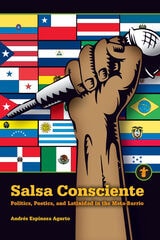
Salsa Consciente
Politics, Poetics, and Latinidad in the Meta-BarrioAndrés Espinoza Agurto
Michigan State University Press, 2021
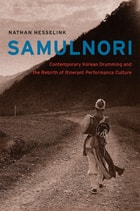
SamulNori
Contemporary Korean Drumming and the Rebirth of Itinerant Performance CultureNathan Hesselink
University of Chicago Press, 2012
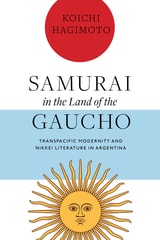
Samurai in the Land of the Gaucho
Transpacific Modernity and Nikkei Literature in ArgentinaKoichi Hagimoto
Vanderbilt University Press, 2023
In the early twentieth century, historical imaginings of Japan contributed to the Argentine vision of “transpacific modernity." Intellectuals such as Eduardo Wilde and Manuel Domecq García celebrated Japanese customs and traditions as important values that can be integrated into Argentine society. But a new generation of Nikkei or Japanese Argentines is rewriting this conventional narrative in the twenty-first century. Nikkei writers such as Maximiliano Matayoshi and Alejandra Kamiya are challenging the earlier, unapologetic view of Japan based on their own immigrant experiences.
Compared to the experience of political persecution against Japanese immigrants in Brazil and Peru, the Japanese in Argentina generally lived under a more agreeable sociopolitical climate. In order to understand the "positive" perception of Japan in Argentine history and literature, Samurai in the Land of the Gaucho turns to the current debate on race in Argentina, particularly as it relates to the discourse of whiteness. One of the central arguments is that Argentina's century-old interest in Japan represents a disguised method of (re)claiming its white, Western identity.
Through close readings of diverse genres (travel writing, essay, novel, short story, and film) Samurai in the Land of the Gaucho yields a multi-layered analysis in order to underline the role Japan has played in both defining and defying Argentine modernity from the twentieth century to the present.
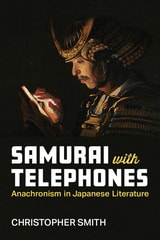
Samurai with Telephones
Anachronism in Japanese LiteratureChristopher Smith
University of Michigan Press, 2024
From the modern period, this volume examines literature by Mori Ōgai and Ōe Kenzaburō, manga by Tezuka Osamu, art by Murakami Takashi, and a variety of other pop cultural works. Turning to the Early Modern period (Edo period, 1600–1868), which produced a literature rich with playful anachronism, he also examines several Kabuki and Bunraku plays, kibyōshi comic books, and gōkan illustrated novels. In analyzing these works, he draws a distinction between anachronisms that attempt to hide their work on history and convincingly rewrite it and those conspicuous anachronisms that highlight and disrupt the construction of historical narratives.
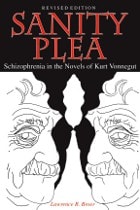
Sanity Plea
Schizophrenia in the Novels of Kurt VonnegutLawrence R. Broer
University of Alabama Press, 1994
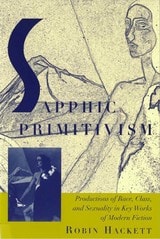
Sapphic Primitivism
Productions of Race, Class, and Sexuality in Key Works of Modern FictionHackett, Robin
Rutgers University Press, 2003
In this book, Robin Hackett examines portrayals of race, class, and sexuality in modernist texts by white women to argue for the existence of a literary device that she calls “Sapphic primitivism.” The works vary widely in their form and content and include Olive Schreiner’s proto-modernist exploration of New Womanhood, The Story of an African Farm; Virginia Woolf’s high modernist “play-poem,” The Waves; Sylvia Townsend Warner’s historical novel, Summer Will Show; and Willa Cather’s Southern pastoral, Sapphira and the Slave Girl. In each, blackness and working-class culture are figured to represent sexual autonomy, including lesbianism, for white women. Sapphic primitivism exposes the ways several classes of identification were intertwined with the development of homosexual identities at the turn of the century. Sapphic primitivism is not, however, a means of disguising lesbian content. Rather, it is an aesthetic displacement device that simultaneously exposes lesbianism and exploits modern, primitivist modes of self-representation. Hackett’s revelations of the mutual interests of those who study early twentieth-century constructions of race and sexuality and twenty-first-century feminists doing anti-racist and queer work are a major contribution to literary studies and identity theory.
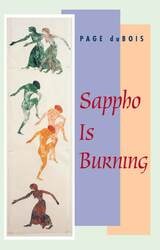
Sappho Is Burning
Page duBois
University of Chicago Press, 1995
In Sappho is Burning, duBois reads Sappho as a disruptive figure at the very origin of our story of Western civilization. Sappho is beyond contemporary categories, inhabiting a space outside of reductively linear accounts of our common history. She is a woman, but also an aristocrat, a Greek, but one turned toward Asia, a poet who writes as a philosopher before philosophy, a writer who speaks of sexuality that can be identified neither with Michel Foucault's account of Greek sexuality, nor with many versions of contemporary lesbian sexuality. She is named as the tenth muse, yet the nine books of her poetry survive only in fragments. She disorients, troubles, undoes many certitudes in the history of poetry, the history of philosophy, the history of sexuality. DuBois argues that we need to read Sappho again.
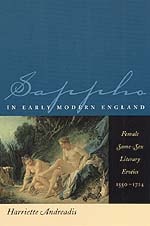
Sappho in Early Modern England
Female Same-Sex Literary Erotics, 1550-1714Harriette Andreadis
University of Chicago Press, 2001
Sardonic Smile
Nonverbal Behavior in Homeric EpicDonald Lateiner
University of Michigan Press, 1998
Satire and the Threat of Speech
Horace's Satires, Book 1Catherine M. Schlegel
University of Wisconsin Press, 2006
Satire in Colonial Spanish America
Turning the New World Upside DownBy Julie Greer Johnson
University of Texas Press, 1993
Satire, the use of criticism cloaked in wit, has been employed since classical times to challenge the established order of society. In colonial Spanish America during the sixteenth through the eighteenth centuries, many writers used satire to resist Spanish-imposed social and literary forms and find an authentic Latin American voice. This study explores the work of eight satirists of the colonial period and shows how their literary innovations had a formative influence on the development of the modern Latin American novel, essay, and autobiography.
The writers studied here include Sor Juana Inés de la Cruz, Juan del Valle y Caviedes, Cristóbal de Llerena, and Eugenio Espejo. Johnson chronicles how they used satire to challenge the "New World as Utopia" myth propagated by Spanish authorities and criticize the Catholic church for its role in fulfilling imperialistic designs. She also shows how their marginalized status as Creoles without the rights and privileges of their Spanish heritage made them effective satirists. From their writings, she asserts, emerges the first self-awareness and national consciousness of Spanish America.
By linking the two great periods of Latin American literarure—the colonial writers and the modern generation—Satire in Colonial Spanish America makes an important contribution to Latin American literature and culture studies. It will also be of interest to all literary scholars who study satire.
Satire in Narrative
Petronius, Swift, Gibbon, Melville, & PynchonBy Frank Palmeri
University of Texas Press, 1990
Virtually all theories of satire define it as a criticism of contemporary society. Some argue that satire criticizes the present in favor of a standard of values that has been superseded, and thus that satire is generally backward-looking and conservative. While this is often true of poetic satire, in this study Frank Palmeri asserts that narrative satire performs a different function, that it parodies both the established view of the world and that of its opponents, offering its own distinctive critical perspective.
This theory of satire builds on the idea of dialogical parody in the work of Russian theorist Mikhail Bakhtin, while revising Bakhtin's estimate of carnival. In Palmeri's view, the carnivalesque offers only an inverted mirror image of authoritative discourse, while parodic narrative satire suggests an alternative to both the official world and its inverted opposite.
Palmeri applies this theory of narrative satire to five works of world literature, each of which has generated sharp controversy about the genre to which it rightly belongs: Petronius' Satyricon, Jonathan Swift's A Tale of a Tub, Edward Gibbon's Decline and Fall of the Roman Empire, Herman Melville's The Confidence-Man, and Thomas Pynchon's The Crying of Lot 49. He analyzes the features that link these works and shows how the changing pairs of alternatives that are parodied in these satires reflect changes in the terms of social and cultural oppositions.
Satire in Narrative will appeal to comparatists, specialists in eighteenth-century and American literature, and others interested in theories of genre and the relations between literary forms and social history.
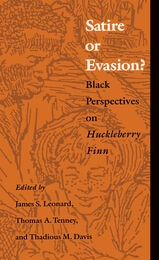
Satire or Evasion?
Black Perspectives on Huckleberry FinnJames S. Leonard, Thomas A. Tenney and Thadious M. Davis, eds.
Duke University Press, 1992
Ranging from the laudatory to the openly hostile, these essays include personal impressions of Huckleberry Finn, descriptions of classroom experience with the book, evaluations of its ironic and allegorical aspects, explorations of its nineteenth-century context, and appraisal of its effects on twentieth-century African American writers. Among the issues the authors contend with are Twain’s pervasive use of the word “nigger,” his portrayal of the slave Jim according to the conventions of the minstrel show “darky,” and the thematic chaos created by the “evasion” depicted in the novel’s final chapters.
Sure to provoke thought and stir debate, Satire or Evasion? provides a variety of new perspectives on one of this country’s most troubling classics.
Contributors. Richard K. Barksdale, Bernard W. Bell, Mary Kemp Davis, Peaches M. Henry, Betty Harris Jones, Rhett S. Jones, Julius Lester, Donnarae MacCann, Charles H. Nichols, Charles H. Nilon, Arnold Rampersad, David L. Smith, Carmen Dubryan, John H. Wallace, Kenny Jackson Williams, Fredrick Woodard
Satiric Advice on Women and Marriage
From Plautus to ChaucerWarren S. Smith, Editor
University of Michigan Press, 2005
Advice on sex and marriage in the literature of antiquity and the middle ages typically stressed the negative: from stereotypes of nagging wives and cheating husbands to nightmarish visions of women empowered through marriage. Satiric Advice on Women and Marriage brings together the leading scholars of this fascinating body of literature. Their essays examine a variety of ancient and early medieval writers' cautionary and often eccentric marital satire beginning with Plautus in the third century B.C.E. through Chaucer (the only non-Latin author studied). The volume demonstrates the continuity in the Latin tradition which taps into the fear of marriage and intimacy shared by ancient ascetics (Lucretius), satirists (Juvenal), comic novelists (Apuleius), and by subsequent Christian writers starting with Tertullian and Jerome, who freely used these ancient sources for their own purposes, including propaganda for recruiting a celibate clergy and the promotion of detachment and asceticism as Christian ideals.
Warren S. Smith is Professor of Classical Languages at the University of New Mexico.
Saying I No More
Subjectivity and Consciousness in the Prose of Samuel BeckettDaniel Katz
Northwestern University Press, 1999
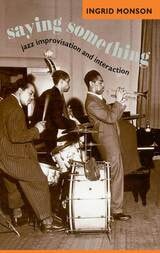
Saying Something
Jazz Improvisation and InteractionIngrid Monson
University of Chicago Press, 1997
This fresh look at the neglected rhythm section in jazz ensembles shows that the improvisational interplay among drums, bass, and piano is just as innovative, complex, and spontaneous as the solo. Ingrid Monson juxtaposes musicians' talk and musical examples to ask how musicians go about "saying something" through music in a way that articulates identity, politics, and race. Through interviews with Jaki Byard, Richard Davis, Sir Roland Hanna, Billy Higgins, Cecil McBee, and others, she develops a perspective on jazz improvisation that has "interactiveness" at its core, in the creation of music through improvisational interaction, in the shaping of social communities and networks through music, and in the development of cultural meanings and ideologies that inform the interpretation of jazz in twentieth-century American cultural life.
Replete with original musical transcriptions, this broad view of jazz improvisation and its emotional and cultural power will have a wide audience among jazz fans, ethnomusicologists, and anthropologists.
Scales of Captivity
Racial Capitalism and the Latinx ChildMary Pat Brady
Duke University Press, 2022

Scarring the Black Body
Race and Representation in African American LiteratureCarol E. Henderson
University of Missouri Press, 2002

Scenes from the Drama of European Literature
Erich AuerbachForeword by Paolo Valesio
University of Minnesota Press, 1984
Scenes from the Drama of European Literature was first published in 1984. Minnesota Archive Editions uses digital technology to make long-unavailable books once again accessible, and are published unaltered from the original University of Minnesota Press editions.
In his foreword to this reprint of Erich Auerbach's major essays, Paolo Valesio pays tribute to the author with an old saying that he feels is still the best metaphor for the genesis of a literary critic: the critic is born of the marriage of Mercury and Philology. The German-born Auerbach was a scholar who specialized in Romance philology, a tradition rooted in German historicism—the conviction that works of art must be judged as products of variable places and times, not from the eye of eternity, nor by a single unchanging aesthetic standard. The mercurial element in Auerbach's work is significant, for in a life of motion—of exile from Hitler's Germany—he came to believe that literary history was evolutionary, ever-changing—a view reflected in the title of his book, which suggests life and literature are historical drama.
Auerbach is best known for his magisterial study Mimesis: The Representation of Reality in Western Literature, written during the war, in Istanbul, when he was far from his own culture and from the books that he normally relied on. In 1957, just before his death, he arranged for the publication in English of his six most important essays, in a volume called Scenes from the Drama of European Literature.As in Mimesis,Auerbach's fresh insights bring to the disparate subjects of the essays a coherence that reflects the unity of Western, humanistic tradition, even while they hint at the deepening pessimism of his later years.
In the first essay, "Figura," Auerbach develops his concept of the figural interpretation of reality; applied here to Dante's Divine Comedy,it also served as groundwork for his treatment of realism in Mimesis. A second essay on Dante's examines the poet's depiction of St. Francis of Assisi. The next three essays deal with the paradoxical nature of Pascal's political thought; the merging of la cour and la ville—the king's entourage and the bourgeoisie—chiefly in relation to the seventeenth-century French theater; and Vico's formulation concepts by the German Romantics. In the final essay Auerbach confers upon Baudelaire's Fleurs du Mal the designation "aesthetic dignity" because, not in spite of, the hideous reality of the peoms.
"A major collection of important essays on European literature, almost all classics, and almost all required reading for their various centuries—thus the book is indispensable for the medieval period,the seventeenth and nineteenth centuries; in addition, the 'Figura' and the Vico essays are very significant theoretical statements. The book is lucid and far more accessible for undergraduates than, say, current high theory. Nor has Auerbach's own work aged . . . All of his varied strengths are evidence in this collection, which is a better way into his work than Mimesis." –Fredric Jameson, University of California, Santa Cruz.
Scenes of Instruction in Renaissance Romance
Jeff Dolven
University of Chicago Press, 2007
We take it for granted today that the study of poetry belongs in school—but in sixteenth-century England, making Ovid or Virgil into pillars of the curriculum was a revolution. Scenes of Instruction in Renaissance Romance explores how poets reacted to the new authority of humanist pedagogy, and how they transformed a genre to express their most radical doubts.
Jeff Dolven investigates what it meant for a book to teach as he traces the rivalry between poet and schoolmaster in the works of John Lyly, Philip Sydney, Edmund Spenser, and John Milton. Drawing deeply on the era’s pedagogical literature, Dolven explores the links between humanist strategies of instruction and romance narrative, rethinking such concepts as experience, sententiousness, example, method, punishment, lessons, and endings. In scrutinizing this pivotal moment in the ancient, intimate contest between art and education, Scenes of Instruction in Renaissance Romance offers a new view of one of the most unconsidered—yet fundamental—problems in literary criticism: poetry’s power to please and instruct.

Scepticism and Hope in Twentieth Century Fantasy Literature
Kath Filmer
University of Wisconsin Press, 1992
Schooling Readers
Reading Common Schools in Nineteenth-Century American FictionAllison Speicher
University of Alabama Press, 2016
Despite hailing from different regions with diverse histories and cultures, authors in all parts of the US produced remarkably similar school fictions. These stories, rather than offering idealized depictions of earnest schoolchildren in humble, rough-hewn schoolhouses, expose common schools as sites of both community bonding and social strife. These stories, Speicher shows, reflect surprisingly contemporary problems like school violence and apprehensions about assessments.
In four insightful sections, Speicher illuminates the plotlines that define the common school narrative: school exhibitions, in which common schools were opened to the public for a day of student performances; romances between teachers and students; violence against teachers; and teachers adopting their students. She offers rich examples from one hundred and thirty school stories by well-known authors such as Mark Twain, Bret Harte, Catharine Maria Sedgwick, and Edward Eggleston, as well as by educational reform pioneers such as C. W. Bardeen and long-forgotten contributors to nineteenth-century magazines.
By reading these fictions alongside the discourse of reformers like Horace Mann, Speicher illustrates the utility of fiction for uncovering the diverse reactions nineteenth-century Americans had to the expansion of public education as well as the role fiction played in shaping these responses. Throughout she maintains a dual focus, drawing on both literary and educational history, thereby offering much of value to those interested in either field.
Science Fiction Cinema
Between Fantasy and RealityCornea, Christine
Rutgers University Press, 2007
Offering a broad historical and theoretical reassessment of science fiction, Christine Cornea explores the development of this popular genre in cinema from its very beginnings to the present day. Each chapter offers analyses of particular films, situating them within a wider historical/cultural context while also highlighting a specific key thematic issue. Cornea provides vital and unique perspectives on the genre, including discussions of the relevance of psychedelic imagery, race, the “new woman of science,” generic performance, and the prevalence of “techno-orientalism” in recent films. Enriching the book are new interviews with some of the main practitioners in the field, such as Roland Emmerich, Paul Verhoeven, Ken Russell, Stan Winston, William Gibson, Brian Aldiss, Joe Morton, Dean Norris, and Billy Gray. While American films are Cornea’s main focus, she also engages with a range of examples from other countries and explains why science fiction lends itself well to transnational reception.
Among the many films discussed are The Day the Earth Stood Still, The Body Snatchers, Forbidden Planet, The Quatermass Experiment, 2001: A Space Odyssey, Demon Seed, Star Trek: The Motion Picture, Star Wars, Altered States, Alien, Blade Runner, The Brother from Another Planet, Back to the Future, The Terminator, Predator, The One, Dark City, The Matrix, Fifth Element, and eXistenZ.
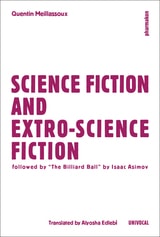
Science Fiction and Extro-Science Fiction
Quentin Meillassoux
University of Minnesota Press, 2015
In Science Fiction and Extro-Science Fiction, Quentin Meillassoux addresses the problem of chaos and of the constancy of natural laws in the context of literature. With his usual argumentative rigor, he elucidates the distinction between science fiction, a genre in which science remains possible in spite of all the upheavals that may attend the world in which the tale takes place, and fiction outside-science, the literary concept he fashions in this book, a fiction in which science becomes impossible. With its investigations of the philosophies of Hume, Kant, and Popper, Science Fiction and Extro-Science Fiction broadens the inquiry that Meillassoux began in After Finitude, thinking through the concrete possibilities and consequences of a chaotic world in which human beings can no longer resort to science to ground their existence. It is a significant milestone in the work of an emerging philosopher, which will appeal to readers of both philosophy and literature. The text is followed by Isaac Asimov’s essay “The Billiard Ball.”
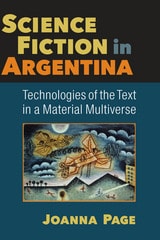
Science Fiction in Argentina
Technologies of the Text in a Material MultiverseJoanna Page
University of Michigan Press, 2016
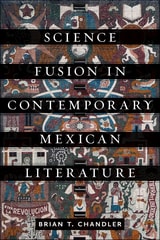
Science Fusion in Contemporary Mexican Literature
Brian T. Chandler
Bucknell University Press, 2024
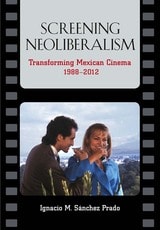
Screening Neoliberalism
Transforming Mexican Cinema, 1988-2012Ignacio M. Sánchez Prado
Vanderbilt University Press, 2014
Screening Sex
Linda Williams
Duke University Press, 2008
Combining stories of her own coming of age as a moviegoer with film history, cultural history, and readings of significant films, Williams presents a fascinating history of the on-screen kiss, a look at the shift from adolescent kisses to more grown-up displays of sex, and a comparison of the “tasteful” Hollywood sexual interlude with sexuality as represented in sexploitation, Blaxploitation, and avant-garde films. She considers Last Tango in Paris and Deep Throat, two 1972 films unapologetically all about sex; In the Realm of the Senses, the only work of 1970s international cinema that combined hard-core sex with erotic art; and the sexual provocations of the mainstream movies Blue Velvet and Brokeback Mountain. She describes art films since the 1990s, in which the sex is aggressive, loveless, or alienated. Finally, Williams reflects on the experience of screening sex on small screens at home rather than on large screens in public. By understanding screening sex as both revelation and concealment, Williams has written the definitive study of sex at the movies.
Linda Williams is Professor of Film Studies and Rhetoric at the University of California, Berkeley. Her books include Porn Studies, also published by Duke University Press; Playing the Race Card: Melodramas of Black and White from Uncle Tom to O. J. Simpson; Viewing Positions: Ways of Seeing Film; and Hard Core: Power, Pleasure, and the “Frenzy of the Visible.”
A John Hope Franklin Center Book
November
424 pages
129 illustrations
6x9 trim size
ISBN 0-8223-0-8223-4285-5
paper, $24.95
ISBN 0-8223-0-8223-4263-4
library cloth edition, $89.95
ISBN 978-0-8223-4285-4
paper, $24.95
ISBN 978-0-8223-4263-2
library cloth edition, $89.95
Screening Space
The American Science Fiction FilmSobchack, Vivian
Rutgers University Press, 1997
Screening Stephen King
Adaptation and the Horror Genre in Film and TelevisionBy Simon Brown
University of Texas Press, 2018
Since the 1970s, the name Stephen King has been synonymous with horror. His vast number of books has spawned a similar number of feature films and TV shows, and together they offer a rich opportunity to consider how one writer’s work has been adapted over a long period within a single genre and across a variety of media—and what that can tell us about King, about adaptation, and about film and TV horror. Starting from the premise that King has transcended ideas of authorship to become his own literary, cinematic, and televisual brand, Screening Stephen King explores the impact and legacy of over forty years of King film and television adaptations.
Simon Brown first examines the reasons for King’s literary success and then, starting with Brian De Palma’s Carrie, explores how King’s themes and style have been adapted for the big and small screens. He looks at mainstream multiplex horror adaptations from Cujo to Cell, low-budget DVD horror films such as The Mangler and Children of the Corn franchises, non-horror films, including Stand by Me and The Shawshank Redemption, and TV works from Salem’s Lot to Under the Dome. Through this discussion, Brown identifies what a Stephen King film or series is or has been, how these works have influenced film and TV horror, and what these influences reveal about the shifting preoccupations and industrial contexts of the post-1960s horror genre in film and TV.
Screening the Beats
Media Culture and the Beat SensibilityDavid Sterritt
Southern Illinois University Press, 2004
Film critic David Sterritt’s Screening the Beats: Media Culture and the Beat Sensibility showcases the social and aesthetic viewpoints of lynchpin Beat writers Jack Kerouac, William S. Burroughs, and Allen Ginsberg, juxtaposing their artistry with 1950s culture and achieving what Kerouac might have called a “bookmovie” riff. In clear prose, Sterritt captures the raw energy of the Beats and joins in their celebration of aesthetic freakishness. Tapping into the diversified spirit of the Beat Generation and its nuanced relationship with postwar American culture, Sterritt considers how the Beats variously foreground, challenge, and illuminate major issues in Hollywood and avant-garde film, critical and cultural theory, and music in the mass-media age.
Sterritt engages the creative and spiritual facets of the Beats, emulating their desire to evoke ephemeral aspects of human existence. Dealing with both high and low cultures as well as various subcultures, he highlights the complementary contributions to cultural creativity made by these authors. Screening the Beats grapples with paradoxes in Beat writing, in particular the conflict between spiritual purity and secular connectedness, which often materialized in the beatific bebop spontaneity, Zen-like transcendentalism, and plain hipster smarts that characterized the writings of Kerouac, Burroughs, and Ginsberg.
This interdisciplinary study tackles such topics as Ginsberg’s and Kerouac’s uses of racial and ethnic stereotypes prevalent in the popular movies of the 1950s era; the uses and limitations of improvisation as a creative tool in literature, jazz, and film; Kerouac’s use of cinematic metaphor to evoke Buddhist concepts; and intersections of the grotesque and carnivalesque in works as seemingly diverse as autobiographical novels by Kerouac, a radio play by Antonin Artaud, cultural theories of Gilles Deleuze and Félix Guattari, and the boisterous lunacy of Three Stooges farce. Deftly threading literary, musical, and cinematic works with a colorful array of critical theories, Screening the Beats illuminates the relationship between American culture and the imaginative forces of the Beat Generation.
Screening the Gothic
By Lisa Hopkins
University of Texas Press, 2005
Filmmakers have long been drawn to the Gothic with its eerie settings and promise of horror lurking beneath the surface. Moreover, the Gothic allows filmmakers to hold a mirror up to their own age and reveal society's deepest fears. Franco Zeffirelli's Jane Eyre, Francis Ford Coppola's Bram Stoker's Dracula, and Kenneth Branagh's Hamlet are just a few examples of film adaptations of literary Gothic texts. In this ground-breaking study, Lisa Hopkins explores how the Gothic has been deployed in these and other contemporary films and comes to some surprising conclusions. For instance, in a brilliant chapter on films geared to children, Hopkins finds that horror resides not in the trolls, wizards, and goblins that abound in Harry Potter, but in the heart of the family.
Screening the Gothic offers a radical new way of understanding the relationship between film and the Gothic as it surveys a wide range of films, many of which have received scant critical attention. Its central claim is that, paradoxically, those texts whose affiliations with the Gothic were the clearest became the least Gothic when filmed. Thus, Hopkins surprises readers by revealing Gothic elements in films such as Sense and Sensibility and Mansfield Park, as well as exploring more obviously Gothic films like The Mummy and The Fellowship of the Ring. Written in an accessible and engaging manner, Screening the Gothic will be of interest to film lovers as well as students and scholars.
Screening the Operatic Stage
Television and BeyondChristopher Morris
University of Chicago Press, 2024
From the early days of television broadcasts to today’s live streams, opera houses have embraced technology as a way to reach new audiences. But how do these new forms of remediated opera extend, amplify, or undermine production values, and what does the audience gain or lose in the process? In Screening the Operatic Stage, Christopher Morris critically examines the cultural implications of opera’s engagement with screen media.
Foregrounding the potential for a playful exchange and self-awareness between stage and screen, Morris uses the conceptual tools of media theory to understand the historical and contemporary screen cultures that have transmitted the opera house into living rooms, onto desktops and portable devices, and across networks of movie theaters. If these screen cultures reveal how inherently “technological” opera is as a medium, they also highlight a deep suspicion among opera producers and audiences toward the intervention of media technology. Ultimately, Screening the Operatic Stage shows how the conventions of televisual representation employed in opera have masked the mediating effects of technology in the name of fidelity to live performance.
Scribit Mater
Marey and the Language Arts in the Literature of Medieval EnglandGeorgiana Donavin
Catholic University of America Press, 2012
Scripting Hitchcock
Psycho, The Birds, and MarnieWalter Raubicheck and Walter Srebnick
University of Illinois Press, 2011
Hitchcock allowed his writers a great deal of creative freedom, which resulted in dynamic screenplays that expanded traditional narrative and defied earlier conventions. Critically examining the question of authorship in film, Raubicheck and Srebnick argue that Hitchcock did establish visual and narrative priorities for his writers, but his role in the writing process was that of an editor. While the writers and their contributions have generally been underappreciated, this study reveals that all the dialogue and much of the narrative structure of the films were the work of screenwriters Jay Presson Allen, Joseph Stefano, and Evan Hunter. The writers also shaped American cultural themes into material specifically for actors such as Janet Leigh, Tippi Hedren, and Tony Perkins. This volume gives due credit to those writers who gave narrative form to Hitchcock's filmic vision.
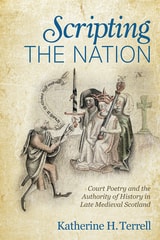
Scripting the Nation
Court Poetry and the Authority of History in Late Medieval ScotlandKatherine H. Terrell
The Ohio State University Press, 2021
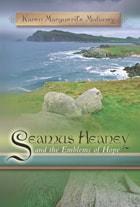
Seamus Heaney and the Emblems of Hope
Karen Marguerite Moloney
University of Missouri Press, 2007
A rich body of mythology and literature has grown around the Celtic ritual known as the Feis of Tara or “marriage of sovereignty”—ancient ceremonies in which the future king pledges to care for the land and serve the goddess of sovereignty. Seamus Heaney, whose writing has attracted the overwhelming share of critical attention directed toward contemporary Irish poetry, has engaged this symbolic tradition in some of his most significant—and controversial—work.
Seamus Heaney and the Emblems of Hope explores Heaney’s use of the family of sovereignty motifs and redresses the imbalance of criticism that has overemphasized the theme of sacrifice to the detriment of more optimistic symbols. Moreover, Moloney reviews the development of the marriage motif in Irish poetry from the ninth to the twenty-first centuries with a focus on Heaney’s adaptations from The Frenzy of Sweeney and The Midnight Court and on the work of such poets as Kinsella, Montague, Boland, and Ní Dhomhnaill. Karen Marguerite Moloney examines the central role that Heaney assigns the Feis of Tara in his response to the crisis of Ulster and to the general spiritual bankruptcy of our times, showing in his verse how the relationship of the male lover to the goddess—particularly in her more repugnant guises—serves as prototype for the humility and deference needed to repair the effects of English colonization of Ireland and, by extension, centuries of worldwide patriarchal abuse.
Through close, sustained readings of poems previously overlooked or misinterpreted, such as “Ocean’s Love to Ireland,” “Come to the Bower,” and “Bone Dreams”—poems that Irish feminist critics have deemed flawed and distressingly sexist—Moloney refutes views that have long stood unchallenged. She also considers the direction of Heaney’s more recent poems, which continue to resonate to the twin demands of conscience and artistic integrity.
An impeccably researched and immensely readable work, Seamus Heaney and the Emblems of Hope reveals that Heaney’s poetry offers a reverence for archetypal femininity and Dionysian energy that can counter the sterility and violence of postcolonial Irish life. Moloney shows us that, in the tradition of poets who preceded him, Heaney turns to the marriage of sovereignty to encode a message for our times—and to offer up emblems of hope on behalf of us all.
Search and Clear
Critical Responses to Selected Literature and Films of the Vietnam WarWilliam J. Searle
University of Wisconsin Press, 1988
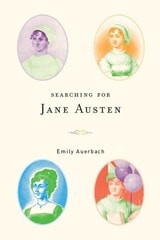
Searching for Jane Austen
Emily Auerbach
University of Wisconsin Press, 2004
In this beautifully illustrated and lively work, Auerbach surveys two centuries of editing, censoring, and distorting Austen’s life and writings. Auerbach samples Austen’s flamboyant, risqué adolescent works featuring heroines who get drunk, lie, steal, raise armies, and throw rivals out of windows. She demonstrates that Austen constantly tested and improved her skills by setting herself a new challenge in each of her six novels.
In addition, Auerbach considers Austen’s final irreverent writings, discusses her tragic death at the age of forty-one, and ferrets out ridiculous modern adaptations and illustrations, including ads, cartoons, book jackets, newspaper articles, plays, and films from our own time. An appendix reprints a ground-breaking article that introduced Mark Twain’s "Jane Austen," an unfinished and unforgettable essay in which Twain and Austen enter into mortal combat.