Results by title
346 books match the query 'Relations' and 22 start with s

SCOTLAND BRITAIN EMPIRE
WRITING THE HIGHLANDS, 1760-1860KENNETH MCNEIL
The Ohio State University Press, 2007
Kenneth McNeil invokes recent work in postcolonial studies to show how British writers of the Romantic period were actually shaping a more complex national and imperial consciousness. He discusses canonical works—the works of James Macpherson and Sir Walter Scott—and noncanonical and nonliterary works—particularly in the fields of historiography, anthropology, and sociology. This book calls for a rethinking of the “romanticization” of the Highlands and shows that Scottish writing on the Highlands reflects the unique circumstances of a culture simultaneously feeling the weight of imperial “anglobalization” while playing a vital role in its inception.

Sacred Boundaries
Religious Coexistence and Conflict in Early-Modern FranceKeith P. Luria
Catholic University of America Press, 2005
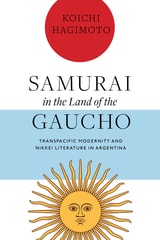
Samurai in the Land of the Gaucho
Transpacific Modernity and Nikkei Literature in ArgentinaKoichi Hagimoto
Vanderbilt University Press, 2023
In the early twentieth century, historical imaginings of Japan contributed to the Argentine vision of “transpacific modernity." Intellectuals such as Eduardo Wilde and Manuel Domecq García celebrated Japanese customs and traditions as important values that can be integrated into Argentine society. But a new generation of Nikkei or Japanese Argentines is rewriting this conventional narrative in the twenty-first century. Nikkei writers such as Maximiliano Matayoshi and Alejandra Kamiya are challenging the earlier, unapologetic view of Japan based on their own immigrant experiences.
Compared to the experience of political persecution against Japanese immigrants in Brazil and Peru, the Japanese in Argentina generally lived under a more agreeable sociopolitical climate. In order to understand the "positive" perception of Japan in Argentine history and literature, Samurai in the Land of the Gaucho turns to the current debate on race in Argentina, particularly as it relates to the discourse of whiteness. One of the central arguments is that Argentina's century-old interest in Japan represents a disguised method of (re)claiming its white, Western identity.
Through close readings of diverse genres (travel writing, essay, novel, short story, and film) Samurai in the Land of the Gaucho yields a multi-layered analysis in order to underline the role Japan has played in both defining and defying Argentine modernity from the twentieth century to the present.
Saul Lieberman and the Orthodox
Marc B. Shapiro
University of Scranton Press, 2006
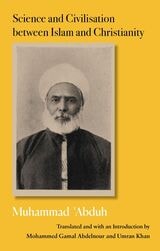
Science and Civilisation between Islam and Christianity
Muhammad Abduh
Gingko, 2025
This book is a translation of Muhammad Abduh’s Al-Islam wa-l-Nasraniyya maa al-Ilm wa-l-Madaniyya (Science and Civilization between Islam and Christianity). Abduh was an Egyptian jurist, religious scholar, theologian, and reformer of Al-Azhar—Egypt’s oldest university and a renowned seat of Islamic learning—who died in 1905. His impact on modern Islam cannot be overstated. In fact, much of modern Muslim thought has, in one way or another, been a reaction to his ideas. Although he is the subject of numerous English studies, only one treatise of his has been translated into English: Risalat al-tawhid (Theology of Unity) by Ishaq Masaad and Kenneth Cragg, in 1966.
Far too little attention has been paid to the treatise translated here and its impact on the Islamic theology of Christianity. This first English translation fills a serious gap in the genre of Islam and Christian-Muslim relations.
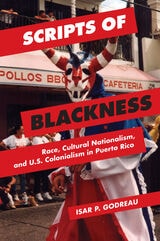
Scripts of Blackness
Race, Cultural Nationalism, and U.S. Colonialism in Puerto RicoIsar P. Godreau
University of Illinois Press, 2015
Based on an ethnographic study of the barrio of San Antón in the city of Ponce, Scripts of Blackness examines institutional and local representations of blackness as developing from a power-laden process that is inherently selective and political, not neutral or natural. Godreau traces the presumed benevolence or triviality of slavery in Puerto Rico, the favoring of a Spanish colonial whiteness (under a hispanophile discourse), and the insistence on a harmonious race mixture as discourses that thrive on a presumed contrast with the United States that also characterize Puerto Rico as morally superior. In so doing, she outlines the debates, social hierarchies, and colonial discourses that inform the racialization of San Antón and its residents as black.
Mining ethnographic materials and anthropological and historical research, Scripts of Blackness provides powerful insights into the critical political, economic, and historical context behind the strategic deployment of blackness, whiteness, and racial mixture.
Secular Missionaries
Americans and African Development in the 1960sLarry Grubbs
University of Massachusetts Press, 2010
Security. Cooperation. Governance.
The Canada-United States Open Border ParadoxChristian Leuprecht and Todd Hataley, Editors
University of Michigan Press, 2023
The book’s findings show that border governance straddles multiple regional, sectoral, and security scales in ways rarely documented in such detail. These developments have precipitated an Open Border Paradox: extensive, regionally varied flows of trade and people have resulted in a series of nested but interdependent security regimes that function on different scales and vary across economic and policy sectors. These realities have given rise to regional and sectoral specialization in related security regimes. For instance, just-in-time automotive production in the Great Lakes region varies considerably from the governance of maritime and intermodal trade (and port systems) on the Atlantic and Pacific coasts, which in turn is quite different from commodity-based systems that manage diverse agricultural and food trade in the Canadian Prairies and US Great Plains.
The paradox of open borders and their legitimacy is a function of robust bilateral and multilevel governance based on effective partnerships with substate governments and the private sector. Effective policy accounts for regional variation in integrated binational security and trade imperatives. At the same time, binational and continental policies are embedded in each country’s trade and security relationships beyond North America.
Seeking Sakyamuni
South Asia in the Formation of Modern Japanese BuddhismRichard M. Jaffe
University of Chicago Press, 2019
Siblings of Soil
Dominicans and Haitians in the Age of RevolutionsCharlton W. Yingling
University of Texas Press, 2022
2023 Honorable Mention, Isis Duarte Book Prize, Haiti/ Dominican Republic section (LASA)
After revolutionary cooperation between Dominican and Haitian majorities produced independence across Hispaniola, Dominican elites crafted negative myths about this era that contributed to anti-Haitianism.
Despite the island’s long-simmering tensions, Dominicans and Haitians once unified Hispaniola. Based on research from over two dozen archives in multiple countries, Siblings of Soil presents the overlooked history of their shared imperial endings and national beginnings from the 1780s to 1822. Haitian revolutionaries both inspired and aided Dominican antislavery and anti-imperial movements. Ultimately, Santo Domingo's independence from Spain came in 1822 through unification with Haiti, as Dominicans embraced citizenship and emancipation. Their collaboration resulted in one of the most unique and inclusive forms of independence in the Americas.
Elite reactions to this era formed anti-Haitian narratives. Racial ideas permeated the revolution, Vodou, Catholicism, secularism, and even Deism. Some Dominicans reinforced Hispanic and Catholic traditions and cast Haitians as violent heretics who had invaded Dominican society, undermining the innovative, multicultural state. Two centuries later, distortions of their shared past of kinship have enabled generations of anti-Haitian policies, assumptions of irreconcilable differences, and human rights abuses.
Sino–Malay Trade and Diplomacy from the Tenth through the Fourteenth Century
Derek Heng
Ohio University Press, 2009
China has been an important player in the international economy for two thousand years and has historically exerted enormous influence over the development and nature of political and economic affairs in the regions beyond its borders, especially its neighbors.
Sino–Malay Trade and Diplomacy from the Tenth through the Fourteenth Century examines how changes in foreign policy and economic perspectives of the Chinese court affected diplomatic intercourse as well as the fundamental nature of economic interaction between China and the Malay region, a subregion of Southeast Asia centered on the Strait of Malacca.
This study’s uniqueness and value lie in its integration of archaeological, epigraphic, and textual data from both China and Southeast Asia to provide a rich, multilayered picture of Sino–Southeast Asian relations in the premodern era. Derek Heng approaches the topic from both the Southeast Asian and Chinese perspectives, affording a dual narrative otherwise unavailable in the current body of Southeast Asian and China studies literature.

Sins of Christendom
Anti-Mormonism and the Making of EvangelicalismNathaniel Wiewora
University of Illinois Press, 2024
Sister City Diplomacy
Community Engagement in U.S.–Russian Relations from the Cold War to TodayDouglas C. Nord
University of Wisconsin Press, 2025
Sister City Diplomacy offers a historical account of citizen diplomacy set in a unique political and social environment. But in its theoretical grounding and informed arguments, this study speaks to much broader and contemporary concerns, both in terms of United States–Russian relations today and with regard to the challenges and opportunities of community-based diplomacy in general. Lessons learned along the shores of Lakes Superior and Onega in the last days of the Cold War hold great value given the heightened tensions of current geopolitics.
Siting Postcoloniality
Critical Perspectives from the East Asian SinospherePheng Cheah and Caroline Hau, editors
Duke University Press, 2023
Contributors. Pheng Cheah, Dai Jinhua, Caroline S. Hau, Elaine Yee Lin Ho, Wendy Larson, Liao Ping-hui, Lin Pei-yin, Lo Kwai-Cheung, Lui Tai-lok, Pang Laikwan, Lisa Rofel, David Der-wei Wang, Erebus Wong, Robert J. C. Young
Social Memory in Athenian Public Discourse
Uses and Meanings of the PastBernd Steinbock
University of Michigan Press, 2013
Integrating literary, epigraphic, and archaeological evidence with recent scholarship on memory, identity, rhetoric, and international relations, Social Memory in Athenian Public Discourse: Uses and Meanings of the Past enhances our understanding of both the function of memory in Athenian public discourse and the history of Athenian-Theban relations. It should be of interest not only to students of Greek history and oratory but to everybody interested in memory studies, Athenian democracy, and political decision making.

Something We Have That They Don't
British and American Poetic Relations since 1925Steve & Mark Clark & Ford
University of Iowa Press, 2004
(I like the way the English spell it
They’re so clever about some things
Probably smarter generally than we are
Although there is supposed to be something
We have that they don’'t—'don’t ask me
What it is. . . .)
—John Ashbery, “Tenth Symphony”
Something We Have That They Don’t presents a variety of essays on the relationship between British and American poetry since 1925. The essays collected here all explore some aspect of the rich and complex history of Anglo-American poetic relations of the last seventy years. Since the dawn of Modernism poets either side of the Atlantic have frequently inspired each other’s developments, from Frost’s galvanizing advice to Edward Thomas to rearrange his prose as verse, to Eliot’s and Auden’s enormous influence on the poetry of their adopted nations (“whichever Auden is,” Eliot once replied when asked if he were a British or an American poet, “I suppose, I must be the other”); from the impact of Charles Olson and other Black Mountain poets on J. H. Prynne and the Cambridge School, to the widespread influence of Frank O'Hara and Robert Lowell on a diverse range of contemporary British poets. Clark and Ford’s study aims to chart some of the currents of these ever-shifting relations. Poets discussed in these essays include John Ashbery, W. H. Auden, Elizabeth Bishop, T. S. Eliot, Mark Ford, Robert Graves, Thom Gunn, Lee Harwood, Geoffrey Hill, Michael Hofmann, Susan Howe, Robert Lowell, and W. B. Yeats.
“Poetry and sovereignty,” Philip Larkin remarked in an interview of 1982, “are very primitive things”: these essays consider the ways in which even seemingly very “unprimitive” poetries can be seen as reflecting and engaging with issues of national sovereignty and self-interest, and in the process they pose a series of fascinating questions about the national narratives that currently dominate definitions of the British and American poetic traditions.
This innovative and exciting new collection will be of great interest to students and scholars of British and American poetry and comparative literature.
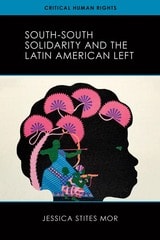
South-South Solidarity and the Latin American Left
Jessica Stites Mor
University of Wisconsin Press, 2024
Jessica Stites Mor looks at four in-depth case studies: the use of legal reform to accomplish the goals of solidarity embedded in Mexico's revolutionary constitution, visual and print media circulated by Cuba and its influence on the agenda of the Afro-Asian block at the United Nations, organizing on behalf of Palestinian nationalism in reshaping Argentina's socialist left, and the role of Latin American Catholic activists in challenging the South African apartheid state. These examples serve as a much-needed road map to navigate our current political climate and show us how solidarity movements might approach future struggles.

Southern Crucifix, Southern Cross
Catholic-Protestant Relations in the Old SouthAndrew Henry Stern
University of Alabama Press, 2012
In sharp contrast to many long-standing presumptions about mistrust or animosity between these two groups, this study proposes that Catholic and Protestant interactions in the South were characterized more by cooperation than by conflict.

Spain's Long Shadow
The Black Legend, Off-Whiteness, and Anglo-American EmpireMaría DeGuzmán
University of Minnesota Press, 2005
England and the Netherlands, Spain’s imperial rivals of the sixteenth and seventeenth centuries, imagined Spain as a land of cruel and degenerate barbarians of la leyenda negra (the Black Legend), in league with the powers of “blackest darkness” and driven by “dark motives.” In Spain’s Long Shadow, María DeGuzmán explores how this convenient demonization made its way into American culture—and proved essential to the construction of whiteness. DeGuzmán’s work reaches from the late eighteenth century—in the wake of the American Revolution—to the present. Surveying a broad range of texts and images, from Poe’s “William Wilson” and John Singer Sargent’s El Jaleo to Richard Wright’s Pagan Spain and Kathy Acker’s Don Quixote, Spain’s Long Shadow shows how the creation of Anglo-American ethnicity as specifically American has depended on the casting of Spain as a colonial alter ego. The symbolic power of Spain in the American imagination, DeGuzmán argues, is not just a legacy of that nation’s colonial presence in the Americas; it lives on as well in the “blackness” of Spain and Spaniards—in the assigning of people of Spanish origin to an “off-white” racial category that reserves the designation of white for Anglo-Americans. By demonstrating how the Anglo-American imagination needs Spain and Spaniards as figures of attraction and repulsion, DeGuzmán makes a compelling and illuminating case for treating Spain as the imperial alter ego of the United States. Cross-cultural and interdisciplinary, ambitious in its chronological sweep, and elegant in its interpretation of literary and visual works, DeGuzmán’s book leads us to a powerful new understanding of the nature—and history—of American ethnicity.
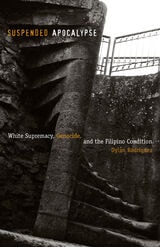
Suspended Apocalypse
White Supremacy, Genocide, and the Filipino ConditionDylan Rodríguez
University of Minnesota Press, 2009
Suspended Apocalypse is a rich and provocative meditation on the emergence of the Filipino American as a subject of history. Culling from historical, popular, and ethnographic archives, Dylan Rodríguez provides a sophisticated analysis of the Filipino presence in the American imaginary. Radically critiquing current conceptions of Filipino American identity, community, and history, he puts forth a genealogy of Filipino genocide, rooted in the early twentieth-century military, political, and cultural subjugation of the Philippines by the United States.
Suspended Apocalypse critically addresses what Rodríguez calls "Filipino American communion," interrogating redemptive and romantic notions of Filipino migration and settlement in the United States in relation to larger histories of race, colonial conquest, and white supremacy. Contemporary popular and scholarly discussions of the Filipino American are, he asserts, inseparable from their origins in the violent racist regimes of the United States and its historical successor, liberal multiculturalism.
Rodríguez deftly contrasts the colonization of the Philippines with present-day disasters such as Hurricane Katrina and Mount Pinatubo to show how the global subjection of Philippine, black, and indigenous peoples create a linked history of genocide. But in these juxtapositions, Rodríguez finds moments and spaces of radical opportunity. Engaging the violence and disruption of the Filipino condition sets the stage, he argues, for the possibility of a transformation of the political lens through which contemporary empire might be analyzed, understood, and perhaps even overcome.
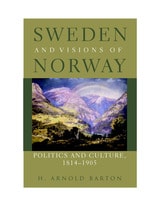
Sweden and Visions of Norway
Politics and Culture 1814-1905H. Arnold Barton
Southern Illinois University Press, 2002
H. Arnold Barton investigates Norwegian political and cultural influences in Sweden during the period of the Swedish-Norwegian dynastic union from 1814 to 1905.
Although closely related in origins, indigenous culture, language, and religion, Sweden and Norway had very different histories, resulting in strongly contrasting societies and forms of government before 1814. After a proud medieval past, Norway had come under the Danish crown in the fourteenth century and had been reduced to virtually a Danish province by the sixteenth.
In 1814, as a spin-off of the Napoleonic Wars, Denmark relinquished Norway, which became a separate kingdom, dynastically united with Sweden with its own government under a constitution independently framed that year. Disputes during the next ninety-one years caused Norway unilaterally to dissolve the tie.
Seeing the union a failure, most historians have concentrated on its conflicts. Barton, however, examines the impact of the union on internal developments, particularly in Sweden. Prior to 1814, Norway, unlike Sweden, had no constitution and only the rudiments of higher culture, yet paradoxically, Norway exerted a greater direct influence on Sweden than vice versa.
Reflecting a society lacking a native nobility, Norway’s 1814 constitution was—with the exception of that of the United States—the most democratic in the world. It became the guiding star of Swedish liberals and radicals striving to reform the antiquated system of representation in their parliament. Norway’s cultural void was filled with a stellar array of artists, writers, and musicians, led by Bjørnsjerne Børnson, Henrik Ibsen, and Edvard Grieg. From the 1850s through the late 1880s, this wave of Norwegian creativity had an immense impact on literature, art, and music in Sweden. By the 1880s, however, August Strindberg led a revolt against an exaggerated “Norvegomania” in Sweden. Barton sees this reaction as a fundamental inspiration to Sweden’s intense search for its own cultural character in the highly creative Swedish National Romanticism of the 1890s and early twentieth century.
Thirty-three illustrations of art and architecture enhance Sweden and Visions of Norway.
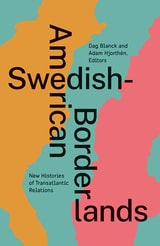
Swedish-American Borderlands
New Histories of Transatlantic RelationsDag Blanck
University of Minnesota Press, 2021
Reframing Swedish–American relations by focusing on contacts, crossings, and convergences beyond migration
Studies of Swedish American history and identity have largely been confined to separate disciplines, such as history, literature, or politics. In Swedish–American Borderlands, this collection edited by Dag Blanck and Adam Hjorthén seeks to reconceptualize and redefine the field of Swedish–American relations by reviewing more complex cultural, social, and economic exchanges and interactions that take a broader approach to the international relationship—ultimately offering an alternative way of studying the history of transatlantic relations.
Swedish–American Borderlands studies connections and contacts between Sweden and the United States from the seventeenth century to today, exploring how movements of people have informed the circulation of knowledge and ideas between the two countries. The volume brings together scholars from a wide range of disciplines within the humanities and social sciences to investigate multiple transcultural exchanges between Sweden and the United States. Rather than concentrating on one-way processes or specific national contexts, Swedish–American Borderlands adopts the concept of borderlands to examine contacts, crossings, and convergences between the nations, featuring specific case studies of topics like jazz, architecture, design, genealogy, and more.
By placing interactions, entanglements, and cross-border relations at the center of the analysis, Swedish–American Borderlands seeks to bridge disciplinary divides, joining a diverse set of scholars and scholarship in writing an innovative history of Swedish–American relations to produce new understandings of what we perceive as Swedish, American, and Swedish American.
Contributors: Philip J. Anderson, North Park U; Jennifer Eastman Attebery, Idaho State U; Marie Bennedahl, Linnaeus U; Ulf Jonas Björk, Indiana U–Indianapolis; Thomas J. Brown, U of South Carolina; Margaret E. Farrar, John Carroll U; Charlotta Forss, Stockholm U; Gunlög Fur, Linnaeus U; Karen V. Hansen, Brandeis U; Angela Hoffman, Uppsala U; Adam Kaul, Augustana College; Maaret Koskinen, Stockholm U; Merja Kytö, Uppsala U; Svea Larson, U of Wisconsin–Madison; Franco Minganti, U of Bologna; Frida Rosenberg, KTH Royal Institute of Technology, Stockholm; Magnus Ullén, Stockholm U.