Results by title
22277 books match the query 'Social Science' and 1635 start with s

SARS Stories
Affect and Archive of the 2003 PandemicBelinda Kong
Duke University Press, 2024

SEE
Andrea Pavoni, Danilo Mandic, Caterina Nirta and Andreas Philippopoulos-Mihalopoulos
University of Westminster Press, 2018
Vision traditionally occupies the height of the sensorial hierarchy. The sense of clarity and purity conveyed by vision, allows it to be explicitly associated with truth and knowledge. The law has always relied on vision and representation, from eye-witnesses to photography, to imagery and emblems. The law and its normative gaze can be understood as that which decrees what is permitted to be and become visible and what is not. Indeed, even if law’s perspectival view is bound to be betrayed by the realities of perception, it is nonetheless productive of real effects on the world.
This first title in the interdisciplinary series ‘Law and the Senses’ asks how we can develop new theoretical approaches to law and seeing that go beyond a simple critique of the legal pretension to truth. This volume aims to understand how law might see and unsee, and how in its turn is seen and unseen. It explores devices and practices of visibility, the evolution of iconology and iconography, and the relation between the gaze of the law and the blindness of justice. The contributions, all radically interdisciplinary, are drawn from photography, legal theory, philosophy, and poetry.
SOFT IN THE MIDDLE
CONTEMPORARY SOFTCORE FEATURE IN ITS CONTEXTSDAVID ANDREWS
The Ohio State University Press, 2006
In meticulous detail, Soft in the Middle demonstrates that softcore’s under-the-radar success and pervasive cultural devaluation may be understood in terms of the “postfeminist” strategies employed by successive generations of producers and distributors, each intent on overcoming obstacles to the mainstream distribution of pornographic material. Softcore and its American precursors became more “feminized” and “female friendly” as their distribution widened, a process hastened in the 1980s by the industry’s transition to private, non-theatrical modes of distribution and exhibition (e.g., home-video outlets and premium-cable networks like Cinemax). One of the byproducts of this development is that contemporary softcore has frequently resorted to what are arguably anti-male or “misandristic” attitudes and depictions. Clearly, the genre challenges traditional assumptions about pornography, including those held by feminists on both sides of “the porn debates.”
Drawing on original industrial research, extensive sampling, and wide-ranging scholarship, Soft in the Middle offers a nuanced look at a discreetly indecent genre whose central commodity has always been female nudity. The book examines the genre’s history, describes its deflationary trajectory, and differentiates the reading patterns of its disparate audiences, including “cult” critics and feminist critics. Naturally, the book also considers the genre’s formal and ideological conventions, surveying its most exemplary subgenres, styles, and motifs—and lavishing particular attention on its most influential studios, directors, and texts.
SOS—Calling All Black People
A Black Arts Movement ReaderJohn H. Bracey
University of Massachusetts Press, 2014
Many of the movement's leading artists, including Ed Bullins, Nikki Giovanni, Woodie King, Haki Madhubuti, Sonia Sanchez, Askia Touré, and Val Gray Ward remain artistically productive today. Its influence can also be seen in the work of later artists, from the writers Toni Morrison, John Edgar Wideman, and August Wilson to actors Avery Brooks, Danny Glover, and Samuel L. Jackson, to hip hop artists Mos Def, Talib Kweli, and Chuck D.
SOS—Calling All Black People includes works of fiction, poetry, and drama in addition to critical writings on issues of politics, aesthetics, and gender. It covers topics ranging from the legacy of Malcolm X and the impact of John Coltrane's jazz to the tenets of the Black Panther Party and the music of Motown. The editors have provided a substantial introduction outlining the nature, history, and legacy of the Black Arts Movement as well as the principles by which the anthology was assembled.
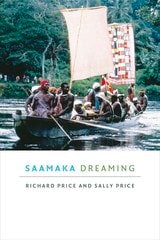
Saamaka Dreaming
Richard Price and Sally Price
Duke University Press, 2017

Sacramental Shopping
Louisa May Alcott, Edith Wharton, and the Spirit of Modern ConsumerismSarah Way Sherman
University of New Hampshire Press, 2013
Written a generation apart and rarely treated together by scholars, Little Women (1868) and The House of Mirth (1905) share a deep concern with materialism, moral development, and self-construction. The heroines in both grapple with conspicuous consumption, an aspect of modernity that challenges older beliefs about ethical behavior and core identity.
Placing both novels at the historical intersection of modern consumer culture and older religious discourse on materialism and identity, Sarah Way Sherman analyzes how Alcott and Wharton rework traditional Protestant discourse to interpret their heroines' struggle with modern consumerism. Her conclusion reveals how Little Women's optimism, still buoyed by otherworldly justice, providential interventions, and the notion of essential identity, ultimately gives way to the much darker vision of modern materialistic culture in The House of Mirth.
Sacramento and the Catholic Church
Shaping a Capital CitySteven Avella
University of Nevada Press, 2008
Besides the numerous institutions that the Church sponsored, it brought together a wide spectrum of the city’s diverse ethnic populations and offered them several routes to assimilation. Catholic Sacramentans have always played an active role in government and in the city’s economy, and Catholic institutions provided a matrix for the creation of new communities as the city spread into neighboring suburbs. At the same time, the Church was forced to adapt itself to the needs and demands of its various ethnic constituents, particularly the flood of Spanish-speaking newcomers in the late twentieth century.
Sacred Assemblies and Civic Engagement
How Religion Matters for America's Newest ImmigrantsNumrich, Paul D
Rutgers University Press, 2007
Immigration to the United States has been a major source of population growth and cultural change throughout much of America’s history. Currently, about 40 percent of the nation’s annual population growth comes from the influx of foreign-born individuals and their children. As these new voices enter America’s public conversations, they bring with them a new understanding of Buddhism, Hinduism, Islam, Judaism, and Christianity to a society that has been marked by religious variety.
Sacred Assemblies and Civic Engagement takes an in-depth look at one particular urban area—the Chicago metropolitan region—and examines how religion affects the civic engagement of the nation’s newest residents. Chapters focus on important religious factors, including sectarianism, moral authority, and moral projects; on several areas of social life, including economics, education, marriage, and language, where religion impacts civic engagement; and on how notions of citizenship and community are influenced by sacred assemblies.
Sacred Darkness
A Global Perspective on the Ritual Use of CavesHolley Moyes
University Press of Colorado, 2014
Covering the ritual use of caves in Europe, Asia, Australia, Africa, Mesoamerica, and the US Southwest and Eastern woodlands, this book brings together case studies by prominent scholars whose research spans from the Paleolithic period to the present day. These contributions demonstrate that cave sites are as fruitful as surface contexts in promoting the understanding of both ancient and modern religious beliefs and practices.
This state-of-the-art survey of ritual cave use will be one of the most valuable resources for understanding the role of caves in studies of religion, sacred landscape, or cosmology and a must-read for any archaeologist interested in caves.
Sacred Divorce
Religion, Therapeutic Culture, and Ending Life PartnershipsJenkins, Kathleen E
Rutgers University Press, 2014
For more than five years, Jenkins observed religious support groups and workshops for the divorced and interviewed religious practitioners in the midst of divorces, along with clergy members who advised them. Her findings appear here in the form of eloquent and revealing stories about individuals managing emotions in ways that make divorce a meaningful, even sacred process. Clergy from mainline Protestant denominations to Baptist churches, Jewish congregations, Unitarian fellowships, and Catholic parishes talk about the concealed nature of divorce in their congregations. Sacred Divorce describes their cautious attempts to overcome such barriers, and to assemble meaningful symbols and practices for members by becoming compassionate listeners, delivering careful sermons, refitting existing practices like Catholic annulments and Jewish divorce documents (gets), and constructing new rituals.
With attention to religious, ethnic, and class variations, covering age groups from early thirties to mid-sixties and separations of only a few months to up to twenty years, Sacred Divorce offers remarkable insight into individual and cultural responses to divorce and the social emotions and spiritual strategies that the clergy and the faithful employ to find meaning in the breach. At once a sociological document, an ethnographic analysis, and testament of personal experience, Sacred Divorce provides guidance, strategies and answers to readers looking for answers and those looking to heal.
Sacred Leaves of Candomblé
African Magic, Medicine, and Religion in BrazilBy Robert A. Voeks
University of Texas Press, 1997
Winner, Hubert Herring Book Award, Pacific Coast Council on Latin American Studies
Candomblé, an African religious and healing tradition that spread to Brazil during the slave trade, relies heavily on the use of plants in its spiritual and medicinal practices. When its African adherents were forcibly transplanted to the New World, they faced the challenge not only of maintaining their culture and beliefs in the face of European domination but also of finding plants with similar properties to the ones they had used in Africa.
This book traces the origin, diffusion, medicinal use, and meaning of Candomblé's healing pharmacopoeia—the sacred leaves. Robert Voeks examines such topics as the biogeography of Africa and Brazil, the transference—and transformation—of Candomblé as its adherents encountered both native South American belief systems and European Christianity, and the African system of medicinal plant classification that allowed Candomblé to survive and even thrive in the New World. This research casts new light on topics ranging from the creation of African American cultures to tropical rain forest healing floras.
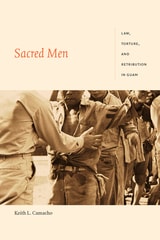
Sacred Men
Law, Torture, and Retribution in GuamKeith L. Camacho
Duke University Press, 2019

Sacred Modern
Faith, Activism, and Aesthetics in the Menil CollectionBy Pamela G. Smart
University of Texas Press, 2010
Renowned as one of the most significant museums built by private collectors, the Menil Collection in Houston, Texas, seeks to engage viewers in an acutely aesthetic, rather than pedagogical, experience of works of art. The Menil's emphasis on being moved by art, rather than being taught art history, comes from its founders' conviction that art offers a way to reintegrate the sacred and the secular worlds. Inspired by the French Catholic revivalism of the interwar years that recast Catholic tradition as the avant-garde, Dominique and John de Menil shared with other Catholic intellectuals a desire to reorder a world in crisis by imbuing modern cultural forms with religious faith, binding the sacred with the modern.
Sacred Modern explores how the Menil Collection gives expression to the religious and political convictions of its founders and how "the Menil way" is being both perpetuated and contested as the Museum makes the transition from operating under the personal direction of Dominique de Menil to the stewardship of career professionals. Taking an ethnographic approach, Pamela G. Smart analyzes the character of the Menil aesthetic, the processes by which it is produced, and the sensibilities that it is meant to generate in those who engage with the collection. She also offers insight into the extraordinary impact Dominique and John de Menil had on the emergence of Houston as a major cultural center.

Sacred Pens and Public Voices
Latter-day Saint Women in Dialogue with AmericaLori Motzkus Wilkinson
University of Illinois Press, 2026
Though intellectually connected to figures outside the Church, the LDS women saw them less as
women's rights activists to emulate and more as speakers of truths that, regardless of the origin, should be embraced and harnessed. Wilkinson reveals how Emmeline B. Wells, Susa Young Gates, and other Latter-day Saint women supported and upheld institutional LDS authority and utilized the importance of women’s roles in the home and society as mechanisms for women’s advancement. Even as LDS women continued to engage with prominent national thinkers, their writings and lives demonstrated that they connected with the larger sphere of women’s rights activism before drawing on the LDS concept of women’s divine nature to reshape those ideals to uniquely religious ends.
Original and eye-opening, Sacred Pens and Public Voices revises established narratives about how LDS women interacted with and used ideas taken from national women’s movements.

Sacred Places
American Tourist Attractions in the Nineteenth CenturyJohn F. Sears
University of Massachusetts Press, 1999
Drawing on this fascinating body of material, Sacred Places examines the vital role which tourism played in fulfilling the cultural needs of nineteenth-century Americans. America was a new country in search of a national identity. Educated Americans desperately wished to meet European standards of culture and, at the same time, to develop a distinctly American literature and art. Tourism offered a means of defining America as a place and taking pride in the special features of its landscape. The country's magnificent natural wonders were a substitute for the cathedrals and monuments, the sense of history that Europe had built over the centuries. Moreover, Sears argues, tourist attractions like Mammoth Cave, Mount Auburn Cemetery, Yosemite, and Yellowstone functioned as sacred places for a nation with a diversity of religious sects and without ancient religious and national shrines. For nineteenth-century Americans, whose vision was shaped by the aesthetics of the sublime and the picturesque and by the popular nineteenth-century Romantic view of nature as temple, such places fulfilled their urgent need for cultural monuments and for places to visit which transcended ordinary reality.
But these nineteenth-century tourist attractions were also arenas of consumption. Niagara Falls was the most sublime of God's creations, a sacred place, which, like Mount Auburn Cemetery, was supposed to have a profound moral effect on the spectator. But it was also an emporium of culture where the tourist shopped for Niagara's wonders and for little replicas of the Falls in the form of souvenirs. In Sacred Places, Sears describes how this strange, sometimes amusing, juxtaposition of the mythic and the trivial, the sacred and the profane, the spiritual and the commercial remained a significant feature of American tourist attractions even after efforts were made at Yosemite, Yellowstone, and Niagara Falls to curb commercial and industrial intrusions.
Sears also explores how the nineteenth-century idealization of home stimulated the tourists' response to such places as the Willey House in the White Mountains, the rural cemeteries, and even the newly established asylums for the deaf, dumb, blind, and insane. And, in an intriguing account of Mauch Chunk, Pennsylvania, he examines the reasons why an important nineteenth-century anthracite transportation center was also a major tourist attraction.
Most of the attractions discussed in this book are still visited by millions of Americans. By illuminating their cultural meaning, Sacred Places prompts us to reflect on our own motivations and responses as tourists and reveals why tourism was and still is such an important part of American life.
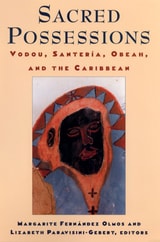
Sacred Possessions
Vodou, Santería, Obeah, and the CaribbeanOlmos, Margarite Fernândez
Rutgers University Press, 1997
Sacred Possessions is an unprecedented collection of thirteen comparative and interdisciplinary essays exploring the cross-cultural dynamics of African-based religious systems in the Caribbean. The contributors analyze the nature and liturgies of Vodou, Santeria, Obeah, Quimbois, and Gaga as they form one central cultural matrix in the region. They ask how these belief systems were affected by differing colonial histories and landscapes, and how they affected other cultural expressions (from the oral tradition to popular art and literature), and how they have been perceived and (mis)represented by the West.
The book is a unique contribution to the study of the Caribbean as a site of multiculturalism, demonstrating the linkages between anthropology, religion, literature, and popular culture. Also included are a stunning photoessay on Cuban Santeria, a glossary of terms, and an insightful introduction by the editors.
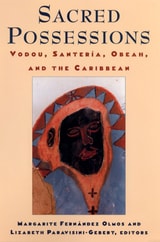
Sacred Possessions
Vodou, Santería, Obeah, and the CaribbeanOlmos, Margarite Fernândez
Rutgers University Press, 1997
Sacred Possessions is an unprecedented collection of thirteen comparative and interdisciplinary essays exploring the cross-cultural dynamics of African-based religious systems in the Caribbean. The contributors analyze the nature and liturgies of Vodou, Santeria, Obeah, Quimbois, and Gaga as they form one central cultural matrix in the region. They ask how these belief systems were affected by differing colonial histories and landscapes, and how they affected other cultural expressions (from the oral tradition to popular art and literature), and how they have been perceived and (mis)represented by the West.
The book is a unique contribution to the study of the Caribbean as a site of multiculturalism, demonstrating the linkages between anthropology, religion, literature, and popular culture. Also included are a stunning photoessay on Cuban Santeria, a glossary of terms, and an insightful introduction by the editors.
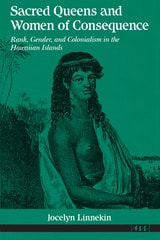
Sacred Queens and Women of Consequence
Rank, Gender, and Colonialism in the Hawaiian IslandsJocelyn Linnekin
University of Michigan Press, 1990
Sacred Queens and Women of Consequence is a pathbreaking examination of the contact encounter in Hawaii from the perspective of Hawaiian women. Jocelyn Linnekin offers a reconstruction of Hawaiian women's authority and status before contact with the West and examines changes in their cultural valuation and social position during the first century of Western contact. Through a detailed analysis of women's roles in exchange, production, kinship, and politics during the political and economic transformations of the nineteenth century, Linnekin challenges the view that Polynesian women were doomed to a peripheral status by the ritual logic of pollution. She demonstrates how Hawaiian women maintained their position as points of access to land and power, while frequently resisting the constraints of the tabu system as well as later Western-influenced attempts to abridge their authority.This book is a unique and important contribution to the scholarship on Hawaiian history as well as to the growing literature on women and colonialism and women and social stratification. It will appeal to scholars and students who work in the areas of gender studies, social stratification, cultural change, Oceania, and historical anthropology.
Sacred Revolutions
Durkheim And The College De SociologieMichele H. Richman
University of Minnesota Press, 2002
Explores the role of the sacred in the response of French intellectuals to the rise of fascism during the 1930s
How is it that the most radical cultural iconoclasts of the interwar years—Georges Bataille, Roger Caillois, and Michel Leiris—could have responded to the rise of fascism by taking refuge in a "sacred sociology"? This is the question that Michèle H. Richman poses in a work that examines this seemingly paradoxical development. Her book traces the overall implications for French social thought of the "ethnographic detour" that began with Durkheim’s interest in Australian aboriginal religion—implications that reach back to the Revolution of 1789 and forward to the student protests of May 1968.
Richman argues that by revising a phenomenon at once as familiar and as exotic as the sacred, these intellectuals forged a point of view relevant to politics, art, and eroticism in the modern period. Assimilating sociology to this revised notion of the sacred, they revitalized a critical discourse based on anthropological thinking dating back to Montaigne and culminating in Rousseau. Her work thus supplies an important chapter in the history of the human sciences while demonstrating the formation of an innovative critical discourse that straddles literary theory, social thought, and religious and cultural studies.
Sacred River
A NovelSyl Cheney-Coker
Ohio University Press, 2015
Sacred Sisterhoods
A Celebration of Black Women's Friendships on Television and in FilmEdited by Imani M. Cheers
The Ohio State University Press, 2025
Creative visionaries from Debbie Allen to Quinta Brunson, along with shows and films from Living Single to Hidden Figures—and many others—receive their due in these rigorous, lively, and accessible essays. Spotlighting the nuances and normalcy of Black women’s sacred sisterhoods, contributors reveal the indelible mark modern Black consciousness and creative control leave on our popular culture every day in an anthology that will be essential to scholars and students of contemporary media, race, and gender, as well as to general readers.
Contributors:
Imani M. Cheers, Monique A. Gamble, Marquita Gammage, Kandace Harris, Crystal L. Holmes, Makeba Lavan, Rondrea Danielle Mathis, Miriam J. Petty-Adams, De Anna Reese, Randi Richardson, Beretta E. Smith-Shomade, Andrene M. Taylor, Kristen Warner, and Shauntae Brown White
Sacred Southwestern Landscapes
Archaeologies of Religious EcologyEdited by Aaron M. Wright
University of Utah Press, 2024
Hailing from various academic and cultural backgrounds, contributors invoke a range of theoretical currents and methodological practices to examine how these relationships developed and evolved. Nearly all the places, people, and paradigms at play in contemporary southwestern scholarship find room among these pages, from the Sonoran and Chihuahuan Deserts to the Colorado Plateau; from diverse cultures, including Ancestral Pueblo, Mogollon, Hohokam, Pataya, Trincheras, Navajo (Diné), and Nuevomexicano; and from theoretical frameworks drawing upon phenomenology, materiality, bundling, and semiotics. This collective engagement showcases how religious ecologies can be studied from multiple perspectives and through sundry lines of evidence, leaving readers with appreciation and reverence for the rich and robust sacredness in southwestern landscapes.
Sacred Springs in the Camps
Gulag Memory, Legend, and PlaceJeanmarie Rouhier-Willoughby
University of Wisconsin Press, 2026
Grounded by detailed ethnography, Sacred Springs in the Camps explores how legend creates, negotiates, and challenges collective memory; how lived religious practices intersect with the current revival of the Russian Orthodox Church; how politics intertwine with belief; and how the social construction of sacred places affects folk narratives, faith, and local identity. These unlikely holy waters thus reflect important facets of contemporary Russian religion, politics, and society, refracting and reframing memories of the socialist past even as they offer important lessons for the present moment.
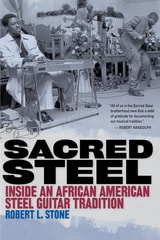
Sacred Steel
Inside an African American Steel Guitar TraditionRobert Stone
University of Illinois Press, 2010
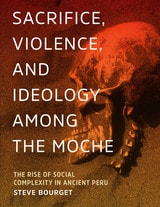
Sacrifice, Violence, and Ideology Among the Moche
The Rise of Social Complexity in Ancient PeruBy Steve Bourget
University of Texas Press, 2016
In a special precinct dedicated to ritual sacrifice at Huaca de la Luna on the north coast of Peru, about seventy-five men were killed and dismembered, their remains and body parts then carefully rearranged and left on the ground with numerous offerings. The discovery of this large sacrificial site—one of the most important sites of this type in the Americas—raises fundamental questions. Why was human sacrifice so central to Moche ideology and religion? And why is sacrifice so intimately related to the notions of warfare and capture?
In this pioneering book, Steve Bourget marshals all the currently available information from the archaeology and visual culture of Huaca de la Luna as he seeks to understand the centrality of human sacrifice in Moche ideology and, more broadly, the role(s) of violence in the development of social complexity. He begins by providing a fully documented account of the archaeological contexts, demonstrating how closely interrelated these contexts are to the rest of Moche material culture, including its iconography, the regalia of its elite, and its monumental architecture. Bourget then probes the possible meanings of ritual violence and human sacrifice and their intimate connections with concepts of divinity, ancestry, and foreignness. He builds a convincing case that the iconography of ritual violence and the practice of human sacrifice at all the principal Moche ceremonial centers were the main devices used in the establishment and development of the Moche state.
Sacrifice
Its Nature and FunctionsHenri Hubert and Marcel Mauss
University of Chicago Press, 1981
The present book is one of the best-known essays pulbished in L'Année sociologique and has been regarded as a model for method and mode of interpretation. Its subject is at the very center of the comparative study of religion. The authors describe a basic sacrifice drawn from Indian sources and show what is fundamental and constant, comparing Indian and Hebrew practices in particular, then Greek and Roman, then additional practices from many eras and cultures.
Sad by Design
On Platform NihilismGeert Lovink
Pluto Press, 2019
Sad by Design offers a critical analysis of our social media environment and what it’s doing to us. Geert Lovink analyzes the problems of toxic viral memes, online addiction, and the lure of fake news. He shows how attempts to design sites to solve these problems have, in their studied efforts to be apolitical, been unable to generate either a serious critique or legitimate alternatives. But there is an answer: Lovink calls for us to acknowledge the engineered intimacy of these sites—because boredom, he argues, is the first stage of overcoming “platform nihilism,” which can free us to organize to stop the data harvesting industries that run them.
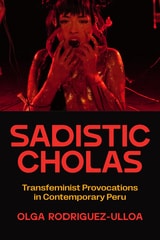
Sadistic Cholas
Transfeminist Provocations in Contemporary PeruOlga Rodriguez-Ulloa
University of Texas Press, 2026
Analyzing how Peruvian feminist art and activism subverts and reclaims the chola stereotype to confront colonial and patriarchal institutions.
Indigenous Andean women have long been derided in Peru, spurned by colonial and then national elites as depraved cholas. Olga Rodriguez-Ulloa shows how contemporary artists and activists not only reclaim this term of abuse but also mobilize the stereotype of the angry and perverted chola to confront the cruelties of patriarchy, capitalism, and white supremacy.
Sadistic Cholas examines music, visual arts, literature, and grassroots organizing by self-identified cholas—in particular, Black women and trans and queer feminists. Under colonial domination, cholas were destined for sexual coercion, labor extraction, and reproductive exploitation. While exhuming historical traces of chola resistance, Rodriguez-Ulloa argues that this condition of oppression persisted through the internal war of the 1980s, when Marxist women at the forefront of the armed campaign were condemned as hypersexual deviants. Inspired by their leftist forebears, today’s artists experiment with an aesthetic of sadistic vengeance, configured as rightful self-defense. Yet, in spite of their violent imagery, activist cholas pursue nonviolent goals, promoting a commons of care incorporating people, animals, and the environment.
Sadomasochism in Everyday Life
The Dynamics of Power and PowerlessnessChancer, Lynn S.
Rutgers University Press, 1992
Lynn Chancer advances the provocative thesis that sadomasochism is far more prevalent in contemporary societies like the United States than we realize. According to Chancer, sexual sadomasochism is only the best-known manifestation of what is actually a much more broadly based social phenomenon. Moving from personal relationships to school, the workplace, and other interactions, Chancer uses a variety of examples that are linked by a recurrent pattern of behavior. She goes beyond the predominantly individualistic and psychological explanations generally associated with sadomasochism (including those popularized in the "how to" literature of the recent Women Who Love Too Much genre) toward a more sociological interpretation. Chancer suggests that the structure of societies organized along male-dominated and capitalistic lines reflects and perpetuates a sadomasochistic social psychology, creating a culture steeped in everyday experiences of dominance and subordination.
In the first part of the book, Chancer discusses the prevalence of sadomasochistic cultural imagery in contemporary America and examines sadomasochism through several perspectives. She develops a set of definitional traits both through existential analysis of an instance of S/M sex and by incorporating a number of Hegelian and psychoanalytic concepts. In the second part of the book, she places sadomasochism in a broader context by exploring whether and how it appears in the workplace and how it relates to gender and race.

Safari Nation
A Social History of the Kruger National ParkJacob S. T. Dlamini
Ohio University Press, 2020
Safe Space
Finding Safety in Solidarity and Self-DeterminationRaphaëlle Red
Seagull Books, 2026
An urgent and intimate meditation on what it means to feel—and to be—safe.
In Safe Space, Raphaëlle Red traces the physiological toll of insecurity on marginalized lives across literature, film, music, and political discourse. In conversation with artists and thinkers such as James Baldwin, Nina Simone, June Jordan, Ja’Tovia Gary, and Leslie Feinberg, she maps the genealogy of “safe spaces,” from their radical origins to their contested place in today’s public debates. Rather than dismissing or defending the concept, Red asks what we might recover if we redefined safety not as fragility or withdrawal, but as self-determination, collective defense, and the right to opacity. She explores the tension between feeling and reality, protection and powerlessness, the language of safety, and the politics it sustains. Along the way, she grounds her reflections in personal narrative, European and North American contexts, and contemporary movements of resistance. At once theoretical and deeply personal, Safe Space refuses easy answers. Instead, it imagines safe space as temporary, regenerative, and insurgent—a practice of care and solidarity that unsettles hierarchies rather than reproducing them. A book for anyone wrestling with fear, vulnerability, and the fragile promise of collective liberation.

Safe Space
Gay Neighborhood History and the Politics of ViolenceChristina B. Hanhardt
Duke University Press, 2013
Since the 1970s, a key goal of lesbian and gay activists has been protection against street violence, especially in gay neighborhoods. During the same time, policymakers and private developers declared the containment of urban violence to be a top priority. In this important book, Christina B. Hanhardt examines how LGBT calls for "safe space" have been shaped by broader public safety initiatives that have sought solutions in policing and privatization and have had devastating effects along race and class lines.
Drawing on extensive archival and ethnographic research in New York City and San Francisco, Hanhardt traces the entwined histories of LGBT activism, urban development, and U.S. policy in relation to poverty and crime over the past fifty years. She highlights the formation of a mainstream LGBT movement, as well as the very different trajectories followed by radical LGBT and queer grassroots organizations. Placing LGBT activism in the context of shifting liberal and neoliberal policies, Safe Space is a groundbreaking exploration of the contradictory legacies of the LGBT struggle for safety in the city.
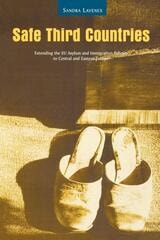
Safe Third Countries
Extending the EU Asylum and Immigration Policies to Central and Eastern EuropeSandra Lavenex
Central European University Press, 1999
The refugee issue has always been controversial and Lavenex's analyses add fuel to an already heated debate. She analyses the various bi- and multilateral processes by which the countries of Central and Eastern Europe (CEECs) are being gradually incorporated into a restrictive refugee regime established among the EU member states, in which the CEECs serve as "gate-keepers" for refugees and immigrants heading towards Western Europe.
At a time when many transition countries are trying to enter the EU, Lavenex highlights the CEECs consent to adapt to Western European policies aimed at fighting illegal immigration and reducing the numbers of asylum seekers as a political bargaining tool in exchange for future membership in the EU. She also argues that the regime undermines the values of international refugee protection and diffuses states' responsibilities by establishing a system of negative redistribution for the handling of asylum claims.
Safe Third Countries is the first comprehensive study on the extension of the emergent European refugee regime and highlights, in an innovative manner, the complex entanglement of domestic policies, European integration and international relations.

Safe in a Midwife's Hands
Birthing Traditions from Africa to the American SouthLinda Janet Holmes
The Ohio State University Press, 2023

Safety Orange
Anna Watkins Fisher
University of Minnesota Press, 2021
How fluorescent orange symbolizes the uneven distribution of safety and risk in the neoliberal United States
Safety Orange first emerged in the 1950s as a bureaucratic color standard in technical manuals and federal regulations in the United States. Today it is most visible in the contexts of terror, pandemic, and environmental alarm systems; traffic control; work safety; and mass incarceration. In recent decades, the color has become ubiquitous in American public life—a marker of the extreme poles of state oversight and abandonment, of capitalist excess and dereliction. Its unprecedented saturation encodes the tracking of those bodies, neighborhoods, and infrastructures judged as worthy of care—and those deemed dangerous and expendable.
Here, Anna Watkins Fisher uses Safety Orange as an interpretive key for theorizing the uneven distribution of safety and care in twenty-first-century U.S. public life and for pondering what the color tells us about neoliberalism’s intensifying impact often hiding in plain sight in ordinary and commonplace phenomena.
Forerunners: Ideas First is a thought-in-process series of breakthrough digital publications. Written between fresh ideas and finished books, Forerunners draws on scholarly work initiated in notable blogs, social media, conference plenaries, journal articles, and the synergy of academic exchange. This is gray literature publishing: where intense thinking, change, and speculation take place in scholarship.

Sagebrush Collaboration
How Harney County Defeated the Takeover of the Malheur Wildlife RefugePeter Walker
Oregon State University Press, 2018
Every American is co-owner of the most magnificent estate in the world—federal public forests, grazing lands, monuments, national parks, wildlife refuges, and other public places. The writer Wallace Stegner famously referred to public lands as “America’s best idea,” but there have always been some who oppose the idea for ideological reasons, or because they have a vested economic interest. In the current decade, federal public lands have been under physical threat as never before, with armed standoffs and takeovers that the US government has proved stunningly unsuccessful at prosecuting in federal courts.
One such incident was the takeover of the Malheur National Wildlife Refuge in Harney County, Oregon, in 2016. Armed militants seized the headquarters of the refuge for forty-one days and occupied the community for three months. Militants threatened and harassed local residents, pledging to “give back” the land to unnamed “rightful owners” in their effort to enact a fringe interpretation of the US Constitution.
Drawing on more than two years of intensive fieldwork, Sagebrush Collaboration shows that the militants failed in their objectives because the sensible and hardworking citizens of Harney County had invested decades in collaboratively solving the very problems that the militia used to justify their anti–federal government revolution.
In Sagebrush Collaboration, Peter Walker offers the first book-length study of why the 2016 takeover of the Malheur National Wildlife Refuge failed. His nuanced and deeply researched account provides the full context for the takeover, including the response from local and federal officials and the grassroots community resistance. It will be essential reading for years to come for anyone who wants to understand the ongoing battle over the future of America’s public lands.
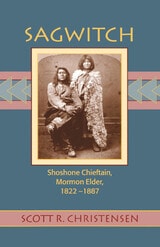
Sagwitch
Shoshone Chieftan, Mormon Elder 1822-1887Scott Christensen
Utah State University Press, 1999
The Northwestern Shoshone knew as home the northern Great Salt Lake, Bear River, Cache, and Bear Lake valleys of northern Utah. Sagwitch was born at a time when his people traded with the mountain men. In the late 1850s, wagons brought Mormon farmers to settle in Cache Valley, the Northwestern Shoshone heartland. Emigrants and settlers reduced Shoshone access to traditional village sites and food resources. Relationships with the Mormons were mostly good but often strained, and the Shoshone treatment of migrants, who now traveled north and south as well as west and east through the area, was increasingly opportunistic. It only took a few violent incidents for a zealous army colonel to seek severe punishment of the Northwestern Shoshone on a winter morning in 1863. The Bear River Massacre was among the bloodiest engagements of America's Indian wars. Hundreds of Shoshone, including Sagwitch's wife and two sons, died; Sagwitch was wounded but escaped. The band was shattered, other chiefs dead.
The following years were very hard for the survivors. The federal government negotiated a treaty with them but failed to get Sagwitch's signature when, en route to the sessions, he was arrested and then wounded by a white assassin. With the world around him changed, Sagwitch sought accommodation with the most immediate threat to his people's traditional way of survival—the Mormons occupying the Shoshone's valleys.
This, then, is also the story of the conversion of Sagwitch and his band to the Mormon Church. Though not without problems, that conversion was long lasting and thorough. Sagwitch and other Shoshone would demonstrate in important ways their new religious devotion. With the assistance of Mormon leaders, they established the Washakie community in northern Utah. Though efforts to secure a land base had an uneven history, they partly succeeded, and the story of these Shoshone's attempts at rural farming diverged significantly from what happened on government reservations. When Sagwitch died, his death went almost unnoticed outside of Washakie, but his children and grandchildren continued to be important voices among a people who, after experiencing near annihilation, survived in the new world into which Sagwitch led them.
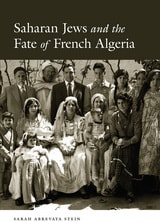
Saharan Jews and the Fate of French Algeria
Sarah Abrevaya Stein
University of Chicago Press, 2014
Drawing on materials from thirty archives across six countries, Stein tells the story of colonial imposition on a desert community that had lived and traveled in the Sahara for centuries. She paints an intriguing historical picture—of an ancient community, trans-Saharan commerce, desert labor camps during World War II, anthropologist spies, battles over oil, and the struggle for Algerian sovereignty. Writing colonialism and decolonization into Jewish history and Jews into the French Saharan one, Saharan Jews and the Fate of French Algeria is a fascinating exploration not of Jewish exceptionalism but of colonial power and its religious and cultural differentiations, which have indelibly shaped the modern world.
Sahel Visions
Planned Settlement and River Blindness Control in Burkina FasoDella E. McMillan
University of Arizona Press, 1994
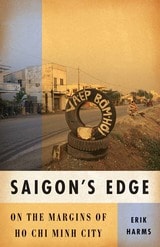
Saigon’s Edge
On the Margins of Ho Chi Minh CityErik Harms
University of Minnesota Press, 2010
Unlike the idealized Vietnamese model of urban space, Hóc Môn is between worlds, neither outside nor inside but always uncomfortably both. With particular attention to everyday social realities, Harms demonstrates how living on the margin can be both alienating and empowering, as forces that exclude its denizens from power and privilege in the inner city are used to thwart the status quo on the rural edges.
More than a local case study of urban change, Harms’s work also opens a window on Vietnam’s larger turn toward market socialism and the celebration of urbanization—transformations instructively linked to trends around the globe.

Sailing to Freedom
Maritime Dimensions of the Underground RailroadEdited by Timothy D. Walker
University of Massachusetts Press, 2021
With innovative scholarship and thorough research, Sailing to Freedom highlights little-known stories and describes the less-understood maritime side of the Underground Railroad, including the impact of African Americans' paid and unpaid waterfront labor. These ten essays reconsider and contextualize how escapes were managed along the East Coast, moving from the Carolinas, Virginia, and Maryland to safe harbor in northern cities such as Philadelphia, New York, New Bedford, and Boston.
In addition to the volume editor, contributors include David S. Cecelski, Elysa Engelman, Kathryn Grover, Megan Jeffreys, Cheryl Janifer LaRoche, Mirelle Luecke, Cassandra Newby-Alexander, Michael D. Thompson, and Len Travers.
Sainted Women of the Dark Ages
Jo Ann McNamara, John E. Halborg, and Gordon Whatley, eds.
Duke University Press, 1992
Three of these holy women were queens who turned to religion only after a period of intense worldly activity. Others were members of the Carolingian family, deeply implicated in the political ambitions of their male relatives. Some were partners in the great Irish missions to the pagan countryside and others worked for the physical salvation of the poor. From the peril and suffering of their lives they shaped themselves as paragons of power and achievement. Beloved by their sisters and communities for their spiritual gifts, they ultimately brought forth a new model of sanctity.
These biographies are unusually authentic. At least two were written by women who knew their subjects, while others reflect the direct testimony of sisters within the cloister walls. Each biography is accompanied by an introduction and notes that clarify its historical context. This volume will be an excellent source for students and scholars of women's studies and early medieval social, religious, and political history.
Saints Observed
Studies of Mormon Village Life, 1850-2005Howard M. Bahr
University of Utah Press, 2014
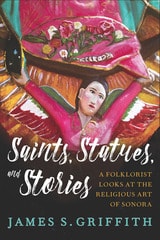
Saints, Statues, and Stories
A Folklorist Looks at the Religious Art of SonoraJames S. Griffith
University of Arizona Press, 2019
So describes well-known and beloved folklorist James S. Griffith as he takes us back through the decades to a town in northern Sonora where a statue is saved—and in so doing, a community is saved as well.
In Saints, Statues, and Stories Griffith shares stories of nearly sixty years of traveling through Sonora. As we have come to expect through these journeys, “Big Jim”—as he is affectionately known by many—offers nothing less than the living traditions of Catholic communities. Themes of saints as agents of protection or community action are common throughout Sonora: a saint coming out of the church to protect the village, a statue having a say in where it resides and paying social calls to other communities, or a beloved image rescued from destruction and then revered on a private altar. A patron saint saves a village from outside attackers in one story—a story that has at least ten parallels in Sonora’s former mission communities. Details may vary, but the general narrative remains the same: when hostile nonbelievers attack the village, the patron saint of the church foils them.
Griffith uncovers the meanings behind the devotional uses of religious art from a variety of perspectives—from artist to audience, preservationist to community member. The religious artworks transcend art objects, Griffith believes, and function as ways of communicating between this world and the next. Setting the stage with a brief geography, Griffith introduces us to roadside shrines, artists, fiestas, saints, and miracles. Full-color images add to the pleasure of this delightful journey through the churches and towns of Sonora.
Salado Archaeology of the Upper Gila, New Mexico
Stephen H. Lekson
University of Arizona Press, 2002
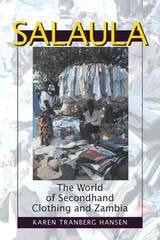
Salaula
The World of Secondhand Clothing and ZambiaKaren Tranberg Hansen
University of Chicago Press, 2000
Essential for the African economy, the secondhand clothing business is wildly popular, to the point of threatening the indigenous textile industry. But, Hansen shows, wearing secondhand clothes is about much more than imitating Western styles. It is about taking a garment and altering it to something entirely local, something that adheres to current cultural norms of etiquette. By unraveling how these garments becomes entangled in the economic, political, and cultural processes of contemporary Zambia, Hansen also raises provocative questions about environmentalism, charity, recycling, and thrift.
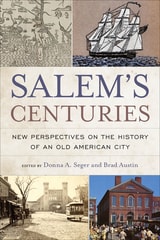
Salem's Centuries
New Perspectives on the History of an Old American CityEdited by Donna A. Seger and Brad Austin
Temple University Press, 2026
In advance of the city’s quadricentennial, the editors and contributors highlight the depth and diversity of Salem’s history, including stories of indigenous peoples, early settlers, African Americans, and immigrants, spanning from the American and industrial revolutions to World War II and the present. Chronologically arranged by century, chapters examine how Salem’s history has been lost or distorted in its public presentations over time.
Salem’s Centuries is a fresh look at an old American city. And yes, it includes the accused witches.
Contributors: Kimberly S. Alexander, Emerson W. Baker, Aviva Chomsky, Andrew Darien, Elizabeth Duclos-Orsello, Theresa Giard, Marilyn Hayward, Bethany Jay, Michele Louro, Elizabeth McKeigue, Robert W. McMicken, Dane A. Morrison, Maria Pride, J.D. Scrimgeour, Margo Shea, Hans Schwartz, Brian Valimont, Maryann Zujewski, and the editors
In the series History and the Public

Sales and Celebrations
Retailing and Regional Identity in Western New York State, 1920–1940Sarah Elvins
Ohio University Press, 2004
Between the two world wars, the retail world experienced tremendous changes. New forms of competition, expanded networks of communication and transportation, and the proliferation of manufactured goods posed challenges to department store and small shopkeeper alike.
In western New York, and in Buffalo and Rochester in particular, retailers were a crucial part of urban life, acting as cultural brokers and civic leaders. They were also cultivators of area pride. Even as they adopted the latest merchandising techniques or stocked the newest items, merchants emphasized their local roots and their ability to put a local spin on national trends and innovations. Regional identity became a powerful selling tool not only during the prosperity of the 1920s but also through the economic crisis of the Great Depression.
Sales and Celebrations explains how local traditions and institutions affected the evolution of American consumer culture. It expands our understanding of American consumerism, demonstrating that local particularities and loyalties could often coexist with, and occasionally challenge, the spread of mass consumption. In her award-winning study, Professor Sarah Elvins provides new insight into the relationship between America’s largest metropolises and its smaller centers. Retailers in Buffalo and Rochester did not simply imitate the practices of their counterparts in Manhattan and Chicago; they highlighted their unique ability to serve the wants and needs of their particular markets.
By drawing attention to this persistent power of the local, Sales and Celebrations illuminates a neglected aspect of the story of American culture in the interwar period.
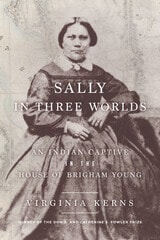
Sally in Three Worlds
An Indian Captive in the House of Brigham YoungVirginia Kerns
University of Utah Press, 2021
In this remarkable and deeply felt book, Virginia Kerns uncovers the singular and forgotten life of a young Indian woman who was captured in 1847 in what was then Mexican territory. Sold to a settler, a son-in-law of Brigham Young, the woman spent the next thirty years as a servant to Young’s family. Sally, as they called her, lived in the shadows, largely unseen. She was later remembered as a “wild” woman made “tame” who happily shed her past to enter a new and better life in civilization.
Drawing from a broad range of primary sources, Kerns retrieves Sally from obscurity and reconstructs her complex life before, during, and after captivity. This true story from the American past resonates deeply in the current moment, attentive as it is to killing epidemics and racial injustices. In telling Sally’s story, Kerns presents a new narrative of the American West.
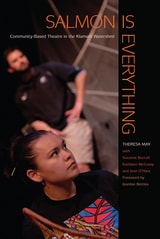
Salmon Is Everything
Community-Based Theatre in the Klamath WatershedTheresa May with Susanne Burcell, Kathleen McCovey, and Jean O'Hara
Oregon State University Press, 2014
Salmon Is Everything simultaneously illuminates the logistics of a crisis in the third largest watershed in the Pacific Northwest—the premature death of more than 30,000 salmon on the Lower Klamath River in 2002—and documents what happened when one community decided to use art to amplify the experiences of its members. The fish kill had unprecedented impact throughout the watershed, and for many tribal communities it signified an ongoing loss of traditional cultural practices. But in the political and ecological upheaval that followed, the role of salmon in tribal life went largely unacknowledged, which inspired the collaboration between May and members of the Yurok, Hoopa Valley, and Karuk tribes, as well as farmers, ranchers, and others invested in the Klamath watershed.
Salmon is Everything will appeal to readers interested in the environmental and cultural history of the Pacific Northwest and the ecological and civil challenges its communities face. For artists and activists, it’s a useful case study. Salmon is Everything offers a unique interdisciplinary resource for high school and college level courses in environmental studies, Native American studies, and theatre arts education.