Results by title
28164 books match the query 'History' and 1838 start with s

Show Us How You Do It
Marshall Keeble and the Rise of Black Churches of Christ in the United States, 1914-1968Edward J. Robinson
University of Alabama Press, 2008

Show of Hands
A Natural History of Sign LanguageDavid F. Armstrong
Gallaudet University Press, 2011
Most scholarly speculation on the origin of human language has centered around speech. However, the growing understanding of sign languages on human development has transformed the debate on language evolution. David F. Armstrong’s new book Show of Hands: A Natural History of Sign Language casts a wide net in history and geography to explain how these visible languages have enriched human culture in general and how their study has expanded knowledge of the human condition.
Armstrong addresses the major theories of language evolution, including Noam Chomsky’s thesis of an innate human “organ” for language and Steven Pinker’s contention that there is language and not-language without any gradations between gesture and language. This engrossing survey proceeds with William C. Stokoe’s revival of the early anthropological cognitive-linguistic model of gradual development through the iconicity of sign languages. Armstrong ranges far to reveal the nature of sign languages, from the anatomy of early human ancestors to telling passages by Shakespeare, Dickens, and Pound, to the astute observations of Socrates, Lucretius, and Abbé de l’Epée on sign communication among deaf people. Show of Hands illustrates the remarkable development of sign languages in isolated Bedouin communities and among Australian indigenous peoples. It also explores the ubiquitous benefits of “Deaf Gain” and visual communication as they dovetail with the Internet and its mushrooming potential for the future.

Showboats
The History of an American InstitutionBy Philip Graham
University of Texas Press, 1951
This book is a delightful and authoritative record of America's showboats from the first one, launched in 1831, to the last, ultimately tied up at a St. Louis dock.
It is also a record of the men and women who built and loved these floating theaters, of those who performed on their stages, and of the thousands who sat in their auditoriums.
And, lastly, it is a record of a genuine folk institution, as American as catfish, which for more than a century did much to relieve the social and cultural starvation of our vast river frontier.
For these showboats brought their rich cargoes of entertainment—genuine laughter, a glimpse of other worlds, a respite from the grinding hardship of the present, emotional relaxation—to valley farmers, isolated factory workers and miners, and backwoodsmen who otherwise would have lacked all such opportunities.
To the more privileged , the showboats brought pleasant reminder of a half-forgotten culture. They penetrated regions where churches and school had not gone, and where land theaters were for generations to be impossible. Like circuit preachers, they carried their message to the outer fringes of American civilization. In spite of many faults, it was a good message.
The frontier had created this institution to fill a genuine need, and it lasted only until other and better means of civilizing these regions could reach them—good roads, automobiles, motion pictures, schools, churches, newspapers, and theaters. But although the showboats have passed into history, they have left a rich legacy. As long as the Mississippi flows into the Gulf, their story will fire the imagination of Americans.
Showboating has become so legendary that few Americans know what this unique institution was really like. In Showboats, at long last, the true story emerges. It differs in many important respects from the motion picture and fictional versions to which Americans are accustomed, but it is not a whit the less glamorous.
Philip Graham has told his story with imagination, genuine insight, and complete devotion to facts. No one who is interested in America's past should fail to read it.

Showdown in Desire
The Black Panthers Take a Stand in New OrleansOrissa Arend
University of Arkansas Press, 2009

Showdown in the Show-Me State
The Fight Over Conceal-and-Carry Gun Laws in MissouriWilliam T. Horner
University of Missouri Press, 2005

Showers of Blessings
Myrtle Lawrence, Notable Sharecropper and Union OrganizerElizabeth Anne Payne
University of Arkansas Press, 2023

Showing Our Colors
Afro-German Women Speak OutMay Optiz
University of Massachusetts Press, 1992
Showing Our Colors: Afro-German Women Speak Out is an English translation of the German book Farbe bekennen, edited by author May Ayim, Katharina Oguntoye, and Dagmar Schultz. It is the first published book by Afro-Germans. It is the first written use of the term Afro-German.

Showing Out
Fashion in HarlemPeter "Souleo" Wright
Rutgers University Press, 2027
Showing Out: Fashion in Harlem explores the unprecedented and enduring impact of the Harlem Institute of Fashion (HIF) on American culture and style. Founded in 1966 by Lois K. Alexander-Lane, HIF produced legendary fashion shows for the annual HARLEM WEEK festival. With their eye-catching costumes, dramatic runway presentations, and embrace of the local community, the shows became one of HIF’s most popular and successful initiatives, spotlighting the underrepresented talents of Black fashion designers, models, and administrators. Tracing HIF’s legacy within the larger narrative of fashion history, Showing Out uses fashion shows as a portal, showcasing previously unpublished archival photos; first-hand accounts from HIF alumni, and contemporary collectives that continue to celebrate the Black contribution to fashion. In the wake of Black Lives Matter, anti-DEI policies, and ongoing political and racial turmoil, Showing Out is the much-needed voice of inspiration to reshape the narrative around fashion.
Shredding the Map
Imagined Geographies of Revolutionary Russia, 1914-1922Edith W. Clowes
Amherst College Press, 2024
An innovative, digitally-aided study of Russia’s “imagined geography” during the early decades of the twentieth century, Shredding the Map uncovers vying emotional patterns and responses to Russian ideas of place, some familiar and some quite new. The book includes new visualizations that connect otherwise invisible networks of shared place, feeling, and perception among dozens of writers in order to trace patterns of geospatial identity. A scholarly companion to the “Mapping Imagined Geographies of Revolutionary Russia” website and database, this book offers an innovative analysis of place and identity beyond the centers of power, enhancing our perceptions of Russia and encouraging debate about the possibilities for digital humanities and literary analysis.

Shuva
The Future of the Jewish PastYehuda Kurtzer
Brandeis University Press, 2012

Siaya
The Historical Anthropology of an African LandscapeDavid William Cohen
Ohio University Press, 1989
The authors of this highly original book set out to remove the persistent boundary between the authors and readers of ethnography on one hand and the subjects of ethnography on the other – those who observe and those who are observed.
The authors use stories to reveal Siaya, the Luo-speaking area of Western Kenya down near the Lake but still surprisingly vulnerable to drought. There are the stories of survival by a woman with her carpenter husband in Nairobi, there is the launching of a boat as bride into the Lake and there is the great Boro Christmas disco riot. The book finishes with an Afterword on the burial of the lawyer S. M. Otiono that divided its whole of Kenya.
It is both written about and for the Luo. It brings together Luo ideas and debates about their own past and present with findings, arguments and questions produced about this “other people;” by outside scholars writing in their own disciplines. Among the Luo, what constitutes culture, what is correct behavior, what is history, are questions that are heavily fought over.
This is one of those rare books that makes students and other interested individuals question their own cultural preconceptions and what are the genuine concerns of academic disciplines.

Sibelius
A Composer's Life and the Awakening of FinlandGlenda Dawn Goss
University of Chicago Press, 2009
One of the twentieth century’s greatest composers, Jean Sibelius (1865–1957) virtually stopped writing music during the last thirty years of his life. Recasting his mysterious musical silence and his undeniably influential life against the backdrop of Finland’s national awakening, Sibelius will be the definitive biography of this creative legend for many years to come.
Glenda Dawn Goss begins her sweeping narrative in the Finland of Sibelius’s youth, which remained under Russian control for the first five decades of his life. Focusing on previously unexamined events, Goss explores the composer’s formative experiences as a Russian subject and a member of the Swedish-speaking Finnish minority. She goes on to trace Sibelius’s relationships with his creative contemporaries, with whom he worked to usher in a golden age of music and art that would endow Finns with a sense of pride in their heritage and encourage their hopes for the possibilities of nationhood. Skillfully evoking this artistic climate—in which Sibelius emerged as a leader—Goss creates a dazzling portrait of the painting, sculpture, literature, and music it inspired. To solve the deepest riddles of Sibelius’s life, work, and enigmatic silence, Goss contends, we must understand the awakening in which he played so great a role.
Situating this national creative tide in the context of Nordic and European cultural currents, Sibelius dramatically deepens our knowledge of a misunderstood musical giant and an important chapter in the intellectual history of Europe.

Siberia, Siberia
Valentin Rasputin
Northwestern University Press, 1997

Siberian Journey
Down the Amur to the Pacific, 1856–1857Perry McDonough Collins
University of Wisconsin Press, 2011
Perry McDonough Collins was the first American to journey through Siberia and down the 2,690-mile Amur River to the Pacific Ocean. In 1860 he wrote A Voyage Down the Amoor, an account of his adventures, and his book proved so popular that it was reissued in 1864. Siberian Journey consists of Collins’s original text framed by an interpretive introduction and explanatory notes by Charles Vevier, providing an extensive, first-hand account of Russia’s land and its people in the mid–nineteenth century.

Siberian Village
Land and Life in the Sakha RepublicBella Bychkova Jordan
University of Minnesota Press, 2001
A fascinating portrait of the history and landscape of this remote settlement.
The village of Djarkhan is in the heart of Russia’s Sakha Republic, on the Central Yakut Plain. The world around Djarkhan, with its extreme subarctic climate and intractable permafrost, seems an unlikely place to look for a rich, historic, and exotic efflorescence of human life, and yet this is precisely what the authors found. Their book is a remarkable account of how the people of Djarkhan have created their own distinctive place through their unique relationship with a severe and demanding land.
This book traces the way of life of the village’s Turkic inhabitants, the Yakuts, from their arrival in the 1600s through czarist times and the Soviet era to the present day. As a native of the village, geographer Bella Bychkova Jordan enjoyed unparalleled access to its people and their stories, myths, humor, problems, and folklore. Viewed through the prism of cultural geography, this material forms the basis of a remarkable portrait of a people wresting a living from the land in one of the coldest and most isolated spots on Earth. Published in collaboration with the Center for American Places.
Siblings of Soil
Dominicans and Haitians in the Age of RevolutionsCharlton W. Yingling
University of Texas Press, 2022
2023 Honorable Mention, Isis Duarte Book Prize, Haiti/ Dominican Republic section (LASA)
After revolutionary cooperation between Dominican and Haitian majorities produced independence across Hispaniola, Dominican elites crafted negative myths about this era that contributed to anti-Haitianism.
Despite the island’s long-simmering tensions, Dominicans and Haitians once unified Hispaniola. Based on research from over two dozen archives in multiple countries, Siblings of Soil presents the overlooked history of their shared imperial endings and national beginnings from the 1780s to 1822. Haitian revolutionaries both inspired and aided Dominican antislavery and anti-imperial movements. Ultimately, Santo Domingo's independence from Spain came in 1822 through unification with Haiti, as Dominicans embraced citizenship and emancipation. Their collaboration resulted in one of the most unique and inclusive forms of independence in the Americas.
Elite reactions to this era formed anti-Haitian narratives. Racial ideas permeated the revolution, Vodou, Catholicism, secularism, and even Deism. Some Dominicans reinforced Hispanic and Catholic traditions and cast Haitians as violent heretics who had invaded Dominican society, undermining the innovative, multicultural state. Two centuries later, distortions of their shared past of kinship have enabled generations of anti-Haitian policies, assumptions of irreconcilable differences, and human rights abuses.
Sick Building Syndrome and the Problem of Uncertainty
Environmental Politics, Technoscience, and Women WorkersM. Murphy
Duke University Press, 2006
Sick building syndrome embodied a politics of uncertainty that continues to characterize contemporary American environmental debates. Murphy explores the production of uncertainty by juxtaposing multiple histories, each of which explains how an expert or lay tradition made chemical exposures perceptible or imperceptible, existent or nonexistent. They show how uncertainty emerged from a complex confluence of feminist activism, office worker protests, ventilation engineering, toxicology, popular epidemiology, corporate science, and ecology. In an illuminating case study, she reflects on EPA scientists’ efforts to have their headquarters recognized as a sick building. Murphy brings all of these histories together in what is not only a thorough account of an environmental health problem but also a much deeper exploration of the relationship between history, materiality, and uncertainty.

Sick Work
Exhaustion, Labor, and Invisible IllnessEmily Lim Rogers
Duke University Press, 2026

Sickening
Anti-Black Racism and Health Disparities in the United StatesAnne Pollock
University of Minnesota Press, 2021
An event-by-event look at how institutionalized racism harms the health of African Americans in the twenty-first century
A crucial component of anti-Black racism is the unconscionable disparity in health outcomes between Black and white Americans. Sickening examines this institutionalized inequality through dramatic, concrete events from the past two decades, revealing how unequal living conditions and inadequate medical care have become routine.
From the spike in chronic disease after Hurricane Katrina to the lack of protection for Black residents during the Flint water crisis—and even the life-threatening childbirth experience for tennis star Serena Williams—author Anne Pollock takes readers on a journey through the diversity of anti-Black racism operating in healthcare. She goes beneath the surface to deconstruct the structures that make these events possible, including mass incarceration, police brutality, and the hypervisibility of Black athletes’ bodies. Ultimately, Sickening shows what these shocking events reveal about the everyday racialization of health in the United States.
Concluding with a vital examination of racialized healthcare during the COVID pandemic and the Black Lives Matter rebellions of 2020, Sickening cuts through the mind-numbing statistics to vividly portray healthcare inequalities. In a gripping and passionate style, Pollock shows the devastating reality and consequences of systemic racism on the lives and health of Black Americans.
Sickness and Health in America
Readings in the History of Medicine and Public HealthEdited by Judith W. Leavitt and Ronald L. Numbers
University of Wisconsin Press, 1997

Sidereus Nuncius, or The Sidereal Messenger
Galileo Galilei
University of Chicago Press, 2015
Albert Van Helden’s beautifully rendered and eminently readable translation is based on the Venice 1610 edition’s original Latin text. An introduction, conclusion, and copious notes place the book in its historical and intellectual context, and a new preface, written by Van Helden, highlights recent discoveries in the field, including the detection of a forged copy of Sidereus Nuncius, and new understandings about the political complexities of Galileo’s work.
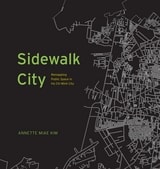
Sidewalk City
Remapping Public Space in Ho Chi Minh CityAnnette Miae Kim
University of Chicago Press, 2015
With Sidewalk City, Annette Miae Kim provides the first multidisciplinary case study of sidewalks in a distinctive geographical area. She focuses on Ho Chi Minh City, Vietnam, a rapidly growing and evolving city that throughout its history, her multicultural residents have built up alternative legitimacies and norms about how the sidewalk should be used. Based on fieldwork over 15 years, Kim developed methods of spatial ethnography to overcome habitual seeing, and recorded both the spatial patterns and the social relations of how the city’s vibrant sidewalk life is practiced.
In Sidewalk City, she transforms this data into an imaginative array of maps, progressing through a primer of critical cartography, to unveil new insights about the importance and potential of this quotidian public space. This richly illustrated and fascinating study of Ho Chi Minh City’s sidewalks shows us that it is possible to have an aesthetic sidewalk life that is inclusive of multiple publics’ aspirations and livelihoods, particularly those of migrant vendors.
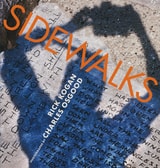
Sidewalks
Portraits of ChicagoRick Kogan & Charles Osgood
Northwestern University Press, 2008
Few people know Chicago as do Rick Kogan and Charles Osgood, and their "Sidewalks" column for the Chicago Tribune Sunday Magazine is a tour of the city like no other, taking readers to the off-beat and quintessential spots that give Chicago its character—that make its inhabitants feel at home and tell its visitors that they have arrived.
Accompanied by evocative color photographs by Charles Osgood, Kogan's pieces revisit the lost places and people of Chicago, and take readers down the quiet byways and thriving thoroughfares, pointing out the characters and cornerstones, the oddities and institutions that make the city what it is. In this collection you will find an elegy for Maxwell Street, the marketplace that pulsed with city life for more than 100 years; a remembrance of a disturbing advertisement ("Are you a slave to housework?") on the side of a building on Irving Park Road; a cross marking a deadly intersection; a magical miniature golf course; as well as ballad singer Fred Holstein, the denizens of the World Gym and memories of Bensinger's pool hall, the day-camp kids of summer, bike couriers, the creatures of the beach, and much, much more. Here is Chicago, past, present, and—let's hope—future, captured in the unique archive of Sidewalks.
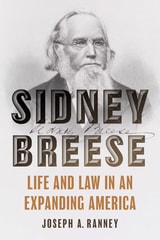
Sidney Breese
Life and Law in an Expanding AmericaJoseph A. Ranney
University of Illinois Press, 2026
Born in New York, Breese moved to Illinois in 1818. An ambitious personality combined with acumen in law, politics, and business boosted Breese into the state’s frontier elite and involved him in the political controversies that roiled the Jacksonian Era. First a circuit court judge, Breese rose to the state Supreme Court before his election to the US Senate in 1842. Breese focused his senatorial energies on westward expansion and transforming the nation into a world power—ambitions symbolized by his pivotal role in the creation of the Illinois Central Railroad. After returning to the state Supreme Court, Breese ruled on essential cases that enshrined expansionist jurisprudence in American law and regulated the growing power of corporations in post–Civil War America.
A first full-length biography, Sidney Breese places the life of an overlooked figure within legal and Illinois history.

Sidney's Poetics
Imitating CreationMichael Mack
Catholic University of America Press, 2005
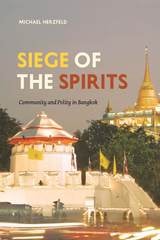
Siege of the Spirits
Community and Polity in BangkokMichael Herzfeld
University of Chicago Press, 2016
Herzfeld argues that even though the residents of Pom Mahakan have lost every legal battle the city government has dragged them into, they have won every public relations contest, highlighting their struggle as one against bureaucrats who do not respect the age-old values of Thai/Siamese social and cultural order. Such values include compassion for the poor and an understanding of urban space as deeply embedded in social and ritual relations. In a gripping account of their standoff, Herzfeld—who simultaneously argues for the importance of activism in scholarship—traces the agile political tactics and styles of the community’s leadership, using their struggle to illuminate the larger difficulties, tensions, and unresolved debates that continue to roil Thai society to this day.
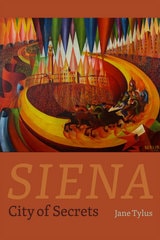
Siena
City of SecretsJane Tylus
University of Chicago Press, 2015
As Tylus leads us through the city, she shares her passion for Siena in novelistic prose, while never losing sight of the historical complexities that have made Siena one of the most fascinating and beautiful towns in Europe. Today, Siena can appear on the surface standoffish and old-fashioned, especially when compared to its larger, flashier cousins Rome and Florence. But first impressions wear away as we learn from Tylus that Siena was an innovator among the cities of Italy: the first to legislate the building and maintenance of its streets, the first to publicly fund its university, the first to institute a municipal bank, and even the first to ban automobile traffic from its city center.
We learn about Siena’s great artistic and architectural past, hidden behind centuries of painting and rebuilding, and about the distinctive characters of its different neighborhoods, exemplified in the Palio, the highly competitive horserace that takes place twice a year in the city’s main piazza and that serves as both a dividing and a uniting force for the Sienese. Throughout we are guided by the assured voice of a seasoned scholar with a gift for spinning a good story and an eye for the telling detail, whether we are traveling Siena’s modern highways, exploring its underground tunnels, tracking the city’s financial history, or celebrating giants of painting like Simone Martini or giants of the arena, Siena’s former Serie A soccer team.
A practical and engaging guide for tourists and armchair travelers alike, Siena is a testament to the powers of community and resilience in a place that is not quite as timeless and serene as it may at first appear.

Sierra Leone's Settler Women Traders
Women on the Afro-European FrontierE. Frances White
University of Michigan Press, 1987
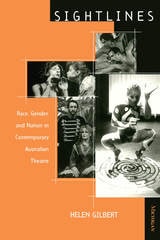
Sightlines
Race, Gender, and Nation in Contemporary Australian TheatreHelen Gilbert
University of Michigan Press, 1998
Sights On The Sixties
Tischler, Barbara L.
Rutgers University Press, 1992
Barbara Tischler's goal is to understand the historical and cultural legacy of the 1960s. During the Gulf War, as politicians advocated positions and strategies, they made simplistic comparisons with the '60s. Such comparisons reinforced our need to understand that decade more clearly. With these papers Tischler brings together a group of scholars from a variety of disciplines, including American Studies, anthropology, film studies, history, literature, sociology, and theater. She notes how their contributions, taken separately and together, transcend the "good sixties/bad sixties" typology that has pervaded past analyses of the period. Several authors deal with movement leaders and great events, but the majority write about lesser-known events and people, to add depth and balance to our understanding of the decade.
1. Multi-disciplinary collection
2. Emphasis on less well-known events of the period
3. Presents balanced picture of the decade

Sign Language Archaeology
Understanding the Historical Roots of American Sign LanguageTed Supalla
Gallaudet University Press, 2014
By tracing the writings of selected individuals, this study reconstructs the historical context for early ASL grammar. It describes the language used in each century and how it changed, and focuses on the rediscovery of the literary legacy of the Deaf American voice. Sign Language Archaeology reveals the contrast between folk etymology and scientific etymology and allows readers to see ASL in terms of historical linguistics.
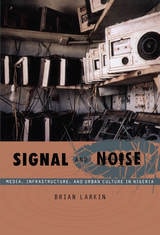
Signal and Noise
Media, Infrastructure, and Urban Culture in NigeriaBrian Larkin
Duke University Press, 2008
Media technologies were introduced to Nigeria by colonial regimes as part of an attempt to shape political subjects and create modern, urban Africans. Larkin considers the introduction of media along with electric plants and railroads as part of the wider infrastructural project of colonial and postcolonial urbanism. Focusing on radio networks, mobile cinema units, and the building of cinema theaters, he argues that what media come to be in Kano is the outcome of technology’s encounter with the social formations of northern Nigeria and with norms shaped by colonialism, postcolonial nationalism, and Islam. Larkin examines how media technologies produce the modes of leisure and cultural forms of urban Africa by analyzing the circulation of Hindi films to Muslim Nigeria, the leisure practices of Hausa cinemagoers in Kano, and the dynamic emergence of Nigerian video films. His analysis highlights the diverse, unexpected media forms and practices that thrive in urban Africa. Signal and Noise brings anthropology and media together in an original analysis of media’s place in urban life.

Signets
Reading H.D.Susan S. Friedman
University of Wisconsin Press, 1991
Signets brings together the best essays of H.D. (Hilda Doolittle). Susan Stanford Friedman and Rachel Blau DuPlessis have gathered the most influential and generative studies of H. D.’s work and complemented them with photobiographical, chronological, and bibliographical portraits unique to this volume.
The essays in Signets span H. D.’s career from the origins of Imagism to late modernism, from the early poems of Sea Garden to the novel HER and the epic poems Trilogy and Helen in Egypt. In addition to the editors, the contributors are Diana Collecott, Robert Duncan, Albert Gelpi, Eileen Gregory, Susan Gubar, Barbara Guest, Elizabeth A. Hirsch, Deborah Kelly Kloepfer, Cassandar Laity, Adalaide Morris, Alicia Ostriker, Cyrena N. Pondrom, Perdita Schaffner, and Louis H. Silverstein.
Signets is an essential resource for those interested in H. D., modernism, and feminist criticism and writing.
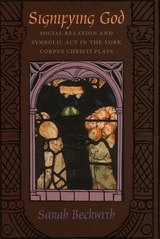
Signifying God
Social Relation and Symbolic Act in the York Corpus Christi PlaysSarah Beckwith
University of Chicago Press, 2001
Introducing a radical new understanding of these plays as "sacramental theater," Beckwith shows how organizing the plays served as a political mechanism for regulating labor, and how theater and sacrament combined in them to do important theological work. She argues, for instance, that the theology of Corpus Christi in the resurrection plays can only be understood as a theatrical exploration of eucharistic absence and presence. Beckwith frames her study with discussions of twentieth-century manifestations of sacramental theater in Barry Unsworth's novel Morality Play and Denys Arcand's film Jesus of Montreal, and the connections between contemporary revivals of the York Corpus Christi plays and England's heritage culture.

Signifying Without Specifying
Racial Discourse in the Age of ObamaLi, Stephanie
Rutgers University Press, 2011
On the campaign trail, Barack Obama faced a difficult task—rallying African American voters while resisting his opponents’ attempts to frame him as “too black” to govern the nation as a whole. Obama’s solution was to employ what Toni Morrison calls “race-specific, race-free language,” avoiding open discussions of racial issues while using terms and references that carried a specific cultural resonance for African American voters.
Stephanie Li argues that American politicians and writers are using a new kind of language to speak about race. Challenging the notion that we have moved into a “post-racial” era, she suggests that we are in an uneasy moment where American public discourse demands that race be seen, but not heard. Analyzing contemporary political speech with nuanced readings of works by such authors as Toni Morrison, Jhumpa Lahiri, and Colson Whitehead, Li investigates how Americans of color have negotiated these tensions, inventing new ways to signal racial affiliations without violating taboos against open discussions of race.
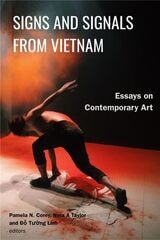
Signs and Signals from Vietnam
Essays on Contemporary ArtEdited by Pamela N. Corey, Nora A. Taylor, and Do Tuong Linh
National University of Singapore Press, 2026
The first English-language volume on Vietnamese contemporary art.
Contemporary art in Vietnam is a dynamic field shaped by memory, history, and experimentation. Over the last thirty years, Vietnamese artists have come to command international recognition, even as a growing domestic market for contemporary art fosters alternative infrastructures of collection and exhibition. Signs and Signals from Vietnam brings together artists, curators, and academics to examine artistic practice and contemporary art histories in Vietnam today.
Moving beyond familiar North-South or diasporic-national divides, the essays represent the perspectives of Vietnamese, Vietnamese diasporic, and non-Vietnamese writers of different generations, affiliations, and positionalities. Contributors trace the inventive ways artists work with language, narrative, performance, and archival practice to communicate through their art. Key themes running through the volume represent the predominant concerns of Vietnamese artists over the past three decades, including the enduring impact of socialist paradigms in contemporary art, gender, diaspora, memory, and the environment. Together, these essays demonstrate how contemporary art can convey lesser-known histories, contested narratives, and personal perspectives.

Signs and Wonders
Religious Rhetoric and the Preservation of Sign LanguageTracy Ann Morse
Gallaudet University Press, 2014
In Chapter One, Morse analyzes Thomas Hopkins Gallaudet’s use of religious references in his 1817 maiden address at the first American school for deaf students. She examines his and other speeches as examples of the intersection of education for deaf Americans and Protestant missionary efforts to convert them. In the second chapter, she presents the different religious perspectives of the two deaf education camps: Manualists argued that sign language was a gift from God, while Oralists viewed hand gestures as animal-like, indicative of lower evolutionary development.
Chapter Three explores the religious rhetoric in churches, sanctuaries where sign language flourished and deaf members formed relationships. In the fourth chapter, Morse shows how Deaf activist George Veditz signed using religious themes in his political films. She also comments on the impact of the bilingual staging of Big River: The Adventures of Huckleberry Finn, which began to change the hearing world’s opinion about the Deaf community. Morse concludes with speculation on the shifting terrain for deaf people due to technological innovations that might supplant religious rhetoric as a tool to support the Deaf community.

Signs from Silence
Ur of the First SumeriansPetr Charvát
Karolinum Press, 2015
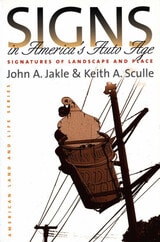
Signs in America's Auto Age
Signatures of Landscape and PlaceJohn A. & Keith A. Jakle & Sculle
University of Iowa Press, 2004
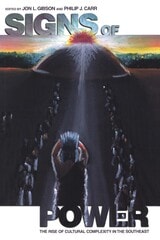
Signs of Power
The Rise of Cultural Complexity in the SoutheastEdited by Jon L. Gibson and Philip J. Carr
University of Alabama Press, 2004
Traces the sources of power and large-scale organization of prehistoric peoples among Archaic societies.
By focusing on the first instances of mound building, pottery making, fancy polished stone and bone, as well as specialized chipped stone, artifacts, and their widespread exchange, this book explores the sources of power and organization among Archaic societies. It investigates the origins of these technologies and their effects on long-term (evolutionary) and short-term (historical) change.
The characteristics of first origins in social complexity belong to 5,000- to 6,000-year-old Archaic groups who inhabited the southeastern United States. In Signs of Power, regional specialists identify the conditions, causes, and consequences that define organization and social complexity in societies. Often termed "big mound power," these considerations include the role of demography, kinship, and ecology in sociocultural change; the meaning of geometry and design in sacred groupings; the degree of advancement in stone tool technologies; and differentials in shell ring sizes that reflect social inequality.

Sigurd and His Brave Companions
A Tale of Medieval NorwaySigrid Undset
University of Minnesota Press, 2013
Inspired by tales of the hero Vilmund Vidutan and his fellow knights, Sigurd Jonsson and his young friends Ivar and Helge set out to reenact these exploits on their medieval Norwegian farm. They carve swords and lances and spend hours making shields. With a little imagination, a pasture becomes a battlefield, an old boar their greatest foe, and they pass many hours jousting and dueling. But when the summer is nearly over, the three boys stumble into real trouble and must prove their courage in an adventure all their own.
Written during Sigrid Undset’s time in New York, Sigurd and His Brave Companions will make medieval Norway come alive for young and old readers alike.
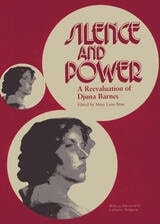
Silence and Power
A Reevaluation of Djuna BarnesEdited by Mary Lynn Broe. Afterword by Catharine Stimpson
Southern Illinois University Press, 1991
Roughly chronological, these essays explore Barnes’ early work in the New York newspaper world of the ‘teens, proceed through the 1954 publication of The Antiphon, and include several approaches to such works as Ryder, Ladies Almanack, and Nightwood. This judicious mix of essays—many of them illustrated by photographs and drawings—presents a comprehensive picture of the creative imagination of Djuna Barnes.
Essayists include Mary Lynn Broe, Nancy J. Levine, Ann Larabee, Joan Retallack, Carolyn Allen, Carolyn Burke, Sheryl Stevenson, Marie Ponsot, Frances M. Doughty, Susan Sniader Lanser, Frann Michel, Karla Jay, Jane Marcus, Judith Lee, Julie L. Abraham, Meryl Altman, Lynda Curry, Louise A. DeSalvo, and Catharine Stimpson. Individuals sharing personal recollections of Barnes are Ruth Ford, James B. Scott, Alex Gildzen, Hank O’Neal, Chester Page, Andrew Field, and Frances McCullough. Janice Thom and Kevin Engel provide an updated bibliography.
From The Book of Repulsive Women to The Antiphon, Barnes challenged old gender dichotomies as she shaped radical sociopolitical views. Her textual methods celebrated a multiplicity of voices, heterodox forms, and genres, transgressing those tenets of modernism that privilege the “high art” of a single, unified textual identity or a discrete discourse. These essays offer various critical approaches and sinuous readings of the full range of Barnes’ achievement. Interwoven through the essays and reminiscences is a lively commentary from Barnes’ friends and contemporaries as well as Barnes herself.
Silence in Catullus
Benjamin Eldon Stevens
University of Wisconsin Press, 2014
Silence on the Mountain
Stories of Terror, Betrayal, and Forgetting in GuatemalaDaniel Wilkinson
Duke University Press, 2004
Decades of terror-inspired fear have led the Guatemalans to adopt a survival strategy of silence so complete that it verges on collective amnesia. The author’s great triumph is that he finds a way for people to tell their stories, and it is through these stories—dramatic, intimate, heartbreaking—that we are shown the anatomy of a thwarted revolution that has relevance not only to Guatemala but also to countless places around the world where terror has been used as a political tool.
Silenced Voices
The Poetics of Speech in OvidBartolo A. Natoli
University of Wisconsin Press, 2021
Bartolo A. Natoli provides a unique cross-reading of these works. He examines how the motifs and ideas articulated in the Metamorphoses provide the template for the poet's representation of his own exile. Ovid depicts his transformation with an eye toward memory, reformulating how his exile would be perceived by his audience. His exilic poems are an attempt to recover the voice he lost and to reconnect with the community of Rome.
Silenced Voices
Uncovering a Family’s Colonial History in IndonesiaInez Hollander
Ohio University Press, 2008
Like a number of Netherlanders in the post–World War II era, Inez Hollander only gradually became aware of her family’s connections with its Dutch colonial past, including a Creole great-grandmother. For the most part, such personal stories have been, if not entirely silenced, at least only whispered about in Holland, where society has remained uncomfortable with many aspects of the country’s relationship with its colonial empire.
Unlike the majority of memoirs that are soaked in nostalgia for tempo dulu, Hollander’s story sets out to come to grips with her family’s past by weaving together personal records with historical and literary accounts of the period. She seeks not merely to locate and preserve family memories, but also to test them against a more disinterested historical record. Hers is a complicated and sometimes painful personal journey of realization, unusually mindful of the ways in which past memories and present considerations can be intermingled when we seek to understand a difficult past. Silenced Voices is an important contribution to the literature on how Dutch society has dealt with its recent colonial history.

Silencing the Guns in Haiti
The Promise of Deliberative DemocracyIrwin P. Stotzky
University of Chicago Press, 1997
"A provocative study of the prospects for the rule of law in Haiti."—Marilyn Bowden, Miami Today
"[Stotzky] deepens insights into the contradictory obstacles to democratic governance in Haiti."—Library Journal
"Controversial and stimulating."—Choice
"Lucid and informative. . . . Stotzky gives readers a good foundation for understanding the pressures facing the impoverished but determined Caribbean island."—Islands

Silencing the Opposition
Antinuclear Movements and the Media in the Cold WarAndrew Rojecki
University of Illinois Press, 1999
We can trace many important strategic decisions to compelling official fictions such as Kennedy's "missile gap" and Reagan's "window of vulnerability." Over the years, antinuclear movements have had mixed success debunking these fictions, raising public consciousness, and reorienting government policy.
Andrew Rojecki explores links between nuclear arms policy and the visibility of opposition groups in the media. He pays particular interest to two cycles of protest: the test ban movement of the Eisenhower and the Kennedy administrations and the Reagan-era nuclear freeze movement. As Rojecki shows, space devoted to the opposition as well as the quality of the coverage varied widely from the first to the second period. The change reflected different climates of public opinion and foreign policy but also a subtle shift in political culture that undermined the legitimacy of citizen protest. As the rationalized policymaking of government agencies, think tanks, and university departments increasingly restricted public debate, the potential for citizens to influence nuclear politics became more circumscribed while nuclear weapons continued to proliferate.
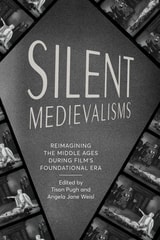
Silent Medievalisms
Reimagining the Middle Ages During Film’s Foundational EraEdited by Tison Pugh and Angela Jane Weisl
The Ohio State University Press, 2026
Contributors:
Kimberly Ball, Elizabeth Coggeshall, John Haines, Kevin J. Harty, Valerie B. Johnson, Tison Pugh, Sabina Rahman, Carol L. Robinson, Robert Squillace, Alexandra Sterling-Hellenbrand, Alfred Thomas, Laura E. Wangerin, Angela Jane Weisl
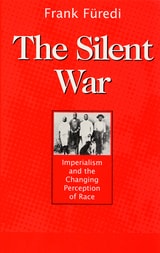
Silent War
Furedi, Frank
Rutgers University Press, 1999
"The Silent War transcends the disciplinary line that divides race relations from international relations. It is an enterprise in sociological investigation which seeks to mobilize the insights of history to clarify how the consciousness of race has evolved." - Kofi Buenor Hadjor
Racial identity has been one of the defining characteristics of the twentieth century. Yet, argues Frank Furedi in this provocative study, advocates of racial identity have long felt uncomfortable with the racialized global order which they created.
Furedi traces the history of Western colonial racist ideology and its role in subjugating non-Western peoples. He analyzes the changing perception of racism in the West and how the use of "race" has altered during the course of the twentieth century.
Focusing on the Second World War as the critical turning point in racist ideology, Furedi argues that the defeat of Nazism left the West uneasy with its own racist past. He assesses how this was redefined in the postwar period-especially during the Cold War- and demonstrates that, although white supremacist views gradually became obsolete in international affairs, Western nations were initially unwilling to accept criticism of their past and sought to portray racism as a natural part of human condition. As a result the West continued to adopt the moral high ground well into the postwar period, to the ultimate detriment of non-Western nations.