Results by title
18284 books match the query 'United States' and 1181 start with s

Strange Duets
Impresarios and Actresses in the American Theatre, 1865-1914Kim Marra
University of Iowa Press, 2006
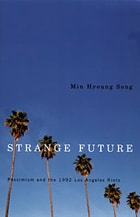
Strange Future
Pessimism and the 1992 Los Angeles RiotsMin Hyoung Song
Duke University Press, 2005
Song considers works that address the riots and often the traumatic place of the Korean American community within them: the independent documentary Sa-I-Gu (Korean for April 29, the date the riots began), Chang-rae Lee’s novel Native Speaker, the commercial film Strange Days, and the experimental drama of Anna Deavere Smith, among many others. He describes how cultural producers have used the riots to examine the narrative of national decline, manipulating language and visual elements, borrowing and refashioning familiar tropes, and, perhaps most significantly, repeatedly turning to metaphors of bodily suffering to convey a sense of an unraveling social fabric. Song argues that these aesthetic experiments offer ways of revisiting the traumas of the past in order to imagine more survivable futures.
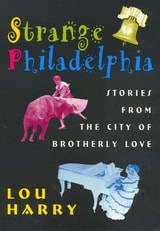
Strange Philadelphia
Stories from the City of Brotherly LoveLou Harry
Temple University Press, 1995
Most history books paint Philadelphia as a place of revolutionary greatness, but there exists a forgotten, alternative history of the City of Brotherly Love. For example, did you know that
•when Ben Franklin was Deputy Postmaster General for the American colonies, he ignored rival printers' requests for mailing priveleges. Instead, he loaded down the mail carriers with his own papers and enjoyed the use of a private delivery system that cut off the competition.
•
the Slinky was created by a marine engineer stationed in Philadelphia, who later became an evangelist and Bible salesman in Bolivia, leaving behind his wife, his children, and the Slinky fortune.
•
50,000 people gathered in Fairmount Park in 1953 hoping to see a vision of the Virgin Mary, who three schoolgirls claimed to have seen near a park bush. Though the Blessed Mother never did appear, visitors to the site left behind offerings of rosaries, flowers, crutches, and over $6,000.
•
while 11,000 spectators sat in the Spectrum waiting for the Ice Capades to begin, 32-mile-an-hour winds blew a chunk of the roof off the city's newly constructed stadium.
Find these and a hundred more "strange" and fascinating stories in this collection of vignettes. These pieces of the past can't be found in history books—they are surprising side bars to the famous and not-so-famous events and people of historical Philadelphia.
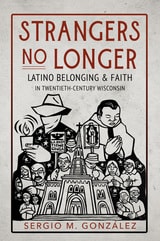
Strangers No Longer
Latino Belonging and Faith in Twentieth-Century WisconsinSergio M. González
University of Illinois Press, 2024
Hospitality practices grounded in religious belief have long exercised a profound influence on Wisconsin’s Latino communities. Sergio M. González examines the power relations at work behind the types of hospitality--welcoming and otherwise--practiced on newcomers in both Milwaukee and rural areas of the Badger State. González’s analysis addresses central issues like the foundational role played by religion and sacred spaces in shaping experiences and facilitating collaboration among disparate Latino groups and across ethnic lines; the connections between sacred spaces and the moral justification for social justice movements; and the ways sacred spaces evolved into places for mitigating prejudice and social alienation, providing sanctuary from nativism and repression, and fostering local and transnational community building.
Perceptive and original, Strangers No Longer reframes the history of Latinos in Wisconsin by revealing religion’s central role in the settlement experience of immigrants, migrants, and refugees.

Strangers and Neighbors
Relations between Blacks and Jews in the United StatesMaurianne Adams
University of Massachusetts Press, 1999
Much has been written about the historic relationship between American blacks and Jews. Some accounts stress the strong alliance for social justice between the two groups during the civil rights movement, while others portray bleaker moments and include accusations of Jewish racism or black anti-Semitism. What is often missing is a larger historical perspective. This volume provides a wide range of analyses and documents that help us move beyond stereotypes and portray the full complexity of black-Jewish relations in America over the past three hundred years.
Following two introductory sections addressing “Themes and Issues” and “African Americans as the Chosen People,” the book is divided into five historical periods: the Atlantic slave trade and slavery in the New World; emancipation to the Great Depression; the era of the Depression and World War II; World War II through 1967; and 1968 to the present. Each section contains a mix of scholarly articles, historical documents, and contemporary perspectives. A final section entitled “Where Do We Go from Here?” suggests ways to rebuild a coalition between blacks and Jews in the twenty-first century. Throughout the volume, the editors' goal is not to achieve closure but to invite further discussion about the historical relationship between two large, evolving, and diverse peoples. The selections reveal that the experiences of American blacks and Jews, although intersecting at several critical junctures, have not been parallel, and that significant geographical, class, political, and religious differences exist within both communities that preclude easy generalizations.
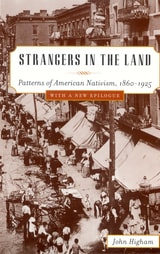
Strangers in the Land
Patterns of American Nativism, 1860-1925Higham, John
Rutgers University Press, 1988
Strategic Budgeting
Roy T. Meyers
University of Michigan Press, 1996
Strategic Factors in Nineteenth Century American Economic History
A Volume to Honor Robert W. FogelEdited by Claudia Goldin and Hugh Rockoff
University of Chicago Press, 1992
These sixteen essays reveal, by example, the continuing vitality of Fogel's approach. The authors use an astonishing variety of data, including genealogies, the U.S. federal population census manuscripts, manumission and probate records, firm accounts, farmers' account books, and slave narratives, to address collectively market integration and its impact on the lives of Americans. The evolution of markets in agricultural and manufacturing labor is considered first; that concerning capital and credit follows. The demography of free and slave populations is the subject of the third section, and the final group of papers examines the extra-market institutions of governments and unions.
Strategic Giving
The Art and Science of PhilanthropyPeter Frumkin
University of Chicago Press, 2006
The philanthropic landscape is changing dramatically as a new generation of wealthy donors seeks to leave its mark on the public sphere. Peter Frumkin reveals in Strategic Giving why these donors could benefit from having a comprehensive plan to guide their giving. And with this thoughtful and timely book, he provides the much-needed framework to understand and develop this kind of philanthropic strategy.
After listening for years to scores of individual and institutional funders discuss the challenges of giving wisely, Frumkin argues here that contemporary philanthropy requires a thorough rethinking of its underlying logic. Philanthropy should be seen, he contends, as both a powerful way to meet public needs and a meaningful way to express private beliefs and commitments. He demonstrates that finding a way to simultaneously fulfill both of these functions is crucial to the survival of philanthropy and its potential to support pluralism in society. And he goes on to identify the five essential elements donors must consider when developing a philanthropic strategy—the vehicle through which giving will flow, the way impact will be achieved, the level of engagement and profile sought, the time frame for giving, and the underlying purpose of the gift. Frumkin’s point is that donors must understand strategic giving as the integration of these five critical dimensions to giving.
Essential reading for donors, researchers, and anyone involved with the world of philanthropy, Strategic Giving provides a new basis for understanding philanthropic effectiveness and a promising new way for philanthropy to achieve the legitimacy that has at times eluded it.
Strategic Party Government
Why Winning Trumps IdeologyGregory Koger and Matthew J. Lebo
University of Chicago Press, 2017
In Strategic Party Government, Koger and Lebo argue that Congress is now primarily a forum for partisan competition. In order to avoid losing, legislators unite behind strong party leaders, even when they do not fully agree with the policies their party is advocating. They do so in the belief that party leaders and voters will reward them for winning—or at least trying to win—these legislative contests. And as the parties present increasingly united fronts, partisan competition intensifies and pressure continues to mount for a strong party-building strategy—despite considerable disagreement within the parties.
By bringing this powerful but underappreciated force in American politics to the forefront, Koger and Lebo provide a new interpretation of the problems facing Congress that is certain to reset the agenda for legislative studies.

Strategic Planning for Results
Sandra Nelson
American Library Association, 2008
Strategic Planning in the Arts
A Practical GuideMichael M. Kaiser
Brandeis University Press, 2018
Strategic Responsiveness
How Congress Confronts Presidential PowerScott H. Ainsworth, Brian M. Harward, and Kenneth W. Moffett
University of Michigan Press, 2025
Strategic Responsiveness takes a theoretically developed and empirically oriented approach— situated within legal and historical contexts—to explore the system of separated powers. The authors find that Congress is not as weak as many perceive it to be and show how members of Congress often anticipate individualized policy loss and choose to respond. These policy struggles shape the constitutional order as surely as broad, statutory constraints might. While the aggrandizement of the presidency and the usurpation of congressional control are not countered, ordinary policy losses are. For members and senators, presidential overreach is fine as long as the policy wins continue, but policy losses may motivate members to reassert congressional prerogatives in policymaking through increased oversight. Strategic Responsiveness reveals how profoundly important policy-level disputes are in the politics of maintaining a particular constitutional order.

Strategies for Legal Case Reading and Vocabulary Development
Susan M. Reinhart
University of Michigan Press, 2007
Strategies for Legal Case Reading and Vocabulary Development begins with an overview of the American legal system and relevant research and guidelines relating to case reading. The book is divided into sections on common law, statutory law, and constitutional law. Approximately twenty cases (some abridged) and eight readings are included in the text. Questions for Discussion follow each case to help students prepare to actively participate in class case discussions. Additional features include hypotheticals (often posed by law professors), vocabulary tasks, and short writing assignments.
Strategizing against Sweatshops
The Global Economy, Student Activism, and Worker EmpowermentMatthew S. Williams
Temple University Press, 2020
For the past few decades, the U.S. anti-sweatshop movement was bolstered by actions from American college students. United Students Against Sweatshops (USAS) effectively advanced the cause of workers’ rights in sweatshops around the world. Strategizing against Sweatshops chronicles the evolution of student activism and presents an innovative model of how college campuses are a critical site for the advancement of global social justice.
Matthew Williams shows how USAS targeted apparel companies outsourcing production to sweatshop factories with weak or non-existent unions. USAS did so by developing a campaign that would support workers organizing by leveraging their college’s partnerships with global apparel firms like Nike and Adidas to abide by pro-labor codes of conduct.
Strategizing against Sweatshops exemplifies how organizations and actors cooperate across a movement to formulate a coherent strategy responsive to the conditions in their social environment. Williams also provides a model of political opportunity structure to show how social context shapes the chances of a movement’s success—and how movements can change that political opportunity structure in turn. Ultimately, he shows why progressive student activism remains important.
Strategy or Principle?
The Choice Between Regulation and TaxationMark Kelman
University of Michigan Press, 1999

Straw in the Sun
A MemoirCharlie May Simon
University of Arkansas Press, 2025
These opening lines of Charlie May Simon’s Straw in the Sun invite readers on a personal journey of remembrance as Simon recounts her homesteading experiment in Depression-era Arkansas. Years before she established herself as a regional author of national renown, she chose a spot near Cove Creek, now part of Ouachita National Forest, to forge a home from rugged land, meeting both a backbreaking series of challenges and a vivid cast of characters in the process.
Nationally popular upon its release in 1945, Simon’s lyrical memoir was praised from the outset for its warmth and charm. At once an ethnographic narrative of a hill community and an accessible portrait of Ozarks memories at their most idyllic, Straw in the Sun, offered here with a robust introduction from Simon scholar Aleshia O’Neal, is a classic ready for rediscovery by a new generation of readers.

Stray Home
Amy M. Clark
University of North Texas Press, 2010
Street Addicts in the Political Economy
Alisse Waterston
Temple University Press, 1997
Street Corner Society
The Social Structure of an Italian SlumWilliam Foote Whyte
University of Chicago Press, 1993
By mapping the intricate social worlds of street gangs and "corner boys," Whyte was among the first to demonstrate that a poor community need not be socially disorganized. His writing set a standard for vivid portrayals of real people in real situations. And his frank discussion of his methodology—participant observation—has served as an essential casebook in field research for generations of students and scholars.
This fiftieth anniversary edition includes a new preface and revisions to the methodological appendix. In a new section on the book's legacy, Whyte responds to recent challenges to the validity, interpretation, and uses of his data. "The Whyte Impact on the Underdog," the moving statement by a gang leader who became the author's first research assistant, is preserved.
"Street Corner Society broke new ground and set a standard for field research in American cities that remains a source of intellectual challenge."—Robert Washington, Reviews in Anthropology
Street Fight
The Politics of Mobility in San FranciscoJason Henderson
University of Massachusetts Press, 2013
Faced with intolerable congestion and noxious pollution, cities around the world are rethinking their reliance on automobiles. In the United States a loosely organized livability movement seeks to reduce car use by reconfiguring urban space into denser, transit-oriented, walkable forms, a development pattern also associated with smart growth and new urbanism. Through a detailed case study of San Francisco, Jason Henderson examines how this is not just a struggle over what type of transportation is best for the city, but a series of ideologically charged political fights over issues of street space, public policy, and social justice.
Historically San Francisco has hosted many activist demonstrations over its streets, from the freeway revolts of the 1960s to the first Critical Mass bicycle rides decades later. Today the city's planning and advocacy establishment is changing zoning laws to limit the number of parking spaces, encouraging new car-free housing near transit stations, and applying “transit first” policies, such as restricted bus lanes. Yet Henderson warns that the city's accomplishments should not be romanticized. Despite significant gains by livability advocates, automobiles continue to dominate the streets, and the city's financially strained bus system is slow and often unreliable.
Both optimistic and cautionary, Henderson argues that ideology must be understood as part of the struggle for sustainable cities and that three competing points of view—progressive, neoliberal, and conservative—have come to dominate the contemporary discourse about urban mobility. Consistent with its iconic role as an incubator of environmental, labor, civil rights, and peace movements, San Francisco offers a compelling example of how the debate over sustainable urban transportation may unfold both in the United States and globally.
Street Saints
Renewing American CitiesBarbara J. Elliott
Templeton Press, 2006
Based on eight years of hands-on experience and more than 300 interviews, Street Saints is both a book of motivational stories about unsung heroes and a sociological study of the "faith factor," documenting faith-based programs that are treating social maladies in America. This book takes readers on a tour of communities and institutions in America where faith-based initiatives are making a difference. It offers inspiration, role models, and guidelines for people who would like to give back to their own communities.
Street Scriptures
Between God and Hip-HopAlejandro Nava
University of Chicago Press, 2022
The world of hip-hop is saturated with religion, but rarely is that element given serious consideration. In Street Scriptures, Alejandro Nava focuses our attention on this aspect of the music and culture in a fresh way, combining his profound love of hip-hop, his passion for racial and social justice, and his deep theological knowledge. Street Scriptures offers a refreshingly earnest and beautifully written journey through hip-hop’s deep entanglement with the sacred.
Nava reveals a largely unheard religious heartbeat in hip-hop, exploring crosscurrents of the sacred and profane in rap, reggaeton, and Latinx hip-hop today. Ranging from Kendrick Lamar, Chance the Rapper, Lauryn Hill, Cardi B, and Bad Bunny to St. Augustine and William James, Nava examines the ethical-political, mystical-prophetic, and theological qualities in hip-hop, probing the pure sonic and aesthetic signatures of music, while also diving deep into the voices that invoke the spirit of protest. The result is nothing short of a new liberation theology for our time, what Nava calls a “street theology.”
Street Smarts and Critical Theory
Listening to the VernacularThomas McLaughlin
University of Wisconsin Press, 1996
Everybody’s got a theory . . . or do they?
Thomas McLaughlin argues that critical theory—raising serious, sustained questions about cultural practice and ideology—is practiced not only by an academic elite but also by savvy viewers of sitcoms and TV news, by Elvis fans and Trekkies, by labor organizers and school teachers, by the average person in the street.
Like academic theorists, who are trained in a tradition of philosophical and political skepticism that challenges all orthodoxies, the vernacular theorists McLaughlin identifies display a lively and healthy alertness to contradiction and propaganda. They are not passive victims of ideology but active questioners of the belief systems that have power over their lives. Their theoretical work arises from the circumstances they confront on the job, in the family, in popular culture. And their questioning of established institutions, McLaughlin contends, is essential and healthy, for it energizes other theorists who clarify the purpose and strategies of institutions and justify the existence of cultural practices.
Street Smarts and Critical Theory leads us through eye-opening explorations of social activism in the Southern Christian anti-pornography movement, fan critiques in the ‘zine scene, New Age narratives of healing and transformation, the methodical manipulations of the advertising profession, and vernacular theory in the whole-language movement. Emphasizing that theory is itself a pervasive cultural practice, McLaughlin calls on academic institutions to recognize and develop the theoretical strategies that students bring into the classroom.
“This book demystifies the idea of theory, taking it out of the hands of a priestly caste and showing it as the democratic endowment of the people.”—Daniel T. O’Hara, Temple University, author of Radical Parody: American Culture and Critical Agency after Foucault and Lionel Trilling: The Work of Liberation.
“McLaughlin takes seriously the critical and theoretical activity of everyday people and does so in a way that will empower these very populations to take seriously their own activities as theorists. . . . A manifesto that is sure to be heard by the younger generation of thinkers in American cultural studies.”—Henry Jenkins, MIT, author of Textual Poachers: Television Fans and Participatory Culture

Street of Dreams
The Nature and Legacy of the 1960sDouglas M. Knight
Duke University Press, 1989
Streets, Railroads, and the Great Strike of 1877
David O. Stowell
University of Chicago Press, 1999
Whereas most historians treat the event solely as a massive labor strike that targeted the railroads, David O. Stowell examines America's predicament more broadly to uncover the roots of this rebellion. He studies the urban origins of the Strike in three upstate New York cities—Buffalo, Albany, and Syracuse. He finds that locomotives rumbled through crowded urban spaces, sending panicked horses and their wagons careening through streets. Hundreds of people were killed and injured with appalling regularity. The trains also disrupted street traffic and obstructed certain forms of commerce. For these reasons, Stowell argues, The Great Strike was not simply an uprising fueled by disgruntled workers. Rather, it was a grave reflection of one of the most direct and damaging ways many people experienced the Industrial Revolution.
"Through meticulously crafted case studies . . . the author advances the thesis that the strike had urban roots, that in substantial part it represented a community uprising. . . .A particular strength of the book is Stowell's description of the horrendous accidents, the toll in human life, and the continual disruption of craft, business, and ordinary movement engendered by building railroads into the heart of cities."—Charles N. Glaab, American Historical Review
Strength Coaching in America
A History of the Innovation That Transformed SportsBy Jason P. Shurley, Jan Todd, and Terry Todd
University of Texas Press, 2019
Shortlisted for the North American Society for Sports History 2020 Monograph Prize
It’s hard to imagine, but as late as the 1950s, athletes could get kicked off a team if they were caught lifting weights. Coaches had long believed that strength training would slow down a player. Muscle was perceived as a bulky burden; training emphasized speed and strategy, not “brute” strength. Fast forward to today: the highest-paid strength and conditioning coaches can now earn $700,000 a year. Strength Coaching in America delivers the fascinating history behind this revolutionary shift.
College football represents a key turning point in this story, and the authors provide vivid details of strength training’s impact on the gridiron, most significantly when University of Nebraska football coach Bob Devaney hired Boyd Epley as a strength coach in 1969. National championships for the Huskers soon followed, leading Epley to launch the game-changing National Strength Coaches Association. Dozens of other influences are explored with equal verve, from the iconic Milo Barbell Company to the wildly popular fitness magazines that challenged physicians’ warnings against strenuous exercise. Charting the rise of a new athletic profession, Strength Coaching in America captures an important transformation in the culture of American sport.
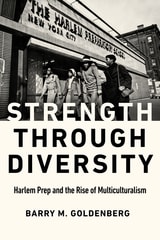
Strength through Diversity
Harlem Prep and the Rise of MulticulturalismBarry M. Goldenberg
Rutgers University Press, 2025
strengththroughdiversity.com
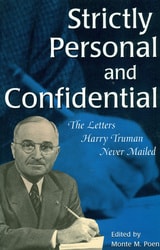
Strictly Personal and Confidential
The Letters Harry Truman Never MailedEdited by Monte M. Poen
University of Missouri Press, 1999
Harry S. Truman made plain speaking his trademark, and it was a common belief that "Give 'em hell" Harry spared few with his words. However, this fascinating collection of 140 amusing, angry, sarcastic, and controversial letters President Truman wrote but never mailed proves that conception wrong. Addressed to admirers and enemies alike, including Adlai Stevenson, Justice William Douglas, Dwight Eisenhower, Joe McCarthy, and Truman's wife, Bess, these intriguing letters cover such diverse subjects as the atomic bomb, running the country, and human greed.
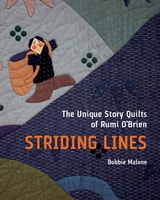
Striding Lines
The Unique Story Quilts of Rumi O'BrienBobbie Malone
University of Wisconsin Press, 2019
Bobbie Malone reaches beyond the quilts to tell O'Brien's own story, from her initial foray into the quilting world to her developed dedication to the craft. Contributions from leaders in the art, textile and quilting community, including Melanie Herzog and Marin Hanson, contextualize O'Brien's work in the greater community of quiltmakers and artists. This book celebrates the life and ingenuity of a Japanese-born American immigrant whose oeuvre is equally Japanese and Wisconsinite—and entirely distinctive.
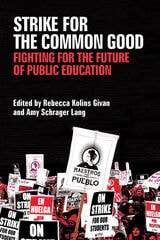
Strike for the Common Good
Fighting for the Future of Public EducationRebecca Kolins Givan and Amy Schrager Lang, Editors
University of Michigan Press, 2020
In February 2018, 35,000 public school educators and staff walked off the job in West Virginia. More than 100,000 teachers in other states—both right-to-work states, like West Virginia, and those with a unionized workforce—followed them over the next year. From Arizona, Kentucky, and Oklahoma to Colorado and California, teachers announced to state legislators that not only their abysmal wages but the deplorable conditions of their work and the increasingly straitened circumstances of public education were unacceptable. These recent teacher walkouts affirm public education as a crucial public benefit and understand the rampant disinvestment in public education not simply as a local issue affecting teacher paychecks but also as a danger to communities and to democracy.
Strike for the Common Good gathers together original essays, written by teachers involved in strikes nationwide, by students and parents who have supported them, by journalists who have covered these strikes in depth, and by outside analysts (academic and otherwise). Together, the essays consider the place of these strikes in the broader landscape of recent labor organizing and battles over public education, and attend to the largely female workforce and, often, largely non-white student population of America’s schools.

Strike!
Mary Heaton Vorse
University of Illinois Press, 1991
The story is told by Mary Heaton Vorse, the leading labor reporter of the period, who had covered major strikes since 1912. This novel was the first of six inspired by the Gastonia strike. Critics hailed it as the best.
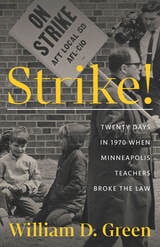
Strike!
Twenty Days in 1970 When Minneapolis Teachers Broke the LawWilliam D. Green
University of Minnesota Press, 2022
When viewed from our turbulent times, the Minneapolis of fifty years ago might seem serene, but Minneapolis schoolteachers of the day remember it quite differently. It was, author William D. Green said of their recollections, as if they’d been through war. This book recreates twenty days in April 1970 when a then-illegal strike by Minneapolis’s public school teachers marked a singular moment of cultural upheaval—and forever changed the city’s politics, labor law, educational climate, and the right to collective bargaining.
Since the inception of public education in Minnesota, teachers were expected to pursue their vocation out of civic spirit, with low wages, no benefits, and no job security. Strike! describes the history and circumstances leading to the teachers’ extraordinary action, which pitted the progressive and conservative teachers’ unions against each other—and both against the all-powerful school district, a hostile governor and state legislature, and a draconian Minnesota law. Capturing the intense emotions and heated rivalries of the strike, Green profiles the many actors involved, the personal and professional stakes, and the issues of politics, law, and the business of education.
Informed by interviews, firsthand accounts, news reports, and written records, Strike! brings to life a pivotal moment not just for Minneapolis’s teachers but for the city itself, whose government, school system, and culture would, in a complex but inexorable way, change course for good.
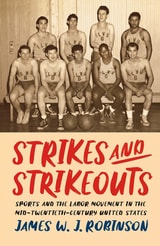
Strikes and Strikeouts
Sports and the Labor Movement in the Mid-Twentieth-Century United StatesJames W. J. Robinson
Rutgers University Press, 2027
During the first half of the twentieth century, the introduction of cheap or free recreation to the workplace provided a metaphorical place where ordinary working-class people of all races and genders gained access to physical leisure and developed bonds of camaraderie in the anti-fascist labor movement. Strikes and Strikeouts: Sports and the Labor Movement in the Mid-Twentieth-Century United States illustrates how this largely forgotten Labor Sports movement was critical in helping unions become forces for larger cultural change and essential to understanding the potency of the 1930-40s labor movement. Drawing from ten different labor and leftist social movement archives, Robinson strives to reconstruct the “people’s history." At its height, from the late 1930s to the early 1950s, the Labor Sports movement presented a real alternative to both apolitical and conservative sports and involved millions of working-class people. It was a key part of improving the lives of average Americans and helped build an anti-racist, anti-fascist, working class counterculture that helped change the United States through a strong labor movement. This movement brought higher living standards for working class people and the end of racial segregation in sports, which in turn aided the Civil Rights movement.

Striking a Balance
Making National Economic PolicyAlbert Rees
University of Chicago Press, 1984
Striking a Balance sets forth in clear, nontechnical language the principal goals of national economic policy, the instruments used to achieve these goals, and the political and economic problems arising from conflicting goals and the choice of inappropriate instruments. It is written not for economics students but for the general public and for students in the related fields of public policy, journalism, and law. Unlike economics textbooks, it is not organized according to theoretical categories such as supply and demand, but around issues such as full employment and inflation. It has no ideological axe to grind and tries to present different views of controversial issues fairly.
Striking a Balance benefits from the wisdom and experience of a mature economist. Albert Rees achieves the rare feat of explicating complex issues without oversimplification or trivialization.
Strip Cultures
Finding America in Las VegasThe Project on Vegas
Duke University Press, 2015
Stripped and Script
Loyalist Women Writers of the American RevolutionKacy Dowd Tillman
University of Massachusetts Press, 2019
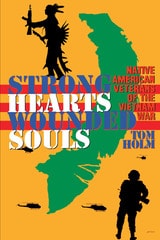
Strong Hearts, Wounded Souls
Native American Veterans of the Vietnam WarBy Tom Holm
University of Texas Press, 1996
At least 43,000 Native Americans fought in the Vietnam War, yet both the American public and the United States government have been slow to acknowledge their presence and sacrifices in that conflict. In this first-of-its-kind study, Tom Holm draws on extensive interviews with Native American veterans to tell the story of their experiences in Vietnam and their readjustment to civilian life.
Holm describes how Native American motives for going to war, experiences of combat, and readjustment to civilian ways differ from those of other ethnic groups. He explores Native American traditions of warfare and the role of the warrior to explain why many young Indian men chose to fight in Vietnam. He shows how Native Americans drew on tribal customs and religion to sustain them during combat. And he describes the rituals and ceremonies practiced by families and tribes to help heal veterans of the trauma of war and return them to the "white path of peace."
This information, largely unknown outside the Native American community, adds important new perspectives to our national memory of the Vietnam war and its aftermath.
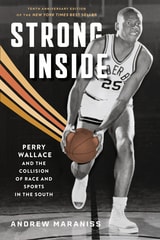
Strong Inside
Perry Wallace and the Collision of Race and Sports in the SouthAndrew Maraniss
Vanderbilt University Press, 2024
2015 RFK Book Awards Special Recognition
2015 Lillian Smith Book Award
2015 AAUP Books Committee "Outstanding" Title
When Strong Inside was first published ten years ago, no one could have predicted the impact the book would have on Vanderbilt University, Nashville, and communities across the nation. What began as a biography of Perry Wallace—the first African American basketball player in the Southeastern Conference (SEC)—became a catalyst for meaningful change and reconciliation between Wallace and the city that had rejected him. In this tenth-anniversary edition, scholars of race and sports Louis Moore and Derrick E. White provide a new foreword that places the story in the context of the study of sports and society, and author Andrew Maraniss adds a concluding chapter filling readers in on how events unfolded between Strong Inside’s publication in 2014 and Perry Wallace’s death in 2017 and exploring Wallace’s continuing legacy.
Wallace entered kindergarten the year that Brown v. Board of Education upended “separate but equal.” As a twelve-year-old, he sneaked downtown to watch the sit-ins at Nashville’s lunch counters. A week after Martin Luther King Jr.’s “I Have a Dream” speech, Wallace entered high school, and later saw the passage of the Civil Rights and Voting Rights acts. On March 19, 1966, his Pearl High School basketball team won Tennessee’s first integrated state tournament—the same day Adolph Rupp’s all-white Kentucky Wildcats lost to the all-Black Texas Western Miners in an iconic NCAA title game.
The world seemed to be opening up at just the right time, and when Vanderbilt recruited him, Wallace courageously accepted the assignment to desegregate the SEC. His experiences on campus and in the hostile gymnasiums of the Deep South turned out to be nothing like he ever imagined.

Strong Inside
Perry Wallace and the Collision of Race and Sports in the SouthAndrew Maraniss
Vanderbilt University Press, 2014
2015 RFK Book Awards Special Recognition
2015 Lillian Smith Book Award
2015 AAUP Books Committee "Outstanding" Title
Based on more than eighty interviews, this fast-paced, richly detailed biography of Perry Wallace, the first African American basketball player in the SEC, digs deep beneath the surface to reveal a more complicated and profound story of sports pioneering than we've come to expect from the genre. Perry Wallace's unusually insightful and honest introspection reveals his inner thoughts throughout his journey.
Wallace entered kindergarten the year that Brown v. Board of Education upended "separate but equal." As a 12-year-old, he sneaked downtown to watch the sit-ins at Nashville's lunch counters. A week after Martin Luther King Jr.'s "I Have a Dream" speech, Wallace entered high school, and later saw the passage of the Civil Rights and Voting Rights acts. On March 16, 1966, his Pearl High School basketball team won Tennessee's first integrated state tournament--the same day Adolph Rupp's all-white Kentucky Wildcats lost to the all-black Texas Western Miners in an iconic NCAA title game.
The world seemed to be opening up at just the right time, and when Vanderbilt recruited him, Wallace courageously accepted the assignment to desegregate the SEC. His experiences on campus and in the hostile gymnasiums of the Deep South turned out to be nothing like he ever imagined.
On campus, he encountered the leading civil rights figures of the day, including Stokely Carmichael, Martin Luther King Jr., Fannie Lou Hamer, and Robert Kennedy--and he led Vanderbilt's small group of black students to a meeting with the university chancellor to push for better treatment.
On the basketball court, he experienced an Ole Miss boycott and the rabid hate of the Mississippi State fans in Starkville. Following his freshman year, the NCAA instituted "the Lew Alcindor rule," which deprived Wallace of his signature move, the slam dunk.
Despite this attempt to limit the influence of a rising tide of black stars, the final basket of Wallace's college career was a cathartic and defiant dunk, and the story Wallace told to the Vanderbilt Human Relations Committee and later The Tennessean was not the simple story of a triumphant trailblazer that many people wanted to hear. Yes, he had gone from hearing racial epithets when he appeared in his dormitory to being voted as the university's most popular student, but, at the risk of being labeled "ungrateful," he spoke truth to power in describing the daily slights and abuses he had overcome and what Martin Luther King had called "the agonizing loneliness of a pioneer."

Strong Winds and Widow Makers
Workers, Nature, and Environmental Conflict in Pacific Northwest Timber CountrySteven C. Beda
University of Illinois Press, 2023
Often cast as villains in the Northwest's environmental battles, timber workers in fact have a connection to the forest that goes far beyond jobs and economic issues. Steven C. Beda explores the complex true story of how and why timber-working communities have concerned themselves with the health and future of the woods surrounding them. Life experiences like hunting, fishing, foraging, and hiking imbued timber country with meanings and values that nurtured a deep sense of place in workers, their families, and their communities. This sense of place in turn shaped ideas about protection that sometimes clashed with the views of environmentalists--or the desires of employers. Beda's sympathetic, in-depth look at the human beings whose lives are embedded in the woods helps us understand that timber communities fought not just to protect their livelihood, but because they saw the forest as a vital part of themselves.

Structural Intimacies
Sexual Stories in the Black AIDS EpidemicMackenzie, Sonja
Rutgers University Press, 2013
Sonja Mackenzie elegantly argues that structural vulnerability is felt—quite literally—in the blood, in the possibilities and constraints on sexual lives, and in the rhetorics of their telling. The circulation of structural intimacies in daily life and in the political domain reflects possibilities for seeking what Mackenzie calls intimate justice at the nexus of cultural, economic, political, and moral spheres. Structural Intimacies presents a compelling case: in an era of deepening medicalization of HIV/AIDS, public health must move beyond individual-level interventions to community-level health equity frames and policy changes

Structure and Process in Southeastern Archaeology
Edited by Roy Dickens Jr and H. Trawick Ward
University of Alabama Press, 1985
A Dan Josselyn Memorial Publication
Within the general structure-and-process theme of this compendium, the authors have focused on either intrasite problems (those dealing with the formation and structure of a site, type of site, or type of feature) or intersite problems (those dealing with behavioral organization and process as developed from comparative site data). These papers, from a broad range of specialists, present a comprehensive study of southeastern archaeology.
Structure and Process in Southeastern Archaeology is a foundational work that reshapes how scholars understand the cultural and social dynamics of prehistoric communities in the Southeastern United States. Roy S. Dickens, Jr. and H. Trawick Ward bring together decades of fieldwork, theoretical insight, and regional expertise to explore how ancient societies organized themselves, interacted, and evolved over time. Rather than focusing solely on artifacts or isolated site reports, this volume emphasizes the broader patterns—both structural and processual—that define the archaeological record of the Southeast.
Through a careful synthesis of settlement data, material culture, and environmental context, the authors reveal how social organization, political structures, and cultural practices were deeply embedded in the landscape. Their approach integrates processual archaeology with a nuanced understanding of regional variation, offering readers a dynamic view of how prehistoric communities adapted to changing conditions and interacted across space and time.
This book is particularly valuable for archaeologists, anthropologists, and historians seeking to move beyond descriptive accounts toward more interpretive frameworks. It provides a model for analyzing archaeological data in ways that illuminate the lived experiences of ancient peoples, making it a vital resource for both academic research and classroom instruction. The authors’ clear writing and thoughtful analysis make complex ideas accessible without sacrificing scholarly rigor.
Whether you're studying Mississippian chiefdoms, Woodland period settlements, or the broader cultural landscapes of the American South, Structure and Process in Southeastern Archaeology offers essential tools for understanding the past. It stands as a testament to the importance of theory-driven, context-rich archaeological interpretation.

Structure and Regional Diversity in the Meadowood Interaction Sphere
Karine Taché
University of Michigan Press, 2011
Structured Luck
Downstream Effects of the U.S. Diversity Visa ProgramOnoso Imoagene
Russell Sage Foundation, 2024
Combining ethnographic observation in Africa and interviews with immigrants, their family members, and friends from Ghana and Nigeria, Imoagene demonstrates that the visa program is a process of “structured luck,” from how people hear about the lottery, who registers for it, and who participates in it to the application requirements for the visa. In Ghana and Nigeria, people often learn about the lottery through friends, colleagues, or relatives who persuade them to enter for the perceived benefits of receiving a visa: opportunities for upward mobility, permanent legal status, and the ability to bring along family members. Though anyone can enter the lottery, not everyone who wins obtains a visa. The visa application process requires proof of a high school diploma or artisan skills, a medical exam, a criminal background check, an interview with U.S. consular officers, and payment of fees. Such requirements have led to the growth of visa entrepreneurs, who often charge exorbitant fees to steer immigrants through the process. Visa recipients who were on track to obtain university degrees at home often leave in the middle of their studies for the United States but struggle to continue their education due to high U.S. tuition costs. And though their legal status allows them to escape the demoralizing situations that face the undocumented, these immigrants lack the social support that the government sometimes provides for refugees and other migrants. Ultimately, Imoagene notes, the real winner of the visa lottery is not the immigrants themselves but the United States, which benefits from their relatively higher levels of education. Consequently, she argues, the U.S. must do more to minimize the visa program’s negative consequences.
Structured Luck illuminates the trauma, resilience, and determination of immigrants who come to the United States through the Diversity Visa Program and calls for the United States to develop policies that will better integrate them into society.

Structures in the Stream
Water, Science, and the Rise of the U.S. Army Corps of EngineersBy Todd Shallat
University of Texas Press, 1994
As the Mississippi and other midwestern rivers inundated town after town during the summer of 1993, concerned and angry citizens questioned whether the very technologies and structures intended to "tame" the rivers did not, in fact, increase the severity of the floods. Much of the controversy swirled around the apparent culpability of the U.S. Army Corps of Engineers, the builder of many of the flood control systems that failed.
In this book, Todd Shallat examines the turbulent first century of the dam and canal building Corps and follows the agency's rise from European antecedents through the boom years of river development after the American Civil War. Combining extensive research with a lively style, Shallat tells the story of monumental construction and engineering fiascoes, public service and public corruption, and the rise of science and the army expert as agents of the state.
More than an institutional history, Structures in the Stream offers significant insights into American society, which has alternately supported the public works projects that are a legacy of our French heritage and opposed them based on the democratic, individualist tradition inherited from Britain. It will be important reading for a wide audience in environmental, military, and scientific history, policy studies, and American cultural history.
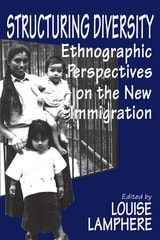
Structuring Diversity
Ethnographic Perspectives on the New ImmigrationEdited by Louise Lamphere
University of Chicago Press, 1992

Structuring the Void
The Struggle for Subject in Contemporary American FictionJerome Klinkowitz
Duke University Press, 1992
Among the writers Klinkowitz discusses are Richard Brautigan, Kurt Vonnegut, Max Apple, Saul Bellow, Erica Jong, Susan Quist, Gerald Rosen, Rob Swigart, and Grace Paley. He shows how, in the absence of subject matter, these writers persist in the act of structuring—by organizing autobiography as a narrative device, ritualizing national history and popular culture, or formalizing a comic response to a new imaginative state, the state of California. Klinkowitz also considers subjects such as gender and war, which, though they cannot be represented, nevertheless exercise contraints on a writer’s intention to structure.
What emerges from Klinkowitz’s analysis is a clear sense of what today’s fiction—and fiction writing—is about. As such, Structuring the Void will prove invaluable to anyone with an interest in contemporary literature.
Struggle For Academic Democr
Abraham Edel
Temple University Press, 1990

Struggle For Control Of Public Education
Michael Engel
Temple University Press, 2000
Seduced by the language of the market economy, those making decisions about education today argue that market strategies promote democratic educational reform, when really they promote market reform of education. Michael Engel argues against this tendency, siding with democratic values -- which encourage openness, creativity, social awareness, and idealism, whereas market values uphold individual achievement, competition, economic growth, and national security.
Behind the facade of progressive rhetoric, advocates of these corporate models have succeeded in imposing their definition of school reform through federal and state policy makers. As a result, communities lose control of their schools, teachers lose control of their work, and students lose control of their schools, teachers lose control of their work, and students lose control of their futures. Engel attacks the increasing dominance of market ideology in educational policy and extends his critique beyond such trends in school reform as vouchers, charter schools, and "contracting out" to include issues such as decentralization, computer technology, and standards.
The debate over privatization amounts to ideological warfare between democratic and market values. The question is not so much about "school choice" as it is about the values Americans want at the root of their society. Unprecedented in its value-based challenge to the threat of market ideology to educational policy, The Struggle for Control of Public Education is a sophisticated call for a return to community-controlled schools and democratic values. This argument offers theoretical and practical models crafted in the contemporary feminist and social reconstructionist tradition. Readers interested in the study of educational policies, philosophy, and policy will find this book engaging.