Results by title
5550 books match the query 'Biography & Autobiography' and 348 start with s
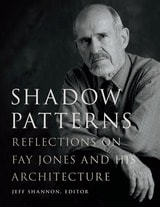
Shadow Patterns
Reflections on Fay Jones and His ArchitectureJeff Shannon
University of Arkansas Press, 2017
Winner, 2017 Ned Shank Award for Outstanding Preservation Publication from Preserve Arkansas
Shadow Patterns: Reflections on Fay Jones and His Architecture is a collection of critical essays and personal accounts of the man the American Institute of Architects honored with its highest award, the Gold Medal, in 1990.
The essays range from the academic, with appreciations and observations by Juhanni Palaasma and Robert McCarter and Ethel Goodstein-Murphree, to personal reflections by clients and friends. Two of Arkansas’s most accomplished writers, Roy Reed and Ellen Gilchrist, who each live in Fay Jones houses, have provided intimate portrayals of what it’s like to live in, and manage the quirks of, a “house built by a genius,” where “light is everywhere. . . . Everything is quiet, and everything is a surprise,” as Gilchrist says.
Through this compendium of perspectives, readers will learn about Jones’s personal qualities, including his strong will, his ability to convince other people of the rightness of his ideas, and yet his willingness, at times, to change his mind. We also enter into the work: powerful architecture like Stoneflower and Thorncrown Chapel and Pinecote Pavilion, along with private residences ranging from the modest to the monumental. And we learn about his relationship with his mentor, Frank Lloyd Wright.
Shadow Patterns broadens and enriches our understanding of this major figure in American architecture of the twentieth century.
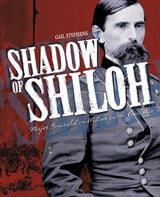
Shadow of Shiloh
Major General Lew Wallace in the Civil WarGail Stephens
Indiana Historical Society Press, 2010
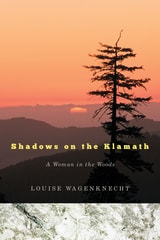
Shadows on the Klamath
A Woman in the WoodsLouise Wagenknecht
Oregon State University Press, 2021
With Shadows on the Klamath, Louise Wagenknecht completes her trilogy about life in remote northwestern California. In this new work, she recounts her years in the Forest Service, starting as a clerical worker on the Klamath National Forest before moving to a field position where she did everything from planting trees to fighting fires.
Her story is about a Forest Service in transition, as forest management practices began to shift. Not least among these changes was the presence of women in the ranks—a change that many in the Forest Service resisted. Wagenknecht blends the personal and professional to describe land management in the West and the people who do it—their friendships, rivalries, and rural communities.
Anyone with an interest in the Klamath-Siskiyou region, or the history of women in natural resource agencies, or the many issues associated with industrial forestry, should read this book for its valuable firsthand perspective. General readers interested in the rural West and personal memoir will also be richly rewarded.

Shakespeare and Baseball
Reflections of a Shakespeare Professor and Detroit Tigers FanSamuel Crowl
Ohio University Press, 2024
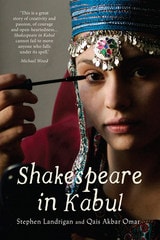
Shakespeare in Kabul
Stephen Landrigan and Qais Akbar Omar
Haus Publishing, 2012
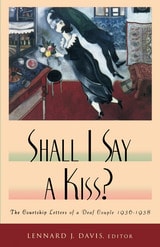
Shall I Say A Kiss?
The Courtship Letters of a Deaf Couple, 1936-1938Lennard J. Davis
Gallaudet University Press, 1999
Upon the death of his father Morris at age 82, Lennard Davis found among his effects a trove of letters, kept in careful chronological order, that dated from 1936. The letters ended in 1938, when Eva Weintrobe came to America to marry Morris, and they provide the core of Shall I Say A Kiss?, their courtship by correspondence. In his framing comments, Davis speculates that his parents met perhaps four or five times before they wed, a fact that heightens the importance of these letters to their fate. Davis illustrates vast contrasts between Morris and Eva, both to each other (Morris was 38; Eva was 26), and to themselves in later life as witnessed by their son. Where Davis saw his father brimming with confidence and a sense of superior intellect while his mother acted as the reserved, dutiful wife, he was startled to learn through their letters that she could be the shrewd questioning correspondent even as his father wrote as an unsure, imploring suitor.
Shall I Say A Kiss? opens a window into the lives of two working-class, Jewish, British, Deaf people in the 1930s. This striking book reveals a consistent, journal-like account of the “lived” experience of Deaf people during the tumultuous times just prior to World War II. Because the correspondence is mainly composed of Eva’s letters, the focus sharpens even further as a record of the life and opinions of a young, working-class, Deaf woman about to embark upon marriage and life in a new country. The challenges she faced, including de facto racial barriers for both deaf and Jewish immigrants, and the prospect of uniting with a man she knew mostly through his letters alone, make for a compelling and emotional trip through her life. Shall I Say A Kiss? serves as a singular social document and also as an engaging and often moving narrative that will win audiences among academics and romantics alike.

Shamewreck
EssaysPeggy Shinner
The Ohio State University Press, 2027
In Shamewreck, Peggy Shinner interrogates the entanglement of shame and language, casting shame as a moral force, a conscience-beast, an umpire, the fellow who awaits when you come home. She grapples with the nuclear bombing of Bikini Atoll and the emergence, four days later, of the bikini in Paris; the link between property and personhood and what it means to die without possessions; the mutability of language and how shamefaced once meant “modest and bashful,” before morphing into “abashed and ashamed”; how talkative women were thought to be sloppy women, like Eve (loose of mouth and morals ); how occupation once meant “heterosexual intercourse” and now means “military invasion.” Parsing the dark undercurrents of popular culture alongside her own experiences as a queer woman, Shinner exhorts us to abandon willful unseeing and consider the legacies of language. Take a look, she urges, you can buy a new car in twenty-first-century America and for your money get two masters and a slave key. Shamewreck complicates our notions of shame and shamelessness and rescues them from the refuse pile, reclaiming shame as a potent moral adjudicator.
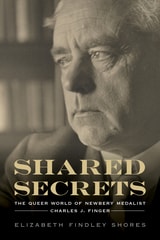
Shared Secrets
The Queer World of Newbery Medalist Charles J. FingerElizabeth Findley Shores
University of Arkansas Press, 2021
Winner, 2023 Booker Worthern Literary Prize
For nearly a century, British expatriate Charles Joseph Finger (1867–1941) was best known as an award-winning author of children’s literature. In Shared Secrets, Elizabeth Findley Shores relates Finger’s untold story, exploring the secrets that connected the author to an international community of twentieth-century queer literati.
As a young man, Finger reveled in the easy homosociality of his London polytechnical school, where he launched a student literary society in the mold of the city’s private men’s clubs. Throughout his life, as he wandered from England to Patagonia to the United States, he tried to recreate similarly open spaces—such as Gayeta, his would-be art colony in Arkansas. But it was through his idiosyncratic magazine All’s Well that he constructed his most successful social network, writing articles filled with coded signals and winking asides for an inner circle of understanding readers.
Capitalizing on the publishing opportunities of the day, Finger used every means available to express his twin loves—literature and men. He produced an enormous body of work, and his short, semiautobiographical fiction won some critical acclaim. Ultimately, the children’s book that won Finger a Newbery Medal ushered him into the public eye, ending his development as an author of serious queer literature.
Shared Secrets is both the story of Finger’s remarkable, adventurous life and a rare look at a community of gay writers and artists who helped shaped twentieth-century American culture, even as they artfully concealed their own identities.
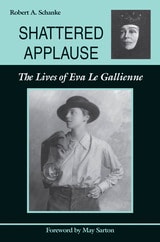
Shattered Applause
The Lives of Eva Le GallienneRobert A. Schanke. Foreword by May Sarton
Southern Illinois University Press, 1992
This comprehensive biography of the actress film critic Rex Reed called “a national treasure” draws on Robert A. Schanke’s interviews and correspondence not only with Eva Le Gallienne but also with more than one hundred of her colleagues and friends, including Glenda Jackson, Burgess Meredith, Eli Wallach, Peter Falk, Ellen Burstyn, Anne Jackson, Farley Granger, Jane Alexander, Uta Hagen, and Rosemary Harris. Forty-two illustrations offer highlights of Le Gallienne’s many notable performances in such plays as Hedda Gabler, Liliom, The Cherry Orchard, Peter Pan, Camille, Mary Stuart, The Royal Family,and The Dream Watcher.
Behind her public role as a famous actress and as the founding and maintaining force of the first civic repertory theatre in the United States, Eva Le Gallienne led a private life complicated by her identity as a lesbian. Schanke considers Le Gallienne’s sexuality and how it played a role in the struggles, defeats, and triumphs that combined to inspire her greatness. Shattered Applause, a finalist for the Lambda Literary Award for Lesbian Nonfiction, tells a fascinating story that also serves as a barometer of the changing values, tastes, and attitudes of American society.
Shattered
Fragments of a Black LifeMatthieu Chapman
West Virginia University Press, 2023
From a distance, Matthieu Chapman’s life and accomplishments serve as an example of racial progress in America: the first in his family to go to college, he earns two master’s degrees and a doctorate and then becomes a professor of theater. Despite his personal and academic success, however, the specter of antiblackness continues to haunt his every moment and interaction.
Told through fragments, facets, shards, slivers, splinters, and absences, Shattered places Chapman’s own story in dialogue with US history and structural analysis of race to relay the experience of being very alive in a demonstrably antiblack society—laying bare the impact of the American way on black bodies, black psyches, and black lives. From the Church of Jesus Christ of Latter-day Saints to the offices of higher education, from a Loyal White Knights flyer on his windshield to a play with black students written by a black playwright, Chapman’s life story embodies the resistance that occurs, the shattering, collapsing, and reconfiguring of being that happens in the collisions between conceptions of blackness. Shattered is a heartrending and thought-provoking challenge to narratives of racial progress and postracial America—an important reminder that systemic antiblack racism affects every black person regardless of what they achieve in spite of it.
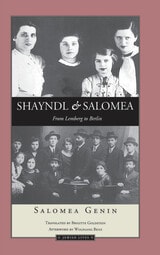
Shayndl and Salomea
From Lemberg to BerlinSalomea Genin
Northwestern University Press, 1997
Genin's richly detailed portrait shows the effects of a family's struggle—personal, religious, social, and for their very survival—against the shadow of the Nazi rise to power.
She Came from Mariupol
Natascha Wodin
Michigan State University Press, 2022
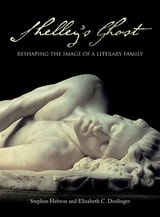
Shelley's Ghost
Reshaping the Image of a Literary FamilyStephen Hebron and Elizabeth C. Denlinger
Bodleian Library Publishing, 2010
It is difficult to think of a family more endowed with literary genius than the Shelley family—from the Romantic poet Percy Bysshe Shelley and his wife, novelist Mary Shelley, to Mary’s parents, William Godwin and Mary Wollstonecraft—all were authors in their own right. Using extensive archival material, Shelley’s Ghost explores the making of this remarkable literary family’s reputation.
Drawing on the Bodleian Library’s outstanding collection of letters, poetry manuscripts, rare printed books, portraits, and other personalia—including Shelley’s working notebooks, Keats’s letters to Shelley, William Godwin’s diary, and the original manuscript of Mary Shelley’s Frankenstein—Stephen Hebron charts the history of this talented yet troubled family. After Percy Bysshe Shelley’s drowning in 1822, Mary published various manuscripts relating to both her husband’s and her father’s lives, and passed this historical legacy to her son, Sir Percy Florence Shelley and his wife, Lady Jane Shelley. As guardians of the archive until they bequeathed it to the Bodleian in 1892, Sir Percy Florence and Lady Jane helped shape the posthumous reputations of these writers. An afterword by Elizabeth Denlinger of the New York Public Library offers an additional perspective, exploring material relating to the Shelley family that slipped beyond the family’s control.
An unparalleled look at one of the most significant families of British Romantic literature, Shelley’s Ghost will be welcomed by scholars and the many fans of this enduring literacy legacy.
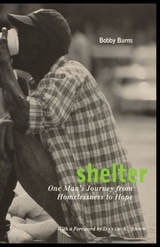
Shelter
Bobby Burns
University of Arizona Press, 1998
Shelter is filled with the sights and sounds of homelessness. Shelter life is patterned by meals provided by church volunteers, lines for soap and clean towels, the repeated meticulous washing of hands by an obsessive-compulsive resident, the rare pleasure of a fried chicken dinner, the illicit smell of marijuana within the shelter. Burns witnesses the residents' struggles with drugs, alcohol, and disability, and he wonders daily whether he will have the courage to emerge from this life. Bobby's diary expresses the full range of emotions of a homeless person: anger, self-pity, pride, humility, shame, depression, and optimism. These are not contradictions; taken together they represent the real feelings provoked by homelessness.
But with rare inner courage, Bobby stokes the fires of hope within himself, marking the days in his journal to keep himself from sliding deeper into a spiral of despair. Bobby confronts his own stereotypes about the homeless and learns firsthand what it means to struggle daily for survival and for dignity. He learns greater courage and he learns greater kindness. He is given food and a bed for 41 days, but he finds shelter on his own, deep within himself.
Shepherd
A MemoirRichard Gilbert
Michigan State University Press, 2014
Sherman's Forgotten General
Henry W. SlocumBrian C. Melton
University of Missouri Press, 2007
Henry Warner Slocum, a Union major general who was a corps and army commander in the Civil War, served from the first call for troops until he stood with William Tecumseh Sherman to receive Joseph E. Johnston’s surrender after Appomattox. He saw action at Bull Run, Chancellorsville, and Gettysburg, and by the end of the war he had taken command of the Army of Georgia, yet historians have largely overlooked this key commander.
Brian Melton has written the first scholarly account of this important general—the first full-length biography in nearly a century—who as one of Sherman’s most trusted commanders exercised significant influence during the Civil War. Although Slocum is remembered primarily for his lackluster performance at Gettysburg, Melton discloses that there is more to him than current history credits, offering a holistic account of his life to show that his career was much more significant than has been supposed.
Slocum took on the characteristics of the leaders he served, and Melton reveals how Slocum’s attitudes and tactics changed dramatically between commanders to explain why he proved to be of little help to George McClellan and almost a liability while serving under “Fighting Joe” Hooker and yet was an effective commander under Sherman. Slocum became Sherman’s “left arm” and adapted so thoroughly to his style of generalship that he anticipated the general’s intentions on two important occasions, and Melton contends that Slocum was a much more important contributor to the success of Sherman’s later campaigns than has been acknowledged, becoming at times more aggressive and driving than Sherman himself.
Melton ultimately considers Slocum’s fate as one of the forgotten generals of the Civil War—brought on largely by his joining the Democratic Party in 1865—and demonstrates why previous simplistic depictions of Slocum miss the mark. By providing the first detailed look at this important second-tier commander, Sherman’s Forgotten General illuminates the influences, events, and individuals of Slocum’s career to show that, while he may not have changed the course of the war, he played a conspicuous and important role in its successful execution that has long deserved to be recognized.
Sherman
A Soldier's Passion for OrderJohn F. Marszalek
Southern Illinois University Press, 1993
Sherman: A Soldier’s Passion for Order is the premier biography of William Tecumseh Sherman, the Civil War commander known for his “destructive war” policy against Confederates and as a consummate soldier. This updated edition of John F. Marszalek’s award-winning book presents the general as a complicated man who, fearing anarchy, searched for the order that he hoped would make his life a success.
Sherman was profoundly influenced by the death of his father and his subsequent relationship with the powerful Whig politician Thomas Ewing and his family. Although the Ewings treated Sherman as one of their own, the young Sherman was determined to make it on his own. He graduated from West Point and moved on to service at military posts throughout the South. This volume traces Sherman’s involvement in the Mexican War in the late 1840s, his years battling prospectors and deserting soldiers in gold-rush California, and his 1850 marriage to his foster sister, Ellen. Later he moved to Louisiana, and, after the state seceded, Sherman returned to the North to fight for the Union.
Sherman covers the general’s early Civil War assignments in Kentucky and Missouri and his battles against former Southern friends there, the battle at Shiloh, and his rise to become second only to Grant among the Union leadership. Sherman’s famed use of destructive war, controversial then and now, is examined in detail. The destruction of property, he believed, would convince the Confederates that surrender was their best option, and Sherman’s successful strategy became the stuff of legend.
This definitive biography, which includes forty-six illustrations, effectively refutes misconceptions surrounding the controversial Union general and presents Sherman the man, not the myth.
Sherwood Anderson
A Writer in America, Volume 1Walter B. Rideout
University of Wisconsin Press, 2006
Sherwood Anderson: A Writer in America is the definitive biography of this major American writer of novels and short stories, whose work includes the modern classic Winesburg, Ohio. In the first volume of this monumental two-volume work, Walter Rideout chronicles the life of Anderson from his birth and his early business career through his beginnings as a writer and finally to his move in the mid-1920s to “Ripshin,” his house near Marion, Virginia. The second volume will cover Anderson’s return to business pursuits, his extensive travels in the South touring factories, which resulted in his political involvement in labor struggles and several books on the topic, and finally his unexpected death in 1941.
No other existing Anderson biography, the most recent of which was published nearly twenty years ago, is as thoroughly researched, so extensively based on primary sources and interviews with a range of Anderson friends and family members, or as complete in its vision of the man and the writer. The result is an unparalleled biography—one that locates the private man, while astutely placing his life and writings in a broader social and political context.
Sherwood Anderson
A Writer in America, Volume 2Walter B. Rideout
University of Wisconsin Press, 2006
Walter Rideout’s Sherwood Anderson: A Writer in America is a seminal work that reintroduces us to this important, yet recently neglected, American writer, giving him long overdue attention. This second volume of the monumental two-volume work covers Anderson’s life after his move in the mid-1920s to “Ripshin,” his house near Marion, Virginia (where Volume 1 ended.) The second volume covers his return to business pursuits; his extensive travels in the South touring factories, which resulted in his political involvement in labor struggles and several books on the topic; and finally his unexpected death in 1941.
No other existing Anderson biography, the most recent of which was published nearly twenty years ago, is as thoroughly researched, so extensively based on primary sources and interviews with a range of Anderson’s friends and family members, or as complete in its vision of the man and the writer. Rideout uncovers much new information about events and people in Anderson’s life and provides a new perspective on many of his works. This two-volume biography presents Anderson’s many remarkable attributes more clearly than ever before, while astutely placing his life and writings in the broader social, political, and artistic movements of his times.
Outstanding Book, selected by the American Association of School Librarians, and Best Books for General Audiences, selected by the Public Library Association
Outstanding Academic Title, Choice Magazine
Winner, Biography Award, Society of Midland Authors
Shifting Borders and a Tattered Passport
Intellectual Journeys of a Mormon AcademicArmand L. Mauss
University of Utah Press, 2012
The life of a Mormon intellectual in the secular academic community is likely to include some contradictions between belief, scholarship, and the changing times. In his memoir, Armand L. Mauss recounts his personal and intellectual struggles—inside and outside the LDS world—from his childhood to his days as a graduate student at UC Berkeley in the 1960s through his many years as a professor.
As an important and influential observer and author in the Mormon intellectual world, Mauss has witnessed how, in attempting to suppress independent and unsponsored scholarship during the final decades of the twentieth century, LDS leaders deliberately marginalized important intellectual support and resources that could have helped, in the twenty-first century, to refurbish the public image of the church. As a sociologist, he notes how the LDS Church, as a large, complex organization, strives to adjust its policies and practices in order to maintain an optimal balance between unique, appealing claims on the one hand and public acceptance on the other. He also discusses national and academic controversies over the New Religious Movements of the 1960s and 1970s. Writing in clear language, Mauss shows how he has navigated the boundaries where his faith and academic life intersect, and reveals why a continuing commitment to the LDS Church must be a product of choice more than of natural or supernatural “proof.”
Ship Captain's Daughter
Growing Up on the Great LakesAnn Michler Lewis
Wisconsin Historical Society Press, 2015
Ann Lewis's childhood was marked by an unusual rhythm. Each year the thawing and freezing of the Great Lakes signaled the beginning and end of the shipping season, months of waiting that were punctuated by brief trips to various ports to meet her father, the captain.
With lively storytelling and vivid details, Lewis captures the unusual life of shipping families whose days and weeks revolved around the shipping industry on the Great Lakes. She paints an intriguing and affectionate portrait of her father, a talented pianist whose summer job aboard an ore freighter led him to a life on the water. Working his way up from deckhand to ship captain, Willis Michler became the master of thirteen ships over a span of twenty-eight years. From the age of twelve, Ann accompanied the captain to the ports of Milwaukee, Chicago, Toledo, and Cleveland on the lower Great Lakes. She describes sailing through stormy weather and starry nights, visiting the engine room, dining at the captain's table, and wheeling the block-long ship with her father in the pilot house. Through her mother's stories and remarks, Lewis also reveals insights into the trials and rewards of being a ship captain's wife. The book is enhanced by the author's vintage snapshots, depicting this bygone lifestyle.

Shipping Out
Race, Performance, and Labor at SeaAnita Gonzalez
University of Michigan Press, 2025
Shooting Polaris
A Personal Survey in the American WestJohn Hales
University of Missouri Press, 2005
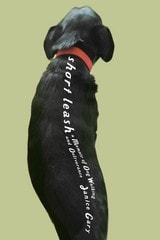
Short Leash
A Memoir of Dog Walking and DeliveranceJanice Gary
Michigan State University Press, 2013
Janice Gary never walked alone without a dog - a big dog. Once, she was an adventurer, a girl who ran off to California with big dreams and hopes of leaving her past behind. But after a brutal rape, her youthful bravado vanished, replaced by a crippling need for safety. When she rescues a gangly Lab-Rottweiler pup,Gary is sure she’s found her biggest protector yet. But after Barney is attacked by a vicious dog, he becomes a clone of his attacker, trying to kill any dog that comes near him. Walking with Barney is impossible. Yet walking without him is unthinkable.
After years of being exiled by her terror and Barney’s defensiveness, Janice risks taking her dog to a park near the Chesapeake Bay. There, she begins the messy, lurching process of walking into her greatest fears. As the leash of the past unravels, Barney sheds the defensive behaviors that once shackled him and Gary steps out of the self-imposed isolation that held her captive for three decades. Beautifully written, Short Leash is much more than a “dog story” or a book about recovering from trauma. It is a moving tale of love and loss, the journey of a broken soul finding itsway toward wholeness.
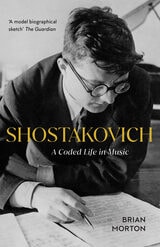
Shostakovich
Brian Morton
Haus Publishing, 2021
Internationally esteemed, Soviet composer Dmitri Shostakovich is widely considered to have been the last great classical symphonist, and his reputation has continued to increase since his death in 1975.
Shostakovich wrote his First Symphony at the age of nineteen, then he soon embarked on a dual career as a concert pianist and composer. His early avant-gardism resulted in the triumph of his 1934 opera Lady Macbeth of Mtsensk. Though at first highly praised by Stalin, Shostakovich would later suffer from a complex and brutalizing relationship with the Soviet dictator and the governments that followed him. Despite this persecution, his Seventh Symphony was embraced as a potent symbol of Russian resistance to the invading Nazi army in both the USSR and the West. Though his later years were marked by ill health, his rate of composition remained prolific. His music became increasingly beloved as he established himself as the most popular composer of serious music in the middle of the twentieth century.
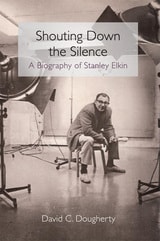
Shouting Down the Silence
A Biography of Stanley ElkinDavid C. Dougherty
University of Illinois Press, 2010

Sibelius
A Composer's Life and the Awakening of FinlandGlenda Dawn Goss
University of Chicago Press, 2009
One of the twentieth century’s greatest composers, Jean Sibelius (1865–1957) virtually stopped writing music during the last thirty years of his life. Recasting his mysterious musical silence and his undeniably influential life against the backdrop of Finland’s national awakening, Sibelius will be the definitive biography of this creative legend for many years to come.
Glenda Dawn Goss begins her sweeping narrative in the Finland of Sibelius’s youth, which remained under Russian control for the first five decades of his life. Focusing on previously unexamined events, Goss explores the composer’s formative experiences as a Russian subject and a member of the Swedish-speaking Finnish minority. She goes on to trace Sibelius’s relationships with his creative contemporaries, with whom he worked to usher in a golden age of music and art that would endow Finns with a sense of pride in their heritage and encourage their hopes for the possibilities of nationhood. Skillfully evoking this artistic climate—in which Sibelius emerged as a leader—Goss creates a dazzling portrait of the painting, sculpture, literature, and music it inspired. To solve the deepest riddles of Sibelius’s life, work, and enigmatic silence, Goss contends, we must understand the awakening in which he played so great a role.
Situating this national creative tide in the context of Nordic and European cultural currents, Sibelius dramatically deepens our knowledge of a misunderstood musical giant and an important chapter in the intellectual history of Europe.
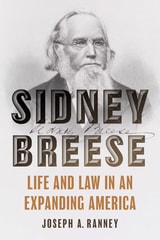
Sidney Breese
Life and Law in an Expanding AmericaJoseph A. Ranney
University of Illinois Press, 2026
Born in New York, Breese moved to Illinois in 1818. An ambitious personality combined with acumen in law, politics, and business boosted Breese into the state’s frontier elite and involved him in the political controversies that roiled the Jacksonian Era. First a circuit court judge, Breese rose to the state Supreme Court before his election to the US Senate in 1842. Breese focused his senatorial energies on westward expansion and transforming the nation into a world power—ambitions symbolized by his pivotal role in the creation of the Illinois Central Railroad. After returning to the state Supreme Court, Breese ruled on essential cases that enshrined expansionist jurisprudence in American law and regulated the growing power of corporations in post–Civil War America.
A first full-length biography, Sidney Breese places the life of an overlooked figure within legal and Illinois history.
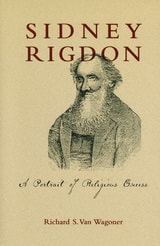
Sidney Rigdon
A Portrait of Religious ExcessRichard S. Van Wagoner
Signature Books, 2006
In the late 1820s a fiery young minister in western Ohio converted nearly 1,000 proselytes to the Reformed Baptist Movement. As these schismatics organized themselves into the new Disciples of Christ church, the Reverend Sidney Rigdon was already aligning himself with another, more radical movement, the Latter-day Saints, where he quickly became the LDS prophet’s principal advisor and spokesman. He served Joseph Smith loyally for the next fourteen years, even through a brief spat over the prophet’s romantic interest in his teenage daughter.
Next to Smith, Rigdon was the most influential early Mormon. He imported Reformed Baptist teachings into Latter-day Saint theology, wrote the canonized Lectures on Faith, championed communalism and isolationism, and delivered many of the most significant early sermons, including the famous Salt Sermon and the Ohio temple dedicatory address.
Following Smith’s death, Rigdon parted company with Brigham Young to lead his own group of some 500 secessionists Mormons in Pennsylvania. Rigdon’s following gradually dwindled, as the one-time orator took to wandering the streets, taunting indifferent passersby with God’s word. He was later recruited by another Mormon faction. Although he refused to meet with them, he agreed to be their prophet and send revelations by mail. Before long he had directed them to settle far-off Iowa and Manitoba, among other things. At his death, his followers numbered in the hundreds, and today they number about 10,000, mostly in Pennsylvania.
“Rigdon is a biographer’s dream,” writes Richard Van Wagoner. Intellectually gifted, manic-depressive, an eloquent orator and social innovator but a chronic indigent, Rigdon aspired to altruism but demanded advantage and deference. When he lost prominence, his early attainments were virtually written out of the historical record.
Correcting this void, Van Wagoner has woven the psychology of religious incontinence into the larger fabric of social history. In doing so, he reminds readers of the significance of this nearly-forgotten founding member of the LDS First Presidency. Nearly ten million members in over one hundred churches trace their heritage to Joseph Smith. Many are unaware of the importance of Rigdon’s contributions to their inherited theology.
Sign Here If You Exist and Other Essays
Jill Sisson Quinn
The Ohio State University Press, 2020
Sign Here If You Exist explores states of being and states of mind, from the existence of God to sense of place to adoptive motherhood. In it, Jill Sisson Quinn examines how these states both disorient and anchor us as she treks through forests, along shorelines and into lakes and rivers as well as through memories and into scientific literature.Each essay hinges on an unlikely pairing—parasitic wasps and the afterlife, or salamanders and parenthood—in which each element casts the other in unexpectedly rich light. Quinn joins the tradition of writers such as Annie Dillard, Scott Russell Sanders, and Eula Biss to deliver essays that radiate from the junction of science and imagination, observation and introspection, and research and reflection.
Signifying Bodies
Disability in Contemporary Life WritingG. Thomas Couser
University of Michigan Press, 2010
"Thomas Couser's Signifying Bodies comes at a crucial moment when debates about physician assisted suicide, genetic engineering, and neo-natal screening are raising the question of what constitutes a 'life worth living' for persons with disabilities. Couser's work engages these debates by exploring the extensive number of personal narratives by or about persons with disabilities. As Couser brilliantly demonstrates through synoptic readings, these works challenge the 'preferred rhetorics' by which such narratives are usually written (triumphalist, gothic, nostalgic) while making visible the variegated nature of embodied life."
---Michael Davidson, University of California, San Diego
"Signifying Bodies shows us that life writing about disability is . . . everywhere. . . . From obituary to documentary film to ethnography to literary memoir to the law, the book casts a wide net, detailing how various written and filmed responses to disability both enact and resist conventional narrative patterns. [This] not only broadens our idea about where to look for life writing, but also demonstrates how thoroughly stereotypes about disability mediate our social and artistic languages---even when an author has (so-called) the best intentions."
---Susannah B. Mintz, Skidmore College
Memoirs have enjoyed great popularity in recent years, experiencing significant sales, prominent reviews, and diverse readerships. Signifying Bodies shows that at the heart of the memoir phenomenon is our fascination with writing that focuses on what it means to live in, or be, an anomalous body---in other words, what it means to be disabled. Previous literary accounts of the disabled body have often portrayed it as a stable entity possibly signifying moral deviance or divine disfavor, but contemporary writers with disabilities are defining themselves and depicting their bodies in new ways. Using the insights of disability studies and source material ranging from the Old and New Testaments to the works of authors like Lucy Grealy and Simi Linton and including contemporary films such as Million Dollar Baby, G. Thomas Couser sheds light on a broader cultural phenomenon, exploring topics such as the ethical issues involved in disability memoirs, the rhetorical patterns they frequently employ, and the complex relationship between disability narrative and disability law.
G. Thomas Couser is Professor of English at Hofstra University.
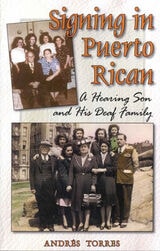
Signing in Puerto Rican
A Hearing Son and His Deaf FamilyAndrés Torres
Gallaudet University Press, 2009
The only child of deaf Puerto Rican immigrants, Andrés Torres grew up in New York City in a large, extended family that included several deaf aunts and uncles. In Signing in Puerto Rican: A Hearing Son and His Deaf Family, he opens a window into the little known culture of Deaf Latinos chasing the immigrant American dream. Like many children of deaf adults (codas), Torres loved his parents deeply but also longed to be free from being their interpreter to the hearing world. Torres’s story is unique in that his family communicated in three languages. The gatherings of his family reverberated with “deaf talk,” in sign, Spanish, and English. What might have struck outsiders as a strange chaos of gestures and mixed spoken languages was just normal for his family.
Torres describes his early life as one of conflicting influences in his search for identity. His parents’ deep involvement in the Puerto Rican Society for the Catholic Deaf led him to study for the priesthood. He later left the seminary as his own ambitions took hold. Torres became very active in the Puerto Rico independence party against the backdrop of the Civil Rights movement and protest against the Vietnam War. Throughout these defining events, Torres’s journey never took him too far from his Deaf Puerto Rican family roots and the passion of arms, hands, and fingers filling the air with simultaneous translation and understanding.
Silence and Power
A Reevaluation of Djuna BarnesEdited by Mary Lynn Broe. Afterword by Catharine Stimpson
Southern Illinois University Press, 1991
Roughly chronological, these essays explore Barnes’ early work in the New York newspaper world of the ‘teens, proceed through the 1954 publication of The Antiphon, and include several approaches to such works as Ryder, Ladies Almanack, and Nightwood. This judicious mix of essays—many of them illustrated by photographs and drawings—presents a comprehensive picture of the creative imagination of Djuna Barnes.
Essayists include Mary Lynn Broe, Nancy J. Levine, Ann Larabee, Joan Retallack, Carolyn Allen, Carolyn Burke, Sheryl Stevenson, Marie Ponsot, Frances M. Doughty, Susan Sniader Lanser, Frann Michel, Karla Jay, Jane Marcus, Judith Lee, Julie L. Abraham, Meryl Altman, Lynda Curry, Louise A. DeSalvo, and Catharine Stimpson. Individuals sharing personal recollections of Barnes are Ruth Ford, James B. Scott, Alex Gildzen, Hank O’Neal, Chester Page, Andrew Field, and Frances McCullough. Janice Thom and Kevin Engel provide an updated bibliography.
From The Book of Repulsive Women to The Antiphon, Barnes challenged old gender dichotomies as she shaped radical sociopolitical views. Her textual methods celebrated a multiplicity of voices, heterodox forms, and genres, transgressing those tenets of modernism that privilege the “high art” of a single, unified textual identity or a discrete discourse. These essays offer various critical approaches and sinuous readings of the full range of Barnes’ achievement. Interwoven through the essays and reminiscences is a lively commentary from Barnes’ friends and contemporaries as well as Barnes herself.
Silenced Voices
Uncovering a Family’s Colonial History in IndonesiaInez Hollander
Ohio University Press, 2008
Like a number of Netherlanders in the post–World War II era, Inez Hollander only gradually became aware of her family’s connections with its Dutch colonial past, including a Creole great-grandmother. For the most part, such personal stories have been, if not entirely silenced, at least only whispered about in Holland, where society has remained uncomfortable with many aspects of the country’s relationship with its colonial empire.
Unlike the majority of memoirs that are soaked in nostalgia for tempo dulu, Hollander’s story sets out to come to grips with her family’s past by weaving together personal records with historical and literary accounts of the period. She seeks not merely to locate and preserve family memories, but also to test them against a more disinterested historical record. Hers is a complicated and sometimes painful personal journey of realization, unusually mindful of the ways in which past memories and present considerations can be intermingled when we seek to understand a difficult past. Silenced Voices is an important contribution to the literature on how Dutch society has dealt with its recent colonial history.
Silent Alarm
On the Edge with a Deaf EMTSteven L. Schrader
Gallaudet University Press, 1995
For 15 years, Steven Schrader worked as a firefighter and an Emergency Medical Technician (EMT) in Atlanta, Georgia. There, he faced the day-to-day stress created by having to deal with nonstop human catastrophe, one moment administering to terribly hurt accident victims, the next talking down a suicidal person from a rooftop. Added to these difficulties were his own personal struggles, not the least being the bias he experienced because of his severe hearing loss. Silent Alarm presents his no-frills, stunning account of survival in a profession with a notoriously high burn-out rate, and the good that he did as a topnotch EMT.
Schrader makes palpable the constant tension of being the first summoned to life-or-death situations, and he also outlines the grim reality of being an EMT in dangerous parts of the community. “Always wear a bulletproof vest; keep a weapon (out of sight of the supervisors, of course); never, never stand in front of a door when knocking,” are just a few of his rules for the street.
Despite these cautions, time and again he and his partners plunged into danger to save children, elderly citizens, indigents, criminals, and any other persons they found at risk. His hearing loss occasionally hindered him, and sometimes saved him, but, mostly, as it should, it became part of the background to the astonishing compassion in the stories he tells.
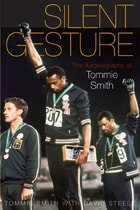
Silent Gesture
The Autobiography of Tommie SmithTommie Smith with David Steele
Temple University Press, 2008
n 1968, Tommie Smith and his teammate John Carlos won the gold and silver medals, respectively, for the 200 meter dash. Receiving their medals on the dais, they raised their fists and froze a moment in time that will forever be remembered as a powerful day of protest. In this, his autobiography, Smith tells the story of that moment, and of his life before and after it, to explain what that moment meant to him.
In Silent Gesture, Smith recounts his life before and after the 1968 Olympics: his life-long commitment to athletics, education, and human rights. He dispels some of the myths surrounding his and Carlos' act on the dais -- contrary to legend, Smith wasn't a member of the Black Panthers, but a member of the US Olympic Project for Human Rights -- and describes in detail the planning and risks involved in his protest. Smith also details his many years after Mexico City of devotion to human rights, athletics, and education. A unique resource for anyone concerned with international sports, history, and the African American experience, Silent Gesture contributes a complete picture of one of the most famous moments in sports history, and of a man whose actions always matched his words.
Silent Observer
Christy MacKinnon
Gallaudet University Press, 1993
Silent Observer is an affectionate, poignant memoir of childhood as seen through the eyes of a vivacious young girl. Teachers, parents, and children will share in their enjoyment of this beautiful, sensitive story of a harder but wonderful time that has passed.
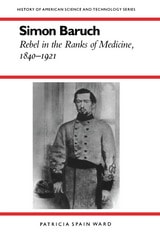
Simon Baruch
Rebel in the Ranks of Medicine, 1840-1921Patricia Spain Ward
University of Alabama Press, 1994
Recounts the remarkable life of a Prussian/Polish Jew who immigrated to the United States as a teenager in the 1850s and became one of the nation’s best-known physicians by the turn of the century
After medical study in South Carolina and Virginia on the eve of the Civil War, Simon Baruch served the Confederacy as a surgeon for three years, twice undergoing capture and internment. Despite economic hardships while practicing in South Carolina during Reconstruction, he helped to reactivate the State Medical Association and served as president of the State Board of Health.
In 1881 he joined the exodus of southern physicians and scientists of that period, taking up residence in New York City, where he rose to prominence through his advocacy of surgery in one of the early operations for appendicitis and through is role as the protective physician in a widely publicized “child cruelty” case involving the musical prodigy, Josef Hofmann. Baruch became a leader in the nationwide movement to establish free public baths for tenement dwellers and in the development of expert medical journalism. Although his advocacy of such natural remedies as water, fresh air, and diet often made him appear unaccountably iconoclastic to his contemporaries, he has gained posthumous recognition as a pioneer in physical medicine.
Bernard N. Baruch, one of his four sons, has memorialized this work through endowments for research and instruction in physical medicine and rehabilitation. Ward reconstructs the life of a medical student in the South at the opening of the Civil War, the adventures of a Confederate surgeon, and the difficulties of a practitioner in Reconstruction South Carolina. Simon Baruch’s physician’s registers and his correspondence with colleagues afford the reader an immediate sense of the therapeutic dilemmas facing physicians and patients of his era. Baruch’s experiences while establishing himself in New York City after 1881 reflect the challenges facing those trying to break into what was then the nation’s medical capital—as well as that city’s rich opportunities and heady intellectual atmosphere. His energetic campaign for free public baths illustrates one of the most colorful chapters of American social history, as immigrants flooded the cities at the turn of the century. As medical editor of the New York Sun from 1912 to 1918, Baruch touched on most of the health concerns of that period and a few—such as handgun control—that persist to this day.
Simone de Beauvoir
Lisa Appignanesi
Haus Publishing, 2019
Simple Story Of A Soldier
Life And Service in the 2d Mississippi InfantrySamuel W. Hankins
University of Alabama Press, 2004
This fast-paced memoir was written in 1905 by 61-year-old Samuel W. Hankins while he was living in the Soldiers Home in Gulfport, Mississippi. It vividly details his years as a Confederate rifleman from the spring of 1861, when at a mere sixteen years of age he volunteered for the 2d Mississippi Infantry, through the end of the war in 1865, when he was just twenty years old and maimed for life.
The 2d Mississippi was part of the Army of Northern Virginia and as such saw action at Bull Run/Manassas, Seven Pines and the Peninsular Campaign, and Gettysburg. Besides being hospitalized with measles, suffering severely frostbitten feet, and being wounded by a minié ball at Railroad Cut, Hankins was captured by Federal forces and sent to a prisoner of war camp on David’s Island, New York. Later, he was transferred to a South Carolina hospital, returned home on furlough, joined a cavalry unit that fought at Atlanta. He was stationed in Selma, Alabama, when the war ended.
The strength of Hankins’s text lies in his straightforward narrative style virtually free of Lost Cause sentiment. Both Union and Confederate veterans could relate to his stories because so many of them had faced similar challenges during the war. Full of valuable information on a common soldier’s experience, the memoir still conjures the sights, sounds, and smells of warfare.
Simple Things
Lessons from the Family FarmJerry Apps
Wisconsin Historical Society Press, 2018
Sin and Salvation in Early Modern France
Three Women’s StoriesMarguerite d'Auge, Renée Burlamacchi, and Jeanne du Laurens
Iter Press, 2017
The texts available here in English for the first time open a window into the lives of three early modern Frenchwomen as they explore the common themes of family, memory, sin, and salvation. The Regrets of Marguerite d’Auge (1600), the Memoirs of Renée Burlamacchi (1623), and the Genealogy of Jeanne du Laurens (1631), taken from different genres of historical writings, raise important questions: Why and how did female authorship find its way into the historical record? How did these voices escape the censorship and prejudice against female publication? In a time of extreme religious conflict, how did these women convey their views on controversial issues such as primacy of grace, indulgences, and salvation without disrupting the gender expectations of the era?

Sinclair Lewis - American Writers 27
University of Minnesota Pamphlets on American WritersMark Schorer
University of Minnesota Press, 1963
Sinclair Lewis - American Writers 27 was first published in 1963. Minnesota Archive Editions uses digital technology to make long-unavailable books once again accessible, and are published unaltered from the original University of Minnesota Press editions.
Sinclair Lewis Remembered
Gary Scharnhorst
University of Alabama Press, 2012
Sinclair Lewis Remembered is a collection of reminiscences and memoirs by contemporaries, friends, and associates of Lewis that offers a revealing and intimate portrait of this complex and significant Nobel Prize–winning American writer.
Sir Aurel Stein
Archaeological ExplorerJeannette Mirsky
University of Chicago Press, 1977
"[Mirsky] has digested the correspondence, and she quotes so skillfully that her book will save many people the trouble of reading Stein's own exhaustive and exhausting volumes. Definitive."—Larry McMurtry, Washington Post
"A first-rate and unique biography of one of the more significant explorers of Central Asia and the Indo-Iranian borderlands. . . . Mirsky has recreated not only the life of an intrepid explorer but the spirit of the times."—Choice
"Mirsky has performed a signal service in distilling the life, travels, and letters of Aurel Stein into a manageable, graceful, and meaningful synthesis."—Theodore A. Wertime, Technology and Culture

Sir Gardner Wilkinson and His Circle
By Jason Thompson
University of Texas Press, 1992
Following in the footsteps of Napoleon's army, Europeans invaded Egypt in the early nineteenth century to gaze in wonder at the massive, inscrutable remains of its ancient civilizations. One of these travelers was a twenty-four-year-old Englishman, John Gardner Wilkinson. His copious observations of ancient and modern Egyptian places, artifacts, and lifeways, recorded in such widely read publications as Manners and Customs of the Ancient Egyptians and Handbook for Travellers in Egypt, made him the leading early Victorian authority on ancient Egypt and paved the way for thc scientific study of Egyptology.
In this first full-scale biography of Wilkinson (1797-1875), Jason Thompson skillfully portrays both the man and his era. He follows Wilkinson during his initial sojourn in Egypt (1821-1833) as Wilkinson immersed himself in a contemporary Egyptian lifestyle and in study of its ancient past. He shows Wilkinson in his circle of friends—among them Edward William Lane, Robert Hay and Frederick Catherwood. And he traces how Wilkinson continued to use his Egyptian material in the decades following his return to England.
With the rise of professional Egyptology in the middle and later nineteenth century, Sir Gardner Wilkinson came to be viewed as an amateur and his popularity diminished. Drawing upon recently opened sources, Thompson returns Wilkinson to his rightful place within centuries of Egyptian scholarship and assesses both the vision and the limitations of his work. The result is a compelling portrait of a Victorian "gentleman-scholar" and his cultural milieu.
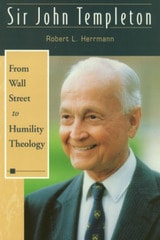
Sir John Templeton
From Wall Street To HumilityRobert L. Hermann
Templeton Press, 1998
The biography of the "Wizard of Wall Street" who has dedicated his life to advancing the scientific study of spiritual realities has been revised and updated. Sir John Templeton was an inspiring and motivational force both through his personal example and through the foundation that bears his name and is dedicated to his mission.
This volume reviews the life of this man of vision, from his childhood in rural Tennessee, to his education at Yale and Oxford, to his legendary years on Wall Street, the birth of his children, and the development and growth of "humility theology science." Interwoven with the stories and facts are the roots of his faith and the values that he credits for his financial success and are the catalyst for his lifelong mission.
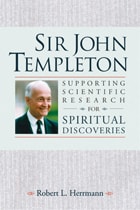
Sir John Templeton
Supporting Scientific Research For Spiritual DiscoveriesRobert Herrmann
Templeton Press, 2004

Sir Robert Borden
CanadaMartin Thornton
Haus Publishing, 2010
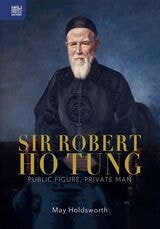
Sir Robert Ho Tung
Public Figure, Private ManMay Holdsworth
Hong Kong University Press, 2022
Sir Robert Ho Tung (1862–1954) is a compelling figure in Hong Kong history. He is regularly portrayed as the colony’s greatest philanthropist and wealthiest man of his day, the first Chinese to live on the Peak, and, at the end of his life, the “Grand Old Man of Hong Kong.” The illegitimate son of a Chinese mother and European father, he was highly sensitive about his mixed heritage, although his success was driven as much by his entrepreneurial talents as by his being Eurasian. This book shows him in all his immense variety—financial wizard, husband and lover, patriarch of a large family, loyal British subject but also, paradoxically, Chinese patriot. China’s president Yuan Shikai awarded him the Order of the Excellent Crop, and King George V knighted him. May Holdsworth’s thoughtful and deftly written account of his life is the first full-length biography in English. Given unique and unprecedented access to family and personal papers, including letters, diaries, notes, and photographs, she offers a nuanced perspective on a public but also a private man. Her book will be a rich resource for historians and readers interested in the men and women who played a key part in the shaping of nineteenth- and early twentieth-century Hong Kong.