Results by title
835 books match the query 'France' and 213 start with t

Taking Drugs in the Sun King’s Reign
E. C. Spary
University of Chicago Press, 2027
The first full-length history of drugs during the first French Empire.
Taking Drugs in the Sun King’s Reign is the story of how the French came to know and consume new non-European plants between 1660 and 1730, a period during which many exotic substances—like coffee, tea, cinchona bark, chocolate, and ipecacuanha—became everyday commodities. E. C. Spary treats the trajectories of these drugs as fragile complexes, made and remade by every exchange. Her book addresses well-known cases, but also drugs that never became popular in France, such as betel.
Taking Drugs is divided into three parts. The first offers a rich depiction of the world of drug-taking and drug-selling in Paris and Versailles at the outset of Louis XIV’s personal reign. The second explores features of monarchical power which explain the “drugs rush” of this period. Finally, the third offers an in-depth look at how priorities for the capture of exotic plant drugs changed within the royal naval administration. It asks how, under the conditions of early modern empires, information about drugs could be made or made trustworthy, who made it, and how it traveled. Spary shows how, over time, drugs transitioned from being natural bodies imbued with mysterious virtues to becoming calculable, replicable sources of profit. Her approach allows for new insights into how political and economic power transformed between the reigns of Louis XIV and his successor, Louis XV.
Tales of a Minstrel of Reims in the Thirteenth Century
Samuel N. Rosenberg
Catholic University of America Press, 2021
Teaching Marianne and Uncle Sam
Public Education, State Centralization, and Teacher Unionism in France and the United StatesNicholas Toloudis
Temple University Press, 2012
Offering the first systematic, comparative examination of the origins of teachers’ unions in two countries—France and the United States—Teaching Marianne and Uncle Sam shows how teachers’ unions came into existence not because of the willful efforts of particular actors, but over the course of decades of conflict over the proper role of professional educators in public politics.
Nicholas Toloudis traces teacher unionism back to the first efforts of governments to centralize public education. He carefully documents how centralization created new understandings of the role of teachers in their societies and generated new sources of conflict within teachers’ corps. Using rare archival source materials, Toloudis illustrates how these internal conflicts became salient in teachers’ battles with governments over their legitimate right to exist as collective claim-makers within the polity.
In the series Politics, History, and Social Change, edited by John C. Torpey

Terms of Exchange
Brazilian Intellectuals and the French Social SciencesIan Merkel
University of Chicago Press, 2022
Would the most recognizable ideas in the French social sciences have developed without the influence of Brazilian intellectuals? While any study of Brazilian social sciences acknowledges the influence of French scholars, Ian Merkel argues the reverse is also true: the “French” social sciences were profoundly marked by Brazilian intellectual thought, particularly through the University of São Paulo. Through the idea of the “cluster,” Merkel traces the intertwined networks of Claude Lévi-Strauss, Fernand Braudel, Roger Bastide, and Pierre Monbeig as they overlapped at USP and engaged with Brazilian scholars such as Mário de Andrade, Gilberto Freyre, and Caio Prado Jr..
Through this collective intellectual biography of Brazilian and French social sciences, Terms of Exchange reveals connections that shed new light on the Annales school, structuralism, and racial democracy, even as it prompts us to revisit established thinking on the process of knowledge formation through fieldwork and intellectual exchange. At a time when canons are being rewritten, this book reframes the history of modern social scientific thought.
Terror And Its Discontents
Suspect Words In Revolutionary FranceCaroline Weber
University of Minnesota Press, 2003
A timely exploration of the political uses of language and rhetoric
Camille Desmoulins, a journalist writing under the Montagnard regime of 1793-94, remarked that France’s government had replaced “the language of democracy” with “the cold poison of fear, which paralyzed thought in the bottom of people’s souls, and prevented it from pouring forth at the tribunal, or in writing.” How this happened, how the Reign of Terror reached even into the realms of thought and language, is the subject of Caroline Weber’s book, a revealing look into the paradoxical embargo on free expression that underpinned the Robespierrists’s self-proclaimed “despotism of liberty” during the French Revolution.
Weber examines Jean-Jacques Rousseau’s and the Robespierrists’s articulation of a series of initiatives designed to curtail and control the dissemination of alternative political and philosophical messages in the republic. Here Weber underscores the internal contradictions and limitations of an enterprise that promised universal freedom while oppressing particularism, and that railed against the very language that it was compelled to adopt as a principal political tool. The book then focuses on two eloquent contemporary critics of this phenomenon, Desmoulins and the Marquis de Sade, the infamous libertine author. Weber demonstrates how Desmoulins reconfigured the Montagnard regime’s rhetoric to conjure up a political system based on tolerance, not terror, and how Sade deftly parodied the Robespierrists’s brutality and hypocrisy, proposing a republic based on the ruthless elimination of dissident voices and on the unabashed celebration of despotism and bloodshed.A balanced account of how the “discourse of totality” actually restricted particular freedoms in the wake of the French Revolution, this book provides a highly original—and timely—exposition of the political uses of rhetoric and of the links between language and power.
The Adventure of the Real
Jean Rouch and the Craft of Ethnographic CinemaPaul Henley
University of Chicago Press, 2009
Though relatively unsung in the English-speaking world, Jean Rouch (1917–2004) was a towering figure of ethnographic cinema. Over the course of a fifty-year career, he completed over one hundred films, both documentary and fiction, and exerted an influence far beyond academia. Exhaustively researched yet elegantly written, The Adventure of the Real is the first comprehensive analysis of his practical filmmaking methods.
Rouch developed these methods while conducting anthropological research in West Africa in the 1940s–1950s. His innovative use of unscripted improvisation by his subjects had a profound impact on the French New Wave, Paul Henley reveals, while his documentary work launched the genre of cinema-vérité. In addition to tracking Rouch’s pioneering career, Henley examines the technical strategies, aesthetic considerations, and ethical positions that contribute to Rouch’s cinematographic legacy. Featuring over one hundred and fifty images, The Adventure of the Real is an essential introduction to Rouch’s work.
The Aftermath of War
Jean-Paul Sartre
Seagull Books, 2008

The Albigensian Crusades
Joseph R. Strayer
University of Michigan Press, 1992
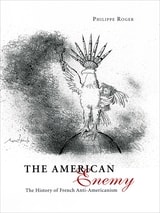
The American Enemy
The History of French Anti-AmericanismPhilippe Roger
University of Chicago Press, 2005
Buffon, as Philippe Roger demonstrates here, was just one of the first in a long line of Frenchmen who have built a history of anti-Americanism in that country, a progressive history that is alternately ludicrous and trenchant. The American Enemy is Roger's bestselling and widely acclaimed history of French anti-Americanism, presented here in English translation for the first time.
With elegance and good humor, Roger goes back 200 years to unearth the deep roots of this anti-Americanism and trace its changing nature, from the belittling, as Buffon did, of the "savage American" to France's resigned dependency on America for goods and commerce and finally to the fear of America's global domination in light of France's thwarted imperial ambitions. Roger sees French anti-Americanism as barely acquainted with actual fact; rather, anti-Americanism is a cultural pillar for the French, America an idea that the country and its culture have long defined themselves against.
Sharon Bowman's fine translation of this magisterial work brings French anti-Americanism into the broad light of day, offering fascinating reading for Americans who care about our image abroad and how it came about.
“A brilliant and exhaustive guide to the history of French Ameriphobia.”—Simon Schama, New Yorker
The Anti-Semitic Moment
A Tour of France in 1898Pierre Birnbaum
University of Chicago Press, 2011
In 1898, the Dreyfus Affair plunged French society into a yearlong frenzy. In Paris and provincial villages throughout the country, angry crowds paraded through the streets, threatening to attack Jews and destroy Jewish-owned businesses. Anger about the imagined power of Jewish capital, as well as fears of treason and racial degeneration, made anti-Semitism a convenient banner behind which social and political factions could fall in line. Anti-Semitic feelings that had been simmering in France for decades came boiling to the surface.
Here Pierre Birnbaum guides readers on a tour of France during this crisis. He shows that in the midst of violence, Jewish citizens bravely and effectively defended themselves and were aided by a police force determined to maintain order. Birnbaum paints a vivid portrait of French Jewish culture at the time and explains why the French state remained strong in this time of widespread unrest.

The Anti-Witch
Jeanne Favret-Saada
HAU, 2015
Jeanne Favret-Saada is arguably one of France’s most brilliant anthropologists, and The Anti-Witch is nothing less than a masterpiece. A synthesis of ethnographic theory and psychoanalytic revelation, where the line between researcher and subject is blurred—if not erased—The Anti-Witch develops the contours of an anthropology of therapy, while deeply engaging with what it means to be caught in the logic of witchcraft. Through an intimate and provocative sharing of the ethnographic voice with Madame Flora, a “dewitcher,” Favret-Saada delivers a critical challenge to some of anthropology’s fundamental concepts.
Sure to be of interest to practitioners of psychoanalysis as well as to anthropologists, The Anti-Witch will bring a new generation of scholars into conversation with the work of a truly innovative thinker.
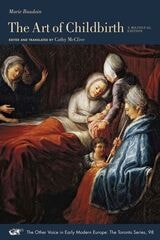
The Art of Childbirth
A Seventeenth-Century Midwife’s Epistolary Treatise to Doctor Vallant: A Bilingual EditionMarie Baudoin
Iter Press, 2022
In 1671, Marie Baudoin (1625–1700), head midwife and governor of the Hôtel-Dieu of Clermont-Ferrand, sent a treatise on the art of childbirth to her powerful Parisian patron, Dr. Vallant. The story of how Baudoin’s knowledge and expertise as a midwife came to be expressed, recorded, and archived raises the question: Was Baudoin exceptional because she was herself extraordinary, or because her voice has reached us through Vallant’s careful archival practices? Either way, Baudoin’s treatise invites us to reconsider the limits of what we thought we knew midwives “could be and do” in seventeenth-century France. Grounding Marie Baudoin’s text in a microanalysis of her life, work, and the Jansenist network between Paris and Clermont-Ferrand, this book connects historiographies of midwifery, Jansenism, hospital administration, public health, knowledge and record-keeping, and women’s work, underscoring both Baudoin’s capabilities and the archival accidents and intentions behind the preservation of her treatise in a letter.
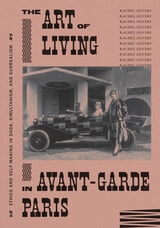
The Art of Living in Avant-Garde Paris
Ethics and Self-Making in Dada, Simultanism, and SurrealismRachel Silveri
University of Chicago Press, 2026
With The Art of Living in Avant-Garde Paris, Rachel Silveri takes a fresh look at the desire to unify art and life, an ambition long regarded as foundational to the European historical avant-gardes. She reveals how many early twentieth-century artists saw their own everyday lives—their bodies, identities, and relationships—as a type of creative material and a central component to their avant-garde practice. These artists abandoned traditional forms of artmaking and venues of art viewing, instead aspiring to integrate art with everyday life, creating an “art of living.”
Considering Tristan Tzara’s performances of Dadaist identity, Sonia Delaunay’s simultaneous fashions and self-branding, and the collective endeavor to open and operate the Surrealist Research Bureau, Silveri offers a new narrative about how the artists of interwar Paris developed experiential life practices that resisted dominant forms of “lifestyle” and normative discourses surrounding gender, ethnicity, and office work. This book argues that ethical questions of “How should I live?” and “How should I relate to others?” were as important to the avant-garde as politics, and that aspirations to change the world played out in daily practices of self-making.

The Assassination of Paris
Louis Chevalier
University of Chicago Press, 1994
He describes an almost continual parade of garish and grandiose plans: some, like the destruction of the glorious marketplace of les Halles for him the heart of the city, were realized; others, like the superhighway along the left bank of the Seine, were bitterly and successfully resisted.
Almost twenty years later, we find it difficult to remember the city as it was. And while Paris looks to many much the way it always has, behind the carefully sandblasted stone and restored shop fronts is a city radically transformed—emptied of centuries of popular life; of entire neighborhoods and the communities they housed engineered out to desolate suburban slums. The battle over the soul and spirit of the city continues.
This book is not entirely about the loss of physical places. Or a romance about a world that never really was. It is a cautionary tale filled with lessons for all who struggle to protect the human scale, the diversity, and the welcoming public life that are the threatened gifts of all great cities.

The Assembly Line
Robert Linhart
University of Massachusetts Press, 1981

The Autumn of the Middle Ages
Johan Huizinga
University of Chicago Press, 1996
The Autumn of the Middle Ages is Johan Huizinga's classic portrait of life, thought, and art in fourteenth- and fifteenth-century France and the Netherlands. Few who have read this book in English realize that The Waning of the Middle Ages, the only previous translation, is vastly different from the original Dutch, and incompatible will all other European-language translations.
For Huizinga, the fourteenth- and fifteenth-century marked not the birth of a dramatically new era in history—the Renaissance—but the fullest, ripest phase of medieval life and thought. However, his work was criticized both at home and in Europe for being "old-fashioned" and "too literary" when The Waning of the Middle Ages was first published in 1919. In the 1924 translation, Fritz Hopman adapted, reduced and altered the Dutch edition—softening Huizinga's passionate arguments, dulling his nuances, and eliminating theoretical passages. He dropped many passages Huizinga had quoted in their original old French. Additionally, chapters were rearranged, all references were dropped, and mistranslations were introduced.
This translation corrects such errors, recreating the second Dutch edition which represents Huizinga's thinking at its most important stage. Everything that was dropped or rearranged has been restored. Prose quotations appear in French, with translations preprinted at the bottom of the page, mistranslations have been corrected.
"The advantages of the new translation are so many. . . . It is one of the greatest, as well as one of the most enthralling, historical classics of the twentieth century, and everyone will surely want to read it in the form that was obviously intended by the author." —Francis Haskell, New York Review of Books
"A once pathbreaking piece of historical interpretation. . . . This new translation will no doubt bring Huizinga and his pioneering work back into the discussion of historical interpretation." —Rosamond McKitterick, New York Times Book Review

The Bachelors' Ball
The Crisis of Peasant Society in BéarnPierre Bourdieu
University of Chicago Press, 2008

The Bakers of Paris and the Bread Question, 1700-1775
Steven Laurence Kaplan
Duke University Press, 1996
Despite the overpowering salience of bread in public and private life, Kaplan’s is the first inquiry into the ways bread exercised its vast and significant empire. Bread framed dreams as well as nightmares. It was the staff of life, the medium of communion, a topic of common discourse, and a mark of tradition as well as transcendence. In his exploration of bread’s materiality and cultural meaning, Kaplan looks at bread’s fashioning of identity and examines the conditions of supply and demand in the marketplace. He also sets forth a complete history of the bakers and their guild, and unmasks the methods used by the authorities in their efforts to regulate trade.
Because the bakers and their bread were central to Parisian daily life, Kaplan’s study is also a comprehensive meditation on an entire society, its government, and its capacity to endure. Long-awaited by French history scholars, The Bakers of Paris and the Bread Question, 1700–1775 is a landmark in eighteenth-century historiography, a book that deeply contextualizes, and thus enriches our understanding of one of the most important eras in European history.
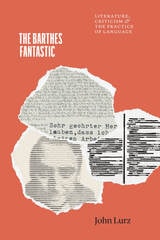
The Barthes Fantastic
Literature, Criticism, and the Practice of LanguageJohn Lurz
University of Chicago Press, 2025
In The Barthes Fantastic, John Lurz explores the intersection of literature and everyday life—and confronts some habits of literary study—through a reading of the work of Roland Barthes. An influential French theorist, Barthes wrote prolifically on the place of language and the play of signs in the ways we produce cultural and aesthetic meaning. Ranging across the entire sweep of Barthes’s varied career, Lurz shows how Barthes’s insights into signification and literature involve particular intellectual activities that impart significance to the world. Doing so allows him to develop an expanded understanding of the fantastic as a conceptual category—a way of thinking—in which the texts we read come to inform the texture of our real lives. Ultimately, The Barthes Fantastic enlarges our sense of what we learn as students of literature and gives us a new picture of a writer we thought we knew.
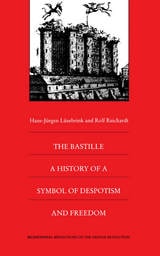
The Bastille
A History of a Symbol of Despotism and FreedomHans-Jürgen Lüsebrink and Rolf Reichardt
Duke University Press, 1997
To facilitate the symbolic nature of the investigation, this analysis of the evolving signification of the Bastille moves from the French Revolution to the nineteenth century to contemporary history. The narrative also shifts from France to other cultural arenas, like the modern European colonial sphere, where the overthrow of the Bastille acquired radical new signification in the decolonization period of the 1940s and 1950s. The Bastille demonstrates the potency of the interdisciplinary historical research that has characterized the end of this century, combining quantitative and qualitative approaches, and taking its methodological tools from history, sociology, linguistics, and cultural and literary studies.

The Battle of the Sexes in French Cinema, 1930–1956
Noël Burch and Geneviève Sellier
Duke University Press, 2013
Citing more than 300 films and providing many in-depth interpretations, Burch and Sellier argue that films made in France between 1930 and 1956 created a national imaginary that equated masculinity with French identity. They track the changing representations of masculinity, explaining how the strong patriarch who saved fallen or troubled women from themselves in prewar films gave way to the impotent, unworthy, or incapable father figure of the Occupation. After the Liberation, the patriarch reemerged as protector and provider alongside assertive women who figured as threats not only to themselves but to society as a whole.

The Bedquilt and Other Stories
By Dorothy Canfield FisherEdited, Intro, & Afterword by Mark J. Madigan
University of Missouri Press, 1997
Dorothy Canfield Fisher, the prolific author of more than forty books, including translations, juveniles, and nonfiction, as well as novels and short-story collections, was one of the most popular and engaging American writers of the first half of the twentieth century. Although her work has been unduly neglected for several decades, it is currently enjoying a revival of critical attention. This colorful collection ranges in subject from New Englanders to the Basques of France to the struggles of African Americans to gain equal rights. Through her stories, many of which received literary awards, Fisher examined the complexities of modern life in the United States and abroad.
In addition to her writing, Fisher had a lifelong involvement in charitable work and social causes--so much so that Eleanor Roosevelt called her one of the most influential women of her time. As one of the earliest and most assertive members of the Book-of-the-Month Club selection committee, Fisher helped define literary taste in America for more than two decades. Mark J. Madigan discusses Fisher's extraordinary life and work in an Introduction and Afterword.
Because of Fisher's rare ability to distinguish enduring concerns from merely topical issues, her work will provide lasting pleasure for generations of readers to come.

The Bewitched
Jules Barbey d’Aurevilly
University of Minnesota Press, 2026
A haunting, resonant novel of passion and betrayal—in its first English translation since 1928
“When we bring true passions into our works, we don’t fear the cries of the offended.” So declared Jules Barbey d’Aurevilly in 1853 as he prepared to publish The Bewitched in book form, restoring the sections that were unceremoniously deleted from its serialized release by an editor who deemed them too explicit, irreverent, and inflammatory. Newly translated into English for modern readers, The Bewitched is a beguiling tale of politics, obsession, and horror set against the backdrop of Normandy in postrevolutionary France.
Late at night in a foggy moor, the far clock tower rends the still air to mark the midnight hour. As the darkness settles back into silence, another bell rings out, slow and somber, calling all who hear it to the abbé de La Croix-Jugan’s Mass of the Dead. Returned to the priesthood in shame after breaking his vows by shedding blood in battle and attempting suicide in defeat, the disfigured man enthralls the inhabitants of this small village. Before long, a young married woman becomes infatuated with the enigmatic priest, and their fates are irrevocably intertwined. When she succumbs to despair over her unrequited love, her husband is consumed by jealousy and vows revenge.
Layering stories within stories and continually shifting points of view, Barbey d’Aurevilly engages a mosaic of narrators to depict the era’s tensions between the aristocracy, the peasant class, and the church. Raymond N. MacKenzie’s lively translation is accompanied by his detailed introduction and notes that ground the novel in its historical, political, and literary contexts. A classic of French Gothic literature, The Bewitched blends religious transgression, satanic possession, and political upheaval into a fatal love story that is as gripping now as it was nearly two centuries ago.
Retail e-book files for this title are screen-reader friendly.

The Birth of Solidarity
The History of the French Welfare StateFrançois Ewald
Duke University Press, 2020
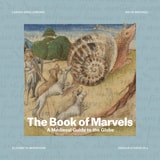
The Book of Marvels
A Medieval Guide to the GlobeLarisa Grollemond
J. Paul Getty Trust, The, 2024
From the classical encyclopedias of Pliny to famous tales such as The Travels of Marco Polo, historical travel writing has had a lasting impact, despite the fact that it was based on a curious mixture of truth, legend, and outright superstition. One foundational medieval source that expands on the ancient idea of the “wonders of the world” is the fifteenth-century French Book of the Marvels of the World, an illustrated guide to the globe filled with oddities, curiosities, and wonders—tales of fantasy and reality intended for the medieval armchair traveler. The fifty-six locales featured in the manuscript are presented in a manner that suggests authority and objectivity but are rife with stereotypes and mischaracterizations, meant to simultaneously instill a sense of wonder and fear in readers.
In The Book of Marvels, the authors explore the tradition of encyclopedias and travel writing, examining the various sources for geographic knowledge in the Middle Ages. They look closely at the manuscript copies of the French text and its complex images, delving into their origins, style, content, and meaning. Ultimately, this volume seeks to unpack how medieval white Christian Europeans saw their world and how the fear of difference—so pervasive in society today—is part of a long tradition stretching back millennia.
This volume is published to accompany an exhibition on view at the J. Paul Getty Museum at the Getty Center from June 11 to September 1, 2024, and at the Morgan Library & Museum from January 24 to May 25, 2025.
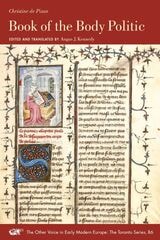
The Book of the Body Politic
Christine de Pizan
Iter Press, 2021
Christine de Pizan’s The Book of the Body Politic is the first political treatise written by a woman. It not only advises the prince, but nobles, knights, and common people as well. It promotes the ideals of interdependence and social responsibility. Rooted in the mindset of medieval Christendom, The Book of the Body Politic heralds the humanism of the Renaissance, highlighting classical culture and Roman civic virtues. This new edition and translation offers a faithful rendering of Christine de Pizan’s writing, as well as a thorough contextualization of her career as a political writer at the end of the Middle Ages in France. The Book of the Body Politic resounds to this day, urging for the need for probity in public life and the importance of responsibilities and rights.
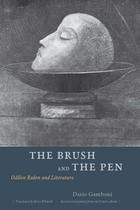
The Brush and the Pen
Odilon Redon and LiteratureDario Gamboni
University of Chicago Press, 2011
French symbolist artist Odilon Redon (1840–1916) seemed to thrive at the intersection of literature and art. Known as “the painter-writer,” he drew on the works of Poe, Baudelaire, Flaubert, and Mallarmé for his subject matter. And yet he concluded that visual art has nothing to do with literature. Examining this apparent contradiction, The Brush and the Pen transforms the way we understand Redon’s career and brings to life the interaction between writers and artists in fin-de-siècle Paris.
The Burden of Responsibility
Blum, Camus, Aron, and the French Twentieth CenturyTony Judt
University of Chicago Press, 1998
Through the prism of the lives of Leon Blum, Albert Camus, and Raymond Aron, Judt examines pivotal issues in the history of contemporary French society—antisemitism and the dilemma of Jewish identity, political and moral idealism in public life, the Marxist moment in French thought, the traumas of decolonization, the disaffection of the intelligentsia, and the insidious quarrels rending Right and Left. Judt focuses particularly on Blum's leadership of the Popular Front and his stern defiance of the Vichy governments, on Camus's part in the Resistance and Algerian War, and on Aron's cultural commentary and opposition to the facile acceptance by many French intellectuals of communism's utopian promise. Severely maligned by powerful critics and rivals, each of these exemplary figures stood fast in their principles and eventually won some measure of personal and public redemption.
Judt constructs a compelling portrait of modern French intellectual life and politics. He challenges the conventional account of the role of intellectuals precisely because they mattered in France, because they could shape public opinion and influence policy. In Blum, Camus, and Aron, Judt finds three very different men who did not simply play the role, but evinced a courage and a responsibility in public life that far outshone their contemporaries.
"An eloquent and instructive study of intellectual courage in the face of what the author persuasively describes as intellectual irresponsibility."—Richard Bernstein, New York Times

The Bureaucrats
Honore De Balzac
Northwestern University Press, 1993
The novel contains the recognizable themes of Balzac's work: obsessive ambition, conspiracy and human pettiness, and a melodramatic struggle between the social good and the evils of folly and stupidity. It is also an unusual, dramatized analysis of a developing political institution and its role in shaping social class and mentality.

The Centenary Edition of the Works of Nathaniel Hawthorne
Vol. XIV, The French and Italian NotebooksNathaniel Hawthorne
The Ohio State University Press, 1980
The Chigi Codex
Sacred Music from Burgundy and France; Vatican City, Biblioteca Apostolica Vaticana, MS Chigi C VIII 234Edited by Edward F. Houghton
University of Chicago Press, 2027
Compiled between 1500 and 1504, The Chigi Codex contains the complete contents of an extraordinary illuminated manuscript, an anthology of forty polyphonic masses and motets associated with the royal courts of France and Burgundy. This edition includes nearly the complete oeuvre of Johannes Ockeghem, five motets by Johannes Regis, and compositions by Josquin des Prez, Henricus Isaac, Antoine Busnoys, Pierre de la Rue, Jean Mouton, Alexander Agricola, and others. Twelve works are unique to The Chigi Codex; seven motets were added by a Spanish scribe after 1515. The complete contents are presented here with transcriptions of the music accessible to musicians today, with a critical commentary on the music and concordant sources. The Codex transmits works that were copied in manuscripts and prints throughout Europe later in the sixteenth century.
In addition to its monumental repertory, The Chigi Codex includes notable works of visual art in the double-folio openings of thirty-six works with miniature paintings, coats of arms, inhabited capitals, family mottos, bizarre creatures, and colorful borders, all in the famed Ghent-Bruges style. Herbert Kellman discusses these as well as the history of the Codex and its long journey from its original patron, the Burgundian seigneur Philippe Bouton, to the Spanish families Folch de Cardona and Fernández de Córdoba, and finally to Rome and to the library of Fabio Chigi, Pope Alexander VII. The Chigi library is now an important part of the Vatican Library.
Making the manuscript accessible to the public and musicians, this edition of The Chigi Codex supports the study, performance, and understanding of its music and art in the musical, cultural, and historical contexts of its creation.

The Chronicle of Andres
Leah Abbot William of Andres
Catholic University of America Press, 2017
In 1220 Abbot William of Andres, a monastery halfway between Calais and Saint-Omer on the busy road from London to Paris, sat down to write an ambitious cartulary-chronicle for his monastery. Although his work was unfinished at his death, William’s account is an unpolished gem of medieval historical writing. The Chronicle of Andres details the history of his monastery from its foundation in the late eleventh century through the early part of 1234. Early in the thirteenth century, the monks decided to sue for their freedom and appointed William as their protector. His travels took him on a 4000 km, four-year journey, during which he was befriended by Innocent III, among others, and where he learned to negotiate the labyrinthine system of the ecclesiastical courts. Upon winning his case, he was elected abbot on his return to Andres and enjoyed a flourishing career thereafter. A decade after his victory, William decided to put the history of the monastery on a firm footing.
This text not only offers insight into the practice of medieval canon law (from the perspective of a well-informed man with legal training), but also ecclesiastical policies, the dynamics of life within a monastery, ethnicity and linguistic diversity, and rural life. It is comparable in its frankness to Jocelin of Brakelord’s Chronicle of Bury. Because William drew on the historiographic tradition of the Southern Low Countries, his text also offers some insights into this subject, thus composing a broad picture of the medieval European monastic world.
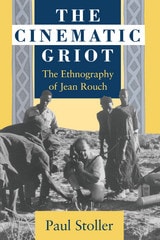
The Cinematic Griot
The Ethnography of Jean RouchPaul Stoller
University of Chicago Press, 1992
A brief account of Rouch's background, revealing the ethnographic foundations and intellectual assumptions underlying his fieldwork among the Songhay of Niger in the 1940s and 1950s, sets the stage for his emergence as a cinematic griot, a peripatetic bard who "recites" the story of a people through provocative imagery. Against this backdrop, Stoller considers Rouch's writings on Songhay history, myth, magic and possession, migration, and social change. By analyzing in depth some of Rouch's most important films and assessing Rouch's ethnography in terms of his own expertise in Songhay culture, Stoller demonstrates the inner connection between these two modes of representation.
Stoller, who has done more fieldwork among the Songhay than anyone other than Rouch himself, here gives the first full account of Rouch the griot, whose own story scintillates with important implications for anthropology, ethnography, African studies, and film.

The Collaborator
The Trial and Execution of Robert BrasillachAlice Kaplan
University of Chicago Press, 2000
Was Brasillach in fact guilty of treason? Was he condemned for his denunciations of the resistance, or singled out as a suspected homosexual? Was it right that he was executed when others, who were directly responsible for the murder of thousands, were set free? Kaplan's meticulous reconstruction of Brasillach's life and trial skirts none of these ethical subtleties: a detective story, a cautionary tale, and a meditation on the disturbing workings of justice and memory, The Collaborator will stand as the definitive account of Brasillach's crime and punishment.
A National Book Award Finalist
A National Book Critics Circle Award Finalist
"A well-researched and vivid account."—John Weightman, New York Review of Books
"A gripping reconstruction of [Brasillach's] trial."—The New Yorker
"Readers of this disturbing book will want to find moral touchstones of their own. They're going to need them. This is one of the few works on Nazism that forces us to experience how complex the situation really was, and answers won't come easily."—Daniel Blue, San Francisco Chronicle Book Review
"The Collaborator is one of the best-written, most absorbing pieces of literary history in years."—David A. Bell, New York Times Book Review
"Alice Kaplan's clear-headed study of the case of Robert Brasillach in France has a good deal of current-day relevance. . . . Kaplan's fine book . . . shows that the passage of time illuminates different understandings, and she leaves it to us to reflect on which understanding is better."—Richard Bernstein, The New York Times
The Collected Short Fiction of Marianne Hauser
Marianne Hauser
University of Alabama Press, 2005

The Color of Liberty
Histories of Race in FranceSue Peabody and Tyler Stovall, eds.
Duke University Press, 2003
The Color of Liberty addresses four major themes: the evolution of race as an idea in France; representations of "the other" in French literature, art, government, and trade; the international dimensions of French racial thinking, particularly in relation to colonialism; and the impact of racial differences on the shaping of the modern French city. The many permutations of race in French history—as assigned identity, consumer product icon, scientific discourse, philosophical problem, by-product of migration, or tool in empire building—here receive nuanced treatments confronting the malleability of ideas about race and the uses to which they have been put.
Contributors. Leora Auslander, Claude Blanckaert, Alice Conklin, Fred Constant, Laurent Dubois, Yaël Simpson Fletcher, Richard Fogarty, John Garrigus, Dana Hale, Thomas C. Holt, Patricia M. E. Lorcin, Dennis McEnnerney, Michael A. Osborne, Lynn Palermo, Sue Peabody, Pierre H. Boulle, Alyssa Goldstein Sepinwall, Tyler Stovall, Michael G. Vann, Gary Wilder

The Comanche Code Talkers of World War II
By William C. Meadows
University of Texas Press, 2003
Among the allied troops that came ashore in Normandy on D-Day, June 6, 1944, were thirteen Comanches in the 4th Infantry Division, 4th Signal Company. Under German fire they laid communications lines and began sending messages in a form never before heard in Europe—coded Comanche. For the rest of World War II, the Comanche Code Talkers played a vital role in transmitting orders and messages in a code that was never broken by the Germans.
This book tells the full story of the Comanche Code Talkers for the first time. Drawing on interviews with all surviving members of the unit, their original training officer, and fellow soldiers, as well as military records and news accounts, William C. Meadows follows the group from their recruitment and training to their active duty in World War II and on through their postwar lives up to the present. He also provides the first comparison of Native American code talking programs, comparing the Comanche Code Talkers with their better-known Navajo counterparts in the Pacific and with other Native Americans who used their languages, coded or not, for secret communication. Meadows sets this history in a larger discussion of the development of Native American code talking in World Wars I and II, identifying two distinct forms of Native American code talking, examining the attitudes of the American military toward Native American code talkers, and assessing the complex cultural factors that led Comanche and other Native Americans to serve their country in this way.
The Comedians of the King
"Opéra Comique" and the Bourbon Monarchy on the Eve of RevolutionJulia Doe
University of Chicago Press, 2021
Lyric theater in ancien régime France was an eminently political art, tied to the demands of court spectacle. This was true not only of tragic opera (tragédie lyrique) but also its comic counterpart, opéra comique, a form tracing its roots to the seasonal trade fairs of Paris. While historians have long privileged the genre’s popular origins, opéra comique was brought under the protection of the French crown in 1762, thus consolidating a new venue where national music might be debated and defined.
In The Comedians of the King, Julia Doe traces the impact of Bourbon patronage on the development of opéra comique in the turbulent prerevolutionary years. Drawing on both musical and archival evidence, the book presents the history of this understudied genre and unpacks the material structures that supported its rapid evolution at the royally sponsored Comédie-Italienne. Doe demonstrates how comic theater was exploited in, and worked against, the monarchy’s carefully cultivated public image—a negotiation that became especially fraught after the accession of the music-loving queen, Marie Antoinette. The Comedians of the King examines the aesthetic and political tensions that arose when a genre with popular foundations was folded into the Bourbon propaganda machine, and when a group of actors trained at the Parisian fairs became official representatives of the sovereign, or comédiens ordinaires du roi.
The Commerce of Cartography
Making and Marketing Maps in Eighteenth-Century France and EnglandMary Sponberg Pedley
University of Chicago Press, 2005
Conceptualizing the relationship between economics and cartography, Pedley traces the process of mapmaking from compilation, production, and marketing to consumption, reception, and criticism. In detailing the rise of commercial cartography, Pedley explores qualitative issues of mapmaking as well. Why, for instance, did eighteenth-century ideals of aesthetics override the modern values of accuracy and detail? And what, to an eighteenth-century mind and eye, qualified as a good map?
A thorough and engaging study of the business of cartography during the Enlightenment, The Commerce of Cartography charts a new cartographic landscape and will prove invaluable to scholars of economic history, historical geography, and the history of publishing.
The Compensations of War
The Diary of an Ambulance Driver during the Great WarBy Guy Emerson Bowerman
University of Texas Press, 1983
In 1917, shortly after the United States’ declaration of war on Germany, Guy Emerson Bowerman, Jr., enlisted in the American army’s ambulance service. Like other young ambulance drivers—Hemingway, Dos Passos, Cummings, Cowley—Bowerman longed to “see the show.” He was glad to learn that the ambulance units were leaving for France right away.
For seventeen months, until the armistice of November 1918, Bowerman kept an almost daily diary of the war. To read his words today is to live the war with an immediacy and vividness of detail that is astonishing.
Only twenty when he enlisted, Bowerman was an idealistic, if snobbish, young man who exulted that his section was made up mostly of young “Yalies” like himself. But he expected the war to change him, and it did. In the end he writes that he and his compatriots scarcely remember a world at peace. "The old life was gone forever. . ."
Guy Bowerman’s unit was attached to a French infantry division stationed near Verdun. Sent to halt the German drive to Paris in 1918, the division participated in the decisive counterattack of July and tracked the routed Germans through Belgium. Then, “unwarned,” Bowerman and his comrades were “plunged into … a life of peace.” Into this life, he writes, they walked “bewildered,” like “men fearing ambush.”
This remarkable chronicle of one young man’s rite of passage is destined to become a classic in the literature of the Great War.
The Complete Notebooks
Albert Camus
University of Chicago Press, 2025
Throughout his career, French writer and philosopher Albert Camus kept a series of notebooks that offers an unrivaled glimpse into the writer at his most personal and reflective. These notebooks contain his thoughts on politics, solitude, personal failings and regrets, his travels, and his relationships with friends and rivals. They also provide insight into his process as a thinker—his frustrations, his ideas for novels and plays (some pursued and others abandoned), his routines, his aspirations, and his self-recriminations.
For Camus devotees, there is no more intimate experience than reading these notebooks. On the one hand, his fallibility is on full display: He is irritated by mediocrity, frustrated with his health, plagued by insomnia, and miserable about life’s petty necessities. Yet, he is also intensely curious and observant, sometimes moved to rapture by landscapes and people. Readers will experience the bounty of Camus’s philosophical imagination and witness firsthand how his ideas take shape. The notebooks contain drafts of letters to friends and recorded reflections on the compromises that being in the world demands.
This publication marks the first time Camus’s complete notebooks have been published in one comprehensive volume. Expertly and movingly translated by Ryan Bloom with extensive footnotes contextualizing the entries, The Complete Notebooks will remain a literary treasure for years to come.

The Construction of Memory in Interwar France
Daniel J. Sherman
University of Chicago Press, 2000
Sherman shows how a wartime visual culture saturated with images of ordinary foot soldiers, together with contemporary novels, memoirs, and tourist literature, promoted a distinctive notion of combat experience. The contrast between battlefield and home front, soldier and civilian was the basis for memory and collective gratitude. Postwar commemoration, however, also grew directly out of the long and agonized search for the remains of hundreds of thousands of missing soldiers, and the sometimes contentious debates over where to bury them. For this reason, the local monument, with its inscribed list of names and its functional resemblance to tombstones, emerged as the focal point of commemorative practice. Sherman traces every step in the process of monument building as he analyzes commemoration's competing goals—to pay tribute to the dead, to console the bereaved, and to incorporate mourners' individual memories into a larger political discourse.
Extensively illustrated, Sherman's study offers a visual record of a remarkable moment in the history of public art. It is at once a moving account of a culture haunted by war and a sophisticated analysis of the political stakes of memory in the twentieth century.
Winner of the 2000 J. Russell Major Prize of the American Historical Association
The Courtiers' Anatomists
Animals and Humans in Louis XIV's ParisAnita Guerrini
University of Chicago Press, 2015
Through the stories of Duverney and Perrault, as well as those of Marin Cureau de la Chambre, Jean Pecquet, and Louis Gayant, The Courtiers' Anatomists explores the relationships between empiricism and theory, human and animal, as well as the origins of the natural history museum and the relationship between science and other cultural activities, including art, music, and literature.
The Cultural Origins of the French Revolution
Roger Chartier
Duke University Press, 1991
Chartier has set himself two important tasks. First, while acknowledging the seminal contribution of Daniel Mornet’s Les origens intellectuelles de la Révolution française (1935), he synthesizes the half-century of scholarship that has created a sociology of culture for Revolutionary France, from education reform through widely circulated printed literature to popular expectations of government and society. Chartier goes beyond Mornet’s work, not be revising that classic text but by raising questions that would not have occurred to its author.
Chartier’s second contribution is to reexamine the conventional wisdom that there is a necessary link between the profound cultural transformation of the eighteenth century (generally characterized as the Enlightenment) and the abrupt Revolutionary rupture of 1789. The Cultural Origins of the French Revolution is a major work by one of the leading scholars in the field and is likely to set the intellectual agenda for future work on the subject.

The Culture of Merit
Nobility, Royal Service, and the Making of Absolute Monarchy in France, 1600-1789Jay M. Smith
University of Michigan Press, 1996
Jay M. Smith argues that the early modern nobility instinctively drew a correlation between the meaning of merit and an image of the "sovereign's gaze." In the early seventeenth century, merit meant the qualities traditionally associated with aristocratic values: generosity, fidelity, and honor. Nobles sought to display those qualities before the appreciative gaze of the king himself. But the expansion of the monarchy forced the routinization of the sovereign's gaze, and Louis XIV began to affirm and reward new qualities--talent and application--besides those thought innately noble.
The contradictions implicit within the absolute monarchy's culture of merit are demonstrated by the eighteenth-century French army, which was dominated by the nobility, but also committed to efficiency and expertise. Smith shows that the army's continuous efforts to encourage and reward "merit" led to a clash of principles. The ever-growing emphasis on talent and discipline led reformers--the great majority of them noble--to attack the most egregious examples of privilege and favoritism in the army. Smith's analysis of the long-term evolution in conceptions of royal service suggests a new explanation for the shift in values signified by the French Revolution. The transition away from the "personal" gaze of the king toward the "public" gaze of the monarchy and nation foretold the triumph of a new culture of merit in which noble birth would have no meaning.
The Culture of Merit will interest historians and other social scientists concerned with issues of aristocratic identity, state formation, professionalization, and the changing political culture of pre-Revolutionary France.
Jay M. Smith is Assistant Professor of History, University of North Carolina, Chapel Hill.
The Culture of the Body
Genealogies of ModernityDalia Judovitz
University of Michigan Press, 2001

The Cyclist and His Shadow
A MemoirOlivier Haralambon
University of Minnesota Press, 2022
A philosopher and former racing cyclist examines how competitive riders lose their sense of self as they pursue perfect motion and mastery over pain
After ten years as a racing cyclist, riding in up to ninety races a year, Olivier Haralambon became a journalist and philosopher. In The Cyclist and His Shadow, he writes about the world of competitive cycling with rare honesty and self-reflection, exploring it not merely as a sport but as a spiritual and artistic practice, imbued with a mystical quality.
In prose at once poetic and precise, Haralambon depicts the intensity of cycling as physical activity in which the rider’s consciousness becomes inseparable from the instantaneous movements of limbs, the exertion of heart and lungs, and the marshaling and expenditure of energy. He describes riding as an ascetic activity always accompanied by pain that the cyclist can control but never fully eliminate. But cycling for Haralambon is not only suffering but also an addictively pleasurable activity in which the rider’s sense of self dissolves and melds with the bicycle, mind and body exploring the vibrant solitude of the course and limits of human endurance. Engaging in the repetition of ascension and the endless hours immersed in an oceanic interior, cyclists are artists in the vastness of landscape, both interior and exterior.
Published in association with The Cycling Podcast (https://thecyclingpodcast.com), The Cyclist and His Shadow offers an illuminating meditation on what drives cyclists to devote their lives and bodies to training, racing, and even doping. Drawing from personal experience, Haralambon presents cycling as simultaneously physical and creative, technological and mystical, torturous and ecstatic.

The Deaf Experience
Classics in Language and EducationHarlan Lane
Gallaudet University Press, 2006
The fifth volume in the Gallaudet Classics in Deaf Studies series features works written from 1764 up to1840. Pierre Desloges offers a stirring paean to sign language in an excerpt from his book, the first ever published by a deaf person. Saboureux de Fontenay and Jean Massieu, two prominent leaders, relate their respective experiences in autobiographical accounts. In separate essays, Charles-Michel de l’Epée and Roch-Ambroise Sicard describe systems for teaching manual French, followed by a critique of these methods by Roch-Ambroise Bébian, a well-known hearing friend of Deaf people during that era. Ferdinand Berthier, a renowned Deaf teacher and writer in the 19th century, concludes with a history of Deaf people up to that time.
The Deaf Experience shows clearly how this extraordinary era of French deaf education influenced the adoption of the manual method by the first schools for deaf students in America, in sharp contrast to the oral movement that repressed sign-language-centered education for nearly a century afterward. Deaf studies scholars and students alike will welcome the return of this invaluable resource.
The Deaths of Henri Regnault
Marc Gotlieb
University of Chicago Press, 2016
Gotlieb traces Regnault’s trajectory after he won the prestigious Grand Prix de Rome, a fellowship that provided four years of study in Italy. Arriving in Rome, however, Regnault suffered a profound crisis of originality that led him to flee the city in favor of Spain and Morocco. But the crisis also proved productive: from Rome, Madrid, Tangier, and Paris, Regnault enthralled audiences with a bold suite of strange, seductive, and violent Orientalist paintings inspired by his exotic journey—images that, Gotlieb argues, arose precisely from the crisis that had overtaken Regnault and that in key respects was shared by his more avant-garde counterparts.
Both an in-depth look at Regnault’s violent art and a vibrant essay on historical memory, The Deaths of Henri Regnault lays bare a creative legend who helped shape the collective experience of a generation.
The Deeds of Louis the Fat
Abbot of Saint Denis, Suger
Catholic University of America Press, 1992