Results by title
267 books match the query 'Frontier and pioneer life' and 65 start with t

Tales Never Told Around Campfire
True Tales Of Frontier AmericaMark Dugan
Ohio University Press, 1992
Tenderfoot in Colorado
Richard Baxter Townshend
University Press of Colorado, 1968

Texas Ranger Captain William L. Wright
Richard B. McCaslin
University of North Texas Press, 2021
Texas Ranger John B. Jones and the Frontier Battalion, 1874-1881
Rick Miller
University of North Texas Press, 2012
Texas Ranger Lee Hall
From the Red River to the Rio GrandeChuck Parsons
University of North Texas Press, 2020
Texas Ranger N. O. Reynolds, the Intrepid
Chuck Parsons
University of North Texas Press, 2014
Texas Rangers
Lives, Legend, and LegacyBob Alexander
University of North Texas Press, 2017
The American West
The Invention Of A MythDavid Hamilton Murdoch
University of Nevada Press, 2001
The Backcountry and the City
Colonization and Conflict in Early AmericaEd White
University of Minnesota Press, 2005
Ed White explores the backcountry-city divide as well as the dynamics of indigenous peoples, bringing together two distinct bodies of scholarship: one stressing the political culture of the Revolutionary era, the other taking an ethnohistorical view of white–Native American contact. White concentrates his study in Pennsylvania, a state in which the majority of the population was rural, and in Philadelphia, a city that was a center of publishing and politics and the national capital for a decade. Against this backdrop, White reads classic political texts such as Crèvecoeur’s Letters from an American Farmer, Franklin’s Autobiography, and Paine’s “Agrarian Justice,” alongside missionary and captivity narratives, farmers’ petitions, and Native American treaties. Using historical and ethnographic sources to enrich familiar texts, White demonstrates the importance of rural areas in the study of U.S. nation formation and finds unexpected continuities between the early colonial period and the federal ascendancy of the 1790s.
Ed White is associate professor of English at the University of Florida.
The Bassett Women
Grace McClure
Ohio University Press, 1985
In the late nineteenth century, Brown’s Park, a secluded valley astride the Utah-Colorado border, was a troubled land of deadly conflict among cattle barons, outlaws, rustlers, and small ranchers. Homesteader Elizabeth Bassett gained a tough reputation of her own, and her daughters followed suit, going on to become members of Butch Cassidy and the Wild Bunch’s inner circle. Ann—who counted Cassidy among her lovers—became known as “queen of the cattle rustlers.” Both sisters proved themselves shrewd businesswomen as they fended off hostile takeovers of the family ranch. Through the following decades, the sisters became the stuff of legend, women who embodied the West’s fearsome reputation, yet whose lived experiences were far more nuanced. Ann became a writer. Josie, whose cabin still stands at present-day Dinosaur National Monument, applied her pioneer ethics to a mechanized world and became renowned for her resourcefulness, steadfastness, and audacity.
For The Bassett Women, Grace McClure tracked down and untangled the legends of Brown’s Park, one of the way stations of the fabled “Outlaw Trail,” while creating an evenhanded and indelible portrait of the Bassetts. Based on interviews, written records, newspapers, and archives, The Bassett Women is one of the few credible accounts of early settlers on Colorado’s western slope, one of the last strongholds of the Old West.
The Bird Cage Theater
The Curtain Rises on Tombstone, Arizona's National TreasureMichael Paul Mihaljevich
University of North Texas Press, 2024
The Business of Newspapers
University of Nevada Press, 1992
The Center of a Great Empire
The Ohio Country in the Early RepublicAndrew R. L. Cayton
Ohio University Press, 2005
“The people who lived in what became the seventeenth state in the American Union in 1803 were not only at the center of a great empire, they were at the center of the most important historical developments in the revolutionary Atlantic World.”
—From the introduction
Nowhere did the revolutions in politics, commerce, and society in the late eighteenth and early nineteenth centuries occur more quickly or more thoroughly than in the Ohio country. A forested borderland dominated by American Indians in 1780, Ohio was a landscape of farms and towns inhabited by people from all over the world by 1830. The Center of a Great Empire: The Ohio Country in the Early Republic chronicles this dramatic and all-encompassing change.
Andrew R. L. Cayton and Stuart D. Hobbs have assembled an impressive collection of articles by established and rising scholars. They address the conquest of Native Americans, the emergence of a democratic political culture, the origins of capitalism, the formation of public culture, the growth of evangelical Protestantism, the ambiguous status of African Americans, and social life in a place that most regarded as the cutting edge of human history.
For The Center of a Great Empire, distinguished historians of the American nation in its first decades question conventional wisdom. They emphasize contingency rather than inevitability and contention rather than progress. Downplaying the frontier character of Ohio, they offer new interpretations and open new paths of inquiry through investigations of race, education, politics, religion, family, commerce, colonialism, and conquest. As it underscores key themes in the history of the United States, The Center of a Great Empire pursues issues that have fascinated people for two centuries.
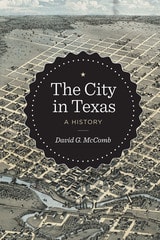
The City in Texas
A HistoryBy David McComb
University of Texas Press, 2015
Texans love the idea of wide-open spaces and, before World War II, the majority of the state’s people did live and work on the land. Between 1940 and 1950, however, the balance shifted from rural to urban, and today 88 percent of Texans live in cities and embrace the amenities of urban culture. The rise of Texas cities is a fascinating story that has not been previously told. Yet it is essential for understanding both the state’s history and its contemporary character.
In The City in Texas, acclaimed historian David G. McComb chronicles the evolution of urban Texas from the Spanish Conquest to the present. Writing in lively, sometimes humorous and provocative prose, he describes how commerce and politics were the early engines of city growth, followed by post–Civil War cattle shipping, oil discovery, lumbering, and military needs. McComb emphasizes that the most transformative agent in city development was the railroad. This technology—accompanied by telegraphs that accelerated the spread of information and mechanical clocks that altered concepts of time—revolutionized transportation, enforced corporate organization, dictated town location, organized space and architecture, and influenced thought. McComb also thoroughly explores the post–World War II growth of San Antonio, Dallas, Fort Worth, Austin, and Houston as incubators for businesses, educational and cultural institutions, and health care centers.
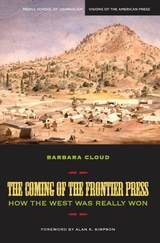
The Coming of the Frontier Press
How the West Was Really WonBarbara Cloud
Northwestern University Press, 2008
From the first story about the discovery of gold in California in 1848 to features on today’s western boomtowns, western expansion and journalism have had a symbiotic relationship. By examining this relationship along its entire timeline, this book argues that newspapers played a crucial role in pushing aside both wildlife and Native Americans to make room for the settlers who would become their readers. The western news sheets not only shaped reader attitudes but also undertook innovations in content and appearance that would affect newspapers nationwide.
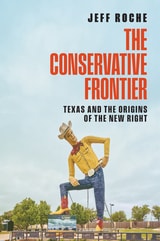
The Conservative Frontier
Texas and the Origins of the New RightJeff Roche
University of Texas Press, 2025
2026 Al Lowman Memorial Prize, Texas State Historical Association (TSHA)
2026 Bonney MacDonald Outstanding Book Award Winner, Center for the Study of the American West at West Texas A&M University (CSAW)
How West Texas business and culture molded the rise of conservatism in the United States.
Much of what we understand as modern American political conservatism was born in West Texas, where today it predominates. How did the people of such a vast region—larger than New England and encompassing big cities like Lubbock and Amarillo, as well as tiny towns from Anson to Dalhart—develop such a uniform political culture? And why and how did it go national?
Jeff Roche finds answers in the history of what he calls cowboy conservatism. Political power players matter in this story, but so do football coaches, newspaper editors, and a breakfast cereal tycoon who founded a capitalist utopia. The Conservative Frontier follows these and other figures as they promoted an ideology grounded in the entrepreneurial and proto-libertarian attitudes of nineteenth-century Texas ranchers, including a fierce devotion to both individualism and small-town notions of community responsibility. This political sensibility was in turn popularized by its association with the mythology and iconography of the cowboy as imagined in twentieth-century mass media. By the 1970s and the rise of Ronald Reagan, Roche shows, it was clear that the cowboy conservatism of West Texas had set the stage for the emergence of the New Right—the more professionalized and tech-savvy operation that dominated national conservative politics for the next quarter century.
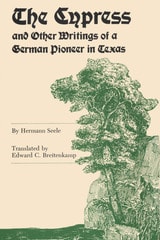
The Cypress and Other Writings of a German Pioneer in Texas
By Hermann Seele
University of Texas Press, 1979
When Hermann Seele anived in New Braunfels in 1845, the raw colony was plagued by poverty, disease, lack of food, and hostile Indians. This personal record of the Germans in Texas shows their evolution from struggling colonists to prosperous citizens.
From his viewpoint of a hardworking yet imaginative pioneer, Seele presents first a history of German immigration and settlement in Texas during the nineteenth century. Next, his autobiographical writings range from a "sentimental recollection" of his first Christmas Eve in Texas to his first day of teaching in New Braunfels, from accounts of the popular singing society to murder and justice along the Comal River. In addition, Seele's romantic novel, The Cypress, is a delightful though improbable tale of a traveling botanist, a chieftain's daughter, and a savage Indian cult.
Hermann Seele—farmer, lawyer, teacher, lay preacher, mayor, state representative, Civil War major, and editor—epitomizes the best of the German immigrants who established their communities as models of respectability and prosperity.
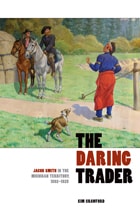
The Daring Trader
Jacob Smith in the Michigan Territory, 1802-1825Kim Crawford
Michigan State University Press, 2012
A fur trader in the Michigan Territory and confidant of both the U.S. government and local Indian tribes, Jacob Smith could have stepped out of a James Fenimore Cooper novel. Controversial, mysterious, and bold during his lifetime, in death Smith has not, until now, received the attention he deserves as a pivotal figure in Michigan’s American period and the War of 1812. This is the exciting and unlikely story of a man at the frontier’s edge, whose missions during both war and peace laid the groundwork for Michigan to accommodate settlers and farmers moving west. The book investigates Smith’s many pursuits, including his role as an advisor to the Indians, from whom the federal government would gradually gain millions of acres of land, due in large part to Smith’s work as an agent of influence. Crawford paints a colorful portrait of a complicated man during a dynamic period of change in Michigan’s history.
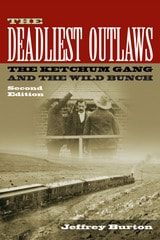
The Deadliest Outlaws
The Ketchum Gang and the Wild Bunch, Second EditionJeffrey Burton
University of North Texas Press, 2009
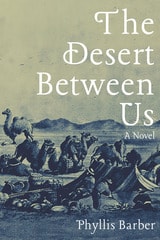
The Desert Between Us
A NovelPhyllis Barber
University of Nevada Press, 2020
2020 Reading the West Book Awards, Longlist for Fiction
2020 Association for Morman Letters Finalist, Fiction
The Desert Between Us is a sweeping, multi-layered novel based on the U.S. government’s decision to open more routes to California during the Gold Rush. To help navigate this waterless, largely unexplored territory, the War Department imported seventy-five camels from the Middle East to help traverse the brutal terrain that was murderous on other livestock.
Geoffrey Scott, one of the roadbuilders, decides to venture north to discover new opportunities in the opening of the American West when he—and the camels—are no longer needed. Geoffrey arrives in St. Thomas, Nevada, a polygamous settlement caught up in territorial fights over boundaries and new taxation. There, he falls in love with Sophia Hughes, a hatmaker obsessed with beauty and the third wife of a polygamist. Geoffrey believes Sophia wants to be free of polygamy and go away with him to a better life, but Sophia’s motivations are not so easily understood. She had become committed to Mormon beliefs in England and had moved to Utah Territory to assuage her spiritual needs.
The death of Sophia’s child and her illicit relationship with Geoffrey generate a complex nexus where her new love for Geoffrey competes with societal expectations and a rugged West seeking domesticity. When faced with the opportunity to move away from her polygamist husband and her tumultuous life in St. Thomas, Sophia becomes tormented by a life-changing decision she must face alone.
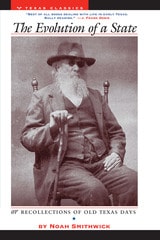
The Evolution of a State, or, Recollections of Old Texas Days
By Noah Smithwick
University of Texas Press, 1983
"I was but a boy in my nineteenth year, and in for adventure when I started out from Hopkinsville, Kentucky, with all my worldly possessions, consisting of a few dollars in money, a change of clothes, and a gun, of course, to seek my fortune in this lazy man's paradise."
Noah Smithwick was an old man, blind and near his ninetieth year, when his daughter recorded these words. He had stayed on in "paradise"—Texas—from 1827 to 1861, when his opposition to secession took him to California. The Evolution of a State is his story of these "old Texas days."
A blacksmith and a tobacco smuggler, Noah Smithwick made weapons for the Battle of Concepción, and he fought in that battle. With Hensley's company, he chased the Mexican army south of the Rio Grande after the Battle of San Jacinto. Twice he served with the Texas Rangers. In quieter times, he was a postmaster and justice of the peace in little Webber's Prairie.
Eyewitness to so much Texas history, Smithwick recounts his life and adventures in a simple, straightforward style, with a wry sense of humor. His keen memory for detail—what the people wore, what they ate, how they worked and played— vividly evokes the sights, sounds, and smells of the frontier.
First published in part by the Dallas Morning News, Smithwick's recollections gained such popularity that they were published in book form, as The Evolution of a State, in 1900. This new edition of a Texas classic makes widely available for the first time in many years this "best of all books dealing with life in early Texas."

The Extraordinary Work of Ordinary Writing
Annie Ray's DiaryJennifer Sinor
University of Iowa Press, 2002
Exciting and beautifully crafted, The Extraordinary Work of Ordinary Writing provides an entirely new way of viewing “ordinary writing,” the everyday writing we typically ignore or dismiss. It takes as its center the diary of Jennifer Sinor's great-great-great-aunt Annie Ray, a woman who homesteaded in the Dakotas in the late nineteenth century. Diaries such as this have long been ignored by scholars, who prefer instead to focus on diaries with literary features. Reading diaries through this lens gives privileged status to those that are coherently crafted and ignores the very diaries that define the form through their relentless inscription of dailiness.
Annie Ray’s diary is not literary. By considering her ordinary writing as a site of complex and strategic negotiations among the writer, the form of writing, and dominant cultural scripts, Sinor makes visible the extraordinary work of the ordinary writer and the sophistication of these texts. In providing a way to read diaries outside the limits and conventions of literature, she challenges our approaches to other texts as well. Furthermore, because ordinary writing is not crafted for aesthetic reception (in contrast to autobiography proper, memoirs, and literary diaries), it is a productive site for investigating how both writing and culture get made every day.
The book is truly original in its form: nontraditional, storied, creative. Sinor, an accomplished creative writer, includes her own memories as extended metaphors in partnership with critical texts along with excerpts from her aunt's diary. The Extraordinary Work of Ordinary Writing will be a fascinating text for students of creative writing as well as of women's studies and diaries.

The Follinglo Dog Book
A Norwegian Pioneer Story from IowaPeder Gustav Tjernagel
University of Iowa Press, 1999
The Follinglo Dog Book both is and is not about dogs. The dogs are certainly here: from Milla to Chip the Third, we encounter a procession of heroic if often unfortunate creatures who, along with their immigrant masters, led a hard life on the nineteenth-century American frontier. However, if you pick up this book thinking it will offer a heartwarming read about canine experiences, you will find yourself reinformed by the way it unfolds.
Instead, these are the stories of a Norwegian pioneer family that came in 1860 to settle the Iowa prairie on a homestead called Follinglo Farm in Story County, Iowa. In the Tjernagels' experience one may read a chronicle of the state, the region, and the nation. Arriving in Iowa in what was still the age of wooden equipment and animal power, the Tjernagels witnessed each successive revolution on the land. They built homes and barns, cultivated the land, and encountered every manner of natural disaster from prairie fires to blizzards. Through all the struggles and setbacks, Peder Gustav Tjernagel's stories sparkle with boyhood pranks and adventures, in which the family dogs frequently play a role.
Readers will discover a wonderful cast of Norwegian relatives and neighbors, including a Herculean uncle, Store Per (Big Pete), who could lift a cow by its horns; a mysterious aunt, Stora Fastero (Big Sister), whose arrival signaled that a baby was soon to be born; and Elling Eilson, the walking Lutheran apostle. And, of course, there are the dogs who shepherd, protect, and even baby-sit the residents of Follinglo Farm.
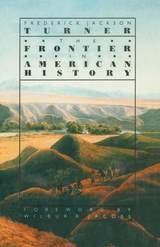
The Frontier in American History
Frederick Jackson Turner
University of Arizona Press, 1986
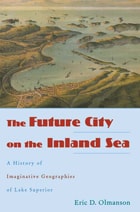
The Future City on the Inland Sea
A History of Imaginative Geographies of Lake SuperiorEric D. Olmanson
Ohio University Press, 2007
Winner of the AAG’s John Brinckerhoff Jackson Prize
Winner of the Great Lakes American Studies Association/Ohio University Press Book Award
Throughout the nineteenth century, the southern shores of Lake Superior held great promise for developers imagining the next great metropolis. These new territories were seen as expanses to be filled, first with romantic visions, then with scientific images, and later with vistas designed to entice settlement and economic development. The Future City on the Inland Sea describes the attempts of explorers under government, commercial, or scientific sponsorship to project their imaginative visions on a region where the future did not happen as planned.
Author Eric D. Olmanson takes a fresh look at the settlements in the vicinity of Chequamegon Bay and the Apostle Islands by analyzing the texts and images left by the missionaries, geologists, ordinance surveyors, newspaper editors, and boosters. The Future City on the Inland Sea shows how new visions of the place absorbed and replaced the old ones, eventually producing what might be called for the first time “a region.”
More than a regional geography, The Future City on the Inland Sea is an appraisal of these early efforts to meld geographies of physical nature with those of human ideals, a demonstration of how thoroughly and paradoxically those two realms are entangled.
The German Texas Frontier
Ferdinand Lindheimer’s Newspaper Accounts of the Environment, Gold, and IndiansDaniel J. Gelo
University of North Texas Press, 2024
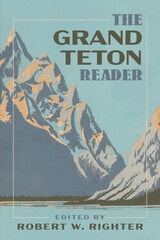
The Grand Teton Reader
Robert W. Righter
University of Utah Press, 2021
Editor Robert Righter has selected thirty-five contributors whose work takes readers from the Tetons’ geological origins to the time of Euro-American encroachment and the park’s politically tumultuous creation. Selections range from Laine Thom’s Shoshone legend of the Snake River and Owen Wister’s essay “Great God! I’ve Just Killed a Bear,” to Grace Gallatin Seton-Thompson’s humorous yet fearful account of crossing the Snake River, and William Owen’s first attempt to climb the Grand Teton. Conservationists, naturalists, and environmentalists are also represented: Terry Tempest Williams chronicles her multiyear encounter with her “Range of Memory,” and Olaus and Mardy Murie recount the difficulties of “park-making” in an often-hostile human environment.
Anyone seeking a deeper understanding of the park’s wild beauty and controversial past will want to read these stories by people who lived it.
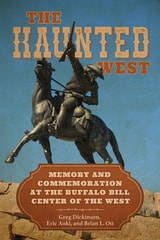
The Haunted West
Memory and Commemoration at the Buffalo Bill Center of the WestGreg Dickinson, Eric Aoki, and Brian L. Ott
University of Alabama Press, 2024
Through incisive analysis of the museum’s five institutions, Greg Dickinson and his coauthors reveal how narratives of Native American heritage, violent colonial settlement, Western art, natural history, and ever‑present gun culture collide to shape a haunted sense of American identity. By tracing the tensions between what is memorialized, what is mythologized, and what is suppressed, the authors expose the ghosts that linger in contemporary understandings of the West and offer a compelling rethinking of how memory and commemoration continue to influence the nation’s cultural imagination.
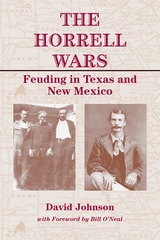
The Horrell Wars
Feuding in Texas and New MexicoDavid Johnson
University of North Texas Press, 2014

The Johnson-Sims Feud
Romeo and Juliet, West Texas StyleBill O'Neal
University of North Texas Press, 2010
The Journal of Sarah Haynsworth Gayle, 1827–1835
A Substitute for Social IntercourseEdited by Sarah Woolfolk Wiggins with Ruth Smith Truss
University of Alabama Press, 2013
The remarkable journal of the young wife of early Alabama governor John Gayle and a primary source of our knowledge about early Alabama and the antebellum American South
Astonishing, tragic, and remarkable, the journal of Sarah Haynsworth Gayle, wife of early Alabama governor John Gayle, is among the most widely studied and seminal accounts of antebellum life in the American South. This is the first complete edition of the journal in print.
Bereft of the companionship of her often-absent husband, Sarah considered her journal “a substitute for social intercourse” during the period from 1827 to 1835. It became the social and intellectual companion to which she confided stories that reflected her personal life and the world of early Alabama. Sarah speaks directly to us of her loneliness, the challenges of child rearing, her fear of and frustration with the management of slaves, and the difficulty of balancing the responsibilities of a socially prominent woman with her family’s slender finances.
The poor condition of the journal and its transcripts, sometimes disintegrated or reassembled in the wrong order, has led historians to misinterpret Gayle’s words. Gayle’s descendants, Alabama’s famed Gorgases, deliberately obscured or defaced many passages. Using archival techniques to recover the text and restore the correct order, Sarah Wiggins and Ruth Truss reveal the unknown story of Sarah’s economic hardships, the question of her husband’s “temperance,” and her opium use.
The only reliable and unexpurgated edition of Sarah Gayle’s journal, now enhanced with a fascinating introduction and inset notes, The Journal of Sarah Haynsworth Gayle, 1827–1835, is a robust and gripping account and will be of inestimable value to our understanding of antebellum society, religion, intellectual culture, and slavery.
Published in cooperation with the University Libraries, The University of Alabama, with further financial support from the Library Leadership Board, the University Libraries, The University of Alabama.
The Lumberman's Frontier
Three Centuries of Land Use, Society, and Change in America's ForestsThomas R. Cox
Oregon State University Press, 2010
The Making of Pioneer Wisconsin
Voices of Early SettlersMichael E. Stevens
Wisconsin Historical Society Press, 2018
The Making of Pioneer Wisconsin provides a unique and intimate glimpse into the lives of these early settlers, as they describe what it felt like to be a teenager in a wagon heading west or an isolated young wife living far from her friends and family. Woven together with context provided by historian Michael E. Stevens, these first-person accounts form a fascinating narrative that deepens our ability to understand and empathize with Wisconsin’s early pioneers.
The Mason County "Hoo Doo" War, 1874-1902
David Johnson
University of North Texas Press, 2006
The McLaurys in Tombstone, Arizona
An O.K. Corral ObituaryPaul Lee Johnson
University of North Texas Press, 2012
The Merchant John Askin
Furs and Empire at British MichilimackinacJustin M. Carroll
Michigan State University Press, 2017
The Narrative of Lucy Ann Lobdell
A Woman's Case for EqualityLisa Macchia Ohliger
Westholme Publishing, 2024
Lucy Ann Lobdell’s (1829–1912) extraordinary life was shaped by personal strife and the hardships of survival in upstate New York. Struggling with an abusive, alcoholic husband, a young child, ailing parents, and financial strain, Lucy did what was necessary to support her family. In a rural world defined by hunting, farming, and lumbering, she dressed, labored, and lived in a traditional masculine manner. Her prowess as a rifle shot and fiddle player were known locally, but because of her unconventional, androgynous lifestyle, she became a target of public gossip and ridicule. Educated and eloquent, Lucy penned and published, Lucy Ann Lobdell, the Female Hunter of Delaware and Sullivan Counties, N.Y., in 1855. The narrative provides a unique look at the persecution of a woman whose only “offense” was disregard for contemporary societal norms.
After her husband was killed during the Civil War, she received a widow’s pension. Ostracized and eventually hospitalized in 1880—gender laws of the time imprisoned indigent men, but sent women to mental hospitals—she underwent torturous experimental treatment until she confessed to a self-serving doctor that she was “a man in all that the name implies.” Whether Lucy was a lesbian, cross dresser, or transgender, we don’t know from the historical record, but as Lisa Macchia Ohliger demonstrates in The Narrative of Lucy Ann Lobdell: A Woman’s Case for Equality, Lucy did embody the nascent women’s rights movement. At the same time, and not far from where Lucy lived and went to school, Amelia Bloomer was advocating the right for women to wear pants and was publishing the feminist newspaper, The Lily, while Susan B. Anthony was pushing for land rights and equal pay for women. All of these issues are found in Lucy’s autobiographical account, fully reproduced in this volume. Lucy’s life is an illustration of the historical significance and destructive power of gender in society, and her narrative bears painful witness to the clash between taboo and survival.
The Notorious Luke Short
Sporting Man of the Wild WestJack DeMattos
University of North Texas Press, 2015
The irony is that Luke Short is best remembered for being the winning gunfighter in two of the most celebrated showdowns in Old West history: the shootout with Charlie Storms in Tombstone, Arizona, and the showdown against Jim Courtright in Fort Worth, Texas. He would have hated that. During his lifetime, Luke Short became one of the best known sporting men in the United States, and one of the wealthiest. He had been a partner in the Long Branch Saloon in Dodge City, as well as the White Elephant in Fort Worth. He became friends with other wealthy sporting men, such as William H. Harris, Jake Johnson, and Bat Masterson, who helped broaden his gaming interests to include thoroughbred horse racing and boxing.
Before he died he would become a familiar figure in Chicago, Memphis, New Orleans, and Saratoga Springs, where he raced his string of horses. He traveled with other wealthy sporting men in private railroad cars to attend heavyweight championship fights. Luke Short was always a little man dealing in big games. He married the beautiful Hattie Buck, who could turns heads at all the top resorts they visited as man and wife.
Jack DeMattos and Chuck Parsons have researched deeply into all records to produce the first serious biography of Luke Short, revealing in full the epitome of a sporting man of the Wild West.
The Old South Frontier
Cotton Plantations and the Formation of Arkansas Society, 1819–1861Donald P. Mcneilly
University of Arkansas Press, 2000
The Overland Journey From Utah To California
Wagon Travel From The City Of Saints To The City Of AngelsEdward Leo Lyman
University of Nevada Press, 2008
The wagon trail between Salt Lake City and Los Angeles is one of the most important and least-known elements of nineteenth-century Western migration. Known as the Southern Route, it included the western half of the Old Spanish Trail and was favored because it could be used for travel and freighting year-round. It was, however, likely the most difficult route that pioneers traveled with any consistency, following not rivers but leading from one--sometimes dubious--desert watering place to the next and offering few havens for the sick, weary, or unfortunate. Historian Edward Leo Lyman has provided the first history of the complete Southern Route and of the people who developed and used it. Based on extensive research in primary sources--including many early travelers’ accounts--and on Lyman’s own investigation of the route and its branches, the book discusses the exploration and development of the Old Spanish Trail, its horse thieves and traders, including Jed Smith and Kit Carson, along with government explorere John C. Frémont. Developing the old pack mule trail as a wagon road between Salt Lake City and Los Angeles, miners heading for the California gold fields first used the route extensively. Mormon missionaries and the colonizers of San Bernardino and other communities also traveled that way, as did a wide array of mail carriers, soldiers and world travelers. Later, a steady stream of Anglo-American emigrants seeking new homes or fortunes in California shared the road with a surprising number of freight wagon operators. The trail passed through the territories of numerous Native American peoples, and contacts with them--both friendly and hostile--played a significant role in the experiences of travelers and in the fates of Native American cultures in this region. Lyman’s discussions of Mormon-Indian relations and of the infamous Mountain Meadows Massacre offer fresh and important analyses of these vital aspects of the westward movement.
The Ozarks in Missouri History
Discoveries in an American RegionEdited by Lynn Morrow
University of Missouri Press, 2013
The Plains Across
The Overland Emigrants and the Trans-Mississippi West, 1840-60John D. Unruh, Jr.
University of Illinois Press, 1979
The Reel Thrilling Events of Bank Robber Henry Starr
From Gentleman Bandit to Movie Star and Back AgainMark Archuleta
University of North Texas Press, 2025
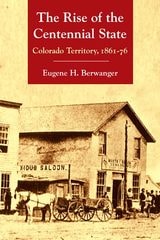
The Rise of the Centennial State
Colorado Territory, 1861-76Eugene H. Berwanger
University of Illinois Press, 2006
A vivid description of Colorado’s beginnings
This is the first single-volume history of the Colorado territory, encompassing the entire territorial period from the beginning of the Civil War to 1876, when Colorado became a state. The Rise of the Centennial State traces the growth of the territory as new technologies increased mining profits and as new modes of transportation--especially the Union Pacific and Kansas Pacific railroads--opened the territory to eastern markets, bringing waves of settlers to farm, ranch, and establish new communities.
Eugene H. Berwanger's history is packed with colorful characters and portraits of sprawling, brawling frontier and mining towns from Denver to Central City. He presents a multifaceted discussion of Colorado's resurgence after the war, with rich discussions of the role of minorities in the territory’s development: Indian-white relations (including discussions of now forgotten battles of Beecher’s Island and Summit Springs, which destroyed the Indians’ hold on the Colorado Plains); the social segregation of blacks in Denver; and Mexican Americans’ displeasure at being separated from the Hispano culture of New Mexico. Berwanger also demonstrates the decisive role of Colorado’s admission to statehood in swinging the disputed presidential election of 1876 to the Republican candidate, Rutherford B. Hayes.
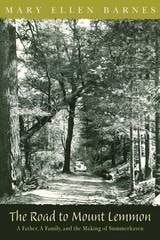
The Road to Mount Lemmon
A Father, A Family, and the Making of SummerhavenMary Ellen Barnes
University of Arizona Press, 2009
The Santa Catalina Mountains first captivated Tony Zimmerman on a 1937 hunting trip. Regard for the alpine beauty must have been in his genes—he was the son of Swiss German immigrants—and by 1940 the Tucson schoolteacher had begun taking his family to Mount Lemmon to spend the summer. Back then, the road up the mountain was a rough two-track dirt road from Oracle, and Summerhaven was nothing but a sleepy cluster of summer cabins. But Tony Zimmerman was to help change all of that.
The Road to Mount Lemmon is a beguiling memoir of the Catalina Mountains told by the daughter of one of the pioneers in the life and development of Mount Lemmon’s communities. Mary Ellen Barnes tells how her father Tony resigned from teaching in 1943 to devote his career to the development of this mountain oasis. He not only sold real estate for long time landowner Randolph Jenks, he even bought the village’s tiny two-room store, installing a sawmill to build a larger store, and built the Mount Lemmon Inn. And as she spins Tony’s personal saga, she also gives readers a glimpse of the Catalinas before Tucson became a boom town, recalling idyllic adventures in wild country and the cowboys, rangers, ranchers, and loggers who worked there.
Barnes tells Tony’s story as if sharing it with family, evoking her father’s personality on every page. The Road to Mount Lemmon is an intimate view of a mountain community over the course of nearly sixty years—a view that few people have shared but one all can appreciate.
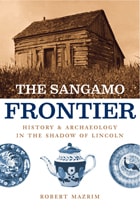
The Sangamo Frontier
History and Archaeology in the Shadow of LincolnRobert Mazrim
University of Chicago Press, 2006
When Abraham Lincoln moved to Illinois’ Sangamo Country in 1831, he found a pioneer community transforming from a cluster of log houses along an ancient trail to a community of new towns and state roads. But two of the towns vanished in a matter of years, and many of the activities and lifestyles that shaped them were almost entirely forgotten. In The Sangamo Frontier, archaeologist Robert Mazrim unearths the buried history of this early American community, breathing new life into a region that still rests in Lincoln’s shadow.
Named after a shallow river that cuts through the prairies of central Illinois, the Sangamo Country—an area that now encompasses the capital city of Springfield and present-day Sangamon County—was first colonized after the War of 1812. For the past fifteen years, Mazrim has conducted dozens of excavations there, digging up pieces of pioneer life, from hand-forged iron and locally made crockery to pewter spoons and Staffordshire teacups. And here, in beautifully illustrated stories of each dig, he shows how each of these small artifacts can teach us something about the lifestyles of people who lived on the frontier nearly two hundred years ago. Allowing us to see past the changed modern landscape and the clichés of pioneer history, Mazrim deftly uses his findings to portray the homes, farms, taverns, and pottery shops where Lincoln’s neighbors once lived and worked.
Drawing readers into the thrill of discovery, The Sangamo Frontier inaugurates a new kind of archaeological history that both enhances and challenges our written history. It imbues today’s landscape with an authentic ghostliness that will reawaken the curiosity of anyone interested in the forgotten people and places that helped shape our nation.
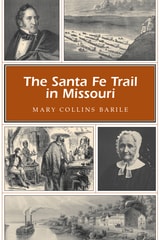
The Santa Fe Trail in Missouri
Mary Collins Barile
University of Missouri Press, 2010
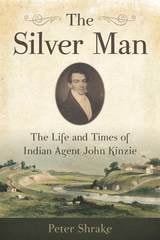
The Silver Man
The Life and Times of Indian Agent John KinziePeter Shrake
Wisconsin Historical Society Press, 2016
In The Silver Man: The Life and Times of John Kinzie, readers witness the dramatic changes that swept the Wisconsin frontier in the early and mid-1800s, through the life of Indian agent John Harris Kinzie. From the War of 1812 and the monopoly of the American Fur Company, to the Black Hawk War and the forced removal of thousands of Ho-Chunk people from their native lands—John Kinzie’s experience gives us a front-row seat to a pivotal time in the history of the American Midwest.
As an Indian agent at Fort Winnebago—in what is now Portage, Wisconsin—John Kinzie served the Ho-Chunk people during a time of turbulent change, as the tribe faced increasing attacks on its cultural existence and very sovereignty, and struggled to come to terms with American advancement into the upper Midwest. The story of the Ho-Chunk Nation continues today, as the tribe continues to rebuild its cultural presence in its native homeland.
Through John Kinzie’s story, we gain a broader view of the world in which he lived—a world that, in no small part, forms a foundation for the world in which we live today.
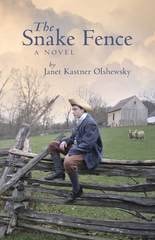
The Snake Fence
Janet Olshewsky
QuakerPress, 2012
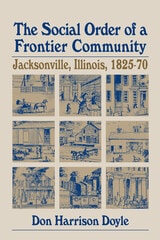
The Social Order of a Frontier Community
Jacksonville, Illinois, 1825-70Don Harrison Doyle
University of Illinois Press, 1978
"A well-conceived and well-argued book that is essential reading for those interested in the study of community building." --Journal of American History
"This study is important for both frontier and urban historians. It is well written, thoroughly documented, and illustrated in an informative manner. One may hope that future studies of other nineteenth century American towns will be completed with the competence and style of this excellent volume." --The Old Northwest
"For one who has lived in Jacksonville as I have, reading this book stirred fond memories and answered lingering questions about this town. . . . As a capsule study of an unusual Illinois community renowned for its past, Doyle's book makes for fascinating reading." --Civil War History