Results by title
458 books match the query 'Literature' and 114 start with t
Taking Their Word
Literature and the Signs of Central AmericaArturo Arias
University of Minnesota Press, 2007
Central Americans are one of the largest Latino population groups in the United States. Yet, Arturo Arias argues, the cultural production of Central Americans remains little known to North Americans.
In Taking Their Word, Arias complicates notions of the cultural production of Central America, from Mexico in the North to Panama in the South. He charts the literature of Central America’s liberation struggles of the 1970s and 1980s, its transformation after peace treaties were signed, the emergence of a new Maya literature that decenters Latin American literature written in Spanish, and the rise and fall of testimonio. Arias demonstrates that Central America and its literature are marked by an indigenousness that has never before been fully theorized or critically grasped. Never one to avoid controversy, Arias proffers his views of how the immigration of Central Americans to North America has changed the cultural topography of both zones.
With this groundbreaking work, Arias establishes the importance of Central American literature and provides a frame for future studies of the region’s culture.
Arturo Arias is director of Latin American studies at the University of Redlands. He is the author of six novels in Spanish and editor of The Rigoberta Menchú Controversy (Minnesota, 2001).
Teaching About Place
Learning From The LandLaird Christensen
University of Nevada Press, 2008
Teaching In The Field
Hal Crimmel
University of Utah Press, 2003
Taking students out of the classroom and into a variety of settings, ranging from remote wilderness sites to urban or built environments is now recognized as a valuable means of teaching ecological concepts and environmental values. But field studies are also a way of encouraging explorations across the curriculum, enhancing the teaching of life sciences, literature, and creative writing.
Teaching in the Field is the first volume to specifically survey field studies conducted through colleges and universities. The essays, arranged into three sections, offer rationales, pedagogical strategies, and foundational advice and information that broaden and strengthen the collective knowledge of this increasingly popular means of instruction. The essays present theoretical information within engaging, candid narratives that report on various aspects of field experiences, whether hour-long excursions or month-long trips.
Teachers of environmental studies, of English, composition, and creative writing, and of allied humanities and science disciplines, will find here a wealth of success stories and cautionary tales to guide them in envisioning their own outdoor classrooms.
Teaching Life
Letters from a Life in LiteratureDale Salwak
University of Iowa Press, 2008
Written in response to the sudden death of one of his students, who died tragically in an automobile accident on her way to Salwak’s office to talk over her career plans, Teaching Life is an effort to impart lessons to the next generation of teachers: “It was the suddenness of her death, I think, along with the utter loss of so much potential, which struck me forcibly, and I found myself wondering if anything I had said in class had made a difference in her too-short life or, for that matter, in the lives of any of my students.”
By turns analytical, reflective, and exhortatory, Teaching Life unselfconsciously captures the fascination, enlightenment, and sheer joy that literary studies can offer professors and students. It also implicitly speaks to society's prevailing—and disturbing—prejudice against the profession.
Teaching the Literature Survey Course
New Strategies for College FacultyJames M. Lang
West Virginia University Press, 2018
From mapping early English literature to a team-based approach to the American survey, and from multimedia galleries to a “blank syllabus,” contributors propose alternatives to the traditional emphasis on lectures and breadth of coverage. The volume is at once a set of practical suggestions for working teachers (including sample documents like worksheets and syllabi) and a provocative engagement with the question of what introductory courses can and should be.

Text and Culture
The Politics of InterpretationDaniel Cottom
University of Minnesota Press, 1989
Text and Culture was first published in 1989. Minnesota Archive Editions uses digital technology to make long-unavailable books once again accessible, and are published unaltered from the original University of Minnesota Press editions.
In Text & Culture, Daniel Cottom examines the political aspects of contemporary disciplines of interpretation. He pleads against limiting the act of reading by disqualifying some readings as "wrong" or unscholarly, and he argues for the necessity of multiple readings, claiming that a closed-off text glosses over differences that are political in nature. He proceeds, then, from the notion of text to culture. Just as the reading of the text is conditioned by irreducible political differences, so is the reading of culture. Finally, to illustrate and further develop his arguments, Cottom presents an extensive analysis of Great Expectations.
Cottom's materials range from academic jokes to King Lear, and the writers he discusses range from Kant to Derrida, from Freud to Basil Bernstein, from Ludwig Wittgenstein and Bronislaw Malinowski to Erving Goffman, Clifford Geertz, and Stanley Fish. This study is especially concerned with the way "culture" and related terms, such as "context" and "norm," are part of a larger discourse in the contemporary humanities and social sciences - a discourse in which their effect is to repress recognition of important historical differences, conflicts, and possibilities. At the same time that he shows how difficult it is to get "beyond culture," he tries to indicate how interpretation may be turned into a more socially responsible practice.
Daniel Cottom is associate professor of English at the University of Florida. He is the author of Social Figures: George Eliot, Social History, and Literary Representation (Minnesota, 1987) and The Civilized Imagination: A Study of Ann Radcliffe, Jane Austen, and Sir Walter Scott.

The Academic Postmodern and the Rule of Literature
A Report on Half-KnowledgeDavid Simpson
University of Chicago Press, 1995
Simpson examines defining features of postmodern thought—storytelling, autobiography, anecdote, and localism—and traces their unacknowledged roots in literature and literary criticism. Considering such examples as the conversational turn in philosophy led by Richard Rorty and the anecdotal qualities of the New Historicism, he argues that much of contemporary scholarship is literary in its terms, methods, and assumptions about knowledge; in their often unconscious adoption of literary approaches, scholars in philosophy, history, anthropology, and other disciplines have confined themselves to a traditional—and limited—way of looking at the world. Simpson is the first to uncover the largely unacknowledged ancestry of the key paradigms and sensibilities of the academic postmodern—tracing their roots to nineteenth-century Romanticism and to more general traditions of literature. He warns scholars against mistaking the migration of ideas from one discipline to another for a radically new response to the postmodern age.
In his nuanced and balanced assessment of the academic postmodern enterprise, Simpson recognizes that both the literary turn and the emphasis on local, subjective voices have done much to enrich knowledge. But he also identifies the danger in abandoning synthetic knowledge to particular truths, cautioning that "we would be foolish to pretend that little narratives are true alternatives to grand ones, rather than chips off a larger block whose shape we can no longer see because we are not looking."

The Afterlife of Taste Hierarchies in Contemporary U.S. Art and Literature
Rooney, Monique
University of Iowa Press, 2026
Connecting literary studies, media theory, and cultural criticism, The Afterlife of Taste Hierarchies in Contemporary U.S. Art and Literature offers a fresh vocabulary for understanding how we evaluate art and each other in an age of digital mediation. Drawing on works and artifacts ranging from Beyoncé’s Lemonade and Andrea Long Chu’s “China Brain” to Ottessa Moshfegh’s My Year of Rest and Relaxation and the viral Bernie Sanders mittens meme, Monique Rooney traces how aspirations to refinement and gestures of condescension—once associated with high-, middle-, and lowbrow culture—continue to define aesthetic experience. This book moves between literary and popular forms, attending as closely to the meme’s dispersed creativity as to the novel’s intentional aesthetics.
The Age of Eclecticism
Literature and Culture in Britain, 1815–1885Christine Bolus-Reichert
The Ohio State University Press, 2009

The Baroque Technotext
Literature in a Digital MediascapeElise Takehana
Intellect Books, 2020
The Barthes Fantastic
Literature, Criticism, and the Practice of LanguageJohn Lurz
University of Chicago Press, 2025
In The Barthes Fantastic, John Lurz explores the intersection of literature and everyday life—and confronts some habits of literary study—through a reading of the work of Roland Barthes. An influential French theorist, Barthes wrote prolifically on the place of language and the play of signs in the ways we produce cultural and aesthetic meaning. Ranging across the entire sweep of Barthes’s varied career, Lurz shows how Barthes’s insights into signification and literature involve particular intellectual activities that impart significance to the world. Doing so allows him to develop an expanded understanding of the fantastic as a conceptual category—a way of thinking—in which the texts we read come to inform the texture of our real lives. Ultimately, The Barthes Fantastic enlarges our sense of what we learn as students of literature and gives us a new picture of a writer we thought we knew.
The Best in Children's Books
The University of Chicago Guide to Children's Literature, 1966-72Edited by Zena Sutherland
University of Chicago Press, 1973
This guide contains 1,400 reviews of the best children's literature published between 1966 and 1972.
The Best in Children's Books
The University of Chicago Guide to Children's Literature, 1973-78Zena Sutherland
University of Chicago Press, 1980
The Best in Children's Books
The University of Chicago Guide to Children's Literature, 1979-84Zena Sutherland
University of Chicago Press, 1986
This volume carries on the tradition established by Zena Sutherland's two earlier collections covering the periods from 1966 to 1972 and 1973 to 1978. Her 1973 edition of The Best in Children's Books was cited by the American School Board Journal as one of the outstanding books of the year in education.
The Bitch is Back
Wicked Women in LiteratureSarah Appleton Aguiar
Southern Illinois University Press, 2001
Although the “bitch” has always commanded a prominent spot in popular culture—television, movies, art—she virtually disappeared from the work of the second wave of feminist writers in the late 1960s and early 1970s. Now, announces Sarah Appleton Aguiar, the bitch is back, returned once more to cultural center stage in the world of serious literature.
Feminist writers such as Mary Gordon and Alice Walker, to name only two, felt obligated to subvert literary misrepresentations of females as dimensionless, to refute preconceptions of objectified characters, and, of paramount importance, to create memorable women full of complexity and character. They wanted to create a subjective reality for their protagonists. And they succeeded admirably.
But along the road to subjectivity, that vital woman, empowered with anger, with ruthless survival instincts—the bitch—was banished from the pages of feminist fiction. The village gossips, calculating gold-diggers, merciless backstabbers, sinful sirens, evil stepmothers, deadly daughters, twisted sisters, hags, bags, and crones—all had vanished from the fiction written by women. Ubiquitous in other forms of media, the bitch was noticeably absent from the feminist literary canon.
Aguiar, however, points to indications in contemporary culture that the season of the bitch is fast approaching. Contemporary feminist writers and theorists are making substantial reevaluations of the archetypal bitch. Focusing on the traits and the types of guises usually associated with this vital character, Aguiar discusses such characters as Zenia in Margaret Atwood’s The Robber Bride, Ruth Patchett in Fay Weldon’s The Life and Loves of a She-Devil, Sula in Toni Morrison’s Sula, and Ginny in Jane Smiley’s A Thousand Acres.
The Book of the Heart
Eric Jager
University of Chicago Press, 2000
Eric Jager traces the history and psychology of the self-as-text concept from antiquity to the modern day. He focuses especially on the Middle Ages, when the metaphor of a "book of the heart" modeled on the manuscript codex attained its most vivid expressions in literature and art. For instance, medieval saints' legends tell of martyrs whose hearts recorded divine inscriptions; lyrics and romances feature lovers whose hearts are inscribed with their passion; paintings depict hearts as books; and medieval scribes even produced manuscript codices shaped like hearts.
"The Book of the Heart provides a fresh perspective on the influence of the book as artifact on our language and culture. Reading this book broadens our appreciation of the relationship between things and ideas."—Henry Petroski, author of The Book on the Bookshelf
The Construction of Authorship
Textual Appropriation in Law and LiteratureMartha Woodmansee and Peter Jaszi, eds.
Duke University Press, 1994
These essays, illustrating cultural studies in action, are aggressively interdisciplinary and wide-ranging in topic and approach. Questions of collective and collaborative authorship in both contemporary and early modern contexts are addressed. Other topics include moral theory and authorship; copyright and the balance between competing interests of authors and the public; problems of international copyright; musical sampling and its impact on "fair use" doctrine; cinematic authorship; quotation and libel; alternative views of authorship as exemplified by nineteenth-century women's clubs and by the Renaissance commonplace book; authorship in relation to broadcast media and to the teaching of writing; and the material dimension of authorship as demonstrated by Milton's publishing contract.
Contributors. Rosemary J. Coombe, Margreta de Grazia, Marvin D'Lugo, John Feather, N. N. Feltes, Ann Ruggles Gere, Peter Jaszi, Gerhard Joseph, Peter Lindenbaum, Andrea A. Lunsford and Lisa Ede, Jeffrey A. Masten, Thomas Pfau, Monroe E. Price and Malla Pollack, Mark Rose, Marlon B. Ross, David Sanjek, Thomas Streeter, Jim Swan, Max W. Thomas, Martha Woodmansee, Alfred C. Yen
The Daybreak Boys
Essays on the Literature of the Beat GenerationGregory Stephenson
Southern Illinois University Press, 1990
In these critical essays Gregory Stephenson takes the reader on a journey through the literature of the Beat Generation: a journey encompassing that common ethos of Beat literature—the passage from darkness to light, from fragmented being toward wholeness, from Beat to Beatific. He travels through Jack Kerouac’s Duluoz Legend,following Kerouac’s quests for identity, community, and spiritual knowledge. He examines Allen Ginsberg’s use of transcendence in “Howl,” discovers the Gnostic vision in William S. Burroughs’s fiction, and studies the mythic, visionary power of Lawrence Ferlinghetti’s poetry. Stephenson also provides detailed examinations of the writing of lesser-known Beat authors: John Clellon Holmes, Gregory Corso, Richard Fariña, and Michael McClure. He explores the myth and the mystery of the literary legend of Neal Cassady. The book concludes with a look at the common traits of the Beat writers—their use of primitivism, shamanism, myth and magic, spontaneity, and improvisation, all of which led them to a new idiom of consciousness and to the expansion of the parameters of American literature.
The Deaths of the Author
Reading and Writing in TimeJane Gallop
Duke University Press, 2011
The Dialogic Imagination
Four EssaysBy M. M. Bakhtin
University of Texas Press, 1982
These essays reveal Mikhail Bakhtin (1895-1975)—known in the West largely through his studies of Rabelais and Dostoevsky—as a philosopher of language, a cultural historian, and a major theoretician of the novel. The Dialogic Imagination presents, in superb English translation, four selections from Voprosy literatury i estetiki (Problems of literature and esthetics), published in Moscow in 1975. The volume also contains a lengthy introduction to Bakhtin and his thought and a glossary of terminology.
Bakhtin uses the category "novel" in a highly idiosyncratic way, claiming for it vastly larger territory than has been traditionally accepted. For him, the novel is not so much a genre as it is a force, "novelness," which he discusses in "From the Prehistory of Novelistic Discourse." Two essays, "Epic and Novel" and "Forms of Time and of the Chronotope in the Novel," deal with literary history in Bakhtin's own unorthodox way. In the final essay, he discusses literature and language in general, which he sees as stratified, constantly changing systems of subgenres, dialects, and fragmented "languages" in battle with one another.
The Difference Aesthetics Makes
On the Humanities “After Man”Kandice Chuh
Duke University Press, 2019
The Division of Literature
Or the University in DeconstructionPeggy Kamuf
University of Chicago Press, 1996
Kamuf begins by analyzing the complex history of literary study within the modern university, critically reading developments from the French Revolution through the nineteenth century and beyond in Europe. She then turns to one of the most troubling works in the American literary canon—Melville's The Confidence-Man—to show how academic literary history has avoided confronting the implications of works in which meaning is never solely confined within a past. By engaging a future readership to which it applies for credit, Kamuf argues, literature cannot serve as a stable object of study. It locates, rather, a site of "the university in deconstruction."
Ranging from disciplinary histories of literature to our current culture wars, Kamuf offers a fascinating critique of academic literary study.
The Edge of Meaning
James Boyd White
University of Chicago Press, 2001
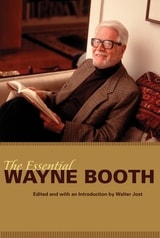
The Essential Wayne Booth
Wayne C. Booth
University of Chicago Press, 2006
While Booth’s work was formative to the study of literature, his essential writings have never been collected in a single volume—until now. Selected by Walter Jost in collaboration with Booth himself, the texts anthologized here present a picture of this indispensable critic’s contributions to literary and rhetorical studies. The selections range from memorable readings of Macbeth, Jane Austen, George Eliot, and Henry James to engagements with Booth’s intellectual heroes, such as Richard McKeon and Mikhail Bakhtin. But rhetoric, Booth’s abiding concern as a critic and thinker, provides the organizing principle of the anthology. The Essential Wayne Booth illuminates the scope of Booth’s rhetorical inquiry: the entire range of resources that human beings share for producing effects on one another. Whether about metaphors for our friendship with books or the two cultures of science and religion, the texts collected here always return to the techniques and ethics of our ways of communicating with each other—that is, to rhetoric.
The Essential Wayne Booth is a capstone to Booth's long career and an eloquent reminder of the ways in which criticism can make us alive to the arts of writing, talking, and listening.
The Flowers of Tarbes
or, Terror in LiteratureJean Paulhan
University of Illinois Press, 2005
The French Atlantic Triangle
Literature and Culture of the Slave TradeChristopher L. Miller
Duke University Press, 2008
Miller offers a historical introduction to the cultural and economic dynamics of the French slave trade, and he shows how Enlightenment thinkers such as Montesquieu and Voltaire mused about the enslavement of Africans, while Rousseau ignored it. He follows the twists and turns of attitude regarding the slave trade through the works of late-eighteenth- and early-nineteenth-century French writers, including Olympe de Gouges, Madame de Staël, Madame de Duras, Prosper Mérimée, and Eugène Sue. For these authors, the slave trade was variously an object of sentiment, a moral conundrum, or an entertaining high-seas “adventure.” Turning to twentieth-century literature and film, Miller describes how artists from Africa and the Caribbean—including the writers Aimé Césaire, Maryse Condé, and Edouard Glissant, and the filmmakers Ousmane Sembene, Guy Deslauriers, and Roger Gnoan M’Bala—have confronted the aftermath of France’s slave trade, attempting to bridge the gaps between silence and disclosure, forgetfulness and memory.
The Gift of Death, Second Edition & Literature in Secret
Jacques Derrida
University of Chicago Press, 2008
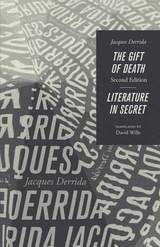
The Gift of Death, Second Edition & Literature in Secret
Jacques Derrida
University of Chicago Press, 2008
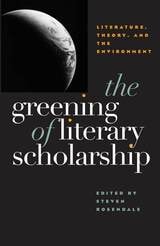
The Greening Of Literary Scholarship
Literature, Theory, and he EnvironmentSteven Rosendale
University of Iowa Press, 2002
Each essay in this impressive collection challenges the notion that the study of environmental literature is separate from traditional concerns of criticism, and each applies ecocritical scholarship to literature not commonly explored in this context. New historicism, postcolonialism, deconstructionism, and feminist and Marxist theories are all utilized to evaluate and gain new insights into environmental literature; at the same time, Percy Bysshe Shelley, Upton Sinclair, Leslie Marmon Silko, and Susan Howe are studied from an ecocritical perspective.
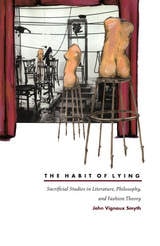
The Habit of Lying
Sacrificial Studies in Literature, Philosophy, and Fashion TheoryJohn Vignaux Smyth
Duke University Press, 2002
With recourse to Rene Girard, Paul de Man, Theodor Adorno, Leo Strauss, and other theoreticians not usually considered together, Smyth arrives at some surprising conclusions about the connections between lying, mimesis, sacrifice, sadomasochism, and the sacred, among other central subjects. Arguing that the relation between lying and truthtelling has been characterized in the West by sharply sacrificial features, he begins with a critique of the philosophies of lying espoused by Kant and Sissela Bok, then concludes that the problem of truth and lies leads to the further problem of the relation between law and arbitrariness as well as to the relation between rationality and unanimity. Constructively criticizing the work of such philosophers as Bertrand Russell, Ludwig Wittgenstein, Richard Rorty, and Nelson Goodman, Smyth shows how these problems occur comparably in fiction theory and how Paul de Man’s definition of fiction as arbitrariness finds confirmation in analytic philosophy. Through the novels of Defoe, Stendhal, and Beckett—with topics ranging from Defoe’s treatment of lies, fiction, and obscenity to Beckett’s treatment of the anus and the sacred—Smyth demonstrates how these texts generalize the issues of mendacity, concealment, and sacrificial arbitrariness in Girard’s sense to almost every aspect of experience, fiction theory, and cultural life. The final section of the book, taking its cue from Shakespeare, elaborates a sacrificial view of the history of fashion and dress concealment.
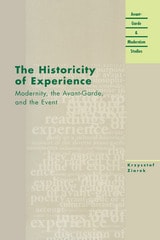
The Historicity of Experience
Modernity, the Avant-Garde, and the EventKrysztof Ziarek
Northwestern University Press, 2001
The four poets Ziarek considers—Gertrude Stein, Velimir Khlebnikov, Miron Biaoszewski, and Susan Howe—demonstrate the broad reach of and variety of forms taken by the avant-garde revision of experience and aesthetics. Moreover, this quartet illustrates how the main operative concepts and strategies of the avant-garde underpinned the practices of canonical writers. A profound philosophical meditation on language, modernity, and the everyday, The Historicity of Experience offers a fundamental reconceptualization of the avant-garde in relation to experience.
The Holocaust of Texts
Genocide, Literature, and PersonificationAmy Hungerford
University of Chicago Press, 2002
Hungerford examines the implications of conflating texts with people in a broad range of texts: Art Spiegelman's Maus; Ray Bradbury's Fahrenheit 451; the poetry of Sylvia Plath; Binjamin Wilkomirski's fake Holocaust memoir Fragments; and the fiction of Saul Bellow, Philip Roth, and Don DeLillo. She considers the ethical consequences of this trend in the work of recent and contemporary theorists and literary critics as well, including Cathy Caruth, Jacqueline Rose, Jacques Derrida, and Paul de Man. What she uncovers are fundamentally flawed ideas about representation that underwrite and thus undermine powerful and commonly accepted claims about literature and identity. According to Hungerford, the personification of texts is ethically corrosive and theoretically unsound. When we exalt the literary as personal and construe genocide as less a destruction of human life than of culture, we esteem memory over learning, short-circuit debates about cultural change, lend credence to the illusion or metaphysics of presence, and limit our conception of literature and its purpose.
Ultimately, The Holocaust of Texts asks us to think more deeply about the relationship between reading, experience, and memorialization. Why, for instance, is it more important to remember acts of genocide than simply to learn about them? If literary works are truly the bearers of ontology, then what must be our conduct toward them? Considering difficult questions such as these with fresh logic, Hungerford offers us an invigorating work, one that will not only interest scholars of American and postwar literature, but students of the Holocaust and critical theory as well.
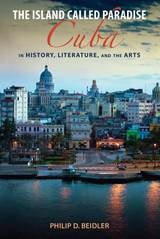
The Island Called Paradise
Cuba in History, Literature, and the ArtsPhilip D. Beidler
University of Alabama Press, 2014
In The Island Called Paradise, Philip D. Beidler shares his personal discovery of the vast, rich, and astonishing history of the island of Cuba and the interrelatedness of Cuba and the US.
Cuba first entered Beidler’s consciousness in the early 1960s when he watched with mesmerized anxiety the televised reports of the Cuban missile crisis, a conflict that reduced a multifaceted, centuries-old history between North America and Cuba to the stark duotones of Cold War politics. Fifty years later, when Beidler traveled to the US’s island neighbor, he found a Cuba unlike the nation portrayed in truculent political rhetoric or in the easy preconceptions of US popular culture. Instead he found an entrancing people and landscape with deep historical connections to the US and a dazzling culture that overwhelmed his creative spirit.
In twelve original essays, Beidler reintroduces to English-speaking readers many of the central figures, both real and literary, of Cuban and Cuban-American history. Meet Cecilia Valdés, the young mixed-race heroine of a 1839 novel that takes readers to the poor streets and sumptuous salons of Spanish colonial Cuba, and Narciso López, a real-life Venezuelan adventurer and filibustero who attempted to foment a Cuban uprising against Spain. Both would have been familiar figures to nineteenth-century Americans. Beidler also visits the twentieth-century lives of “the two Ernestos” (Ernest Hemingway and Che Guevara), and the pop-culture Cuban icon Ricky Ricardo.
A country not with one history but multiple layers of history, Cuba becomes a fertile island for Beidler’s exploration. Art, he argues, perpetually crosses walls erected by politics, history, and nationality. At its core, The Island Called Paradise renews and refreshes our knowledge of an older Atlantic world even as we begin to envision a future in which the old bonds between our nations may be restored.
The Keloids We Heal
Trauma, Spirituality, and Black Modernity in LiteratureSarah Soanirina Ohmer
University of Illinois Press, 2025
Women of colors and a literature written in corporeal and spiritual scars
The corporeal and spiritual healing in literature by women of colors can be seen to redefine modern thought and printed text. Sarah Soanirina Ohmer traces the impact of colonization and enslavement on Black women and Black women’s contributions to colonial, nineteenth, and twentieth century literature in the US, Brazil, and the Caribbean.
Drawing on intersectional analysis, Ohmer focuses on portrayals of trauma and spirituality in works by Toni Morrison, Conceição Evaristo, Maryse Condé, Gloria Anzaldúa, the Quilombhoje poets, and María de los Reyes Castillo. Ohmer compares literature from different countries along four thematic pathways: ghosts, mirrors, naming, and motherhood. Her analysis unlocks the literature’s power to heal through gut-wrenching descriptions of wounds and thrilling passages of hope and liberation. Throughout, Ohmer weaves in her life story as a Black woman as she reflects on how colonialism, racism, sexism, and capitalism have impacted her work, traumas, and faith journey.
The Labor of Literature
Democracy and Literary Culture in Modern ChileJane D. Griffin
University of Massachusetts Press, 2016
By examining alternative literary publications, Griffin recasts the seventeen-year Pinochet dictatorship as a time of editorial experimentation despite widespread cultural oppression and shows how grassroots cultural activism has challenged government-approved corporate publishing models throughout the postdictatorship period. Griffin's work also points to the growing importance of autogestión, or do-it-yourself cultural production, where individuals combine artisanal forms with new technologies to make and share creative work on a global scale.
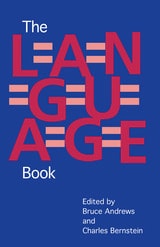
The Language Book
Bruce Andrews and Charles Bernstein
Southern Illinois University Press, 1984
“Ok murky in alter all end, unpredictable day, with rainshine any degree night, the sun kin warm and hot. Enough stone or other jugs lineup of whatever is In Through Out That’s light as much as known Differences evanesce Like, where and/or what on the equator might be french or spanish Longitude and latitude, yep yep sure Americana.”—Larry Eigner, commentary on a selection from Gertrude Stein’s Tender Buttons
This selection of essays and poetry from the first three volumes of L=A=N=G=U=A=G=E magazine discusses a “spectrum of writing that places its attention primarily on language and ways of making meaning, that takes for granted neither vocabulary, grammar, process, shape, syntax, program, nor subject matter.” (Bernstein and Andrews) The various writers shun labels, slogans, or catch-phrases; their exploration of the ways that meanings and values are revealed through the written word is intended to open the field of poetic activity, not close it.
The common thread of these essays is the multitude and scope of words’ referential powers—denotative, connotative, and associational; and studying these powers is ultimately a social and political activity as well as an aesthetic one.
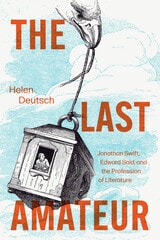
The Last Amateur
Jonathan Swift, Edward Said, and the Profession of LiteratureHelen Deutsch
University of Chicago Press, 2026
Joining the unfinished conversation between the satirist Jonathan Swift and the critic Edward Said, The Last Amateur argues for the transformative potential of literature.
What does “Swiftian” mean to you? For many, the name is synonymous with ingenious satire and an acid, clarifying mix of decorum and outrage. Jonathan Swift was, of course, the author of not only Gulliver’s Travels but also A Modest Proposal, which the columnist Gene Lyons recently called “perhaps the most penetrating anti-racist essay in the English language.” Small wonder, then, that the Anglo-Irish satirist was a lifelong inspiration to the great Palestinian American critic Edward Said, who for many years worked on an unfinished book about Swift and cultivated a Swiftian voice across his career.
Helen Deutsch’s highly personal book explores what Said’s love of Swift—and hers of both—tells us about not only these authors but also the powers of criticism itself. The Last Amateur is about how one comes to love one writer through another. Deutsch scrutinizes Said in relationship to Swift to raise questions of her own about the profession of literary studies. At a time when many in the field have lost faith in critique, Deutsch shows how passion and a refusal of professional propriety—the hallmarks of the amateur—can enliven critique again.
What, then, does it mean to be a Swiftian? The Swiftian hears Swift’s animus and uses it as an incentive for their own freedom of thought. Said was a Swiftian because the experience of reading Swift freed him to speak out, to have something serious to say. Deutsch’s revelatory book is an exercise in hearing Swift’s voice and speaking in her own.
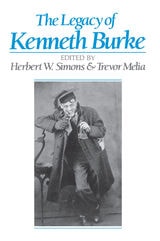
The Legacy of Kenneth Burke
Herbert W. Simons
University of Wisconsin Press, 1989
Capturing the lively modernist milieu of Kenneth Burke’s early career in Greenwich Village, where Burke arrived in 1915 fresh from high school in Pittsburgh, this book discovers him as an intellectual apprentice conversing with “the moderns.” Burke found himself in the midst of an avant-garde peopled by Malcolm Cowley, Marianne Moore, Jean Toomer, Katherine Anne Porter, William Carlos Williams, Allen Tate, Hart Crane, Alfred Stieglitz, and a host of other fascinating figures.
Burke himself, who died in 1993 at the age of 96, has been hailed as America’s most brilliant and suggestive critic and the most significant theorist of rhetoric since Cicero. Many schools of thought have claimed him as their own, but Burke has defied classification and indeed has often been considered a solitary, eccentric genius immune to intellectual fashions. But Burke’s formative work of the 1920s, when he first defined himself and his work in the context of the modernist conversation, has gone relatively unexamined.
Here we see Burke living and working with the crowd of poets, painters, and dramatists affiliated with Others magazine, Stieglitz’s “291” gallery, and Eugene O’Neill’s Provincetown Players; the leftists associated with the magazines The Masses and Seven Arts; the Dadaists; and the modernist writers working on literary journals like The Dial, where Burke in his capacity as an associate editor saw T. S. Eliot’s “The Wasteland” into print for the first time and provided other editorial services for Thomas Mann, e.e. cummings, Ezra Pound, and many other writers of note. Burke also met the iconoclasts of the older generation represented by Theodore Dreiser and H. L. Mencken, the New Humanists, and the literary nationalists who founded Contact and The New Republic. Jack Selzer shows how Burke’s own early poems, fiction, and essays emerged from and contributed to the modernist conversation in Greenwich Village. He draws on a wonderfully rich array of letters between Burke and his modernist friends and on the memoirs of his associates to create a vibrant portrait of the young Burke’s transformation from aesthete to social critic.
The Likeness of Things Unlike
A Poetics of IncommensurabilitySharon Cameron
University of Chicago Press, 2025
In Sharon Cameron’s essays, a magnetic constellation gathers works of Emerson, Whitman, Dickinson, Cather, and Stevens—each manifesting in its own terms “the likeness of things unlike”—to form a loose commonality in a strain of American writing in which incommensurable elements can’t be integrated and can’t be separated. The Likeness of Things Unlike is concerned with discordant elements of an aesthetic work and argues that these elements refigure the aesthetic wholes whose integrity they apparently violate. These intertwined, subversive elements are challenges to literary systems and are essentially philosophical in their rethinking of categories, and thus go beyond the aesthetic particulars that exemplify them.
Cameron is known for rigorously and brilliantly connecting artistic achievement to radical ways of thinking. Georg Lukcás describes the essayist as one who “adapts himself to the essay’s ‘smallness’ of form—the eternal smallness of the most profound work of the intellect in [the] face of life.” With The Likeness of Things Unlike Cameron powerfully demonstrates Lukács’s remarkable insight.
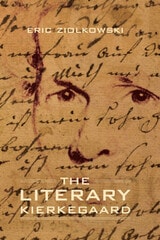
The Literary Kierkegaard
Eric Ziolkowski
Northwestern University Press, 2011
Yet Kierkegaard signals the essentially literary as opposed to strictly theological or philosophical nature of his writings. Ziolkowski first considers the notions of aesthetics and the aesthetic as Kierkegaard adapted them, and then his posture as a poet, as interrelated contexts of his selfconception as “a weed in literature.” After next taking account of the history of the critical recognition of Kierkegaard as a literary artist, he looks at an important characteristic of his literary craft that has received relatively little attention: the manner by which he and his pseudonyms read and quote other authors. Ziolkowski then explores the connections between the philosopher’s writings and those of other literary masters by whom he was directly influenced, such as Aristophanes, Cervantes, and Shakespeare; or of those who, while they did not directly influence him, gave paradigmatic expression to some of the same aspects of aesthetic, ethical, and religious existence that Kierkegaard and his pseudonyms portray. Ziolkowski’s seminal study will be of interest to Kierkegaard scholars, philosophers, and comparative literature scholars alike.
The Literary Work of Art
An Investigation of the Borderlines of Ontology, Logic, and Theory of LanguageRoman Ingarden
Northwestern University Press, 1973
The Literary Word of Art establishes the groundwork for a philosophy of literature, i.e., an ontology in terms of which the basic general structure of all lliterary works can be determined. This "essential anatomy" makes basic tools and concepts available for rigorous and subtle aesthetic analysis.
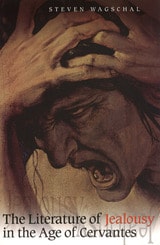
The Literature of Jealousy in the Age of Cervantes
Steven Wagschal
University of Missouri Press, 2007
Frequent and complex representations of jealousy in early modern Spanish literature offer symbolically rich and often contradictory images. Steven Wagschal examines these occurrences by illuminating the theme of jealousy in the plays of Lope de Vega, the prose of Miguel de Cervantes, and the complex poetry of Luis de Góngora. Noting the prevalence of this emotion in their work, he reveals what jealousy offered these writers at a time when Spain was beginning its long decline.
The Literature of Roguery in Seventeenth and Eighteenth Century Russia
Marcia A. Morris
Northwestern University Press, 2000
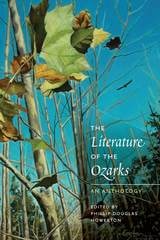
The Literature of the Ozarks
An AnthologyPhillip Douglas Howerton
University of Arkansas Press, 2019
The job of regional literature is twofold: to explore and confront the culture from within, and to help define that culture for outsiders. Taken together, the two centuries of Ozarks literature collected in this ambitious anthology do just that. The fiction, nonfiction, poetry, and drama presented in The Literature of the Ozarks complicate assumptions about backwoods ignorance, debunk the pastoral myth, expand on the meaning of wilderness, and position the Ozarks as a crossroads of human experience with meaningful ties to national literary movements.
Among the authors presented here are an Osage priest, an early explorer from New York, a native-born farm wife, African American writers who protested attacks on their communities, a Pulitzer Prize–winning poet, and an art history professor who created a fictional town and a postmodern parody of the region’s stereotypes.
The Literature of the Ozarks establishes a canon as nuanced and varied as the region’s writers themselves.
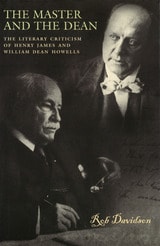
The Master and the Dean
The Literary Criticism of Henry James and William Dean HowellsRob Davidson
University of Missouri Press, 2005
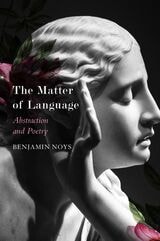
The Matter of Language
Abstraction and PoetryBenjamin Noys
Seagull Books, 2023
If the twentieth century was the century in which language was at the center of thought, the twenty-first century has, so far, been the century of matter. The Matter of Language is a critical intervention that aims to return to the relationship between language and matter to think of our present moment as one dominated by abstractions that rule our lives. In a series of dated chapters, that form punctual moments of intervention, this book both rehabilitates key thinkers, like Marx, Freud, and Saussure, and engages with poetic thinking on matter in David Jones, Diane di Prima, William Blake, Leslie Kaplan, and others. It is a matter of understanding language as a site of struggle, which is intimately bound to the material but also crucial in formulating and expressing the material and the abstractions that shape language and matter. Working between theory and poetry, The Matter of Language reconceives notions of alienation and class struggle as essential modes of reading and analysis for our fractured present.
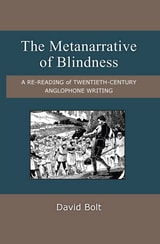
The Metanarrative of Blindness
A Re-reading of Twentieth-Century Anglophone WritingDavid Bolt
University of Michigan Press, 2013
Although the theme of blindness occurs frequently in literature, literary criticism has rarely engaged the experiential knowledge of people with visual impairments. The Metanarrative of Blindness counters this trend by bringing to readings of twentieth-century works in English a perspective appreciative of impairment and disability. Author David Bolt examines representations of blindness in more than forty literary works, including writing by Kipling, Joyce, Synge, Orwell, H. G. Wells, Susan Sontag, and Stephen King, shedding light on the deficiencies of these representations and sometimes revealing an uncomfortable resonance with the Anglo-American science of eugenics.
What connects these seemingly disparate works is what Bolt calls “the metanarrative of blindness,” a narrative steeped in mythology and with deep roots in Western culture. Bolt examines literary representations of blindness using the analytical tools of disability studies in both the humanities and social sciences. His readings are also broadly appreciative of personal, social, and cultural aspects of disability, with the aim of bringing literary scholars to the growing discipline of disability studies, and vice versa. This interdisciplinary monograph is relevant to people working in literary studies, disability studies, psychology, sociology, applied linguistics, life writing, and cultural studies, as well as those with a general interest in education and representations of blindness.
The Midwestern Pastoral
Place and Landscape in Literature of the American HeartlandWilliam Barillas
Ohio University Press, 2006
The Miniaturists
Barbara Browning
Duke University Press, 2022
The Modernist Masquerade
Stylizing Life, Literature, and Costumes in RussiaColleen McQuillen
University of Wisconsin Press, 2013