Results by title
914 books match the query 'Medieval' and 244 start with t
TEXT
Transactions of the Society for Textual Scholarship, Volume 7D. C. Greetham and W. Speed Hill, Editors
University of Michigan Press, 1994
Tales of Times Now Past
Sixty-Two Stories from a Medieval Japanese CollectionMarian Ury
University of Michigan Press, 1993
Tales of a Minstrel of Reims in the Thirteenth Century
Samuel N. Rosenberg
Catholic University of America Press, 2021
Talk and Textual Production in Medieval England
Marisa Libbon
The Ohio State University Press, 2021
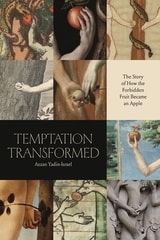
Temptation Transformed
The Story of How the Forbidden Fruit Became an AppleAzzan Yadin-Israel
University of Chicago Press, 2022
How did the apple, unmentioned by the Bible, become the dominant symbol of temptation, sin, and the Fall? Temptation Transformed pursues this mystery across art and religious history, uncovering where, when, and why the forbidden fruit became an apple.
Azzan Yadin-Israel reveals that Eden’s fruit, once thought to be a fig or a grape, first appears as an apple in twelfth-century French art. He then traces this image back to its source in medieval storytelling. Though scholars often blame theologians for the apple, accounts of the Fall written in commonly spoken languages—French, German, and English—influenced a broader audience than cloistered Latin commentators. Azzan Yadin-Israel shows that, over time, the words for “fruit” in these languages narrowed until an apple in the Garden became self-evident. A wide-ranging study of early Christian thought, Renaissance art, and medieval languages, Temptation Transformed offers an eye-opening revisionist history of a central religious icon.
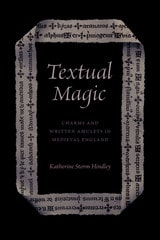
Textual Magic
Charms and Written Amulets in Medieval EnglandKatherine Storm Hindley
University of Chicago Press, 2023
Katherine Storm Hindley explores words at their most powerful: words that people expected would physically change the world. Medieval Europeans often resorted to the use of spoken or written charms to ensure health or fend off danger. Hindley draws on an unprecedented archive of more than a thousand such charms from medieval England—more than twice the number gathered, transcribed, and edited in previous studies and including many texts still unknown to specialists on this topic. Focusing on charms from 1100 to 1350 CE as well as previously unstudied texts in Latin, French, and English, Hindley addresses important questions of how people thought about language, belief, and power. She describes seven hundred years of dynamic, shifting cultural landscapes, where multiple languages, alphabets, and modes of transmission gained and lost their protective and healing power. Where previous scholarship has bemoaned a lack of continuity in the English charms, Hindley finds surprising links between languages and eras, all without losing sight of the extraordinary variety of the medieval charm tradition: a continuous, deeply rooted part of the English Middle Ages.
The Aeneid of Virgil
Virgil
University of Michigan Press, 1995
In this new translation Edward McCrorie has performed the difficult task of rendering Virgil's compact, dense Latin into fine, readable, modern English verse. The sometimes complex text is made clear and comprehensible even for first-time readers, and a glossary of names helps identify characters and place-names in the poem. The translation is well suited for students at all levels, and readers already familiar with Virgil will find many fresh images and ideas.
"A brilliant effort."--Robert Bly
"I admire the ambition of the project, and the generosity of many of the lines."--Robert Fagles
Edward McCrorie is Professor of English, Providence College. His poetry and translations of Latin verse have been widely published.
The Age of the Cathedrals
Art and Society, 980-1420Georges Duby
University of Chicago Press, 1981
"If Age of the Cathedrals has a fault, it is that Professor Duby knows too much, has too many new ideas and takes such a delight in setting them out. . . insights whiz to and fro like meteorites."—John Russell, New York Times Book Review
The Albigensian Crusades
Joseph R. Strayer
University of Michigan Press, 1992
The Alliterative Morte Arthure
The Owl and the Nightingale and Five Other Middle English PoemsJohn Gardner
Southern Illinois University Press, 1973
Poets of every age deal with roughly the same human emotions, and for the experienced reader poetry is interesting or not depending upon the moment-by-moment intensity of its appeal. This skillful rendering by John Gardner of seven Middle English poems into sparklingly modern verse translation—most of them for the first time—represents a selection of poems that, generally, have real artistic value but are so difficult to read in the original that they are not as well known as they deserve to be. The seven poems are: The Alliterative Morte Arthure, Winner and Waster, The Parliament of the Three Ages, Summer Sunday, The Debate of Body and Soul, The Thrush and the Nightingale,and The Owl and the Nightingale.
The first four poems represent high points in the alliterative renaissance of the fourteenth century. Morte Arthure,here translated for the first time in its entirety into modern verse, is the only heroic romance in Middle English—a work roughly in the same genre as the French Song of Roland. The other three poems have been included in the anthology as further poetic examples.
With his employment of extensive comments and notes on the poems, Gardner provides a wealth of aids to appreciation and understanding of his outstanding translations. The anthology will be of interest to general readers as well as to students.
The Anonymous Marie de France
R. Howard Bloch
University of Chicago Press, 2003
Evidence about Marie de France's life is so meager that we know next to nothing about her-not where she was born and to what rank, who her parents were, whether she was married or single, where she lived and might have traveled, whether she dwelled in cloister or at court, nor whether in England or France. In the face of this great writer's near anonymity, scholars have assumed her to be a simple, naive, and modest Christian figure. Bloch's claim, in contrast, is that Marie is among the most self-conscious, sophisticated, complicated, and disturbing figures of her time-the Joyce of the twelfth century. At a moment of great historical turning, the so-called Renaissance of the twelfth century, Marie was both a disrupter of prevailing cultural values and a founder of new ones. Her works, Bloch argues, reveal an author obsessed by writing, by memory, and by translation, and acutely aware not only of her role in the preservation of cultural memory, but of the transforming psychological, social, and political effects of writing within an oral tradition.
Marie's intervention lies in her obsession with the performative capacities of literature and in her acute awareness of the role of the subject in interpreting his or her own world. According to Bloch, Marie develops a theology of language in the Lais, which emphasize the impossibility of living in the flesh along with a social vision of feudalism in decline. She elaborates an ethics of language in the Fables, which, within the context of the court of Henry II, frame and form the urban values and legal institutions of the Anglo-Norman world. And in her Espurgatoire, she produces a startling examination of the afterlife which Bloch links to the English conquest and occupation of medieval Ireland.
With a penetrating glimpse into works such as these, The Anonymous Marie de France recovers the central achievements of one of the most pivotal figures in French literature. It is a study that will be of enormous value to medievalists, literary scholars, historians of France, and anyone interested in the advent of female authorship.
The Apocalypse in Reformation Nuremberg
Jews and Turks in Andreas Osiander’s WorldAndrew L. Thomas
University of Michigan Press, 2022
The Apostolic Penitentiary in Local Contexts
Gerhard Jaritz
Central European University Press, 2007
The Arcadia of Jacopo Sannazaro
A New Translation with CommentaryNicholas R. Jones
University of Michigan Press, 2025
Sannazaro’s Arcadia is widely recognized as a foundational text of pastoral poetry, humanism, and Italian literature. But the book itself has been largely inaccessible to English-language students and readers. This new translation uses contemporary American English to convey Arcadia’s youthful vigor, narrative energy, and poetic inventiveness. The extensive introduction and commentaries place Arcadia in the context of late fifteenth-century humanist thought and writing, as well as the complicated crisis of Naples in the years just before 1500. This translation is designed to facilitate the re-entry of Arcadia into scholarly discourse and general readership while outlining its lasting cultural influence on poetry, drama, art and music.
The Aristotelian Tradition of Natural Kinds and Its Demise
Stewart Umphrey
Catholic University of America Press, 2018
The Art of Conjecture
Nicholas of Cusa on KnowledgeClyde Lee Miller
Catholic University of America Press, 2021
The Art of Living in Avant-Garde Paris
Ethics and Self-Making in Dada, Simultanism, and SurrealismRachel Silveri
University of Chicago Press, 2026
With The Art of Living in Avant-Garde Paris, Rachel Silveri takes a fresh look at the desire to unify art and life, an ambition long regarded as foundational to the European historical avant-gardes. She reveals how many early twentieth-century artists saw their own everyday lives—their bodies, identities, and relationships—as a type of creative material and a central component to their avant-garde practice. These artists abandoned traditional forms of artmaking and venues of art viewing, instead aspiring to integrate art with everyday life, creating an “art of living.”
Considering Tristan Tzara’s performances of Dadaist identity, Sonia Delaunay’s simultaneous fashions and self-branding, and the collective endeavor to open and operate the Surrealist Research Bureau, Silveri offers a new narrative about how the artists of interwar Paris developed experiential life practices that resisted dominant forms of “lifestyle” and normative discourses surrounding gender, ethnicity, and office work. This book argues that ethical questions of “How should I live?” and “How should I relate to others?” were as important to the avant-garde as politics, and that aspirations to change the world played out in daily practices of self-making.
The Art of Memory
Frances A. Yates
University of Chicago Press, 1974
In The Art of Memory Yates traces this technique of memorization from its treatment by Greek orators through its Gothic transformations in the Middle Ages to the occult forms it took in the Renaissance, and finally to its use in the seventeenth century. This book, the first to relate the art of memory to the history of culture as a whole, was revolutionary when it first appeared and continues to mesmerize readers with its lucid and revelatory insights.
The Art of Vision
Ekphrasis in Medieval Literature and CultureEdited by Ethan Knapp, Andrew James Johnston, and Margitta Rouse
The Ohio State University Press, 2015
The essays in this volume highlight precisely the entanglements that ekphrasis suggests and/or rejects: not merely of word and image, but also of sign and thing, stasis and mobility, medieval and (early) modern, absence and presence, the rhetorical and the visual, thinking and feeling, knowledge and desire, and many more. The Art of Vision furthers our understanding of the complexities of medieval ekphrasis while also complicating later understandings of this device. As such, it offers a more diverse account of medieval ekphrasis than previous studies of medieval text–image relationships, which have normally focused on a single country, language, or even manuscript.
The Atheist's Bible
The Most Dangerous Book That Never ExistedGeorges Minois
University of Chicago Press, 2012
A comprehensive biography of the Treatise of the Three Impostors, a controversial nonexistent medieval book.
The Augustinian Epic, Petrarch to Milton
J. Christopher Warner
University of Michigan Press, 2005
The Augustinian Epic, Petrarch to Milton rewrites the history of the Renaissance Vergilian epic by incorporating the neo-Latin side of the story alongside the vernacular one, revealing how epics spoke to each other "across the language gap" and together comprised a single, "Augustinian tradition" of epic poetry. Beginning with Petrarch's Africa, Warner offers major new interpretations of Renaissance epics both famous and forgotten—from Milton's Paradise Lost to a Latin Christiad by his near-contemporary, Alexander Ross—thereby shedding new light on the development of the epic genre. For advanced undergraduate students, graduate students, and scholars in the fields of Italian, English, and Comparative literatures as well as the Classics and the history of religion and literature.
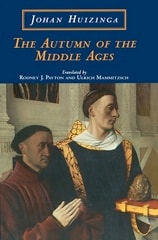
The Autumn of the Middle Ages
Johan Huizinga
University of Chicago Press, 1996
The Autumn of the Middle Ages is Johan Huizinga's classic portrait of life, thought, and art in fourteenth- and fifteenth-century France and the Netherlands. Few who have read this book in English realize that The Waning of the Middle Ages, the only previous translation, is vastly different from the original Dutch, and incompatible will all other European-language translations.
For Huizinga, the fourteenth- and fifteenth-century marked not the birth of a dramatically new era in history—the Renaissance—but the fullest, ripest phase of medieval life and thought. However, his work was criticized both at home and in Europe for being "old-fashioned" and "too literary" when The Waning of the Middle Ages was first published in 1919. In the 1924 translation, Fritz Hopman adapted, reduced and altered the Dutch edition—softening Huizinga's passionate arguments, dulling his nuances, and eliminating theoretical passages. He dropped many passages Huizinga had quoted in their original old French. Additionally, chapters were rearranged, all references were dropped, and mistranslations were introduced.
This translation corrects such errors, recreating the second Dutch edition which represents Huizinga's thinking at its most important stage. Everything that was dropped or rearranged has been restored. Prose quotations appear in French, with translations preprinted at the bottom of the page, mistranslations have been corrected.
"The advantages of the new translation are so many. . . . It is one of the greatest, as well as one of the most enthralling, historical classics of the twentieth century, and everyone will surely want to read it in the form that was obviously intended by the author." —Francis Haskell, New York Review of Books
"A once pathbreaking piece of historical interpretation. . . . This new translation will no doubt bring Huizinga and his pioneering work back into the discussion of historical interpretation." —Rosamond McKitterick, New York Times Book Review
The Beginnings of Western Science
The European Scientific Tradition in Philosophical, Religious, and Institutional Context, Prehistory to A.D. 1450, Second EditionDavid C. Lindberg
University of Chicago Press, 2008
The Beginnings of Western Science is a landmark, the best book to ever to present a unified account of both ancient and medieval science in a single volume. Chronicling the development of scientific ideas, practices, and institutions from pre-Socratic Greek philosophy to late-Medieval scholasticism, David C. Lindberg surveys all the most important themes in the history of science, including developments in cosmology, astronomy, mechanics, optics, alchemy, natural history, and medicine. In addition, he offers an illuminating account of the transmission of Greek science to medieval Islam and subsequently to medieval Europe.
The Birth of Purgatory
Jacques Le Goff
University of Chicago Press, 1984
The Birth of Theory
Andrew Cole
University of Chicago Press, 2014
By uncovering these theoretical filiations across time, The Birth of Theory will not only change the way we read Hegel, but also the way we think about the histories of theory. With chapters that powerfully reanimate the overly familiar topics of ideology, commodity fetishism, and political economy, along with a groundbreaking reinterpretation of Hegel’s famous master/slave dialectic, The Birth of Theory places the disciplines of philosophy, literature, and history in conversation with one another in an unprecedented way. Daring to reconcile the sworn enemies of Hegelianism and Deleuzianism, this timely book will revitalize dialectics for the twenty-first century.
The Birth of the Archive
A History of KnowledgeMarkus Friedrich, translated by John Noël Dillon
University of Michigan Press, 2018
Friedrich provides an essential background to the history of archives over the centuries and enriches the story of their evolution with chapters on key sociocultural aspects of European archival culture. He discusses their meaning and symbolism in European thought, early modern conceptions of the archive’s function, and questions of access and usability. Exploring the close, often vexed relationship between archives and political power, Friedrich illustrates the vulnerability of archives to political upheaval and war. He concludes with an introspective look at how historians used their knowledge of and work with archives to create distinct representations of themselves and their craft.
The Birth of the Archive engages with scholarship in political history, the history of mentalities, conceptions of space, historiography, and the history of everyday life in early modern Europe. It has much to offer for specialists and scholars, while the jargon-free prose of this translation is also accessible to the general reader.
The Bishop's Burden
Reforming the Catholic Church in Early Modern ItalyCeleste McNamara
Catholic University of America Press, 2020
The Black Death in Egypt and England
A Comparative StudyBy Stuart J. Borsch
University of Texas Press, 2005
Throughout the fourteenth century AD/eighth century H, waves of plague swept out of Central Asia and decimated populations from China to Iceland. So devastating was the Black Death across the Old World that some historians have compared its effects to those of a nuclear holocaust. As countries began to recover from the plague during the following century, sharp contrasts arose between the East, where societies slumped into long-term economic and social decline, and the West, where technological and social innovation set the stage for Europe's dominance into the twentieth century. Why were there such opposite outcomes from the same catastrophic event?
In contrast to previous studies that have looked to differences between Islam and Christianity for the solution to the puzzle, this pioneering work proposes that a country's system of landholding primarily determined how successfully it recovered from the calamity of the Black Death. Stuart Borsch compares the specific cases of Egypt and England, countries whose economies were based in agriculture and whose pre-plague levels of total and agrarian gross domestic product were roughly equivalent. Undertaking a thorough analysis of medieval economic data, he cogently explains why Egypt's centralized and urban landholding system was unable to adapt to massive depopulation, while England's localized and rural landholding system had fully recovered by the year 1500.
The Black Death
A Chronicle of the PlagueJohannes Nohl
Westholme Publishing, 2005
A History of the Most Catastrophic Plague Through Contemporary Accounts and How Humans Reacted
Hailed by the New York Times as "unusually interesting both as history and sociological study," The Black Death: A Chronicle of the Plague traces the ebb and flow of European pandemics over the course of centuries through translations of contemporary accounts. Originally published in 1926 and now in paperback for the first time, Nohl's volume is unique for its geographical and historical scope as well as its combination of detailed accounts and overarching contemporary views of the history of the plague in Europe, a disease that claimed nearly 40 million people during the fourteenth century alone. With current concerns about pandemics, The Black Death provides lessons on how humans reacted to and survived catastrophic loss of life to disease.
Contents
Preface
1. The Aspect of the Plague
2. The Precursors of the Plague
3. The Medical Profession and the Plague
4. Plague Remedies
5. Administrative Precautions
6. Attitude of the Church
7. The Diabolical Element of the Plague
8. Persecutions of the Jews
9. The Erotic Element of the Plague
10. The Flagellants
11. Choreomania and Children's Pilgrimages
12. Life Victorious
Bibliography
Geographical Index
Index of Persons
The Black Widows of the Eternal City
The True Story of Rome's Most Infamous PoisonersCraig A. Monson
University of Michigan Press, 2020
In the present study, Craig A. Monson takes advantage of a recent discovery—the 1,450-page notary’s transcript of the 1659 investigation. It is supplemented here by many ancillary archival sources, unknown to all previous writers. Since the story of Gironima Spana and the would-be widows is partially about what people believed to be true, however, this investigation also juxtaposes some of the “alternative facts” from earlier, sensational accounts with what the notary’s transcript and other, more reliable archival documents reveal.
Written in a style that avoids arcane idioms and specialist jargon, the book can potentially speak to students and general readers interested in seventeenth-century social history and gender issues. It rewrites the life story of Gironima Spana (largely unknown until now), who has dominated all earlier accounts, usually in caricatures that reiterate the tropes of witchcraft. It also concentrates on the dozen other widows whose stories could be the most recovered from archival sources and whom Spana had totally eclipsed in earlier accounts. Most were women “of a very ordinary sort” (prostitutes; beggars; wives of butchers, barbers, dyers, lineners, innkeepers), the kinds of women commonly lost to history. The book seeks to explain why some women were hanged (only six, in fact, most of whom may not have directly poisoned anyone), while dozens of others who did poison their husbands escaped the gallows and, in some cases, were not even interrogated. It also reveals what happened to these other alleged perpetrators, whose fates have remained unknown until now. Other purported culprits, about whom less complete pictures emerge, are briefly discussed in an appendix.
The study incorporates illustrations of archival manuscripts to demonstrate the challenges of deciphering them and illustrates “scenes of the crime” and other important locations, identified on seventeenth-century, bird’s eye-perspective views of Rome and in modern photographs. It also includes GPS coordinates for any who might wish to revisit the sites.
The Body in Mystery
The Political Theology of the Corpus Mysticum in the Literature of Reformation EnglandJennifer R. Rust
Northwestern University Press, 2013
The Book of Emperors
A Translation of the Middle High German KaiserchronikHenry A. Myers
West Virginia University Press, 2013
The Kaiserchronik (c.1152–1165) is the first verse chronicle to have been written in a language other than Latin. This story recounts the exploits of the Roman, Byzantine, Carolingian, and Holy Roman kings and rulers, from the establishment of Rome to the start of the Second Crusade. As an early example of popular history, it was written for a non-monastic audience who would have preferred to read, or may only have been able to read, in German. As a rhymed chronicle, its combined use of the styles of language found within a vernacular epic and a factual treaty was a German innovation. The Book of Emperors is the first complete translation of the Kaiserchronik from Middle High German to English. It is a rich resource not only for medieval German scholars and students, but also for those working in early cultural studies. It brings together an understanding of the conception of kingship in the German Middle Ages, from the relationship between emperor and king, to the moral, theological, and legal foundations of claims and legitimacy and the medieval epistemological approaches to historiography. This translation includes a substantial introduction that discusses the historical and philological context of the work, as well as the themes of power and kingship. Each chapter begins with a brief introduction that distinguishes historical truths from the epic fiction found within the original text.
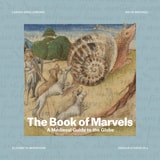
The Book of Marvels
A Medieval Guide to the GlobeLarisa Grollemond
J. Paul Getty Trust, The, 2024
From the classical encyclopedias of Pliny to famous tales such as The Travels of Marco Polo, historical travel writing has had a lasting impact, despite the fact that it was based on a curious mixture of truth, legend, and outright superstition. One foundational medieval source that expands on the ancient idea of the “wonders of the world” is the fifteenth-century French Book of the Marvels of the World, an illustrated guide to the globe filled with oddities, curiosities, and wonders—tales of fantasy and reality intended for the medieval armchair traveler. The fifty-six locales featured in the manuscript are presented in a manner that suggests authority and objectivity but are rife with stereotypes and mischaracterizations, meant to simultaneously instill a sense of wonder and fear in readers.
In The Book of Marvels, the authors explore the tradition of encyclopedias and travel writing, examining the various sources for geographic knowledge in the Middle Ages. They look closely at the manuscript copies of the French text and its complex images, delving into their origins, style, content, and meaning. Ultimately, this volume seeks to unpack how medieval white Christian Europeans saw their world and how the fear of difference—so pervasive in society today—is part of a long tradition stretching back millennia.
This volume is published to accompany an exhibition on view at the J. Paul Getty Museum at the Getty Center from June 11 to September 1, 2024, and at the Morgan Library & Museum from January 24 to May 25, 2025.
The Book of Pontiffs of the Church of Ravenna (Medieval Texts in Translation)
Deborah Mauskopf Agnellus of Ravenna
Catholic University of America Press, 2004
The Book of Settlements
LandnamabokHerman Palsson
University of Manitoba Press, 2007
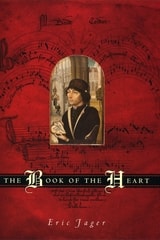
The Book of the Heart
Eric Jager
University of Chicago Press, 2000
Eric Jager traces the history and psychology of the self-as-text concept from antiquity to the modern day. He focuses especially on the Middle Ages, when the metaphor of a "book of the heart" modeled on the manuscript codex attained its most vivid expressions in literature and art. For instance, medieval saints' legends tell of martyrs whose hearts recorded divine inscriptions; lyrics and romances feature lovers whose hearts are inscribed with their passion; paintings depict hearts as books; and medieval scribes even produced manuscript codices shaped like hearts.
"The Book of the Heart provides a fresh perspective on the influence of the book as artifact on our language and culture. Reading this book broadens our appreciation of the relationship between things and ideas."—Henry Petroski, author of The Book on the Bookshelf
The Booke of Ovyde Named Methamorphose
William Caxton
Bodleian Library Publishing, 2013
The Boswell Thesis
Essays on Christianity, Social Tolerance, and HomosexualityEdited by Mathew Kuefler
University of Chicago Press, 2005
The essays in this magnificent volume examine a variety of aspects of Boswell's interpretation of events in the development of sexuality from Classical Antiquity through the Middle Ages, including a Roman emperor's love letters to another man; suspicions of sodomy among medieval monks, knights, and crusaders; and the gender-bending visions of Christian saints and mystics. Also included are discussions of Boswell's career, including his influence among gay and lesbian Christians and his role in academic debates between essentialists and social constructionists.
Elegant and thought-provoking, this collection provides a fitting twenty-fifth anniversary tribute to the incalculable influence of Christianity, Social Tolerance, and Homosexuality and its author.

The Brummer Collection of Medieval Art
Duke University Museum of ArtCaroline Bruzelius and with Jill Meredith
Duke University Press, 1991
Five studies by leading art scholars focus on key works in the collection and contribute to a new understanding of the origins of many of the pieces. Two introductory essays comment on the character of the collection as a whole, its acquisition by Duke University, and its conservation. Finally, the catalog section discusses the more important pieces in the collection and is followed by a checklist of entries and smaller photographs of all other objects.
Contributors. Ilene H. Forsyth, Jean M. French, Dorothy F. Glass, Dieter Kimpel, Jill Meredith, Linda S. Roundhill
The Byzantine Art of War
Michael J. Decker
Westholme Publishing, 2013
The Byzantine Art of War explores the military history of the thousand-year empire of the eastern Mediterranean, Byzantium. Throughout its history the empire faced a multitude of challenges from foreign invaders seeking to plunder its wealth and to occupy its lands, from the deadly Hunnic hordes of Attila, to the Arab armies of Islam, to the western Crusaders bent on carving out a place in the empire or its former lands. In order to survive the Byzantines relied on their army that was for centuries the only standing, professional force in Europe. Leadership provided another key to survival; Byzantine society produced a number of capable strategic thinkers and tacticians—and several brilliant ones. These officers maintained a level of professionalism and organization inherited and adapted from Roman models. The innovations of the Byzantine military reforms of the sixth century included the use of steppe nomad equipment and tactics, the most important of which was the refinement of the Roman mounted archer. Strategy and tactics evolved in the face of victory and defeat; the shock of the Arab conquests led to a sharp decline in the number and quality of imperial forces. By the eighth and ninth centuries Byzantine commanders mastered the art of the small war, waging guerrilla campaigns, raids, and flying column attacks that injured the enemy but avoided the decisive confrontation the empire was no longer capable of winning. A century later they began the most sustained, glorious military expansion of their history. This work further sketches the key campaigns, battles, and sieges that illustrate Byzantine military doctrine, vital changes from one era to another, the composition of forces and the major victories and defeats that defined the territory and material well-being of its citizens. Through a summary of their strategies, tactics, and innovations in the tools of war, the book closes with an analysis of the contributions of this remarkable empire to world military history.
The Byzantine Empire
Charles W. C. Oman
Westholme Publishing, 2009
The Byzantine Empire centered at the city of Constantinople grew from a small Greek colonial village into the capital of the Eastern Roman empire. Ultimately, Byzantium represented what remained of Roman power in late antiquity. Established as the seat of Constantine the Great in 328 AD, the empire grew and matured over the centuries, reaching its pinnacle in the sixth century during the reign of Justinian and his loyal general, Belisarius. In the process of empire building, Byzantium battled the Goths, the Germanic tribes, the Persians, the Lombards, and ultimately the Islamic armies of the Near East. Byzantium remained a buffer against Muslim expansion, and by the time the remnants of the empire and the city of Constantinople were finally conquered by the Ottomans in the fourteenth century, European states to the west were able to resist any further encroachment.
In tracing the empire’s history from its humble beginnings through its ascendancy and final decay, distinguished historian Charles W. C. Oman blends his engaging narrative style with his impeccable command of primary source material. Here, Oman dispels the misconception that the Byzantine court was one plagued by corruption and intrigue—a canard that added “Byzantine” to the English language; instead, Byzantium was one of the most stable governments of late antiquity. Never before reprinted in paperback, The Byzantine Empire is a model of concise popular scholarship.
The Byzantine Empire (Revised Edition)
Robert Browning
Catholic University of America Press, 1992
The Chastity Plot
Lisabeth During
University of Chicago Press, 2021
Examining literature, religion, psychoanalysis, and cultural history from antiquity through the middle ages and into modernity, During provides a sweeping history of chastity and insight into its subversive potential. Instead of simply asking what chastity is, During considers what chastity can do, why we should care, and how it might provide a productive disruption, generating new ways of thinking about sex, integrity, and freedom.
The Christian Structure of Politics
The De Regno of Thomas AquinasWilliam McCormick, SJ
Catholic University of America Press, 2022
The Chronicle of Andres
Leah Abbot William of Andres
Catholic University of America Press, 2017
In 1220 Abbot William of Andres, a monastery halfway between Calais and Saint-Omer on the busy road from London to Paris, sat down to write an ambitious cartulary-chronicle for his monastery. Although his work was unfinished at his death, William’s account is an unpolished gem of medieval historical writing. The Chronicle of Andres details the history of his monastery from its foundation in the late eleventh century through the early part of 1234. Early in the thirteenth century, the monks decided to sue for their freedom and appointed William as their protector. His travels took him on a 4000 km, four-year journey, during which he was befriended by Innocent III, among others, and where he learned to negotiate the labyrinthine system of the ecclesiastical courts. Upon winning his case, he was elected abbot on his return to Andres and enjoyed a flourishing career thereafter. A decade after his victory, William decided to put the history of the monastery on a firm footing.
This text not only offers insight into the practice of medieval canon law (from the perspective of a well-informed man with legal training), but also ecclesiastical policies, the dynamics of life within a monastery, ethnicity and linguistic diversity, and rural life. It is comparable in its frankness to Jocelin of Brakelord’s Chronicle of Bury. Because William drew on the historiographic tradition of the Southern Low Countries, his text also offers some insights into this subject, thus composing a broad picture of the medieval European monastic world.
The Clerical Dilemma
Peter of Blois and Literate Culture in the Twelfth CenturyJohn D. Cotts
Catholic University of America Press, 2009
The Community of St. Cuthbert in the Late Tenth Century
The Chester-le-Street Additions to Durham Cathedral Library A.IV.19Karen Louise Jolly
The Ohio State University Press, 2012
The Community of St. Cuthbert in the Late Tenth Century: The Chester-le-Street Additions to Durham Cathedral Library A.IV.19 reveals the dynamic role a seemingly marginalized community played during a defining period for the emergence of English religious identity. Based on her new critical edition of additions made to Durham Cathedral Library A.IV.19 and by questioning the purpose of those late tenth-century additions, Karen Louise Jolly is able to uncover much about the Chester-le-Street scribes and their tumultuous time, rife as it was with various political tensions, from Vikings and local Northumbrian nobles to an increasingly dominant West Saxon monarchy.
Why, for instance, would a priest laboriously insert an Old English gloss above every Latin word in a collection of prayers intended to be performed in Latin? What motivated the same English scribe to include Irish-derived Christian materials in the manuscript, including prayers invoking the archangel Panchiel to clear birds from a field?
The Complete Danteworlds
A Reader's Guide to the Divine ComedyGuy P. Raffa
University of Chicago Press, 2009
Dante Alighieri’s Divine Comedy has, despite its enormous popularity and importance, often stymied readers with its multitudinous characters, references, and themes. But until the publication in 2007 of Guy Raffa’s guide to the Inferno, students lacked a suitable resource to help them navigate Dante’s underworld. With this new guide to the entire Divine Comedy, Raffa provides readers—experts in the Middle Ages and Renaissance, Dante neophytes, and everyone in between—with a map of the entire poem, from the lowest circle of Hell to the highest sphere of Paradise.
Based on Raffa’s original research and his many years of teaching the poem to undergraduates, The CompleteDanteworlds charts a simultaneously geographical and textual journey, canto by canto, region by region, adhering closely to the path taken by Dante himself through Hell, Purgatory, and Paradise. This invaluable reference also features study questions, illustrations of the realms, and regional summaries. Interpreting Dante’s poem and his sources, Raffa fashions detailed entries on each character encountered as well as on many significant historical, religious, and cultural allusions.
The Complete Works of Liudprand of Cremona (Medieval Texts in Translation)
Paolo Liudprand of Cremona
Catholic University of America Press, 2007
The Construction of Gothic Cathedrals
A Study of Medieval Vault ErectionJohn Fitchen
University of Chicago Press, 1981
In The Construction of Gothic Cathedrals, John Fitchen systematically walks readers through the process of erecting the great edifices of the Gothic era. He explains the building equipment and falsework needed, the actual operations undertaken, and the sequence of these operations as specifically as they can be deduced today. In the absence of contemporary accounts of the techniques used by medieval builders, Fitchen's study brilliantly pieces together clues from manuscript illuminations, pictorial representations, and the fabrics of the building themselves. The result is the clearest picture available of the innovations and techniques that enabled these buildings, which still generate awe today, to rise majestically above the low buildings of their surrounding towns. It's a book that will enthrall readers of history, and one that, as Progressive Architecture noted, "no student of architecture should miss."