Results by title
132 books match the query 'Myth' and 43 start with t
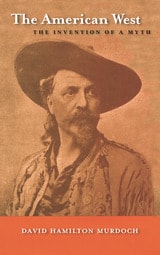
The American West
The Invention Of A MythDavid Hamilton Murdoch
University of Nevada Press, 2001
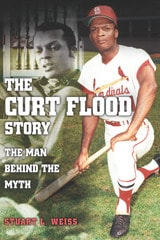
The Curt Flood Story
The Man behind the MythStuart L. Weiss
University of Missouri Press, 2018
Curt Flood, former star center fielder for the St. Louis Cardinals, is a hero to many for selflessly sacrificing his career to challenge the legality of baseball’s reserve system. Although he lost his case before the Supreme Court, he has become for many a martyr in the eventually successful battle for free agency. Sportswriters and fans alike have helped to paint a picture of Flood as a larger-than-life figure, a portrait that, unhappily, cannot stand closer inspection. This book reveals the real Curt Flood—more man than myth.
Flood stirred up a hornet’s nest by refusing to be traded from the Cardinals to the Philadelphia Phillies after the 1969 season, arguing that Major League Baseball’s reserve system reduced him to the status of bondage. Flood decided to resist a system in which his contract could be traded without his consent and in which he was not at liberty to negotiate his services in an open market. Stuart Weiss examines the man behind the decision, exploring the span of Flood’s life and shedding light on his relationships with those who helped shape his determination to sue baseball and providing a new perspective on the lawsuit that found its way to the U.S. Supreme Court.
Although a superb player, Flood was known to be temperamental and sensitive; in suing Major League Baseball he transformed his grievances against the Cardinals front office into an attack on how the business of big-league ball was conducted. Weiss shows that Flood was far from the stereotypical “dumb jock” but was rather a proud, multifaceted black man in a business run by white moguls. By illuminating Flood’s private side, rarely seen by the public, he reveals how Flood misled a gullible press on a regular basis and how his 1971 memoir, The Way It Is, didn’t tell it the way it really was.
Drawing on previously untapped sources, Weiss examines more fully and deeply than other writers the complexities of Flood’s decision to pursue his lawsuit—and demonstrates that the picture of Flood as a martyr for free agency is a myth. He suggests why, of all the players traded or sold through the years, it was Flood who brought this challenge. Weiss also explains how Flood’s battle against the reserve system cannot be understood in isolation from the personal experiences that precipitated it, such as his youth in a dysfunctional home, his troubled first marriage, his financial problems, and his unwavering commitment to the Cardinals.
The Curt Flood Story is a realistic account of an eloquent man who presented a warm, even vulnerable, face to the public as well as to friends, while hiding his inner furies. It shows that Flood was neither a hero nor a martyr but a victim of unique circumstances and his own life.
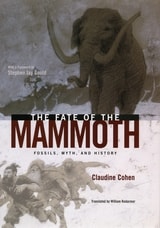
The Fate of the Mammoth
Fossils, Myth, and HistoryClaudine Cohen
University of Chicago Press, 2002
Cohen uses the mammoth and the theories that naturalists constructed around it to illuminate wider issues in the history of science, showing how changing views about a single object reveal the development of scientific methods, practices, and ideas. How are fossils discovered, reconstructed, displayed, and interpreted? What stories are told about them, by whom, and how do these stories reflect the cultures and societies in which they are told?
To find out, Cohen takes us on a grand tour of the study of mammoth remains, from England, Germany, and France to Russia and America, and from the depths of Africa to the frozen frontiers of Alaska and Siberia, where intact mammoth corpses have been discovered in the permafrost. Along the way, she shows how paleontologists draw on myth and history, as well as on scientific evidence, to explore the deep history of the earth and of life. Cohen takes her history from the sixteenth century right up to the present, when researchers are using molecular biology to retrieve mammoth DNA, calling up dreams of cloning the mammoth and one day seeing herds of woolly mammoths roaming the frozen steppes.
The Inverted Conquest
The Myth of Modernity and the Transatlantic Onset of ModernismAlejandro Mejias-Lopez
Vanderbilt University Press, 2009
Expanding Bourdieu's concepts of cultural field and symbolic capital beyond national boundaries, The Inverted Conquest shows how modernismo originated in Latin America and traveled to Spain, where it provoked a complete renovation of Spanish letters and contributed to a national identity crisis. In the process, described by Latin American writers as a reversal of colonial relations, modernismo wrested literary and cultural authority away from Spain, moving the cultural center of the Hispanic world to the Americas.
Mejias-Lopez further reveals how Spanish American modernistas confronted the racial supremacist claims and homogenizing force of an Anglo-American modernity that defined the Hispanic as un-modern. Constructing a new Hispanic genealogy, modernistas wrote Spain as the birthplace of modernity and themselves as the true bearers of the modern spirit, moved by the pursuit of knowledge, cosmopolitanism, and cultural miscegenation, rather than technology, consumption, and scientific theories of racial purity.
Bound by the intrinsic limits of neocolonial and postcolonial theories, scholarship has been unwilling or unable to explore modernismo's profound implications for our understanding of Western modernities.
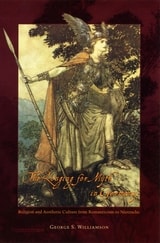
The Longing for Myth in Germany
Religion and Aesthetic Culture from Romanticism to NietzscheGeorge S. Williamson
University of Chicago Press, 2004
Through readings of key intellectuals ranging from Herder and Schelling to Wagner and Nietzsche, Williamson highlights three crucial factors in the emergence of the German engagement with myth: the tradition of Philhellenist neohumanism, a critique of contemporary aesthetic and public life as dominated by private interests, and a rejection of the Bible by many Protestant scholars as the product of a foreign, "Oriental" culture. According to Williamson, the discourse on myth in Germany remained bound up with problems of Protestant theology and confessional conflict through the nineteenth century and beyond.
A compelling adventure in intellectual history, this study uncovers the foundations of Germany's fascination with myth and its enduring cultural legacy.
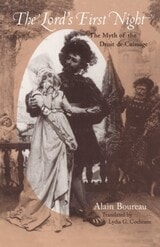
The Lord's First Night
The Myth of the Droit de CuissageAlain Boureau
University of Chicago Press, 1998
But, as Alain Boureau elegantly demonstrates in this book, the droit de cuissage is a myth. Under contextual examination, nearly all the supposed evidence for this custom melts away—yet belief in it has survived for seven hundred years. Boureau shows how each era turned the mythical custom to its own ends. For instance, in the late Middle Ages, monarchists raised the specter of the droit de cuissage to rally public opinion against local lords, and partisans of the French Revolution pointed to it as proof of the corruption of the Ancien Régime.
A fascinating case study of the folklore of sexuality, The Lord's First Night also offers evocative insights into popular (mis)conceptions of the Middle Ages.
On the French edition: "A richly informative study of attitudes to the past and the manipulation of history down the ages."—Peter Linehan, Times Literary Supplement

The Mirror of Spain, 1500-1700
The Formation of a MythJ. N. Hillgarth
University of Michigan Press, 2000
In the first of the volume's four parts, the author discusses the reasons--geographic, political, and religious--why Spain has proved a hard country to understand. Hillgarth looks at travelers to Spain, from pilgrims to diplomats, spies, exiles, and foreign residents. In its second part, special attention is devoted to the interaction between Christians, Jews, and Muslims, including Jewish and Muslim exiles and secret Jews within Spain.
In its third section, The Mirror of Spain explores reactions to Spain by those who saw it from the outside, the Italians, Dutch, French, and English. One chapter deals with the English, Scottish, and Irish Catholics, who, like the Jewish and Muslim exiles, played a double role in that they were at once "insiders" and outsiders. Finally, Hillgarth attempts to show how two crucial centuries have affected the way Spain has been seen down to the present.
The Mirror of Spain draws on a wide range of sources in different languages. It relies on documents in the Public Record Office and the British Library, the Archivo General de Simancas and the collections of the colleges founded by exiles in Spain, and on major libraries in Venice and Jerusalem. The volume will be of interest to a broad spectrum of scholars--to medievalists, historians of Spain, scholars of political and literary thought, and all those interested in notions of national identity.
J. N. Hillgarth has taught for many years at the University of Toronto and the Pontifical Institute of Mediaeval Studies. He is a Fellow of the British Academy and has received awards and honors from a wide variety of distinguished institutions in Europe and North America.

The Monster with a Thousand Faces
Guises of the Vampire in Myth and LiteratureBrian J. Frost
University of Wisconsin Press, 1989
The Myth of Achievement Tests
The GED and the Role of Character in American LifeEdited by James J. Heckman, John Eric Humphries, and Tim Kautz
University of Chicago Press, 2013
The Myth of Achievement Tests shows that achievement tests like the GED fail to measure important life skills. James J. Heckman, John Eric Humphries, Tim Kautz, and a group of scholars offer an in-depth exploration of how the GED came to be used throughout the United States and why our reliance on it is dangerous. Drawing on decades of research, the authors show that, while GED recipients score as well on achievement tests as high school graduates who do not enroll in college, high school graduates vastly outperform GED recipients in terms of their earnings, employment opportunities, educational attainment, and health. The authors show that the differences in success between GED recipients and high school graduates are driven by character skills. Achievement tests like the GED do not adequately capture character skills like conscientiousness, perseverance, sociability, and curiosity. These skills are important in predicting a variety of life outcomes. They can be measured, and they can be taught.
Using the GED as a case study, the authors explore what achievement tests miss and show the dangers of an educational system based on them. They call for a return to an emphasis on character in our schools, our systems of accountability, and our national dialogue.
Contributors
Eric Grodsky, University of Wisconsin–Madison
Andrew Halpern-Manners, Indiana University Bloomington
Paul A. LaFontaine, Federal Communications Commission
Janice H. Laurence, Temple University
Lois M. Quinn, University of Wisconsin–Milwaukee
Pedro L. Rodríguez, Institute of Advanced Studies in Administration
John Robert Warren, University of Minnesota, Twin Cities
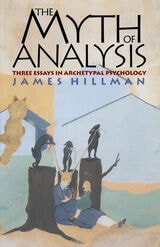
The Myth of Analysis
Three Essays in Archetypal PsychologyJames Hillman
Northwestern University Press, 1998
Originally published by Northwestern University Press in 1972, this work had a profound impact on a nation emerging self-aware from the 1960s, as well as on the era's burgeoning feminist movement. It remains a profound critique of therapy and the psychological viewpoint, and it is one of Hillman's most important and enduring works.

The Myth of Apollo and Daphne from Ovid to Quevedo
Love, Agon, and the GrotesqueMary E. Barnard
Duke University Press, 1987
The Myth of Coequal Branches
Restoring the Constitution’s Separation of FunctionsDavid J. Siemers
University of Missouri Press, 2026
The Myth of Democratic Failure
Why Political Institutions Are EfficientDonald A. Wittman
University of Chicago Press, 1995
Wittman first considers the characteristic of efficient markets—informed, rational participants competing for well-defined and easily transferred property rights—and explains how they operate in democratic politics. He then analyzes how specific political institutions are organized to operate efficiently. "Markets" such as the the Congress in the United States, bureaucracies, and pressure groups, he demonstrates, contribute to efficient political outcomes. He also provides a theory of institutional design to explain how these political "markets" arise. Finally, Wittman addresses the methodological shortcomings of analyses of political market failure, and offers his own suggestions for a more effective research strategy.
Ultimately, he demonstrates that nearly all of the arguments claiming that economic markets are efficient apply equally well to democratic political markets; and, conversely, that economic models of political failure are not more valid than the analogous arguments for economic market failure.
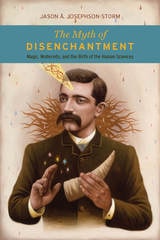
The Myth of Disenchantment
Magic, Modernity, and the Birth of the Human SciencesJason Ananda Josephson Storm
University of Chicago Press, 2017
Josephson-Storm traces the history of the myth of disenchantment in the births of philosophy, anthropology, sociology, folklore, psychoanalysis, and religious studies. Ironically, the myth of mythless modernity formed at the very time that Britain, France, and Germany were in the midst of occult and spiritualist revivals. Indeed, Josephson-Storm argues, these disciplines’ founding figures were not only aware of, but profoundly enmeshed in, the occult milieu; and it was specifically in response to this burgeoning culture of spirits and magic that they produced notions of a disenchanted world.
By providing a novel history of the human sciences and their connection to esotericism, The Myth of Disenchantment dispatches with most widely held accounts of modernity and its break from the premodern past.

The Myth of Emptiness and the New American Literature of Place
Wendy Harding
University of Iowa Press, 2014
In The Myth of Emptiness and the New American Literature of Place, Wendy Harding identifies an important recent development in the literature of place that corrects the misperceptions resulting from these tropes. Works by Rick Bass, Charles Bowden, Ellen Meloy, Jonathan Raban, Rebecca Solnit, and Robert Sullivan move away from the tradition of nature writing, with its emphasis on the solitary individual communing with nature in uninhabited places, to recognize the interactions of human and other-than-human presences in the land. In different ways, all six writers reveal a more historically complex relationship between Americans and their environments. In this new literature of place, writers revisit abandoned, threatened, or damaged sites that were once represented as devoid of human presence and dig deeper to reveal that they are in fact full of the signs of human activity. These writers are interested in the role of social, political, and cultural relationships and the traces they leave on the landscape.
Throughout her exploration, Harding adopts a transdisciplinary perspective that draws on the theories of geographers, historians, sociologists, and philosophers to understand the reasons for the enduring perception of emptiness in the American landscape and how this new literature of place works with and against these ideas. She reminds us that by understanding and integrating human impacts into accounts of the landscape, we are better equipped to fully reckon with the natural and cultural crisis that engulfs all landscapes today.
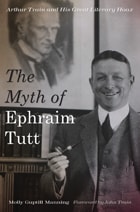
The Myth of Ephraim Tutt
Arthur Train and His Great Literary HoaxMolly Guptill Manning
University of Alabama Press, 2012
The Myth of Human Races
Alain F. Corcos
Michigan State University Press, 1997
The idea that human races exist is a socially constructed myth that has no grounding in science. Regardless of skin, hair, or eye color, stature or physiognomy, we are all of one species. Nonetheless, scientists, social scientists, and pseudo-scientists have, for three centuries, tried vainly to prove that distinctive and separate "races" of humanity exist. These protagonists of race theory have based their flawed research on one or more of five specious assumptions:
- humanity can be classified into groups using identifiable physical characteristics,
- human characteristics are transmitted "through the blood,"
- distinct human physical characteristics are inherited together,
- physical features can be linked to human behavior,
- human groups or "races" are by their very nature unequal and, therefore, they can be ranked in order of intellectual, moral, and cultural superiority.
The Myth of Human Races systematically dispels these fallacies and unravels the web of flawed research that has been woven to demonstrate the superiority of one group of people over another.
The Myth of Liberalism
John P. Safranek
Catholic University of America Press, 2015
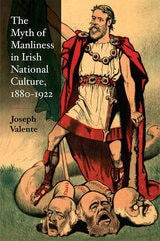
The Myth of Manliness in Irish National Culture, 1880-1922
Joseph Valente
University of Illinois Press, 2011
The Myth of Opportunity
Music, Labor, and Platforms in the Twenty-First CenturyEdiz Ozelkan
Rutgers University Press, 2027
Justin Bieber launched his music career on YouTube in 2007, Lil Nas X’s “Old Town Road” exploded on TikTok in 2019, and Oliver Anthony’s “Rich Men North of Richmond” soared to the top of the Billboard charts just two weeks after its YouTube debut in 2023. These viral successes inspire countless artists to upload music online, fueled by the promise that technology can democratize opportunity, but does this promise hold true?
The Myth of Opportunity: Music, Labor, and Platforms in the Twenty-First Century critically examines the myth of technology as a great equalizer in the music industry. While platforms like Spotify claim to empower artists, the reality is that rewards remain highly unequal. Through macroeconomic analysis and time series methodology, this book investigates how streaming services have reshaped opportunity from a labor perspective across professions, industries, and regions, offering a comprehensive, empirical view on the true impact of digital platforms on cultural production with a focus on music.
The Myth of Political Correctness
The Conservative Attack on Higher EducationJohn K. Wilson
Duke University Press, 1995
The phrase "political correctness" is on everyone’s lips, on radio and television, and in newspapers and magazines. The phenomenon itself, however, has been deceptively described. Wilson steps into the nation’s favorite cultural fray to reveal that many of the most widely publicized anecdotes about PC are in fact more myth than reality. Based on his own experience as a student and in-depth research, he shows what’s really going on beneath the hysteria and alarmism about political correctness and finds that the most disturbing examples of thought policing on campus have come from the right. The image of the college campus as a gulag of left-wing totalitarianism is false, argues Wilson, created largely through the exaggeration of deceptive stories by conservatives who hypocritically seek to silence their political opponents.
Many of today’s most controversial topics are here: multiculturalism, reverse discrimination, speech codes, date rape, and sexual harassment. So are the well-recognized protagonists in the debate: Dinesh D’Souza, William Bennett, and Lynne Cheney, among others. In lively fashion and in meticulous detail, Wilson compares fact to fiction and lays one myth after another to rest, revealing the double standard that allows "conservative correctness" on college campuses to go unchallenged.

The Myth of Pope Joan
Alain Boureau
University of Chicago Press, 2001
Or so the legend goes—a legend that was fabricated sometime in the thirteenth century, according to Alain Boureau, and which has persisted in one form or another down to the present day. In this fascinating saga of belief and rhetoric, politics and religion, Boureau investigates the historical and ecclesiastical circumstances under which the myth of Pope Joan was constructed and the different uses to which it was put over the centuries. He shows, for instance, how Catholic clerics justified the exclusion of women from the papacy and the priesthood by employing the myth in misogynist moral tales, only to find the popess they had created turned against them in anti-Catholic propaganda during the Reformation.

The Myth of Progress
Toward a Sustainable FutureTom Wessels
University Press of New England, 2013
The Myth of Progress
Toward a Sustainable FutureTom Wessels
Brandeis University Press, 2023
In this compelling, cogently argued, and acclaimed book, Tom Wessels demonstrates how our current path toward progress, based on continual economic expansion and inefficient use of resources, runs contrary to three foundational scientific laws that govern all complex natural systems. It is a myth, he contends, that progress depends on a growing economy. Wessels explains his theory with his three laws of sustainability: the law of limits to growth; the second law of thermodynamics, which exposes the dangers of increased energy consumption; and the law of self-organization, which results in the marvelous diversity of such highly evolved systems as the human body and complex ecosystems. Wessels argues that these laws, scientifically proven to sustain life in its myriad forms, have been cast aside since the eighteenth century, first by Western economists, political pragmatists, and governments attracted by the idea of unlimited growth, and more recently by a global economy dominated by large corporations, in which consolidation and oversimplification have created large-scale inefficiencies in both material and energy usage.
Wessels makes scientific theory readily accessible by offering examples of how the laws of sustainability function in the complex systems we can observe in the natural world around us. Demonstrating that all environmental problems have their source in a disregard for the laws of sustainability, he concludes with an impassioned argument for cultural change. This new edition has a new preface wherein the author regards The Myth of Progress as his most important work. It has been in constant demand since it was first published in 2006.

The Myth of Scientific Literacy
Shamos, Morris
Rutgers University Press, 1995
Why do we make every schoolchild and college student take science? Does every American really need to be scientifically literate? In this provocative book, Morris Shamos, a physicist and science educator of very broad experience, argues that universal scientific literacy is a futile goal, and urges a critical review of the purpose of general education in science. Shamos argues that a meaningful scientific literacy cannot be achieved in the first place, and the attempt is a misuse of human resources on a grand scale. He is skeptical about forecasts of Òcritical shortfalls in scientific manpowerÓ and about the motives behind crash programs to get more young people into the science pipeline. Finally, he is convinced that, as presently taught, the vast majority of students come out of science classes with neither an intellectual grasp nor a pragmatic appreciation of science.
Shamos advocates instead a practical science education curriculum that grants the impossibility of every American learning enough science to make independent judgments about major scientific issues. Rather than giving children the heavy diet of scientific terms and facts they now get, he would emphasize: an appreciation of science as an ongoing cultural enterprise; an awareness of technologyÕs impact on one's personal health, safety, and surroundings; and the need to use experts wisely in resolving science/society issues.
Whether you loved or hated your science classes, you will find Morris ShamosÕs arguments about the future of science education required reading. Teachers, parents, scientists, science educators, school administrators, legislators, and science and human resources policy analysts will be especially interested in this book.

The Myth of Water
Poems from the Life of Helen KellerJeanie Thompson
University of Alabama Press, 2016
Thompson’s artfully concatenated vignettes form a mosaic that maps the insightful mind behind the elegant and enigmatic persona Keller projected. Thompson takes readers on the journey of Keller’s life, from some of the thirty-seven countries she visited, including the British Isles, Europe, and Japan to the wellsprings of her emotional awakening and insight. The poems are paired with fascinating biographical anecdotes from Keller’s life and samplings from her writing, which infuse the work with richly-rewarding biographical detail.
The poems in The Myth of Water reveal the discerning subtlety, resiliency, and complexity of the person Thompson perceives Helen Keller to have been. Through a combination of natural intuition, manual signs, Braille alphabets, and lip reading, Keller came to grasp the revolving tapestry of the seasons and the infinite colors of human relationships.
Not a biography or a fictional retelling, The Myth of Water attempts to unlock what moved Keller to her life of service and self-examination. This is a deeply personal story of coming through—not overcoming—a double disability to a fully realized life in which a woman gives her heart to the world.
The Myth of the Addicted Army
Vietnam and the Modern War on DrugsJeremy Kuzmarov
University of Massachusetts Press, 2009
The image of the drug-addicted American soldier—disheveled, glassy-eyed, his uniform adorned with slogans of antiwar dissent—has long been associated with the Vietnam War. More specifically, it has persisted as an explanation for the U.S. defeat, the symbol of a demoralized army incapable of carrying out its military mission.
Yet as Jeremy Kuzmarov documents in this deeply researched book, popular assumptions about drug use in Vietnam are based more on myth than fact. Not only was alcohol the intoxicant of choice for most GIs, but the prevalence of other drugs varied enormously. Although marijuana use among troops increased over the course of the war, for the most part it remained confined to rear areas, and the use of highly addictive drugs like heroin was never as widespread as many imagined.
Like other cultural myths that emerged from the war, the concept of an addicted army was first advanced by war hawks seeking a scapegoat for the failure of U.S. policies in Vietnam, in this case one that could be linked to “permissive” liberal social policies and the excesses of the counterculture. But conservatives were not alone. Ironically, Kuzmarov shows, elements of the antiwar movement also promoted the myth, largely because of a presumed alliance between Asian drug traffickers and the Central Intelligence Agency. While this claim was not without foundation, as new archival evidence confirms, the left exaggerated the scope of addiction for its own political purposes.
Exploiting bipartisan concern over the perceived “drug crisis,” the Nixon administration in the early 1970s launched a bold new program of federal antidrug measures, especially in the international realm. Initially, the “War on Drugs” helped divert attention away from the failed quest for “peace with honor” in Southeast Asia. But once institutionalized, it continued to influence political discourse as well as U.S. drug policy in the decades that followed.
The Myth of the Amateur
A History of College Athletic ScholarshipsBy Ronald A. Smith
University of Texas Press, 2021
In this in-depth look at the heated debates over paying college athletes, Ronald A. Smith starts at the beginning: the first intercollegiate athletics competition—a crew regatta between Harvard and Yale—in 1852, when both teams received an all-expenses-paid vacation from a railroad magnate. This striking opening sets Smith on the path of a story filled with paradoxes and hypocrisies that plays out on the field, in meeting rooms, and in courtrooms—and that ultimately reveals that any insistence on amateurism is invalid, because these athletes have always been paid, one way or another.
From that first contest to athletes’ attempts to unionize and California’s 2019 Fair Pay to Play Act, Smith shows that, throughout the decades, undercover payments, hiring professional coaches, and breaking the NCAA’s rules on athletic scholarships have always been part of the game. He explores how the regulation of male and female student-athletes has shifted; how class, race, and gender played a role in these transitions; and how the case for amateurism evolved from a moral argument to one concerned with financially and legally protecting college sports and the NCAA. Timely and thought-provoking, The Myth of the Amateur is essential reading for college sports fans and scholars.
The Myth of the Imperial Presidency
How Public Opinion Checks the Unilateral ExecutiveDino P. Christenson and Douglas L. Kriner
University of Chicago Press, 2020
With robust empirical data and compelling case studies, the authors reveal the extent to which domestic public opinion limits executive might. Presidents are emboldened to pursue their own agendas when they enjoy strong public support, and constrained when they don’t, since unilateral action risks inciting political pushback, jeopardizing future initiatives, and further eroding their political capital. Although few Americans instinctively recoil against unilateralism, Congress and the courts can sway the public’s view via their criticism of unilateral policies. Thus, other branches can still check the executive branch through political means. As long as presidents are concerned with public opinion, Christenson and Kriner contend that fears of an imperial presidency are overblown.
The Myth of the Litigious Society
Why We Don't SueDavid M. Engel
University of Chicago Press, 2016
With this book, David M. Engel demolishes the myth that America is a litigious society. The sobering reality is that the vast majority of injury victims—more than nine out of ten—rely on their own resources, family and friends, and government programs to cover their losses. When real people experience serious injuries, they don’t respond as rational actors. Trauma and pain disrupt their thoughts, and potential claims are discouraged by negative stereotypes that pervade American television and popular culture. (Think Saul Goodman in Breaking Bad, who keeps a box of neck braces in his office to help clients exaggerate their injuries.) Cultural norms make preventable injuries appear inevitable—or the victim’s fault. We’re taught to accept setbacks stoically and not blame someone else. But this tendency to “lump it” doesn’t just hurt the victims; it hurts us all. As politicians continue to push reforms that miss the real problem, we risk losing these claims as a way to quickly identify unsafe products and practices. Because injuries disproportionately fall on people with fewer resources, the existing framework creates a social underclass whose needs must be met by government programs all citizens shoulder while shielding those who cause the harm.
It’s time for America to have a more responsible, blame-free discussion about injuries and the law. With The Myth of the Litigious Society, Engel takes readers clearly and powerfully through what we really know about injury victims and concludes with recommendations for how we might improve the situation.
The Opinionated University
Academic Freedom, Diversity, and the Myth of Neutrality in American Higher EducationBrian Soucek
University of Chicago Press, 2026
Can a university ever truly be neutral in today’s social and political climate? Pushing against the tide of universities increasingly pledging to stay neutral about contentious issues, law professor Brian Soucek argues that their promises are doomed to fail—universities can’t help being opinionated.
In The Opinionated University, Soucek shows that neutrality is a myth by taking a deep dive into several prominent campus controversies of the day, including diversity, equity, and inclusion (DEI) efforts and restrictions on campus speech and protest. Each issue requires universities to choose a side in what they do, if not also in what they say. In everything from curricular and admissions decisions to their response to outside rankings and their evaluation of faculty, universities express the values at the heart of their mission. Soucek argues that those pushing for neutrality are only preventing universities from standing up for their values, whether in today’s current moment of crisis or in periods of political calm.
Both timely and deeply engaging, The Opinionated University calls on universities to dispense with neutrality as a governing principle and focus instead on what their mission should be, and who should determine it.
The Possibility Machine
Music and Myth in Las VegasEdited by Jake Johnson
University of Illinois Press, 2023
At once a Technicolor wonderland and the embodiment of American mythology, Las Vegas exists at the Ground Zero of a reverence for risk-taking and the transformative power of a winning hand. Jake Johnson edits a collection of short essays and flash ideas that probes how music-making and soundscapes shape the City of Second Chances. Treating topics ranging from Cher to Cirque de Soleil, the contributors delve into how music and musicians factored in the early development of Vegas’s image; the role of local communities of musicians and Strip mainstays in sustaining tensions between belief and disbelief; the ways aging showroom stars provide a sense of timelessness that inoculates visitors against the outside world; the link connecting fantasies of sexual prowess and democracy with the musical values of Liberace and others; considerations of how musicians and establishments gambled with identity and opened the door for audience members to explore Sin City–only versions of themselves; and the echoes and energy generated by the idea of Las Vegas as it travels across the country.
Contributors: Celine Ayala, Kirstin Bews, Laura Dallman, Joanna Dee Das, James Deaville, Robert Fink, Pheaross Graham, Jessica A. Holmes, Maddie House-Tuck, Jake Johnson, Kelly Kessler, Michael Kinney, Carlo Lanfossi, Jason Leddington, Janis McKay, Sam Murray, Louis Niebur, Lynda Paul, Arianne Johnson Quinn, Michael M. Reinhard, Laura Risk, Cassaundra Rodriguez, Arreanna Rostosky, and Brian F. Wright
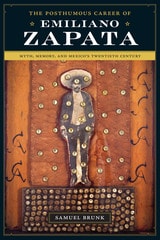
The Posthumous Career of Emiliano Zapata
Myth, Memory, and Mexico's Twentieth CenturyBy Samuel Brunk
University of Texas Press, 2008
Before there was Che Guevara, there was Emiliano Zapata, the charismatic revolutionary who left indelible marks on Mexican politics and society. The sequel to Samuel Brunk's 1995 biography of Zapata, The Posthumous Career of Emiliano Zapata traces the power and impact of this ubiquitous, immortalized figure.
Mining the massive extant literature on Zapata, supplemented by archival documents and historical newspaper accounts, Brunk explores frameworks of myth and commemoration while responding to key questions regarding the regime that emerged from the Zapatista movement, including whether it was spawned by a genuinely "popular" revolution.
Blending a sophisticated analysis of hegemonic systems and nationalism with lively, accessible accounts of ways in which the rebel is continually resurrected decades after his death in a 1919 ambush, Brunk delves into a rich realm of artistic, geographical, militaristic, and ultimately all-encompassing applications of this charismatic icon.
Examining all perspectives, from politicized commemorations of Zapata's death to popular stories and corridos, The Posthumous Career of Emiliano Zapata is an eloquent, engaging portrait of a legend incarnate.
The Presence of Myth
Leszek Kolakowski
University of Chicago Press, 1989
With The Presence of Myth, Kolakowski demonstrates that no matter how hard man strives for purely rational thought, there has always been-and always will be-a reservoir of mythical images that lend "being" and "consciousness" a specifically human meaning.
"Kolakowski undertakes a philosophy of culture which extends to all realms of human intercourse—intellectual, artistic, scientific, and emotional. . . . [His] book has real significance for today, and may well become a classic in the philosophy of culture."—Anglican Theological Review

The Sacred Remains
Myth, History, and Polity in BelauRichard J. Parmentier
University of Chicago Press, 1987
Richard J. Parmentier employs semiotic methods to analyze both linguistic and nonlinguistic signs representing Belauan history, showing that these signs also organize social and political structures. He identifies four pervasive semiotic patterns that appear rhetorically in myths, chants, and historical narratives and graphically in the arrangement of certain classes of stones, including village boundary markers, burial platforms, exchange valuables, and monoliths found at abandoned sites in the islands.
While not neglecting historical evidence from Western sources, Parmentier contends that the history of Belau cannot be understood without taking into full account indigenous categories of space, time, and transformation and without recognizing the importance of Belauan social actions that construct, interpret, and transmit historical knowledge. Supporting his analysis of Belauan history with concrete ethnographic demonstration, Parmentier presents a work of central importance for Austronesianists, anthropologists, and historians.
The View from Somewhere
Undoing the Myth of Journalistic ObjectivityLewis Raven Wallace
University of Chicago Press, 2019
In The View from Somewhere, Lewis Raven Wallace dives deep into the history of “objectivity” in journalism and how its been used to gatekeep and silence marginalized writers as far back as Ida B. Wells. At its core, this is a book about fierce journalists who have pursued truth and transparency and sometimes been punished for it—not just by tyrannical governments but by journalistic institutions themselves. He highlights the stories of journalists who question “objectivity” with sensitivity and passion: Desmond Cole of the Toronto Star; New York Times reporter Linda Greenhouse; Pulitzer Prize-winner Rachel Kaadzi Ghansah; Peabody-winning podcaster John Biewen; Guardian correspondent Gary Younge; former Buzzfeed reporter Meredith Talusan; and many others. Wallace also shares his own experiences as a midwestern transgender journalist and activist who was fired from his job as a national reporter for public radio for speaking out against “objectivity” in coverage of Trump and white supremacy.
With insightful steps through history, Wallace stresses that journalists have never been mere passive observers. Using historical and contemporary examples—from lynching in the nineteenth century to transgender issues in the twenty-first—Wallace offers a definitive critique of “objectivity” as a catchall for accurate journalism. He calls for the dismissal of this damaging mythology in order to confront the realities of institutional power, racism, and other forms of oppression and exploitation in the news industry.
The View from Somewhere is a compelling rallying cry against journalist neutrality and for the validity of news told from distinctly subjective voices.

The Workless
Stigma, Unpaid Labour and the Myth of Economic InactivityJames Morrison
Intellect Books, 2026
A critical analysis of historical and contemporary discourses around worklessness, economic inactivity, and the factors that contribute to people withdrawing from the conventional labor market.
How do we define and respond to worklessness? This book combines analysis of media and political narratives around worklessness and factors that limit individuals’ capacity for conventional paid work—from disability and long-term illness to caring responsibilities—with interviews that shed light on the lived experience of so-called economic inactivity.
In dissecting popular portrayals of “the workless” in the present and tracing the historical evolution of discourses around “inactivity”—especially work-limiting disability—James Morrison draws heavily on sociological theories of stigma and symbolic annihilation. Conceptualising the contemporary narrative about the UK's supposed crisis in economic inactivity as the latest in a continuum of periodic moral panics about worklessness, he argues that neoliberal definitions of work and worklessness are too narrow, as they deny—and render invisible—the importance of various forms of unpaid labor performed by many people classified as “inactive,” notably informal caregiving and volunteering.
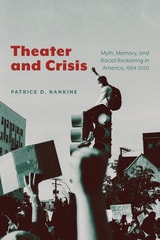
Theater and Crisis
Myth, Memory, and Racial Reckoning in America, 1964-2020Patrice D. Rankine
Lever Press, 2024
Rather than approaching the problem of racial reckoning through history, where periodization and progress are dominant narratives, Theater and Crisis argues that myth and memory allow for better theorization about recurring events from the past, their haunting, and what these apparent ghosts ask of us. Building on the study of myth as active, processual storytelling, Rankine acknowledges that it grounds and orients groups toward significant events. Theater and Crisis aligns narratives about Emmett Till, Trayvon Martin, and George Floyd, among others, with ancient, mythic figures such as Christ, Dionysus, Oedipus, and Moses. As living and verbal visitations, these stories performed on stage encode the past through their epiphanies in the present, urging audiences toward shared meaning.
Rankine traces the cyclical hauntings of race through the refiguring of mythic stories across the past 75 years in the plays of James Baldwin, Ntozake Shange, Antoinette Nwandu, and many more, and in response to flashpoints in US racial history, such as the 1955 lynching of Emmett Till, the upheavals of the 1960s and 1970s, the wars on drugs and crime, and the continued violence against and disenfranchisement of Black people into the twenty-first century. Theater and Crisis explores the appearance of myth on the American stage and showcases the ongoing response by the theatrical establishment to transform the stage into a space for racial reckoning. This timely book is essential reading for scholars of theater studies, classics, and American studies.
Theorizing Myth
Narrative, Ideology, and ScholarshipBruce Lincoln
University of Chicago Press, 2000
He begins by showing that mythos yielded to logos not as part of a (mythic) "Greek miracle," but as part of struggles over political, linguistic, and epistemological authority occasioned by expanded use of writing and the practice of Athenian democracy. Lincoln then turns his attention to the period when myth was recuperated as a privileged type of narrative, a process he locates in the political and cultural ferment of the eighteenth and nineteenth centuries. Here, he connects renewed enthusiasm for myth to the nexus of Romanticism, nationalism, and Aryan triumphalism, particularly the quest for a language and set of stories on which nation-states could be founded.
In the final section of this wide-ranging book, Lincoln advocates a fresh approach to the study of myth, providing varied case studies to support his view of myth—and scholarship on myth—as ideology in narrative form.
Theorizing about Myth
Robert A. Segal
University of Massachusetts Press, 1999
For two hundred years the subject of myth—its origin, function, and significance—has been addressed again and again, first by theologians and philosophers and then by anthropologists, sociologists, and psychologists. From the outset the topic has sparked intense debate, with differing opinions expressed on everything from issues of epistemology and methodology to the meaning of “myth” itself. In this collection of essays, Robert A. Segal surveys the contours of this ongoing discussion, comparing and evaluating the leading theories of myth.
Among the theorists discussed are Edward Tylor, William Robertson Smith, James Frazer, Jane Harrison, S. H. Hooke, Mircea Eliade, Rudolf Bultmann, Hans Jonas, Sigmund Freud, C. G. Jung, Joseph Campbell, Claude Lévi-Strauss, and Hans Blumenberg. Author and editor of numerous books and articles in the fields of theories of myth and theories of religion, Segal has developed a reputation as a preeminent proponent of a social-scientific approach to the study of both. The essays in this book represent some of the best of his writing on myth over the past ten years.

To Die in this Way
Nicaraguan Indians and the Myth of Mestizaje, 1880-1965Jeffrey L. Gould
Duke University Press, 1998
Through interviews with indigenous peoples and records of the elite discourse that suppressed the expression of cultural differences and rationalized the destruction of Indian communities, Gould tells a story of cultural loss. Land expropriation and coerced labor led to cultural alienation that shamed the indigenous population into shedding their language, religion, and dress. Beginning with the 1870s, Gould historicizes the forces that prompted a collective movement away from a strong identification with indigenous cultural heritage to an “acceptance” of a national mixed-race identity.
By recovering a significant part of Nicaraguan history that has been excised from the national memory, To Die in This Way critiques the enterprise of third world nation-building and thus marks an important step in the study of Latin American culture and history that will also interest anthropologists and students of social and cultural historians.
Too Beautiful to Picture
Zeuxis, Myth, and MimesisElizabeth C. Mansfield
University of Minnesota Press, 2007
Transfiguring America
Myth, Ideology, and Mourning in Margaret Fuller's WritingJeffrey Steele
University of Missouri Press, 2001
Transfiguring America is the product of more than ten years of research and numerous published articles on Margaret Fuller, arguably America's first feminist theorist and one of the most important woman writers in the nineteenth century. Focusing on Fuller's development of a powerful language that paired cultural critique with mythmaking, Steele shows why her writing had such a vital impact on the woman's rights movement and modern conceptions of gender.
This groundbreaking study pays special attention to the ways in which Fuller's feminist consciousness and social theory emerged out of her mourning for herself and others, her dialogue with Emersonian Transcendentalism, and her eclectic reading in occult and mythical sources. Transfiguring America is the first book to provide detailed analyses of all of Fuller's major texts, including her mystical Dial essays, correspondence with Emerson, Summer on the Lakes, 1844 poetry, Woman in the Nineteenth Century, and New York Tribune essays written both in New York and Europe.
Starting from her own profound sense of loss as a marginalized woman, Fuller eventually recognized the ways in which the foundational myths of American society, buttressed by conservative religious ideologies, replicated dysfunctional images of manhood and womanhood. With Woman in the Nineteenth Century, after exploring the roots of oppression in her essays and poetry, Fuller advanced the cause of woman's rights by conceptualizing a more fluid and equitable model of gender founded upon the mythical reconfiguration of human potential. But as her horizons expanded, Fuller demanded not only political equality for women, but also emotional, intellectual, and spiritual freedom for all victims of social oppression.
By the end of her career, Steele shows, Fuller had blended personal experience and cultural critique into the imaginative reconstruction of American society. Beginning with a fervent belief in personal reform, she ended her career with the apocalyptic conviction that the dominant myths both of selfhood and national identity must be transfigured. Out of the ashes of personal turmoil and political revolution, she looked for the phoenix of a revitalized society founded upon the ideal of political justice.