Results by title
527 books match the query 'Novel' and 157 start with t
THE NOVEL AND THE MENAGERIE
TOTALITY, ENGLISHNESS, AND EMPIREKURT KOENIGSBERGER
The Ohio State University Press, 2007
Tales of the Metric System
A NovelImraan Coovadia
Ohio University Press, 2016
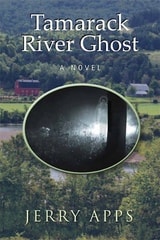
Tamarack River Ghost
A NovelJerry Apps
University of Wisconsin Press, 2012
Josh’s big story is that a corporation that plans to establish an enormous hog farm has bought a lot of land along the Tamarack River in bucolic Ames County. Some of the local residents and officials are excited about the jobs and tax revenues that the big farm will bring, while others worry about truck traffic, porcine aromas, and manure runoff polluting the river. And how would the arrival of a large agribusiness affect life and traditions in this tightly knit rural community of family farmers? Josh strives to provide impartial agricultural reporting, even as his newspaper is replaced by a new Internet-only version owned by a former New York investment banker. And it seems that there may be another force in play: the vengeful ghost of a drowned logger who locals say haunts the valley of the Tamarack River.
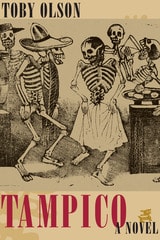
Tampico
A NovelBy Toby Olson
University of Texas Press, 2008
Four old men—John, Gino, Larry, and Frank—have been warehoused at "the Manor," a long-eroded home for the forgotten. The men take turns telling stories, stalling death as they relive pivotal parts of their pasts. Outside, the cliff crumbles and a lighthouse slips toward the sea.
John, in particular, enthralls the others with his tale of Tampico, Mexico, where he met an Indian woman named Chepa who owned a house at the edge of a mountain wilderness. She was his first love—and his first lesson in the dangers of foreign intrigue. But his is not the only memory haunted by mysteries born in Mexico. Sick of waiting for death, stirred by the shifting ground beneath their feet, the Manor's residents finally resolve to quit that place and head out for Tampico.
With inexorable pull, and exquisite scenes that could only come from Toby Olson, Tampico celebrates a sublime band of calaveras, "those skeleton messengers of mortality," who seek self-discovery even as their lives are ending.
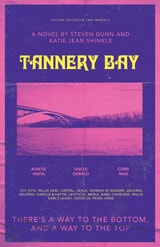
Tannery Bay
A NovelSteven Dunn and Katie Jean Shinkle
University of Alabama Press, 2024
In a town trapped in endless July, love, resistance, and imagination break the loop
Enter a world where time stands still and summer never ends. In the enchanted town of Tannery Bay, it’s July 37, and then July 2 again, but the year is a mystery. Trapped in an eternal loop, the residents embark on an extraordinary journey of self-discovery, unity, and defiance against the forces that seek to divide them.
Otis and Joy, intrepid siblings, work with their family and friends to oppose a formidable adversary: The Owners. These cunning and ruthless old men, driven by insatiable greed, hold the town hostage, exploiting its resources and dividing its people. In this powerful #OwnVoices narrative, Tannery Bay is a captivating tale of Black Joy and Queer Joy and the ways in which family is both biological and chosen, where love transcends boundaries, and where art is a vehicle for change.
Tear Here
a NovelMatthew Pitt
Carnegie Mellon University Press, 2026
Matthew Pitt’s first novel draws from characters introduced in his debut story collection. The rock band Some Assault—comprised of dropouts and hedonists—flails from gig to gig, directed by their volatile drummer Liddy, who careens between foster homes and addictions. She and the band strike up a surprise friendship with Charlie Shales, their remedial algebra teacher. At first, this link is transactional, with Shales seeking drugs and the band seeking a customer. Before long, an odd and meaningful bond is formed.
When Charlie later passes, Liddy orchestrates an elaborate sonic empire, dismissing her own health woes. She recruits new members with targeted zeal, including Oliv, heiress to twin fortunes in condiment packaging and shortbread cookies. Deploying Oliv’s funds to buy a shuttered women’s prison, Some Assault converts the acreage into a farm collective and a massive recording studio dubbed The Hive.
Misfits continue to swell Some Assault’s roster, lured by The Hive’s promise of security and rabid praise: Andy Warhol’s Factory in an Instagram age. However, once the band’s fifteen minutes of fame threaten to expire, territorial violence rises, driven by dark desires to command the public eye at all costs. Chronicled by a member who managed to flee The Hive, Tear Here surveys the fierce fallout of cravings for celebrity that warp into cultish conduct.
Thanos Vlekas
A NovelPavlos Kalligas, Translated from the Greek by Thomas Doulis
Northwestern University Press, 2001
Thanos is a young farmer struggling to improve himself despite the derision of his mother, who considers him incapable of bearing arms for his country. She prefers instead her more "heroic" son, the brave and ambitious brigand Tassos, whose courage and resistance to authority embodying the virtues that helped Greece drive out the Turks. While Thanos works his land, his ruthless brother uses the political machinery and wealth gained from robbery and murder to replace the old Ottoman landowners and subjugate the villagers.
The Affliction
A Novel in StoriesC. Dale Young
Four Way Books, 2018
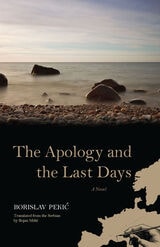
The Apology and the Last Days
A NovelBorislav Pekic
Northwestern University Press, 2012
Originally published in 1975, The Apology and the Last Days is the final volume in a trilogy of novels—also including The Rise and Fall of Icarus Gubelkian and How to Quiet a Vampire—about the aftermath of World War II, by Borislav Pekić, one of the former Yugoslavia’s most important postwar writers. The narrator tells his story from prison, where he is serving time for the murder of a former Nazi official. As the novel unfolds, we learn that the victim was the same person whom the narrator, while a lifeguard during the war, saved from drowning, thus making him vulnerable to charges of collaboration. In this tragicomic tale, Pekić explores eternal questions of fate and individual responsibility.
The Art of the Novel
Critical PrefacesHenry James
University of Chicago Press, 2011
This collection of prefaces, originally written for the 1909 multi-volume New York Edition of Henry James’s fiction, first appeared in book form in 1934 with an introduction by poet and critic R. P. Blackmur. In his prefaces, James tackles the great problems of fiction writing—character, plot, point of view, inspiration—and explains how he came to write novels such as The Portrait of a Lady and The American. As Blackmur puts it, “criticism has never been more ambitious, nor more useful.”
The latest edition of this influential work includes a foreword by bestselling author Colm Tóibín, whose critically acclaimed novel The Master is told from the point of view of Henry James. As a guide not only to James’s inspiration and execution, but also to his frustrations and triumphs, this volume will be valuable both to students of James’s fiction and to aspiring writers.
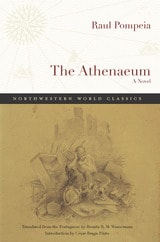
The Athenaeum
A NovelRaul Pompeia, Translated from the Portuguese by Renata R. M. Wasserman with an Introduction by César Braga-Pinto
Northwestern University Press, 2015
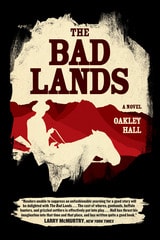
The Bad Lands
A NovelOakley Hall
University of Chicago Press, 2016
An action-packed western from one of the masters of the genre, Oakley Hall’s The Bad Lands blends roundups and rustlers, whorehouses and land grabs, shoot-outs and the threat of hangings in a tale of the war between the cowboys and the cattle barons. But more than this, it is an elegy to the wild beauty of the badlands before the ranchers moved in, chased off the free-rangers, the trappers, and the tribes, and fenced it all in.

The Bankruptcy
A NovelJúlia Lopes de Almeida
University College London, 2023
Set in the early years of Brazil’s Old Republic after the abolition of slavery, Júlia Lopes de Almeida's The Bankruptcy depicts the rise and fall of a wealthy coffee exporter against a kaleidoscopic background of glamour, poverty, seduction, and financial speculation. The novel introduces readers to a turbulent period in Brazilian history seething with new ideas about democracy, women’s emancipation, and the role of religion in society. Originally published in 1901, its prescient critiques of financial capitalism and the patriarchal family remain relevant today.
In her lifetime, Júlia Lopes de Almeida was compared to Machado de Assis, the most important Brazilian writer of the nineteenth century. She was also considered for the inaugural list of members of the Brazilian Academy of Letters but was excluded because of her gender. In the decades after her death, her work was largely forgotten. This publication, a winner of the English PEN award, includes an introduction to the novel and a translators' preface and accompanies a general rediscovery of her extraordinary body of work in Brazil.
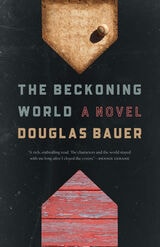
The Beckoning World
A NovelDouglas Bauer
University of Iowa Press, 2022
But dreams sometimes suffer from a lovely abundance, and in Earl’s case her name is Emily Marchand. They fall quickly and deeply in love, but with that love comes heartbreaking complications.
The Beckoning World gathers a cast of characters that include Babe Ruth and Lou Gehrig; a huge-hearted Pullman steward offering aphoristic wisdom; and countless others, not least of which is the 1918 Spanish flu taking vivid spectral form. At the center is a relentless love that Earl and Emily are defenseless against, allied as they are “in this business of their hearts.”
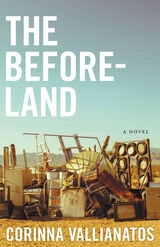
The Beforeland
A NovelCorinna Vallianatos
Acre Books, 2020
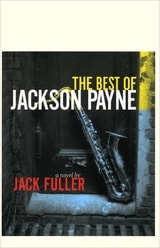
The Best of Jackson Payne
A NovelJack Fuller
University of Chicago Press, 2001
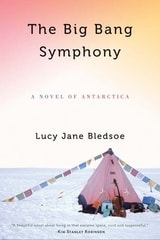
The Big Bang Symphony
A Novel of AntarcticaLucy Jane Bledsoe
University of Wisconsin Press, 2010
At least that’s how thirty-year-old Rosie Moore views it as she flies in for her third season on the Ice. She plans to avoid all entanglements, romantic and otherwise, and do her work as a galley cook. But when her flight crash-lands, so do all her plans.
Mikala Wilbo, a brilliant young composer whose heart—and music—have been frozen since the death of her partner, is also on that flight. She has come to the Ice as an artist-in-residence, to write music, but also to secretly check out the astrophysicist father she has never met.
Arriving a few weeks later, Alice Neilson, a graduate student in geology who thinks in charts and equations, is thrilled to leave her dependent mother and begin her career at last. But from the start she is aware that her post-doc advisor, with whom she will work in Antarctica, expects much more from their relationship.
As the three women become increasingly involved in each other’s lives, they find themselves deeply transformed by their time on the Ice. Each falls in love. Each faces challenges she never thought she would meet. And ultimately, each finds redemption in a depth and quality of friendship that only the harsh beauty of Antarctica can engender.
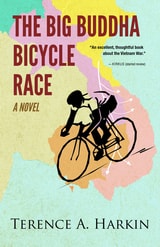
The Big Buddha Bicycle Race
A NovelTerence A. Harkin
Ohio University Press, 2017
Silver Medalist in Literary Fiction, 2020 Military Writers Society of America Awards
Brendan Leary, assigned to an Air Force photo squadron an hour from L.A., thinks he has it made. But when the U.S. invades Cambodia and he joins his buddies who march in protest, he is shipped off to an obscure air base in upcountry Thailand. There, he finds himself flying at night over the Ho Chi Minh Trail in a secret war that turns the mountains of Laos into a napalm-scorched moonscape. As the emotional vise tightens, his moral fiber crumbles and he sinks ever deeper into a netherworld of drugs, sex, and booze.
When a visit by Nixon looms, Brendan dreams up an all-squadron bicycle race to build morale, win hearts and minds in rural Thailand, and make him and his underpaid buddies a pile of money. The Big Buddha Bicycle Race is a last gasp of hope that turns into a unifying adventure—until the stakes turn out to be far higher than anyone imagined.
The Big Buddha Bicycle Race is a new take on the Vietnam War. A caper on the surface, it is also a tribute to the complex culture and history of Southeast Asia and a sober remembrance of those groups who have been erased from American history—the brash active-duty soldiers who risked prison by taking part in the GI antiwar movement, the gutsy air commandos who risked death night after night flying over the Ho Chi Minh Trail, and the people of Laos, whose lives and land were devastated in ways that have yet to be fully acknowledged in Western accounts of the war.

The Bingo Long Traveling All-Stars and Motor Kings
A NOVELWilliam Brashler. Introduction by Peter C. Bjarkman
University of Illinois Press, 1993
The Birds of Paradise
A NovelPaul Scott
University of Chicago Press, 2013
The Blood of the Lamb
A NovelPeter De Vries
University of Chicago Press, 2005
One of John Green's "favorite books ever," a powerful, moving novel of family, parenthood, and loss
The most poignant of all Peter De Vries's novels, The Blood of the Lamb is also the most autobiographical. It follows the life of Don Wanderhop from his childhood in an immigrant Calvinist family living in Chicago in the 1950s through the loss of a brother, his faith, his wife, and finally his daughter-a tragedy drawn directly from De Vries's own life. Despite its foundation in misfortune, The Blood of the Lamb offers glimpses of the comic sensibility for which De Vries was famous. Engaging directly with the reader in a manner that buttresses the personal intimacy of the story, De Vries writes with a remarkableblend of grief, love, wit, and fury.
The Blossom Festival
(A Novel)Lawrence Coates
University of Nevada Press, 1999
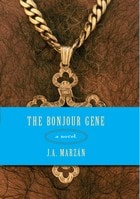
The Bonjour Gene
A NovelJ. A. Marzán; Introduction by David Huddle
University of Wisconsin Press, 2005
Descended from three French brothers who settled in Puerto Rico, Bonjours now belong to extended branches, some settled in New York City. Removed in varying degrees, all remain connected by the lore that only one island family possesses their surname, and that starting with the three brothers—sowers of a legacy of adultery and abandonment—every Bonjour male carries a reckless, womanizing gene.
Lineage and legend of lineage haunt but do not make these lives predictable. So Daisy, who hardly knew her father and has passed her prime without much interest in marriage, secretly falls in love with the man who paid her to marry him so he could get a green card. Ten-year-old Marco does not know what the reader does: that his visiting, divorced Bonjour father is gay. Recently married Gabriel, having flown to Puerto Rico to bury a father who intermittently entered his life, meets an African American down from Georgia, whom he learns is his embittered brother, and his beautiful stepsister, with whom he faces the same temptation that sidetracked his father.
Interconnected like his Bonjour families, these stories of unpredictable and unforgettable characters will transport the reader to a plane where ethnicity becomes universality.
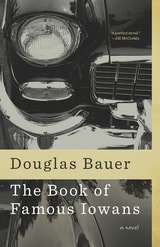
The Book of Famous Iowans
A NovelDouglas Bauer
University of Iowa Press, 2014
But mostly what Will summons up in his intimate remembrance are those few catastrophic days in early June when he was “three months shy of twelve,” more than a decade after his parents have married and returned to the Vaughns’ home place, where Lewis farms his family’s land. For it is during those days that Leanne’s affair with a local man named Bobby Markum becomes known—first to Lewis and then, in a fiercely dramatic public confrontation, to young Will, to his beloved Grandmother Vaughn, and by nightfall to all the citizens of the town. The knowledge of such scandal, in so small a place, sets off a series of highly charged reactions, vivid consequences that surely determine the fates of every member of this unforgettable family.
A tale of memory and hero worship and the restless pulse of longing, The Book of Famous Iowans examines those forces that define not only a state made up of a physical geography, but more important, those states of the wholly human spirit.
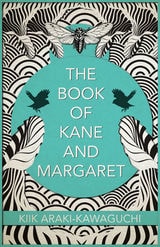
The Book of Kane and Margaret
A NovelKiik Araki-Kawaguchi, Illustrations by Gautam Rangan
University of Alabama Press, 2020
WINNER OF FC2’S RONALD SUKENICK INNOVATIVE FICTION PRIZE
A novel about two teenage lovers who disrupt a World War II internment camp in Arizona
Kane Araki and Margaret Morri are not only the names of teenage lovers living in a World War II Japanese relocation camp. Kane Araki is also the name of a man who, mysteriously, sprouts a pair of black raven’s wings overnight. Margaret Morri is the name of the aging healer who treats embarrassing conditions (smelly feet and excessive flatulence). It’s also the name of an eleven-year-old girl who communes with the devil, trading human teeth for divine wishes.
In The Book of Kane and Margaret, dozens of Kane Arakis and Margaret Morris populate the Canal and Butte camp divisions in Gila River. Amidst their daily rituals and family dramas, they find ways to stage quiet revolutions against a domestic colonial experience. Some internees slip through barbed wire fences to meet for love affairs. Others attempt to smuggle whiskey, pornography, birds, dogs, horses, and unearthly insects into their family barracks. And another seeks a way to submerge the internment camp in Pacific seawater.
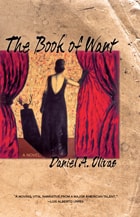
The Book of Want
A NovelDaniel A. Olivas
University of Arizona Press, 2011
Conchita, a voluptuous, headstrong single woman of a certain age, sees nothing wrong with enjoying the company of handsome—and usually much younger—men...that is, until she encounters a widower with unusual gifts and begins to think about what she really wants out of life.
Julieta, Conchita’s younger sister, walks a more traditional path, but she and her husband each harbor secrets that could change their marriage and their lives forever. Their twin sons, both in college, struggle to find fulfillment. Mateo refuses to let anyone stand in the way of his happiness, while Rolando grapples with his sexuality and the family’s expectations. And from time to time, Belén, the family’s late matriarch, pays a visit to advise, scold, or cajole her hapless descendants.
A delightful family tapestry woven with the threads of all those whose lives are touched by Conchita, The Book of Want is an enchanting blend of social and magical realism that tells a charming story about what it means to be fully human.
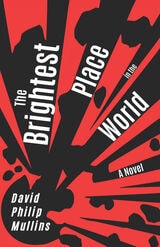
The Brightest Place in the World
A NovelDavid Philip Mullins
University of Nevada Press, 2020
Inspired by true events, The Brightest Place in the World traces the lives of four characters haunted by an industrial disaster. On an ordinary sunny morning in 2012, a series of explosions level a chemical plant on the outskirts of Las Vegas. The shock waves are felt as far away as Fremont Street. Homes and businesses suffer broken windows and caved-in roofs. Hundreds are injured, and eight employees of the plant are unaccounted for, presumed dead.
One of the missing is maintenance technician Andrew Huntley, a husband and father who is an orbital force in the novel as those who loved him grapple with his loss. Andrew’s best friend, Russell Martin—an anxiety-plagued bartender who calms his nerves with a steady inflow of weed—misses him more than he might a brother. Meanwhile Emma, Russell’s wife—a blackjack dealer at a downtown casino—tries to keep her years-long affair with Andrew hidden. Simon Addison, a manager at the plant who could have saved Andrew’s life, is afflicted by daily remorse, combined with a debilitating knowledge of his own cowardice. And then there’s Maddie, Andrew’s only child, a model high-school student whose response to the tragedy is to experiment with shoplifting and other deviant behavior.
Against the sordid backdrop of Las Vegas—and inspired by the PEPCON disaster of May 4, 1988—this engaging novel is a story of grief and regret, disloyalty and atonement, infatuation and love.
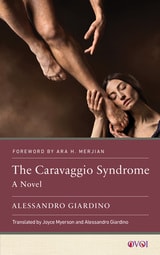
The Caravaggio Syndrome
A NovelAlessandro Giardino
Rutgers University Press, 2024
Leyla is a headstrong Brooklyn-born art historian at a prestigious upstate New York college. When she meets feckless young computer technician Pablo at a party, she quickly becomes pregnant with his child. There’s only one problem: she can’t stand him. And one more problem: her student Michael wants Pablo for himself.
Amid this love triangle, the objects of Leyla and Michael’s study take on a life of their own. Trying to learn more about Caravaggio’s masterpiece The Seven Works of Mercy, they pore over the journal and prison writings of maverick 17th-century utopian philosopher Tommaso Campanella, which, as if by enchantment, transport them back four centuries to Naples. And while the past and present miraculously converge, Leyla, Michael, and Tommaso embark on a voyage of self-discovery in search of a new life.
In this fusion of historical, queer, and speculative fiction, Alessandro Giardino combines the intellectual playfulness of Umberto Eco with the psychological finesse of Michael Cunningham.
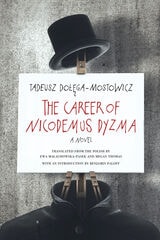
The Career of Nicodemus Dyzma
A NovelTadeusz Dolega-Mostowicz; Translated from the Polish by Ewa Malachowska-Pasek and Megan Thomas and with an introduction by Benjamin Paloff
Northwestern University Press, 2020
Winner of the 2021 Found in Translation Award
First published in Polish in 1932, The Career of Nicodemus Dyzma was Tadeusz Dołęga-Mostowicz’s breakout novel. Dyzma is an unemployed clerk who crashes a swanky party, where he makes an offhand crass remark that sets him on a new course. Soon high society—from government ministers to drug-fueled aristocrats—wants a piece of him. As Dyzma’s status grows, his vulgarity is interpreted as authenticity and strength. He is unable to comprehend complicated political matters, but his cryptic responses are celebrated as wise introspection. His willingness to do anything to hold on to power—flip-flopping on political positions, inventing xenophobic plots, even having enemies assaulted—only leads to greater success.
Dołęga-Mostowicz wrote his novel in a newly independent Poland rampant with political corruption and populist pandering. Jerzy Kosinski borrowed heavily from the novel when he wrote Being There, and readers of both books will recognize similarities between their plots. This biting political satire—by turns hilarious and disturbing, contemptuous and sympathetic—is an indictment of a system in which money and connections matter above all else, bluster and ignorance are valorized, and a deeply incompetent man rises to the highest spheres of government.
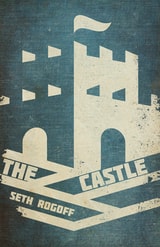
The Castle
A NovelSeth Rogoff
University of Alabama Press, 2024
A fictional return to the unsettling world of Franz Kafka’s iconic unfinished novel, The Castle.
Seth Rogoff's masterful and mesmerizing novel, The Castle, draws inspiration from the enigmatic and incomplete final sentence of Franz Kafka's influential work of the same title. Follow renowned translator Sy Kirschbaum as he finds his way into the deserted landscape of Kafka’s world where the village of Z. lies eerily silent. The inhabitants vanished like phantoms leaving only remnants of their lives.
From these fragments, Kirschbaum pieces together a vision of a world in crisis triggered by the arrival of a stranger named K. To unravel this mystery, not just for the sake of the vanished village of Z. but for the world beyond, Kirschbaum is compelled to venture where K. could not—the deepest core of the castle.
The Castle is built upon lost documents, forgotten stories, and imagined histories. Unbound by the constraints of an authoritarian and doomed reality, Kirschbaum embarks on an extraordinary journey, seeking meaning through the fertile ground of imagination and embracing the inherent paradox of existence.

The Chimeras
A NovelJoe Fletcher
University of Alabama Press, 2026
Blending literary fiction, speculative fiction, and lyric prose, The Chimeras explores how communities create meaning in the wake of radical uncertainty. At its core, the novel is concerned with enduring human questions of belonging, family, memory, and faith in language itself. The book will appeal to readers of contemporary literary fiction, speculative literature, and works that push the boundaries of narrative form.
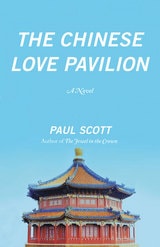
The Chinese Love Pavilion
A NovelPaul Scott
University of Chicago Press, 2013
The Chinese Love Pavilion follows a young British clerk, Tom Brent, who must track down a former friend—now suspected of murder—in Malaya. Tom faces great danger, both from the mysterious Malayan jungles and the political tensions between British officers, but the novel is perhaps most memorable for the strange, beautiful romance between Tom and a protean Eurasian beauty whom he meets in the eponymous Chinese Love Pavilion.
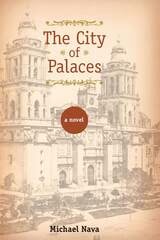
The City of Palaces
A NovelMichael Nava
University of Wisconsin Press, 2014
Against this backdrop, The City of Palaces opens in a Mexico City jail with the meeting of Miguel Sarmiento and Alicia Gavilán. Miguel is a principled young doctor, only recently returned from Europe but wracked by guilt for a crime he committed as a medical student ten years earlier. Alicia is the spinster daughter of an aristocratic family. Disfigured by smallpox, she has devoted herself to working with the city’s destitute. This unlikely pair—he a scientist and atheist and she a committed Christian—will marry. Through their eyes and the eyes of their young son, José, readers follow the collapse of the old order and its bloody aftermath.
The City of Palaces is a sweeping novel of interwoven lives: Miguel and Alicia; José, a boy as beautiful and lonely as a child in a fairy tale; the idealistic Francisco Madero, who overthrows Díaz but is nevertheless destroyed by the tyrant’s political system; and Miguel’s cousin Luis, shunned as a “sodomite.” A glittering mosaic of the colonial past and the wealth of the modern age, The City of Palaces is a story of faith and reason, cathedrals and hovels, barefoot street vendors and frock-coated businessmen, grand opera and silent film, presidents and peasants, the living and the dead.
Winner, International Latino Book Award for Latino Fiction, Latino Literacy Now
Second place, International Latino Book Award for Historical Fiction, Latino Literacy Now
Finalist, Gay Fiction, Lambda Literary Awards
Honorable Mention in Drama, Latino Books into Movies Award, International Latino Book Awards
Best Books for General Audiences, selected by the American Association of School Librarians
Outstanding Book, selected by the Public Library Reviewers
The Color of Rock
A NovelSandra Cavallo Miller
University of Nevada Press, 2019
A young physician, Dr. Abby Wilmore, attempts to escape her past by starting over at the Grand Canyon Clinic. Silently battling her own health issues, Abby struggles with adjusting to the demands of this unique rural location. She encounters everything from squirrel bites to suicides to an office plagued by strong personalities. While tending to unprepared tourists, underserved locals, and her own mental trials, Abby finds herself entangled in an unexpected romance and trapped amidst a danger even more treacherous than the foreboding desert landscape.
Sandra Cavallo Miller’s debut novel transports readers to the beautiful depths of Arizona and weaves an adventurous and heartwarming tale of the courage and strength it takes to overcome personal demons and to find love.
The Come Apart
A NovelSusannah Felts
Northwestern University Press, 2026
An authentic rock band story from Chicago to Nashville and, just maybe, back again
On the cusp of turning thirty, Chicago indie musician Maggie Corbin has hustled for a decade, set on making her rock and roll dreams come true. Her band, Spinning Birds, fronted by Maggie and her romantic partner Matt Turkish, releases a debut record to critical acclaim, hits the road, and begins working on a follow-up. From the outside, her path looks like success—but as streaming deconstructs the industry and Maggie’s relationships shift and slip, the question remains: Can you live for art alone?
When a sudden move back to the South forces Maggie to reframe her dreams and reckon with familial rifts and her past—while still fighting to reimagine what her future could be—a natural disaster in Nashville and a surprise encounter with a character from her childhood shift her perspective on healing, community, and the ties that bind. Drifting in and out of songwriting sessions, cozy kitchens, and moments of bearing witness to the curious power of the natural world, The Come Apart celebrates the times when we must come fully undone in order to put ourselves back together.
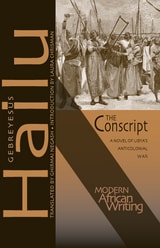
The Conscript
A Novel of Libya’s Anticolonial WarGebreyesus Hailu
Ohio University Press, 2013
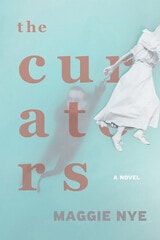
The Curators
A NovelMaggie Nye
Northwestern University Press, 2024
A dark, lyrical blend of historical fiction and magical realism, The Curators examines a critically underexplored event in American history through unlikely eyes. All of Atlanta is obsessed with the two-year-long trial and subsequent lynching of Jewish factory superintendent Leo Frank in 1915. None more so than thirteen-year-old Ana Wulff and her friends, who take history into their own hands—quite literally—when they use dirt from Ana’s garden to build and animate a golem in Frank’s image. They’ll do anything to keep his story alive, but when their scheme gets out of hand, they must decide what responsibility requires of them. The Curators tells the story of five zealous girls and the cyclonic power of their friendship as they come of age in a country riven by white supremacy.
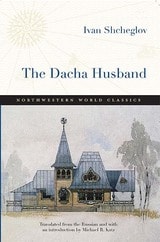
The Dacha Husband
A NovelIvan Shcheglov
Northwestern University Press, 2009
The Dacha Husband (a term created by Shcheglov) satirizes a type of man who came to prominence in the later part of the nineteenth century in Russia; he was typically upper middle class, was married to a materialistic woman, and commuted to work in St. Petersburg during the summer while his wife and children vacationed at the family’s dacha in Pavlovsk.
Among the novel’s highlights is a "Convention of Dacha Husbands," in which a "small group of insulted and injured husbands gathered together, in secret from their wives, . . . for a general discussion of contemporary marital misfortunes and a search for some means to protect their human rights." The convention is unexpectedly interrupted by the wives, who arrive to retrieve their rebellious spouses. A coda informs the reader that at least one of the proposals offered during the meeting survived: the construction of a "shelter for the care of deserted husbands."
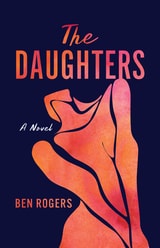
The Daughters
A NovelBen Rogers
University of Nevada Press, 2025
IndieReader Approved!
Renowned—albeit washed-up—author Peter Zemeckis (“Z”) is relishing the sunset of a life spent single when Dr. Nancy Chu crash-lands in the bungalow next door. As Nancy’s family drags him into deeper water, Z must rethink the ending to his own story.
Spanning from Amarillo, Texas, in 1977 to La Jolla, California, in 2012, The Daughters is a kaleidoscopic meditation on family, memory, and the invisible forces that bind us. Z’s narrative interweaves small-town rodeos with amateur radios, teen angst with parental love. Shard by shard, he pieces together the story of a fractured family struggling to reassemble itself.
Like particles, Z’s characters (and neighbors) are both small and singular, but their stories ripple like waves—colliding, refracting, and reshaping one another across generations. Elegant, intricate, and deeply moving, The Daughters reverberates long after its final page is turned.
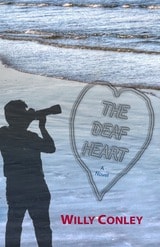
The Deaf Heart
A NovelWilly Conley
Gallaudet University Press, 2015
At the hospital, Max has to contend with hearing doctors, nurses, scientists, and teachers. While struggling through the rigors of his residency and running into bad luck in meeting women, Max discovers an ally in his hearing housemate Zag, a fellow resident who is also vying for certification. Toward the end of his residency, Max meets Maddy, a Deaf woman who helps bring balance to his life.
Author Willy Conley’s stories, some humorous, some poignant, reveal Max’s struggles and triumphs as he attempts to succeed in the hearing world while at the same time navigating the multicultural and linguistic diversity within the Deaf world.
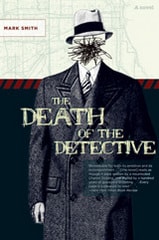
The Death of the Detective
A NovelMark Smith
Northwestern University Press, 2007
The Death of the Detective is a quest novel in the tradition of Don Quixote, Moby-Dick, and Dead Souls. During his frenetic and blood-soaked odyssey, Mark Smith's detective moves through the city on highways, boulevards, side streets, and alleys. He tracks "the death-maker" from a mansion in Lake Forest to the underbelly of the South Side, from a glass high-rise on the Gold Coast to a run-down tavern in the northwestern suburbs, and everywhere in between. In this New York Times best seller and finalist for the 1974 National Book Award, Smith takes hold of the reader and doesn't let go until the last page of his relentless journey into the dark recesses of the American soul.
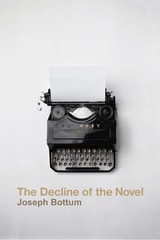
The Decline of the Novel
Joseph Bottum
St. Augustine's Press, 2019
The novel has lost its purpose, Joseph Bottum argues in this fascinating new look at the history of fiction. We have not transcended our need for what novels provide, but we have grown to distrust the culture that allowed novels to flourish. “For almost three hundred years,” Bottum writes, “the novel was a major art form, perhaps the major art form, of the modern world—the device by which, more than any other, we tried to explain ourselves to ourselves.” But now we no longer “read novels the way we used to.”
In a historical tour de force—the kind of sweeping analysis almost lost to contemporary literary criticism—Bottum traces the emergence of the novel from the modern religious crisis of the individual soul and the atomized self. In chapters on such figures as Sir Walter Scott, Charles Dickens, and Thomas Mann, he examines the enormous ambitions once possessed by novels and finds in these older works a rebuke of our current failure of nerve.
“We walk with our heads down,” Bottum writes. “Without a sense of the old goals and reasons––a sense of the good achieved, understood as progress––all that remains are the crimes the culture committed in the past to get where it is now. uncompensated by achievement, unexplained by purpose, these unameliorated sins must now seem overwhelming: the very definition of a failed culture.” In readings of everything from genre fiction to children’s books, Bottum finds a lack of faith in the ability of art to respond to the deep problems of existence. “the decline of the novel’s prestige reflects and confirms a genuine cultural crisis,” he writes.
Linking the novel to its religious origins, Bottum describes the urgent search for meaning in the new conditions of the modern age: “If the natural world is imagined by modernity as empty of purpose, then the hunt for nature’s importance is supernatural, by definition.” the novel became a fundamental device by which culture pursued the supernatural—facilitated by modernity’s confidence in science and cultural progress. Losing that confidence, Bottum says, we lost the purpose of the art: “the novel didn’t fail us. We failed the novel.”
Told in fast-paced, wide-ranging prose, Bottum’s The Decline of the Novel is a succinct critique of classical and contemporary fiction, providing guidelines for navigating the vast genre. this book is a must-read for those who hunger for grand accounts of literature, students of literary form, critics of contemporary art, and general readers who wish to learn, finally, what we all used to know: the deep moral purpose of reading novels.
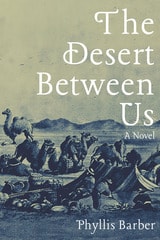
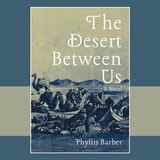
The Desert Between Us
A NovelPhyllis Barber
University of Nevada Press, 2020
2020 Reading the West Book Awards, Longlist for Fiction
2020 Association for Morman Letters Finalist, Fiction
The Desert Between Us is a sweeping, multi-layered novel based on the U.S. government’s decision to open more routes to California during the Gold Rush. To help navigate this waterless, largely unexplored territory, the War Department imported seventy-five camels from the Middle East to help traverse the brutal terrain that was murderous on other livestock.
Geoffrey Scott, one of the roadbuilders, decides to venture north to discover new opportunities in the opening of the American West when he—and the camels—are no longer needed. Geoffrey arrives in St. Thomas, Nevada, a polygamous settlement caught up in territorial fights over boundaries and new taxation. There, he falls in love with Sophia Hughes, a hatmaker obsessed with beauty and the third wife of a polygamist. Geoffrey believes Sophia wants to be free of polygamy and go away with him to a better life, but Sophia’s motivations are not so easily understood. She had become committed to Mormon beliefs in England and had moved to Utah Territory to assuage her spiritual needs.
The death of Sophia’s child and her illicit relationship with Geoffrey generate a complex nexus where her new love for Geoffrey competes with societal expectations and a rugged West seeking domesticity. When faced with the opportunity to move away from her polygamist husband and her tumultuous life in St. Thomas, Sophia becomes tormented by a life-changing decision she must face alone.
The Desert Between Us
A NovelPhyllis Barber
University of Nevada Press, 2020
2020 Reading the West Book Awards, Longlist for Fiction
2020 Association for Morman Letters Finalist, Fiction
The Desert Between Us is a sweeping, multi-layered novel based on the U.S. government’s decision to open more routes to California during the Gold Rush. To help navigate this waterless, largely unexplored territory, the War Department imported seventy-five camels from the Middle East to help traverse the brutal terrain that was murderous on other livestock.
Geoffrey Scott, one of the roadbuilders, decides to venture north to discover new opportunities in the opening of the American West when he—and the camels—are no longer needed. Geoffrey arrives in St. Thomas, Nevada, a polygamous settlement caught up in territorial fights over boundaries and new taxation. There, he falls in love with Sophia Hughes, a hatmaker obsessed with beauty and the third wife of a polygamist. Geoffrey believes Sophia wants to be free of polygamy and go away with him to a better life, but Sophia’s motivations are not so easily understood. She had become committed to Mormon beliefs in England and had moved to Utah Territory to assuage her spiritual needs.
The death of Sophia’s child and her illicit relationship with Geoffrey generate a complex nexus where her new love for Geoffrey competes with societal expectations and a rugged West seeking domesticity. When faced with the opportunity to move away from her polygamist husband and her tumultuous life in St. Thomas, Sophia becomes tormented by a life-changing decision she must face alone.
The Disinherited
A Novel of the 1930s by Jack ConroyJack Conroy & Intro by Douglas Wixson
University of Missouri Press, 1991
Douglas Wixson's introduction to this new edition of Conroy's classic provides biographical information on the aspects of Conroy's life that influenced his writings, explores the socialist movement of the 1930s, and examines the critical reaction to the novel, showing why The Disinherited has endured both as historical document and as fiction.
The Disintegrations
A NovelAlistair McCartney
University of Wisconsin Press, 2019
Within this dizzying investigation into the mystery of death is another mystery: who is the companion igniting these memories? This enigmatic novel blurs the line between fiction and nonfiction, story and eulogy, poetry and obituary. Wry yet somber, astringent yet tender, The Disintegrations confronts both the impossibility of understanding death and the timeless longing for immortality.
The Distance Between Us
A NovelValerie Sayers
Northwestern University Press, 2013
The Duke's Man
A NovelDavid R. Slavitt
Northwestern University Press, 2011
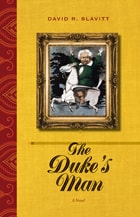
Focusing on one aspect of Dumas’ novel—the doomed love story of Bussy d’Amboise and Diana de Monsoreau—Slavitt excerpts key passages, which are extended and undercut by the narrator’s comments. The result is a radically abridged book with its own life and verve. The first of the quoted scenes, in which the names of Bussy’s assailants are replaced with those of French cheeses, sets the irreverent tone for all that follows. The book pokes fun at Dumas’ exclamatory style and flamboyant archaisms (“morbleu!” “pardieu!”), the implausibility of the swordfights, the unnecessary contortions of the political plot, the conventional passivity of the heroine, and the coyness of his love scenes. Residing somewhere between Nabokov’s Pale Fire and Quirk Books’ mash-ups (Pride and Prejudice and Zombies, etc.), The Duke’s Man’s blend of quotation, commentary, and fiction raises searching questions about realism and truth.

The Dust Within the Rock
A NovelFrank Waters
Ohio University Press, 2002
Based on one of the most significant periods in Frank Waters’s own life, Pike’s Peak is perhaps the most complete expression of all the archetypal themes he explored in both fiction and nonfiction.
In The Dust within the Rock, the third book in the Pike’s Peak saga, an aging Joseph Rogier clings to his vision of finding gold in the great mountain and his grandson Marsh comes of age in the Rogier household. It is the early part of the twentieth century, in Colorado Springs, and the schoolhouse, the newsstand, the railroad, the mines, all become part of the younger man’s emergence into adulthood and self-discovery.
Waters’s powerful and intuitive style transforms the tale into a mythic journey, a search for meaning played out in the drama of everyday living on the vast American frontier.
Pike’s Peak (1971) is composed of three condensed novels: The Wild Earth’s Nobility, Below Grass Roots, and The Dust within the Rock. Some years after its publication, an interviewer asked Frank Waters whether it was autobiographical. “Yes,” he replied, “and no.”
The Edge of the Storm
A NovelBy Agustín Yáñez
University of Texas Press, 1963
This tale of a repressive priest and his small Mexican village during the eighteen months preceding the Revolution of 1910 is a great novel, one that exposes the struggle between human desire and paralyzing fear—fear of humanity, fear of nature, fear of the wrath of God. Agustín Yáñez probes the actions of people caught in life’s currents, enthralling his readers with mounting dramatic tension as he shows that no power can forge saints from the human masses, that any attempt to do so, in fact, often has exactly the opposite result.
Yáñez brings to his work a deep understanding of people—his people—and he illuminates a great truth—that no one, anywhere, seems very strange when we understand the environment that has produced him or her.