Results by title
210 books match the query 'Philosophy, Theory & Social Aspects' and 60 start with t

Talent and Education
Present Status and Future DirectionsE. Torrance
University of Minnesota Press, 1960
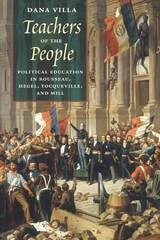
Teachers of the People
Political Education in Rousseau, Hegel, Tocqueville, and MillDana Villa
University of Chicago Press, 2017
In Teachers of the People, Dana Villa takes us back to the moment in history when “the people” first appeared on the stage of modern European politics. That moment—the era just before and after the French Revolution—led many major thinkers to celebrate the dawning of a new epoch. Yet these same thinkers also worried intensely about the people’s seemingly evident lack of political knowledge, experience, and judgment. Focusing on Rousseau, Hegel, Tocqueville, and Mill, Villa shows how reformist and progressive sentiments were often undercut by skepticism concerning the political capacity of ordinary people. They therefore felt that “the people” needed to be restrained, educated, and guided—by laws and institutions and a skilled political elite. The result, Villa argues, was less the taming of democracy’s wilder impulses than a pervasive paternalism culminating in new forms of the tutorial state.
Ironically, it is the reliance upon the distinction between “teachers” and “taught” in the work of these theorists which generates civic passivity and ignorance. And this, in turn, creates conditions favorable to the emergence of an undemocratic and illiberal populism.
Teaching Evolution in a Creation Nation
Adam Laats and Harvey Siegel
University of Chicago Press, 2016
Laats and Siegel agree with most scientists: creationism is flawed, as science. But, they argue, students who believe it nevertheless need to be accommodated in public school science classes. Scientific or not, creationism maintains an important role in American history and culture as a point of religious dissent, a sustained form of protest that has weathered a century of broad—and often dramatic—social changes. At the same time, evolutionary theory has become a critical building block of modern knowledge. The key to accommodating both viewpoints, they show, is to disentangle belief from knowledge. A student does not need to believe in evolution in order to understand its tenets and evidence, and in this way can be fully literate in modern scientific thought and still maintain contrary religious or cultural views. Altogether, Laats and Siegel offer the kind of level-headed analysis that is crucial to finding a way out of our culture-war deadlock.

Teaching Expertise in Three Countries
Japan, China, and the United StatesAkiko Hayashi
University of Chicago Press, 2022
In Teaching Expertise in Three Countries, Akiko Hayashi shows how teachers from Japan, China, and the United States think about what it means to be an expert teacher. Based on interviews with teachers conducted over the span of fifteen years and videos taken in their classrooms, Hayashi gives us a valuable portrait of expert teachers in the making. While Hayashi’s research uncovered cultural variations in the different national contexts, her analysis of how teachers adapted their pedagogy throughout their careers also revealed many cross-national similarities. Younger teachers often describe themselves as being in a rush, following scripts, and “talking too much,” while experienced teachers describe themselves as being quieter, knowing children better, and being more present.
Including a foreword by scholar of early childhood education Joseph Tobin, Teaching Expertise in Three Countries provides a foundation for understanding the sequence and pathways of development over the first decade of teaching in three national contexts, demonstrating the value of the field of comparative education in the process.
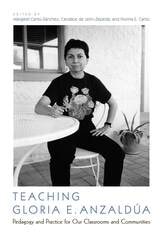
Teaching Gloria E. Anzaldúa
Pedagogy and Practice for Our Classrooms and CommunitiesEdited by Margaret Cantú-Sánchez, Candace de León-Zepeda, Norma E. Cantú
University of Arizona Press, 2020
Gloria Evangelina Anzaldúa—theorist, Chicana, feminist—famously called on scholars to do work that matters. This pronouncement was a rallying call, inspiring scholars across disciplines to become scholar-activists and to channel their intellectual energy and labor toward the betterment of society. Scholars and activists alike have encountered and expanded on these pathbreaking theories and concepts first introduced by Anzaldúa in Borderlands/La frontera and other texts.
Teaching Gloria E. Anzaldúa is a pragmatic and inspiring offering of how to apply Anzaldúa’s ideas to the classroom and in the community rather than simply discussing them as theory. The book gathers nineteen essays by scholars, activists, teachers, and professors who share how their first-hand use of Anzaldúa’s theories in their classrooms and community environments.
The collection is divided into three main parts, according to the ways the text has been used: “Curriculum Design,” “Pedagogy and Praxis,” and “Decolonizing Pedagogies.” As a pedagogical text, Teaching Gloria E. Anzaldúa also offers practical advice in the form of lesson plans, activities, and other suggested resources for the classroom. This volume offers practical and inspiring ways to deploy Anzaldúa’s transformative theories with real and meaningful action.
Contributors
Carolina E. Alonso
Cordelia Barrera
Christina Bleyer
Altheria Caldera
Norma E. Cantú
Margaret Cantú-Sánchez
Freyca Calderon-Berumen
Stephanie Cariaga
Dylan Marie Colvin
Candace de León-Zepeda
Miryam Espinosa-Dulanto
Alma Itzé Flores
Christine Garcia
Patricia M. García
Patricia Pedroza González
María del Socorro Gutiérrez-Magallanes
Leandra H. Hernández
Nina Hoechtl
Rían Lozano
Socorro Morales
Anthony Nuño
Karla O’Donald
Christina Puntasecca
Dagoberto Eli Ramirez
José L. Saldívar
Tanya J. Gaxiola Serrano
Verónica Solís
Alexander V. Stehn
Carlos A. Tarin
Sarah De Los Santos Upton
Carla Wilson
Kelli Zaytoun
Teaching Israel
Studies of Pedagogy from the FieldEdited by Sivan Zakai and Matt Reingold
Brandeis University Press, 2024
Jewish Americans are divided in their views on Israel. While scholars have outlined philosophical principles to guide educators who teach about Israel, there has been less scholarship focused on the pedagogy surrounding the country. This book resituates teaching—the questions, dilemmas, and decision-making that teachers face—as central to both Israel studies and Israel education. Contributors illuminate how educators from differing pedagogical orientations, who teach in a range of educational settings learn, understand, undertake, and ultimately improve the work of teaching Israel. The volume also looks at the professional support and learning opportunities teachers may need to engage with these pedagogical questions.
Teaching about Religions
A Democratic Approach for Public SchoolsEmile Lester
University of Michigan Press, 2013
"This provocative and timely book challenges Americans to rethink what it means to take democracy and religious freedom seriously in public education. Emile Lester takes the reader beyond culture war conflicts rooted in religious divisions and offers bold, new solutions for addressing our differences with fairness and robust toleration. Instead of battlegrounds, he argues, public schools can and should be places that include all voices in ways that prepare citizens to engage one another with civility and respect. Teaching about Religions is essential reading for all who care about the future of public schools---and the health of American democracy."
--- Charles C. Haynes, Senior Scholar, Freedom Forum First Amendment Center
"More than simply a synthesis of existing scholarship, [this book is] an original contribution to the field. [The] major themes are timely, and this book might well contribute to public discussion of important issues in our culture wars."
---Warren Nord, University of North Carolina–Chapel Hill
"Arriving in the wake of a bitter battle over the place of Islam in America and in the midst of calls for greater understanding and civility, Emile Lester's new book is a timely contribution to the debate about the best ways to teach about religion in our nation's public schools. A pioneering researcher in this field, Lester offers thoughtful critiques of existing proposals as well as fresh ideas. His recommendations reflect painstaking efforts to understand the concerns of groups (most notably, conservative Christians) to which he does not belong, and a firm grasp of the difference between fostering understanding of other faiths and pressing for acceptance of them. Lester's prescriptions, always informed and fair-minded and sometimes provocative, should drive the debate forward in productive ways."
---Melissa Rogers, Director, Center for Religion and Public Affairs at Wake Forest University School of Divinity and Nonresident Senior Fellow, The Brookings Institution
Frequent news stories about the debates waged between secularists and religious conservatives have convinced most Americans that public schools must choose between promoting respect for religious minorities and respecting the interests of conservative Christians. As a result, public schools fail to teach students about the meaning and value of protecting religious liberty and consequently perpetuate mistrust across the cultural divide, further empower extremists, and obscure the fact that most Americans of all religious backgrounds share a commitment to basic democratic principles.
In response, the public schools in the religiously diverse and divided community of Modesto, California, have introduced a widely acclaimed required world religions course. Drawing on groundbreaking research on the creation of and response to the Modesto course as well as on political philosophy, Emile Lester advocates a civic approach to teaching about religion in public schools that at once emphasizes respect for all views about religion and provides a special recognition of conservative Christian beliefs.
Teaching and Learning in Jewish Day Schools
Edited by Jonathan B. Krasner, Jon A. Levisohn, and Sharon Avni
Brandeis University Press, 2025
Teaching and Learning in Jewish Day Schools offers an important analysis of Jewish day school classrooms today. In light of difficulties initiating, evaluating, and sustaining educational innovation, this volume takes stock of what is happening among students and teachers in contemporary Jewish day school classrooms. The authors of this volume confront and question several bedrock principles of Jewish education to address how day schools intersect with broader societal issues including race and gender. They point to themes and topics that scholars and practitioners are grappling with to explore new potential pathways to evaluating student learning and learning outcomes: assessing core subject areas; understanding the ways social and environmental factors contribute to learning; and studying how race, ethnicity, class, and gender shape student learning and school culture. The chapters address topics relevant to educators working in contemporary Jewish day schools including Zionism, the outcomes of Israel education, Jewish engagement, the experience of Latinx students, community building, and more.

The Asian American Achievement Paradox
JENIFFER LEE is professor of sociology at the University of California, Irvine. MIN ZHOU is professor of sociology at Nanyang Technological University, Singapore, and the University of California, Los Angeles.
Russell Sage Foundation, 2015
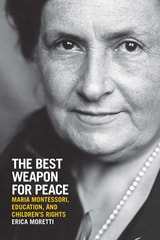
The Best Weapon for Peace
Maria Montessori, Education, and Children's RightsErica Moretti
University of Wisconsin Press, 2022
Using newly discovered primary sources, Moretti examines Montessori’s lifelong pacifist work, including her ultimately unsuccessful push for the creation of the White Cross, a humanitarian organization for war-affected children. Moretti shows that Montessori’s educational theories and practices would come to define chilren’s rights once adopted by influential international organizations, including the United Nations. She uncovers the significance of Montessori’s evolving philosophy of peace and early childhood education within broader conversations about internationalism and humanitarianism.
The Classrooms All Young Children Need
Lessons in Teaching from Vivian PaleyPatricia M. Cooper
University of Chicago Press, 2009
Teacher and author Vivian Paley is highly regarded by parents, educators, and other professionals for her original insights into such seemingly everyday issues as play, story, gender, and how young children think. In The Classrooms All Young Children Need, Patricia M. Cooper takes a synoptic view of Paley’s many books and articles, charting the evolution of Paley’s thinking while revealing the seminal characteristics of her teaching philosophy. This careful analysis leads Cooper to identify a pedagogical model organized around two complementary principles: a curriculum that promotes play and imagination, and the idea of classrooms as fair places where young children of every color, ability, and disposition are welcome.
With timely attention paid to debates about the reduction in time for play in the early childhood classroom, the role of race in education, and No Child Left Behind, The Classrooms All Young Children Need will be embraced by anyone tasked with teaching our youngest pupils.
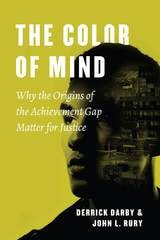
The Color of Mind
Why the Origins of the Achievement Gap Matter for JusticeDerrick Darby and John L. Rury
University of Chicago Press, 2018
Telling the story of what they call the Color of Mind—the idea that there are racial differences in intelligence, character, and behavior—they show how philosophers, such as David Hume and Immanuel Kant, and American statesman Thomas Jefferson, contributed to the construction of this pernicious idea, how it influenced the nature of schooling and student achievement, and how voices of dissent such as Frederick Douglass, Frances Ellen Watkins Harper, and W. E. B. Du Bois debunked the Color of Mind and worked to undo its adverse impacts.
Rejecting the view that racial differences in educational achievement are a product of innate or cultural differences, Darby and Rury uncover the historical interplay between ideas about race and American schooling, to show clearly that the racial achievement gap has been socially and institutionally constructed. School leaders striving to bring justice and dignity to American schools today must work to root out the systemic manifestations of these ideas within schools, while still doing what they can to mitigate the negative effects of poverty, segregation, inequality, and other external factors that adversely affect student achievement. While we cannot expect schools alone to solve these vexing social problems, we must demand that they address the dignitary injustices associated with how we track, discipline, and deal with special education that reinforce long-standing racist ideas. That is the only way to expel the Color of Mind from schools, close the racial achievement gap, and afford all children the dignity they deserve.

The Early Works of John Dewey, Volume 1, 1882 - 1898
Early Essays and Leibniz's New Essays, 1882-1888John Dewey. Edited by Jo Ann Boydston
Southern Illinois University Press, 2008
Volume 1 of “The Early Works of John Dewey, 1882–1898” is entitled “Early Essays and Leibniz’s New Essays Concerning the Human Understanding, 1882–1888.” Included here are all Dewey’s earliest writings, from his first published article through his book on Leibniz.
The materials in this volume provide a chronological record of Dewey’s early development—beginning with the article he sent to the Journal of Speculative Philosophy in 1881 while he was a high-school teacher in Oil City, Pennsylvania, and closing with his widely-acclaimed work on Leibniz in the Grigg’s Series of German Philosophical Classics, written when he was an Assistant Professor at the University of Michigan. During these years between 1882 and 1888, Dewey’s life course was established: he decided to follow a career in philosophy, completed doctoral studies at Johns Hopkins University, became an Instructor at the University of Michigan, was promoted to Assistant Professor, and accepted a position as Chairman of the Department of Philosophy at the University of Minnesota. With the publication of Psychology, he became well known among scholars in this country; a series of articles in the British journal Mind brought him prominence in British philosophical circles. His articles were abstracted in the Revue philosophique.
None of the articles collected in this volume was reprinted during the author’s lifetime. For the first time, it is now possible for Dewey scholars to study consecutively in one publication all the essays which originally appeared in many periodicals.

The Early Works of John Dewey, Volume 3, 1882 - 1898
Essays and Outlines of a Critical Theory of Ethics, 1889-1892John Dewey. Edited by Jo Ann Boydston
Southern Illinois University Press, 2008
This third volume in the definitive edition of Dewey’s early work opens with his tribute to George Sylvester Morris, the former teacher who had brought Dewey to the University of Michigan. Morris’s death in 1889 left vacant the Department of Philosophy chairmanship and led to Dewey’s returning to fill that post after a year’s stay at Minnesota.
Appearing here, among all his writings from 1889 through 1892, are Dewey’s earliest comprehensive statements on logic and his first book on ethics. Dewey’s marked copy of the galley-proof for his important article “The Present Position of Logical Theory,” recently discovered among the papers of the Open Court Publishing Company, is used as the basis for the text, making available for the first time his final changes and corrections.
The textual studies that make The Early Works unique among American philosophical editions are reported in detail. One of these, “A Note on Applied Psychology,” documents the fact that Dewey did not co-author this book frequently attributed to him. Six brief unsigned articles written in 1891 for a University of Michigan student publication, the Inlander, have been identified as Dewey’s and are also included in this volume. In both style and content, these articles reflect Dewey’s conviction that philosophy should be used as a means of illuminating the contemporary scene; thus they add a new dimension to present knowledge of his early writing.
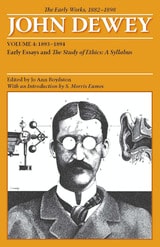
The Early Works of John Dewey, Volume 4, 1882 - 1898
Early Essays and The Study of Ethics, A Syllabus, 1893-1894John Dewey. Edited by Jo Ann Boydston
Southern Illinois University Press, 2008
Volume 4 of’ “The Early Works” series covers the period of Dewey’s last year and one-half at the University of Michigan and his first half-year at the University of Chicago. In addition to sixteen articles the present volume contains Dewey’s reviews of six books and three articles, verbatim reports of three oral statements made by Dewey, and a full-length book, The Study of Ethics.
Like its predecessors in this series, this volume presents a “clear text,” free of interpretive or reference material. Apparatus, including references, corrections, and emendations, is confined to appendix material. Fredson Bowers, the Consulting Textual Editor, has provided an essay on the textual principles and procedures, and Wayne A. R. Leys, Professor of Philosophy at Southern Illinois University, has written an Introduction discussing the relationship between Dewey’s writings of this period and his later work. That Dewey’s scholarship and writing was at an especially high level during 1893 and 1894 may be considered an index to the significance of this two-year period.

The Early Works of John Dewey, Volume 5, 1882 - 1898
Early Essays, 1895-1898John Dewey. Edited by Jo Ann Boydston
Southern Illinois University Press, 2008
This fifth and concluding volume of “The Early Works of John Dewey” is the only one of the series made up entirely of essays. The appearance during the four-year period, 1895–98, of thirty-eight items amply indicates that Dewey continued to maintain a high level of published output. These were the years of Dewey’s most extensive work and involvement at the University of Chicago.
Like its predecessors in this series, this volume presents a “clear text,” free of interpretive or reference material. Apparatus, including references, corrections, and emendations, is confined to appendix material. Fredson Bowers, the Consulting Textual Editor, has provided an essay on the textual principles and procedures, and William P. McKenzie, Professor of Philosophy and Education at Southern Illinois University, has written an introduction identifying the thread connecting the apparently diffuse material in the many articles of this volume—Dewey’s attempt to unite philosophy with psychology and sociology and with education.
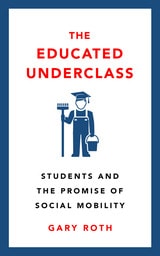
The Educated Underclass
Students and the False Promise of Social MobilityGary Roth
Pluto Press, 2019
The dream of social mobility is dying. Where previous generations routinely expected to surpass their parents' level of economic success, prospects for today's young people are increasingly bleak. What role does higher education play in the process? An essential and frightening one, according to author Gary Roth.
The Educated Underclass reveals the structural problems that are helping to create this problem. Gary Roth shows how universities—touted as the best way up the economic ladder for young people—actually reproduce traditional class hierarchies. And as more graduates emerge every year into economies that are no longer creating a steady stream of stable jobs, the odds of landing one decrease—and over-educated people end up scrapping for poorly compensated positions for which they're overqualified. Chapters include:
*Higher education and class
*The overproduction of intelligence
*Class in transition: historical background
*Underemployment through the decades
*Class status and economic instability
*And more!
Roth writes in his Introduction, “Education has become an intermediary institution between a social system that habitually sputters and declines while ever-greater amounts of consumer products are dangled in front of the system’s workforce. The result: a dynamic fraught with all sort of negative possibilities, both socially and psychotically.”
A broadside against the failures of our education system and our economy, Gary Roth’s The Educated Underclass aims to startle us out of our complacency and wake us up to action.

The Education of Teachers
Edited by Gary A. Griffin
University of Chicago Press, 1999

The Fruits of Opportunism
Noncompliance and the Evolution of China's Supplemental Education IndustryLe Lin
University of Chicago Press, 2022
An in-depth examination of the regulatory, entrepreneurial, and organizational factors contributing to the expansion and transformation of China’s supplemental education industry.
Like many parents in the United States, parents in China, increasingly concerned with their children’s academic performance, are turning to for-profit tutoring businesses to help their children get ahead in school. China’s supplemental education industry is now the world’s largest and most vibrant for-profit education market, and we can see its influence on the US higher education system: more than 70% of Chinese students studying in American universities have taken test preparation classes for overseas standardized tests. The Fruits of Opportunism offers a much-needed thorough investigation into this industry. This book examines how opportunistic organizations thrived in an ambiguous policy environment and how they catalyzed organizational and institutional changes in this industry.
A former insider in China’s Education Industry, sociologist Le Lin shows how and why this industry evolved to become a for-profit one dominated by private, formal, nationally operating, and globally financed corporations, despite restrictions the Chinese state placed on the industry. Looking closely at the opportunistic organizations that were founded by marginal entrepreneurs and quickly came to dominate the market, Lin finds that as their non-compliant practices spread across the industry, these opportunistic organizations pushed privatization and marketization from below. The case of China’s Education Industry laid out in The Fruits of Opportunism illustrates that while opportunism leaves destruction in its wake, it can also drive the formation and evolution of a market.

The Future of Black Studies
Abdul
Pluto Press, 2022
'A timely, future-oriented and necessary contribution which provides clarity to the multivalent tendencies in this field' - Carole Boyce Davies
The marginalization of Black voices from the academy is a problem in the Western world. But Black Studies, where it exists, is a powerful, boundary-pushing discipline, grown out of struggle and community action. Here, Abdul Alkalimat, one of the founders of Black Studies in the US, presents a reimagining of the future trends in the study of the Black experience.
Taking Marxism and Black Experientialism, Afro-Futurist and Diaspora frameworks, he projects a radical future for the discipline at this time of social crisis. Choosing cornerstones of culture, such as the music of Sun Ra, the movie Black Panther and the writer Octavia Butler, he looks at the trajectory of Black liberation thought since slavery, including new research on the rise in the comparative study of Black people all over the world.
Turning to look at how digital tools enhance the study of the discipline, this book is a powerful read that will inform and inspire students and activists.

The Future of Black Studies
Abdul Alkalimat
Pluto Press, 2022
At a turning point for the growing field of Black Studies, one of its founders looks to its future
'A timely, future-oriented and necessary contribution which provides clarity to the multivalent tendencies in this field' - Carole Boyce Davies
The marginalization of Black voices from the academy is a problem in the Western world. But Black Studies, where it exists, is a powerful, boundary-pushing discipline, grown out of struggle and community action. Here, Abdul Alkalimat, one of the founders of Black Studies in the US, presents a reimagining of the future trends in the study of the Black experience.
Taking Marxism and Black Experientialism, Afro-Futurist and Diaspora frameworks, he projects a radical future for the discipline at this time of social crisis. Choosing cornerstones of culture, such as the music of Sun Ra, the movie Black Panther and the writer Octavia Butler, he looks at the trajectory of Black liberation thought since slavery, including new research on the rise in the comparative study of Black people all over the world.
Turning to look at how digital tools enhance the study of the discipline, this book is a powerful read that will inform and inspire students and activists.
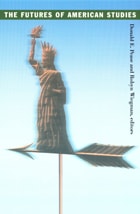
The Futures of American Studies
Donald E. Pease and Robyn Wiegman, eds.
Duke University Press, 2002
Contributors. Lindon Barrett, Nancy Bentley, Gillian Brown, Russ Castronovo, Eric Cheyfitz, Michael Denning, Winfried Fluck, Carl Gutierrez-Jones, Dana Heller, Amy Kaplan, Paul Lauter, Günter H. Lenz, George Lipsitz, Lisa Lowe, Walter Benn Michaels, José Estaban Muñoz, Dana D. Nelson, Ricardo L. Ortiz, Janice Radway, John Carlos Rowe, William V. Spanos
The Hidden Curriculum in Health Professional Education
Edited by Frederic W. Hafferty
Dartmouth College Press, 2015
The Later Works of John Dewey, Volume 13, 1925 - 1953
1938-1939, Experience and Education, Freedom and Culture, Theory of Valuation, and EssaysJohn Dewey. Edited by Jo Ann Boydston
Southern Illinois University Press, 2008
This volume includes all Dewey’s writings for 1938 except for Logic: The Theory of Inquiry (Volume 12 of The Later Works), as well as his 1939 Freedom and Culture, Theory of Valuation, and two items from Intelligence in the Modern World.
Freedom and Culture presents, as Steven M. Cahn points out, “the essence of his philosophical position: a commitment to a free society, critical intelligence, and the education required for their advance.”
The Later Works of John Dewey, Volume 3, 1925 - 1953
1927-1928, Essays, Reviews, Miscellany, and "Impressions of Soviet Russia"John Dewey. Edited by Jo Ann Boydston
Southern Illinois University Press, 2008
All of Dewey’s writings for 1927 and 1928 with the exception of The Public and Its Problems, which appears in Volume 2, A Modern Language Association’s Committee on Scholarly Editions textual edition.
These essays are, as Sidorsky says in his Introduction, “framed, in great measure, by those two poles of his philosophical interest: looking backward, in a sense, to the defense of naturalistic metaphysics and moving forward to the justification and to the implications for practice of an empirical theory.”
Dewey’s five essays on education are evidence of his continued interest in that field. Among them is the frequently quoted “Why I Am a Member of the Teachers Union,” which is still used by the American Federation of Teachers in its recruiting efforts. Other highlights of this volume include the famous exchange between George Santayana and Dewey on Experience and Nature; an impassioned condemnation of the miscarriage of justice Dewey saw in the Sacco-Vanzetti trial; and a series of six articles on the Soviet Union based on Dewey’s trip to that country in 1928.
The Later Works of John Dewey, Volume 5, 1925 - 1953
1929-1930, Essays, The Sources of a Science of Education, Individualism, Old and New, and Construction and CriticismJohn Dewey. Edited by Jo Ann Boydston
Southern Illinois University Press, 2008
With the exception of The Quest for Certainty (Volume 4) this fifth volume brings together Dewey’s writings for the 1929–1930 period.
During this time Dewey published 4 books and 50 articles on philosophical, educational, political, and social issues. His philosophical essays include “What Humanism Means to Me” and “What I Believe,” both of which express Dewey’s faith in man’s potentialities and intelligence, and a lively Journal of Philosophy exchange with Ernest Nagel, William Ernest Hocking, C. I. Lewis, and F. J. E. Woodbridge. Educational writings include The Sources of a Science of Education. The contents of this volume reflect Dewey’s increasing involvement in social and political problems.
The Later Works of John Dewey, Volume 6, 1925 - 1953
1931-1932, Essays, Reviews, and MiscellanyJohn Dewey. Edited by Jo Ann Boydston
Southern Illinois University Press, 2008
Except for Dewey’s and James H. Tufts’ 1932 Ethics (Volume 7 of The Later Works), this volume brings together Dewey’s writings for 1931–1932.
The Great Depression presented John Dewey and the American people with a series of economic, political, and social crises in 1931 and 1932 that are reflected in most of the 86 items in this volume, even in philosophical essays such as “Human Nature.” As Sidney Ratner points out in his Introduction, Dewey’s interest in international peace is featured in the writings in this volume.
The Later Works of John Dewey, Volume 8, 1925 - 1953
1933, Essays and How We Think, Revised EditionJohn Dewey. Edited by Jo Ann Boydston
Southern Illinois University Press, 2008
The Liberal Arts Advantage
Measuring the Deeper Value of a College EducationEdited by Richard Arum, Paul Courant, and Allyson Flaster
University of Chicago Press, 2026
Showcases new measurement strategies for assessing the impact of a liberal arts education on students and society.
More than ever before, our society is questioning the meaning and value of higher education, and liberal arts education, in particular, has come under substantial scrutiny. Economic detractors characterize liberal arts education as impractical, claiming that college should prepare students for the workforce. Others object to the curriculum, portraying it as broken or misdirected. According to these critics, the liberal arts education being offered in the United States is marked by its rejection of core intellectual and ideological commitments.
In The Liberal Arts Advantage, a wide range of scholars argue for how and why a liberal arts education uniquely develops skill sets and expertise needed for individuals and society to thrive in the twenty-first century. The contributors address foundational questions about what liberal arts education is, how it has been conceptualized in the past, and what we can learn from its societal and professional impacts. They present compelling, unique research and new methodological tools for assessing the outcomes of liberal arts graduates. Offering grounded and well-founded arguments in favor of our education system, The Liberal Arts Advantage persuasively explains why educational leaders should reinvest in liberal arts education.
The Middle Works of John Dewey, Volume 1, 1899 - 1924
Journal Articles, Book Reviews, and Miscellany Published in the 1899-1901 Period, and The School and Society, and The Educational SituationJohn Dewey. Edited by Jo Ann Boydston
Southern Illinois University Press, 2008
Includes the complete text of The School and Society and The Educational Situation.
The Middle Works of John Dewey, Volume 10, 1899 - 1924
Journal Articles, Essays, and Miscellany Published in the 1916-1917 PeriodJohn Dewey. Edited by Jo Ann Boydston
Southern Illinois University Press, 2008
The Middle Works of John Dewey, Volume 13, 1899 - 1924
Journal Articles, Essays, and Miscellany Published in the 1921-1922 PeriodJohn Dewey. Edited by Jo Ann Boydston
Southern Illinois University Press, 2008
Volume 13 in The Middle Works of John Dewey, 1899–1924, series brings together Dewey’s writings for 1921 and 1922,with the exception of Human Nature and Conduct. A Modern Language Association Committee on Scholarly Editions textual edition.
Ralph Ross notes in his Introduction that the 53 items constituting this volume “defend Dewey’s beliefs at 63 and look forward to what he was yet to write.” The essays to which Dewey responded, as well as abstracts of articles that have been published only in Japanese, appear as appendixes.
The article “Valuation and Experimental Knowledge” treats a favorite Dewey theme: “Most of the important crises of life are cases where tastes are the only things worth discussing, and where, if the life of reason is to exist and prevail, judgment must be performed with regard for its logical implications.” The philosophical articles stress Dewey’s view that, as Ross remarks, “philosophies are not timeless and universal, but speak to times, places and conditions.”
The Middle Works of John Dewey, Volume 15, 1899 - 1924
Journal Articles, Essays, and Miscellany Published in the 1923-1924 PeriodJohn Dewey. Edited by Jo Ann Boydston
Southern Illinois University Press, 2008
Volume 15 in The Middle Works of John Dewey, 1899–1924, series brings together Dewey’s writings for the period 1923–1924. A Modern Language Association Committee on Scholarly Editions textual edition.
Volume 15 completes the republication of Dewey’s extensive writings for the 25-year period included in the Middle Works series. Many facets of Dewey’s interests—politics, philosophy, education, and social concerns—are illuminated by the 40 items from 1923 and 1924.
Inspired by his own convictions and those of his friend Salmon O. Levinson, founder of the American Committee for the Outlawry of War, Dewey’s articles became the keystone of the committee’s campaign to outlaw war. His essay, “Logical Method and Law,” is perhaps the most enduring of Dewey’s writings in this volume. Dewey’s philosophical discussions with Daniel Sommer Robinson, David Wight Prall, Arthur Oncken Lovejoy, and Sterling Power Lamprecht are represented here, as is Dewey’s assessment of the Turkish educational system.
The Middle Works of John Dewey, Volume 2, 1899 - 1924
Journal Articles, Book Reviews, and Miscellany in the 1902-1903 Period, and Studies in Logical Theory and The Child and the CurriculumJohn Dewey
Southern Illinois University Press, 2008
Includes the complete text of Dewey’s Studies in Logical Theory and The Child and the Curriculum.
The Middle Works of John Dewey, Volume 3, 1899 - 1924
Journal Articles, Book Reviews, and Miscellany in the 1903-1906 PeriodJohn Dewey. Edited by Jo Ann Boydston
Southern Illinois University Press, 2008
The Middle Works of John Dewey, Volume 4, 1899 - 1924
Journal Articles and Book Reviews in the 1907-1909 Period, and The Pragmatic Movement of Contemporary Thought and Moral Principles in EducationJohn Dewey. Edited by Jo Ann Boydston
Southern Illinois University Press, 2008
The Middle Works of John Dewey, Volume 6
Journal Articles, Book Reviews, Miscellany in the 1910-1911 Period, and How We ThinkJohn Dewey. Edited by Jo Ann Boydston
Southern Illinois University Press, 2008
William James, remarking in 1909 on the differences among the three leading spokesmen for pragmatism—himself, F. C. S. Schiller, and John Dewey—said that Schiller’s views were essentially “psychological,” his own, “epistemological,” whereas Dewey’s “panorama is the widest of the three.”
The two main subjects of Dewey’s essays at this time are also two of the most fundamental and persistent philosophical questions: the nature of knowledge and the meaning of truth. Dewey’s distinctive analysis is concentrated chiefly in seven essays, in a long, significant, and previously almost unknown work entitled “The Problem of Truth,” and in his book How We Think. As a whole, the 1910–11 writings illustrate especially well that which the Thayers identify in their Introduction as Dewey’s “deepening concentration on questions of logic and epistemology as contrasted with the more pronounced psychological and pedagogical treatment in earlier writings.”
The Middle Works of John Dewey, Volume 7, 1899 - 1924
Essays, Books Reviews, Encyclopedia Articles in the 1912-1914 Period, and Interest and Effort in EducationJohn Dewey. Edited by Jo Ann Boydston
Southern Illinois University Press, 2008
During the three years embraced by Volume 7, Dewey published twenty articles and reviews, one of the articles of monograph-length, “The Psychology of Social Behavior,” one small book, Interest and Effort in Education, and seventy encyclopedia articles.
A salient and arresting feature of the essays is the continuing polemic between Dewey and some of his critics. Ralph Ross, whose perceptive Introduction to the volume provides a broad perspective of the various philosophical controversies in which Dewey was engaged, comments that “when Dewey was pitting himself against important adversaries, his talents as a critic were fully evident.”
The Middle Works of John Dewey, Volume 8, 1899 - 1924
Essays and Miscellany in the 1915 Period and German Philosophy and Politics and Schools of To-MorrowJohn Dewey. Edited by Jo Ann Boydston
Southern Illinois University Press, 2008
Volume 8 comprises all Dewey’s published writings for the year 1915—and only for 1915, a year of typically elevated productivity, which saw publication of fifteen articles and miscellaneous pieces and three books, two of which are reprinted here: German Philosophy and Politics and Schools of Tomorrow.
Professor Hook says that the publications in this volume reveal John Dewey at the height of his philosophical powers. Even though his greatest works were still to come—Democracy and Education, Experience and Nature, The Quest for Certainty, and Logic: The Theory of Inquiry—“the themes elaborated therein were already sounded and developed with incisive brevity in the articles and books of this banner year.”
The Middle Works of John Dewey, Volume 9, 1899-1924
Democracy and Education, 1916John Dewey. Edited by Jo Ann Boydston
Southern Illinois University Press, 2008
The Non-Modern Crisis of the Modern University
D. Bret Leraul and Willy Thayer
Northwestern University Press, 2025
A landmark work of critical theory about the Western university from the Southern Cone
Renowned Chilean philosopher Willy Thayer’s La crisis no moderna de la universidad moderna, first published in 1996 and in an updated edition in 2019, is a landmark work of critical theory from the Southern Cone. Presented in English for the first time, The Non-Modern Crisis of the Modern University rewrites the idea of the Western university while also diagnosing the ills of postdictatorship Chile through a philosophically informed dismantling of its neoliberal institutionalization of higher education. Bret Leraul’s translation advances the vital work of globalizing critical university studies by disseminating theory from the Global South. If the university helped to construct Chile’s neoliberal society, Thayer’s polemical deconstruction of both will help readers reconstruct the cultural politics of the era to better understand the global hegemony of neoliberalism today.
The Opinionated University
Academic Freedom, Diversity, and the Myth of Neutrality in American Higher EducationBrian Soucek
University of Chicago Press, 2026
Can a university ever truly be neutral in today’s social and political climate? Pushing against the tide of universities increasingly pledging to stay neutral about contentious issues, law professor Brian Soucek argues that their promises are doomed to fail—universities can’t help being opinionated.
In The Opinionated University, Soucek shows that neutrality is a myth by taking a deep dive into several prominent campus controversies of the day, including diversity, equity, and inclusion (DEI) efforts and restrictions on campus speech and protest. Each issue requires universities to choose a side in what they do, if not also in what they say. In everything from curricular and admissions decisions to their response to outside rankings and their evaluation of faculty, universities express the values at the heart of their mission. Soucek argues that those pushing for neutrality are only preventing universities from standing up for their values, whether in today’s current moment of crisis or in periods of political calm.
Both timely and deeply engaging, The Opinionated University calls on universities to dispense with neutrality as a governing principle and focus instead on what their mission should be, and who should determine it.

The Perversity of Gratitude
An Apartheid EducationFarred, Grant
Temple University Press, 2024
Unsentimental about his education, Farred’s critique recognizes the impact of four exceptional teachers—all engaging pedagogical figures who cultivated a great sense of possibility in how thinking could be learned through a disenfranchised South African education.
The Perversity of Gratitude brings to bear the work of influential philosophers such as Martin Heidegger and Jacques Derrida. The book tackles broad philosophical concepts—transgression, withdrawal, and the dialectic. This leads to the creation of a new concept, “the diaspora-in-place,” which Farred explains, “is having left a place before one physically removes oneself from this place.”
Farred’s apartheid education in South Africa instilled in him a lifelong commitment to learning thinking. “And for that I am grateful,” Farred writes in The Perversity of Gratitude. His autopoiesis is sure to provoke and inspire readers.
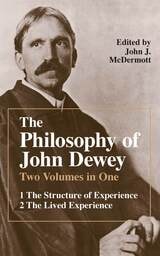
The Philosophy of John Dewey
Volume 1. The Structure of Experience. Volume 2: The Lived ExperienceJohn Dewey
University of Chicago Press, 1981
John J. McDermott's anthology, The Philosophy of John Dewey, provides the best general selection available of the writings of America's most distinguished philosopher and social critic. This comprehensive collection, ideal for use in the classroom and indispensable for anyone interested in the wide scope of Dewey's thought and works, affords great insight into his role in the history of ideas and the basic integrity of his philosophy.
This edition combines in one book the two volumes previously published separately. Volume 1, "The Structure of Experience," contains essays on metaphysics, the logic of inquiry, the problem of knowledge, and value theory. In volume 2, "The Lived Experience," Dewey's writings on pedagogy, ethics, the aesthetics of the "live creature," politics, and the philosophy of culture are presented. McDermott has prefaced each essay with a helpful explanatory note and has written an excellent general introduction to the anthology.
The Price of Nice
How Good Intentions Maintain Educational InequityAngelina E. Castagno
University of Minnesota Press, 2019
How being “nice” in school and university settings works to reinforce racialized, gendered, and (dis)ability-related inequities in education and society
Being nice is difficult to critique. Niceness is almost always portrayed and felt as a positive quality. In schools, nice teachers are popular among students, parents, and administrators. And yet Niceness, as a distinct set of practices and discourses, is not actually good for individuals, institutions, or communities because of the way it maintains and reinforces educational inequity.
In The Price of Nice, an interdisciplinary group of scholars explores Niceness in educational spaces from elementary schools through higher education to highlight how this seemingly benign quality reinforces structural inequalities. Grounded in data, personal narrative, and theory, the chapters show that Niceness, as a raced, gendered, and classed set of behaviors, functions both as a shield to save educators from having to do the hard work of dismantling inequity and as a disciplining agent for those who attempt or even consider disrupting structures and ideologies of dominance.
Contributors: Sarah Abuwandi, Arizona State U; Colin Ben, U of Utah; Nicholas Bustamante, Arizona State U; Aidan/Amanda J. Charles, Northern Arizona U; Jeremiah Chin, Arizona State U; Sally Campbell Galman, U of Massachusetts; Frederick Gooding Jr., Texas Christian U; Deirdre Judge, Tufts U; Katie A. Lazdowski; Román Liera, U of Southern California; Sylvia Mac, U of La Verne; Lindsey Malcolm-Piqueux, California Institute of Technology; Giselle Martinez Negrette, U of Wisconsin–Madison; Amber Poleviyuma, Arizona State U; Alexus Richmond, Arizona State U; Frances J. Riemer, Northern Arizona U; Jessica Sierk, St. Lawrence U; Bailey B. Smolarek, U of Wisconsin–Madison; Jessica Solyom, Arizona State U; Megan Tom, Arizona State U; Sabina Vaught, U of Oklahoma; Cynthia Diana Villarreal, U of Southern California; Kristine T. Weatherston, Temple U; Joseph C. Wegwert, Northern Arizona U; Marguerite Anne Fillion Wilson, Binghamton U; Jia-Hui Stefanie Wong, Trinity College; Denise Gray Yull, Binghamton U.
The Promise of Youth Anti-Citizenship
Race and Revolt in EducationKevin L. Clay
University of Minnesota Press, 2024
When inclusion into the fold of citizenship is conditioned by a social group’s conceit to ritual violence, humiliation, and exploitation, what can anti-citizenship offer us?
The Promise of Youth Anti-citizenship argues that Black youth and youth of color have been cast as anti-citizens, disenfranchised from the social, political, and economic mainstream of American life. Instead of asking youth to conform to a larger societal structure undergirded by racial capitalism and antiblackness, the volume’s contributors propose that the collective practice of anti-citizenship opens up a liberatory space for youth to challenge the social order.
The chapters cover an array of topics, including Black youth in the charter school experiment in post-Katrina New Orleans; racial capitalism, the queering of ethnicity, and the 1980s Salvadoran migration to South Central Los Angeles; the notion of decolonizing classrooms through Palestinian liberation narratives; and more. Through a range of methodological approaches and conceptual interventions, this collection illuminates how youth negotiate and exercise anti-citizenship as forms of either resistance or refusal in response to coercive patriotism, cultural imperialism, and predatory capitalism.
Contributors: Karlyn Adams-Wiggins, Portland State U; Ariana Brazier; Julio Cammarota, U of Arizona; Michael Davis, U of Wisconsin–Madison; Damaris C. Dunn, U of Georgia; Diana Gamez, U of California, Irvine; Rachel F. Gómez, Virginia Commonwealth U; Luma Hasan; Gabriel Rodriguez, Iowa State U; Christopher R. Rogers, U of Pennsylvania; Damien M. Sojoyner, U of California, Irvine.

The Right to Be Out
Sexual Orientation and Gender Identity in America's Public Schools, Second EditionStuart Biegel
University of Minnesota Press, 2018
An updated edition of this measured, practical, and timely guide to LGBT rights and issues for educators and school officials
With ongoing battles over transgender rights, bullying cases in the news almost daily, and marriage equality only recently the law of the land, the information in The Right to Be Out could not be more timely or welcome. In an updated second edition that explores the altered legal terrain of LGBT rights for students and educators, Stuart Biegel offers expert guidance on the most challenging concerns in this fraught context.
Taking up the pertinent questions likely to arise regarding curriculum and pedagogy in the classroom, school sports, and transgender issues, Biegel reviews the dramatic legal developments of the past decades, identifies the principles at work, and analyzes the policy considerations that result from these changes. Central to his work is an understanding of the social, political, and personal tensions regarding the nature and extent of the right to be out, which includes both the First Amendment right to express an identity and the Fourteenth Amendment right to be treated equally. Acknowledging that LGBT issues affect people of every sexual orientation and gender identity, Biegel provides a road map of viable strategies for school officials and educators.
The Right to Be Out, informed by the latest research-based findings, advances the proposition that a safe and supportive educational environment, built upon shared values and geared toward a greater appreciation of our pluralistic society, can lead to a better world for everyone.
The School and Society
John Dewey. Edited by Jo Ann Boydston. Introduction by Joe R. Burnett
Southern Illinois University Press, 1980
First published in 1899,The School and Society describes John Dewey’s experiences with his own famous Laboratory School, started in 1896.
Dewey’s experiments at the Laboratory School reflected his original social and educational philosophy based on American experience and concepts of democracy, not on European education models then in vogue. This forerunner of the major works shows Dewey’s pervasive concern with the need for a rich, dynamic, and viable society.
In his introduction to this volume, Joe R. Burnett states Dewey’s theme. Industrialization, urbanization, science, and technology have created a revolution the schools cannot ignore. Dewey carries this theme through eight chapters: The School and Social Progress; The School and the Life of the Child; Waste in Education; Three Years of the University Elementary School; The Psychology of Elementary Education; Froebel’s Educational Principles; The Psychology of Occupations; and the Development of Attention.
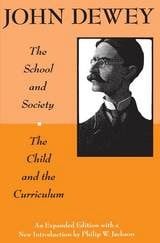
The School and Society and The Child and the Curriculum
John Dewey
University of Chicago Press, 1990
The School and Society and The Child and the Curriculum
John Dewey
University of Chicago Press, 1990
This edition brings Dewey's educational theory into sharp focus, framing his two classic works by frank assessments, past and present, of the practical applications of Dewey's ideas. In addition to a substantial introduction in which Philip W. Jackson explains why more of Dewey's ideas haven't been put into practice, this edition restores a "lost" chapter, dropped from the book by Dewey in 1915.