Results by title
279 books match the query 'Slavery' and 64 start with t
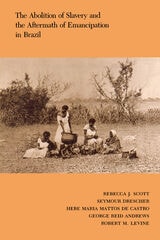
The Abolition of Slavery and the Aftermath of Emancipation in Brazil
Rebecca Scott, Seymour Drescher, Hebe Maria Mattos de Castro, George Reid Andrews, and Robert Levine
Duke University Press, 1988
The articles presented here represent a broad scope of scholarly inquiry that covers developments across a wide canvas of Brazilian history and accentuates the importance of formal abolition as a watershed in that nation’s development.
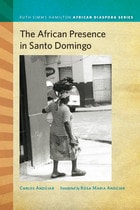
The African Presence in Santo Domingo
Carlos Andujar
Michigan State University Press, 2012
Throughout its long and often tumultuous history, “La Hispanola” has taken on various cultural identities to meet the expectations—and especially the demands—of those who governed it. The island shared by the Dominican Republic and Haiti saw its first great shift with the arrival of Spanish colonists, who eliminated the indigenous population and established a pattern of indifference or hostility to diversity there. This enlightening book explores the Dominican Republic through the lens of its African descendants, beginning with the rise of the black slave trade in fifteenth- and sixteenth-century West Africa, and continuing on to slavery as it existed on the island. An engaging history that vividly details black life in the Dominican Republic, the book investigates the slave rebellions and evaluates the numerous contributions of black slaves to Dominican culture.

The Afterlife of Reproductive Slavery
Biocapitalism and Black Feminism’s Philosophy of HistoryAlys Eve Weinbaum
Duke University Press, 2019
The Anthropology of Slavery
The Womb of Iron and GoldClaude Meillassoux
University of Chicago Press, 1991
The Archaeology of Slavery
A Comparative Approach to Captivity and CoercionEdited by Lydia Wilson Marshall
Southern Illinois University Press, 2014
Plantation sites, especially those in the southeastern United States, have long dominated the archaeological study of slavery. These antebellum estates, however, are not representative of the range of geographic locations and time periods in which slavery has occurred. As archaeologists have begun to investigate slavery in more diverse settings, the need for a broader interpretive framework is now clear.
The Archaeology of Slavery: A Comparative Approach to Captivity and Coercion, edited by Lydia Wilson Marshall, develops an interregional and cross-temporal framework for the interpretation of slavery. Contributors consider how to define slavery, identify it in the archaeological record, and study it as a diachronic process from enslavement to emancipation and beyond.
Essays cover the potential material representations of slavery, slave owners’ strategies of coercion and enslaved people’s methods of resisting this coercion, and the legacies of slavery as confronted by formerly enslaved people and their descendants. Among the peoples, sites, and periods examined are a late nineteenth-century Chinese laborer population in Carlin, Nevada; a castle slave habitation at San Domingo and a more elite trading center at nearby Juffure in the Gambia; two eighteenth-century plantations in Dominica; Benin’s Hueda Kingdom in the seventeenth and eighteenth centuries; plantations in Zanzibar; and three fugitive slave sites on Mauritius—an underground lava tunnel, a mountain, and a karst cave.
This essay collection seeks to analyze slavery as a process organized by larger economic and social forces with effects that can be both durable and wide-ranging. It presents a comparative approach that significantly enriches our understanding of slavery.
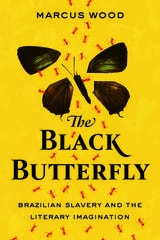
The Black Butterfly
Brazilian Slavery and the Literary ImaginationMarcus Wood
West Virginia University Press, 2019
The Black Butterfly focuses on the slavery writings of three of Brazil’s literary giants—Machado de Assis, Castro Alves, and Euclides da Cunha. These authors wrote in the late nineteenth and early twentieth centuries, as Brazil moved into and then through the 1888 abolition of slavery. Assis was Brazil’s most experimental novelist; Alves was a Romantic poet with passionate liberationist politics, popularly known as “the poet of the slaves”; and da Cunha is known for the masterpiece Os Sertões (The Backlands), a work of genius that remains strangely neglected in the scholarship of transatlantic slavery.
Wood finds that all three writers responded to the memory of slavery in ways that departed from their counterparts in Europe and North America, where emancipation has typically been depicted as a moment of closure. He ends by setting up a wider literary context for his core authors by introducing a comparative study of their great literary abolitionist predecessors Luís Gonzaga Pinto da Gama and Joaquim Nabuco. The Black Butterfly is a revolutionary text that insists Brazilian culture has always refused a clean break between slavery and its aftermath. Brazilian slavery thus emerges as a living legacy subject to continual renegotiation and reinvention.
The Blind African Slave
Memoirs of Boyrereau Brinch, Nicknamed Jeffrey BraceJeffrey Brace, as told to Benjamin F. Prentiss, Esq.
University of Wisconsin Press, 2005
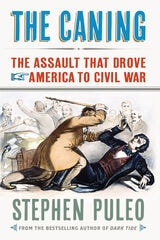
The Caning
The Assault That Drove America to Civil WarStephen Puleo
Westholme Publishing, 2012
Early in the afternoon of May 22, 1856, ardent pro-slavery Congressman Preston S. Brooks of South Carolina strode into the United States Senate Chamber in Washington, D.C., and began beating renowned anti-slavery Senator Charles Sumner with a gold-topped walking cane. Brooks struck again and again—more than thirty times across Sumner’s head, face, and shoulders—until his cane splintered into pieces and the helpless Massachusetts senator, having nearly wrenched his desk from its fixed base, lay unconscious and covered in blood. It was a retaliatory attack. Forty-eight hours earlier, Sumner had concluded a speech on the Senate floor that had spanned two days, during which he vilified Southern slaveowners for violence occurring in Kansas, called Stephen A. Douglas of Illinois a “noise-some, squat, and nameless animal,” and famously charged Brooks’s second cousin, South Carolina Senator Andrew Butler, as having “a mistress. . . who ugly to others, is always lovely to him. . . . I mean, the harlot, Slavery.” Brooks not only shattered his cane during the beating, but also destroyed any pretense of civility between North and South.
One of the most shocking and provocative events in American history, the caning convinced each side that the gulf between them was unbridgeable and that they could no longer discuss their vast differences of opinion regarding slavery on any reasonable level.The Caning: The Assault That Drove America to Civil War tells the incredible story of this transformative event. While Sumner eventually recovered after a lengthy convalescence, compromise had suffered a mortal blow. Moderate voices were drowned out completely; extremist views accelerated, became intractable, and locked both sides on a tragic collision course.
The caning had an enormous impact on the events that followed over the next four years: the meteoric rise of the Republican Party and Abraham Lincoln; the Dred Scott decision; the increasing militancy of abolitionists, notably John Brown’s actions; and the secession of the Southern states and the founding of the Confederacy. As a result of the caning, the country was pushed, inexorably and unstoppably, to war. Many factors conspired to cause the Civil War, but it was the caning that made conflict and disunion unavoidable five years later.
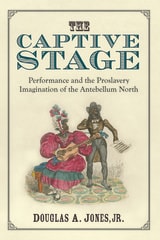
The Captive Stage
Performance and the Proslavery Imagination of the Antebellum NorthDouglas A. Jones, Jr.
University of Michigan Press, 2014
The Case of the Slave-Child, Med
Free Soil in Antislavery BostonKaren Woods Weierman
University of Massachusetts Press, 2019
The Color Black
Enslavement and Erasure in IranBeeta Baghoolizadeh
Duke University Press, 2024
The Divided North
Black and White Families in the Age of SlaveryCarol Gardner
University of Massachusetts Press, 2025
Winner, 2026 New England Historical Association James P. Hanlan Book Prize
Finalist, 2026 New England Society Book Award in Nonfiction
Reuben Ruby and Nathaniel Gordon II were born eleven months apart in 1798 and 1799 and spent much of their boyhoods roaming the noisy, bustling waterfront of Portland, Maine. They lived just blocks from one another, attended school together, and went to the same church with their families. But they were worlds apart, separated by family, culture, and race. Reuben Ruby was Black and Nathaniel Gordon was White.
The Rubys became prominent antislavery activists, equal rights advocates, and operatives on the Underground Railroad. Their neighbors, the Gordons, became well-to-do ship masters, owners, and merchants: among them, the most notorious American slave ship captain of the century, Nathaniel Gordon III. As activists, sea captains, businessmen, prospectors, and politicians, members of these two families traveled to New York, California, Texas, Louisiana, Africa, Haiti, and Brazil, where their experiences were shaped by their racial identities. At home in the “Free North,” they faced social and political divisions nearly as sharp as those they encountered elsewhere.
To understand the issues that divided nineteenth-century America—and, in many ways, still divide the nation—few have looked to the far North. In this compelling narrative history and intimate dual-family biography, Carol Gardner traces the Rubys and Gordons as they navigate the turbulent 1800s. As families and individuals, they demonstrate that the North was a critical proving ground for American notions of freedom and equality, as telling as any town, plantation, or battlefield in the South. Their experiences help reveal what it meant to live in a free state during the age of slavery, with all the promise, disappointment, irony, and hope that the notion entailed.
The Dred Scott Case
Historical and Contemporary Perspectives on Race and LawDavid Thomas Konig
Ohio University Press, 2010
In 1846 two slaves, Dred and Harriet Scott, filed petitions for their freedom in the Old Courthouse in St. Louis, Missouri. As the first true civil rights case decided by the U.S. Supreme Court, Dred Scott v. Sandford raised issues that have not been fully resolved despite three amendments to the Constitution and more than a century and a half of litigation.
The Dred Scott Case: Historical and Contemporary Perspectives on Race and Law presents original research and the reflections of the nation’s leading scholars who gathered in St. Louis to mark the 150th anniversary of what was arguably the most infamous decision of the U.S. Supreme Court. The decision, which held that African Americans “had no rights” under the Constitution and that Congress had no authority to alter that, galvanized Americans and thrust the issue of race and law to the center of American politics. This collection of essays revisits the history of the case and its aftermath in American life and law. In a final section, the present-day justices of the Missouri Supreme Court offer their reflections on the process of judging and provide perspective on the misdeeds of their nineteenth-century predecessors who denied the Scotts their freedom.
Contributors: Austin Allen, Adam Arenson, John Baugh, Hon. Duane Benton, Christopher Alan Bracey, Alfred L. Brophy, Paul Finkelman, Louis Gerteis, Mark Graber, Daniel W. Hamilton, Cecil J. Hunt II, David Thomas Konig, Leland Ware, Hon. Michael A. Wolff

The Dutch Atlantic
Slavery, Abolition and EmancipationKwame Nimako and Glenn Willemsen
Pluto Press, 2011
The Dutch Atlantic interrogates the Dutch involvement in Atlantic slavery and assesses the historical consequences of this for contemporary European society.
Kwame Nimako and Glenn Willemsen show how the slave trade and slavery intertwined economic, social and cultural elements, including nation-state formation in the Netherlands and across Europe. They explore the mobilisation of European populations in the implementation of policies that facilitated Atlantic slavery and examine how European countries created and expanded laws that perpetuated colonisation.
Addressing key themes such as the incorporation of the formerly enslaved into post-slavery states and contemporary collective efforts to forget and/or remember slavery and its legacy in the Netherlands, this is an essential text for students of European history and postcolonial studies.
The End of Slavery in Africa
Suzanne Miers and Richard Roberts
University of Wisconsin Press, 1988
The Fifth Border State
Slavery, Emancipation, and the Formation of West Virginia, 1829–1872Scott A. MacKenzie
West Virginia University Press, 2023
One of the first new interpretations of West Virginia’s origins in over a century—and one that corrects previous histories’ tendency to minimize support for slavery in the state’s founding.
Every history of West Virginia’s creation in 1863 explains the event in similar ways: at the start of the Civil War, political, social, cultural, and economic differences with eastern Virginia motivated the northwestern counties to resist secession from the Union and seek their independence from the rest of the state. In The Fifth Border State, Scott A. MacKenzie offers the first new interpretation of the topic in over a century—one that corrects earlier histories’ tendency to minimize support for slavery in the state’s founding.
Employing previously unused sources and reexamining existing ones, MacKenzie argues that West Virginia experienced the Civil War in the same ways as the border states of Missouri, Kentucky, Maryland, and Delaware. Like these northernmost slave states, northwestern Virginia supported the institution of slavery out of proportion to the actual presence of enslavement there. The people who became West Virginians built a new state first to protect slavery, but radical Unionists and escaping slaves forced emancipation on the statehood movement. MacKenzie shows how conservatives and radicals clashed over Black freedom, correcting many myths about West Virginia’s origins and making The Fifth Border State an important addition to the literature in Appalachian and Civil War history.
The Freedom of Speech
Talk and Slavery in the Anglo-Caribbean WorldMiles Ogborn
University of Chicago Press, 2019
The Freedom to Remember
Narrative, Slavery, and Gender in Contemporary Black Women's FictionMitchell, Angelyn
Rutgers University Press, 2002
The Freedom to Remember examines contemporary literary revisions of slavery in the United States by black women writers. The narratives at the center of this book include: Octavia E. Butler’s Kindred, Sherley Anne Williams’s Dessa Rose, Toni Morrison’s Beloved, J. California Cooper’s Family, and Lorene Cary’s The Price of a Child.
Recent studies have investigated these works only from the standpoint of victimization. Angelyn Mitchell changes the conceptualization of these narratives, focusing on the theme of freedom, not slavery, defining these works as “liberatory narratives.” These works create a space to problematize the slavery/freedom dichotomy from which contemporary black women writers have the “safe” vantage point to reveal aspects of enslavement that their ancestors could not examine. The nineteenth-century female emancipatory narrative, by contrast, was written to aid the cause of abolition by revealing the unspeakable realitiesof slavery. Mitchell shows how the liberatory narrative functions to emancipate its readers from the legacies of slavery in American society: by facilitating a deeper discussion of the issues and by making them new through illumination and interrogation.
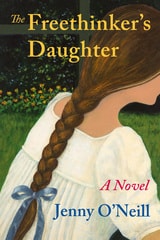
The Freethinker’s Daughter
A NovelJenny O'Neill
Ohio University Press, 2022
This historical and inspiring coming-of-age novel for young readers explores topics of both historical and contemporary relevance as it follows a harrowing year in the life of its intrepid teenaged narrator.
Lexington, Kentucky, 1833: Calendula “Cal” Farmer, a thirteen-year-old white girl, has been raised by her abolitionist, freethinking mother to reason for herself, consult her inner wisdom, and come to her own conclusions. But when a flash flood devastates her family’s home, Cal is unexpectedly thrust into domestic service in a wealthy family’s mansion. There, she encounters firsthand the physical, intellectual, and emotional brutalities of slavery. Later, a cholera outbreak kills a quarter of the population, including Cal’s mother, and Cal enters an orphanage, where she bravely begins another chapter in her young life.
Cal’s story is sure to captivate readers as she confronts the injustices and uncertainties of racism, class consciousness, epidemic disease, and personal loss with independent thinking, perseverance, and love.
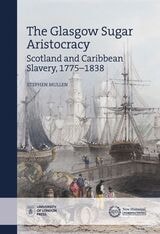
The Glasgow Sugar Aristocracy
Scotland and Caribbean Slavery, 1775–1838Stephen Mullen
University of London Press, 2020
This important book assesses the size and nature of Caribbean slavery’s economic impact on British society. The Glasgow Sugar Aristocracy, a grouping of West India merchants and planters, became active before the emancipation of chattel slavery in the British West Indies in 1834. Many acquired nationally significant fortunes, and their investments percolated into the Scottish economy and wider society. At its core, the book traces the development of merchant capital and poses several interrelated questions during an era of rapid transformation, namely, what impact the private investments of West India merchants and colonial adventurers had on metropolitan society and the economy, as well as the wider effects of such commerce on industrial and agricultural development.
The book also examines the fortunes of temporary Scottish economic migrants who traveled to some of the wealthiest of the Caribbean islands, presenting the first large-scale survey of repatriated slavery fortunes via case studies of Scots in Jamaica, Grenada, and Trinidad before emancipation in 1834. It, therefore, takes a new approach to illuminate the world of individuals who acquired West Indian fortunes and ultimately explores, in an Atlantic frame, the interconnections between the colonies and metropole in the late eighteenth and early nineteenth centuries.
The Good Men Who Won the War
Army of the Cumberland Veterans and Emancipation MemoryRobert E. Hunt
University of Alabama Press, 2010
Robert Hunt examines how Union veterans of the Army of the Cumberland employed the extinction of slavery in the trans-Appalachian South in their memory of the Civil War. Hunt argues that rather than ignoring or belittling emancipation, it became central to veterans’ retrospective understanding of what the war, and their service in it, was all about. The Army of the Cumberland is particularly useful as a subject for this examination because it invaded the South deeply, encountering numerous ex-slaves as fugitives, refugees, laborers on military projects, and new recruits. At the same time, the Cumberlanders were mostly Illinoisans, Ohioans, Indianans, and, significantly, Kentucky Unionists, all from areas suspicious of abolition before the war.
Hunt argues that the collapse of slavery in the trans-Appalachian theater of the Civil War can be usefully understood by exploring the post-war memories of this group of Union veterans. He contends that rather than remembering the war as a crusade against the evils of slavery, the veterans of the Army of the Cumberland saw the end of slavery as a by-product of the necessary defeat of the planter aristocracy that had sundered the Union; a good and necessary outcome, but not necessarily an assertion of equality between the races.
Some of the most provocative discussions about the Civil War in current scholarship are concerned with how memory of the war was used by both the North and the South in Reconstruction, redeemer politics, the imposition of segregation, and the Spanish-American War. This work demonstrates that both the collapse of slavery and the economic and social post-War experience convinced these veterans that they had participated in the construction of the United States as a world power, built on the victory won against corrupt Southern plutocrats who had impeded the rightful development of the country.
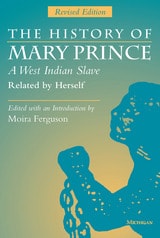
The History of Mary Prince, A West Indian Slave, Related by Herself
Revised EditionMoira Ferguson, Editor
University of Michigan Press, 1997
First published in London and Edinburgh in 1831, and well into its third edition that year, The History of Mary Prince inflamed public opinion and created political havoc. Never before had the sufferings and indignities of enslavement been seen through the eyes of a woman--a woman struggling for freedom in the face of great odds.
Moira Ferguson's edition of the book added an introduction, annotations, and appendices. The book has found popularity both in the classroom and with the general public. Recently, an adaptation of the memoirs of Mary Prince appeared as one segment of "A Skirt Through History," a six-part feature film series produced by the BBC. Mary Prince's story has also been the centerpiece of BBC radio broadcasts.
In this revised and expanded edition of The History of Mary Prince, Ferguson has added new material, based on her extensive research in Bermuda and London. The book includes new details of Mary Prince's experiences as a freewoman in England, the transcripts of several libel cases brought against her, and the reactions of British society, as seen in prominent periodicals of the day, against the original publication of The History of Mary Prince. This new material brings greater depth and detail and serves to more fully illustrate and contextualize the life of this remarkable woman.
Moira Ferguson is James E. Ryan Professor of English and Women's Literature, University of Nebraska.
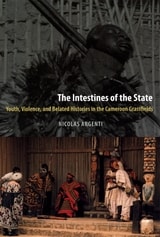
The Intestines of the State
Youth, Violence, and Belated Histories in the Cameroon GrassfieldsNicolas Argenti
University of Chicago Press, 2007
Beginning his study with a political analysis of youth in the Grassfields from the eighteenth century to the present, Argenti pays special attention to the repeated violent revolts staged by young victims of political oppression. He then combines this history with extensive ethnographic fieldwork in the Oku chiefdom, discovering that the specter of past violence lives on in the masked dance performances that have earned intense devotion from today’s youth. Argenti contends that by evoking the imagery of past cataclysmic events, these masquerades allow young Oku men and women to address the inequities they face in their relations with elders and state authorities today.
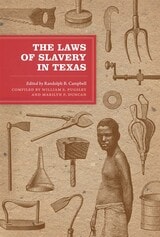
The Laws of Slavery in Texas
Historical Documents and EssaysEdited by Randolph B. Campbell
University of Texas Press, 2010
The laws that governed the institution of slavery in early Texas were enacted over a fifty-year period in which Texas moved through incarnations as a Spanish colony, a Mexican state, an independent republic, a part of the United States, and a Confederate state. This unusual legal heritage sets Texas apart from the other slave-holding states and provides a unique opportunity to examine how slave laws were enacted and upheld as political and legal structures changed. The Laws of Slavery in Texas makes that examination possible by combining seminal historical essays with excerpts from key legal documents from the slave period and tying them together with interpretive commentary by the foremost scholar on the subject, Randolph B. Campbell.
Campbell's commentary focuses on an aspect of slave law that was particularly evident in the evolving legal system of early Texas: the dilemma that arose when human beings were treated as property. As Campbell points out, defining slaves as moveable property, or chattel, presented a serious difficulty to those who wrote and interpreted the law because, unlike any other form of property, slaves were sentient beings. They were held responsible for their crimes, and in numerous other ways statute and case law dealing with slavery recognized the humanness of the enslaved. Attempts to protect the property rights of slave owners led to increasingly restrictive laws—including laws concerning free blacks—that were difficult to uphold. The documents in this collection reveal both the roots of the dilemma and its inevitable outcome.
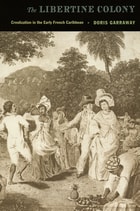
The Libertine Colony
Creolization in the Early French CaribbeanDoris Garraway
Duke University Press, 2005
Among the texts Garraway analyzes are missionary histories by Jean-Baptiste Du Tertre, Raymond Breton, and Jean-Baptiste Labat; narratives of adventure and transgression written by pirates and others outside the official civil and religious power structures; travel accounts; treatises on slavery and colonial administration in Saint-Domingue; the first colonial novel written in French; and the earliest linguistic description of the native Carib language. Garraway also analyzes legislation—including the Code noir—that codified slavery and other racialized power relations. The Libertine Colony is both a rich cultural history of creolization as revealed in Francophone colonial literature and an important contribution to theoretical arguments about how literary critics and historians should approach colonial discourse and cultural representations of slave societies.
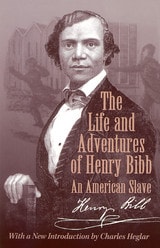
The Life and Adventures of Henry Bibb
An American SlaveHenry Bibb
University of Wisconsin Press, 2001
First published in 1849 and largely unavailable for many years, The Life and Adventures of Henry Bibb is among the most remarkable slave narratives. Born on a Kentucky plantation in 1815, Bibb first attempted to escape from bondage at the age of ten. He was recaptured and escaped several more times before he eventually settled in Detroit, Michigan, and joined the antislavery movement as a lecturer.
Bibb’s story is different in many ways from the widely read Narrative of the Life of Frederick Douglass, An American Slave and Harriet Jacobs’ Incidents in the Life of a Slave Girl. He was owned by a Native American; he is one of the few ex-slave autobiographers who had labored in the Deep South (Louisiana); and he writes about folkways of the slaves, especially how he used conjure to avoid punishment and to win the hearts of women. Most significant, he is unique in exploring the importance of marriage and family to him, recounting his several trips to free his wife and child. This new edition includes an introduction by literary scholar Charles Heglar and a selection of letters and editorials by Bibb.
The Making of a Southerner
William Barclay Napton's Private Civil WarChristopher Phillips
University of Missouri Press, 2008
The Mark of Slavery
Disability, Race, and Gender in Antebellum AmericaJenifer L. Barclay
University of Illinois Press, 2021
Time and again, antebellum Americans justified slavery and white supremacy by linking blackness to disability, defectiveness, and dependency. Jenifer L. Barclay examines the ubiquitous narratives that depicted black people with disabilities as pitiable, monstrous, or comical, narratives used not only to defend slavery but argue against it. As she shows, this relationship between ableism and racism impacted racial identities during the antebellum period and played an overlooked role in shaping American history afterward. Barclay also illuminates the everyday lives of the ten percent of enslaved people who lived with disabilities. Devalued by slaveholders as unsound and therefore worthless, these individuals nonetheless carved out an unusual autonomy. Their roles as caregivers, healers, and keepers of memory made them esteemed within their own communities and celebrated figures in song and folklore.
Prescient in its analysis and rich in detail, The Mark of Slavery is a powerful addition to the intertwined histories of disability, slavery, and race.
The Mind of the Slave
The Limits of Ownership in Roman Law and SocietyNicole J. Giannella
University of Michigan Press, 2026
In order to place Roman jurists in conversation with both technical and literary sources, Giannella grounds this study in philology and argues that conceptions of the mind of the slave were at the heart of legal and cultural debates about the nature of slavery and ownership. It also contributes to a wider debate about selfhood and autonomy, since philosophers often used the figure of the slave as a representation of humanity as its limits.
The Nation That Never Was
Reconstructing America's StoryKermit Roosevelt III
University of Chicago Press, 2022
There’s a common story we tell about America: that our fundamental values as a country were stated in the Declaration of Independence, fought for in the Revolution, and made law in the Constitution. But, with the country increasingly divided, this story isn’t working for us anymore—what’s more, it’s not even true. As Kermit Roosevelt argues in this eye-opening reinterpretation of the American story, our fundamental values, particularly equality, are not part of the vision of the Founders. Instead, they were stated in Lincoln’s Gettysburg Address and were the hope of Reconstruction, when it was possible to envision the emergence of the nation committed to liberty and equality.
We face a dilemma these days. We want to be honest about our history and the racism and oppression that Americans have both inflicted and endured. But we want to be proud of our country, too. In The Nation That Never Was, Roosevelt shows how we can do both those things by realizing we’re not the country we thought we were. Reconstruction, Roosevelt argues, was not a fulfillment of the ideals of the Founding but rather a repudiation: we modern Americans are not the heirs of the Founders but of the people who overthrew and destroyed that political order. This alternate understanding of American identity opens the door to a new understanding of ourselves and our story, and ultimately to a better America.
America today is not the Founders’ America, but it can be Lincoln’s America. Roosevelt offers a powerful and inspirational rethinking of our country’s history and uncovers a shared past that we can be proud to claim and use as a foundation to work toward a country that fully embodies equality for all.
The Old South Frontier
Cotton Plantations and the Formation of Arkansas Society, 1819–1861Donald P. Mcneilly
University of Arkansas Press, 2000
The Parker Sisters
A Border KidnappingLucy Maddox
Temple University Press, 2016
In The Parker Sisters, Lucy Maddox gives an eloquent, urgent account of the tragic kidnapping of these young women. Using archival news and courtroom reports, Maddox tells the larger story of the disastrous effect of the Fugitive Slave Act on the small farming communities of Chester County and the significant, widening consequences for the state and the nation.
The Parker Sisters is also a story about families whose lives and fates were deeply embedded in both the daily rounds of their community and the madness and violence consuming all of antebellum America. Maddox’s account of this horrific and startling crime reveals the strength and vulnerability of the Parker sisters and the African American population.
The Persistence of Slavery
An Economic History of Child Trafficking in NigeriaRobin Phylisia Chapdelaine
University of Massachusetts Press, 2021
Despite efforts to abolish slavery throughout Africa in the nineteenth century, the coercive labor systems that constitute “modern slavery” have continued to the present day. To understand why, Robin Phylisia Chapdelaine explores child trafficking, pawning, and marriages in Nigeria's Bight of Biafra, and the ways in which British colonial authorities and Igbo, Ibibio, Efik, and Ijaw populations mobilized children's labor during the early twentieth century. Drawing on a wealth of primary sources that include oral interviews, British and Nigerian archival materials, newspaper holdings, and missionary and anthropological accounts, Chapdelaine argues that slavery's endurance can only be understood when we fully examine “the social economy of a child”—the broader commercial, domestic, and reproductive contexts in which children are economic vehicles.
The Persistence of Slavery provides an invaluable investigation into the origins of modern slavery and early efforts to combat it, locating this practice in the political, social, and economic changes that occurred as a result of British colonialism and its lingering effects, which perpetuate child trafficking in Nigeria today.
The Plantation, the Postplantation, and the Afterlives of Slavery
Gwen Bergner and Zita Nunes, special issue editors
Duke University Press, 0
Essay topics include the circulation of a weekly newspaper published by black tenant farmers in the 1920s, a nineteenth-century trial of an enslaved woman, and the fetish-making of Haitian revolutionary François Makandal. Reconsidering the time and space of the plantation, contributors analyze Western processes of racialization and uncover the experience and agency of the oppressed. This search for modes of being within the plantation structure offers one way to rewrite histories of slavery.
Contributors. Monique Allewaert, Gwen Bergner, Benjamin Child, Jeannine Marie DeLombard, Julius B. Fleming Jr., Jarvis C. McInnis, Zita Nunes, Roberta Wolfson
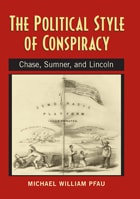
The Political Style of Conspiracy
Chase, Sumner, and LincolnMichael William Pfau
Michigan State University Press, 2005
The turbulent history of the United States has provided a fertile ground for conspiracies, both real and imagined. From the American Revolution to the present day, conspiracy discourse—linguistic and symbolic practices and artifacts revolving around themes, claims, or accusations of conspiracy—has been a staple of political rhetoric. Some conspiracy theories never catch on with the public, while others achieve widespread popularity. Whether successful or not, the means by which particular conspiracy theories spread is a rhetorical process, a process in which persuasive language, symbolism, and arguments act upon individual minds within concrete historical and political settings.
Conspiracy rhetoric was a driving force in the evolution of antebellum political culture, contributing to the rise and fall of the great parties in the nineteenth century. One conspiracy theory in particular—the "slave power" conspiracy—was instrumental in facilitating the growth of the young Republican Party's membership and ideology. The Political Style of Conspiracy analyzes the concept and reality of the "slave power" in the rhetorical discourse of the mid-nineteenth-century, in particular the speeches and writing of politicians Salmon P. Chase, Charles Sumner, and Abraham Lincoln. By examining their mainstream texts, Pfau reveals that, in addition to the "paranoid style" of conspiracy rhetoric that inhabits the margins of political life, Lincoln, Chase, and Sumner also engaged in a distinctive form of conspiracy rhetoric that is often found at the center of mainstream American society and politics.
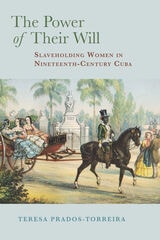
The Power of Their Will
Slaveholding Women in Nineteenth-Century CubaTeresa Prados-Torreira
University of Alabama Press, 2021
CHOICE OUTSTANDING ACADEMIC TITLE, 2022
“This fascinating book explores the unique circumstances of white slaveholding women in 19th-century Cuba and the enslaved peoples they controlled . . .This is a must read for scholars of the Caribbean and the African diaspora. Essential.” —CHOICE
In the early nineteenth century, while abolitionism was rising and the slave trade was declining in the Atlantic world, Spain used this opportunity to massively expand plantation slavery in Cuba. Between 1501 and 1866, more than 778,000 Africans were torn from their homelands and brought to work for the Cuban slaveholding class.
An understudied aspect of Cuban slaveholding society is the role of the white Cuban slave mistress (amas). The Power of Their Will: Slaveholding Women in Nineteenth-Century Cuba illuminates the interaction of female slaveholders and the enslaved during this time. Teresa Prados-Torreira shows, despite the lack of political power in a highly patriarchal society, Cuban women as property owners were instrumental in supporting the long duration of slavery, whether by enforcing the disciplining of the enslaved in the domestic sphere or helping to create the illusion of slavery as a humane institution. Thousands of Creole slaveholding women relied on slaves to lead a comfortable life. Even the subsistence of many poor women depended on the income derived from the hiring out of their enslaved.
In this accessible cultural history, culled from government documents, fiction, newspaper articles, traveler’s accounts, women’s wills, and archival research, Prados-Torreira coalesces a valuable narrative out of the often paradoxical and conflicting stories of the human bonds between the female owner and the enslaved. Narrative chapters, enlivened by vignettes, describe the daily life of slave mistresses in the main cities of Havana and Santiago and other towns, workings of sugar mills and coffee plantations, how slaveholding women coping with slave rebellions and wartime during the Ten Years’ War, and how personal relationships could occasionally affect the balance of power.
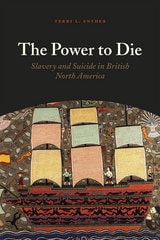
The Power to Die
Slavery and Suicide in British North AmericaTerri L. Snyder
University of Chicago Press, 2015
In The Power to Die, Terri L. Snyder excavates the history of slave suicide, returning it to its central place in early American history. How did people—traders, plantation owners, and, most importantly, enslaved men and women themselves—view and understand these deaths, and how did they affect understandings of the institution of slavery then and now? Snyder draws on ships’ logs, surgeons' journals, judicial and legislative records, newspaper accounts, abolitionist propaganda and slave narratives, and many other sources to build a grim picture of slavery’s toll and detail the ways in which suicide exposed the contradictions of slavery, serving as a powerful indictment that resonated throughout the Anglo-Atlantic world and continues to speak to historians today.
The Problem of Evil
Slavery, Freedom and the Ambiguities of American ReformSteven Mintz
University of Massachusetts Press, 2007
Divided into four parts, with introductions to each section by editors Steven Mintz and John Stauffer, the essays provide succinct guides to the evolution of American slavery, the origins of antislavery thought, the challenges of emancipation, and the post-emancipation legacy of slavery. They also offer fresh perspectives on key individuals, from Benjamin Franklin and Frederick Douglass to Harriet Jacobs and John Brown, and shed new light on the differences between female and male critiques of slavery, the defense of slavery by the South's intellectual elite, and Catholic attitudes toward slavery and abolition.
Above all, The Problem of Evil helps us understand the circumstances that allow social evils to happen, how intelligent and ostensibly moral people can participate in the most horrendous crimes, and how, at certain historical moments, some individuals are able to rise above their circumstances, address evil in fundamental ways, and expand our moral consciousness.
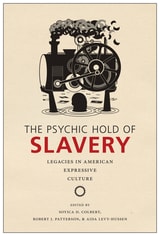
The Psychic Hold of Slavery
Legacies in American Expressive CultureSoyica Diggs Colbert, Robert J. Patterson, and Aida Levy-Hussen
Rutgers University Press, 2016
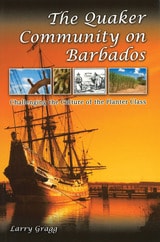
The Quaker Community on Barbados
Challenging the Culture of the Planter ClassLarry Gragg
University of Missouri Press, 2009
Gragg has conducted meticulous research on two continents to re-create the Barbados Quaker community. Drawing on wills, censuses, and levy books along with surviving letters, sermons, and journals, he tells how the Quakers sought to implement their beliefs in peace, simplicity, and equality in a place ruled by a planter class that had built its wealth on the backs of slaves. He reveals that Barbados Quakers were a critical part of a transatlantic network of Friends and explains how they established a “counterculture” on the island—one that challenged the practices of the planter class and the class’s dominance in island government, church, and economy.
In this compelling study, Gragg focuses primarily on the seventeenth century when the Quakers were most numerous and active on Barbados. He tells how Friends sought to convert slaves and improve their working and living conditions. He describes how Quakers refused to fund the Anglican Church, take oaths, participate in the militia, or pay taxes to maintain forts—and how they condemned Anglican clergymen, disrupted their services, and wrote papers critical of the established church. By the 1680s, Quakers were maintaining five meetinghouses and several cemeteries, paying for their own poor relief, and keeping their own records of births, deaths, and marriages. Gragg also tells of the severe challenges and penalties they faced for confronting and rejecting the dominant culture.
With their civil disobedience and stand on slavery, Quakers on Barbados played an important role in the early British Empire but have been largely neglected by scholars. Gragg’s work makes their contribution clear as it opens a new window on the seventeenth- and eighteenth-century Atlantic world.
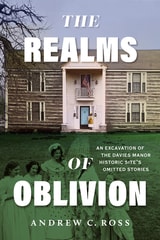
The Realms of Oblivion
An Excavation of the Davies Manor Historic Site's Omitted StoriesAndrew C. Ross
Vanderbilt University Press, 2024
Winner of the Tennessee History Book Award (Tennessee Historical Society and Tennessee Historical Commission), 2024
The Realms of Oblivion explores the complexities involved in reconciling competing versions of history, channeled through Davies Manor, a historic site near Memphis that once centered a wealthy slave-owning family’s sprawling cotton plantation. Interrogating the forces of memorialization that often go unquestioned in the stories we believe about ourselves and our communities, this book simultaneously tells an informative and engrossing bottom-up history—of the Davies family, of the Black families they enslaved and exploited across generations, and of Memphis and Shelby County—while challenging readers to consider just what upholds the survival of that history into the present day.
Written in an engaging and critical style, The Realms of Oblivion is grounded in a rich source base, ranging from nineteenth-century legal records to the personal papers of the Davies family to twentieth-century African American oral histories. Author Andrew C. Ross uses these sources to unearth the stark contrast between the version of Davies Manor’s history that was built out of nostalgia, and the version that records have proven to actually be true. As a result, Ross illuminates the ongoing need for a deep and honest reckoning with the history of the South and of the United States, on the part of both individuals and community institutions such as local historic sites and small museums.
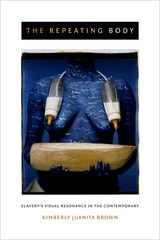
The Repeating Body
Slavery's Visual Resonance in the ContemporaryKimberly Juanita Brown
Duke University Press, 2015
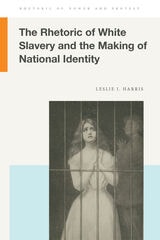
The Rhetoric of White Slavery and the Making of National Identity
Leslie J Harris
Michigan State University Press, 2023
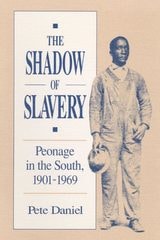
The Shadow of Slavery
Peonage in the South, 1901-1969Pete Daniel
University of Illinois Press, 1972
Pete Daniel's book is about this largely ignored form of twentieth-century slavery. It is in part "the record of an American failure, the inability of federal, state, and local law-enforcement officers to end peonage." In a series of case studies and histories, Daniel re-creates the neglected and frightening world of peonage, demanding, "If a form of slavery yet exists in the United States, as so much evidence suggests, then the relevant questions are why, and by whose irresponsibility?"
Peonage grew out of labor settlements following emancipation, when employers forbade croppers to leave plantations because of debt (often less than $30). At the turn of the century the federal government acknowledged that the "labyrinth of local customs and laws" binding men in debt was peonage. They outlawed debt servitude and slowly moved against it, but with no large success. Disappearing witnesses and acquitted employers characterized the cases that did go to court.
Daniel holds that peonage persists for many reasons: the corruption and apathy of law-enforcement, racist traditions in the South, and the impotence of the Justice Department in prosecuting this violation of federal law. He draws extensively on complaints and trial transcripts from the peonage records of the Justice Department.
The Shaping of American Liberalism
The Debates over Ratification, Nullification, and SlaveryDavid F. Ericson
University of Chicago Press, 1993
Focusing on three critical debates in American history—the debate between Anti-Federalists and Federalists over the ratification of the Constitution; the debate between the national republicans and the states-rights republicans over the nullification of the tariff; and the Lincoln-Douglas debates over slavery and pluralist democracy—Ericson shows that republicanism, rather than being opposed to liberalism, is in fact an offshoot of it. His descriptions of republicanism and pluralism represent the poles of an evolving tradition of liberal ideas in America: the former championing the claims of the public sphere, general welfare, and civic virtue; the latter protecting the rights of the individual to liberty, property, and privacy.
Republicanism and pluralism are therefore more properly understood as two sets of competing ideas that evolved from common roots. Ericson concludes that although republican themes persist in American politics, the profound transformations brought about by the Civil War made the ascendancy of pluralism virtually inevitable.
This highly original discussion of the relation between liberalism and republicanism—the central concern of much of the recent scholarship in American political thought—will be important reading for those interested in American politics, history, and culture.
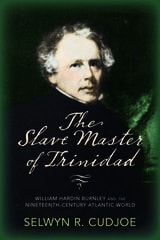
The Slave Master of Trinidad
William Hardin Burnley and the Nineteenth-Century Atlantic WorldSelwyn R. Cudjoe
University of Massachusetts Press, 2018
William Hardin Burnley (1780–1850) was the largest slave owner in Trinidad during the nineteenth century. Born in the United States to English parents, he settled on the island in 1802 and became one of its most influential citizens and a prominent agent of the British Empire. A central figure among elite and moneyed transnational slave owners, Burnley moved easily through the Atlantic world of the Caribbean, the United States, Great Britain, and Europe, and counted among his friends Alexis de Tocqueville, British politician Joseph Hume, and prime minister William Gladstone.
In this first full-length biography of Burnley, Selwyn R. Cudjoe chronicles the life of Trinidad's “founding father” and sketches the social and cultural milieu in which he lived. Reexamining the decades of transition from slavery to freedom through the lens of Burnley's life, The Slave Master of Trinidad demonstrates that the legacies of slavery persisted in the new post-emancipation society.
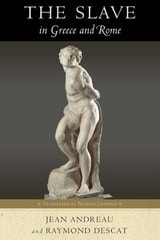
The Slave in Greece and Rome
Jean Andreau and Raymond Descat, translated by Marion Leopold
University of Wisconsin Press, 2012
Jean Andreau and Raymond Descat break new ground in this comparative history of slavery in Greece and Rome. Focusing on slaves’ economic role in society, their crucial contributions to Greek and Roman culture, and their daily and family lives, the authors examine the different ways in which slavery evolved in the two cultures. Accessible to both scholars and students, this book provides a detailed overview of the ancient evidence and the modern debates surrounding the vast and largely invisible populations of enslaved peoples in the classical world.

The Southern Debate over Slavery
Volume 1: Petitions to Southern Legislatures, 1778-1864Edited by Loren Schweninger
University of Illinois Press, 2001
These petitions, filed by slaveholders and nonslaveholders, slaves and free blacks, women and men, abolitionists and staunch defenders of slavery, constitute a uniquely important primary source. Petitioners were compelled to present the most accurate and fully documented case they could, since their claims would be subject to public scrutiny and legal verification. Unlike the many reminiscences and autobiographies of the period, these petitions record with great immediacy and minute detail the dynamics, common understandings, and legal restrictions and parameters that shaped southern society during this period.
Arranged chronologically, with their original spelling and idiosyncratic phraseology intact, these documents reveal the grim and brutal nature of human bondage, the fears of whites who lived among large concentrations of blacks, and the workings of the complicated legal system designed to control blacks. They tell about the yearning of bondspeople to gain their freedom, the attitudes of freed blacks who were forced to leave the South, and the efforts of African Americans to overcome harsh and restrictive laws. They also underscore the unique situation of free women of color and the reliance of manumitted (formally freed) blacks on their former owners for protection, travel passes, guardianship papers, and reference letters.
Astonishingly intimate and frank,The Southern Debate over Slavery illuminates how slavery penetrated nearly every aspect of southern life and how various groups of southerners responded to the difficulties they confronted as a result of living in a slave society.
The Southern Debate over Slavery
Volume 2: Petitions to Southern County Courts, 1775-1867Edited by Loren Schweninger
University of Illinois Press, 2007
An incomparably rich source of period information, the second volume of The Southern Debate over Slavery offers a representative and extraordinary sampling of the thousands of petitions about issues of race and slavery that southerners submitted to county courts between the American Revolution and Civil War. These petitions, filed by slaveholders and nonslaveholders, slaves and free blacks, women and men, abolitionists and staunch defenders of slavery, constitute a uniquely important primary source. The collection records with great immediacy and minute detail the dynamics and legal restrictions that shaped southern society.
The Suicide Archive
Reading Resistance in the Wake of French EmpireDoyle D. Calhoun
Duke University Press, 2024