Results by title
461 books match the query 'Teaching' and 111 start with t
Task-Based Listening
What Every ESL Teacher Needs to KnowSteven Brown
University of Michigan Press, 2019

Teachers and Teaching on Stage and on Screen
Dramatic DepictionsEdited by Diane Conrad and Monica Prendergast
Intellect Books, 2019
Teaching "Race" with a Gendered Edge
Brigitte Hipfl
Central European University Press, 2012
Teaching Academic Writing in the Health Sciences
A Guide for Instructors, Mentors, and TrainersElla August
University of Michigan Press, 2026
Part 1 offers the pedagogical basis teachers need to apply best practices, as well as:
- Tips for collaborative writing and writing productivity
- Strategies for using generative artificial intelligence (AI) technology in teaching and writing
- Open-access resources and instruction planning activities
Part 2 focuses on the steps of writing a scientific paper, offering:
- A strong foundation in the structure of and strategies for successful writing
- Customizable teaching materials on how to write a scientific paper
- Strategies for planning a paper, crafting writing to reach readers, developing persuasive arguments, and building a successful author team
- How-to write each section of a paper, from the title to the conclusion
- Guidance on navigating the publishing process, including selecting the appropriate journal and effectively responding to peer-reviewer comments
Teaching Actors
Knowledge Transfer in Actor TrainingRoss W. Prior
Intellect Books, 2012
Teaching Artist Handbook, Volume One
Tools, Techniques, and Ideas to Help Any Artist TeachNick Jaffe, Becca Barniskis, and Barbara Hackett Cox
University of Chicago Press, 2015
This book is a collection of essays, stories, lists, examples, dialogues, and ideas, all offered with the aim of helping artists create and implement effective teaching based on their own expertise and strengths. The Handbook addresses three core questions: “What will I teach?” “How will I teach it?” and “How will I know if my teaching is working?” It also recognizes that teaching is a dynamic process that requires critical reflection and thoughtful adjustment in order to foster a supportive artistic environment.
Instead of offering rigid formulas, this book is centered on practice—the actual doing and making of teaching artist work. Experience-based and full of heart, the Teaching Artist Handbook will encourage artists of every experience level to create an original and innovative practice that inspires students and the artist.
Teaching College Writing to Diverse Student Populations
Dana R. Ferris
University of Michigan Press, 2013
Statistical and anecdotal evidence documents that even states with relatively little ethnic or cultural diversity are beginning to notice and ask questions about long-term resident immigrants in their classes. As shifts in student population become more widespread, there is an even greater need for second language specialists, composition specialists, program administrators, and developers in colleges and universities to understand and adapt to the needs of the changing student audience(s).
Teaching Composition As A Social Process
Bruce McComiskey
Utah State University Press, 2000
Bruce McComiskey is a strong advocate of social approaches to teaching writing. However, he opposes composition teaching that relies on cultural theory for content, because it too often prejudges the ethical character of institutions and reverts unnecessarily to product-centered practices in the classroom. He opposes what he calls the "read-this-essay-and-do-what-the-author-did method of writing instruction: read Roland Barthes's essay 'Toys' and write a similar essay; read John Fiske's essay on TV and critique a show."
McComiskey argues for teaching writing as situated in discourse itself, in the constant flow of texts produced within social relationships and institutions. He urges writing teachers not to neglect the linguistic and rhetorical levels of composing, but rather to strengthen them with attention to the social contexts and ideological investments that pervade both the processes and products of writing.
A work with a sophisticated theory base, and full of examples from McComiskey's own classrooms, Teaching Composition as a Social Process will be valued by experienced and beginning composition teachers alike.

Teaching Dancing with Ideokinetic Principles
Drid Williams
University of Illinois Press, 2011
Teaching Difficult Topics
Reflections from the Undergraduate Music ClassroomOlivia R. Lucas and Laura Moore Pruett
University of Michigan Press, 2024
The teaching reflections in Teaching Difficult Topics examine difficult themes that fall into three primary categories: subjects that instructors sense to be controversial or emotionally challenging to discuss, those that derive from or intersect with real-world events that are difficult to process, and bigger-picture discussions of how music studies often focuses on dominant narratives while overlooking other perspectives. Some chapters offer practical guidance, lesson plans, and teaching materials to enable instructors to build discussions of race, gender, sexuality, and traumatic histories into their own classrooms; others take a more global view, reflecting on the importance and relevance of teaching these difficult topics and on how to respond in the music classroom when external events disrupt daily life.
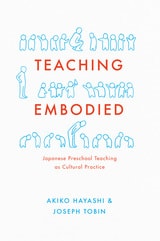
Teaching Embodied
Cultural Practice in Japanese PreschoolsAkiko Hayashi and Joseph Tobin
University of Chicago Press, 2015
Akiko Hayashi and Joseph Tobin embed themselves in the classrooms of three different teachers at three different schools to examine how teachers act, think, and talk. Drawing on extended interviews, their own real-time observations, and hours of video footage, they focus on how teachers embody their lessons: how they use their hands to gesture, comfort, or discipline; how they direct their posture, gaze, or physical location to indicate degrees of attention; and how they use the tone of their voice to communicate empathy, frustration, disapproval, or enthusiasm. Comparing teachers across schools and over time, they offer an illuminating analysis of the gestures that comprise a total body language, something that, while hardly ever explicitly discussed, the teachers all share to a remarkable degree. Showcasing the tremendous importance of—and dearth of attention to—this body language, they offer a powerful new inroad into educational study and practice, a deeper understanding of how teaching actually works, no matter what culture or country it is being practiced in.
Teaching English as a Foreign or Second Language, Second Edition
A Teacher Self-Development and Methodology GuideJerry G. Gebhard
University of Michigan Press, 2006
The second edition of Teaching English as a Foreign or Second Language includes a wider range of examples to coincide with a variety of teaching contexts-from K-12 schools, to university intensive language programs and refugee programs. It is also updated with discussions of technology throughout, and it considers ways in which technology can be used in teaching language skills. Sources for further study are included in each chapter and in the appendixes.
Teaching English as a Foreign or Second Language, Third Edition
A Self-Development and Methodology GuideJerry G. Gebhard
University of Michigan Press, 2017
This edition has the same three major sections: (1) Self-Development, Exploration, and Settings; (2) Principles of EFL/ESL Teaching; and (3) Teaching Language Skills. New to this edition are:
- a chapter on digital literacy, technology, and teaching
- the addition of technology issues as they relate to the teaching of the various skills in Part 3
- discussions of task-based teaching, student presentations, how corpus linguistics can inform teaching, metacognitive reading strategies, collaborative writing, assessing writing, and the teaching of grammar.
Teaching History in the Digital Age
T. Mills Kelly
University of Michigan Press, 2013
Teaching History in the Digital Age serves as a guide for practitioners on how to fruitfully employ the transformative changes of digital media in the research, writing, and teaching of history. T. Mills Kelly synthesizes more than two decades of research in digital history, offering practical advice on how to make best use of the results of this synthesis in the classroom and new ways of thinking about pedagogy in the digital humanities.

Teaching In The Field
Hal Crimmel
University of Utah Press, 2003
Taking students out of the classroom and into a variety of settings, ranging from remote wilderness sites to urban or built environments is now recognized as a valuable means of teaching ecological concepts and environmental values. But field studies are also a way of encouraging explorations across the curriculum, enhancing the teaching of life sciences, literature, and creative writing.
Teaching in the Field is the first volume to specifically survey field studies conducted through colleges and universities. The essays, arranged into three sections, offer rationales, pedagogical strategies, and foundational advice and information that broaden and strengthen the collective knowledge of this increasingly popular means of instruction. The essays present theoretical information within engaging, candid narratives that report on various aspects of field experiences, whether hour-long excursions or month-long trips.
Teachers of environmental studies, of English, composition, and creative writing, and of allied humanities and science disciplines, will find here a wealth of success stories and cautionary tales to guide them in envisioning their own outdoor classrooms.
Teaching India–Pakistan Relations
Teachers' Attitudes, Practices and AgencyKusha Anand
University College London, 2023
The rivalry between India and Pakistan began with the British withdrawal from the British Indian Empire in 1947 and the sudden partition of India immediately afterward. Seventy-five years later, it remains powerful. While the countries share a long history and considerable socio-cultural affinity, relations since Partition have been marked by three wars, constant border skirmishes, and a deep distrust that permeates both societies. In each, teaching about those relations is weighted with political and cultural significance, and research shows that curricula have been used deliberately to shape the understanding of new generations.
This book explores the attitudes and pedagogical decision-making of teachers in India and Pakistan when teaching India–Pakistan relations. Situating teachers in the context of reformed textbooks and curriculums in both countries that explicitly advocate critical thinking and social cohesion, Kusha Anand explores how far teachers have enacted these changes in their classrooms. What she finds is that while there is progress towards the stated goals, teachers in both countries face pressures from the interests of school and state, and often miss opportunities to engage with multiple perspectives and stereotypes in their classrooms.

Teaching Lives
Essays & StoriesWendy Bishop
Utah State University Press, 1997

Teaching Matters
A Guide for Graduate StudentsAeron Haynie
West Virginia University Press, 2022
In a book written directly for graduate students that includes graduate student voices and experiences, Aeron Haynie and Stephanie Spong establish why good teaching matters and offer a guide to helping instructors-in-training create inclusive and welcoming classrooms.
Teaching Matters is informed by recent research while being grounded in the personal perspectives of current and past graduate students in many disciplines. Graduate students can use this book independently to prepare to teach their courses, or it can be used as a guide for a teaching practicum. With a just-in-time checklist for graduate students who are assigned to teach courses right before the semester starts, step-by-step directions for writing a compelling teaching philosophy, and an emphasis on teaching well regardless of modality, Teaching Matters will remain relevant for graduate students throughout their careers.

Teaching Shakespeare into the Twenty-First Century
Ronald E. Salomone
Ohio University Press, 1997
Shakespeare is a central shaping and defining figure in our culture. His plays are being taught, filmed, and performed every day in many places and in most of the world’s languages. At the same time, teachers and students from junior high through the early undergraduate years often struggle with the Bard in discomfort and negativity that can only be counter-productive.
Teaching Shakespeare into the Twenty-First Century is by teachers and for teachers. Specifically, it is a collection of essays in which teachers describe their best ideas and experiences as they confront the challenges of bringing Shakespeare alive for students who often feel intimidated and less than eager to participate.
It is on behalf of these students that this book has been prepared. Written by middle school, high school, and college teachers from around the country, the essays record successful efforts at bringing Shakespeare and the student together in fresh, exciting, and productive ways.
From today’s performance techniques, designed to make students active participants in the learning process, through a host of extra-textual resources such as festivals and films, to a look at applications of the computer and cyberspace, Teaching Shakespeare into the Twenty-First Century is a book of success stories.
Covering the most contemporary issues, critical theory, and classroom approach, it is designed to provide teachers with a useful, friendly, and forward-looking resource as they continue to make Shakespeare available into the future.

Teaching U.S. History through Sports
Edited by Brad Austin and Pamela Grundy
University of Wisconsin Press, 2022
Teaching U.S. History through Sports provides strategies for incorporating sports into any U.S. history curriculum. Drawing upon their own classroom experiences, the authors suggest creative ways to use sports as a lens to examine a broad range of historical subjects, including Puritan culture, the rise of Jim Crow, the Cold War, the civil rights movement, and the women's movement. Essays focus on the experiences of African American women, working-class southerners, Latinos, and members of LGBTQ communities, as well as topics including the controversy over Native American mascots and the globalization of U.S. sports.
Teaching Vocabulary Is the Writing Teacher's Job
Why and HowKeith S. Folse
University of Michigan Press, 2020
Teaching With Student Texts
Essays Toward an Informed PracticeJoseph Harris
Utah State University Press, 2010
Harris, Miles and Paine ask: What happens when the texts that students write become the focus of a writing course? In response, a distinguished group of scholar/teachers suggests that teaching with students texts is not simply a classroom technique, but a way of working with writing that defines composition as a field.
In Teaching with Student Texts, authors discuss ways of revaluing student writing as intellectual work, of circulating student texts in the classroom and beyond, and of changing our classroom practices by bringing student writings to the table. Together, these essays articulate a variety of ways that student texts can take a central place in classroom work and can, in the process, redefine the ways our field talks about writing.
Teaching about Race and Racism in the College Classroom
Notes from a White ProfessorCyndi Kernahan
West Virginia University Press, 2019
Teaching about race and racism can be a difficult business. Students and instructors alike often struggle with strong emotions, and many people have robust preexisting beliefs about race. At the same time, this is a moment that demands a clear understanding of racism. It is important for students to learn how we got here and how racism is more than just individual acts of meanness. Students also need to understand that colorblindness is not an effective anti-racism strategy.
In this book, Cyndi Kernahan argues that you can be honest and unflinching in your teaching about racism while also providing a compassionate learning environment that allows for mistakes and avoids shaming students. She provides evidence for how learning works with respect to race and racism along with practical teaching strategies rooted in that evidence to help instructors feel more confident. She also differentiates between how white students and students of color are likely to experience the classroom, helping instructors provide a more effective learning experience for all students.
Teaching and Learning Design
Re:Research, Volume 1Edited by Gjoko Muratovski and Craig Vogel
Intellect Books, 2020
Opening a Design Education Pipeline from University to K-12 and Back
• Peter Scupelli, Doris Wells-Papanek, Judy Brooks, Arnold Wasserman
To prepare students to imagine desirable futures amidst current planetary-level challenges, design educators must think and act in new ways. In this paper, we describe a pilot study that illustrates how educators might teach K-12 students and university design students to situate their making within transitional times in a volatile and exponentially changing world. We describe how to best situate students to align design thinking and learning with future foresight. Here we present a pilot test and evaluate how a university-level Design Futures course content, approach, and scaffolded instructional materials – can be adapted for use in K-12 Design Learning Challenges. We describe the K-12 design-based learning challenges/experiences developed and implemented by the Design Learning Network (DLN). The Design Futures course we describe in this paper is a required course for third-year undergraduate students in the School of Design at Carnegie Mellon University. The “x” signifies a different type of design that aligns short-term action with long-term goals. The course integrates design thinking and learning with long-horizon future scenario foresight. Broadly speaking, we ask how might portions of a design course be taught and experienced by teachers and students of two different demographics: within the university (Design Undergraduates) and in K-12 (via DLN). This pilot study is descriptive in nature; in future work, we seek to assess learning outcomes across university and K-12 courses. We believe the approach described is relevant for lifelong learners (e.g., post-graduate-level, career development, transitional adult education).
Re-Clarifying Design Problems Through Questions for Secondary School Children: An Example Based on Design Problem Identification in Singapore Pre-Tertiary Design Education
• Wei Leong, Leon Loh, Hwee Mui, Grace Kwek, Wei Leong Lee
It is believed that secondary school students often define design problems in the design coursework superficially due to various reasons such as lack of exposure, inexperience and the lack of research skills. Questioning techniques have long been associated with the development of critical thinking. Based on this context and assumption, the current study aimed to explore the use of questioning techniques to enable pre-tertiary students to improve their understanding of design problems by using questions to critique their thinking and decision-making processes and in turn, generate more effective design solutions. A qualitative approach is adopted in this study to identify the trajectories of students during design problem identification and clarification process. Using student design journals as a form of record for action and thoughts, they are analyzed and supplemented by hearing survey with the teacher-in-charge. From the study, the following points can be concluded: (1) questions can be a useful tool to facilitate a better understanding of the design problem. (2) The process of identification and clarification of design problem is important in the development of critical thinking skills and social-emotional skills of the students. (3) It is important that students are given time and opportunity to find out the problems by themselves. (4) Teachers can be important role models as students may pick up questioning techniques from teacher–student discussions. (5) Departmental reviews and built-in professional development time for weekly reviews on teaching and learning strategies are necessary for the continual improvement D&T education.
Surveying Stakeholders: Research Informing Design Curriculum
• Andrea Quam
Fundamental to design education is the creation and structure of curriculum. Neither the creation of design curriculum, nor the revaluation of existing curriculum is well documented. With no clear documentation of precedent, best practices are left open to debate. This paper and presentation will discuss the use of a survey as a research tool to assess existing curriculum at Iowa State University in the United States. This tool allowed the needs and perspectives of the program’s diverse stakeholders to be better understood. Utilizing survey methods, research revealed the convergence and divergence of stakeholders’ philosophies, theories and needs in relation to design curriculum. Accreditation and professional licensing provide base level of guidelines for design curriculum in the United States. However, each program’s curricular structure beyond these guidelines is a complicated balance of resources, facilities, faculty and the type of institution in which it is housed. Once established, a program’s curriculum is rarely reassessed as a whole, but instead updated with the hasty addition of classes upon an existing curricular structure. Curriculum is infrequently re-addressed, and when it is, it is typically based on the experience and opinions of a select group of faculty. This paper presents how a survey was developed to collect data to inform curricular decision-making, enabling the reduction of faculty bias and speculation in the process. Lessons learned from the development of this research tool will be shared so it might be replicated at other institutions, and be efficiently repeated periodically to ensure currency of a program’s curriculum.
New Challenges when Teaching UX Students to Sketch and Prototype
• Joep Frens, Jodi Forlizzi, John Zimmerman
In this paper we report on new challenges when teaching User Experience (UX) students how to sketch and prototype their designs. We argue that UX students sketch and prototype differently than other design students, and we discuss how changes in the field necessitate a response in education. We describe sketching and prototyping as a continuum that students successfully traverse when they follow a process of “double loop learning.” We highlight three new challenges: (1) New computational design materials, (2) new maker tools and (3) changes within the tech industry. We explore these three challenges through examples from our students, and we outline strategies for sketching and prototyping in this new reality. We conclude that this is a starting point for further work on keeping education up to speed with practice.
How to Teach Industrial Design?: A Case Study of College Education for Design Beginners
• Joomyung Rhi
Industrial design education has existed for a long time as part of the university system, but the curriculum and contents of each subject vary considerably from school to school. In recent years, the introduction of new concepts that change the definition of design has blurred the boundaries of design, making the curriculum different. Establishing a standard curriculum to address these challenges is an important task, but it is necessary to fully understand how design education actually takes place and to share content with educators. This paper aims to contribute to the debate on industrial design education by fully disclosing the process and results of the first stage of industrial design education of a university by autobiographical method. The first course, Product Design Practice 1, is a studio class based on a task feedback iteration system. Students are required to submit assignments showing weekly progress. The instructor reviewed the assignments submitted before the class and gave written comments in class. In addition, details of the design process and method that are difficult to identify as novice students are learned through twelve case studies and applied to the project. This Task Feedback Repeating Class system gives students the opportunity to implement design ability while gaining detailed skills with a comprehensive view. Through this process, the researcher got a reflection on the class and implications for the improvement of the class.
Preliminary Study on the Learning Pressure of Undergraduate Industrial Design Students
- Wenzhi Chen
Learning pressure affects students’ learning process and performance. Industrial design education emphasizes that operations on real design problems that have heavy working loads may cause learning pressure. The purpose of this study is to explore the issues causing learning pressure and the pressure management strategies of undergraduate industrial design students. There were 297 students who participated in the questionnaire survey. The main findings are as follows: First, learning pressure includes academic pressure, peer pressure, self-expectations, time pressure, financial pressure, pressure from instructors, external pressure, future career, pressure from parents, resource pressure, achievement and situational pressure. In addition, the main learning pressure is caused by finance, time, resources, external issues and future career. Second, the pressure management strategies include problem solving, procrastination and escape, help seeking, leisure, emotional management and self-adjustment. The most useful strategy for managing pressure is leisure, and procrastination and escape is the least useful strategy. Third, all learning pressures are significantly correlated with procrastination and escape strategy, but the coefficients are low. The results can be a reference for industrial design education and related research.
Rewarding Risk: Exploring How to Encourage Learning that Comes from Taking Risks
• Dennis Cheatham
High-stakes testing that became the norm after the “No Child Left Behind Act” of 2001 helped condition students to strive for correct answers for clear problems, all on the first try. However, the iterative process inherent in designing requires risk-taking to conduct a trial-and-error process of defining problems and exploring possible solutions. This design research project was operated with Miami University Graphic Design students to test their willingness to take risks in their coursework to achieve their self-defined measures of success. Students identified that improving their skills was how they defined success. An interaction design assignment involving front-end coding was modified to test students’ comfort taking risks to grow their skills. Most students took risks in the assignment to grow their interaction design skills. The project revealed that closer attention to student motivation when developing learning experiences could help students make the transition to practicing design as an iterative process fraught with risk.
An Analysis of the Educational Value of PBL Design Workshops
• Ikjoon Chang, Suhong Hwang
The purpose of this study is to plan and operate design-workshops based on project-based learning (PBL), and examine their educational value for students. The PBL workshop encourages direct participation from students and produces educational value, and it is important to raise the interest level of workshops to elicit proactive participation. The workshop in this study was carried out over 2 weeks in January 2017 at Korea’s Yonsei University. The workshop was composed of eight teams of students from three countries, including Korea, China and Japan, and the course was primarily divided into two sessions. The workshop participants examined in this thesis were notably satisfied with the elements of the course meant to garner interest. In the questionnaire results, participants also indicated that they obtained ample educational value through the workshop. An important element of the workshop was to connect the participants with businesses, which is also an important component of design education. Despite this, participants expressed a relatively lower level of satisfaction compared to other elements of the workshop. The results and analysis of this study will hopefully become a meaningful resource for educators when designing workshops in the future.
Collaborative Design Education with Industry: Student Perspective by Reflection
- Nathan Kotlarewski, Louise Wallis, Michael Lee, Gregory Nolan, Megan Last
This study suggests that student reflection on academic and industry collaborative projects can enhance student’s understanding on the design process to solve live industry problems. It contributes to the body of design literature to support students learning of explicit and implicit knowledge. A 2017 learning by-making (LBM) unit in the School of Architecture and Design, at the University of Tasmania, Australia, developed a unit for students to collaborate with Neville Smith Forest Products Pty. Ltd (NSFP). NSFP is a local Tasmanian timber product manufacturer who currently stockpiles out-of-grade timber that has limited market applications. Undergraduate design students from second- and third-year Furniture, Interior and Architecture degrees collaborated with NSFP to value-add to their out-of-grade resource in the LBM unit. A series of design challenges, observations of industry practice and access to out-of-grade timber from NSFP exposed students to live industry problems and provided them the opportunity to build professional design skills. Students reflected on the collaborative LBM unit in a reflection journal, which was used to provide evidence of their learning experiences. The collaborative environment between academia and industry allowed students to acquire an understanding of timber product manufacturing that helped them develop empathy toward the industry problem and influence the development of new products. This study presents how student reflections influenced a change in their design process as they progressed through sequential design challenges to address an industry problem by adopting Valkenburg and Dorst reflective learning framework.
Interdisciplinary Trends in Design Education: The Analysis of Master Dissertation of College of Design and Innovation, Tongji University
• Lisha Ren, Yan Wang
This paper expounds the background of Chinese design education as well as the orientation of the design education of Tongji University in the new times, it also collects 458 Master Thesis of College of Design and Innovation during 2010–2016 as analyzed sample. Based on the coding of subject classification, quantitative analysis and content analysis are made in order to understand the interdisciplinary education status of College of Design and Innovation from the two perspectives: the overall cross-disciplinary performance and the relationship between different cross-disciplinary directions.
From ANT to Material Agency: A Design and Science Research Workshop
• Anne-Lyse Renon, A. De Montbron, Annie Gentes, Julien Bobroff
This paper studies a design workshop that investigates complex collaboration between fundamental physics and design. Our research focuses on how students create original artifacts that bridge the gap between disciplines that have very little in common. Our goal is to study the micro-evolutions of their projects. Elaborating first on Actor Network Theory we study how students’ projects evolved over time and through a diversity of inputs and media. Throughout this longitudinal study, we use then a semiotic and pragmatic approach to observe three “aesthetical formations”: translation, composition and stabilization. These formations suggest that the question of material agency developed in the field of archeology and cognitive science need to be considered in the design field to explain metamorphoses from the brief to the final realizations.
Teaching and Learning in Bilingual Classrooms
New ScholarshipKristin J. Mulrooney
Gallaudet University Press, 2014
After extensive SoTL training, the GSTLI professors reviewed interaction in their respective classrooms. Through meticulous study of class videos and written assignments in three General Studies Requirements courses for first-year students, the teachers learned how to ensure connecting with students who have a variety of language differences and communication methods.
The other professors assessed bottlenecks in classes on the linguistic structure of ASL, and on criminal justice. The linguistics professor identified the bottleneck as the students’ inability to conceptualize the interrelationship between definitions and examples, a fundamental skill to scientific thinking. In the criminal justice class, the professor saw the need to guide students through linguistic bottlenecks by providing materials in both ASL and English. The successes of the GSTLI presented in this unique volume can benefit other teachers by better preparing them to meet the needs of bilingual diverse learners in more effective ways.
Teaching and Learning in Jewish Day Schools
Edited by Jonathan B. Krasner, Jon A. Levisohn, and Sharon Avni
Brandeis University Press, 2025
Teaching and Learning in Jewish Day Schools offers an important analysis of Jewish day school classrooms today. In light of difficulties initiating, evaluating, and sustaining educational innovation, this volume takes stock of what is happening among students and teachers in contemporary Jewish day school classrooms. The authors of this volume confront and question several bedrock principles of Jewish education to address how day schools intersect with broader societal issues including race and gender. They point to themes and topics that scholars and practitioners are grappling with to explore new potential pathways to evaluating student learning and learning outcomes: assessing core subject areas; understanding the ways social and environmental factors contribute to learning; and studying how race, ethnicity, class, and gender shape student learning and school culture. The chapters address topics relevant to educators working in contemporary Jewish day schools including Zionism, the outcomes of Israel education, Jewish engagement, the experience of Latinx students, community building, and more.
Teaching and Mentoring Writers in the Sciences
An Evidence-Based ApproachBethann Garramon Merkle and Stephen B. Heard
University of Chicago Press, 2025
Every scientist eventually teaches scientific writing or mentors junior scientists as they develop their writing skills—only to discover that the task is both challenging and remarkably time-consuming. If you are in this position, Teaching and Mentoring Writers in the Sciences is the resource you need, offering approaches that will help you help writers develop their skills more effectively and with less time and effort.
Bethann Garramon Merkle and Stephen B. Heard, both experts in scientific communication, offer evidence-based advice that draws on their own extensive experience as well as on proven tactics from writing studies, science studies, and rhetoric and composition. Shorn of the unfamiliar and off-putting jargon that much pedagogy literature adopts, their advice is engaging and accessible to scientists. As you read, you’ll see where developing writers are coming from; how mastering scientific writing matters to the careers of students who do and don’t continue in academia; how writing occurs and is taught in both undergraduate and graduate curricula; how to find and harness teaching resources that help share the workload; how to teach writing to students who speak English as an additional language; and how to navigate the use (by yourself and by developing writers) of tools from pencils and dictionaries to AI writing assistants. If you teach or mentor scientific writers, this book will help you deliver what your students and mentees need most: clear, effective writing guidance.
Teaching and Transformation in Popular Confucian Literature of the Late Qing
Katherine L. Alexander
University of Michigan Press, 2025
Yu’s works complicate the picture of socio-moral reform, particularly the Confucian mission of jiaohua (teaching and transformation). Though he viewed the disasters of the late Qing as the natural consequence of jiaohua’s failure to compete against socially disruptive media, such as vernacular fiction and theatrical productions, he also wanted reformers to engage closely with these genres. Yu became a vocal advocate of teaching with moral vernacular literature that he believed met commoners at their level. He emphasized the hope that by writing, printing, and performing such texts, every member of his audience could be transformed into teachers themselves, restoring society from the bottom up.
Teaching as Story Telling
An Alternative Approach to Teaching and Curriculum in the Elementary SchoolKieran Egan
University of Chicago Press, 1989

Teaching from the Heart and Soul
The Robert F. Panara StoryHarry G. Lang
Gallaudet University Press, 2007
The Sixth Volume in the Deaf Lives Series
Robert F. Panara lost his hearing from spinal meningitis in 1931 at the age of ten. However, he could read and write, and with his friends’ help, Bob (as he was known), made it through high school. His new solitude created a new passion – reading, reading, and reading. The stage was set for the emergence of one of the great deaf educators in modern time, a life fully captured in Harry G. Lang’s Teaching from the Heart and Soul: The Robert F. Panara Story.
Bob Panara’s many achievements began after his discovery of Gallaudet College in the 1940s. There, he wrote “The Significance of the Reading Problem,” which first expressed his belief that teaching “comes from the heart and soul.” The article secured him his first job at the New York School for the Deaf in White Plains. Bob returned to teach at Gallaudet College from 1948 until 1965, when he left to help found the National Technical Institute for the Deaf (NTID) and the National Theatre of the Deaf (NTD) — all in the same year. He continued to expand arts and literature at NTID until his retirement in 1987.
Bob Panara’s genius resides in the people he inspired with his vivacious teaching style. He believed ardently in involving students, that they should “be the book.” Former students tell story after story about his fabulous interpretations of drama and poetry, a legacy confirmed by his own story in Teaching from the Heart and Soul.
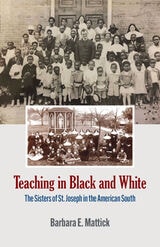
Teaching in Black and White
The Sisters of St. Joseph in the American SouthBarbara E. Mattick
Catholic University of America Press, 2022

Teaching in the Terrordome
Two Years in West Baltimore with Teach for AmericaHeather Kirn Lanier
University of Missouri Press, 2012

Teaching the Quadrivium
A Guide for InstructorsPeter Ulrickson
Catholic University of America Press, 2023
Teaching the Bible through Popular Culture and the Arts
Mark Roncace
SBL Press, 2007
Teaching the Bible with Undergraduates
Jocelyn McWhirter
SBL Press, 2022
Teaching the Bible with Undergraduates offers concrete strategies for Bible instruction in college classrooms. Each essay pays special attention to the needs of tech-savvy students whose sensibilities, aspirations, expectations, and preferred ways of learning may differ significantly from those of their instructors. The volume’s contributors, all biblical scholars and undergraduate instructors, focus on best pedagogical practices using concrete examples while sharing effective strategies. Essays and quick tips treat topics, including general education, reading skills, student identities, experiential learning, and instructional technology. Contributors include Kimberly Bauser McBrien, George Branch-Trevathan, Callie Callon, Lesley DiFransico, Nicholas A. Elder, Timothy A. Gabrielson, Kathleen Gallagher Elkins, Susan E. Haddox, Seth Heringer, John Hilton III, Melanie A. Howard, Christopher M. Jones, Steve Jung, Katherine Low, Timothy Luckritz Marquis, Kara J. Lyons-Pardue, Jocelyn McWhirter, Sylvie T. Raquel, Eric A. Seibert, Hanna Tervanotko, Carl N. Toney, John Van Maaren, and Robby Waddell. This book provides an essential resource not only for instructors at the undergraduate level but also for anyone who teaches biblical studies in the classroom.
Teaching the Bible
Practical Strategies for Classroom InstructionMark Roncace
SBL Press, 2005
Teaching the Eighteenth Century Now
Pedagogy as Ethical EngagementKate Parker
Bucknell University Press, 2024
Published by Bucknell University Press. Distributed worldwide by Rutgers University Press.
Teaching the History of the Book
Edited by Matteo Pangallo and Emily B. Todd
University of Massachusetts Press, 2023
With original contributions from a diverse range of teachers, scholars, and practitioners in literary studies, history, book arts, library science, language studies, and archives, Teaching the History of the Book is the first collection of its kind dedicated to book history pedagogy. Presenting a variety of methods for teaching book history both as its own subject and as an approach to other material, each chapter describes lessons, courses, and programs centered on the latest and best ways of teaching undergraduate and graduate students.
Expansive and instructive, this volume introduces ways of helping students consider how texts were produced, circulated, and received, with chapters that cover effective ways to organize courses devoted to book history, classroom activities that draw on this subject in other courses, and an overview of selected print and digital tools. Contributors, many of whom are leading figures in the field, utilize their own classroom experiences to bring to life some of the rich possibilities for teaching book history in the twenty-first century.
In addition to the volume editors, contributors include Ryan Cordell, Brigitte Fielder, Barbara Hochman, Leslie Howsam, Matthew Kirschenbaum, Clare Mullaney, Kate Ozment, Leah Price, Jonathan Rose, Jonathan Senchyne, Sarah Wadsworth, and others.
Teaching the Literature Survey Course
New Strategies for College FacultyJames M. Lang
West Virginia University Press, 2018
From mapping early English literature to a team-based approach to the American survey, and from multimedia galleries to a “blank syllabus,” contributors propose alternatives to the traditional emphasis on lectures and breadth of coverage. The volume is at once a set of practical suggestions for working teachers (including sample documents like worksheets and syllabi) and a provocative engagement with the question of what introductory courses can and should be.
Teaching the Practitioners of Care
New Pedagogies for the Health ProfessionsEdited by Nancy L. Diekelmann
University of Wisconsin Press, 2003
Nancy L. Diekelmann
Karin Dahlberg
Margaretha Ekebergh
Pamela M. Ironside
Kathryn Hopkins Kavanagh
Melinda M. Swenson
Sharon L. Sims
Rosemary A. McEldowney
Jan D. Sinnott
Teaching the Pronunciation of English
Focus on Whole CoursesJohn Murphy, Editor
University of Michigan Press, 2017
Teaching the Pronunciation of English illustrates that pronunciation teaching is compatible with communicative, task-based, post-method, and technology-mediated approaches to language teaching. This theme permeates the volume as a whole and is well represented in Chapters 3-12, which are dedicated to specialist-teachers’ firsthand depictions of pronunciation-centered courses. Each of these ten chapters features a set of innovative teaching strategies and contemporary course design structures developed by the chapter contributor(s).
To prepare readers to more fully appreciate the substance and quality of Chapters 3-12, the volume’s two initial chapters are more foundational. Chapters 1 and 2 provide an overview of core topics language teachers need to know about to become pronunciation teachers: suprasegmentals (thought groups, prominence, word stress, intonation, and pitch jumps) and the English consonants and vowel sounds.
Teaching with Digital Humanities
Tools and Methods for Nineteenth-Century American LiteratureJennifer Travis, Jessica DeSpain
University of Illinois Press, 2018
Travis and DeSpain curate conversations on the value of project-based, collaborative learning; examples of real-world assignments where students combine close, collaborative, and computational reading; how digital humanities aids in the consideration of marginal texts; the ways in which an ethics of care can help students organize artifacts; and how an activist approach affects debates central to the study of difference in the nineteenth century.
A supplemental companion website with substantial appendixes of syllabi and assignments is now available for readers of Teaching with Digital Humanities.
Teaching with Primary Sources
Christopher Prom
Society of American Archivists, 2016
Teaching with Tenderness
Toward an Embodied PracticeBecky Thompson
University of Illinois Press, 2017
Teaching with Tenderness follows in the tradition of bell hooks's Teaching to Transgress and Paulo Freire's Pedagogy of the Oppressed, inviting us to draw upon contemplative practices (yoga, meditation, free writing, mindfulness, ritual) to keep our hearts open as we reckon with multiple injustices. Teaching with tenderness makes room for emotion, offers a witness for experiences people have buried, welcomes silence, breath and movement, and sees justice as key to our survival. It allows us to rethink our relationship to grading, office hours, desks, and faculty meetings, sees paradox as a constant companion, moves us beyond binaries; and praises self and community care.
Tenderness examines contemporary challenges to teaching about race, gender, class, nationality, sexuality, religion, and other hierarchies. It examines the ethical, emotional, political, and spiritual challenges of teaching power-laden, charged issues and the consequences of shifting power relations in the classroom and in the community. Attention to current contributions in the areas of contemplative practices, trauma theory, multiracial feminist pedagogy, and activism enable us to envision steps toward a pedagogy of liberation. The book encourages active engagement and makes room for self-reflective learning, teaching, and scholarship.
Teaching with Tension
Race, Resistance, and Reality in the ClassroomEdited by Philathia Bolton, Cassander L. Smith, and Lee Bebout
Northwestern University Press, 2019
Drawing together personal reflection, pedagogical strategies, and critical theory, Teaching with Tension offers concrete examinations that will foster student learning. The essays are organized into three thematic sections: "Teaching in Times and Places of Struggle" examines the dynamics of teaching race during the current moment, marked by neoconservative politics and twenty-first century freedom struggles. "Teaching in the Neoliberal University" focuses on how pressures and exigencies of neoliberalism (such as individualism, customer-service models of education, and online courses) impact the way in which race is taught and conceptualized in college classes. The final section, "Teaching How to Read Race and (Counter)Narratives," homes in on direct strategies used to historicize race in classrooms comprised of millennials who grapple with race neutral ideologies. Taken together, these sections and their constitutive essays offer rich and fruitful insight into the complex dynamics of contemporary race and ethnic studies education.
Teaching, Tasks, and Trust
Functions of the Public ExecutiveJohn Brehm
Russell Sage Foundation, 2008
Technical Theatre Education
A Vehicle for Critical LearningEdward S. Kraus
Southern Illinois University Press, 2027
Technical Theatre Education: A Vehicle for Critical Learning explores how the environment and process of producing theatrical or live entertainment events foster critical thinking and problem-solving skills. As a learning setting, the problem-based and experiential nature of designing and creating the sets, lighting, and costumes that support a production gives students ample opportunities to test theories, evaluate their growth, and experience the real-world consequences of success or failure.

Technological Shortcuts to Social Change
Amitai Etzioni
Russell Sage Foundation, 1973
Technology and the Historian
Transformations in the Digital AgeAdam Crymble
University of Illinois Press, 2021
Historians have seen their field transformed by the digital age. Research agendas, teaching and learning, scholarly communication, the nature of the archive—all have undergone a sea change that in and of itself constitutes a fascinating digital history. Yet technology's role in the field's development remains a glaring blind spot among digital scholars.
Adam Crymble mines private and web archives, social media, and oral histories to show how technology and historians have come together. Using case studies, Crymble merges histories and philosophies of the field, separating issues relevant to historians from activities in the broader digital humanities movement. Key themes include the origin myths of digital historical research; a history of mass digitization of sources; how technology influenced changes in the curriculum; a portrait of the self-learning system that trains historians and the problems with that system; how blogs became a part of outreach and academic writing; and a roadmap for the continuing study of history in the digital era.

Technology for the Process
Teaching Academic Writing to Multilingual Students in the Age of AIM. Sidury Christiansen and Qian Du
University of Michigan Press, 2027
As digital tools and artificial intelligence (AI) reshape how writing is taught and learned, instructors face new questions about how to integrate technology without losing sight of sound pedagogy. Technology for the Process offers a research-informed and practice-driven response. Written by experienced writing teachers, the book presents ready-to-use, adaptable, classroom-tested approaches for teaching academic writing to multilingual students through purposeful use of digital tools, including generative AI. Rather than treating technology as an add-on or a substitute for instruction, the book shows how it can meaningfully support writing as a process: from generating ideas and revising drafts to making rhetorical decisions and developing academic voice. Designed for university-level and adult learning contexts, this book serves as both a practical resource and a thoughtful guide for educators, librarians, and institutions seeking accessible, effective, and sustainable approaches to writing instruction in the age of AI.